
Joined October 2020
- Tweets 549
- Following 441
- Followers 3,475
- Likes 14,178
8 Photos and videos
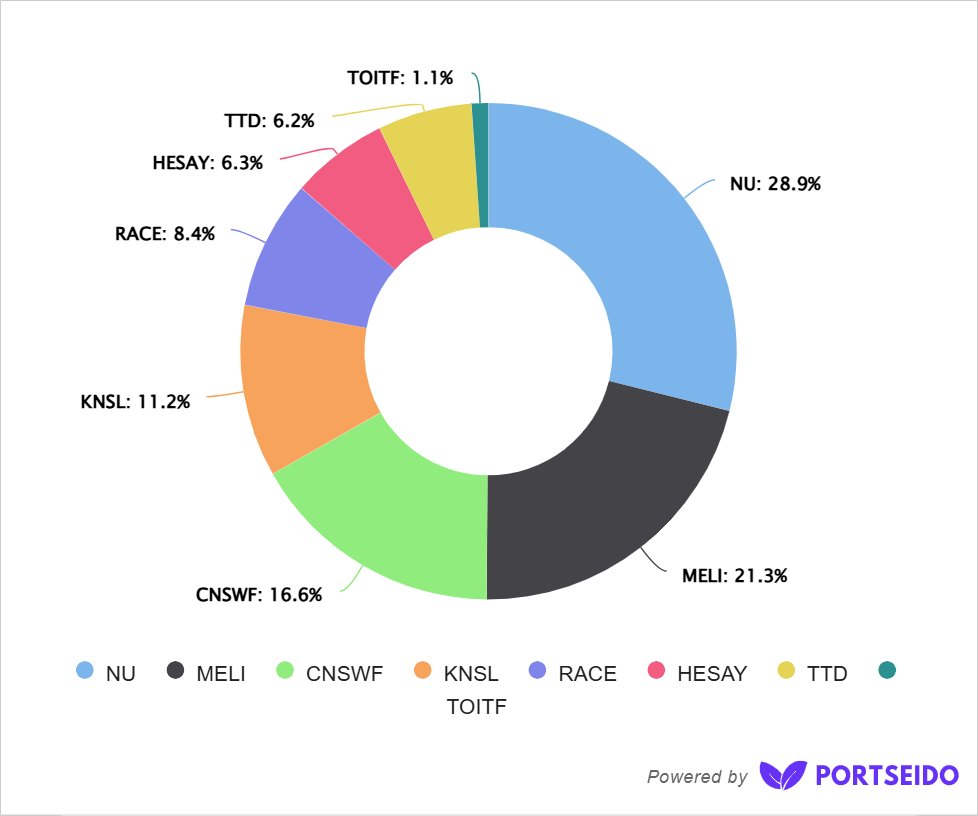
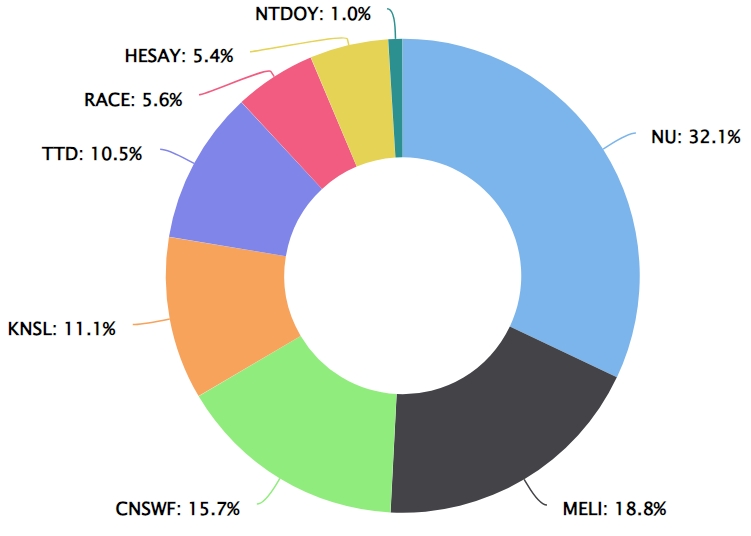
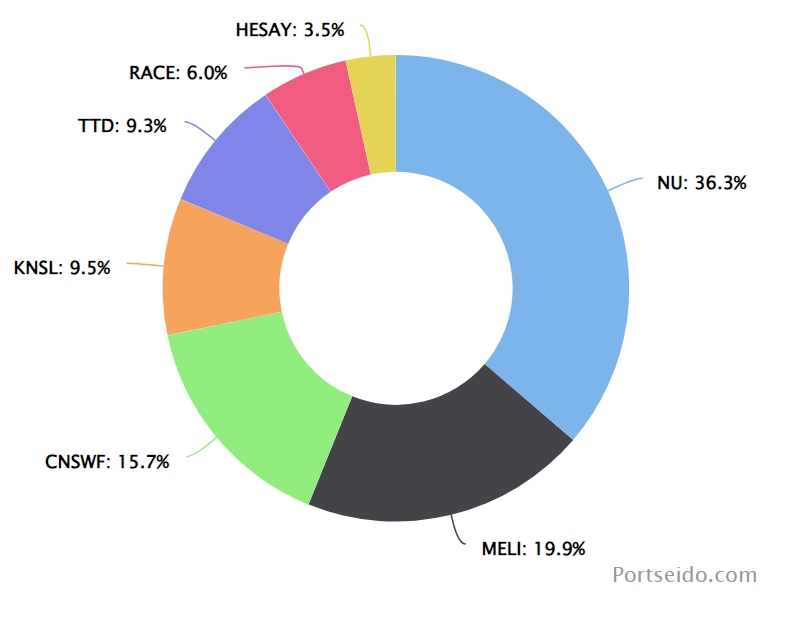

Jun 12
$ADBE is starting to be priced as if it is going out of business.
To be clear, I don’t love the underlying business. I think it faces real and potential competitive pressure from Figma, Canva, and potential new entrants. AI is going to continue to play an increasingly significant role in its industry. New technologies that can be disruptive generally are more of a threat than an opportunity to dominate incumbents, and I think that applies to Adobe. Management changes add another layer of uncertainty.
Nonetheless, the company is still the leader in its field, benefits from high switching costs, has a clean balance sheet, and remains very profitable. AI, while a serious threat to the business, also presents opportunities for Adobe.
At current valuations, a lot of bad news is priced in. The company doesn’t need to remain as dominant as it has in the past to justify its current valuation. If the business can maintain a leading position in the top end of its market, focusing on the big enterprise customers, Adobe looks undervalued. At its current valuation, it can afford to lose market share among smaller businesses and independent creators.
Personally, I still am not buying. I see the bull case and think it is very reasonable. However, this isn’t the type of investment that I typically make. Adobe went into the penalty box for me after it tried to buy Figma. That raised a big red flag for me because it signaled that the company’s moat was weaker than it appeared. The AI fears add to that. Although I find the current valuation compelling, I prefer to invest in companies I have more conviction in for the long-term. Plus, I can find other companies that I believe are fundamentally stronger that are also trading at valuations I perceive as being undervalued, so I would rather commit my money elsewhere.
This is not financial advice. This is just my opinion.
1
16
2,002
Jun 12
To maintain this flywheel, Costco has always taken a disciplined, long-term perspective. The company expands gradually and continually rather than frantically. It could technically grow faster by opening more locations, but doing so risks diluting its strict standards for service, sourcing, and logistics. Likewise, Costco could easily raise membership fees more frequently to juice near-term earnings, but doing so risks alienating its base. Instead, Costco’s management routinely sacrifices short-term profits for the long-term health of the ecosystem.
Nubank doesn’t open physical stores, but it takes a similarly methodical, measured approach to geographic expansion. The company takes its time to dig deep roots when entering a new country, prioritizing becoming its customers’ primary banking relationship rather than just an occasional financial app. While rapid expansion is tempting, management prefers to ensure it has the operational resources necessary to maintain its high standards in every single market it enters. This deliberate pace fundamentally increases its long-term probability of success.
Furthermore, in Brazil—where Nubank already counts over half the adult population as customers—management could easily transition to charging higher fees and compressing rates, leveraging its dominant market position to maximize short-term revenue per user. Instead, Nubank protects its customer-centric approach, knowing that keeping trust high will maximize total platform usage and lifetime value over the long run. Management is firmly focused on the decade ahead, not the next quarter.
🧵 5/6
1
2
159
Jun 12
Pairing ultra-low operating costs with a relentless focus on customer well-being—and passing those efficiencies directly back to the consumer—is a model Costco has spent decades perfecting. When guided by a patient, long-term leadership team, this playbook creates a very powerful economic moat. Though operating in a completely different industry, Nubank has emulated a similar architecture to remarkable success in its short history. Looking forward, this shared formula should allow Nubank to compound its advantages for years to come.
This is not financial advice. This is just my opinion.
I am long $NU.
If you enjoyed this, please consider signing up for my newsletter. Link is in bio.
🧵 6/6
2
137
Jun 2
$NU announced that Rob Livingston will replace Guilherme Lago as CFO effective July 13. The market sending shares down is an overreaction, in my opinion.
Livingston seems very well qualified, having been Visa’s CFO for North America. His experience will add to Nu’s senior management team someone with direct experience in the United States credit card market, a valuable addition as the company plans on launching operations in the USA.
Furthermore, it seems to me that Nu is going through a transition phase at the moment. The company seems to be heavily focusing on being able to expand beyond Latin America. The United States will be step one, but I don’t think it will be the last. Nu seems to believe they have the core technology and business model in place to be able to scale to other markets. Of course, expanding outside of Latin America presents a new set of challenges, but I believe Nu can overcome them. Adding Livingston, with his experience in North America, will actually give Nu a new perspective and valuable insight into the United States market.
I don’t think this one change in leadership alters the fundamental thesis of Nu whatsoever. I believe Nu will continue to grow in Latin America, and I think the company is positioning itself well for growth in the USA and other markets.
This is not financial advice. This is just my opinion.
I am long $NU.
7
502
May 27
Ferrari’s first EV, the Luce, is a major disappointment, and it makes me concerned about $RACE.
I’m not terribly concerned simply because the styling isn’t great. Even a great company won’t perfect every new product. Nor am I terribly concerned about the range. That can be improved in future EVs.
What I am concerned about is that the Luce does not at all seem like a Ferrari. Ferrari is supposed to stand for performance, for elegance, for luxury, for exclusivity. The Luce doesn’t fit the mold. This does make me wonder if management fully understands the brand.
The Ferrari Purosangue I understand and support. Yes, it wasn’t the purest of sports cars, but it felt like an evolution of the brand, not a departure. The Luce isn’t like that at all.
Ferrari is the brand. If the company doesn’t protect the brand’s image, if it tries to be something over than what it is, then the brand could be permanently damaged. That is what worries me.
I’m not currently planning on selling my shares of $RACE, but I am now concerned about the company while I previously was not.
This is not financial advice. This is just my opinion.
I am long $RACE.
13
12
2,012
May 15
$NU had a very solid first quarter in 2026.
$NU added 4.2 million customers in the quarter, ending the quarter at 135.2 million.
Monthly average revenue per active customer increased 23% FXN YoY to $15.9.
Total portfolio grew 40% FXN YoY to $37.2 billion.
Deposits grew 22% FXN YoY to $42.4 billion.
Revenue grew 42% FXN YoY to $5,315.5 million.
Net income grew 41% FXN YoY to $871.4 million
$NU provided some more clarity on its expansion into the USA. Management is looking at it as a high upside, limited downside opportunity. Management is capping investments in the USA expansion and will base further investments on results. In essence, if things don’t go as they hope, they are not going to keep endlessly funding the expansion.
$NU also provided insight into how it is approaching AI. Its AI Assistance initiative is providing AI tools for its employees, enhancing productivity. Its Workflow Reinvention is changing the way customers interact and access Nu’s products and services, with more AI enhancements planned for this year. Its AI Private Banker is scaling and helping to provide AI enabled insights and solutions to customers. Thecompany is using its own foundational models, NuFormer, to provide rapid customized loan decisions. The company is trying to make AI a core piece of its business, not just an add-on. It also highlighted that its large set of data, its cloud-native technology, and its workforce are advantages it has in incorporating AI.
Overall, this was another very solid quarter for $NU. I was neither wowed nor worried by anything in the report. I expected a good quarter, and $NU delivered.
This is not financial advice.
I am long $NU.
10
790
May 10
Should investors be worried that $MELI had lower than expected profitability because it is investing in growth initiatives? Let us run through some basic checks.
Business Stage
When evaluating tradeoffs between investments and current profitability, it is important to understand what stage a business is at. Mature, slow growing businesses should generally be optimized for profitability, and therefore, any unexpected big investments that significantly dent profitability may be a cause for caution, although every situation is unique and this is not a hard rule. On the other hand, fast growing, younger companies are not optimized for current profitability, and investments for future growth should be expected. $MELI certainly falls into the later category, so it passes this check.
Return on Investment
Not all investments are equal. Therefore, it is necessary to evaluate if investments stand a good chance of having good returns. $MELI is spending aggressively on logistics, and is sacrificing profitability in order to offer more free shipping. Is this reasonable? Yes. Logistics are a key differentiator in e-commerce, as companies that control their own logistics and that have superior logistical capabilities can offer quicker, cheaper, and more reliable shipping, resulting in greater customer satisfaction and increased sales. Furthermore, it reinforces a network effect, in that more customers and greater sales leads more merchants deciding to sell on Mercado Libre’s platform, which in turn leads to more customers and more sales.
Also, given that e-commerce in Latin America is still at an earlier stage than in some markets, it is rational that $MELI wants to be aggressive in capturing market share and working to shift spending from in person to online. Likewise, given the fintech and advertising adjacencies that $MELI has, it has an even greater reason to invest in logistics and free shipping initiatives to get more people more into its ecosystem.
Therefore, its investments seem not only reasonable but very wise. Thus, the prospects for its investments paying off in the future seem to be good, and it passes this second check.
Management
Finally, the last check is on management. Does management seem to have the ability to execute on its investments? Mercado Libre’s management team has an impressive track record of delivering results. They have credibility, and it seems reasonable to think that they can successfully and efficiently execute on their growth initiatives. Thus, $MELI passes this check also.
Conclusion
$MELI is being strategic. It is not facing profitability setbacks because its business is deteriorating. Rather, it is investing in order to become more profitable in the future. Thus, the market is just being very shortsighted. The drop in $MELI shares seems, in my opinion, to be an incorrect reaction that is caused by some failing to properly evaluate and understand what and why $MELI is not showing greater current profitability. The business seems to be doing wonderfully, I trust management, and I remain bullish on the company’s long-term future.
This is not financial advice. This is just my opinion.
I am long $MELI.
5
751
Apr 28
$NU is taking a very targeted approach to marketing in the USA, which is a very strategic and a wise decision.
The United States is a massive market. Trying to flood the market with advertising and market to everyone at once is very difficult and massively expensive.
$NU is taking a better approach. Nu is focusing its efforts on the Miami region, an area with deep cultural and economic links to Latin America. Nu has become a Main Partner of Inter Miami CF (Miami’s MLS team) and has the naming rights to the team’s stadium, now dubbed Nu Stadium. Nu is also marketing aggressively during the Miami Grand Prix, working with the Mercedes-AMG PETRONAS F1 Team. The Mercedes drivers will be wearing special purple racing suits, and Nu is running a House of Nu promotional event which will appeal to racing fans.
By focusing primarily on Miami and southern Florida, $NU is able to reach many people who may have already heard of, or know people who use, Nu’s products in Latin America. This makes their marketing efforts more potent. Furthermore, once $NU gains a foothold in the United States, $NU can spread organically, via word of mouth. In essence, Nu’s strategy is to market aggressively in a concentrated hub, gain momentum in that particular area, and then expand with the help of organic growth via word of mouth. This approach makes expansion into the United States much more cost efficient and manageable.
The strategy $NU is employing to enter the USA market is impressive. It raises my confidence in its ability to be successful in the United States, and it is further evidence of how very capable Nu’s management team is. I am excited for this new chapter in Nu’s growth and believe Nu is well positioned to succeed in the United States.
This is not financial advice. This is just my opinion.
I am long $NU.
6
531
Apr 17
$RMS Q1 2026 results were not great. Revenue declined by 1.4% as published but grew 5.6% at constant exchange rates. Neither number is spectacular.
The conflict in the Middle East had a negative effect on the company. Not only did Hermès see a 13.4% decline in revenue (5.9% at constant exchange rates) in its “Other” reporting category, which primarily is the Middle East, but less travel from the Middle East to other regions also negatively impacted results. Exchange rate changes also had a significant negative impact on published revenue.
China also didn’t grow much at constant exchange rates. I don’t know why. Management highlighted having very strong growth in China in 2024 and 2025, and this helps puts the slowdown into context.
I won’t try to argue that I was extremely pleased with the results. However, this was far, far from being a disastrous quarter. These results make no difference to my thesis on the company. No company, no matter how spectacular, will always have every quarter be spectacular. There is nothing fundamentally wrong with the business. Factors outside of the company’s control presented headwinds that hurt results. Great company, mediocre quarter.
This is not financial advice. This is just my opinion.
I am long $HESAY.
3
11
1,419
Apr 2
$RACE and $RMS derive much of their value from their projected future longevity. Both are extremely prestigious brands which are incredibly hard to disrupt, and this could position them to continue to be relevant for decades. This longevity makes the more recent drop in share price seem disconnected to the fundamentals of the businesses. Neither company is relying on the next one or two years of rapid growth. Rather, the thesis on both of these companies is that they can grow at above average rates over decades. Short to medium term economic struggles or disruptions do not fundamentally alter the thesis of these companies, in my opinion.
This is not financial advice. This is just my opinion.
I am long $RACE and $HESAY.
36
5,226
Mar 20
$ASML and $APH are my two favorite ways to invest in AI. Here is why:
1. AI technology is rapidly evolving. If technological history is a guide, the early leaders in AI might not remain leaders. Forecasting who will have the best LLMs, the best chips for AI, and the best AI enabled applications and what the economics of those businesses might look like is a task that I find to be very difficult and comes with a high degree of uncertainty.
2. How then can I invest in AI given this conundrum? By looking for more picks and shovels companies, the kind of companies that can benefit no matter which companies ultimately supply the AI applications and hardware. If the current leaders like $NVDA, $AVGO, and $GOOGL stay leaders, I want to be able to benefit. If new leaders emerge, I want to still be able to benefit.
3. $ASML fits this criterion wonderfully. $ASML is the backbone of chip production via its EUVs (where it is a monopoly) and DUVs (where it is the leading player). AI can’t grow without chips, and cutting-edge chips can’t be produced at scale without $ASML. I don’t need to predict if $NVDA, $AMD, $AVGO, $AMZN, $GOOG, or others are designing the best chip. It doesn’t matter. Whichever companies design the chips that fuel the future of AI, $ASML will be needed and stands to benefit.
4. $APH is another picks and shovels AI beneficiary. $APH manufactures connectors and various other critical products like busbars, sensors, antennas, and cable assemblies. Connectors are needed at multiple layers to enable AI, whether that is in enabling data to be transferred, enabling power to be distributed at the rack level, or helping racks with thermal management. $APH is not the flashiest or most well-known name, but its breadth of products, technological innovations, customer relationships, and reputation for reliability make it a trusted and important supplier to the AI industry.
5. AI is about more than data centers and LLMs. AI has the potential to be incorporated into a wide variety of products, such as autonomous vehicles, robotics, and consumer electronics. All of these products will need chips and connectors, meaning that $ASML and $APH stand to be key players as AI expands more broadly outside of data centers.
$ASML and $APH are two companies that are agnostic to which company makes the best chip or creates the best LLM. They stand to benefit from more than just the buildout of data centers, being critical suppliers that will enable AI to be deployed at the device level. While neither will likely be the very fastest growing company in the AI space, I believe these two companies with strong moats, good management, and multi-decade tailwinds are well positioned to do well in the long-term.
This is not financial advice. This is just my opinion.
I am long $APH and $ASML.
2
12
2,155
Mar 19
When a company makes a reliable product that is critical to performance but only accounts for a small percentage of total production costs, customers rarely switch. The risk of disruption isn't worth the marginal savings.
High switching costs = high-risk
Marginal potential savings = low-reward
The end result?
A very sticky product.
Some companies that fall into this category:
$APH Amphenol
$TEL TE Connectivity
$TXN Texas Instruments
$ADI Analog Devices
$NSIS Novonesis
$GIVN Givaudan
This is not financial advice.
I am long $APH.
6
633
Mar 13
Many high quality stocks are seeing declines in the market. Fear is rising, the bear cases are getting louder, and, in some cases, Wall Street analysts are following trends by reducing their price targets.
$NU and $MELI are two examples of stocks that I think have become very attractively priced. Both companies have been getting stronger, they are continuing to make intelligent, smart investments into their businesses, and they are executing exceptionally well. They both benefit from secular long-term tailwinds and have multiple avenues for growth.
Unless something fundamentally changes which has a significant impact on the future of these two companies, which currently I do not believe is the case, I see no valid reason for the increase in pessimism about these two.
This is not financial advice. This is just my opinion.
I am long $NU and $MELI.
1
13
951
Mar 6
Keep costs low. Pass the savings on to the customers.
Offer a great product that is easy to use and very practical.
Be customer centric.
This is the formula $NU has used to be successful in Latin America, and this is the formula that it will use to be successful in the USA.
The banking market dynamics are significantly different in Latin America compared to the United States, but this basic formula is still applicable. Nu’s core business model is strong and transferable across borders. $NU will have to make adaptations and adjustments when entering the United States market, but it has the foundation necessary for success.
This is not financial advice. This is just my opinion.
I am long $NU.
4
563
Feb 25
The market doesn’t appear to view $MELI quarterly results positively, mainly because of less than anticipated profitability. However, a few things to consider:
1. $MELI profitability was less than expected not because of a revenue shortfall but because the company is aggressively investing for future growth.
2. $MELI is a company growing very quickly with many opportunities for continued growth. It is not, and should not, be optimizing for short-term profitability.
3. $MELI is investing simultaneously in multiple initiatives in both e-commerce and FinTech. This is a positive, not a negative. It is a rare occurrence when a business at the scale of $MELI has so many enticing opportunities to invest capital for growth.
4. $MELI is not burning cash. Rather, it is a profitable company with a leadership team that has a strong track record of executing on growth initiatives.
5. $MELI is not spending money on bizarre projects. Rather, all the areas it is investing in, such as enhancing logistical capabilities, free shipping, credit cards, etc., are all directly related to its core businesses and strengthen the company’s ecosystem.
In short, the market is acting short-term minded, like it often does. It focuses on short-term profits over looking at the long-term. I thought the quarter was very strong. The company is growing quickly, at scale, and doing so profitably. It is investing for growth, and it is strengthening its ecosystem and its moat. The company has grown into what it is by focusing on the long-term, and I am glad that it is continuing to do so.
This is not financial advice. This is just my opinion.
I am long $MELI.
2
2
19
1,509
Feb 24
3 Questions for $MELI for Its Upcoming Earnings Report on Tuesday, February 24, 2026:
1. Has $MELI seen any increased pressure from competitors? There is concern that $SE (Shopee) is putting pressure on $MELI. Personally, I think Mercado Libre’s breadth of product availability, logistical capabilities, and ecosystem of services gives it a moat that separates it from $SE, $AMZN, and any other company in its key markets, but any additional insight on this question would be welcome.
2. How is the use of robotics progressing? $MELI has been utilizing robotics in its warehouses in a limited manner. With advances in AI and robotics, it would be nice to get more insight into how this has progressed and how management sees robotics being used over the next few years.
3. What is the roadmap for Mercado Pago’s future offerings? $MELI has been putting more and more emphasis on trying to become consumers' principal financial institution. I would like to hear more about how management sees the future of Mercado Pago’s consumer offerings evolving over the next few years and what new products and services the company plans to introduce.
This is not financial advice.
I am long $MELI.
10
1,183