
Screenwriter, producer, author. Ph.D. in advanced narrative theory and story consultant (for hire!) I know where story power lies. LA and London.
Joined May 2010
- Tweets 3,555
- Following 37,220
- Followers 40,662
- Likes 1,382
248 Photos and videos




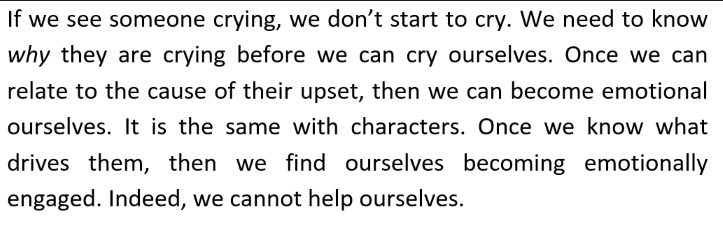


If we see someone crying, we don't start to cry. We need to know Why they are crying before we can cry ourselves. Once we can relate to the cause of their upset, then we can become emotional ourselves. It is the same with characters. Once we know what drives them, then we find ourselves becoming emotionally engaged. Indeed, we cannot help ourselves.
1
2
97
David Baboulene - Story Consultant retweeted
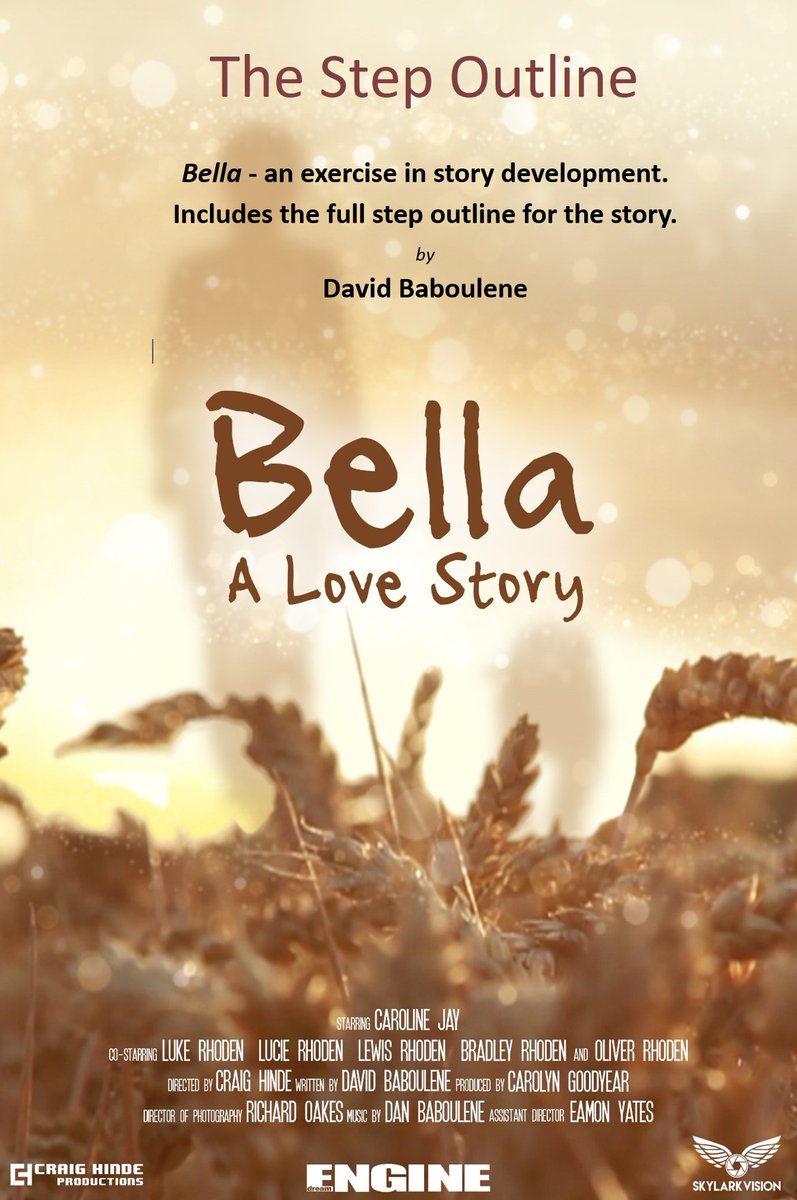
I made a short film, with no conflict, no dialogue and no bad guy. Take a look! See how you can generate story power without any of the formulaic rules. Bella - A Love Story youtu.be/yiesoZEhXj8
1
1
220
Speaking of speaking...

Dialogue is not a function of what the character sees in front of them. It's a function of what they are feeling (and are motivated by) from the inside. So if another character is lying injured in front of them, the knee-jerk dialogue might be: "Are you OK?" or "Do you need a doctor?" But this is writing 'outside in'. The inside out dialogue is based on how the character is feeling about themselves. NOW their dialogue will reflect that exposure/vulnerability: "Fuck, fuck, FUUUUCK!!!"
You will not write fine dialogue until you get behind the eyes of the speaker, feel what they are feeling, and lock on to their (deeply ego-driven - especially under pressure) motivation.
185
Now THIS.... is a wonderful, wonderful book.

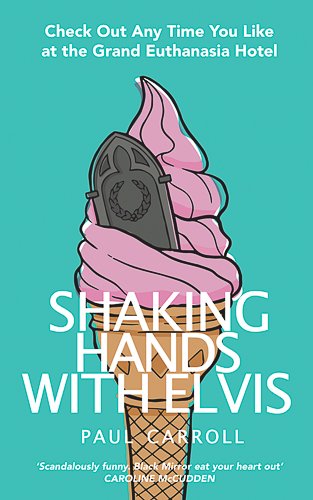
There is a particular kind of British fiction that takes the absurdity of the present moment and makes it funnier, darker, and more uncomfortably recognisable than the news ever manages. Paul Carroll writes that kind of fiction.
His debut novel, Shaking Hands with Elvis, imagined a privatised assisted dying clinic open for business after the government sold off the NHS. His follow-up, Be Here Now, turns the same satirical precision on music festivals, corporate greenwashing, and the Oasis reunion as cultural spectacle - a one-off gig on a wind turbine eco-island, billed as the greenest live music event of all time, attended by middle-aged Manc mates trying to recapture their youth and activists who have other plans entirely.
Two novels. Two targets. The same sharp, unsentimental eye.
We are proud to publish Paul Carroll. Both titles are available now in paperback, Kindle, and audiobook. Link in bio.
125
Dialogue is not a function of what the character sees in front of them. It's a function of what they are feeling (and are motivated by) from the inside. So if another character is lying injured in front of them, the knee-jerk dialogue might be: "Are you OK?" or "Do you need a doctor?" But this is writing 'outside in'. The inside out dialogue is based on how the character is feeling about themselves. NOW their dialogue will reflect that exposure/vulnerability: "Fuck, fuck, FUUUUCK!!!"
You will not write fine dialogue until you get behind the eyes of the speaker, feel what they are feeling, and lock on to their (deeply ego-driven - especially under pressure) motivation.
2
346
David Baboulene - Story Consultant retweeted

May 13
"For sale, baby shoes, never worn." Hemingway never tells you the story. The reader constructs it. The gap is the story. This Friday I'll explain why its absence was costing me every submission I made. @StoryMeBad @DreamEngineuk
2
5
156
David Baboulene - Story Consultant retweeted
May 15
If you missed this morning's post: a training house on an airbase, a terrorist leader, Hemingway's six words, and the thing that was missing from every manuscript I ever submitted. Link in the thread. @StoryMeBad @DreamEngineuk
1
2
83
It's not what we want, but it's the truth.
An agent rejected your manuscript. Not because it was poorly written. Because they could not find you online.
This is not speculation - it is how literary representation actually works in 2026. Before an agent reads a single page, they search your name. What they find (or do not find) shapes everything that follows. A strong manuscript from an invisible author is, from the industry's perspective, a risk they do not need to take.
DreamEngine Publishing was built around this reality. We are a selective independent UK publisher that combines professional publication with the Author Mythology framework - a strategic approach to building the author platform that traditional publishing demands but does nothing to help you create.
Our authors are published to full professional standards: editorial, design, metadata, distribution. They also work with us to construct the platform identity, positioning, and visibility that makes their publication count beyond the book itself. For many of our authors, DreamEngine publication is the foundation from which agent representation becomes a realistic next step.
We review manuscripts from serious authors. We are selective, and that selectivity is part of what we offer - an acceptance from DreamEngine is a statement about the work.
@StoryMeBad @realdeville1963

1
216
Amazing, @realdeville1963 - thank you so much. I wondered why I love your work so much...!
May 15

Knowledge Gap
There is another thing I have learnt from David Baboulene @StoryMeBad. It is a learning I immediately grasped. And have been unable to ignore ever since. Nowadays – post Bab, as I like to term it – I can hardly watch a film without seeking it out. Much less remain connected to a book without it.
There was a building at the edge of the airbase that had no business being there. It stood alone in a wide expanse of scuffed desert sand. Soldiers visited it every day: rifles at the shoulder, eyes pressed to battle sights, moving in a fast half-crouch. No one explained what it was for.
I watched it for weeks.
By rights its pale walls should have had like properties on either side. A dusty tarmac road should have flanked it. Children should have played on carefully tended lawns. Instead it sat surrounded by aircraft noise and the endless traffic of a military base, its plywood walls shifting uneasily in the heat, its loosely hinged doors creaking and slamming.
The visits were choreographed. A nod, a hand on a shoulder, the occasional whispered word. Night and day, day after day. Then one afternoon two helicopters hovered at altitude and a column of parachutists dropped in a perfect double line. They landed, shed their chutes, and joined the dance without breaking stride.
A few weeks later the activity stopped. A day after that, the building was dismantled. The walls came down. The doors were taken away. The desert reclaimed the sand as if nothing had ever stood there.
Then on the screens in the canteen, over lunch, a news bulletin. A terrorist leader killed in a strike somewhere not far away. Aerial photographs of the house in which he had detonated a bomb. Still on fire. Smoke pouring through holes where windows and doors had been.
The house looked strangely familiar.
On either side, similar properties. Around it, a dusty tarmac road, parked cars, emerald lawns tended by careful hands.
The building at the edge of the airbase had been a replica.
A literary agent once returned one of my manuscripts with a single line. She didn't connect with my writing. At the time I filed it under brutal and moved on. Now I know exactly what she meant.
The knowledge gap is the engine of narrative. The question the reader does not know they are asking. Hemingway understood it perfectly. "For sale, baby shoes, never worn." Six words. The story they force the reader to construct is devastating precisely because it is never told. The gap is the story.
I had been writing without it. Hundreds of thousands of words, adding material, tweaking, turning things up and down, without understanding what was actually missing. The agent knew within seconds.
More on that next time.
JDV

ALT Soldiers with BlackHwak
1
1
1
169
David Baboulene - Story Consultant retweeted

An agent rejected your manuscript. Not because it was poorly written. Because they could not find you online.
This is not speculation - it is how literary representation actually works in 2026. Before an agent reads a single page, they search your name. What they find (or do not find) shapes everything that follows. A strong manuscript from an invisible author is, from the industry's perspective, a risk they do not need to take.
DreamEngine Publishing was built around this reality. We are a selective independent UK publisher that combines professional publication with the Author Mythology framework - a strategic approach to building the author platform that traditional publishing demands but does nothing to help you create.
Our authors are published to full professional standards: editorial, design, metadata, distribution. They also work with us to construct the platform identity, positioning, and visibility that makes their publication count beyond the book itself. For many of our authors, DreamEngine publication is the foundation from which agent representation becomes a realistic next step.
We review manuscripts from serious authors. We are selective, and that selectivity is part of what we offer - an acceptance from DreamEngine is a statement about the work.
@StoryMeBad @realdeville1963
2
5
390
David Baboulene - Story Consultant retweeted
May 14
Hundreds of thousands of words. Adding material, tweaking, turning things up and down. All along there was a key factor missing. Something a literary agent identifies within seconds of turning a page. Tomorrow at ten. @StoryMeBad @DreamEngineuk
2
4
97
David Baboulene - Story Consultant retweeted
May 15
A building that had no business in a desert. A replica, it turned out. A news bulletin. And the most important thing I have ever learnt about writing. This morning at ten. @StoryMeBad @DreamEngineuk
1
3
62
David Baboulene - Story Consultant retweeted
May 15
Knowledge Gap
There is another thing I have learnt from David Baboulene @StoryMeBad. It is a learning I immediately grasped. And have been unable to ignore ever since. Nowadays – post Bab, as I like to term it – I can hardly watch a film without seeking it out. Much less remain connected to a book without it.
There was a building at the edge of the airbase that had no business being there. It stood alone in a wide expanse of scuffed desert sand. Soldiers visited it every day: rifles at the shoulder, eyes pressed to battle sights, moving in a fast half-crouch. No one explained what it was for.
I watched it for weeks.
By rights its pale walls should have had like properties on either side. A dusty tarmac road should have flanked it. Children should have played on carefully tended lawns. Instead it sat surrounded by aircraft noise and the endless traffic of a military base, its plywood walls shifting uneasily in the heat, its loosely hinged doors creaking and slamming.
The visits were choreographed. A nod, a hand on a shoulder, the occasional whispered word. Night and day, day after day. Then one afternoon two helicopters hovered at altitude and a column of parachutists dropped in a perfect double line. They landed, shed their chutes, and joined the dance without breaking stride.
A few weeks later the activity stopped. A day after that, the building was dismantled. The walls came down. The doors were taken away. The desert reclaimed the sand as if nothing had ever stood there.
Then on the screens in the canteen, over lunch, a news bulletin. A terrorist leader killed in a strike somewhere not far away. Aerial photographs of the house in which he had detonated a bomb. Still on fire. Smoke pouring through holes where windows and doors had been.
The house looked strangely familiar.
On either side, similar properties. Around it, a dusty tarmac road, parked cars, emerald lawns tended by careful hands.
The building at the edge of the airbase had been a replica.
A literary agent once returned one of my manuscripts with a single line. She didn't connect with my writing. At the time I filed it under brutal and moved on. Now I know exactly what she meant.
The knowledge gap is the engine of narrative. The question the reader does not know they are asking. Hemingway understood it perfectly. "For sale, baby shoes, never worn." Six words. The story they force the reader to construct is devastating precisely because it is never told. The gap is the story.
I had been writing without it. Hundreds of thousands of words, adding material, tweaking, turning things up and down, without understanding what was actually missing. The agent knew within seconds.
More on that next time.
JDV
ALT Soldiers with BlackHwak
10
21
854
David Baboulene - Story Consultant retweeted
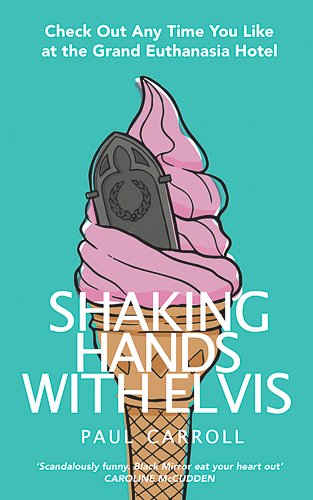
Paul Carroll spent his career in PR, crafting messages for some of Britain's most recognisable brands. Then he turned that same precision on Britain itself - and the results are considerably more uncomfortable for everyone involved.
His debut novel, Shaking Hands with Elvis, imagines a world in which assisted dying has been legalised and the NHS sold off, opening the door for Go Gently's Charon House clinic to welcome its first appointments. It is the kind of premise that makes you laugh before you've fully absorbed what you're laughing at. Caroline McCudden called it "scandalously funny - Black Mirror eat your heart out." We thought that was about right.
His second novel, Be Here Now, published this May, follows the Oasis reunion onto a wind turbine eco-island in the North Sea, billed as the greenest live music event of all time. What it actually becomes is a wicked send-up of festival capitalism, corporate rock, greenwashing, and the particular desperation of middle age dressed up as nostalgia.
Paul writes with the instincts of someone who has spent years inside the machinery of image management. He knows exactly what the brochure is supposed to say - and exactly where the gap is between that and reality. That gap is where his fiction lives.
Both titles are available now. Find them via the link in our bio.
1
3
140
Written by a great storyteller. Follow @realdeville1963 for more deep insights into a writers journey.
I came to writing by accident. Divorce first, then the army. I hammered out thousands of words of self-pitying prose in the cold interior of a yacht, then spent years writing intelligence reports in a portacabin in Kurdistan. Neither taught me how to write a story.
Divorce was the first spur. Sitting in the frigid interior of the yacht to which life had temporarily banished me, hammering away at an old laptop, hurling my prose at the fates. It was, at least, a catharsis. The volume of self-pitying poison I eventually produced is something I would rather forget.
The army helped me back onto my feet. It threw an awkwardly avuncular arm about my shoulders and despatched me shivering in the bowels of vast aircraft to places most people would struggle to find on a map. Hours in seats made of cargo netting, the roar of engines drowning thought. The dim glow of phones lighting the faces of the soldiers around me.
Military intelligence is rarely the dark art Hollywood would like it to be. In my experience it was backstopped by uncomfortable beds, wearying hours and, occasionally, time spent ferreting information from the strangest of corners.
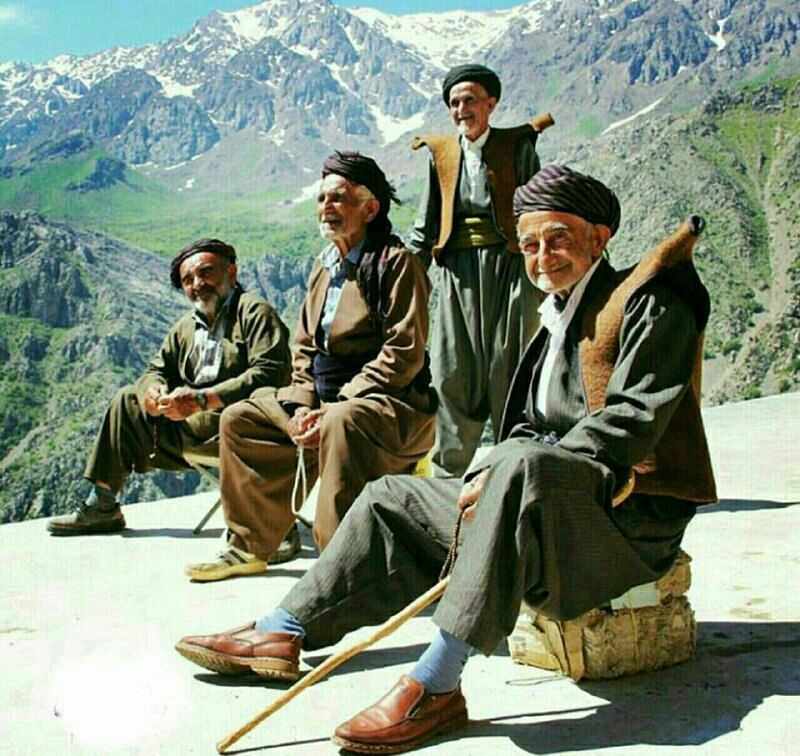
Kurdistan. A village barely a hundred miles from the Iranian border. A nearly five-tonne civilian armoured Toyota, its white flanks thick with mud, parked akimbo on an uneven street. Dark-faced men in the broad sashes and turbans of their tradition. A café a hundred yards away where two men sat in deep conversation with a local leader. Glock 19s in their waistbands, a round in each chamber, Glock's clever trigger-mounted safety doing its quiet work. Assault rifles under a blanket in the boot, three hundred rounds alongside them, encrypted phones in their pockets.
The meeting produced a report. Worked up in an ageing portacabin, the author propped on threadbare pillows leaning against a filthy wall. Clothes drying on makeshift lines overhead. Weapons resting against what might generously be described as wardrobes. The words stripped of emotion, of character, of anything resembling beauty. Structured within rigid guidelines. Gleaming with military precision. As dry as a Walkers crisp.
It was, nonetheless, writing. It refined the mechanics. Reinforced the essential discipline of actually sitting down and producing the thing.
But staring at the contrast between that armoured Toyota and the sleepy Kurdish village around it, something else began to move. Western military might, parked on a third-world street in the rain. A metaphor for everything. It sparked a creative urge of an entirely different kind.
The problem was I still had no idea how to write a story. That took another decade of trial and considerable error. And even when my most honest friends conceded that what I had laboriously produced was worth the read, it remained nowhere near good enough for the most discerning audience of all: the literary agent.
For that, I needed to be taught. And as luck would have it, I stumbled across a certain Mr David Baboulene, and the rather clever people at DreamEngine.
More on that next week.
1
2
202
TEN free passes to my story theory course on Udemy available right now! If you go to: udemy.com/course/storytellin…
The coupon code is: CBB82E50C85AA31B7873
That should get you in for free.
1
161
It is truly a pleasure to work as story consultant on Julian's incredible books. Killer characters and killer stories, quite literally! Please take a moment to follow Julian and come along for the ride.
We are very happy to welcome Julian DeVille to the DreamEngine author family. Please take a moment follow Julian, you will not regret it!
1
2
363
David Baboulene - Story Consultant retweeted

15 Jun 2025
Want your story to grip readers?
It’s all about knowledge gaps!
Plant questions in their minds, let them fill the answer. That’s the secret to unforgettable tales.
Learn how!
#WritingCommunity #AmWriting
A thread🧵
ALT David Baboulene Knowledge Gaps
2
5
18
3,144
David Baboulene - Story Consultant retweeted

18 Sep 2025
Exciting News! 🎬✨
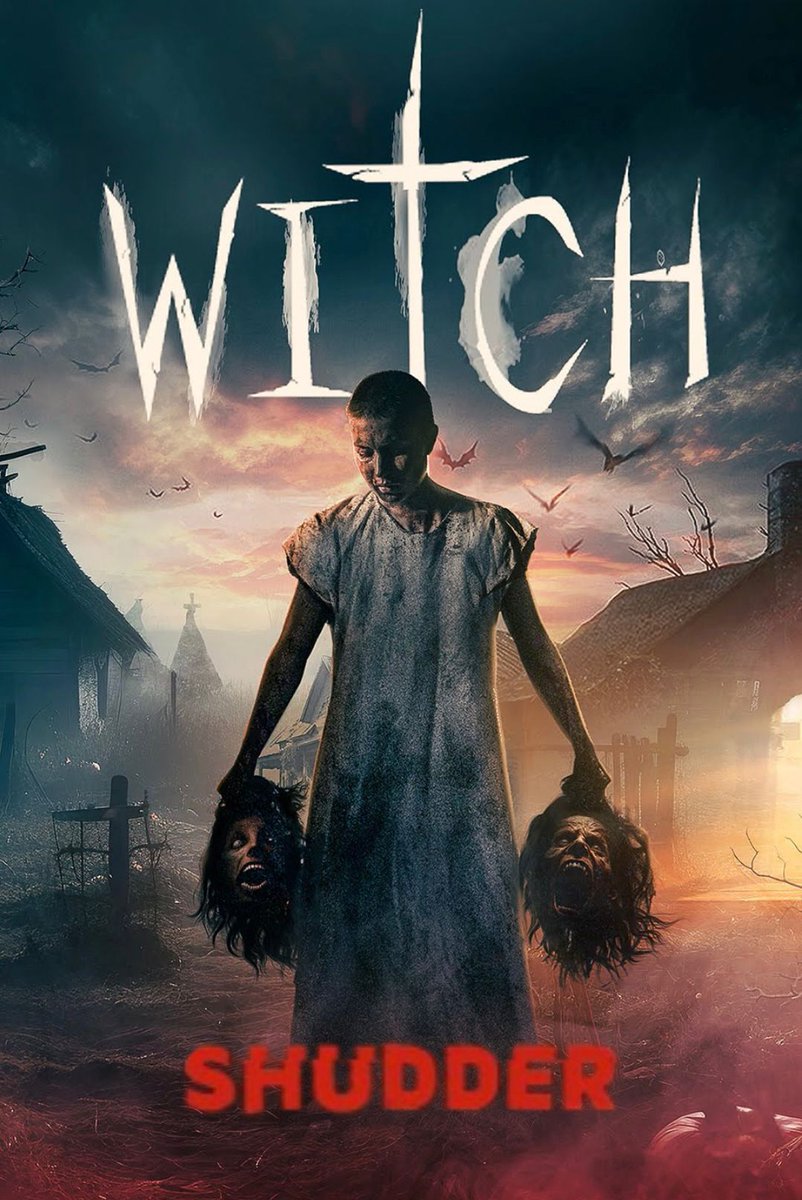
Our medieval horror-fantasy feature, @WitchMovie1, will officially be released on SHUDDER this October (2025)
Filmed on the same set as The Witcher in Budapest, the film is inspired by the fascinating concept of paramnesia.
1
2
203