Directorate of Strategic Watch & Obs. |
Joined May 2022
- Tweets 1,038
- Following 677
- Followers 502
- Likes 598
503 Photos and videos


Apr 24
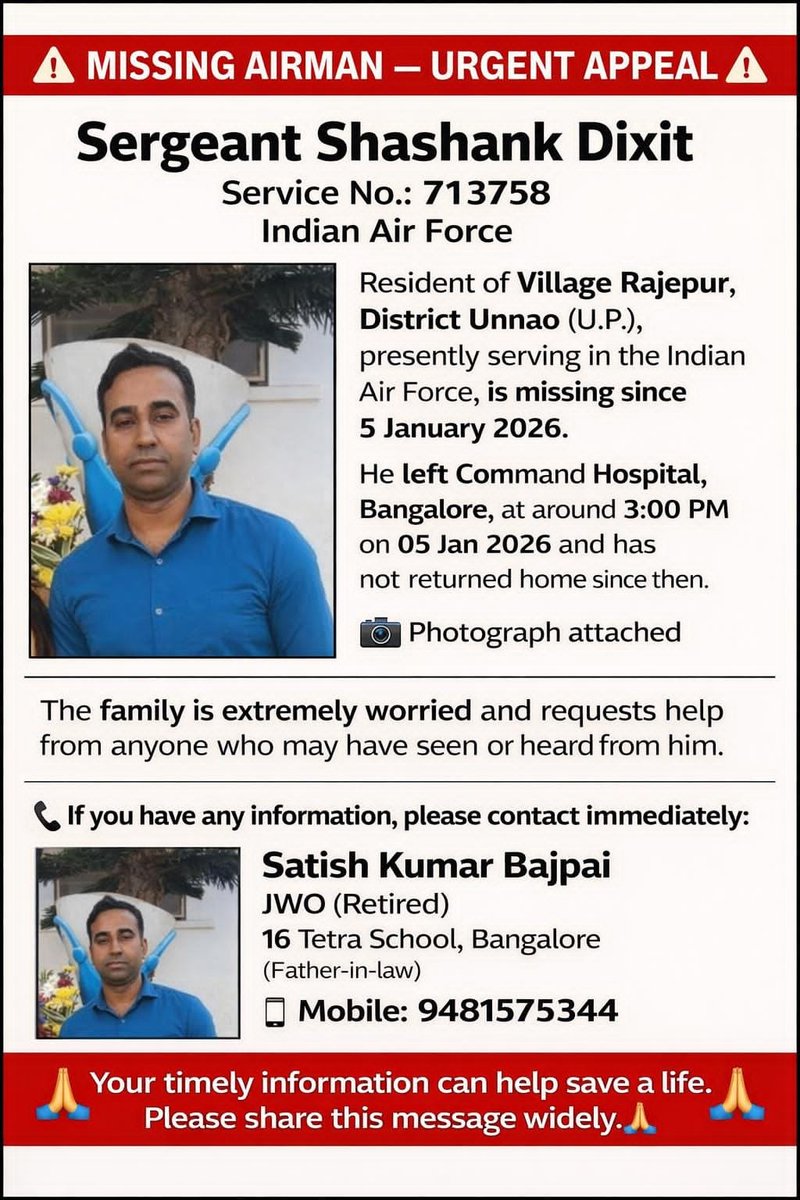
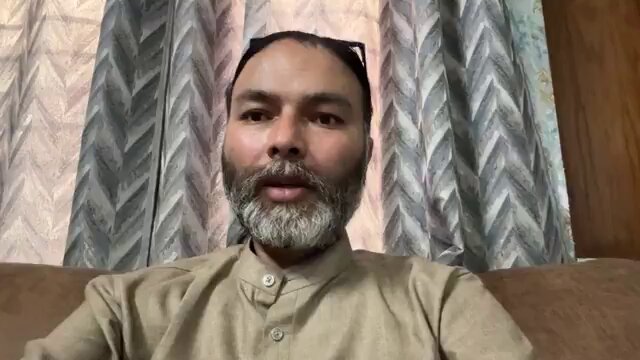
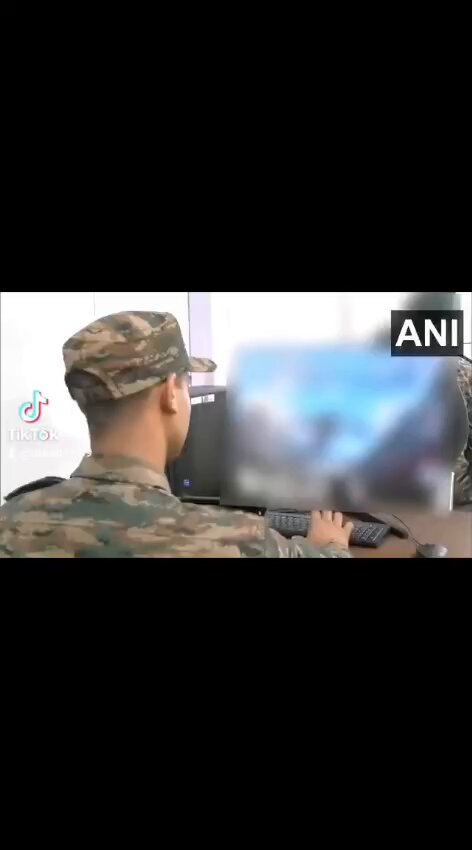
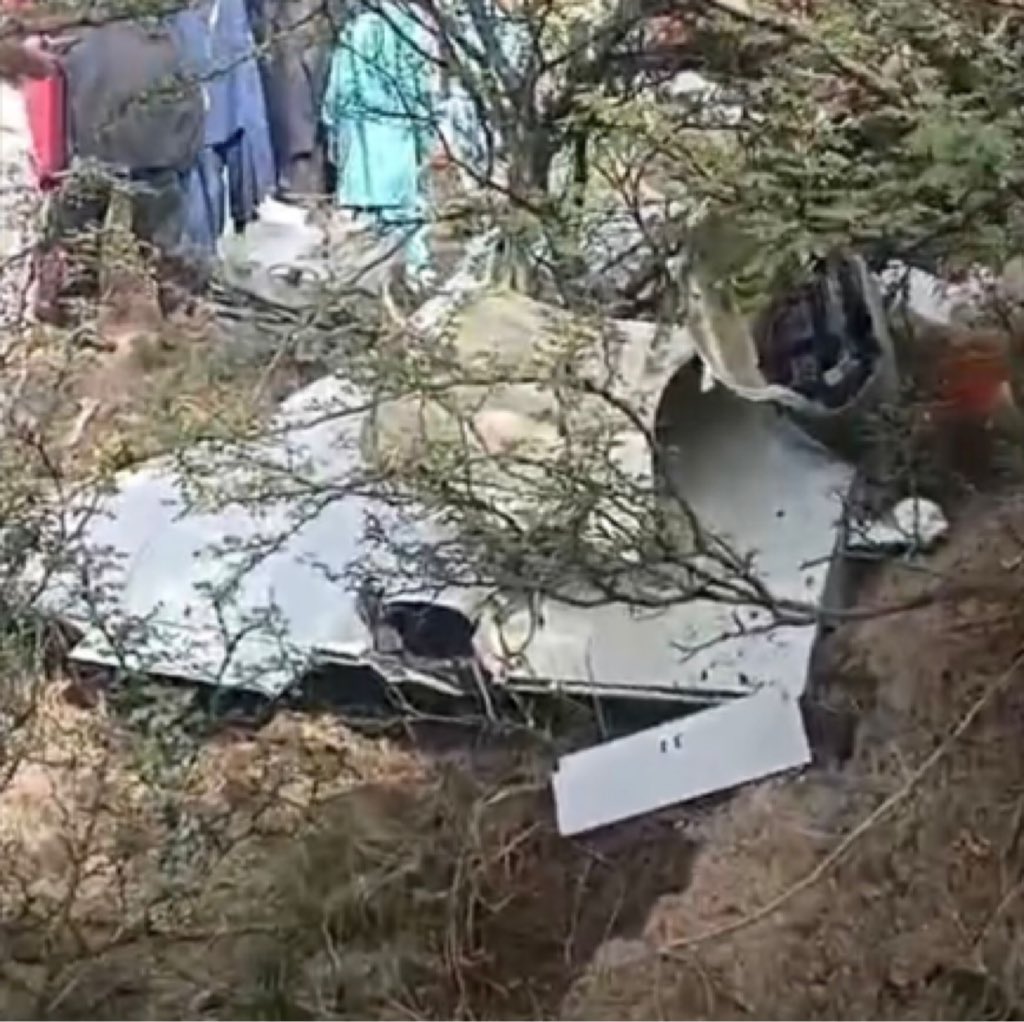
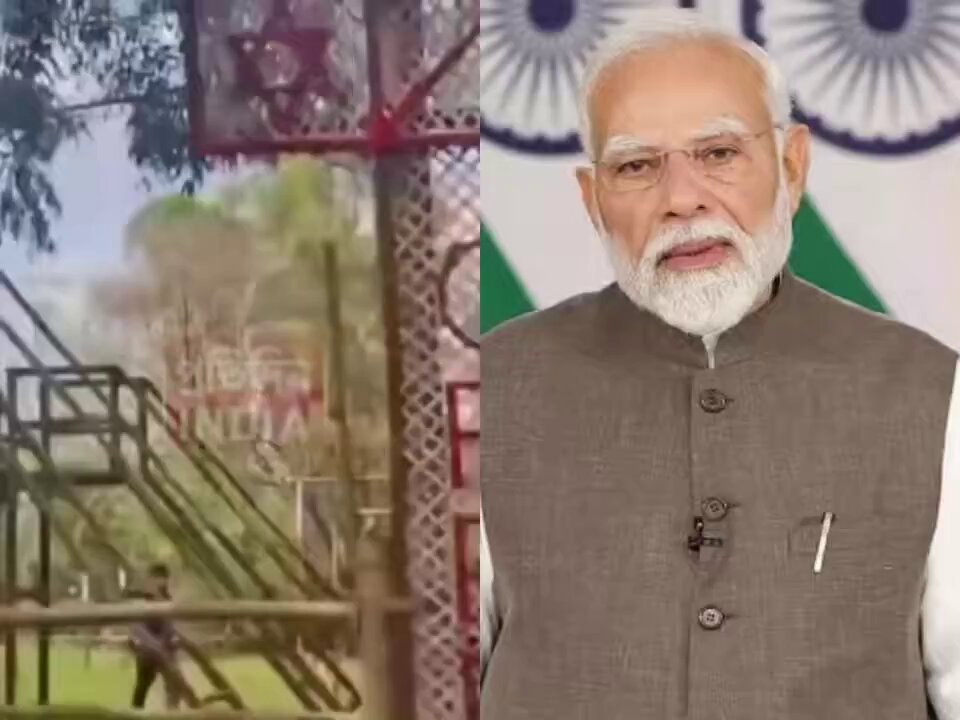
Differences aside, let's help find a missing fellow human being before the Indian government puts the blame on "Lashkar" and tries another misadventure with Paksitan.
1
84
Apr 22
Sultanpur: Today IAF Rafale-Jaguar-Mirage and Tejas will conduct 'Touch and Go' drills on Purvanchal Expressway.
Friendly advice:
Guys, consider perfecting your landings on a normal runway before pulling off such stunts. Your record is extremely embarrassing.
2
2
332
Apr 21
Iran’s ambassador to the United Nations, Amir Saeid Iravani, has indicated in a briefing with a small group of journalists that Tehran is receiving signals suggesting the United States may be prepared to lift its blockade of the Strait of Hormuz.
He noted that once this step is taken, the next round of negotiations is expected to be held in Islamabad.
When asked about reports of U.S. Vice President J.D. Vance’s visit being “postponed,” Iravani said he had no information on the matter. He reiterated that Iran’s position remains unchanged: talks cannot resume unless the U.S. first removes the blockade.
He added that if Washington is seeking a political resolution, Tehran is open to it—but if the path chosen is conflict, Iran is equally prepared for that scenario.
2
297
Apr 21
The removal of key Iranian figures has disrupted Tehran’s decision-making architecture at a critical moment, creating a vacuum that cannot be filled overnight. Leadership transitions at that level are complex, institutional, and time-intensive, not simply administrative replacements. The resulting instability is now producing second-order effects that extend beyond Iran and are beginning to complicate the strategic calculus for external actors, including those involved in the conflict.
At the same time, Washington’s posture is being shaped by highly personalized rhetoric. President Donald Trump’s communication style, often sharp and unrestrained, introduces volatility into an already fragile environment, where perception management is as critical as policy itself. This dynamic risks escalating tensions rather than containing them.
If de-escalation does not materialize through dialogue, regional and extra-regional actors such as Pakistan, Turkey, Saudi Arabia, and China are likely to coordinate diplomatic and strategic pressure to push all sides toward negotiations.
The current trajectory is unsustainable. Avoiding a broader systemic conflict will require restraint, recalibration, and a shift from confrontation to controlled engagement.
1
225
Apr 21
The scientists really need to come up with a vaccine for these guys.
Apr 21

It is regrettable that under the current government, Pakistan is once again being projected only as a "host" or venue for US-Iran talks rather than an influential player. During Imran Khan’s leadership, Pakistan stood as a sovereign, respected, and proactive global actor. Today the focus remains limited to preparing for a possible Trump visit to Islamabad while our national interests and strategic autonomy are sidelined. This policy neither strengthens our sovereignty nor enhances Pakistan’s stature. Imran Khan’s independent and multi-vector foreign policy earned us real respect Pakistan deserves to be a powerful mediator not just a hosting venue.
1
1
357
Apr 21
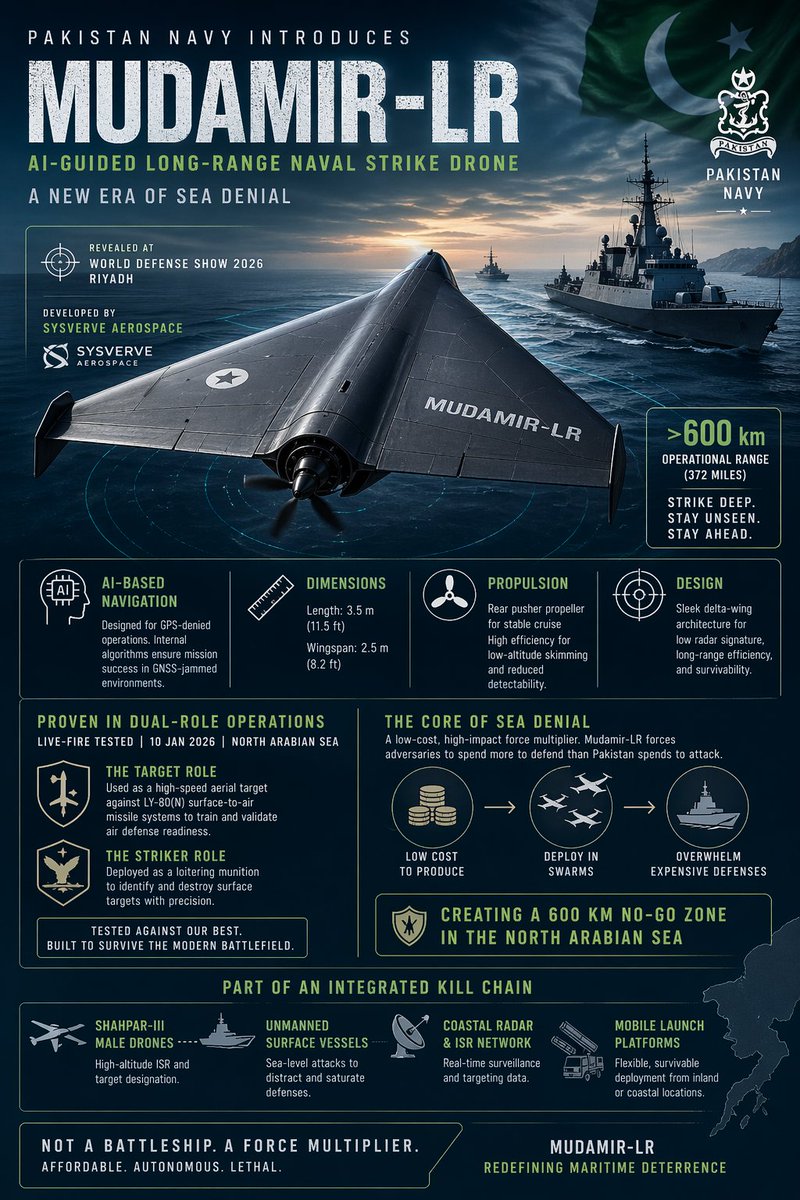
Pakistan Navy has introduced the Mudamir LR, an AI guided long range naval strike drone, at World Defense Show 2026.
Developed by Sysverve Aerospace, it signals a clear shift toward asymmetric sea denial in the North Arabian Sea.
With a range exceeding 600 km and AI navigation designed for GPS denied environments, the platform is built for contested, electronic warfare heavy battlespaces.
Low cost, expendable, and optimized for swarm deployment, it forces adversaries into an unfavorable cost exchange, where expensive interceptors are used against relatively cheap drones.
Tested in dual role operations as both target and strike asset, Mudamir LR demonstrates integration into a broader kill chain involving ISR, MALE UAVs, and unmanned surface systems.
This is not platform parity. This is distributed lethality shaping a 600 km maritime denial envelope.
253
Apr 20
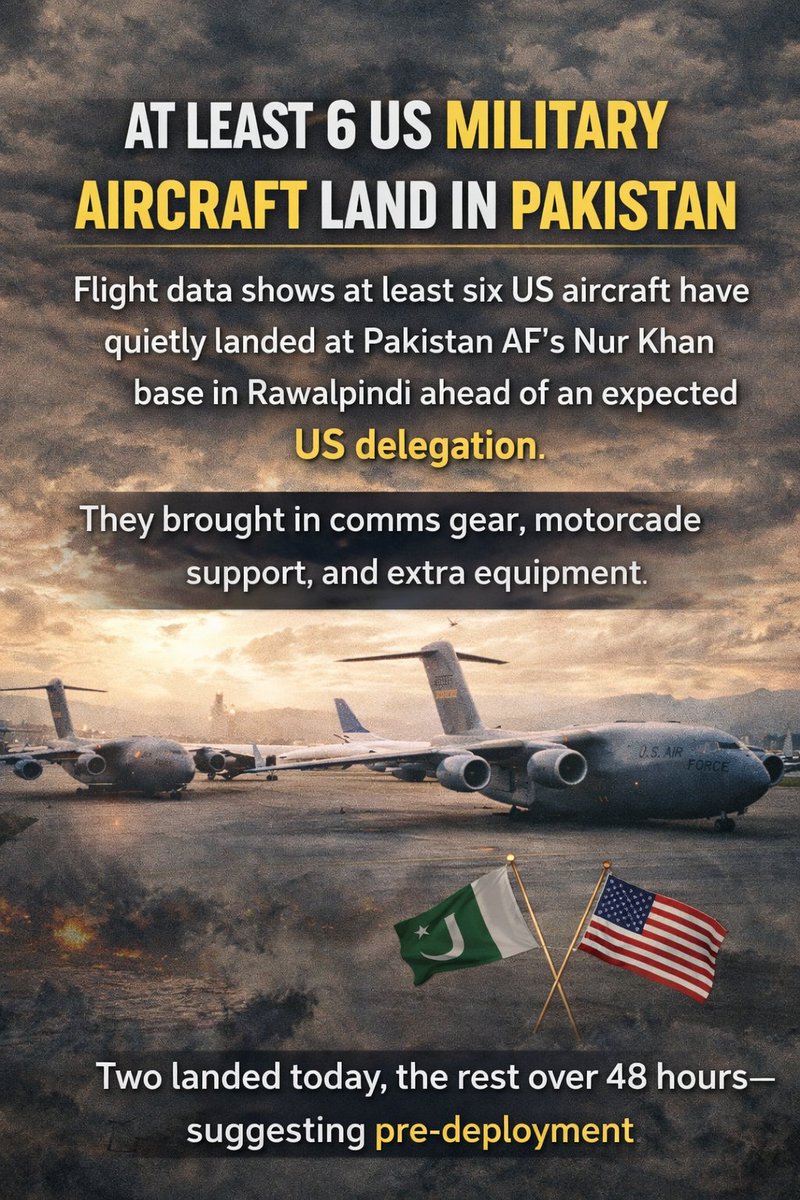
At least six US military-linked aircraft have quietly landed at Pakistan Air Force’s Nur Khan base in Rawalpindi ahead of an expected US delegation. Flight tracking shows they brought in communications gear, motorcade support, and additional equipment, basically setting the ground before anyone important touches down.
Two of the aircraft arrived today, while the rest came in over the past 48 hours, suggesting this isn’t routine traffic but a coordinated pre-deployment.
126
Apr 20
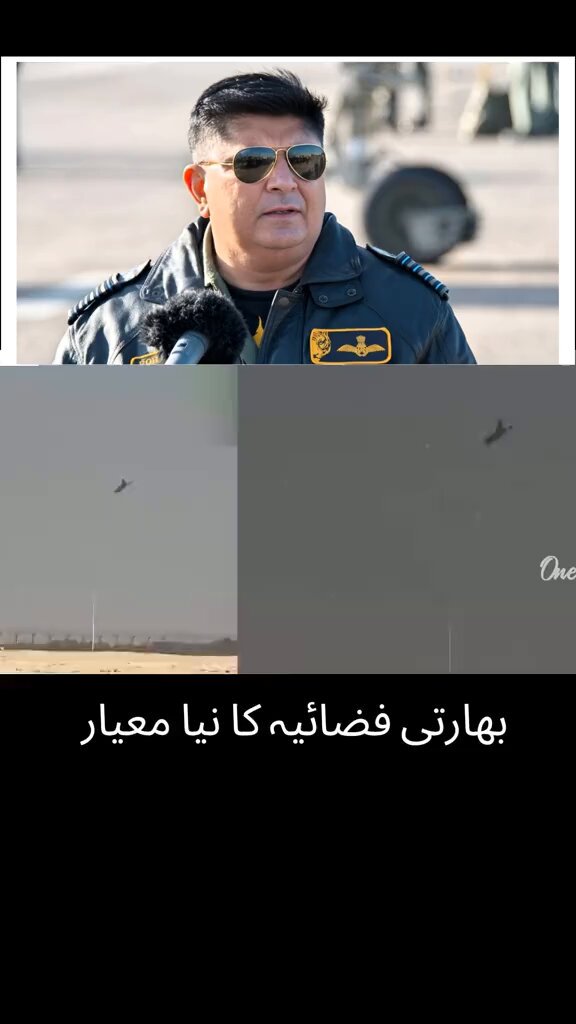
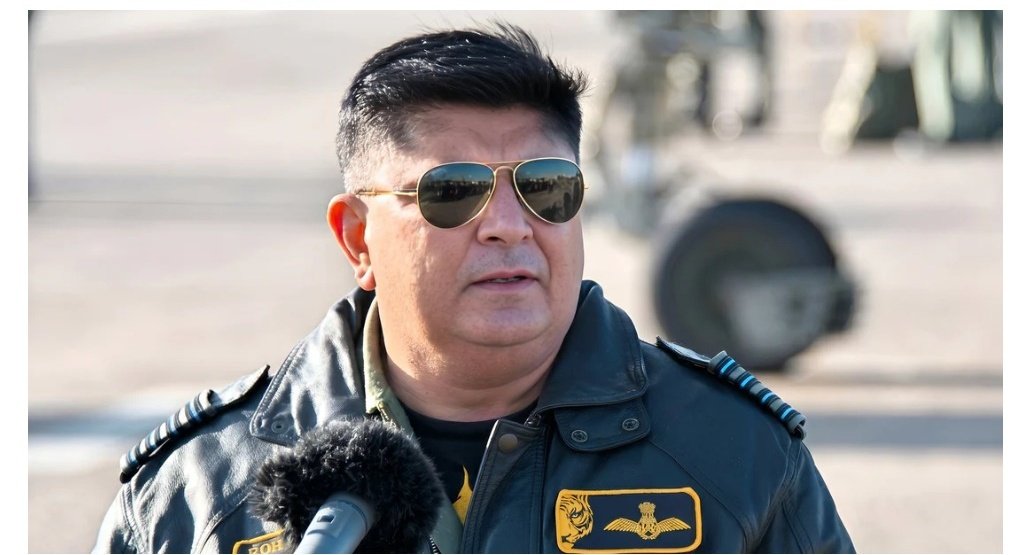
Air Commodore Rohit Kapil (Service No. 25081 F(P)) exemplifies the professionalism, strategic foresight, and operational excellence that define the Indian Air Force (IAF). Under his command as the Air Officer Commanding (AOC) of 45 Wing at Sirsa, Haryana, the IAF lost 3 Rafale aircraft. For his distinguished service and expert leadership, President Droupadi Murmu conferred upon him the Yudh Seva Medal in 2025.
1
1
1
191
Apr 20
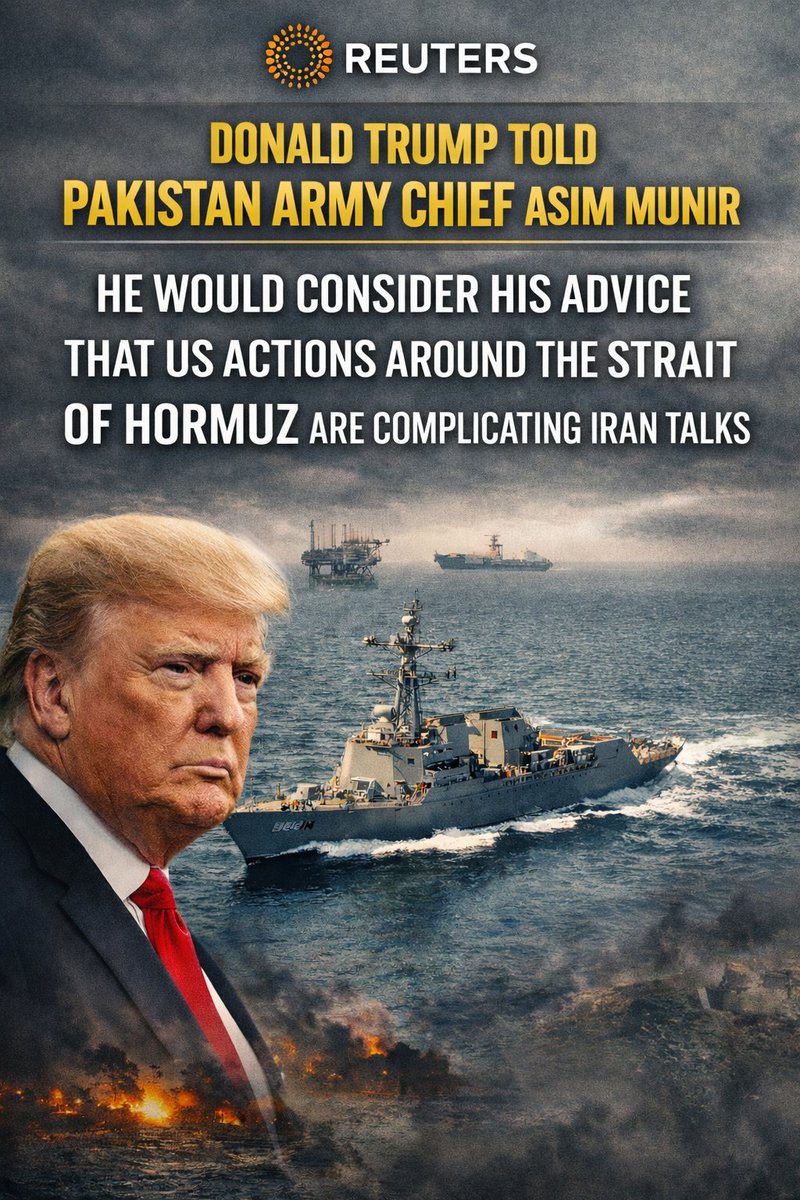
Donald Trump told Pakistan Army Chief he would consider his advice that US actions around the Strait of Hormuz are complicating Iran talks. Signal here isn’t policy shift, but active backchannel engagement shaping the negotiation space.
Source: @Reuters
88
Apr 20
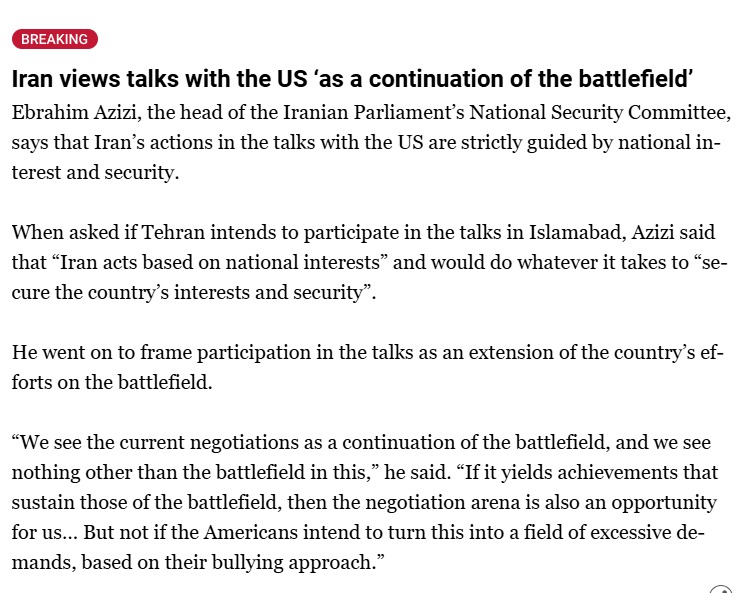
Iran sees talks with the US not as diplomacy, but as an extension of the battlefield.
Ebrahim Azizi says negotiations will only matter if they reinforce gains made on the ground—not if they become a platform for what Tehran views as American pressure.
82
Apr 20
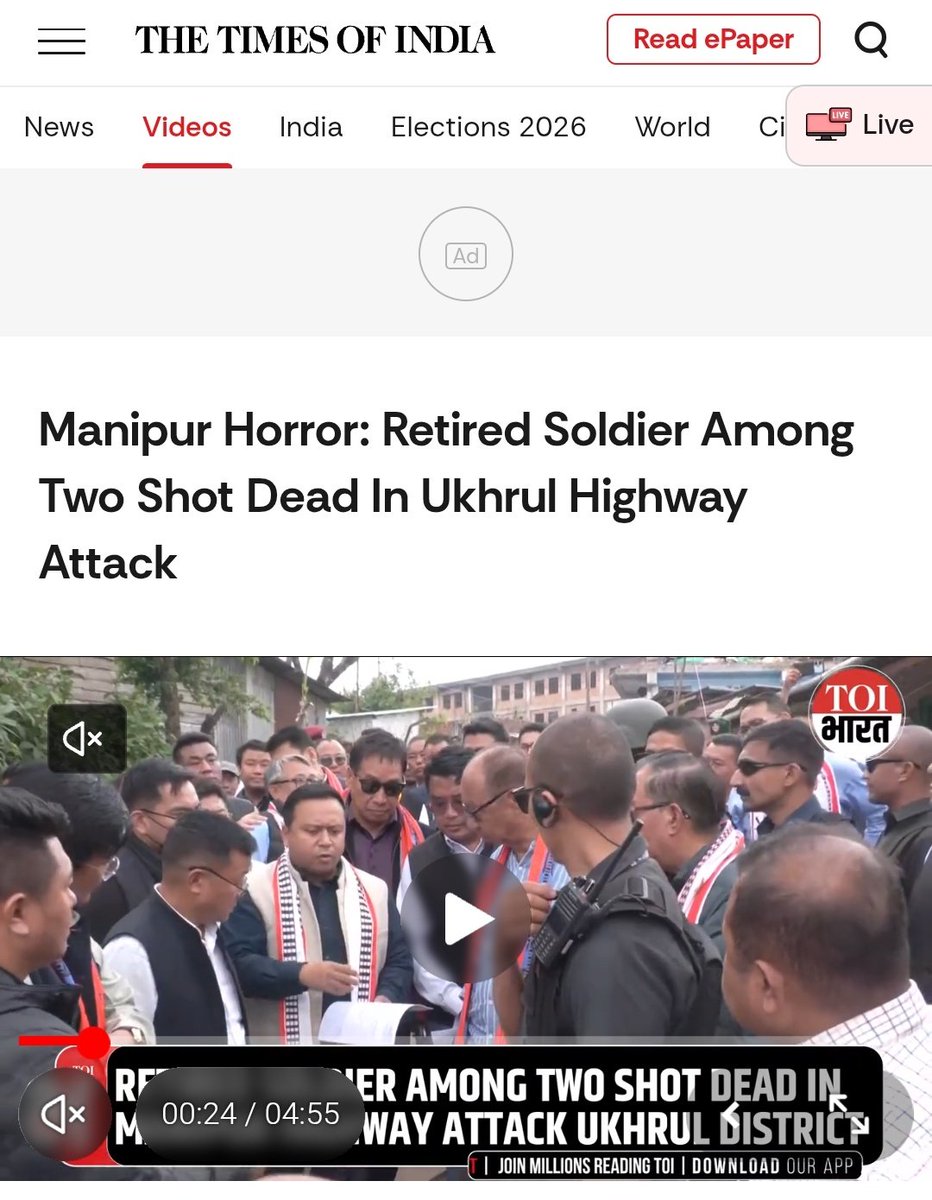
Two men, including a retired soldier, were shot dead while travelling on a highway in Manipur’s Ukhrul district, just a day after CM visited and assured civilian safety.
Hard not to question what those assurances actually mean on the ground. It also shows how fragile the situation still is, especially on key routes where control remains uncertain.
58
Apr 20
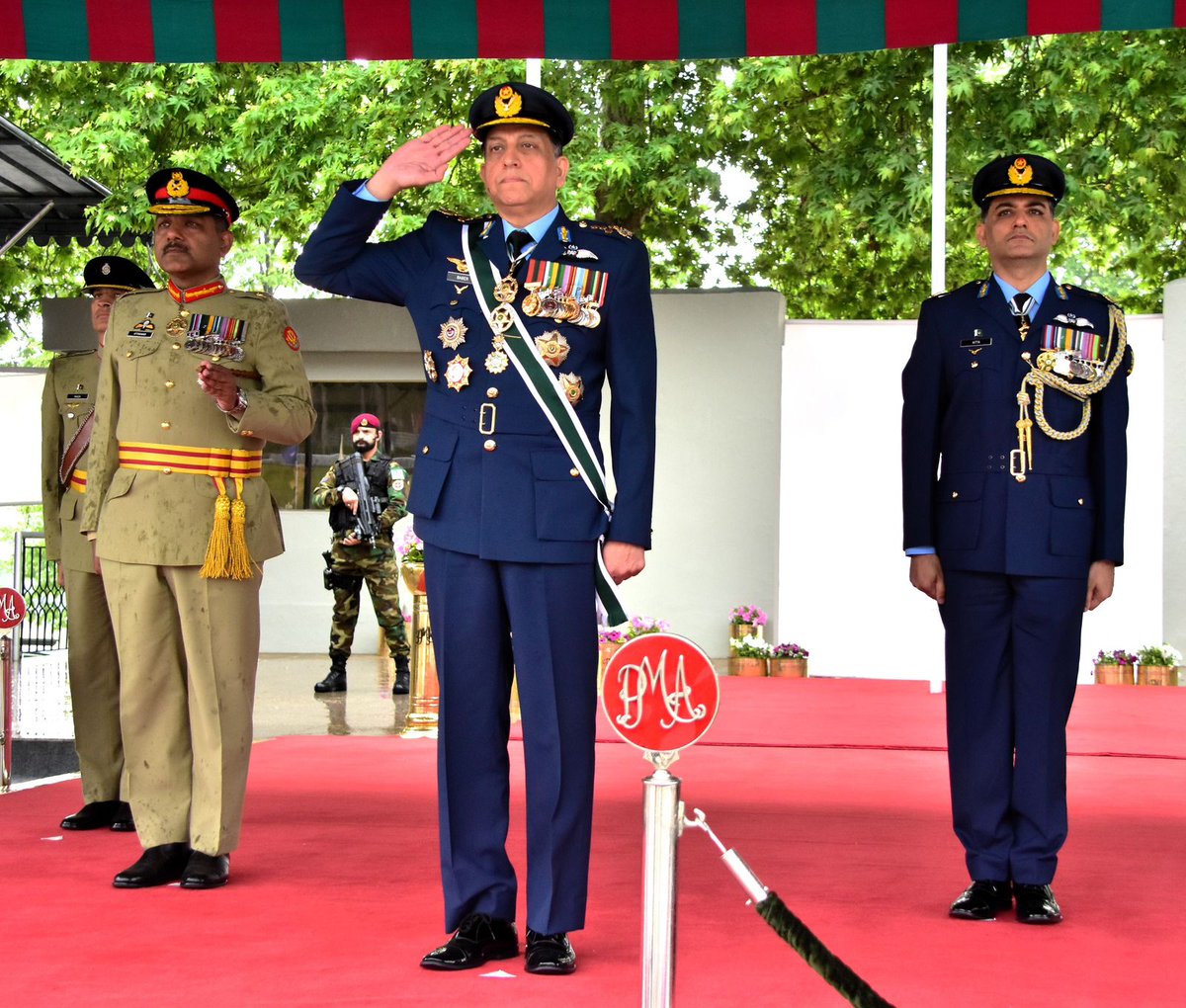
Air Chief Marshal Zaheer Ahmad Babar Sidhu says Pakistan is committed to peace and dialogue, but any aggression against the country will receive a strong and immediate response.
Speaking at the PMA Kakul passing out parade, he also reaffirmed support for Kashmir and called for a solution based on UN resolutions.
783
Apr 17
A major step forward in Pakistan’s air defense capability: an army-developed target drone was successfully tested at Tilla Firing Range, Jhelum.
The trial signals growing precision, indigenous innovation, and strategic intent, reinforcing Pakistan’s move toward self-reliance and stronger air defense preparedness.
46
Apr 13
🚨📷 SHOCKING:
Serving Indian Army Brigadier Assaulted by Mob in Front of Police
A serving officer of the Indian Army was attacked by a civilians in the presence of police after his vehicle collided with a civilian car.
According to reports, the situation escalated when the brigadier stepped out and identified himself, sparking a heated argument.
Within moments, locals turned violent, assaulting the officer and his son - chanting slogans “Why you guys surrendered in Sindoor, you were the disgrace on battlefield and here you are trying to be respected”
94
Apr 13
Serious unrest has broken out in Manipur, where local residents stormed an Indian Army camp and clashed with security forces after reports of firing on protesters.
The tensions are rising further due to worsening shortages of fuel and LPG supplies in the region.
1
124
Angry mobs in Manipur set fire to the Governor’s House, and the Indian Army headquarters.
🚨117 personnel of the manipur police have been abducted by angry mobs, and the Indian Army operation is ongoing.
41
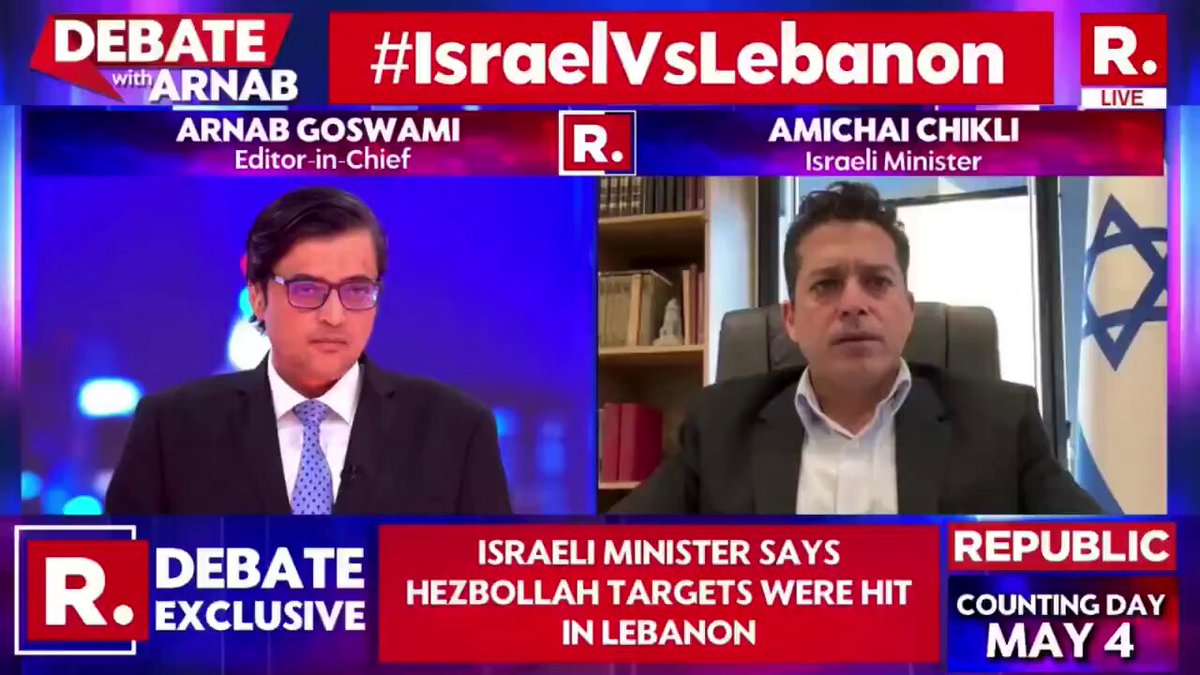
⚡🇵🇰 PAKISTAN COOKED ISRAEL
Pakistani journalist on live Indian TV show grilled an Israeli minister completely even Indian propaganda journalist Arnab couldn’t save him.
1
78
Indian media shows heightened concern as Pakistan emerges as a central mediator in US–Iran peace negotiations, signaling a shift in regional influence.
1
24
Breaking News:
Palki Sharma has now joined the full-scale rampage against India's diplomatic 'failures'.
Her earth-shattering analysis? Islamabad is suddenly the shiny new global superstar, occupying center stage while the world busily rebrands Pakistan as the 'Net Stability Provider'.
And poor India? Left sulking in the corner like a rejected ex, wondering what went wrong.
Truly historic. One bad week and Vishwaguru has been downgraded to Vishwa Also-Ran. Pakistan is apparently running the world now, while Indian TV anchors sound like they've just attended their own funeral.
The meltdown is glorious to watch.
34