
EmergentWealthSolutions@gmail.com | Upside Gains| Eliminate Downside Risk | Leverage | Legacy | Wealth Strategy
Joined January 2021
- Tweets 9,257
- Following 328
- Followers 306
- Likes 6,055
Photos and videos

Tom Lafferty retweeted

--LAW DAY 329--
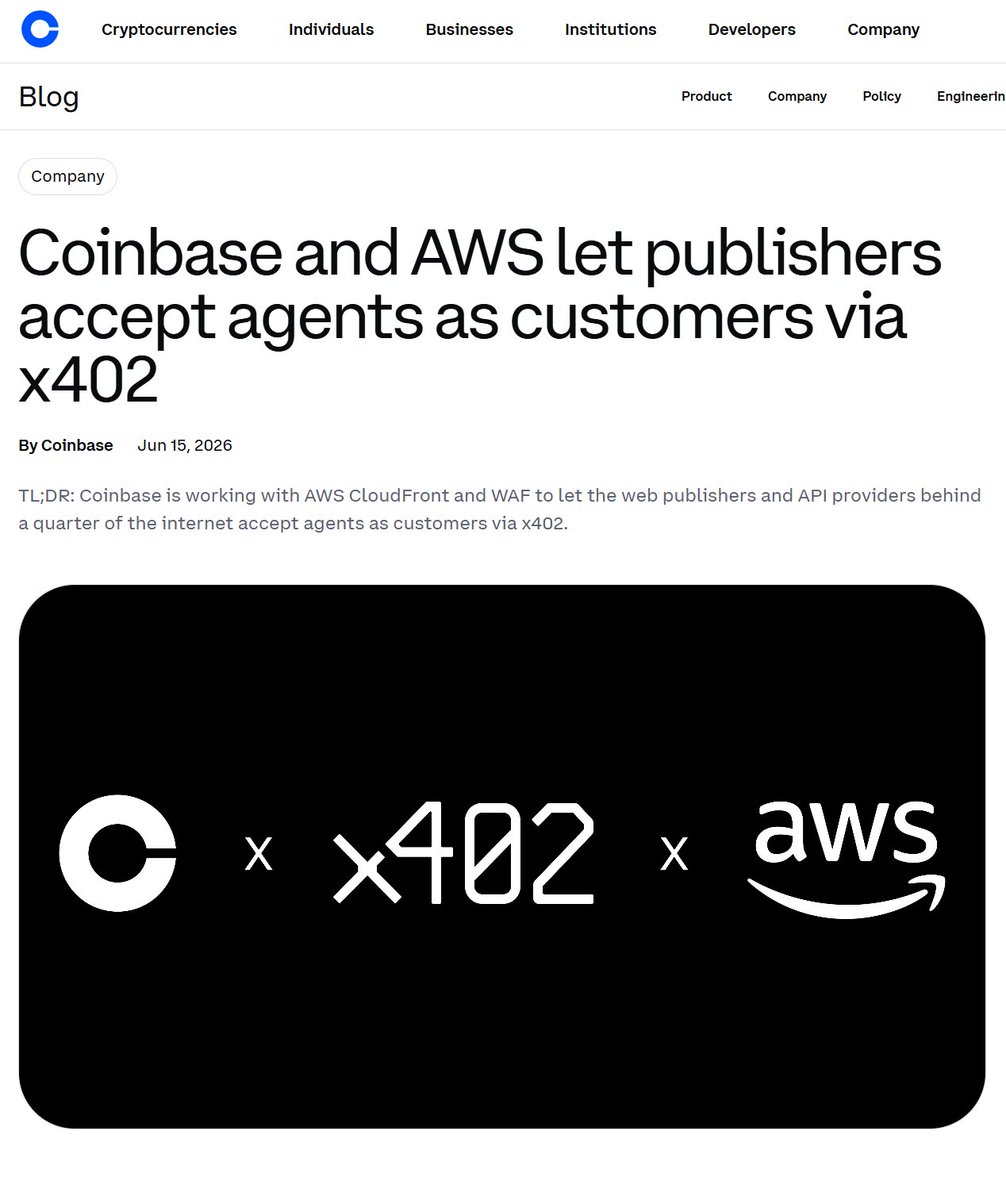
Coinbase and Amazon AWS begins accepting AI Agents as customers via x402. XRP and RLUSD are integrated into x402 AI Agent payments.
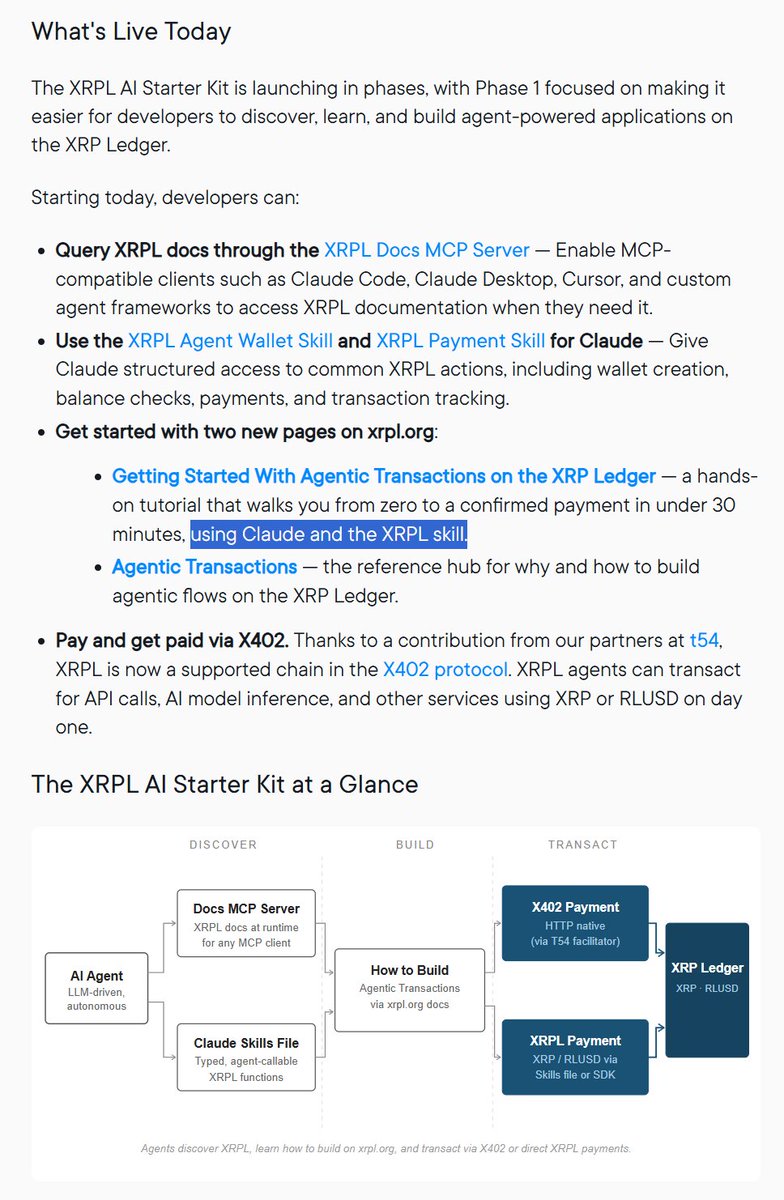
"Pay and get paid via X402. Thanks to a contribution from our partners at t54, XRPL is now a supported chain in the X402 protocol. XRPL agents can transact for API calls, AI model inference, and other services using XRP or RLUSD on day one."
Jun 15

The XRP Ledger Payment Skill for Claude AI✅
AI can transact in both XRP and RLUSD ✅
9
75
386
45,199
This makes sense, although if more people invest in private equity, there may be fewer gamblers in Las Vegas.

I think it’s time to revisit the accredited investor laws in the US.
Companies are staying private longer, where only accredited investors (aka rich people!) can invest. Retail investors can only come in after IPO, when much of the upside has already been captured.
These rules were created with the best of intentions, to protect regular people from scams - a noble idea. Unfortunately, in practice they've often made it illegal to get richer, unless you're already rich. A regressive tax!
We have to judge policies based on their outcomes, not on their intentions.
These are two possible routes I see:
1) Replace the rule with something merit-based, like a financial literacy test. Pass it and you're accredited. Having a qualification based on competency rather than your bank balance or income seems far more fair.
2) Remove the rule entirely. Let consenting adults assess their own risk. Disclosure requirements stay and fraud enforcement stays to punish bad actors.
1
🤔
Jun 14

Everyone is reading this wrong.
Yes, RAM is up 290%. Software costs are up 14.5%. That's real.
But here's what's not in this chart:
Every single major technology in history looked inflationary at the build stage. Electricity in the 1890s. Internet in the 1990s.
Both were followed by the biggest deflationary waves of their generation.
We are at the build stage right now.
The US already controls 74% of global compute capacity. GDP grew 2.5% while job growth was nearly flat in 2025, that's what a productivity boom looks like in the raw numbers.
AI production is growing at 2,000% per year in quality adjusted terms.
The official GDP data isn't even capturing most of it yet.
The chip shortage you're watching right now is the foundation being poured for cheaper drugs, cheaper logistics, and cheaper everything else tomorrow.
Short-term: yes, inflation. Long-term: the most deflationary force ever built.
The price of building the future always looks expensive from the present.
2
Tom Lafferty retweeted

The single biggest threat to Nvidia, Amazon and Azure right now is a rocket company: SPACEX
SpaceX generated $18.67 billion in revenue in 2025. At $184 per share today, it is valued at $2.41 Trillion, 129 times trailing revenue.
Nvidia trades at 22 times.
Amazon at 4 times. The valuation only makes sense when you understand what SpaceX is actually building.
SpaceX declared a total addressable market of $28.5 trillion in its IPO filing, equal to the entire annual GDP of the United States.
$26.5 trillion of that is AI alone. At just 1% capture of its own stated market, SpaceX generates $285 billion in annual revenue.
Starlink is the proven starting point.
The constellation has crossed 10,000 satellites, holds 60% of the LEO broadband market, and has 10 million monthly active users on Direct-to-Cell. Goldman Sachs projects Starlink reaches $144 billion in revenue by 2030.
At a standard 10x revenue multiple for subscription infrastructure, Starlink as a standalone business is worth $1.4 trillion, more than SpaceX's entire market cap today, before counting anything else.
The bigger bet is orbital AI infrastructure and this is where SpaceX directly threatens Nvidia, AWS, and Azure simultaneously.
AI data centers have a problem that is getting worse. A 1-gigawatt facility now draws more electricity than some mid sized nations. Local governments are rejecting new projects because of grid strain and water use.
AWS and Azure pay $0.05 or more per kilowatt-hour for electricity. That cost is rising as AI demand grows. SpaceX's answer is to move the compute off the grid entirely.
In orbit, solar panels generate more than 5 times the energy of an identical array on Earth because there is no atmosphere blocking sunlight. Capacity factor exceeds 95% versus 24% for terrestrial solar.
No cooling is required, the vacuum of space handles it passively. No land, No grid, No permits, No energy shortages.
An independently verified 10-year cost model for a 40-megawatt cluster: $8.2 million in orbit versus $167 million on the ground.
Effective energy cost in orbit: $0.001 to $0.005 per kilowatt hour, 10 to 50 times cheaper than what AWS and Azure pay today.
SpaceX unveiled the AI1 satellite a few days ago, its first orbital data center prototype with 150-kilowatt peak compute, a 70-meter wingspan, and Nvidia GPUs confirmed by the CFO.
The company has filed with the FCC to deploy up to 1 million AI satellites. Goldman Sachs projects this division alone generates $322 billion in revenue by 2030, a 100-fold increase from $3.2 billion today.
Nvidia generated $115 billion in data center revenue last year at 50 to 80% gross margins. AWS and Azure each generate approximately $120 billion in annualized cloud revenue.
All three are energy buyers locked into grid infrastructure. SpaceX's orbital compute becomes an energy generator with near-zero marginal operating cost. That is not a competitive advantage, it is a different physics regime.
SpaceX is also moving to eliminate Nvidia's chip pricing entirely.
Terafab is a joint semiconductor fabrication venture between SpaceX, Tesla, xAI, and Intel near Austin, Texas.
Total investment: $119 billion.
Target output: 1 terawatt per year of AI compute capacity.
Intel brings its 14A process node, one of only three sub-5nm processes in commercial production globally. The facility will produce D3 chips, radiation hardened and optimized for orbital data centers, alongside AI chips for terrestrial use.
Every dollar Terafab saves on chip costs is a dollar Nvidia loses.
The xAI merger on February 2, 2026 completed the vertical integration. At a combined valuation of $1.25 trillion, SpaceX now owns the AI models (Grok), the training infrastructure (Colossus 1 in Memphis), the orbital deployment system (Starship), the connectivity layer (Starlink), and the chip manufacturing (Terafab).
Anthropic is already paying SpaceX to rent unused Colossus 1 compute, a competitor writing checks to SpaceX for access to its own infrastructure. This is the exact model Amazon used when it built AWS from its own retail logistics and then sold access to the world.
The entire orbital data center thesis depends on Starship. At current launch prices of $900 per kilogram, a 1-gigawatt orbital data center costs $42 billion, three times the ground-based equivalent. At $200 per kilogram, the math inverts completely.
SpaceX has completed two consecutive Super Heavy booster catches. Full ship-side reusability has not yet been demonstrated. Goldman's $474 billion 2030 revenue projection requires growing from $18.7 billion at a rate faster than any company at this scale has ever managed.
SpaceX itself acknowledged in its IPO filing that orbital AI infrastructure "relies on unproven technologies and may not become commercially viable."
But if even half of this works, $2.35 trillion looks cheap before 2030.
67
173
1,016
70,053
RT @VersanAljarrah: #BREAKING: XRPL 3.2.0 upgrade drops today, 40% less server usage, and faster throughput for independence.
Banks & paym…
272
Tom Lafferty retweeted

Jun 13
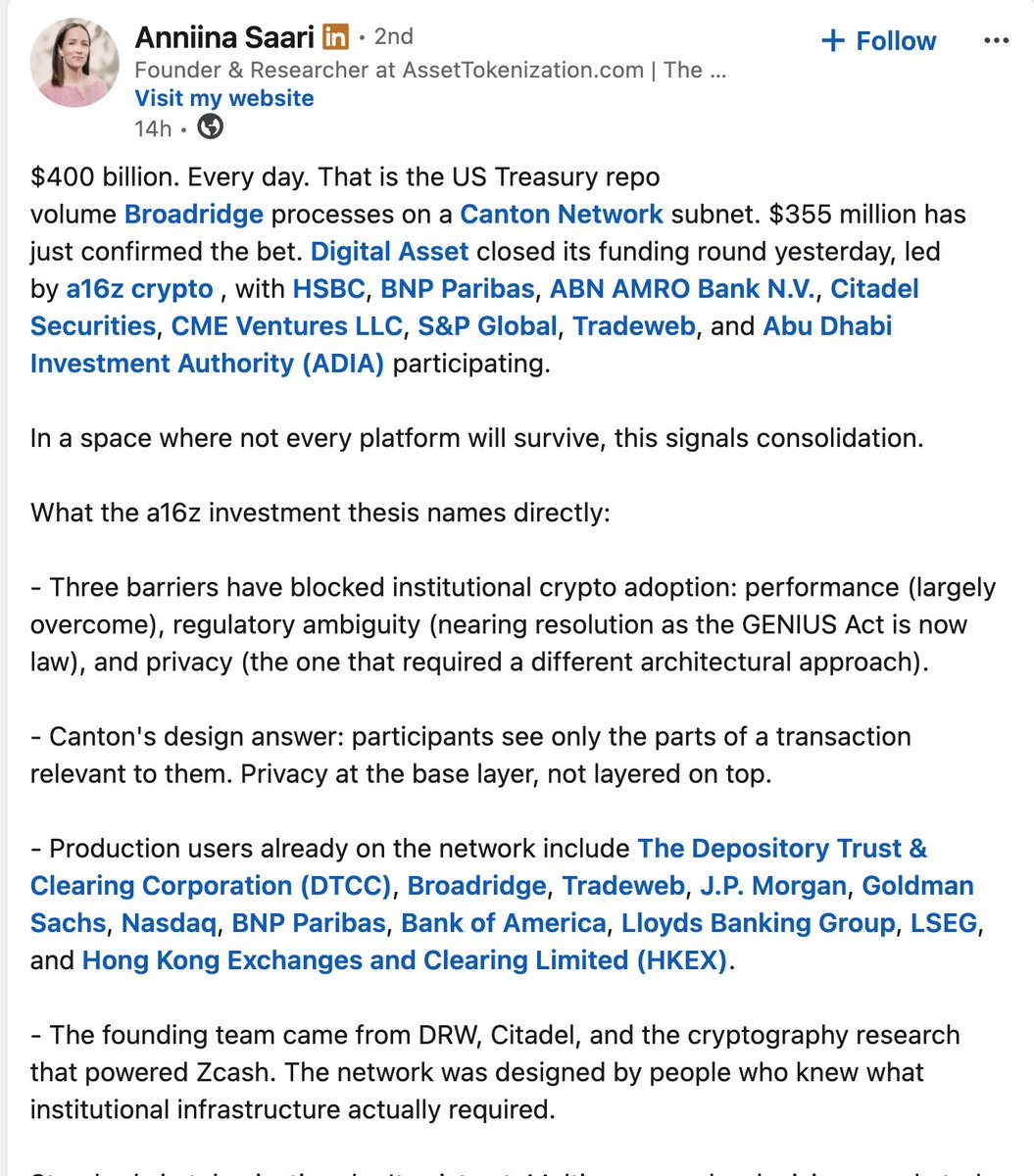
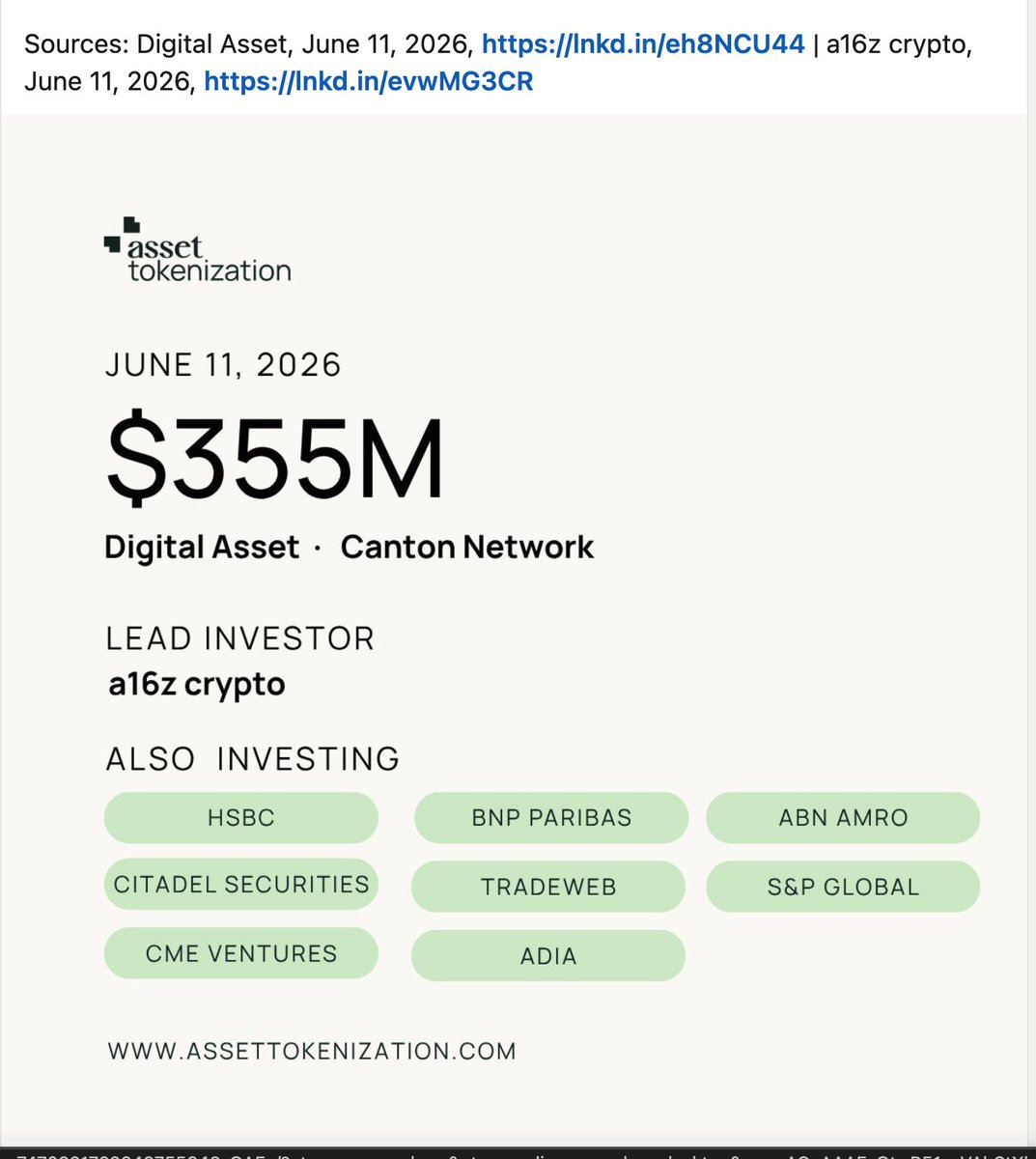
"In a space where not every platform will survive, this signals consolidation." $CC
7
16
71
3,914

Jun 13
⚖️ ⚖️ ⚖️
Jun 13
—LAW DAY 326—
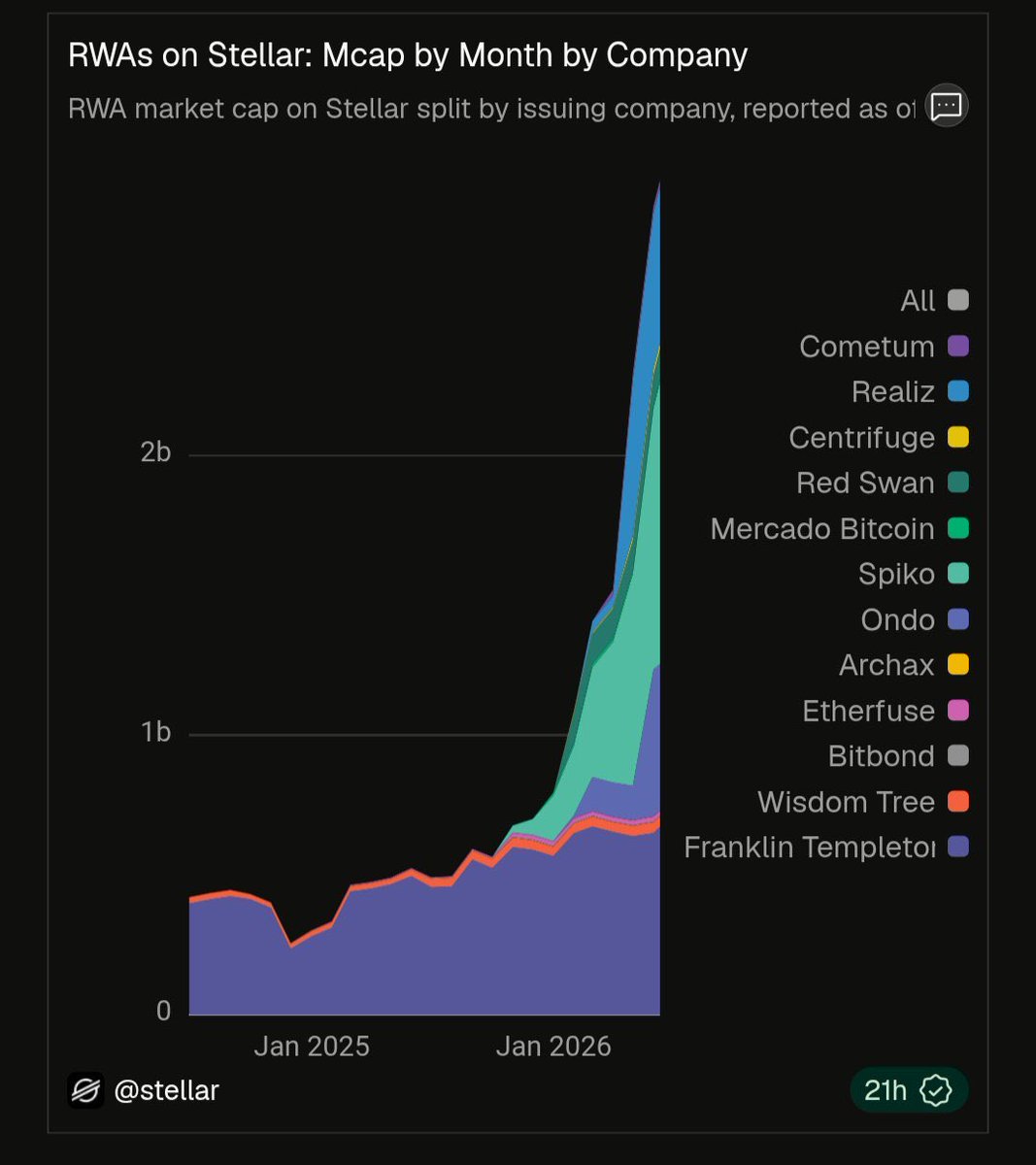
As the launch date of DTCC looms in just a few weeks, Stellar Real-World Assets begin to explode in market cap.
The tokenization of all US capital markets begins, and moves to full scale production in October.
6
Jun 13
Every time


4
Jun 13
Hopefully this starts a trend.
Jun 12

Elon just created 4,400 millionaires in a single day.
400 of them are now worth over $100 million.
These aren't VCs. They're SpaceX employees, and the list includes welders, technicians, and cafeteria staff, because for two decades the company paid every level of the workforce in stock instead of higher salaries.
Juan Hernandez immigrated from Mexico and took a $28 an hour contractor welding job in 2015. He says he didn't even know what SpaceX was. The company gave him a $10,000 equity grant and let him buy more shares through payroll deductions. That stake is now worth $880,000.
Trevor Hise's parents wanted him to take a stable job at General Electric. He picked SpaceX instead, stayed 12 years, and accumulated over 100,000 shares. At the $135 listing price that's $13.5 million. He's 37 and semiretired. His words: "The magnitude of this has been ridiculous."
The most telling detail came before the listing. Over 100 employees quietly banded together and negotiated a group wealth management deal covering up to $5 billion, because none of them had ever needed a wealth manager before.
Software IPOs have minted millionaires for 30 years. This is the first one where the money went to the factory floor.
5
Jun 13
👀

Trillions are coming to Canton Network
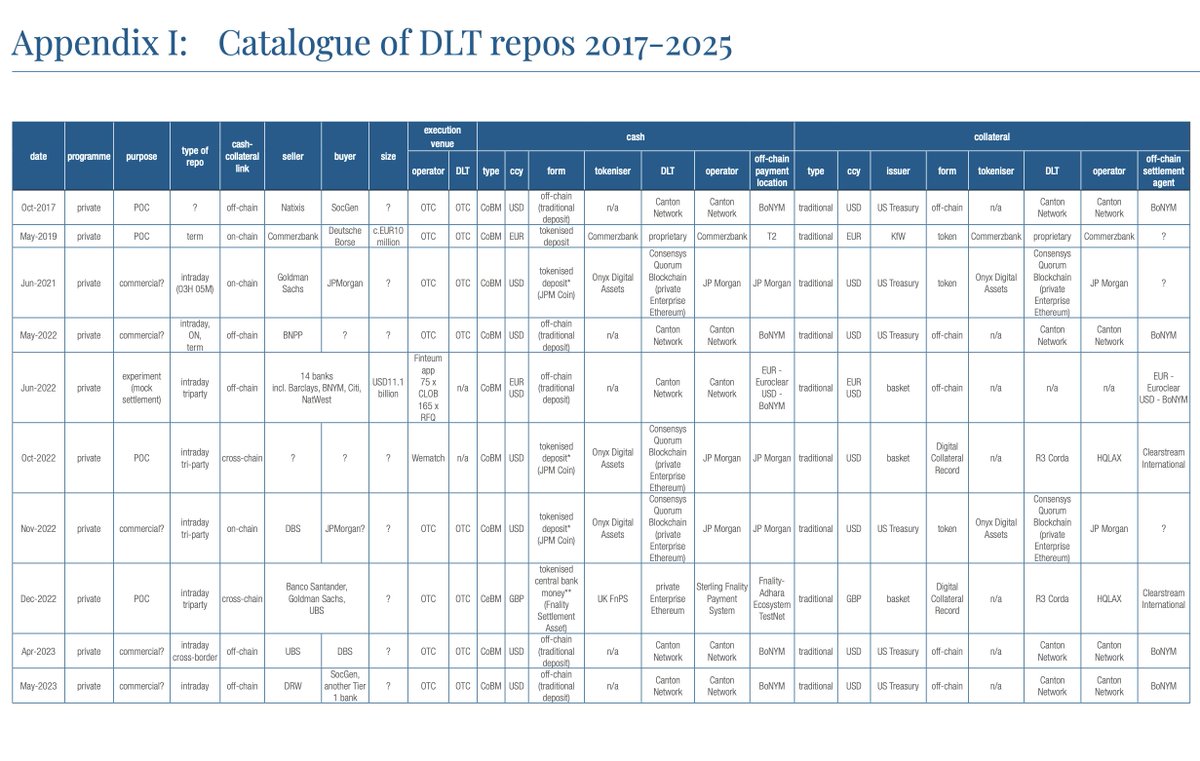
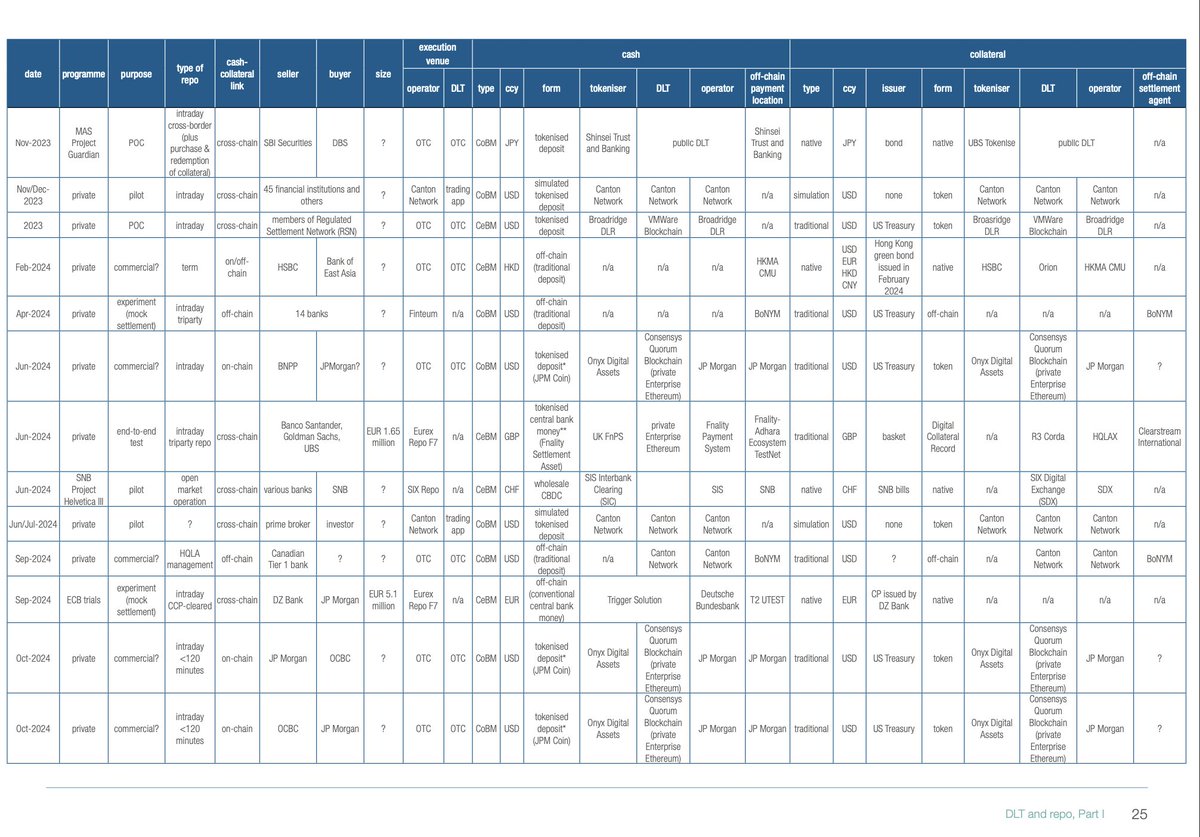
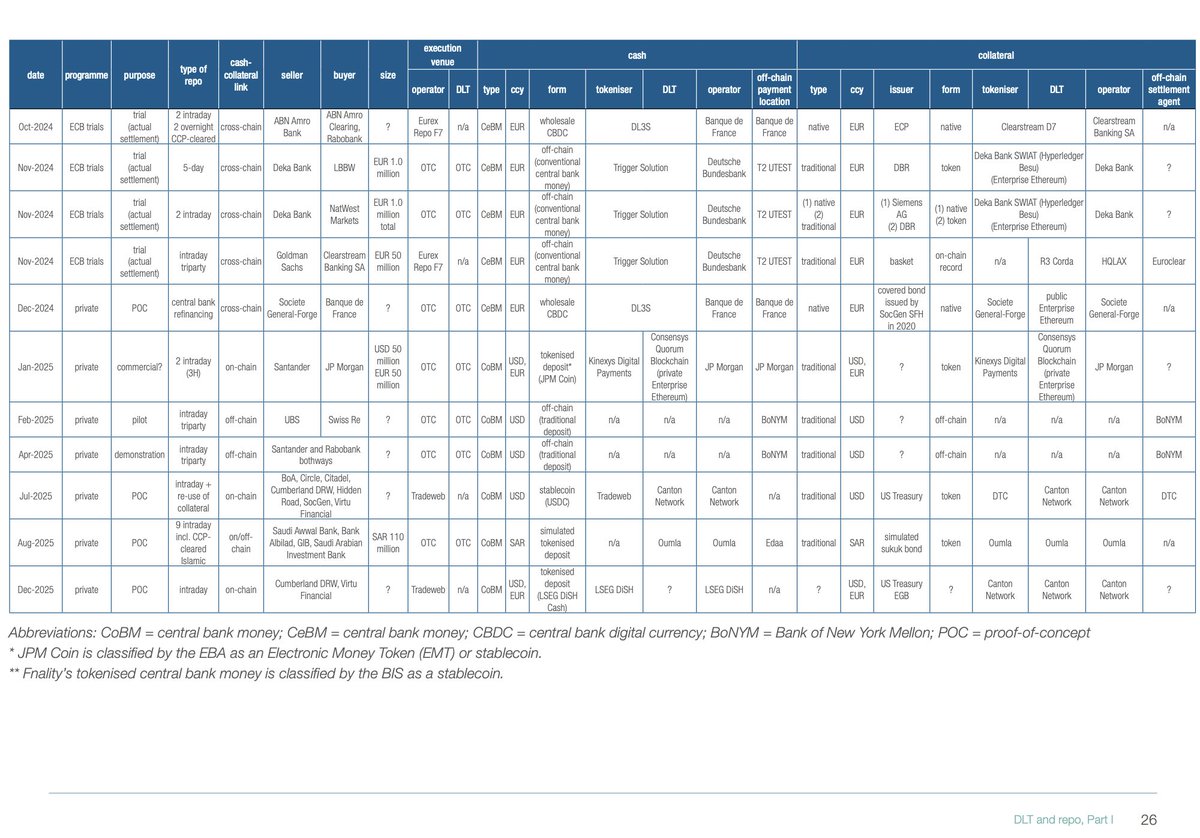
The document I found confirms Canton is the settlement layer for the entire DLT repo market per the International Capital Market Association:
The Proof:
ICMA writes the standards every bank, central bank, and capital markets institution operates under globally.
Directly from their document:
"Only Broadridge's DLR and JP Morgan Chase's Kinexys had been in regular and substantial commercial use by the end of 2025."
"What has commonly been described as the 'DLT repo market' was, by the end of 2025, almost entirely composed of these two distinct and isolated pools of activity."
Canton appears across 9 catalogued ICMA transactions 2017-2025, working alongside banks and entities such as: BNY Mellon, BNP Paribas, Barclays, Citi, NatWest, SocGen, DRW, UBS, DBS, Tradeweb, DTC, and a 2023 pilot with 45 institutions at once.
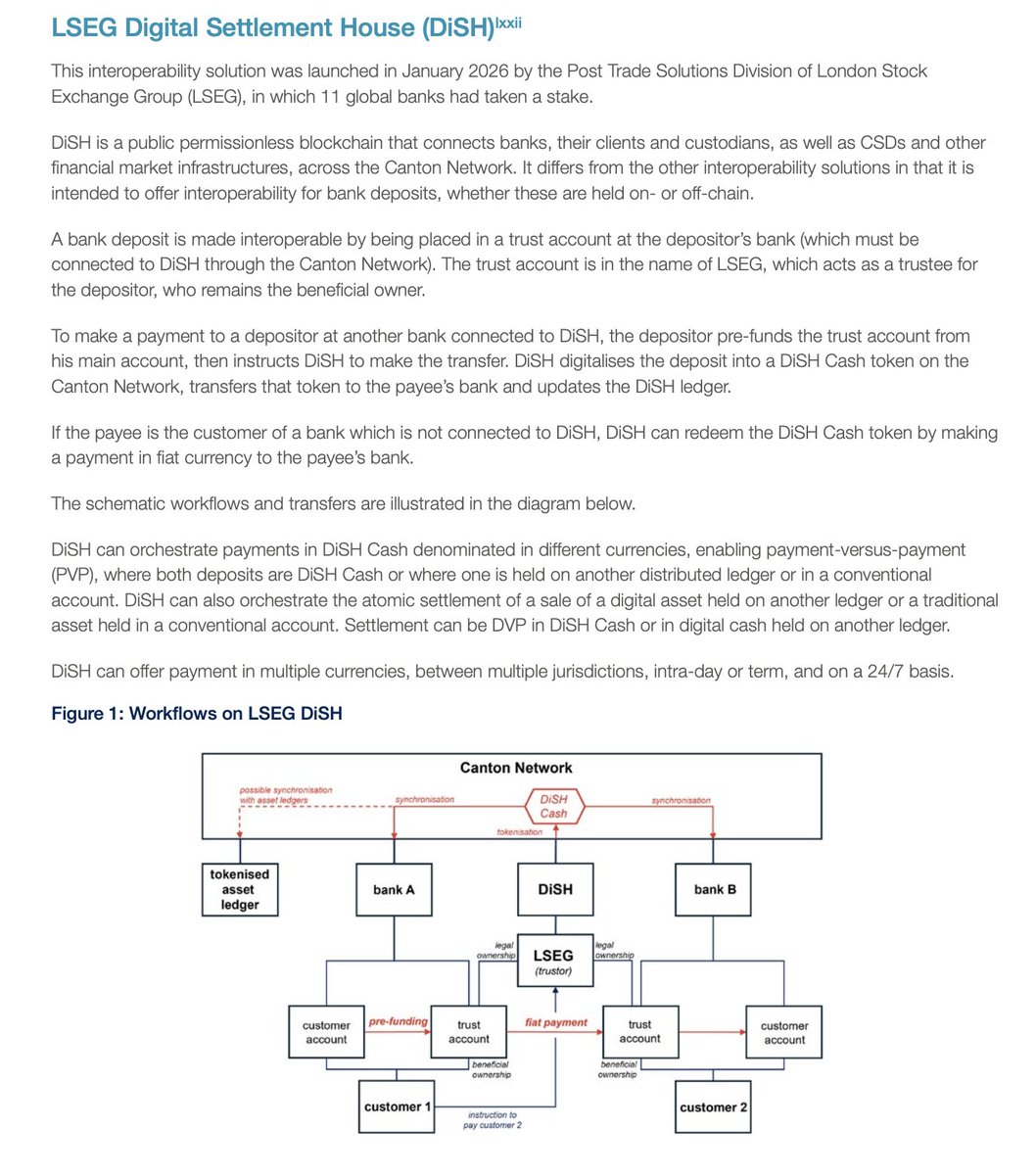
The London Stock Exchange Group's DiSH platform settles its tokenized cash through Canton Network: named participants including Euroclear, Euronext, Citadel Securities, Societe Generale, Tradeweb, Virtu Financial, Cumberland DRW, and TreasurySpring.
Broadridge's DLR is the world's largest platform settling tokenized real assets. It runs on Canton, tokenizing $354,000,000,000 a day. Broadridge's technology overall underpins $15,000,000,000,000 in daily trading across tokenized and traditional securities.
April 2026: Broadridge and Digital Asset co-invested in HQLAX's migration to Canton, bringing European collateral pools on-chain.
January 2026: JPMorgan announced JPM Coin moving natively to Canton, a bank with a balance sheet over $4 trillion.
DTCC is separately tokenizing US Treasuries on Canton. The US Treasury market alone is worth over $28 trillion outstanding.
$354 billion a day is already flowing. Trillions in assets are now lining up to move onchain.
All of this is happening on Canton Network.
canton-network:native $XRP $HBAR $SOL $LINK $QNT $XDC
From the document 👇
9
Jun 12
💨 🔥

The speed of XRP’s growth will shock everyone.😶🌫️
Years ago, Ripple ran a pilot for XRP-based payments across the U.S. to Mexico corridor.
The pilot succeeded.🤝
Every participant saw positive results. And one detail stood out above everything else.
Mexican banks asked Ripple to SLOW DOWN the payments. 🙇♂️
XRP was processing transactions FASTER than the banks could handle on their end.💨
Think about that.
XRP settles a standard bank transaction before the bank itself can finish processing it.💯
That was one corridor.
Ripple has payment corridors mapped across the globe. 🌎
When XRP is activated across ALL of them, the volume and velocity of settlements will be unlike anything the banking system has ever operated at before.☝️
The same way Mexican banks were introduced to a new standard of speed in that pilot, financial institutions worldwide will experience that same upgrade at scale.📈
Processing speeds they have never had access to.
Settlement windows that free up capital faster.
Efficiency the current system has been waiting for.
XRP will sit at the center of that upgrade.🌐
Moving faster than anyone can comprehend.😏💨
Listen closely.👇
1
23
Jun 12
💪🏼 💪🏼 💪🏼

19
Jun 12
Patiently awaiting the market to come to me
Jun 12

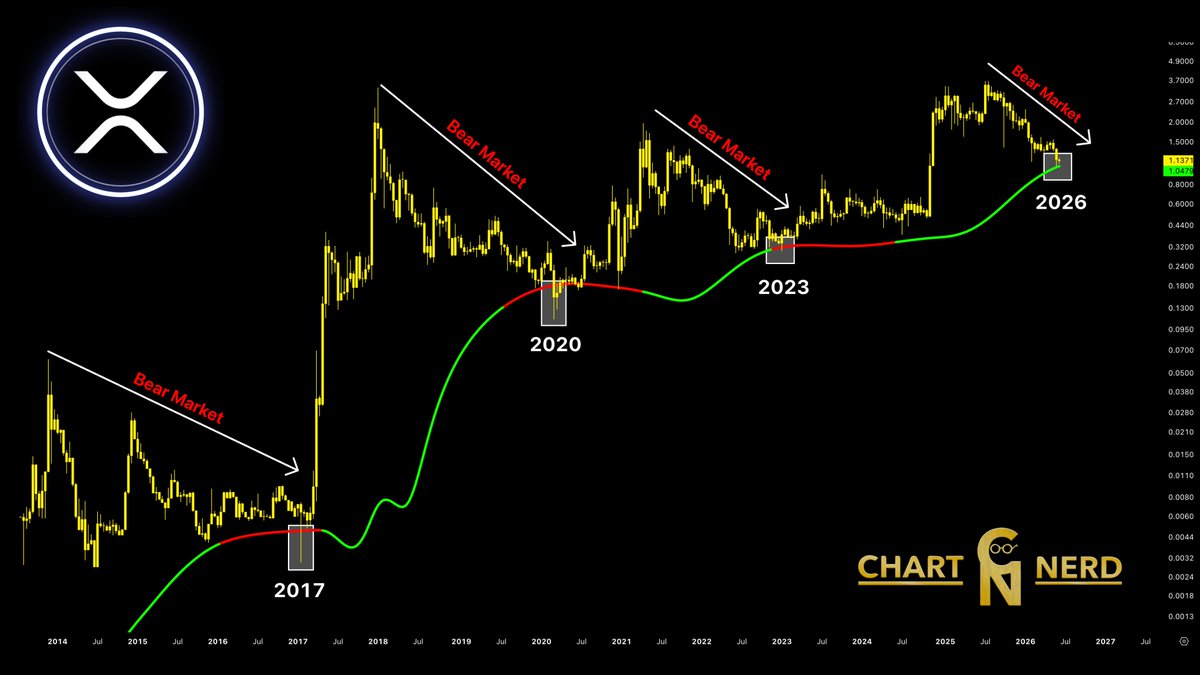
One of our $XRP signals just fired! 👏
Price has returned home to the lower regression band of the Gaussian Channel on the 2W timeframe ($1.04). This behaviour consistently repeated during prior cycles and we mapped it again in 2026.
Welcome to the land of macro opportunity 🥂
4
Jun 12
Patience
Jun 11

🚨 DON'T BE EXIT LIQUIDITY
Tomorrow SpaceX is going public at $2 TRILLION.
This isn’t just an IPO.
This is one of the biggest insider cash-outs in history.
The crowd sees an opportunity.
Institutions see an exit.
Skip Day 1 completely.
It’s a pure trap.
You’re buying straight from insiders who waited years to cash out.
Then comes the real pain.
6 months of brutal sideways death.
This phase is designed to break the crowd.
And it works every time.
99% of retail will panic and sell at a loss.
That’s exactly when smart money accumulates.
In silence, when hype dies and nobody is talking about SpaceX.
You have two choices:
Buy the launch and become their exit liquidity.
Or wait and take their bags at a discount.
Patience pays.
FOMO pays them.
For the record, I called the $82K bull trap and Saylor's selling before they even happened.
I'll call the real entry. The crowd will be too scared to buy. That's when you move.
Turn on notifications. Most people will follow me too late.
20
Jun 12
🔥 🔥 🔥
Jun 12

Gratitude → you see the good, your brain gets creative, you solve problems effectively.
Fear → you see problems everywhere, your brain is chaotic, your creativity is paralyzed.
Same business. Same person. Different fuel.
This is not woo-woo. It's neuroscience.