
227 Photos and videos



Pinned Tweet

Feb 16
On Whether Post-Quantum Digital Signature Upgrades Alone Can Support a Coherent Bitcoin Migration Under Nakamoto Consensus
Version 1.3 is live.
A Post-Quantum Bitcoin Migration Under Nakamoto Consensus?
The paper examines a narrow but uncomfortable question:
If post-quantum signatures are introduced via new output types, is that sufficient to enable a coherent Bitcoin migration, or do Bitcoin’s existing ownership semantics and rule-based validation create structural or ethos barriers that signature replacement alone cannot resolve?
This revision strengthens the formal threat model, clarifies assumptions around public key exposure, and tightens the argument around immutability and consensus constraints.
Serious technical feedback welcome.
doi.org/10.5281/zenodo.18650…
#Bitcoin #PostQuantumCryptography #Cryptography #BlockchainResearch #NakamotoConsensus
2
8
35
2,429
Jun 13
1/ Regarding Bitcoin and the quantum threat: if terms like Classical Computer, CRQC, ECDSA, secp256k1, Shor’s algorithm, or the DLP leave you confused, you’re not alone. These form the mathematical foundation that currently secures Bitcoin. Here’s a clear breakdown.
2/ It starts with secp256k1, the specific elliptic curve Bitcoin was built on. Satoshi chose this curve because its math is relatively clean and efficient. The curve follows the simple equation y squared equals x cubed plus 7 over a huge prime field. This creates a mathematical structure where certain operations are easy in one direction but extremely difficult to reverse.
3/ Sitting on this curve is ECDSA, or Elliptic Curve Digital Signature Algorithm, Bitcoin’s original signature scheme. Your private key, a secret number created by the user, is used to generate a signature for transactions. The corresponding public key, derived from the private key through repeated point addition on the curve, allows anyone to verify that the signature is valid. This is classic asymmetric cryptography. Verification is easy, but forging a signature without the private key is infeasible on classical computers.
4/ All of this security ultimately comes from the Elliptic Curve Discrete Logarithm Problem. Given only a public key, which is a point on the secp256k1 curve, there is no known efficient way on classical computers to figure out the private key that created it. This one-way mathematical difficulty is what protects Bitcoin wallets. A simple way to understand this kind of problem is to think about multiplication. It is very easy to multiply two large numbers together. For example, multiplying 23 by 47 gives you 1081 almost instantly. However, if I only give you the number 1081 and ask you to find the original two numbers that were multiplied to get it, the task becomes much harder. You would have to try dividing 1081 by many different numbers until you find the correct pair. On elliptic curves, the equivalent operation is even more difficult to reverse.
5/ Classical computers are the ones we use every day, phones, laptops, servers, and so on. They are deterministic, meaning the same input always produces the same output. All current cryptography, including Bitcoin’s, was designed with these machines in mind.
6/ A CRQC, or Cryptographically Relevant Quantum Computer, is very different. This is a large scale, fault tolerant quantum computer capable of running algorithms like Shor’s at the scale needed to break current public key cryptography. These machines require extreme conditions, often near absolute zero for superconducting qubits, and are not believed to exist (yet) at the required scale as of 2026.
7/ Shor’s algorithm, developed by Peter Shor in 1994, is the key threat. It can efficiently solve both integer factorization and the discrete logarithm problem on a CRQC. This means a CRQC could derive private keys from public keys on secp256k1, breaking both ECDSA and the Schnorr signatures used in Taproot.
8/ An important nuance most people miss is this. In Bitcoin, public keys are often hidden behind a hash in addresses such as P2WPKH for modern transactions. They only become visible on chain when you spend from that address. This gives some protection depending on the transaction output chosen, but once a UTXO is spent and the public key is revealed, it becomes vulnerable to a future CRQC until the next block. During that time, a CRQC could perform a just in time attack, but creating a new transaction that overwrites the old one. Miners would choose this transaction over a user transaction, because a CRQC would add an increased fee, making the transaction more attractive for miners. From a cryptographic perspective, there is no way to tell the difference between a user transaction and a CRQC. The data and cryptography on-chain look exactly the same.
9/ Here are some quick facts. Asymmetric cryptography in general was conceived in the 1970s with the work of Diffie and Hellman. Elliptic curve cryptography itself was proposed later in 1985 by Koblitz and Miller. No CRQC is known to exist today. Breaking secp256k1 is estimated to require roughly 1200 to 2600 logical qubits (they include error correction), which is considered beyond the capabilities of current quantum hardware.
#Bitcoin
3
7
30
704
Michael Strike | Ω retweeted

Jun 8
It was a brilliant conversation💯
thanks for sharing!
1
3
206
Great conversation with Gabi Urrutia @HalbornSecurity. $QRL is leading setting the gold standard for post quantum security by doing multiple indpendent 3rd party code audits, not being performed anywhere else in the ecosystem on native PQ chains.

New QRL Show episode is live.
Gabi Utturia, SVP & Field CISO at @HalbornSecurity, joins us to discuss blockchain security audits, crypto hacks, and how AI is changing the cybersecurity landscape.
If you’re interested in where audits and Web3 security are headed next, this episode is worth a listen 👇
youtu.be/e4UyKD3nkWI
2
13
31
622
Michael Strike | Ω retweeted

Jun 4
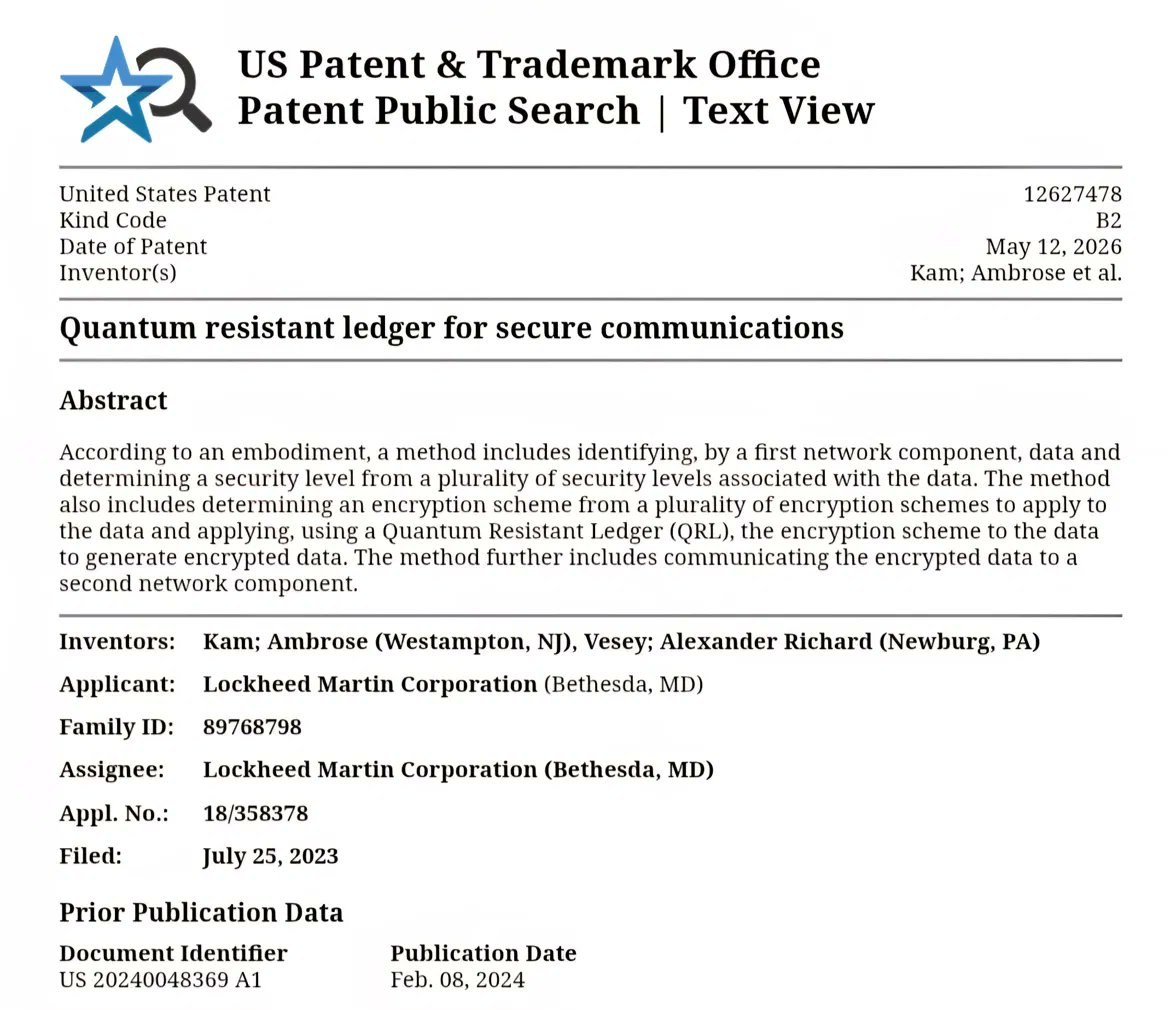
They reviewed every solution.
❌ RSA — breakable
❌ ECDSA — breakable
❌ All candidates — not enough
Then they found QRL.
✅ XMSS signatures
✅ Immutable ledger
✅ Field-deployable
Decision: APPROVED. 🔐
1
9
18
337
Michael Strike | Ω retweeted

Jun 3
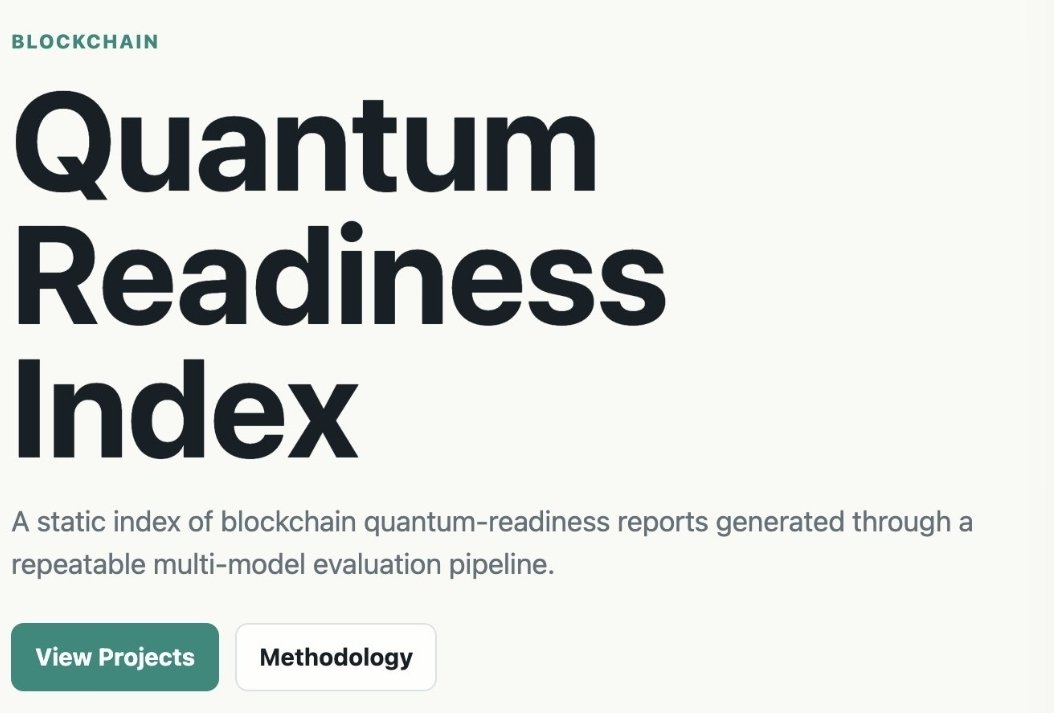
Is your blockchain quantum ready for the post quantum era?
Check:
qrindex.org
4
8
20
1,474
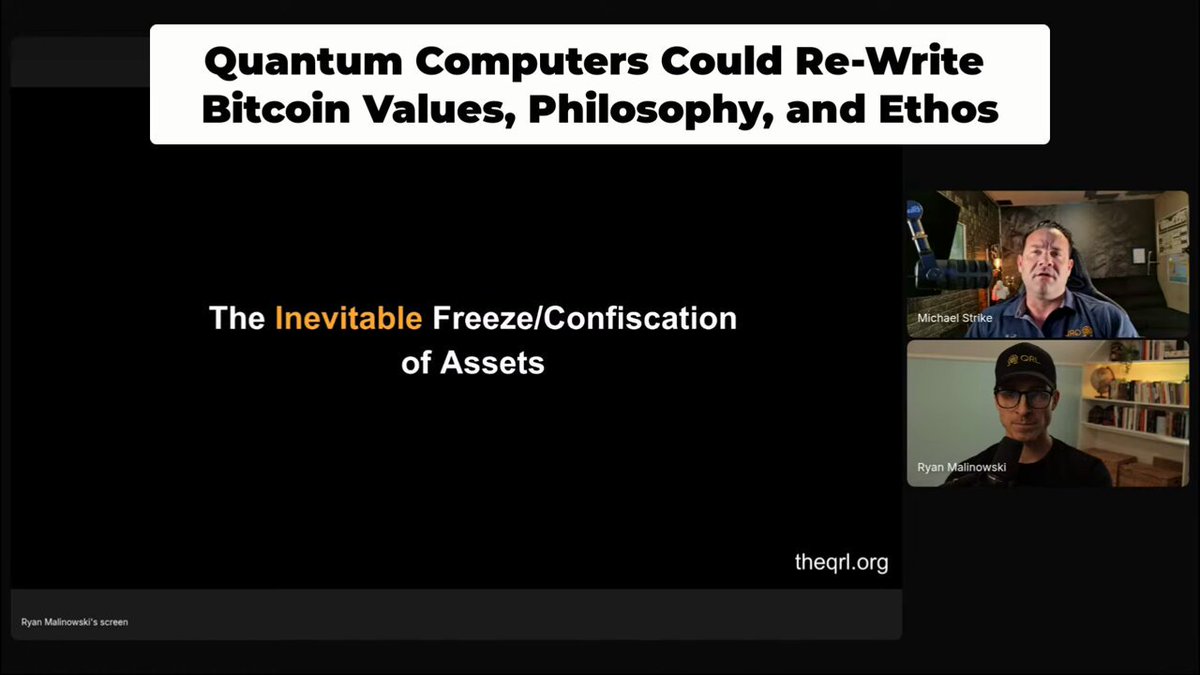
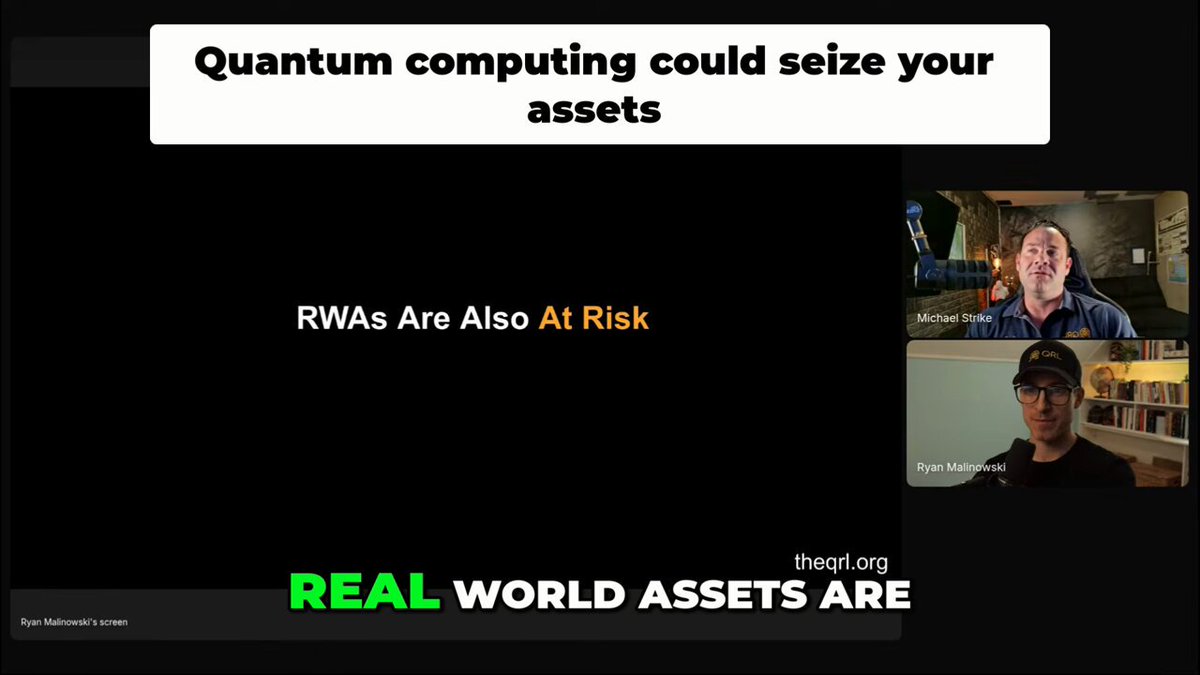
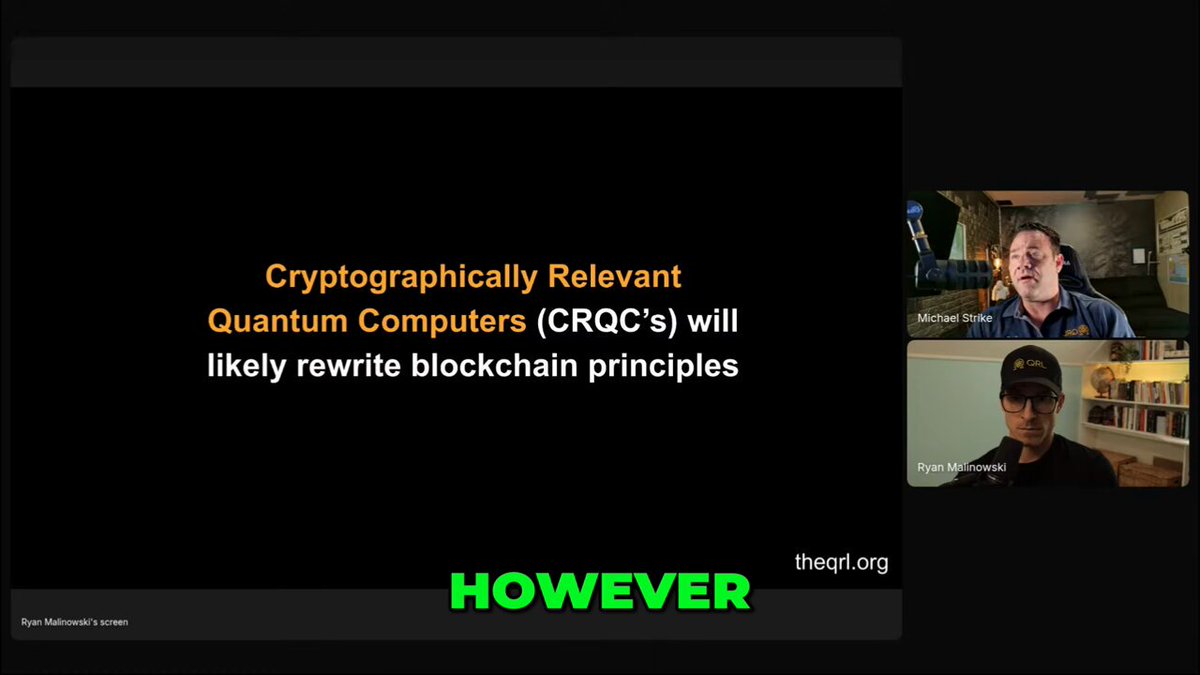
I sometimes take criticism for suggesting that retro-fitting #QuantumComputing resistance to legacy chains could re-write #blockchain property ownership principles, and thus the ideologies of what is considered acceptable.
However, this is has already happened. Let me explain.
When institutional money adopted #Bitcoin and #Ethereum, the ecosystem rejoiced. Finally, crypto would be brought to the masses. I did not, because I had seen what the Comex market had done to the price of gold, when I realized I no longer knew what golds "true" value was in someone's hand. I was also a stacker.
Bitcoiners rejoiced. Ethereum would finally get its place in the spotlight. ETFs, derivatives, and other financial instruments were created. Owning crypto started meaning owning and ETF at best. A family member called me and said they finally bought Bitcoin by buying shares of MSTR.
I saw long ago what was likely always inevitable. Prices being papered over with inflated supply/demand, based on market making of legacy finance operators rather than what was actually "On chain".
I used to be a BTC maximalist. I was hopefully, and even having studied monetary history, gleefully naive.
The point is - Attacks on finite supplies of what money is, started long ago, ever since the first rune stones were created on an obscure island no one remembers. Through the Roman Empire, Nixons temporary dollar detachment from gold, through the 80s of replacing silver with zinc in coinage.
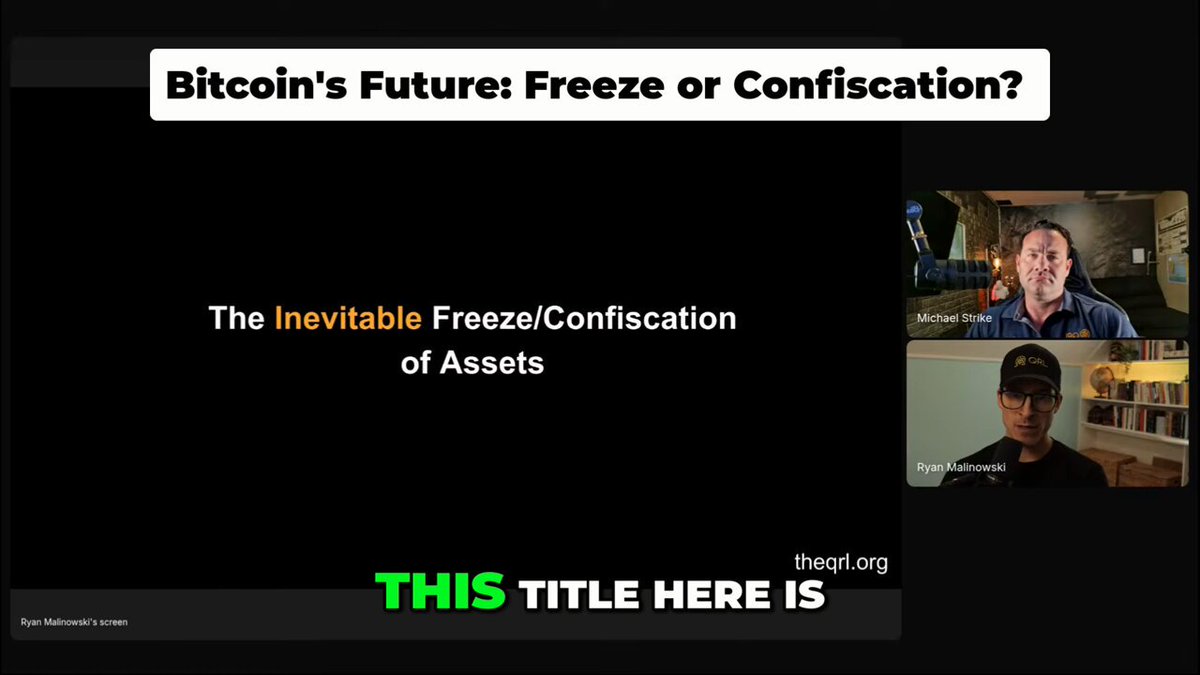
Property confiscation under the Quantum threat will happen. It will be the new net normal. People will protest, they will complain, they will be angry. But their voices will be silenced, their claims invalidated through creative word play about what is best for them, and the world will move on as it always has, because it's human nature tarnish something pure or of real value, and reallocate it to the interests of the few, at the costs of the many. This was ALWAYS N experiment, not just in money, but of that in human nature as well.
It's happened before. It will happen again. It's already happened. It's in our nature.
Hate me if you want. But Quantum Computing is not just a technical challenge. That's the easy part. The hard part will be maintaining the core ideologies on which it was founded, rooting out core developer self interests, financial coercion, and other subversive tactics to undermine equality.
Follow me for thought leadership at the intersection of the quantum threat and blockchain, and where we are likely headed, rather than the goal seeking narratives of where we want to be.
* No AI was used to create this post. Just neurological musings and a few misfirings.
2
13
30
830
It's worth noting that while $QRL can't rewrite human nature, it has been post quantum secure since 2018, is in its forth total independent 3rd party audit (2x for QRL 1.0 , 2x for QRL 2.0 - Releasing soon), you'll have the capabilities of Ethereum, without the Quantum counter party risk.
DYOR, use AI, light a candle and ask your cat, or whatever it is you do to get to truth. While we can't force altruistic principles into the subconscious of the masses, we can at least confiscate some of the instruments via technology and cryptography, one step at a time.
$QRL - Fighting the good fight since 2018.
If you made it this far, thanks for reading. Like and re-tweet if you align with at least some of this message.
Again, no AI used.
10
33
1,040
Michael Strike | Ω retweeted

9
26
79
5,472
May 31
Quantum computers are changing cryptography, whether you believe in them or not. Governments and corporations are adopting post-quantum security standards because the threat is undeniable. Blockchains like Bitcoin are already facing this shift. #QuantumComputing #Blockchain
1
10
33
526
May 31
Introducing QRL 2.0 (Zond) Bitcoin's QRL, but post-quantum secure. Switching to Proof-of-Stake and adding EVM compatibility. Deploy your Ethereum smart contracts directly onto QRL 2.0! #Crypto #Blockchain
2
8
24
672
May 31
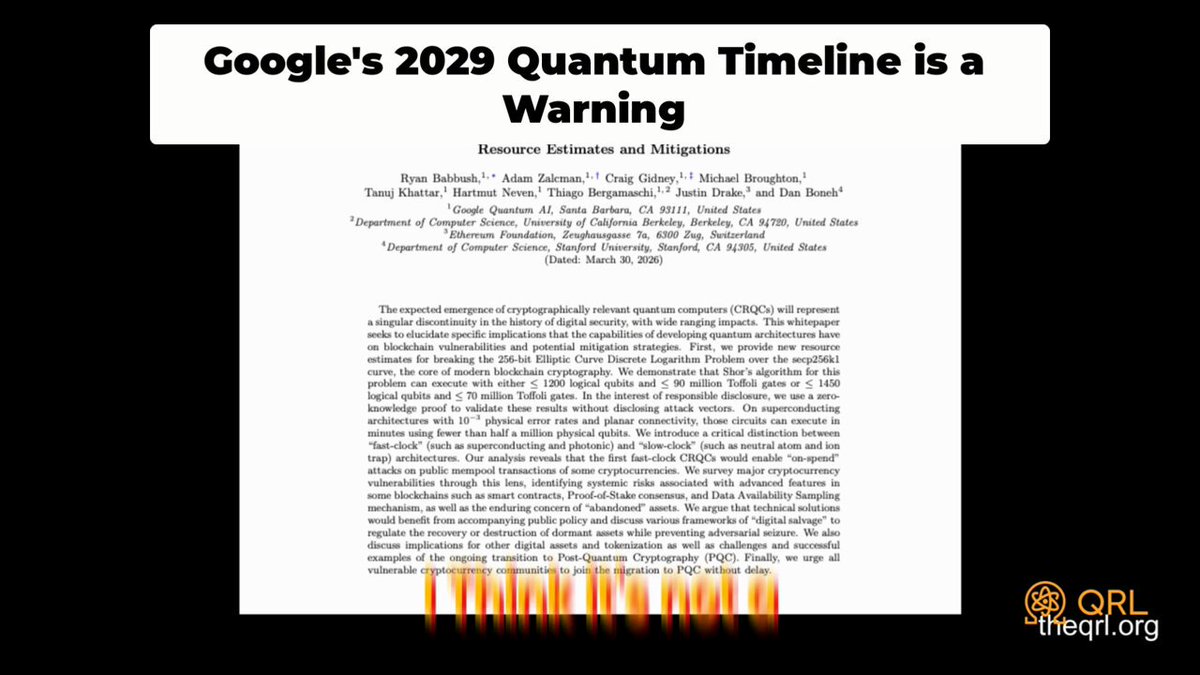
Google's post-quantum timeline just jumped to 2029. Early quantum machines could be spotted on blockchains first, not announced. Immutability is both strength and fatal weakness. Dr. Joesephy Kearney breaks it down on the $QRL show. #QuantumComputing #Cybersecurity #Blockchain
1
7
26
982
May 31
The quantum threat looms over current crypto assets like Bitcoin and Ethereum. Most legacy systems aren't truly post-quantum secure and will likely face compromises, impacting blockchain's integrity and core principles within just a few years. #QuantumComputing #CryptoSecurity
1
6
23
902
May 31
The biggest threat to Bitcoin's post-quantum security isn't a flaw, but stealth. A quantum computer could steal funds undetected, producing flawless signatures that look like legitimate transactions. The blockchain only sees the math, not the intent. #QuantumSecurity #Bitcoin
2
12
26
480
May 31
Most projects overlook a crucial detail: post-quantum security from day one. Designing for quantum resistance at genesis prevents structural problems that are nearly impossible to fix later. #QuantumSecurity #Cybersecurity
5
18
205
May 30
There are already two historical analogues that describe how the development of Quantum Computers will play out.
Development of CRQCs today and their use will likely resemble a combination of the "Manhattan" project and project "Ultra".
CRQCs are being developed under a veil of secrecy, likely top Secret classification, comparable to the Manhattan project, which developed the first atomic bomb. This is due to the fact that it could easily be argued that intelligence gathering is more important than money, known today as fiat, which can be printed into obscurity.
CRQC usage will likely resemble project Ultra, in which Alan Turing and his associates cracked the Enigma machine, and used it strategically and covertly enough to help end the war, but also in such a way that its use was not immediately discoverable.
The financial sector and/or blockchain "probably" won't be the immediate targets. This is due to the fact that it could easily be argued that intelligence gathering is more important than money, known today as fiat, which can be printed into obscurity.
Thus, when a CRQC does exist, or QDay as it is called, you won't even know. This is also backed up by the fact that a #Bitcoin transaction or UTXO generated by a CRQC looks cryptographically identical to one generated by a user.
Ironically, a little known fact is that Turing called the machine that broke Enigma, "The Bombe".
3
10
25
374
May 30
One of the biggest Bitcoin misconceptions about quantum computers? It's the #Quantum Computers we DON'T know about. #Bitcoin #QuantumComputing #Crypto
2
6
26
406