@TheIFS we've long made case for wholesale CGT reform
Important: raising revenue & avoiding reducing investment requires reform of tax base.
Always good to see politicians picking up our ideas. You can read about the why & how of reform here ifs.org.uk/publications/capi…
2 notes:..
@TheIFS we've long made case for wholesale CGT reform
Important: raising revenue & avoiding reducing investment requires reform of tax base.
Always good to see politicians picking up our ideas. You can read about the why & how of reform here ifs.org.uk/publications/capi…
2 notes:..
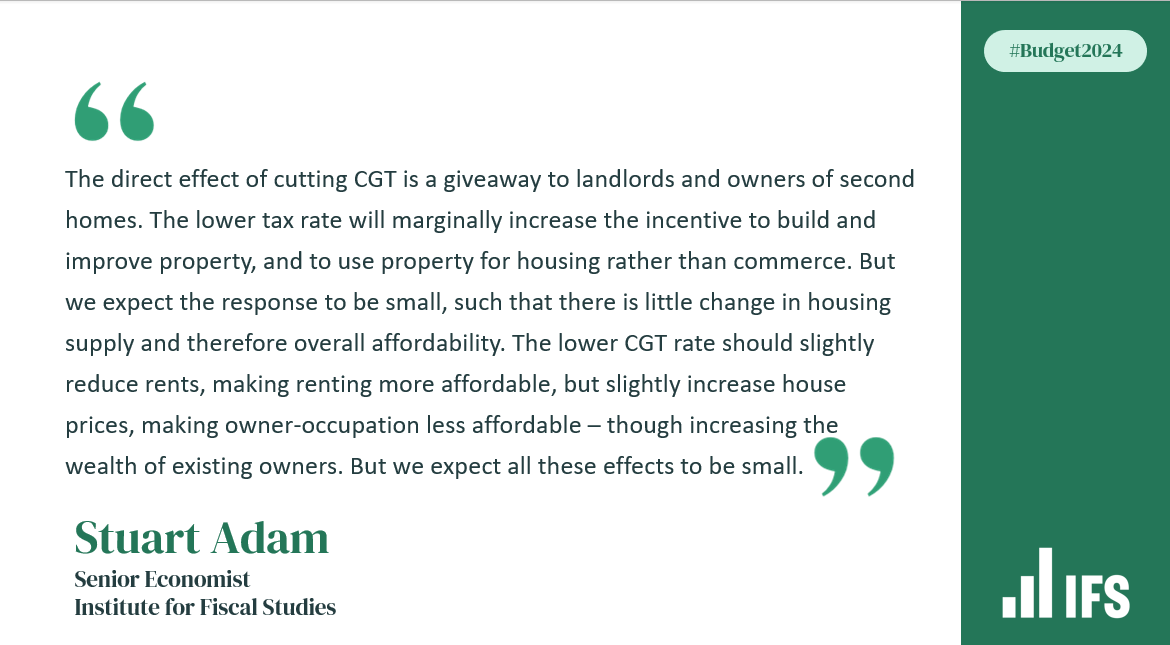
Wes Streeting has this morning set out his tax plans - specifically bringing capital gains tax into line with income tax
He says that the current system is unfair because it penalises work
Higher or additional rate taxpayers will pay 24% on gains in the current financial year. Streeting said that the rates should mirror income tax bands - so 40% for higher rate taxpayers and 45% for additional rate taxpayers
He says that the approach could raise £12billion a year
Streeting said: “A member of my family is a cleaner in Lancashire. She pays a higher tax rate on her salary than her landlord pays for the growing value of the home she lives in. She slogs her guts out, he puts in far less effort, yet the state rewards him more than her. And we wonder why people are angry.
“The system is penalising work. It’s not fair and it’s bad for our economy. We need a wealth tax that works. A pound made from simply owning assets should not be taxed less than a pound made from a hard day's work. We can do it in a way that is pro-growth, pro-entrepreneur and pro-work.”
No surprise to see ‘temporary’ fuel duty cut extended
Moving 1p rise from Sept to Jan 27 has one-off cost ~£200m
Fuel duty cuts are targeted at households & firms most exposed to fuel price rises but also blunts incentives to reduce driving
Permanent 5p cut would cost ~£2.3bn
NEW: Wales’s main parties all have differing visions for the country over the next four years.
But they have one thing in common: they need to be more upfront about fiscal reality.
📗 @fiscalphillips' new briefing ahead of the Welsh elections ⬇️
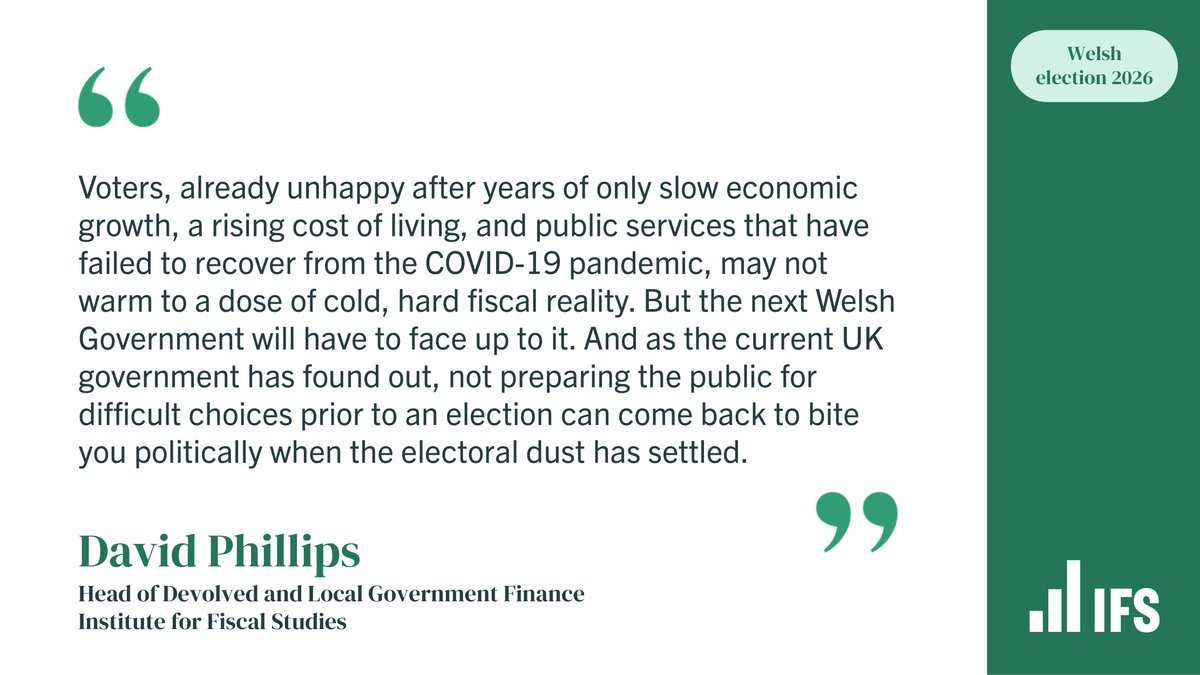
ALT Quote from IFS Head of Devolved and Local Government Finance David Phillips: "Voters, already unhappy after years of only slow economic growth, a rising cost of living, and public services that have failed to recover from the COVID-19 pandemic, may not warm to a dose of cold, hard fiscal reality. But the next Welsh Government will have to face up to it. And as the current UK government has found out, not preparing the public for difficult choices prior to an election can come back to bite you politically when the electoral dust has settled."
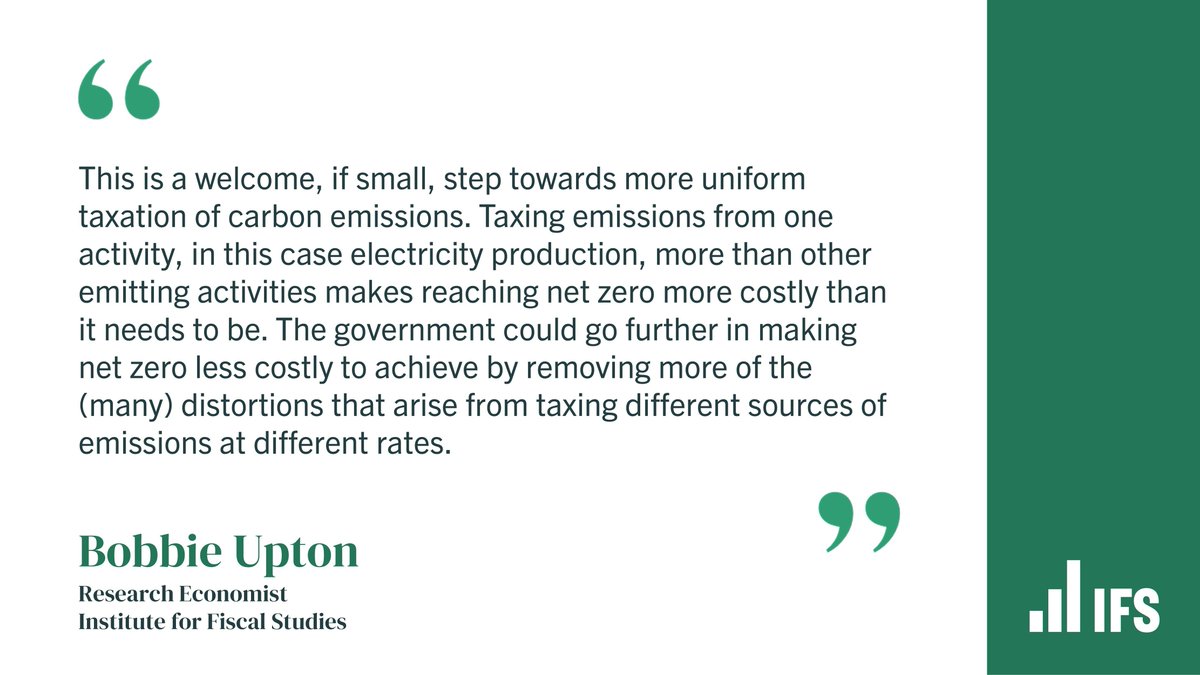
NEW piece out today from myself and my fellow @TheIFS pointy-heads @StuartAdam_IFS, @levell_peter & @bobbieupton_ discussing yesterday's decision to abolish Carbon Price Support (CPS) and why it WON'T increase emissions... 🧵
It's not tax & spending that are front & centre of the SNP manifesto: it is independence.
Independence would give more levers to a Scottish Government and there is genuine debate about long term impacts.
It would not ease fiscal pressures in short-term - it would deepen them.
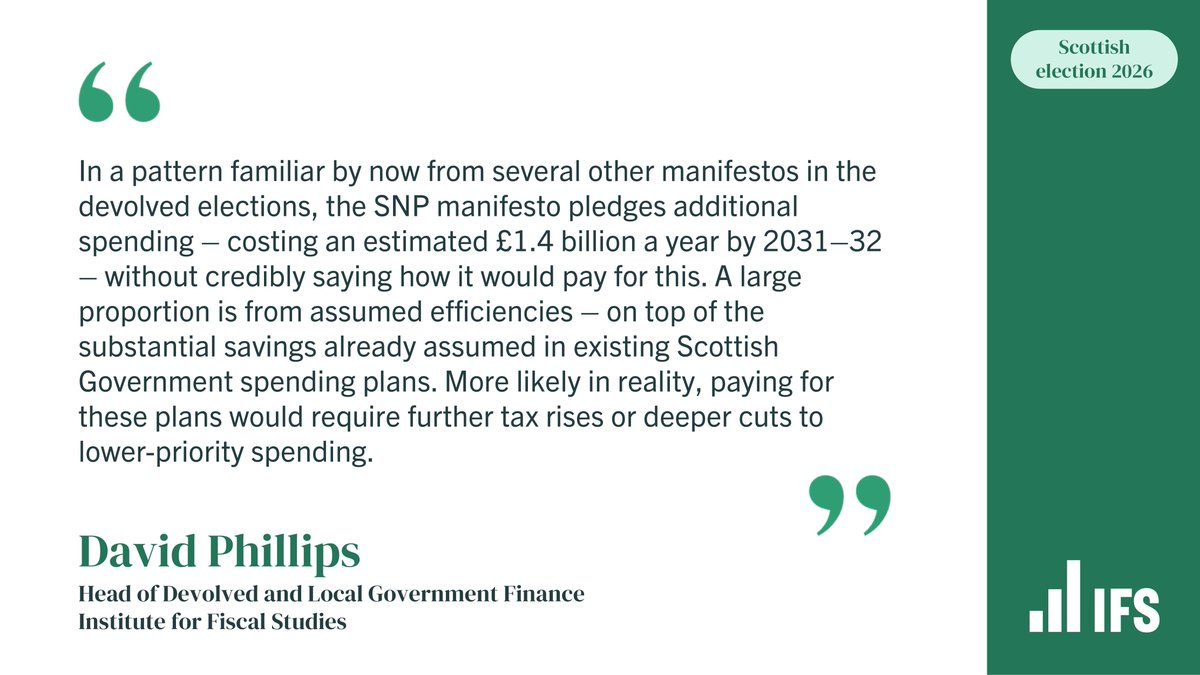
NEW: “The SNP manifesto pledges additional spending – costing an estimated £1.4 billion a year by 2031–32 – without credibly saying how it would pay for this.”
📗 Read our response to the SNP’s manifesto here: ifs.org.uk/articles/ifs-init…
ALT Quote from IFS Head of Devolved and Local Government Finance David Phillips: "In a pattern familiar by now from several other manifestos in the devolved elections, the SNP manifesto pledges additional spending – costing an estimated £1.4 billion a year by 2031–32 – without credibly saying how it would pay for this. A large proportion is from assumed efficiencies – on top of the substantial savings already assumed in existing Scottish Government spending plans. More likely in reality, paying for these plans would require further tax rises or deeper cuts to lower-priority spending."
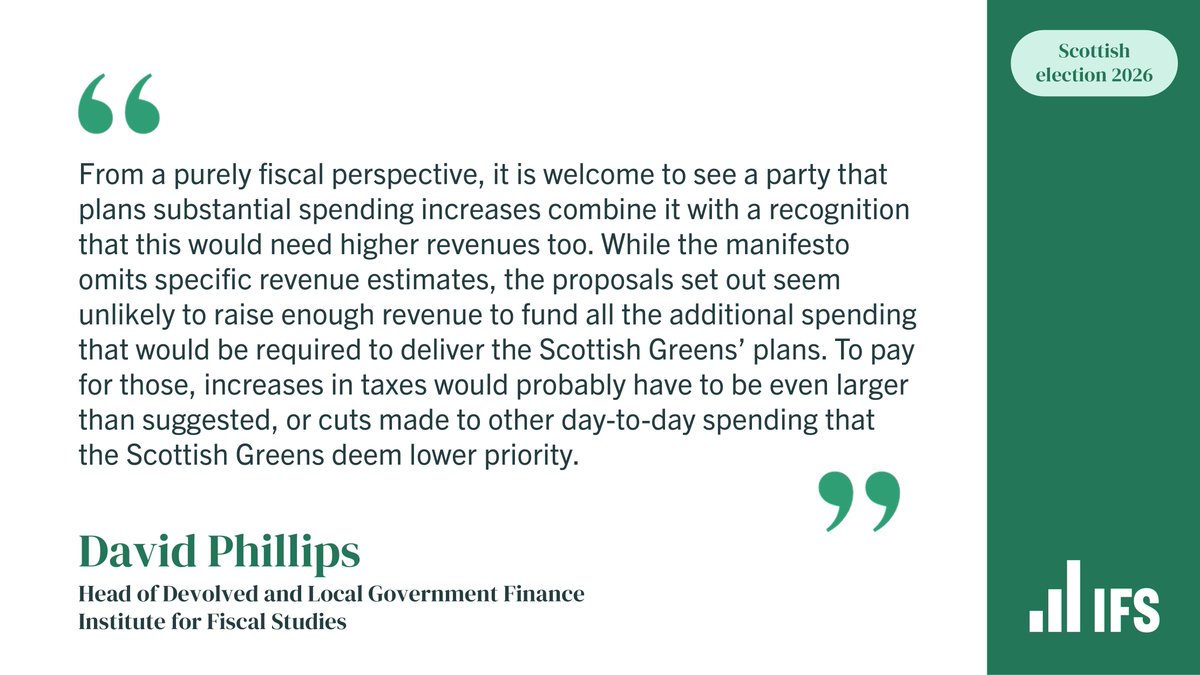
NEW: “At 165 pages, this is a big manifesto proposing huge changes to policy.”
📗 Read our response to the Scottish Greens’ manifesto here ifs.org.uk/articles/initial-…
ALT Quote from IFS Head of Devolved and Local Government Finance David Phillips: "From a purely fiscal perspective, it is welcome to see a party that plans substantial spending increases combine it with a recognition that this would need higher revenues too. While the manifesto omits specific revenue estimates, the proposals set out seem unlikely to raise enough revenue to fund all the additional spending that would be required to deliver the Scottish Greens’ plans. To pay for those, increases in taxes would probably have to be even larger than suggested, or cuts made to other day-to-day spending that the Scottish Greens deem lower priority."
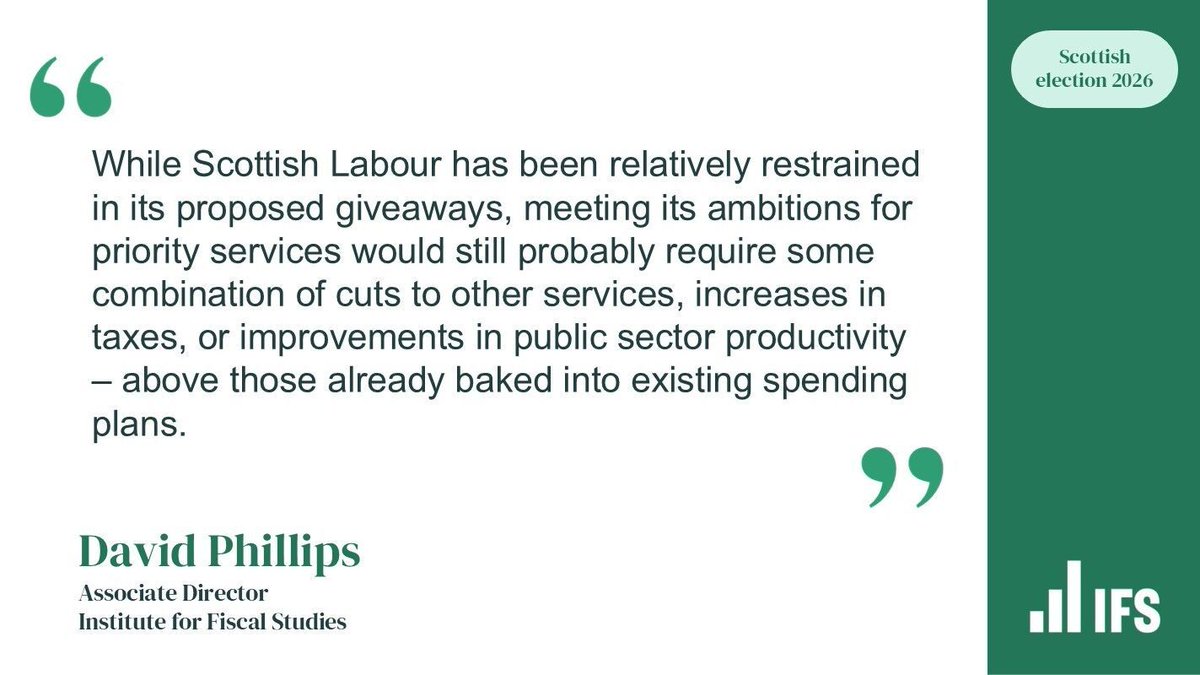
NEW: "Despite Scottish Labour pitching its proposals as a manifesto for change, on tax and spending the changes proposed are relatively small. Fiscally that’s not necessarily a bad thing in the current environment"
📗 Read our response to their manifesto: ifs.org.uk/articles/initial-…
How is wealth distributed in the UK and how has this changed?
Currently, official statistics don't give a good answer: they calculate pension wealth in a way that's inconsistent over time and with how other assets are valued.
New @TheIFS report with @IsaacDelestre fixes this:🧵
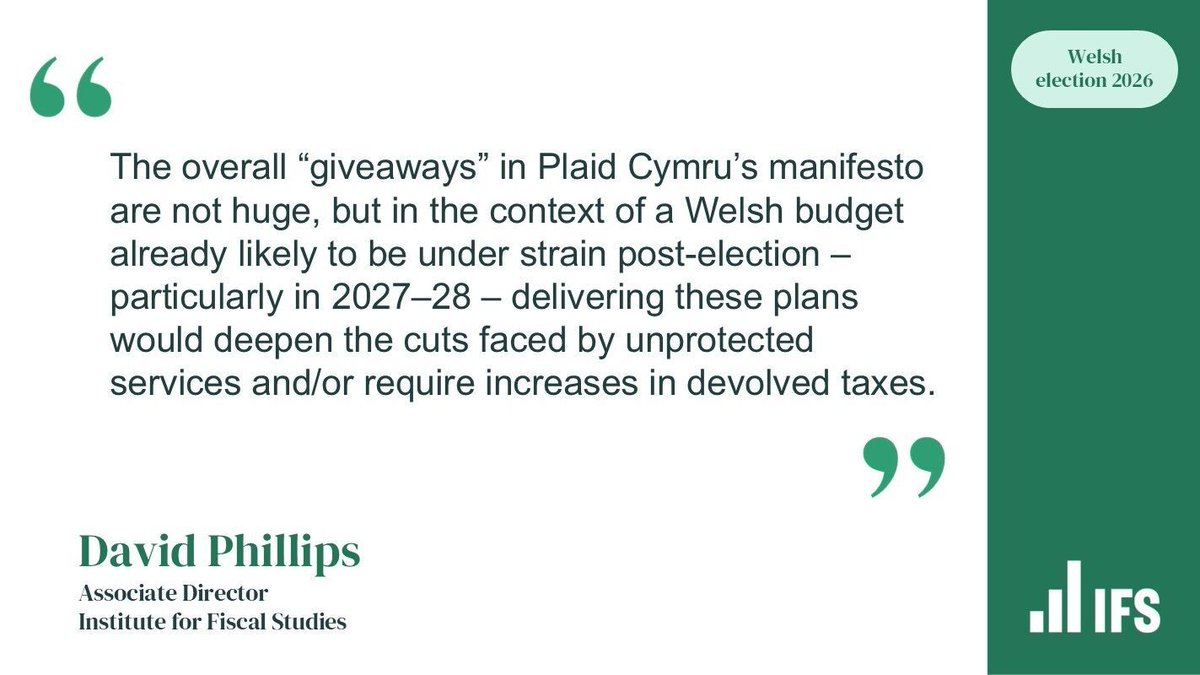
NEW: "Taken together, Plaid Cymru's plans would amount to a notable increase in spending...Unfortunately, they provide little information on how they would pay for these increases."
📗 Read our response to Plaid Cymru's manifesto: ifs.org.uk/articles/initial-…
🚨Our @theIFS response to Scottish Conservative manifesto is out.
🧮Welcome transparency in a clear policy costings document. 📊£6bn of 'giveaways' and £2bn of benefit cuts.
⚙️But £4bn of other spending cuts cannot be just 'efficiencies' - cuts this size would impact services.
NEW: “The Scottish Conservatives' key tax and spending proposals, including income tax and business rate cuts plus over £2 billion in additional spending, would cost around £6 billion a year by 2031–32.”
📗 Read our response to the manifesto: ifs.org.uk/articles/initial-…
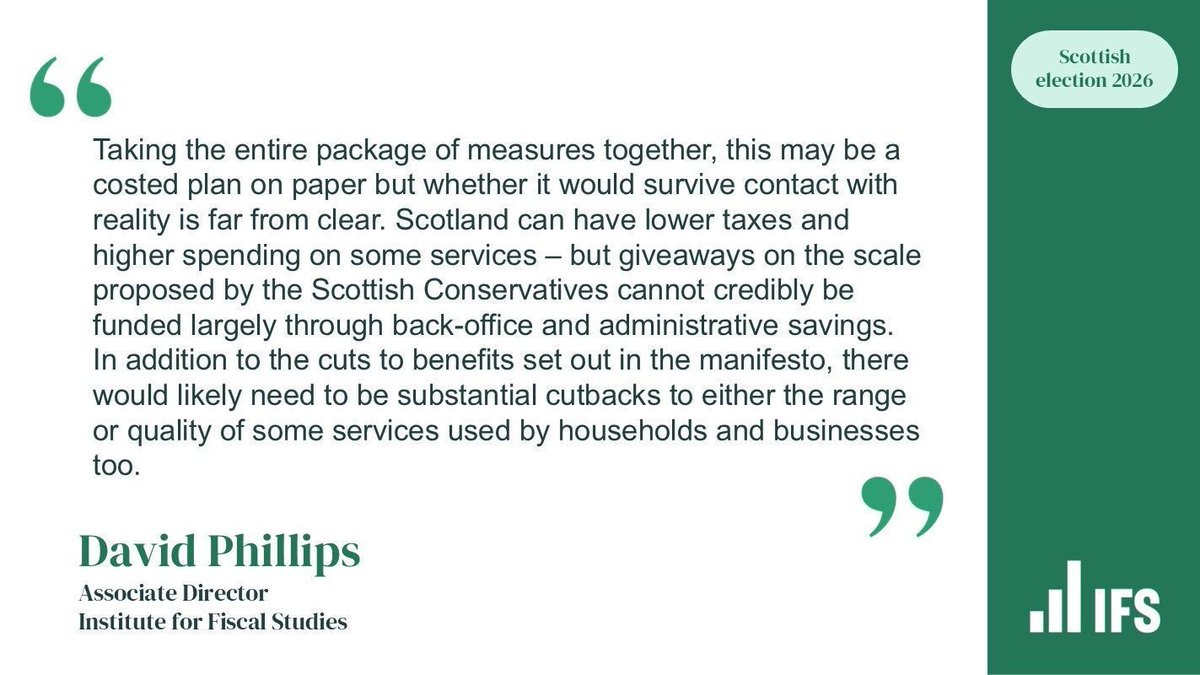
ALT Taking the entire package of measures together, this may be a costed plan on paper but whether it would survive contact with reality is far from clear. Scotland can have lower taxes and higher spending on some services – but giveaways on the scale proposed by the Scottish Conservatives cannot credibly be funded largely through back-office and administrative savings. In addition to the cuts to benefits set out in the manifesto, there would likely need to be substantial cutbacks to either the range or quality of some services used by households and businesses too.
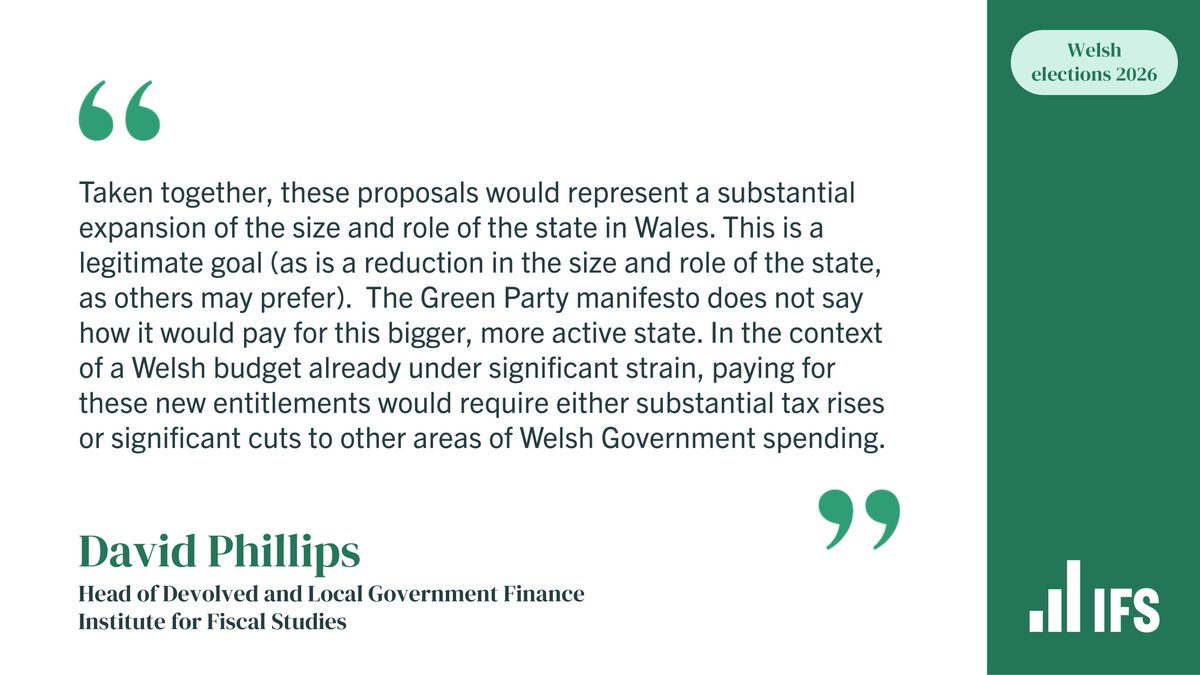
NEW: “The Green Party’s Welsh manifesto offers vision of a bigger state doing more for its citizens. But it lacks any plan for how to pay for that bigger state.”
📗 Read our response to the Green Party’s Welsh manifesto here: ifs.org.uk/articles/initial-…
ALT Quote from IFS Head of Devolved and Local Government Finance David Phillips: "Taken together, these proposals would represent a substantial expansion of the size and role of the state in Wales. This is a legitimate goal (as is a reduction in the size and role of the state, as others may prefer). The Green Party manifesto does not say how it would pay for this bigger, more active state. In the context of a Welsh budget already under significant strain, paying for these new entitlements would require either substantial tax rises or significant cuts to other areas of Welsh Government spending."
This is the top-line and bottom-line on Reform UK's Scottish manifesto.
Scotland can have lower taxes - if spending is cut.
It CANNOT have lower taxes and higher spending.
And parties need to properly cost their proposals - a big shortcoming in yesterday's manifesto.
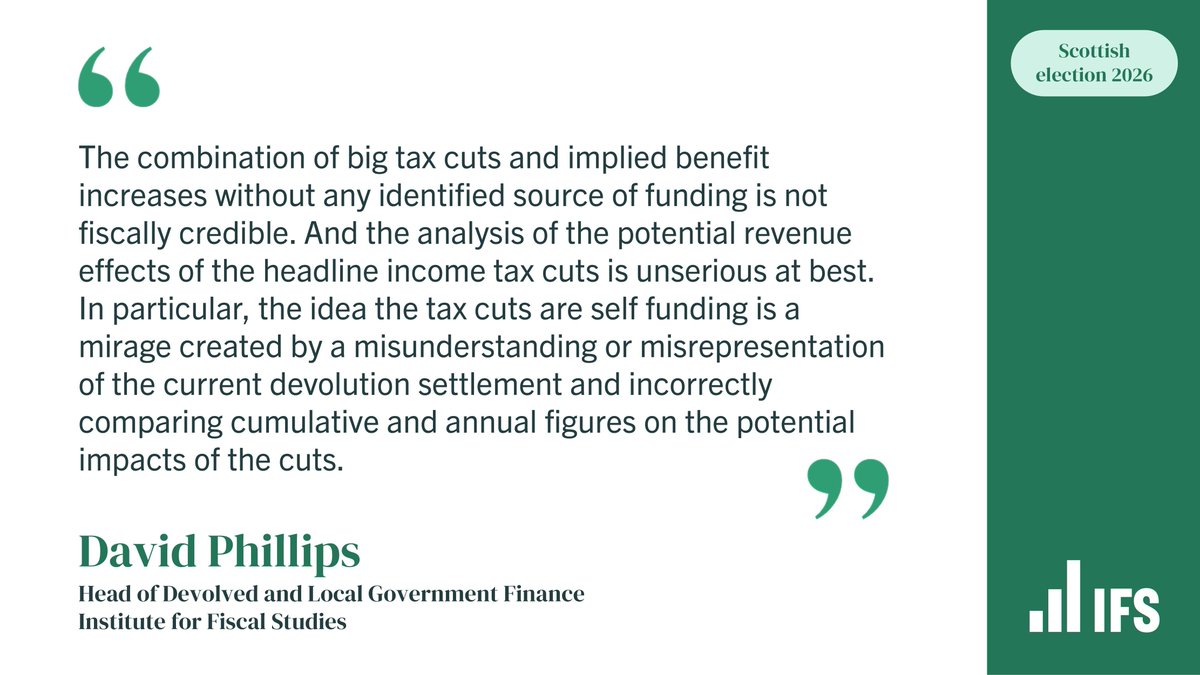
NEW: “The combination of big tax cuts and implied benefit increases without any identified source of funding is not fiscally credible.” – @fiscalphillips
📗 Read our full initial response to Reform UK’s Scottish manifesto here: ifs.org.uk/articles/initial-…
ALT Quote from IFS Head of Devolved and Local Government Finance David Phillips: "The combination of big tax cuts and implied benefit increases without any identified source of funding is not fiscally credible. And the analysis of the potential revenue effects of the headline income tax cuts is unserious at best. In particular, the idea the tax cuts are self funding is a mirage created by a misunderstanding or misrepresentation of the current devolution settlement and incorrectly comparing cumulative and annual figures on the potential impacts of the cuts."
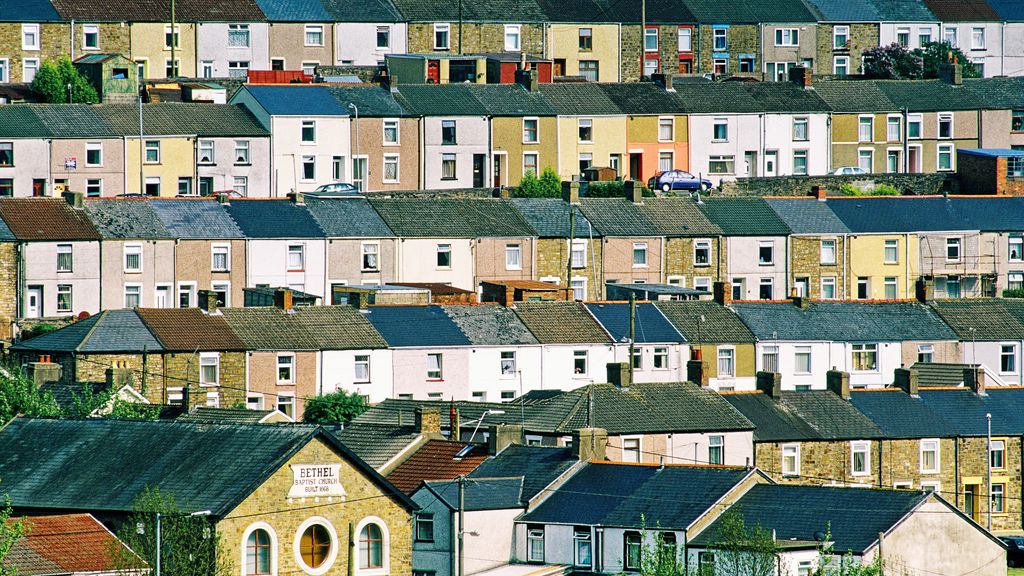
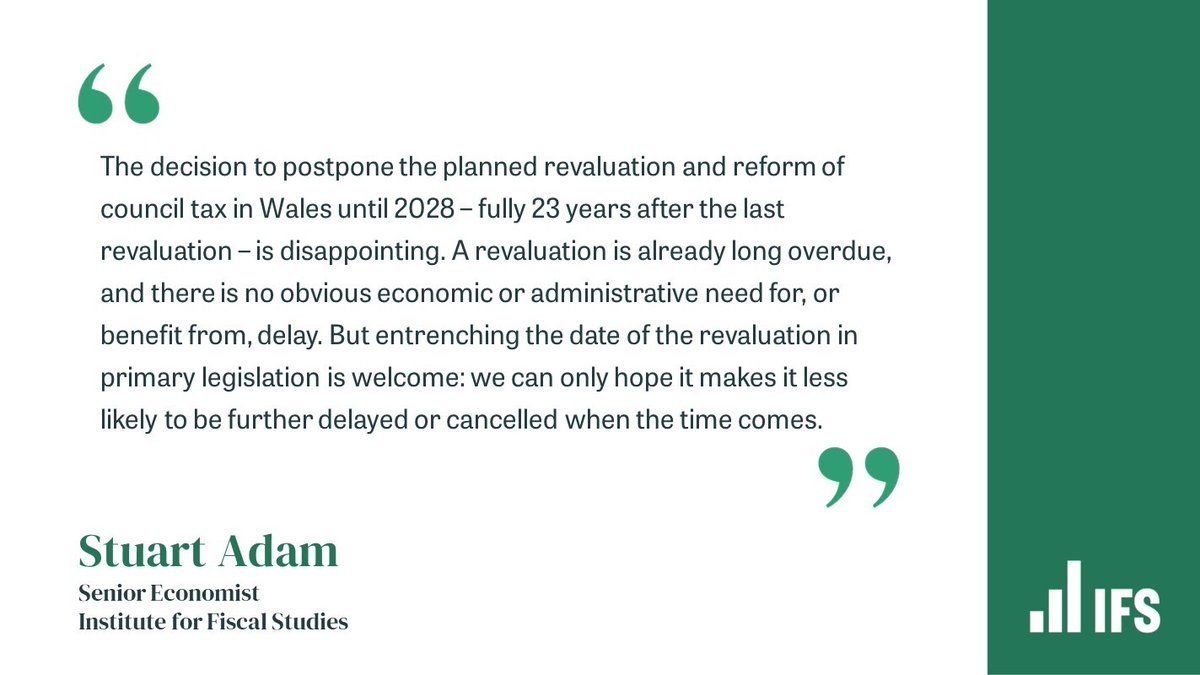
NEW: The Welsh Government should be commended for leading on council tax revaluation. But in other areas it has chosen to mirror England’s ill-advised tax policies.
📊 @StuartAdam_IFS, @fiscalphillips, Jed Michael and Tom Wernham’s new report examines Welsh tax & benefits: [🧵]
My @theIFS colleague @StuartAdam_IFS & I have done lots of work on property taxes.
Our scorecard for Scotland unfortunately isn't glowing.
🏡Council tax needs genuine revaluation & reform.
💷LBTT increases means its increasingly damaging.
🛍️Business rates increasingly complex.
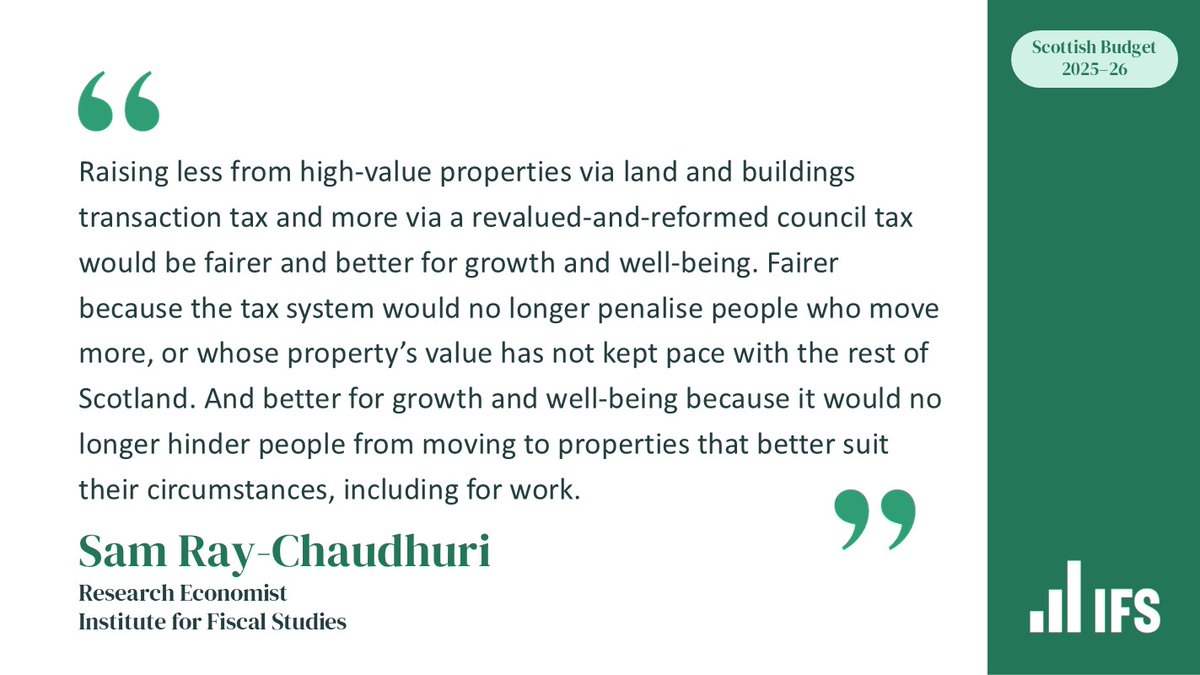
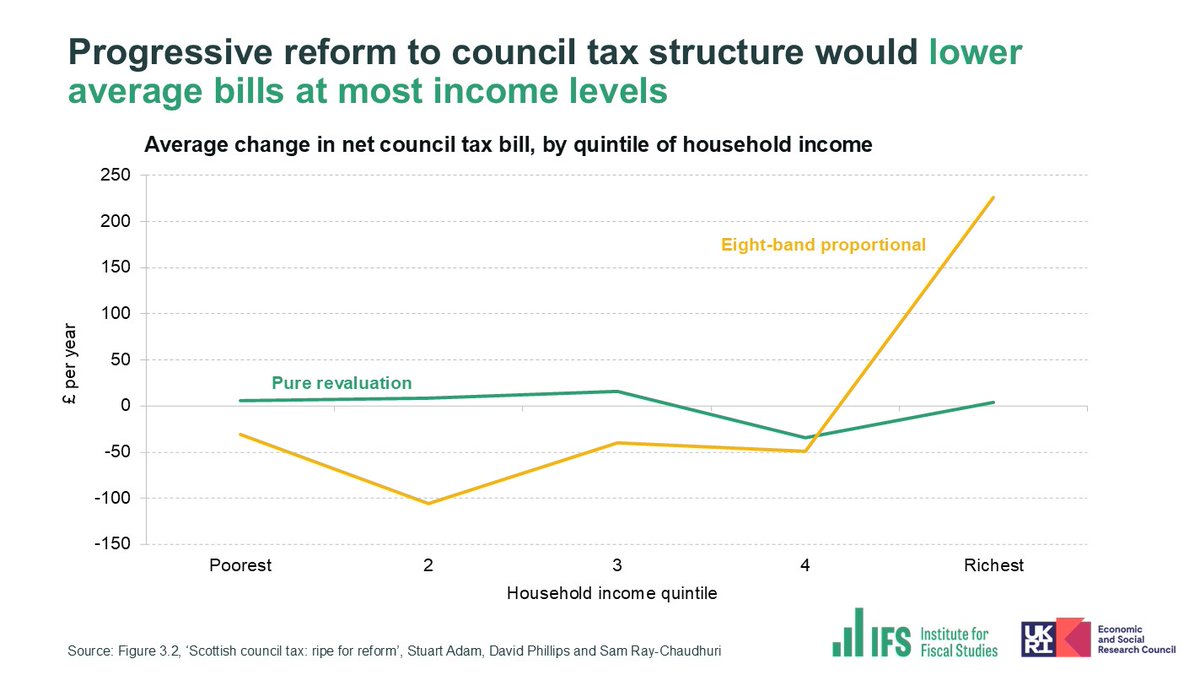
Thread 2 on our NEW report on Scottish tax and benefit policy. Property tax reform is sorely needed in Scotland – for fairness and efficiency.
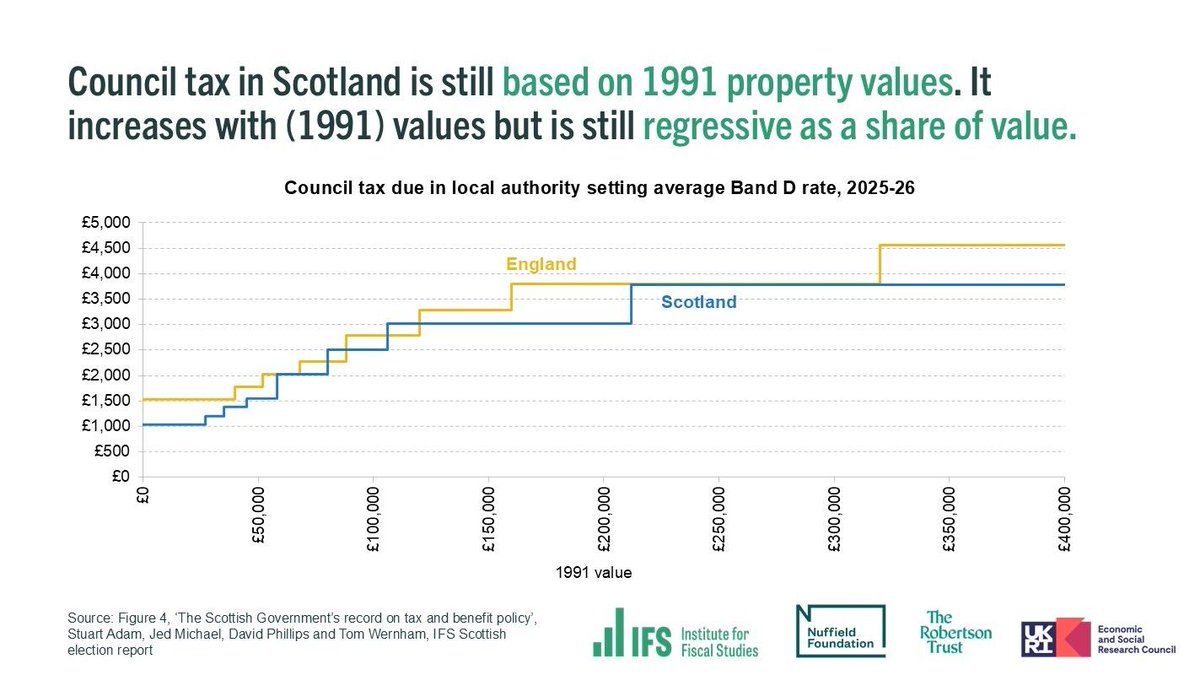
1. Like in England, council tax is out-of-date, regressive, and inefficient [THREAD]
Thread 2 on our NEW report on Scottish tax and benefit policy. Property tax reform is sorely needed in Scotland – for fairness and efficiency.
1. Like in England, council tax is out-of-date, regressive, and inefficient [THREAD]
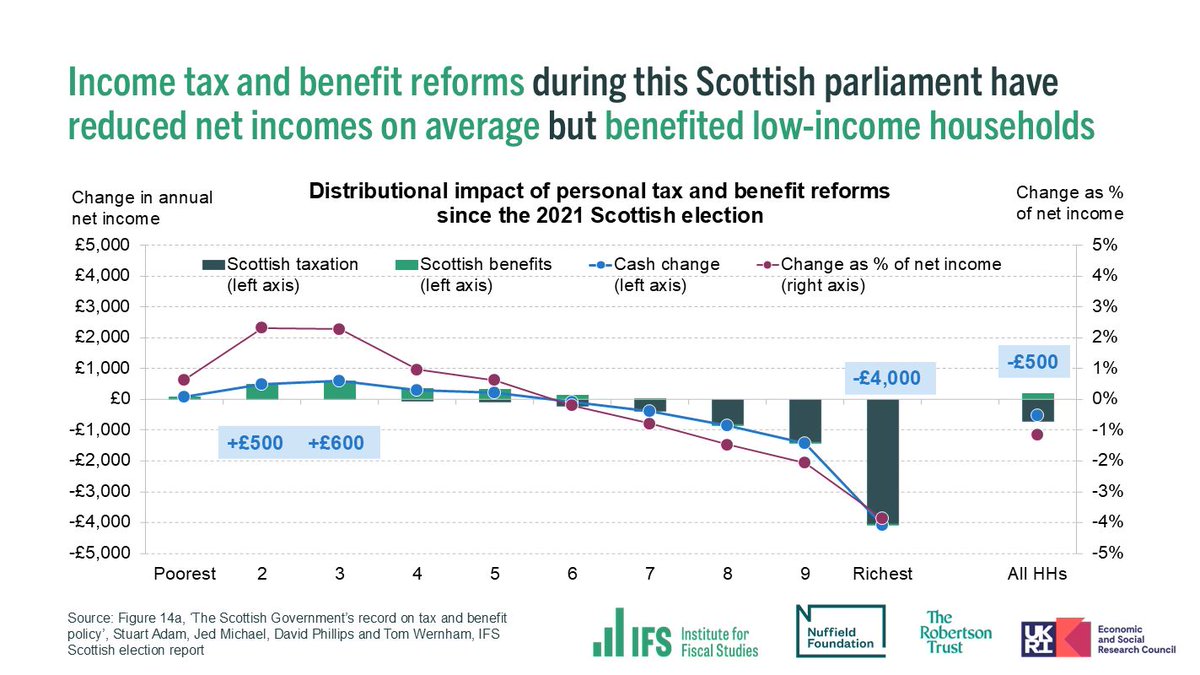
NEW: Scotland’s devolved tax and benefit system is more progressive than the rest of Great Britain’s, but is unnecessarily complex and distortionary.
📊 @StuartAdam_IFS, @fiscalphillips, Jed Michael and Tom Wernham’s new report examines Scotland’s tax and benefit system [THREAD]