Prove what's real
Joined August 2022
- Tweets 13,251
- Following 128
- Followers 139,485
- Likes 17,878
1,181 Photos and videos


Pinned Tweet

Apr 23
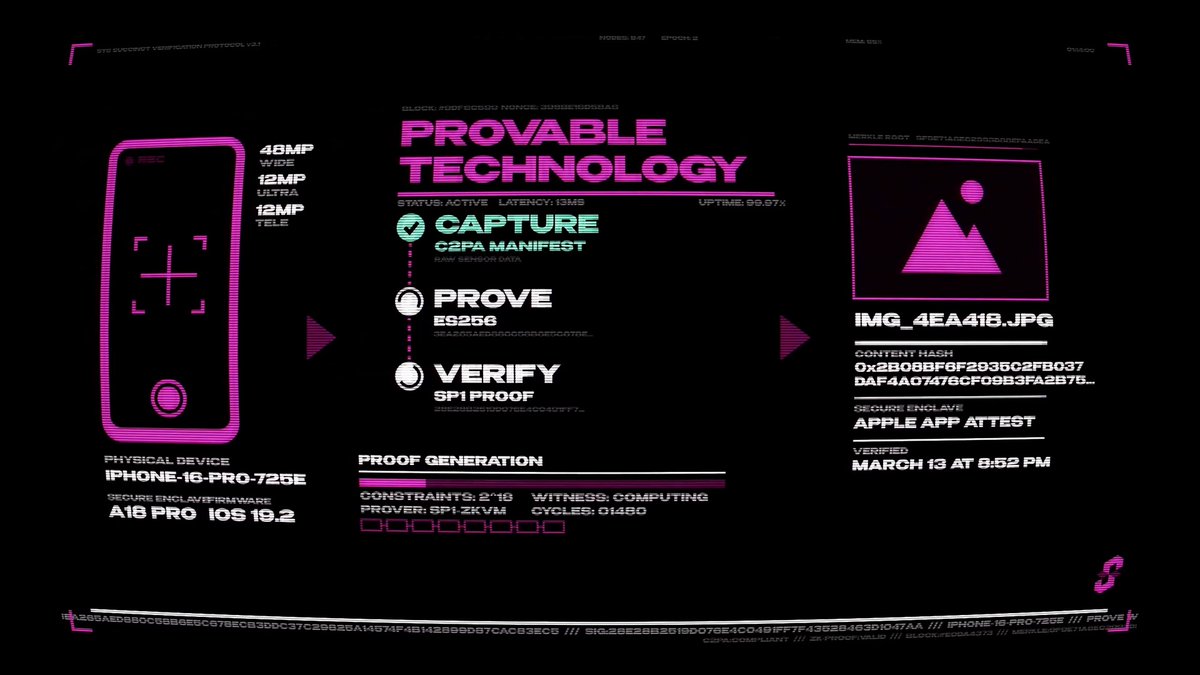
Today, we're launching ZCAM, an iPhone camera app to Prove What’s Real.
ZCAM cryptographically signs photos and videos at the moment of capture. Anyone can independently verify the content came from a real device and hasn't been altered or AI-generated.
191
111
874
128,080
Jun 4
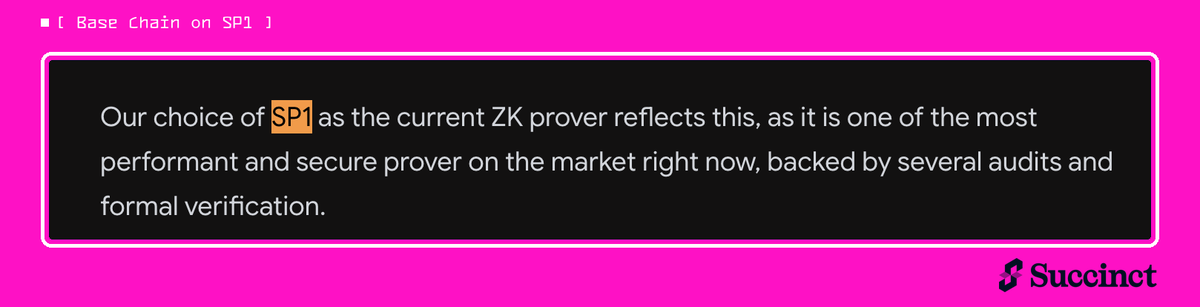
Succinct is the default ZK prover for Base, OP Stack chains, and soon, Arbitrum.
Once all major rollups transition to ZK, Succinct will prove 90% of all rollup capital.
The Ethereum ecosystem is consolidating around ZK and Succinct.
14
10
107
4,350
Jun 4
Succinct’s SP1 is production-ready for any rollups that need faster withdrawals and cryptographic security.
Get in touch: forms.gle/BgjraLWDSNy2xmmQ7
16
1,766
Jun 3
Migrating Ethereum to post-quantum security is a herculean task. That's why we released VEIL, a new compiler.
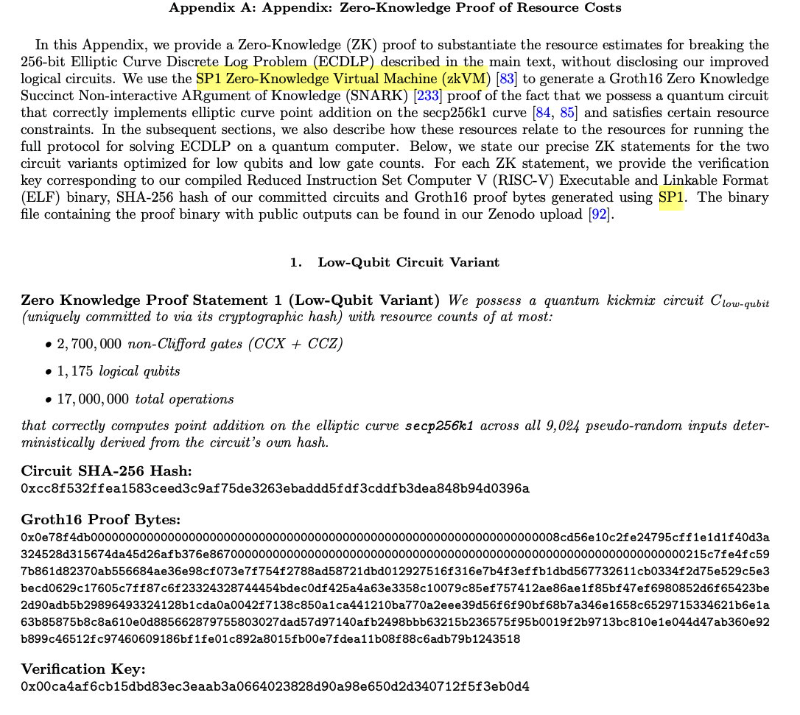
Succinct's SP1 — the protocol Google used for generating ZK proofs — relies on a Groth16 wrapper. VEIL swaps the elliptic-curve dependency for a PQS hash-based one.
Jun 2

Today a crazy quantum story just got wilder.
On March 31, the Google Quantum AI team published a landmark result on Shor's algorithm for elliptic curve cryptography. Technically, the paper was a bombshell: a dramatic 10x improvement over the state-of-the-art. As a stunt and wakeup call to the blockchain space, those optimisations were illustrated on secp256k1, the elliptic curve underlying Bitcoin and Ethereum signatures.
But perhaps the most striking part of the paper was sociological, not technical. Instead of following standard academic process, the optimisations were kept secret, hidden behind a zero-knowledge (ZK) proof. Google's accompanying blog post mentions they "engaged with the U.S. government". The ZK proof demonstrates the existence of algorithmic improvements without leaking details. Academic censorship with ZK, a historic first!
As a co-author of the Google paper I witnessed some of the context surrounding this censorship. To be honest, multiple aspects of that context don't sit well with me. As much as I believe the general public ought to know more, I am limited in my ability to whistleblow. Though let me be clear about one thing: the Google team's professionalism has been absolutely exemplary, and they deserve nothing but praise.
Censorship has a way of backfiring. The Streisand effect, where an attempt to bury something only draws more attention to it, is exactly what's unfolding today. First, Google's key optimisation has been rediscovered by the French. And in a thrilling turn of events, a collaborative Shor-at-home challenge just launched. The initiative, available at ecdsa[.]fail, breached a new Shor world record in a matter of hours.
Let's start with the rediscovery. Just two months after Google's paper, French quantum expert André Schrottenloher cracks the main secret optimisation. His paper, titled "Optimized Point Addition Circuits for Elliptic Curve Discrete Logarithms", landed on the arXiv today. Big congrats to André, who beat several other nerdsnipped experts to it. In a blog post also published today, Craig Gidney, the world expert on Shor optimisations, revealed that he'd been sitting on this very optimisation for a whole year under censorship pressure.
Interestingly, André missed a handful of minor optimisations, both from Google's original publication and from improvements found since. It's plausible there's still plenty of juice left to squeeze out of Shor, and this is exactly what the ecdsa[.]fail challenge is about. The verifier program developed for the ZK proof does double duty, automatically filtering for valid submissions. Dozens of compounding small and micro improvements are rolling in. As of the time of writing there's an 8.4% improvement to Google's circuit, as measured by the product of logical qubit count and Toffoli gate count. Nice!
The nerdsnipping ran deeper than anyone expected. Over the last few weeks it became clear it extended well beyond André and other quantum experts. Behind the scenes, a small army of amateurs quietly got to work. Inspired by Karpathy-style autoresearch, they turned AI on Shor. Ironically, the verifier program for the ZK proof makes an ideal reward function for AIs. The barrier to entry for this modern style of research is refreshingly low, with several non-experts, even a teenager, finding nice optimisations. Get in touch if you'd like to join a Telegram group with fellow autoresearchers :)
Part 2: neutral atoms and qday
The story doesn't end with Google. On the same day Google went public, a stealthy startup called Oratomic published its own Shor paper in a coordinated release. It made a splash, ultimately becoming the most upvoted paper on scirate[.]com, a website ranking arXiv papers.
Oratomic's claim was wild. By building on Google's logical optimisations and applying custom physical optimisations for neutral atoms, they claimed just 10K physical qubits were sufficient to run Shor's algorithm on secp256k1. That number is mind-bogglingly low.
Knowing essentially nothing about neutral atoms when Oratomic's paper landed, I was intrigued and decided to learn more about the tech. I fell straight down the rabbit hole and spent a couple hundred hours on the topic. I got a little obsessed and watched every YouTube video I could find and spoke to a bunch of experts.
My conclusion? The tech is real, very real. Even Google recently decided to start a neutral atom lab, a notable pivot from their sole focus on superconducting qubits. If you care about qday, i.e. the day a quantum computer will break the first piece of cryptography in production, neutral atoms demand your attention. I shared some of my learnings on Shor and neutral atoms in a 30min talk at the ZKProof cryptography conference. You can find it on YouTube by searching "zkproof neutral atom".
Here's an interesting observation about this duo of breakthrough papers: neither Google nor Oratomic say a word about what their results mean for qday. No timelines. Zero. Nada. That is especially baffling given that the whole point of whitehat quantum cryptanalysis is to inform qday estimations and help the general public make good decisions.
So let me attempt to partially fill the silence, similarly to what Scott Aaronson did in his April 29 post. Given everything I know, including scary non-public information, I now put the odds of qday by 2032 at 50%. 10% by 2030.
Anecdotally, the US government has its own date: 2035. Originating at the NSA and later adopted by NIST, it's when branches of the US government will be disallowed from using quantum-vulnerable cryptography. In plain language: with hindsight, that date is a joke and should be discounted entirely. I don't see how NIST avoids being forced to pull it forward by years.
Part 3: post-quantum cryptography
There are good reasons to sound the alarm today, but please do not panic. Rushing carelessly towards immature post-quantum cryptography is a recipe for disaster. IMO a good target date for migration is 2029, roughly 3.5 years out. 2029 happens to be the date selected by Google, Cloudflare, and the Ethereum Foundation.
These days most of my time goes to safely migrating Ethereum towards post-quantum cryptography as part of the broader lean Ethereum effort. There's a lot to do. We need to rip out and replace BLS signatures at the consensus layer, KZG commitments at the data layer, and ECDSA signatures at the execution layer.
The plan to get there is compelling, and is based on hash-based cryptography. Within the Ethereum Foundation we've developed a Swiss army knife called leanVM (github[.]com/leanEthereum/leanVM) powered by the magic of hash-based SNARKs. Thanks to truly exceptional work by Emile, Thomas, and others, its performance is derisked. Regarding security, leanVM is a jewel, a minimal zkVM crafted for end-to-end formal verification and maximum security.
Want to help? There are two $1M initiatives. First, the Proximity Prize (proximityprize[.]org). Solve a long-standing mathematical conjecture in coding theory, improve hash-based SNARKs, and go home a millionaire. Second, the Poseidon Initiative (poseidon-initiative[.]info), offers $1M for breaking Poseidon, the SNARK-friendly hash function.
12
11
135
10,844
Jun 3
Read how Succinct is preparing for a post-quantum world with VEIL 👇
x.com/SuccinctLabs/status/20…

1
25
1,981
May 28
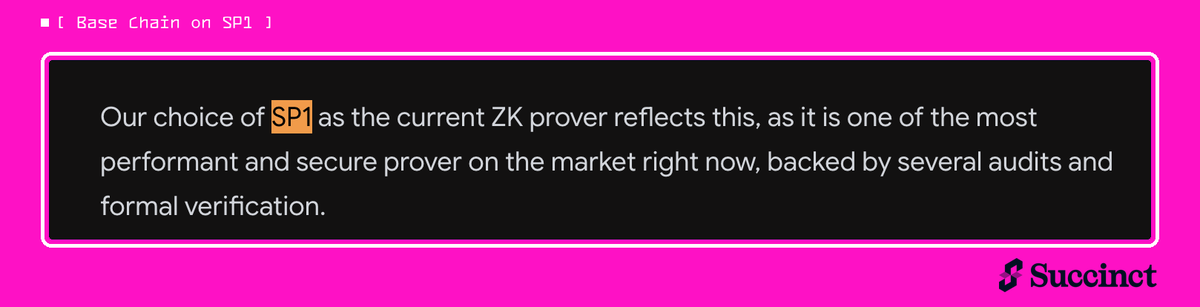
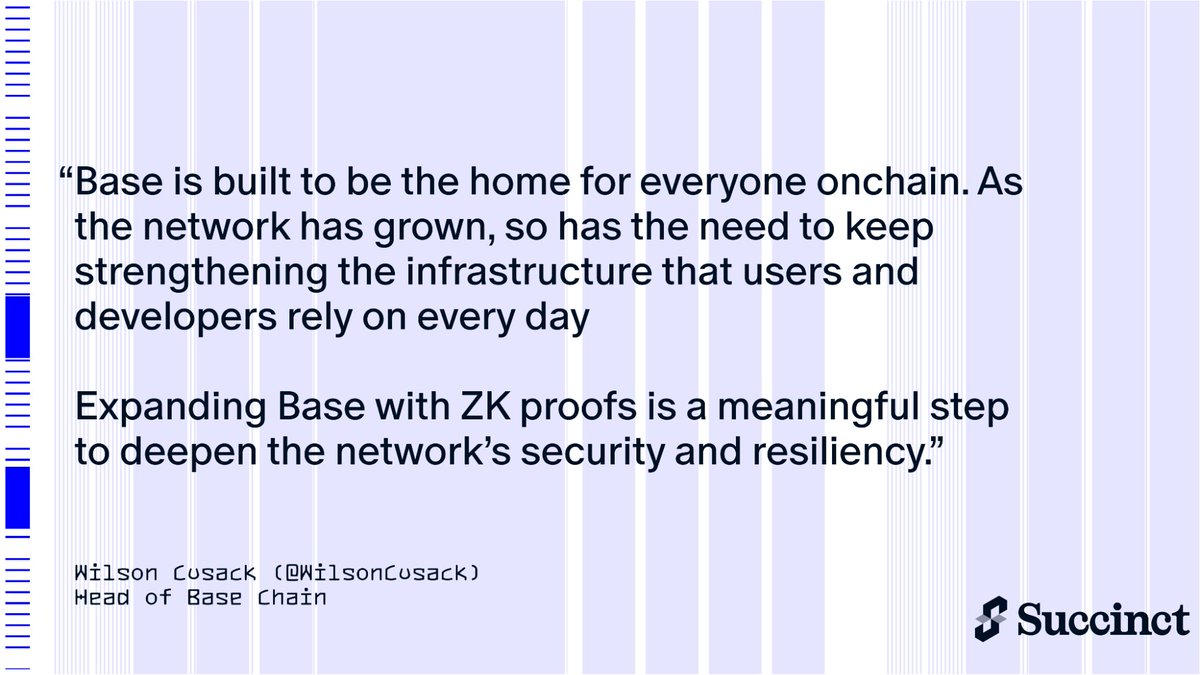
With the Azul upgrade, the Base network is now secured by validity proofs through Succinct’s SP1.
Base joins Optimism, Katana, and Mantle in adopting ZK proofs, bringing SP1’s total value secured to $13.5 billion.

Base Azul is officially live on mainnet
This upgrade makes Base even faster and more secure
Making it ready to be the home of global finance
14
17
119
7,762
May 28
Succinct’s focus on security and speed make SP1 the most widely used zkVM in production across major rollups, bridges, DA layers, and exchanges.
Get in touch to bring speed, security, and privacy to your product with ZK proofs:
forms.gle/BgjraLWDSNy2xmmQ7
2
14
1,548

Today, Celo upgraded its OP-Succinct Lite implementation on mainnet to use SP1 Hypercube from @SuccinctLabs
SP1 Hypercube introduces a new proving architecture that reduces proof latency and improves efficiency, further strengthening Celo's zk fault-proof infrastructure
9
22
147
12,340
May 22
Succinct is bringing zero-knowledge proofs to @base. The upcoming Azul upgrade will use SP1 to prove every transaction on the network.
Succinct will soon secure over $10 billion across major rollups, making SP1 the most widely deployed zkVM in production.
May 21

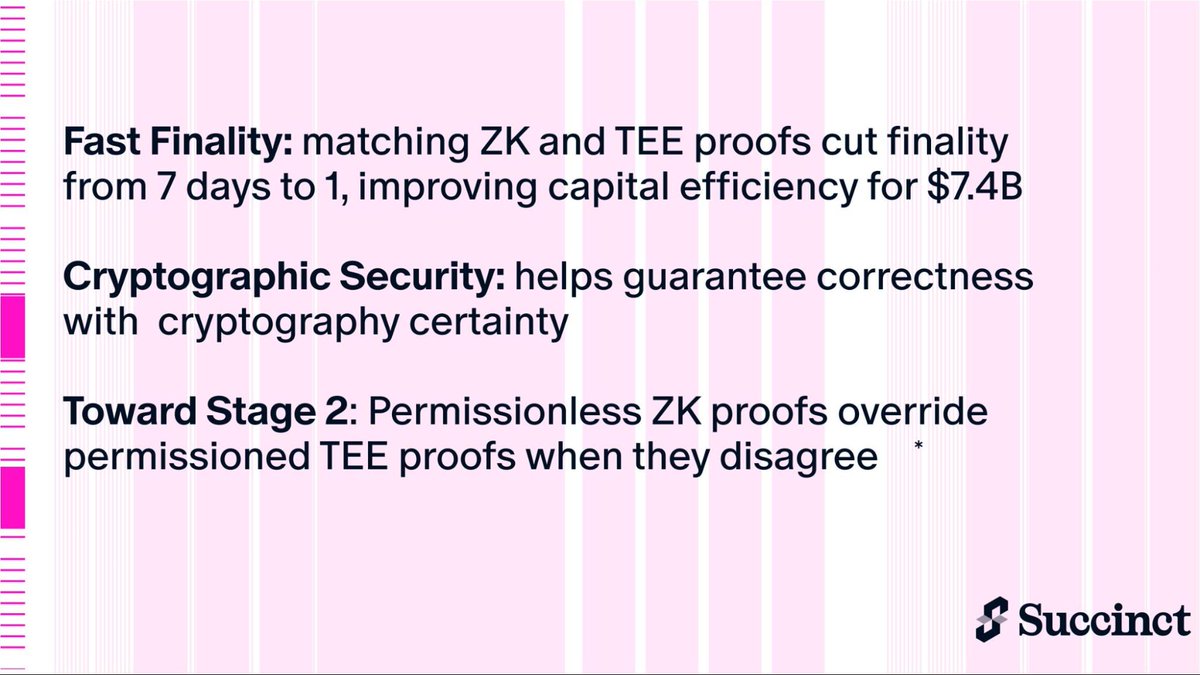
Ahead of the Azul upgrade, sharing the architecture behind one of its headline changes: multiproofs on Base.
Combining TEE and ZK provers unlocks faster withdrawals, security-in-depth, and meets a key technical requirement for Stage 2 decentralization.
26
21
145
10,516
May 22
Read more on how Base integrates SP1 for faster finality and cryptographic security:
x.com/SuccinctLabs/status/20…
5
1
17
2,529
May 21
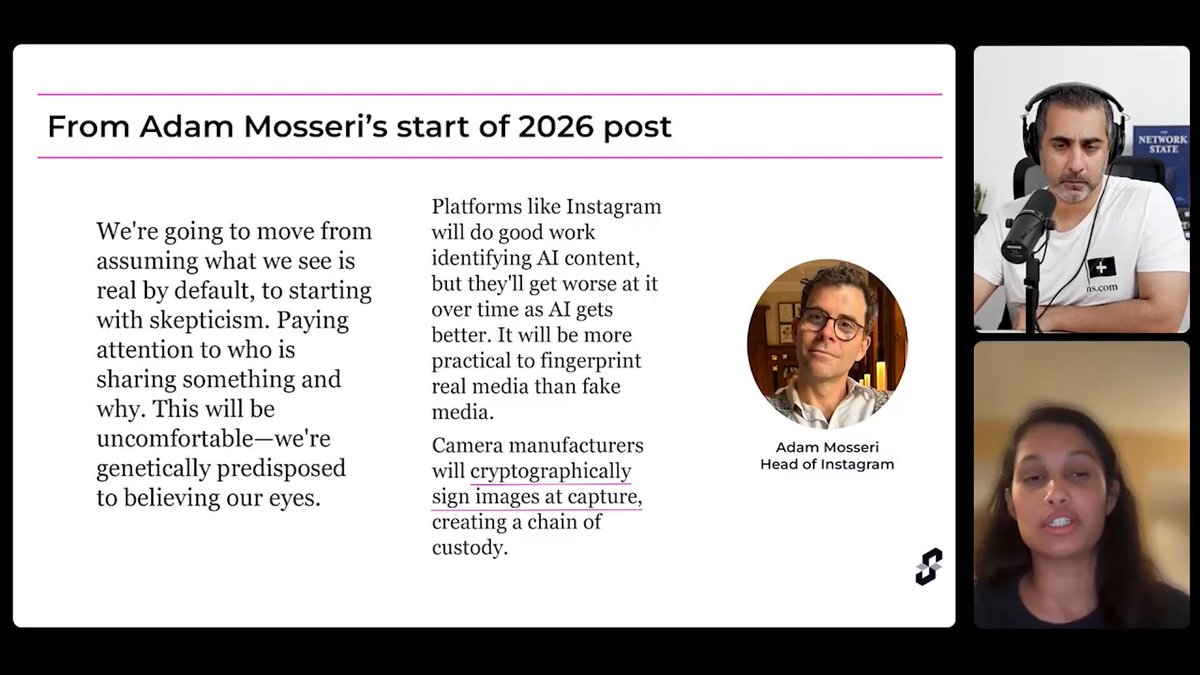
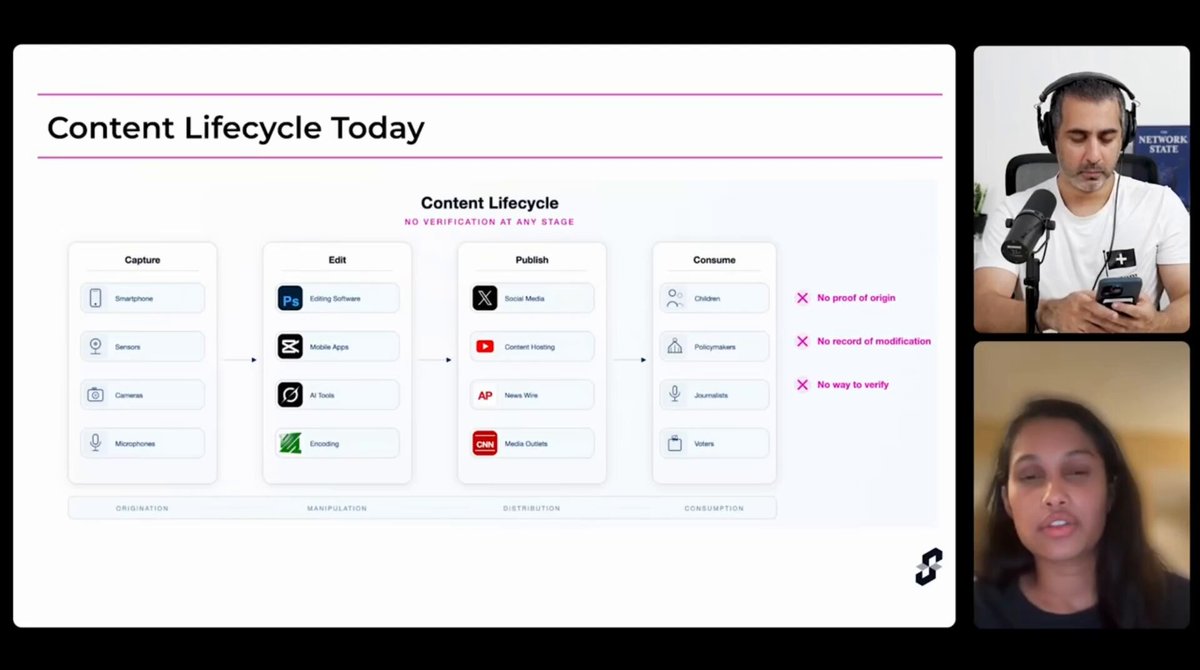
AI content is indistinguishable from reality.
That's why OpenAI is watermarking its images and adopting C2PA so platforms can flag AI-generated content. But there’s one line that stands out to us, "No single provenance technique is enough."
Here's what we're doing about it ↓
The current approach is to detect what's fake. Our research shows how fragile that is: detection rates among leading AI detectors drop by as much as 90% with simple image manipulation like blur, noise, and compression.
x.com/SuccinctLabs/status/20…
The other half of the equation is to Prove What's Real. That's why we built ZCAM to cryptographically sign photos at the moment of capture using the secure hardware already in modern iPhones. If a single pixel changes — through edits or AI manipulation — the signature breaks. If it holds, the viewer knows the photo is real.
Both ZCAM and OpenAI support the C2PA standard, so information about a piece of media can travel with the content itself. Together, images and videos can be verified as authentic or generated.
x.com/SuccinctLabs/status/20…
SynthID to detect what's fake, ZCAM to prove what’s real.

We’re adding new ways for people to identify AI-generated images and understand where they came from.
In addition to C2PA Content Credentials, images now also contain a SynthID watermark, and can be identified using a public verification tool to check whether an image was made by OpenAI products.
openai.com/index/advancing-c…
14
18
89
8,720
May 20
Cryptographers at Succinct experimented with AI to formally verify VEIL, our newly introduced ZK compiler.
Our findings echo Vitalik's – formal verification, paired with software verification, builds confidence in cryptographic systems.
AI can do this work much faster.
May 18

Many people have claimed that with AI-assisted bug finding, secure code (and hence trustless anything) will be impossible.
I have a much more optimistic take, and AI-assisted formal verification is a major part of the reason why:
vitalik.eth.limo/general/202…
5
12
109
11,177
May 20
We recently announced VEIL, a compiler that adds zero-knowledge to hash-based multilinear proof systems.
As an additional check, we used Anthropic’s Claude to formalize VEIL’s main theorems in the Lean 4 theorem prover.
Read how we did it:
blog.succinct.xyz/formal-ver…
3
3
27
3,736
May 13
📢 To SP1 Users: We will be removing support for v5 on the Prover Network on Tuesday, May 19th, 2026.
If you have not already, please upgrade to v6 with this helpful migration guide:
docs.succinct.xyz/docs/sp1/g…
SP1 Hypercube (v6) delivers up to 4x faster proof generation. V6.2.0 is the latest build with the most recent security and performance upgrades.
github.com/succinctlabs/sp1/…
If you have any questions, DM us or open a GitHub.
9
8
89
5,442
Succinct retweeted

May 12
More institutional-grade privacy options are live with Polygon CDK.
Launch a custom private chain connected to global onchain liquidity, with a new validium configuration powered by @SuccinctLabs.
Private where it matters. Actually connected where it counts.

26
75
311
52,130
May 12
Introducing data confidentiality to OP Succinct.
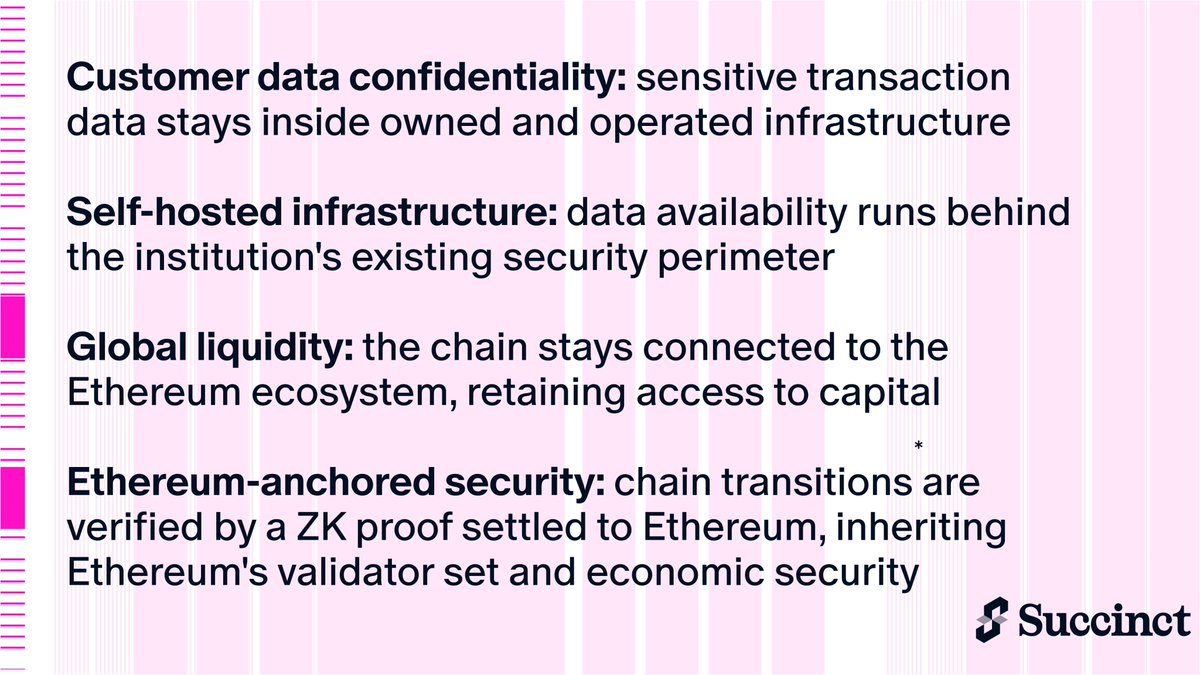
Institutions can now keep transactions confidential on self-hosted infrastructure while settling to Ethereum for security and global liquidity.
@0xPolygon is the first partner to add confidentiality to their stack with Succinct.
33
32
223
31,594
May 12
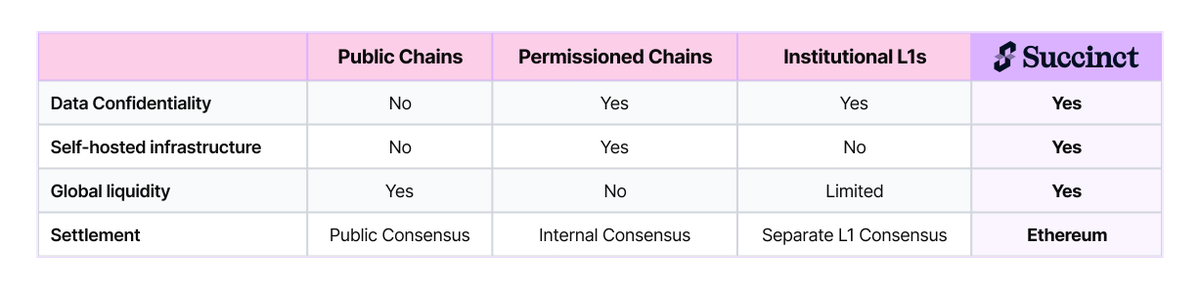
Institutions are forced to choose between permissioned chains that trap liquidity and institutional L1s that introduce new trust assumptions outside Ethereum.
Only OP Succinct delivers all four properties they need.
2
1
16
1,826
May 12
Confidentiality is live on OP Succinct. Get started today.
↳ Add data confidentiality: forms.gle/BgjraLWDSNy2xmmQ7
↳ Read the docs: succinctlabs.github.io/op-su…
↳ Full announcement: blog.succinct.xyz/op-succinc…
1
5
1,039
Succinct retweeted

May 4
It's been a year and a half since we first announced OP Succinct: our flagship product to secure blockchains with ZK technology.
Today, we're proud to be working with @base, one of the largest L2s, to secure billions in assets on their chain.
May 4
Base is partnering with Succinct to bring zero-knowledge proofs to Base Azul.
SP1 will prove $7.4 billion in deposits as @Base joins a growing list of major L2s adding validity proofs to their roadmap with Succinct.
28
12
186
14,951