Husband. Father. Catholic. Development Economist. Formerly, Scientific Associate at @UDE_Econ—@unidue: #PublicFinance #PoliticalEconomy
Joined March 2010
- Tweets 4,649
- Following 799
- Followers 805
- Likes 12,373
Photos and videos

Jun 15
DIFFERENT GIFTS, ONE MISSION
Jesus chose Peter’s courage, John’s love, Thomas’s questions, and Matthew’s careful eye—each gifted, yet limited.
You're stronger in some ways, weaker in others by design. We're better off complementing rather than envying one other.
— MATT. 10:1–4
1
2
24
SPKayongo retweeted

Jun 13
Uganda President Museveni talks a lot about how Science is king and the magic that will save Uganda, and Arts and Social Sciences are “useless” and shouldn’t get state funding. Then the kids study Medical Sciences and when they ask for small change to begin putting the science into practice, they are told no money, and those who protest are hammered or jailed. Meanwhile a “useless” arts and social sciences institution like Parliament (we won’t mention State House) get many times more money - in the billions - just to buy second-rate tea, mandanzi, and cakes for MPs. What are we not getting? Did Parliament and State House become vaunted academies of sciences and we missed the memo?

There is no 28billion to pay intern doctors in the budget Museveni is presenting today, no 8billion for UNEB to train teachers on how to mark new syllabus, no 3.5billion to complete new syllabus but there is 211billion for welfare and entertainment for big people, 536 billion for special meals and drinks for big people, 196 billion for big people to donate, 17 billion for firewood, gas and charcoal and 2.6 trillion for classified expenditure!
21
121
309
24,418
Jun 13
WHEN COMFORT MUST BURN
A true breakthrough may require burning the bridge back to an old identity—for very few opportunities allow one foot in and one foot out.
— 1 Kings 19:19–21
Sometimes, the true path becomes clear only after the old ones have been closed.
1
20
SPKayongo retweeted

Jun 12
The politics of poverty is global rather than local. International financiers and foreign governments offer grants and loans to financially impoverished former colonies on terms that serve the interests of the financiers themselves. What is more, a vast proportion of such loans are misappropriated by the political elite of the recipient country through the inflating of the cost of the project, kickbacks, and even outright disappearance of funds that end up in secret foreign bank accounts, and yet the taxpayer must still service the loans. How do we break this cycle of exploitation and accountability?
Analysis: theelephant.info/analysis/20…
@ReginaldOduor @FNasubo @karutikk @wmnjoya @MwangiGithahu @gathara @samar42 @Farida_N @jacobin @jkobuthi @realoyungapala @johngithongo
13
19
985
Jun 8
THE ELIJAH-RAVENS RULE
Plan, study, prepare—but every blueprint bows to Him who wrote the master plan. Prophet Elijah announced the drought, yet his survival came not from planned stockpiles, but ravens.
— 1 Kings 17:1–6
Remain open: solutions may enter through strange doors.
37
Jun 7
BE ONE ANOTHER'S BREAD
In a world where people are using, breaking, and tearing one another apart for survival, Corpus Christi offers a different formula:
Become bread for one another—a life insurance system where we carry, nourish, and keep one another alive.
— John 6:51–58
32
SPKayongo retweeted

I think this conversation lacks nuance. Children should never be made to feel guilty for existing or responsible for their parents’ life choices. They didn’t ask to be born. At the same time, I don’t think we should pretend that parenting involves no sacrifice. Many parents give up sleep, opportunities, time, money and personal ambitions to give their children a better life. The difference is this: sacrifice should teach gratitude, not create guilt. Parenting should not leave children feeling indebted. But neither should it leave them unable to recognise the love, effort and commitment that raised them.
27
162
1,364
24,361
Jun 6
GENEROSITY
True generosity is the spirit of the widow who offered her last penny.
— Mark 12:41–44
Giving time even when busy, attention even when tired, forgiveness even when pride resists, help even without appreciation, and money even when comfort must adjust to make room.
29
SPKayongo retweeted

I agree, Intern doctors should be ranked above DEI Pharma, Atiak Sugar, Lubowa, and Inspire Coffee – which have and continue to consume billions.
While those other are (unnecessary) promises for the future, intern doctors are presently real in the lives of ordinary Ugandans. As has been said plenty of times, it is not uncommon to find a public medical facility manned entirely by interns.
Their labor cannot to be for free. In fact, interns is the language of exploitation. These are actual doctors – only new in the field.
Thanks Dr Obuku (@ekwaroobuku)
5
131
281
39,810
Jun 5
IDOLS WE FEAR
St Boniface cut down the Germanic pagan oak feared to strike back with lightning. It did nothing.
As in Boniface's day, there are always two choices: overcome our fears and cut the oak, or spend our lives fearing what may not even exist.
St Boniface, pray for us!
2
3
47

Jun 3
THE UGANDA MARTYRS
The Uganda Martyrs are not remembered because they held power, but because they stood against its abuse.
Every era faces the same question: What truth are we willing to defend when silence is safer and conformity more rewarding? 🤔
Happy Uganda Martyrs Day!
1
1
25
SPKayongo retweeted

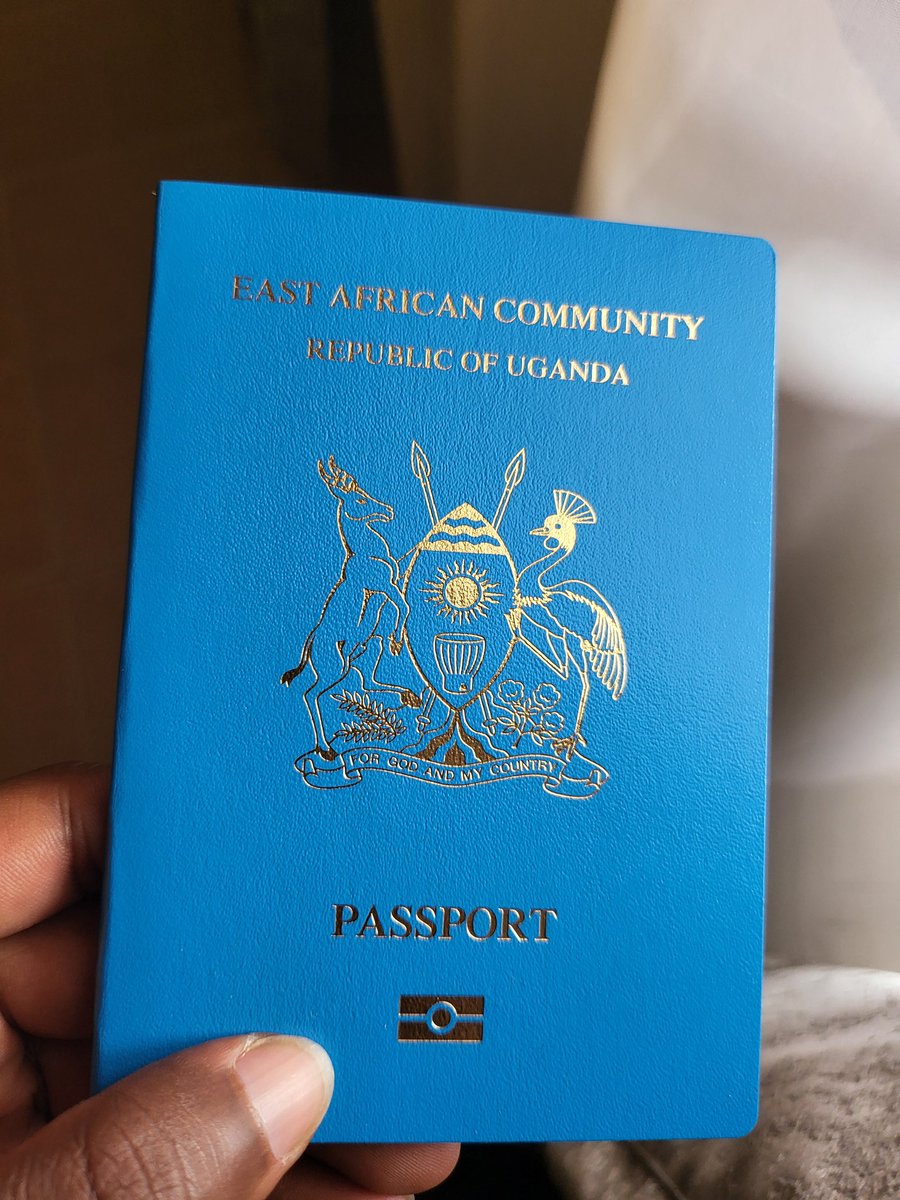
I had been lazy about processing a passport until last year when one of the organizations I work with organized a trip to Kenya. Because of the "President" title, I was added to the executives' team that was supposed to fly.
Out of sheer embarrassment, I claimed I preferred traveling with the team that was using a bus.
"I love the vibe in the bus," I lied. 😂
On another occasion, I even had to use a temporary travel document. 🙌
On a serious note, this post is meant to appreciate the transformation at @mia_uga. Some time back, the place had become quite a mess.
When I recently visited for fingerprints and interviews, I ended up chatting with several Ugandans seated next to me, and almost all of them had positive experiences to share.
The improvement is noticeable, and credit should be given where it is due.
I only hope this kind of transformation spreads across all government agencies because efficient public service should be the standard, not the exception.
126
117
1,330
144,724


May 30
ONLOOKING SAVES NONE
Rescue is costly, but safe spectators rarely save anyone.
When a house is burning, the one who enters to rescue another accepts the possibility of being burned.
If we want a better world, we must be willing to risk singed fingers for it.
— Jude 1:23
1
2
28
May 27
SERVANT LEADERSHIP
No earthly authority is permanent: you have it today—tomorrow it flies away. Mark 10:45 warns that power is not coronation, but service.
When you get it: serve humbly—the same way you'd wish to be served.
When it goes: remember—offices, like seasons—change.
27
SPKayongo retweeted

May 26
2,609
3,529
9,341
2,695,398
SPKayongo retweeted

May 24
One thing that has always amused me when speaking to many Ghanaians is their surprise when they discover that we have Ga people in Togo, when Mina, the most spoken language in Togo is a Ga language. What shocks them even more is learning that Togo and Ghana share more than twenty five ethnic groups, including the Fante, Ashanti, Bassari, Dagomba, Gurunsi, Tchokossi, Wala and many others.
The moment many Ghanaians hear you are from Togo, they immediately assume you are Ewe and a “Voltarian”. That assumption alone reveals how deeply colonial borders and fragmented education systems have distorted our understanding of ourselves.
After Germany lost World War I, the territory of Togoland was divided between the British and the French. Roughly one third was administered by Britain and later integrated into the Gold Coast to form modern Ghana, while the remaining two thirds came under French administration and became modern Togo. But the partition was vertical, not horizontal. Entire peoples were split across these artificial borders.
Yet today, many people assume that only the populations of the Volta Region “came from Togo,” as if the rest of Ghana and Togo were historically unrelated. This is historically inaccurate. The overlap between our societies goes far beyond one ethnic group or one border region. Most Togolese people have a parent or grandparent whose hometown is on the other side. The same is true for many Ghanaians. My paternal grandmother’s village is in modern day Ghana and at her funeral we had tons of uncles and aunts that attended from Ghana and it was quite funny that we spoke the same language but with some mixing theirs with English and others with French.
The tragedy is that we have spent decades inventing differences between people who were never strangers to begin with. Colonial borders succeeded because they did not simply divide land but they slowly reorganized memory itself.
12
83
261
9,707
May 22
THE FIRE WITHIN
Before Jesus entrusted Peter with feeding His flock, He first asked him three times whether he truly loved Him.
— John 21:15–17
So it is with life—nothing flourishes where passion is absent: careers, marriage, vocation, ministry, every meaningful undertaking!
28
SPKayongo retweeted

The public should support the Makerere students appeal to allow students who have not completed payment of the full tuition fees to sit for examinations. The VC all-or-nothing policy does not take into account the reality of the poor backgrounds of lots of students. Results can be withheld. The Students have made a request that students who have paid at least 60% of tuition fees should be allowed to sit for exams and even this has been denied. The public and Govt should prevail on the VC to be flexible and allow students to sit for exams if they were not/never discontinued from studies.
14
71
184
6,858