Founding Chair, 21st Century China Center GPS UCSD
Joined December 2013
- Tweets 628
- Following 358
- Followers 16,625
- Likes 912
4 Photos and videos

Susan Shirk retweeted

Jun 9
In a totalitarian system, “loyalty is a one-way street,” Pei told me. A totalitarian leader demands unconditional fealty from everyone around him, but considers himself to owe nothing in return. “In the eyes of a totalitarian ruler,” Pei said, “everyone is dispensable.”
Xi Jinping’s expanding purge of Chinese officials reveals a deepening insecurity and tightening authoritarian control. Read more in this week’s WSJ China newsletter: wsj.com/world/china/chinas-x… via @WSJ
14
21
67
12,386
Susan Shirk retweeted

Jun 4
.@abrownepek: “Japan-bashing has become the core of a strident Chinese nationalism, with disastrous consequences…Beijing’s nonstop demonization…and regular harassment of Japan, its people, and its institutions have created the monster it most fears.”
semafor.com/article/06/02/20…
30
25
144
21,762
Susan Shirk retweeted

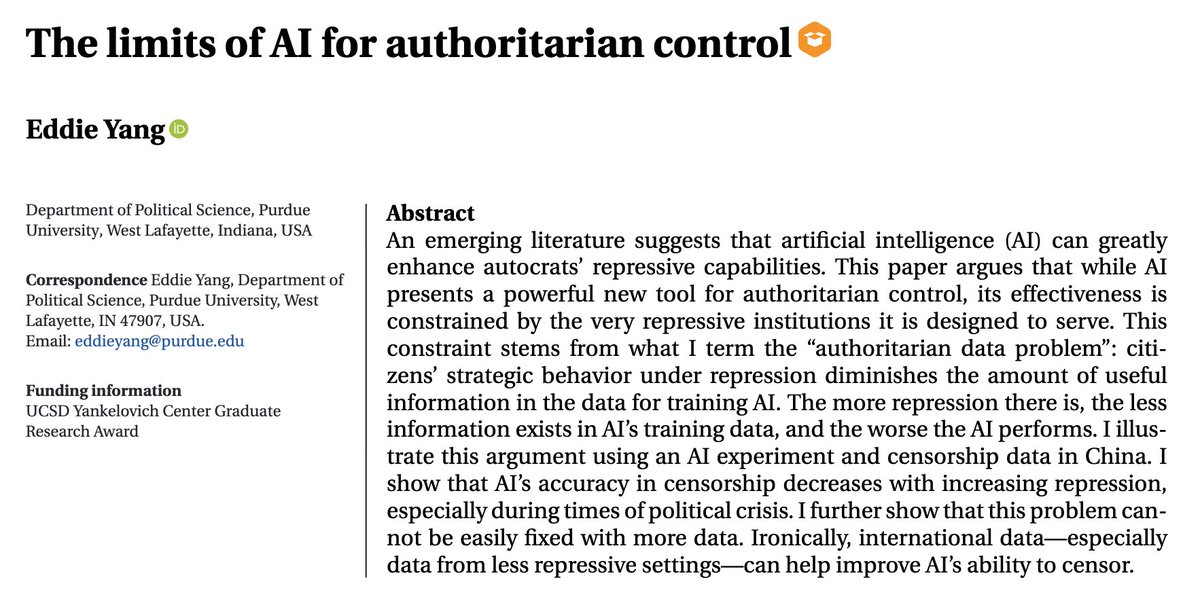
"The Limits of AI for Authoritarian Control"
by Eddie Yang in @AJPS_Editor (2025)
#SummerReading
onlinelibrary.wiley.com/doi/…
1
10
46
3,467
Susan Shirk retweeted

Jun 5
Awesome thread on how China actually became an EV powerhouse
Jun 5

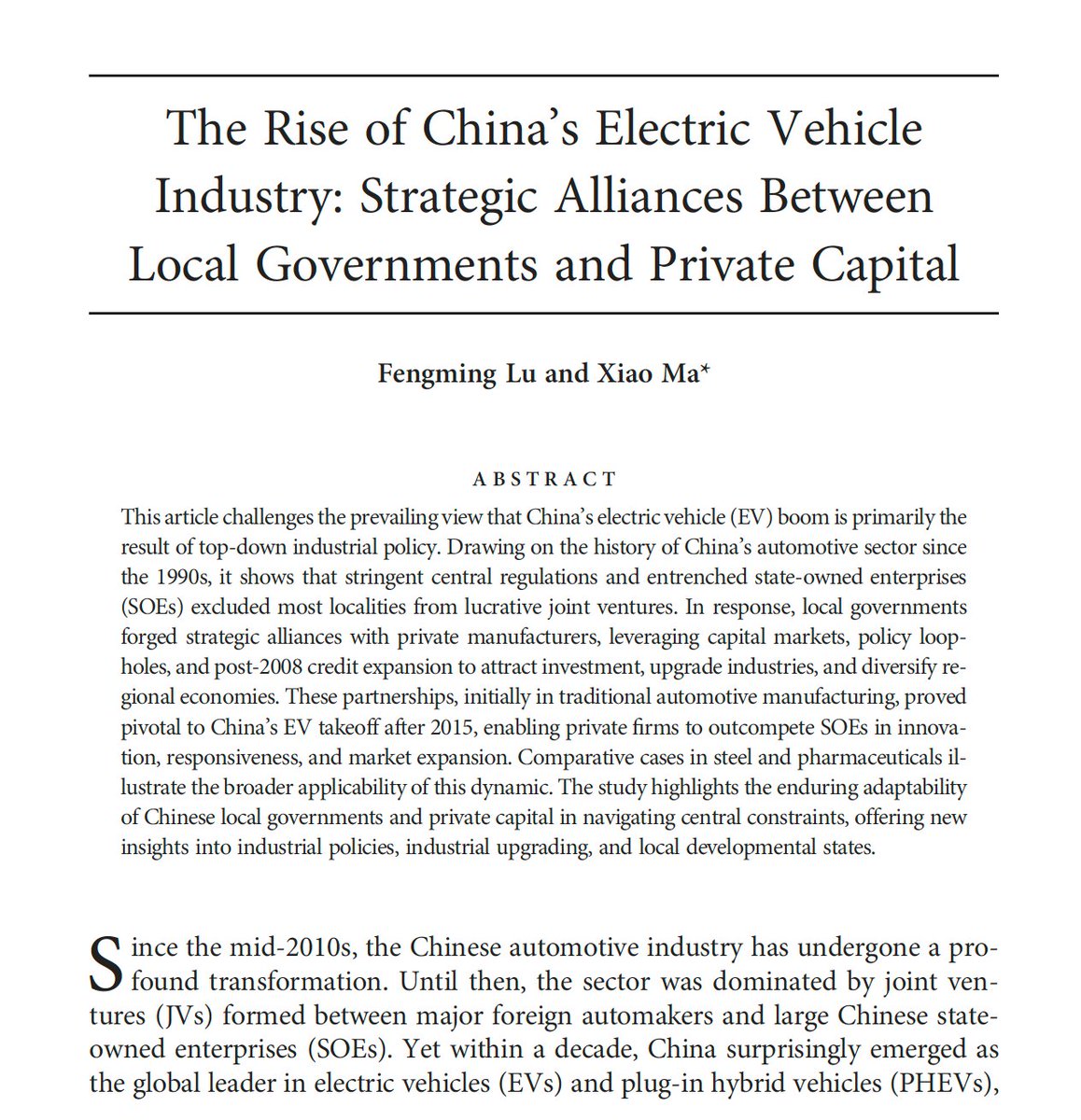
🚗🔋 Many think Beijing masterfully planned China's EV takeover. Fengming Lu (@ANUBellSchool ) and I spent 3 years and 60 interviews finding out what actually happened in our latest article @TheChinaJournal. A thread 🧵
8
62
306
35,749
Susan Shirk retweeted

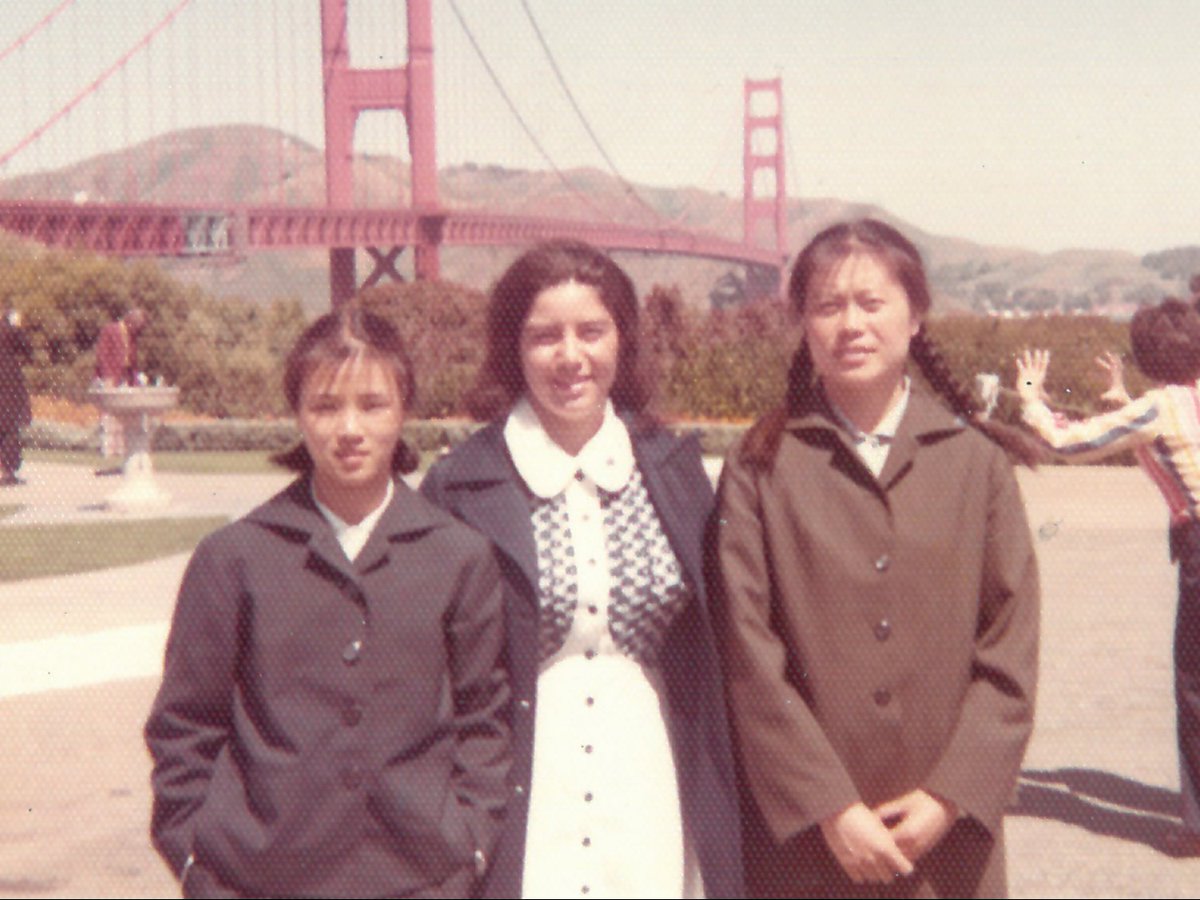
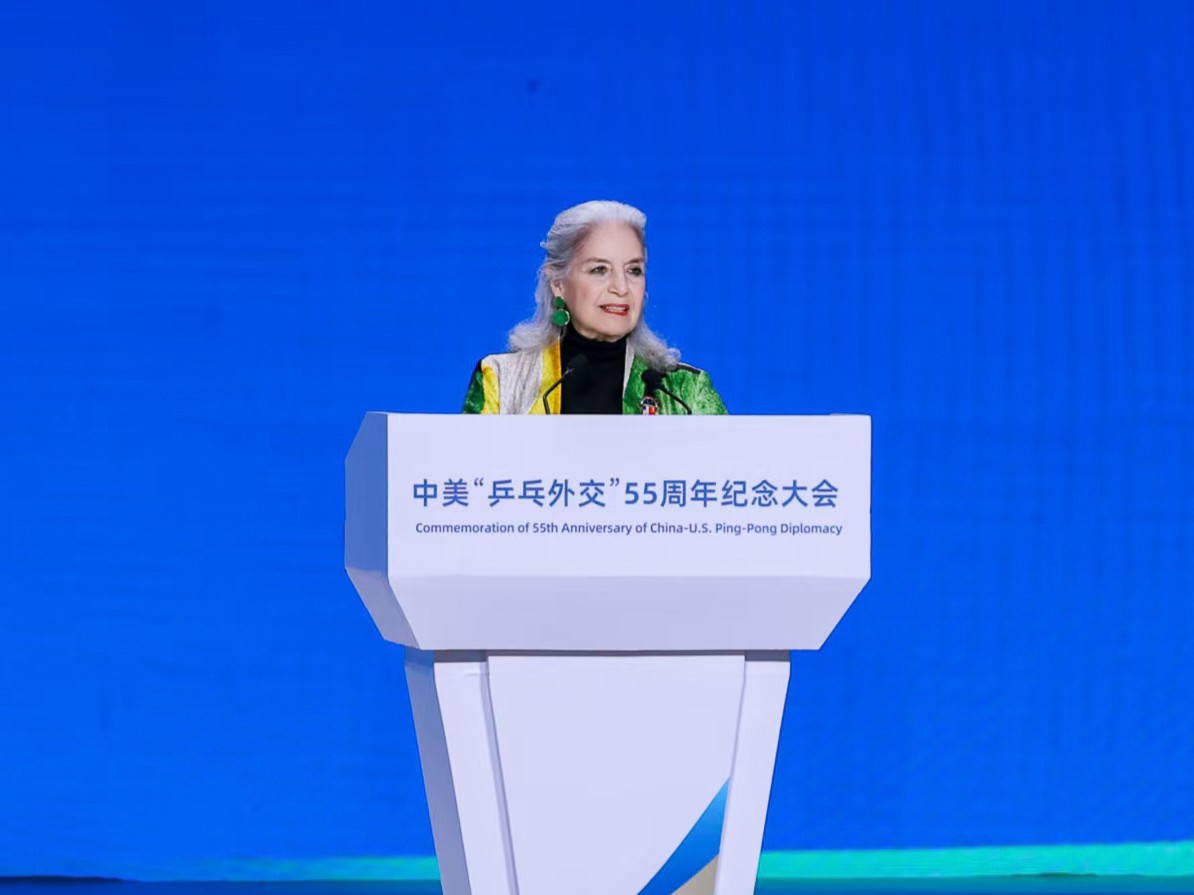
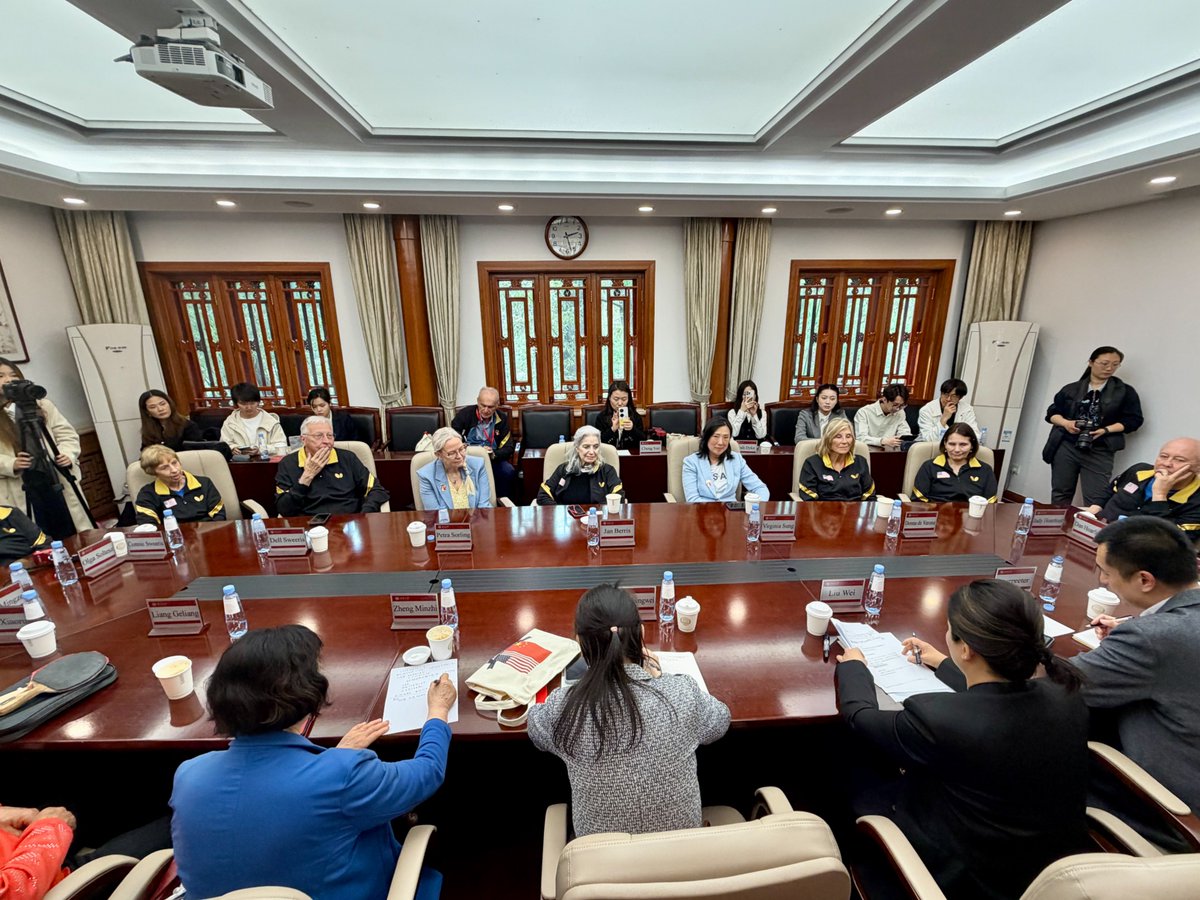
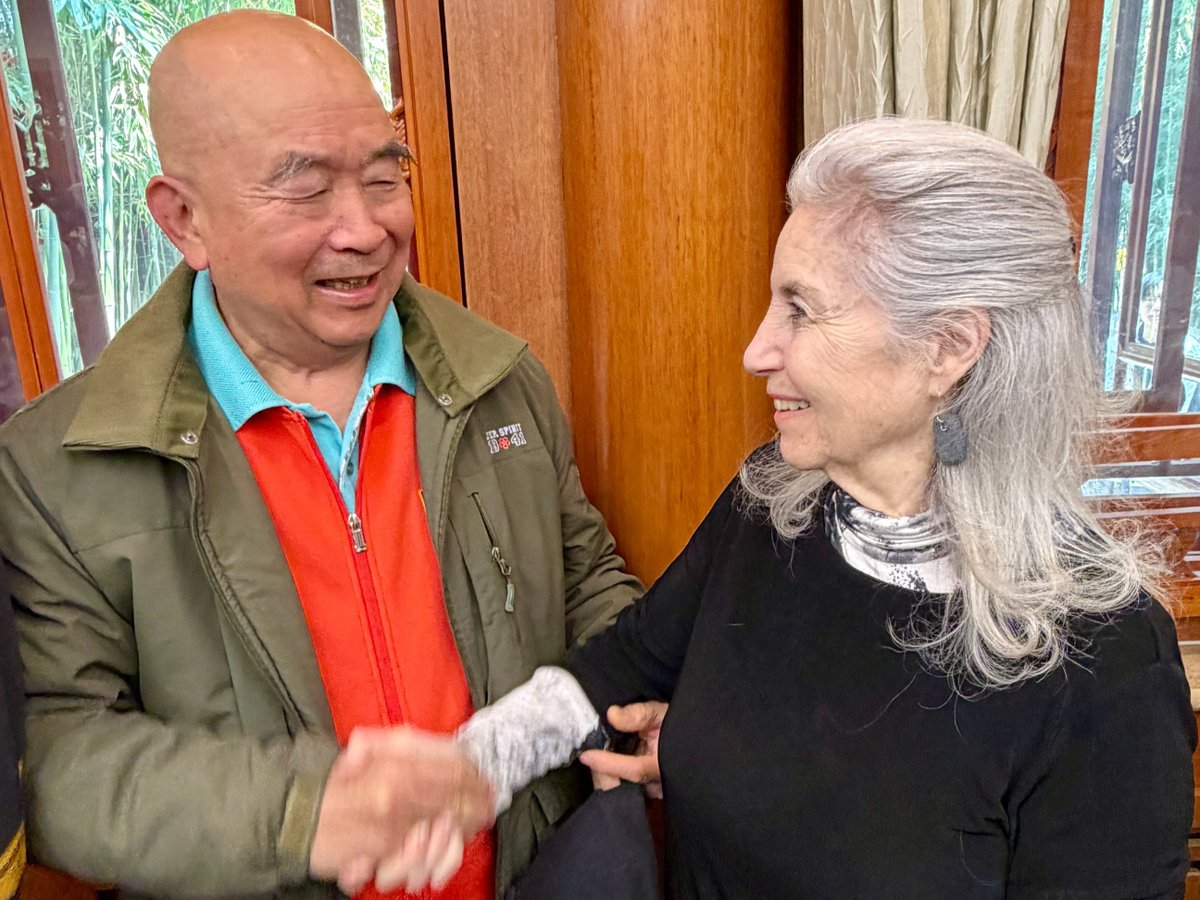
In 1972, NCUSCR's Jan Berris was there when the Chinese table tennis team arrived in America. Last month, she was on stage in Beijing for the 55th anniversary of Ping Pong Diplomacy. 55 years of building bridges through people-to-people exchange. @usatabletennis
Watch more coverage of the event here: bit.ly/3REwLX2
#NCUSCR60 #PingPongDiplomacy
3
2
9
1,139
Susan Shirk retweeted

May 29
A notable appointment
May 29

China has appointed Ding Xiangqun as the first female head of its financial regulatory system, bringing a veteran of banking, insurance and local government to lead the National Financial Regulatory Administration caixinglobal.com/2026-05-29/…
2
20
4,801
Susan Shirk retweeted

May 29
In a sign of Xi Jinping's insecurities, China has expelled an outstanding New York Times correspondent, Vivian Wang, who for years has done tremendous work covering that country. The Times, which has covered China since the 1850s and once had about a dozen correspondents in China, now has just one -- because of visa restrictions. China is a major international power, but it displays a remarkable lack of self-confidence when it bars correspondents like this. It will still be covered but from places like Taiwan in ways that can't do it justice. China has some extraordinary accomplishments in science, in education, in health, in infrastructure; a baby born in Beijing today has a longer life expectancy than a baby born in Washington DC. Yet China fears international coverage in a way that I think reflects a political immaturity and hurts itself. 搬起石头砸自己的脚. nytimes.com/2026/05/29/us/po…
397
314
792
255,684
Susan Shirk retweeted

May 23
A lot of AI/tech execs have been vocal about the importance of competing with China recently.
Seeing who speaks out about this new green card policy will tell us a lot about who *actually* cares about US competitiveness, and who just uses China as a pretext to oppose regulation
May 22

The new White House policy requiring green card applicants to apply from outside the US is a capricious attack on legal immigration. It will hurt families, leave us with fewer doctors, teachers and scientists, and hurt American competitiveness in AI.
22
77
648
110,942

While many of President Trump’s advisors probably regard “constructive strategic stability” as a rhetorical-cum-policy trap, the White House’s response has likely been muted because the framework aligns with Trump’s belief in the possibility of cooperative U.S.-China relations.
2
1
7
2,803
Susan Shirk retweeted

Whether unification will become easier with the passage of time remains to be seen, but I agree that a war is neither imminent nor inevitable. The key is to help Beijing believe that peaceful reunification remains a viable option.
May 23

“Believing itself ascendant, Beijing is in no rush to try to take Taiwan by force.” @amanda_hsiao and @BonnieGlaser argue that a Chinese military takeover of Taiwan is neither imminent nor inevitable:
foreignaffairs.com/taiwan/wh…
12
10
28
7,876
Susan Shirk retweeted

May 23
What if the Summit reflected Trump, chastened by the magnet/critical minerals cutoff, trying to come to terms with the reality of Chinese power?

While many of President Trump’s advisors probably regard “constructive strategic stability” as a rhetorical-cum-policy trap, the White House’s response has likely been muted because the framework aligns with Trump’s belief in the possibility of cooperative U.S.-China relations.
1
3
4
3,400
Susan Shirk retweeted

May 23
Racial politics of the Bay Area might start to get ugly as layoffs continue
May 23

At Meta, 90% of my coworkers were Chinese, and non-Chinese were routinely excluded, disadvantaged, and targeted for layoffs. 6 out of the 7 layoffs I observed targeted non-Chinese despite non-Chinese being the vast minority. Certain orgs like ads and MRS are notorious for being Chinese dominated. I think Americans would be outraged if they knew that their own citizens were getting marginalized and laid off at their own companies, while Chinese promote themselves up, conquer entire orgs, and reap millions.
Imagine if Huawei in Shenzhen had entire orgs and leadership chains completely dominated by Japanese people who brazenly spoke Japanese at work without a care in the world that their Chinese coworkers don't understand, imposed their own work culture without respecting Chinese culture, excluded the Chinese, and laid off Chinese people while promoting their own. I imagine Chinese citizens would be outraged, and never allow that to happen in the first place.
The most blatant and obvious way that non-Chinese are excluded is that Chinese primarily speak Mandarin at work. I'm not talking about one-off conversations, I'm talking about every single conversation. Loudly and brazenly with no respect for others. 10 teammates and leaders having a group conversation in Mandarin while the 2 non-Chinese don't understand and feel excluded from the team. Although everyone at least has the decency to speak English during formal meetings with a non-speaker present, it was common that right after the meeting ended everyone would immediately switch to Mandarin.
Funny I'm in Korea right now and was just on a double date with 3 other Koreans, and I was shocked that when the conversation would split into two, the other couple would speak to each other in English in my presence just out of respect. A Korean couple on a double-date had the courtesy to speak to each other in English in front of me even though I'd never expect that from them, but my Chinese coworkers did not.
Lunch was another place where non-Chinese were blatantly excluded. Recall that the team I joined was an all Chinese team with only one other non-Chinese person. The Chinese would always get lunch together and never invite us (except for one of them who occasionally would, though at some point stopped). Me and the non-Chinese person would invite them, they'd always refuse, and then shortly after they'd disappear and get lunch together. As a result, it was usually just the two of us getting lunch. (caveat, some of the newer Chinese who joined afterwards also experienced similar treatment. So it's moreso a clique thing than a Chinese vs. non-Chinese thing, though 100% of the clique was Chinese)
On Wednesdays and Fridays I'd often be the only non-Chinese person on my team in the office, and they'd all get lunch together without inviting me. It was depressing, and made me not want to come into the office on those days.
One team dinner we went to a Korean BBQ. I arrived with a non-Chinese coworker and the first table was full, so we sat at one end of the next empty table. Shortly after one of the Tech Leads walked in, and sat at the complete opposite end of our table, alone and not in talking distance to anyone. We invited her over, and she declined. Later another Tech Lead came in and sat across from her. Non-Chinese and Chinese at opposite ends of a long table at a team dinner, and they refused to sit with us. Eventually more people came and the TLs joined our side because I guess maybe it was too obviously anti-social, and they spent the entire dinner speaking speaking Chinese to each other. These were our tech leads.
I could not understand how Meta could have "Tech Leads" that so blatantly excluded teammates. I thought Tech Leads were supposed to uplift the team, and that Meta would hold tech leads to a higher standard.
Now someone might say that it's just lunch or a one-off team dinner, who cares? To that I vehemently disagree. Lunch is extremely important for team bonding, and so much information is transferred through informal socializing. I'm not saying that everyone needs to get lunch together everyday, but if a minority of people are excluded from getting lunch with the rest of the team, and especially the most tenured and senior employees, then naturally that minority is going to feel alienated, disadvantaged, and excluded from opportunities. And the very fact that they're excluded from lunch is reflective of being excluded in general.
When 90% of an org and the entire leadership chain is dominated by one ethnicity, naturally their work culture is going to spill through. Chinese culture is completely different from American work culture, and learning to navigate that was a huge obstacle for me. For example I'm the type that tends to question everything and isn't afraid to challenge a "superior", but I quickly realized that my TL seemed to take offense to that, and would punish/retaliate me for it.
I want to make it clear - I have nothing against Chinese people. Most of them are very kind (strong correlation between kindness and not engaging in the kind of exclusionary behavior I mentioned above), and I have many good friends who are Chinese. I get that some barely speak English (though I question how they got hired). I do genuinely believe that most are good people, and not deliberately trying to exclude others. But regardless of intent, the result is that non-Chinese get excluded. The fact that 6 of the 7 layoffs I observed were not Chinese in a 80-90% Chinese dominated org is testament to this. The fact that 90% Chinese dominated orgs even exist in the first place is testament to this.
I might not even be posting about this given the sensitivity of the topic if not for the fact that I've seen and/or heard stories of some very toxic people who I do not believe would otherwise survive if not for their ability to exclude others, throwing others under the bus for the next layoff. The same people do this over and over again, and get away with it because they're part of the "clique" that essentially has immunity.
I think the company needs to take this more seriously. Some ideas would be enforcing English at the office (I've heard of other teams that do this), raising leaders to a higher bar when it comes to team inclusivity (eg. under the "People" axis), investigating potential discrimination cases (eg. layoffs and/or mistreatment disproportionally affecting certain groups) and having a zero tolerance policy around that, having a zero tolerance policy around injustice in general (eg. lying or deliberately throwing somebody under the bus), ensuring more diverse teams, etc.
But to be honest, I don't have faith that much would change so long as the entire leadership chain up to the VP level is dominated by the same ethnicity, language, and culture. Nor does it seem that leadership even remotely cares given that this has been happening in the HQ for probably at least the last decade, and is obvious to anyone who's stepped foot in the office.
1
8
1,923
Susan Shirk retweeted
May 19
A very important point that bears repeating. People somehow believe that we can do X, Y, Z without any reliance on Chinese companies and talent. In many cases, we cannot.
May 19

Silicon Valley’s China strategy is out of step with Apple and Tesla
The public narrative is about China being a foe. In reality, every major U.S. tech company is deeply entangled with China, be it for manufacturing, for engineering talent, advertising revenue, end markets, or all four. Yup...
Then think yttrium, scandium, neodymium, and indium...
restofworld.org/2026/silicon…
4
14
59
19,187
Susan Shirk retweeted

Mar 1
This is pretty brilliant stuff!
Feb 25

New paper at AJPS: "The limits of AI for authoritarian control." The more repression there is, the less information exists in AI's training data, and the worse the AI performs. Ironically, data from democracies can help improve repressive AI.
5
8
52
20,662
Susan Shirk retweeted
🇺🇸🇨🇳 Is it too late to change the course of U.S.-China relations?
@NCUSCR Director David M. Lampton (@SAISHopkins) joins @NCUSCR President @sorlins to discuss steps that the United States and China could take to pull back from their current trajectory.
▶️ Watch: ncuscr.org/video/edge-of-rui…
2
1
6
1,388

Mar 1
RT @Lingling_Wei: In addition to oil, one big worry Beijing has is domestic stability. They’re watching very closely how the Iranians respo…
25
Susan Shirk retweeted

This is an excellent read of Shenzhen. Visitors are often impressed by Chinese big factories but the real strength of China is its ability to prototype fast. Andrew Huang wrote about this ten years ago in his excellent book, The Essential Guide to Electronics in Shenzhen.
Feb 28

I spent time in Shenzhen last year and when I saw Merz come back from China saying Germans need to work more I immediately knew what broke his brain because I lived the exact same cognitive shock
my first week in Huaqiangbei I burned through 4 prototype iterations of a motor controller board for less than a thousand bucks total, back home a friend was working on something similar and spent over 12 thousand for a single revision that took almost two months to arrive
when you live that contrast in your own hands with your own project something permanently shifts in how you see the world and it goes way deeper than speed & cost
what Shenzhen actually built is a collective learning organism, imagine 20 PCB fabs 15 injection mold shops 30 component distributors and a hundred firmware freelancers all within a 2km radius, looks insanely redundant from the outside until you realize redundancy is actually information density in disguise
I watched this firsthand with an injection mold supplier I was working with, this guy had seen a hundred founders iterate similar thermal designs over 6 months so he proactively modified his tooling before I even opened my mouth, he knew what I needed before I knew what I needed, the intelligence lives in the relationships between the nodes and it compounds daily
the west thinks about manufacturing as a cost center you optimize by centralizing…
China accidentally built a distributed neural network of manufacturing intelligence where knowledge diffuses horizontally across thousands of agents faster than any single western company can process internally
so when Merz comes back and says we need to work a bit more I think he saw the problem but COMPLETELY misdiagnosed the solution, telling Germans to work harder is like telling a horse to gallop faster when the other side built a combustion engine
the gap is ARCHITECTURAL
it’s ecosystem density, you need a custom connector in Shenzhen you walk 200 meters, in Munich you send an email and wait 3 weeks
it’s iteration speed, parallel search vs sequential optimization at the system level, it’s risk tolerance, Chinese founders ship something broken on Monday fix it Tuesday ship again Wednesday while European companies are still in the approval phase for the pilot program of the feasibility study…
and Merz only saw the surface, what he missed is the tier 2 cities like Hefei Chengdu Wuhan replicating the Shenzhen model at scale right now
BYD going from irrelevant to outselling every european automaker combined in roughly 5 years, Huawei building its own 7nm chip under maximum sanctions when every analyst said it was physically impossible & behind all of that a government that treats advanced manufacturing as an existential national priority while europe debates whether AI needs another ethics committee
I think what we’re watching is the most asymmetric economic competition in modern history and most western leaders are still framing it as a productivity problem when it’s actually an ontological one
Europe & America are optimizing variables that China stopped tracking years ago meanwhile China is compounding on dimensions the west has no framework to even measure
Merz at least had the courage to name
it out loud and I respect that genuinely but working a bit more inside a broken architecture just means you arrive at the wrong destination slightly faster
3
38
233
25,877
Susan Shirk retweeted

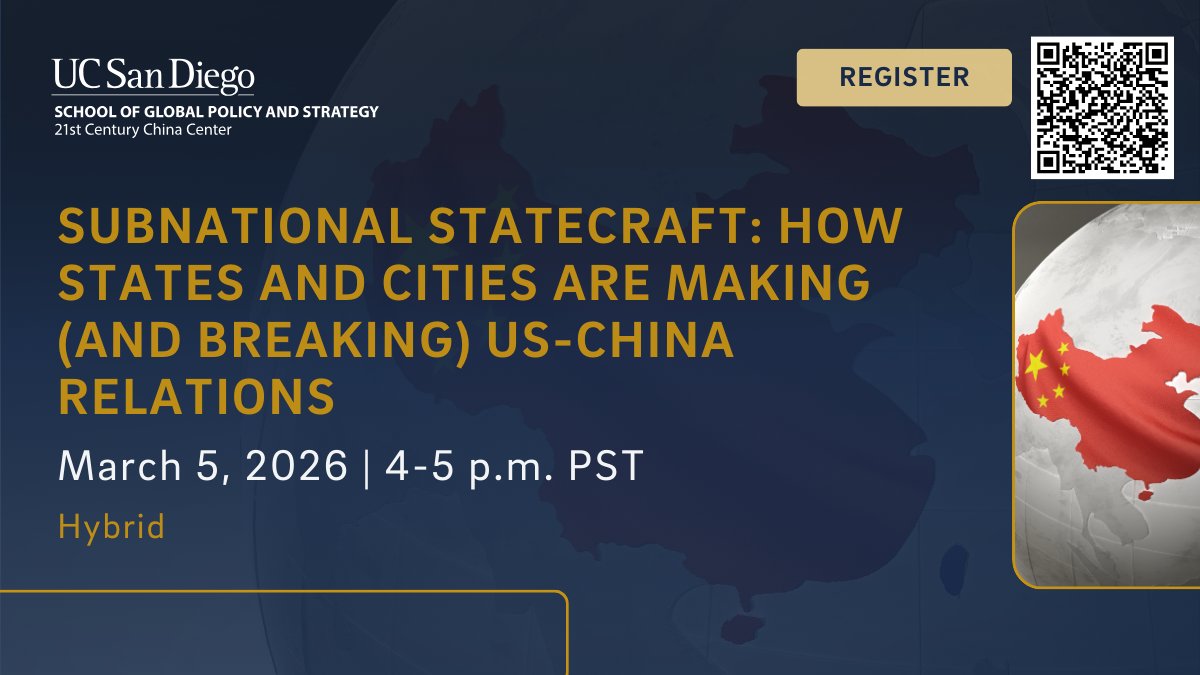
📢Subnational Statecraft: How States and Cities are Making (and Breaking) US-China Relations
📚Kyle Jaros @KeoughGlobalND examines how subnational actors in U.S. & China are shaping and responding to intensifying great-power rivalry.
📆Mar 5, 4pm
👉RSVP: ow.ly/94ci50Y0qqZ
1
2
741
.@kyleichan “After years of making moves to ‘de-risk’ from China, some U.S. allies are contemplating de-risking from the United States.”
foreignaffairs.com/united-st…
1
4
7
1,290
Susan Shirk retweeted
Mar 1
They nailed it on China and Iran:
“China is much more important to Iran than vice versa. Beijing will be unsentimental about events inside Iran and about the fate of Iran’s current regime.”
From my colleagues @ryanl_hass and @allie_matthias in January: brookings.edu/articles/how-i…
17
39
235
127,553