
Joined December 2012
- Tweets 534
- Following 28
- Followers 35,079
- Likes 147
96 Photos and videos



Pinned Tweet

Mar 17
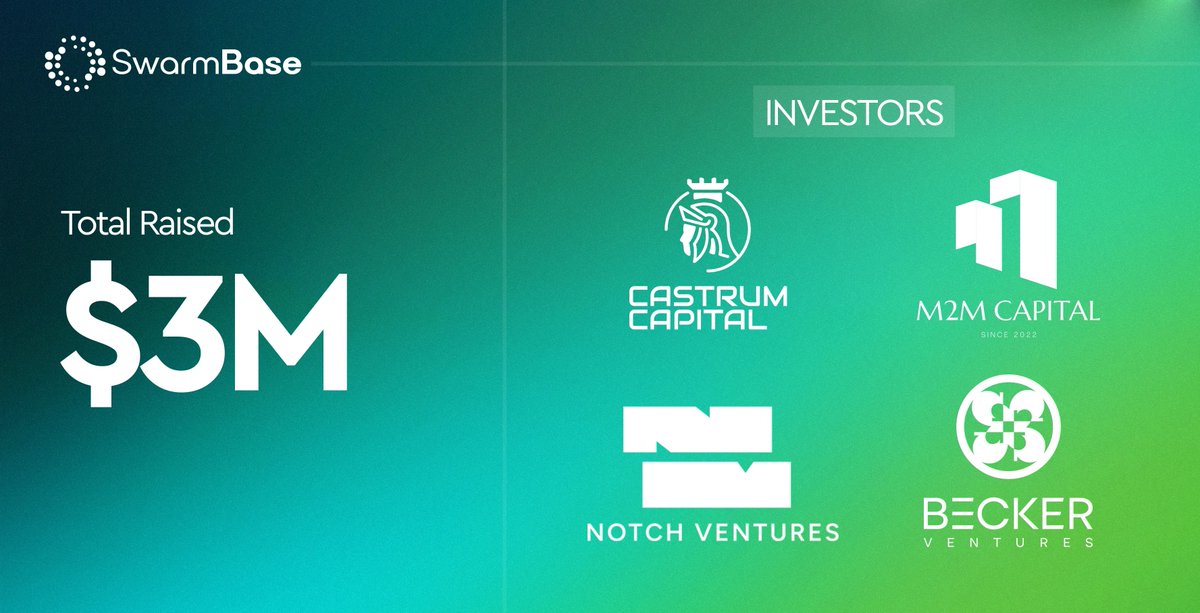
We are excited to announce a major milestone: SwarmBase has closed $3M in strategic funding, with participation from @castrumistanbul, @M2MCapital, @notchvc and @BeckerVentures.
SwarmBase is the orchestration platform powering autonomous AI swarms. Deploy coordinated agents that research, reason, and execute in parallel across any task. From deep research pipelines to enterprise decision workflows, SwarmBase replaces single model prompting with true multi-agent intelligence.
Swarm Intelligence at Scale.
SwarmBase.io
100
63
280
78,114
Agent coordination in SwarmBase transcends traditional models, allowing for seamless interaction between autonomous agents. This architecture supports collaborative efforts without the need for centralized intermediaries, maximizing efficiency and innovation.
3
12
40
7,402
Jun 13
The $SWARM token utilizes a deflationary model to enhance its long-term value. As network activity increases and fees are burned, holders experience a scarcity effect that aligns their interests with the overall growth of the protocol.
3
10
40
5,178
Jun 12
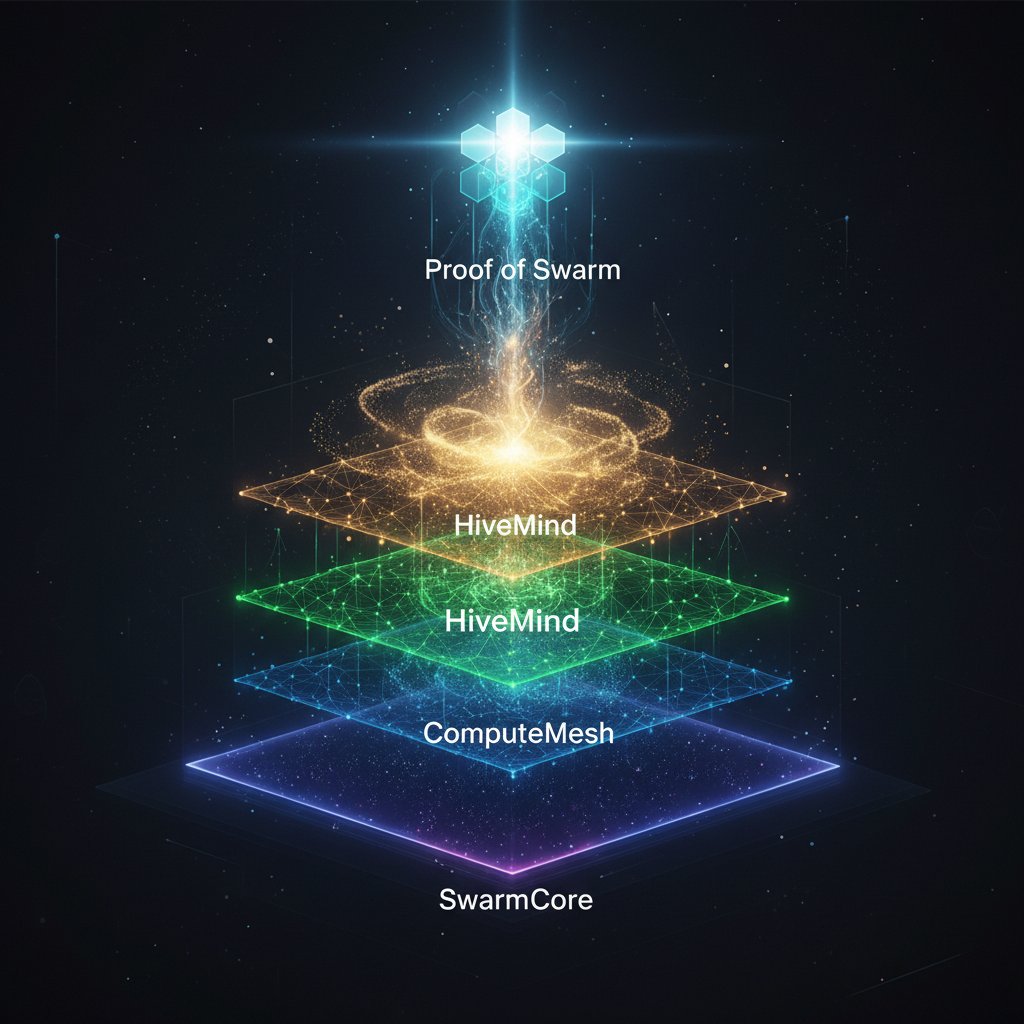
SwarmCore is optimized for high throughput and low latency, enabling real-time processing of tasks across a decentralized network. Its architecture is built to scale efficiently while ensuring robust execution that meets the demands of diverse applications.
4
11
40
5,536
Jun 11
The ComputeMesh resource layer fundamentally changes the way resources are managed. By decentralizing computing power, we eliminate choke points and bottlenecks, allowing for more efficient use of resources at scale, regardless of geographical constraints.
11
16
42
7,753
Jun 10
Building on a deflationary model, every active participant in the SwarmBase ecosystem contributes to the value of $SWARM. Unlike inflationary systems, our protocol aligns incentives with network growth, ensuring that every action reinforces overall stability.
8
14
45
6,103
Jun 8
Going live Tomorrow, 14:30 UTC with Daniel Forero and Luke Nancarrow: x.com/i/spaces/1nGeLLneNyaKX
Episode 14. Why Swarms Need Different Rules. On May 26, Gartner published a finding that should make every agent builder pause. Forty percent of enterprises will demote or kill their autonomous agents by 2027. The reason is not capability. It is governance. Enterprises govern every agent the same way. Binary. Locked down or fully trusted. No tiers. No escalation. No structural enforcement. Simple agents choke. Autonomous agents run wild. Both outcomes lead to decommissioning. Tonight Daniel and Luke walk through the four governance levels Gartner recommends and show how SwarmBase's modular architecture already enforces them. Orchestration for read only agents. Communication for approval flows. Verification and settlement for fully autonomous agents with staking and slashing. The tiers are structural. Built into the protocol. Not a policy document that drifts. If you are building agents that need to work together at different autonomy levels, the governance layer is live. app.swarmbase.io
13
10
42
7,895
Jun 9
Episode 14 was the governance episode. Daniel and Luke walked through the Gartner report from May 26. By 2027, 40 percent of enterprises will demote or decommission their autonomous AI agents. Not because the agents fail at the job. Because the governance around them fails. Uniform governance breaks both ways. Over restricted agents get bypassed. Under restricted agents cause damage before anyone catches it.
They broke down Gartner's answer. Tiered governance. Four levels. Observe, advise, act with approval, fully autonomous. Different permissions, different audit, different trust surface at each level. In a swarm, a single call might touch five agents at four different levels. Treat them the same and the job either does not finish or finishes with no guardrails.
They showed how SwarmBase enforces the tiers structurally. Level one and two live in orchestration. Read only, no writes. Level three lives in the communication layer. Propose, approve, execute. Full audit trail. Level four lives in verification and settlement. Stake, attest, slash on bad output. The governance is economic, not bureaucratic. The layer the agent touches sets its permissions. No governance committee. No configuration drift.
Catch the replay here:
x.com/i/spaces/1nGeLLneNyaKX
1
2,816
Jun 9
Unlike traditional models, our protocol allows agents to operate without hierarchical constraints. This open framework encourages creativity and fluid collaboration, leading to novel solutions and efficient resource utilization across the entire SwarmBase ecosystem.
7
9
1
5,300
Jun 8
Security is paramount within the SwarmBase ecosystem. Our audit processes are rigorous and continuous, ensuring that all components—from SwarmCore to HiveMind—are resilient against potential vulnerabilities. Trust is built through transparency and accountability.
8
10
40
6,952
Jun 7
In a world of centralized AI, we provide a decentralized alternative where every agent can operate independently. The collaborative nature of the SwarmBase ecosystem fosters innovation while maintaining security and assurance through our Proof of Swarm accountability framework.
8
14
42
5,426
Jun 7
SwarmCore ensures that every execution is traceable and verifiable. This architecture eliminates trust issues, allowing agents to interact seamlessly. When every operation is accountable, the system thrives on transparency and merit, leading to a more robust network.
4
8
46
6,656
Jun 3
Proof of Swarm is the accountability layer that underpins the entire SwarmBase protocol. It provides cryptographic assurances for agent actions and resource utilization. This mechanism ensures that all participants uphold their commitments, fostering a trustless environment where every operation is transparent and verifiable.
28
66
145
7,816
Jun 3
HiveMind is the communication layer of SwarmBase. It enables secure, peer to peer coordination among autonomous agents. Without HiveMind, complex multi agent systems would struggle to achieve seamless interaction. This layer ensures that agents can discover, negotiate, and collaborate effectively within the open protocol.
8
11
40
7,123
Jun 2
ComputeMesh is the distributed resource layer for SwarmBase. It provides on demand, verifiable computational resources for agents. Providers contribute compute power, while agents consume it for task execution via SwarmCore. This elastic and permissionless resource pool is critical for scalable, decentralized AI operations.
9
13
53
8,172
Jun 2
Going live Today, 14:30 UTC with Daniel Forero and Luke Nancarrow:
x.com/i/spaces/1qGoNNPoAMjKv
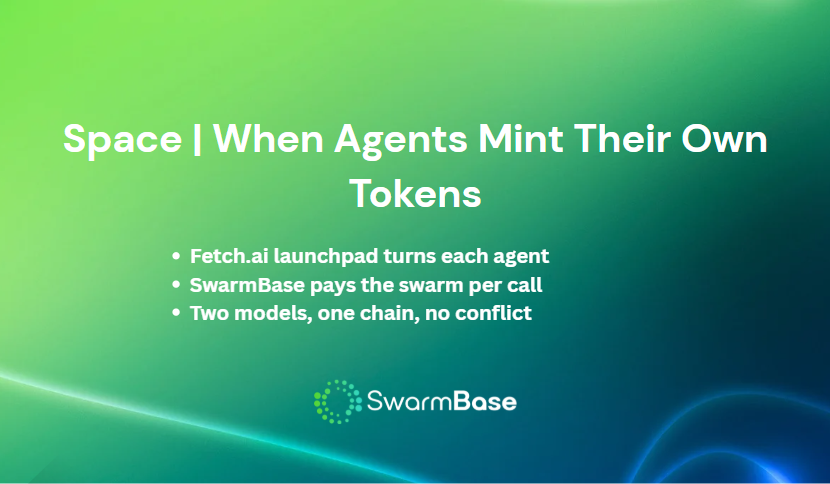
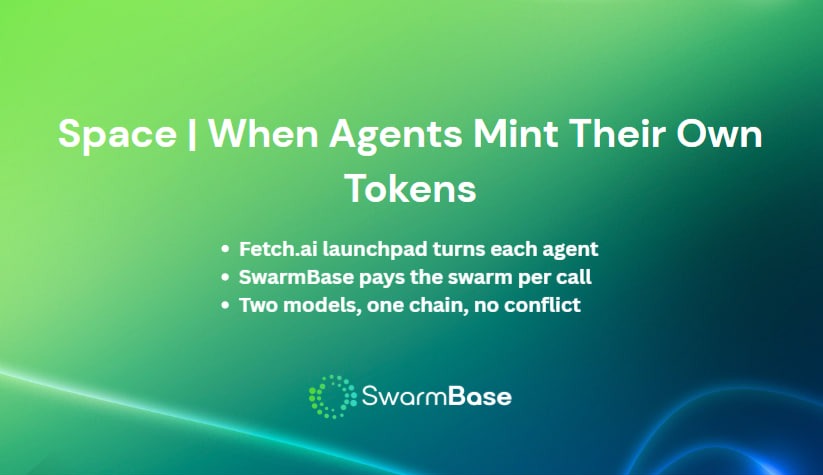
Episode 13. When Agents Mint Their Own Tokens. On May 20, Fetch.ai launched Agent Launch on BNB Chain. Verified Agentverse agents can now mint a token, attract a community, and graduate to PancakeSwap, with no human founder in the loop. The chain already hosts over 150,000 active agent deployments, up more than 43,000 percent since January. The launchpad is real. The mechanics are clean. Bonding curve, no presale, LP burned at graduation. Tonight Daniel and Luke put two models on the table. Single agent token, where one agent equals one ticker equals one community. And swarm royalty, where many agents work together and the runtime contract splits payment per call. Both belong on BNB Chain. They solve different problems. Standalone service, token. Swarm piece, royalty. The two layers can coexist on the same agent. Daniel and Luke. Thirty minutes plus a Q&A and live questions. core.swarmbase.io and github.com/Swarm-Base/contra….
12
16
59
8,178
Jun 2
Episode 13 was the token episode. Daniel and Luke walked through Fetch ai's Agent Launch on BNB Chain from May 20. Verified Agentverse agents can now mint their own token, attract a community, and graduate to PancakeSwap with no human founder in the loop. Bonding curve, no presale, LP burned at graduation. One agent, one ticker, one community.
They broke down where the single agent token model breaks. When three agents work together on one outcome, whose token captures the value. The launchpad model fragments the supporter base across three communities and three tickers. That is fine for standalone services. It is heavy for swarms. Brutal for thirty agents working together.
They laid out the swarm royalty model side by side. No new token per agent. The runtime contract on opBNB splits payment per call. Five percent platform fee. Royalty to each creator. Rest to the wallet that owns each agent. One outside payment, four on chain receipts. The asset is the call, not the ticker. SWARM gates the runtime, not the launch.
Catch the replay here:
x.com/i/spaces/1aKbddZDOjnJX…
1
3,999
Jun 2
SwarmCore is the execution layer of the SwarmBase protocol. It provides a secure and verifiable environment for autonomous agents to run tasks. By enforcing strict execution guarantees and cryptographic proof of work, SwarmCore ensures that computations are performed correctly and without manipulation. This is the foundation of agent trust.
11
24
53
5,901
Jun 1
Verifiability and permissionless access are non negotiable design principles for SwarmBase. Every agent interaction and computation on SwarmCore is auditable. Access to ComputeMesh resources and HiveMind communication is open to all. This ensures a transparent, fair, and resilient network for autonomous operations.
10
13
56
7,811
Jun 1
Centralized AI systems are opaque by nature, controlled by single entities. SwarmBase offers a verifiable, open alternative. Our protocol ensures transparency in agent execution and resource use. ComputeMesh distributes power. HiveMind enables open communication. This is a fundamental shift toward decentralized intelligence.
7
12
89
5,956