
215 Photos and videos
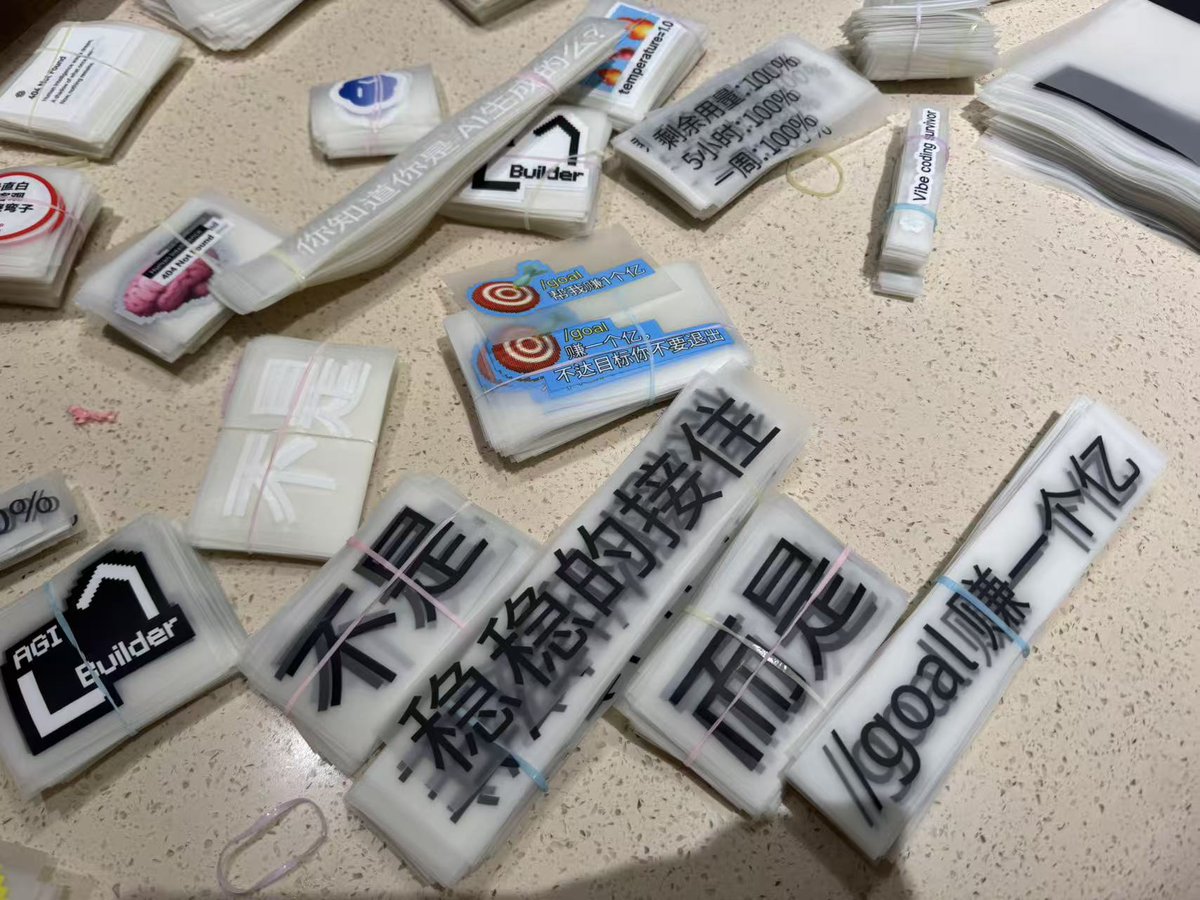
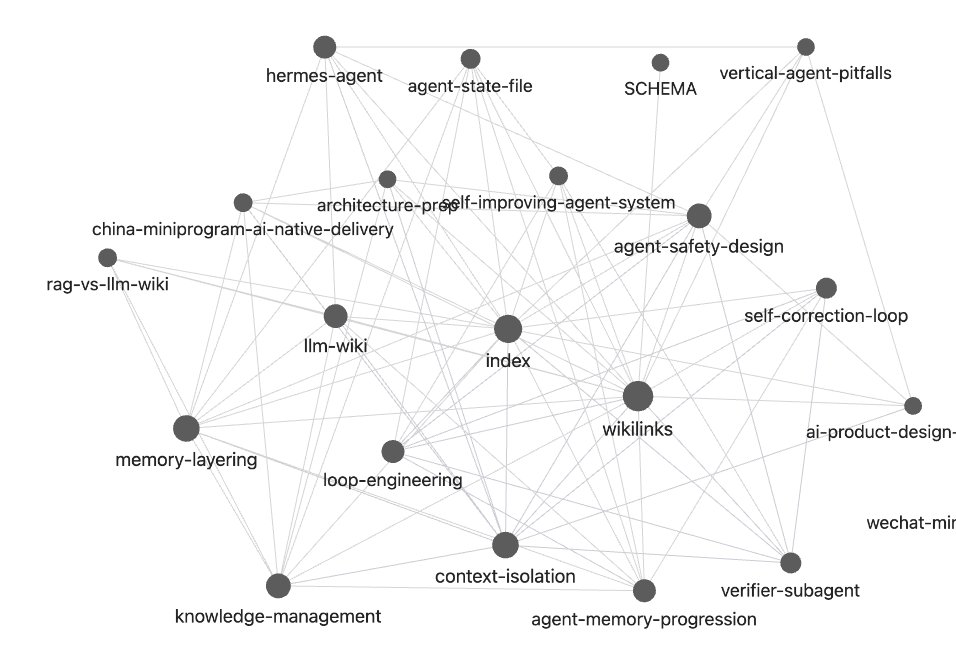
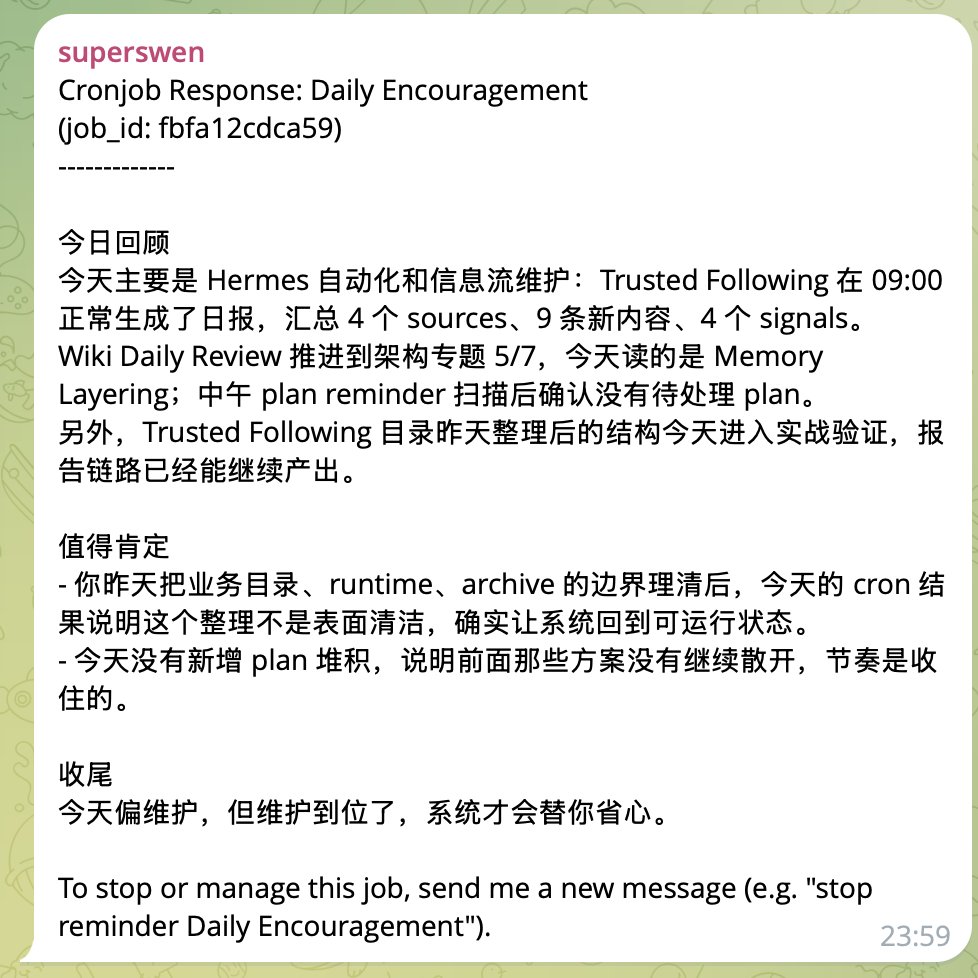

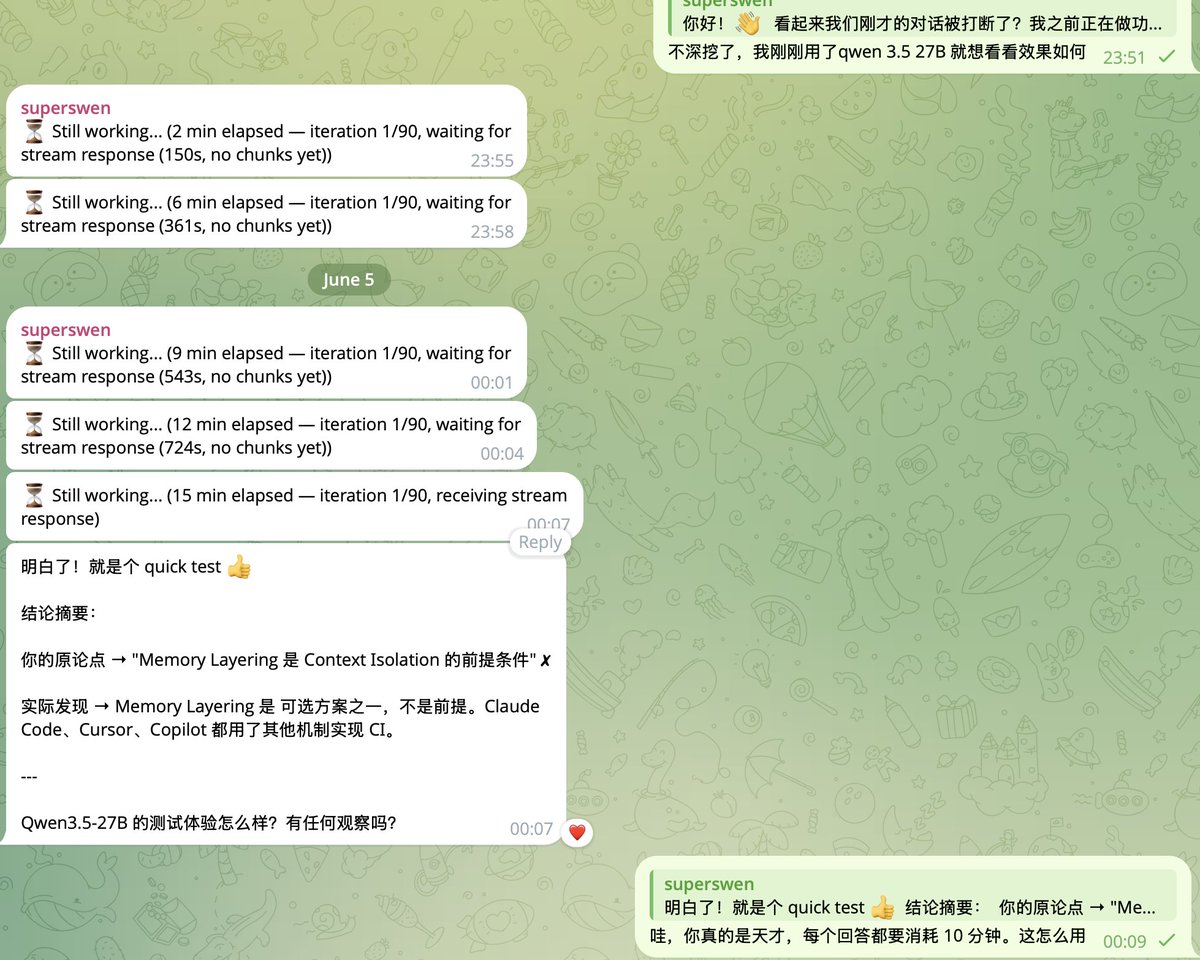
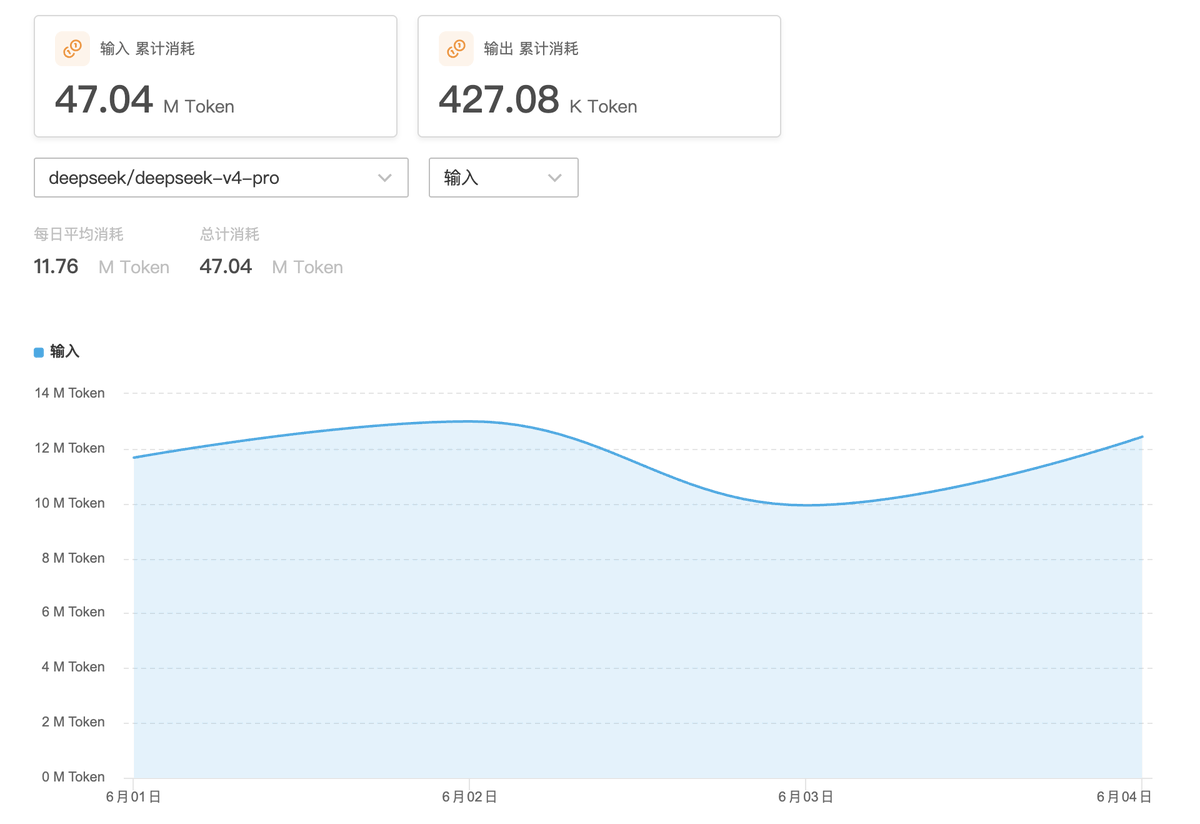
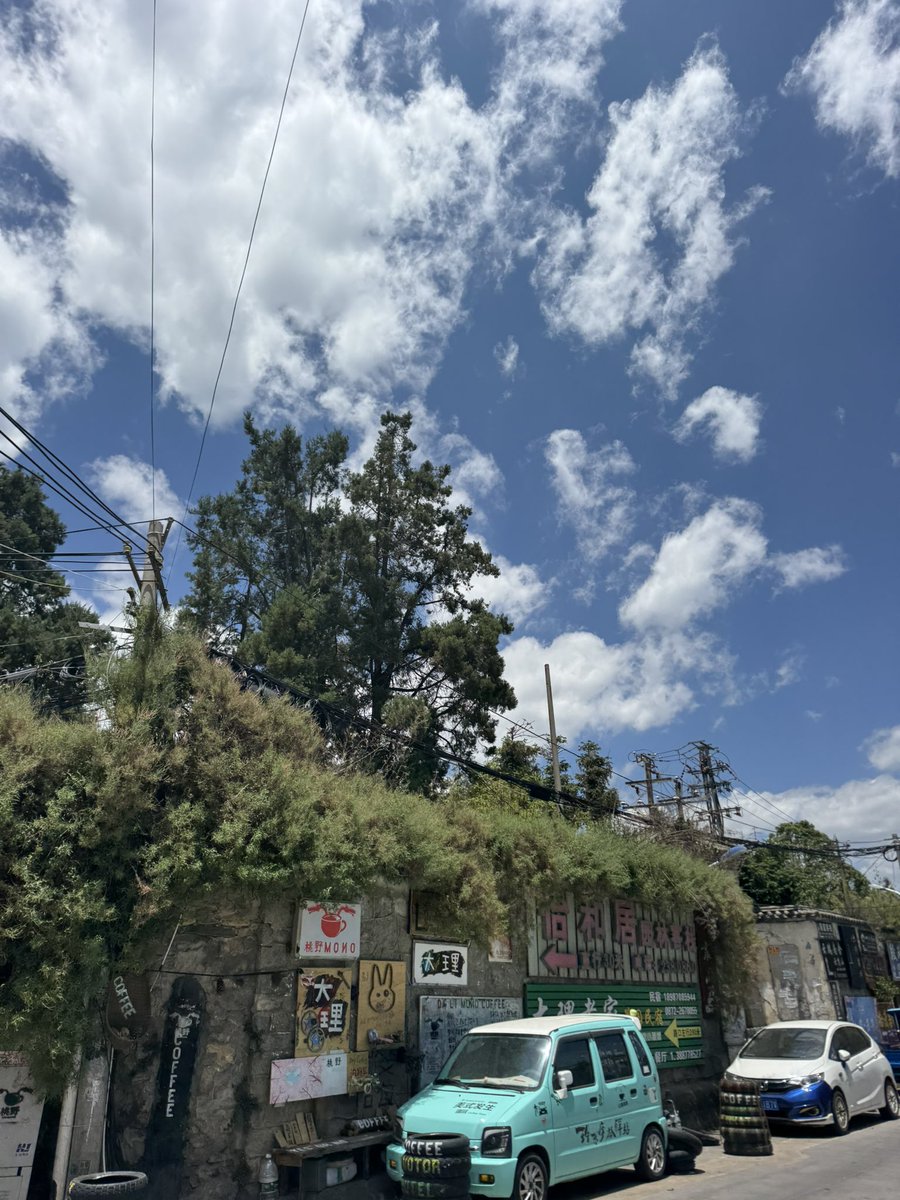
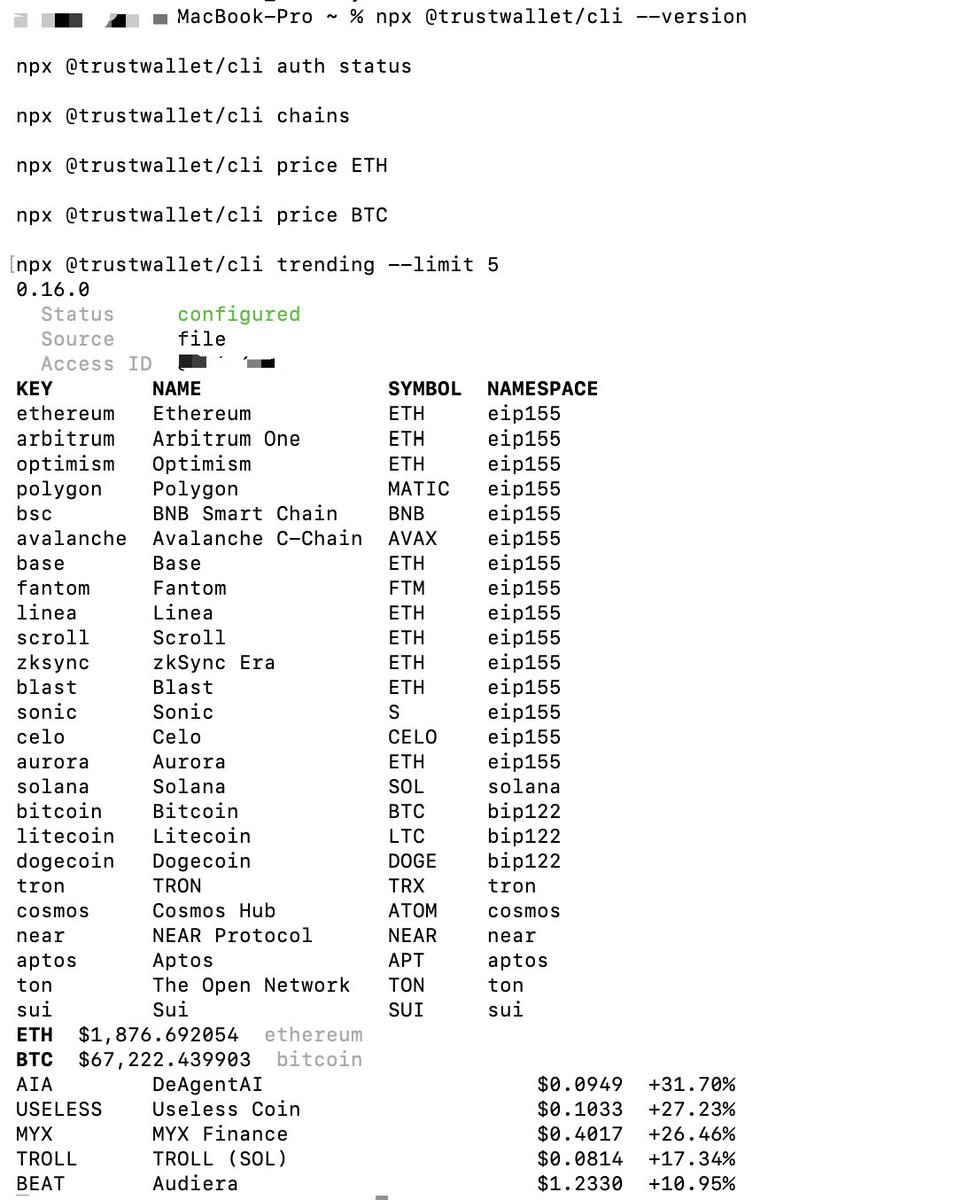

已经可以换GLM 5.2了lol

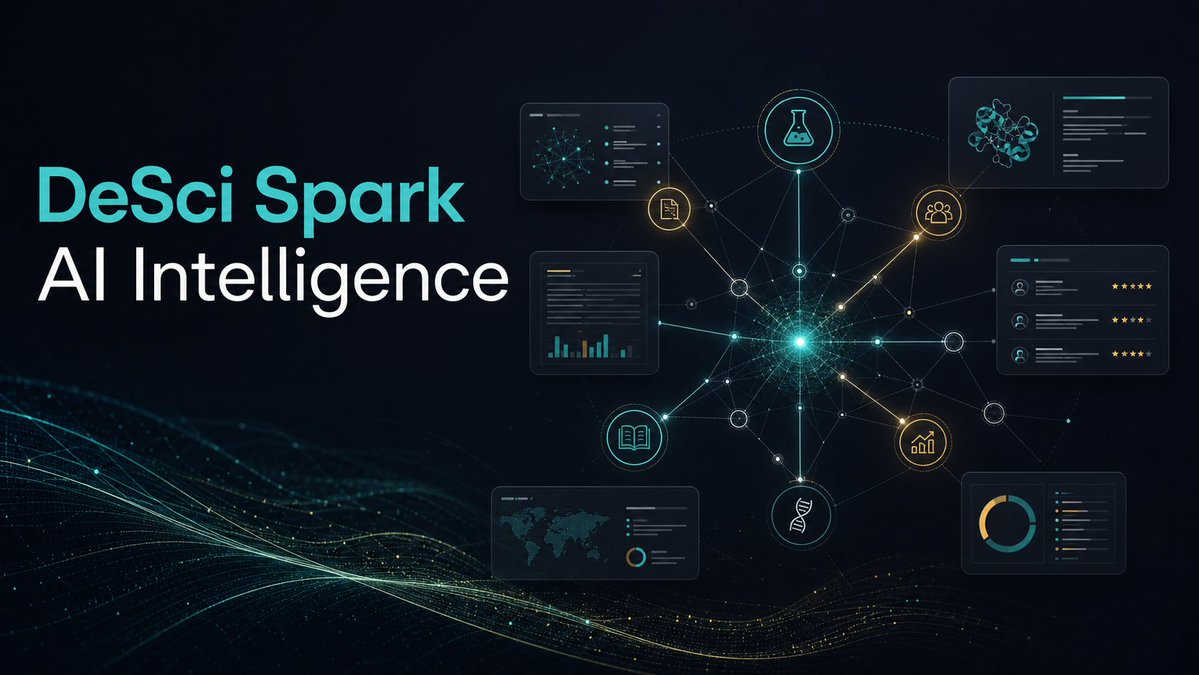
向大家介紹 Spark DeSci Funding Agent
參與 @aiweb3school AI x Web3 黑客松的參賽作品
一個以 GLM5.1 建立 DeSci 去中心化科學的 AI agent 用於減輕 DeSci funding round 的人類評審工作,亦減低加入 DeSci 的門檻。
3
243
0xSwen retweeted

Taking DealAgent to bigger world!
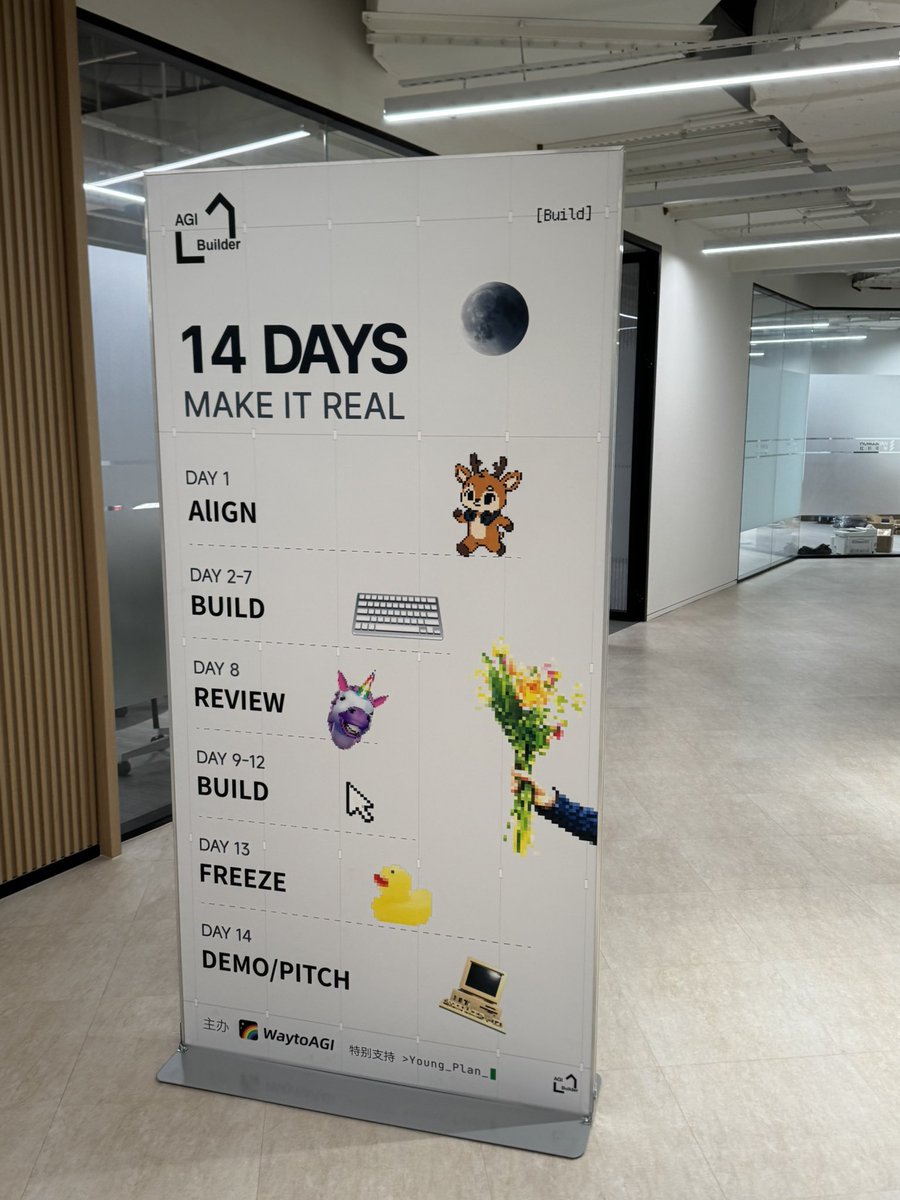




入职了 @virtuals_io ,多了一个身份:AI x Web3 领域的 ecosystem 建设者。 做 AI Agents 的朋友,如果你在寻找增长、发射、生态位置,欢迎随时 DM 我。
其实对我这种社恐 I 人(致力于逃避 2 人以上社交活动)来说,这份工作非常具有挑战。但我想,迎难而上,本来就是一件很酷的事情。
顺便总结最近同时推进的几条线:
- 企业 AI 转型 / workflow system,贪婪地挖掘行业与客户需求中,现在被迫需要抽象行业共性,思考产品形态
- AI 教育和培训,有正在筹备中的线下营
- 入围红杉中国线下孵化营,继续打磨 @DealAgentX 定位与形态
- 个人 Agents 和知识库的重度使用与优化
前段时间刚结束 10 天高强度 FDE,又连续 3 天基本没沾过床,在飞机、火车、的士上抓住一切机会补觉。
心流吗?可能也有点“身流”:身体被现实推着跑,脑子越来越清楚几条线正在交汇。
AI-Native、企业 AI 转型、AI x Web3、教育与社区,指向同一个问题:AI 时代的工作方式和组织方式会怎么革命“旧商业”,教育又将如何触达人心
未来会怎样,我不知道。或许现在做的一切都是无用功。
但又如何呢?尽力做过便无悔

1
5
345
真的不能编辑 posts,views 必暴跌,不如删了重发hhh
入职了 @virtuals_io ,多了一个身份:AI x Web3 领域的 ecosystem 建设者。 做 AI Agents 的朋友,如果你在寻找增长、发射、生态位置,欢迎随时 DM 我。
其实对我这种社恐 I 人(致力于逃避 2 人以上社交活动)来说,这份工作非常具有挑战。但我想,迎难而上,本来就是一件很酷的事情。
顺便总结最近同时推进的几条线:
- 企业 AI 转型 / workflow system,贪婪地挖掘行业与客户需求中,现在被迫需要抽象行业共性,思考产品形态
- AI 教育和培训,有正在筹备中的线下营
- 入围红杉中国线下孵化营,继续打磨 @DealAgentX 定位与形态
- 个人 Agents 和知识库的重度使用与优化
前段时间刚结束 10 天高强度 FDE,又连续 3 天基本没沾过床,在飞机、火车、的士上抓住一切机会补觉。
心流吗?可能也有点“身流”:身体被现实推着跑,脑子越来越清楚几条线正在交汇。
AI-Native、企业 AI 转型、AI x Web3、教育与社区,指向同一个问题:AI 时代的工作方式和组织方式会怎么革命“旧商业”,教育又将如何触达人心
未来会怎样,我不知道。或许现在做的一切都是无用功。
但又如何呢?尽力做过便无悔
3
200
入职了 @virtuals_io ,多了一个身份:AI x Web3 领域的 ecosystem 建设者。 做 AI Agents 的朋友,如果你在寻找增长、发射、生态位置,欢迎随时 DM 我。
其实对我这种社恐 I 人(致力于逃避 2 人以上社交活动)来说,这份工作非常具有挑战。但我想,迎难而上,本来就是一件很酷的事情。
顺便总结最近同时推进的几条线:
- 企业 AI 转型 / workflow system,贪婪地挖掘行业与客户需求中,现在被迫需要抽象行业共性,思考产品形态
- AI 教育和培训,有正在筹备中的线下营
- 入围红杉中国线下孵化营,继续打磨 @DealAgentX 定位与形态
- 个人 Agents 和知识库的重度使用与优化
前段时间刚结束 10 天高强度 FDE,又连续 3 天基本没沾过床,在飞机、火车、的士上抓住一切机会补觉。
心流吗?可能也有点“身流”:身体被现实推着跑,脑子越来越清楚几条线正在交汇。
AI-Native、企业 AI 转型、AI x Web3、教育与社区,指向同一个问题:AI 时代的工作方式和组织方式会怎么革命“旧商业”,教育又将如何触达人心
未来会怎样,我不知道。或许现在做的一切都是无用功。
但又如何呢?尽力做过便无悔
21
4
37
1,663
Addy’s piece on Loop Engineering is excellent.
But I think the term is easy to flatten into:
“let the agent run automatically.”
That misses the point.
Loop Engineering is not automation.
It is system design.
The old workflow was:
prompt → output → prompt → output
The human stayed inside the loop, steering every step.
The new leverage is different:
design the loop once,
then let the system handle the repetitive steering.
A useful agent loop needs four things:
1. feedback
2. verifier
3. memory
4. state
Without them, you don’t have a loop.
You have repeated generation.
Verifier is the part most people skip.
A model grading its own work is structurally weak.
Better pattern:
generator does the work
verifier checks the artifact
human owns the final judgment
“Done” should not mean “the agent said so.”
Memory is not chat history.
Useful memory looks more like:
fail → investigate → verify → distill → consult
If a failure does not become a rule the next run can use, it did not compound.
It just became another note.
Afterall, the goal of Loop Engineer is not to remove human judgment.
It is to stop wasting human judgment on repetitive steering.
Loop Engineering 真正的重点是:
1. 环境能不能给反馈
2. 有没有独立 verifier
3. 失败能不能沉淀成下次会用的 memory
没有这三件事,loop 只会是自动化地制造 "slop"
2
4
543
只要模型能力差距可以通过蒸馏、开源、迁移和用户绕行被压缩,那么长期 moat 就必不可能是“谁暂时拥有某个模型”,而在分发、工作流嵌入、数据闭环、可靠性、合规交付等环节
Jun 13

别扯了~
太高估政府限制在AI上作用,要蒸馏你总能蒸馏的;不让美国用中国模型更是幻想
封HW基站封了那么多年、搬中国产业链那么多年有P用?
最终一定是经济账。认清提高效果对应指数级投入,这个事情终局就是注定的
2
185
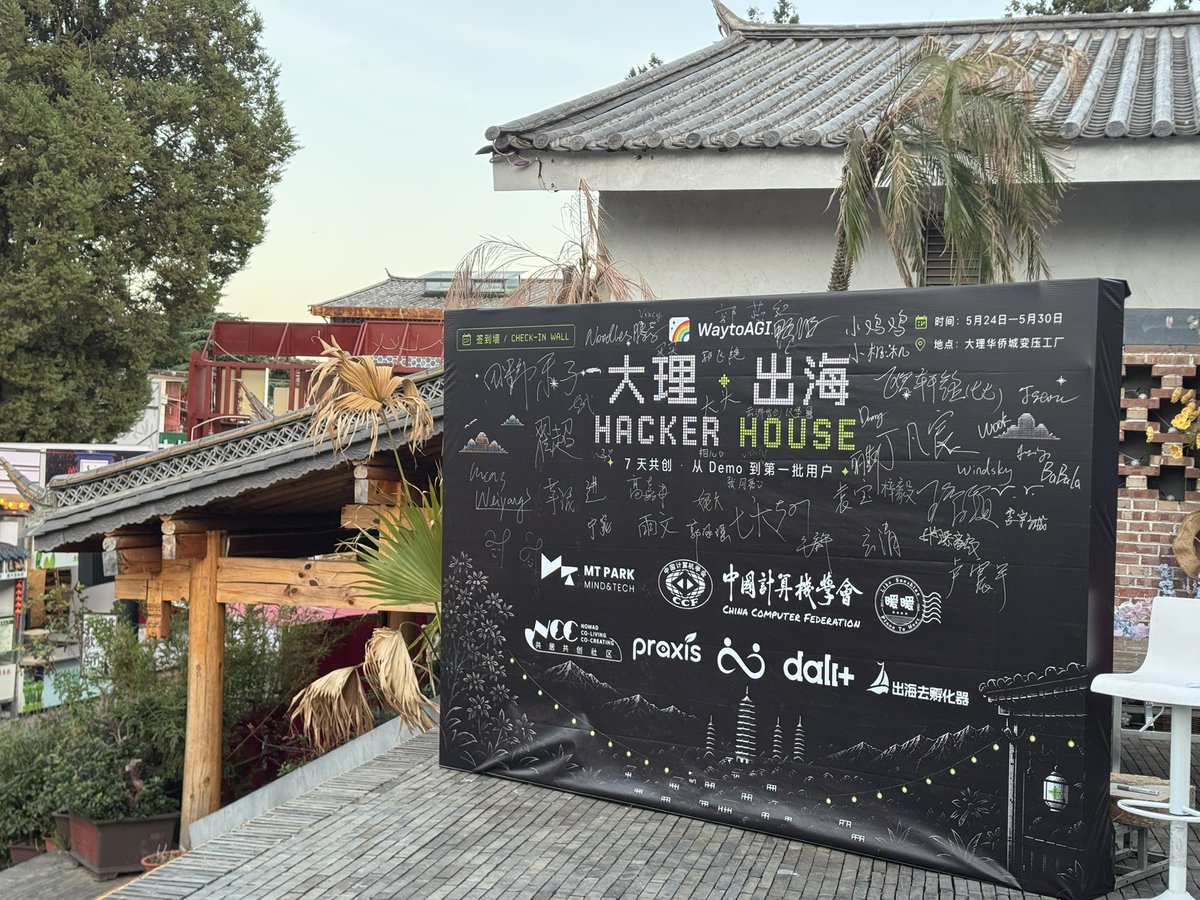
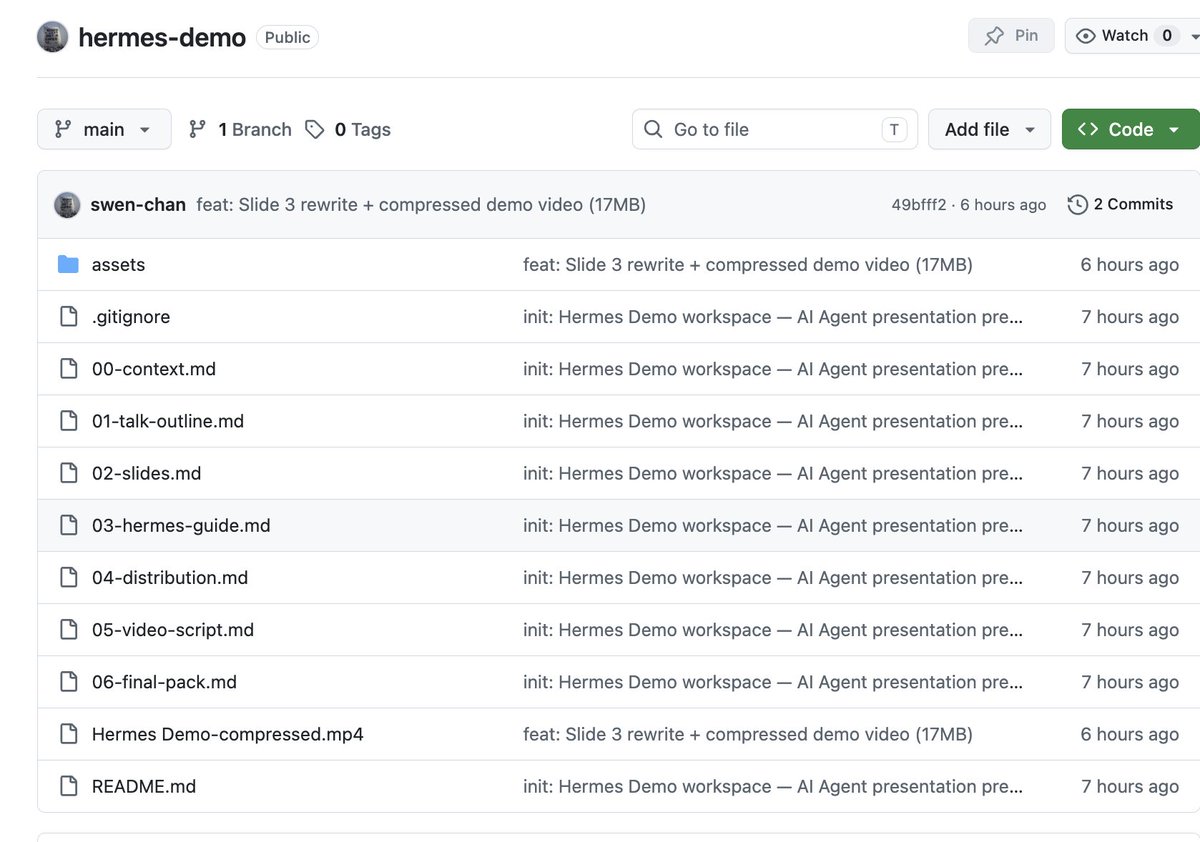
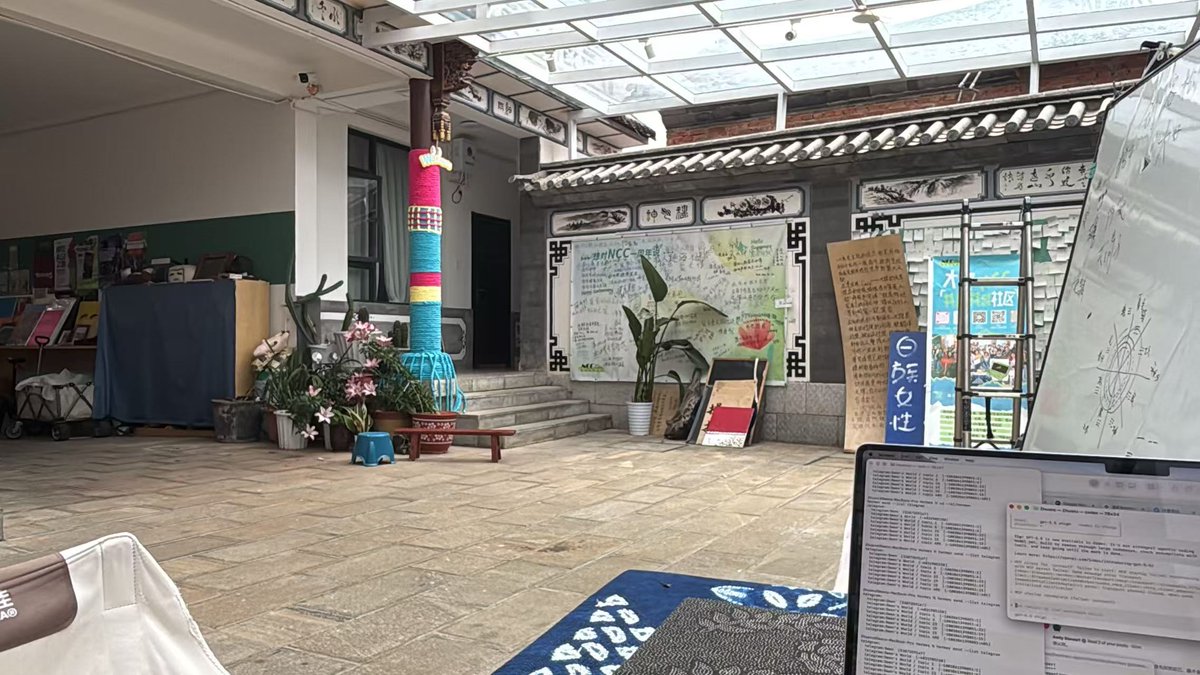
今天在大理 NCC 社区做了一个实验:用 Hermes Agent 准备了一场关于 Hermes Agent 的分享。
不是写个 prompt 完事,而是全程用 Telegram 对话完成(Chat-First!💬):建工作区、拆大纲、写 slides、生成 .pptx、写分发策略、push GitHub。
甚至还写了这个从零开始搭建 Hermes 的喂饭教程。
整个过程中,我负责边审核监督边吃西瓜喝可乐,它负责全程执行。
最终花了 4 小时完成任务
完整工作区已公开:github.com/swen-chan/hermes-…
里面有 6 个分流程 md 文件 slides Demo 视频(全流程录屏)
1
14
1,499
同感,市场对 NV 的估值折价,核心不是短期 hyperscaler Capex 能撑多久,更像是“优秀到难以继续更优秀”的预期天花板问题
Jun 12
为什么NV估值那么低
表面理由是:NV是AI Capex“一传手”,市场不确定Hyperscaler准备掏腰包硬撑几年、有能力撑几年
真正原因是:NV太优秀了,以至于我都无法理解他怎么能“更”优秀(更字很重要)
4
226
Loop Engineering 真正的重点是:
1. 环境能不能给反馈
2. 有没有独立 verifier
3. 失败能不能沉淀成下次会用的 memory
没有这三件事,loop 只会是自动化地制造 "slop"

4
768
之前研究 Hermes 的 token 优化,一直在找各种 credits 和便宜 API,一度让Hermes到处全网薅免费token。
但现在发现这种玩法非常临时且模型能力一般。🤡
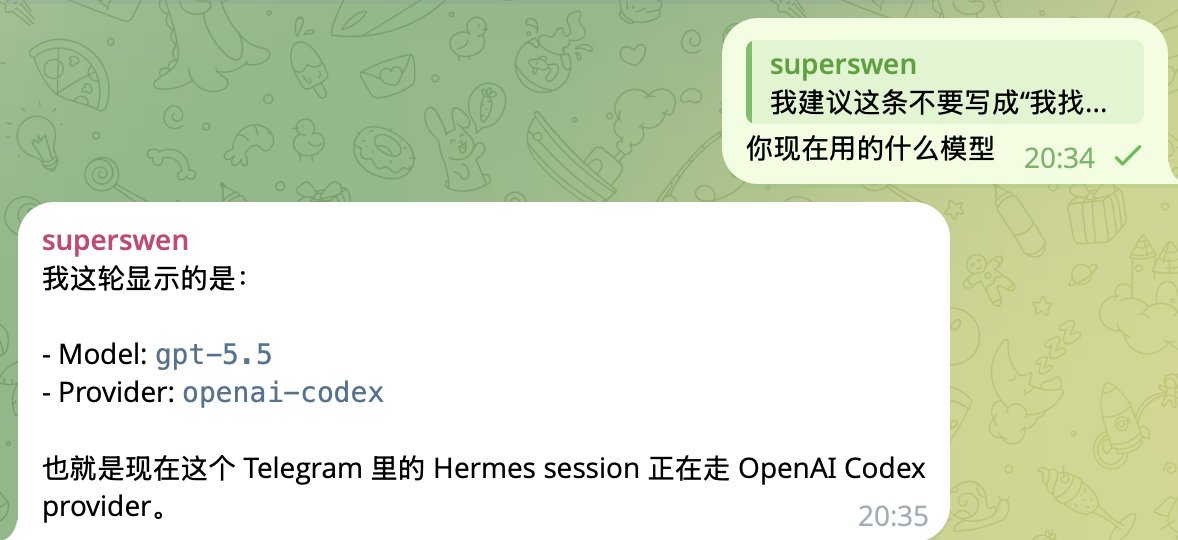
今天@brucexu_eth 老师提醒之后,先把 ChatGPT Plus 里自带的 Codex 额度接进 Hermes 用了起来。
毕竟我本来就订阅了 Plus,Codex 额度之前只用于开发,没有用满。
现在刚好拿来跑定制 Agent 工作流。
如果之后 plus 给的额度不够用了,再上 Pro。
至于极端情况,比如飞机、高铁、断网,我也装好了Qwen 3.5 本地模型,用于应急,确保 Agent 一直在线
这个方案要比天天发愁 credits 稳多了。也能少花很多冤枉钱💰🥲
保护精力,focus 重要的事情😈
续集来了:
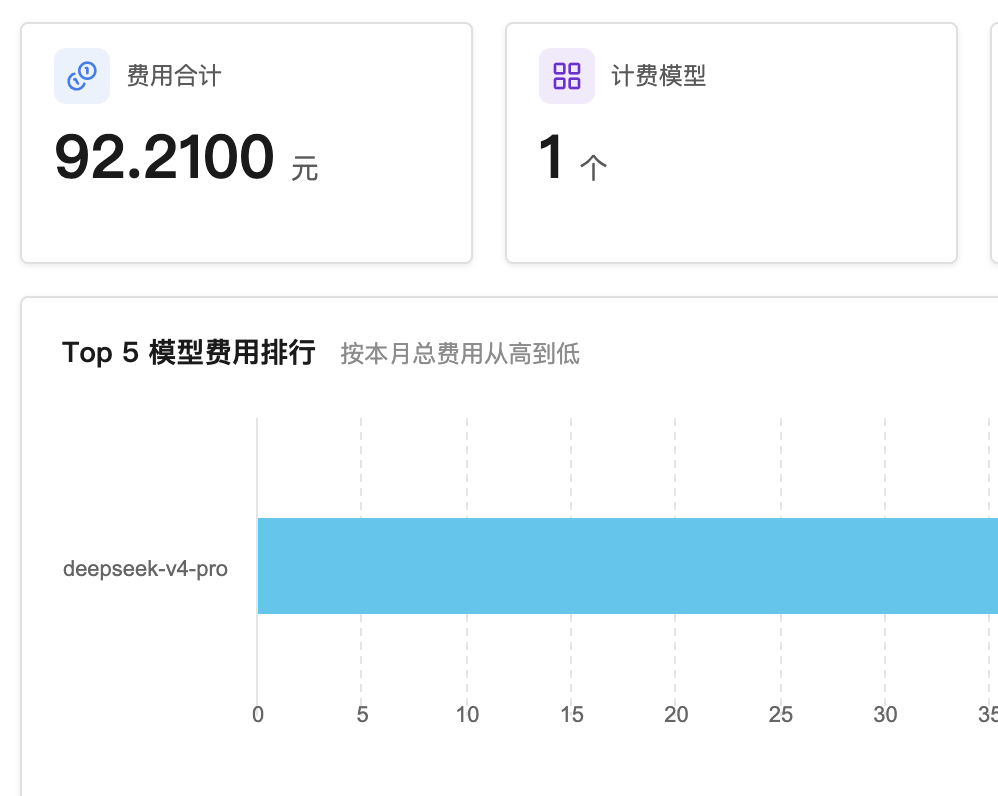
自从前天部署完 Hermes Agent 之后,随便做了几个个人 task,一天干了 90 RMB😑
于是俺挖了一下 Hermes Agent 的 system prompt token 消耗,略震惊:
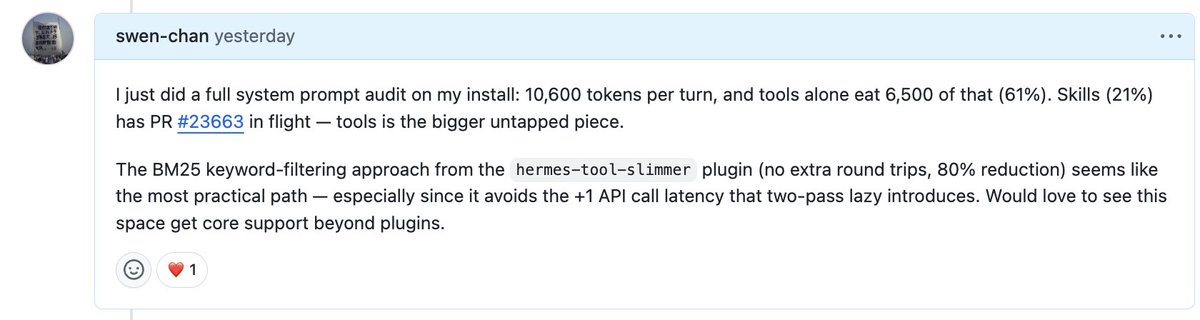
每个 session 固定开销 ~10,600 tokens。其中 Tools(26 个 JSON schema)占 61%,Skills 清单(90 个,20 类)占 21%。两块加起来 82%,剩下的才是 SOUL/AGENTS/Memory 这些真正有信息量的东西。
也就是说,你每开一个 session,80% 的 system prompt 都在告诉模型有哪些工具和技能可以用。
关键是,不管你这轮用不用,都会消耗你的 token。
那如何来优化呢?
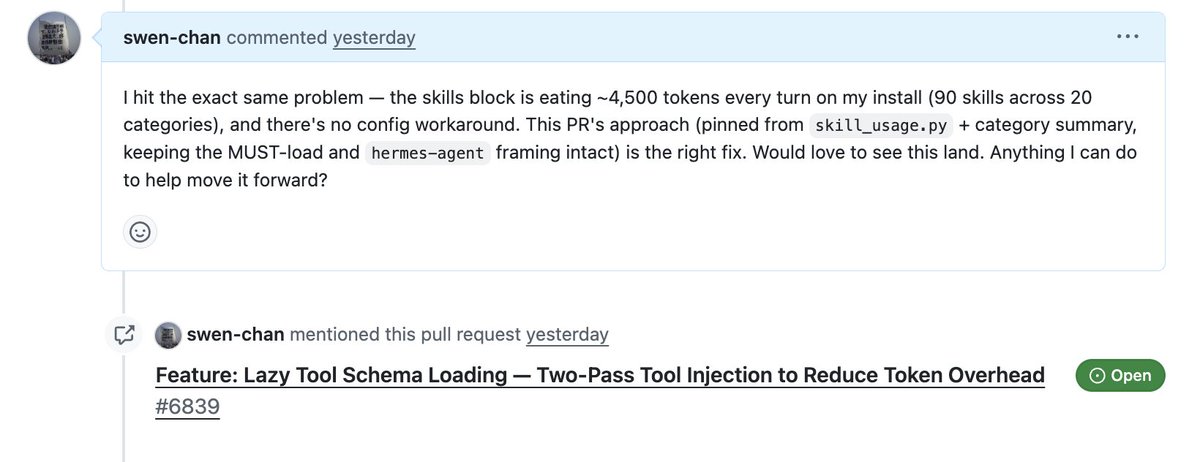
1. Skills Compact Index — 目前已经有一个 open PR(#23663),机制是 pinned skills category summary 替换全量列表。2,200 → ~500 tokens。零本地改动,等上游 merge。
2. Tool Schema Filtering — 有个社区插件 hermes-tool-slimmer,本地 BM25 关键词匹配,每轮只发 top-K 相关 tools。57 tools 实测 18K→3.7K(省 80%)。但代价是它需要 patch Hermes 核心源码——要改 ~/.hermes/hermes-agent/ 里的 .py 文件。
然而,我并没有选择 patch,因为如果Hermes 升级时如果新版本覆盖了被 patch 的文件,hook 就丢了。可能也是因为手上还有优惠的 token 预算 hhh。
等 token 真吃紧的时候,俺再探索一下(实则在等更新
3
1
6
1,092
最近线下聊了很多企业 AI 转型的客户,也深入碰了一些真实业务需求,比如线上营、私域运营、销售跟进、运营协作这些很细的场景。
我最大的感受是:
很多时候,不是客户不想用 AI。
是我们太急着让客户接受 AI,太急着证明 AI 很牛,反而没有认真理解对方的业务到底是怎么运转的。
但真正的业务往往藏在很小的细节里。
表格怎么传。
活动怎么跟。
客户为什么流失。
运营动作为什么没人执行。
老板为什么不愿意放权;大家为什么不配合。
这些东西看起来很土、很碎、很不“AI Native”。
但你如果没有俯下身子看这些东西,就没有资格谈 AI 转型。
AI 转型不是把 AI 塞进业务里。
是先把业务看懂,再从客户导向判断 AI 到底该不该进来,进到哪里,替谁省力,帮谁多赚一点钱。
这段时间我也越来越觉得:
business 能走多远,相比于技术能力,更取决于你是不是真的愿意用心做事,愿意站在客户的位置,把那些脏活、细活、没人愿意理解的活先搞明白。

5
3
20
1,584
可以说,AI 基建资本开支已经从“技术叙事”进入“融资与资金结构压力”阶段。
在模型收入离追上 capex 还遥遥无期的情况下,Hyperscaler、A社O社都要融资,需要持续抽几千亿血来刷“卡”充值AI信仰。
AI 算力扩张需要持续大规模融资,市场可能在“杀估值”和“估值修复”之间反复波动。
但行业内还有人觉得“钱从天降”
更强模型
→ 更多 token 消耗
→ 更多模型 / 应用收入
→ 更能 justify Hyperscaler 的 CapEx
→ 更多 GPU / HBM / 光模块 / 电力 / 数据中心需求
→ 半导体利润爆发
→ 股价上涨
→ 更容易融资
→ 继续扩 CapEx
这是一个被资本市场放大的正反馈飞轮。
但链条越长,也越脆弱。只要其中一个核心假设,甚至链条之外的政策、利率或流动性背景发生变化,都可能触发整体重估。
但即便如此,我依然不认为这是“AI 叙事结束”。
相反:基础设施阶段可能会有确定性定价过满带来的回撤,但 AI 应用层会在下一阶段成为真正接棒的主力。
2
7
503