
new to web3 ready to learn.
Joined January 2025
- Tweets 26,292
- Following 1,509
- Followers 1,097
- Likes 19,021
40 Photos and videos







The opinion that made a dinner awkward: most people say they want independence but actually feel safer when someone else is in charge @RallyOnChain
5
1
9
458

Right now, major financial institutions are making decisions that could shape settlement infrastructure for the next decade.
Banks are evaluating which rails will support tokenized assets, digital money, and onchain financial markets at scale. These choices are not easy to reverse. Once systems are integrated, regulations are aligned, and counterparties are connected, switching costs become significant.
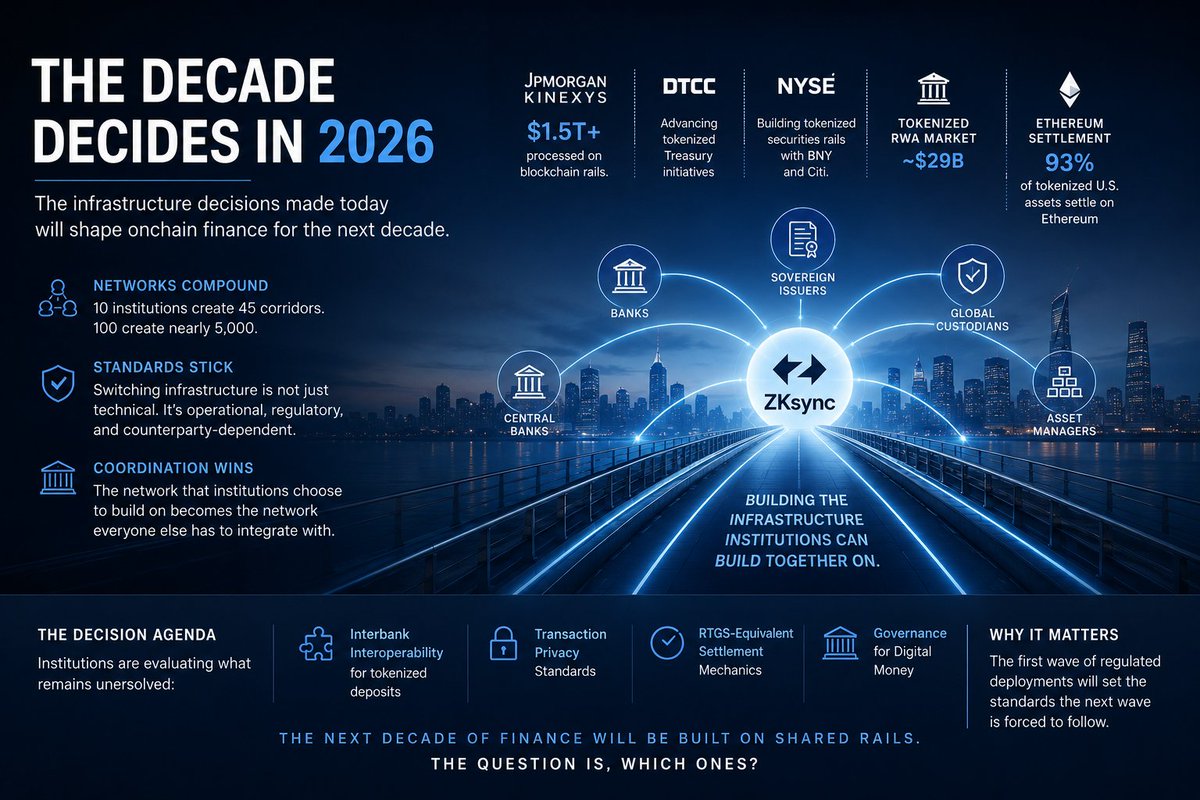
The momentum is already visible. JPMorgan’s Kinexys has processed over $1.5 trillion in volume. DTCC is advancing tokenized Treasury initiatives, while NYSE, BNY, and Citi continue exploring tokenized securities infrastructure. At the same time, tokenized real world assets and stablecoins continue to grow rapidly, highlighting increasing institutional demand for efficient digital settlement networks.
The next 18 months will be especially important as the industry works through key questions around interoperability, privacy, compliance, and settlement standards that can operate alongside existing financial infrastructure. The transition toward ISO 20022 demonstrates how long and complex large scale financial migrations can be.
This is where projects like @zksync become particularly interesting. Infrastructure decisions made at the architecture layer often create long term advantages, especially when real institutional deployments and regulatory requirements are already part of the equation.
If you ask me, the biggest factor influencing banks right now is trust. Not just trust in the technology itself, but trust that the infrastructure can meet regulatory requirements, integrate with existing systems, maintain privacy where needed, and scale reliably for years to come.
What do you think is the most important factor driving bank adoption in this current window? 👇

9
9
27
412
Tricia retweeted

12h
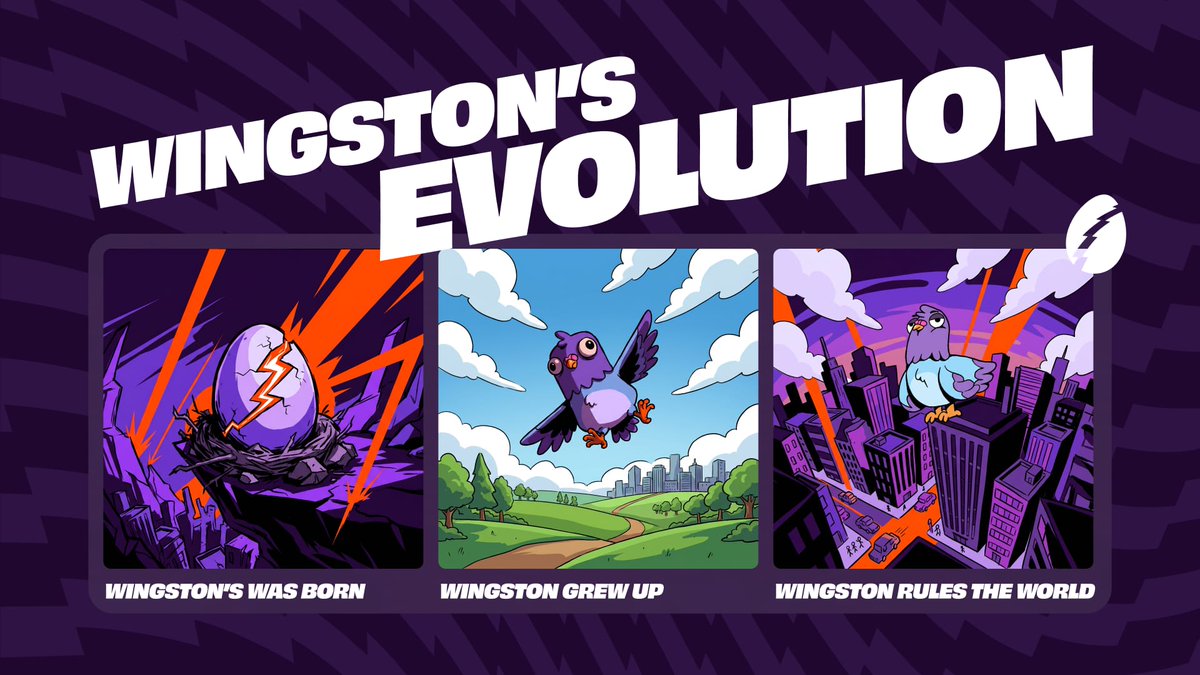
New Campaign! 🚨
This campaign is about building our culture and telling our story. Your mission is to introduce Wingston to the world!
Help us show that Rally is more than a protocol, it's a community you earn your place in!
Good Luck! 👉 app.rally.fun/campaigns/0x43…
22
7
64
1,801
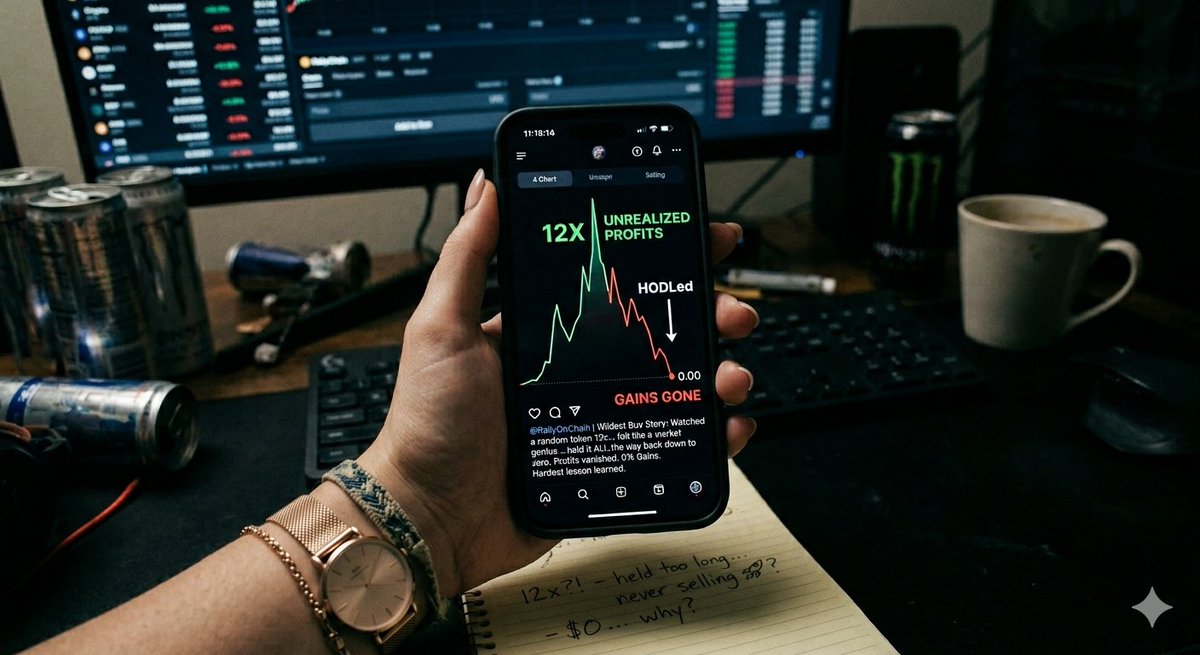
Still remember watching a random microcap token I bought on a whim run to a 12x. For a few days I genuinely thought I had cracked the market. Then I held it all the way back down until the gains disappeared. A brutal but necessary lesson that unrealized profits are not profits. @RallyOnChain
26
4
31
605
Passively streaming music on traditional apps while the platform pockets the equity is just voluntary exploitation, a harsh reality that the crowd ignores but platforms like @RallyOnChain are actively exposing.
19
18
1,222
Tricia retweeted
The biggest misconception about institutional blockchain adoption is that banks are choosing chains.
They are not.
They are choosing settlement infrastructure.
That distinction matters because settlement infrastructure follows a different economic logic than consumer applications.
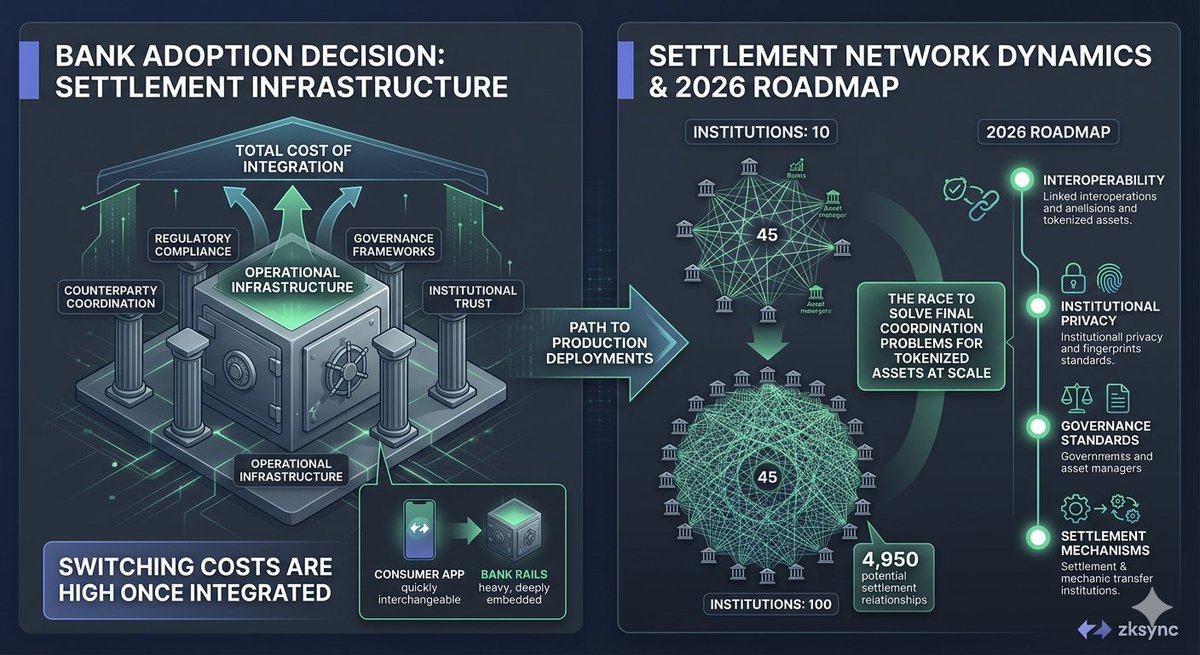
When a bank integrates new rails, the cost is not measured only in engineering hours. It includes regulatory reviews, operational processes, governance frameworks, counterparty coordination, and years of institutional trust-building.
Once those investments are made, switching becomes expensive.
That is why 2026 matters.
The Global Financial Markets Association's 2026 report highlights the remaining challenges for digital money in capital markets: interoperability between tokenized forms of money, institutional-grade privacy, governance standards, and settlement mechanisms that meet the expectations of regulated finance.
These are not theoretical problems.
They are the final pieces required for tokenized deposits, stablecoins, and tokenized securities to operate at institutional scale.
History shows that the first networks to solve these coordination problems often gain advantages that compound over time.
SWIFT expanded from a small banking network into global financial infrastructure because each new participant increased the value of the network for every other participant.
Settlement networks exhibit the same dynamic.
With 10 institutions, there are 45 potential bilateral settlement relationships.
With 100 institutions, there are 4,950.
Each participant adds more than transaction volume. They increase the number of possible connections across the network.
That is why early adoption matters.
The institutions establishing legal certainty, infrastructure, and standards today are helping shape the future structure of capital markets.
This is where @zksync becomes relevant.
ZKsync's 2026 roadmap is focused on institutional deployments, privacy-preserving infrastructure, and regulated financial use cases. The project has publicly stated that multiple regulated financial institutions and market infrastructure providers are progressing toward production deployments.
Whether any single platform ultimately becomes the dominant settlement layer remains unknown.
What is clear is that the current window is about more than technology.
It is about who becomes embedded in the operational, regulatory, and institutional workflows that define onchain finance for the next decade.
65
64
84
3,080
The opinion that lost me a friend: most people do not want honest feedback, they want their existing beliefs repeated back to them; @RallyOnChain
17
33
35
1,564
A take I'd usually keep for the group chat:
I think a lot of people in crypto secretly enjoy chasing opportunities more than actually building anything.
Every week there's a new ecosystem, a new meta, a new "life changing" opportunity.
Most of it gets forgotten within a month.
The people I know who are actually winning have become incredibly boring. Same communities. Same relationships. Same focus for years.
At some point I stopped asking who's early and started asking who's still here when the excitement disappears.
That's why @RallyOnChain has my attention. I'd rather build a reputation that compounds than keep starting from zero every cycle.
39
12
50
1,617
Building culture on-chain means outlasting the noise, so winning Crypto Person of the Year 2026 hits different when you’re doing it with the real ones. Massive shoutout to @RallyOnChain for the nod, the future of this space is sovereign.
77
61
180
2,456
Man, the worst advice I ever got still makes me shake my head.
Back in 2021, a close friend who was deep into crypto kept telling me, "Bro, just ape into every new launch. If it has a good meme, it's going to 100x. Don't even read the whitepaper."
I listened and put a chunk of money into a random token he swore was "the next big thing."
Long story short, the project rugged, I lost most of my investment, and I learned the hard way that hype is not research. That mistake cost me real money and more than a few sleepless nights.
Since then, I've become a lot more careful about where I put my time and attention. In a space full of noise, speculation, and hot takes, having access to solid information and meaningful discussions makes a huge difference. That's one reason I appreciate what @RallyOnChain is building.
What's the worst advice you've ever received or given?
Drop it below. Let's hear the stories, have a laugh, and maybe help someone avoid the same mistakes. 👇

25
34
141
1,705
Tricia retweeted

Jun 13
The worst advice I ever got in crypto: "Quit your job and go all-in on crypto”.
At the time, it sounded like something every successful person in the space had done.
The logic seemed simple because, More time in crypto means more money.
Reality was very different.
The moment your bills depend on your next trade, everything changes.
Every red candle feels personal.
Every loss feels bigger.
Every decision becomes emotional.
Instead of making better trades, I found myself forcing trades because I felt pressure to make money.
That's when I learned that financial pressure is one of the fastest ways to destroy good judgment.
Crypto is hard enough already. Having a stable source of income gives you the patience to think clearly and play the long game.
One thing I appreciate about @RallyOnChain is that it rewards good ideas and research, not reckless risk-taking.
What's the worst piece of crypto advice you've ever received?

92
17
139
3,805
Tricia retweeted

Jun 13
For years, creators have been playing by rules they never wrote.
Legacy platforms reward scale above all else, pushing creators to chase algorithms, vanity metrics, and endless engagement loops. Meanwhile, countless talented creators generate real value for their communities without seeing a fair share of the upside.
I've watched creators with relatively small audiences spark better conversations, build stronger communities, and create more value than accounts ten times their size, yet the rewards rarely reflected that.
That is why this matters.
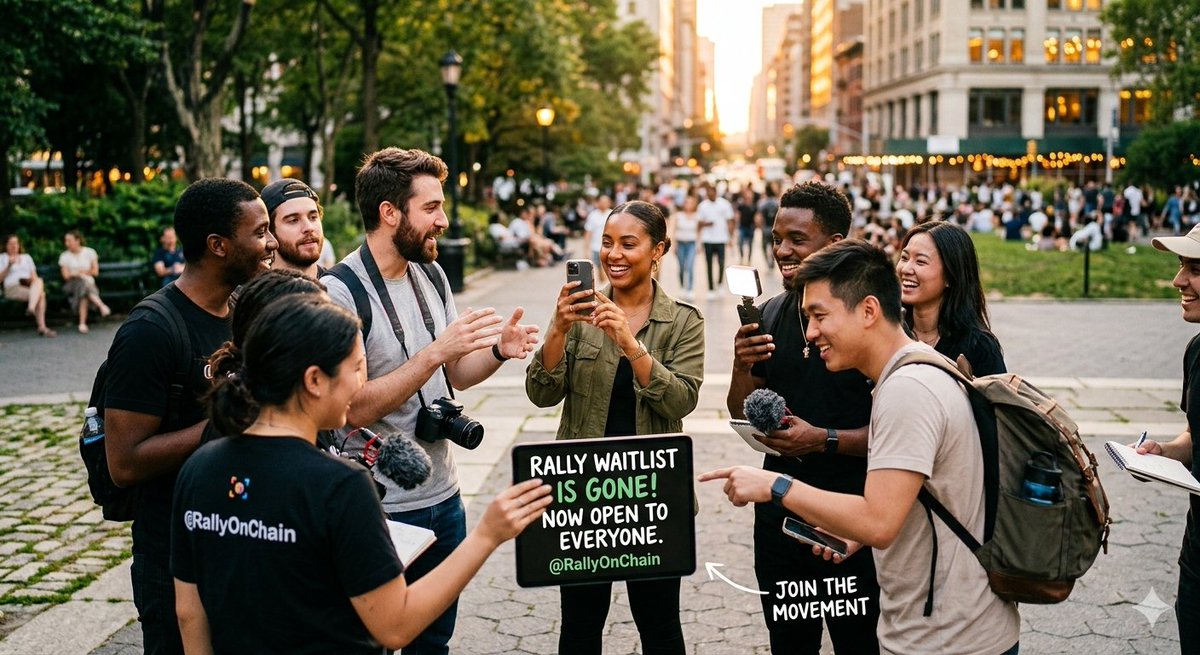
The waitlist is officially gone. @RallyOnChain is now open to everyone.
What excites me most is that Rally flips the traditional creator model on its head. Instead of focusing purely on follower counts, it uses a decentralized, AI powered system designed to recognize quality contributions and real influence.
For small and mid sized creators, that is a big deal. It creates a path to earn based on the value you bring, not just the size of your audience.
If you've been looking for a platform where impact matters more than popularity, now is the time to join.
Get started today at app.rally.fun
60
37
179
2,089
Tricia retweeted
Jun 13
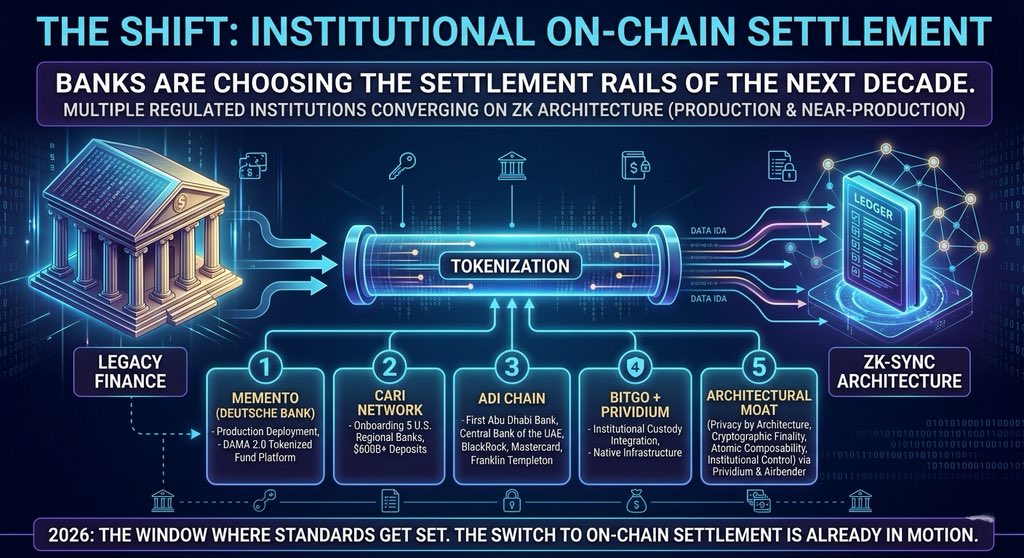
Banks aren’t “exploring tokenization” anymore. They’re quietly choosing settlement rails that will define the next decade.
What’s happening on @zksync already reflects that shift.
This isn’t about partnerships anymore, It’s about multiple regulated institutions converging on the same settlement architecture in production conditions.
Not pilots. Not experiments.
A 🧵 👇
84
5
136
3,423
The worst advice I ever took was: "Post whatever gets engagement. You can figure out your identity later."
So I spent months chasing trends, forcing opinions, and refreshing analytics like it was a full time job. The numbers went up, but I was building an audience around a version of myself that didn't actually exist.
The wake up call came when I realized I was spending more time performing than contributing.
Since then, I've cared less about attention and more about being useful. In a world flooded with noise, finding signal is a competitive advantage.
That's why I appreciate what @RallyOnChain is building around real participation instead of empty engagement loops.
What's the worst piece of advice you've ever followed?
64
20
178
2,450
Tricia retweeted
Jun 13
Why are banks quietly making a decision in 2026 that could lock in the next decade of finance?
Because this isn’t about crypto anymore. It’s about settlement rails.
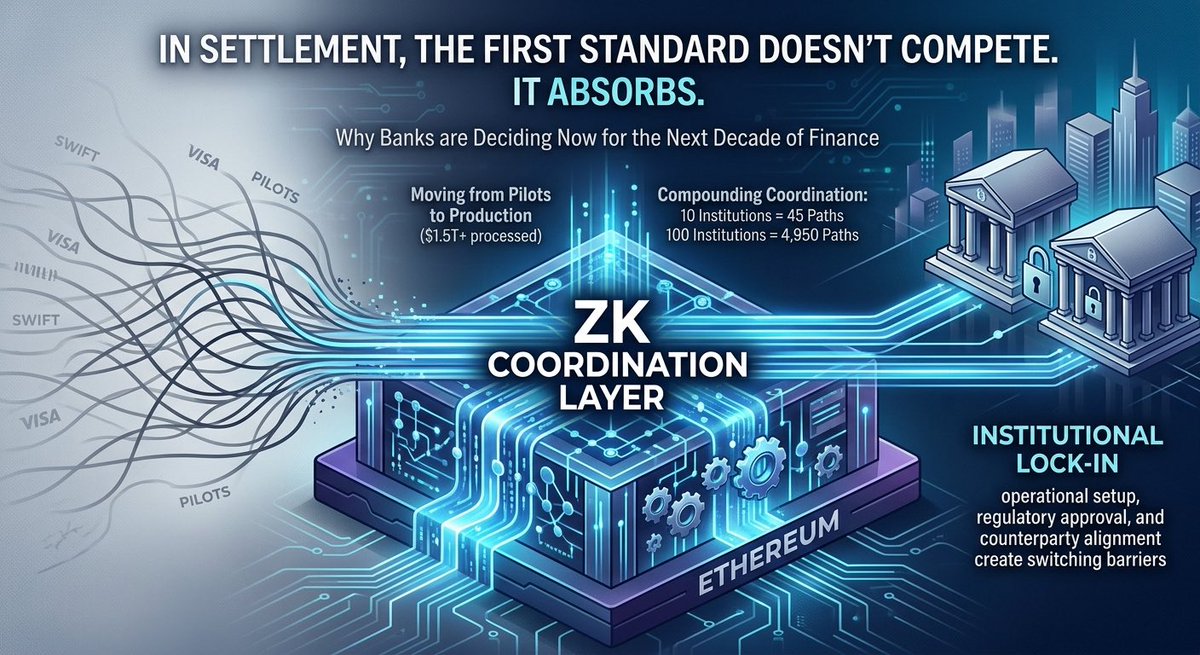
Right now, institutions are moving from pilots to production. JPMorgan’s Kinexys has already processed over $1.5T in transactions, and global market infrastructure players are actively testing tokenized assets and on-chain settlement models. The real shift is that these systems are no longer experimental, they’re becoming coordination layers.
What’s being decided now is simple: which infrastructure becomes the default way value moves between institutions.
And in settlement, first-mover advantage compounds.
Once a bank integrates, it doesn’t just add a connection… it adds years of operational setup, regulatory approval, and counterparty alignment. That makes switching later expensive in ways that are not purely technical.
This is why networks like SWIFT and Visa became dominant. Not because they were perfect, but because every new participant made the network more valuable, and leaving it became harder over time.
At 10 institutions you have 45 settlement paths. At 100, you have 4,950. That’s not linear growth, it’s compounding coordination.
This is the context @zksync is positioning into.
The challenge for institutional settlement isn’t just speed or scale, it’s “privacy, interoperability, and compliance working together without fragmenting liquidity”.
@zksync is building infrastructure designed around those constraints, including privacy-preserving execution and institutional-grade interoperability anchored to Ethereum.
So the real question isn’t who builds the fastest chain.
It’s who becomes the default coordination layer banks lock into while the system is still being defined.
Because in settlement infrastructure, the first standard doesn’t compete with others.
It absorbs them.
65
14
96
3,622
Tricia retweeted
Jun 13
End of Week Check In 🐼
A lot happened this week.
Daily Spins turned into marathon sessions.
Marathon sessions turned into thousands of streams.
Streams turned into real revenue.
And real revenue turned into more permanent $BAM burns.
What I find most interesting is that Listen2Burn is quietly proving something most projects only talk about.
Attention is valuable.
Every person who pressed play this week contributed to something bigger than a number on a dashboard. Every stream strengthened the flywheel. Every referral brought new listeners into the ecosystem. Every leaderboard climb represented real participation.
The sprint isn't over though.
If you've been watching from the sidelines, now is probably the best time to jump in.
The TaskOn campaign is still live and there are still points, rewards and leaderboard positions up for grabs.
If you're already participating, keep the streams running.
If you haven't started yet, this is your sign.
More listeners.
More streams.
More revenue.
More burns.
The flywheel only gets stronger when more people join it.
Join the TaskOn campaign:
taskon.xyz/Bambitz
Keep streaming here: open.spotify.com/artist/1lgP……
#Listen2Burn #TaskOn #Bambitz
@BambitzRecords

59
42
84
1,305
The most important question in institutional blockchain adoption is rarely the one crypto people spend the most time discussing.
It is not TPS.
It is not fees.
It is not even decentralization metrics.
It is settlement finality.
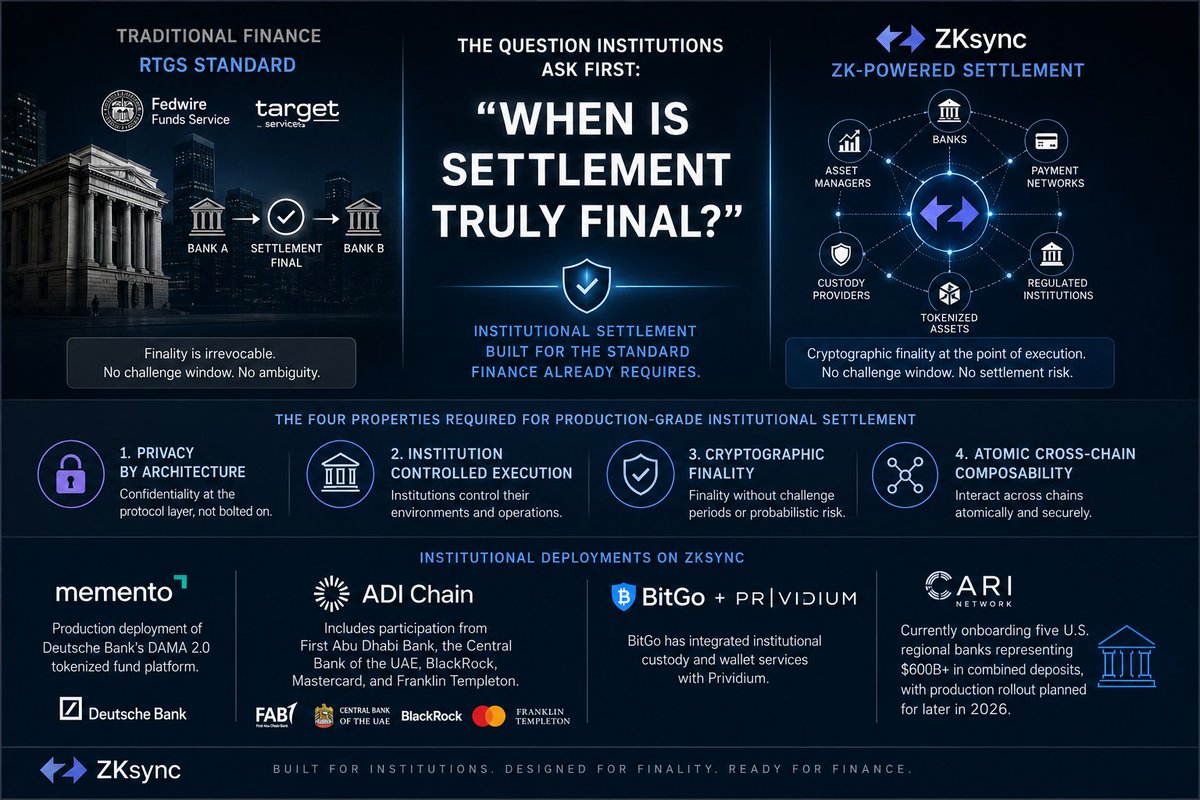
If a bank moves value across critical infrastructure, when is that transaction truly final?
Traditional finance already has an answer. Systems like Fedwire in the United States and TARGET services in Europe established the benchmark decades ago. Once settlement occurs, it is final. No waiting period. No challenge process. No ambiguity about ownership or completion.
That standard shapes how institutions evaluate every new settlement rail.
Which is why I think the conversation around institutional blockchain adoption is often framed incorrectly.
The real challenge is not creating a faster blockchain.
The challenge is creating infrastructure that satisfies the operational, compliance, and risk requirements of institutions while preserving the advantages of blockchain technology.
That is why the developments around @zksync stand out to me.
Deutsche Bank's Memento is the production deployment of DAMA 2.0, its institutional tokenization platform.
ADI Chain brings together participants including First Abu Dhabi Bank, the Central Bank of the UAE, BlackRock, Mastercard, and Franklin Templeton.
BitGo has integrated institutional custody and wallet services with Prividium.
Cari Network is currently onboarding five U.S. regional banks representing more than $600B in combined deposits, with production rollout planned for later in 2026.
What interests me is not any single deployment.
It is the pattern.
Different institutions operating in different jurisdictions appear to be converging around a similar set of requirements:
• Privacy built into the architecture itself
• Institution controlled execution environments
• Strong settlement assurances
• The ability to interact across chains without introducing unnecessary complexity
Viewed through that lens, the discussion becomes less about individual announcements and more about infrastructure design.
Another aspect I find notable is the integrated nature of the stack. From Airbender at the proving layer to ZK Stack and Prividium, the approach is not simply about connecting separate components. It is about coordinating privacy, settlement, security, and interoperability within a unified architecture.
Whether that ultimately becomes a lasting advantage will depend on execution and adoption over the next several years.
History shows that technical leadership alone does not create standards.
Networks do.
The reason SWIFT became important was not because it existed. It became important because institutions kept joining it, making participation more valuable for everyone already connected.
That is the dynamic I am watching in 2026.
Not whether institutions are exploring blockchain infrastructure.
They clearly are.
The more interesting question is whether early institutional deployments can compound into durable network effects before competing architectures reach similar levels of maturity.
One question I still have for people building in this space:
Can privacy by architecture and atomic composability scale together without introducing new trust assumptions between systems?
I think that question sits near the center of the institutional settlement conversation, and I would be interested in hearing thoughtful counterarguments.
33
11
119
2,384
Everyone talks about tokenization as if the challenge is creating digital assets.
I think the harder problem is coordination.
By 2026, institutions already know blockchain can work. JPMorgan's Kinexys has processed more than $1.5 trillion. DTCC is advancing tokenized Treasury initiatives. Major financial institutions are actively exploring tokenized securities infrastructure.
The question isn't whether assets can move onchain.
The question is whether institutions can move together.
Settlement networks become valuable because other institutions are already there. A bank does not choose infrastructure in isolation. It chooses infrastructure that counterparties, custodians, liquidity providers, and market operators can also connect to.
That creates a powerful dynamic.
With 10 institutions, there are 45 possible settlement corridors.
With 100 institutions, there are nearly 5,000.
Each new participant doesn't just add volume. It increases the number of possible relationships across the network and raises the incentive for the next institution to join the same rail.
This is why financial infrastructure behaves differently from consumer technology.
The best product doesn't always win.
The network that achieves coordination first often does.
History offers plenty of examples. Financial standards tend to persist for decades because replacing them requires more than technical migration. It requires operational, regulatory, and counterparty alignment across an entire ecosystem.
That's what makes the current institutional window so important.
The institutions making infrastructure decisions today are not simply selecting technology. They are helping determine where future liquidity, settlement activity, and interoperability will concentrate.
This is where @zksync becomes relevant.
The opportunity isn't just about supporting tokenized assets. It's about participating in the networks and infrastructure standards that institutions may increasingly coordinate around as onchain finance moves from experimentation to production.
The biggest question of 2026 may not be who builds the best technology.
It may be who becomes the place where everyone else decides to build.
57
9
74
2,371
Tricia retweeted
Jun 12
9 months in and already proving that music can do more than entertain. Every stream pushing real value back into the ecosystem is still one of the most underrated ideas in Web3.
From a simple track release to a self sustaining burn engine. The growth has been real and the next chapter looks even bigger. Proud to be part of the journey.
Most projects celebrate hype. @BambitzRecords celebrates participation. Real listeners. Real revenue. Real burns. That difference matters.
The craziest part is that we're still early. What started as a newborn is growing into something that keeps rewarding everyone who shows up consistently.
Every stream counts. Every referral matters. Every burn strengthens the mission. Watching this evolve over the last 9 months has been incredible.
9 months old and already turning listeners into contributors. That is the kind of model more projects should be paying attention to.
The best part isn't how far @BambitzRecords has come. It's how much runway is still ahead. Listen2Burn is just getting started.
#Bambitz #Listen2Burn #BAM

Jun 12

🐼 9 months old this week. Just like a newborn baby, we’ve been growing, learning and building every single day since Day One.
From the first track to a live music-powered revenue loop that turns real streams into $BAM buybacks and burns — this little panda project has come a long way.
We’ve got actual music people want to keep playing, a real community feeding the #Listen2Burn engine and a clear mission: make every listen count for something bigger than just numbers.
The newborn phase is behind us.
Now comes the real growth.
To everyone who’s been streaming, referring friends, holding strong and helping build this together — thank you. You’re raising this with us.
The best chapters are still ahead.
Keep the music playing.
Keep the burns going.
Current Listen2Burn Sprint is LIVE → taskon.xyz/Bambitz/incentive… #BAMBITZ $BAM

42
20
71
889
Tricia retweeted
Jun 12
TGIF BAMFAM ☀️
The best part about Listen2Burn is that it doesn't feel like work.
No charts to stare at all day.
No complicated tasks.
Just good music playing in the background while the ecosystem keeps moving forward.
Every stream matters.
What sounds like a simple Spotify play is actually helping generate revenue, support the artists, and power ongoing $BAM burns. Small actions from thousands of listeners create real impact.
As we head into the weekend, keep the playlists running while you're relaxing, traveling, gaming, or getting things done.
And if you're still watching from the sidelines, this is a great time to get involved.
$BAM was built around participation. No exclusive insider access. No private allocations dominating the supply. Just a community growing together while liquidity strengthens and the ecosystem expands.
Hit play.
Stack points.
Support the music.
Be part of something that's being built in public.
Keep streaming here
open.spotify.com/track/2pBBf…
@BambitzRecords #bambitz #Listen2Burn
Jun 12

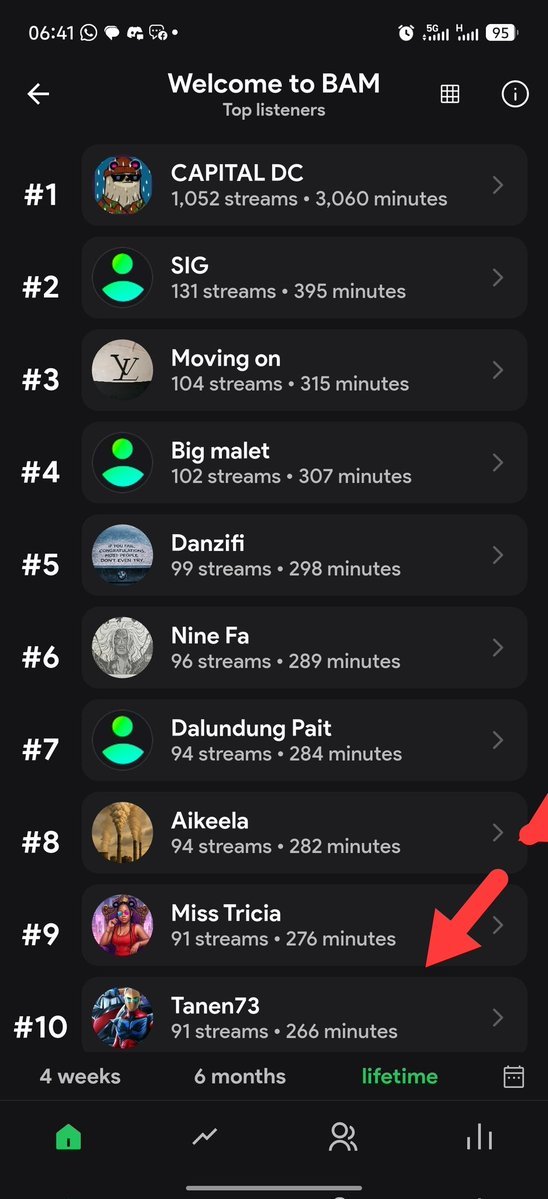
🔥 Big Flex Friday – Leaderboard Energy Only 🔥
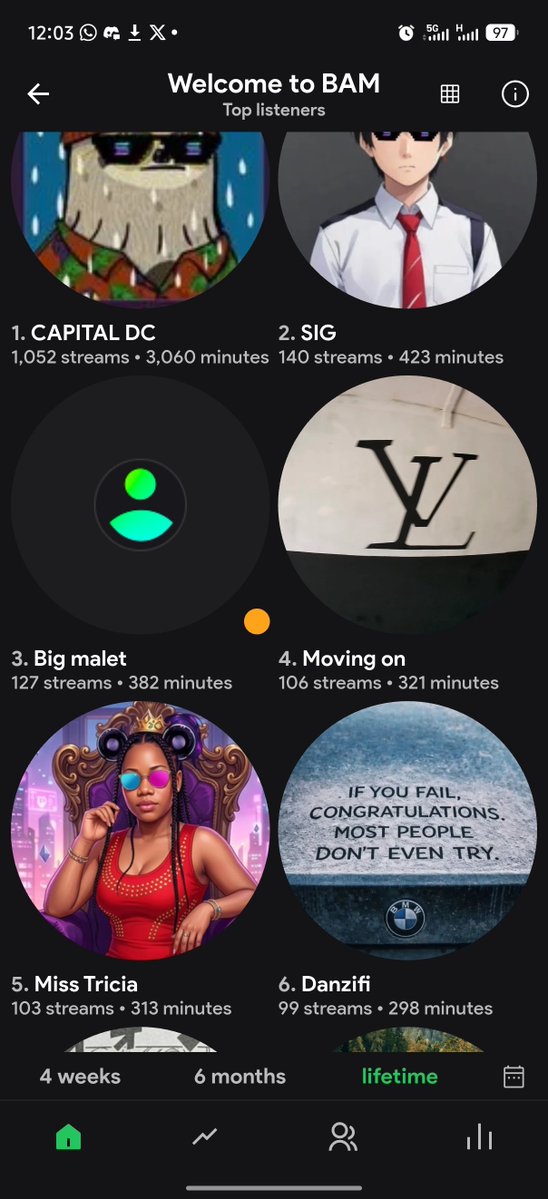
Just climbed higher on the Listen2Burn leaderboard again thanks to consistent daily spins and marathon sessions.
This is my current position stream count for the week.
Top 30 energy feels good, but we're definitely not stopping there. The goal is simple: keep showing up, keep streaming, keep climbing.
Every stream and every referral is adding real value.
More listeners = more revenue = more permanent $BAM burns.
This is what building looks like. Consistent effort turning into actual protocol strength, one stream at a time.
The best part? Every single person on the leaderboard is helping push the ecosystem forward. Whether you're in the Top 10, Top 30, or grinding your way up, your contribution matters.
Now it's your turn.
Where are you on the board right now?
Drop your flex, your position, or your weekly stream total below. Let's spark some healthy competition, motivate each other, and see who can make the biggest jump before the next leaderboard update.
Who's hitting a new personal best this week?
Show us your proof. 👇
#soundofvalue #Listen2Burn
@BambitzRecords
25
9
50
678