Professor @nyuling and @NYUDataScience, research scientist @GoogleAI, inventor of the word "bertology"

Joined April 2009
739 Photos and videos
People asked me what I, as a Jew, thought about Giant, and I'm not sure what to say because I only understood about 60% of what John Lithgow was saying. At this point I've given up on ever being able to understand Brits without subtitles.
1
953
A lot of people have opinions about the philosophy of AI and want to write things about it and I would like to say to these people: *please* talk to a philosopher first. Philosophy is hard!
10
2
37
6,780
A lot of the messiness in this discourse comes from a terminological confusion. Many humanities folks use the word AI to mean "chatbot" and are genuinely unaware of how these tools are used in science and engineering (e.g. as coding agents). There are good arguments for banning AI for writing essays but a blanket ban on AI for coding would be absurd.
Genuinely, can someone give me the steel man version of the rationale behind the new “give everyone AI” university strategy? What is the theory of the case here? Do universities think it’s sustainable to ask students to pay over $90k per year to cheat their way through college?
16
8
108
20,098
A lot of analyses of the effect of AI on productivity and the job market follow a kind of silly reasoning where if a trend started before the date ChatGPT was released this trend must not be due to AI. Surely some earlier advanced in machine learning also boosted productivity?
5
7
2,458
"Date where you could finally access AI though a chatbot instead of an API" doesn't seem like such a massive watershed moment
1,862
On the margins of this but I don't think anyone intended the term "stochastic parrots" to refer to any AI system that would ever be created in the future. It was certainly more apt for 2020 when the paper was written than for current systems that mix next token generation with reasoning, tool calling, retrieval, etc.
Mathematicians are no longer calling AI "stochastic parrots" or "next-word prediction machines." leidendeclaration.ai/
2
3
32
5,856
Tal Linzen retweeted
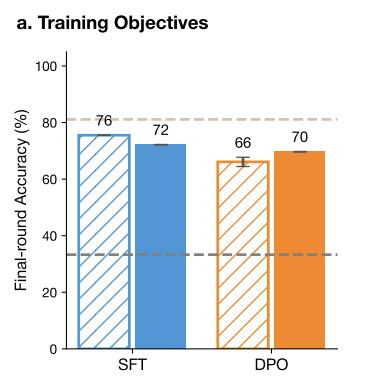
I like the experiment in this paper using a "gaslight" control for introspection. Models can't tell if information was present in the input or injected in their hidden reps, weakening the case for introspective access
1/ Can LLMs introspect, i.e., reason about their internal states? Recent work claims LLMs notice when their "thoughts" get tampered with, and can report their content. We looked closely and we think it's too early to say that. Work led by @shashwat_s19 , with @tallinzen and me.
1
19
3,114
I've been summarizing some of my papers over on linkedin, probably a very unc thing to do but the posts do seem to reliably reach my followers which isn't the case here where it seems pretty random which tweet gets shown to others. Anyway, follow me on linkedin I guess.
11
1,001
Tal Linzen retweeted
Great work! See also arxiv.org/abs/2603.05414 from @LedermanHarvey & @kmahowald This is a nice cautionary tale about Morgan's canon in interpretability: "introspection" here is closer to anomaly detection with confabulation than to direct/privileged access to injected content.
1/ Can LLMs introspect, i.e., reason about their internal states? Recent work claims LLMs notice when their "thoughts" get tampered with, and can report their content. We looked closely and we think it's too early to say that. Work led by @shashwat_s19 , with @tallinzen and me.
3
17
3,924
Tal Linzen retweeted
1/ Can LLMs introspect, i.e., reason about their internal states? Recent work claims LLMs notice when their "thoughts" get tampered with, and can report their content. We looked closely and we think it's too early to say that. Work led by @shashwat_s19 , with @tallinzen and me.
8
25
107
15,352
Tal Linzen retweeted
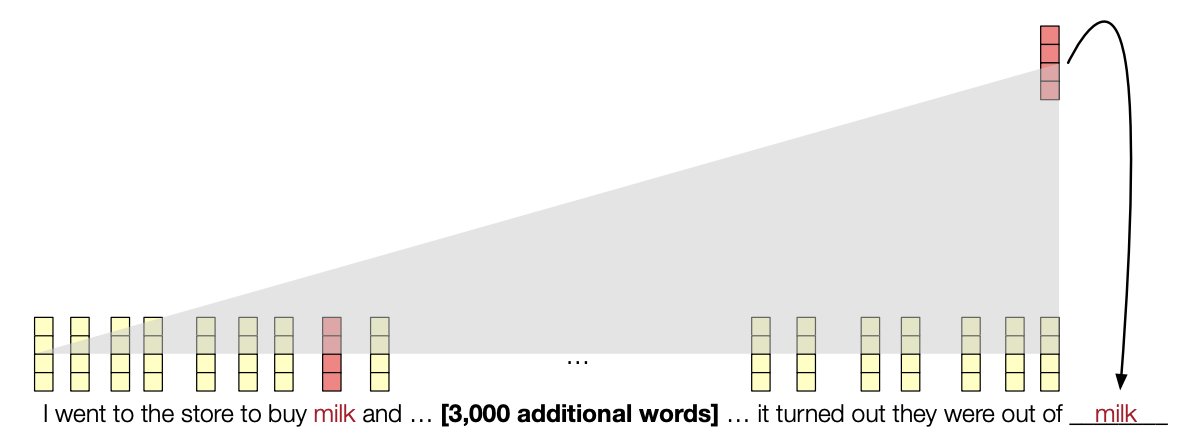
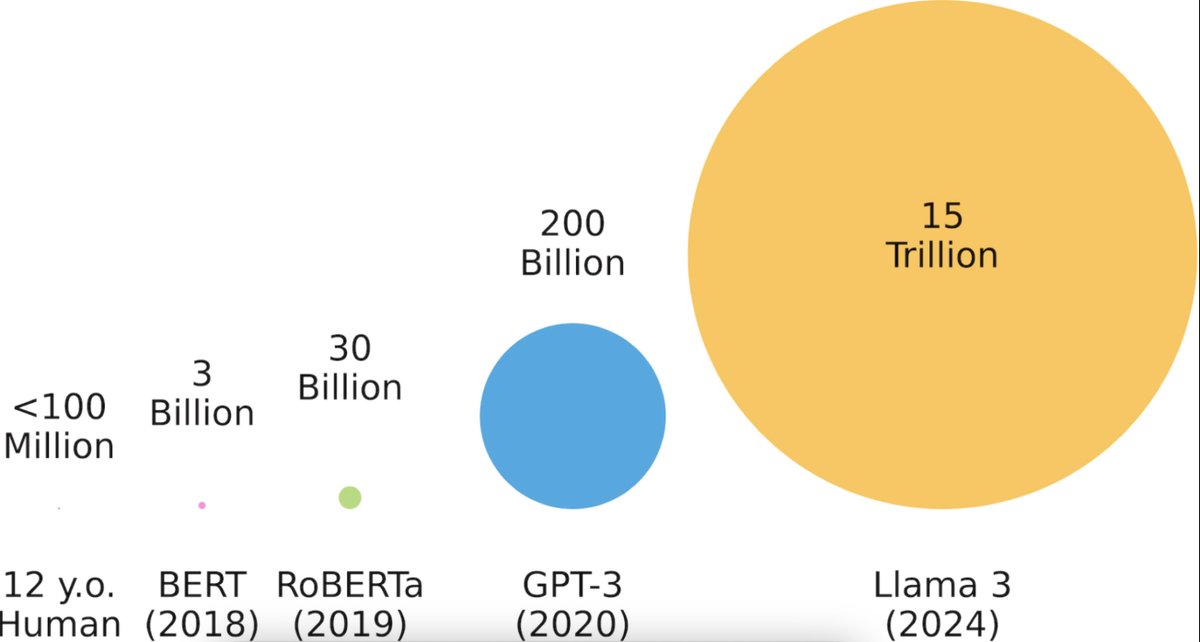
"Every time you fire a linguist, the performance of your system goes up, but your ability to simulate realistic human behavior goes down"
1
3
21
2,033
Tal Linzen retweeted
When I started my PhD back in 2019, there was a lot of excitement around taking ideas from linguistics and cognitive science and using them to build better NLP models
15 Oct 2025
would be so excited to see cognitive scientists and llm researchers working together on user modeling research
3
9
103
17,139
As Nick says, we’re excited about the potential for leveraging cognitive science to improve user simulators, then use them to evaluate and train models that collaborate better with real humans. I'm hiring (including but not limited to postdocs), let me know if interested in this direction!
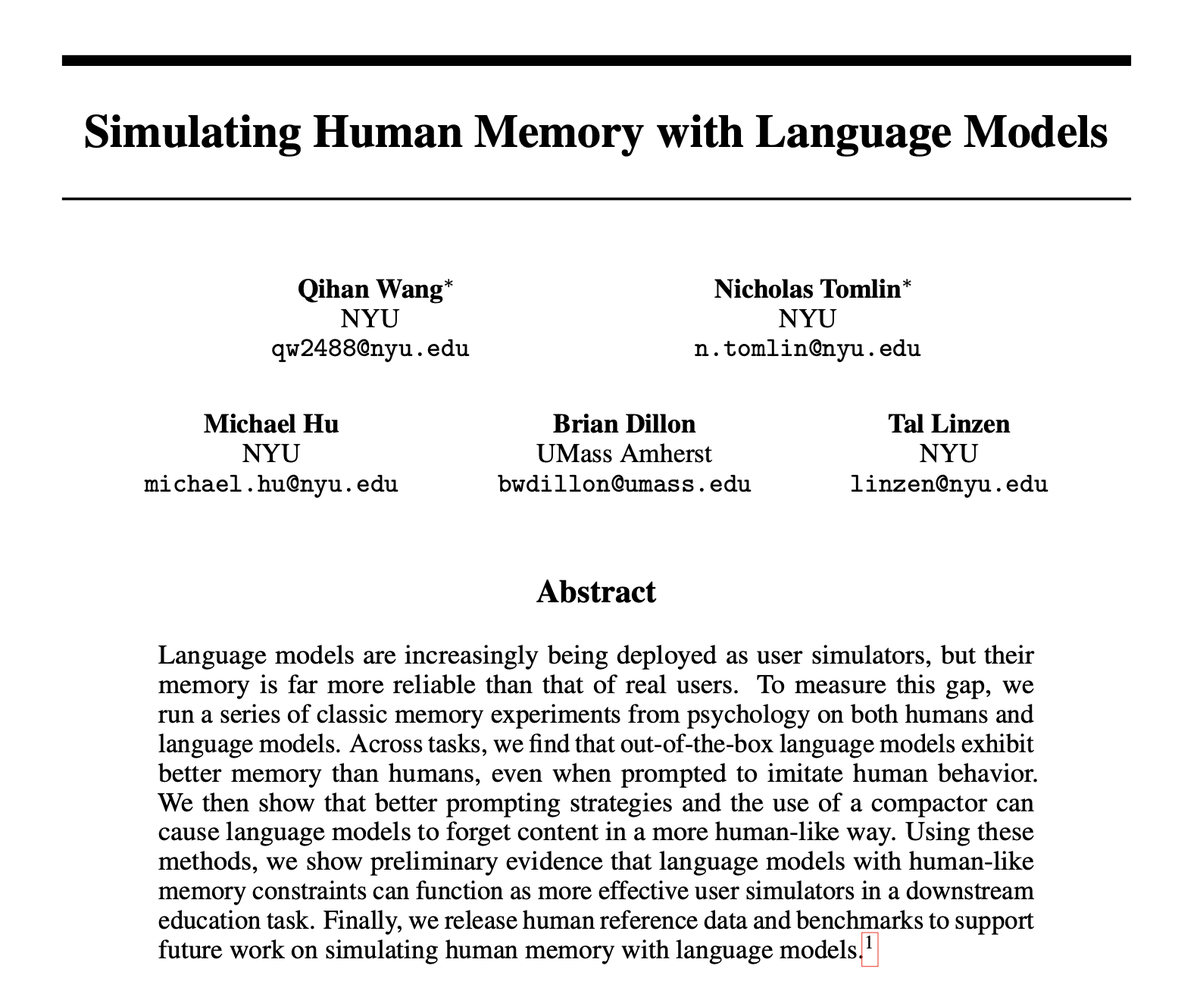
New paper! LLM memory keeps improving, but this makes them *worse* as user sims. If we want to build models that can, e.g., simulate realistic students to train chatbots to be better teachers, then these models need to be able to forget like humans do 📄: arxiv.org/abs/2605.25680
14
89
12,903
Sometimes I’ll accidentally look at the “for you” feed instead of the “following” feed and I’ll be amazed by how many people like all of those dumb tweets
Amazing thing about Paris is you can go into any random bakery and get a baguette or croissant that would win awards in NYC and have hundreds of zoomers lining up on Saturday morning to get it and then for lunch you go into any random bistro and have a steak or confit de canard so mediocre it would get the restaurant owner deported from NYC.
7
4,192
Amazing thing about Paris is you can go into any random bakery and get a baguette or croissant that would win awards in NYC and have hundreds of zoomers lining up on Saturday morning to get it and then for lunch you go into any random bistro and have a steak or confit de canard so mediocre it would get the restaurant owner deported from NYC.
52
82
4,554
258,435
There’s a lot of incredible food in Paris to be clear just not at the median bistro
3
226
29,409
Tal Linzen retweeted
PERSONALLY if I had access to ~unprecedented billions~ of AI cash and wanted to "make sure AI goes well," I would probably spend it on things that would allow the public to experience the benefits of that wealth.... infrastructure healthcare transit education environment art ....
New blog post: The third wave of American philanthropy Hundreds of billions of dollars in new philanthropic capital will soon become liquid. The OpenAI Foundation holds 26% of OpenAI, worth about $220B at today’s valuation. Anthropic’s seven co-founders have pledged to give away 80% of their wealth and have instituted the most aggressive donor matching program for employees in tech history. How much does this all add up to? And how meaningful is that in the context of philanthropy today? I was doing some simple napkin math to wrap my head around the scale of what’s coming, and radicalized myself in the process. I had dramatically underappreciated the scale of the philanthropic capital that’s about to become available and the corresponding gap in talent and organizations that will be needed to make the most of it. This piece aims to directionally sketch the scale of what’s coming, the gap in operational capacity needed to absorb it, and what we can do to fill it. (Link to full post in reply)
10
10
122
19,862
Tal Linzen retweeted
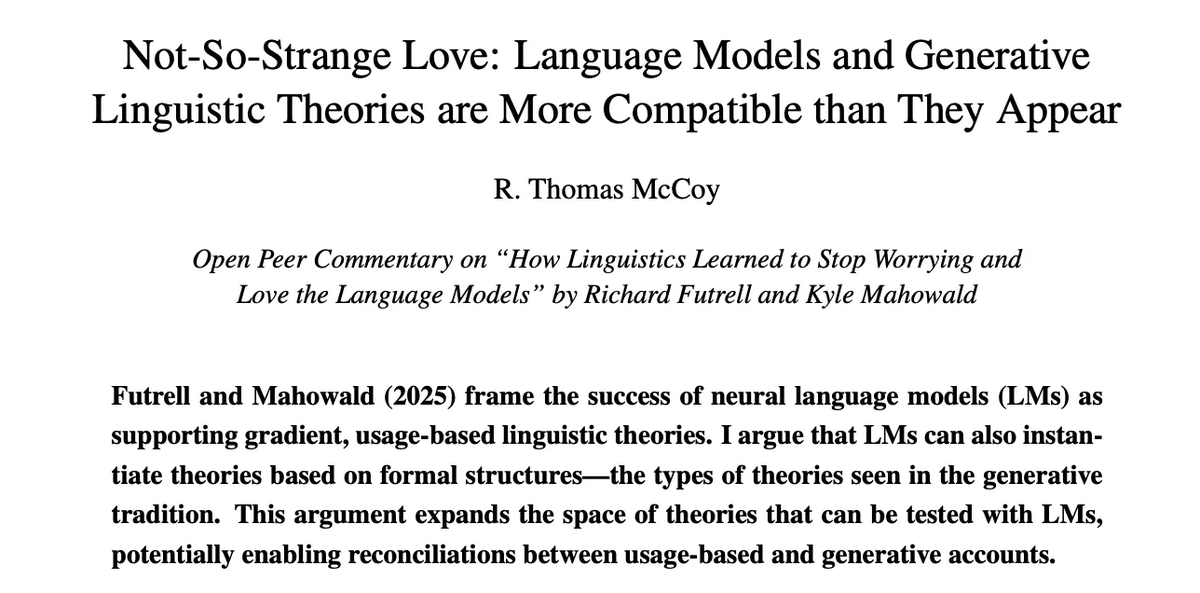
🤖🧠 New commentary 🧠🤖 What role should large language models (LLMs) play in linguistics? I reflect on this question in a piece now on arXiv: arxiv.org/abs/2605.10061 To appear in BBS as a commentary on @rljfutrell and @kmahowald's excellent piece on LLMs & Linguistics!
2
11
48
2,628