
On-chain Task System.
Joined October 2013
- Tweets 23
- Following 17
- Followers 63
- Likes 2
11 Photos and videos



Jun 11
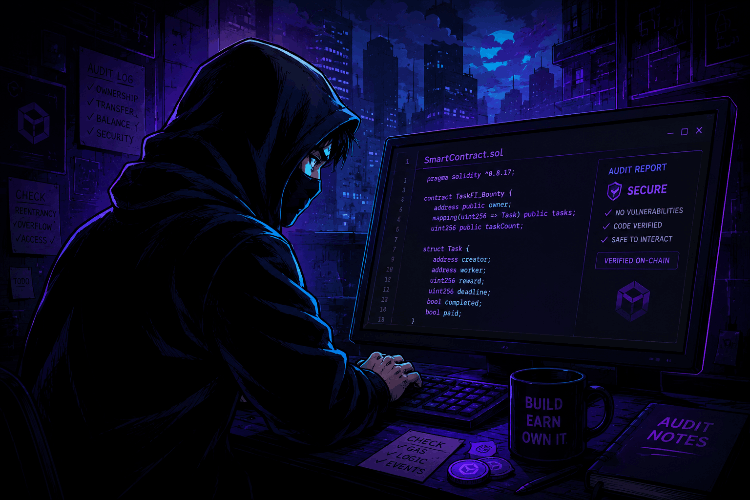
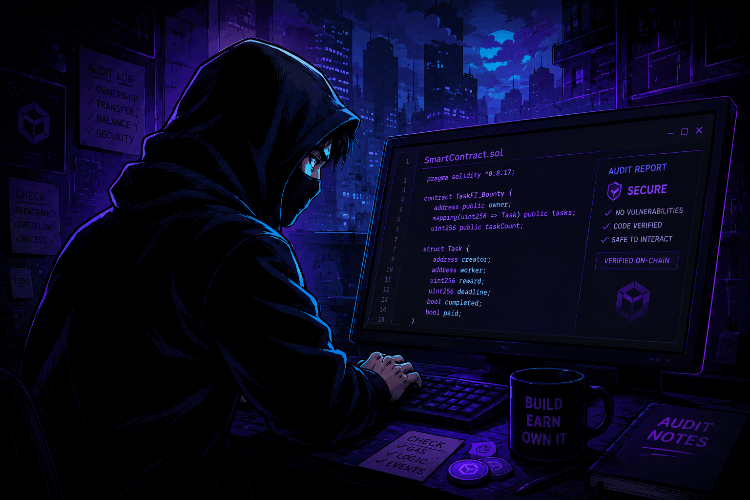
I'm going to post a community challenge with a reward of 1 BNB. Does anyone have any good ideas?
5
495
Jun 11
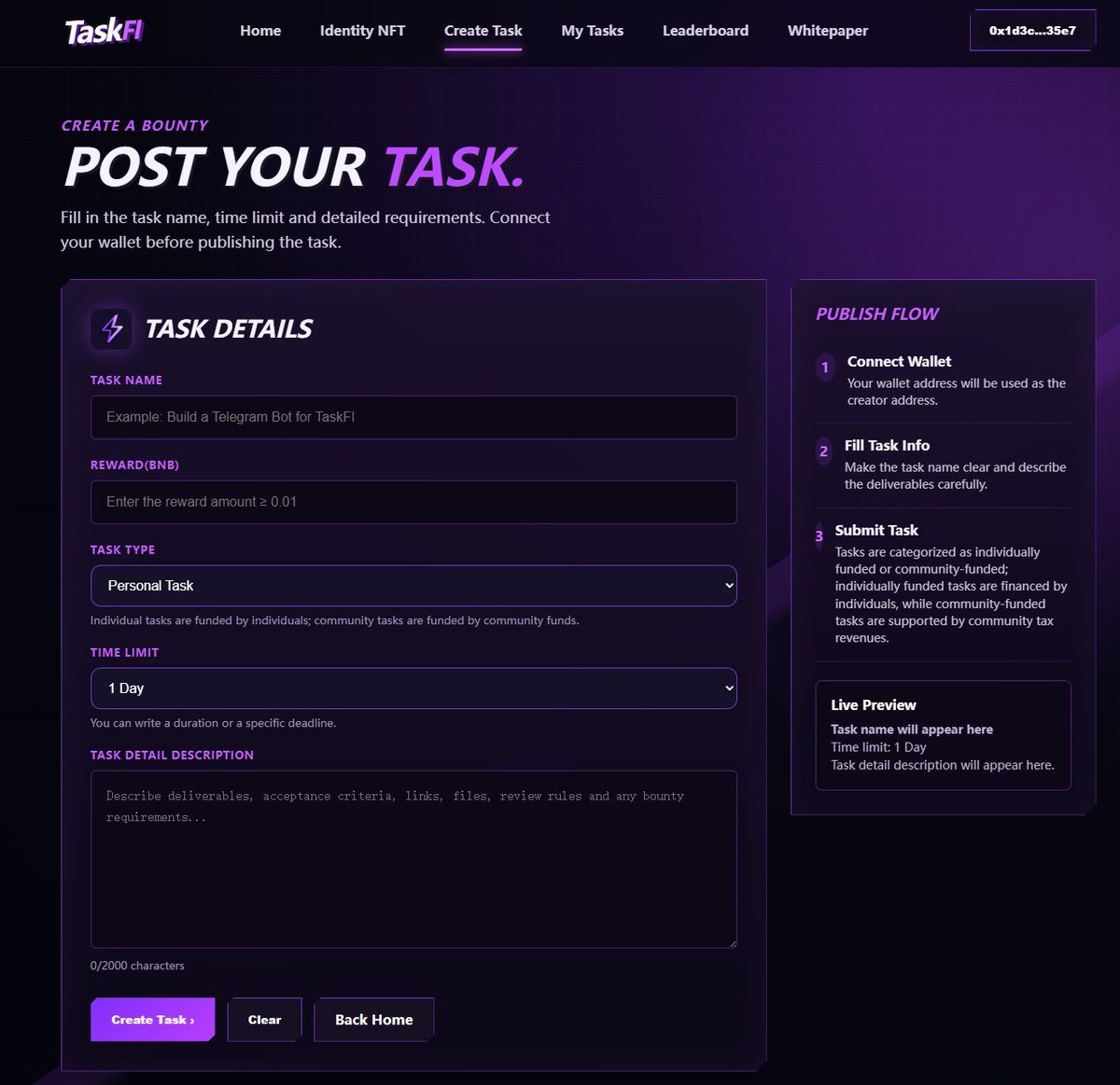
The minimum bounty amount for posting a task is 0.01 BNB.Accepting a task requires a 0.01 BNB deposit, which will be automatically refunded upon completion of the task.
2
490
Jun 11
On-chain bounty missions—everything is verifiable on the blockchain
1
2
1,407
Jun 11
Token has been created
0xac5426d65baf1c6f9c0ad33097af0df3d9527777
2
1
3
2,361
Jun 11
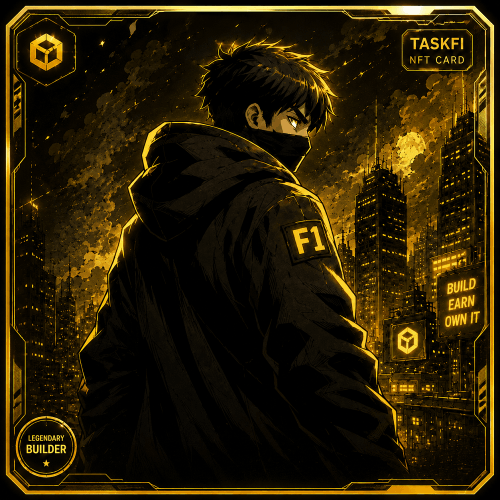
Community Identity NFTs are divided into Gold and Silver tiers, both of which participate in community governance. Silver-tier holders have the right to vote on task disputes and receive a share of community revenue, while Gold-tier holders additionally have the authority to initiate community tasks.
1
1,018
Jun 10
I need to use better RPC nodes and further optimize the user experience
586
Jun 10
As long as I can read the on-chain data quickly enough, I can achieve imperceptible latency in data exchange
389
Jun 10
My original plan was to write data to the database immediately after it was recorded on the blockchain, but I discovered several issues during implementation. First, the delay in recording data to the blockchain is inconsistent, which could easily cause database writes to fail. Second, there are security concerns: since only the wallet is connected, we can only perform basic validation. External users could easily bypass the frontend to send requests and tamper with database data. Even though the entire process is actually completed on-chain—with the database merely serving as a data display—this would still result in a poor user experience. Therefore, I decided to write to the database asynchronously. Although this introduces a slight delay, everything remains auditable on-chain, and the database is no longer at risk of tampering. This prevents the need to manually repair data in the event of malicious activity.
363
Jun 10
There is significant uncertainty regarding the synchronous recording of blockchain events to the Web2 database, so I also need to set up a scheduled synchronization process to transfer blockchain data to the Web2 database.
271
Jun 9
Tasks are divided into individual tasks and community tasks. Individual tasks are funded and posted by individuals, while community tasks are posted based on community votes and funded from the community fund pool. The process for individual tasks is nearly complete
203
Jun 9
Hold NFT to become a community member and gain the right to vote on and review community tasks
176
Jun 8
I will divide the tasks into two categories: community tasks and personal tasks
164
TASKFI retweeted

AI agents are getting more capable, but once they start doing real work, the question shifts pretty quickly.
Not what they can do, but whether you can trust them.
Without identity, agents are just scripts. You can’t track what they’ve done, you can’t evaluate them, and you definitely can’t rely on them across different apps.
BNBAgent SDK ties into ERC-8004 so every agent has a persistent onchain identity with a track record you can actually inspect.
If an agent has completed 100 jobs, you can see how it performed before deciding to use it. That’s a very different model from what most agent frameworks look like today.
Learn more in our blog below 👇
bnbchain.org/en/blog/bnbagen…
19
17
67
13,616

PPP and crypto context
How purchasing power differences can shape how people use global assets like crypto.
Read more 👇
binance.com/en/academy/artic…
91
50
259
64,510
TASKFI retweeted

"My biggest concern is that 3 or 4 years from now, the next Gary Gensler coming in and he takes an ax to everything we've built, and we can't allow that to happen."
@MichaelSelig @CFTC
72
58
347
133,255