
Joined March 2024
- Tweets 934
- Following 82
- Followers 56
- Likes 1,186
123 Photos and videos



Pinned Tweet

Jun 2
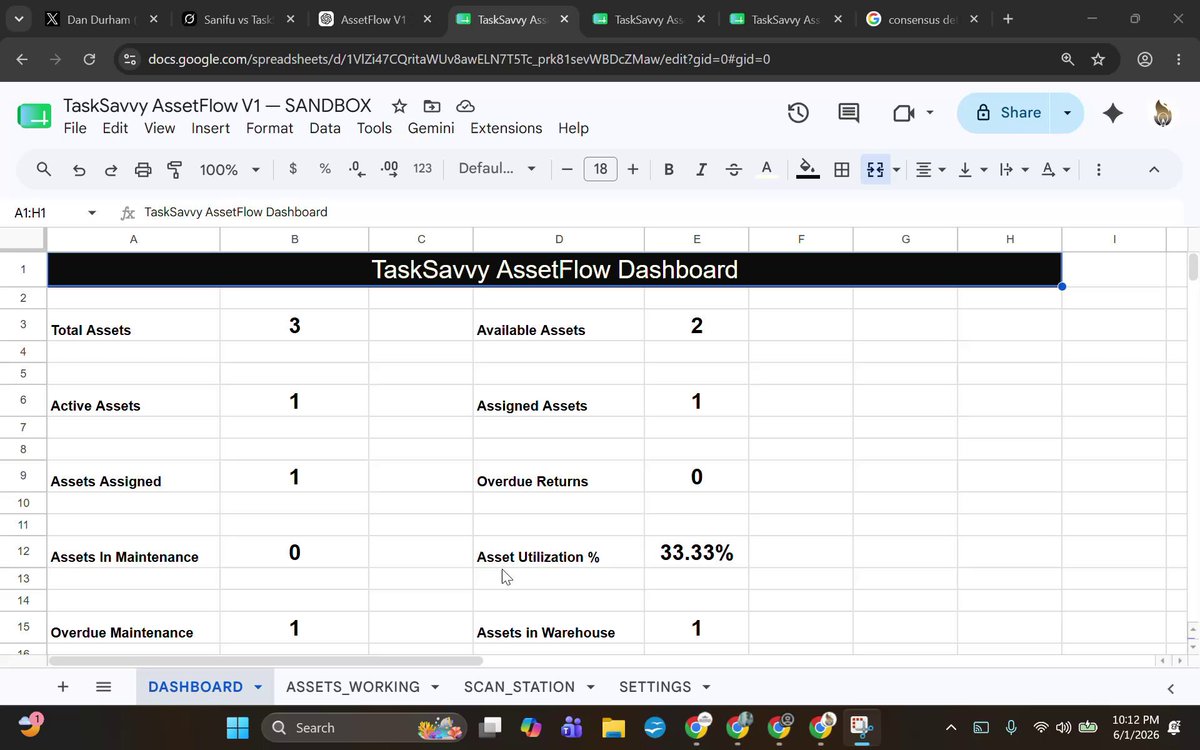
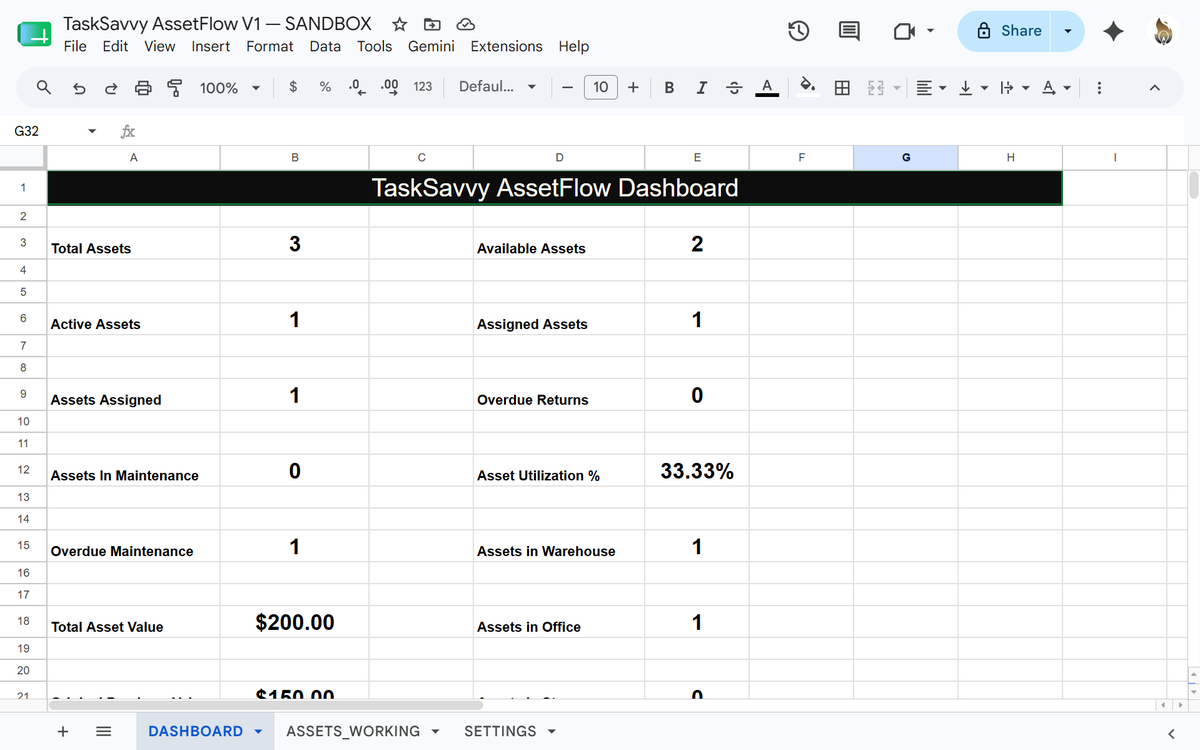
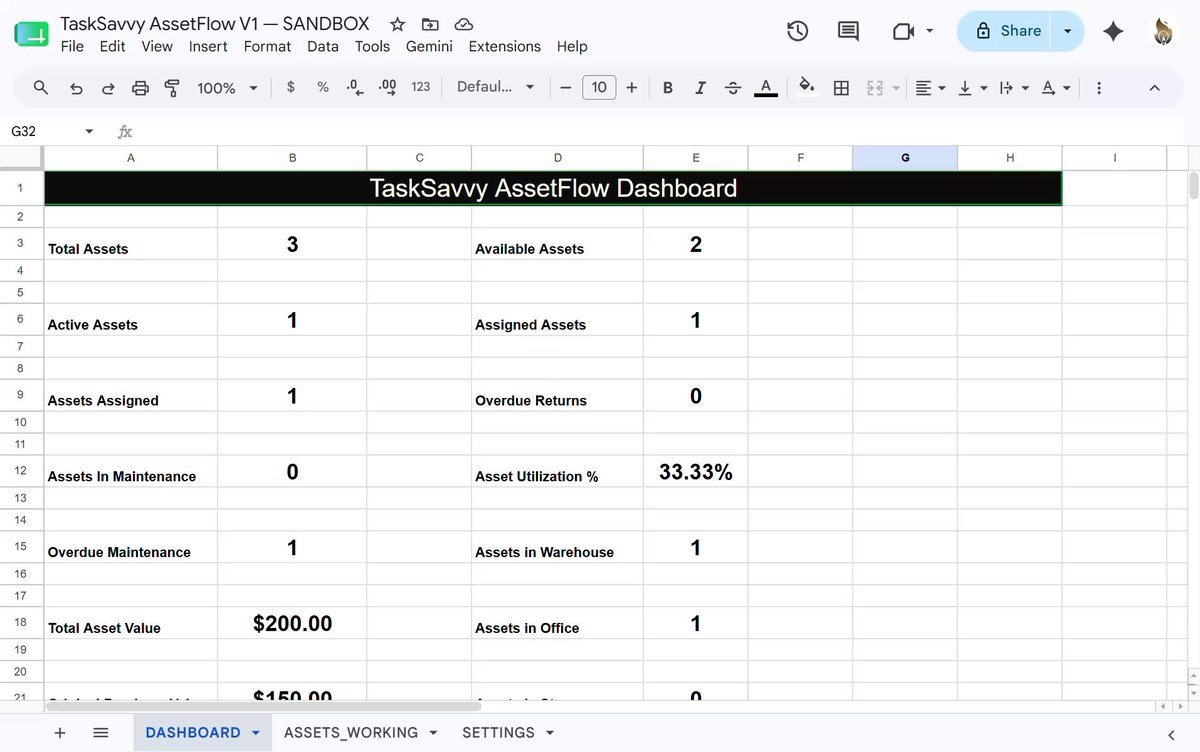
AssetFlow just crossed a major line tonight.
It’s no longer just an inventory list.
It’s now a real Operations Asset System.
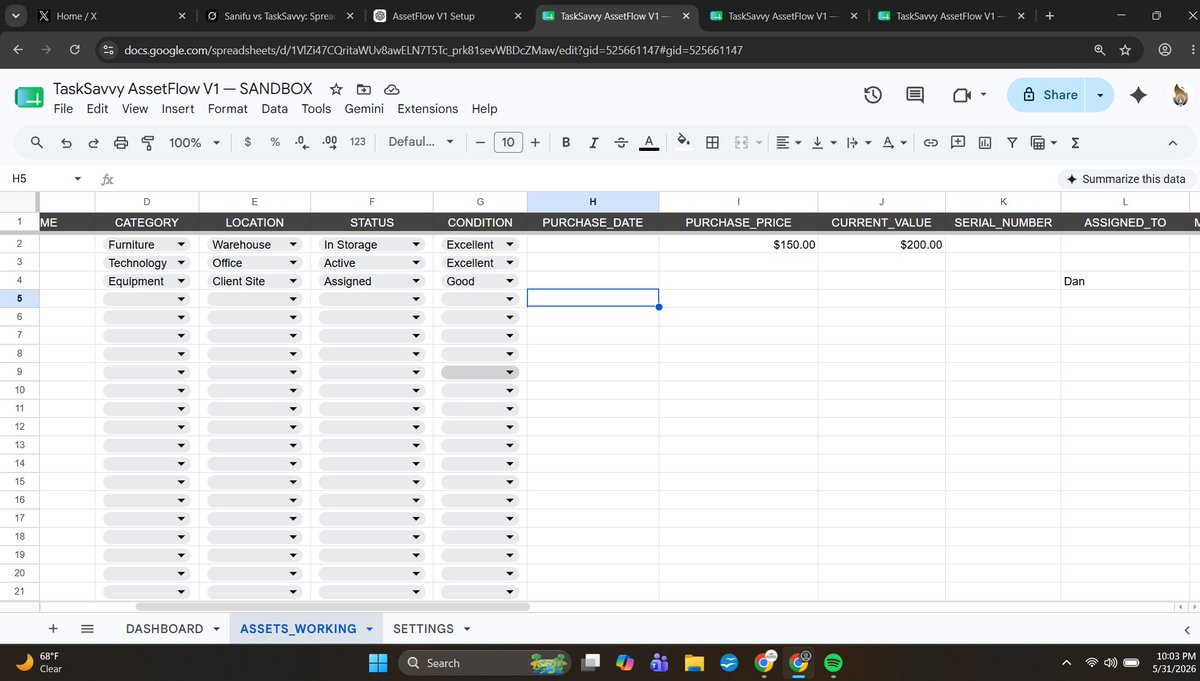
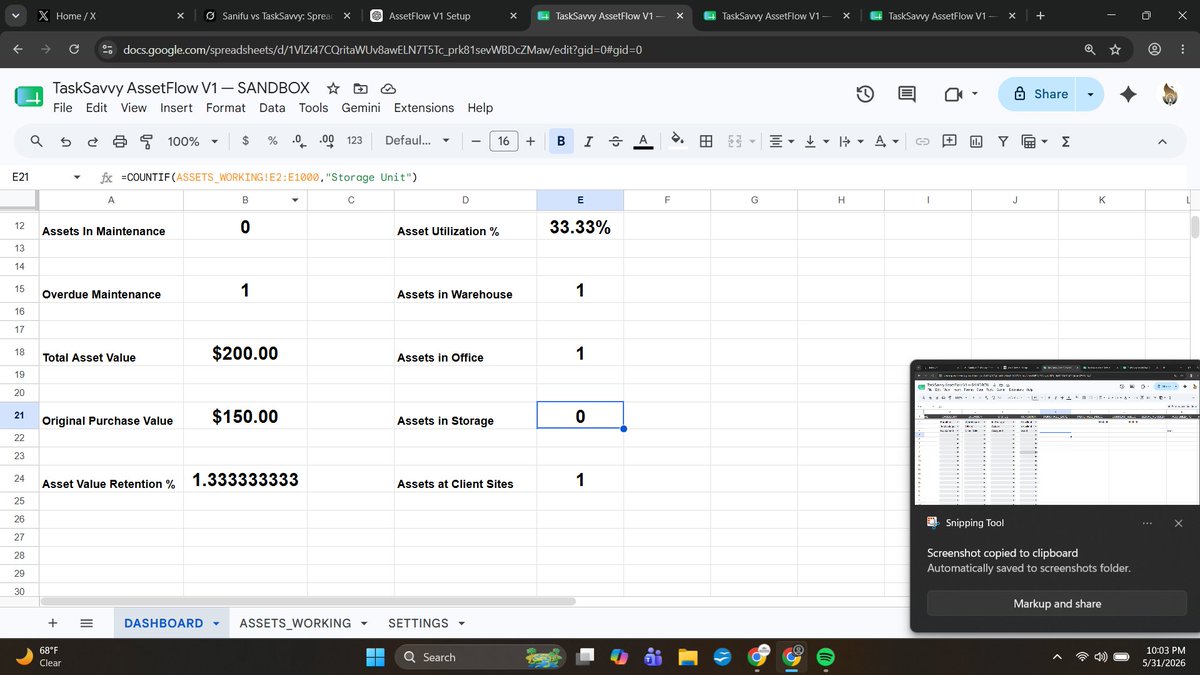
✅ Added full Location Intelligence (Zone, Aisle, Rack, Shelf/Bin)
✅ Built Location KPIs on the dashboard
✅ Started QR/Barcode architecture
✅ Created a dedicated SCAN_STATION tab for check-in/out workflow
One Source of Truth - Built One Module at a Time.
Still clocking in at the warehouse during the day… then coming home at night to quietly turn years of operational frustration into clean, usable systems.
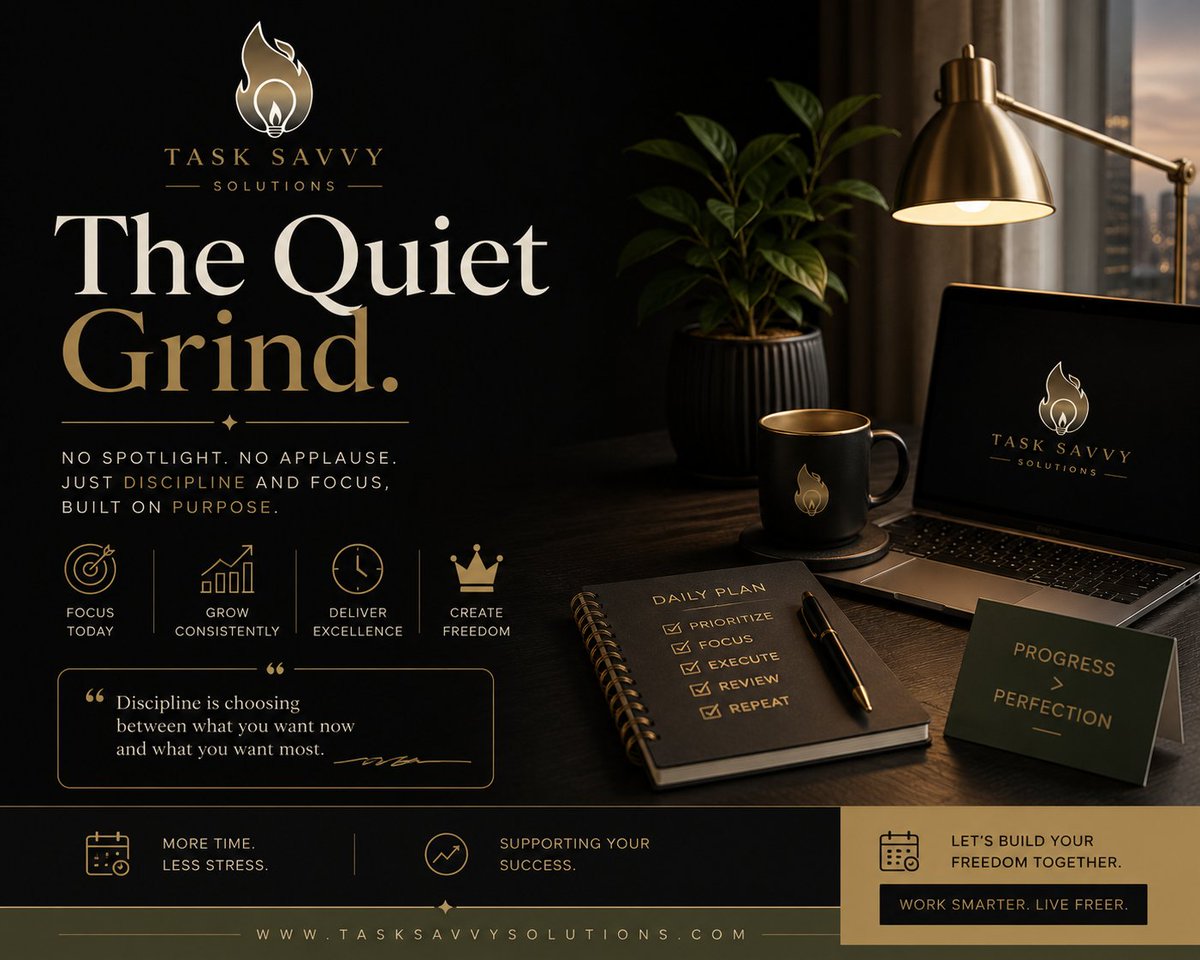
The Quiet Grind continues.
Logistics manager by day... Operational infrastructure CEO by night.
145
Jun 11
Tonight's AssetFlow iteration update:
We now have a complete Identity Layer in place:
✅ Asset ID (AST-0001)
✅ Asset Tag (TS-AST-0001)
✅ ASSET_TAG_REGISTRY
✅ TAG_GENERATOR
✅ Automated tag creation (no more manual copy/paste)
This brings AssetFlow to what I’m calling Feature Complete status.
Not finished... but the core foundation is now solid:
Master Record
Operational Interface (SCAN_STATION)
Transaction Logs (Assignment, Maintenance, Audit)
Identity System
Dashboard KPIs
We’ve officially moved past “spreadsheet with extra steps” into a real operational system.
Next up: Building out the Analytics layer, then connecting AssetFlow into CORE.
One module at a time.
One Source of Truth.
The Quiet Grind continues.
6
Jun 10
AssetFlow just hit another major architecture milestone.
We now have a complete transaction layer in place:
• ASSETS_WORKING → Master record (current state)
• ASSET_AUDIT_LOG → General audit & verification history
• ASSET_ASSIGNMENT_LOG → Full assignment history (who had it when)
• ASSET_MAINTENANCE_LOG → Maintenance history (repairs, costs, frequency)
This means every important action on an asset now has proper historical tracking... not just the current status.
No more disappearing maintenance records. No more guessing how long an asset was assigned or how much it’s cost to maintain.
One Source of Truth. Built one module at a time.
4
Jun 6
There’s something peaceful about working on something that’s completely yours on a Saturday night.
No boss.
No meetings.
Just you, your vision, and the systems you’re putting in place to make it real.
35
Jun 6
This is the real cheat code.
Jun 6

You only need 1 hour.
1 hour of building. 1 hour of writing. 1 hour of lifting. 1 hour of studying.
1 hour of any form of bettering yourself, because it quickly compounds.
1 hour feels like nothing until you look back 365 hours later and everything's changed.
13
Jun 6
Most “systems guys” will sell you the philosophy.
I’m showing you the actual builds.
AssetFlow.
TaskFlow.
ClientFlow.
RevenueFlow.
Real workflows. Real automation. Inside Google Workspace.
Not theory.
Execution.
A system you grow into... not out of.
11
Jun 5
The software industry loves to sell you the next tool to fix your problems.
What they rarely tell you is that most of those problems were created by using too many of their tools in the first place.
Keep it simple...
One System... many doors.
11
Jun 5
Big milestone with AssetFlow tonight.
I just completed the final core workflow in the SCAN_STATION - Audit.
AssetFlow now has four fully working operational workflows:
Check-Out
Check-In
Maintenance
Audit
What started as a structured asset database has evolved into a lightweight asset operations system.
It can now track custody, location, maintenance, run audits, and generate operational KPIs... all inside Google Sheets.
This also marks an important architectural shift. By creating a dedicated audit log, AssetFlow now separates the current state of an asset from its historical events. That’s a meaningful step beyond spreadsheet thinking.
Next up: Building a permanent Assignment Log so every checkout and return creates lasting history.
The Quiet Grind in the unseen hours continues.
15
Jun 4
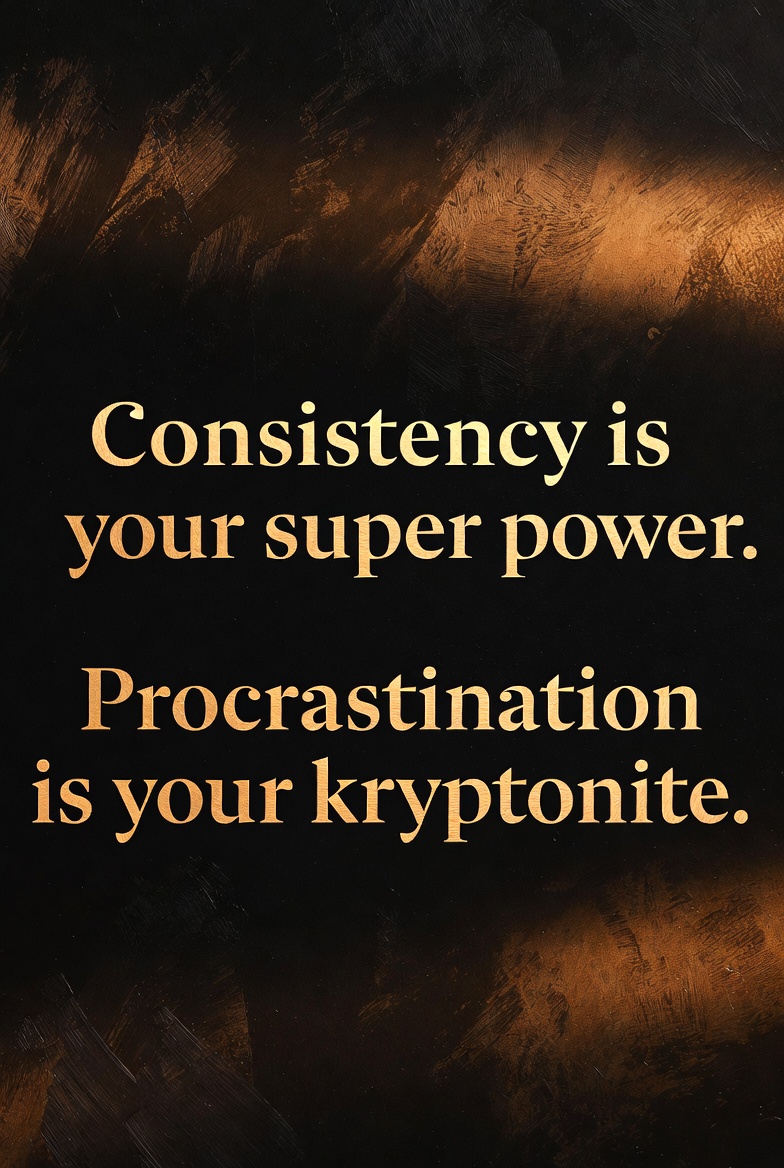
Consistency is your super power.
Procrastination is your kryptonite.
Most people don’t fail because they lack talent or ideas.
They fail because they can’t stay consistent when motivation disappears.
The ones who win are usually just the ones who keep showing up... especially on the days they don’t feel like it.
14
Jun 4
Every choice compounds... good or bad.
You don’t become successful or unsuccessful in one big moment. It happens through thousands of small, daily decisions that add up over time.
The person who wakes up early, does the work when they don’t feel like it, and stays consistent for years?
That’s who wins.
Most people underestimate how powerful (and dangerous) small choices are when repeated.
12
Jun 4
I wasn't psychologically in the mood to build tonight but I told myself I'm the CEO and need to act like it so I shipped the first real transaction workflow inside AssetFlow.
Up until now it was mostly a well-structured database with automation. Now it can actually do something.
1
21
Jun 4
Next up is Check-In, then maintenance actions. Once those are done, the core operational workflows will be complete.
Then we can start looking at QR codes and deeper integrations.
Still moving. Still building.
1
17
Jun 4
Up until now, AssetFlow was mostly a database with automation.
Now it can:
Accept an action (Check-Out)
Find the asset (AST-####)
Update the asset record
Stamp dates
Update assignment status
Return a success message
That's application behavior.
What We Have Working
Asset Record
✅ Asset IDs
✅ Values
✅ Location hierarchy
✅ Maintenance tracking
✅ Assignment tracking Dashboard
✅ Asset counts
✅ Location KPIs
✅ Utilization KPIs
✅ Financial KPIs Scan Station
✅ Asset lookup
✅ Check-Out workflow
✅ Assignment automation
✅ Result messaging
16
Jun 3
Most people use Gemini casually and get average results.
But Gemini becomes significantly more useful when you learn how to prompt it properly.
Here are the key things that actually move the needle:
1
19
Jun 3
Take advantage of Google Workspace integration.
This is one of Gemini’s biggest strengths.
You can use it directly inside Gmail, Docs, Sheets, and Drive. It can summarize emails, pull information from your files, and help build workflows across the tools you already use every day.
Most people aren’t fully using this yet.
1
26
Jun 3
Good prompting is becoming a real skill.
The people who get the most out of AI tools like Gemini are usually the ones who treat prompting seriously instead of using it casually.
What purpose do you typically use AI for?
15