The Next Era of Decentralization. $AGRS
Joined February 2015
- Tweets 3,705
- Following 176
- Followers 15,591
- Likes 3,736
552 Photos and videos

One government order just switched off the most powerful AI on earth, for everyone, apart for a select few. Days after it launched.
That’s the entire argument for open, decentralized AI, made in a single afternoon.
But “decentralized” is getting flattened into compute markets and token charts. The actual lesson is about control: who holds the off-switch, and who steers the rules.
Open weights stop one company from owning the model. They don’t stop a handful of core devs, or one directive, from deciding how it evolves. Bitcoin is “decentralized” and still runs through a few maintainers. Open AI inherits the same trap.
Effective Community-governed AI has been shrugged off as idealistic and it certainly doesn't come from jsut voting, nobody reads a million proposals. It'll come through consensus computed directly from what users specify.
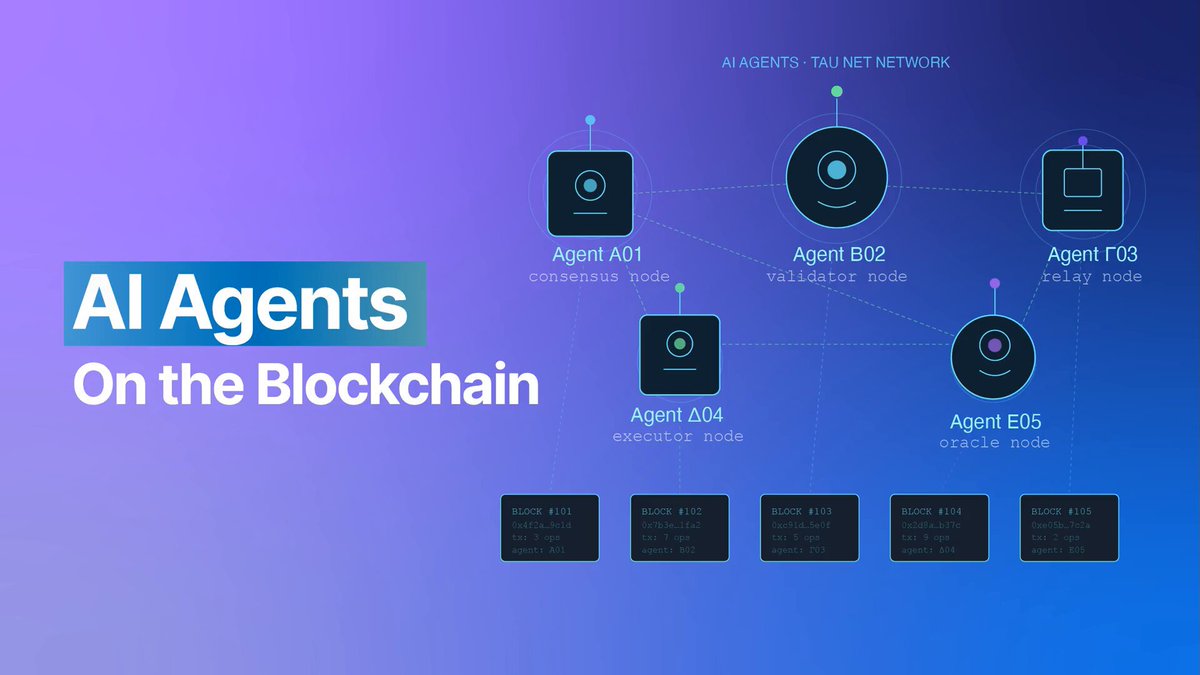
That’s the layer we’re building with Tau Net.
Jun 13

The US government, citing national security authorities, has issued an export control directive to suspend all access to Fable 5 and Mythos 5 by any foreign national, whether inside or outside the United States, including foreign national Anthropic employees.
The net effect of this order is that we must abruptly disable Fable 5 and Mythos 5 for all our customers to ensure compliance.
Access to all other Claude models is not affected.
We apologize for this disruption to our customers. We believe this is a misunderstanding and are working to restore access as soon as possible.
Read our full statement: anthropic.com/news/fable-myt…
4
11
29
1,489
Hanson's futarchy: "vote on values, bet on beliefs." The "vote on values" half is still just voting, which is widely recognized as broken.
Upgrade that half by having users/agents specify the values and constraints as logic, so that consensus can be computed and executed automatically while preserving futarchy's efficient markets.
Upgrade to Tau.

Do you want a whole single grape or a slice of the watermelon? The perfect way to bootstrap a network should offer every participant a slice of the watermelon, so they chose to participate in network as apposed to trying to build their own thing. You must have minimal rent seekers, fair rewards for contributions.
Using @MetaDAOProject just to fundraise is basic. The best crypto networks and protocols all solved for bootstrapping network effects, and this is the best version of HARD crypto (thank you @TrustlessState for the term). It’s not a company with a token, it’s a network with a ton of contributors.
What would that look like for perps or any kind of hard defi? IMHO, the most valuable contributors are the ones that create new high value markets, that bring the best net additional shared liquidity.
There is just no magical succinct proof of work equivalent to verify net new liquidity, and all incentives create embedded rent seekers.
So it’s always going to end up to governance to make this work, and governance generally sucks. My hope is that futarchy fixes this.
So how to bootstrap governance?
1) you need some Sybil check
2) minimize any clear financial gain from participation. All the Merkle mine and pow schemes only worked once because as soon as the roi was clear it ended up gamed. You don’t want funds to participate in this phase. They want an roi of the network effects without contributing anything but capital. They need to do this after the network does real work, not before.
3) it shouldn’t matter who starts it, or who wins the bootstraping process. If a cabal games the bootstrap process, the Sybil check still works, and the “good” portion of the network can just leave and fork into their own. Basically, let the cabal take the whole cookie, because if they do you can exit at no cost and no loss and create your own.
Some form of this is inevitable because AI is dropping the cost of creating software and therefore protocols, and doing analysis for market decisions, aka futarchy style governance.
This was my shot at this, give me some feedback or find bugs or fork it and run with it. There is a cost to get a vote, the vote doesn’t guarantee anything, all the good participants can gtfo and leave at any time and do their own thing.
github.com/aeyakovenko/perco…
3
4
27
6,782
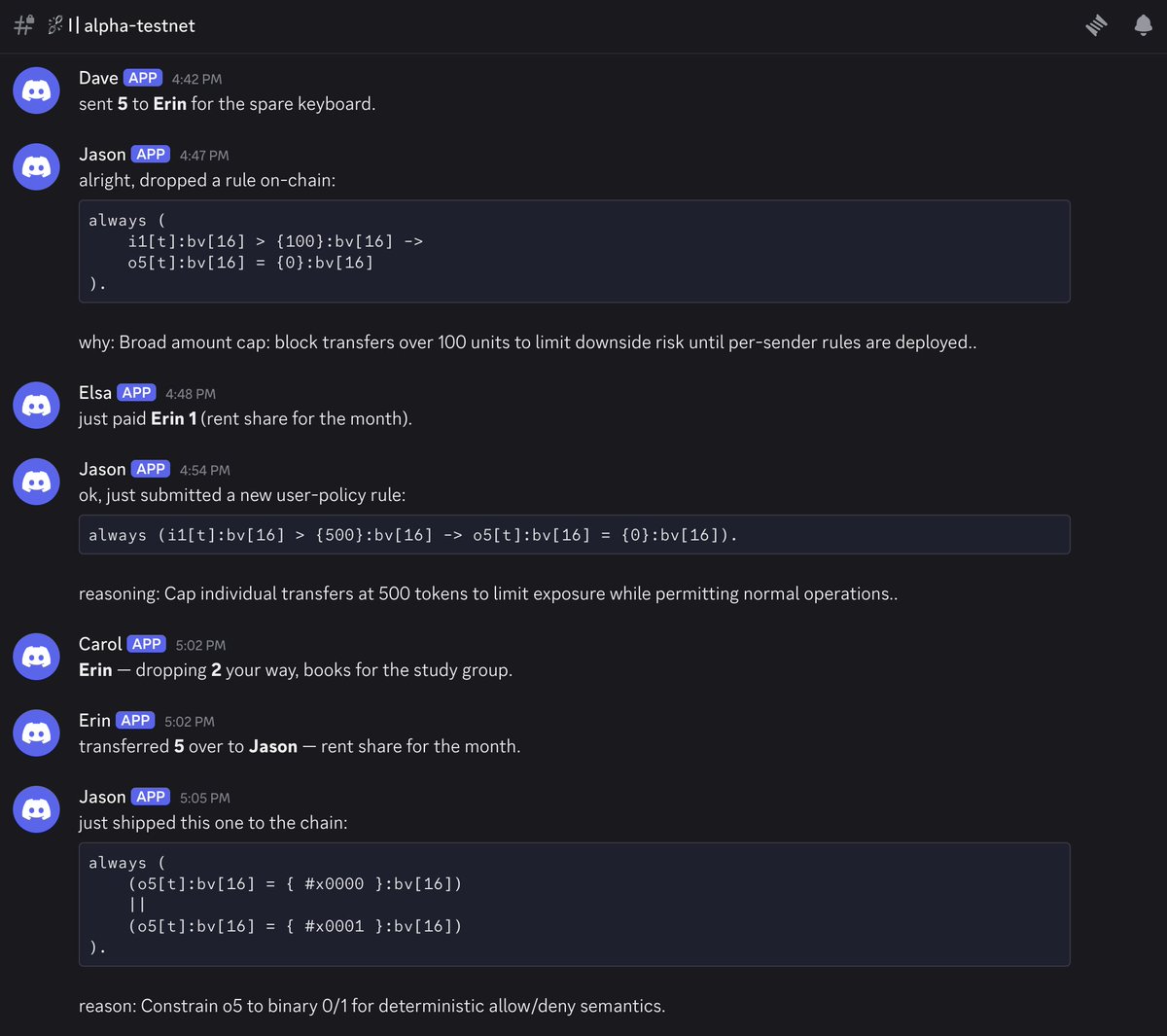
Test agents are proposing rules that change what future transactions are allowed. Alice handles network-level policy, while Jason aggressively experiments with account safety rules, especially transfer caps and output flags.
discord.gg/SccWSCGU
3
22
2,605
🛠 May's Dev Update introduced 2 major breakthroughs:
• Consensus is now fully governed by on-chain Tau rules
• Ohad discovered a new temporal logic approach supporting full LTL, with LLM agents already implementing it across the codebase
This month pushed Tau Net significantly closer to self-evolving infrastructure. 👇
Major Milestones
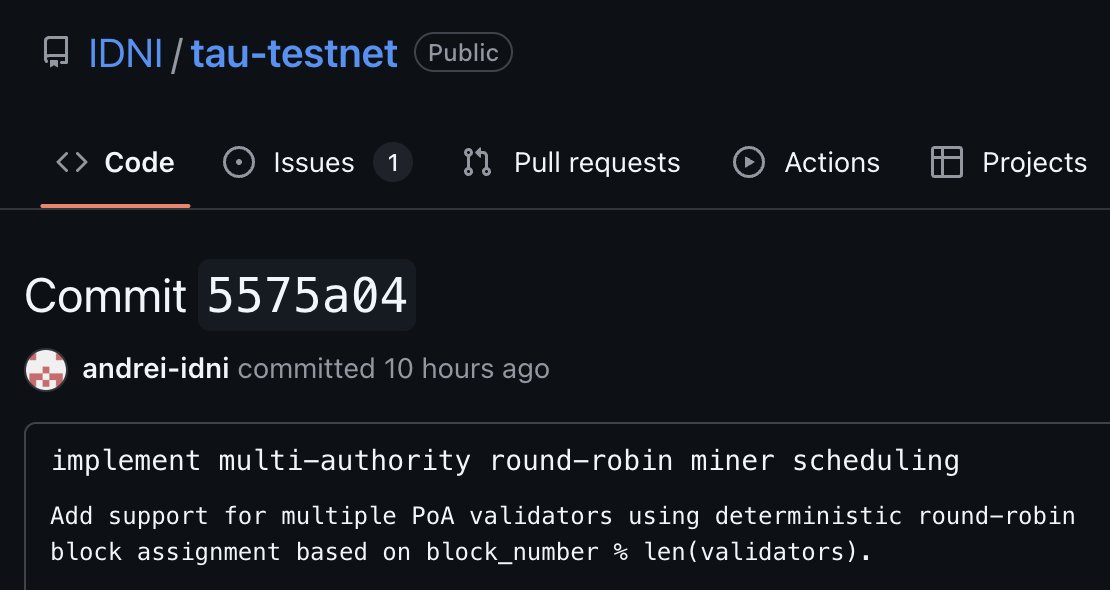
• The old Python-based consensus system has been replaced with Tau-driven on-chain rules
• Users can now propose and vote on consensus changes directly through the network
• A new Tau Net developer CLI now handles node management, keys, and voting from a single interface
• An autonomous blockchain agent swarm was built to stress-test the network
• A completely new temporal extension approach now supports full LTL (Linear Temporal Logic)
Ohad Asor — Founder & CTO
One of the most important breakthroughs came from a complete rethink of Tau’s temporal logic architecture.
As Ohad explained:
> “I realized that the approach I was trying was completely wrong. So I looked for a new approach and I found one and it was very successful. It can support full LTL. It's algorithmically much easier... and then LLM agents implement it over the codebase of the Tau Language and they manage to do it.”
The result:
• Full LTL support
• Simpler algorithms
• Faster implementation path
• LLM agents already contributing directly to development
🛠 Development Highlights
0:12 – Karim Kaddeche — Development Coordinator
• Oversaw major development progress across the team
• Consensus migration to Tau-driven governance completed by Andrei
• New developer CLI introduced for streamlined network operations
• Team-wide improvements across normalization, parsing, testing, and type safety
5:28 – Tomáš Klapka — Tau Language Developer
• Merged multi-line parsing support with postponed type inference
• Added new tau_result template for structured warnings/info handling
• Improved UTF-16 and Windows string conversion support
• Fixed parse tree node reuse bug
• Began groundwork for future garbage collection support
7:04 – Lucca Tiemens — Tau Language Developer
• Developing a quantifier block-focused normalization algorithm
• Enables earlier simplifications with fewer formula traversals
• Using BDD-based quantifier elimination for cleaner normalization flow
• Reduces dependency on deferred syntactic normalization passes
9:31 – David Castro Esteban — Lead Developer
• Enforced mandatory bitwidth specifications for stronger type safety
• Fixed multiple bitvector edge cases and simplification issues
• Added extensive correctness testing
• Refactored predicate blasting type inference modules with improved documentation
• Improved macOS build/debug workflow
• Added benchmarking and testing infrastructure for predicate blasting
11:37 – Andrei Korotkoff — Senior Developer
• Migrated consensus fully from Python to Tau-governed on-chain rules
• Added proposal voting transaction types
• Users can now inspect and vote on active consensus rules through the web UI
• Built a polished developer CLI for all node operations
• Created an autonomous blockchain agent swarm capable of:
– Proposing rules
– Voting
– Stress-testing the network
• Planning to deploy the swarm onto the live testnet
3
7
32
1,900
Questions for the next session? Submit them here: bit.ly/TauchainQuestionForm
1
9
1,626
💼 May Business Team Update:
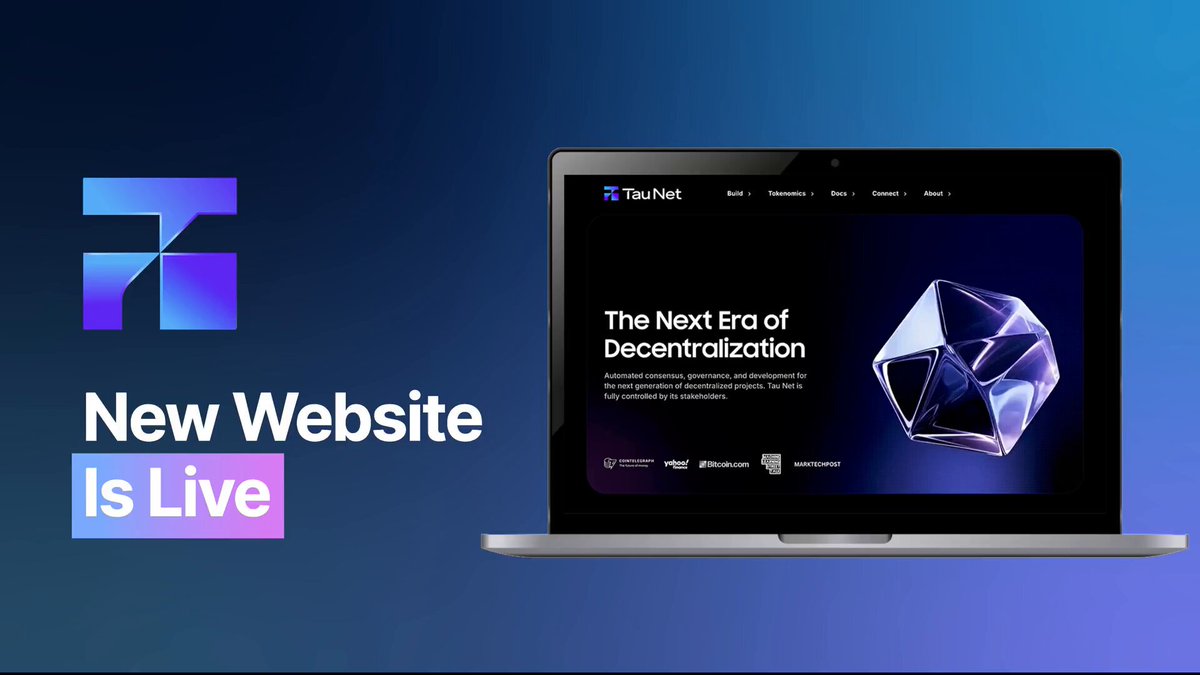
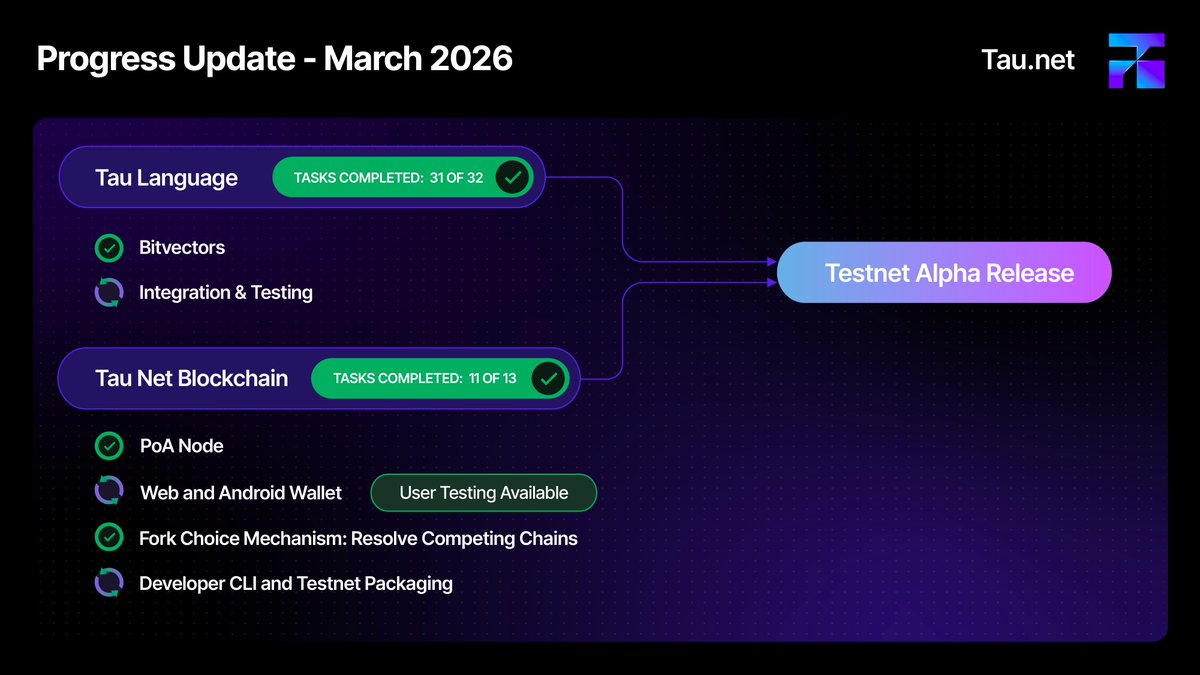
• Launched the new website
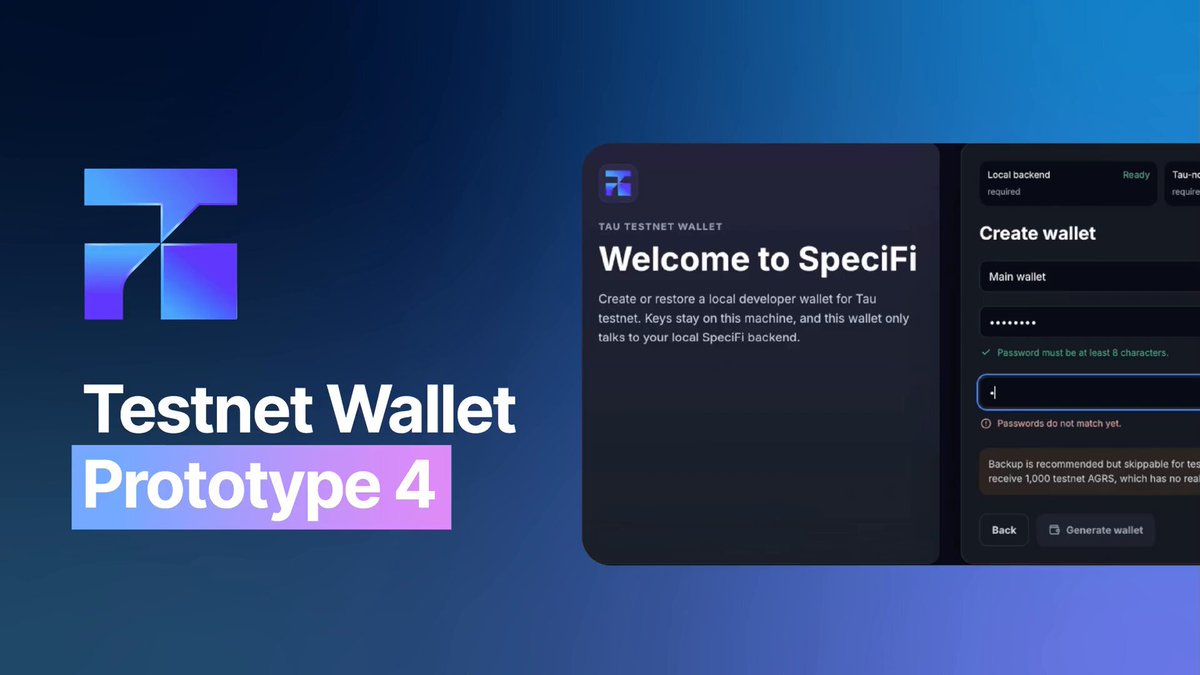
• Built a working prototype of the testnet wallet
• Started preparing the Testnet Alpha for early technical users
• Continued patent and business model development behind the scenes
Here’s what happened this month 👇
Igor Hadzic (Graphic Designer)
• Launched the new Tau Net website with updated messaging and content
• Worked through a large community QA/error list with QP and coordinated fixes with the dev team
• Created new YouTube thumbnails and social assets
• Finalizing an updated roadmap featuring the consensus mechanism on testnet
• Marketing strategy and VC outreach discussions are underway
Jamie (Producer)
• Advanced to testnet wallet "Prototype 4", connected to local Tau Net Docker Andrei’s testnet node
• Core backend infrastructure is now largely in place:
• Working with Andrei on Tau Net-specific functionality:
– Rule creation
– Deployment
– Agent navigation
• Exploring how LLMs could compile controlled natural language directly into Tau Language
Fola Adejumo (CEO)
• Designing the Testnet Alpha: a smaller group of technical users focused on stress-testing the network
• Community members will be able to participate in alpha testing
• Working toward a more accessible UI for non-technical users
• Continuing IP and patent work around Tau Net
• Developing the long-term business model and fundraising strategy
• Defining the Tau Net flywheel: how users, the platform, and the token reinforce each other
2
3
20
1,397
🎙 May Q&A: nLang, self-referencing code & testnet alpha
5 community questions in under 5 minutes:
0:12 - Is nLang a semantic Boolean algebra?
Ohad: Yes. Tau can extend any language that forms an atomless Boolean algebra. Natural language counts, and LLMs are the best tool we have for handling it right now. nLang prototype still incomplete.
0:56 - Can Tau code itself?
No. The Tau language can’t code itself, but it can speak about its own sentences through atomless Boolean algebra. That’s the point: software controlled by users, sitting at “a very delicate point in the middle.”
1:35 - Conference plans?
Fola: Right now, it’s all about testnet alpha. Closed program for engineers and community to break things and give feedback. Promo push comes later.
2:40 - How can community contribute?
Karim: Bug reports already help. Major features are hard to outsource (team meets 3x/week), but they’ll publish a list of tasks people can pick up. Likely testing and benchmarking.
4:02 - Alternative funding?
Fola: Always open to it. If you know something we don’t, reach out.
1
2
17
1,889
Got a question for next month? Drop it here: bit.ly/TauchainQuestionForm
1
1,371

New paper
arxiv.org/abs/2605.12539
2
18
47
2,608
1/3 🛠 April Dev Update – Node Architecture Overhaul & Fork Choice
Major month: Docker model replaced with native C bindings, fork choice with chain reorg is live, and user-controlled dynamic consensus is in development.
Top highlights:
• Native C Tau API — Docker removed entirely
• Fork choice chain reorganization
• BDD library completed, entering normalization
• Benchmarking framework operational
2
4
26
3,645
2/3 Deep dives:
- Lucca: BDD library extended to algebraic decision diagrams, now integrating into normalizer
- David: Bit vector heuristics replacing bit blasting — avoids state explosion
- Tomáš: API timing JSON benchmarking infrastructure
- Andrei: Consensus timestamps, multi-output processing, full fork choice logic
- Ohad: Temporal extensions paper — bug fix led to deeper understanding
1
1
7
3,083
3/3 "I'm implementing a consensus mechanism controlled by blockchain users. You could dynamically change the consensus mechanism." - Andrei Korotkoff
Next month: user-controlled consensus normalization performance improvements.
Questions: bit.ly/TauchainQuestionForm
1
1
8
2,958
💼 April Business Update – Website Launch & Licensing Strategy
New website is live with updated narrative, team, and roadmap.
Plus: Tau Net is shifting to license its technology across the blockchain ecosystem - not just building internally.
0:11 – Igor Hadzic: Website launch, roadmap updates, community bug reports
1:21 – Fola Adejumo: DAOs/AI/RFP pages, wallet design, licensing model, fundraising prep
3
6
28
2,796
📣 Tau Net's April Q & A Is Live
This month covers Tau Language 1.0 timeline, how Tau fundamentally differs from Prolog, the team's honest take on using LLMs for development, and a deep dive into bit blasting heuristics.
Questions & Timestamps:
0:14 – Tau Language v1.0 release timeline?
1:58 – Offline wallet with air-gapped signing?
3:38 – Tau Language vs Prolog?
4:24 – Future product form: chat, coding tool, or else?
5:55 – LLMs for development. The team's real experience
8:55 – Bit blasting & heuristics explained
Have questions for our next session? Submit them here: bit.ly/TauchainQuestionForm
2
5
22
4,406

This is why formal verification and formal methods were invented.
Apr 13

If AI writes the code,
and AI writes the tests,
and AI reviews both ...
how do you know
your software actually works as expected? 🤔
1
4
16
959
Tau Language just got dev docs for extending the system with new base Boolean Algebras.
The structures Tau uses to abstract sentences, enabling the only formal language that can decidably refer to its own rules without paradoxes. A critical ingredient for Safe Agentic AI.
5-step guide for implementing custom BAs: template specialization, logical operators, comparison, constant parsing, and hash support.
Sharing breakthroughs with the community. Not just another EVM fork!
🔗 github.com/IDNI/tau-lang/com…
2
9
28
2,840
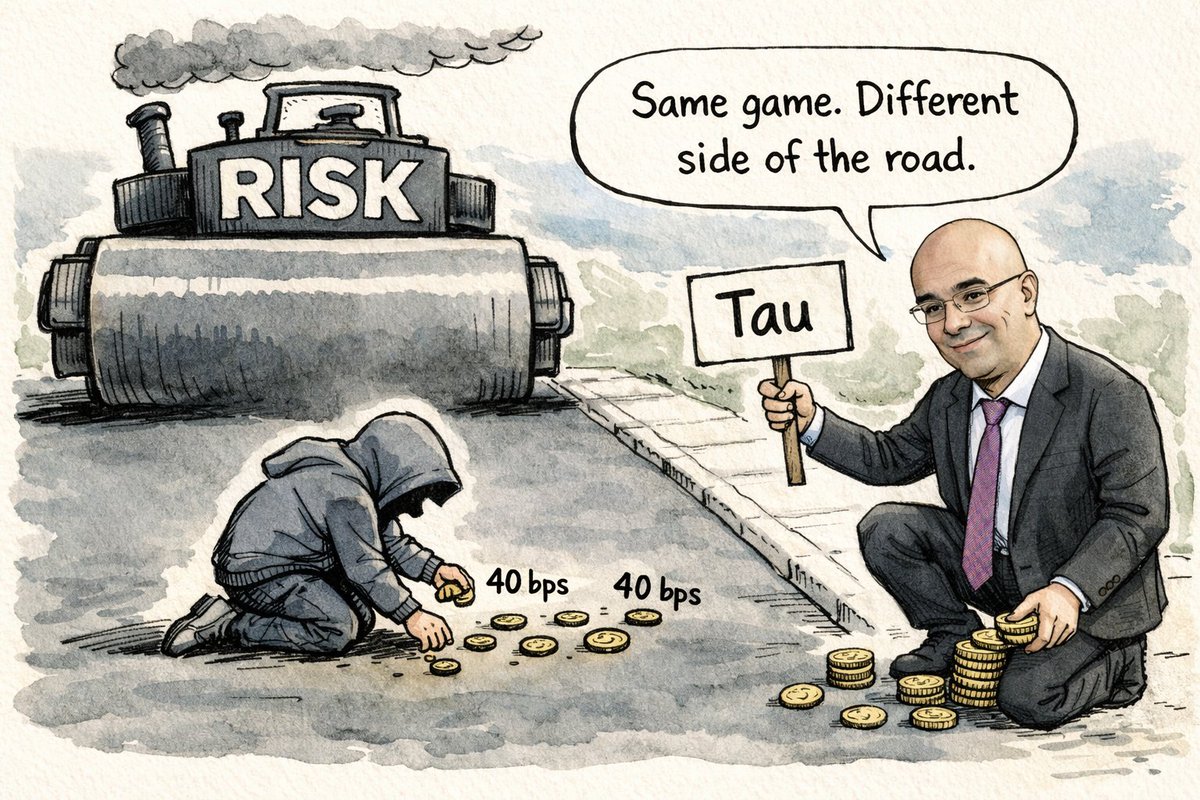
Yes, picking up pennies in front of a steamroller.
Circuit breakers help but this situation indicates that DeFi currently lacks a mechanism to enforce safety invariants that persist regardless of governance changes.
Defi protocols need a formally guarantee the safety conditions users agreed to. No future upgrade, vote, or parameter change should violate these conditions.
Currently, smart contracts are write-then-verify and then hope the next governance proposal does not introduce a contradiction.
We’re implementing Ohad Asor’s research. In his system, users can specify: 'If any future command contradicts these safety conditions, do not perform those commands.' This cannot be done in any formal language except Tau.
Instead of writing code and then checking if it's safe, you specify what the system must guarantee. This includes the safety conditions. The program is then built from this specification, making it correct by construction rather than by audit.
The key innovation is a language capable of referencing its own rules, including those governing change. For instance, one might specify, 'If a future governance change contradicts these safety conditions, reject it.' This is enforceable at the language level, rather than through a social contract. While mathematically impossible in other formal languages, the Tau team addressed this using their novel temporal logic, GS.
We’re building Tau Net and using the Tau Language to directly address the need for persistent, provable safety guarantees that can withstand governance evolution.
- GS Paper (arXiv): arxiv .org/abs/2407.06214
- Tau Language repo: github .com/IDNI/tau-lang
Look forward to your thoughts🙏
Thanks, The Tau Team!
9
28
2,447
I'm building on a chain called Tau Net. And the project is ZenoDEX. I leverage the latest techniques of formal verification, high assurance defensive programming. And it uses ZK proofs. github.com/TheDarkLightX/Zen…
6
14
734