
Living on a Bitcoin Standard. Node Runner. Nerdaxe Miner. Lightning Node Runner. Nostr: npub1n3f5skzf2x86g2wv4q2t5y8w49vehh6wrq7cyqk98w6twx2z057qmycztc.
Joined October 2021
- Tweets 11,179
- Following 727
- Followers 582
- Likes 12,297
799 Photos and videos










The UAE is not running one Bitcoin payment pilot. It is running a coordinated, emirate by emirate aviation build out, and the rulebook is being written before the transaction volume exists.
Abu Dhabi first. Zayed International Airport partnered with Al Hail Holding and fintech firm Xare in October 2025 to bring Bitcoin, stablecoin, and digital wallet payments to inbound travelers. The whole project sits inside the Abu Dhabi Global Market and its Financial Services Regulatory Authority, which is the same regulator that has spent two years writing crypto rules for the rest of the emirate. The airport pilot is still in testing with no confirmed merchant volume yet, but the regulatory framework is already in place.
Etihad, the Abu Dhabi national carrier, told the market in September 2025 that crypto payments are coming. CEO Antonoaldo Neves said at the H1 results that the airline is investing heavily in payment infrastructure and that yes, it is going to happen. The airline just posted a record $300 million first half profit, 18.5 million passengers carried in 2024, and a 38 million passenger target by 2030. The corridor is already there.
Dubai is running a parallel play. Emirates signed a memorandum of understanding with Crypto.com in July 2025 to integrate Crypto.com Pay across booking, in flight services, and Dubai Duty Free. Launch target 2026, 30 plus cryptocurrencies supported. That is the global-flagship leg, and it sits inside Dubai's Virtual Assets Regulatory Authority framework rather than Abu Dhabi's. Sharjah went the state stablecoin route. Air Arabia integrated AE Coin in mid 2025, a UAE Central Bank backed dirham pegged stablecoin. First MENA airline to take a state issued digital currency into booking.
Three emirates, three regulators, three airlines, one national strategy. Aviation is the highest traffic physical node in any country, and the UAE is turning that node into the distribution layer for state-aligned digital money. The transaction volume does not exist yet. The rulebook does. The sequencing is the point.
48
The hot PPI is the AI capex, not the Fed. Bitcoin tracks the AI capex
May PPI rose 1.1% month over month against 0.7% expected, pushing the annual rate to 6.5%, the fastest since November 2022. Energy did most of the damage, gasoline up 23.4% on Iran oil supply risk, energy goods up 10.7%, final demand goods up 2.8%, the largest monthly increase since the series began in December 2009. Strip out food, energy, and trade services and the core is softer, 0.4% month over month, 4.9% year over year, both below consensus. The headline is hot. The core is not. The difference is the AI capex, bidding up the energy, materials, and labor that data centers, GPU clusters, and grid infrastructure need.
That changes the rate cut story. The Fed cannot cut into AI driven inflation because the AI capex demand is structural, not cyclical. It does not respond to higher rates. A 25 basis point cut would not slow a single data center build. The Fed is responding to a problem it cannot fix. Bitcoin tracks the AI capex flow, not the Fed rate cycle. The technical analysis of price action is using the wrong model. The 2017-2021 framework was halving plus rate cuts plus retail flows. The 2026 framework is AI capex plus corporate treasuries plus ETF flows plus the credit architecture Saylor is building. Same asset, different model. Kevin Warsh chairs his first FOMC meeting on June 16 and 17. Prediction markets price a hold as a near certainty. The Fed is structurally constrained. Bitcoin is too.
79

10h
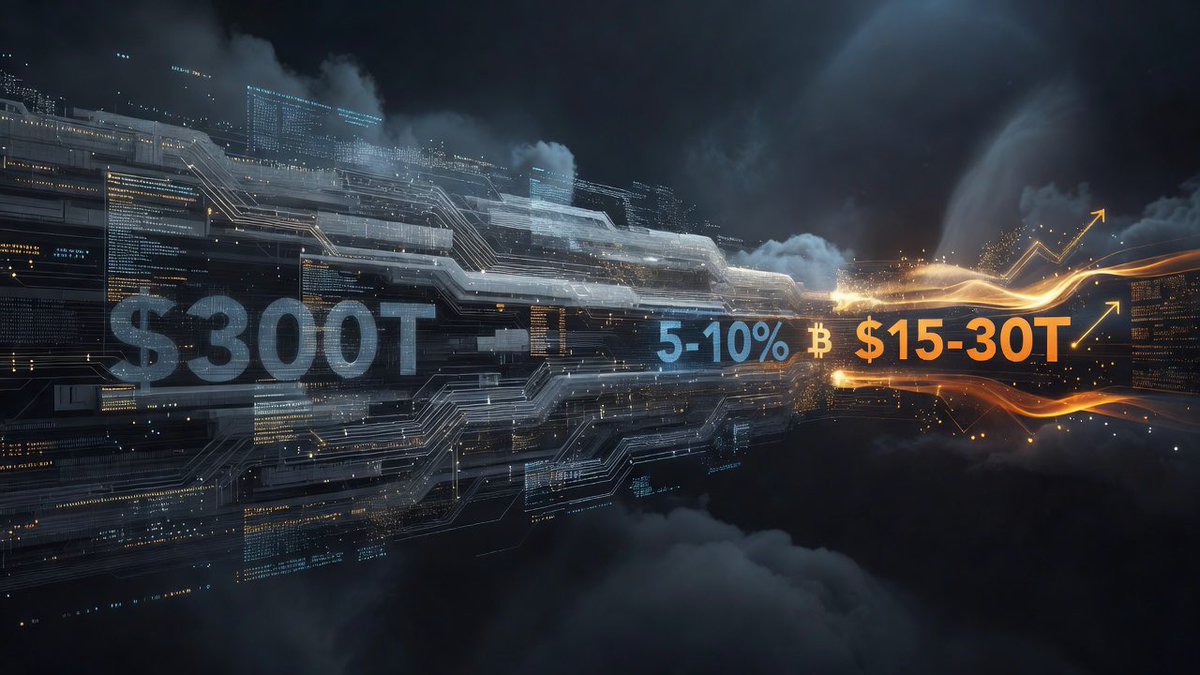
Saylor wants 10% of the global credit market on Bitcoin collateral
Michael Saylor is targeting $15 trillion to $30 trillion in Bitcoin backed credit instruments, which is 5% to 10% of the global credit market that sits at around $300 trillion. The vehicle is STRC, Strategy Variable Rate Perpetual Stretch Preferred Shares Series A, paying an 11.5% variable annualized dividend, monthly, no maturity, trading near its $100 par. The math is the structural read: for every $1 of Bitcoin held by Strategy, the company aims to generate 10 to 20 cents of credit. That is 10x to 20x leverage on the Bitcoin treasury.
This is not a yield product. It is a credit architecture. Saylor is positioning Strategy as a system that converts Bitcoin into digital credit through STRC and digital equity through MSTR, and he told Forbes in May that Strategy has become the biggest issuer of convertible bonds in the world. The cohort is thickening…STRC launched March 24, BTCK ETF June 7, BSTR SPAC June 8, SpaceX S-1 with 18,712 BTC on June 13. Five structural balance sheet plays in 81 days. Saylor's framing is the simplest, 10% of the credit market is the new Bitcoin target.
29
21h
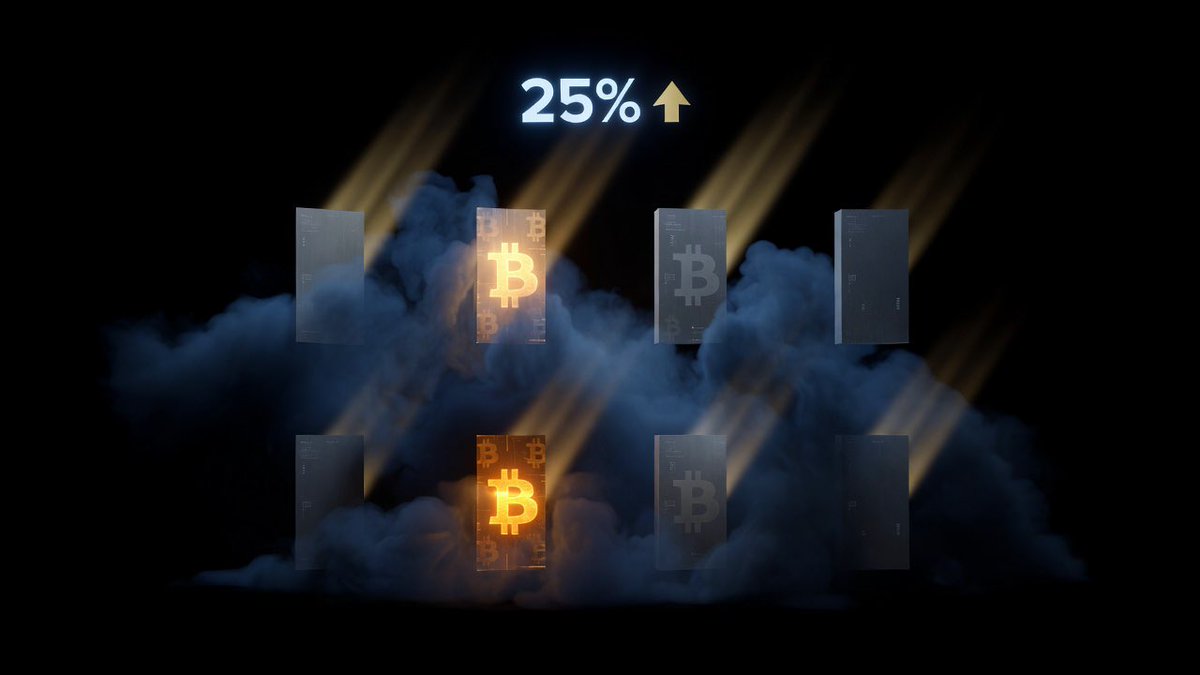
25% of the Mag8 now hold Bitcoin
Michael Saylor dropped the line on June 13 and the number is clean, two of the eight most valuable tech companies in the world, Tesla since 2021 and now SpaceX disclosed in its S-1 filing at 18,712 BTC, carry Bitcoin on their balance sheets. That is 25% of the Mag8 cohort, and the disclosure is structural, not promotional. The S-1 shows the SpaceX position unchanged at 18,712 BTC as of both December 31 2025 and March 31 2026, valued at market with gains and losses running through the income statement. Long term hold pattern, audited disclosure, regulatory grade.
The other six Mag8 members do not hold Bitcoin. Yet. The cohort is thickening: Strategy's STRC structure from March, the BTCK ETF launch on June 7, the BSTR SPAC merger with 30,021 BTC on June 8, and now SpaceX entering the public market with $1.29 billion in BTC on the balance sheet. 25% is the floor, not the ceiling.
1
1
36
Jun 13
Bitcoin's price is not telling you anything new about Bitcoin. The fundamentals have not skipped a beat. Hashrate is climbing, blocks are landing, difficulty is adjusting, the network is doing its job. The signal is in the marginal dollar, and right now the marginal dollar is not a Bitcoin dollar.
It is an AI infrastructure dollar. Data centers consumed more electricity than most nations in 2025. The capex behind that number is staggering, and a lot of the savings flow that would historically rotate into Bitcoin is being absorbed by GPUs, power purchase agreements, and grid buildouts. Bitcoin is not losing. Bitcoin is just temporarily out of fashion.
This has happened before. In 2018 the marginal dollar was chasing ICOs. In 2022 it was licking wounds from LUNA and FTX and wanted nothing to do with crypto. Every time the narrative was that Bitcoin had lost its relevance. Every time the network just kept producing blocks and waiting for the flow to come back.
The on chain data backs this up. The October 2025 peak was unusually quiet. Only two of eleven traditional topping indicators fired, and the Pi Cycle Top indicator failed to trigger for the first time in its history. The MVRV ratio topped at 2.29, well below the 2.93 to 5.91 range of prior cycles. That is a muted top with shallow retail mania, which means the bids underneath the market are thinner than usual, but it also means there is a structural undersupply waiting when the flow rotates.
The current CryptoQuant numbers tell the same story from a different angle. Speculative demand has contracted sharply, the one year demand gauge has gone negative, and there are fewer buyers than a year ago. That is a flow problem, not a fundamentals problem. The chain does not care where the dollar is parked this quarter.
Bitcoin was built to wait. It has been waiting since 2009, and it is still doing its job while the rest of the market chases whatever is loudest. The fundamentals have not changed. The cash is just temporarily somewhere else.
80
Jun 13
SpaceX went public on Nasdaq on June 11 under the ticker SPCX. Valued at $1.77 trillion. Largest IPO in history.
The first thing the S-1 told public shareholders, the company owns 18,712 Bitcoin.
That puts SpaceX at #8 on the public leaderboard, between Strive and Coinbase Global. Cost basis disclosed in the filing, $661 million, or roughly $35,324 per coin. Built in 2023-2024, when BTC was in the $30Ks. Worth about $1.19 billion at today's $63,000. Disclosed via S-1 on IPO day, not via press release. The Bitcoin position is rounding error relative to the rest of the business. The disclosure is not.
Arkham had SpaceX at 6,095 BTC. BitcoinTreasuries.net estimated 8,285 BTC ahead of the IPO. The S-1 said 18,712. Three numbers. The actual position was more than double the public estimate. The S-1 also confirmed SpaceX uses third party custodians, so the gap was almost certainly fragmented across multiple providers. The right wallets were not being watched.
The corporate leaderboard is dominated by publicly listed companies: Strategy at the top with 843,000 coins, then Strive, SpaceX, Coinbase Global, Block, Tesla, Riot, MARA, CleanSpark, Hut 8. Sixty plus public treasuries, every one of them potentially spread across custodians no analytics firm is tracking.
If the public estimate was two to three times short on SpaceX, how many of the other sixty plus public Bitcoin treasuries are we undercounting too?
2
109
Jun 12
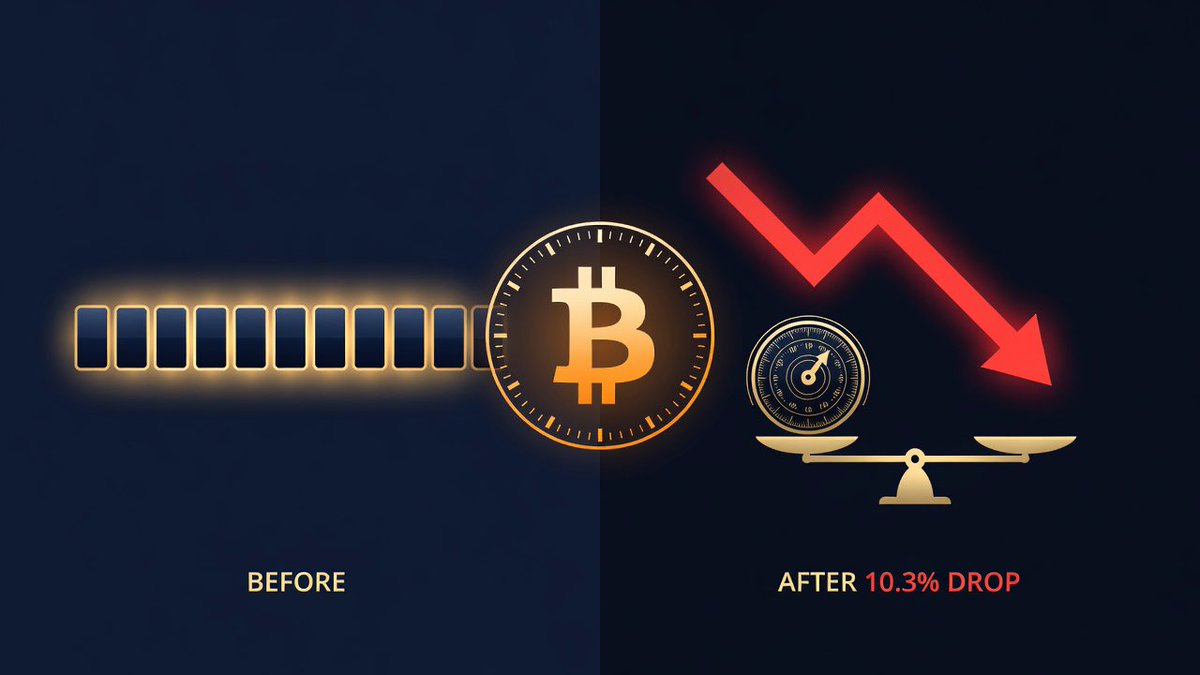
Bitcoin's mining difficulty is set to drop 10.3% on June 14. That makes it the 11th largest downward adjustment in Bitcoin's history, and the second major correction of 2026. The trigger… BTC trading near $62K, miner revenue squeezed, hashrate pulling back. The protocol responded.
This is the part most people miss. Difficulty is recalibrated every 2016 blocks, roughly two weeks, to keep block times at 10 minutes. When miners go offline, the next adjustment compensates. The bigger the hashrate drop, the bigger the correction. The protocol does not ask for permission. It just runs.
Difficulty drops also rebalance the economics. Lower difficulty means mining becomes profitable again at the same BTC price. Shut off miners come back, hashrate recovers, difficulty climbs. Bitcoin self corrects without an operator, a committee, or a vote.
When the price is falling and miners are cutting rigs, what other monetary network adjusts itself to keep delivering blocks on time?
1
2
46
Jun 12
Metaplanet owns 40,177 Bitcoin. Now it's buying a Type I Financial Instruments Business license in Japan. The vehicle, a $13.1 million acquisition of Siiibo Securities, which becomes Metaplanet Securities in July.
Siiibo is small. But it has spent years earning the one thing you cannot code, the right to issue bonds, distribute securities, and create yield products to Japanese investors under Japanese law. Its track record covers 100 bond offerings and 40 corporate clients, plus the distribution network that comes with the license.
That license is what makes "Project Nova" possible. The plan is BTC-linked bonds, tokenized securities, and yield products that don't need a foreign counterparty. A $2.6 billion Bitcoin treasury just bought itself a legal seat at the table, plus the channel to actually fill it, for the price of a rounding error.
So when corporate treasuries talk about Bitcoin "going to work," is this what they meant?
44
Jun 12
Babylon has $5 billion in staked Bitcoin sitting in its trustless vaults. Aave V4 just went live on testnet with native BTC collateral through those vaults. No bridges, no wrappers, no custodians.
The mechanics, BTC locks into a Taproot UTXO on Bitcoin. Aave V4 uses adapter contracts to represent the vault record as vaultBTC inside the lending system. The actual Bitcoin never leaves Bitcoin.
For the first time, the $1.8 trillion sitting in Bitcoin wallets has a native DeFi primitive. Aave governance still has to evaluate the final design, but the testnet is live. If the security model holds, this is the cleanest path from "hold and hope" to "collateral and earn" that Bitcoin has ever had.
$BABY is the fee token for vault operations. If Babylon captures real lending volume, the token has a direct revenue claim on every transaction.
So when BTC holders talk about "Bitcoin as collateral," is this the moment it stops being a slogan?
39
Jun 12
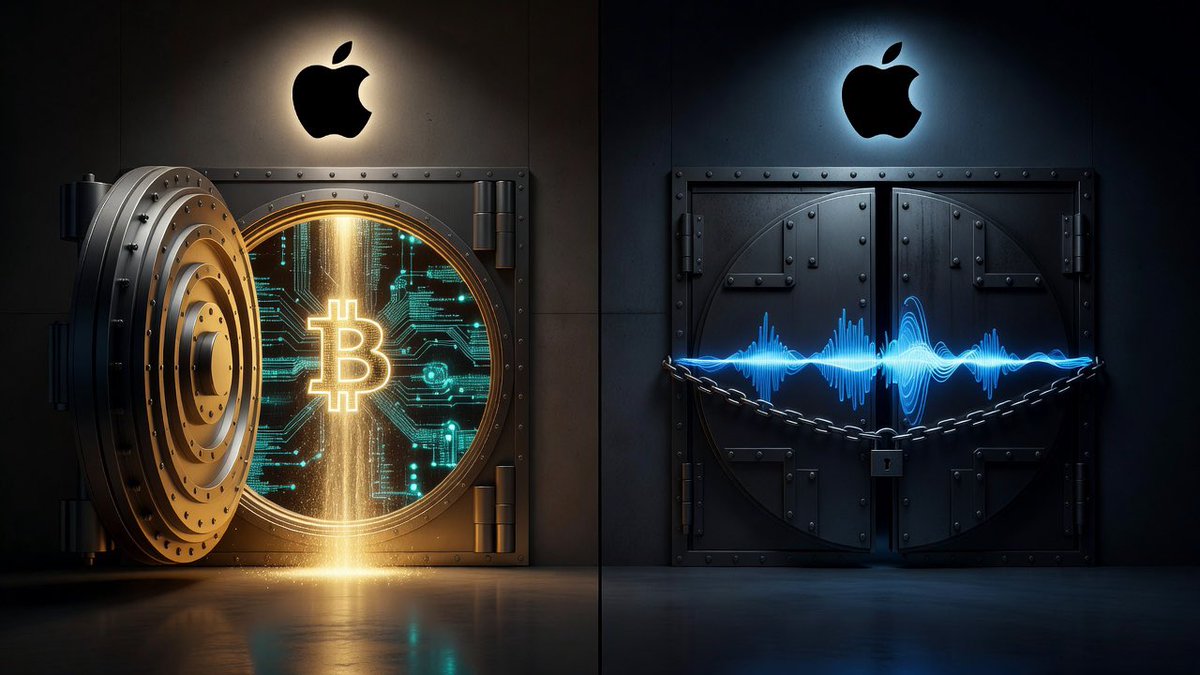
The US App Store just dropped its 30% wall on iOS Bitcoin payments. The math, a 30% commission on every Bitcoin purchase meant a 43% gain just to break even on the buy. No app could make that work for users, so most chose not to try.
Same week, Craig Federighi on a podcast about Apple Intelligence, "Siri's 100% not into that." Asked about engagement hungry AI competitors, Apple's software chief called the engagement game "sycophancy." Joswiak backed him up: "we don't do AI for AI's sake."
Apple the open gate for money. Apple the close gate for attention.
The 30% that was too much to charge for a transaction is the same 30% that built the moat. The wall is for the business, not for the people.
So which Apple do you trust more, the one that opened the money gate, or the one that's closing the attention gate?
24
Jun 12
Physical attacks on crypto holders are up 75% year over year. Europe is the main target region, with 40% of last year's verified cases.
CertiK documented 72 incidents in 2025, $40.9 million in confirmed losses, and two thirds of attacks succeeding. The targets are no longer just billionaires. Mid level holders and families are profiled and forced to transfer coins.
Bitsurance, a German broker backed by Liberty Mutual, is offering self custody Bitcoin holders up to €100,000 in coverage for fire, water, burglary, robbery, and wrench attacks. No private key handover. €25 a month. Available in Germany, Switzerland, and Austria.
The product exists because the threat is rising, partly because the EU's DAC8 directive is building centralised databases of who holds what crypto, and those databases are leaking. The Waltio tax platform breach exposed 50,000 European investors in January. A French tax official was charged in 2025 with selling the state's crypto registry to organised crime.
Is insurance the right response to a problem the state is creating, or just the second best one?
30
Jun 12
Heatbit has launched bitAir, a $149 portable air purifier with a built in 1.2 TH/s solo Bitcoin miner. USB-C powered at 20 watts total, 99.97 percent HEPA filtration, ships September 2026.
The miner ships with solo mining on by default. Heatbit's own math.. 1 in 17,200 odds of finding a Bitcoin block in a year at 1.2 TH/s, with the full 3.125 BTC block reward landing in the owner's wallet if it hits. The app has a solo or pool toggle, so the owner can switch to pool mode for a few cents in sats per day, or turn mining off entirely and use the device as an air purifier.
Most of Heatbit's existing products are heaters. bitAir is a purifier. That opens the line to warmer climates and bedrooms where heating is the last thing anyone wants in summer. The product does the job it was always going to do, and runs a miner on the same electricity.
54
Jun 12
BitGo launched Lightning Earn on June 11. The product lets institutional bitcoin holders deploy their BTC as liquidity on the Lightning Network and collect routing fees in bitcoin, with custody held by BitGo Bank & Trust, the company's national trust bank supervised by the OCC.
The plumbing runs through Amboss Rails. BitGo provides the custody and compliance layer. Clients do not run a node. BitGo's own treasury money is on the line, per the announcement.
That last detail is the receipt. A regulated trust bank is testing the product on its own balance sheet before asking customers to take the operational and counterparty risk. The product is not yield on cold storage. The product is a custody wrapped Lightning service, with the company running the proof of concept on company capital.
Routing fees on Lightning are typically small. The play here is positioning, not yield. BitGo's own money on the rails is the proof of seriousness.
24
Jun 11
Japan's lower house just passed the bill. It is not yet law, but the path is clear.
The Financial Instruments and Exchange Act amendment reclassifies 105 cryptocurrencies as financial products. Same category as stocks. Same disclosure regime. Same insider trading rules.
Capital gains tax on crypto drops from up to 55% to a flat 20%. The same rate as Japanese equities. The 20% splits 15% national and 5% regional.
This is not a tax cut. This is Bitcoin treated as money by a major economy. The same legal wrapper that covers Toyota and Sony now covers Bitcoin. The 105 coin list is the boundary line for now, but the framework is the message. The door is open.
The bill now moves to the House of Councillors, the upper house. 248 seats. The LDP holds 101, the Japan Innovation Party holds 19, plus a speaker who votes with the government. The coalition is five seats short of a working majority. It needs opposition support, most likely from Komeito, the former LDP coalition partner with 21 seats. The expected vote is late June.
If the upper house rejects or amends, the lower house can override with a two thirds vote. The LDP and Japan Innovation Party hold 316 out of 465 seats, which is exactly that threshold. So the upper house is a procedural check, not a real obstacle. The political risk is delay, not defeat.
Royal assent is expected in July. The new FIEA framework takes effect on cabinet order, likely sometime in 2026 or 2027. The 20% tax rate is expected to apply to the 2027 tax year, with first returns filed in early 2028.
This is the largest single regulatory shift in Bitcoin's history in a G7 economy. The framework that legitimised the 2017 Bitcoin surge came out of Tokyo. The framework that legitimised the 2024 spot ETF approval came out of Washington. This is the third wave, and it is the deepest. Bitcoin is money. Japan just wrote it into law.
The map is being redrawn. APAC now has a coherent pro crypto regulatory region: Japan, Singapore, Hong Kong. The US is the outlier. Watch the dollar.
79
Jun 11
BlackRock filed the final amendment on June 10 for its iShares Bitcoin Premium Income ETF, expected to trade as BITA. The fee is 0.65%, undercutting existing covered call Bitcoin products. That detail matters. It is not the story. The story is the structure.
BITA sells call options on BlackRock's own spot Bitcoin ETF, IBIT. It holds Bitcoin directly, holds IBIT shares, and holds cash. The income product is BlackRock writing options on its own spot ETF and charging a sponsor fee for the wrapper.
That is vertical integration across every layer of the Bitcoin ETF stack. Spot, options writing, and income distribution all sit inside one asset manager's product family. A holder can move from spot to income to yield without leaving the building.
Goldman Sachs is racing to launch a competing product. The architecture it is racing against is already set. The question is not who reaches market first. It is what the income category looks like once one manager controls spot, options, and wrapper in the same family.
36
Jun 11
Hedgeye Asset Management filed with the SEC on June 10 for a Hedged Bitcoin ETF. Pair Bitcoin exposure with options based downside management. The story is not that someone filed another Bitcoin ETF. The story is the methodology being ported.
Hedgeye already runs KSPY, the KraneShares Hedgeye Hedged Equity Index ETF, launched July 2024. KSPY uses a rules based options strategy licensed from Hedgeye's Risk Range Signals framework to reduce volatility and protect against equity drawdowns. Two years of live track record on a traditional asset class.
The Bitcoin filing is the same playbook on a different asset. The Risk Range methodology does not care what it is hedging. It measures range, sets signals, writes options around them. Applying that to Bitcoin is a port, not a prototype.
This is what infrastructure maturity looks like. Tools built for equity volatility are now being applied to Bitcoin, because Bitcoin has the liquidity and institutional interest to make the same wrapper economic. The product is unproven on this asset. The methodology is not.
32
Jun 10
Bitcoin in the news follows one rule. A company buys, it's bullish. A company sells, it's bearish. The framing is broken.
Fold Holdings, Nasdaq-listed, just sold $45 million of Bitcoin at an average of $71,000. Twenty million went to wipe out its collateralised debt. Twenty five million is sitting on the balance sheet as unrestricted capital to fund the next growth phase. The stock rallied on the news.
A company monetised a treasury asset, retired leverage, and reinvested the proceeds. That is what companies do. That is what the asset is for.
Bitcoin is one of the most liquid assets on the planet. Companies should be able to use it the same way they use cash, inventory, or any other line on the balance sheet. Buying to hold, selling to deploy, both are operations. Both are normal. The asymmetry in coverage is not the asset's fault. It is a storytelling habit the industry has not broken yet.
This is what Bitcoin is for. Not just holding. Operating.

29
Jun 10
The UK 30 year gilt just hit 5.611%. Highest of any major sovereign I track. Higher than the US 30Y. Higher than Australia. The curve is pricing something.
Alex Brummer, the journalist who covered the 1976 sterling crisis as a young reporter, drew the line in the Daily Mail this week. Britain is on the same path as the Callaghan government. Net debt at 95.5% of GDP, the second largest 25 year rise in the IMF's data. Interest bill at £100bn a year and climbing. Ken Rogoff, the former IMF chief economist, put a number on it, more than 50% chance the UK calls the IMF for "technical support" by 2030.
Brummer reaches for 1976. That's the historical referent. The actual mechanism is 2008.
In 2008, the choice was clear. Let the system collapse, or print money and absorb the loss onto public balance sheets. Every G7 government chose to print. Banks got whole. Savers and workers got the bill. The playbook was set, when the system is too big to fail, the central bank becomes the buyer of last resort, and the cost gets pushed out through inflation and currency debasement.
Britain's 30 year gilt at 5.611% is the curve pricing the third act of that play. The first act was 2008. The second act was 2020. The third act is now. The BoE will reach for the only tool that works. Stealth QE on gilts, yield curve control, whatever it takes to keep the cost of sovereign credit manageable. The cheque won't be written by the IMF. It will be written by the pound.
That's the line from 1976 to 2008 to 2026. Britain discovered the playbook in '76. The world institutionalised it in 2008. The UK is on track to use it again.
The interesting part is what got built the first time. Bitcoin launched in January 2009. The genesis block contains a Times headline… "Chancellor on brink of second bailout for banks." That wasn't a coincidence. It was a recognition. When the system decides, every time, to socialise losses and privatise the printing, the response is to build something the system can't print.
A 30 year gilt at 5.611% is the curve telling you the system is about to do it again. Bitcoin is what you build the first time you realise that.
77