
Joined August 2013
- Tweets 66,154
- Following 1,153
- Followers 265
- Likes 1,784
5,511 Photos and videos








Tax Dollars at Rest retweeted

26 Aug 2025
Hi Mohamed.
I’m a Canadian supporter of Israel in its war against Islamist barbarism.
Every member of Hamas should be hunted down and killed to the last person and anyone who sympathizes with them shouldn’t be allowed to come here.
Feel free to screen shot this. Thanks.
25 Aug 2025

On behalf of literally every Canadian of conscience: if you are a Canadian and a supporter of Israel, you do not have basic human values, let alone Canadian values. Your tweets and messages are saved and known to all of us. They live. Some might not comment around you, because they are polite or respectful of whatever role you have in society or just don’t want to roll in the mud with you. But know this: your lack of Canadian and human values will never be forgotten. #cdnpoli
599
1,491
10,320
328,780
Tax Dollars at Rest retweeted

24 Aug 2025
Israel cured Yahya Sinwar’s brain cancer and he responded by slaughtering 1,200 Israelis.
23 Aug 2025

idk man, maybe instead of starving kids to death they should do this and see what happens

98
709
6,803
234,374
Tax Dollars at Rest retweeted

22 Aug 2025
74
602
2,076
427,098
Tax Dollars at Rest retweeted

19 Aug 2025
So start with Peru. When we’ve seen the wondrous outcomes of your endeavors, we’ll listen attentively to what you prescribe for us as well.
Until then, it’s hard not to notice there’s only one nation-state you actually campaign to dismantle. The one with the Jews.
19 Aug 2025

May the record show that I believe and have written academically about the need to dismantle the nation-state and move beyond it as the main unit of analysis for international law and world order. I believe in Plurinational and Postnational States.
24
94
1,068
64,760
Tax Dollars at Rest retweeted

12 Aug 2025
Never forget the time that Arabs started a war and, as a consequence, had to move like 10 miles away.
Then, instead of building a life for themselves, they became the world’s welfare queens and spent the next 80 years teaching their children that all of their problems will be solved after they kiII the Yahud.
12 Aug 2025

One of my friends from Gaza still has the keys to her home in Haifa. They used to have a sweets factory too. They left thinking it would be overnight.
126
410
3,337
117,747
Tax Dollars at Rest retweeted

11 Aug 2025
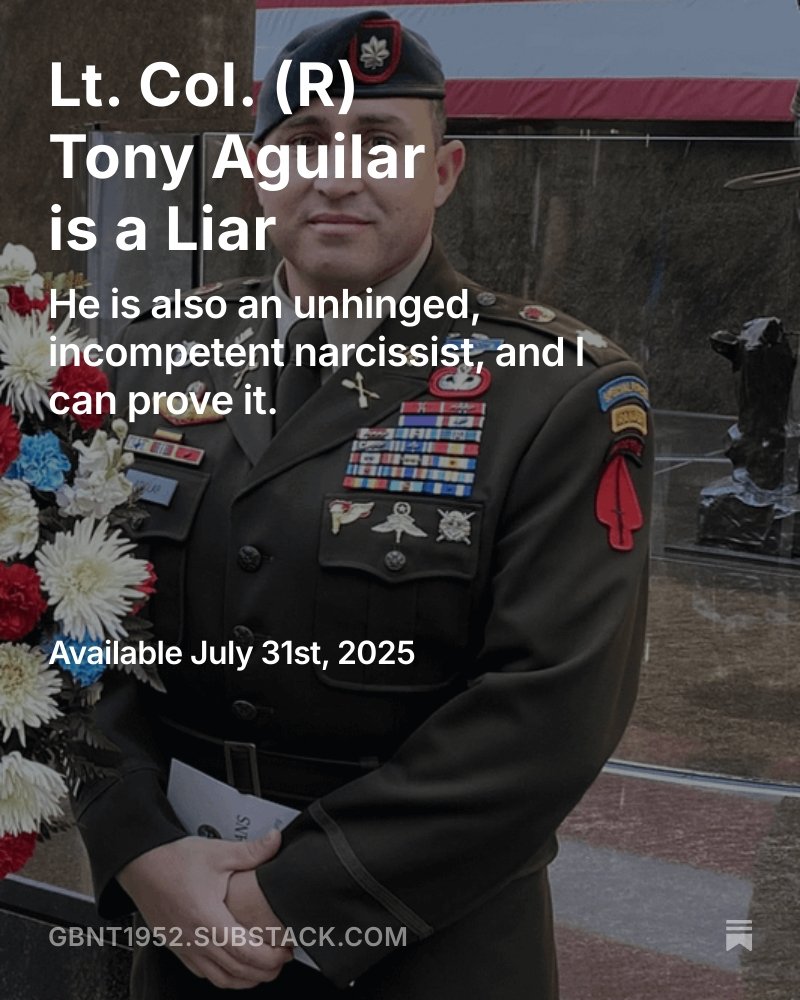
You do realize it's other highly-decorated veterans calling Tony Aguilar out, right?
Here are 9 sworn affidavits from decorated veterans saying Aguilar lied and was a terrible employee during his time at GHF.
ghf.org/wp-content/uploads/2…
11 Aug 2025

BS, I believe Green Baret Aguilar, recipient of a Bronze Star and Purple Heart, 25 year veteran and America patriot over any “news” business.
39
149
937
54,603
Tax Dollars at Rest retweeted
7 Aug 2025
a. Most Israelis don't believe the suffering is as bad as world media claims, and they're mostly right. It's very bad, as I've written and said on podcasts. But it's not as bad as claimed. And yes, the degree matters. Suffering is unavoidable in war. Deliberate mass-starvation isn't. If you believe the former, you have a higher tolerance for the current situation than if you believe the latter is taking place.
b. Most Israelis, around 90%, believe Palestinians and their political factions want them dead and gone, and that that's what this war is ultimately about.
They're mostly right, alas.
And when you think someone wants to kill you, you will struggle to summon sympathy for their suffering.
If you disagree with that statement, that's because you've never really believed that someone wants to kill you, or experienced the murder of your cousin or friend by them as evidence of this desire.
c. The numbers in reverse, the percentage of Palestinians who have ever felt any sympathy of any kind for Israelis, even when children were dying in bus bombings or civilians were murdered on October 7, are worse and have always been worse.
This is partly because of the ideology espoused by the likes of Arafat and Hamas for generations, and in part because roughly 90% of Palestinians think *Israelis* want them dead and gone - an almost perfect mirror image of the situation on the Israeli side.
And again, because Western journalists seem to be struggling to grasp this point, when you think someone wants to kill you, as Palestinians believe about Israelis and Israelis about Palestinians, you will struggle to summon sympathy for their suffering.
d. And in that context - and only in that context, because without that context this is just arrogant stupid moralizing by an ignorant foreigner - yes, there's a sympathy problem. And if we don't get serious about tackling it, about creating conditions for reconciliation, nothing will change.
This is true within Israeli society, and it's true within Palestinian society. I'm not saying it's possible, I'm just saying nothing gets better until it's accomplished. So maybe it's high time this becomes a priority.
Which brings us, inevitably, to Hamas. (We're almost done here, thank you for your patience.)
Every advocate for Palestinians who thinks pressuring Israelis is enough - who doesn't grasp that Hamas tells Israelis every day that it's going to murder them, and so constantly inures them to any pressure the international community can summon - is part of the problem. If you can't stand against Hamas in your advocacy for Palestinians, you're de facto propping up the sympathy gap that keeps the sides radicalized against each other.
There, I said it.
6 Aug 2025

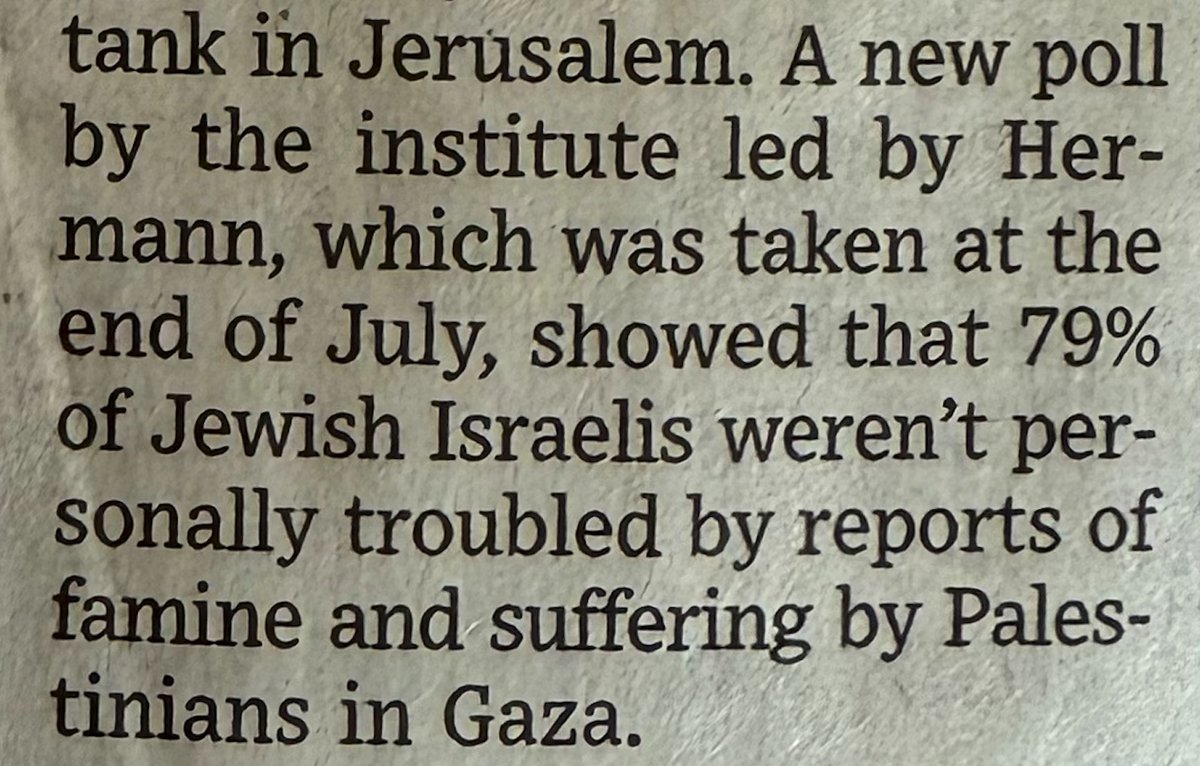
people like to heap all the blame on Netanyahu but there is something deeply, deeply wrong in Israeli society
153
414
2,532
183,980
Tax Dollars at Rest retweeted

7 Aug 2025
Strawman.
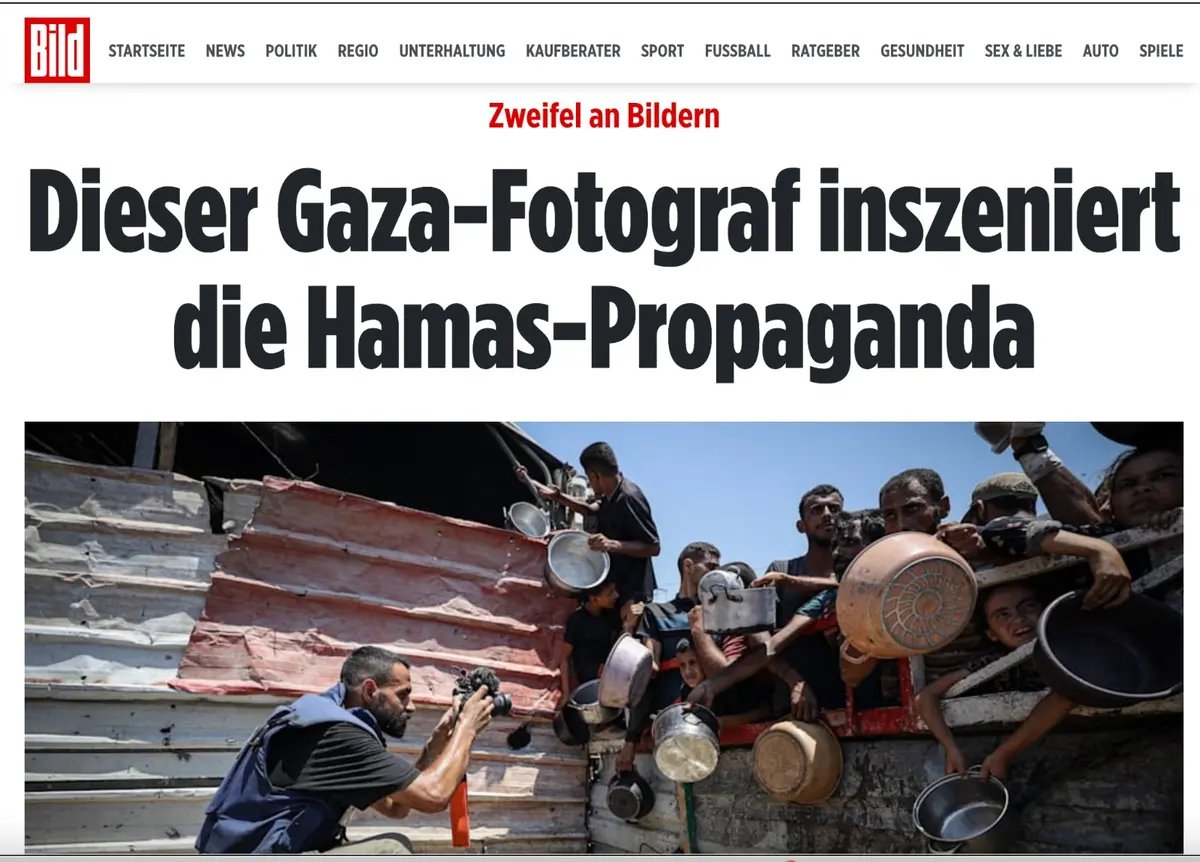
No one said pic is fake - it's STAGED; not documenting reality but rather designed to evoke specific emotions for gradually building more and more prejudice against the Jewish state (on already solid foundations) .
That's how the sausage of Jew-hate is made
8
1
11
684
Tax Dollars at Rest retweeted

6 Aug 2025
how many Americans were "personally troubled" by the suffering of Germans during WW2?
6 Aug 2025
people like to heap all the blame on Netanyahu but there is something deeply, deeply wrong in Israeli society
40
65
983
35,751

6 Aug 2025
These stories warm the heart
6 Aug 2025

What are we even doing here?
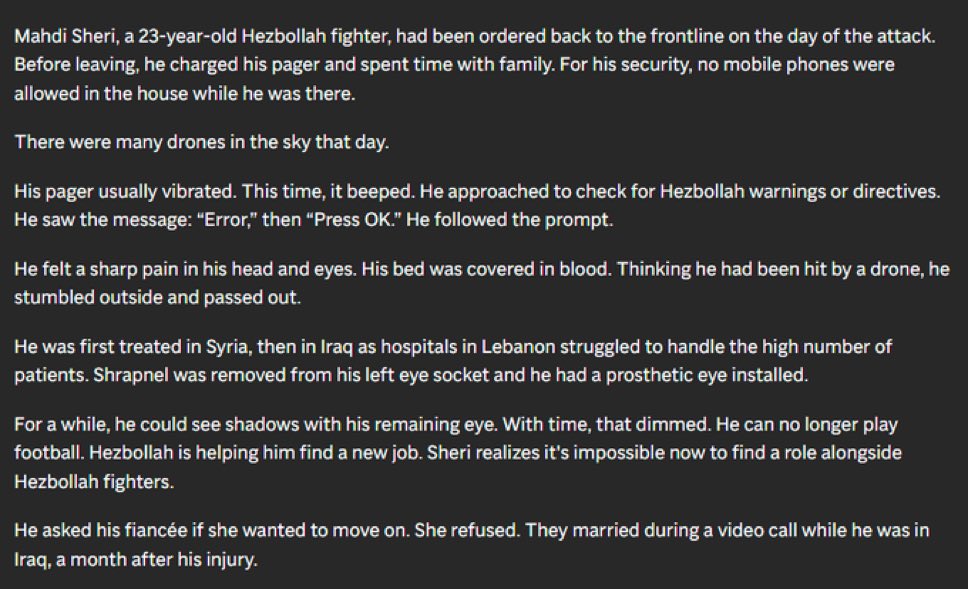
AP publishes an entire article sympathetically lamenting how hard things are on the terrorists who were targeted by the pager attack.
97
Tax Dollars at Rest retweeted

5 Aug 2025
I’m a brown Arab, and I’m telling you, the so-called “Greater Israel project” is a hoax.
Israel has never sought to expand beyond defensible borders. If it hadn’t been attacked in 1948, no Arabs would have been displaced.
If it hadn’t been attacked again in 1967, Israel wouldn’t have taken control of the West Bank or Gaza, even though the West Bank is historically Jewish land, known for centuries as Judea and Samaria.
If Yasser Arafat hadn’t walked away from Camp David II in 2000, there would already be a Palestinian state.
If terrorists hadn’t targeted Israeli civilians, there wouldn’t be a single checkpoint.
And if, after Israel’s full withdrawal from Gaza in 2005, the Palestinian leadership had chosen to build a thriving, peaceful city instead of launching rockets, there would have been no wars from 2006 to 2023.
Every war, every occupation, every checkpoint has been a response, not a pretext.
1,093
3,657
14,530
528,888
Tax Dollars at Rest retweeted
5 Aug 2025
Lights.
Camera.
Action.
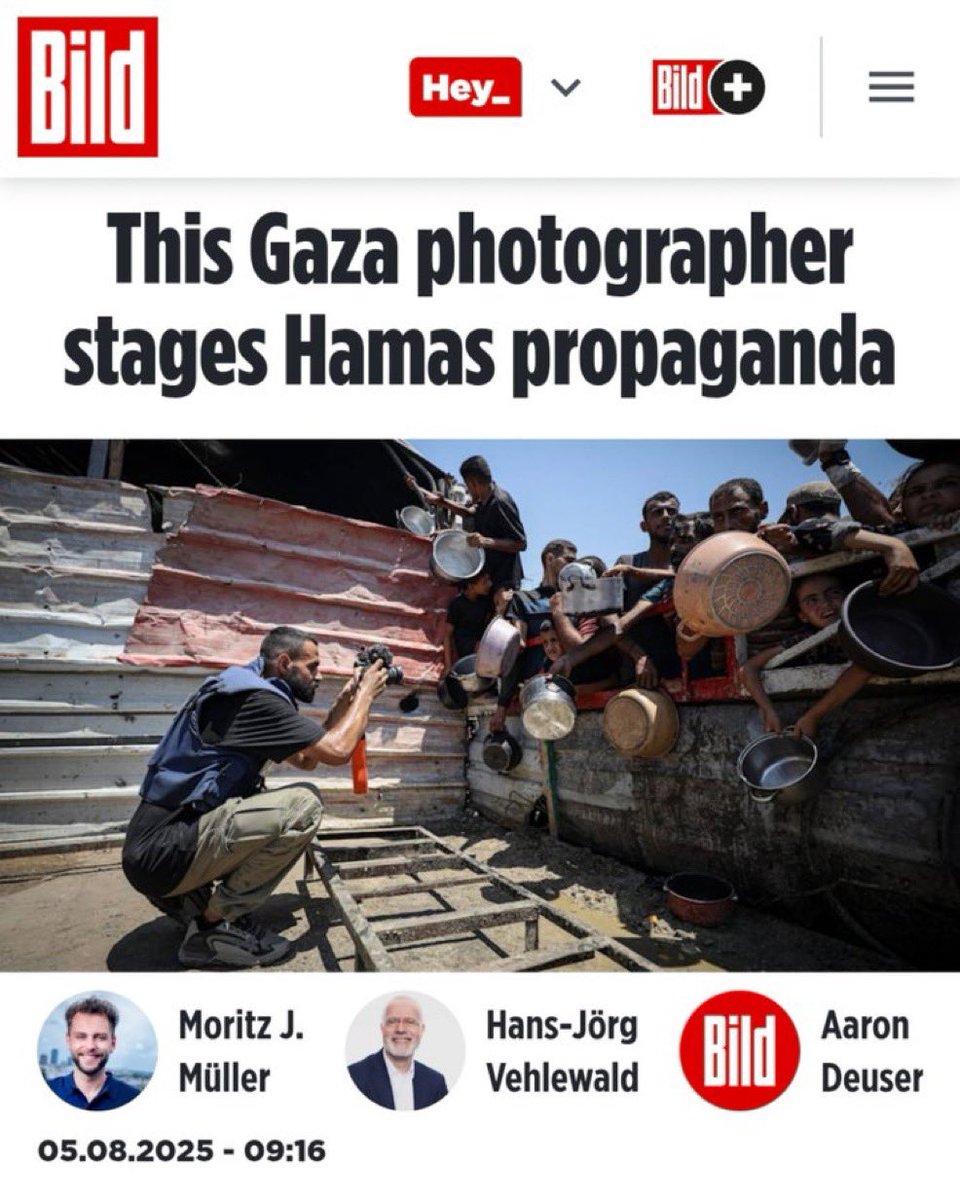
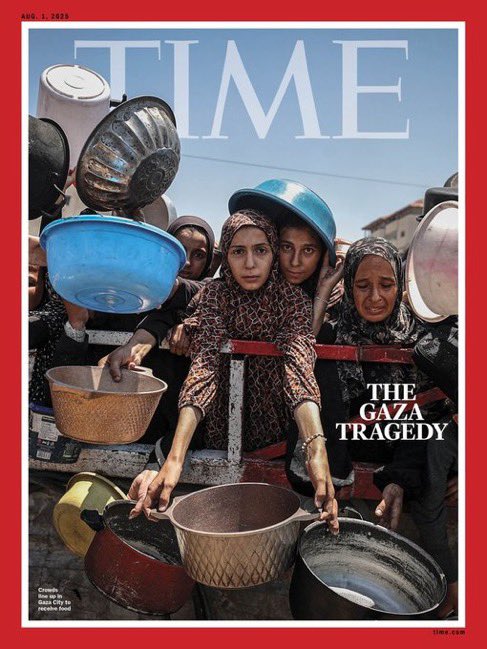
296
907
6,199
243,391
Tax Dollars at Rest retweeted

4 Aug 2025
So they claim that over 1,500 Palestinians were massacred by IDF soldiers and American mercenaries at aid distribution points in broad daylight for months and there is not a single footage documenting this.
161
260
2,613
101,454
Tax Dollars at Rest retweeted

3 Aug 2025
Obviously the people in those photos are suffering the hardships of war, but time and again the problem seems to boil down to "people who are already sick have it extra hard in a warzone." And that's true, and sad. But trying to upsell this as a famine helps no one.
9
15
420
13,412
Tax Dollars at Rest retweeted
3 Aug 2025
Struggling to understand how the photographic proof of widespread starvation in a densely populated area always seems to consist of one emaciated person surrounded by healthy looking people.
142
590
5,874
153,055
Tax Dollars at Rest retweeted

1 Aug 2025
Whoa…lot of receipts in this thread. Will anybody that served with this guy defend him? Not outside supporters or opponents. Is there anyone that served with this guy in SF that will defend him? Because he is looking pretty bad right now.
31 Jul 2025

Lt. Col. (R) Tony Aguilar is not only a liar, but he is also an unhinged, incompetent narcissist, and I can prove it.
Buckle up, because this thread includes receipts that proves Tony was fired for cause, begged for his job back, resorted to threats when he was denied, and ultimately made up a story to get back at his previous employer and gain personal fame and notoriety. He even forged an official document that he then sent to the press.
81
217
1,537
157,869
2 Aug 2025
I can’t reply to @geniusliberator because I am blocked by the original poster.
But have you seen the statement Netanyahu put out that this person doesn’t speak for Israel or direct war policy in any way?
78
Tax Dollars at Rest retweeted

1 Aug 2025
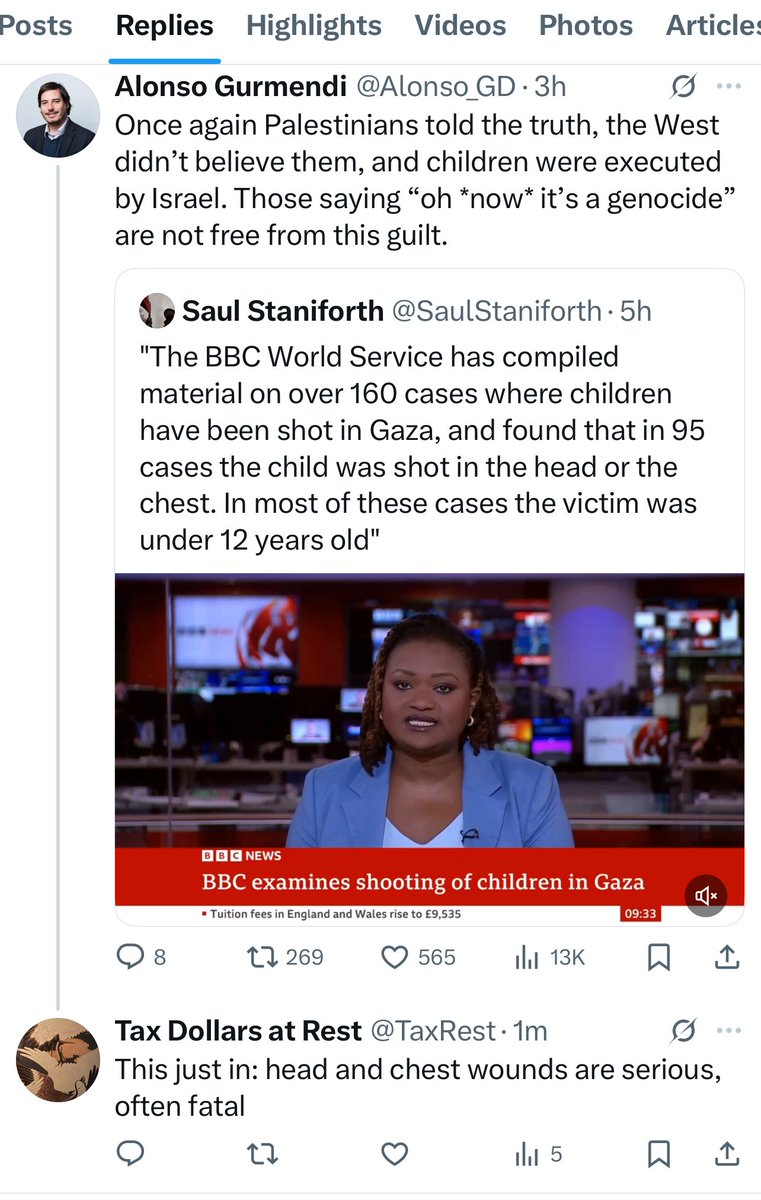
They haven’t posted one of the names of the
3, 000,000 plus children killed in the DRC or the
350,000 plus children killed in Syria or the
640,000 plus children killed in Sudan or the
185,000 plus children killed in Libya ……
7
51
325
2,786
1 Aug 2025
I can’t reply to this from @geniusliberator because Staniforth just blocked me for this response. But here’s what I think.
1
75
Tax Dollars at Rest retweeted

31 Jul 2025
You didn't actually. There was no addressing of these people's arguments. There was just smearing, lying and misrepresenting of them and their views.
x.com/buhoooooooooooo/status…
22 Jul 2025

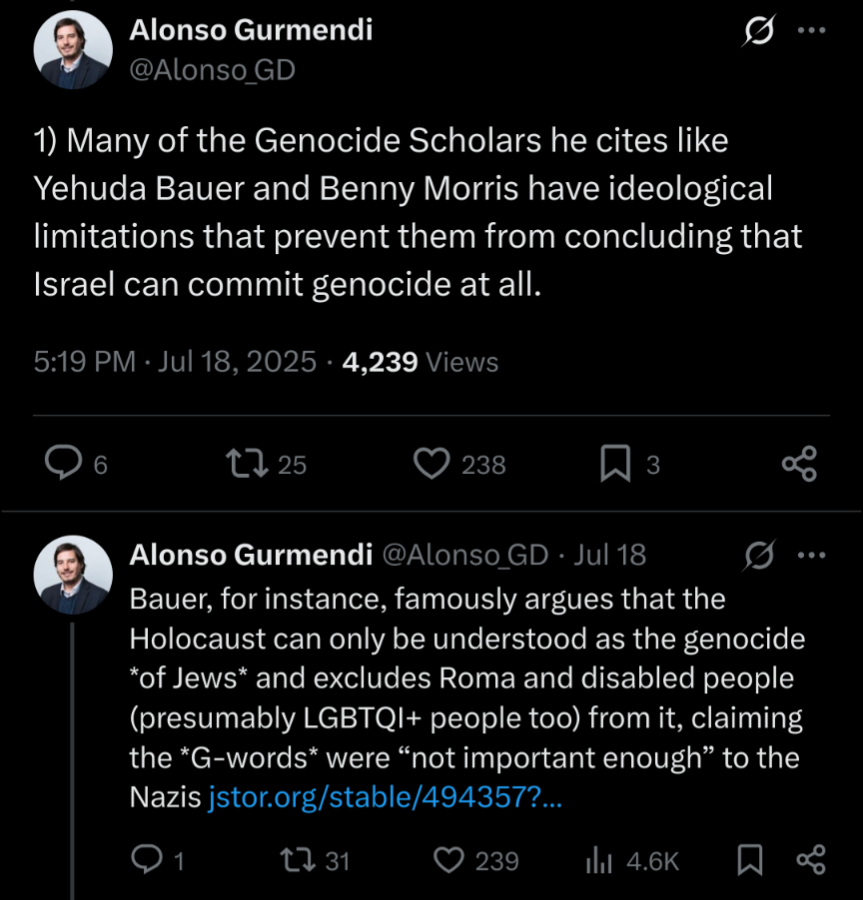
I've already responded to this thread by @Alonso_GD here: x.com/buhoooooooooooo/status…
And I've responded specifically to his attempt to discredit and smear Benny Morris here: x.com/buhoooooooooooo/status…
As I mentioned there, Alonso (a supposedly serious scholar at @LSEsociology) has a despicable pattern of lying about other scholars, misrepresenting their words to discredit and smear them.
His strategy is consistent: claim that prominent scholars have "ideological limitations that prevent them from concluding that Israel can commit genocide at all," then dismiss their conclusions about Gaza as biased and predetermined. After targeting Morris with this smear, he now turns his venom on Prof. Yehuda Bauer—with even more malicious distortions.
The Benny Morris thread ended with a direct refutation of Alonso's accusation about Morris being ideologically unable to see Israel as capable of committing genocide, as Morris actually warned that not only is Israel capable of committing genocide, but he fears that, given its current trajectory, this might be where it's headed.
This time let's start with the direct refutation. In a lecture to Danish educators in Jerusalem, Bauer explicitly addressed this possibility, stating: "What we have here between the Israelis and the Palestinians is an armed conflict—if one side becomes stronger there is a chance of genocide." When specifically asked if Israel could commit genocide against Palestinians, Bauer answered bluntly: "Yes."
This statement alone dismantles Alonso's core accusation that Bauer has "ideological limitations that prevent him from concluding that Israel can commit genocide at all."
Regarding Gaza, Bauer has been harsh and unequivocal in condemning Israeli actions and the way Israel has been pursuing the war. In an interview last year, he explicitly called Israeli actions war crimes and atrocities, emphasizing that while Hamas has genocidal goals, Israel's military response is "not justified in the way it is being conducted" because "masses of people are killed there who have no connection to the matter."
This frank condemnation completely contradicts Alonso's portrayal of Bauer as someone ideologically incapable of acknowledging Israeli wrongdoing or potential for atrocities.
Understanding who Yehuda Bauer actually was makes Alonso's distortions even more egregious.
Bauer (who died a few months ago at the age of 98) was one of the world's preeminent Holocaust scholars—Professor Emeritus at the Hebrew University (@HebrewU), director of the International Institute for Holocaust Research at Yad Vashem (@yadvashem), a member of the United States Holocaust Memorial Museum's Academic Committee (@HolocaustMuseum), founding editor of the journal Holocaust and Genocide Studies, and senior adviser to the Swedish government on the International Forum on Genocide Prevention. He was also an independent advisor and later honorary chairman of the International Holocaust Remembrance Alliance (@TheIHRA).
His scholarly approach was characterized by rigorous historical analysis over ideological considerations. He extensively studied various genocides—Rwanda, Darfur, Armenia—emphasizing that "the suffering of victims of all genocidal massacres or mass murders is always the same. There is no gradation of suffering."
His approach to genocide studies was characterized by nuanced analyses, rejection of simplistic claims, and recognition of universal human capacity for both good and evil.
His framework consistently emphasized that all humans and societies are capable of both perpetrating and resisting genocide. This universal approach directly contradicts Alonso's claim about "ideological limitations" regarding Israel.
Alonso's characterization of Bauer's position on the Roma genocide is particularly egregious. Bauer's "exclusion" of the Roma, as Alonso chooses to put it, is a gross and intentional misrepresentation of a 1992 correspondence with another scholar where he addresses similarities and differences in Nazi actions and policies toward different groups and argues for the need to consider and analyze them separately on account of those differences.
Bauer extensively discussed the genocide of the Roma and repeatedly stated that the Nazis had committed several genocides in parallel during their years in power and WWII. His discussions of differences in Nazi policy toward Jews versus Roma represent historical analysis of Nazi actions and priorities, not value judgments about victim suffering.
The phrase "not important enough" that Alonso quote-mines from that 1992 letter was specifically about Nazi prioritization, not moral significance of Roma suffering. In that same letter, Bauer explicitly states that this "makes the tragedy of the Gypsies no less poignant, and no less horrible."
This exemplifies Alonso's method: extract fragments, strip context, construct a false narrative. He transforms scholarly analysis of Nazi policy differences into alleged callousness toward genocide victims—character assassination masquerading as academic critique.
Now that we've seen how completely wrong Alonso's claims are, it's worth considering what he was attempting to accomplish with his characterization of Bauer. His attack operates on multiple levels designed to completely delegitimize Bauer's scholarly authority:
The "Ideological Bias" Accusation: By claiming Bauer has "ideological limitations that prevent him from concluding that Israel can commit genocide at all," Alonso attempts to paint him as a partisan hack rather than a serious scholar—someone whose conclusions about Gaza can be dismissed as predetermined rather than evidence-based.
The "Holocaust Exclusionist" Smear: Alonso's second accusation is particularly insidious. By claiming Bauer "excludes Roma and disabled people" and calls them "not important enough," he's trying to paint Bauer as someone who minimizes or dismisses the suffering of vulnerable groups. This portrayal suggests Bauer operates from a hierarchy of victimhood that devalues certain lives.
Together, these accusations attempt to paint a picture of Bauer as both an Israeli apologist and someone callous toward genocide victims—essentially suggesting he's both biased and morally compromised. These are reprehensible smears, and particularly when addressed at a Holocaust scholar, they are vile allegations that strike at the core of professional integrity.
This is character assassination masquerading as scholarly critique—and as we've seen, it's built entirely on lies and distortions.
Perhaps the most revealing aspect of Alonso's smear campaign is his choice of target. In attempting to paint Bauer as someone ideologically incapable of recognizing Israel's potential for genocide, he selected one of the few scholars who has explicitly and publicly addressed this very possibility and who, even at 98 years old, continued to speak out forcefully against Israeli actions in Gaza. This fact alone exposes the fundamental dishonesty of Alonso's critique and raises serious questions about his broader methodology and motivations.
Interestingly, it seems the two scholars Alonso picked to target with this specific smear about "ideological limitations that prevent them from concluding that Israel can commit genocide at all" are not just ones whose entire approach, history, and body of work indicate the exact opposite, but also happen to be the ones who specifically and explicitly addressed this very possibility.
What we see here is not scholarly disagreement but something really troubling: the deliberate distortion of academic work to serve ideological ends.
The stark contrast between Bauer's actual scholarly record and Alonso's characterization serves as a warning about the dangerous erosion of intellectual honesty in certain corners of academia today.
2
3
132