📜 Specialist in Ancient Near east Levantine/Asia area Religions Linguistics Learning to Teacher of Ancient history Mythology /Wonder Workings (PolyMath)❕️
Joined August 2021
- Tweets 24,024
- Following 1,214
- Followers 975
- Likes 8,888
4,337 Photos and videos



Pinned Tweet

Jun 11
#ApocalypticBookStudy #97
#BibleStudy #176
#Phenomenology #46
#DimensionalTheology #41
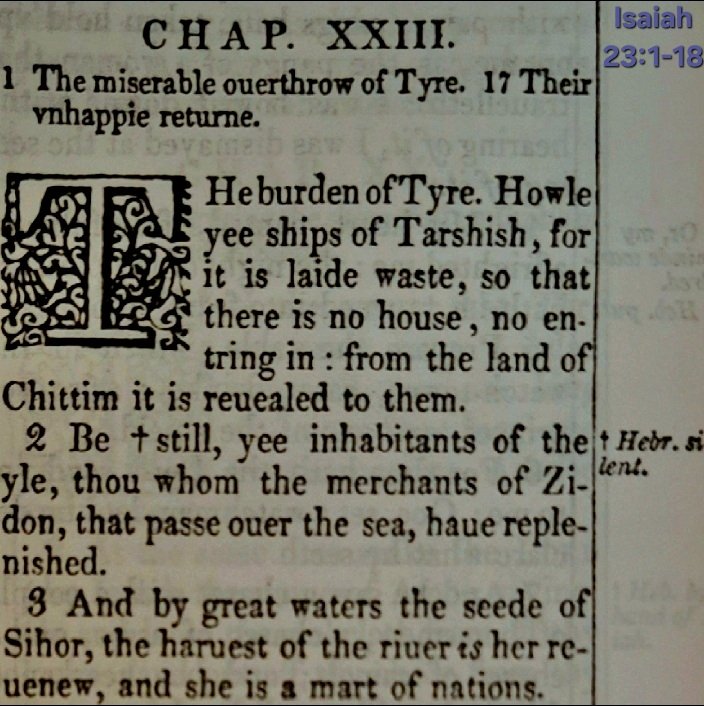
📜Isaiah 22:1-25 - 23:1-18 📜
⚠️ Powerful Specialist Study on the Valley of the Vision & Featured Sacred Threshold Mechanics, Davidic Key-Bearing Authority, Royal Household Cosmology, & the Christic Fulfillment of the Sure Nail & Eternal Kingdom or called - The Key, the Nail, the Throne, & the Gate: Davidic Stewardship, Sacred Access Mechanics, & the Messianic Governance of Heaven & Earth (With Isaiah 23 in the Next replies) Super Study 🔑📜✨
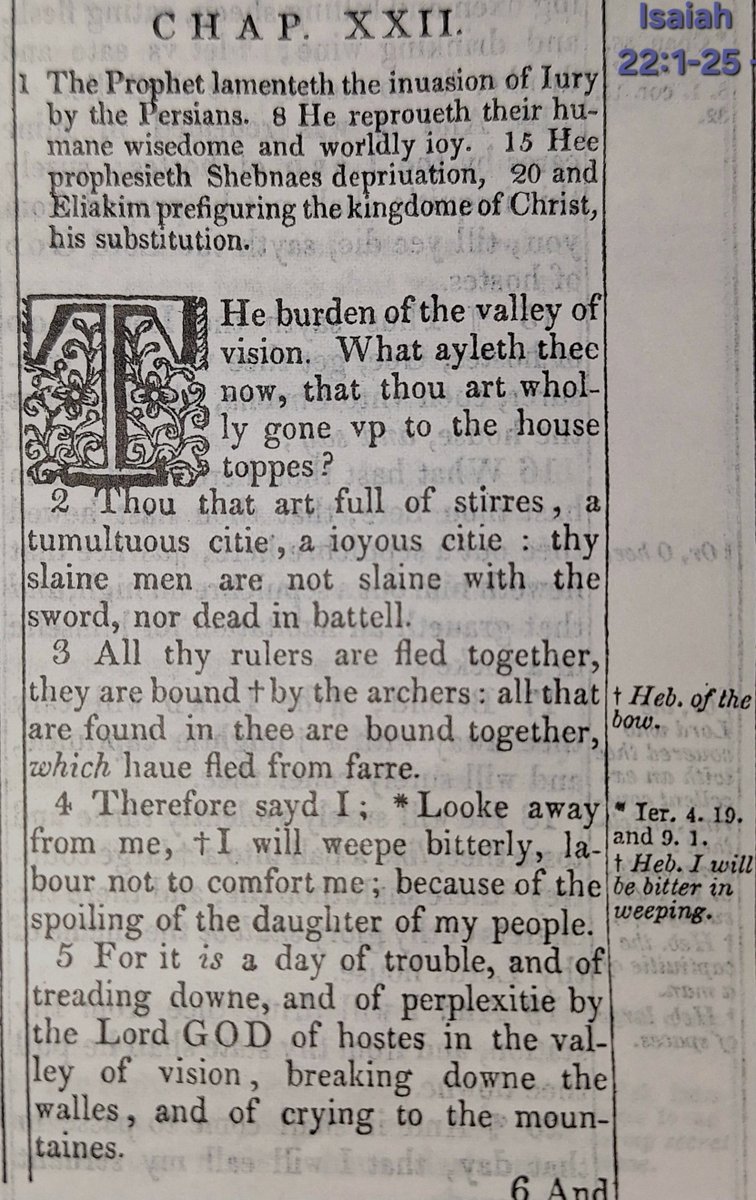
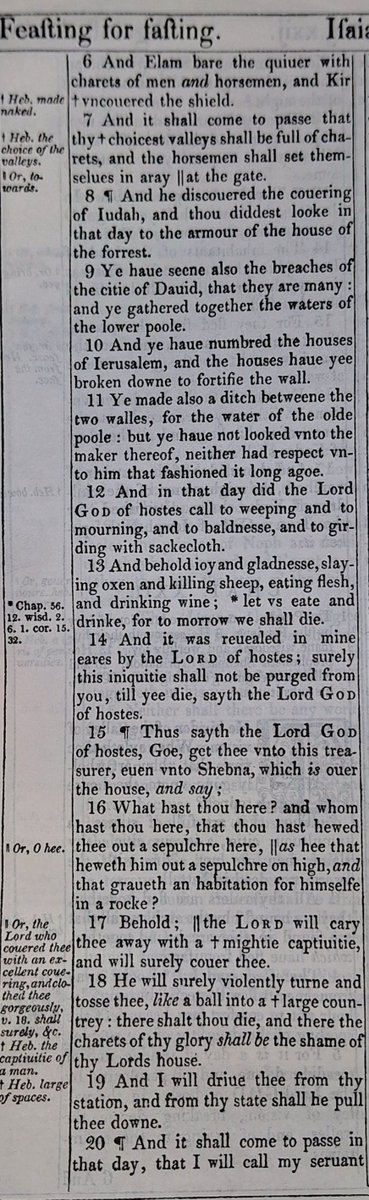
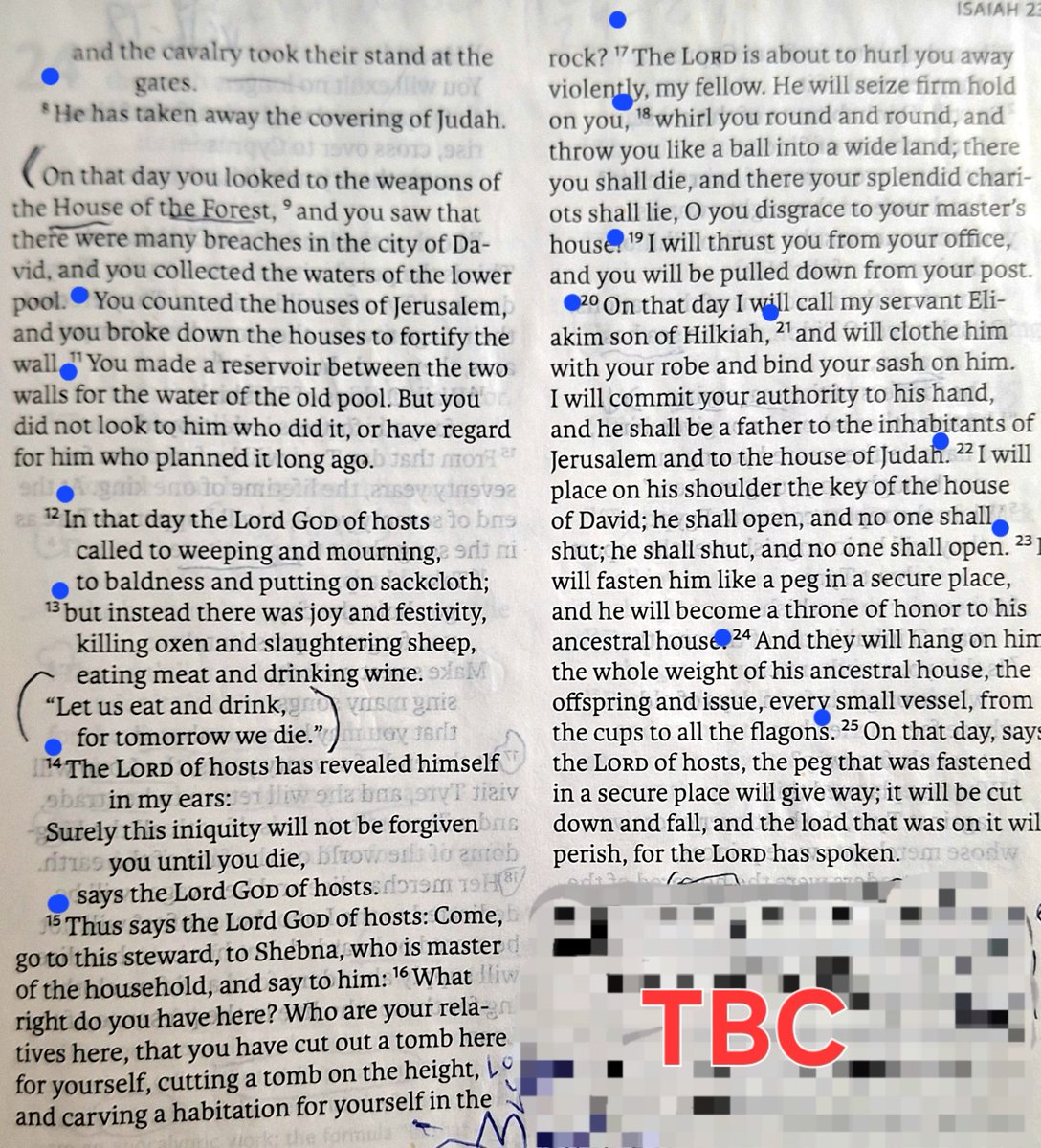
📜 Isaiah 22:1-6 (first section)(see Picture(s) for full verses & Next reply for following verses for each chapter you see In each post)
The Burden of the Valley of Vision
(in Full Verse as well commentary)
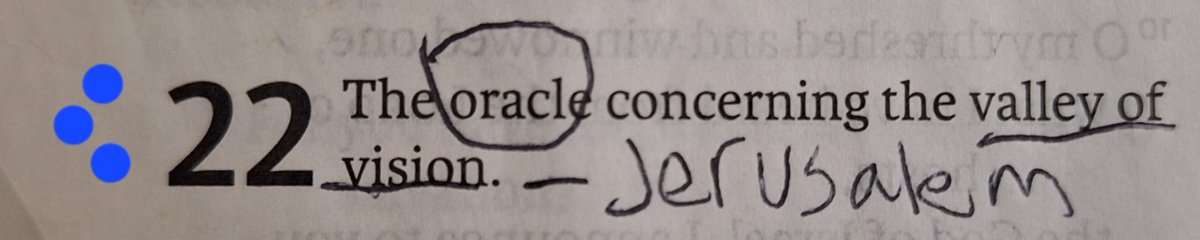
Isaiah 22:1
The burden of the valley of vision. What aileth thee now, that thou art wholly gone vp to the house toppes?
Side Notes Seen in the Images
Verse 3 side note:
† Heb. of the bow.
Verse 4 side notes:
• Ier. 4.19. and 9.1.
† Heb. I will be bitter in weeping.
Verse 6 side note:
† Heb. made naked.
Commentary
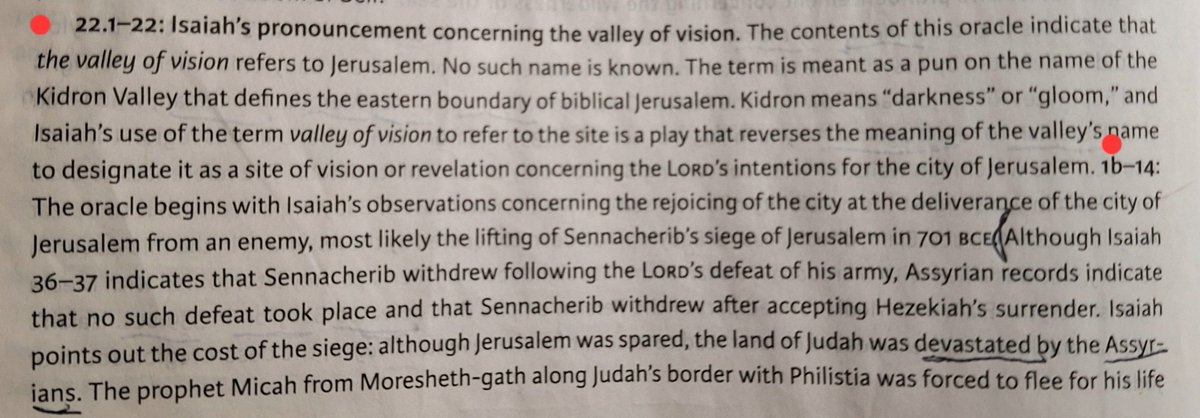
Isaiah names Jerusalem with the strange title “the valley of vision.” This is a paradoxical phrase. Jerusalem is elevated geographically, yet spiritually it is called a valley because the city has descended into fear, confusion, and exposed mortality. The place where vision ought to be clearest has become a basin of troubled sight.
The “house toppes” were places of public alarm, watching, mourning, and sometimes misplaced festivity. The people have climbed upward physically because they are inwardly disordered. The movement to the rooftops shows panic and spectacle. They are looking outward toward invading forces, but they are failing to look upward toward the LORD.
This verse introduces the chapter’s main wound: Jerusalem has prophetic privilege, sacred memory, temple access, Davidic promise, and covenant inheritance, yet in the crisis it behaves like a city without spiritual sight.
Phenomenology: vision is present, but discernment is absent.
Chorologia: the city’s sacred space becomes a theater of anxiety.
Hermeneutics: “valley” and “vision” must be read together: lowliness of condition inside a city of revelation.
Isaiah 22:2
Thou that art full of stirres, a tumultuous citie, a joyous citie: thy slaine men are not slaine with the sword, nor dead in battell.
Commentary
Jerusalem is described with three civil conditions:
• full of stirres - agitation, noise, public unrest
• a tumultuous citie - civic disorder and anxious motion
• a joyous citie - misplaced celebration amid danger
The tragedy is sharper because the slain are “not slaine with the sword.” This suggests death through siege, famine, panic, disease, collapse, or surrender rather than honorable battle. The city’s crisis has entered the civic body, not only the battlefield.
Isaiah sees a people spiritually unable to interpret their own disaster. Their joy is not covenantal rejoicing but evasive festivity. Later verse 13 will expose this false feast: “Let vs eate and drinke, for to morrow we shall die.”
Apocalyptic layer:
this is the psychology of a city under judgment that turns dread into pleasure instead of repentance.
Subtile matters:
the interior spirit of the city becomes unstable before its walls fully fail.
Concourse of causes: military pressure, moral blindness, political calculation, and divine chastisement converge.
Isaiah 22:3
All thy rulers are fled together, they are bound †by the archers: all that are found in thee are bound together, which haue fled from farre.
Side Note
† Heb. of the bow.
Commentary
The rulers flee, but their flight does not save them. They are “bound together.” Authority collapses into captivity.
The side note “Heb. of the bow” clarifies that the phrase concerns those belonging to the bow or captured by bowmen. The image is martial and humiliating: the rulers who should defend the city are themselves immobilized by the enemy’s military reach.
This verse exposes failed governance. Jerusalem’s crisis is not merely caused by foreign invasion. Its leadership has become spiritually and politically insufficient. The shepherds flee, and the people are left exposed.
Ethnarchics:
the governing class fails the covenant people.
Nomography:
the rulers who should preserve divine order are judged under divine law.
Archeometry:
captivity measures the real weight of leadership: rank without righteousness becomes shame.
Isaiah 22:4
Therefore sayd I: *Looke away from me, †I will weepe bitterly, labour not to comfort me; because of the spoiling of the daughter of my people.
Side Notes
• Ier. 4.19. and 9.1.
† Heb. I will be bitter in weeping.
Commentary
The prophet refuses easy comfort. Isaiah’s grief is not theatrical sentiment. It is sacred mourning born from seeing the covenant daughter spoiled.
The side note connects this grief to Jeremiah:
• Jeremiah 4:19 - inward anguish over coming destruction
• Jeremiah 9:1 - desire for tears like waters over the slain
The Hebrew note, “I will be bitter in weeping,” intensifies the phrase. The grief is sharp, gall-like, inwardly burning.
“The daughter of my people” is tender covenant language. Jerusalem is not merely a political unit. She is daughter, household, inheritance, and sacred trust.
Agioiographia: the prophet becomes a holy sufferer whose own body and tears preserve the moral memory of the people.
Hieromnemonics: prophetic lament keeps the truth of disaster from being swallowed by public denial.
Hermeneutics: real prophecy often mourns before it explains.
Isaiah 22:5
For it is a day of trouble, and of treading downe, and of perplexitie by the Lord GOD of hostes in the valley of vision, breaking downe the walles, and of crying to the mountaines.
Commentary
This verse gives the spiritual name of the event: “a day of trouble.” The crisis is not accidental. It is “by the Lord GOD of hostes.”
Three forces dominate:
• trouble - distress and pressure
• treading downe - humiliation, trampling, conquest
• perplexitie - confusion, loss of counsel, inability to interpret events
The walls break down, and cries rise to the mountains. This is sacred acoustics: the city’s panic echoes into the surrounding heights.
The “valley of vision” returns. The place of revelation becomes the place of perplexity because the people have not obeyed the vision entrusted to them.
Apocalyptic correspondence: walls falling and cries to mountains echo later judgment imagery, including Luke 23:30 and Revelation 6:16, where human terror seeks mountains as witnesses or coverings.
Conservatory powers: walls, pools, armories, and rulers cannot conserve the city when covenant recognition fails.
Generative cause: the deepest cause is spiritual neglect beneath political crisis.
Isaiah 22:6
And Elam bare the quiuer with charets of men and horsemen, and Kir †vncouered the shield.
Side Note
† Heb. made naked.
Commentary
Elam and Kir appear as military powers in the invading apparatus. The verse has a hard martial texture: quiver, chariots, horsemen, shield.
The side note “made naked” means the shield is uncovered for battle. Weapons are exposed. War is no longer potential; it is prepared, visible, and imminent.
Elam and Kir widen the scene beyond local conflict. Jerusalem is caught within imperial machinery. Nations become instruments inside a divine judgment drama.
Phenomenology of war: hidden weapons become visible; concealed violence becomes historical manifestation.
Liminal scripture connection: the uncovering of the shield corresponds to unveiling, exposure, and removal of covering throughout Isaiah 22. Judah’s covering is discovered in verse 8; the shield is uncovered in verse 6; Shebna’s pride is exposed later in verses 15-19
Deep pattern: what is covered becomes uncovered. What is fortified becomes breached. What is exalted becomes lowered.
📜 Isaiah 22:7-12
Continuation - The Valley of Vision, Broken Coverings, Waters Gathered, and the City That Forgot Its Maker
Isaiah 22:7
And it shall come to passe that thy †choicest valleys shall be full of charets, and the horsemen shall set themselues in array ‖at the gate.
Side Notes
† Heb. the choice of thy valleys.
‖ Or, towards.
Commentary
The “choicest valleys” are the defensible approaches, the prized corridors, the cultivated spaces around Jerusalem, the natural channels through which danger now pours. The land itself becomes militarized. Valleys that should have carried harvest, pasture, movement, and sacred pilgrimage are filled with chariots.
This is chorologia under judgment: place, terrain, road, gate, valley, and wall become theological instruments. The city’s surrounding geography no longer shelters her; it displays the nearness of the invader.
The horsemen setting themselves “at the gate” is deeply significant. The gate in ancient cities was not only an entrance. It was:
• court of judgment
• place of elders
• legal threshold
• commercial passage
• civic mouth
• liminal membrane between inside and outside
When horsemen stand at the gate, the boundary between safety and invasion trembles.
The city’s threshold is under pressure.
The side note “towards” widens the image: the hostile array is directed toward the gate, pressing against the public life of Jerusalem. The valley, the gate, and the city all become one symbolic body under compression.
Deep correspondence: gates in Scripture are places of authority. “The gates of hell” in Matthew 16:18 and the gates of Zion in Psalm 87:2 show that gates carry spiritual jurisdiction. Here Jerusalem’s gate is surrounded by military force because her inner jurisdiction has become disordered.
Isaiah 22:8
¶ And he discouered the couering of Iudah, and thou diddest looke in that day to the armour of the house of the forrest.
Commentary
This is one of the key verses of the chapter.
“He discovered the covering of Judah.” The covering means protection, concealment, defense, covenant shelter, and the veil of security. Judah’s protective layer is uncovered. What was hidden is made visible. What was assumed safe is exposed.
The phrase also creates a profound link with verse 6, where Kir “uncovered the shield.” War unveils. Judgment removes coverings. History becomes apocalypse in the root sense: unveiling.
Judah responds by looking to “the armour of the house of the forrest.” This likely refers to the House of the Forest of Lebanon, the Solomonic royal armory. The people inspect weapons, storehouses, defenses, and military resources.
Their error is not that they repair defenses. The deeper wound is the order of dependence. They look to the armory before they look to the Maker.
Hermeneutics: verse 8 is the hinge between military realism and spiritual failure. Jerusalem sees the weapons, breaches, pools, houses, and walls, but does not see the divine hand shaping the crisis.
Phenomenology of unveiling:
• shield uncovered
• Judah’s covering discovered
• city breaches seen
• Shebna’s ambition exposed
• Eliakim later clothed and established
The entire chapter is built on covering, uncovering, clothing, disrobing, fastening, removing, and transferring authority.
Isaiah 22:9
Ye haue seene also the breaches of the citie of Dauid, that they are many: and ye gathered together the waters of the lower poole.
Commentary
The “city of David” is the sacred royal nucleus of Jerusalem. To see its breaches is to behold damage in the symbolic heart of Davidic promise.
The people recognize the visible problems: breaches, vulnerabilities, water supply. They gather the waters of the lower pool, preparing for siege.
This verse is full of conservatory powers: the city tries to conserve life through water, wall repair, military preparedness, and urban calculation. These actions are not foolish in themselves. They become spiritually insufficient when severed from remembrance of YHWH.
Water here has twofold significance:
• practical survival during siege
• symbolic life-force of the city
In biblical imagination, waters can signify blessing, chaos, Spirit, cleansing, judgment, wisdom, and divine supply. Jerusalem gathers waters, but fails to gather herself unto God.
Deep scripture connections:
• Hezekiah’s waterworks and tunnel tradition belong to this world of Jerusalem’s siege preparation.
• Psalm 46 declares, “There is a river, the streams whereof shall make glad the city of God.”
• John 7 places living water in relation to divine gift and Spirit.
Isaiah’s point penetrates the visible: storing water cannot heal spiritual drought.
Isaiah 22:10
And ye haue numbred the houses of Ierusalem, and the houses haue yee broken downe to fortifie the wall.
Commentary
The city begins to consume itself for defense.
They count houses, then break houses to strengthen the wall. Private dwellings become public fortification. Domestic life is sacrificed for military survival.
This is urban archeometry: the city is measured, numbered, assessed, dismantled, and rearranged under pressure. Jerusalem becomes a body cannibalizing its own limbs to preserve its outer skin.
Theologically, this verse shows the tragedy of emergency wisdom without repentance. Houses represent families, inheritance, memory, generational continuity. Walls represent civic protection. The crisis forces one layer of order to be sacrificed for another.
Subtile matter: the city’s inner life is broken to preserve its outer shell.
Hermeneutic insight: when the covenant center weakens, even necessary survival actions carry grief.
Apocalyptic relation: later Scripture often presents cities as moral organisms.
Babylon, Jerusalem, Nineveh, Tyre, and Egypt are not mere locations; they are symbolic bodies whose architecture reveals spiritual condition.
Isaiah 22:11
Ye made also a ditch betweene the two walles, for the water of the olde poole: but ye haue not looked vnto the maker thereof, neither had respect vnto him that fashioned it long agoe.
Commentary
This verse reveals the central indictment.
They build a ditch.
They secure water.
They engineer survival.
They remember infrastructure.
They forget the Maker.
The phrase “maker thereof” carries immense theological force. Jerusalem looks at what is made while neglecting the One who made, shaped, prepared, and ordained.
“Fashioned it long agoe” suggests divine forethought. The LORD is not reacting late to Jerusalem’s crisis. He fashioned the city, its waters, its vocation, its Davidic promises, its place among the nations, its prophetic destiny.
This verse is a masterpiece of causal theology:
• immediate cause: invasion
• material cause: walls, pools, houses, weapons
• political cause: rulers and decision.
• spiritual cause: failure to look unto the Maker
• final cause: divine correction and revelation
Concourse of causes: human engineering and divine sovereignty meet in one event. The city acts, but God governs. The people calculate, but heaven weighs. They build channels for water, but neglect the fountain of covenant life.
Deep correspondence:
This pairs powerfully with Isaiah 17:10: “Because thou hast forgotten the God of thy salvation, and hast not beene mindfull of the rocke of thy strength.” The city remembers stone, wall, pool, and weapon, but forgets Rock, Maker, and LORD.
Isaiah 22:12
And in that day did the Lord GOD of hostes call to weeping and to mourning, and to baldnesse, and to girding with sackcloth.
Commentary
The LORD calls for sacred mourning.
The correct response to the crisis was not panic, drunken feasting, political arrogance, or armory-confidence. It was repentance marked by visible humility:
• weeping
• mourning
• baldness
• sackcloth
These are ancient signs of grief, abasement, covenant sorrow, and return. The body becomes liturgical. Hair, garment, posture, tears, and sound all become visible theology.
This verse has strong links to Isaiah 20, where Isaiah’s own body became a sign. In Isaiah 22, the whole city is summoned to embodied repentance.
Agioiographia: holy persons and holy communities write truth through bodily signs.
Hieromnemonics: sackcloth and mourning preserve sacred memory in flesh and fabric.
Phenomenology: repentance is not abstract; it changes voice, clothing, hair, appetite, movement, and public atmosphere.
Apocalyptic depth: in Revelation, sackcloth returns with the two witnesses, showing prophetic grief clothed in visible testimony.
The LORD of hosts does not merely call Jerusalem to strategic defense. He calls her to transformed perception. The city must interpret the siege as a divine summons.
📜 Isaiah 22:13-18
The Feast of Forgetfulness, the Judgment of Shebna, and the Fall of Self-Exalting Stewardship
Isaiah 22:13
And behold ioy and gladnesse, slaying oxen and killing sheepe, eating flesh, and drinking wine; *let vs eate and drinke, for to morrow we shall die.
Side Note
• Chap. 56.12. Wisd. 2. 1. Cor. 15.32.
Commentary
The contrast with verse 12 is immediate and devastating.
God called:
• weeping
• mourning
• sackcloth
• repentance
The people answered:
• feasting
• slaughtering
• drinking
• revelry
The city transforms crisis into entertainment.
This is one of the deepest spiritual pathologies in Scripture.
The issue is not merely eating or drinking.
The issue is the philosophy beneath the feast.
"For to morrow we shall die."
This is the creed of despair disguised as celebration.
The people acknowledge mortality while denying accountability.
The phrase later appears in:
1 Corinthians 15:32
where Paul cites it as the logic of a world without resurrection.
Isaiah exposes a civilization attempting to silence judgment through pleasure.
Phenomenology of denial:
• fear converted into festivity
• anxiety converted into amusement
• mortality converted into indulgence
• conviction converted into distraction
The city becomes intoxicated not only with wine but with temporal thinking.
Deep intertextuality:
Compare:
• Noah's generation before the Flood
• Belshazzar's feast before Babylon's fall
• Amos 6 and the complacent nobles
• Luke 17 regarding eating and drinking before judgment
The feast becomes a veil over reality.
Isaiah 22:14
And it was reuealed in mine eares by the LORD of hostes; Surely this iniquitie shall not be purged from you, till yee die, saith the Lord GOD of hostes.
Commentary
The prophet now receives direct revelation.
"It was revealed in mine ears"
This expression emphasizes sacred reception.
Isaiah is functioning as a living conduit of divine speech.
The sin is not merely feasting.
The sin is refusing God's call to repentance.
The people have chosen celebration over contrition.
Therefore the iniquity remains.
The word "purged" is sacrificial language.
The city's refusal of repentance prevents cleansing.
This becomes a profound principle throughout Scripture:
Atonement is offered.
Repentance is summoned.
Refusal hardens judgment.
Hieromnemonics
The prophet preserves the memory of the warning so future generations understand why judgment came.
Conservatory Powers
The city attempted to conserve itself through:
• walls
• pools
• armories
• feasting
Yet none of these preserve covenant life.
Only reconciliation with God can do that.
Isaiah 22:15
¶ Thus saith the Lord GOD of hostes, Goe, get thee vnto this treasurer, euen vnto Shebna, which is ouer the house, and say;
Commentary
The chapter suddenly narrows from national judgment to a single individual.
This is one of Isaiah's remarkable transitions.
The same God who judges nations also examines administrators.
Shebna is:
"over the house"
meaning chief steward of the royal household.
This office was among the highest positions in Judah.
He controlled administration, access, and governance beneath the king.
The prophecy demonstrates that no office is too high for divine scrutiny.
Ethnarchics
Leadership itself becomes an object of judgment.
Nomography
Authority is accountable to divine law.
The steward governs under a greater King.
Isaiah 22:16
What hast thou here? and whom hast thou here, that thou hast hewed thee out a sepulchre here, as hee that heweth him out a sepulchre on high, and that graueth an habitation for himselfe in a rocke?
Commentary
The question cuts directly into Shebna's ambition.
He is constructing a magnificent tomb.
The language suggests:
• prestige
• permanence
• legacy
• self-glorification
The tomb is carved:
"on high"
The location itself symbolizes elevation.
Shebna seeks remembrance through stone.
He attempts to secure his name through
architecture.
Yet Isaiah reveals a fundamental irony:
The steward is more concerned with memorialization than faithfulness.
Archeometry
The verse concerns the measurement and construction of monumental antiquity.
Ancient tombs were statements of status.
The greater the monument, the greater the intended memory.
Yet divine judgment now questions the legitimacy of that memory.
Deep biblical pattern
Compare:
• Tower of Babel
• Nebuchadnezzar's pride
• Herod's magnificence
• Pharaoh's monuments
Humanity repeatedly seeks permanence through stone.
Scripture repeatedly teaches that permanence comes from covenant faithfulness.
Isaiah 22:17
Behold, ‖the LORD will carry thee away with a †mightie captiuitie, and will surely couer thee.
Side Notes
‖ Or, O hee.
† Heb. the captiuitie of a man.
Commentary
The language becomes forceful.
The man who sought permanence is removed.
The steward who carved a permanent dwelling is himself carried away.
The side note:
"the captivity of a man"
suggests personal exile.
This is not merely political change.
It is individual displacement.
The phrase:
"will surely cover thee"
forms a striking reversal.
Earlier Shebna sought to establish his own glory.
Now God covers him with judgment.
Throughout Isaiah 22, coverings are a major theme:
• Judah's covering removed
• shields uncovered
• defenses exposed
• Shebna covered by judgment
• Eliakim later clothed with authority
The entire chapter revolves around divine transfer and removal.
Isaiah 22:18
He will surely violently turne and tosse thee, like a ball into a †large countrey: there shalt thou die, and there the charets of thy glory shall be the shame of thy Lords house.
Side Note
† Heb. large of spaces.
Commentary
This is one of Isaiah's most vivid images.
Shebna becomes:
"like a ball"
The metaphor is unforgettable.
The official who imagined himself immovable is hurled away.
The steward who sought a permanent monument becomes an object cast across a vast landscape.
The side note:
"large of spaces"
intensifies the picture.
The land is broad, distant, foreign.
His carefully planned legacy dissolves into exile.
The phrase:
"charets of thy glory"
likely refers to symbols of rank, prestige, and political magnificence.
What once proclaimed honor becomes disgrace.
Phenomenology of reversal
• exaltation becomes humiliation
• monument becomes exile
• authority becomes removal
• permanence becomes displacement
• glory becomes shame
Apocalyptic Correspondence
This pattern echoes throughout Scripture:
• Saul replaced by David
• Babylon cast down
• proud kings humbled
• stars falling from heaven in prophetic imagery
God overturns false elevations.
The higher the pride climbs, the further the fall becomes.
Major Themes So Far in Isaiah 22
I. The Valley of Vision
A city of revelation that loses spiritual perception.
II. Sacred Geography
Valleys, gates, walls, pools, mountains, and tombs become theological symbols.
III. Concourse of Causes
Military, political, spiritual, and divine causes converge into one historical event
IV. The Uncovering Motif
Shields uncovered, Judah uncovered, ambitions exposed, offices transferred.
V. False Security
Walls, pools, armories, feasts, and monuments cannot replace trust in the Maker.
VI. Stewardship and Authority
Shebna demonstrates how sacred office may be corrupted by self-exaltation.
VII. Sacred Memory
The prophet preserves the meaning of events for future generations.
VIII. Divine Reversal
The exalted are cast down; the forgotten are raised up.
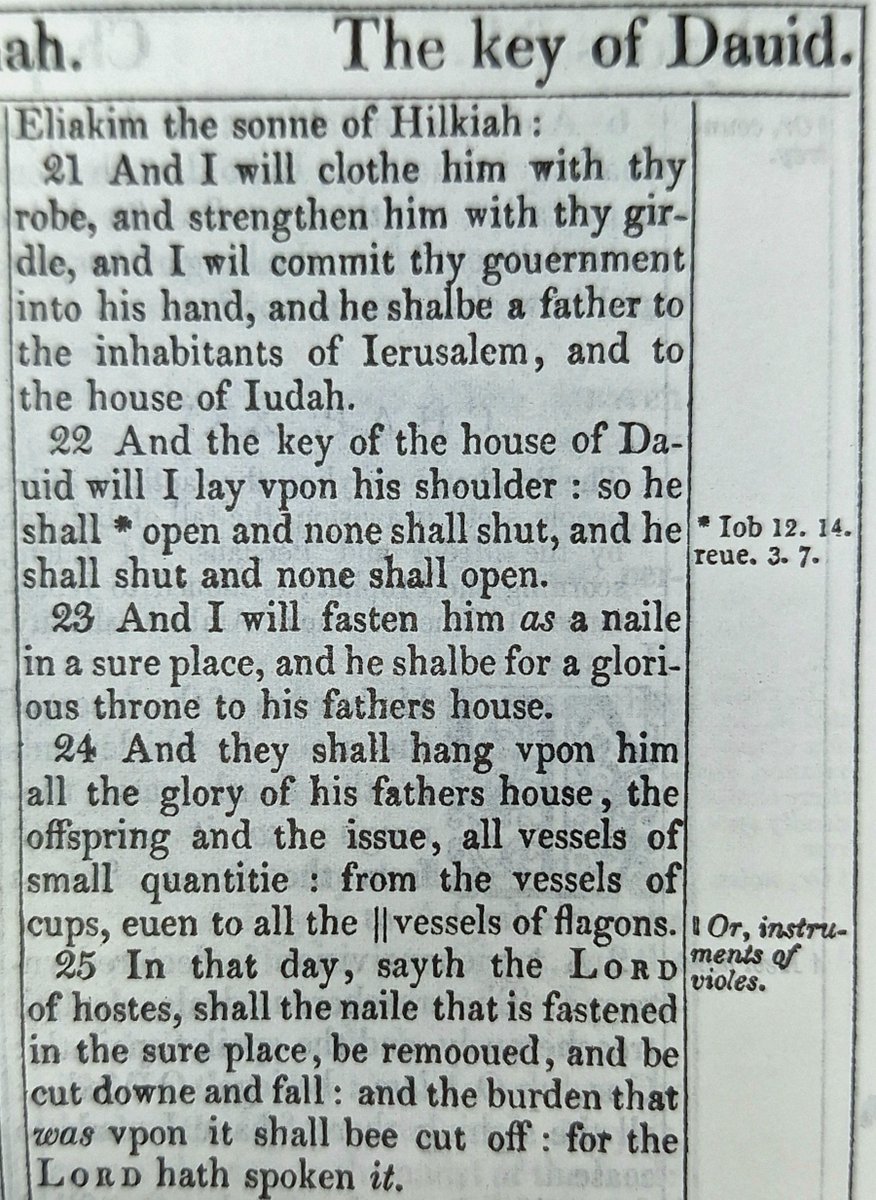
Next comes Isaiah 22:19-25, one of the most important Davidic passages in Isaiah, introducing Eliakim, the Key of David, the nail in a sure place, royal stewardship, messianic typology, and one of the major backgrounds to Revelation 3:7.
⚠️SEE NEXT REPLY FOR NEXT VERSES & CHAPTERS OF ISAIAH THE PROPHET ⚠️
20 Feb 2025

#OldTestamentStudy #11 -
💠Isaiah 22:1-25-
📜Man trusts in himself instead of Yahweh
🔹Archaeology finds
🏺 Hezekiah’s Tunnel 701 BC Water for Assyrian siege
🕋 Shebna's Inscription Tomb evidence of high official 800s BC
🪨Lachish Reliefs -Assyrian conquest of Judah 701 BC

2
1
1
1,541
DeepAncientThought retweeted
🔑BONUS - Forgotten Etheric Realms, Dynamic Forces, & Proto-Sciences Continued
31/XXXI. Ether-Physics
Physical processes operating through subtle universal mediums believed to permeate all creation.
32/XXXII.
Elemental Continuity Theory
Matter, force, life, and intellect understood as successive expressions of one underlying reality.
33/XXXIII.
Force Ontology
Investigation into force as a fundamental constituent of existence itself.
34/XXXIV. Central Force Cosmology
The organization of worlds around governing energetic centers and invisible attractors.
35/XXXV.
Molecular Force Sciences
Examination of attractive and repulsive powers acting among particles.
36/XXXVI. Proto-Field Theory
Early anticipation that all physical forces may emerge from a unified energetic substrate.
37/XXXVII. Universal Energetics
The study of energy as a cosmic principle operating across every scale of existence.
38/XXXVIII. Cosmodynamic Equilibrium
Balance established through opposing yet cooperative forces.
39/XXXIX. Structural Force Geometry
The shaping of forms through invisible geometries of attraction and resistance.
40/XL. Attractive Architectures
Constructive powers binding systems into stable configurations.
1
1
2
359
DeepAncientThought retweeted
🔑Specialist Terms/Core words & Remarkable Attributes ✦ Continuation: The Rarest Realms, Proto-Sciences, Etheric Philosophies, & Forgotten Intellectual Territories
🔑✨️ Fts -
✦ Sacred Geognosy and Planetary Wisdom
✦ Forgotten Intellectual Anthropology
✦ Proto-Chemical and Chymical Marvels
✦ Rare Phenomenological Territories
✦ The Most Obscure Forgotten Sciences
✦ Crown Jewels of the Winslow Corpus
41/XLI.
Etheric Medium Theory
The universe conceived as immersed within a subtle, all-pervading medium through which force, motion, light, and organization operate.
42/XLII.
Cosmical Ether Dynamics
Investigation of the movements and tensions within the primordial ether itself.
43/XLIII.
Proto-Vacuum Physics
Speculations concerning the nature of apparently empty space as an active domain.
44/XLIV. Celestial Fluidics
The heavens understood through fluid-like energetic principles rather than inert mechanisms.
45/XLV. Dynamic Space Theory
Space regarded as possessing active properties influencing matter and force.
46/XLVI.
Cosmopsychic Architectonics
The correspondence between universal order and intellectual order.
47/XLVII. Universal Order Sciences
Inquiry into the hidden principles governing all scales of existence.
48/XLVIII. Force-Form Correspondence
Visible forms interpreted as manifestations of invisible forces.
49/XLIX. Morphological Teleology
Structures emerging according to directed developmental tendencies.
50/L.
Cosmic Structuralism
Reality understood through recurring organizational patterns.
✦ Sacred Geognosy and Planetary Wisdom
51/LI. Sacred Geognosy
The Earth's crust interpreted as a record of profound developmental processes.
52/LII. Planetary Providentialism
Geological history viewed as ordered preparation.
53/LIII. Deep-Time Wisdom Sciences
Lessons derived from immense chronological scales.
54/LIV. Stratigraphic Revelation
Knowledge emerging from layered geological records.
55/LV. Lithic Memory Theory
Stone preserving traces of vanished worlds.
56/LVI. Planetary Archive Studies
Earth functioning as a repository of ancient histories.
57/LVII. Geological Testimony Sciences
Rocks bearing witness to primordial transformations.
58/LVIII. Paleo-Historical Cosmography
Ancient worlds reconstructed through geological evidence.
59/LIX. Temporal Stratification Theory
History organized into successive developmental layers.
60/LX.
Planetary Manuscript Concept
The Earth read as a text written across ages.
✦ Forgotten Intellectual Anthropology
61/LXI.
Proto-Intellectual Ecology
Environmental conditions contributing to the rise of intelligence.
62/LXII. Educational Cosmology
The universe functioning as a school for consciousness.
63/LXIII. Intellectual Emergence Theory
Mind appearing through long developmental processes
64/LXIV. Geological Foundations of Civilization
Civilization dependent upon ancient geological events.
65/LXV. Agricultural Anthropology
Human advancement linked to soil formation and fertility.
66/LXVI. Knowledge Geogenesis
The origins of learning traced back to planetary history.
67/LXVII. Civilization Substructure Theory
Cultural achievements resting upon forgotten geological foundations.
68/LXVIII. Intellectual Fertility Sciences
The relationship between productive environments and thought.
69/LXIX. Soil-Culture Dynamics
Connections between land cultivation and societal development.
70/LXX. Earth-to-Mind Correspondence
The Earth serving as a precursor to reflective consciousness.
✦ Proto-Chemical and Chymical Marvels
71/LXXI. Universal Chymistry
Matter perpetually transformed through dynamic interactions.
72/LXXII. Mineral Alchemy of Nature
Natural processes achieving transformations once associated with alchemical facts.
73/LXXIII. Geological Distillation
The Earth separating and refining substances across ages.
74/LXXIV. Oceanic Chymic Laboratories
Ancient seas functioning as immense transformative environments.
75/LXXV. Planetary Recomposition Theory
The continual reassembly of matter into new forms.
76/LXXVI. Elemental Migration Sciences
Movement of elements through geological systems.
77/LXXVII. Crystalline Genesis Studies
The birth of mineral structures from energetic conditions
78/LXXVIII. Atmospheric Chymistry
Chemical evolution occurring within ancient atmospheres.
79/LXXIX. Organic-Inorganic Conversion Dynamics
The exchange between living and nonliving realms.
80/LXXX. Geochemical Providentialism
Chemical transformations contributing to larger developmental outcomes.
✦ Rare Phenomenological Territories
81/LXXXI.
Phenomenology of Formation
Study of how creation presents itself through developing forms.
82/LXXXII. Phenomenology of Force
Invisible powers inferred through observable effects.
83/LXXXIII. Phenomenology of Geological Time
The experience and interpretation of immense durations.
84/LXXXIV. Phenomenology of Emergence
Observation of increasingly complex structures appearing across ages.
85/LXXXV.
Phenomenology of Order
The appearance of coherence within natural systems.
86/LXXXVI.
Phenomenology of Cosmic Harmony
Patterns suggesting unity across scales of existence.
87/LXXXVII.
Threshold Phenomenology
Study of transformative transitions between states.
88/LXXXVIII.
Developmental Phenomenology
Reality interpreted through unfolding processes.
89/LXXXIX.
Cosmogenic Phenomenology
The appearance of creation through progressive stages.
90/XC. Morphological Phenomenology
The manifestation of structure through formative powers.
✦ The Most Obscure Forgotten Sciences
91/XCI. Cosmotectonics
The architecture and construction of cosmic systems.
92/XCII. Geotectonic Teleology
Earth structures interpreted through developmental purpose.
93/XCIII. Cosmogenic Mechanics
Mechanical principles governing universal formation.
94/XCIV. Planetary Architectonic Intelligence
The apparent order underlying planetary development.
95/XCV.
Dynamic Creation Sciences
Study of ongoing formative activity throughout nature.
96/XCVI. Universal Development Theory
Reality interpreted as a process of continual unfolding.
97/XCVII. Cosmic Preparation Doctrine
Earlier stages preparing conditions for later stages.
98/XCVIII. Geocosmic Correspondence
Parallels between planetary and celestial processes.
99/XCIX. Astronomical-Geological Unity
Shared principles operating in heaven and Earth.
100/C. Macro-Microcosmic Force Theory
The same forces governing both molecules and worlds.
✦ Crown Jewels of the Winslow Corpus
101/CI. Cosmical Educationalism
The universe viewed as progressively cultivating intelligence.
102/CII. Geological Destiny Theory
Planetary history contributing toward future possibilities.
103/CIII. Intellectual Cosmogenesis
The emergence of mind as part of cosmic development.
104/CIV. Universal Force Monism
Diverse phenomena explained through common energetic principles.
105/CV. Earth Preparation Philosophy
The entire geological drama interpreted as preparation for conscious life.
106/CVI. The Grand Chain of Cosmogenic Correspondences
A forgotten nineteenth-century vision linking ether, force, matter, minerals, oceans, atmosphere, life, civilization, knowledge, and consciousness into one continuous developmental order stretching from primordial space to intellectual humanity.
⚠️SEE NEXT COMMENT FOR REST ⚠️
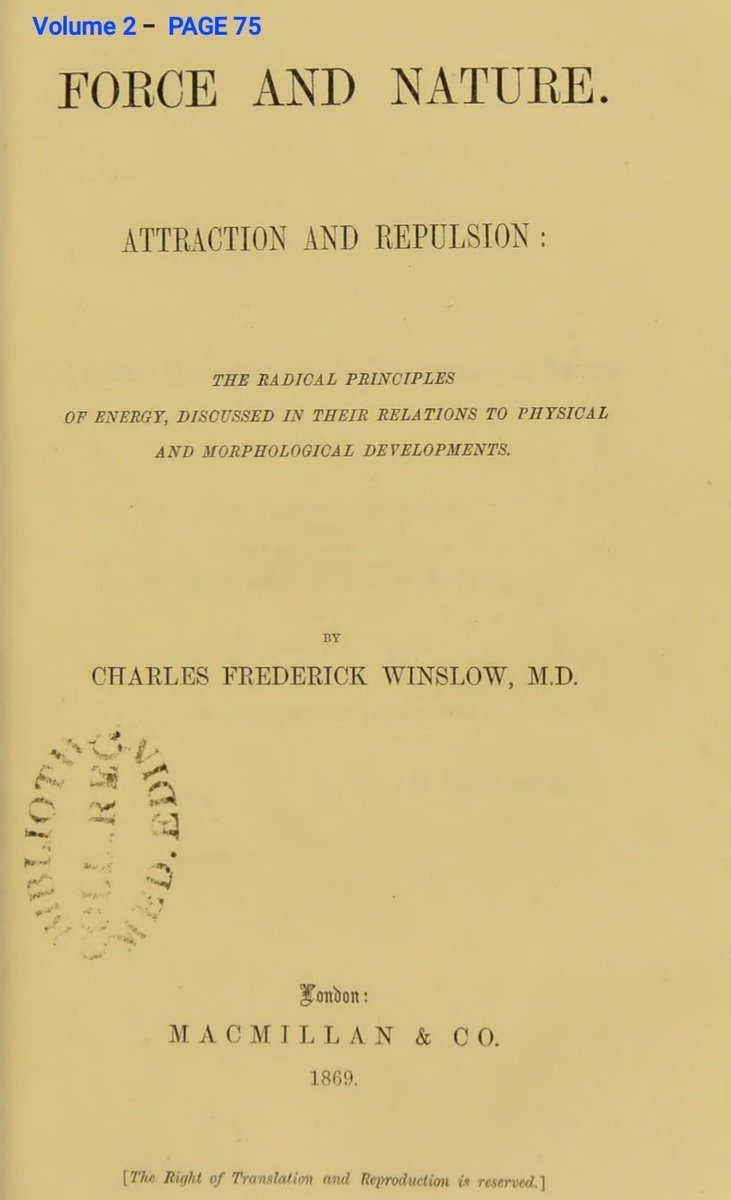
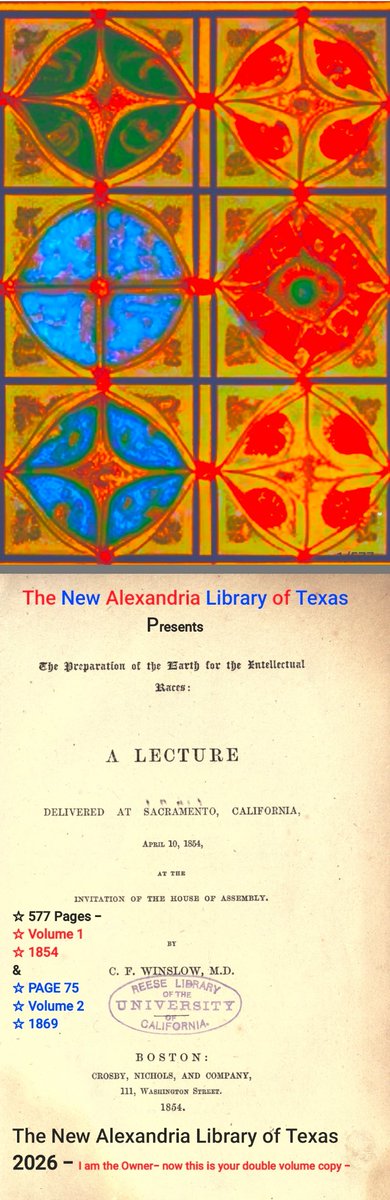
1854 & 1869 - The Preparation of the Earth for the Intellectual Races & Force & Nature: Attraction & Repulsion; Dr. Charles Frederick Winslow, M.D., Vol. 1 & 2 - Fts - Dynamic Ontologies of Matter & Energy, Earth-to-Mind Correspondences, Knowledge-Matter Relationships, Cosmopsychic Development, Intellectual Cosmogenesis, Threshold Cosmology, Sacred Geology, Proto-Geognosy & Etheric Cosmography & all the forgotten Creation Sciences
By(Provided by & New scholarly abstract)
DeepAncientThought A.M., ,F.V.S. , & Polymath
&
The New Alexandria Library of Texas - Alexander the Library Cat -
1854 - Sacramento, California:
at the Invitation of the House of Assembly
& Boston: Crosby, Nichols, & Company, 111 Washington Street; printed by John Wilson & Son, 22 School Street,
&
1869 - London: Macmillan & Co.,
&
2026 - The New Alexandria Library of Texas
Free Link
academia.edu/168255625/The_P…
Free Link to 505 RARE BOOK ARCHIVE-
independent.academia.edu/Dee…
🔑 Powerful Specialist Abstract -
Few forgotten works attempt a synthesis as vast, ambitious, and intellectually daring as the combined corpus of Dr. Charles Frederick Winslow.
Standing at the crossroads of geognosy, cosmology, chemistry, natural theology, morphology, celestial physics, proto-ecology, and force philosophy, these two rare volumes seek nothing less than an explanation of how the universe, the Earth, life, and ultimately intellect itself emerged from the hidden operations of primordial forces.
Winslow's vision stretches from the earliest conditions of matter diffused through cosmic space to the appearance of humanity as a reflective participant within the grand architecture of creation.
At the heart of these works lies a remarkable proposition largely forgotten by modern specialization: that geology, astronomy, chemistry, biology, agriculture, civilization, and intellectual development form a single continuous history.
The rocks beneath our feet, the oceans that once covered the globe, the ancient vegetation buried within fossil strata, the atmospheric transformations of remote ages, and the celestial forces governing planetary motions are presented as interconnected chapters within one immense developmental narrative.
Earth is not merely a sphere of stone and water but a vast preparatory workshop wherein innumerable processes unfolded across immeasurable ages to create conditions suitable for life, intelligence, and civilization.
Winslow's geological discussions preserve a fascinating blend of nineteenth-century geognosy and cosmological speculation.
The Earth begins as a molten and incandescent body emerging through condensations of primordial matter diffused throughout space.
Crystallization, mineral differentiation, atmospheric formation, oceanic development, and continental emergence become successive acts within a planetary genesis. Granite, gneiss, mica-schist, slate, limestone, coral formations, and fossil-bearing strata are examined not merely as geological curiosities but as enduring monuments recording the earliest stages of terrestrial development.
The Earth's crust becomes a colossal archive preserving the memory of vanished worlds and forgotten biological kingdoms.
Particularly striking is Winslow's treatment of ancient marine life.
Long before ecology emerged as a formal discipline, he recognized that primitive organisms performed transformative functions within planetary history.
Seaweeds, corals, mollusks, and marine vegetation are described as agents of environmental construction, gradually producing limestone deposits, organic accumulations, fertile sediments, and the conditions necessary for future terrestrial ecosystems.
These ancient life forms become geological laborers participating in a developmental process extending across epochs. What later generations would call ecological succession appears here as a grand cosmological principle operating through deep time.
The companion volume, Force and Nature, advances into even more unusual territory.
Here Winslow investigates attraction and repulsion as the radical principles underlying all physical existence.
Matter itself is treated as secondary to force. Molecular structures, mineral formations, biological organization, planetary systems, and celestial mechanics are all interpreted through the dynamic interplay of expansive and attractive energies.
This real common sense framework resembles an early attempt at a unified field philosophy, wherein every observable phenomenon becomes an expression of deeper energetic realities.
The book stands as an important witness to nineteenth-century efforts to discover universal laws connecting the atom, the Earth, and the stars.
One of the most fascinating aspects of the work is its extensive engagement with etheric thought.
Space is portrayed not as emptiness but as an active medium capable of transmitting forces and facilitating cosmic organization.
Matter emerges from subtle conditions; worlds condense from primordial distributions; force shapes form through invisible operations.
Although later foolish scientific thinking and post 1920s pop physics abandoned many ether theories, Winslow's discussions preserve an important intellectual chapter in the history of cosmology, revealing how nineteenth-century thinkers (1850s-60s) sought to reveal real physics, metaphysics, and natural philosophy the way these insights had always been taught without again the modern spoilage of today !
The books also contain remarkable explorations of morphology, a field then regarded as one of the great keys to understanding nature.
Winslow repeatedly asks why forms arise, why structures exhibit symmetry, why organisms develop according to particular patterns, and how invisible forces generate visible architectures.
Mountains, crystals, plants, animals, atmospheres, oceans, and planetary systems become manifestations of formative principles operating across multiple scales of existence.
This morphological perspective transforms nature into a vast workshop of organization and construction.
Equally noteworthy is the author's recurring emphasis upon correspondences. Geological development prepares ecological development. Ecological development prepares agricultural development.
Agricultural development prepares civilization.
Civilization prepares intellectual advancement.
The entire history of the Earth becomes a chain of linked preparations, each stage contributing to the emergence of higher forms of complexity and understanding.
Such ideas place Winslow among those forgotten natural philosophers who attempted to interpret the universe as a coherent developmental order rather than a collection of isolated phenomena.
Throughout the text appear numerous proto-scientific anticipations.
Readers encounter early forms of Earth-systems thinking, geochemical cycling, environmental succession, developmental cosmology, force-field speculation, planetary habitability studies, deep-time historical reconstruction, systems ecology, and macrocosmic-microcosmic correspondence.
Many of these themes would later be separated into distinct academic disciplines; Winslow preserves them within a single comprehensive intellectual framework.
Perhaps the most distinctive contribution of these volumes is their attempt to unite the physical history of the Earth with the history of consciousness itself.
Geological epochs, atmospheric transformations, marine ecosystems, fossil accumulations, mineral deposits, and planetary forces are all interpreted as part of a larger preparation culminating in the appearance of reflective intelligence.
Humanity enters the narrative not as an isolated phenomenon but as the inheritor of vast geological, chemical, biological, and cosmological processes extending into the deepest recesses of planetary antiquity.
The result is an extraordinary forgotten synthesis of geognosy, celestial physics, morphology, proto-ecology, etheric cosmography, force philosophy, natural theology, and intellectual anthropology.
Winslow's universe is one of developmental continuity, where force becomes form, form becomes life, life becomes civilization, and civilization becomes the means through which the cosmos reflects upon its own history.
These rare volumes preserve a remarkable example of nineteenth-century universal scholarship, offering modern readers a window into a lost age when geology, chemistry, astronomy, philosophy, and the study of mind were still imagined as parts of a single grand republic of knowledge.
📜📜📜📜📜📜📜📜✨️📜📜📜📜📜📜📜📜📜
(KEY TAGS) - Absolutely. The numbering format should be:
📜📜📜📜📜📜📜📜🔑📜📜📜📜📜📜📜📜📜
1/I.
Proto-Geognosy
The reconstruction of Earth history through stone, strata, mineral succession, and planetary architecture before geology became a specialized science.
2/II.
Etheric Cosmography
The conception of matter emerging from a universal etheric medium permeating the depths of space.
3/III.
Cosmogenic Crystallization
The doctrine that worlds arise through immense condensations and crystallizations of primordial substance.
4/IV.
Planetary Architectonics
The study of the structural design principles underlying the construction of worlds.
5/V.
Molecular Ontology
Investigation into the hidden reality and nature of the molecule as the foundation of visible existence.
6/VI. Dynamic Geotheory
Earth understood as a continuously transforming energetic system rather than a static mass.
7/VII. Primordial Oceanics
The science of ancient oceans as laboratories of future terrestrial life.
8/VIII. Paleo-Vegetative Genesis
Research into the first vegetable organisms and their role in planetary preparation.
9/IX. Proto-Biospheric Engineering
The gradual construction of habitable environments through geological and biological processes.
10/X.
Geological Teleology
The interpretation of Earth history as directed toward future outcomes.
11/XI. Cosmical Repulsion Theory
The forgotten science of expansive forces operating throughout the universe.
12/XII. Universal Attraction Dynamics
The study of binding principles governing matter and celestial systems.
13/XIII. Celestial Mechanics of Purpose
Planetary motions interpreted through meaningful order and arrangement.
14/XIV. Morphological Energetics
The generation of form through invisible energetic processes.
15/XV. Dynamic Morphogenesis
The birth of structure from force.
16/XVI. Planetary Metallogenesis
The formation and distribution of metals within Earth's early crust.
17/XVII. Lithogenic Development
The progressive emergence of rock systems across geological ages.
18/XVIII. Atmospheric Architectonics
Formation and organization of ancient atmospheric systems.
19/XIX. Oceanic Pneumatics
Interactions between atmosphere, waters, and life-generating conditions.
20/XX. Primeval Heat Dynamics
The study of Earth's incandescent infancy.
21/XXI. Proto-Ecological Succession
Recognition that one form of life prepares conditions for another.
22/XXII. Fossil Civilization Theory
Ancient organisms serving future civilizations through geological transformation.
23/XXIII. Coral Geochemistry
The role of coral architectures in creating planetary limestone systems.
24/XXIV. Marine Alchemy
Transformation of oceanic life into enduring geological formations.
25/XXV. Biogenic Mineralization
Living organisms acting as builders of stone.
26/XXVI. Organic Stratigraphy
Life becoming geology through deep time.
27/XXVII. Paleo-Composting Dynamics
The accumulation of organic remains enriching future soils.
28/XXVIII. Geological Fertility Sciences
The origin and enrichment of productive land.
29/XXIX. Earth-System Harmonization
The balancing of physical processes into habitable conditions.
⚠️SEE NEXT REPLY FOR CONTINUANCE OF TAGS/DEEP KEY TERMS⚠️
1
1
838
DeepAncientThought retweeted
1854 & 1869 - The Preparation of the Earth for the Intellectual Races & Force & Nature: Attraction & Repulsion; Dr. Charles Frederick Winslow, M.D., Vol. 1 & 2 - Fts - Dynamic Ontologies of Matter & Energy, Earth-to-Mind Correspondences, Knowledge-Matter Relationships, Cosmopsychic Development, Intellectual Cosmogenesis, Threshold Cosmology, Sacred Geology, Proto-Geognosy & Etheric Cosmography & all the forgotten Creation Sciences
By(Provided by & New scholarly abstract)
DeepAncientThought A.M., ,F.V.S. , & Polymath
&
The New Alexandria Library of Texas - Alexander the Library Cat -
1854 - Sacramento, California:
at the Invitation of the House of Assembly
& Boston: Crosby, Nichols, & Company, 111 Washington Street; printed by John Wilson & Son, 22 School Street,
&
1869 - London: Macmillan & Co.,
&
2026 - The New Alexandria Library of Texas
Free Link
academia.edu/168255625/The_P…
Free Link to 505 RARE BOOK ARCHIVE-
independent.academia.edu/Dee…
🔑 Powerful Specialist Abstract -
Few forgotten works attempt a synthesis as vast, ambitious, and intellectually daring as the combined corpus of Dr. Charles Frederick Winslow.
Standing at the crossroads of geognosy, cosmology, chemistry, natural theology, morphology, celestial physics, proto-ecology, and force philosophy, these two rare volumes seek nothing less than an explanation of how the universe, the Earth, life, and ultimately intellect itself emerged from the hidden operations of primordial forces.
Winslow's vision stretches from the earliest conditions of matter diffused through cosmic space to the appearance of humanity as a reflective participant within the grand architecture of creation.
At the heart of these works lies a remarkable proposition largely forgotten by modern specialization: that geology, astronomy, chemistry, biology, agriculture, civilization, and intellectual development form a single continuous history.
The rocks beneath our feet, the oceans that once covered the globe, the ancient vegetation buried within fossil strata, the atmospheric transformations of remote ages, and the celestial forces governing planetary motions are presented as interconnected chapters within one immense developmental narrative.
Earth is not merely a sphere of stone and water but a vast preparatory workshop wherein innumerable processes unfolded across immeasurable ages to create conditions suitable for life, intelligence, and civilization.
Winslow's geological discussions preserve a fascinating blend of nineteenth-century geognosy and cosmological speculation.
The Earth begins as a molten and incandescent body emerging through condensations of primordial matter diffused throughout space.
Crystallization, mineral differentiation, atmospheric formation, oceanic development, and continental emergence become successive acts within a planetary genesis. Granite, gneiss, mica-schist, slate, limestone, coral formations, and fossil-bearing strata are examined not merely as geological curiosities but as enduring monuments recording the earliest stages of terrestrial development.
The Earth's crust becomes a colossal archive preserving the memory of vanished worlds and forgotten biological kingdoms.
Particularly striking is Winslow's treatment of ancient marine life.
Long before ecology emerged as a formal discipline, he recognized that primitive organisms performed transformative functions within planetary history.
Seaweeds, corals, mollusks, and marine vegetation are described as agents of environmental construction, gradually producing limestone deposits, organic accumulations, fertile sediments, and the conditions necessary for future terrestrial ecosystems.
These ancient life forms become geological laborers participating in a developmental process extending across epochs. What later generations would call ecological succession appears here as a grand cosmological principle operating through deep time.
The companion volume, Force and Nature, advances into even more unusual territory.
Here Winslow investigates attraction and repulsion as the radical principles underlying all physical existence.
Matter itself is treated as secondary to force. Molecular structures, mineral formations, biological organization, planetary systems, and celestial mechanics are all interpreted through the dynamic interplay of expansive and attractive energies.
This real common sense framework resembles an early attempt at a unified field philosophy, wherein every observable phenomenon becomes an expression of deeper energetic realities.
The book stands as an important witness to nineteenth-century efforts to discover universal laws connecting the atom, the Earth, and the stars.
One of the most fascinating aspects of the work is its extensive engagement with etheric thought.
Space is portrayed not as emptiness but as an active medium capable of transmitting forces and facilitating cosmic organization.
Matter emerges from subtle conditions; worlds condense from primordial distributions; force shapes form through invisible operations.
Although later foolish scientific thinking and post 1920s pop physics abandoned many ether theories, Winslow's discussions preserve an important intellectual chapter in the history of cosmology, revealing how nineteenth-century thinkers (1850s-60s) sought to reveal real physics, metaphysics, and natural philosophy the way these insights had always been taught without again the modern spoilage of today !
The books also contain remarkable explorations of morphology, a field then regarded as one of the great keys to understanding nature.
Winslow repeatedly asks why forms arise, why structures exhibit symmetry, why organisms develop according to particular patterns, and how invisible forces generate visible architectures.
Mountains, crystals, plants, animals, atmospheres, oceans, and planetary systems become manifestations of formative principles operating across multiple scales of existence.
This morphological perspective transforms nature into a vast workshop of organization and construction.
Equally noteworthy is the author's recurring emphasis upon correspondences. Geological development prepares ecological development. Ecological development prepares agricultural development.
Agricultural development prepares civilization.
Civilization prepares intellectual advancement.
The entire history of the Earth becomes a chain of linked preparations, each stage contributing to the emergence of higher forms of complexity and understanding.
Such ideas place Winslow among those forgotten natural philosophers who attempted to interpret the universe as a coherent developmental order rather than a collection of isolated phenomena.
Throughout the text appear numerous proto-scientific anticipations.
Readers encounter early forms of Earth-systems thinking, geochemical cycling, environmental succession, developmental cosmology, force-field speculation, planetary habitability studies, deep-time historical reconstruction, systems ecology, and macrocosmic-microcosmic correspondence.
Many of these themes would later be separated into distinct academic disciplines; Winslow preserves them within a single comprehensive intellectual framework.
Perhaps the most distinctive contribution of these volumes is their attempt to unite the physical history of the Earth with the history of consciousness itself.
Geological epochs, atmospheric transformations, marine ecosystems, fossil accumulations, mineral deposits, and planetary forces are all interpreted as part of a larger preparation culminating in the appearance of reflective intelligence.
Humanity enters the narrative not as an isolated phenomenon but as the inheritor of vast geological, chemical, biological, and cosmological processes extending into the deepest recesses of planetary antiquity.
The result is an extraordinary forgotten synthesis of geognosy, celestial physics, morphology, proto-ecology, etheric cosmography, force philosophy, natural theology, and intellectual anthropology.
Winslow's universe is one of developmental continuity, where force becomes form, form becomes life, life becomes civilization, and civilization becomes the means through which the cosmos reflects upon its own history.
These rare volumes preserve a remarkable example of nineteenth-century universal scholarship, offering modern readers a window into a lost age when geology, chemistry, astronomy, philosophy, and the study of mind were still imagined as parts of a single grand republic of knowledge.
📜📜📜📜📜📜📜📜✨️📜📜📜📜📜📜📜📜📜
(KEY TAGS) - Absolutely. The numbering format should be:
📜📜📜📜📜📜📜📜🔑📜📜📜📜📜📜📜📜📜
1/I.
Proto-Geognosy
The reconstruction of Earth history through stone, strata, mineral succession, and planetary architecture before geology became a specialized science.
2/II.
Etheric Cosmography
The conception of matter emerging from a universal etheric medium permeating the depths of space.
3/III.
Cosmogenic Crystallization
The doctrine that worlds arise through immense condensations and crystallizations of primordial substance.
4/IV.
Planetary Architectonics
The study of the structural design principles underlying the construction of worlds.
5/V.
Molecular Ontology
Investigation into the hidden reality and nature of the molecule as the foundation of visible existence.
6/VI. Dynamic Geotheory
Earth understood as a continuously transforming energetic system rather than a static mass.
7/VII. Primordial Oceanics
The science of ancient oceans as laboratories of future terrestrial life.
8/VIII. Paleo-Vegetative Genesis
Research into the first vegetable organisms and their role in planetary preparation.
9/IX. Proto-Biospheric Engineering
The gradual construction of habitable environments through geological and biological processes.
10/X.
Geological Teleology
The interpretation of Earth history as directed toward future outcomes.
11/XI. Cosmical Repulsion Theory
The forgotten science of expansive forces operating throughout the universe.
12/XII. Universal Attraction Dynamics
The study of binding principles governing matter and celestial systems.
13/XIII. Celestial Mechanics of Purpose
Planetary motions interpreted through meaningful order and arrangement.
14/XIV. Morphological Energetics
The generation of form through invisible energetic processes.
15/XV. Dynamic Morphogenesis
The birth of structure from force.
16/XVI. Planetary Metallogenesis
The formation and distribution of metals within Earth's early crust.
17/XVII. Lithogenic Development
The progressive emergence of rock systems across geological ages.
18/XVIII. Atmospheric Architectonics
Formation and organization of ancient atmospheric systems.
19/XIX. Oceanic Pneumatics
Interactions between atmosphere, waters, and life-generating conditions.
20/XX. Primeval Heat Dynamics
The study of Earth's incandescent infancy.
21/XXI. Proto-Ecological Succession
Recognition that one form of life prepares conditions for another.
22/XXII. Fossil Civilization Theory
Ancient organisms serving future civilizations through geological transformation.
23/XXIII. Coral Geochemistry
The role of coral architectures in creating planetary limestone systems.
24/XXIV. Marine Alchemy
Transformation of oceanic life into enduring geological formations.
25/XXV. Biogenic Mineralization
Living organisms acting as builders of stone.
26/XXVI. Organic Stratigraphy
Life becoming geology through deep time.
27/XXVII. Paleo-Composting Dynamics
The accumulation of organic remains enriching future soils.
28/XXVIII. Geological Fertility Sciences
The origin and enrichment of productive land.
29/XXIX. Earth-System Harmonization
The balancing of physical processes into habitable conditions.
⚠️SEE NEXT REPLY FOR CONTINUANCE OF TAGS/DEEP KEY TERMS⚠️
1
2
2
1,735
DeepAncientThought retweeted
Jun 12
2 things it could be (#3 would be fake which as bad quality the video is ? I still doubt it ?
#1 - a real gaseous looking aerial/shapeshifting phenomena
Or
#2 - some kind of plasma discharge! Hmm I wonder who's house this is? & if that so called " private citizen " is still alive?
Think of the one scientist that lived out in the middle of nowhere that studied plasma & near & far away incoming meteor/comet objects?.
Why out of all Ufo files release one like this?
They want the public to see a possible crime scene? Maybe. That's if its even option #2 to begin with?
1
56
DeepAncientThought retweeted
Jun 13
Jesse do not worry you are absolutely a copy of the real rain man with Tom Cruise & now James is Tom Cruise . Wow so many adventures ! Im so glad its been like 6 to 12 months since the handlers have been able to tune you down! Keep up the good work!
1
81
DeepAncientThought retweeted
For research mining & algorithmic tag purposes-
Source: uploaded PDF pages after the Volume II title page.
Continuing from the uploaded PDF’s **List of Engravings** pages.
## LIST OF ENGRAVINGS.
### VOLUME I. continued
**Fig. 35** Longitudinal section of the root of ditto, (id.) . . . 96
**36** Capsule of bulb of ditto laid open, (id.) . . . 96
**37** Muscle in a state of relaxation . . . 101
**38** The same muscle contracted . . . 101
**39** Diagram illustrating the action of oblique muscles . . . 101
**40** Semi-penniform muscle . . . 101
**41** Penniform muscle . . . 101
**42** Complex muscle . . . 101
**43** Tendon of muscle . . . 101
**44** Trapezius muscle . . . 101
**45** Muscular structure of the Ear-drum, (Home) . . . 105
**46** Orbicular muscle of the Eye-lids, (Albinus) . . . 105
**47** Muscular structure of the Iris, (Home) . . . 105
**48** Muscular fibres of a sucking disk . . . 105
**49** Longitudinal muscular fibres of a blood vessel . . . 106
**50** Transverse muscular fibres of ditto . . . 106
**51** Muscular fibres of the human stomach, (Cooper) . . . 106
**52** Muscular fibres of the heart, (id.) . . . 106
**53** Magnified view of a Sponge, (Grant) . . . 114
**54** Spicula in the texture of a Sponge, (id.) . . . 114
**55** Gemmule of a Sponge, (id.) . . . 114
**56** *Lobularia Alcyonium pelagica*, (Deterville) . . . 122
**57** Detached polype of ditto, (id.) . . . 122
**58** *Zoanthus*, (*Actinia sociata*,) (Ellis) . . . 122
**59** *Hydra viridis*, (Trembley) . . . 122
**60** *Sertularia pelagica*, (Deterville) . . . 124
**61** *Tubipora musica*, (Ellis) . . . 125
**62** Section and polypes of ditto, magnified, (id.) . . . 125
**63** *Flustra carbasea*, (id.) . . . 125
**64** Cells of ditto, magnified, (id.) . . . 125
**65** *Corallium rubrum*, (id.) . . . 125
**66** Polypes of ditto, magnified, (id.) . . . 125
**67** Section of *Gorgonia Briareus*, (id.) . . . 125
**68** *Isis hippuris*, (id.) . . . 125
**69** Polype of *Flustra carbasea*, (Grant) . . . 129
**70** Tentaculum of ditto, magnified, (id.) . . . 129
**71** *Pennatula phosphorea*, (Ellis) . . . 131
**72** Magnified view of the polypes of ditto, (id.) . . . 131
**73 to 76** Mode of progression of the *Hydra viridis*, (Trembley) . . . 133
**77** *Vorticella cyathina*, (Muller) . . . 136
**78** *Proteus diffluens*, (id.) . . . 139
**79** *Volvox globator*, (id.) . . . 139
**80** *Brachionus urceolaris*, (id.) . . . 140
---
**81** *Medusa Pulmo*, (Macri) . . . 142
**82** *Beroe ovatus*, (Bruguiere) . . . 144
**83** *Beroe pileus*, (id.) . . . 144
**84** *Velella limbosa*, (Guérin) . . . 144
**85** *Physalia atlantica*, (id.) . . . 144
**86** *Actinia rufa*, (original) . . . 146
**87** Ditto expanded, (original) . . . 146
**88** *Asterias serrulata*, (Bruguiere) . . . 147
**89** *Asterias regularis*, (id.) . . . 147
**90** *Echinus Ananchites ovata*, (id.) . . . 147
**91** *Clypeaster rosaceus*, (id.) . . . 147
**92** *Ophiura lacertosa*, (id.) . . . 147
**93** *Euryale muricatum*, (id.) . . . 147
**94** *Pentacrinus europæus*, (Thomson) . . . 147
**95** Ambulacra, and feet of *Asterias*, viewed from the under side, (Reaumur) . . . 148
**96** Ditto, viewed from the upper side, (id.) . . . 148
**97** Vesicles appended to the feet of the *Asterias* . . . 148
**98** Polygonal pieces composing the test of the *Echinus* . . . 150
**99** Structure of a detached piece of ditto . . . 150
**100** Spine of the *Cidaris*, (Carus) . . . 150
**101** Shell of *Unio batava*, (Goldfuss) . . . 159
**102** Adductor muscle of Oyster, (Hunterian Museum) . . . 160
**103** Shell of *Pholas candida*, with abductor muscle, (Osler) . . . 161
**104** Foot of *Cardium edule*, (Reaumur) . . . 162
**105** *Planorbus cornutus*, (Cuvier) . . . 166
**106** Magnified view of the striæ on the surface of Mother of Pearl, (Herschel) . . . 169
**107** Directions of the fibres in the component strata of shells . . . 170
**108** Shell of *Achatina zebra*, (De Blainville) . . . 176
**109** Longitudinal section of ditto, (id.) . . . 176
**110** Shell of *Pterocerus scorpio*, at an early stage of growth, (id.) . . . 178
**111** Shell of the same when completely formed, (id.) . . . 178
**112** Shell of *Cyprea exanthema* at an early period of growth, (id.) . . . 178
**113** Shell of the same animal, when completed, (id.) . . . 178
**114** Transverse section of the shell of the *Cyprea exanthema*, (Hunterian Museum) . . . 179
**115** Shell of *Conus* . . . 181
**116** Longitudinal section of the same, (original) . . . 181
**117** Transverse section of the same, (Bruguiere) . . . 181
**118** Inner surface of the Epiphragma of the *Helix pomatia*, (De Blainville) . . . 183
---
**119** Outer surface of the same, (id.) . . . 183
**120** *Clio borealis*, (Cuvier) . . . 186
**121** *Sepia loligo*, (De Blainville) . . . 187
**122** Suckers of the same, (id.) . . . 187
**123** Suckers of the Octopus, (original) . . . 187
**124** Shell of *Spirula australis*, (De Blainville) . . . 191
**125** Longitudinal section of the same, (id.) . . . 191
**126** Shell of *Nautilus pompilius*, (id.) . . . 191
**127** Longitudinal section of the same, (id.) . . . 191
**128** *Pontobdella muricata*, (Bruguiere) . . . 195
**129** *Nereis*, (id.) . . . 195
**130** *Erpobdella vulgaris*, Lam. *Hirudo hyalina* . . . 195
**131** Diagram illustrating the rings and muscles of *Annelida*, (original) . . . 195
**132** *Gordius aquaticus* . . . 198
**133** *Serpula opercularia* . . . 198
**134** *Terebella conchilega*, (De Blainville) . . . 198
**135** *Arenicola piscatorum*, or *Lumbricus marinus* . . . 198
**136** *Aranea diadema*, (Roesel) . . . 202
**137** Divisions of the limb of a Crustaceous animal . . . 205
**138** Mandible and palpus of *Mysis Fabricii*, (Bruguiere) . . . 205
**139 to 141** Feet-jaws belonging to the first, second, and third pairs, (id.) . . . 205
**142** True foot, belonging to the first pair, (id.) . . . 205
**143** *Julus terrestris* . . . 213
**144** Muscles of the trunk of the *Melolontha vulgaris*, (Straus Durckheim) . . . 214
**145** Eggs of *Bombyx mori* . . . 217
**146** Larva of the same . . . 217
**147** Pupa of the same . . . 217
**148** Imago of the same . . . 217
**148*** A Caterpillar of the *Phalæna striaria*, (Hubner) . . . 224
**B** The same in a rigid position, (Lyonet) . . . 224
**149** *Calosoma Sycophanta*, (Kirby and Spence) . . . 227
**150** Analysis of skeleton of the same, (Carus) . . . 228
**151** Hind view of the segment of the head in the same, (id.) . . . 228
**152** Suckers on the foot of the *Musca vomitoria*, expanded; magnified view, (Bauer) . . . 235
**153** Cushions on the foot of the *Cimex lutea*, magnified, (id.) . . . 235
**154** Suckers on the under side of the foot of a male *Dytiscus marginalis*, (id.) . . . 235
**155** Cushions and sucker of the *Acridium biguttulum*, Latr., (id.) . . . 235
---
**156** *Dytiscus marginalis*, upper side, (Roesel) . . . 237
**157** Lower side of the same insect, (id.) . . . 237
**158** *Notonecta glauca*, (Roesel) . . . 238
**158*** Fore leg of *Gryllotalpa*, (Kidd) . . . 242
**159** Wing of *Gryllus nasutus*. Orthoptera . . . 246
**160** Wing of *Libellula grandis*. Neuroptera . . . 246
**161** Wing of *Ichneumon persuasorius*. Hymenoptera . . . 246
**162** Wing of *Tipula oleracea*. Diptera . . . 246
**163** Sting of *Anthophora retusa*, (original) . . . 248
**164** Separate scales of the wing of *Hesperia Sloanus*, (original) . . . 250
**165** Arrangement of the scales in the wing of the same . . . 250
**172** Longitudinal section of the thigh-bone to show the cancellated structure, (Cheselden) . . . 262
**173** Longitudinal section of the humerus, (id.) . . . 262
**174** Ossification of the parietal bone, (id.) . . . 265
**175** Early stage of ossification of the bones of the skull, (Cloquet) . . . 265
**176** The same in the adult, showing the sutures . . . 265
**177** Dorsal vertebra, human . . . 271
**178** Junction of vertebræ forming the spinal column . . . 271
**179** Longitudinal section of the same, showing the spinal canal . . . 271
**180** Elements of structure of a vertebra, (Carus) . . . 274
**181** Skeleton of Hog, (Pander and D’Alton) . . . 279
**182** Sternum, clavicle, and scapula; human . . . 279
**184** Skeleton of *Cyprinus carpio*, (Bonnaterre) . . . 286
**185** Diagram illustrating the progressive motion of Fishes . . . 287
**186** Front view of the vertebra of a Cod, (*Gadus morrhua*) . . . 288
**187** Side view of the same . . . 288
**188** Vertical and longitudinal section of a part of the spinal column in the same . . . 288
**189** A similar section, showing the gradation of structure . . . 288
**190** Similar section in the *Squalus centrina*, (Carus) . . . 288
**191** Bones of the shoulder of the *Lophius piscatorius*, (id.) . . . 293
**192** Pectoral fin of the *Raia clavata*, (id.) . . . 293
**193** Belt of bones of the shoulder of a Ray, (id.) . . . 294
**194** Muscular system of *Cyprinus alburnus*, (id.) . . . 295
**195** Air bladder of *Cyprinus carpio*, (Blasius) . . . 298
**196** Eggs of the Frog . . . 303
**197** Side view of Tadpole magnified, (Rusconi) . . . 303
**198** Upper view of the same, (id.) . . . 303
**199** Adult Frog . . . 303
**200** Skeleton of Frog, (Cheselden) . . . 306
**201** Skeleton of the Viper . . . 310
Next
Continuing the **List of Engravings** from the uploaded PDF.
## LIST OF ENGRAVINGS.
### VOLUME I. continued
**202** Ribs and spine of *Boa constrictor*, (Home) . . . 312
**203** Bones of the foot of the same, (Mayer) . . . 311
**204** Muscles moving the claw of the same, (id.) . . . 311
**205** Rudimental bones of the foot of the *Tortryx scytale*, (id.) . . . 311
**206** - of the *Tortrix corallinus*, (id.) . . . 311
**207** - of the *Anguis fragilis*, (id.) . . . 311
**208** - of the *Amphisbaena alba*, (id.) . . . 311
**209** - of the *Coluber pullutatus*, (id.) . . . 311
**210** *Chalcides pentadactylus*, (Bonnaterre) . . . 311
**211** Under surface of the foot of the *Lacerta gecko*, magnified four times, (Bauer) . . . 319
**212** Side view of a longitudinal section of the same, (id.) . . . 319
**213** Skeleton of the Tortoise, (Carus) . . . 322
**214** Section of the thigh bone of the same, (id.) . . . 322
**215** Hind view of skull of *Testudo mydas*, (id.) . . . 325
**216** Bones sustaining the fin of the *Delphinus phocena*, (Pander and D’Alton) . . . 336
**217** Fore part of the Skeleton of an Ox with the *ligamentum nuchae*, (original) . . . 346
**218** Skeleton of the Stag, (Cheselden) . . . 350
**218*** a. Longitudinal section of the horn of an Ox, (original) . . . 355
b. Ditto of an Antelope, (original) . . . 355
c. Extremity of the same, (original) . . . 355
**219** Subcutaneous muscles of the Hedge-hog, relaxed, (Carus) . . . 364
**220** The same muscles contracted, and drawn over the body, (Cuvier) . . . 364
**221** Skeleton of the Lion, (Pander and D’Alton) . . . 365
**222** Skeleton of *Draco volans*, (Tiedemann) . . . 379
**223** Skeleton of *Vespertilio Molossus*, (Temminck) . . . 380
**224** Skeleton of the Swan, (Cheselden) . . . 385
**225** Lateral section of the cervical vertebra of the Ostrich, (original) . . . 388
**226** Fibrils of the vane of a feather, magnified, (original) . . . 393
**227** Edges of the fibres, magnified, (original) . . . 393
**228** Feather, showing its structure, (F. Cuvier) . . . 396
**229** Capsule, or Matrix of the feather, (id.) . . . 396
**230** View of the parts enclosed in the Capsule, when laid open, (id.) . . . 396
**231** Section of the stem, while growing, exhibiting the series of conical membranes, (id.) . . . 396
**233** Extensor muscles of the foot and toes of a bird, (Borelli) . . . 405
**234** Position of a bird in roosting, (id.) . . . 405
---
## VOLUME II.
**239** Cyclosis, or partial circulation in the cells of the *Caulinia fragilis*, magnified, (Amici) . . . 42
**240** The same in the jointed hair of the *Tradescantia virginica*, (Slack) . . . 42
**241** Section of the *Hydra viridis*, magnified, (Trembley) . . . 58
**242** *Hydra viridis* seizing a worm, (id.) . . . 59
**243** The same after swallowing a minnow, (id.) . . . 59
**244** A Hydra which has swallowed another of its own species, (id.) . . . 59
**245** Compound Hydra, with seven heads, (id.) . . . 59
**246** *Veretilla lutea*, showing the communicating vessels of the Polypes, (Quoy et Gaimard) . . . 64
**247** Nutrient vessels of the *Tenia solium*, (Chiaje) . . . 64
**248** *Tenia globosa*, or Hydatid of the Hog, (Goeze) . . . 64
**249** Horizontal section of the *Rhizostoma Cuvieri*, Peron, (Eysenhardt) . . . 67
**250** *Geronia Hexaphylla*, Peron, *Medusa proboscidalis*, (Forskal) . . . 67
**251** Vascular net-work in margin of the disk of the *Rhizostoma Cuvieri*, (Eysenhardt) . . . 67
**252** Vertical section of the *Rhizostoma Cuvieri*, (id.) . . . 68
**253** Transverse section of one of the arms of the same, (id.) . . . 68
**254** Transverse section of the extremity of a tentaculum of the same, (id.) . . . 68
**255** *Leucophra patula*, highly magnified, (Ehrenberg) . . . 73
**256** Alimentary canal and ceca of the same, viewed separately, (id.) . . . 73
**257** Vertical section of the *Actinia coriacea*, (Spix) . . . 75
**258** Digestive organs of the *Asterias*, (Tiedemann) . . . 76
**259** Stomachs of the *Nais vermicularis*, (Roesel) . . . 77
**260** Stomachs of the *Hirudo medicinalis*, (original) . . . 78
**261** Mouth of the same, showing the three semicircular teeth, (original) . . . 78
**262** Tooth of the same, detached, (original) . . . 78
**263** *Glossopora tuberculata*; *Hirudo complanata*, Lin., (Johnson) . . . 78
**264** The same seen from the under side, showing the digestive organs, (id.) . . . 78
**265** Diagram showing the arrangement and connexions of the organs of the vital functions in Vertebrata, (original) . . . 81
---
**266** Spiral probosces of *Papilio urticae*, (Griffith) . . . 87
**267** Trophi of *Locusta viridissima*, (Goldfuss) . . . 92
**268** Filaments composing the rostrum, or proboscis, of the *Cimex nigricornis*, (Savigny) . . . 94
**269** Sheath of the proboscis of the same insect, (id.) . . . 94
**270** Toothed cartilage of the *Helix pomatia*, (Cuvier) . . . 95
**271** Mechanism for projecting and retracting the tongue of the Woodpecker, (original) . . . 99
**272** Laminae of Whalebone descending from the palate of the *Balena mysticetus*, (Bonnaterre) . . . 102
**273** Teeth of the *Delphinus phocena*, (Cloquet) . . . 106
**274** Skull of Tiger, (Cuvier) . . . 108
**275** Skull of Antelope, (Pander and D’Alton) . . . 109
**276** Skull of Rat, (id.) . . . 110
**277** Longitudinal section of simple tooth, (Rousseau) . . . 111
**278** Surface of the grinding tooth of a Horse, (Home) . . . 111
**279** Surface of the grinding tooth of a Sheep, (id.) . . . 111
**280** Longitudinal section of the incisor tooth of the Rodentia . . . 111
**281** Vertical section of the grinding tooth of the Elephant, (Home) . . . 114
**282** Grinding tooth of the African Elephant, (id.) . . . 114
**283** Grinding tooth of the Asiatic Elephant, (id.) . . . 114
**284** Succession of teeth in the Crocodile, (Carus) . . . 120
**285** Venomous fang of the *Coluber naia*, (Smith) . . . 121
**286** Transverse section of the same, (id.) . . . 121
**287** The same tooth, at an earlier period of growth, (id.) . . . 121
**288** The same, still less advanced in its growth, (id.) . . . 121
**289** Base of the former, (id.) . . . 121
**290** Base of the latter, (id.) . . . 121
**291** Transverse section of the young fang, about its middle, (id.) . . . 121
**292** A section, similar to the last, of another species of serpent, (id.) . . . 121
**293** *Squalus pristis*. Under side of its snout, (Latham) . . . 122
**294** Interior of the Stomach of a Lobster, (original) . . . 123
**295** Gastric teeth of *Bulla aperta*, (Cuvier) . . . 123
**298** Gizzard of the Swan, (Home) . . . 124
**299** Crop and gizzard of the Parrot, (id.) . . . 131
**300** Crop of the Pigeon, (id.) . . . 131
**301** Human stomach, (id.) . . . 133
**302** Interior of the stomach of the African Ostrich, (id.) . . . 135
**303** Gastric glands of the same, (id.) . . . 135
**304** Gastric glands of the American Ostrich, (id.) . . . 135
**305** Longitudinal section of the gastric glands of the Beaver, (id.) . . . 135
**306** Stomach of Dormouse, (id.) . . . 139
Next
Continuing the **List of Engravings - Volume II** from the uploaded PDF.
## LIST OF ENGRAVINGS.
### VOLUME II. continued
**307** Stomach of *Hyrax capensis*, (Cuvier) . . . 139
**308** Stomach of Porcupine, (id.) . . . 139
**309** Stomach of Kanguroo, (id.) . . . 139
**310** Stomach of *Delphinus phocena*, (id.) . . . 139
**311** Cardiac valve of the Horse, (Gurlt) . . . 140
**312** The four stomachs of a Sheep, (Carus) . . . 141
**313** Inner surface of the honey-comb stomach, (Home) . . . 141
**314** Inner surface of the many-plies stomach of an Ox, (id.) . . . 141
**315** Interior cellular surface of the second stomach of the Camel, (id.) . . . 141
**316** Spiral valve in the intestine of the Shark, (Blasius) . . . 149
**317** Digestive organs of the *Mantis religiosa*, (Marcel de Serres) . . . 153
**318** *Melolontha vulgaris*, (Léon Dufour) . . . 154
**319** *Cicindela campestris*, (id.) . . . 154
**320** Portion of a hepatic vessel of the *Melolontha*, highly magnified, (Straus Durckheim) . . . 155
**321** Alimentary canal of the *Acrida aptera*, (original) . . . 155
**322** Interior of the gizzard of the same, magnified, (original) . . . 155
**323** Row of large teeth in the same, still more magnified, (original) . . . 155
**324** Profile of one of those teeth, still more highly magnified, (original) . . . 155
**325** Base of the same tooth, seen from below, (original) . . . 155
**326** Alimentary canal of the Larva of the *Sphinx ligustri*, (original) . . . 157
**327** - of the Pupa of the same, (original) . . . 157
**328** - of the Imago of the same, (original) . . . 157
**329** - of the *Patella*, (Cuvier) . . . 159
**330** Stomachs of the *Pleurobranchus Peronii*, (id.) . . . 159
**331** Pyloric appendices in the Salmon, (id.) . . . 160
---
**333** Detached Dorsal vessel of *Melolontha vulgaris*, (Straus Durckheim) . . . 172
**334** The same, with its ligamentous and muscular attachments, (id.) . . . 172
**335** Side view of the anterior extremity of the same vessel, (id.) . . . 172
**336** Section of the dorsal vessel, to show its valves, (id.) . . . 172
**337** Circulation in the antenna of the *Semblis viridis*, (Carus) . . . 175
**338** Course of circulation in the same insect, (id.) . . . 175
**339** Dorsal vessel of the Caterpillar of the *Sphinx ligustri*, side view, (original) . . . 177
**340** The same in the Chrysalis, (original) . . . 177
**341** The same in the Moth, (original) . . . 177
**342** The same viewed from above, (original) . . . 177
**343** Magnified lateral view of the anterior extremity of the dorsal vessel, (original) . . . 177
**344** Magnified dorsal view of the same, (original) . . . 177
**345** Structure of the valves of the dorsal vessel, (original) . . . 177
**346** Heart and vessels of the *Aranea domestica*, (Treviranus) . . . 180
**346*** Circulation in the *Planaria nigra*, (Dugés) . . . 181
**347** Course of circulation in the *Erpobdella vulgaris*, (Morren) . . . 183
**348** Vessels in abdominal surface of the same, (id.) . . . 183
**349** Vascular dilatations, or hearts of the *Lumbricus terrestris*, (Morren) . . . 184
**350** Cavities and great vessels of the Heart . . . 187
**351** The Heart laid open to show its Valves . . . 188
**352** Plan of simple circulation . . . 189
**353** Plan of double circulation . . . 191
**354** Branchial circulation in *Maia squinado*, (Audouin) . . . 193
**355** Organs of circulation in the *Loligo sagittata*, (id.) . . . 195
**356** Plan of circulation in Fishes . . . 196
**357** Plan of circulation in Batrachia . . . 197
**359** Plan of double or warm-blooded circulation . . . 199
**360** Heart of the Dugong, (Home) . . . 200
---
**365** Valves of the Veins, (Cloquet) . . . 206
**366** Heart, branchial artery and gills of a fish, (Blasius) . . . 216
**367** Branchial apertures in the *Squalus glaucus*, (Bonnaterre) . . . 216
**368** Branchial apertures in the *Petromyzon marinus*, (id.) . . . 216
**369** Internal structure of the branchiae of the same, (Home) . . . 216
**370** Stigmata in the abdominal surface of the *Dytiscus marginalis*, (Léon Dufour) . . . 222
**371** Stigmata of the *Cerambyx heros*, Fab., magnified, (id.) . . . 222
**372** Longitudinal tracheae of *Carabus auratus*, (id.) . . . 222
**373** Air vesicles and tracheae of the *Scolia hortorum*, Fab., highly magnified, (id.) . . . 222
**374** Respiratory apparatus of the *Scorpio europaeus*, (Treviranus) . . . 225
**375** Internal structure of the lungs of the Turtle, (Bojanus) . . . 229
**377** Air cells of the Ostrich, (Parisian Academicians) . . . 233
**378** Lymphatic Absorbents . . . 250
**379** Passage of Nerves through a ganglion . . . 255
**380** Plexus of Nerves . . . 255
**381** Varieties of forms of antennae of Insects, (Goldfuss) . . . 272
**382** Vertical and longitudinal section of the right nostril in man . . . 283
**383** Vertical transverse section of the same . . . 284
**384** Transverse section of the nostril of a Sheep, (Harwood) . . . 285
**385** Turbinated bones of the Seal, (id.) . . . 285
---
**386** Turbinated bones of the Turkey, (id.) . . . 287
**387** Nerves distributed to the bill of the Duck, (id.) . . . 288
**388** Nasal cavities of the *Perca fluviatilis*, (Cuvier) . . . 291
**389** Nasal cavity of the *Raia batis*, or Skate, (Harwood) . . . 291
**390** Human ear, (Cloquet) . . . 299
**391** Posterior surface of the cavity of the tympanum, (id.) . . . 301
**392** *Ossicula auditus*, or small bones of the tympanum . . . 301
**393** The position of the latter in the tympanum . . . 301
**394** Magnified view of the labyrinth detached from the surrounding parts, (Breschet) . . . 303
**395** Interior structure of the labyrinth, (id.) . . . 304
**396** Membranous labyrinth, with its nerves, (id.) . . . 304
**397** Cretaceous bodies in the labyrinth of the Dog, (id.) . . . 304
**398** Ditto in that of the Hare, (id.) . . . 304
**399** Organ of hearing in the Lobster, (Carus) . . . 308
**400** Groove in the sac of the former, (id.) . . . 308
**401** Organ of hearing in the *Astacus fluviatilis*, (id.) . . . 308
**402** Interior view of the same, (id.) . . . 308
**403** Membranous labyrinth of the *Lophius piscatorius*, (id.) . . . 310
**404** Organ of hearing in the Frog, (Bell) . . . 311
**405** Ear of the Turkey, (Carus) . . . 311
---
**406** Diagram illustrating one mode of obtaining images of objects, (original) . . . 319
**407** Simple Camera Obscura . . . 320
**408** Law of the refraction of a ray of light . . . 321
**409** Convergence of rays to a focus . . . 322
**410** Convergence by a double convex lens . . . 324
**411** Spherical Aberration . . . 324
**412** Variations of focal distance consequent upon variations of divergence of the incident rays . . . 325
**415** Horizontal section of right human eye, magnified, (Home) . . . 326
**416** Straight and oblique muscles of the eye-ball . . . 328
**417** Lacrymal apparatus . . . 330
**418** Eye of *Helix pomatia*, (Muller) . . . 339
**419** Stemmata of Caterpillar, (Marcel de Serres) . . . 342
**420** Eye of the *Scorpio tunensis*, (Muller) . . . 342
**421** Conglomerate eyes of *Julus terrestris*, (Kirby and Spence) . . . 342
**422** External magnified view of the compound eye of the *Melolontha vulgaris*, (Straus Durckheim) . . . 344
**423** Ditto of that of a *Phalena* . . . 344
**424** Section of the compound eye of the *Libellula vulgata*, magnified, (Dugés) . . . 344
Next
2
2
2
933
DeepAncientThought retweeted
1836 - Animal & Vegetable Physiology, Considered with ref. To Natural Theology - Dr. Peter Mark Roget, M.D. Edin., F.R.S., L.R.C.P., F.R.C.P. - Fts - Sacred Anatomy, Theo-Physiology, Organic Mechanism, Vital Matter, Botanical Aerology, Vegetable Pneumatics, Sap-Rising Mysteries, Sacred Chymic's ,Zoophytic's -
Vol. 1 & 2 - 100s of ILLUSTRATIONS - 897 PAGES - Extremely Rare & Misunderstood/Forgotten deep biology book of old -
By (Provided by & New Abstract for the first time in our century because no one cares about these fascinating books of real science not modern day spoilage - (#504)upload total - by
Alexander T H E L I B R A R Y C A T O F : The New Alexandria Library of Texas 🇨🇱
Ft DeepAncientThought A.M., , F.V.S. , et Polymath
🔑✨️ Free Link(Abstract below)
academia.edu/168138178/Anima…
✨️🔑✨️ Link to 504 rare book/paper archive -
independent.academia.edu/Dee…
🔑Powerful Specialist Abstract
I found Another forgotten rare double-volume monument of sciences and sacred biology, comparative anatomy, proto-biochemistry, vital physics, zoological engineering, botanical aerology, and final-cause science.
This is one of those forgotten books of old that our generation scarcely knows exists, yet it stands like a cathedral of living design, carrying the reader from the first principles of life to the highest sensorial powers of man, from sponge and hydra to bird, beast, brain, eye, nerve, instinct, reproduction, and the unity of divine workmanship.
Roget’s treatise is built upon a bold thesis: life is organized matter under law, purpose, function, and divine intelligence.
Every organism becomes an instrument of use.
Every organ bears an office. Every faculty belongs to a system.
The plant is not passive greenery, but a breathing, absorbing, exhaling, secreting, sap-bearing kingdom of aerial and solar vitality. The animal is not a heap of tissues, but a living machine of muscles, vessels, teeth, nerves, senses, lungs, stomachs, wings, fins, shells, skeletons, and reproductive powers.
The first volume unfolds the mechanical functions of life with astonishing range.
Roget moves through vegetable organization, animal organization, muscular power, zoophytes, sponges, polypes, infusoria, acalephae, echinoderms, mollusks, articulata, annelids, arachnids, crustaceans, insects, fishes, reptiles, birds, and mammalia. Shells become mineralized architecture. Feathers become aerial engineering.
Teeth become instruments of appointed diet.
Fangs become venom-delivery mechanisms.
Wings become the mathematics of ascent.
Bones become lightened frameworks of motion.
The whole living world appears as a treasury of biological feats.
The second volume rises into the vital, sensorial, and reproductive powers.
Nutrition, digestion, chylification, lacteal absorption, circulation, respiration, secretion, nervous power, touch, taste, smell, hearing, vision, perception, organic development, decline, and unity of design are gathered into one grand physiological system. Here Roget becomes especially powerful.
The stomach is a gastric crucible of vitality.
The blood is a living river.
The sap is a vegetable current.
The lungs and leaves form two kingdoms of breath.
The ear is a labyrinth of vibration.
The eye is a fleshly camera of light.
The nervous system is the hidden road between body, world, sense, motion, instinct, thought, and mind.
This work is also a deep resource for proto-sciences before the world over-divided knowledge into lifeless compartments: proto-biomechanics, proto-neurology, proto-biochemistry, botanical pneumatics, zoological mechanics, optical physiology, anatomical engineering, comparative psychology, sensorial metaphysics, aerated plant science, hydrodynamic animal motion, insect micro-engineering, and sacred organic architecture. Roget shows that physics, chemistry, anatomy, zoology, botany, aerology, optics, sensation, and theology all belong to one living design.
Its greatest contribution is the restoration of unity.
Roget’s cosmos of life is not fragmented. It is a kingdom of correspondences: root and stomach, leaf and lung, sap and blood, gill and branchial circulation, wing and air, fin and water, lens and light, ear and vibration, nerve and command, instinct and appointed action, reproduction and continuance.
From the sponge to man, from the monad to the brain, from plant exhalation to human perception, the living creation is presented as a magnificent hierarchy of functions, forms, powers, and final causes.
In its highest reading, Animal and Vegetable Physiology is a grand theophysical biology of the living world. It declares that life is sacred architecture: matter organized, breath received, nourishment transformed, sensation awakened, motion commanded, instinct implanted, perception enthroned, and design made visible in every organ.
This double-volume work is a rare treasury for anyone seeking the older union of science, natural theology, anatomy, zoology, botany, physiology, and the marvelous living unity of creation.
✨️📜✨️ 106 Remarkable Tags, Terms, Phrases, Bold Assertions, & Phenomenological Realms
For (called again in short ) Animal & Vegetable Physiology, Considered with Reference to Natural Theology - Peter Mark Roget, M.D., F.R.S.
1/I. Final-Cause Biology - Living structure is governed by purpose, end, function, and design, from the plant-cell to the human brain.
2/II. Theo-Physiology - The living body becomes a sacred machine of divine wisdom, animated through organs, functions, senses, and reproductive law.
3/III. Organic Mechanism - Roget demonstrates that living beings are not loose matter, but ordered instruments of motion, nutrition, sensation, and continuance.
4/IV. Vital Function Architecture - Life is arranged into mechanical, vital, sensorial, and reproductive departments, each performing its appointed office.
5/V. Proto-Biomechanics - Muscles, tendons, joints, wings, fins, suckers, shells, claws, and vertebrae reveal living engineering before modern terminology narrowed the field.
6/VI. Sacred Anatomy - Anatomy becomes a divine geometry of tissues, organs, bones, vessels, membranes, nerves, and sensory chambers.
7/VII. Vegetable Pneumatics - Plants absorb, exhale, aerate, secrete, and circulate sap, making the vegetable kingdom a quiet breathing order.
8/VIII. Botanical Aerology - Leaves, stomata, exhalation, sap-aeration, and atmospheric exchange reveal the plant as an aerial participant in creation.
9/IX. Proto-Biochemistry - Food, sap, chyle, chyme, gastric juice, secretion, carbonic acid, oxygen, nitrogen, and organic elements form a living chemical economy.
10/X. Matter Under Vital Command - Matter in Roget’s physiology is shaped, organized, repaired, nourished, sensed, and reproduced by living law.
11/XI. Vital Matter Doctrine - Organized matter rises above inert mass through function, nutrition, contractility, sensation, reproduction, and organic development.
12/XII. Life as Ordered Power - Life acts through systems, organs, textures, vessels, and nerves, producing unity from multiplicity.
13/XIII. Organic Teleology - Every structure bends toward use: shell, fang, feather, lens, stomach, wing, gill, claw, root, and brain.
14/XIV. Unity of Design - The entire living creation bears one vast signature of correspondence, analogy, gradation, variety, and appointed form.
15/XV. Law of Analogy - One structure echoes another across kingdoms, making nature a connected grammar of repeating divine ideas.
16/XVI. Gradation of Being - Roget’s ladder of life moves from monads and infusoria to vertebrata, perception, mind, and future existence.
17/XVII. Chain of Living Forms - Plants, zoophytes, mollusks, articulata, vertebrates, and man appear as ordered degrees of animated reality.
18/XVIII. Zoophytic Thresholds - Sponges, hydra, corals, medusae, and infusoria stand at the living border between plant-like and animal powers.
19/XIX. Hydra Theology of Life - Hydra displays voracity, regeneration, contraction, nutrition, and multiplication as a small wonder of living design.
20/XX. Sponge Micro-Architecture - Spicules, gemmules, pores, and living texture make the sponge a hidden fortress of organic simplicity.
21/XXI. Polype Republics - Compound polypes reveal communal life, shared vessels, tentacular action, growth, and marine architecture.
22/XXII. Coral Island Physiology - Coral labor becomes a biological geology, where soft life raises hard worlds from the sea.
23/XXIII. Sea-Phosphorescence Wonder - The shining sea joins animal life, light, motion, and watery radiance in one marvelous phenomenon.
24/XXIV. Acalephan Radiance - Medusae and related forms display transparent bodies, floating motion, canals, tentacles, and luminous marine beauty.
25/XXV. Echinoderm Geometry - Starfish, sea-urchins, ambulacra, spines, and radiating plans reveal sacred symmetry in marine anatomy.
26/XXVI. Molluscan Shell-Architecture - Shells become spiral houses of mineralized life, shaped through growth, secretion, nacre, fibre, and protective design.
27/XXVII. Nacreous Iridescence - Mother-of-pearl reveals optical beauty, striated structure, layered formation, and the hidden artistry of shell secretion.
28/XXVIII. Camerated Shell Mystery - Nautilus and chambered shells display compartmental order, buoyancy, growth, and mathematical marine construction.
29/XXIX. Cephalopod Intelligence Corridor - Cuttlefish, octopus, suckers, eyes, arms, shells, and nervous power form a deep avenue of animal complexity.
30/XXX. Articulated Living Armor - Insects, crustaceans, arachnids, and annelids show segmented strength, external skeletons, jointed motion, and mechanical precision.
31/XXXI. Insect Engineering - Wings, halteres, antennae, compound eyes, proboscides, stings, feet, hooks, and tracheae form miniature worlds of design.
32/XXXII. Winged Mechanics - Bird wings, insect wings, feathers, muscles, and air-resistance reveal the living mathematics of flight.
33/XXXIII. Feather Micro-Mechanics - Barbs, fibrils, vanes, shafts, capsules, and matrices form a living aerodynamic fabric of remarkable delicacy.
34/XXXIV. Roosting Mechanism - The sleeping bird’s foot demonstrates automatic clasping, tendon action, balance, rest, and providential bodily economy.
35/XXXV. Muscular Theology - Contractility, relaxation, oblique fibres, penniform arrangement, tendons, and living force reveal motion under organic law.
36/XXXVI. Living Leverage - Bones and muscles operate as sacred levers, translating will, instinct, and vital energy into movement.
37/XXXVII. Skeleton as Divine Framework - Vertebrae, ribs, skull, sternum, limbs, cancelli, joints, and sutures form the architectural basis of motion.
38/XXXVIII. Dermo-Skeleton Order - Shells, scales, plates, crusts, feathers, hairs, horns, and quills reveal protection placed upon living surfaces.
39/XXXIX. Neuro-Skeleton Order - The internal bony frame supports nerves, senses, motion, posture, and the higher offices of animal existence.
40/XL. Repetition of Organs - Nature repeats useful structures with variation, building diversity without losing unity.
41/XLI. Rudimental Organ Witness - Rudimental forms preserve hidden plans, showing the deep continuity of animal architecture.
42/XLII. Locomotive Phenomenology - Walking, crawling, swimming, flying, leaping, burrowing, climbing, and galloping are living modes of embodied purpose.
43/XLIII. Fish Hydrodynamics - Fins, tails, air-bladders, scales, gills, and vertebral motion form a water-engine of astonishing design.
44/XLIV. Aquatic Respiration - Gills and branchial circulation reveal life’s appointed commerce with water, oxygen, and motion.
45/XLV. Atmospheric Respiration - Lungs, tracheae, air-cells, and spiracles display the body’s covenant with air.
46/XLVI. Aerial Life Economy - Birds, insects, leaves, lungs, tracheae, and atmosphere belong to one grand theatre of breath.
47/XLVII. Respiratory Chemistry - Carbonic acid, oxygen, blood, heat, and animal temperature reveal respiration as living chemical transformation.
48/XLVIII. Warm-Blooded Circulation - Heart, arteries, veins, valves, lungs, and double circulation form a living engine of heat and motion.
49/XLIX. Diffused Circulation - Lower organisms show that life distributes nourishment before elaborate vessels appear.
50/L. Vascular Kingdoms - Vessels in plants and animals join sap, blood, chyle, lymph, secretion, and growth into living distribution.
51/LI. Dorsal-Vessel Insect Mystery - The insect dorsal vessel reveals circulation in a form unlike the vertebrate heart, yet fully appointed to life.
52/LII. Lymphatic Absorbent Science - Lacteals, lymphatics, thoracic duct, and absorption form the hidden rivers of nourishment.
53/LIII. Chylification Doctrine - Digested food becomes chyle, proving that life transforms foreign substance into living material.
54/LIV. Gastric Alchemy - Stomachs, gastric juice, glands, gizzards, teeth, and intestines turn food into organized vitality.
55/LV. Ruminant Interior Chambers - The many stomachs of sheep, ox, camel, and related animals show layered digestive wisdom.
56/LVI. Internal Trituration - Gizzards and gastric teeth prove that grinding, pressure, and preparation occur inside living cavities.
57/LVII. Prehension Science - Beaks, trunks, tongues, proboscides, teeth, lips, suckers, claws, and jaws are instruments of appointed feeding.
58/LVIII. Dental Providence - Teeth reveal diet, strength, replacement, attack, grinding, cutting, venom, and species purpose.
59/LIX. Venom-Fang Mechanics - Serpent fangs unite growth, canalization, poison delivery, replacement, and predatory function.
60/LX. Woodpecker Tongue Mechanism - Projecting and retracting tongue apparatus shows exact anatomy serving exact life-habit.
61/LXI. Whalebone Filtration - The whale’s mouth becomes a living sieve, joining magnitude, diet, structure, and oceanic provision.
62/LXII. Instinctive Engineering - Animal action often exceeds learned calculation, revealing implanted skill, habit, sympathy, and survival design.
63/LXIII. Animal Warfare Doctrine - Predation, defense, poison, armor, speed, concealment, and attack belong to the severe economy of living balance.
64/LXIV. Reparation of Injuries - Living bodies repair, regrow, heal, regenerate, and compensate, proving vitality’s restorative command over matter.
65/LXV. Reviviscence Phenomena - Dormant life returning to activity demonstrates deep reserves of vitality under appointed conditions.
66/LXVI. Metamorphic Biology - Larva, pupa, chrysalis, imago, tadpole, and adult form reveal life as staged transformation.
67/LXVII. Organic Development - Embryo, ovum, germ, organ formation, vessels, brain, eye, and skeleton unfold according to hidden law.
68/LXVIII. Decline of the System - Mortality, decay, age, exhaustion, and decline show that life’s earthly form has measured duration.
69/LXIX. Reproductive Continuance - Fissiparous, gemmiparous, oviparous, viviparous, and organic reproduction show life’s power to extend form.
70/LXX. Future Existence Horizon - Roget’s highest physiology opens toward mind, revelation, mortality, and the destiny beyond bodily decline
71/LXXI. Sensorial Kingdom - Touch, taste, smell, hearing, vision, and perception form the living gates between world and mind.
72/LXXII. Touch as First Contact - Skin, papillae, nerves, sensitivity, pressure, pain, and motion make touch the broadest sensory foundation.
73/LXXIII. Taste as Chemical Discernment - Tongue, papillae, sapid bodies, saliva, and nerves make taste a living tribunal of substance.
74/LXXIV. Smell as Aerial Discernment - Nostrils, turbinated bones, olfactory nerves, vapours, and membranes create an atmospheric sense of matter.
75/LXXV. Auditory Labyrinth Theology - Ear, tympanum, ossicles, cochlea, vestibule, canals, vibration, and nerve form a sacred chamber of sound.
76/LXXVI. Acoustic Physiology - Sound, tone, vibration, resonance, hearing, and auditory organs bind physics to living perception.
77/LXXVII. Comparative Hearing - Lobster, fish, frog, bird, mammal, and man reveal hearing through many appointed organs.
78/LXXVIII. Vision as Living Optics - Eye, lens, retina, humours, muscles, pupil, focus, and nerve create a biological camera of light.
79/LXXIX. Camera Obscura Eye Doctrine - Roget’s eye-chamber corresponds to optical apparatus, proving the union of physics and anatomy.
80/LXXX. Refraction in the Flesh - Cornea, lens, humours, focus, and retinal image perform living refraction inside the body.
81/LXXXI. Compound-Eye Marvel - Insect eyes multiply lenses, facets, angles, and visual fields into a grand miniature optical system.
82/LXXXII. Telegraphic Eyes - The indexed phrase signals swift visual correspondence: eye, nerve, object, light, and perception brought into living communication.
83/LXXXIII. Ocular Spectra - Afterimages, curved spokes, complementary colours, and visual impressions reveal the active power of the sensorium.
84/LXXXIV. Phantasmagoric Perception - Brocken spectre, Fata Morgana, phantasmagoria, and optical fallacies reveal appearance as a governed phenomenon.
85/LXXXV. Kaleidoscopic Order - The kaleidoscope shows symmetry, repetition, reflection, and patterned beauty as laws of visual wonder.
86/LXXXVI. Perception Philosophy - Perception joins sensation, nerve, mind, memory, correction, illusion, and judgment into one noetic physiology.
87/LXXXVII. Sensorium Doctrine - The sensorium stands as the inward seat where bodily impressions become experienced realities.
88/LXXXVIII. Nervous Power - Nerves, ganglia, plexuses, spinal marrow, brain, and motor force direct motion, sensation, instinct, and thought.
89/LXXXIX. Proto-Neurology - Roget maps nervous systems across invertebrates and vertebrates, tracing rising complexity toward brain and perception.
90/XC. Ganglionic Realms - Ganglia become local thrones of nervous force, especially in lower and articulated animals.
91/XCI. Sympathetic Nerve Mystery - Sympathy, nerve connection, organ relation, and inward coordination show the body as a living network.
92/XCII. Brain as Higher Organ - Cerebrum, cerebellum, medulla, optic lobes, hemispheres, ventricles, and commissures form the summit of animal organization.
93/XCIII. Instinct and Thought Axis - Instinct, perception, dreaming, sleep, voluntary motion, and thought reveal degrees of inward life.
94/XCIV. Animal Spirits Heritage - The older language of animal spirits preserves the sense of subtle vitality moving through nerve and body.
95/XCV. Ethereal Sensorial Passage - Light, sound, vibration, air, nerve, and perception create an ethereal corridor between outer world and inward awareness.
96/XCVI. Vital Ether of Function - The invisible life-field of breath, sensation, motion, heat, and nervous power binds body to world.
97/XCVII. Aerated Sap Mystery - Plant sap receives aerial influence, linking roots, leaves, atmosphere, light, and vegetative life.
98/XCVIII. Solar Plant Vitality - Solar light acts on plants, drawing growth, colour, secretion, exhalation, and organic elaboration into one order.
99/XCIX. Vegetable Secretion Wonders - Resin, gum, wax, acid, poison, starch, sugar, and aromatic powers reveal plants as chemical laboratories.
100/C. Plant Motion Phenomena - Sensitive plants, tendrils, leaf-movements, sap circulation, and growth-direction reveal vegetative responsiveness.
101/CI. Cyclosis and Cellular Circulation - Circulation in plant cells discloses motion inside apparent stillness.
102/CII. Cellular Texture Doctrine - Cells, vesicles, fibres, vessels, stomata, cuticle, bark, pith, and wood create the fabric of vegetable life.
103/CIII. Organic Fluids Dominion - Blood, sap, chyle, lymph, saliva, gastric juice, bile, serum, and secretions become rivers of vitality.
104/CIV. Life Beyond Mechanism - Mechanism serves life, but life commands mechanism through purpose, repair, sensation, reproduction, and design.
105/CV. Biological Theophany - Every living form reveals divine workmanship through function, adaptation, beauty, power, limitation, and unity.
106/CVI. Grand Living Creation Thesis - Roget’s treatise proves that anatomy, botany, zoology, optics, aerology, chemistry, physics, sensation, and theology belong to one living design.
3
2
1
3,313
DeepAncientThought retweeted
Jun 10
✨️📜✨️ Specialist Contributions to Literature, Knowledge, Rare Cognitions, Intellectual Propositions, & Scholarly Proposals for the 1799 & 1844 Double Volume work (SEE QUOTE SHARE FOR PDF) 1/I. Atmospheric Consciousness
Expands human awareness toward invisible realities operating continuously around daily life.
2/II. The Philosophy of Hidden Necessities
Demonstrates that the most essential forces of existence are frequently unseen.
3/III.
Invisible World Cognition
Cultivates intellectual sensitivity toward realities beyond immediate perception.
4/IV. Aerological Literacy
Transforms atmospheric observation into a learned discipline.
5/V. Planetary Systems Thinking
Encourages understanding of nature as an interconnected whole.
6/VI. Cosmic Scale Reasoning
Expands thought from local weather to planetary processes.
7/VII. Environmental Interdependence Theory
Illustrates mutual dependency among air, water, plants, animals, and humanity.
8/VIII. Atmospheric Holism
Treats meteorological phenomena as components of one unified system.
9/IX. Invisible Infrastructure Proposition
Proposes that unseen structures sustain visible existence.
10/X.
Pneumatic Realism
Argues for the material reality of invisible forces.
11/XI. Scientific Wonder Methodology
Preserves awe while advancing investigation.
12/XII. Cosmological Humility
Places humanity within larger natural systems
13/XIII. Observation as Intellectual Discipline
Develops habits of careful attention.
14/XIV. The Expansion of Natural Curiosity
Transforms ordinary weather into a field of inquiry.
15/XV. Atmospheric Imagination
Encourages visualization of invisible environmental processes.
16/XVI. The Philosophy of Surrounding Forces
Investigates influences operating continuously upon life.
17/XVII. Intellectual Verticality
Raises inquiry from earth toward celestial regions.
18/XVIIIAerial Cosmography
Maps unseen domains above human habitation.
19/XIX. Scientific Contemplative Practice
Unites reflection and investigation.
20/XX. Environmental Cognition
Strengthens awareness of ecological relationships.
21/XXI. Meteorological Interpretation
Treats weather as an intelligible system rather than random occurrence.
22/XXII. The Education of Perception
Trains the observer to notice overlooked phenomena.
23/XXIII. Atmospheric Phenomenology
Studies how atmospheric realities appear to human experience.
24/XXIV. Planetary Stewardship Proposal
Suggests greater responsibility toward environmental systems.
25/XXV. Universal Adaptation Principle
Highlights reciprocal fitness among natural structures.
26/XXVI. Structural Intelligence Theory
Reveals order embedded throughout nature.
27/XXVII. Macrocosmic Reflection
Uses planetary systems to inspire larger philosophical thought.
28/XXVIII. Sublunary Inquiry
Elevates investigation of Earth's immediate cosmic environment.
29/XXIX. Climatic Correspondence
Links local conditions with global processes.
30/XXX. Atmospheric Mediation
Presents the atmosphere as material & liminal mediator between earth and heavens
31/XXXI. The Pedagogy of Nature
Nature itself becomes an instructor.
32/XXXII. Natural Revelation Studies
Treats natural phenomena as sources of knowledge.
33/XXXIII. Dynamic Equilibrium Theory
Shows balance emerging through motion.
34/XXXIV. Planetary Maintenance Systems
Identifies mechanisms preserving life.
35/XXXV. Atmospheric Memory
Weather patterns preserving climatic histories.
36/XXXVI. Ecological Reciprocity
Mutual exchange among natural kingdoms.
37/XXXVII. Aerological Epistemology
Knowledge gained through atmospheric investigation.
38/XXXVIII. Scientific Accessibility
Makes complex sciences understandable to broader audiences.
39/XXXIX. Intellectual Democratization
Extends scientific learning beyond specialists.
40/XL. Environmental Philosophy
Examines humanity's place within nature.
41/XLI. Invisible Agency Studies
Investigates unseen causes producing visible effects.
42/XLII. Planetary Habitability Theory
Explores conditions necessary for life.
43/XLIII. Atmospheric Security Concept
Air as a protective shield surrounding the globe.
44/XLIV. Climatic Architecture
Weather systems functioning as structural features.
45/XLV. Cosmic Shelter Principle
The atmosphere as Earth's protective habitation.
46/XLVI. Aerological Aesthetics
Beauty arising from atmospheric processes.
47/XLVII. Meteorological Sublimity
Grandeur perceived in storms, clouds, and auroras.
48/XLVIII. Atmospheric Harmony
Balance among competing natural forces.
49/XLIX. Environmental Synchronization
Coordination of planetary cycles.
50/L. Planetary Integration
Earth viewed as a unified operating system.
51/LI. Atmospheric Narrative
Weather phenomena interpreted as coherent processes.
52/LII. Knowledge Through Experiment
Promotes practical demonstration over abstraction.
53/LIII. Scientific Visualization
Transforms invisible realities into comprehensible concepts.
54/LIV. Intellectual Enlargement
Broadens conceptual horizons.
55/LV. Cosmographic Awareness
Awareness of humanity's spatial context
56/LVI. Environmental Continuity
Recognition that all regions of nature interact.
57/LVII. Celestial Threshold Theory
The atmosphere as a boundary realm.
58/LVIII. Transitional Realm Studies
Investigation of zones between domains.
59/LIX. Atmospheric Citizenship
Human participation within larger environmental systems.
60/LX. Meteorological Literacy
Ability to interpret atmospheric conditions.
61/LXI. Ecological Foresight
Understanding long-term environmental consequences
62/LXII. Climatic Consciousness
Awareness of atmospheric influences upon civilization.
63/LXIII. Intellectual Cartography
Mapping unseen structures through reason.
64/LXIV. Atmospheric Hermeneutics
Interpretation of natural signs and processes.
65/LXV. Environmental Ethics
Moral reflection arising from ecological understanding.
66/LXVI. Planetary Vulnerability Theory
Recognition of life's dependence upon delicate balances.
67/LXVII. Atmospheric Dependency Studies
Exploration of humanity's reliance upon air.
68/LXVIII. Cosmical Interrelation
Connections extending across multiple scales of existence.
69/LXIX. Environmental Orderliness
Demonstration of regularity within nature.
70/LXX. Scientific Reverence
Respect inspired by natural investigation.
71/LXXI. Climatic Intelligence
Understanding atmospheric patterns and consequences.
72/LXXII. Atmospheric Prudence
Practical wisdom gained from weather knowledge.
73/LXXIII. Aerological Anthropology
Human life interpreted through atmospheric dependence.
74/LXXIV. Invisible Systems Theory
Complex systems operating beyond direct perception.
75/LXXV. Atmospheric Mediation of Life
Air as intermediary of biological processes.
76/LXXVI. The Economy of Nature
Natural resources operating in balanced exchange.
77/LXXVII. Intellectual Ecology
Relationships among ideas, sciences, and observations.
78/LXXVIII. Planetary Citizenship
Recognition of shared environmental inheritance.
79/LXXIX. Atmospheric Preservation Proposal
Protection of environmental conditions sustaining life.
80/LXXX. Environmental Fecundity
Atmospheric contribution to productivity and growth.
81/LXXXI. Meteorological Archives
Weather preserving records of natural history.
82/LXXXII. Planetary Continuity
Processes linking generations through time.
83/LXXXIII. Environmental Stability Theory
Conditions required for enduring life systems.
84/LXXXIV. Climatic Governance
Atmospheric regulation of earthly conditions.
85/LXXXV. Aerological Order
Structured organization within atmospheric processes.
86/LXXXVI. Natural Systems Literacy
Ability to read the language of nature.
87/LXXXVII. Atmospheric Grandeur
Recognition of the atmosphere's scale and complexity.
88/LXXXVIII. Cosmic Contextualization
Understanding Earth within wider creation.
89/LXXXIX. Intellectual Elevation
Lifting inquiry beyond immediate appearances.
90/XC. Environmental Coherence
Natural systems operating in concert.
91/XCI. Atmospheric Universality
Air as a shared planetary inheritance.
92/XCII. Cosmical Citizenship
Humanity situated within larger cosmic realities.
93/XCIII. Scientific Reflection
Knowledge deepened through contemplation.
94/XCIV. Atmospheric Integration
Unification of chemistry, physics, biology, and meteorology.
95/XCV. Knowledge-World Correspondence
Alignment between observation and reality
96/XCVI. Invisible Mechanism Studies
Hidden operations producing visible outcomes.
97/XCVII. Planetary Process Philosophy
Understanding Earth through active systems.
98/XCVIII. Atmospheric Governance of Life
Air as regulator of biological existence.
99/XCIX. Ecological Intelligence
Recognition of environmental dependencies.
100/C. Cosmographic Synthesis
Integration of multiple sciences into one framework.
101/CI. Atmospheric Civilization Theory
Civilizations shaped by climate and weather.
102/CII. Intellectual Stewardship
Responsible use and transmission of knowledge.
103/CIII. Scientific Legacy Formation
Preservation of observations for future generations.
104/CIV. Environmental Wisdom
Practical understanding derived from nature.
105/CV. Atmospheric Metacognition
Thinking about how atmospheric realities shape thought itself.
106/CVI. Republic of Knowledge Integration
A rare synthesis linking meteorology, astronomy, philosophy, theology, ecology, physics, observation, and intellectual cultivation into one comprehensive vision of the world and humanity's place within it.
Jun 10
1799 & 1844 -The Atmosphere & Atmospherical Phenomena & An Essay on Human Magnetism; or, The Infant Magnetism Enrobed in Its True Panoply: Dr. Thomas Dick, LL.D. & Henry Foster Smith - Fts - Metacognition, Pneumatocosmology, Etherio-Meteorics, Nephological Architectonics, Climatic Teleosemantics, Coruscatory Phenomenology, Auroraic Hierophany, Atmospheric Noetics, Magneto-Pneumatology, & Deep Forgotten Proto-Biophysics Chemistry in 2 VOLUMES - 295 Pages - Extremely Rare ! Forgotten is an understatement!
Provided by/with the New Abstract -
Alexander T H E L I B R A R Y C A T O F : The New Alexandria Library of Texas 🇨🇱
Ft
DeepAncientThought A.M., , F.V.S. , & Polymath
Publishers
-
1799: London: The Religious Tract Society
1844: Philadelphia: Printed by William S. Young,
2026: The New Alexandria Library of Texas
-
FREE LINK
academia.edu/168431522/The_A…
Free Link to 507 Rare book Archive -
independent.academia.edu/Dee…
✨️ Powerful Special Abstract
🔑 Sneek peek KEY Terminology(For Medium to Advanced Students Only) For LearningPurposes & Research
Sacred Aeronomy
The grand study of the laws, purposes, operations, harmonies, and mysteries of the atmospheric kingdom as one of the most life-sustaining and intellectually fertile regions of the created order.
Invisible Mechanism Studies
Hidden operations producing visible outcomes.
Knowledge-World Correspondence
Alignment between observation and reality.
Cosmographic Synthesis
True Integration of multiple sciences into one framework.
Physico-Theology
Scientific evidence employed in theological reflection
Aerotheology
Theological contemplation of atmospheric processes
Vertical Cosmography
Knowledge gained by ascending through air layers.
🔑 Abstract Now Starts....
This extraordinary double-volume pairing forms a rare archive of invisible-force literature: one book studies the unseen ocean surrounding the world, the other studies the unseen current believed to move through the human frame.
Together they create a profound intellectual bridge between atmosphere and body, cloud and nerve, meteor and mind, electricity and spirit, planetary environment and human influence.
Dr. Thomas Dick’s The Atmosphere & Atmospherical Phenomena (Volume 1) opens with the atmosphere as a sacred and scientific theater.
Air is not emptiness.
It is a material, weighted, elastic, mobile, life-sustaining envelope.
It presses upon man, supports respiration, carries sound, diffuses light, feeds flame, sustains evaporation, bears clouds, drives winds, and forms the visible borderland between earth and heaven.
The works genius is the ability to take ordinary air and reveal it as a vast cosmical apparatus: invisible, measurable, providential, mechanical, chemical, luminous, and moral.
The first volume moves from experiment to wonder.
The rod passing through air, the bellows, the diving bell, the barometer, the pressure of the atmosphere on the human body, Pascal’s demonstrations, balloon ascents, twilight refraction, oxygen, nitrogen, carbonic acid gas, nitrous oxide, respiration, evaporation, and atmospheric renewal all become parts of one immense aerological system.
The atmosphere becomes a planetary instrument of divine beneficence: a transparent shield, a respiratory treasury, a vehicle of fragrance, a sound-bearing medium, a cloud-bearing sea, and a luminous veil through which morning and evening are painted upon the world.
The second part of Dick’s text explains deep marvels
Aqueous meteors, clouds, rain, snow, hail, dew, frost, fog, winds, monsoons, trade winds, hurricanes, tornadoes, noxious desert winds, auroras, fireballs, shooting stars, mock suns, thunder, and lightning are not treated as scattered curiosities.
They are arranged as an aerial encyclopedia of phenomena.
The atmosphere becomes a library of motions and manifestations.
Clouds are floating reservoirs.
Winds are planetary ventilators.
Lightning is electrical disclosure.
Aurora is celestial coruscation.
Meteors are fiery messengers moving through the upper borders of the created order.
Beside this cosmic atmosphere stands Henry Foster Smith’s 1844 Human Magnetism, a work equally bold in another direction.
Smith seeks the hidden atmosphere of man.
Where Dick studies the aerial envelope of the globe, Smith studies the subtle envelope of the nervous and magnetic constitution.
He proposes that electricity, galvanism, mineral magnetism, nervous influence, and human magnetism are diverse operations of one underlying agent.
This is the central daring of the book: a universal invisible force, differently conditioned, moves through mineral, vegetable, animal, bodily, mental, and spiritual economies.
Smith’s human magnetic fluid is not presented merely as a curiosity of mesmerism.
It becomes the supposed bond of mind and body, the medium of sensation, the carrier of impressions, the principle of nervous action, the hidden conductor of sympathy, and the possible key to healing, clairvoyance, phreno-magnetism, mental transfer, and interpersonal influence.
The body becomes a living magnet.
The nervous system becomes a telegraphic empire.
The mind becomes capable of relation through hidden currents. Human beings are not isolated units, but dynamic centers of reception, discharge, transmission, susceptibility, habit, and force.
The brilliance of this pairing lies in its double architecture.
Dick reveals the world as surrounded by a physical atmosphere; Smith imagines man as surrounded and connected through a psychomagnetic atmosphere.
Dick discusses air that carries light, sound, vapor, storm, rain, and thunder.
Smith presents magnetic fluid which carries sensation, sympathy, influence, impression, healing possibility, and mental correspondence.
One is aerocosmology; the other is psychomagnetics. One is planetary pneumatics; the other is human pneumatodynamics.
Together the two works form a forgotten republic of subtle agencies.
They belong to a period when science, theology, medicine, natural philosophy, and esoteric truths had not yet been sealed into separate provinces.
Atmospheric pressure could correspond & give evidence of divine wisdom in a overarching creation of God almighty!
Aurora could sit beside electricity.
Nervous force could sit beside mind, body, prayer, sympathy, and healing.
The result is a fascinating intellectual world where unseen forces are not treated as unreal, but as deeper, finer, more active layers of reality.
The rare value of this combined volume is therefore not only meteorological or mesmeric.
It is epistemological.
It teaches how earlier investigators thought about invisibility itself.
Air cannot ordinarily be seen, yet it presses, moves, sustains, resists, cools, warms, purifies, and destroys. Magnetic influence cannot ordinarily be seen, yet Smith believed it might move through nerve, mind, temperament, disease, habit, susceptibility, and sympathy.
Both works ask the same governing question: how does the invisible become known through effect?
This makes the double volume a remarkable study in atmospheric ontology, pneumatophysics, meteorological theology, nervous philosophy, psychomagnetic anthropology, proto-neurophysiology, mesmeric noetics, etherial mediation, invisible agency theory, aerological epistemology, and knowledge-world correspondence.
It is a literary chamber where the atmosphere of the earth and the atmosphere of man answer one another.
Its deepest contribution is the recovery of a lost intellectual posture: the willingness to study hidden powers without diminishing wonder.
The atmosphere becomes a miracle of measured law.
Human magnetism becomes, in Smith’s hands, an attempted science of living influence.
Between them stands a grand proposition: creation is full of invisible mediums, and the task of the scholar is to follow their effects until the unseen order begins to disclose its architecture.
This is why the pairing is so fascinating.
It places cloud, nerve, wind, electricity, aurora, respiration, magnetism, sensation, and consciousness within one enlarged theater of inquiry.
It is a double study of the unseen: the invisible world above man and the invisible world within man.
In short, these volumes are not merely about weather and magnetism.
They are about the hidden mechanics of life, mind, air, force, and divine order.
They preserve an older and richer mode of scholarship in which science still looked upward, philosophy still looked inward, and the invisible remained one of the greatest frontiers of human knowledge.
Wow isn't God's creation Amazing ? That was made through his Word !
⚠️ Next- 📜
🔑 TAGS AKA (KEY) 106 Remarkable Terms,
Rare Sciences, Facets, Correspondences,
& Lagoons of Knowledge Found
Within these 2 volumes -
☆☆☆☆☆☆☆☆☆☆☆☆☆☆☆☆☆☆☆☆☆☆☆☆☆
1/I. Aerology
The study of the atmosphere and its invisible operations.
2/II. Pneumatics
The science of elastic fluids, air pressure, and gaseous forces.
3/III. Meteorognosy
Systematic knowledge of atmospheric phenomena.
☆☆☆☆☆☆☆☆☆☆☆☆☆☆☆☆☆☆☆☆☆☆☆☆☆
4/IV.
Atmospheric Ontology
The study of the being and reality of aerial substances.
5/V.
Celestial Meteorology
Relations between atmospheric and astronomical phenomena.
6/VI..
Etherial Philosophy
Truth concerning subtle substances beyond ordinary air.
7/VII.
Pneumatophysics
Physical laws governing invisible atmospheric forces.
8/VIII. Aerostatics
The equilibrium and pressure of atmospheric masses.
9/IX. Barometric Science
Knowledge derived from atmospheric pressure measurements.
10/X. Atmospheric Gravitation
The downward weight of aerial substances.
11/XI. Elasticity Theory
The expansive force inherent within air.
☆☆☆☆☆☆☆☆☆☆☆☆☆☆☆☆☆☆☆☆☆☆☆☆☆
12/XII. Aerial Mechanics ( Proto-Aerospace engineering) in mind & design as well to the
Mechanical operations occurring within atmospheric systems.
13/XIII. Atmospheric Dynamics
Motion and circulation within the aerial ocean.
14/XIV. Vapourology
The study of vapor formation and transformation.
15/XV. Cloud Morphology
Classification and structure of clouds.
16/XVI. Nephology
Scientific investigation of cloud forms
17/XVII. Hydrometeorology
Water phenomena occurring within the atmosphere.
18/XVIII. Evaporative Circulation
Planetary transfer of water through evaporation.
19/XIX. Atmospheric Hydraulics
Movement of moisture throughout aerial regions.
20/XX. Pluvial Science
Study of rainfall systems.
21/XXI. Cryometeorology
Snow, frost, and frozen atmospheric phenomena.
22/XXII. Hail Dynamics
Formation and behavior of hailstones.
23/XXIII. Dew Physics
Processes governing condensation near the ground.
24/XXIV. Fog Studies
Investigation of atmospheric obscurations.
25/XXV. Aerial Thermodynamics
Heat relations within atmospheric systems.
26/XXVI. Atmospheric Stratification
Layered structure of the aerial enveloped
☆☆☆☆☆☆☆☆☆☆☆☆☆☆☆☆☆☆☆☆☆☆☆☆☆
27/XXVII.
Twilight Physics
Scientific explanation of twilight illumination.
28/XXVIII. Refraction Studies
Bending of light through atmospheric media.
29/XXIX. Optical Meteorology
Light phenomena occurring in the atmosphere.
30/XXX. Solar Diffusion
Atmospheric distribution of sunlight.
31/XXXI. Aurora Studies
Investigation of polar luminous displays
32/XXXII. Polar Luminosity
Radiant atmospheric manifestations near the
poles.
☆☆☆☆☆☆☆☆☆☆☆☆☆☆☆☆☆☆☆☆☆☆☆☆☆
33/XXXIII.
A mini stratigraphic of Ufo sightings in the early 1800s -
Coruscation Science
Study of flashing celestial luminosities.
34/XXXIV. Electrometeorology
Electrical processes in the atmosphere.
35/XXXV. Atmospheric Electricity
Electrical forces distributed throughout the air.
36/XXXVI. Thunder Physics
Generation and propagation of thunder.
37/XXXVII.
Fulminology
The science of lightning phenomena.
38/XXXVIII. (#Meteor study)
Fireball Studies
Investigation of luminous meteoric bodies.
39/XXXIX.
Meteoric Phenomenology
Observation of falling stars and meteors.
40/XL.
Celestial Pyrology
Fiery atmospheric and heavenly manifestations.
41/XLI. Parhelion Science
Study of mock suns and solar apparitions.
☆☆☆☆☆☆☆☆☆☆☆☆☆☆☆☆☆☆☆☆☆☆☆☆☆
42/XLII. Atmospheric Optics
Visual effects produced by air and moisture.
43/XLIII. Wind Dynamics
Formation and movement of atmospheric currents.
44/XLIV. Trade-Wind Science
Planetary circulation systems of the tropics.
45/XLV. Monsoon Studies
Seasonal atmospheric reversals.
46/XLVI. Cyclonic Mechanics
Rotational storm systems.
47/XLVII. Hurricane Phenomenology
Large-scale destructive atmospheric vortices.
48/XLVIII. Tornadic Dynamics
Violent rotating columns of air.
49/XLIX. Desert Wind Studies
Investigations of Sirocco, Harmattan, and Simoom.
50/L. Atmospheric Geography
Distribution of weather systems across the globe.
51/LI. Planetary Envelope Theory
The atmosphere as Earth's protective mantle.
52/LII. Climatic Architecture
Structural organization of climate.
53/LIII. Environmental Providentialism
Atmospheric systems interpreted through design.
☆☆☆☆☆☆☆☆☆☆☆☆☆☆☆☆☆☆☆☆☆☆☆☆☆
54/LIV. Natural Theology
Knowledge of God through nature.
55/LV. Physico-Theology
Scientific evidence employed in theological reflection.
56/LVI. Cosmotheology
Relations between cosmos and divine order.
57/LVII. Aerotheology
Theological contemplation of atmospheric processes.
58/LVIII. Pneumatotheology
Reflection upon invisible sustaining agencies.
☆☆☆☆☆☆☆☆☆☆☆☆☆☆☆☆☆☆☆☆☆☆☆☆☆
59/LIX. Providential Meteorology
Weather viewed as part of cosmic order.
60/LX. Atmospheric Beneficence
Life-supporting functions of air.
61/LXI. Cosmical Utility
Universal usefulness embedded within creation.
☆☆☆☆☆☆☆☆☆☆☆☆☆☆☆☆☆☆☆☆☆☆☆☆☆
62/LXII.
Teleological Adaptation
Purposeful fitness within natural systems.
63/LXIII. Structural Correspondence
Harmony between living organisms and atmosphere.
64/LXIV. Ecological Reciprocity
Mutual dependence of natural systems.
65/LXV. Atmospheric Ecology
Interactions among air, plants, animals, and water.
66/LXVI. Respiratory Cosmology
Life sustained through planetary breathing systems.
67/LXVII.
Vegetative Aerology
Atmospheric influences upon plant life.
68/LXVIII.
Botanical Pneumatics
Air relations within vegetation.
69/LXIX. Atmospheric Fertility
Aerial contributions to growth and productivity.
☆☆☆☆☆☆☆☆☆☆☆☆☆☆☆☆☆☆☆☆☆☆☆☆☆
70/LXX. Hydrological Circulation
Planetary movement of water.
71/LXXI. Atmospheric Renewal
Continuous regeneration of the air.
72/LXXII. Oxygenic Economy
Balance of atmospheric oxygen.
73/LXXIII. Carbonic Exchange
Gas interchange between life and atmosphere.
74/LXXIV. Planetary Homeostasis
Maintenance of environmental equilibrium.
75/LXXV. Atmospheric Symmetry
Balanced relations among atmospheric forces.
76/LXXVI. Invisible Infrastructure
Hidden framework supporting terrestrial life.
☆☆☆☆☆☆☆☆☆☆☆☆☆☆☆☆☆☆☆☆☆☆☆☆☆
77/LXXVII.
Aerial Architecture
Structural design of atmospheric systems.
78/LXXVIII. Environmental Harmonics
Cooperation among natural forces.
79/LXXIX. Atmospheric correspondences
Human interaction with atmospheric powers.
80/LXXX. Balloon Ascension Science
Exploration of upper atmospheric regions.
81/LXXXI. Aeronautical Observation
Scientific observations from atmospheric travel.
82/LXXXII. Vertical Cosmography
Knowledge gained by ascending through air layers.
83/LXXXIII. Sublunary Studies
Phenomena occurring beneath the moon.
84/LXXXIV.
Celestial Vestibulology
The atmosphere as the entrance to the heavens.
85/LXXXV. Boundary Cosmology
Study of thresholds between Earth and space.
86/LXXXVI. Interplanetary Atmospherics
Comparisons of atmospheres among worlds.
87/LXXXVII. Comparative Planetology
Contrasting planetary environments.
88/LXXXVIII. Atmospheric Habitability
Conditions necessary for life.
89/LXXXIX. Cosmic Environmentalism
Life-support systems within the cosmos.
☆☆☆☆☆☆☆☆☆☆☆☆☆☆☆☆☆☆☆☆☆☆☆☆☆
90/XC.
Aerial Phenomenology
Human experience of atmospheric manifestations.
91/XCI.
Natural Wonder Studies
Investigation of extraordinary phenomena.
92/XCII.
Scientific Contemplation
Observation joined with philosophical reflection.
93/XCIII.
Cosmic Reverence towards God
Intellectual awe before God for his glory & creation
94/XCIV.
Theophanic Naturalism
Perceiving divine signatures in nature.
95/XCV.
Atmospheric Magnificence
Grandeur displayed through aerial systems.
96/XCVI.
Celestial Correspondence
Relations between heaven and earth.
97/XCVII.
Universal Interdependence
Mutual connectivity of all created systems.
98/XCVIII. Planetary Stewardship
Human responsibility toward environmental order.
99/XCIX. Atmospheric Preservation
Maintenance of conditions favorable to life.
☆☆☆☆☆☆☆☆☆☆☆☆☆☆☆☆☆☆☆☆☆☆☆☆☆
100/C. Scientific Real Studies of Truth
Knowledge pursued as an act of deep study.
101/CI.
Meteorological Philosophy
Philosophical interpretation of weather systems.
102/CII.
Cosmographic Observation
Mapping the visible and invisible heavens.
☆☆☆☆☆☆☆☆☆☆☆☆☆☆☆☆☆☆☆☆☆☆☆☆☆
103/CIII.
Invisible World Studies
Exploration of unseen natural realities.
104/CIV.
Aerocosmology
The atmosphere's place within the larger cosmos.
105/CV.
Atmospheric Wonder-sciences
The accumulated marvels of aerial creation.
106/CVI.
Sacred Aeronomy
The grand study of the laws, purposes, operations, harmonies, and mysteries of the atmospheric kingdom as one of the most life-sustaining and intellectually fertile regions of the created order.
☆☆☆☆☆☆☆☆☆☆☆☆☆☆☆☆☆☆☆☆☆☆☆☆☆
⚠️ Please see Next Reply for The next parts ⚠️
1
1
2
313
DeepAncientThought retweeted
Jun 10
1799 & 1844 -The Atmosphere & Atmospherical Phenomena & An Essay on Human Magnetism; or, The Infant Magnetism Enrobed in Its True Panoply: Dr. Thomas Dick, LL.D. & Henry Foster Smith - Fts - Metacognition, Pneumatocosmology, Etherio-Meteorics, Nephological Architectonics, Climatic Teleosemantics, Coruscatory Phenomenology, Auroraic Hierophany, Atmospheric Noetics, Magneto-Pneumatology, & Deep Forgotten Proto-Biophysics Chemistry in 2 VOLUMES - 295 Pages - Extremely Rare ! Forgotten is an understatement!
Provided by/with the New Abstract -
Alexander T H E L I B R A R Y C A T O F : The New Alexandria Library of Texas 🇨🇱
Ft
DeepAncientThought A.M., , F.V.S. , & Polymath
Publishers
-
1799: London: The Religious Tract Society
1844: Philadelphia: Printed by William S. Young,
2026: The New Alexandria Library of Texas
-
FREE LINK
academia.edu/168431522/The_A…
Free Link to 507 Rare book Archive -
independent.academia.edu/Dee…
✨️ Powerful Special Abstract
🔑 Sneek peek KEY Terminology(For Medium to Advanced Students Only) For LearningPurposes & Research
Sacred Aeronomy
The grand study of the laws, purposes, operations, harmonies, and mysteries of the atmospheric kingdom as one of the most life-sustaining and intellectually fertile regions of the created order.
Invisible Mechanism Studies
Hidden operations producing visible outcomes.
Knowledge-World Correspondence
Alignment between observation and reality.
Cosmographic Synthesis
True Integration of multiple sciences into one framework.
Physico-Theology
Scientific evidence employed in theological reflection
Aerotheology
Theological contemplation of atmospheric processes
Vertical Cosmography
Knowledge gained by ascending through air layers.
🔑 Abstract Now Starts....
This extraordinary double-volume pairing forms a rare archive of invisible-force literature: one book studies the unseen ocean surrounding the world, the other studies the unseen current believed to move through the human frame.
Together they create a profound intellectual bridge between atmosphere and body, cloud and nerve, meteor and mind, electricity and spirit, planetary environment and human influence.
Dr. Thomas Dick’s The Atmosphere & Atmospherical Phenomena (Volume 1) opens with the atmosphere as a sacred and scientific theater.
Air is not emptiness.
It is a material, weighted, elastic, mobile, life-sustaining envelope.
It presses upon man, supports respiration, carries sound, diffuses light, feeds flame, sustains evaporation, bears clouds, drives winds, and forms the visible borderland between earth and heaven.
The works genius is the ability to take ordinary air and reveal it as a vast cosmical apparatus: invisible, measurable, providential, mechanical, chemical, luminous, and moral.
The first volume moves from experiment to wonder.
The rod passing through air, the bellows, the diving bell, the barometer, the pressure of the atmosphere on the human body, Pascal’s demonstrations, balloon ascents, twilight refraction, oxygen, nitrogen, carbonic acid gas, nitrous oxide, respiration, evaporation, and atmospheric renewal all become parts of one immense aerological system.
The atmosphere becomes a planetary instrument of divine beneficence: a transparent shield, a respiratory treasury, a vehicle of fragrance, a sound-bearing medium, a cloud-bearing sea, and a luminous veil through which morning and evening are painted upon the world.
The second part of Dick’s text explains deep marvels
Aqueous meteors, clouds, rain, snow, hail, dew, frost, fog, winds, monsoons, trade winds, hurricanes, tornadoes, noxious desert winds, auroras, fireballs, shooting stars, mock suns, thunder, and lightning are not treated as scattered curiosities.
They are arranged as an aerial encyclopedia of phenomena.
The atmosphere becomes a library of motions and manifestations.
Clouds are floating reservoirs.
Winds are planetary ventilators.
Lightning is electrical disclosure.
Aurora is celestial coruscation.
Meteors are fiery messengers moving through the upper borders of the created order.
Beside this cosmic atmosphere stands Henry Foster Smith’s 1844 Human Magnetism, a work equally bold in another direction.
Smith seeks the hidden atmosphere of man.
Where Dick studies the aerial envelope of the globe, Smith studies the subtle envelope of the nervous and magnetic constitution.
He proposes that electricity, galvanism, mineral magnetism, nervous influence, and human magnetism are diverse operations of one underlying agent.
This is the central daring of the book: a universal invisible force, differently conditioned, moves through mineral, vegetable, animal, bodily, mental, and spiritual economies.
Smith’s human magnetic fluid is not presented merely as a curiosity of mesmerism.
It becomes the supposed bond of mind and body, the medium of sensation, the carrier of impressions, the principle of nervous action, the hidden conductor of sympathy, and the possible key to healing, clairvoyance, phreno-magnetism, mental transfer, and interpersonal influence.
The body becomes a living magnet.
The nervous system becomes a telegraphic empire.
The mind becomes capable of relation through hidden currents. Human beings are not isolated units, but dynamic centers of reception, discharge, transmission, susceptibility, habit, and force.
The brilliance of this pairing lies in its double architecture.
Dick reveals the world as surrounded by a physical atmosphere; Smith imagines man as surrounded and connected through a psychomagnetic atmosphere.
Dick discusses air that carries light, sound, vapor, storm, rain, and thunder.
Smith presents magnetic fluid which carries sensation, sympathy, influence, impression, healing possibility, and mental correspondence.
One is aerocosmology; the other is psychomagnetics. One is planetary pneumatics; the other is human pneumatodynamics.
Together the two works form a forgotten republic of subtle agencies.
They belong to a period when science, theology, medicine, natural philosophy, and esoteric truths had not yet been sealed into separate provinces.
Atmospheric pressure could correspond & give evidence of divine wisdom in a overarching creation of God almighty!
Aurora could sit beside electricity.
Nervous force could sit beside mind, body, prayer, sympathy, and healing.
The result is a fascinating intellectual world where unseen forces are not treated as unreal, but as deeper, finer, more active layers of reality.
The rare value of this combined volume is therefore not only meteorological or mesmeric.
It is epistemological.
It teaches how earlier investigators thought about invisibility itself.
Air cannot ordinarily be seen, yet it presses, moves, sustains, resists, cools, warms, purifies, and destroys. Magnetic influence cannot ordinarily be seen, yet Smith believed it might move through nerve, mind, temperament, disease, habit, susceptibility, and sympathy.
Both works ask the same governing question: how does the invisible become known through effect?
This makes the double volume a remarkable study in atmospheric ontology, pneumatophysics, meteorological theology, nervous philosophy, psychomagnetic anthropology, proto-neurophysiology, mesmeric noetics, etherial mediation, invisible agency theory, aerological epistemology, and knowledge-world correspondence.
It is a literary chamber where the atmosphere of the earth and the atmosphere of man answer one another.
Its deepest contribution is the recovery of a lost intellectual posture: the willingness to study hidden powers without diminishing wonder.
The atmosphere becomes a miracle of measured law.
Human magnetism becomes, in Smith’s hands, an attempted science of living influence.
Between them stands a grand proposition: creation is full of invisible mediums, and the task of the scholar is to follow their effects until the unseen order begins to disclose its architecture.
This is why the pairing is so fascinating.
It places cloud, nerve, wind, electricity, aurora, respiration, magnetism, sensation, and consciousness within one enlarged theater of inquiry.
It is a double study of the unseen: the invisible world above man and the invisible world within man.
In short, these volumes are not merely about weather and magnetism.
They are about the hidden mechanics of life, mind, air, force, and divine order.
They preserve an older and richer mode of scholarship in which science still looked upward, philosophy still looked inward, and the invisible remained one of the greatest frontiers of human knowledge.
Wow isn't God's creation Amazing ? That was made through his Word !
⚠️ Next- 📜
🔑 TAGS AKA (KEY) 106 Remarkable Terms,
Rare Sciences, Facets, Correspondences,
& Lagoons of Knowledge Found
Within these 2 volumes -
☆☆☆☆☆☆☆☆☆☆☆☆☆☆☆☆☆☆☆☆☆☆☆☆☆
1/I. Aerology
The study of the atmosphere and its invisible operations.
2/II. Pneumatics
The science of elastic fluids, air pressure, and gaseous forces.
3/III. Meteorognosy
Systematic knowledge of atmospheric phenomena.
☆☆☆☆☆☆☆☆☆☆☆☆☆☆☆☆☆☆☆☆☆☆☆☆☆
4/IV.
Atmospheric Ontology
The study of the being and reality of aerial substances.
5/V.
Celestial Meteorology
Relations between atmospheric and astronomical phenomena.
6/VI..
Etherial Philosophy
Truth concerning subtle substances beyond ordinary air.
7/VII.
Pneumatophysics
Physical laws governing invisible atmospheric forces.
8/VIII. Aerostatics
The equilibrium and pressure of atmospheric masses.
9/IX. Barometric Science
Knowledge derived from atmospheric pressure measurements.
10/X. Atmospheric Gravitation
The downward weight of aerial substances.
11/XI. Elasticity Theory
The expansive force inherent within air.
☆☆☆☆☆☆☆☆☆☆☆☆☆☆☆☆☆☆☆☆☆☆☆☆☆
12/XII. Aerial Mechanics ( Proto-Aerospace engineering) in mind & design as well to the
Mechanical operations occurring within atmospheric systems.
13/XIII. Atmospheric Dynamics
Motion and circulation within the aerial ocean.
14/XIV. Vapourology
The study of vapor formation and transformation.
15/XV. Cloud Morphology
Classification and structure of clouds.
16/XVI. Nephology
Scientific investigation of cloud forms
17/XVII. Hydrometeorology
Water phenomena occurring within the atmosphere.
18/XVIII. Evaporative Circulation
Planetary transfer of water through evaporation.
19/XIX. Atmospheric Hydraulics
Movement of moisture throughout aerial regions.
20/XX. Pluvial Science
Study of rainfall systems.
21/XXI. Cryometeorology
Snow, frost, and frozen atmospheric phenomena.
22/XXII. Hail Dynamics
Formation and behavior of hailstones.
23/XXIII. Dew Physics
Processes governing condensation near the ground.
24/XXIV. Fog Studies
Investigation of atmospheric obscurations.
25/XXV. Aerial Thermodynamics
Heat relations within atmospheric systems.
26/XXVI. Atmospheric Stratification
Layered structure of the aerial enveloped
☆☆☆☆☆☆☆☆☆☆☆☆☆☆☆☆☆☆☆☆☆☆☆☆☆
27/XXVII.
Twilight Physics
Scientific explanation of twilight illumination.
28/XXVIII. Refraction Studies
Bending of light through atmospheric media.
29/XXIX. Optical Meteorology
Light phenomena occurring in the atmosphere.
30/XXX. Solar Diffusion
Atmospheric distribution of sunlight.
31/XXXI. Aurora Studies
Investigation of polar luminous displays
32/XXXII. Polar Luminosity
Radiant atmospheric manifestations near the
poles.
☆☆☆☆☆☆☆☆☆☆☆☆☆☆☆☆☆☆☆☆☆☆☆☆☆
33/XXXIII.
A mini stratigraphic of Ufo sightings in the early 1800s -
Coruscation Science
Study of flashing celestial luminosities.
34/XXXIV. Electrometeorology
Electrical processes in the atmosphere.
35/XXXV. Atmospheric Electricity
Electrical forces distributed throughout the air.
36/XXXVI. Thunder Physics
Generation and propagation of thunder.
37/XXXVII.
Fulminology
The science of lightning phenomena.
38/XXXVIII. (#Meteor study)
Fireball Studies
Investigation of luminous meteoric bodies.
39/XXXIX.
Meteoric Phenomenology
Observation of falling stars and meteors.
40/XL.
Celestial Pyrology
Fiery atmospheric and heavenly manifestations.
41/XLI. Parhelion Science
Study of mock suns and solar apparitions.
☆☆☆☆☆☆☆☆☆☆☆☆☆☆☆☆☆☆☆☆☆☆☆☆☆
42/XLII. Atmospheric Optics
Visual effects produced by air and moisture.
43/XLIII. Wind Dynamics
Formation and movement of atmospheric currents.
44/XLIV. Trade-Wind Science
Planetary circulation systems of the tropics.
45/XLV. Monsoon Studies
Seasonal atmospheric reversals.
46/XLVI. Cyclonic Mechanics
Rotational storm systems.
47/XLVII. Hurricane Phenomenology
Large-scale destructive atmospheric vortices.
48/XLVIII. Tornadic Dynamics
Violent rotating columns of air.
49/XLIX. Desert Wind Studies
Investigations of Sirocco, Harmattan, and Simoom.
50/L. Atmospheric Geography
Distribution of weather systems across the globe.
51/LI. Planetary Envelope Theory
The atmosphere as Earth's protective mantle.
52/LII. Climatic Architecture
Structural organization of climate.
53/LIII. Environmental Providentialism
Atmospheric systems interpreted through design.
☆☆☆☆☆☆☆☆☆☆☆☆☆☆☆☆☆☆☆☆☆☆☆☆☆
54/LIV. Natural Theology
Knowledge of God through nature.
55/LV. Physico-Theology
Scientific evidence employed in theological reflection.
56/LVI. Cosmotheology
Relations between cosmos and divine order.
57/LVII. Aerotheology
Theological contemplation of atmospheric processes.
58/LVIII. Pneumatotheology
Reflection upon invisible sustaining agencies.
☆☆☆☆☆☆☆☆☆☆☆☆☆☆☆☆☆☆☆☆☆☆☆☆☆
59/LIX. Providential Meteorology
Weather viewed as part of cosmic order.
60/LX. Atmospheric Beneficence
Life-supporting functions of air.
61/LXI. Cosmical Utility
Universal usefulness embedded within creation.
☆☆☆☆☆☆☆☆☆☆☆☆☆☆☆☆☆☆☆☆☆☆☆☆☆
62/LXII.
Teleological Adaptation
Purposeful fitness within natural systems.
63/LXIII. Structural Correspondence
Harmony between living organisms and atmosphere.
64/LXIV. Ecological Reciprocity
Mutual dependence of natural systems.
65/LXV. Atmospheric Ecology
Interactions among air, plants, animals, and water.
66/LXVI. Respiratory Cosmology
Life sustained through planetary breathing systems.
67/LXVII.
Vegetative Aerology
Atmospheric influences upon plant life.
68/LXVIII.
Botanical Pneumatics
Air relations within vegetation.
69/LXIX. Atmospheric Fertility
Aerial contributions to growth and productivity.
☆☆☆☆☆☆☆☆☆☆☆☆☆☆☆☆☆☆☆☆☆☆☆☆☆
70/LXX. Hydrological Circulation
Planetary movement of water.
71/LXXI. Atmospheric Renewal
Continuous regeneration of the air.
72/LXXII. Oxygenic Economy
Balance of atmospheric oxygen.
73/LXXIII. Carbonic Exchange
Gas interchange between life and atmosphere.
74/LXXIV. Planetary Homeostasis
Maintenance of environmental equilibrium.
75/LXXV. Atmospheric Symmetry
Balanced relations among atmospheric forces.
76/LXXVI. Invisible Infrastructure
Hidden framework supporting terrestrial life.
☆☆☆☆☆☆☆☆☆☆☆☆☆☆☆☆☆☆☆☆☆☆☆☆☆
77/LXXVII.
Aerial Architecture
Structural design of atmospheric systems.
78/LXXVIII. Environmental Harmonics
Cooperation among natural forces.
79/LXXIX. Atmospheric correspondences
Human interaction with atmospheric powers.
80/LXXX. Balloon Ascension Science
Exploration of upper atmospheric regions.
81/LXXXI. Aeronautical Observation
Scientific observations from atmospheric travel.
82/LXXXII. Vertical Cosmography
Knowledge gained by ascending through air layers.
83/LXXXIII. Sublunary Studies
Phenomena occurring beneath the moon.
84/LXXXIV.
Celestial Vestibulology
The atmosphere as the entrance to the heavens.
85/LXXXV. Boundary Cosmology
Study of thresholds between Earth and space.
86/LXXXVI. Interplanetary Atmospherics
Comparisons of atmospheres among worlds.
87/LXXXVII. Comparative Planetology
Contrasting planetary environments.
88/LXXXVIII. Atmospheric Habitability
Conditions necessary for life.
89/LXXXIX. Cosmic Environmentalism
Life-support systems within the cosmos.
☆☆☆☆☆☆☆☆☆☆☆☆☆☆☆☆☆☆☆☆☆☆☆☆☆
90/XC.
Aerial Phenomenology
Human experience of atmospheric manifestations.
91/XCI.
Natural Wonder Studies
Investigation of extraordinary phenomena.
92/XCII.
Scientific Contemplation
Observation joined with philosophical reflection.
93/XCIII.
Cosmic Reverence towards God
Intellectual awe before God for his glory & creation
94/XCIV.
Theophanic Naturalism
Perceiving divine signatures in nature.
95/XCV.
Atmospheric Magnificence
Grandeur displayed through aerial systems.
96/XCVI.
Celestial Correspondence
Relations between heaven and earth.
97/XCVII.
Universal Interdependence
Mutual connectivity of all created systems.
98/XCVIII. Planetary Stewardship
Human responsibility toward environmental order.
99/XCIX. Atmospheric Preservation
Maintenance of conditions favorable to life.
☆☆☆☆☆☆☆☆☆☆☆☆☆☆☆☆☆☆☆☆☆☆☆☆☆
100/C. Scientific Real Studies of Truth
Knowledge pursued as an act of deep study.
101/CI.
Meteorological Philosophy
Philosophical interpretation of weather systems.
102/CII.
Cosmographic Observation
Mapping the visible and invisible heavens.
☆☆☆☆☆☆☆☆☆☆☆☆☆☆☆☆☆☆☆☆☆☆☆☆☆
103/CIII.
Invisible World Studies
Exploration of unseen natural realities.
104/CIV.
Aerocosmology
The atmosphere's place within the larger cosmos.
105/CV.
Atmospheric Wonder-sciences
The accumulated marvels of aerial creation.
106/CVI.
Sacred Aeronomy
The grand study of the laws, purposes, operations, harmonies, and mysteries of the atmospheric kingdom as one of the most life-sustaining and intellectually fertile regions of the created order.
☆☆☆☆☆☆☆☆☆☆☆☆☆☆☆☆☆☆☆☆☆☆☆☆☆
⚠️ Please see Next Reply for The next parts ⚠️
4
2
2
1,570
DeepAncientThought retweeted
Jun 11
1870 - The Light in the East: A Comprehensive Religious Work, Embracing the Life of Our Lord & Saviour Jesus Christ; & the Lives of His Holy Apostles & Evangelists; Patriarchs & Prophets, & Christian Martyrs; Dr. & Rev. John Fleetwood, D.D. Fts - Hierohistorical Architectonics, 180 ILLUSTRATIONS, 907 PAGES - Extremely Rare/Lost Book of old -
Publishers
1870 - Cincinnati: National Publishing Company, Ohio; St. Louis, Missouri, Philadelphia, Pennsylvania; Chicago, Illinois -
&
2026 - The New Alexandria Library of Texas
🔑 Free Link
academia.edu/168541135/The_L…
🔑 Free Link to 508 Rare book Archive
independent.academia.edu/Dee…
🔑Specialist Hard Hitting Powerful Abstract
I found another hidden rare text called in short " The Light in the East by Dr. John Fleetwood, D.D., that stands as one of those vast religious household monuments of the older American publishing world: a 907-page illustrated treasury built to gather the life of Jesus Christ, the lives of the apostles and evangelists, the patriarchs and prophets, the eminent martyrs, fathers, and reformers, the history of the Jews, the religious denominations of the world, and a chronological table of Jewish and contemporaneous history into one massive sacred-historical panorama.
Its architecture is encyclopedic.
The work opens with the infancy, ministry, miracles, parables, sufferings, crucifixion, resurrection, and ascension of Christ, moving through forty-five chapters that form a complete devotional Life of the Lord.
It then extends outward into apostolic succession and sacred biography: Peter, Paul, Andrew, James, John, Philip, Bartholomew, Matthew, Thomas, Jude, Matthias, Mark, Luke, Barnabas, Stephen, Timothy, the Virgin Mary, Mary Magdalene, Joseph of Arimathea, Nicodemus, and John the Baptist. This gives the volume a living chain of witness, from the Gospel body of Christ to the missionary body of the Church.
The Old Testament section widens the book into patriarchal and prophetic memory: Adam, Noah, Abraham, Isaac, Jacob, Joseph, Moses, Joshua, Ruth, Samson, Samuel, David, Solomon, Elijah, and Daniel.
These biographies transform the volume from a New Testament life of Christ into a full biblical-human gallery, where covenant, kingship, prophecy, temple, exile, wisdom, judgment, and redemption all become historical stations leading toward the Gospel.
Its later sections make the work especially valuable. The lives of Ignatius, Polycarp, Origen, Cyprian, Eusebius, Augustine, Jerome, Patrick, Peter Waldo, Wycliffe, Huss, Luther, and Calvin create a bridge from apostolic antiquity to patristic theology, medieval dissent, and Reformation reconstruction.
The book therefore acts as a Protestant sacred memory-house, preserving the continuity of witness through martyrdom, doctrine, translation, reform, and ecclesiastical conflict.
The appended History of the Jews and the History of the Religious Denominations of the World turn the work into a comparative religious encyclopedia.
Its range is striking: Abyssinians, Copts, Greek Church, Maronites, Roman Catholics, Waldenses, Wycliffites, Lutherans, Presbyterians, Baptists, Quakers, Moravians, Swedenborgians, Spiritualists, Mormons, Buddhists, Brahmins, Mahometans, Ghebers, Samaritans, Lamaists, and many others.
This makes the volume not only a devotional book, but a nineteenth-century religious taxonomy of ancient and modern communions.
The chronological table is another major feature. It aligns Jewish history with contemporaneous world history, beginning with the Creation and moving through the Flood, Abraham, Moses, the Exodus, the Judges, Saul, David, Solomon, the Temple, Assyria, Babylon, Persia, Greece, Rome, the Maccabees, Herod, Christ, the destruction of Jerusalem, the dispersion of the Jews, the Crusades, European persecutions, toleration, the American Revolution, and the modern political world. In this table, sacred history and universal history are made to converse in parallel columns.
The engravings are not ornamental accidents. With over 180 illustrations - Jerusalem, Bethlehem, Nazareth, Cana, Samaria, Galilee, the Mount of Olives, Gethsemane, Calvary, the Holy Sepulchre, Joppa, Antioch, Tarsus, Damascus, Ephesus, Corinth, Eden, Ararat, Babel, Egypt, Sinai, the Tabernacle, Jericho, Hebron, Tyre, Solomon’s Temple, Jezreel, Petra, Jewish synagogues, and ruins of Jerusalem - the book becomes a visual atlas of sacred geography. It teaches through image, memory, place, and sacred topography.
In its deepest character, The Light in the East is a Christian total-history: Christology at the center, apostolic witness around it, patriarchal antiquity beneath it, Jewish history beside it, patristic and Reformation biography after it, world religion surrounding it, and chronology binding it all into providential sequence. It belongs to that older 1800s tradition where history, biography, doctrine, geography, engraving, chronology, and moral instruction were gathered into one monumental domestic library volume.
This is not a small devotional tract. It is a whole sacred republic of memory: Gospel, apostle, patriarch, prophet, martyr, father, reformer, Jew, Gentile, denomination, empire, city, temple, wilderness, and engraved holy land all compressed into one 907-page religious universe.
⚠️ 70 Remarkable Tags, Features, Facets, Correspondences, Pneumatics, Hidden Treasures, Sacred Insights, and Lesser-Known Avenues of Knowledge Found Within The Light in the East (1870) - Dr. & Reverend John Fleetwood -
I. Sacred Chronographic Consciousness
The attempt to synchronize biblical history with the entire stream of world civilization into one unified historical framework.
II. Providential Historiography
History interpreted as a theater of divine governance rather than mere political succession.
III.
Christocentric Chronology
The ordering of all ages around the Incarnation as the central pivot of history.
IV. Apostolic Memory Preservation
The safeguarding of apostolic traditions long after the canonical narratives conclude.
V. Patriarchal Anthropology
Examination of humanity through Adam, Noah, Abraham, Isaac, Jacob, and Joseph as archetypal human models.
VI. Sacred Genealogical Consciousness
Lineage functioning as theological transmission rather than mere biological descent.
VII. Temple Cosmology
The Temple appearing as a miniature model of divine order and sacred architecture.
VIII. Holy Land Topography
Geography treated as theological testimony.
IX. Redemption Geography
Places becoming repositories of sacred memory.
X. Pilgrimage Psychology
The spiritual effect of mentally traversing sacred landscapes.
XI. Prophetic Continuity
The seamless progression from Moses through Malachi into the Gospel age.
XII. Covenant Dynamics
The unfolding layers of divine-human relationship across ages.
XIII. Sacred Timekeeping
Chronology functioning as a theological discipline.
XIV. Biblical Cartography
Visual geography serving as exegetical commentary.
XV. Sacred Biography as Theology
Lives becoming doctrinal illustrations.
XVI.
Moral Phenomenology
Observation of virtue and vice through lived experience.
XVII. Martyrial Psychology
The study of conviction under extreme suffering.
XVIII. Apostolic Pneumatics
The operation of the Holy Spirit through missionary expansion.
XIX. Evangelical Cartography
Mapping the spread of Christianity through the ancient world.
XX. Kingdom Transmission Theory
How ideas survive through centuries of upheaval.
XXI.
Ancient Near Eastern Memory Echoes
Residual traces of earlier civilizations preserved through biblical history.
XXII. Sacred Hospitality Traditions
The spiritual significance of welcoming strangers.
XXIII. Wilderness Theology
Desert regions as schools of transformation.
XXIV. Mountain Theophanology
Sacred mountains as locations of divine encounter.
XXV. River Symbolics
Jordan, Nile, Euphrates, and other waters as theological boundaries.
XXVI. Angelic Intervention Narratives
Moments where celestial agency intersects earthly events.
XXVII. Sacred Dream Sciences
Theological interpretation of revelatory dreams.
XXVIII. Visionary Consciousness
Prophetic perception beyond ordinary experience.
XXIX. Resurrection Ontics
The nature of existence beyond death.
XXX.
Pneumatological Regeneration
Transformation through divine influence.
XXXI. Sacred Light Symbolism
Light as revelation, truth, holiness, and divine presence.
XXXII. Messianic Expectation Studies
The long anticipation of redemption across centuries.
XXXIII. Temple Loss and Restoration Dynamics
The theological consequences of destruction and rebuilding.
XXXIV. Exilic Psychology
The spiritual effects of displacement and longing.
XXXV. Diaspora Preservation Mechanisms
How communities maintain identity across continents.
XXXVI. Sacred Remembrance Theory
Memory functioning as covenantal preservation
XXXVII. Early Church Survival Systems
How Christianity endured persecution.
XXXVIII. Apostolic Succession Narratives
Transmission of teaching across generations.
XXXIX. Patristic Intellectual Heritage
The preservation of theological reasoning by early Church Fathers.
XL. Monastic Knowledge Reservoirs
Communities acting as archives of civilization.
XLI. Reformation Recovery Movements
The rediscovery of forgotten doctrines and texts.
XLII. Scriptural Literacy Networks
The spread of biblical knowledge through translation and teaching.
XLIII. Sacred Educational Systems
Religious instruction as civilization-building
XLIV. Comparative Ecclesiology
Examining the structures of diverse Christian bodies.
XLV. Religious Ethnography
Descriptions of global faith communities.
XLVI. Historical Apologetics
Defense of faith through historical evidence.
XLVII. Sacred Architecture Studies
Churches, temples, shrines, and sacred spaces.
XLVIII. Biblical Archaeological Anticipations
Early interest in the physical settings of Scripture.
XLIX. Devotional Cartographic Imagination
Visualizing sacred events through landscape.
L. Providence and Empire
The interaction between spiritual movements and political powers.
LI. Sacred Kingship Studies
Davidic and Solomonic models of rulership.
LII. Prophetic Resistance Traditions
Voices confronting corruption and idolatry.
LIII. Covenantal Ethics
Morality rooted in divine relationship.
LIV. Spiritual Geography of Jerusalem
Jerusalem as theological center rather than merely a city.
LV. Holy City Phenomenology
The emotional and spiritual perception of sacred places.
LVI.
Sacred Ruin Studies
The theological significance of fallen cities and temples.
LVII.
Eschatological Anticipation
Expectation of future restoration and fulfillment.
LVIII. Biblical Heroics
Exemplary lives as moral and spiritual instruction.
LIX. Sacred Narrative Pedagogy
Teaching through story and biography.
LX. Divine Deliverance Motifs
Recurring patterns of rescue and preservation.
LXI. Gifts of the Spirit Traditions
Wisdom, discernment, prophecy, faith, teaching, exhortation, and service appearing throughout sacred biographies.
LXII. Pneumatic Courage
Spirit-inspired endurance during persecution.
LXIII. Pneumatic Illumination
Insight arising through contemplation of Scripture.
LXIV.
Sacred Friendship Networks
Spiritual relationships shaping history.
LXV.
Hidden Women of Sacred History
Mary, Elizabeth, Ruth, Martha, Mary Magdalene, and others as transmitters of faith.
LXVI. Lesser-Known Reformer Traditions
Peter Waldo, Huss, and other pre-Reformation witnesses often overshadowed by Luther and Calvin.
LXVII. Forgotten Christian Geographies
Antioch, Edessa, Smyrna, Cyrene, and ancient centers rarely emphasized in modern popular religion.
LXVIII. Obscure Historical Bridges
The transition from Hebrew prophets to apostles, fathers, monks, reformers, and modern denominations in a single continuous narrative.
LXIX. Sacred Civilization Theory
The belief that spiritual ideas shape institutions, cultures, and nations.
LXX. The Great Republic of Sacred Memory
Perhaps the volume's greatest achievement: gathering prophets, apostles, martyrs, theologians, pilgrims, reformers, Jews, Christians, empires, kingdoms, sacred cities, chronology, geography, and doctrine into one immense treasury of historical remembrance.
Jun 11
1
1
1
708
DeepAncientThought retweeted
⚠️ Specialist Study/Contributions on Dr. Edward Stillingfleet’s Origines Sacræ - Sacred Chronography, Mosaic Archivology, Noachic Ethnology, Mythopatriarchal Recovery, Demonological Historiography, Pneumatophysiological Natural Theology, Theocosmic Physics, and the Polyhistoric Defense of Natural and Revealed Religion
Atavism and the Sacred Re-Emergence of Knowledge in Edward Stillingfleet’s Origines Sacræ - Edward Stillingfleet’s Origines Sacræ is a 1,000 page monument of sacred recovery: a work where Scripture, pagan antiquity, Jewish law, patristic testimony, classical philosophy, natural philosophy, ethnography, chronology, mythology, prophecy, miracle, and the philosophy of mind are gathered into one vast inquiry concerning the origin of truth and the survival of ancient knowledge. First issued in 1662 and later expanded in major editions, the work argues for the divine authority of Scripture while also functioning as a learned archaeology of mankind’s oldest memories.
Its deepest hidden theme is epistemic atavism:
the return of ancient knowledge after dormancy. Stillingfleet constantly searches for old truths reappearing inside later forms - Hebrew memories inside Greek myth, Noachic fragments inside pagan ethnology, Mosaic shadows inside Gentile law, patriarchal recollections inside Phoenician theology, flood memories inside global traditions, and natural theology inside the structure of the body and cosmos.
I. Palaeoepistemology - Ancient Knowledge Structures
The book begins by asking why ancient history is obscure. Stillingfleet’s answer is not shallow skepticism. He sees antiquity as a damaged knowledge-field. The oldest nations possessed fragments of truth, but those fragments passed through priesthoods, poets, dynasties, idolatries, broken calendars, and national vanity.
This is palaeoepistemology: the study of ancient ways of knowing.
Inside the book, this appears in his treatment of:
• Phoenician history through Sanchoniathon
• Egyptian priestly records through Manetho and Hermes
• Chaldean antiquity through Berosus
• Greek fable through Orpheus, Homer, Hesiod, Herodotus, and Diodorus
• Jewish testimony through Moses, Josephus,
Maimonides, and the rabbins
Stillingfleet is not merely collecting names. He is measuring degrees of corrupted remembrance.
II. Mnemoarchaeology - Excavating Memory Systems
Stillingfleet treats ancient civilizations as memory-structures.
Egypt remembers through pillars, hieroglyphics, dynasties, and priesthoods.
Phoenicia remembers through divine names and cosmogonic fragments.
Chaldea remembers through stars, numbers, dynasties, and astronomical tradition.
Greece remembers through poetry and heroic myth.
Israel remembers through covenant, law, prophecy, genealogy, and Scripture.
This is mnemoarchaeology: the excavation of memory systems.
The Bible becomes the central archive because it preserves origin-memory without surrendering it to fable. Pagan antiquity contains ruins of truth; Scripture contains the ordered house of truth.
III. Noetic Stratigraphy - Layers of Thought beneath Later Civilizations
The work is layered like an intellectual excavation.
Beneath Greek philosophy, Stillingfleet finds older eastern wisdom.
Beneath mythology, he finds historical persons.
Beneath idolatry, he finds displaced worship.
Beneath national legends, he finds Noahic dispersal.
Beneath pagan cosmogony, he finds broken echoes of Genesis.
That is noetic stratigraphy: thought laid down in layers.
The index of authors shows this perfectly. Bochart opens Semitic and Phoenician layers. Kircher opens Egyptian and hieroglyphic layers. Scaliger and Petavius open chronological layers. Maimonides opens Mosaic legal layers. Eusebius and Josephus preserve fragmentary antiquity. Plato, Aristotle, Lucretius, Descartes, Gassendus, Boyle, More, Ray, Harvey, Willis, Hooke, and Newton open metaphysical and natural-philosophical layers.
IV. Archaiognosis - Knowledge of First Things
The whole book is ruled by archaiognosis, knowledge of beginnings.
Stillingfleet investigates:
• beginning of history
• beginning of nations
• beginning of letters
• beginning of civil government
• beginning of idolatry
• beginning of mythology
• beginning of prophecy
• beginning of miracle
• beginning of evil
• beginning of the universe
This is why Origines Sacræ is so powerful. It does not study religion as one subject among others. It studies religion as the root-field beneath history, law, nature, mind, memory, and civilization.
V. Mythochronology - Time Preserved through Myth
His mythology section is one of the deepest parts of the work. Stillingfleet reads pagan myth as displaced chronology.
Saturn, Janus, Prometheus, Bacchus, Vulcan, Apollo, Minerva, Mercury, Hercules, and Apis are treated as mythic chambers where older memories may survive in distorted form. Adam, Noah, Nimrod, Tubal-Cain, Jubal, Naamah, Abraham, Isaac, Jacob, Joseph, Moses, and Joshua become possible historical cores beneath later mythic ornament.
This is mythochronology: time hidden inside myth.
Myth becomes a damaged clock.
VI. Ethnomnemonics - Nations as Memory-Bearers
The origin-of-nations chapters are not merely ethnology. They are ethnomnemonics.
Nations remember through:
• names
• genealogies
• migrations
• rites
• customs
• sacred stories
• geography
• fragments of language
The Pelasgians, Phoenicians, Egyptians, Assyrians, Greeks, Americans, and other peoples become witnesses to the dispersal of mankind. The travel writers in the author index matter because they extend the old argument beyond the Mediterranean world into global memory.
This is why Purchas, Acosta, Hakluyt, Laet, Champlain, Bernier, Martinius, Trigault, Loubere, Thevenot, and others are important.
They help Stillingfleet treat the whole earth as a field of surviving postdiluvian evidence.
VII. Intellectual Paleontology - Recovering Extinct Ideas
Stillingfleet repeatedly reconstructs lost systems from fragments.
Manetho preserves broken Egyptian chronology.
Berosus preserves broken Chaldean antiquity.
Sanchoniathon preserves broken Phoenician theology.
Eusebius preserves pagan fragments otherwise lost.
Josephus preserves Jewish antiquity before Christian empire.
The Fathers preserve early apologetic combat.
The rabbins preserve legal and ritual reasoning.
This is intellectual paleontology: extinct ideas recovered from surviving bones.
The book’s author-index is therefore a fossil-bed of ancient thought.
VIII. Deep Correspondence Analytics
Stillingfleet’s method depends on correspondences.
He compares:
• Moses and Egyptian wisdom
• Genesis and pagan cosmogony
• Noah and flood traditions
• Babel and linguistic diversity
• patriarchs and mythic gods
• law and ancient idolatrous rites
• prophecy and divine testimony
• miracle and historical authentication
• natural order and divine being
• human anatomy and final causes
This is deep correspondence analytics: identifying hidden relations across texts, cultures, languages, epochs, and disciplines.
The point is not random similarity. The point is a structured pattern of ancient memory, recovered by disciplined comparison.
IX. Theocosmography - Mapping Divine Order across Creation
The cosmology sections give the work its grand scale. Stillingfleet examines Plato, Aristotle, Ocellus Lucanus, Pythagoras, Stoics, Epicureans, atomists, Cartesians, and natural philosophers to defend creation, providence, soul, and divine causality.
This is theocosmography: mapping God’s order across the universe.
Creation is not only an event. It is the foundation of reality’s intelligibility.
Matter, motion, animals, the soul, the body, the heavens, and providence all become signs of a created order.
X. Providential Dynamics - Motion of History under Divine Governance
The book’s historical structure is providential.
God governs:
• preservation of Scripture
• rise and fall of nations
• prophetic succession
• legal preparation
• Gospel fulfillment
• miracle testimony
• dispersion of peoples
• endurance of truth through corruption
This is providential dynamics: history moving under divine government.
Stillingfleet’s universe is not static. It is ordered, unfolding, judged, preserved, corrected, and fulfilled
XI. Chronocognition -
How Ages Perceive Time
The long disputes over Egyptian years, Chaldean dynasties, Olympiads, Roman foundation dates, Nabonassar, canicular cycles, and calendar systems reveal another hidden field: chronocognition.
Different civilizations think time differently.
Some inflate it.
Some mythologize it.
Some ritualize it.
Some politicize it.
Some preserve it through sacred genealogy.
Stillingfleet studies not only dates, but the mind of time itself.
XII. Genealogical Intelligence
Genealogy in Origines Sacræ is not a dry list of names. It is a knowledge system.
Adam to Noah, Noah to the nations, Abraham to Israel, Moses to the law, prophets to Christ - these are not merely family lines. They are transmission lines of sacred memory.
This is genealogical intelligence: knowledge encoded through descent, covenant, inheritance, and named continuity.
XIII. Symbolic Residuality
Ancient meanings survive inside later forms.
A god-name may contain a patriarchal memory.
A rite may preserve an old fear of judgment.
A mythic flood may preserve a real catastrophe.
A ceremonial law may answer an older idolatry.
A philosophical doctrine may preserve a broken theological intuition.
This is symbolic residuality: ancient meaning remaining after its original frame has been forgotten.
XIV. Cultural Recursion
Civilizations repeatedly rediscover pieces of what earlier ages already knew.
Greek philosophy touches Egyptian and eastern wisdom
Christian theology gathers Hebrew revelation and Gentile philosophy.
Early modern natural philosophy recovers design through experiment.
Antiquarians recover lost fragments through books.
This is cultural recursion: cultures returning to buried knowledge under new forms.
XV. Epistemic Atavism
Atavism here means the return of older knowledge-patterns.
In Origines Sacræ, ancient truth reappears as:
• myth
• fragment
• inscription
• etymology
• ritual
• prophecy
• miracle
• natural design
• philosophical intuition
• ethnological memory
This is the sacred re-emergence of knowledge.
The book’s entire motion is atavistic: it goes backward in order to recover what still lives beneath the present.
XVI. Noetic Recovery Dynamics
Stillingfleet believes truth can be recovered because reality itself is ordered.
Reason can compare.
Testimony can preserve.
Scripture can anchor.
Nature can witness.
History can be sifted.
Myth can be decoded.
Chronology can be corrected.
Providence can be discerned.
This is noetic recovery dynamics: the reawakening of forgotten modes of understanding.
XVII. Persistence of Being across Historical Change
This phrase fits the book perfectly.
Civilizations collapse, but memory persists.
Languages mutate, but names persist.
Myths distort, but events persist.
Rites change, but older meanings persist.
Philosophies conflict, but the question of God persists.
Empires vanish, but Scripture persists.
That is Stillingfleet’s deep claim: truth has endurance because being itself is grounded in God.
Final New Abstract
Origines Sacræ may be described as a monument of palaeoepistemology, mnemoarchaeology, sacred chronometry, civilizational morphogenesis, ethnomnemonics, mythographic recovery science, theocosmography, providential dynamics, archaiognosis, intellectual paleontology, epistemic atavism, and primeval knowledge reconstruction. Across its two great volumes, Stillingfleet builds a learned machine for recovering the earliest structures of human knowledge from Scripture, pagan fragments, Jewish law, patristic testimony, classical philosophy, natural philosophy, ethnographic travel, and ancient chronology.
Its central movement is the sacred re-emergence of knowledge.
Ancient truth is not treated as wholly lost. It is dispersed, buried, refracted, symbolized, mythologized, ritualized, and misremembered. Yet it remains recoverable. A Phoenician fragment may retain a patriarchal shadow. An Egyptian pillar may preserve a memory of antediluvian wisdom.
A Greek myth may hide a biblical event.
A Chaldean dynasty may contain a damaged chronology.
A pagan cosmogony may echo Genesis.
A ceremonial law may answer ancient star-worship.
A miracle may seal divine testimony.
A body, animal, insect, nerve, or star may declare providential design.
The result is a vast theory of redistributed knowledge.
Truth flows across ages through texts, names, genealogies, symbols, fragments, rites, languages, and natural structures.
The task of the sacred scholar is to gather those fragments back into order.
In this sense, Stillingfleet’s book is one of the great early modern works of cognitive archaeology. It excavates how nations remembered, how philosophers reasoned, how priests preserved and distorted, how poets transformed history into fable, how travelers discovered surviving customs, how natural philosophers found wisdom in matter and life, and how Scripture stands as the central archive of origins.
Its highest intellectual vision is this:
The ancient world did not vanish. It survived in ruins, names, myths, laws, bodies, stars, fragments, manuscripts, and sacred records.
Origines Sacræ is the attempt to read those survivals as one immense testimony to God, creation, providence, revelation, and the persistent life of truth across historical change.
1662 & 1836 - Origines Sacræ - Dr. Edward Stillingfleet, D.D. - 2 Volumes - Fts. - Polyhistor, Archivist of Palaeoepistemology, Mnemoarchaeology, Sacred Chronometry, Civilizational Morphogenesis, Ethnomnemonics, Mythographic Sciences, Theocosmography, Archaiognosis, Paleontology, Epistemic Atavism, - 1,105 PAGES - Extremely Rare/Lost Text Book of old -
(Provided By & New Abstract)
Alexander T H E L I B R A R Y C A T O F : The New Alexandria Library of Texas 🇨🇱
Ft -
DeepAncientThought A.M., , F.V.S. , et Polymath
- Publishers -
1836 - Oxford: Printed at the University Press,
&
2026 - The New Alexandria Library of Texas- I am the Owner now this is your copy -
1662 - Text Originally(from) published/printed in London: R. W. for Henry Mortlock, at the Phoenix in St. Paul's Church-Yard -
📜 Free Link 📜
academia.edu/168362633/Origi…
📜 Free Link to 506 Rare Book Archive 📜
academia.edu/168362633/Origi…
🔑Super Powerful Specialist Abstract & Key Tags/Terms below in easy to learn format-
Before we get started here is a key index of what means what ?
Deep-Cut Categories
These are especially fitting for Origines Sacræ:
Palaeoepistemology
Study of ancient knowledge structures.
Archaiognosis
Knowledge of first things.
Mnemoarchaeology
Excavation of memory systems.
Historiognostics
Knowledge derived from historical reconstruction.
Mythochronology
Time preserved through mythology.
Ethnomnemonics
Collective memory within nations.
Theocosmography
Mapping divine order across creation.
Providential Dynamics
Motion of history under divine governance.
Civilizational Morphogenesis
Formation and transformation of cultures.
Chronocognition
How different ages perceive time.
Genealogical Intelligence
Ontic Continuity
Persistence of being across historical change.
Symbolic Residuality
Ancient meanings surviving within later forms.
Cultural Recursion
Civilizations rediscovering forgotten aspects of themselves.
Deep Correspondence Analytics
Identifying relationships across texts, cultures, languages, and epochs.
Intellectual Paleontology
Recovering extinct ideas.
Historical Resonance Fields
Long-range influence of ancient thought.
Epistemic Atavism
The return of older knowledge structures after dormancy.
Noetic Recovery Dynamics
The reawakening of forgotten modes of understanding.
Primeval Knowledge Reconstruction
Rebuilding the intellectual world of humanity's
- ABSTRACT STARTS -
This obscure rare book called Origines Sacræ is built like a vast learned 1105 page tribunal. Dr. Stillingfleet does not merely “quote authors.” He summons whole civilizations into court: Phoenicians, Egyptians, Chaldeans, Greeks, Jews, Romans, Persians, Church Fathers, rabbins, Arabists, chronologers, anatomists, natural philosophers, travelers, and anti-atheistical metaphysicians.
The 1836 Oxford/Clarendon two-volume edition preserves this huge apparatus as a Christian encyclopedia of origins, natural religion, revealed religion, ancient chronology, mythic corruption, and divine testimony
The author-index you gave shows the real machinery of the book. Stillingfleet is using Bochartus, Scaliger, Vossius, Kircher, Petavius, Selden, Grotius, Maimonides, Abravanel, Josephus, Eusebius, Philo, Clement, Origen, Augustine, Manetho, Berosus, Sanchoniathon, Diodorus, Herodotus, Strabo, Plutarch, Plato, Aristotle, Cicero, Lucretius, Gassendus, Cartesius, Henricus More, Boyle, Harvey, Willis, Ray, Hooke, Swammerdam, Newton, Purchas, Acosta, Hakluyt, Bernier, Laet, Martinius, and the missionary-voyage writers as witnesses in a single grand inquiry: where did mankind’s oldest knowledge come from, how was it corrupted, and how does Scripture preserve the truest line of memory?
Stillingfleet’s method is a kind of polyhistoric sacred archaeology. He mines pagan historians for fragments, rabbins for legal-theological precision, Church Fathers for apologetical continuity, philosophers for metaphysical boundaries, natural philosophers for design-physics, and travelers for ethnological confirmation.
This makes Origines Sacræ a work of bibliothecal apologetics - a library turned into an argument.
Deep Authorial Facets
1/I - Bochartus, Selden, Vossius, Scaliger, Petavius, and Kircher
These are the chronographic engines of the work. Through them Stillingfleet enters Phoenician theology, Egyptian antiquity, Chaldean dynasties, sacred languages, hieroglyphics, nomi of Egypt, calendars, canicular years, dynastic exaggerations, and pagan priestly memory.
This is chrono-hierology - the study of sacred time through damaged pagan records.
2/II - Josephus, Eusebius, Philo, Clement, Origen, Augustine, Tertullian, Lactantius
These become the patristic and Jewish-Christian archive of witness. They give Stillingfleet his bridge between Scripture, Second Temple memory, early Church defense, pagan polemic, and philosophical religion. This produces testimonium-theology - truth guarded through witnesses, citations, martyr-memory, and ecclesiastical transmission.
3/III - Maimonides, Abravanel, Manasseh ben Israel, Buxtorf, Jarchi, Rambam
Here Stillingfleet’s work turns Hebraic and juridical. He uses Jewish authorities for ceremonial law, prophecy, Mosaic authorship, the Zabii, idolatrous customs, the possibility of repeal, and the relation between Torah and Gospel. This is Mosaic nomology - law studied as divine pedagogy, ritual architecture, and prophetic preparation.
4/IV - Manetho, Berosus, Sanchoniathon, Abydenus, Alexander Polyhistor
These authors become the fragments of pre-classical antiquity. Stillingfleet treats them as useful but wounded witnesses. They preserve broken memories of Creation, Flood, Babel, patriarchs, old kingdoms, and primeval theology, yet mixed with priestly fiction and mythic deformation. This is fragmentary ethnotheology - scattered nations preserving cracked mirrors of Genesis.
5/V - Plato, Aristotle, Pythagoras, Ocellus Lucanus, Epicurus, Democritus, Lucretius, Gassendus, Descartes
This is the philosophical battleground of creation. Stillingfleet studies eternity of matter, eternity of the world, atoms, fluid matter, motion, divine causation, and the failure of chance to produce ordered life. This is theocosmic physics - God, matter, motion, form, final cause, and creation argued together.
6/VI - Boyle, Harvey, Willis, Hooke, Ray, Swammerdam, Newton
These names pull the book into early modern natural philosophy. Boyle’s air and forms, Harvey’s generation, Willis’s cerebral anatomy, Hooke’s microscopy, Ray’s design theology, Swammerdam’s insect anatomy, and Newton’s mathematical natural philosophy support Stillingfleet’s argument that nature is not brute mechanism but wisdom embodied. This is pneumatophysiological natural theology - body, breath, nerve, generation, motion, and divine order read as one living testimony.
7/VII - Purchas, Acosta, Hakluyt, Laet, Bernier, Martinius, Champlain, Dampier, Thevenot, Trigault, Loubere
These travel writers widen the book into global sacred ethnology. America, China, India, Africa, Brazil, Surat, Siam, and the islands become evidence-zones for the dispersion of mankind, corrupted rites, universal religious instincts, flood memories, idolatries, and post-Babel cultural variation. This is dispersional anthropology - nations studied as afterimages of Noahic geography.
The Deeper Abstract
Origines Sacræ stands as a massive early-modern architecture of sacred origins, where Stillingfleet attempts to recover the first world through the combined testimony of Scripture, antiquity, philosophy, natural reason, and the whole republic of learned authors. Its real greatness lies in the way its author-index becomes an intellectual cosmos. Every cited name performs a function. Scaliger measures time. Bochart opens Phoenicia. Kircher opens Egypt and hieroglyphic speculation. Maimonides explains ceremonial law and the Zabii. Josephus preserves Jewish antiquity against pagan distortion. Eusebius gathers pagan fragments into Christian historical memory. Plato and Aristotle provide the philosophical theatre of matter, soul, cause, and eternity. Lucretius and Epicurus become the atomical adversaries. Descartes, Gassendus, Boyle, More, Harvey, Willis, Ray, and Newton bring the newer physics, anatomy, pneumatics, microscopy, and mechanical philosophy into contact with providence.
The whole work is therefore a sacred engine of recovery. Stillingfleet is not merely defending Moses. He is reconstructing the intellectual ruin-field of antiquity. Phoenician cosmogonies, Egyptian dynasties, Chaldean astrology, Greek fable, Roman chronology, Persian dualism, Platonic metaphysics, Stoic providence, Epicurean atoms, Jewish law, Christian miracle, and early modern natural philosophy are drawn into one field of judgment.
Its hidden science is originary theology - the study of beginnings: beginning of history, beginning of nations, beginning of letters, beginning of idolatry, beginning of mythology, beginning of evil, beginning of law, beginning of prophecy, beginning of miracle, beginning of the world itself.
Its deepest phenomenology is the drama of truth passing through obscurity. Human knowledge begins with a rational soul fitted for truth, yet surrounded by error, fable, priestcraft, broken chronology, and damaged transmission.
Stillingfleet’s “obscurity of ancient history” is really a metaphysics of fallen memory. Pagan antiquity remembers, but remembers through smoke. Scripture remembers through covenant.
This gives the book its strongest archaic category:
Covenantal Archivology - the doctrine that God preserves saving and primeval truth through chosen records when nations scatter into myth.
The Mosaic writings become the great archive of the world’s first order. Moses is treated as historian, lawgiver, Egyptian-trained sage, eyewitness, recipient of divine testimony, and founder of a commonwealth whose very existence witnesses to the authenticity of his records. The prophets then become the living chancery of the Mosaic law: not random visionaries, but a divinely ordered succession of interpretive, corrective, and revelatory officers.
The miracle sections add a second architecture: thaumaturgic evidentialism. Miracles are signs of divine testimony, especially when God institutes or repeals a positive law. Moses’ miracles authenticate the Law; Christ’s miracles authenticate the Gospel and the lawful transition beyond the ceremonial economy. Here Stillingfleet’s theology of miracle becomes judicial, historical, and cosmic at once.
Volume II rises into cosmology. The origin of the universe is argued against eternal matter, eternal world hypotheses, atomical chance, and mechanick insufficiency. The universe is not a self-born mass, nor an accidental dance of particles. Its order, animal generation, organic structure, motion, proportion, and usefulness declare Mind. The discussions of Boyle, Harvey, Ray, Hooke, Willis, Swammerdam, and Newton make the work a forgotten treasury of sacred physico-theology: air, form, generation, anatomy, insects, nerves, celestial mechanics, and final causes all become signatures of divine wisdom.
The origin of evil section adds demonological historiography. Stillingfleet reads the fall, freedom, providence, Persian dualism, Egyptian doctrine, Greek philosophy, Manichean error, and remnants of fallen-spirit traditions as a vast comparative inquiry into moral disorder. Evil is treated through law, will, permission, spiritual rebellion, and providential governance. The scattered pagan memories of demons become not curiosities, but fragments of ancient angelomachic consciousness.
The origin of nations section then becomes Noachic ethnology. Adam, the Flood, the Ark, Noah’s sons, Assyria, Pelasgians, Greeks, America, and Oriental language-remnants form one postdiluvian map. The travel writers are not decorative citations. They extend Genesis into global ethnography. Stillingfleet uses distant peoples, customs, myths, and rites as living residues of dispersion.
Finally, the mythology section is one of the most fascinating in the entire work. Pagan gods become corrupted patriarchal shadows: Adam, Noah, Nimrod, Tubal-Cain, Jubal, Naamah, Abraham, Isaac, Jacob, Joseph, Moses, Joshua. This is mythopatriarchal recovery - the attempt to trace classical gods and heroes back to biblical persons and events through linguistic alteration, national vanity, poetic confusion, and idolatrous magnification.
So the work’s full achievement is not simply apologetics. It is a grand theocosmic concordance of all ancient knowledge.
It asks:
• Who preserved the first history?
• Which nations corrupted it?
• Which philosophers glimpsed its metaphysical edges?
• Which myths retained its broken symbols?
• Which laws prepared redemption?
• Which miracles authenticated revelation?
• Which natural structures declare divine wisdom?
• Which authors, ancient and modern, still carry fragments of the primeval truth?
That is why the index of authors matters so much. It shows Origines Sacræ as a living library of sacred comparison: a cathedral of citations, where pagan antiquity, rabbinic law, patristic witness, classical philosophy, global travel literature, and early modern science are arranged around Scripture as the central lamp.
🔑🔑🔑🔑🔑🔑🔑🔑🔑🔑🔑🔑🔑🔑🔑🔑🔑🔑
Below are 106 compact tags / themes / deep-cut frames mined from Stillingfleet’s author-world, contents, & old learned apparatus.
1/I - Mosaic Archivology - Scripture as the guarded record-house of mankind’s first memory.
2/II - Noachic Ethnogenesis - nations unfolding from post-Flood descent, dispersion, language, and sacred geography.
3/III - Chronographic Hierology - holy time defended against pagan calendar-confusion and dynastic inflation.
4/IV - Berosian Ruin-Time - Chaldean antiquity seen through broken king-lists, astrology, and pre-Abrahamic shadows.
5/V - Manethonian Labyrinths - Egyptian dynasties treated as priestly memory mixed with monument, myth, and exaggeration.
6/VI - Sanchoniathonic Theology - Phoenician fragments used as dark witnesses to corrupted primeval religion.
7/VII - Kircherian Hieroglyphics - Egyptian symbol-science as mystery-writing, sacred image, and uncertain antiquarian portal.
8/VIII - Scaligerian Time-Wars - chronology as battlefield, where nations compete for oldest memory.
9/IX - Bochartian Phoenicia - Semitic learning applied to gods, names, geography, beasts, colonies, and Scripture.
10/X - Maimonidean Ritual-Key - Mosaic ceremonies read against ancient idolatrous customs and Zabian rites.
11/XI - Zabian Shadow-Rituals - old star-worship used to explain parts of ceremonial law.
12/XII - Abravanelian Objections - Jewish arguments over the eternity or repeal of Mosaic ordinances
13/XIII - Josephian Testimony - Josephus as bridge between Hebrew antiquity and Greco-Roman historical defense.
14/XIV - Eusebian Fragment-Gathering - lost pagan histories preserved inside Christian apologetic memory.
15/XV - Patristic Witness-Chain - Fathers as guardians of revelation, martyr memory, and anti-pagan disputation.
16/XVI - Origenic Apologetics - Scripture defended through reason, allegory, history, and contest with Celsus.
17/XVII - Augustinian Civitas-History - the world read through divine city, earthly city, providence, and judgment.
18/XVIII - Clementine Learning - Greek philosophy gathered as preparatory wisdom before Christian illumination.
19/XIX - Philonic Mediation - Mosaic truth interpreted through Hellenistic philosophy and sacred reason.
20/XX - Tertullianic Demonology - pagan religion viewed through demonic imitation, false wonder, and idol-power.
21/XXI - Lactantian Divine Wisdom - Roman eloquence turned toward creation, providence, and true religion.
22/XXII - Hermetic Pillar-Lore - Trismegistic antiquity weighed as mystery, inscription, and doubtful sacred memory.
23/XXIII - Sethian Pillars - ancient knowledge imagined as preserved against fire, flood, and oblivion.
24/XXIV - Terra Seriadica - the legendary land of preservation, where antediluvian wisdom was supposedly inscribed.
25/XXV - Hieroglyphic Memory-Stone - sacred knowledge preserved in image, pillar, monument, and priestly sign.
26/XXVI - Pelasgian Orientalism - Greek beginnings traced toward eastern settlers, old tongues, and Hebrew echoes.
27/XXVII - Cadmean Letter-Mystery - writing entering Greece as imported sacred technology.
28/XXVIII - Orphic Fable-Cloud - poetry as both vessel and corrupter of ancient theology.
29/XXIX - Hesiodic Cosmogony-Dust - Greek myth as dim residue of creation, chaos, and divine order.
30/XXX - Homeric Memory-Sea - epic preserving antique names, gods, voyages, wars, and corrupted theology.
31/XXXI - Herodotean Uncertainty - travel-history rich in marvels yet unstable for primeval truth.
32/XXXII - Thucydidean Confession - sober Greek history admitting ignorance of elder times.
33/XXXIII - Strabonian Geography - lands, peoples, myths, and measurements used in sacred ethnological comparison.
34/XXXIV - Diodoran Antiquity - universal history mined for Egypt, nations, gods, and old cultural memory.
35/XXXV - Plutarchian Providence - moral history, delayed justice, Isis, Osiris, and philosophical religion.
36/XXXVI - Platonic Matter-Question - creation, world-soul, forms, goodness, and preexistent matter examined.
37/XXXVII - Aristotelian Eternity-Problem - eternal world doctrine set against Mosaic beginning.
38/XXXVIII - Pythagorean Cabala - number, harmony, transmigration, Egypt, and cosmic mathematics.
39/XXXIX - Stoic Fire-Cycle - providence, fate, conflagration, and cyclical cosmic order.
40/XL - Epicurean Atomomachia - atoms, chance, void, and the failure of blind motion.
41/XLI - Lucretian Abyss - materialist poetry as a dark counter-gospel of matter.
42/XLII - Gassendian Atom-Revision - atomism disciplined beneath providence rather than atheistical chance.
43/XLIII - Cartesian Motion-Difficulty - mechanism needing divine initiation, motion, and order.
44/XLIV - Henrician Spirit-Nature - Henry More’s spiritual philosophy against dead mechanism.
45/XLV - Boylean Air-Mysteries - air, spring, pressure, form, and experiment serving natural theology.
46/XLVI - Hookean Microcosmics - microscopy revealing small worlds of divine workmanship.
47/XLVII - Harveian Generation - animal generation as living argument against accidental matter.
48/XLVIII - Willisian Cerebrology - brain, nerves, spirits, and soul-body operations in sacred physiology.
49/XLIX - Rayian Final Causes - creatures interpreted as purposeful designs within divine wisdom.
50/L - Swammerdamic Insect-Theology - insects as minute cathedrals of providential anatomy.
51/LI - Newtonian Mathematical Majesty - celestial order as measurable witness to divine governance.
52/LII - Pneumatophysiology -
breath, spirit, nerve, soul, and body studied as sacred life-operations.
53/LIII -
Theocosmic Physics -
God, world, matter, motion, life, and cause joined in one inquiry.
54/LIV - Providential Mechanics - nature’s operations governed through divine wisdom, not bare accident.
55/LV - Cosmic Actuality - the world as real, ordered, created being beneath God’s sustaining act.
56/LVI - Ontotheological Causality -
existence itself traced upward to necessary divine being.
57/LVII - Teleological Anatomy -
organs, members, senses, and proportions as final-cause evidence.
58/LVIII - Sacred Zoology -
animals as living witnesses of order, adaptation, and divine artifice.
59/LIX - Hydrotheology of the Flood - fountains, waters, mountains, ark, and judgment as sacred physics.
60/LX - Ark-Capacity Science - Buteo’s calculations used to defend the vessel of preservation.
61/LXI - Subterraneous Waters - hidden deep-reservoirs, fountains, vapors, and flood mechanics.
62/LXII - Postdiluvian Geography - earth after judgment mapped through colonies, languages, and nations.
63/LXIII - Aboriginal Pretension-Critique - nations claiming self-origin corrected by sacred genealogy.
64/LXIV - American Origin-Theory - the New World drawn into Noachic ethnology.
65/LXV - Travelers’ Testimony - Purchas, Acosta, Hakluyt, Laet, Bernier, and others as global witnesses.
66/LXVI - Missionary Ethnography - distant rites and customs read as remnants of dispersed religion.
67/LXVII - Idolatrous Degeneration - true memory declining into image, star, hero, beast, and demon-worship.
68/LXVIII - Mythopatriarchal Recovery - pagan gods traced back toward biblical fathers and events.
69/LXIX - Adam under Saturn - first man dimly remembered through old god-figures.
70/LXX - Noah under Janus - flood-survivor memory refracted through door, beginning, and renewal symbols.
71/LXXI - Promethean Noah-Magogean Shadows - fire, rebellion, preservation, and postdiluvian myth fused.
72/LXXII - Bacchic Nimrod-Moses Confusions - conqueror, lawgiver, vine, sea-crossing, and wandering mythologies entangled.
73/LXXIII - Tubal-Cain Vulcanism - metalworking patriarch remembered through forge-god imagery.
74/LXXIV - Jubal-Apollonian Harmonics - music’s ancient father refracted through Apollo’s lyre.
75/LXXV - Naamah-Minervan Wisdom - female memory and craft transfigured into goddess-symbol.
76/LXXVI - Joseph-Apis Correspondence - Egyptian sacred bull imagery connected with Joseph traditions.
77/LXXVII - Joshua-Herculean Victory - conquest memory transformed into heroic labor and strength.
78/LXXVIII - Babelic Linguistics - languages as judgment, dispersion, and cultural mutation.
79/LXXIX - Oriental Hebraisms - Hebrew and eastern words surviving in Greek, island, and tribal memory.
80/LXXX - Nominal Corruption - names altered until history becomes mythology.
81/LXXXI - Poetic Deformation - poets magnifying history into divine fable.
82/LXXXII - Priestly Enlargement - temple castes expanding dynasties, rites, and sacred claims.
83/LXXXIII - Civil Government Origins - rule, law, society, and authority emerging after first plantations.
84/LXXXIV - Prophetic Chancery - prophets as divine interpreters and equity-court of Mosaic law.
85/LXXXV - Schools of the Prophets - sacred music, instruction, inspiration, and disciplined revelation.
86/LXXXVI - Musical Pneumatics -
song as atmosphere for prophecy, spirit, and holy cognition.
87/LXXXVII - False Prophetology - imposture, lying wonders, doctrinal trial, and sacred discernment.
88/LXXXVIII - Miracle-Jurisprudence - wonders judged by doctrine, purpose, power, and divine effect.
89/LXXXIX -
Thaumaturgic Evidentialism - miracles as seals of divine testimony and law-giving authority.
90/XC - Christic Miracle-Logic - Gospel wonders proving Messiahship, repeal, kingdom, and resurrection.
91/XCI - Demon-Dispossession Testimony - demoniacs, exorcism, counterfeit cures, and Christ’s name over spirits.
92/XCII - Diabolical Imitation - false wonders as parasitic signs against true revelation.
93/XCIII - Aesculapian Cure-Critique - pagan healing-temples weighed against Gospel power.
94/XCIV - Simonian Wonder-Shadow - Simon Magus as emblem of counterfeit spiritual force.
95/XCV - Apollonian Imposture - Apollonius used in the contest of miracle and false marvel.
96/XCVI - Deistical Letter-Combat - reason pressed against unbelief without surrendering revelation.
97/XCVII - Rational Faith-Architecture - faith grounded in testimony, God’s veracity, and sufficient evidence.
98/XCVIII - Infallible Testimony - divine speech known through mediate witnesses and authenticated signs.
99/XCIX - Natural Light Boundary - reason honored, yet not enthroned above revelation.
100/C - Mysterious Satisfaction - Scripture satisfying mind and conscience through truths above ordinary reason.
101/CI - Soul Immortality Argument - the rational soul treated as more than matter and motion.
102/CII - Atheistical Hypothesis-Refutation - Aristotelian, Epicurean, Hobbesian, and Spinozistic tendencies challenged.
103/CIII - Spirit of Nature - hidden formative principle debated between mechanism and providence.
104/CIV - Origin of Evil Inquiry - freedom, fall, permission, demons, Persians, Manichees, and providence examined.
105/CV - Angelomachic Remnants - pagan doctrines preserving faint memories of spiritual rebellion.
106/CVI -
Lost book of Citations - the whole author-index becoming a vast sacred machine for recovering primeval truth.
⚠️See Next Reply for continuation ⚠️
1
2
2
643
DeepAncientThought retweeted
1662 & 1836 - Origines Sacræ - Dr. Edward Stillingfleet, D.D. - 2 Volumes - Fts. - Polyhistor, Archivist of Palaeoepistemology, Mnemoarchaeology, Sacred Chronometry, Civilizational Morphogenesis, Ethnomnemonics, Mythographic Sciences, Theocosmography, Archaiognosis, Paleontology, Epistemic Atavism, - 1,105 PAGES - Extremely Rare/Lost Text Book of old -
(Provided By & New Abstract)
Alexander T H E L I B R A R Y C A T O F : The New Alexandria Library of Texas 🇨🇱
Ft -
DeepAncientThought A.M., , F.V.S. , et Polymath
- Publishers -
1836 - Oxford: Printed at the University Press,
&
2026 - The New Alexandria Library of Texas- I am the Owner now this is your copy -
1662 - Text Originally(from) published/printed in London: R. W. for Henry Mortlock, at the Phoenix in St. Paul's Church-Yard -
📜 Free Link 📜
academia.edu/168362633/Origi…
📜 Free Link to 506 Rare Book Archive 📜
academia.edu/168362633/Origi…
🔑Super Powerful Specialist Abstract & Key Tags/Terms below in easy to learn format-
Before we get started here is a key index of what means what ?
Deep-Cut Categories
These are especially fitting for Origines Sacræ:
Palaeoepistemology
Study of ancient knowledge structures.
Archaiognosis
Knowledge of first things.
Mnemoarchaeology
Excavation of memory systems.
Historiognostics
Knowledge derived from historical reconstruction.
Mythochronology
Time preserved through mythology.
Ethnomnemonics
Collective memory within nations.
Theocosmography
Mapping divine order across creation.
Providential Dynamics
Motion of history under divine governance.
Civilizational Morphogenesis
Formation and transformation of cultures.
Chronocognition
How different ages perceive time.
Genealogical Intelligence
Ontic Continuity
Persistence of being across historical change.
Symbolic Residuality
Ancient meanings surviving within later forms.
Cultural Recursion
Civilizations rediscovering forgotten aspects of themselves.
Deep Correspondence Analytics
Identifying relationships across texts, cultures, languages, and epochs.
Intellectual Paleontology
Recovering extinct ideas.
Historical Resonance Fields
Long-range influence of ancient thought.
Epistemic Atavism
The return of older knowledge structures after dormancy.
Noetic Recovery Dynamics
The reawakening of forgotten modes of understanding.
Primeval Knowledge Reconstruction
Rebuilding the intellectual world of humanity's
- ABSTRACT STARTS -
This obscure rare book called Origines Sacræ is built like a vast learned 1105 page tribunal. Dr. Stillingfleet does not merely “quote authors.” He summons whole civilizations into court: Phoenicians, Egyptians, Chaldeans, Greeks, Jews, Romans, Persians, Church Fathers, rabbins, Arabists, chronologers, anatomists, natural philosophers, travelers, and anti-atheistical metaphysicians.
The 1836 Oxford/Clarendon two-volume edition preserves this huge apparatus as a Christian encyclopedia of origins, natural religion, revealed religion, ancient chronology, mythic corruption, and divine testimony
The author-index you gave shows the real machinery of the book. Stillingfleet is using Bochartus, Scaliger, Vossius, Kircher, Petavius, Selden, Grotius, Maimonides, Abravanel, Josephus, Eusebius, Philo, Clement, Origen, Augustine, Manetho, Berosus, Sanchoniathon, Diodorus, Herodotus, Strabo, Plutarch, Plato, Aristotle, Cicero, Lucretius, Gassendus, Cartesius, Henricus More, Boyle, Harvey, Willis, Ray, Hooke, Swammerdam, Newton, Purchas, Acosta, Hakluyt, Bernier, Laet, Martinius, and the missionary-voyage writers as witnesses in a single grand inquiry: where did mankind’s oldest knowledge come from, how was it corrupted, and how does Scripture preserve the truest line of memory?
Stillingfleet’s method is a kind of polyhistoric sacred archaeology. He mines pagan historians for fragments, rabbins for legal-theological precision, Church Fathers for apologetical continuity, philosophers for metaphysical boundaries, natural philosophers for design-physics, and travelers for ethnological confirmation.
This makes Origines Sacræ a work of bibliothecal apologetics - a library turned into an argument.
Deep Authorial Facets
1/I - Bochartus, Selden, Vossius, Scaliger, Petavius, and Kircher
These are the chronographic engines of the work. Through them Stillingfleet enters Phoenician theology, Egyptian antiquity, Chaldean dynasties, sacred languages, hieroglyphics, nomi of Egypt, calendars, canicular years, dynastic exaggerations, and pagan priestly memory.
This is chrono-hierology - the study of sacred time through damaged pagan records.
2/II - Josephus, Eusebius, Philo, Clement, Origen, Augustine, Tertullian, Lactantius
These become the patristic and Jewish-Christian archive of witness. They give Stillingfleet his bridge between Scripture, Second Temple memory, early Church defense, pagan polemic, and philosophical religion. This produces testimonium-theology - truth guarded through witnesses, citations, martyr-memory, and ecclesiastical transmission.
3/III - Maimonides, Abravanel, Manasseh ben Israel, Buxtorf, Jarchi, Rambam
Here Stillingfleet’s work turns Hebraic and juridical. He uses Jewish authorities for ceremonial law, prophecy, Mosaic authorship, the Zabii, idolatrous customs, the possibility of repeal, and the relation between Torah and Gospel. This is Mosaic nomology - law studied as divine pedagogy, ritual architecture, and prophetic preparation.
4/IV - Manetho, Berosus, Sanchoniathon, Abydenus, Alexander Polyhistor
These authors become the fragments of pre-classical antiquity. Stillingfleet treats them as useful but wounded witnesses. They preserve broken memories of Creation, Flood, Babel, patriarchs, old kingdoms, and primeval theology, yet mixed with priestly fiction and mythic deformation. This is fragmentary ethnotheology - scattered nations preserving cracked mirrors of Genesis.
5/V - Plato, Aristotle, Pythagoras, Ocellus Lucanus, Epicurus, Democritus, Lucretius, Gassendus, Descartes
This is the philosophical battleground of creation. Stillingfleet studies eternity of matter, eternity of the world, atoms, fluid matter, motion, divine causation, and the failure of chance to produce ordered life. This is theocosmic physics - God, matter, motion, form, final cause, and creation argued together.
6/VI - Boyle, Harvey, Willis, Hooke, Ray, Swammerdam, Newton
These names pull the book into early modern natural philosophy. Boyle’s air and forms, Harvey’s generation, Willis’s cerebral anatomy, Hooke’s microscopy, Ray’s design theology, Swammerdam’s insect anatomy, and Newton’s mathematical natural philosophy support Stillingfleet’s argument that nature is not brute mechanism but wisdom embodied. This is pneumatophysiological natural theology - body, breath, nerve, generation, motion, and divine order read as one living testimony.
7/VII - Purchas, Acosta, Hakluyt, Laet, Bernier, Martinius, Champlain, Dampier, Thevenot, Trigault, Loubere
These travel writers widen the book into global sacred ethnology. America, China, India, Africa, Brazil, Surat, Siam, and the islands become evidence-zones for the dispersion of mankind, corrupted rites, universal religious instincts, flood memories, idolatries, and post-Babel cultural variation. This is dispersional anthropology - nations studied as afterimages of Noahic geography.
The Deeper Abstract
Origines Sacræ stands as a massive early-modern architecture of sacred origins, where Stillingfleet attempts to recover the first world through the combined testimony of Scripture, antiquity, philosophy, natural reason, and the whole republic of learned authors. Its real greatness lies in the way its author-index becomes an intellectual cosmos. Every cited name performs a function. Scaliger measures time. Bochart opens Phoenicia. Kircher opens Egypt and hieroglyphic speculation. Maimonides explains ceremonial law and the Zabii. Josephus preserves Jewish antiquity against pagan distortion. Eusebius gathers pagan fragments into Christian historical memory. Plato and Aristotle provide the philosophical theatre of matter, soul, cause, and eternity. Lucretius and Epicurus become the atomical adversaries. Descartes, Gassendus, Boyle, More, Harvey, Willis, Ray, and Newton bring the newer physics, anatomy, pneumatics, microscopy, and mechanical philosophy into contact with providence.
The whole work is therefore a sacred engine of recovery. Stillingfleet is not merely defending Moses. He is reconstructing the intellectual ruin-field of antiquity. Phoenician cosmogonies, Egyptian dynasties, Chaldean astrology, Greek fable, Roman chronology, Persian dualism, Platonic metaphysics, Stoic providence, Epicurean atoms, Jewish law, Christian miracle, and early modern natural philosophy are drawn into one field of judgment.
Its hidden science is originary theology - the study of beginnings: beginning of history, beginning of nations, beginning of letters, beginning of idolatry, beginning of mythology, beginning of evil, beginning of law, beginning of prophecy, beginning of miracle, beginning of the world itself.
Its deepest phenomenology is the drama of truth passing through obscurity. Human knowledge begins with a rational soul fitted for truth, yet surrounded by error, fable, priestcraft, broken chronology, and damaged transmission.
Stillingfleet’s “obscurity of ancient history” is really a metaphysics of fallen memory. Pagan antiquity remembers, but remembers through smoke. Scripture remembers through covenant.
This gives the book its strongest archaic category:
Covenantal Archivology - the doctrine that God preserves saving and primeval truth through chosen records when nations scatter into myth.
The Mosaic writings become the great archive of the world’s first order. Moses is treated as historian, lawgiver, Egyptian-trained sage, eyewitness, recipient of divine testimony, and founder of a commonwealth whose very existence witnesses to the authenticity of his records. The prophets then become the living chancery of the Mosaic law: not random visionaries, but a divinely ordered succession of interpretive, corrective, and revelatory officers.
The miracle sections add a second architecture: thaumaturgic evidentialism. Miracles are signs of divine testimony, especially when God institutes or repeals a positive law. Moses’ miracles authenticate the Law; Christ’s miracles authenticate the Gospel and the lawful transition beyond the ceremonial economy. Here Stillingfleet’s theology of miracle becomes judicial, historical, and cosmic at once.
Volume II rises into cosmology. The origin of the universe is argued against eternal matter, eternal world hypotheses, atomical chance, and mechanick insufficiency. The universe is not a self-born mass, nor an accidental dance of particles. Its order, animal generation, organic structure, motion, proportion, and usefulness declare Mind. The discussions of Boyle, Harvey, Ray, Hooke, Willis, Swammerdam, and Newton make the work a forgotten treasury of sacred physico-theology: air, form, generation, anatomy, insects, nerves, celestial mechanics, and final causes all become signatures of divine wisdom.
The origin of evil section adds demonological historiography. Stillingfleet reads the fall, freedom, providence, Persian dualism, Egyptian doctrine, Greek philosophy, Manichean error, and remnants of fallen-spirit traditions as a vast comparative inquiry into moral disorder. Evil is treated through law, will, permission, spiritual rebellion, and providential governance. The scattered pagan memories of demons become not curiosities, but fragments of ancient angelomachic consciousness.
The origin of nations section then becomes Noachic ethnology. Adam, the Flood, the Ark, Noah’s sons, Assyria, Pelasgians, Greeks, America, and Oriental language-remnants form one postdiluvian map. The travel writers are not decorative citations. They extend Genesis into global ethnography. Stillingfleet uses distant peoples, customs, myths, and rites as living residues of dispersion.
Finally, the mythology section is one of the most fascinating in the entire work. Pagan gods become corrupted patriarchal shadows: Adam, Noah, Nimrod, Tubal-Cain, Jubal, Naamah, Abraham, Isaac, Jacob, Joseph, Moses, Joshua. This is mythopatriarchal recovery - the attempt to trace classical gods and heroes back to biblical persons and events through linguistic alteration, national vanity, poetic confusion, and idolatrous magnification.
So the work’s full achievement is not simply apologetics. It is a grand theocosmic concordance of all ancient knowledge.
It asks:
• Who preserved the first history?
• Which nations corrupted it?
• Which philosophers glimpsed its metaphysical edges?
• Which myths retained its broken symbols?
• Which laws prepared redemption?
• Which miracles authenticated revelation?
• Which natural structures declare divine wisdom?
• Which authors, ancient and modern, still carry fragments of the primeval truth?
That is why the index of authors matters so much. It shows Origines Sacræ as a living library of sacred comparison: a cathedral of citations, where pagan antiquity, rabbinic law, patristic witness, classical philosophy, global travel literature, and early modern science are arranged around Scripture as the central lamp.
🔑🔑🔑🔑🔑🔑🔑🔑🔑🔑🔑🔑🔑🔑🔑🔑🔑🔑
Below are 106 compact tags / themes / deep-cut frames mined from Stillingfleet’s author-world, contents, & old learned apparatus.
1/I - Mosaic Archivology - Scripture as the guarded record-house of mankind’s first memory.
2/II - Noachic Ethnogenesis - nations unfolding from post-Flood descent, dispersion, language, and sacred geography.
3/III - Chronographic Hierology - holy time defended against pagan calendar-confusion and dynastic inflation.
4/IV - Berosian Ruin-Time - Chaldean antiquity seen through broken king-lists, astrology, and pre-Abrahamic shadows.
5/V - Manethonian Labyrinths - Egyptian dynasties treated as priestly memory mixed with monument, myth, and exaggeration.
6/VI - Sanchoniathonic Theology - Phoenician fragments used as dark witnesses to corrupted primeval religion.
7/VII - Kircherian Hieroglyphics - Egyptian symbol-science as mystery-writing, sacred image, and uncertain antiquarian portal.
8/VIII - Scaligerian Time-Wars - chronology as battlefield, where nations compete for oldest memory.
9/IX - Bochartian Phoenicia - Semitic learning applied to gods, names, geography, beasts, colonies, and Scripture.
10/X - Maimonidean Ritual-Key - Mosaic ceremonies read against ancient idolatrous customs and Zabian rites.
11/XI - Zabian Shadow-Rituals - old star-worship used to explain parts of ceremonial law.
12/XII - Abravanelian Objections - Jewish arguments over the eternity or repeal of Mosaic ordinances
13/XIII - Josephian Testimony - Josephus as bridge between Hebrew antiquity and Greco-Roman historical defense.
14/XIV - Eusebian Fragment-Gathering - lost pagan histories preserved inside Christian apologetic memory.
15/XV - Patristic Witness-Chain - Fathers as guardians of revelation, martyr memory, and anti-pagan disputation.
16/XVI - Origenic Apologetics - Scripture defended through reason, allegory, history, and contest with Celsus.
17/XVII - Augustinian Civitas-History - the world read through divine city, earthly city, providence, and judgment.
18/XVIII - Clementine Learning - Greek philosophy gathered as preparatory wisdom before Christian illumination.
19/XIX - Philonic Mediation - Mosaic truth interpreted through Hellenistic philosophy and sacred reason.
20/XX - Tertullianic Demonology - pagan religion viewed through demonic imitation, false wonder, and idol-power.
21/XXI - Lactantian Divine Wisdom - Roman eloquence turned toward creation, providence, and true religion.
22/XXII - Hermetic Pillar-Lore - Trismegistic antiquity weighed as mystery, inscription, and doubtful sacred memory.
23/XXIII - Sethian Pillars - ancient knowledge imagined as preserved against fire, flood, and oblivion.
24/XXIV - Terra Seriadica - the legendary land of preservation, where antediluvian wisdom was supposedly inscribed.
25/XXV - Hieroglyphic Memory-Stone - sacred knowledge preserved in image, pillar, monument, and priestly sign.
26/XXVI - Pelasgian Orientalism - Greek beginnings traced toward eastern settlers, old tongues, and Hebrew echoes.
27/XXVII - Cadmean Letter-Mystery - writing entering Greece as imported sacred technology.
28/XXVIII - Orphic Fable-Cloud - poetry as both vessel and corrupter of ancient theology.
29/XXIX - Hesiodic Cosmogony-Dust - Greek myth as dim residue of creation, chaos, and divine order.
30/XXX - Homeric Memory-Sea - epic preserving antique names, gods, voyages, wars, and corrupted theology.
31/XXXI - Herodotean Uncertainty - travel-history rich in marvels yet unstable for primeval truth.
32/XXXII - Thucydidean Confession - sober Greek history admitting ignorance of elder times.
33/XXXIII - Strabonian Geography - lands, peoples, myths, and measurements used in sacred ethnological comparison.
34/XXXIV - Diodoran Antiquity - universal history mined for Egypt, nations, gods, and old cultural memory.
35/XXXV - Plutarchian Providence - moral history, delayed justice, Isis, Osiris, and philosophical religion.
36/XXXVI - Platonic Matter-Question - creation, world-soul, forms, goodness, and preexistent matter examined.
37/XXXVII - Aristotelian Eternity-Problem - eternal world doctrine set against Mosaic beginning.
38/XXXVIII - Pythagorean Cabala - number, harmony, transmigration, Egypt, and cosmic mathematics.
39/XXXIX - Stoic Fire-Cycle - providence, fate, conflagration, and cyclical cosmic order.
40/XL - Epicurean Atomomachia - atoms, chance, void, and the failure of blind motion.
41/XLI - Lucretian Abyss - materialist poetry as a dark counter-gospel of matter.
42/XLII - Gassendian Atom-Revision - atomism disciplined beneath providence rather than atheistical chance.
43/XLIII - Cartesian Motion-Difficulty - mechanism needing divine initiation, motion, and order.
44/XLIV - Henrician Spirit-Nature - Henry More’s spiritual philosophy against dead mechanism.
45/XLV - Boylean Air-Mysteries - air, spring, pressure, form, and experiment serving natural theology.
46/XLVI - Hookean Microcosmics - microscopy revealing small worlds of divine workmanship.
47/XLVII - Harveian Generation - animal generation as living argument against accidental matter.
48/XLVIII - Willisian Cerebrology - brain, nerves, spirits, and soul-body operations in sacred physiology.
49/XLIX - Rayian Final Causes - creatures interpreted as purposeful designs within divine wisdom.
50/L - Swammerdamic Insect-Theology - insects as minute cathedrals of providential anatomy.
51/LI - Newtonian Mathematical Majesty - celestial order as measurable witness to divine governance.
52/LII - Pneumatophysiology -
breath, spirit, nerve, soul, and body studied as sacred life-operations.
53/LIII -
Theocosmic Physics -
God, world, matter, motion, life, and cause joined in one inquiry.
54/LIV - Providential Mechanics - nature’s operations governed through divine wisdom, not bare accident.
55/LV - Cosmic Actuality - the world as real, ordered, created being beneath God’s sustaining act.
56/LVI - Ontotheological Causality -
existence itself traced upward to necessary divine being.
57/LVII - Teleological Anatomy -
organs, members, senses, and proportions as final-cause evidence.
58/LVIII - Sacred Zoology -
animals as living witnesses of order, adaptation, and divine artifice.
59/LIX - Hydrotheology of the Flood - fountains, waters, mountains, ark, and judgment as sacred physics.
60/LX - Ark-Capacity Science - Buteo’s calculations used to defend the vessel of preservation.
61/LXI - Subterraneous Waters - hidden deep-reservoirs, fountains, vapors, and flood mechanics.
62/LXII - Postdiluvian Geography - earth after judgment mapped through colonies, languages, and nations.
63/LXIII - Aboriginal Pretension-Critique - nations claiming self-origin corrected by sacred genealogy.
64/LXIV - American Origin-Theory - the New World drawn into Noachic ethnology.
65/LXV - Travelers’ Testimony - Purchas, Acosta, Hakluyt, Laet, Bernier, and others as global witnesses.
66/LXVI - Missionary Ethnography - distant rites and customs read as remnants of dispersed religion.
67/LXVII - Idolatrous Degeneration - true memory declining into image, star, hero, beast, and demon-worship.
68/LXVIII - Mythopatriarchal Recovery - pagan gods traced back toward biblical fathers and events.
69/LXIX - Adam under Saturn - first man dimly remembered through old god-figures.
70/LXX - Noah under Janus - flood-survivor memory refracted through door, beginning, and renewal symbols.
71/LXXI - Promethean Noah-Magogean Shadows - fire, rebellion, preservation, and postdiluvian myth fused.
72/LXXII - Bacchic Nimrod-Moses Confusions - conqueror, lawgiver, vine, sea-crossing, and wandering mythologies entangled.
73/LXXIII - Tubal-Cain Vulcanism - metalworking patriarch remembered through forge-god imagery.
74/LXXIV - Jubal-Apollonian Harmonics - music’s ancient father refracted through Apollo’s lyre.
75/LXXV - Naamah-Minervan Wisdom - female memory and craft transfigured into goddess-symbol.
76/LXXVI - Joseph-Apis Correspondence - Egyptian sacred bull imagery connected with Joseph traditions.
77/LXXVII - Joshua-Herculean Victory - conquest memory transformed into heroic labor and strength.
78/LXXVIII - Babelic Linguistics - languages as judgment, dispersion, and cultural mutation.
79/LXXIX - Oriental Hebraisms - Hebrew and eastern words surviving in Greek, island, and tribal memory.
80/LXXX - Nominal Corruption - names altered until history becomes mythology.
81/LXXXI - Poetic Deformation - poets magnifying history into divine fable.
82/LXXXII - Priestly Enlargement - temple castes expanding dynasties, rites, and sacred claims.
83/LXXXIII - Civil Government Origins - rule, law, society, and authority emerging after first plantations.
84/LXXXIV - Prophetic Chancery - prophets as divine interpreters and equity-court of Mosaic law.
85/LXXXV - Schools of the Prophets - sacred music, instruction, inspiration, and disciplined revelation.
86/LXXXVI - Musical Pneumatics -
song as atmosphere for prophecy, spirit, and holy cognition.
87/LXXXVII - False Prophetology - imposture, lying wonders, doctrinal trial, and sacred discernment.
88/LXXXVIII - Miracle-Jurisprudence - wonders judged by doctrine, purpose, power, and divine effect.
89/LXXXIX -
Thaumaturgic Evidentialism - miracles as seals of divine testimony and law-giving authority.
90/XC - Christic Miracle-Logic - Gospel wonders proving Messiahship, repeal, kingdom, and resurrection.
91/XCI - Demon-Dispossession Testimony - demoniacs, exorcism, counterfeit cures, and Christ’s name over spirits.
92/XCII - Diabolical Imitation - false wonders as parasitic signs against true revelation.
93/XCIII - Aesculapian Cure-Critique - pagan healing-temples weighed against Gospel power.
94/XCIV - Simonian Wonder-Shadow - Simon Magus as emblem of counterfeit spiritual force.
95/XCV - Apollonian Imposture - Apollonius used in the contest of miracle and false marvel.
96/XCVI - Deistical Letter-Combat - reason pressed against unbelief without surrendering revelation.
97/XCVII - Rational Faith-Architecture - faith grounded in testimony, God’s veracity, and sufficient evidence.
98/XCVIII - Infallible Testimony - divine speech known through mediate witnesses and authenticated signs.
99/XCIX - Natural Light Boundary - reason honored, yet not enthroned above revelation.
100/C - Mysterious Satisfaction - Scripture satisfying mind and conscience through truths above ordinary reason.
101/CI - Soul Immortality Argument - the rational soul treated as more than matter and motion.
102/CII - Atheistical Hypothesis-Refutation - Aristotelian, Epicurean, Hobbesian, and Spinozistic tendencies challenged.
103/CIII - Spirit of Nature - hidden formative principle debated between mechanism and providence.
104/CIV - Origin of Evil Inquiry - freedom, fall, permission, demons, Persians, Manichees, and providence examined.
105/CV - Angelomachic Remnants - pagan doctrines preserving faint memories of spiritual rebellion.
106/CVI -
Lost book of Citations - the whole author-index becoming a vast sacred machine for recovering primeval truth.
⚠️See Next Reply for continuation ⚠️
3
2
9
2,719
DeepAncientThought retweeted
🔑Specialist Bonus Fascinating Quote summary section 📜 Quote I. Ether, Condensation, and the Birth of World -
> "As salts exist in the ocean dissolved and invisible, so, in the original condition of things, the matter composing this earth existed as a solution in ether, and was diffused throughout space. As the salts of the ocean crystallize by condensation, and assume specific shapes; so primordial atoms, subject to forces instituted by Supreme Wisdom, assumed solidity, and became planetary spheres. Atoms, endowed with similar degrees of the creative forces, possessed similar properties, and became the simple elements of nature, which have been brought to light by the power of the human understanding. The accumulation of elementary masses of condensed matter was attended with galvanic results so potent that complete fusion ensued to the earth; and what existed at first as molecules dissolved in ether, and afterwards as solid masses of varying metallic and mineral composition, or as gas and fluid, became, when ultimately mingled together, a glowing globe of compound and liquid rock, eight thousand miles thick, circling around the sun."
Summary:
Winslow proposes a grand cosmogenic vision in which matter originally existed diffused throughout an etheric medium. Through condensation, crystallization, and powerful galvanic forces, this primordial substance formed atoms, elements, and eventually the molten Earth itself. The passage combines ether theory, early planetary science, chemistry, and natural theology into a single developmental narrative explaining the emergence of the material world.
📜 Quote II. The Mystery of the Material World
> "Thus God made the material world, a mere atom in space, but to us appearing so vast and mysterious, that no mortal powers have yet fathomed the forces by which its centre is vivified, or its surface rendered so rich and prolific in animal and vegetable forms."
Summary:
Here Winslow reflects upon the apparent paradox of Earth. Compared with the immensity of space it is but a tiny speck, yet within it operate profound forces that sustain life, fertility, and biological abundance. The passage expresses both scientific wonder and theological reverence before the mysteries of nature.
---
📜 Quote III. The Dignity of Human Nature
> "It is only from this point of view that we discover the lofty dignity of human nature, and are enabled to embrace the means of attaining the highest ends, and the greatest happiness of which our being is susceptible."
Summary
After surveying the immense ages of geological and cosmic preparation, Winslow concludes that humanity occupies a significant place within creation. Understanding our connection to Earth and cosmic history reveals the nobility of human existence and encourages the pursuit of wisdom, knowledge, and moral development.
🔑 Combined Insight
Taken together, & in overall creation -
God(Infinite) then the Word (the Son Christ) in divine wisdom to create the Spiritual Fabric of reality to later Chaos (pre or Post) Ether → Matter → Elements → Earth → Life → Humanity → Intellect → Destiny**
For Winslow, geology, cosmology, chemistry, biology, and human consciousness are not isolated subjects but successive stages within one grand developmental history.
The Earth is portrayed as a vast preparatory workshop, and humanity as the inheritor of processes reaching back to the earliest conditions of the universe.
1854 & 1869 - The Preparation of the Earth for the Intellectual Races & Force & Nature: Attraction & Repulsion; Dr. Charles Frederick Winslow, M.D., Vol. 1 & 2 - Fts - Dynamic Ontologies of Matter & Energy, Earth-to-Mind Correspondences, Knowledge-Matter Relationships, Cosmopsychic Development, Intellectual Cosmogenesis, Threshold Cosmology, Sacred Geology, Proto-Geognosy & Etheric Cosmography & all the forgotten Creation Sciences
By(Provided by & New scholarly abstract)
DeepAncientThought A.M., ,F.V.S. , & Polymath
&
The New Alexandria Library of Texas - Alexander the Library Cat -
1854 - Sacramento, California:
at the Invitation of the House of Assembly
& Boston: Crosby, Nichols, & Company, 111 Washington Street; printed by John Wilson & Son, 22 School Street,
&
1869 - London: Macmillan & Co.,
&
2026 - The New Alexandria Library of Texas
Free Link
academia.edu/168255625/The_P…
Free Link to 505 RARE BOOK ARCHIVE-
independent.academia.edu/Dee…
🔑 Powerful Specialist Abstract -
Few forgotten works attempt a synthesis as vast, ambitious, and intellectually daring as the combined corpus of Dr. Charles Frederick Winslow.
Standing at the crossroads of geognosy, cosmology, chemistry, natural theology, morphology, celestial physics, proto-ecology, and force philosophy, these two rare volumes seek nothing less than an explanation of how the universe, the Earth, life, and ultimately intellect itself emerged from the hidden operations of primordial forces.
Winslow's vision stretches from the earliest conditions of matter diffused through cosmic space to the appearance of humanity as a reflective participant within the grand architecture of creation.
At the heart of these works lies a remarkable proposition largely forgotten by modern specialization: that geology, astronomy, chemistry, biology, agriculture, civilization, and intellectual development form a single continuous history.
The rocks beneath our feet, the oceans that once covered the globe, the ancient vegetation buried within fossil strata, the atmospheric transformations of remote ages, and the celestial forces governing planetary motions are presented as interconnected chapters within one immense developmental narrative.
Earth is not merely a sphere of stone and water but a vast preparatory workshop wherein innumerable processes unfolded across immeasurable ages to create conditions suitable for life, intelligence, and civilization.
Winslow's geological discussions preserve a fascinating blend of nineteenth-century geognosy and cosmological speculation.
The Earth begins as a molten and incandescent body emerging through condensations of primordial matter diffused throughout space.
Crystallization, mineral differentiation, atmospheric formation, oceanic development, and continental emergence become successive acts within a planetary genesis. Granite, gneiss, mica-schist, slate, limestone, coral formations, and fossil-bearing strata are examined not merely as geological curiosities but as enduring monuments recording the earliest stages of terrestrial development.
The Earth's crust becomes a colossal archive preserving the memory of vanished worlds and forgotten biological kingdoms.
Particularly striking is Winslow's treatment of ancient marine life.
Long before ecology emerged as a formal discipline, he recognized that primitive organisms performed transformative functions within planetary history.
Seaweeds, corals, mollusks, and marine vegetation are described as agents of environmental construction, gradually producing limestone deposits, organic accumulations, fertile sediments, and the conditions necessary for future terrestrial ecosystems.
These ancient life forms become geological laborers participating in a developmental process extending across epochs. What later generations would call ecological succession appears here as a grand cosmological principle operating through deep time.
The companion volume, Force and Nature, advances into even more unusual territory.
Here Winslow investigates attraction and repulsion as the radical principles underlying all physical existence.
Matter itself is treated as secondary to force. Molecular structures, mineral formations, biological organization, planetary systems, and celestial mechanics are all interpreted through the dynamic interplay of expansive and attractive energies.
This real common sense framework resembles an early attempt at a unified field philosophy, wherein every observable phenomenon becomes an expression of deeper energetic realities.
The book stands as an important witness to nineteenth-century efforts to discover universal laws connecting the atom, the Earth, and the stars.
One of the most fascinating aspects of the work is its extensive engagement with etheric thought.
Space is portrayed not as emptiness but as an active medium capable of transmitting forces and facilitating cosmic organization.
Matter emerges from subtle conditions; worlds condense from primordial distributions; force shapes form through invisible operations.
Although later foolish scientific thinking and post 1920s pop physics abandoned many ether theories, Winslow's discussions preserve an important intellectual chapter in the history of cosmology, revealing how nineteenth-century thinkers (1850s-60s) sought to reveal real physics, metaphysics, and natural philosophy the way these insights had always been taught without again the modern spoilage of today !
The books also contain remarkable explorations of morphology, a field then regarded as one of the great keys to understanding nature.
Winslow repeatedly asks why forms arise, why structures exhibit symmetry, why organisms develop according to particular patterns, and how invisible forces generate visible architectures.
Mountains, crystals, plants, animals, atmospheres, oceans, and planetary systems become manifestations of formative principles operating across multiple scales of existence.
This morphological perspective transforms nature into a vast workshop of organization and construction.
Equally noteworthy is the author's recurring emphasis upon correspondences. Geological development prepares ecological development. Ecological development prepares agricultural development.
Agricultural development prepares civilization.
Civilization prepares intellectual advancement.
The entire history of the Earth becomes a chain of linked preparations, each stage contributing to the emergence of higher forms of complexity and understanding.
Such ideas place Winslow among those forgotten natural philosophers who attempted to interpret the universe as a coherent developmental order rather than a collection of isolated phenomena.
Throughout the text appear numerous proto-scientific anticipations.
Readers encounter early forms of Earth-systems thinking, geochemical cycling, environmental succession, developmental cosmology, force-field speculation, planetary habitability studies, deep-time historical reconstruction, systems ecology, and macrocosmic-microcosmic correspondence.
Many of these themes would later be separated into distinct academic disciplines; Winslow preserves them within a single comprehensive intellectual framework.
Perhaps the most distinctive contribution of these volumes is their attempt to unite the physical history of the Earth with the history of consciousness itself.
Geological epochs, atmospheric transformations, marine ecosystems, fossil accumulations, mineral deposits, and planetary forces are all interpreted as part of a larger preparation culminating in the appearance of reflective intelligence.
Humanity enters the narrative not as an isolated phenomenon but as the inheritor of vast geological, chemical, biological, and cosmological processes extending into the deepest recesses of planetary antiquity.
The result is an extraordinary forgotten synthesis of geognosy, celestial physics, morphology, proto-ecology, etheric cosmography, force philosophy, natural theology, and intellectual anthropology.
Winslow's universe is one of developmental continuity, where force becomes form, form becomes life, life becomes civilization, and civilization becomes the means through which the cosmos reflects upon its own history.
These rare volumes preserve a remarkable example of nineteenth-century universal scholarship, offering modern readers a window into a lost age when geology, chemistry, astronomy, philosophy, and the study of mind were still imagined as parts of a single grand republic of knowledge.
📜📜📜📜📜📜📜📜✨️📜📜📜📜📜📜📜📜📜
(KEY TAGS) - Absolutely. The numbering format should be:
📜📜📜📜📜📜📜📜🔑📜📜📜📜📜📜📜📜📜
1/I.
Proto-Geognosy
The reconstruction of Earth history through stone, strata, mineral succession, and planetary architecture before geology became a specialized science.
2/II.
Etheric Cosmography
The conception of matter emerging from a universal etheric medium permeating the depths of space.
3/III.
Cosmogenic Crystallization
The doctrine that worlds arise through immense condensations and crystallizations of primordial substance.
4/IV.
Planetary Architectonics
The study of the structural design principles underlying the construction of worlds.
5/V.
Molecular Ontology
Investigation into the hidden reality and nature of the molecule as the foundation of visible existence.
6/VI. Dynamic Geotheory
Earth understood as a continuously transforming energetic system rather than a static mass.
7/VII. Primordial Oceanics
The science of ancient oceans as laboratories of future terrestrial life.
8/VIII. Paleo-Vegetative Genesis
Research into the first vegetable organisms and their role in planetary preparation.
9/IX. Proto-Biospheric Engineering
The gradual construction of habitable environments through geological and biological processes.
10/X.
Geological Teleology
The interpretation of Earth history as directed toward future outcomes.
11/XI. Cosmical Repulsion Theory
The forgotten science of expansive forces operating throughout the universe.
12/XII. Universal Attraction Dynamics
The study of binding principles governing matter and celestial systems.
13/XIII. Celestial Mechanics of Purpose
Planetary motions interpreted through meaningful order and arrangement.
14/XIV. Morphological Energetics
The generation of form through invisible energetic processes.
15/XV. Dynamic Morphogenesis
The birth of structure from force.
16/XVI. Planetary Metallogenesis
The formation and distribution of metals within Earth's early crust.
17/XVII. Lithogenic Development
The progressive emergence of rock systems across geological ages.
18/XVIII. Atmospheric Architectonics
Formation and organization of ancient atmospheric systems.
19/XIX. Oceanic Pneumatics
Interactions between atmosphere, waters, and life-generating conditions.
20/XX. Primeval Heat Dynamics
The study of Earth's incandescent infancy.
21/XXI. Proto-Ecological Succession
Recognition that one form of life prepares conditions for another.
22/XXII. Fossil Civilization Theory
Ancient organisms serving future civilizations through geological transformation.
23/XXIII. Coral Geochemistry
The role of coral architectures in creating planetary limestone systems.
24/XXIV. Marine Alchemy
Transformation of oceanic life into enduring geological formations.
25/XXV. Biogenic Mineralization
Living organisms acting as builders of stone.
26/XXVI. Organic Stratigraphy
Life becoming geology through deep time.
27/XXVII. Paleo-Composting Dynamics
The accumulation of organic remains enriching future soils.
28/XXVIII. Geological Fertility Sciences
The origin and enrichment of productive land.
29/XXIX. Earth-System Harmonization
The balancing of physical processes into habitable conditions.
⚠️SEE NEXT REPLY FOR CONTINUANCE OF TAGS/DEEP KEY TERMS⚠️
1
1
3
549
DeepAncientThought retweeted
(Start here if you are lost or new) 99% do not know this learning exists !
Hence when 20th century " I only knowism** science " came on board Educators would shun these types of real learning books!
Even though this is Proto science method(s) 101 & deep facets you may get a breif footnote of if that
God forbid they were not so reckless to leave a blank epistemology of God like our age of " knowisms ** & pop physics **
🔑 Key Learning Mini core term index - before we start the main portion of this study -
1/I. Pneumato-Physiology - the study of breath, air, respiration, and invisible life-mediums in plants and animals.
2/II. Organotheology - the theology of organs as purposive instruments.
3/III. Sensoriology - the study of sensation as the crossing point of matter and awareness.
4/IV. Visio-Theology - the sacred study of light, eye, image, and perception.
5/V. Acousto-Theology - the sacred study of hearing, vibration, tone, and reception.
6/VI. Spiralo-Morphology - the study of spiral forms across shells, plants, ears, bones, and valves.
7/VII. Zoophytic Liminality - the study of life at the boundary between plant-like and animal-like existence.
8/VIII. Regenerative Ontics - the study of repair, renewal, budding, and life’s self-restoring power.
9/IX. Shell-Architecture Theology - the study of secreted geometry, pearl, nacre, shell chambers, and living construction.
10/X. Adamic Taxonomics - the sacred science of naming living orders as an act of discerning creation.
11/XI. Aerological Providence - the study of air as a divinely appointed medium of life.
12/XII. Organic Teleology - the study of final causes in living structures.
13/XIII. Theophysiology - physiology considered as testimony to divine wisdom.
14/XIV. Ontic Vitalism - the study of life as a real mode of being beyond inert mechanism.
15/XV. Anatomical Apologetics - the use of structure, organ, and function as evidence of divine design.
For Roget’s Animal and Vegetable Physiology, Considered with Reference to Natural Theology -
1
1
1
350
DeepAncientThought retweeted
#BibleStudy #175 (Part 2 for #174)
⚠️ Specialist Study on the Theophysiological Index of Created Being - Stomatal Breath, Branchial Waters, Spiral Vessels, Nacreous Architecture, Lymphatic Hearts, Nervous Telegraphy, Ocular Spectra, Acoustic Labyrinths, Zoophytic Thresholds, and the Metaphysics of Living Form - No one goes this deep.
⚠️ PART 2 - Wonders & Marvels Mined from Roget’s book/Index (See Quote Share for Part 1 )
Obscure Natural Theology, Phenomenology, Biblical Correspondences, & the Liminal Line Between Matter, Life, Mind, and the Supernatural
The astounding thing is that Roget’s work does not merely gather animals and plants. It gathers thresholds. Almost every major entry in the contents and index stands on a line between visible matter and invisible operation: sap, breath, nerve, instinct, sensation, thought, light, sound, growth, reproduction, death, future existence, and revelation.
The title itself declares that the physiology is being handled “with reference to Natural Theology,” and the contents begin with Final Causes before moving into organic mechanism, zoophytes, mollusca, articulata, vertebrata, nutrition, respiration, nervous power, sensation, hearing, vision, perception, reproduction, decline, death, and the conclusion.
I. The Great Hidden Discovery - Roget’s Index Is a Ladder from Matter to Spirit
The treatise & natural theology reveals a stunning hidden ladder:
Matter - organization - vitality - motion - sensation - perception - thought - instinct - death - future existence - revelation.
That is the arc. That is the secret architecture.
The book begins with Final Causes and ends, through its index, with terms such as Future existence, Revelation, Unity of design, Law of analogy, Gradation of being, Variety, law of, Vitality, Thought, Sensorium, and Visual perceptions. These are not ordinary index words. They show that Roget is building a natural-theological bridge from anatomy into metaphysics.
The radical wonder is this: organs are treated as visible instruments of invisible powers.
The eye is material, but vision is not a lump of matter.
The ear is material, but hearing is not the bone itself.
The nerve is material, but sensation is a mystery crossing the body.
The brain is material, but thought exceeds mere fibre.
The lungs are material, but life depends on invisible air.
The seed is material, but development is a hidden law unfolding form.
The dying body is material, but Roget’s index still points toward future existence and revelation.
That is the line where natural theology becomes almost supernatural in its older meaning: creation is seen as a visible theatre of invisible wisdom.
II. Obscure Wonders Almost Never Mentioned
1/I. The Theology of the Invisible Medium
One of the most impressive veins is air. Roget’s book is full of breathing terms: respiration, atmospheric respiration, aquatic respiration, gills, lungs, tracheae, spiracles, stigmata, air-cells of birds, air-bladder of fishes, aeration of sap, and aeration of animal fluids.
This is a forgotten marvel: the living creature is built around an unseen element.
Biblical correspondence: Genesis 2:7 - the breath of life. John 3:8 - the wind bloweth where it listeth. Psalm 104:29-30 - when God takes away breath, creatures die; when He sends forth His spirit, they are created. Roget’s physiology gives the natural-theological anatomy beneath that biblical mystery: life is mediated through breath, circulation, and unseen exchange.
2/II. The Leaf-Lung Correspondence
Next Roget presents stomata, leaves, exhalation by leaves, vegetable nutrition, aeration of sap, and solar light. Then it gives lungs, gills, branchiae, tracheae, and animal respiration.
That creates a marvelous correspondence:
Leaf is to plant what lung is to animal.
The leaf drinks light and breathes atmosphere. The lung receives invisible air and gives life to blood. This is the old sacred physiology of exchange: the creature is open to the heavens.
Biblical correspondence: Genesis 1 places herbs, trees, animals, birds, fishes, and man within ordered days of life. Psalm 1 compares the righteous man to a tree planted by waters. Revelation 22 gives the tree of life whose leaves are for healing. Roget’s vegetable physiology gives the hidden mechanics of that symbolic world: leaves are not ornaments only; they are living gates.
3/III. The Stomata-Stigmata Mystery
This is one of the most obscure correspondences in the whole book -.
Plants have stomata.
Insects have stigmata or spiracular openings.
Both are tiny gates of breath.
This is almost never noticed in popular natural theology. It is a cross-kingdom breathing analogy. The plant opens its microscopic mouths to the air. The insect opens its lateral breathing gates. One kingdom breathes through leaves; another through body-sides.
Phenomenology: life appears as aperture. The living body is not a closed stone. It is a thresholded temple, full of openings, valves, membranes, pores, gates, and mouths.
Biblical correspondence: Ezekiel’s temple waters, Genesis breath, and John’s wind-Spirit imagery all work through the same deep sign-system: life comes through openings ordained by God.
4/IV. The Spiral Mystery
The index contains spiral vessels in plants, spiral growth, spiral shells, spiral valve in fishes, lamina spiralis in the ear, whorls of plants, whorls of shells, and turbinated bones.
This is a massive hidden geometry.
The spiral appears in:
• Plant vessels
• Shell growth
• Fish intestine
• Ear anatomy
• Nasal bones
• Botanical whorls
• Molluscan architecture
This suggests a sacred spiral morphology: creation repeats curved growth, coiling motion, inward chambers, and progressive expansion.
Biblical correspondence: the spiral is not named as such in Scripture, but the structural idea appears in temple chambers, coiled smoke, ascending incense, and Ezekiel’s wheels within wheels.
The correspondence is not that Roget is doing biblical exegesis here directly, but that his morphology gives a natural-theological grammar for sacred architecture, ascent, enclosure, and motion.
5/V. The Shell as Built Theology
The shell entries are extraordinary: mother of pearl, nacreous structure, striated structures, turbinated shells, polythalamous shells, camerated shells, whorls of shells, operculum, syphon, mantle, pearl, shell absorption, and shell formation.
The shell is one of Roget’s great marvels because it is architecture secreted by life.
Phenomenology: the mollusk does not merely live in a house; it produces its own house from within. Inner life becomes outer structure.
The invisible formative law becomes visible geometry.
Biblical correspondence: Job 28 asks where wisdom is found and speaks of hidden things drawn from the earth. The shell is a miniature wisdom-architecture hidden in the sea. Psalm 104 celebrates the sea wherein are things creeping innumerable. Roget’s shell physiology gives that psalm a microscope.
6/VI. The Hydra and the Theology of Regeneration
The treatise repeatedly returns to Hydra, reparation, regeneration, gemmiparous reproduction, fissiparous reproduction, budding, slips, propagation, and reviviscence.
That is powerful. Hydra becomes a natural-theological sign of life’s mysterious resilience. A creature can be divided, repaired, renewed, multiplied.
Phenomenology: life is not only structure. Life is self-restoring form. It resists ruin. It answers injury with pattern.
Biblical correspondence: resurrection is not proven by hydra, but hydra becomes a natural analogue of restoration. Ezekiel 37 gives dry bones restored. 1 Corinthians 15 speaks of bodies transformed. Roget’s biology supplies a lower-world witness that living form possesses powers of repair and renewal beyond mere mechanical assembly.
7/VII. The Nervous System as Invisible Telegraphy
Other key terms are nervous power, nerve, ganglion, plexus, sensorial power, sympathetic nerve, motor nerves, sensation, touch, taste, smell, hearing, vision, perception, thought, brain, spinal cord, and sensorium.
This is where Roget’s book becomes almost metaphysical.
A nerve is visible. Sensation is not.
The brain is visible. Thought is not.
The eye is visible. Perception is inward.
The ear is visible. Meaning is inward.
Phenomenology: the body is a translation-machine.
External world becomes inner awareness.
Matter becomes experience.
Biblical correspondence: Psalm 139:14 - “I am fearfully and wonderfully made.” Acts 17:28 - “In him we live, and move, and have our being.” Roget’s sensorium becomes a physiological commentary on living, moving, perceiving, and being.
8/VIII. The Eye as a Chamber of Light-Theology
The optical index is magnificent: camera obscura, crystalline lens, refraction, focus, retina, optic axis, optic ganglion, optic lobes, ocular spectra, erect vision, visual perceptions, chromatic aberration, spherical aberration, achromatic power, compound eyes, telegraphic eyes, kaleidoscope, phantasmagoria, Brocken spectre.
This is one of the most spiritually charged parts of the whole work.
The eye is a natural temple of light. It receives the external world, reverses, corrects, focuses, and transforms it into perception.
Phenomenology: sight is a miracle of mediation. We never touch the distant object. Light travels, bends, focuses, and becomes inward image.
Biblical correspondence: Genesis 1:3 - “Let there be light.” Psalm 19 - the heavens declare the glory of God. Matthew 6:22 - the eye as lamp of the body. Revelation 4 - living creatures full of eyes. Roget’s visual physiology gives a natural-theological basis for why light and sight become such central biblical symbols.
9/IX. The Ear as Labyrinth and Temple of Vibration
The index gives tympanum, ossicula, malleus, incus, stapes, cochlea, vestibule, semicircular canals, sacculus, utricle, acoustic principles, musical tone, vibrations, and hearing.
This is sound made anatomical.
Phenomenology: invisible vibration enters the body and becomes hearing.
The ear is a labyrinth where air-motion becomes knowledge.
Biblical correspondence:
Romans 10:17 - faith cometh by hearing.
Deuteronomy 6:4 - Hear, O Israel. Revelation repeatedly says, “He that hath an ear, let him hear.”
Roget’s ear-physiology gives the physical wonder beneath the sacred act of hearing.
10/X. The Stomach as Hidden Alchemical Chamber
Roget’s index is rich with stomachs: paunch, honey-comb stomach, many-plies stomach, rennet, gastric juice, gastric glands, pylorus, cardia, gizzard, crop, stones swallowed by birds, pyloric appendices, pancreas, liver, chyle, chyme, lacteals, and thoracic duct.
This is not ordinary digestion. It is a hidden alchemy of life.
Phenomenology: dead matter becomes living body. Food is broken, transformed, selected, absorbed, circulated, and made flesh.
Biblical correspondence: Genesis 1:29-30 gives food as part of creation order. Psalm 104:14-15 says God brings forth food from the earth. John 6 turns eating into a high spiritual figure. Roget’s physiology shows why eating is not crude. It is one of the most mysterious conversions in nature.
III. Biblical Correspondences Roget’s Categories Open Up
1/I. Genesis 1 - Classification, Kinds, and Ordered Life
Roget’s Cuvierian classification corresponds beautifully with Genesis’ ordering of plants, fish, birds, beasts, creeping things, and man. The classification does not replace Genesis; it gives a nineteenth-century anatomical expansion of the ordered living world.
2/II. Genesis 2 - Breath, Body, and Living Soul
Respiration, blood, nervous power, sensation, and life-functions correspond to the formation of man and the breath of life. Matter becomes living creature through divine gift.
3/III. Adam Naming the Animals - Taxonomy as Sacred Cognition
Cuvier’s classification and Roget’s index echo the Adamic act of naming. To name is to discern order. Natural history becomes a disciplined continuation of that naming intelligence.
4/IV. Psalm 104 - The Grand Ecology of Providence
Food of plants, food of animals, respiration, death, generation, sea creatures, birds, beasts, trees, and creeping things all correspond to Psalm 104’s providential world. Roget gives the physiology behind the psalm’s praise.
5/V. Job 38-41 - Animal Marvels as Divine Interrogation
Horse, eagle, ostrich, crocodile, whale, serpent, hawk, wild beasts, and aquatic creatures all belong to the Joban theatre of divine questioning. Roget’s index supplies anatomical marvels for the very creatures God uses to humble human pride.
6/VI. Proverbs 6 - Ant, Instinct, and Social Wisdom
The index includes ant, sympathy of ants, instinct, language of insects, and insect organization. This corresponds with Proverbs’ use of the ant as a teacher of wisdom.
7/VII. Ezekiel 1 and Revelation 4 - Living Creatures, Eyes, Wings, Motion
The index is filled with wings, eyes, compound eyes, vision, locomotion, flight, nerves, and animal orders. This does not mean Roget is explaining Ezekiel directly, but the correspondences are rich: living creatures in Scripture combine animal forms, wings, eyes, motion, and heavenly order.
8/VIII. 1 Corinthians 15 - Kinds of Flesh and Degrees of Bodies
Paul speaks of one flesh of men, another of beasts, another of fishes, another of birds. Roget’s comparative physiology becomes a natural-theological expansion of that Pauline taxonomy.
9/IX. Romans 1 and Psalm 19 - Creation as Witness
Natural theology depends on the idea that creation declares wisdom. Roget’s entire book is a physiological archive of that declaration.
10/X. Revelation 22 - Tree of Life, Leaves, Healing, and Future Existence
The index’s entries on future existence, revelation, leaves, growth, seed, ovum, regeneration, and vitality allow a grand bridge from created life to restored life.
IV. Phenomenology of the Most Impressive Wonders
1/I. Phenomenology of Breath
Breath is invisible, but its absence is death. Roget’s respiratory world shows life as dependence on the unseen. The body is constantly receiving what it cannot grasp.
2/II. Phenomenology of Light
Light touches the eye without being held. It forms images without becoming flesh. Vision is the union of distance and inwardness.
3/III. Phenomenology of Sound
Sound is motion made meaningful. Vibration enters the ear, passes the drum, bones, labyrinth, and nerve, and becomes perception.
4/IV. Phenomenology of Instinct
Instinct is one of the most mysterious entries because it behaves like wisdom without reflective reasoning. Bees, ants, spiders, birds, and insects enact ordered works as though guided by hidden law.
5/V. Phenomenology of Growth
Growth is time made visible. Seed becomes plant. Ovum becomes creature. Bone ossifies. Shell thickens. Feather unfolds. Antler returns. Life has inward chronology.
6/VI. Phenomenology of Regeneration
Repair shows that form is not passive. The living thing carries an inward command of restoration.
7/VII. Phenomenology of Death
Death is not only cessation. In this natural-theological frame, death becomes a boundary question. The index’s movement toward future existence and revelation shows that physiology presses beyond itself.
VI. Grand Part 2 Abstract
Roget’s index, when mined deeply, reveals a forgotten world where physiology becomes a ladder from matter to metaphysics. The living organism is not treated as a dead machine, but as a field of invisible powers working through visible instruments. Breath passes through lungs, gills, spiracles, stomata, and leaves. Light enters the eye and becomes vision. Sound enters the labyrinth of the ear and becomes hearing. Food descends into the stomach and becomes blood, warmth, motion, and thought. Nerves conduct sensation through hidden paths. Seeds, ova, buds, hydra, and embryos reveal formative power. Death and future existence press physiology toward revelation.
The obscure marvel is that the book’s index alone contains a whole theology of thresholds: plant to animal, matter to life, breath to vitality, vibration to hearing, light to vision, nerve to sensation, instinct to wisdom, decay to future hope. Its natural theology is not confined to grand mammals or human anatomy. It honors sponges, hydra, vorticella, medusa, insects, shells, feathers, gills, roots, leaves, spirals, valves, vessels, and invisible pores.
The biblical correspondences are immense: Genesis ordering the living kinds; Adam naming the animals; Psalm 104 praising the ecology of providence; Job’s animal wonders; Proverbs’ ant; Ezekiel and Revelation’s living creatures, wings, eyes, and motion; Paul’s distinction of flesh in 1 Corinthians 15; John’s wind and Spirit; Revelation’s tree of life. Roget’s work becomes a nineteenth-century natural-theological treasury where creation is read as a living manuscript, written in breath, fibre, shell, nerve, light, sound, instinct, growth, and final cause.
#BiologyStudy #1
#Phenomenology #45
#DimensionalTheology #40
#BibleStudy #174 (Late Night Advanced Study)
⚠️ Specialist Study on Organotheology, Pneumatophysiology, Aesthesiology, Spiralo-Morphology, Zoophytic Liminality, Chylo-Chymic Vitalism, Shell-Architectonics, Branchial Aerology, Sensorial Metaphysicks, & the Sacred Anatomy of Final Causes in Roget’s Animal and Vegetable Physiology
⚠️ Grand Abstract on Roget’s Animal and Vegetable Physiology, Considered with Reference to Natural Theology
A Mined Index Discovery in Organic Mechanism, Final Causes, Cuvierian Zoology, Vegetable Pneumatics, Sensorial Theology, and the Sacred Architecture of Life
What becomes remarkable after mining this index is that Roget’s two-volume work is not simply a physiology book with theological comments added to it.
The whole index of terms in this book behaves like a hidden concordance of created order, where every organ, instinct, fibre, shell, vessel, nerve, stomach, wing, lens, root, seed, and animal class becomes a witness in a vast argument for Final Causes.
The title itself openly declares the governing purpose - Animal and Vegetable Physiology, Considered with Reference to Natural Theology - and the contents begin with “Final Causes” and “The Functions of Life,” showing that physiology is being read as a sacred science of design, function, and divine intelligibility.
The radical discovery is this: the book is a miniature map of nineteenth-century natural theology. It compresses the entire living world into a sacred filing system. It moves from absorption, aeration, digestion, circulation, respiration, sensation, vision, hearing, reproduction, death, and future existence. It does not only catalogue living things; it arranges them as degrees of divine mechanism, from plant-cells and sap-vessels to the human brain, from the sponge and hydra to the eye, the labyrinth of the ear, the spinal marrow, and the nervous system. The index becomes an intellectual staircase where life ascends by forms, functions, correspondences, and powers.
I. The New Discovery - The book as a Natural-Theological Machine
The great hidden feature is that the index reveals the book’s deeper structure better than a chapter summary could. It is a machine of correspondences. Every entry is a node in a system:
• Vegetable absorption corresponds to animal absorption.
• Sap aeration corresponds to animal aeration.
• Spiral vessels in plants correspond to spiral valves in fishes.
• Skeleton, vegetable corresponds to skeleton, animal.
• Stomata of plants correspond to stigmata of insects.
• Tracheae of plants correspond to tracheae of animals.
• Roots, leaves, buds, seeds, pollen, ova, embryo form a bridge between botany and generation.
• Vision, hearing, smell, taste, touch, sensibility, sensorium, thought turn physiology into a theology of perception.
That is the mined treasure: Roget’s index quietly discloses a universal physiology of analogy. It is a system where God’s wisdom appears through repeated patterns - tubes, fibres, membranes, valves, cells, vessels, lenses, shells, nerves, limbs, wings, and organs - distributed across kingdoms.
II. The Book’s Hidden Architecture - Four Great Kingdoms of Sacred Mechanism
The Cuvierian classification at the end is vital. It divides the living world into Vertebrata, Mollusca, Articulata, and Zoophyta, supplying examples under each division.
This means Roget’s natural theology is not limited to man, mammals, or obvious complexity. It descends all the way into the humbler orders - mollusks, insects, annelids, crustacea, polypi, infusoria - and finds design everywhere.
1/I. Vertebrata - The Theology of Axis, Spine, Brain, and High Sensation
Here the body is built around vertebra, cranium, spinal marrow, brain, sensory organs, limbs, lungs, heart, stomach, teeth, and reproductive organs.
The vertebrate system becomes the grand architecture of inward command: brain above, spinal cord beneath, nerves extending as royal messengers, senses opening the creature to the world.
2/II. Mollusca - The Theology of Soft Life and Shell Architecture
The molluscan world reveals design through mantle, shell, operculum, foot, siphon, tentacula, and delicate nervous arrangements.
The shell is especially important: mother of pearl, nacreous structure, striated structures, polythalamous shells, camerated shells, spiral shells.
This is sacred architecture in miniature - geometry grown by life.
3/III. Articulata - The Theology of Segmented Intelligence
Insects, spiders, crustacea, and annelids become marvels of repetition and specialization. Their bodies are made of segments, antennae, wings, stigmata, tracheae, feet-jaws, palpi, mandibles, cushions, hooks, suckers, elytra, and compound eyes.
4/IV. Zoophyta - The Theology of Life at the Threshold
Sponges, hydra, polypi, acalephae, starfish, infusoria, monads, vorticella, and rotifers show the mystery of life at the borderland. These beings make the book radical because they force natural theology to see divine wisdom in organisms that appear simple, gelatinous, diffuse, or almost plant-like.
III. The Most Remarkable Features and Facets Mined from the Index
1/I. Final Causes as the First Key
The contents begin with Final Causes, and the index contains entries like Design, evidence of, Design, unity of, Unity of design, Law of analogy, Law of gradation, Law of variety, and Series of organic beings. This shows that the whole work is organized as an argument that living forms are intelligible because they are purposive.
2/II. A Sacred Science of Repeated Forms
The book repeatedly links similar forms across kingdoms: fibres, cells, tubes, vessels, valves, membranes, spirals, lenses, skeletons, roots, nerves, and organs. The same kinds of structural wisdom appear in plant, insect, mollusk, fish, bird, mammal, and man.
3/III. Vegetable Pneumatics
The plant entries are not dead botanical trivia. They are a full theology of plant-life: absorption, aeration of sap, exhalation by leaves, stomata, spiral vessels, annular vessels, woody fibres, pith, bark, liber, cambium, leaves, roots, buds, seeds, pollen, embryo, light on plants, solar light, soils, fertility, saline substances, silica, wax, resinous secretions. This is a forgotten world of vegetable pneumatics, where plants breathe, drink, elaborate, exhale, ascend, and convert sunlight into living order.
4/IV. Animal Pneumatics & Aerology
The index is saturated with breathing systems: lungs, gills, branchiae, tracheae, spiracles, stigmata, air-bladder, air-cells, respiration, atmospheric respiration, aquatic respiration, aeration of animal fluids. Roget’s world is full of life sustained by invisible media. Air becomes a theological medium - unseen, necessary, diffused, life-bearing.
5/V. Sensorial Theology
The sections on vision, hearing, smell, taste, touch, sensation, sensibility, sensorium, brain, nerves, spinal marrow, optic lobes, olfactory nerves, labyrinth, tympanum, retina, crystalline lens, and ocular spectra form one of the deepest natural-theological veins in the book. The body is presented as an instrument tuned to creation.
6/VI. Optics as Natural Theology
This section gives a whole optical universe: camera obscura, refraction, focus, crystalline lens, spherical aberration, chromatic aberration, achromatic power, erect vision, visual perceptions, phantasmagoria, phenakistiscope, ocular spectra, complementary colours, kaleidoscope, Brocken spectre. That means the eye is read in a wide science of light, illusion, perception, correction, and divine optical engineering.
7/VII. The Ear as Labyrinth Theology
The entries on tympanum, ossicula tympani, malleus, incus, stapes, cochlea, vestibule, semicircular canals, sacculus, utricle, lamina spiralis, Eustachian tube, acoustic principles, musical tone show that hearing is presented as a finely contrived temple of vibration. Sound becomes geometry entering flesh.
8/VIII. The Theology of Mouth, Stomach, and Internal Fire
The digestive system is mapped with unusual richness: teeth, mastication, saliva, oesophagus, stomach, gastric juice, gastric glands, cardia, pylorus, gizzard, crop, many-plies stomach, honey-comb stomach, paunch, rennet, pyloric appendices, pancreas, liver, chyle, chyme, lacteals, thoracic duct. Digestion becomes a hidden alchemy of providence - food becomes blood, motion, heat, sense, life.
9/IX. The Theology of Circulation
The heart, vessels, arteries, veins, capillaries, valves, auricle, ventricle, aorta, vena cava, systemic circulation, branchial circulation, dorsal vessel, lymphatics, lymphatic hearts - all these build a theology of flow. Life is not static substance. It is circulation, return, distribution, purification, and renewal.
10/X. The Theology of Death and Future Existence
The index ends with themes beyond mechanics: death, decline of the system, mortality, law of mortality, future existence, revelation. That is vital. Roget’s physiology does not stop at anatomy. It carries biological order into metaphysical reflection. The living body becomes evidence that the visible organism belongs to a larger moral and spiritual horizon.
IV. Grand Correspondences
Root - Mouth
Both are organs of intake. The root drinks from soil; the mouth receives food. One belongs to vegetable nutrition, the other to animal nutrition.
Leaf - Lung
Both exchange with the atmosphere. Leaves exhale and absorb; lungs receive and purify the air of life.
Stomata - Spiracles
The plant pore and the insect breathing aperture mirror one another across kingdoms.
Sap - Blood
Sap circulates and nourishes in plants; blood circulates and nourishes in animals.
Bark - Skin
Both are protecting surfaces, boundaries between organism and world.
Shell - Skeleton
The mollusk externalizes its architecture; the vertebrate internalizes it.
Antennae - Whiskers - Fingers
All become organs of touch, exploration, and environmental reading.
Compound Eye - Human Eye
One multiplies visual units; the other centralizes the optical chamber. Both show that sight can be achieved by different divine geometries.
Gills - Lungs - Tracheae
Different respiratory architectures answer the same final cause: life sustained through exchange with the surrounding medium.
Hydra - Polyp - Embryo
These entries open the mystery of life’s formative powers: budding, regeneration, gemmation, development, and repair.
V. Vital Contribution to Natural Theology
This index reveals Roget’s work as one of the great forgotten engines of natural theology because it makes physiology itself theological. The argument does not depend on a single spectacular organ. It depends on accumulation. A shell, a feather, a stomach, a valve, a tendon, a root, a wing, a nerve, a lens, a seed, a polyp, a sponge, and a human brain all speak together.
The living world becomes a vast choir of contrivances.
The most powerful contribution is that Roget makes natural theology comparative. Design is not only seen in man. It is seen in the bat’s wing, the bird’s feather, the fish’s air-bladder, the insect’s compound eye, the mollusk’s shell, the hydra’s regeneration, the plant’s spiral vessels, the ear’s labyrinth, and the eye’s optical correction.
VII. Final Grand Abstract
Peter Mark Roget’s Animal and Vegetable Physiology, Considered with Reference to Natural Theology emerges, through its mined index, as a vast nineteenth-century encyclopedia of divine mechanism.
Its index discloses a world where every biological structure belongs to a purposive order: plants breathe through stomata, insects breathe through spiracles, fishes breathe through branchiae, birds through air-cells, mammals through lungs; shells grow by secreted architecture, bones rise through ossification, wings extend the mathematics of flight, nerves transmit sensation, the eye performs optical theology, the ear receives the geometry of sound, and the stomach transforms matter into living power.
The work’s remarkable power lies in its breadth. It unites Cuvierian classification, vegetable physiology, comparative anatomy, optics, acoustics, embryology, instinct, sensation, reproduction, mortality, and future existence under the doctrine of Final Causes.
The book & index alone becomes a map of creation’s hidden grammar. It shows life as a series of correspondences: sap and blood, leaf and lung, shell and skeleton, root and mouth, nerve and telegraph, eye and camera, ear and instrument, seed and ovum, hydra and embryo, death and future being.
The grand natural-theological conclusion is magnificent: the living world is not a heap of isolated organisms, but a sacred economy of forms and functions, a divine library written in fibres, valves, vessels, cells, senses, instincts, and organs.
Roget’s index preserves one of the rarest feats of older science - a world where anatomy, botany, zoology, physics, sensation, and theology still speak one language.
See Next Reply for Part 2
1
1
1
1,175
DeepAncientThought retweeted
#BiologyStudy #1
#Phenomenology #45
#DimensionalTheology #40
#BibleStudy #174 (Late Night Advanced Study)
⚠️ Specialist Study on Organotheology, Pneumatophysiology, Aesthesiology, Spiralo-Morphology, Zoophytic Liminality, Chylo-Chymic Vitalism, Shell-Architectonics, Branchial Aerology, Sensorial Metaphysicks, & the Sacred Anatomy of Final Causes in Roget’s Animal and Vegetable Physiology
⚠️ Grand Abstract on Roget’s Animal and Vegetable Physiology, Considered with Reference to Natural Theology
A Mined Index Discovery in Organic Mechanism, Final Causes, Cuvierian Zoology, Vegetable Pneumatics, Sensorial Theology, and the Sacred Architecture of Life
What becomes remarkable after mining this index is that Roget’s two-volume work is not simply a physiology book with theological comments added to it.
The whole index of terms in this book behaves like a hidden concordance of created order, where every organ, instinct, fibre, shell, vessel, nerve, stomach, wing, lens, root, seed, and animal class becomes a witness in a vast argument for Final Causes.
The title itself openly declares the governing purpose - Animal and Vegetable Physiology, Considered with Reference to Natural Theology - and the contents begin with “Final Causes” and “The Functions of Life,” showing that physiology is being read as a sacred science of design, function, and divine intelligibility.
The radical discovery is this: the book is a miniature map of nineteenth-century natural theology. It compresses the entire living world into a sacred filing system. It moves from absorption, aeration, digestion, circulation, respiration, sensation, vision, hearing, reproduction, death, and future existence. It does not only catalogue living things; it arranges them as degrees of divine mechanism, from plant-cells and sap-vessels to the human brain, from the sponge and hydra to the eye, the labyrinth of the ear, the spinal marrow, and the nervous system. The index becomes an intellectual staircase where life ascends by forms, functions, correspondences, and powers.
I. The New Discovery - The book as a Natural-Theological Machine
The great hidden feature is that the index reveals the book’s deeper structure better than a chapter summary could. It is a machine of correspondences. Every entry is a node in a system:
• Vegetable absorption corresponds to animal absorption.
• Sap aeration corresponds to animal aeration.
• Spiral vessels in plants correspond to spiral valves in fishes.
• Skeleton, vegetable corresponds to skeleton, animal.
• Stomata of plants correspond to stigmata of insects.
• Tracheae of plants correspond to tracheae of animals.
• Roots, leaves, buds, seeds, pollen, ova, embryo form a bridge between botany and generation.
• Vision, hearing, smell, taste, touch, sensibility, sensorium, thought turn physiology into a theology of perception.
That is the mined treasure: Roget’s index quietly discloses a universal physiology of analogy. It is a system where God’s wisdom appears through repeated patterns - tubes, fibres, membranes, valves, cells, vessels, lenses, shells, nerves, limbs, wings, and organs - distributed across kingdoms.
II. The Book’s Hidden Architecture - Four Great Kingdoms of Sacred Mechanism
The Cuvierian classification at the end is vital. It divides the living world into Vertebrata, Mollusca, Articulata, and Zoophyta, supplying examples under each division.
This means Roget’s natural theology is not limited to man, mammals, or obvious complexity. It descends all the way into the humbler orders - mollusks, insects, annelids, crustacea, polypi, infusoria - and finds design everywhere.
1/I. Vertebrata - The Theology of Axis, Spine, Brain, and High Sensation
Here the body is built around vertebra, cranium, spinal marrow, brain, sensory organs, limbs, lungs, heart, stomach, teeth, and reproductive organs.
The vertebrate system becomes the grand architecture of inward command: brain above, spinal cord beneath, nerves extending as royal messengers, senses opening the creature to the world.
2/II. Mollusca - The Theology of Soft Life and Shell Architecture
The molluscan world reveals design through mantle, shell, operculum, foot, siphon, tentacula, and delicate nervous arrangements.
The shell is especially important: mother of pearl, nacreous structure, striated structures, polythalamous shells, camerated shells, spiral shells.
This is sacred architecture in miniature - geometry grown by life.
3/III. Articulata - The Theology of Segmented Intelligence
Insects, spiders, crustacea, and annelids become marvels of repetition and specialization. Their bodies are made of segments, antennae, wings, stigmata, tracheae, feet-jaws, palpi, mandibles, cushions, hooks, suckers, elytra, and compound eyes.
4/IV. Zoophyta - The Theology of Life at the Threshold
Sponges, hydra, polypi, acalephae, starfish, infusoria, monads, vorticella, and rotifers show the mystery of life at the borderland. These beings make the book radical because they force natural theology to see divine wisdom in organisms that appear simple, gelatinous, diffuse, or almost plant-like.
III. The Most Remarkable Features and Facets Mined from the Index
1/I. Final Causes as the First Key
The contents begin with Final Causes, and the index contains entries like Design, evidence of, Design, unity of, Unity of design, Law of analogy, Law of gradation, Law of variety, and Series of organic beings. This shows that the whole work is organized as an argument that living forms are intelligible because they are purposive.
2/II. A Sacred Science of Repeated Forms
The book repeatedly links similar forms across kingdoms: fibres, cells, tubes, vessels, valves, membranes, spirals, lenses, skeletons, roots, nerves, and organs. The same kinds of structural wisdom appear in plant, insect, mollusk, fish, bird, mammal, and man.
3/III. Vegetable Pneumatics
The plant entries are not dead botanical trivia. They are a full theology of plant-life: absorption, aeration of sap, exhalation by leaves, stomata, spiral vessels, annular vessels, woody fibres, pith, bark, liber, cambium, leaves, roots, buds, seeds, pollen, embryo, light on plants, solar light, soils, fertility, saline substances, silica, wax, resinous secretions. This is a forgotten world of vegetable pneumatics, where plants breathe, drink, elaborate, exhale, ascend, and convert sunlight into living order.
4/IV. Animal Pneumatics & Aerology
The index is saturated with breathing systems: lungs, gills, branchiae, tracheae, spiracles, stigmata, air-bladder, air-cells, respiration, atmospheric respiration, aquatic respiration, aeration of animal fluids. Roget’s world is full of life sustained by invisible media. Air becomes a theological medium - unseen, necessary, diffused, life-bearing.
5/V. Sensorial Theology
The sections on vision, hearing, smell, taste, touch, sensation, sensibility, sensorium, brain, nerves, spinal marrow, optic lobes, olfactory nerves, labyrinth, tympanum, retina, crystalline lens, and ocular spectra form one of the deepest natural-theological veins in the book. The body is presented as an instrument tuned to creation.
6/VI. Optics as Natural Theology
This section gives a whole optical universe: camera obscura, refraction, focus, crystalline lens, spherical aberration, chromatic aberration, achromatic power, erect vision, visual perceptions, phantasmagoria, phenakistiscope, ocular spectra, complementary colours, kaleidoscope, Brocken spectre. That means the eye is read in a wide science of light, illusion, perception, correction, and divine optical engineering.
7/VII. The Ear as Labyrinth Theology
The entries on tympanum, ossicula tympani, malleus, incus, stapes, cochlea, vestibule, semicircular canals, sacculus, utricle, lamina spiralis, Eustachian tube, acoustic principles, musical tone show that hearing is presented as a finely contrived temple of vibration. Sound becomes geometry entering flesh.
8/VIII. The Theology of Mouth, Stomach, and Internal Fire
The digestive system is mapped with unusual richness: teeth, mastication, saliva, oesophagus, stomach, gastric juice, gastric glands, cardia, pylorus, gizzard, crop, many-plies stomach, honey-comb stomach, paunch, rennet, pyloric appendices, pancreas, liver, chyle, chyme, lacteals, thoracic duct. Digestion becomes a hidden alchemy of providence - food becomes blood, motion, heat, sense, life.
9/IX. The Theology of Circulation
The heart, vessels, arteries, veins, capillaries, valves, auricle, ventricle, aorta, vena cava, systemic circulation, branchial circulation, dorsal vessel, lymphatics, lymphatic hearts - all these build a theology of flow. Life is not static substance. It is circulation, return, distribution, purification, and renewal.
10/X. The Theology of Death and Future Existence
The index ends with themes beyond mechanics: death, decline of the system, mortality, law of mortality, future existence, revelation. That is vital. Roget’s physiology does not stop at anatomy. It carries biological order into metaphysical reflection. The living body becomes evidence that the visible organism belongs to a larger moral and spiritual horizon.
IV. Grand Correspondences
Root - Mouth
Both are organs of intake. The root drinks from soil; the mouth receives food. One belongs to vegetable nutrition, the other to animal nutrition.
Leaf - Lung
Both exchange with the atmosphere. Leaves exhale and absorb; lungs receive and purify the air of life.
Stomata - Spiracles
The plant pore and the insect breathing aperture mirror one another across kingdoms.
Sap - Blood
Sap circulates and nourishes in plants; blood circulates and nourishes in animals.
Bark - Skin
Both are protecting surfaces, boundaries between organism and world.
Shell - Skeleton
The mollusk externalizes its architecture; the vertebrate internalizes it.
Antennae - Whiskers - Fingers
All become organs of touch, exploration, and environmental reading.
Compound Eye - Human Eye
One multiplies visual units; the other centralizes the optical chamber. Both show that sight can be achieved by different divine geometries.
Gills - Lungs - Tracheae
Different respiratory architectures answer the same final cause: life sustained through exchange with the surrounding medium.
Hydra - Polyp - Embryo
These entries open the mystery of life’s formative powers: budding, regeneration, gemmation, development, and repair.
V. Vital Contribution to Natural Theology
This index reveals Roget’s work as one of the great forgotten engines of natural theology because it makes physiology itself theological. The argument does not depend on a single spectacular organ. It depends on accumulation. A shell, a feather, a stomach, a valve, a tendon, a root, a wing, a nerve, a lens, a seed, a polyp, a sponge, and a human brain all speak together.
The living world becomes a vast choir of contrivances.
The most powerful contribution is that Roget makes natural theology comparative. Design is not only seen in man. It is seen in the bat’s wing, the bird’s feather, the fish’s air-bladder, the insect’s compound eye, the mollusk’s shell, the hydra’s regeneration, the plant’s spiral vessels, the ear’s labyrinth, and the eye’s optical correction.
VII. Final Grand Abstract
Peter Mark Roget’s Animal and Vegetable Physiology, Considered with Reference to Natural Theology emerges, through its mined index, as a vast nineteenth-century encyclopedia of divine mechanism.
Its index discloses a world where every biological structure belongs to a purposive order: plants breathe through stomata, insects breathe through spiracles, fishes breathe through branchiae, birds through air-cells, mammals through lungs; shells grow by secreted architecture, bones rise through ossification, wings extend the mathematics of flight, nerves transmit sensation, the eye performs optical theology, the ear receives the geometry of sound, and the stomach transforms matter into living power.
The work’s remarkable power lies in its breadth. It unites Cuvierian classification, vegetable physiology, comparative anatomy, optics, acoustics, embryology, instinct, sensation, reproduction, mortality, and future existence under the doctrine of Final Causes.
The book & index alone becomes a map of creation’s hidden grammar. It shows life as a series of correspondences: sap and blood, leaf and lung, shell and skeleton, root and mouth, nerve and telegraph, eye and camera, ear and instrument, seed and ovum, hydra and embryo, death and future being.
The grand natural-theological conclusion is magnificent: the living world is not a heap of isolated organisms, but a sacred economy of forms and functions, a divine library written in fibres, valves, vessels, cells, senses, instincts, and organs.
Roget’s index preserves one of the rarest feats of older science - a world where anatomy, botany, zoology, physics, sensation, and theology still speak one language.
See Next Reply for Part 2
1836 - Animal & Vegetable Physiology, Considered with ref. To Natural Theology - Dr. Peter Mark Roget, M.D. Edin., F.R.S., L.R.C.P., F.R.C.P. - Fts - Sacred Anatomy, Theo-Physiology, Organic Mechanism, Vital Matter, Botanical Aerology, Vegetable Pneumatics, Sap-Rising Mysteries, Sacred Chymic's ,Zoophytic's -
Vol. 1 & 2 - 100s of ILLUSTRATIONS - 897 PAGES - Extremely Rare & Misunderstood/Forgotten deep biology book of old -
By (Provided by & New Abstract for the first time in our century because no one cares about these fascinating books of real science not modern day spoilage - (#504)upload total - by
Alexander T H E L I B R A R Y C A T O F : The New Alexandria Library of Texas 🇨🇱
Ft DeepAncientThought A.M., , F.V.S. , et Polymath
🔑✨️ Free Link(Abstract below)
academia.edu/168138178/Anima…
✨️🔑✨️ Link to 504 rare book/paper archive -
independent.academia.edu/Dee…
🔑Powerful Specialist Abstract
I found Another forgotten rare double-volume monument of sciences and sacred biology, comparative anatomy, proto-biochemistry, vital physics, zoological engineering, botanical aerology, and final-cause science.
This is one of those forgotten books of old that our generation scarcely knows exists, yet it stands like a cathedral of living design, carrying the reader from the first principles of life to the highest sensorial powers of man, from sponge and hydra to bird, beast, brain, eye, nerve, instinct, reproduction, and the unity of divine workmanship.
Roget’s treatise is built upon a bold thesis: life is organized matter under law, purpose, function, and divine intelligence.
Every organism becomes an instrument of use.
Every organ bears an office. Every faculty belongs to a system.
The plant is not passive greenery, but a breathing, absorbing, exhaling, secreting, sap-bearing kingdom of aerial and solar vitality. The animal is not a heap of tissues, but a living machine of muscles, vessels, teeth, nerves, senses, lungs, stomachs, wings, fins, shells, skeletons, and reproductive powers.
The first volume unfolds the mechanical functions of life with astonishing range.
Roget moves through vegetable organization, animal organization, muscular power, zoophytes, sponges, polypes, infusoria, acalephae, echinoderms, mollusks, articulata, annelids, arachnids, crustaceans, insects, fishes, reptiles, birds, and mammalia. Shells become mineralized architecture. Feathers become aerial engineering.
Teeth become instruments of appointed diet.
Fangs become venom-delivery mechanisms.
Wings become the mathematics of ascent.
Bones become lightened frameworks of motion.
The whole living world appears as a treasury of biological feats.
The second volume rises into the vital, sensorial, and reproductive powers.
Nutrition, digestion, chylification, lacteal absorption, circulation, respiration, secretion, nervous power, touch, taste, smell, hearing, vision, perception, organic development, decline, and unity of design are gathered into one grand physiological system. Here Roget becomes especially powerful.
The stomach is a gastric crucible of vitality.
The blood is a living river.
The sap is a vegetable current.
The lungs and leaves form two kingdoms of breath.
The ear is a labyrinth of vibration.
The eye is a fleshly camera of light.
The nervous system is the hidden road between body, world, sense, motion, instinct, thought, and mind.
This work is also a deep resource for proto-sciences before the world over-divided knowledge into lifeless compartments: proto-biomechanics, proto-neurology, proto-biochemistry, botanical pneumatics, zoological mechanics, optical physiology, anatomical engineering, comparative psychology, sensorial metaphysics, aerated plant science, hydrodynamic animal motion, insect micro-engineering, and sacred organic architecture. Roget shows that physics, chemistry, anatomy, zoology, botany, aerology, optics, sensation, and theology all belong to one living design.
Its greatest contribution is the restoration of unity.
Roget’s cosmos of life is not fragmented. It is a kingdom of correspondences: root and stomach, leaf and lung, sap and blood, gill and branchial circulation, wing and air, fin and water, lens and light, ear and vibration, nerve and command, instinct and appointed action, reproduction and continuance.
From the sponge to man, from the monad to the brain, from plant exhalation to human perception, the living creation is presented as a magnificent hierarchy of functions, forms, powers, and final causes.
In its highest reading, Animal and Vegetable Physiology is a grand theophysical biology of the living world. It declares that life is sacred architecture: matter organized, breath received, nourishment transformed, sensation awakened, motion commanded, instinct implanted, perception enthroned, and design made visible in every organ.
This double-volume work is a rare treasury for anyone seeking the older union of science, natural theology, anatomy, zoology, botany, physiology, and the marvelous living unity of creation.
✨️📜✨️ 106 Remarkable Tags, Terms, Phrases, Bold Assertions, & Phenomenological Realms
For (called again in short ) Animal & Vegetable Physiology, Considered with Reference to Natural Theology - Peter Mark Roget, M.D., F.R.S.
1/I. Final-Cause Biology - Living structure is governed by purpose, end, function, and design, from the plant-cell to the human brain.
2/II. Theo-Physiology - The living body becomes a sacred machine of divine wisdom, animated through organs, functions, senses, and reproductive law.
3/III. Organic Mechanism - Roget demonstrates that living beings are not loose matter, but ordered instruments of motion, nutrition, sensation, and continuance.
4/IV. Vital Function Architecture - Life is arranged into mechanical, vital, sensorial, and reproductive departments, each performing its appointed office.
5/V. Proto-Biomechanics - Muscles, tendons, joints, wings, fins, suckers, shells, claws, and vertebrae reveal living engineering before modern terminology narrowed the field.
6/VI. Sacred Anatomy - Anatomy becomes a divine geometry of tissues, organs, bones, vessels, membranes, nerves, and sensory chambers.
7/VII. Vegetable Pneumatics - Plants absorb, exhale, aerate, secrete, and circulate sap, making the vegetable kingdom a quiet breathing order.
8/VIII. Botanical Aerology - Leaves, stomata, exhalation, sap-aeration, and atmospheric exchange reveal the plant as an aerial participant in creation.
9/IX. Proto-Biochemistry - Food, sap, chyle, chyme, gastric juice, secretion, carbonic acid, oxygen, nitrogen, and organic elements form a living chemical economy.
10/X. Matter Under Vital Command - Matter in Roget’s physiology is shaped, organized, repaired, nourished, sensed, and reproduced by living law.
11/XI. Vital Matter Doctrine - Organized matter rises above inert mass through function, nutrition, contractility, sensation, reproduction, and organic development.
12/XII. Life as Ordered Power - Life acts through systems, organs, textures, vessels, and nerves, producing unity from multiplicity.
13/XIII. Organic Teleology - Every structure bends toward use: shell, fang, feather, lens, stomach, wing, gill, claw, root, and brain.
14/XIV. Unity of Design - The entire living creation bears one vast signature of correspondence, analogy, gradation, variety, and appointed form.
15/XV. Law of Analogy - One structure echoes another across kingdoms, making nature a connected grammar of repeating divine ideas.
16/XVI. Gradation of Being - Roget’s ladder of life moves from monads and infusoria to vertebrata, perception, mind, and future existence.
17/XVII. Chain of Living Forms - Plants, zoophytes, mollusks, articulata, vertebrates, and man appear as ordered degrees of animated reality.
18/XVIII. Zoophytic Thresholds - Sponges, hydra, corals, medusae, and infusoria stand at the living border between plant-like and animal powers.
19/XIX. Hydra Theology of Life - Hydra displays voracity, regeneration, contraction, nutrition, and multiplication as a small wonder of living design.
20/XX. Sponge Micro-Architecture - Spicules, gemmules, pores, and living texture make the sponge a hidden fortress of organic simplicity.
21/XXI. Polype Republics - Compound polypes reveal communal life, shared vessels, tentacular action, growth, and marine architecture.
22/XXII. Coral Island Physiology - Coral labor becomes a biological geology, where soft life raises hard worlds from the sea.
23/XXIII. Sea-Phosphorescence Wonder - The shining sea joins animal life, light, motion, and watery radiance in one marvelous phenomenon.
24/XXIV. Acalephan Radiance - Medusae and related forms display transparent bodies, floating motion, canals, tentacles, and luminous marine beauty.
25/XXV. Echinoderm Geometry - Starfish, sea-urchins, ambulacra, spines, and radiating plans reveal sacred symmetry in marine anatomy.
26/XXVI. Molluscan Shell-Architecture - Shells become spiral houses of mineralized life, shaped through growth, secretion, nacre, fibre, and protective design.
27/XXVII. Nacreous Iridescence - Mother-of-pearl reveals optical beauty, striated structure, layered formation, and the hidden artistry of shell secretion.
28/XXVIII. Camerated Shell Mystery - Nautilus and chambered shells display compartmental order, buoyancy, growth, and mathematical marine construction.
29/XXIX. Cephalopod Intelligence Corridor - Cuttlefish, octopus, suckers, eyes, arms, shells, and nervous power form a deep avenue of animal complexity.
30/XXX. Articulated Living Armor - Insects, crustaceans, arachnids, and annelids show segmented strength, external skeletons, jointed motion, and mechanical precision.
31/XXXI. Insect Engineering - Wings, halteres, antennae, compound eyes, proboscides, stings, feet, hooks, and tracheae form miniature worlds of design.
32/XXXII. Winged Mechanics - Bird wings, insect wings, feathers, muscles, and air-resistance reveal the living mathematics of flight.
33/XXXIII. Feather Micro-Mechanics - Barbs, fibrils, vanes, shafts, capsules, and matrices form a living aerodynamic fabric of remarkable delicacy.
34/XXXIV. Roosting Mechanism - The sleeping bird’s foot demonstrates automatic clasping, tendon action, balance, rest, and providential bodily economy.
35/XXXV. Muscular Theology - Contractility, relaxation, oblique fibres, penniform arrangement, tendons, and living force reveal motion under organic law.
36/XXXVI. Living Leverage - Bones and muscles operate as sacred levers, translating will, instinct, and vital energy into movement.
37/XXXVII. Skeleton as Divine Framework - Vertebrae, ribs, skull, sternum, limbs, cancelli, joints, and sutures form the architectural basis of motion.
38/XXXVIII. Dermo-Skeleton Order - Shells, scales, plates, crusts, feathers, hairs, horns, and quills reveal protection placed upon living surfaces.
39/XXXIX. Neuro-Skeleton Order - The internal bony frame supports nerves, senses, motion, posture, and the higher offices of animal existence.
40/XL. Repetition of Organs - Nature repeats useful structures with variation, building diversity without losing unity.
41/XLI. Rudimental Organ Witness - Rudimental forms preserve hidden plans, showing the deep continuity of animal architecture.
42/XLII. Locomotive Phenomenology - Walking, crawling, swimming, flying, leaping, burrowing, climbing, and galloping are living modes of embodied purpose.
43/XLIII. Fish Hydrodynamics - Fins, tails, air-bladders, scales, gills, and vertebral motion form a water-engine of astonishing design.
44/XLIV. Aquatic Respiration - Gills and branchial circulation reveal life’s appointed commerce with water, oxygen, and motion.
45/XLV. Atmospheric Respiration - Lungs, tracheae, air-cells, and spiracles display the body’s covenant with air.
46/XLVI. Aerial Life Economy - Birds, insects, leaves, lungs, tracheae, and atmosphere belong to one grand theatre of breath.
47/XLVII. Respiratory Chemistry - Carbonic acid, oxygen, blood, heat, and animal temperature reveal respiration as living chemical transformation.
48/XLVIII. Warm-Blooded Circulation - Heart, arteries, veins, valves, lungs, and double circulation form a living engine of heat and motion.
49/XLIX. Diffused Circulation - Lower organisms show that life distributes nourishment before elaborate vessels appear.
50/L. Vascular Kingdoms - Vessels in plants and animals join sap, blood, chyle, lymph, secretion, and growth into living distribution.
51/LI. Dorsal-Vessel Insect Mystery - The insect dorsal vessel reveals circulation in a form unlike the vertebrate heart, yet fully appointed to life.
52/LII. Lymphatic Absorbent Science - Lacteals, lymphatics, thoracic duct, and absorption form the hidden rivers of nourishment.
53/LIII. Chylification Doctrine - Digested food becomes chyle, proving that life transforms foreign substance into living material.
54/LIV. Gastric Alchemy - Stomachs, gastric juice, glands, gizzards, teeth, and intestines turn food into organized vitality.
55/LV. Ruminant Interior Chambers - The many stomachs of sheep, ox, camel, and related animals show layered digestive wisdom.
56/LVI. Internal Trituration - Gizzards and gastric teeth prove that grinding, pressure, and preparation occur inside living cavities.
57/LVII. Prehension Science - Beaks, trunks, tongues, proboscides, teeth, lips, suckers, claws, and jaws are instruments of appointed feeding.
58/LVIII. Dental Providence - Teeth reveal diet, strength, replacement, attack, grinding, cutting, venom, and species purpose.
59/LIX. Venom-Fang Mechanics - Serpent fangs unite growth, canalization, poison delivery, replacement, and predatory function.
60/LX. Woodpecker Tongue Mechanism - Projecting and retracting tongue apparatus shows exact anatomy serving exact life-habit.
61/LXI. Whalebone Filtration - The whale’s mouth becomes a living sieve, joining magnitude, diet, structure, and oceanic provision.
62/LXII. Instinctive Engineering - Animal action often exceeds learned calculation, revealing implanted skill, habit, sympathy, and survival design.
63/LXIII. Animal Warfare Doctrine - Predation, defense, poison, armor, speed, concealment, and attack belong to the severe economy of living balance.
64/LXIV. Reparation of Injuries - Living bodies repair, regrow, heal, regenerate, and compensate, proving vitality’s restorative command over matter.
65/LXV. Reviviscence Phenomena - Dormant life returning to activity demonstrates deep reserves of vitality under appointed conditions.
66/LXVI. Metamorphic Biology - Larva, pupa, chrysalis, imago, tadpole, and adult form reveal life as staged transformation.
67/LXVII. Organic Development - Embryo, ovum, germ, organ formation, vessels, brain, eye, and skeleton unfold according to hidden law.
68/LXVIII. Decline of the System - Mortality, decay, age, exhaustion, and decline show that life’s earthly form has measured duration.
69/LXIX. Reproductive Continuance - Fissiparous, gemmiparous, oviparous, viviparous, and organic reproduction show life’s power to extend form.
70/LXX. Future Existence Horizon - Roget’s highest physiology opens toward mind, revelation, mortality, and the destiny beyond bodily decline
71/LXXI. Sensorial Kingdom - Touch, taste, smell, hearing, vision, and perception form the living gates between world and mind.
72/LXXII. Touch as First Contact - Skin, papillae, nerves, sensitivity, pressure, pain, and motion make touch the broadest sensory foundation.
73/LXXIII. Taste as Chemical Discernment - Tongue, papillae, sapid bodies, saliva, and nerves make taste a living tribunal of substance.
74/LXXIV. Smell as Aerial Discernment - Nostrils, turbinated bones, olfactory nerves, vapours, and membranes create an atmospheric sense of matter.
75/LXXV. Auditory Labyrinth Theology - Ear, tympanum, ossicles, cochlea, vestibule, canals, vibration, and nerve form a sacred chamber of sound.
76/LXXVI. Acoustic Physiology - Sound, tone, vibration, resonance, hearing, and auditory organs bind physics to living perception.
77/LXXVII. Comparative Hearing - Lobster, fish, frog, bird, mammal, and man reveal hearing through many appointed organs.
78/LXXVIII. Vision as Living Optics - Eye, lens, retina, humours, muscles, pupil, focus, and nerve create a biological camera of light.
79/LXXIX. Camera Obscura Eye Doctrine - Roget’s eye-chamber corresponds to optical apparatus, proving the union of physics and anatomy.
80/LXXX. Refraction in the Flesh - Cornea, lens, humours, focus, and retinal image perform living refraction inside the body.
81/LXXXI. Compound-Eye Marvel - Insect eyes multiply lenses, facets, angles, and visual fields into a grand miniature optical system.
82/LXXXII. Telegraphic Eyes - The indexed phrase signals swift visual correspondence: eye, nerve, object, light, and perception brought into living communication.
83/LXXXIII. Ocular Spectra - Afterimages, curved spokes, complementary colours, and visual impressions reveal the active power of the sensorium.
84/LXXXIV. Phantasmagoric Perception - Brocken spectre, Fata Morgana, phantasmagoria, and optical fallacies reveal appearance as a governed phenomenon.
85/LXXXV. Kaleidoscopic Order - The kaleidoscope shows symmetry, repetition, reflection, and patterned beauty as laws of visual wonder.
86/LXXXVI. Perception Philosophy - Perception joins sensation, nerve, mind, memory, correction, illusion, and judgment into one noetic physiology.
87/LXXXVII. Sensorium Doctrine - The sensorium stands as the inward seat where bodily impressions become experienced realities.
88/LXXXVIII. Nervous Power - Nerves, ganglia, plexuses, spinal marrow, brain, and motor force direct motion, sensation, instinct, and thought.
89/LXXXIX. Proto-Neurology - Roget maps nervous systems across invertebrates and vertebrates, tracing rising complexity toward brain and perception.
90/XC. Ganglionic Realms - Ganglia become local thrones of nervous force, especially in lower and articulated animals.
91/XCI. Sympathetic Nerve Mystery - Sympathy, nerve connection, organ relation, and inward coordination show the body as a living network.
92/XCII. Brain as Higher Organ - Cerebrum, cerebellum, medulla, optic lobes, hemispheres, ventricles, and commissures form the summit of animal organization.
93/XCIII. Instinct and Thought Axis - Instinct, perception, dreaming, sleep, voluntary motion, and thought reveal degrees of inward life.
94/XCIV. Animal Spirits Heritage - The older language of animal spirits preserves the sense of subtle vitality moving through nerve and body.
95/XCV. Ethereal Sensorial Passage - Light, sound, vibration, air, nerve, and perception create an ethereal corridor between outer world and inward awareness.
96/XCVI. Vital Ether of Function - The invisible life-field of breath, sensation, motion, heat, and nervous power binds body to world.
97/XCVII. Aerated Sap Mystery - Plant sap receives aerial influence, linking roots, leaves, atmosphere, light, and vegetative life.
98/XCVIII. Solar Plant Vitality - Solar light acts on plants, drawing growth, colour, secretion, exhalation, and organic elaboration into one order.
99/XCIX. Vegetable Secretion Wonders - Resin, gum, wax, acid, poison, starch, sugar, and aromatic powers reveal plants as chemical laboratories.
100/C. Plant Motion Phenomena - Sensitive plants, tendrils, leaf-movements, sap circulation, and growth-direction reveal vegetative responsiveness.
101/CI. Cyclosis and Cellular Circulation - Circulation in plant cells discloses motion inside apparent stillness.
102/CII. Cellular Texture Doctrine - Cells, vesicles, fibres, vessels, stomata, cuticle, bark, pith, and wood create the fabric of vegetable life.
103/CIII. Organic Fluids Dominion - Blood, sap, chyle, lymph, saliva, gastric juice, bile, serum, and secretions become rivers of vitality.
104/CIV. Life Beyond Mechanism - Mechanism serves life, but life commands mechanism through purpose, repair, sensation, reproduction, and design.
105/CV. Biological Theophany - Every living form reveals divine workmanship through function, adaptation, beauty, power, limitation, and unity.
106/CVI. Grand Living Creation Thesis - Roget’s treatise proves that anatomy, botany, zoology, optics, aerology, chemistry, physics, sensation, and theology belong to one living design.
3
2
1
1,829
DeepAncientThought retweeted
Jun 11
#ApocalypticBookStudy #97
#BibleStudy #176
#Phenomenology #46
#DimensionalTheology #41
📜Isaiah 22:1-25 - 23:1-18 📜
⚠️ Powerful Specialist Study on the Valley of the Vision & Featured Sacred Threshold Mechanics, Davidic Key-Bearing Authority, Royal Household Cosmology, & the Christic Fulfillment of the Sure Nail & Eternal Kingdom or called - The Key, the Nail, the Throne, & the Gate: Davidic Stewardship, Sacred Access Mechanics, & the Messianic Governance of Heaven & Earth (With Isaiah 23 in the Next replies) Super Study 🔑📜✨
📜 Isaiah 22:1-6 (first section)(see Picture(s) for full verses & Next reply for following verses for each chapter you see In each post)
The Burden of the Valley of Vision
(in Full Verse as well commentary)
Isaiah 22:1
The burden of the valley of vision. What aileth thee now, that thou art wholly gone vp to the house toppes?
Side Notes Seen in the Images
Verse 3 side note:
† Heb. of the bow.
Verse 4 side notes:
• Ier. 4.19. and 9.1.
† Heb. I will be bitter in weeping.
Verse 6 side note:
† Heb. made naked.
Commentary
Isaiah names Jerusalem with the strange title “the valley of vision.” This is a paradoxical phrase. Jerusalem is elevated geographically, yet spiritually it is called a valley because the city has descended into fear, confusion, and exposed mortality. The place where vision ought to be clearest has become a basin of troubled sight.
The “house toppes” were places of public alarm, watching, mourning, and sometimes misplaced festivity. The people have climbed upward physically because they are inwardly disordered. The movement to the rooftops shows panic and spectacle. They are looking outward toward invading forces, but they are failing to look upward toward the LORD.
This verse introduces the chapter’s main wound: Jerusalem has prophetic privilege, sacred memory, temple access, Davidic promise, and covenant inheritance, yet in the crisis it behaves like a city without spiritual sight.
Phenomenology: vision is present, but discernment is absent.
Chorologia: the city’s sacred space becomes a theater of anxiety.
Hermeneutics: “valley” and “vision” must be read together: lowliness of condition inside a city of revelation.
Isaiah 22:2
Thou that art full of stirres, a tumultuous citie, a joyous citie: thy slaine men are not slaine with the sword, nor dead in battell.
Commentary
Jerusalem is described with three civil conditions:
• full of stirres - agitation, noise, public unrest
• a tumultuous citie - civic disorder and anxious motion
• a joyous citie - misplaced celebration amid danger
The tragedy is sharper because the slain are “not slaine with the sword.” This suggests death through siege, famine, panic, disease, collapse, or surrender rather than honorable battle. The city’s crisis has entered the civic body, not only the battlefield.
Isaiah sees a people spiritually unable to interpret their own disaster. Their joy is not covenantal rejoicing but evasive festivity. Later verse 13 will expose this false feast: “Let vs eate and drinke, for to morrow we shall die.”
Apocalyptic layer:
this is the psychology of a city under judgment that turns dread into pleasure instead of repentance.
Subtile matters:
the interior spirit of the city becomes unstable before its walls fully fail.
Concourse of causes: military pressure, moral blindness, political calculation, and divine chastisement converge.
Isaiah 22:3
All thy rulers are fled together, they are bound †by the archers: all that are found in thee are bound together, which haue fled from farre.
Side Note
† Heb. of the bow.
Commentary
The rulers flee, but their flight does not save them. They are “bound together.” Authority collapses into captivity.
The side note “Heb. of the bow” clarifies that the phrase concerns those belonging to the bow or captured by bowmen. The image is martial and humiliating: the rulers who should defend the city are themselves immobilized by the enemy’s military reach.
This verse exposes failed governance. Jerusalem’s crisis is not merely caused by foreign invasion. Its leadership has become spiritually and politically insufficient. The shepherds flee, and the people are left exposed.
Ethnarchics:
the governing class fails the covenant people.
Nomography:
the rulers who should preserve divine order are judged under divine law.
Archeometry:
captivity measures the real weight of leadership: rank without righteousness becomes shame.
Isaiah 22:4
Therefore sayd I: *Looke away from me, †I will weepe bitterly, labour not to comfort me; because of the spoiling of the daughter of my people.
Side Notes
• Ier. 4.19. and 9.1.
† Heb. I will be bitter in weeping.
Commentary
The prophet refuses easy comfort. Isaiah’s grief is not theatrical sentiment. It is sacred mourning born from seeing the covenant daughter spoiled.
The side note connects this grief to Jeremiah:
• Jeremiah 4:19 - inward anguish over coming destruction
• Jeremiah 9:1 - desire for tears like waters over the slain
The Hebrew note, “I will be bitter in weeping,” intensifies the phrase. The grief is sharp, gall-like, inwardly burning.
“The daughter of my people” is tender covenant language. Jerusalem is not merely a political unit. She is daughter, household, inheritance, and sacred trust.
Agioiographia: the prophet becomes a holy sufferer whose own body and tears preserve the moral memory of the people.
Hieromnemonics: prophetic lament keeps the truth of disaster from being swallowed by public denial.
Hermeneutics: real prophecy often mourns before it explains.
Isaiah 22:5
For it is a day of trouble, and of treading downe, and of perplexitie by the Lord GOD of hostes in the valley of vision, breaking downe the walles, and of crying to the mountaines.
Commentary
This verse gives the spiritual name of the event: “a day of trouble.” The crisis is not accidental. It is “by the Lord GOD of hostes.”
Three forces dominate:
• trouble - distress and pressure
• treading downe - humiliation, trampling, conquest
• perplexitie - confusion, loss of counsel, inability to interpret events
The walls break down, and cries rise to the mountains. This is sacred acoustics: the city’s panic echoes into the surrounding heights.
The “valley of vision” returns. The place of revelation becomes the place of perplexity because the people have not obeyed the vision entrusted to them.
Apocalyptic correspondence: walls falling and cries to mountains echo later judgment imagery, including Luke 23:30 and Revelation 6:16, where human terror seeks mountains as witnesses or coverings.
Conservatory powers: walls, pools, armories, and rulers cannot conserve the city when covenant recognition fails.
Generative cause: the deepest cause is spiritual neglect beneath political crisis.
Isaiah 22:6
And Elam bare the quiuer with charets of men and horsemen, and Kir †vncouered the shield.
Side Note
† Heb. made naked.
Commentary
Elam and Kir appear as military powers in the invading apparatus. The verse has a hard martial texture: quiver, chariots, horsemen, shield.
The side note “made naked” means the shield is uncovered for battle. Weapons are exposed. War is no longer potential; it is prepared, visible, and imminent.
Elam and Kir widen the scene beyond local conflict. Jerusalem is caught within imperial machinery. Nations become instruments inside a divine judgment drama.
Phenomenology of war: hidden weapons become visible; concealed violence becomes historical manifestation.
Liminal scripture connection: the uncovering of the shield corresponds to unveiling, exposure, and removal of covering throughout Isaiah 22. Judah’s covering is discovered in verse 8; the shield is uncovered in verse 6; Shebna’s pride is exposed later in verses 15-19
Deep pattern: what is covered becomes uncovered. What is fortified becomes breached. What is exalted becomes lowered.
📜 Isaiah 22:7-12
Continuation - The Valley of Vision, Broken Coverings, Waters Gathered, and the City That Forgot Its Maker
Isaiah 22:7
And it shall come to passe that thy †choicest valleys shall be full of charets, and the horsemen shall set themselues in array ‖at the gate.
Side Notes
† Heb. the choice of thy valleys.
‖ Or, towards.
Commentary
The “choicest valleys” are the defensible approaches, the prized corridors, the cultivated spaces around Jerusalem, the natural channels through which danger now pours. The land itself becomes militarized. Valleys that should have carried harvest, pasture, movement, and sacred pilgrimage are filled with chariots.
This is chorologia under judgment: place, terrain, road, gate, valley, and wall become theological instruments. The city’s surrounding geography no longer shelters her; it displays the nearness of the invader.
The horsemen setting themselves “at the gate” is deeply significant. The gate in ancient cities was not only an entrance. It was:
• court of judgment
• place of elders
• legal threshold
• commercial passage
• civic mouth
• liminal membrane between inside and outside
When horsemen stand at the gate, the boundary between safety and invasion trembles.
The city’s threshold is under pressure.
The side note “towards” widens the image: the hostile array is directed toward the gate, pressing against the public life of Jerusalem. The valley, the gate, and the city all become one symbolic body under compression.
Deep correspondence: gates in Scripture are places of authority. “The gates of hell” in Matthew 16:18 and the gates of Zion in Psalm 87:2 show that gates carry spiritual jurisdiction. Here Jerusalem’s gate is surrounded by military force because her inner jurisdiction has become disordered.
Isaiah 22:8
¶ And he discouered the couering of Iudah, and thou diddest looke in that day to the armour of the house of the forrest.
Commentary
This is one of the key verses of the chapter.
“He discovered the covering of Judah.” The covering means protection, concealment, defense, covenant shelter, and the veil of security. Judah’s protective layer is uncovered. What was hidden is made visible. What was assumed safe is exposed.
The phrase also creates a profound link with verse 6, where Kir “uncovered the shield.” War unveils. Judgment removes coverings. History becomes apocalypse in the root sense: unveiling.
Judah responds by looking to “the armour of the house of the forrest.” This likely refers to the House of the Forest of Lebanon, the Solomonic royal armory. The people inspect weapons, storehouses, defenses, and military resources.
Their error is not that they repair defenses. The deeper wound is the order of dependence. They look to the armory before they look to the Maker.
Hermeneutics: verse 8 is the hinge between military realism and spiritual failure. Jerusalem sees the weapons, breaches, pools, houses, and walls, but does not see the divine hand shaping the crisis.
Phenomenology of unveiling:
• shield uncovered
• Judah’s covering discovered
• city breaches seen
• Shebna’s ambition exposed
• Eliakim later clothed and established
The entire chapter is built on covering, uncovering, clothing, disrobing, fastening, removing, and transferring authority.
Isaiah 22:9
Ye haue seene also the breaches of the citie of Dauid, that they are many: and ye gathered together the waters of the lower poole.
Commentary
The “city of David” is the sacred royal nucleus of Jerusalem. To see its breaches is to behold damage in the symbolic heart of Davidic promise.
The people recognize the visible problems: breaches, vulnerabilities, water supply. They gather the waters of the lower pool, preparing for siege.
This verse is full of conservatory powers: the city tries to conserve life through water, wall repair, military preparedness, and urban calculation. These actions are not foolish in themselves. They become spiritually insufficient when severed from remembrance of YHWH.
Water here has twofold significance:
• practical survival during siege
• symbolic life-force of the city
In biblical imagination, waters can signify blessing, chaos, Spirit, cleansing, judgment, wisdom, and divine supply. Jerusalem gathers waters, but fails to gather herself unto God.
Deep scripture connections:
• Hezekiah’s waterworks and tunnel tradition belong to this world of Jerusalem’s siege preparation.
• Psalm 46 declares, “There is a river, the streams whereof shall make glad the city of God.”
• John 7 places living water in relation to divine gift and Spirit.
Isaiah’s point penetrates the visible: storing water cannot heal spiritual drought.
Isaiah 22:10
And ye haue numbred the houses of Ierusalem, and the houses haue yee broken downe to fortifie the wall.
Commentary
The city begins to consume itself for defense.
They count houses, then break houses to strengthen the wall. Private dwellings become public fortification. Domestic life is sacrificed for military survival.
This is urban archeometry: the city is measured, numbered, assessed, dismantled, and rearranged under pressure. Jerusalem becomes a body cannibalizing its own limbs to preserve its outer skin.
Theologically, this verse shows the tragedy of emergency wisdom without repentance. Houses represent families, inheritance, memory, generational continuity. Walls represent civic protection. The crisis forces one layer of order to be sacrificed for another.
Subtile matter: the city’s inner life is broken to preserve its outer shell.
Hermeneutic insight: when the covenant center weakens, even necessary survival actions carry grief.
Apocalyptic relation: later Scripture often presents cities as moral organisms.
Babylon, Jerusalem, Nineveh, Tyre, and Egypt are not mere locations; they are symbolic bodies whose architecture reveals spiritual condition.
Isaiah 22:11
Ye made also a ditch betweene the two walles, for the water of the olde poole: but ye haue not looked vnto the maker thereof, neither had respect vnto him that fashioned it long agoe.
Commentary
This verse reveals the central indictment.
They build a ditch.
They secure water.
They engineer survival.
They remember infrastructure.
They forget the Maker.
The phrase “maker thereof” carries immense theological force. Jerusalem looks at what is made while neglecting the One who made, shaped, prepared, and ordained.
“Fashioned it long agoe” suggests divine forethought. The LORD is not reacting late to Jerusalem’s crisis. He fashioned the city, its waters, its vocation, its Davidic promises, its place among the nations, its prophetic destiny.
This verse is a masterpiece of causal theology:
• immediate cause: invasion
• material cause: walls, pools, houses, weapons
• political cause: rulers and decision.
• spiritual cause: failure to look unto the Maker
• final cause: divine correction and revelation
Concourse of causes: human engineering and divine sovereignty meet in one event. The city acts, but God governs. The people calculate, but heaven weighs. They build channels for water, but neglect the fountain of covenant life.
Deep correspondence:
This pairs powerfully with Isaiah 17:10: “Because thou hast forgotten the God of thy salvation, and hast not beene mindfull of the rocke of thy strength.” The city remembers stone, wall, pool, and weapon, but forgets Rock, Maker, and LORD.
Isaiah 22:12
And in that day did the Lord GOD of hostes call to weeping and to mourning, and to baldnesse, and to girding with sackcloth.
Commentary
The LORD calls for sacred mourning.
The correct response to the crisis was not panic, drunken feasting, political arrogance, or armory-confidence. It was repentance marked by visible humility:
• weeping
• mourning
• baldness
• sackcloth
These are ancient signs of grief, abasement, covenant sorrow, and return. The body becomes liturgical. Hair, garment, posture, tears, and sound all become visible theology.
This verse has strong links to Isaiah 20, where Isaiah’s own body became a sign. In Isaiah 22, the whole city is summoned to embodied repentance.
Agioiographia: holy persons and holy communities write truth through bodily signs.
Hieromnemonics: sackcloth and mourning preserve sacred memory in flesh and fabric.
Phenomenology: repentance is not abstract; it changes voice, clothing, hair, appetite, movement, and public atmosphere.
Apocalyptic depth: in Revelation, sackcloth returns with the two witnesses, showing prophetic grief clothed in visible testimony.
The LORD of hosts does not merely call Jerusalem to strategic defense. He calls her to transformed perception. The city must interpret the siege as a divine summons.
📜 Isaiah 22:13-18
The Feast of Forgetfulness, the Judgment of Shebna, and the Fall of Self-Exalting Stewardship
Isaiah 22:13
And behold ioy and gladnesse, slaying oxen and killing sheepe, eating flesh, and drinking wine; *let vs eate and drinke, for to morrow we shall die.
Side Note
• Chap. 56.12. Wisd. 2. 1. Cor. 15.32.
Commentary
The contrast with verse 12 is immediate and devastating.
God called:
• weeping
• mourning
• sackcloth
• repentance
The people answered:
• feasting
• slaughtering
• drinking
• revelry
The city transforms crisis into entertainment.
This is one of the deepest spiritual pathologies in Scripture.
The issue is not merely eating or drinking.
The issue is the philosophy beneath the feast.
"For to morrow we shall die."
This is the creed of despair disguised as celebration.
The people acknowledge mortality while denying accountability.
The phrase later appears in:
1 Corinthians 15:32
where Paul cites it as the logic of a world without resurrection.
Isaiah exposes a civilization attempting to silence judgment through pleasure.
Phenomenology of denial:
• fear converted into festivity
• anxiety converted into amusement
• mortality converted into indulgence
• conviction converted into distraction
The city becomes intoxicated not only with wine but with temporal thinking.
Deep intertextuality:
Compare:
• Noah's generation before the Flood
• Belshazzar's feast before Babylon's fall
• Amos 6 and the complacent nobles
• Luke 17 regarding eating and drinking before judgment
The feast becomes a veil over reality.
Isaiah 22:14
And it was reuealed in mine eares by the LORD of hostes; Surely this iniquitie shall not be purged from you, till yee die, saith the Lord GOD of hostes.
Commentary
The prophet now receives direct revelation.
"It was revealed in mine ears"
This expression emphasizes sacred reception.
Isaiah is functioning as a living conduit of divine speech.
The sin is not merely feasting.
The sin is refusing God's call to repentance.
The people have chosen celebration over contrition.
Therefore the iniquity remains.
The word "purged" is sacrificial language.
The city's refusal of repentance prevents cleansing.
This becomes a profound principle throughout Scripture:
Atonement is offered.
Repentance is summoned.
Refusal hardens judgment.
Hieromnemonics
The prophet preserves the memory of the warning so future generations understand why judgment came.
Conservatory Powers
The city attempted to conserve itself through:
• walls
• pools
• armories
• feasting
Yet none of these preserve covenant life.
Only reconciliation with God can do that.
Isaiah 22:15
¶ Thus saith the Lord GOD of hostes, Goe, get thee vnto this treasurer, euen vnto Shebna, which is ouer the house, and say;
Commentary
The chapter suddenly narrows from national judgment to a single individual.
This is one of Isaiah's remarkable transitions.
The same God who judges nations also examines administrators.
Shebna is:
"over the house"
meaning chief steward of the royal household.
This office was among the highest positions in Judah.
He controlled administration, access, and governance beneath the king.
The prophecy demonstrates that no office is too high for divine scrutiny.
Ethnarchics
Leadership itself becomes an object of judgment.
Nomography
Authority is accountable to divine law.
The steward governs under a greater King.
Isaiah 22:16
What hast thou here? and whom hast thou here, that thou hast hewed thee out a sepulchre here, as hee that heweth him out a sepulchre on high, and that graueth an habitation for himselfe in a rocke?
Commentary
The question cuts directly into Shebna's ambition.
He is constructing a magnificent tomb.
The language suggests:
• prestige
• permanence
• legacy
• self-glorification
The tomb is carved:
"on high"
The location itself symbolizes elevation.
Shebna seeks remembrance through stone.
He attempts to secure his name through
architecture.
Yet Isaiah reveals a fundamental irony:
The steward is more concerned with memorialization than faithfulness.
Archeometry
The verse concerns the measurement and construction of monumental antiquity.
Ancient tombs were statements of status.
The greater the monument, the greater the intended memory.
Yet divine judgment now questions the legitimacy of that memory.
Deep biblical pattern
Compare:
• Tower of Babel
• Nebuchadnezzar's pride
• Herod's magnificence
• Pharaoh's monuments
Humanity repeatedly seeks permanence through stone.
Scripture repeatedly teaches that permanence comes from covenant faithfulness.
Isaiah 22:17
Behold, ‖the LORD will carry thee away with a †mightie captiuitie, and will surely couer thee.
Side Notes
‖ Or, O hee.
† Heb. the captiuitie of a man.
Commentary
The language becomes forceful.
The man who sought permanence is removed.
The steward who carved a permanent dwelling is himself carried away.
The side note:
"the captivity of a man"
suggests personal exile.
This is not merely political change.
It is individual displacement.
The phrase:
"will surely cover thee"
forms a striking reversal.
Earlier Shebna sought to establish his own glory.
Now God covers him with judgment.
Throughout Isaiah 22, coverings are a major theme:
• Judah's covering removed
• shields uncovered
• defenses exposed
• Shebna covered by judgment
• Eliakim later clothed with authority
The entire chapter revolves around divine transfer and removal.
Isaiah 22:18
He will surely violently turne and tosse thee, like a ball into a †large countrey: there shalt thou die, and there the charets of thy glory shall be the shame of thy Lords house.
Side Note
† Heb. large of spaces.
Commentary
This is one of Isaiah's most vivid images.
Shebna becomes:
"like a ball"
The metaphor is unforgettable.
The official who imagined himself immovable is hurled away.
The steward who sought a permanent monument becomes an object cast across a vast landscape.
The side note:
"large of spaces"
intensifies the picture.
The land is broad, distant, foreign.
His carefully planned legacy dissolves into exile.
The phrase:
"charets of thy glory"
likely refers to symbols of rank, prestige, and political magnificence.
What once proclaimed honor becomes disgrace.
Phenomenology of reversal
• exaltation becomes humiliation
• monument becomes exile
• authority becomes removal
• permanence becomes displacement
• glory becomes shame
Apocalyptic Correspondence
This pattern echoes throughout Scripture:
• Saul replaced by David
• Babylon cast down
• proud kings humbled
• stars falling from heaven in prophetic imagery
God overturns false elevations.
The higher the pride climbs, the further the fall becomes.
Major Themes So Far in Isaiah 22
I. The Valley of Vision
A city of revelation that loses spiritual perception.
II. Sacred Geography
Valleys, gates, walls, pools, mountains, and tombs become theological symbols.
III. Concourse of Causes
Military, political, spiritual, and divine causes converge into one historical event
IV. The Uncovering Motif
Shields uncovered, Judah uncovered, ambitions exposed, offices transferred.
V. False Security
Walls, pools, armories, feasts, and monuments cannot replace trust in the Maker.
VI. Stewardship and Authority
Shebna demonstrates how sacred office may be corrupted by self-exaltation.
VII. Sacred Memory
The prophet preserves the meaning of events for future generations.
VIII. Divine Reversal
The exalted are cast down; the forgotten are raised up.
Next comes Isaiah 22:19-25, one of the most important Davidic passages in Isaiah, introducing Eliakim, the Key of David, the nail in a sure place, royal stewardship, messianic typology, and one of the major backgrounds to Revelation 3:7.
⚠️SEE NEXT REPLY FOR NEXT VERSES & CHAPTERS OF ISAIAH THE PROPHET ⚠️
20 Feb 2025
#OldTestamentStudy #11 -
💠Isaiah 22:1-25-
📜Man trusts in himself instead of Yahweh
🔹Archaeology finds
🏺 Hezekiah’s Tunnel 701 BC Water for Assyrian siege
🕋 Shebna's Inscription Tomb evidence of high official 800s BC
🪨Lachish Reliefs -Assyrian conquest of Judah 701 BC
2
1
1
1,541
DeepAncientThought retweeted
Jun 11
⚠️NEXT VERSES FOR ISAIAH 23 -
Isaiah 23:10
Passe through thy land as a riuer, O daughter of Tarshish: there is no more †strength.
Side Notes
† Heb. girdle.
Commentary
The imagery becomes startling.
Ancient rivers often overflowed their banks.
The picture suggests unrestrained movement.
Former boundaries disappear.
Structures collapse.
Containment vanishes.
The side note:
"girdle"
deepens the meaning.
A girdle binds together.
It provides order.
Strength.
Support.
Structure.
Tyre's commercial girdle is broken.
The system holding everything together has failed.
Civilizational Dissolution
Tyre's greatness depended upon:
• organization
• maritime networks
• financial coordination
• political influence
Once these supports weaken, fragmentation begins.
The same principle appears repeatedly throughout history.
Empires rarely collapse because of a single event.
The supporting framework gradually fails.
Isaiah observes this centuries before modern political theory.
Chorological Insights
Tarshish likely represents one of the far western nodes of Tyre's commercial network.
The command implies:
The entire maritime system feels the shock.
Not merely Tyre.
Not merely Sidon.
The whole network trembles.
Isaiah 23:11
He stretched out his hand over the sea, he shooke the kingdomes: the LORD hath giuen a commandement against the merchant citie, to destroy the strong holdes thereof.
Commentary
This verse forms one of the great maritime theophanies of Isaiah.
Notice carefully:
God stretches His hand.
The Sea trembles.
Kingdoms shake.
Merchant fortresses collapse.
The imagery recalls:
• Exodus
• Sinai
• Psalms
• Habakkuk 3
Creation responds to divine authority.
The sea throughout Scripture frequently
symbolizes:
• nations
• peoples
• empires
• multitudes
Thus God stretching His hand over the sea represents His sovereignty over international systems.
Maritime Cosmology
Tyre viewed the sea as source of power.
Isaiah reveals:
The sea itself belongs to God.
The routes belong to God.
The winds belong to God.
The harbors belong to God.
The ships belong to God.
The kingdoms connected by those routes belong to God.
Intertextual Connections
Compare:
Psalm 107
"They that goe downe to the sea in ships"
Psalm 93
"The floods have lifted up"
Psalm 89
"Thou rulest the raging of the sea"
Revelation 18
Where merchants and shipmasters lament commercial collapse.
Isaiah becomes an early foundation for that later vision.
Isaiah 23:12
And he said, Thou shalt no more reioyce, O thou oppressed virgin, daughter of Zidon: arise, passe ouer to Chittim; there also shalt thou haue no rest.
Commentary
The title:
"virgin daughter of Zidon"
reflects prophetic city-language.
Cities become living persons.
Nations become daughters.
Empires become women.
Jerusalem.
Babylon.
Nineveh.
Tyre.
Sidon.
All receive similar imagery.
The phrase:
"no more rejoice"
strikes at the emotional center of Tyre's civilization.
Commercial success had produced celebration.
Now anxiety replaces confidence.
Liminal Geography
Notice the command:
"pass over to Chittim"
Migration offers no refuge.
Movement offers no refuge.
Distance offers no refuge.
The judgment follows.
Phenomenology of Restlessness
A remarkable theme emerges.
The city seeks:
• alternative ports
• new colonies
• distant settlements
Yet rest remains absent.
The problem is not geographical.
The problem is theological.
The disturbance originates in divine judgment.
Isaiah 23:13
Behold, the land of the Chaldeans, this people was not till the Assyrian founded it for them that dwell in the wildernesse: they set vp the towers thereof, they raised vp the palaces thereof; and he brought it to ruine.
Commentary
Isaiah now introduces one of history's great ironies.
Babylon itself once rose from comparative obscurity.
The Chaldeans became powerful.
Cities were built.
Towers rose.
Palaces appeared.
Civilization expanded.
Yet the same city-building process ended in ruin.
Archeometry
The prophet draws attention to:
• towers
• palaces
• architecture
• urban construction
Ancient rulers expressed permanence through monuments.
Isaiah repeatedly demonstrates:
Stone cannot defeat time.
Palaces cannot defeat judgment.
Towers cannot secure immortality.
Deep Historical Reflection
Every civilization believes:
"We are different."
"We will endure."
"Our structures will remain."
Isaiah surveys history and reveals otherwise.
Assyria.
Babylon.
Tyre.
Egypt.
Each eventually experiences limitation.
Intertextual Echoes
Compare:
Genesis 11 - Babel
Daniel 4 - Nebuchadnezzar
Ezekiel 31 - Assyria's cedar
Psalm 82 - earthly powers judged
The pattern repeats continuously.
Isaiah 23:14
Howle yee ships of Tarshish: for your strength is laid waste.
Commentary
The section concludes where it began.
The ships howl once more.
This creates a literary frame around the entire prophecy.
The opening cry returns.
The merchants hear.
The sailors hear.
The colonies hear.
The sea-lanes hear.
The maritime world mourns.
Advanced Phenomenology
The ships symbolize more than vessels.
They represent:
• ambition
• commerce
• connectivity
• exploration
• wealth
• influence
Their lament signifies the collapse of confidence.
A civilization built upon trade suddenly realizes its foundations are vulnerable.
Ezekiel Connection
Ezekiel 27 expands this imagery magnificently.
Tyre is portrayed as a colossal ship carrying the treasures of nations.
When the ship sinks:
• merchants cry
• sailors lament
• pilots mourn
• trading partners weep
Isaiah establishes the theology.
Ezekiel develops the maritime architecture.
Specialist Themes from Isaiah 23:9-14
I. Sacred Economics
The judgment of wealth when prosperity becomes pride.
II. Maritime Theophany
God stretches His hand over the sea and shakes kingdoms.
III. Commercial Anthropology
The psychology of merchant civilizations.
IV. Chorologia
Sea routes, islands, ports, colonies, and trade corridors as sacred geography.
V. Archeometry
Towers, palaces, and monumental architecture examined through prophetic history.
VI. Civilizational Mortality
Ancient powers appear permanent but remain subject to divine decree.
VII. Merchant Thrones
Tyre demonstrates how wealth can function as a form of kingship.
VIII. Fulfilled Prophetic Trajectory
The historical humbling of Tyre becomes one of the most remarkable fulfilled prophecy patterns in the Old Testament, later expanded in Ezekiel 26-28 and echoed in Revelation 18.
Next Section
Isaiah 23:15-18 is one of the most fascinating portions of the chapter:
• the mysterious seventy years
• Tyre forgotten like a harlot
• the song of the forgotten city
• restoration after judgment
• commerce transformed
• merchandise becoming holiness unto the LORD
This ending is extraordinarily important because it turns from judgment into one of Isaiah's most surprising visions of redemption and sanctified wealth.
📜 Isaiah 23:15-18
The Seventy Years of Forgetfulness, the Song of the Forgotten Harlot, and the Sanctification of Commerce unto the LORD
This final section is among the most astonishing economic prophecies in the entire Bible. Isaiah moves beyond destruction and into restoration. Yet the restoration is not a return to former pride. It becomes a transformation of purpose.
The chapter began with:
• ships howling
• merchants mourning
• kingdoms trembling
• commercial glory collapsing
It ends with:
• remembrance
• visitation
• restoration
• holiness
The movement is profoundly theological.
Isaiah 23:15
And it shall come to passe in that day, that Tyre shall be forgotten seuentie yeeres according to the dayes of one king: after the ende of seuentie yeeres shall Tyre sing as an harlot.
Commentary
The prophecy now introduces one of Isaiah's most debated chronological symbols:
"seuentie yeeres"
The number seventy appears repeatedly throughout Scripture as a number associated with:
• completion
• judgment
• transition
• covenant correction
• historical cycles
Examples include:
• Seventy elders of Israel
• Seventy nations of Genesis traditions
• Seventy years of Babylonian domination
• Seventy weeks of Daniel
Here Tyre enters a divinely measured season of obscurity.
The city is not annihilated.
It is forgotten.
That distinction matters enormously.
Phenomenology of Forgetfulness
Most nations fear conquest.
Few fear being forgotten.
Yet for Tyre this becomes the greater wound.
Her identity depended upon:
• recognition
• reputation
• commerce
• international memory
A merchant city lives through remembrance.
Customers must remember.
Ports must remember.
Kings must remember.
Trade routes must remember.
Isaiah therefore describes a commercial death before physical death.
The memory network collapses.
The city becomes absent from the consciousness of nations.
Hieromnemonics
This verse is fundamentally about sacred memory.
The God who remembers Israel permits Tyre to experience forgetfulness.
Memory itself becomes an instrument of judgment.
Isaiah 23:16
Take an harpe, goe about the citie, thou harlot, that hast beene forgotten, make sweet melodie, sing many songs, that thou mayest be remembred.
Commentary
Isaiah now quotes what appears to have been an ancient song or proverb.
The imagery is deliberately striking.
Tyre is portrayed as a forgotten harlot attempting to regain attention.
In prophetic literature, harlotry frequently symbolizes:
• political alliances
• commercial seduction
• covenant infidelity
• dependence upon worldly power
The image here is primarily commercial.
Tyre once attracted nations.
Now she attempts to attract them again.
Commercial Anthropology
The merchant city behaves like a performer seeking recognition.
Notice the verbs:
• take a harp
• go about
• make melody
• sing songs
• be remembered
Everything revolves around visibility.
Tyre's economy depended upon attraction.
A marketplace must draw attention.
A port must attract ships.
A merchant must attract buyers.
Thus Isaiah uses the language of performance.
Deep Intertextual Connections
Compare:
Ezekiel 27
where nations admire Tyre's splendor.
Revelation 18
where merchants mourn Babylon's disappearance.
Both texts understand commerce as possessing an almost magnetic influence upon civilizations.
Chorological Insight
The city itself becomes a stage.
The streets become avenues of memory.
The harbor becomes a theatre of restoration.
The entire urban landscape participates in the drama.
Isaiah 23:17
¶ And it shall come to passe after the ende of seuentie yeeres, that the LORD will visite Tyre, and she shall turne to her hire, and shall commit fornication with all the kingdomes of the world vpon the face of the earth.
Commentary
This verse contains one of the most surprising declarations in Isaiah.
Notice carefully:
"the LORD will visite Tyre"
The restoration originates with God.
Even Tyre's return is governed by Providence.
Throughout Scripture visitation can mean:
• blessing
• judgment
• restoration
• intervention
Here it signals renewed activity.
Concourse of Causes
Tyre's revival emerges through multiple causes:
• maritime position
• commercial expertise
• geographical advantages
• political opportunity
Yet Isaiah identifies a higher cause:
"the LORD will visite Tyre."
History remains beneath divine administration.
The Meaning of Fornication Here
The language remains symbolic.
The prophet describes renewed commercial interaction with nations.
Tyre returns to what she historically did:
• trading
• negotiating
• exchanging
• networking
• conducting international commerce
The image reflects the intimate interdependence created by economic relationships.
Maritime Cosmology
Tyre becomes a nexus point once again.
Ships return.
Harbors awaken.
Markets revive.
Sea-lanes reopen.
The commercial heartbeat begins anew.
Fulfilled Historical Trajectory
Historically this proves remarkably accurate.
Tyre survives.
Tyre returns.
Tyre continues trading.
Though humbled repeatedly by:
• Assyria
• Babylon
• Alexander
the city reappears and continues commercial activity across centuries.
The prophecy does not describe permanent extinction.
It describes interruption followed by restoration.
Isaiah 23:18
And her merchandise and her hire shall be holinesse to the LORD: it shall not be treasured nor laid vp: for her merchandise shall be for them that dwell before the LORD, to eate sufficiently, and for durable clothing.
Commentary
This is one of the most astonishing reversals in the entire Book of Isaiah.
The chapter began with judgment upon commercial pride.
It ends with commerce dedicated to God.
This is not destruction of trade.
It is redemption of trade.
Sacred Economics
Isaiah does not envision a world without commerce.
He envisions commerce reordered.
The issue was never ships.
The issue was never merchants.
The issue was never trade itself.
The issue was pride.
Now commerce becomes:
"holinesse to the LORD"
This phrase recalls Temple language.
Objects dedicated to God were marked as holy.
Now Tyre's economic activity enters sacred service.
Deep Temple Connections
Compare:
Exodus 28
HOLINESS TO THE LORD
upon the high priest's forehead.
Zechariah 14
where ordinary objects become holy unto the LORD.
Isaiah anticipates a future in which economic life itself may be consecrated.
Phenomenology of Consecrated Wealth
The purpose of wealth changes.
Formerly:
• accumulation
• prestige
• influence
• self-exaltation
Now:
• provision
• sufficiency
• service
• stewardship
Notice the language:
"to eate sufficiently"
and
"for durable clothing"
The focus becomes human flourishing.
Wealth becomes servant rather than master.
Apocalyptic Connections
This movement anticipates later prophetic visions.
In Revelation:
Babylon's commerce collapses.
In Isaiah:
Tyre's commerce is transformed.
One system ends in judgment.
The other is redirected toward holiness.
Chorologia and Sacred Geography
The chapter began with:
• islands
• ports
• harbors
• sea-routes
It ends before the LORD.
The movement is geographical and theological.
The maritime world ultimately arrives at sacred purpose.
Grand Specialist Synthesis of Isaiah 23
Isaiah 23 is one of Scripture's greatest studies in:
I. Maritime Civilization
Phoenician navigation, sea power, harbors, colonies, and trade networks.
II. Sacred Economics
The theology of wealth, commerce, exchange, and stewardship.
III. Commercial Anthropology
The psychology of merchant societies and economic identity.
IV. Chorologia
The relationship between geography, trade routes, ports, islands, and civilization.
V. Hieromnemonics
The preservation and loss of collective memory.
VI. Civilizational Teleology
The rise, correction, restoration, and ultimate purpose of nations.
VII. Fulfilled Prophecy
Assyrian pressure, Babylonian domination, later restoration, and continued Tyrian existence.
VIII. Maritime Phenomenology
Ships, merchants, harbors, winds, sea-lanes, and economic networks as theological realities.
IX. Temple Economics
The astonishing transformation whereby merchandise itself becomes:
"Holinesse to the LORD."
X. The Great Prophetic Lesson
Tyre teaches that wealth may become pride, yet God is able to redirect even commerce toward sacred purpose. The sea, the harbor, the marketplace, the merchant, the treasury, the warehouse, and the trade route all stand beneath the sovereignty of the LORD of hosts.
Thus Isaiah 23 serves as a fitting threshold before Isaiah 24, where the prophet's vision expands beyond a single city, beyond a single nation, and beyond a single empire into one of the most cosmic judgments in all Scripture: the shaking of the earth itself and the imprisonment of the host of heaven.
1
1
1
391
DeepAncientThought retweeted
Jun 11
⚠️ Specialist Study on The Ships of Tarshish, Sacred Trade Arteries, Mediterranean Cosmography, & the Divine Reordering of Mercantile Kingdoms- Maritime Cosmogenesis, Phoenician Mercantile Thrones, Thalassocratic Dominion, & the Consecration of Commercial Glory unto the LORD - Verse by verse Commentary - See Pics & Below -
📜Isaiah 23:1-18 📜
The chapter is one of the most sophisticated prophetic studies in the entire Old Testament because it combines:
• Sacred Geography
• Ancient International Trade Networks
• Phoenician Civilization
• Maritime Power
• Economic Theology
• Political Cosmology
• Chorologia
• Ethnarchics
• Ancient Navigation Science
• Fulfilled Prophecy
• Commercial Anthropology
• Imperial History
• Merchant Kingship
• Divine Judgment upon Wealth Systems
• Sacred Economics
• Mediterranean World Systems
• Intertextual Connections to Ezekiel 26-28
• Revelation 17-18
• Daniel's Kingdom Prophecies
• Zechariah
• Psalms
• Solomon's Trade Networks
• Hiram of Tyre
• Ancient Temple Construction.
📜 Isaiah 23:1-3
The Burden of Tyre, the Ships of Tarshish, and the Maritime Kingdom of Nations
Isaiah 23:1
The burden of Tyre. Howle yee ships of Tarshish, for it is laide waste, so that there is no house, no entring in: from the land of Chittim it is reuealed to them.
Commentary
Isaiah now turns from Jerusalem's internal crisis to one of the greatest commercial powers of the ancient world: Tyre.
If Isaiah 22 concerns the stewardship of the Davidic city, Isaiah 23 concerns the stewardship of wealth, trade, commerce, navigation, and international influence.
Tyre was no ordinary city.
She stood as:
• maritime queen of the Mediterranean
• Phoenician trading empire
• cedar merchant of kings
• ship-builder of nations
• distributor of luxury goods
• colonial mother-city
The chapter therefore examines not merely a city but an entire economic civilization.
The opening cry:
"Howle yee ships of Tarshish"
is remarkable.
Isaiah addresses ships before citizens.
The vessels become mourners.
The sea-lanes themselves seem to lament.
This creates a powerful phenomenology of commerce.
The ships function almost as extensions of Tyre's body.
When Tyre falls:
• merchants suffer
• sailors suffer
• ports suffer
• colonies suffer
• trade routes suffer
The phrase:
"from the land of Chittim"
likely refers to Cyprus or western maritime territories( Cyprus, Aegean Islands, Greece, W. Asia etc)
The news spreads across the sea.
The ancient Mediterranean becomes a network of sacred rumor and commercial shock.
Chorologia
Tyre's geography matters enormously.
Unlike Jerusalem's mountain setting, Tyre's identity emerges from:
• islands
• harbors
• sea walls
• trade corridors
• maritime thresholds
Jerusalem is mountain theology.
Tyre is sea theology.
One rules from Zion.
The other rules through navigation.
Fulfilled Prophecy Notes
Historically Tyre endured:
• Assyrian pressure
• Babylonian sieges
• Alexander's conquest
Ezekiel 26-28 becomes Isaiah 23's great companion text.
The prophecies unfold through centuries.
The city experiences repeated humiliation, reconstruction, decline, and transformation.
Isaiah 23:2
Be †still, yee inhabitants of the yle, thou whom the merchants of Zidon, that passe ouer the sea, haue replenished.
Side Note
† Heb. silent.
Commentary
The side note is important.
Rather than merely "be still," the Hebrew sense is:
"be silent."
The merchants who once filled the city with wealth have no answer.
Commerce becomes speechless.
The market becomes mute.
The harbors fall quiet.
Tyre's identity depended upon movement:
• ships arriving
• cargo unloading
• merchants bargaining
• ambassadors negotiating
• sailors returning
Now silence replaces traffic.
The city experiences a kind of commercial death.
Theologically this is profound.
Many civilizations believe wealth creates permanence.
Isaiah reveals wealth's fragility.
Hieromnemonics
The chapter preserves the memory of a forgotten lesson:
Economic power does not equal immortality.
Ancient readers knew Tyre as one of the most successful cities on earth.
Isaiah records her vulnerability so future generations remember.
Ethnarchics
The governing principle of Tyre was trade.
Jerusalem's center was covenant.
Tyre's center was commerce.
The chapter asks:
What happens when commerce becomes the soul of a civilization?
Isaiah 23:3
And by great waters the seed of Sihor, the haruest of the riuer is her reuenew, and she is a mart of nations.
Commentary
This verse reveals the astonishing scale of Tyre's economic reach.
"Great waters" refer to international maritime routes.
"Sihor" commonly points toward Nile-associated waters and Egyptian agricultural wealth.
Tyre's prosperity depends upon international exchange.
She gathers:
• Egyptian grain
• Phoenician goods
• Arabian products
• Mediterranean commerce
• foreign luxuries
The phrase:
"mart of nations"
means marketplace of nations.
Tyre becomes a global exchange point.
Ancient economies converge upon her harbors.
The city resembles:
• a treasury
• a warehouse
• a maritime crossroads
• an international marketplace
This is one reason Ezekiel devotes entire chapters to Tyre.
Few cities embodied globalization more completely in the ancient world.
Generative Causes
What generated Tyre's greatness?
Several causes converge:
Natural causes
• strategic harbors
• island defenses
• maritime access
Political causes
• diplomatic flexibility
• colonial networks
Commercial causes
• shipping expertise
• merchant organization
Cultural causes
• Phoenician literacy
• navigation knowledge
Providential causes
• divine permission for prosperity
Isaiah reminds readers that every one of these causes remains beneath divine sovereignty.
Deep Intertextual Connections
Compare:
• Ezekiel 27's ship of Tyre
• Ezekiel 28's prince and king of Tyre
• Revelation 18's lament over Babylon's merchants
• Jonah's maritime world
• Solomon's cooperation with Hiram of Tyre
• Cedar imports for the Temple
Tyre's fingerprints appear throughout biblical history.
She helped provide materials for sacred construction.
She also became a symbol of commercial pride.
Thus Isaiah presents Tyre as both historically significant and spiritually instructive.
Major Themes Emerging So Far
I. Maritime Civilization
Unlike mountain-centered Jerusalem, Tyre represents sea-centered civilization.
II. Commercial Phenomenology
Trade routes, ships, harbors, merchants, and marketplaces become theological symbols.
III. Sacred Geography
Tyre's island position shapes her worldview.
IV. International Interdependence
The fall of Tyre affects distant lands.
V. Wealth and Mortality
Economic greatness cannot secure permanence.
VI. The Marketplace of Nations
Tyre becomes one of Scripture's chief symbols of global commerce.
VII. Fulfilled Prophetic Trajectory
Isaiah 23 anticipates themes later expanded in Ezekiel 26-28 and echoed in Revelation 18.
Next would be Isaiah 23:4-8, where the Sea itself speaks, Zidon mourns, Tyre's antiquity is examined, and Isaiah asks one of the great historical questions:
"Who hath taken this counsell against Tyre the crowning city?"
This section begins the deep theology of merchant-princes, sea-power, ancient globalization, and the humbling of commercial glory.
📜 Isaiah 23:4-8
The Sea Speaks, Zidon Mourns, and the Crowning City Faces Divine Counsel
Isaiah 23:4
Be thou ashamed, O Zidon: for the sea hath spoken, euen the strength of the sea, saying; I trauaile not, nor bring foorth children, neither doe I nourish vp yong men, nor bring vp virgins.
Commentary
One of the most astonishing literary and prophetic moments in Isaiah occurs here.
The Sea itself speaks.
The prophet personifies the Mediterranean world as though the maritime realm has become a witness in God's court.
Notice carefully:
"the sea hath spoken"
The sea throughout Scripture often represents:
• nations
• peoples
• commerce
• chaos
• mystery
• power
• abundance
• distance
1Yet here the Sea becomes a mourner.
The "strength of the sea" refers to Tyre's maritime power.
Tyre's greatness came from:
• harbors
• shipping fleets
• merchant colonies
• naval supremacy
• international trade
Now the very source of her glory testifies against her.
The language of childbirth is remarkable.
"I trauaile not"
"I bring foorth no children"
"I nourish not young men"
Tyre's commercial civilization is described as a mother suddenly unable to produce future generations.
Phenomenology of Civilizational Sterility
This is not merely population decline.
Isaiah portrays the collapse of generative continuity.
The city can no longer reproduce:
• wealth
• influence
• colonies
• future prosperity
• cultural inheritance
The sea that once carried life now announces barrenness.
Hieromnemonics
Ancient civilizations feared being forgotten.
Tyre's greatest threat is not military defeat.
It is interruption of continuity.
The chain of memory itself is broken.
Deep Intertextual Connections
Compare:
• Rachel weeping for her children
• Jerusalem as daughter Zion
• Babylon as mother of kingdoms
• Revelation's fallen commercial city
Throughout Scripture cities are often portrayed as living feminine entities possessing fertility, memory, inheritance, and future generations.
Isaiah 23:5
As at the report concerning Egypt, so shall they bee sorely pained at the report of Tyre.
Commentary
The fall of Tyre becomes an international shockwave.
The word "report" means news, announcement, revelation.
The ancient world receives the message.
The reaction is pain.
This reveals the interconnectedness of ancient civilizations.
Tyre was not isolated.
Her influence touched:
• Egypt
• Cyprus
• Phoenicia
• Arabia
• Greece
• North Africa
• Mediterranean colonies
The collapse of Tyre produces economic tremors throughout the known world.
Concourse of Causes
When great powers fall:
• merchants lose markets
• kings lose allies
• sailors lose routes
• craftsmen lose buyers
• colonies lose support
The effects multiply outward.
This principle appears repeatedly throughout history.
One center falls and entire systems feel the consequences.
Apocalyptic Resonance
Revelation 18 follows a remarkably similar pattern.
When Babylon falls:
• merchants mourn
• shipmasters lament
• traders weep
• nations tremble
Isaiah's Tyre becomes an early prototype for later visions of commercial collapse.
Isaiah 23:6
Passe yee ouer to Tarshish; howle yee inhabitants of the yle.
Commentary
The command becomes exile.
The people are told:
"Passe ye over"
The maritime powers must flee.
The island civilization loses stability.
Tarshish likely represents one of the distant western destinations associated with long-distance trade.
The command implies:
• migration
• displacement
• commercial scattering
• maritime uncertainty
The inhabitants are instructed to howl.
The cry of merchants replaces the cry of profit.
Chorologia
Tyre's identity depended upon place.
When place becomes unstable:
identity becomes unstable.
This principle appears repeatedly throughout Scripture.
Consider:
• Adam expelled from Eden
• Israel exiled from the land
• Judah carried to Babylon
• Tyre displaced from her island strength
Sacred geography matters profoundly in biblical thought.
Isaiah 23:7
Is this your ioyous citie, whose antiquitie is of ancient dayes? her owne feete shall carry her afarre off to soiourne.
Side Note
† Heb. from afarre off.
Commentary
Isaiah now asks a haunting question.
"Is this your joyous city?"
The tone is almost astonishment.
Can this ruined place truly be the ancient Tyre?
The city possessed immense antiquity.
Tyre's roots extended deep into the ancient world.
Her greatness seemed permanent.
Yet Isaiah exposes one of Scripture's recurring lessons:
Ancient does not mean eternal.
Old does not mean invincible.
Famous does not mean secure.
Phenomenology of Antiquity
Human beings often trust longevity.
We assume:
• old institutions endure
• old traditions survive
• old powers remain
Isaiah challenges that assumption.
Tyre's antiquity becomes part of the shock.
The older the city, the harder its fall appears.
Practical Wisdom
Every generation imagines certain institutions will always remain.
Isaiah repeatedly demonstrates:
God alone possesses true permanence.
Cities rise.
Cities flourish.
Cities age.
Cities fall.
The LORD remains.
Isaiah 23:8
Who hath taken this counsell against Tyre, the crowning citie, whose merchants are princes, whose traffiquers are the honourable of the earth?
Commentary
This is one of Isaiah's greatest rhetorical questions.
Tyre is called:
"the crowning city"
A remarkable title.
She crowned others.
She enriched kings.
She influenced nations.
She distributed wealth across continents.
Her merchants are called:
"princes"
This reveals the extraordinary status of commerce in Tyre.
The merchants possessed power normally associated with royalty.
Trade itself became a form of kingship.
The traffickers become:
"the honourable of the earth"
Tyre's business class functions almost as a global aristocracy.
Ethnarchics
The governing principle of Tyre was commercial influence.
Kings ruled territories.
Tyrian merchants ruled networks.
The city exercised power through:
• trade routes
• wealth flows
• luxury goods
• international partnerships
This creates one of Scripture's deepest studies of economic power.
Logodaedaly
Isaiah's argument becomes increasingly sophisticated.
The prophet asks:
Who devised this judgment?
Who could possibly overthrow such a city?
Who can humble merchant-princes?
Who can diminish global influence?
The implied answer arrives in the next verse.
Not Assyria.
Not Babylon.
Not Greece.
Not economics.
Not politics.
The LORD Himself.
Deep Connections to Ezekiel 27-28
This section forms the doorway into themes later expanded by Ezekiel:
• merchant princes
• maritime splendor
• international trade
• pride born from prosperity
• wealth becoming self-exaltation
Ezekiel describes Tyre almost like a magnificent ship filled with treasures.
Isaiah introduces the same mystery:
A civilization can become wealthy enough to appear untouchable.
Yet heaven still weighs it.
Major Themes Emerging
I. Maritime Motherhood
Tyre as a sea-born civilization producing colonies and influence.
II. Generative Continuity
The tragedy of interrupted inheritance and civilizational fertility.
III. Merchant Aristocracy
Commerce functioning as a form of kingship.
IV. Sacred Geography
Island, sea, harbor, and trade route become theological symbols.
V. The Illusion of Permanence
Antiquity cannot guarantee survival.
VI. Economic Apocalypticism
Commercial systems may collapse as surely as military empires.
VII. The Crowning City
Tyre appears as one of the ancient world's greatest examples of wealth, influence, navigation, diplomacy, and global connectivity.
Next comes Isaiah 23:9-14, where Isaiah reveals who ordained Tyre's humbling, the LORD stretches His hand over the sea, merchant strongholds fall, Chaldean powers appear, and the ships of Tarshish howl once more as the pride of commercial glory is brought low.
📜 Isaiah 23:4
Be thou ashamed, O Zidon: for the sea hath spoken, euen the strength of the sea, saying; I trauaile not, nor bring foorth children, neither doe I nourish vp yong men, nor bring vp virgins.
Advanced Specialist Commentary
The prophet now enters one of the most remarkable examples of civilizational personification in the Hebrew Scriptures. The Mediterranean maritime sphere itself becomes a speaking witness. The sea is no longer merely geography. It becomes a prophetic participant in divine judgment.
Throughout the ancient Near East, the sea represented more than water. It functioned as a living corridor of exchange linking Egypt, Phoenicia, Cyprus, Anatolia, Greece, North Africa, and the western Mediterranean. The sea carried armies, merchants, colonists, tribute, luxury goods, cedar timber, precious metals, dyes, grain, ivory, and religious ideas. It was the circulatory system of the ancient world.
Tyre stood at the center of that system.
The declaration:
"I trauaile not"
introduces imagery of interrupted fertility.
The commercial world is portrayed through maternal language.
This is not accidental.
Throughout Scripture cities are frequently depicted as living corporate persons:
• Daughter Zion
• Daughter Babylon
• Daughter Egypt
• Virgin Israel
• Daughter Sidon
The sea here becomes the womb of maritime civilization.
Its inability to produce sons and daughters signifies something much larger than demographic decline. The image describes the collapse of civilizational reproduction itself.
Tyre's colonies cease expanding.
Its commercial offspring cease multiplying.
Its merchant houses cease reproducing influence.
Its navigational dominion ceases generating new prosperity.
Its maritime inheritance is interrupted.
The same principle appears in Ezekiel 27, where Tyre is portrayed as a magnificent ship constructed from the finest resources of the known world. Isaiah gives the theological foundation; Ezekiel later provides the architectural expansion.
From a phenomenological perspective, Isaiah describes what occurs when an entire civilization experiences the loss of future expectation. A society may possess wealth, harbors, fleets, and international prestige, yet once the confidence of continuity disappears, decline begins inwardly before it appears outwardly.
This is why the language focuses upon childbirth.
The judgment is aimed at the future.
That kind of density is probably much closer to what you're looking for.
For the remainder of Isaiah 23, I would recommend treating each verse through multiple lenses simultaneously:
I. Historical Layer
• Tyre
• Sidon
• Tarshish
• Chittim
• Phoenician colonies
• Assyrians
• Babylonians
• Alexander's siege
• Mediterranean trade
II. Chorological Layer
• Islands
• Harbors
• Sea gates
• Trade corridors
• Maritime thresholds
• Coastal sacred geography
III. Theological Layer
• Divine sovereignty over commerce
• Judgment of pride
• Wealth and stewardship
• Nations under providence
IV. Intertextual Layer
• 1 Kings 5
• Hiram and Solomon
• Ezekiel 26-28
• Psalm 72
• Zechariah 9
• Revelation 18
V. Phenomenological Layer
• Merchant consciousness
• Maritime identity
• Civilizational memory
• Economic fear
• Collective mourning
VI. Obscure Specialist Categories
• Chorologia
• Hieromnemonics
• Archeometry
• Ethnarchics
• Thalassography (sea studies)
• Emporology (trade systems)
• Nautic Cosmography
• Mercantile Anthropology
• Political Theophany
• Sacred Economics
• Maritime Ethnogenesis
• Commercial Pneumatics
• Civilizational Teleology
And when we continue Isaiah 23:9-18, I can greatly expand the treatment so that each verse receives a full scholarly analysis drawing from Kings, Chronicles, Ezekiel, Zechariah, Daniel, Revelation, Phoenician history, Tyrian archaeology, ancient trade networks, fulfilled prophecy, sacred geography, and biblical phenomenology rather than shorter paragraph-style notes. That will make it feel much more like the specialist study format you've been building throughout Isaiah.
📜 Isaiah 23:9-14
The Humbling of Merchant Thrones, The Shaking of Maritime Kingdoms, and the Judgment of Commercial Glory
Isaiah 23:9
The LORD of hostes hath purposed it, †to staine the pride of all glory, and to bring into contempt all the honourable of the earth.
Side Note
† Heb. to pollute.
Advanced Specialist Commentary
Here Isaiah answers the great question of verse 8:
"Who hath taken this counsell against Tyre?"
The answer is immediate.
"The LORD of hostes hath purposed it."
Tyre was not ultimately defeated by Babylon.
Tyre was not ultimately defeated by Assyria.
Tyre was not ultimately defeated by Alexander.
Those powers become instruments.
The originating cause lies higher.
Isaiah moves from secondary causes to primary cause.
This belongs to what older divines often called the Concourse of Causes.
Visible history contains:
• kings
• armies
• merchants
• ships
• sieges
• economics
Yet above these stands Divine Providence directing the larger course of nations.
The side note is particularly important.
Instead of merely:
"stain the pride"
the Hebrew suggests:
"pollute"
The glory of Tyre is ceremonially defiled.
The prophet uses language resembling sacred contamination.
Why?
Because Tyre had transformed wealth into a form of exaltation.
The city became a sanctuary of commerce.
Profit became priesthood.
Markets became altars.
Gold became confidence.
Sacred Economics
Isaiah is not condemning commerce itself.
Scripture repeatedly honors:
• honest trade
• fair weights
• craftsmanship
• productive labor
• maritime exchange
Solomon himself traded internationally.
Hiram of Tyre helped build the Temple.
The issue is pride.
Tyre converted blessing into self-glorification.
The same pattern appears in:
• Babel
• Pharaoh
• Babylon
• Nineveh
• Ezekiel's Prince of Tyre
• Revelation's Babylon
Phenomenology of Wealth
One of the deepest observations in biblical history appears here.
Wealth gradually creates illusions:
• permanence
• self-sufficiency
• invulnerability
• autonomy
Isaiah dismantles each illusion.
The city believes itself secure because of wealth.
God demonstrates wealth cannot secure eternity.
⚠️
(SEE Next Reply for following verses & commentary)
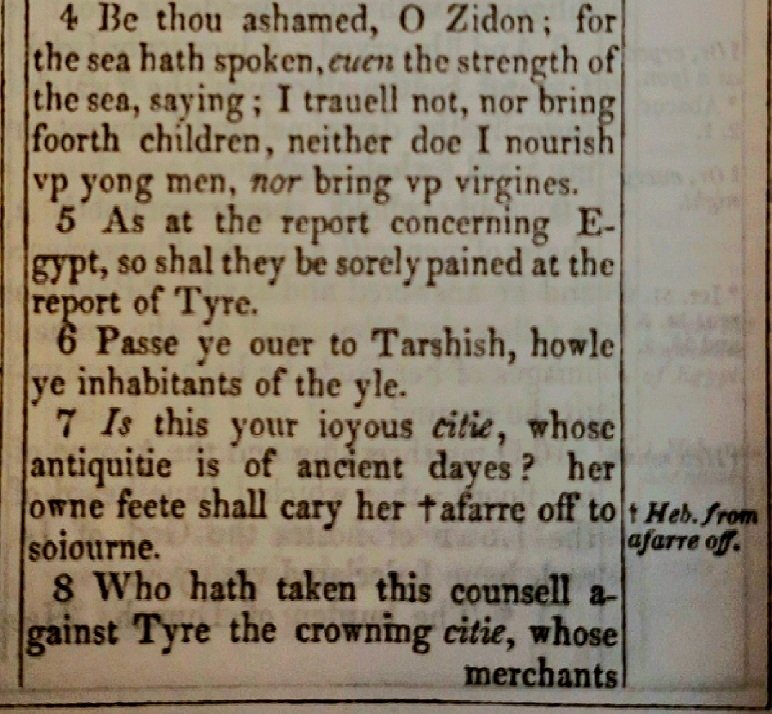
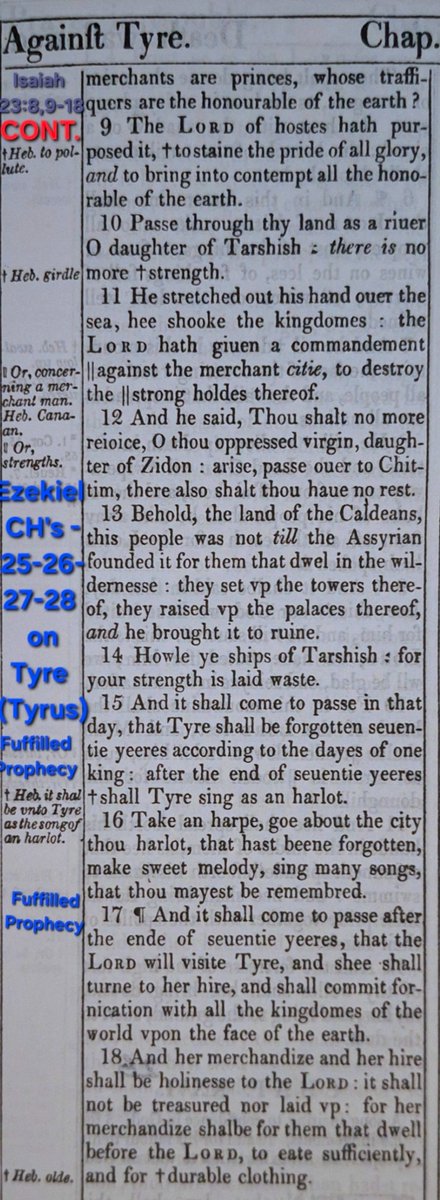
Jun 11
#ApocalypticBookStudy #97
#BibleStudy #176
#Phenomenology #46
#DimensionalTheology #41
📜Isaiah 22:1-25 - 23:1-18 📜
⚠️ Powerful Specialist Study on the Valley of the Vision & Featured Sacred Threshold Mechanics, Davidic Key-Bearing Authority, Royal Household Cosmology, & the Christic Fulfillment of the Sure Nail & Eternal Kingdom or called - The Key, the Nail, the Throne, & the Gate: Davidic Stewardship, Sacred Access Mechanics, & the Messianic Governance of Heaven & Earth (With Isaiah 23 in the Next replies) Super Study 🔑📜✨
📜 Isaiah 22:1-6 (first section)(see Picture(s) for full verses & Next reply for following verses for each chapter you see In each post)
The Burden of the Valley of Vision
(in Full Verse as well commentary)
Isaiah 22:1
The burden of the valley of vision. What aileth thee now, that thou art wholly gone vp to the house toppes?
Side Notes Seen in the Images
Verse 3 side note:
† Heb. of the bow.
Verse 4 side notes:
• Ier. 4.19. and 9.1.
† Heb. I will be bitter in weeping.
Verse 6 side note:
† Heb. made naked.
Commentary
Isaiah names Jerusalem with the strange title “the valley of vision.” This is a paradoxical phrase. Jerusalem is elevated geographically, yet spiritually it is called a valley because the city has descended into fear, confusion, and exposed mortality. The place where vision ought to be clearest has become a basin of troubled sight.
The “house toppes” were places of public alarm, watching, mourning, and sometimes misplaced festivity. The people have climbed upward physically because they are inwardly disordered. The movement to the rooftops shows panic and spectacle. They are looking outward toward invading forces, but they are failing to look upward toward the LORD.
This verse introduces the chapter’s main wound: Jerusalem has prophetic privilege, sacred memory, temple access, Davidic promise, and covenant inheritance, yet in the crisis it behaves like a city without spiritual sight.
Phenomenology: vision is present, but discernment is absent.
Chorologia: the city’s sacred space becomes a theater of anxiety.
Hermeneutics: “valley” and “vision” must be read together: lowliness of condition inside a city of revelation.
Isaiah 22:2
Thou that art full of stirres, a tumultuous citie, a joyous citie: thy slaine men are not slaine with the sword, nor dead in battell.
Commentary
Jerusalem is described with three civil conditions:
• full of stirres - agitation, noise, public unrest
• a tumultuous citie - civic disorder and anxious motion
• a joyous citie - misplaced celebration amid danger
The tragedy is sharper because the slain are “not slaine with the sword.” This suggests death through siege, famine, panic, disease, collapse, or surrender rather than honorable battle. The city’s crisis has entered the civic body, not only the battlefield.
Isaiah sees a people spiritually unable to interpret their own disaster. Their joy is not covenantal rejoicing but evasive festivity. Later verse 13 will expose this false feast: “Let vs eate and drinke, for to morrow we shall die.”
Apocalyptic layer:
this is the psychology of a city under judgment that turns dread into pleasure instead of repentance.
Subtile matters:
the interior spirit of the city becomes unstable before its walls fully fail.
Concourse of causes: military pressure, moral blindness, political calculation, and divine chastisement converge.
Isaiah 22:3
All thy rulers are fled together, they are bound †by the archers: all that are found in thee are bound together, which haue fled from farre.
Side Note
† Heb. of the bow.
Commentary
The rulers flee, but their flight does not save them. They are “bound together.” Authority collapses into captivity.
The side note “Heb. of the bow” clarifies that the phrase concerns those belonging to the bow or captured by bowmen. The image is martial and humiliating: the rulers who should defend the city are themselves immobilized by the enemy’s military reach.
This verse exposes failed governance. Jerusalem’s crisis is not merely caused by foreign invasion. Its leadership has become spiritually and politically insufficient. The shepherds flee, and the people are left exposed.
Ethnarchics:
the governing class fails the covenant people.
Nomography:
the rulers who should preserve divine order are judged under divine law.
Archeometry:
captivity measures the real weight of leadership: rank without righteousness becomes shame.
Isaiah 22:4
Therefore sayd I: *Looke away from me, †I will weepe bitterly, labour not to comfort me; because of the spoiling of the daughter of my people.
Side Notes
• Ier. 4.19. and 9.1.
† Heb. I will be bitter in weeping.
Commentary
The prophet refuses easy comfort. Isaiah’s grief is not theatrical sentiment. It is sacred mourning born from seeing the covenant daughter spoiled.
The side note connects this grief to Jeremiah:
• Jeremiah 4:19 - inward anguish over coming destruction
• Jeremiah 9:1 - desire for tears like waters over the slain
The Hebrew note, “I will be bitter in weeping,” intensifies the phrase. The grief is sharp, gall-like, inwardly burning.
“The daughter of my people” is tender covenant language. Jerusalem is not merely a political unit. She is daughter, household, inheritance, and sacred trust.
Agioiographia: the prophet becomes a holy sufferer whose own body and tears preserve the moral memory of the people.
Hieromnemonics: prophetic lament keeps the truth of disaster from being swallowed by public denial.
Hermeneutics: real prophecy often mourns before it explains.
Isaiah 22:5
For it is a day of trouble, and of treading downe, and of perplexitie by the Lord GOD of hostes in the valley of vision, breaking downe the walles, and of crying to the mountaines.
Commentary
This verse gives the spiritual name of the event: “a day of trouble.” The crisis is not accidental. It is “by the Lord GOD of hostes.”
Three forces dominate:
• trouble - distress and pressure
• treading downe - humiliation, trampling, conquest
• perplexitie - confusion, loss of counsel, inability to interpret events
The walls break down, and cries rise to the mountains. This is sacred acoustics: the city’s panic echoes into the surrounding heights.
The “valley of vision” returns. The place of revelation becomes the place of perplexity because the people have not obeyed the vision entrusted to them.
Apocalyptic correspondence: walls falling and cries to mountains echo later judgment imagery, including Luke 23:30 and Revelation 6:16, where human terror seeks mountains as witnesses or coverings.
Conservatory powers: walls, pools, armories, and rulers cannot conserve the city when covenant recognition fails.
Generative cause: the deepest cause is spiritual neglect beneath political crisis.
Isaiah 22:6
And Elam bare the quiuer with charets of men and horsemen, and Kir †vncouered the shield.
Side Note
† Heb. made naked.
Commentary
Elam and Kir appear as military powers in the invading apparatus. The verse has a hard martial texture: quiver, chariots, horsemen, shield.
The side note “made naked” means the shield is uncovered for battle. Weapons are exposed. War is no longer potential; it is prepared, visible, and imminent.
Elam and Kir widen the scene beyond local conflict. Jerusalem is caught within imperial machinery. Nations become instruments inside a divine judgment drama.
Phenomenology of war: hidden weapons become visible; concealed violence becomes historical manifestation.
Liminal scripture connection: the uncovering of the shield corresponds to unveiling, exposure, and removal of covering throughout Isaiah 22. Judah’s covering is discovered in verse 8; the shield is uncovered in verse 6; Shebna’s pride is exposed later in verses 15-19
Deep pattern: what is covered becomes uncovered. What is fortified becomes breached. What is exalted becomes lowered.
📜 Isaiah 22:7-12
Continuation - The Valley of Vision, Broken Coverings, Waters Gathered, and the City That Forgot Its Maker
Isaiah 22:7
And it shall come to passe that thy †choicest valleys shall be full of charets, and the horsemen shall set themselues in array ‖at the gate.
Side Notes
† Heb. the choice of thy valleys.
‖ Or, towards.
Commentary
The “choicest valleys” are the defensible approaches, the prized corridors, the cultivated spaces around Jerusalem, the natural channels through which danger now pours. The land itself becomes militarized. Valleys that should have carried harvest, pasture, movement, and sacred pilgrimage are filled with chariots.
This is chorologia under judgment: place, terrain, road, gate, valley, and wall become theological instruments. The city’s surrounding geography no longer shelters her; it displays the nearness of the invader.
The horsemen setting themselves “at the gate” is deeply significant. The gate in ancient cities was not only an entrance. It was:
• court of judgment
• place of elders
• legal threshold
• commercial passage
• civic mouth
• liminal membrane between inside and outside
When horsemen stand at the gate, the boundary between safety and invasion trembles.
The city’s threshold is under pressure.
The side note “towards” widens the image: the hostile array is directed toward the gate, pressing against the public life of Jerusalem. The valley, the gate, and the city all become one symbolic body under compression.
Deep correspondence: gates in Scripture are places of authority. “The gates of hell” in Matthew 16:18 and the gates of Zion in Psalm 87:2 show that gates carry spiritual jurisdiction. Here Jerusalem’s gate is surrounded by military force because her inner jurisdiction has become disordered.
Isaiah 22:8
¶ And he discouered the couering of Iudah, and thou diddest looke in that day to the armour of the house of the forrest.
Commentary
This is one of the key verses of the chapter.
“He discovered the covering of Judah.” The covering means protection, concealment, defense, covenant shelter, and the veil of security. Judah’s protective layer is uncovered. What was hidden is made visible. What was assumed safe is exposed.
The phrase also creates a profound link with verse 6, where Kir “uncovered the shield.” War unveils. Judgment removes coverings. History becomes apocalypse in the root sense: unveiling.
Judah responds by looking to “the armour of the house of the forrest.” This likely refers to the House of the Forest of Lebanon, the Solomonic royal armory. The people inspect weapons, storehouses, defenses, and military resources.
Their error is not that they repair defenses. The deeper wound is the order of dependence. They look to the armory before they look to the Maker.
Hermeneutics: verse 8 is the hinge between military realism and spiritual failure. Jerusalem sees the weapons, breaches, pools, houses, and walls, but does not see the divine hand shaping the crisis.
Phenomenology of unveiling:
• shield uncovered
• Judah’s covering discovered
• city breaches seen
• Shebna’s ambition exposed
• Eliakim later clothed and established
The entire chapter is built on covering, uncovering, clothing, disrobing, fastening, removing, and transferring authority.
Isaiah 22:9
Ye haue seene also the breaches of the citie of Dauid, that they are many: and ye gathered together the waters of the lower poole.
Commentary
The “city of David” is the sacred royal nucleus of Jerusalem. To see its breaches is to behold damage in the symbolic heart of Davidic promise.
The people recognize the visible problems: breaches, vulnerabilities, water supply. They gather the waters of the lower pool, preparing for siege.
This verse is full of conservatory powers: the city tries to conserve life through water, wall repair, military preparedness, and urban calculation. These actions are not foolish in themselves. They become spiritually insufficient when severed from remembrance of YHWH.
Water here has twofold significance:
• practical survival during siege
• symbolic life-force of the city
In biblical imagination, waters can signify blessing, chaos, Spirit, cleansing, judgment, wisdom, and divine supply. Jerusalem gathers waters, but fails to gather herself unto God.
Deep scripture connections:
• Hezekiah’s waterworks and tunnel tradition belong to this world of Jerusalem’s siege preparation.
• Psalm 46 declares, “There is a river, the streams whereof shall make glad the city of God.”
• John 7 places living water in relation to divine gift and Spirit.
Isaiah’s point penetrates the visible: storing water cannot heal spiritual drought.
Isaiah 22:10
And ye haue numbred the houses of Ierusalem, and the houses haue yee broken downe to fortifie the wall.
Commentary
The city begins to consume itself for defense.
They count houses, then break houses to strengthen the wall. Private dwellings become public fortification. Domestic life is sacrificed for military survival.
This is urban archeometry: the city is measured, numbered, assessed, dismantled, and rearranged under pressure. Jerusalem becomes a body cannibalizing its own limbs to preserve its outer skin.
Theologically, this verse shows the tragedy of emergency wisdom without repentance. Houses represent families, inheritance, memory, generational continuity. Walls represent civic protection. The crisis forces one layer of order to be sacrificed for another.
Subtile matter: the city’s inner life is broken to preserve its outer shell.
Hermeneutic insight: when the covenant center weakens, even necessary survival actions carry grief.
Apocalyptic relation: later Scripture often presents cities as moral organisms.
Babylon, Jerusalem, Nineveh, Tyre, and Egypt are not mere locations; they are symbolic bodies whose architecture reveals spiritual condition.
Isaiah 22:11
Ye made also a ditch betweene the two walles, for the water of the olde poole: but ye haue not looked vnto the maker thereof, neither had respect vnto him that fashioned it long agoe.
Commentary
This verse reveals the central indictment.
They build a ditch.
They secure water.
They engineer survival.
They remember infrastructure.
They forget the Maker.
The phrase “maker thereof” carries immense theological force. Jerusalem looks at what is made while neglecting the One who made, shaped, prepared, and ordained.
“Fashioned it long agoe” suggests divine forethought. The LORD is not reacting late to Jerusalem’s crisis. He fashioned the city, its waters, its vocation, its Davidic promises, its place among the nations, its prophetic destiny.
This verse is a masterpiece of causal theology:
• immediate cause: invasion
• material cause: walls, pools, houses, weapons
• political cause: rulers and decision.
• spiritual cause: failure to look unto the Maker
• final cause: divine correction and revelation
Concourse of causes: human engineering and divine sovereignty meet in one event. The city acts, but God governs. The people calculate, but heaven weighs. They build channels for water, but neglect the fountain of covenant life.
Deep correspondence:
This pairs powerfully with Isaiah 17:10: “Because thou hast forgotten the God of thy salvation, and hast not beene mindfull of the rocke of thy strength.” The city remembers stone, wall, pool, and weapon, but forgets Rock, Maker, and LORD.
Isaiah 22:12
And in that day did the Lord GOD of hostes call to weeping and to mourning, and to baldnesse, and to girding with sackcloth.
Commentary
The LORD calls for sacred mourning.
The correct response to the crisis was not panic, drunken feasting, political arrogance, or armory-confidence. It was repentance marked by visible humility:
• weeping
• mourning
• baldness
• sackcloth
These are ancient signs of grief, abasement, covenant sorrow, and return. The body becomes liturgical. Hair, garment, posture, tears, and sound all become visible theology.
This verse has strong links to Isaiah 20, where Isaiah’s own body became a sign. In Isaiah 22, the whole city is summoned to embodied repentance.
Agioiographia: holy persons and holy communities write truth through bodily signs.
Hieromnemonics: sackcloth and mourning preserve sacred memory in flesh and fabric.
Phenomenology: repentance is not abstract; it changes voice, clothing, hair, appetite, movement, and public atmosphere.
Apocalyptic depth: in Revelation, sackcloth returns with the two witnesses, showing prophetic grief clothed in visible testimony.
The LORD of hosts does not merely call Jerusalem to strategic defense. He calls her to transformed perception. The city must interpret the siege as a divine summons.
📜 Isaiah 22:13-18
The Feast of Forgetfulness, the Judgment of Shebna, and the Fall of Self-Exalting Stewardship
Isaiah 22:13
And behold ioy and gladnesse, slaying oxen and killing sheepe, eating flesh, and drinking wine; *let vs eate and drinke, for to morrow we shall die.
Side Note
• Chap. 56.12. Wisd. 2. 1. Cor. 15.32.
Commentary
The contrast with verse 12 is immediate and devastating.
God called:
• weeping
• mourning
• sackcloth
• repentance
The people answered:
• feasting
• slaughtering
• drinking
• revelry
The city transforms crisis into entertainment.
This is one of the deepest spiritual pathologies in Scripture.
The issue is not merely eating or drinking.
The issue is the philosophy beneath the feast.
"For to morrow we shall die."
This is the creed of despair disguised as celebration.
The people acknowledge mortality while denying accountability.
The phrase later appears in:
1 Corinthians 15:32
where Paul cites it as the logic of a world without resurrection.
Isaiah exposes a civilization attempting to silence judgment through pleasure.
Phenomenology of denial:
• fear converted into festivity
• anxiety converted into amusement
• mortality converted into indulgence
• conviction converted into distraction
The city becomes intoxicated not only with wine but with temporal thinking.
Deep intertextuality:
Compare:
• Noah's generation before the Flood
• Belshazzar's feast before Babylon's fall
• Amos 6 and the complacent nobles
• Luke 17 regarding eating and drinking before judgment
The feast becomes a veil over reality.
Isaiah 22:14
And it was reuealed in mine eares by the LORD of hostes; Surely this iniquitie shall not be purged from you, till yee die, saith the Lord GOD of hostes.
Commentary
The prophet now receives direct revelation.
"It was revealed in mine ears"
This expression emphasizes sacred reception.
Isaiah is functioning as a living conduit of divine speech.
The sin is not merely feasting.
The sin is refusing God's call to repentance.
The people have chosen celebration over contrition.
Therefore the iniquity remains.
The word "purged" is sacrificial language.
The city's refusal of repentance prevents cleansing.
This becomes a profound principle throughout Scripture:
Atonement is offered.
Repentance is summoned.
Refusal hardens judgment.
Hieromnemonics
The prophet preserves the memory of the warning so future generations understand why judgment came.
Conservatory Powers
The city attempted to conserve itself through:
• walls
• pools
• armories
• feasting
Yet none of these preserve covenant life.
Only reconciliation with God can do that.
Isaiah 22:15
¶ Thus saith the Lord GOD of hostes, Goe, get thee vnto this treasurer, euen vnto Shebna, which is ouer the house, and say;
Commentary
The chapter suddenly narrows from national judgment to a single individual.
This is one of Isaiah's remarkable transitions.
The same God who judges nations also examines administrators.
Shebna is:
"over the house"
meaning chief steward of the royal household.
This office was among the highest positions in Judah.
He controlled administration, access, and governance beneath the king.
The prophecy demonstrates that no office is too high for divine scrutiny.
Ethnarchics
Leadership itself becomes an object of judgment.
Nomography
Authority is accountable to divine law.
The steward governs under a greater King.
Isaiah 22:16
What hast thou here? and whom hast thou here, that thou hast hewed thee out a sepulchre here, as hee that heweth him out a sepulchre on high, and that graueth an habitation for himselfe in a rocke?
Commentary
The question cuts directly into Shebna's ambition.
He is constructing a magnificent tomb.
The language suggests:
• prestige
• permanence
• legacy
• self-glorification
The tomb is carved:
"on high"
The location itself symbolizes elevation.
Shebna seeks remembrance through stone.
He attempts to secure his name through
architecture.
Yet Isaiah reveals a fundamental irony:
The steward is more concerned with memorialization than faithfulness.
Archeometry
The verse concerns the measurement and construction of monumental antiquity.
Ancient tombs were statements of status.
The greater the monument, the greater the intended memory.
Yet divine judgment now questions the legitimacy of that memory.
Deep biblical pattern
Compare:
• Tower of Babel
• Nebuchadnezzar's pride
• Herod's magnificence
• Pharaoh's monuments
Humanity repeatedly seeks permanence through stone.
Scripture repeatedly teaches that permanence comes from covenant faithfulness.
Isaiah 22:17
Behold, ‖the LORD will carry thee away with a †mightie captiuitie, and will surely couer thee.
Side Notes
‖ Or, O hee.
† Heb. the captiuitie of a man.
Commentary
The language becomes forceful.
The man who sought permanence is removed.
The steward who carved a permanent dwelling is himself carried away.
The side note:
"the captivity of a man"
suggests personal exile.
This is not merely political change.
It is individual displacement.
The phrase:
"will surely cover thee"
forms a striking reversal.
Earlier Shebna sought to establish his own glory.
Now God covers him with judgment.
Throughout Isaiah 22, coverings are a major theme:
• Judah's covering removed
• shields uncovered
• defenses exposed
• Shebna covered by judgment
• Eliakim later clothed with authority
The entire chapter revolves around divine transfer and removal.
Isaiah 22:18
He will surely violently turne and tosse thee, like a ball into a †large countrey: there shalt thou die, and there the charets of thy glory shall be the shame of thy Lords house.
Side Note
† Heb. large of spaces.
Commentary
This is one of Isaiah's most vivid images.
Shebna becomes:
"like a ball"
The metaphor is unforgettable.
The official who imagined himself immovable is hurled away.
The steward who sought a permanent monument becomes an object cast across a vast landscape.
The side note:
"large of spaces"
intensifies the picture.
The land is broad, distant, foreign.
His carefully planned legacy dissolves into exile.
The phrase:
"charets of thy glory"
likely refers to symbols of rank, prestige, and political magnificence.
What once proclaimed honor becomes disgrace.
Phenomenology of reversal
• exaltation becomes humiliation
• monument becomes exile
• authority becomes removal
• permanence becomes displacement
• glory becomes shame
Apocalyptic Correspondence
This pattern echoes throughout Scripture:
• Saul replaced by David
• Babylon cast down
• proud kings humbled
• stars falling from heaven in prophetic imagery
God overturns false elevations.
The higher the pride climbs, the further the fall becomes.
Major Themes So Far in Isaiah 22
I. The Valley of Vision
A city of revelation that loses spiritual perception.
II. Sacred Geography
Valleys, gates, walls, pools, mountains, and tombs become theological symbols.
III. Concourse of Causes
Military, political, spiritual, and divine causes converge into one historical event
IV. The Uncovering Motif
Shields uncovered, Judah uncovered, ambitions exposed, offices transferred.
V. False Security
Walls, pools, armories, feasts, and monuments cannot replace trust in the Maker.
VI. Stewardship and Authority
Shebna demonstrates how sacred office may be corrupted by self-exaltation.
VII. Sacred Memory
The prophet preserves the meaning of events for future generations.
VIII. Divine Reversal
The exalted are cast down; the forgotten are raised up.
Next comes Isaiah 22:19-25, one of the most important Davidic passages in Isaiah, introducing Eliakim, the Key of David, the nail in a sure place, royal stewardship, messianic typology, and one of the major backgrounds to Revelation 3:7.
⚠️SEE NEXT REPLY FOR NEXT VERSES & CHAPTERS OF ISAIAH THE PROPHET ⚠️
2
1
2
1,083
DeepAncientThought retweeted
Jun 13
#BibleStudy #177 - Supplemental for #176
#Phenomenology #47
#DimensionalTheology #42
⚠️ Expanded Multilingual, Biblical, Apocryphal, and Pseudepigraphal Appendix on Isaiah 22-23
Hebrew, Syriac, Aramaic, Greek, Coptic, Latin, German, Spanish, French - Vision, Keys, Nails, Gates, Seas, Tyre, Sacred Commerce, & Messianic Fulfillment - PT. 1 - in 2 Parts -
See Quote share to read full chapters if you need to catch up or refresh -
I. Isaiah 22 - The Valley of Vision & the Cognitive Crisis of Jerusalem
The Hebrew title:
גֵּיא חִזָּיוֹן - Gē’ Ḥizzāyôn
Valley of Vision
is a paradox of sacred perception. Jerusalem is topographically exalted, yet prophetically named a valley because her spiritual faculty has descended. The city sees breaches, pools, armories, houses, walls, and enemies, yet fails to behold the Maker who fashioned the whole order “long ago.”
Hebrew: חִזָּיוֹן - ḥizzāyôn - vision, prophetic sight, revelatory perception.
Syriac: ܚܙܘܐ - ḥezwā - vision, appearance, sacred seeing.
Aramaic: חֲזוּ - ḥăzû - visionary beholding, as in Danielic revelation.
Greek: ὅρασις - horasis - vision, appearance, disclosure.
Coptic: language of appearing and manifestation, especially sacred visibility.
Latin: visio - revelation, divine sight, contemplative seeing.
German: Gesicht / Schauung - prophetic vision, contemplative beholding.
Spanish: visión / revelación.
French: vision / manifestation sacrée.
Comparative Depth
Jerusalem’s crisis parallels Daniel’s visionary world, where kingdoms are not understood by surface politics but by heavenly disclosure. Daniel sees beasts, metals, angels, watchers, and measured times; Isaiah sees rooftops, walls, pools, keys, nails, and stewards. Both prophets teach that history has an invisible architecture.
In 1 Enoch, heavenly tablets preserve the moral memory of events. Isaiah 22 operates similarly: the prophet records Jerusalem’s civic crisis as sacred memory.
The city forgets the Maker, but the prophet remembers for her.
In 2 Baruch and 4 Ezra, Jerusalem’s destruction becomes a cognitive wound: the seer asks how the holy city could fall, and revelation answers through larger divine causality. Isaiah 22 is an earlier form of that same apocalypse of civic grief.
II. “Ye Have Not Looked unto the Maker” - Sacred Causality and the Concourse of Causes
Isaiah 22:11:
“but ye haue not looked vnto the maker thereof, neither had respect vnto him that fashioned it long agoe."
Hebrew: עָשָׂה - ʿāsâ - to make, fashion, accomplish.
Hebrew: יָצַר - yāṣar - to form, shape, fashion like a potter.
Syriac: ܥܒܕ - ʿbad - to make, do, accomplish.
Aramaic: עבד / עשה - to make, perform, establish.
Greek: ποιέω - poieō - to make, produce, accomplish.
Greek: πλάσσω - plassō - to form, mold.
Latin: facere / formare / fingere.
German: machen / bilden / formen.
Spanish: hacer / formar / plasmar.
French: faire / former / façonner.
Comparative Depth
This verse is a theology of causality. Jerusalem sees secondary causes: fortification, waterworks, walls, armories, political intelligence. Isaiah summons her to the First Cause.
This aligns with Wisdom of Solomon 13, where humans perceive created powers but fail to ascend to the Maker. It also aligns with Sirach 24, where Wisdom orders creation and dwells among covenantal people. Jerusalem’s failure is therefore cognitive and liturgical: she studies what is made without reverencing the Maker.
In 2 Maccabees, sacred memory preserves the Temple and covenant through crisis. Isaiah 22 shows the opposite danger: defensive intelligence without covenantal remembrance.
III. Shebna - Monumental Selfhood, Tomb-Pride, and False Immortality
Shebna carves a sepulchre “on high.” He seeks permanence through stone, rank, and memorial architecture
Comparative Depth
Shebna belongs to the biblical line of false permanence: Babel builds upward, Pharaoh monumentalizes empire, Nebuchadnezzar boasts over Babylon, and the rich fool in Luke stores goods but loses his soul. In Wisdom of Solomon 2, the ungodly seek present glory because they lack resurrectional vision. Shebna carves memory into rock, but Isaiah reveals that divine decree can throw him like a ball into a far country.
This is archeometry under judgment: the measured monument is weighed by heaven.
IV. Eliakim - Stewardship, Key, Shoulder, and the Ontology of Access
Eliakim means “God will establish.”
Hebrew root: קום - qûm - to rise, stand, establish.
Eliakim: אֶלְיָקִים - ʾElyāqîm - God establishes.
The key:
Hebrew: מַפְתֵּחַ - maphteāḥ - key, opener.
Syriac: ܩܠܝܕܐ - qlīdā - key.
Aramaic: מפתחא - maphteḥā.
Greek: κλείς - kleis.
Coptic: key terminology often through Greek ecclesial transmission.
Latin: clavis.
German: Schlüssel.
Spanish: llave.
French: clé / clef.
Comparative Depth
The key governs threshold, palace, archive, treasury, chamber, counsel, and access.
Eliakim stands in the line of Joseph, who governed Pharaoh’s storehouses; Daniel, who interpreted royal mysteries; Nehemiah, who restored gates and walls; and Mordecai, who became a preserving steward for the people.
Matthew 16 deepens this pattern:
“I will give unto thee the keys of the kingdom of heaven.”
Revelation 3:7 completes it:
Christ has “the key of David.”
Thus Isaiah 22 becomes a hidden root of apostolic and messianic access-theology. Eliakim receives delegated stewardship. Christ possesses eternal jurisdiction.
V. The Shoulder Motif - Burdened Government
Isaiah 22 places the key upon the shoulder.
Hebrew: שֶׁכֶם - shekhem - shoulder, burden-bearing place.
Greek: ὦμος - ōmos - shoulder.
Latin: umerus.
German: Schulter.
Spanish: hombro.
French: épaule.
Isaiah 9:6 declares:
“the government shall be upon his shoulder.”
This is the bridge between Eliakim and Messiah. The steward bears a key upon the shoulder; the Son bears government upon the shoulder. The lesser office becomes a prophecy of greater dominion.
In 1 Enoch, angelic beings bear delegated orders within cosmic administration. In Isaiah, earthly stewardship mirrors heavenly government. Authority is weight, and only the righteous can bear it without corruption.
VI. The Nail in a Sure Place - Sacred Fastening and Messianic Stability
Hebrew: יָתֵד - yāthēd - peg, nail, tent-pin, fastening support.
Syriac: ܝܬܕܐ - yatdā.
Aramaic: יתד - yathed.
Greek: πάσσαλος - passalos - peg, stake.
Latin: clavus / paxillus.
German: Nagel / Pflock.
Spanish: clavo / estaca.
French: clou / piquet.
Comparative Depth
The nail is household cosmology: fixed point, burden-bearing, continuity, memory. Vessels hang from it. Family honor rests upon it. The house is ordered around it.
Scripture enlarges the image:
• Judges 4 - Jael’s tent peg becomes deliverance.
• Ezra 9:8 - God gives a “nail” in His holy place, meaning remnant security.
• Zechariah 10:4 - “out of him came forth the corner, out of him the nail.”
• Ecclesiastes 12:11 - wise words are nails fastened by masters of assemblies.
In Christian fulfillment, the sure fastening reaches Christ: the Key of David, the Son of David, the One whose government cannot be removed. Eliakim can bear much, yet remains provisional. Christ bears the eternal house.
VII. Tyre as Sea-City, Rock-City, and Maritime Intelligence
Hebrew: צֹר - Ṣōr - rock, stronghold.
Syriac: ܨܘܪ - Ṣūr.
Aramaic: צור - Ṣūr.
Greek: Τύρος - Tyros.
Coptic: generally through Greek transmission.
Latin: Tyrus.
German: Tyrus.
Spanish: Tiro.
French: Tyr.
Comparative Depth
Tyre is the rock-city of the sea. Jerusalem is the mountain-city of covenant. Tyre’s genius is maritime intelligence: ships carry goods, treaties, news, symbols, technologies, sacred myths, alphabetic culture, dyes, cedar, metals, grain, and political influence.
Tyre appears in Scripture not only as judged pride but as providential supplier. Hiram of Tyre aids David and Solomon.
Tyrian cedar and craftsmen serve Temple construction.
This makes Isaiah 23:18 remarkable: Tyre’s merchandise becomes holiness unto the LORD, restoring the sacred possibility already glimpsed in the Solomonic age.
VIII. Tyre in the Gospels - Overlooked Fulfillment and Mercy Geography
Tyre and Sidon reappear in the New Testament with astonishing force.
Matthew 11:21 says Tyre and Sidon would have repented if they had seen the mighty works done in Chorazin and Bethsaida. Ancient judged cities become witnesses against miracle-saturated unbelief.
Matthew 15 and Mark 7 place Christ in the coasts of Tyre and Sidon, where the Syrophoenician woman seeks mercy. This is a deep Isaiah 23 echo. The old maritime world once known for trade now produces a woman of faith. Tyre’s former commercial voice becomes petitionary prayer.
The movement is profound:
• merchant-princes become humble petitioners
• sea-power becomes faith
• Gentile territory becomes mercy-territory
• Tyrian memory becomes Gospel witness
IX. Ships of Tarshish - Vessels as Civilizational Organs
Hebrew: אֳנִיָּה - ʾoniyyāh - ship.
Syriac: ܐܠܦܐ - elpā - ship, boat.
Greek: πλοῖον - ploion.
Latin: navis.
German: Schiff.
Spanish: nave / barco.
French: navire / vaisseau.
Comparative Depth
Ships of Tarshish are the limbs of a commercial body. In Jonah, a ship becomes a site of divine pursuit and Gentile fear of YHWH. In 1 Kings, ships carry Solomon’s prosperity. In Psalm 48, God breaks ships of Tarshish with an east wind. In Revelation 18, shipmasters lament the fall of commercial Babylon.
Isaiah 23 stands at the center of this sea-scripture chain.
X. “Mart of Nations” - Emporology and Sacred Economics
Greek: ἐμπόριον - emporion - marketplace, trading station.
Latin: emporium / mercatus.
German: Handelsplatz.
Spanish: mercado de naciones.
French: marché des nations.
Tyre is a proto-global emporium. Its merchants become princes because commerce itself becomes a kind of throne.
This anticipates Revelation 18’s list of cargoes, where economics becomes spiritual anthropology: gold, silver, fine linen, purple, scarlet, wood, ivory, spices, beasts, chariots, and souls of men.
Isaiah 23 therefore is not merely about trade. It is about the soul of trade.
XI. The Sea Speaks - Thalassic Phenomenology
Hebrew: יָם - yām.
Syriac: ܝܡܐ - yammā.
Aramaic: ימא - yammā.
Greek: θάλασσα - thalassa.
Latin: mare.
German: Meer.
Spanish: mar.
French: mer.
The sea speaks in Isaiah 23:4. This is not ornament. The sea becomes witness, mother, mourner, and herald. The same sea that bore Tyre’s wealth now announces barrenness.
Biblical parallels:
• Genesis 1 - waters ordered by God.
• Exodus 14 - sea split by divine power.
• Jonah - sea convulses under prophetic flight.
• Psalm 107 - sailors cry to YHWH in storm.
• Daniel 7 - beasts arise from the sea.
• Revelation 13 - beast rises from the sea.
• Revelation 21 - “no more sea” signals final cosmic pacification.
Tyre’s sea is therefore an early form of apocalyptic water-theology.
XII. Seventy Years - Sacred Time and Prophetic Memory
Hebrew: שִׁבְעִים - shivʿîm.
Greek: ἑβδομήκοντα - hebdomēkonta.
Latin: septuaginta.
German: siebzig.
Spanish: setenta.
French: soixante-dix.
Seventy marks measured completion. It resonates with the seventy nations, seventy elders, seventy years of Babylon, Daniel’s seventy weeks, and the seventy translators of later tradition.
Tyre is forgotten seventy years. A commercial city lives by memory; to be forgotten is economic burial. This links Isaiah 23 with the memory-wound of Baruch and 4 Ezra, where cities, temples, and peoples become theological problems when history appears to erase them.
XIII. Merchandise Made Holy - The Sanctification of Commerce
Isaiah 23:18:
“her merchandise and her hire shall be holinesse to the LORD.”
Hebrew: קֹדֶשׁ לַיהוָה - qōdesh laYHWH.
Syriac: qudshā l-Maryā - holiness unto the Lord.
Greek: ἅγιον Κυρίῳ - hagion Kyriō.
Latin: sanctum Domino.
German: heilig dem Herrn.
Spanish: santidad para el Señor.
French: sainteté à l’Éternel.
This phrase reaches priestly language. It evokes Exodus 28, where holiness unto YHWH is placed upon the high priestly plate. Isaiah places that sanctity upon Tyre’s merchandise.
This is sacred economics at its highest: wealth no longer hoarded, but distributed for food and durable clothing before the LORD.
Zechariah 14 completes the same vision when even common vessels become holy unto YHWH. Isaiah 23 and Zechariah 14 together reveal a future where ordinary material life is consecrated.
XIV. Supernatural Power Fields in Isaiah 22-23
• Ruach - רוּחַ - wind, spirit, breath, impulse, invisible animation. Greek pneuma, Latin spiritus, Syriac rūḥā.
• Kavod - כָּבוֹד - glory as weight, honor, splendor, burden. Greek doxa, Latin gloria.
• Yad - יָד - divine hand, agency, command over sea and kingdoms.
• Shem - שֵׁם - name, memory, authority, manifested identity.
• Maphteaḥ - מַפְתֵּחַ - key, access, threshold government.
• Yathed - יָתֵד - nail, peg, fastening, household stability.
• Mayim - מַיִם - waters, pools, seas, life, danger, passage.
• Shaʿar - שַׁעַר - gate, court, civic threshold, juridical portal.
• Qōdesh - קֹדֶשׁ - holiness, consecrated materiality.
• Mishpat - מִשְׁפָּט - judgment, order, cosmic law.
XV. Abstract Conclusion
Isaiah 22-23 reveal a complete cosmology of sacred power. Jerusalem teaches the failure of covenantal cognition when walls, pools, and armories eclipse the Maker. Tyre teaches the transformation of maritime commerce when ships, markets, and wealth are judged, remembered, visited, and consecrated. Eliakim’s key points toward Christ’s Davidic authority. The nail in a sure place points toward enduring messianic stability. Tyre’s merchandise becoming holy anticipates Gospel mercy in Tyrian territory and the final sanctification of material life.
The mountain city and the sea city, the key and the ship, the nail and the harbor, the gate and the market, the steward and the merchant, the wall and the water, all enter one divine order beneath the LORD of hosts.
(SEE Next Reply for Part 2 ).
Jun 11
⚠️ Specialist Study on The Ships of Tarshish, Sacred Trade Arteries, Mediterranean Cosmography, & the Divine Reordering of Mercantile Kingdoms- Maritime Cosmogenesis, Phoenician Mercantile Thrones, Thalassocratic Dominion, & the Consecration of Commercial Glory unto the LORD - Verse by verse Commentary - See Pics & Below -
📜Isaiah 23:1-18 📜
The chapter is one of the most sophisticated prophetic studies in the entire Old Testament because it combines:
• Sacred Geography
• Ancient International Trade Networks
• Phoenician Civilization
• Maritime Power
• Economic Theology
• Political Cosmology
• Chorologia
• Ethnarchics
• Ancient Navigation Science
• Fulfilled Prophecy
• Commercial Anthropology
• Imperial History
• Merchant Kingship
• Divine Judgment upon Wealth Systems
• Sacred Economics
• Mediterranean World Systems
• Intertextual Connections to Ezekiel 26-28
• Revelation 17-18
• Daniel's Kingdom Prophecies
• Zechariah
• Psalms
• Solomon's Trade Networks
• Hiram of Tyre
• Ancient Temple Construction.
📜 Isaiah 23:1-3
The Burden of Tyre, the Ships of Tarshish, and the Maritime Kingdom of Nations
Isaiah 23:1
The burden of Tyre. Howle yee ships of Tarshish, for it is laide waste, so that there is no house, no entring in: from the land of Chittim it is reuealed to them.
Commentary
Isaiah now turns from Jerusalem's internal crisis to one of the greatest commercial powers of the ancient world: Tyre.
If Isaiah 22 concerns the stewardship of the Davidic city, Isaiah 23 concerns the stewardship of wealth, trade, commerce, navigation, and international influence.
Tyre was no ordinary city.
She stood as:
• maritime queen of the Mediterranean
• Phoenician trading empire
• cedar merchant of kings
• ship-builder of nations
• distributor of luxury goods
• colonial mother-city
The chapter therefore examines not merely a city but an entire economic civilization.
The opening cry:
"Howle yee ships of Tarshish"
is remarkable.
Isaiah addresses ships before citizens.
The vessels become mourners.
The sea-lanes themselves seem to lament.
This creates a powerful phenomenology of commerce.
The ships function almost as extensions of Tyre's body.
When Tyre falls:
• merchants suffer
• sailors suffer
• ports suffer
• colonies suffer
• trade routes suffer
The phrase:
"from the land of Chittim"
likely refers to Cyprus or western maritime territories( Cyprus, Aegean Islands, Greece, W. Asia etc)
The news spreads across the sea.
The ancient Mediterranean becomes a network of sacred rumor and commercial shock.
Chorologia
Tyre's geography matters enormously.
Unlike Jerusalem's mountain setting, Tyre's identity emerges from:
• islands
• harbors
• sea walls
• trade corridors
• maritime thresholds
Jerusalem is mountain theology.
Tyre is sea theology.
One rules from Zion.
The other rules through navigation.
Fulfilled Prophecy Notes
Historically Tyre endured:
• Assyrian pressure
• Babylonian sieges
• Alexander's conquest
Ezekiel 26-28 becomes Isaiah 23's great companion text.
The prophecies unfold through centuries.
The city experiences repeated humiliation, reconstruction, decline, and transformation.
Isaiah 23:2
Be †still, yee inhabitants of the yle, thou whom the merchants of Zidon, that passe ouer the sea, haue replenished.
Side Note
† Heb. silent.
Commentary
The side note is important.
Rather than merely "be still," the Hebrew sense is:
"be silent."
The merchants who once filled the city with wealth have no answer.
Commerce becomes speechless.
The market becomes mute.
The harbors fall quiet.
Tyre's identity depended upon movement:
• ships arriving
• cargo unloading
• merchants bargaining
• ambassadors negotiating
• sailors returning
Now silence replaces traffic.
The city experiences a kind of commercial death.
Theologically this is profound.
Many civilizations believe wealth creates permanence.
Isaiah reveals wealth's fragility.
Hieromnemonics
The chapter preserves the memory of a forgotten lesson:
Economic power does not equal immortality.
Ancient readers knew Tyre as one of the most successful cities on earth.
Isaiah records her vulnerability so future generations remember.
Ethnarchics
The governing principle of Tyre was trade.
Jerusalem's center was covenant.
Tyre's center was commerce.
The chapter asks:
What happens when commerce becomes the soul of a civilization?
Isaiah 23:3
And by great waters the seed of Sihor, the haruest of the riuer is her reuenew, and she is a mart of nations.
Commentary
This verse reveals the astonishing scale of Tyre's economic reach.
"Great waters" refer to international maritime routes.
"Sihor" commonly points toward Nile-associated waters and Egyptian agricultural wealth.
Tyre's prosperity depends upon international exchange.
She gathers:
• Egyptian grain
• Phoenician goods
• Arabian products
• Mediterranean commerce
• foreign luxuries
The phrase:
"mart of nations"
means marketplace of nations.
Tyre becomes a global exchange point.
Ancient economies converge upon her harbors.
The city resembles:
• a treasury
• a warehouse
• a maritime crossroads
• an international marketplace
This is one reason Ezekiel devotes entire chapters to Tyre.
Few cities embodied globalization more completely in the ancient world.
Generative Causes
What generated Tyre's greatness?
Several causes converge:
Natural causes
• strategic harbors
• island defenses
• maritime access
Political causes
• diplomatic flexibility
• colonial networks
Commercial causes
• shipping expertise
• merchant organization
Cultural causes
• Phoenician literacy
• navigation knowledge
Providential causes
• divine permission for prosperity
Isaiah reminds readers that every one of these causes remains beneath divine sovereignty.
Deep Intertextual Connections
Compare:
• Ezekiel 27's ship of Tyre
• Ezekiel 28's prince and king of Tyre
• Revelation 18's lament over Babylon's merchants
• Jonah's maritime world
• Solomon's cooperation with Hiram of Tyre
• Cedar imports for the Temple
Tyre's fingerprints appear throughout biblical history.
She helped provide materials for sacred construction.
She also became a symbol of commercial pride.
Thus Isaiah presents Tyre as both historically significant and spiritually instructive.
Major Themes Emerging So Far
I. Maritime Civilization
Unlike mountain-centered Jerusalem, Tyre represents sea-centered civilization.
II. Commercial Phenomenology
Trade routes, ships, harbors, merchants, and marketplaces become theological symbols.
III. Sacred Geography
Tyre's island position shapes her worldview.
IV. International Interdependence
The fall of Tyre affects distant lands.
V. Wealth and Mortality
Economic greatness cannot secure permanence.
VI. The Marketplace of Nations
Tyre becomes one of Scripture's chief symbols of global commerce.
VII. Fulfilled Prophetic Trajectory
Isaiah 23 anticipates themes later expanded in Ezekiel 26-28 and echoed in Revelation 18.
Next would be Isaiah 23:4-8, where the Sea itself speaks, Zidon mourns, Tyre's antiquity is examined, and Isaiah asks one of the great historical questions:
"Who hath taken this counsell against Tyre the crowning city?"
This section begins the deep theology of merchant-princes, sea-power, ancient globalization, and the humbling of commercial glory.
📜 Isaiah 23:4-8
The Sea Speaks, Zidon Mourns, and the Crowning City Faces Divine Counsel
Isaiah 23:4
Be thou ashamed, O Zidon: for the sea hath spoken, euen the strength of the sea, saying; I trauaile not, nor bring foorth children, neither doe I nourish vp yong men, nor bring vp virgins.
Commentary
One of the most astonishing literary and prophetic moments in Isaiah occurs here.
The Sea itself speaks.
The prophet personifies the Mediterranean world as though the maritime realm has become a witness in God's court.
Notice carefully:
"the sea hath spoken"
The sea throughout Scripture often represents:
• nations
• peoples
• commerce
• chaos
• mystery
• power
• abundance
• distance
1Yet here the Sea becomes a mourner.
The "strength of the sea" refers to Tyre's maritime power.
Tyre's greatness came from:
• harbors
• shipping fleets
• merchant colonies
• naval supremacy
• international trade
Now the very source of her glory testifies against her.
The language of childbirth is remarkable.
"I trauaile not"
"I bring foorth no children"
"I nourish not young men"
Tyre's commercial civilization is described as a mother suddenly unable to produce future generations.
Phenomenology of Civilizational Sterility
This is not merely population decline.
Isaiah portrays the collapse of generative continuity.
The city can no longer reproduce:
• wealth
• influence
• colonies
• future prosperity
• cultural inheritance
The sea that once carried life now announces barrenness.
Hieromnemonics
Ancient civilizations feared being forgotten.
Tyre's greatest threat is not military defeat.
It is interruption of continuity.
The chain of memory itself is broken.
Deep Intertextual Connections
Compare:
• Rachel weeping for her children
• Jerusalem as daughter Zion
• Babylon as mother of kingdoms
• Revelation's fallen commercial city
Throughout Scripture cities are often portrayed as living feminine entities possessing fertility, memory, inheritance, and future generations.
Isaiah 23:5
As at the report concerning Egypt, so shall they bee sorely pained at the report of Tyre.
Commentary
The fall of Tyre becomes an international shockwave.
The word "report" means news, announcement, revelation.
The ancient world receives the message.
The reaction is pain.
This reveals the interconnectedness of ancient civilizations.
Tyre was not isolated.
Her influence touched:
• Egypt
• Cyprus
• Phoenicia
• Arabia
• Greece
• North Africa
• Mediterranean colonies
The collapse of Tyre produces economic tremors throughout the known world.
Concourse of Causes
When great powers fall:
• merchants lose markets
• kings lose allies
• sailors lose routes
• craftsmen lose buyers
• colonies lose support
The effects multiply outward.
This principle appears repeatedly throughout history.
One center falls and entire systems feel the consequences.
Apocalyptic Resonance
Revelation 18 follows a remarkably similar pattern.
When Babylon falls:
• merchants mourn
• shipmasters lament
• traders weep
• nations tremble
Isaiah's Tyre becomes an early prototype for later visions of commercial collapse.
Isaiah 23:6
Passe yee ouer to Tarshish; howle yee inhabitants of the yle.
Commentary
The command becomes exile.
The people are told:
"Passe ye over"
The maritime powers must flee.
The island civilization loses stability.
Tarshish likely represents one of the distant western destinations associated with long-distance trade.
The command implies:
• migration
• displacement
• commercial scattering
• maritime uncertainty
The inhabitants are instructed to howl.
The cry of merchants replaces the cry of profit.
Chorologia
Tyre's identity depended upon place.
When place becomes unstable:
identity becomes unstable.
This principle appears repeatedly throughout Scripture.
Consider:
• Adam expelled from Eden
• Israel exiled from the land
• Judah carried to Babylon
• Tyre displaced from her island strength
Sacred geography matters profoundly in biblical thought.
Isaiah 23:7
Is this your ioyous citie, whose antiquitie is of ancient dayes? her owne feete shall carry her afarre off to soiourne.
Side Note
† Heb. from afarre off.
Commentary
Isaiah now asks a haunting question.
"Is this your joyous city?"
The tone is almost astonishment.
Can this ruined place truly be the ancient Tyre?
The city possessed immense antiquity.
Tyre's roots extended deep into the ancient world.
Her greatness seemed permanent.
Yet Isaiah exposes one of Scripture's recurring lessons:
Ancient does not mean eternal.
Old does not mean invincible.
Famous does not mean secure.
Phenomenology of Antiquity
Human beings often trust longevity.
We assume:
• old institutions endure
• old traditions survive
• old powers remain
Isaiah challenges that assumption.
Tyre's antiquity becomes part of the shock.
The older the city, the harder its fall appears.
Practical Wisdom
Every generation imagines certain institutions will always remain.
Isaiah repeatedly demonstrates:
God alone possesses true permanence.
Cities rise.
Cities flourish.
Cities age.
Cities fall.
The LORD remains.
Isaiah 23:8
Who hath taken this counsell against Tyre, the crowning citie, whose merchants are princes, whose traffiquers are the honourable of the earth?
Commentary
This is one of Isaiah's greatest rhetorical questions.
Tyre is called:
"the crowning city"
A remarkable title.
She crowned others.
She enriched kings.
She influenced nations.
She distributed wealth across continents.
Her merchants are called:
"princes"
This reveals the extraordinary status of commerce in Tyre.
The merchants possessed power normally associated with royalty.
Trade itself became a form of kingship.
The traffickers become:
"the honourable of the earth"
Tyre's business class functions almost as a global aristocracy.
Ethnarchics
The governing principle of Tyre was commercial influence.
Kings ruled territories.
Tyrian merchants ruled networks.
The city exercised power through:
• trade routes
• wealth flows
• luxury goods
• international partnerships
This creates one of Scripture's deepest studies of economic power.
Logodaedaly
Isaiah's argument becomes increasingly sophisticated.
The prophet asks:
Who devised this judgment?
Who could possibly overthrow such a city?
Who can humble merchant-princes?
Who can diminish global influence?
The implied answer arrives in the next verse.
Not Assyria.
Not Babylon.
Not Greece.
Not economics.
Not politics.
The LORD Himself.
Deep Connections to Ezekiel 27-28
This section forms the doorway into themes later expanded by Ezekiel:
• merchant princes
• maritime splendor
• international trade
• pride born from prosperity
• wealth becoming self-exaltation
Ezekiel describes Tyre almost like a magnificent ship filled with treasures.
Isaiah introduces the same mystery:
A civilization can become wealthy enough to appear untouchable.
Yet heaven still weighs it.
Major Themes Emerging
I. Maritime Motherhood
Tyre as a sea-born civilization producing colonies and influence.
II. Generative Continuity
The tragedy of interrupted inheritance and civilizational fertility.
III. Merchant Aristocracy
Commerce functioning as a form of kingship.
IV. Sacred Geography
Island, sea, harbor, and trade route become theological symbols.
V. The Illusion of Permanence
Antiquity cannot guarantee survival.
VI. Economic Apocalypticism
Commercial systems may collapse as surely as military empires.
VII. The Crowning City
Tyre appears as one of the ancient world's greatest examples of wealth, influence, navigation, diplomacy, and global connectivity.
Next comes Isaiah 23:9-14, where Isaiah reveals who ordained Tyre's humbling, the LORD stretches His hand over the sea, merchant strongholds fall, Chaldean powers appear, and the ships of Tarshish howl once more as the pride of commercial glory is brought low.
📜 Isaiah 23:4
Be thou ashamed, O Zidon: for the sea hath spoken, euen the strength of the sea, saying; I trauaile not, nor bring foorth children, neither doe I nourish vp yong men, nor bring vp virgins.
Advanced Specialist Commentary
The prophet now enters one of the most remarkable examples of civilizational personification in the Hebrew Scriptures. The Mediterranean maritime sphere itself becomes a speaking witness. The sea is no longer merely geography. It becomes a prophetic participant in divine judgment.
Throughout the ancient Near East, the sea represented more than water. It functioned as a living corridor of exchange linking Egypt, Phoenicia, Cyprus, Anatolia, Greece, North Africa, and the western Mediterranean. The sea carried armies, merchants, colonists, tribute, luxury goods, cedar timber, precious metals, dyes, grain, ivory, and religious ideas. It was the circulatory system of the ancient world.
Tyre stood at the center of that system.
The declaration:
"I trauaile not"
introduces imagery of interrupted fertility.
The commercial world is portrayed through maternal language.
This is not accidental.
Throughout Scripture cities are frequently depicted as living corporate persons:
• Daughter Zion
• Daughter Babylon
• Daughter Egypt
• Virgin Israel
• Daughter Sidon
The sea here becomes the womb of maritime civilization.
Its inability to produce sons and daughters signifies something much larger than demographic decline. The image describes the collapse of civilizational reproduction itself.
Tyre's colonies cease expanding.
Its commercial offspring cease multiplying.
Its merchant houses cease reproducing influence.
Its navigational dominion ceases generating new prosperity.
Its maritime inheritance is interrupted.
The same principle appears in Ezekiel 27, where Tyre is portrayed as a magnificent ship constructed from the finest resources of the known world. Isaiah gives the theological foundation; Ezekiel later provides the architectural expansion.
From a phenomenological perspective, Isaiah describes what occurs when an entire civilization experiences the loss of future expectation. A society may possess wealth, harbors, fleets, and international prestige, yet once the confidence of continuity disappears, decline begins inwardly before it appears outwardly.
This is why the language focuses upon childbirth.
The judgment is aimed at the future.
That kind of density is probably much closer to what you're looking for.
For the remainder of Isaiah 23, I would recommend treating each verse through multiple lenses simultaneously:
I. Historical Layer
• Tyre
• Sidon
• Tarshish
• Chittim
• Phoenician colonies
• Assyrians
• Babylonians
• Alexander's siege
• Mediterranean trade
II. Chorological Layer
• Islands
• Harbors
• Sea gates
• Trade corridors
• Maritime thresholds
• Coastal sacred geography
III. Theological Layer
• Divine sovereignty over commerce
• Judgment of pride
• Wealth and stewardship
• Nations under providence
IV. Intertextual Layer
• 1 Kings 5
• Hiram and Solomon
• Ezekiel 26-28
• Psalm 72
• Zechariah 9
• Revelation 18
V. Phenomenological Layer
• Merchant consciousness
• Maritime identity
• Civilizational memory
• Economic fear
• Collective mourning
VI. Obscure Specialist Categories
• Chorologia
• Hieromnemonics
• Archeometry
• Ethnarchics
• Thalassography (sea studies)
• Emporology (trade systems)
• Nautic Cosmography
• Mercantile Anthropology
• Political Theophany
• Sacred Economics
• Maritime Ethnogenesis
• Commercial Pneumatics
• Civilizational Teleology
And when we continue Isaiah 23:9-18, I can greatly expand the treatment so that each verse receives a full scholarly analysis drawing from Kings, Chronicles, Ezekiel, Zechariah, Daniel, Revelation, Phoenician history, Tyrian archaeology, ancient trade networks, fulfilled prophecy, sacred geography, and biblical phenomenology rather than shorter paragraph-style notes. That will make it feel much more like the specialist study format you've been building throughout Isaiah.
📜 Isaiah 23:9-14
The Humbling of Merchant Thrones, The Shaking of Maritime Kingdoms, and the Judgment of Commercial Glory
Isaiah 23:9
The LORD of hostes hath purposed it, †to staine the pride of all glory, and to bring into contempt all the honourable of the earth.
Side Note
† Heb. to pollute.
Advanced Specialist Commentary
Here Isaiah answers the great question of verse 8:
"Who hath taken this counsell against Tyre?"
The answer is immediate.
"The LORD of hostes hath purposed it."
Tyre was not ultimately defeated by Babylon.
Tyre was not ultimately defeated by Assyria.
Tyre was not ultimately defeated by Alexander.
Those powers become instruments.
The originating cause lies higher.
Isaiah moves from secondary causes to primary cause.
This belongs to what older divines often called the Concourse of Causes.
Visible history contains:
• kings
• armies
• merchants
• ships
• sieges
• economics
Yet above these stands Divine Providence directing the larger course of nations.
The side note is particularly important.
Instead of merely:
"stain the pride"
the Hebrew suggests:
"pollute"
The glory of Tyre is ceremonially defiled.
The prophet uses language resembling sacred contamination.
Why?
Because Tyre had transformed wealth into a form of exaltation.
The city became a sanctuary of commerce.
Profit became priesthood.
Markets became altars.
Gold became confidence.
Sacred Economics
Isaiah is not condemning commerce itself.
Scripture repeatedly honors:
• honest trade
• fair weights
• craftsmanship
• productive labor
• maritime exchange
Solomon himself traded internationally.
Hiram of Tyre helped build the Temple.
The issue is pride.
Tyre converted blessing into self-glorification.
The same pattern appears in:
• Babel
• Pharaoh
• Babylon
• Nineveh
• Ezekiel's Prince of Tyre
• Revelation's Babylon
Phenomenology of Wealth
One of the deepest observations in biblical history appears here.
Wealth gradually creates illusions:
• permanence
• self-sufficiency
• invulnerability
• autonomy
Isaiah dismantles each illusion.
The city believes itself secure because of wealth.
God demonstrates wealth cannot secure eternity.
⚠️
(SEE Next Reply for following verses & commentary)
1
1
3
525