
A social enterprise working to reduce digital inequalities & digital harm, promoting safe digital inclusion and freedoms online for the women & children.
Joined March 2021
- Tweets 870
- Following 39
- Followers 268
- Likes 76
634 Photos and videos
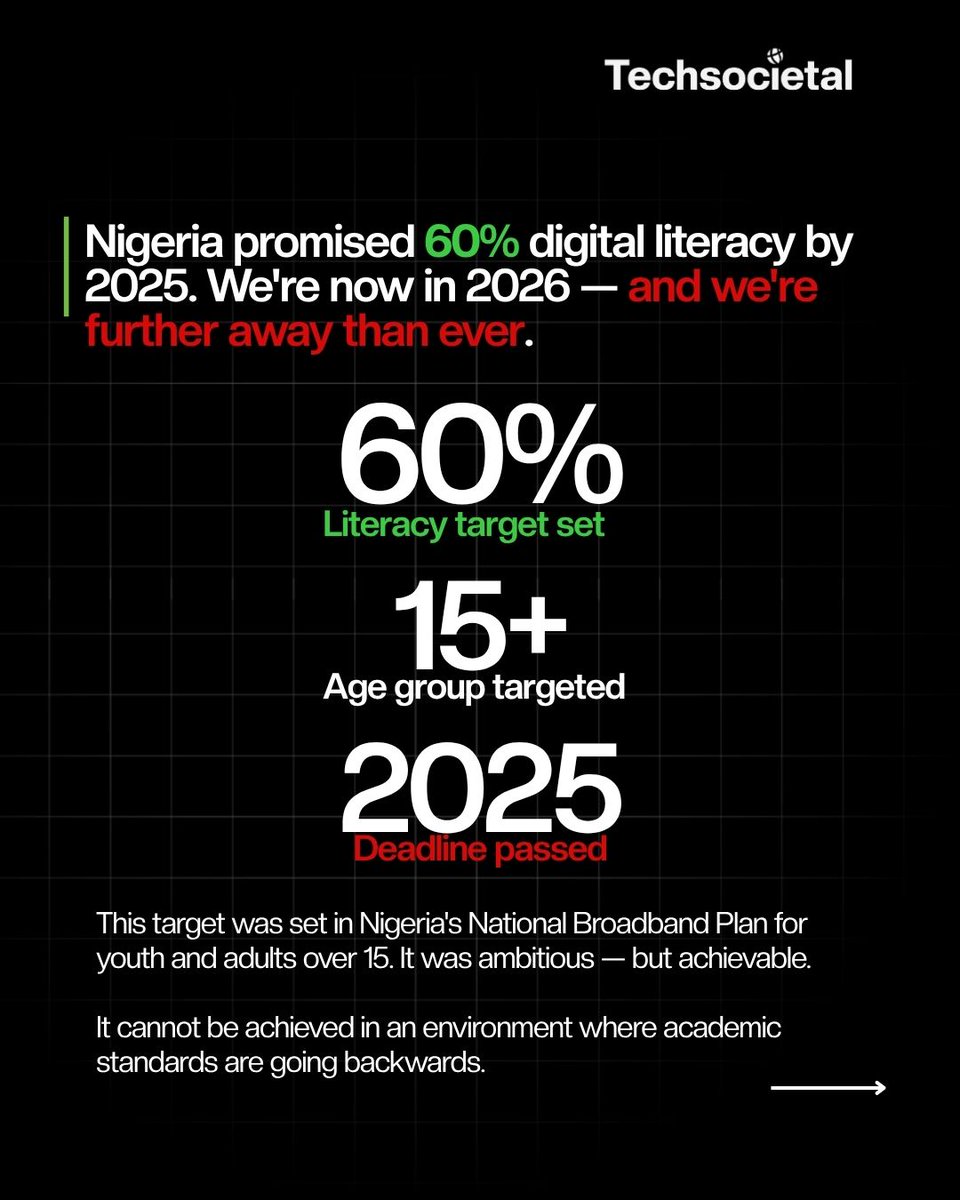
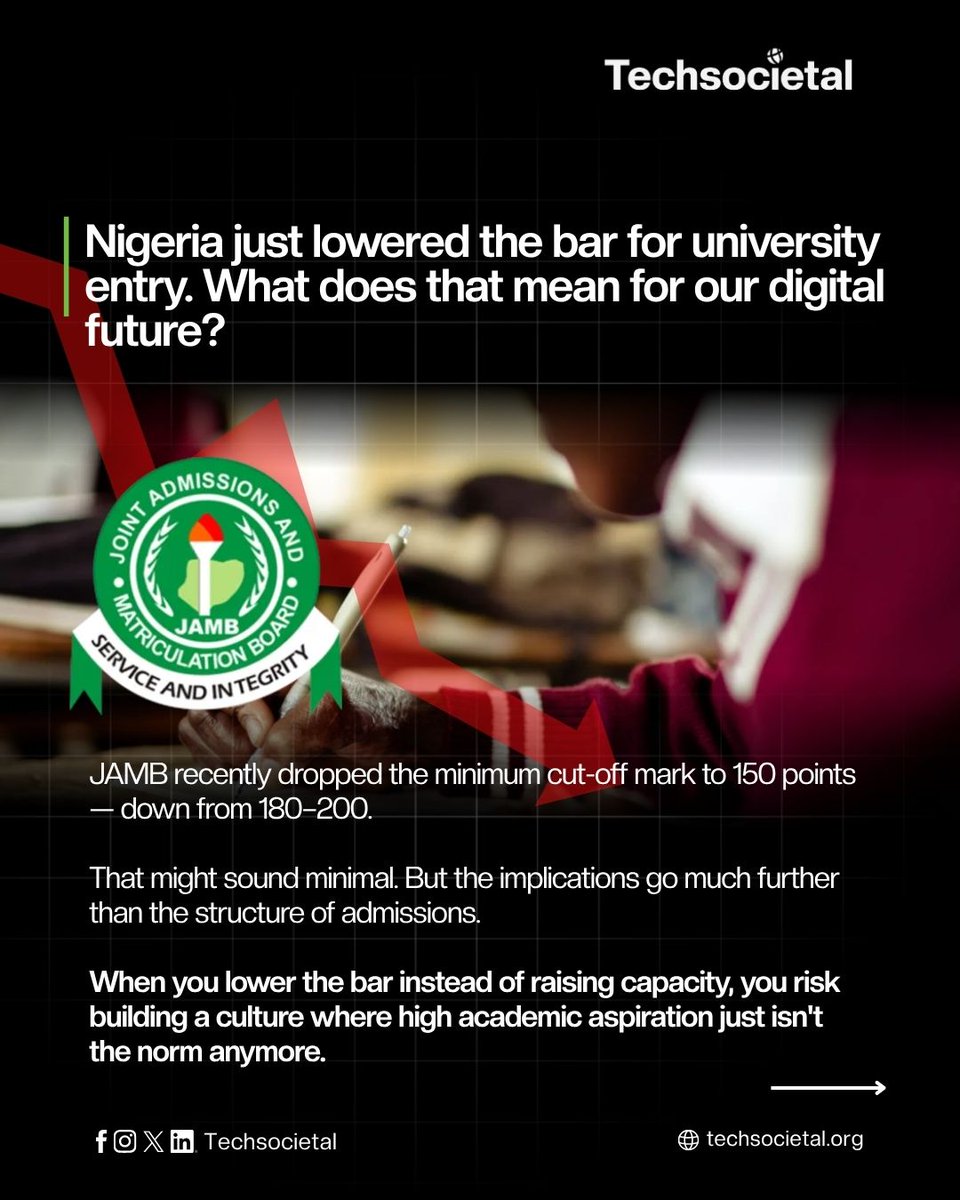



We keep talking about Nigeria's big tech ambitions — AI, digital transformation, the digital economy.
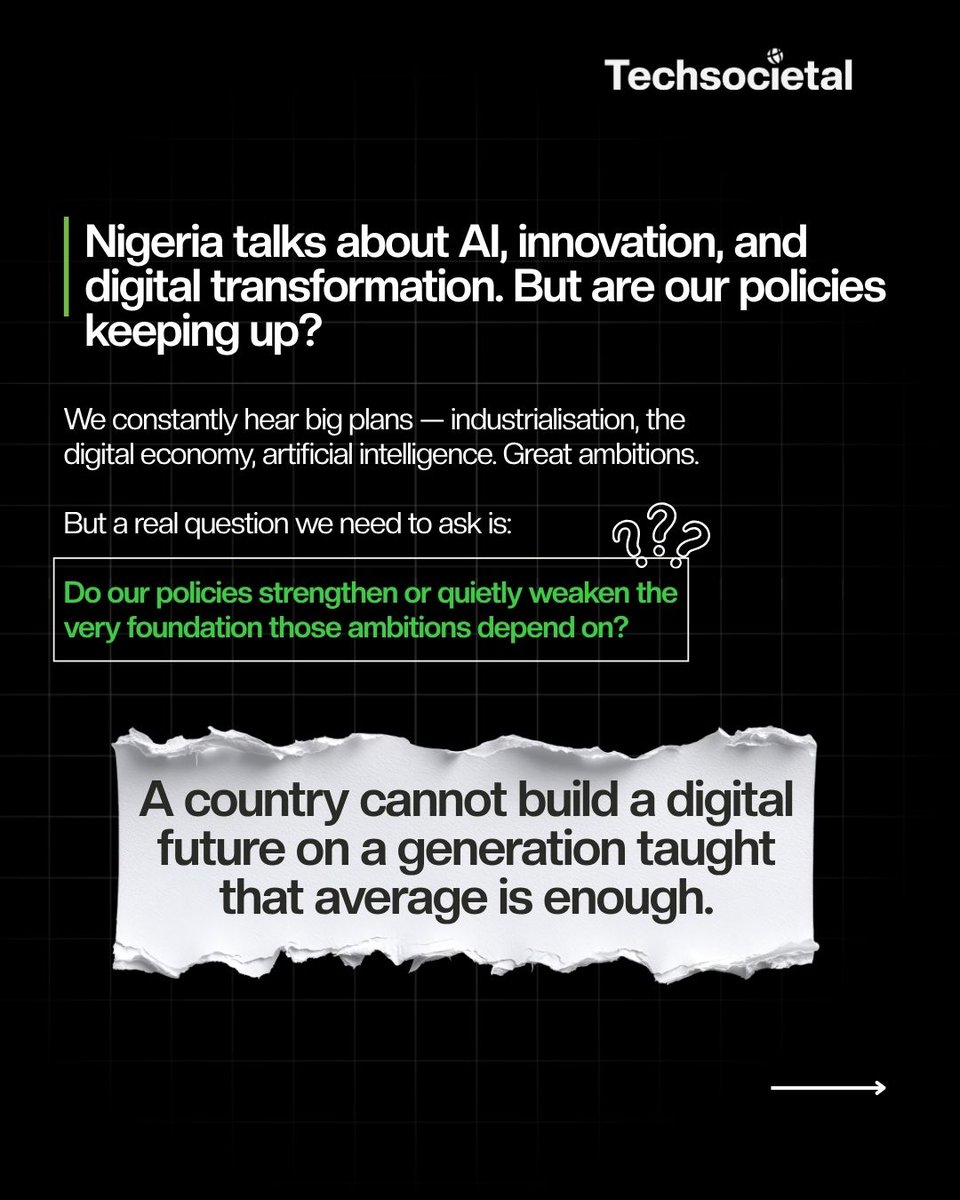
But if we keep lowering academic standards instead of raising the quality of education, how do we expect to hit our digital literacy targets?
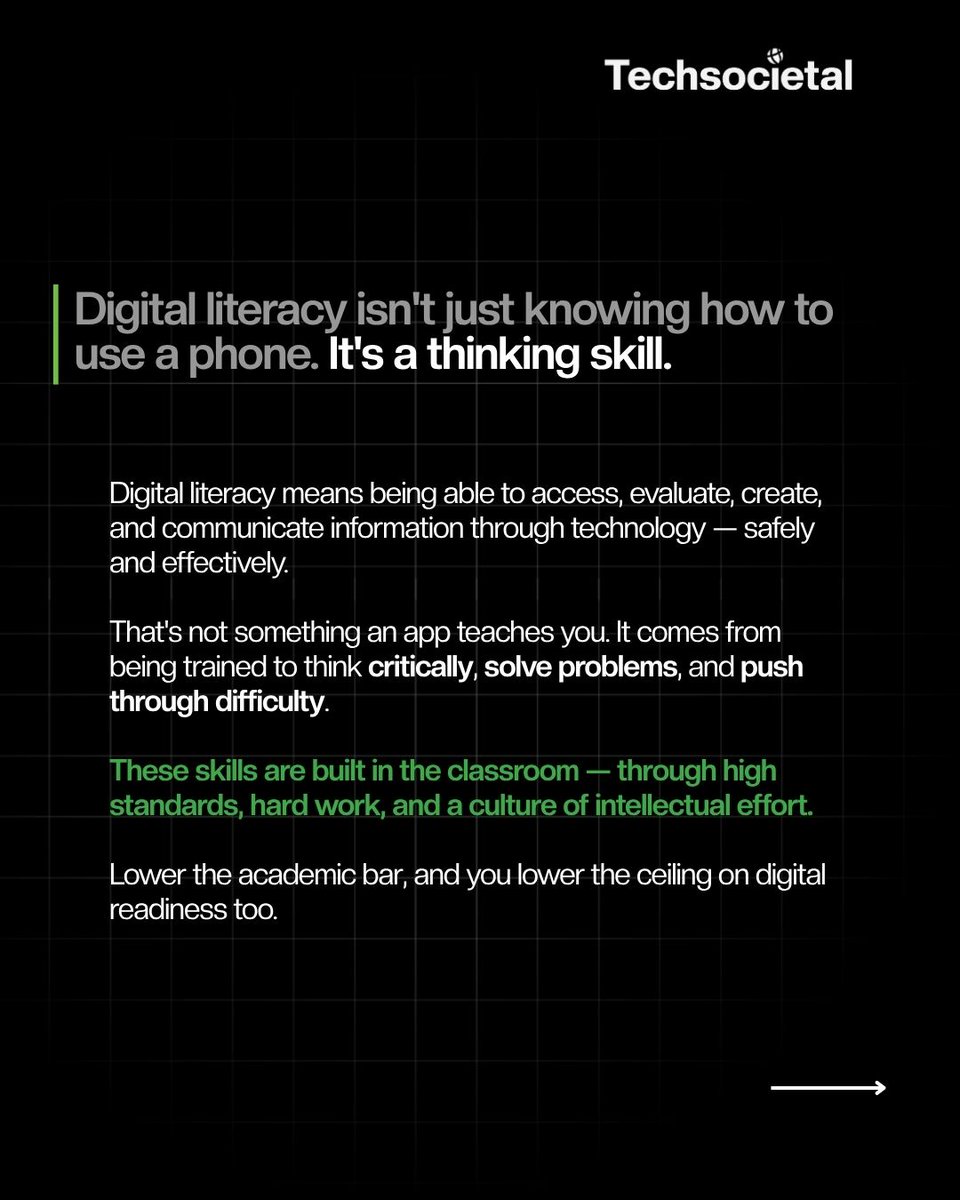
Digital literacy has evolved beyond "can you use a smartphone" to being able to think critically, solve problems, and keep learning as tech evolves. These are skills built through rigorous education.
You can't build a digitally skilled generation on a foundation of declining academic standards. The two are connected — and it's time our policies reflected that.
#EducationPolicy
#DigitalLiteracy
#JAMB
#Nigeria
#EdTech
#PolicyReform
#DigitalNigeria
1
4
Digital literacy has evolved beyond "can you use a smartphone" to being able to think critically, solve problems, and keep learning as tech evolves. These are skills built through rigorous education.
You can't build a digitally skilled generation on a foundation of declining academic standards. The two are connected — and it's time our policies reflected that.
#EducationPolicy
#DigitalLiteracy
#JAMB
#Nigeria
#EdTech
#PolicyReform
#DigitalNigeria

4

Jun 12
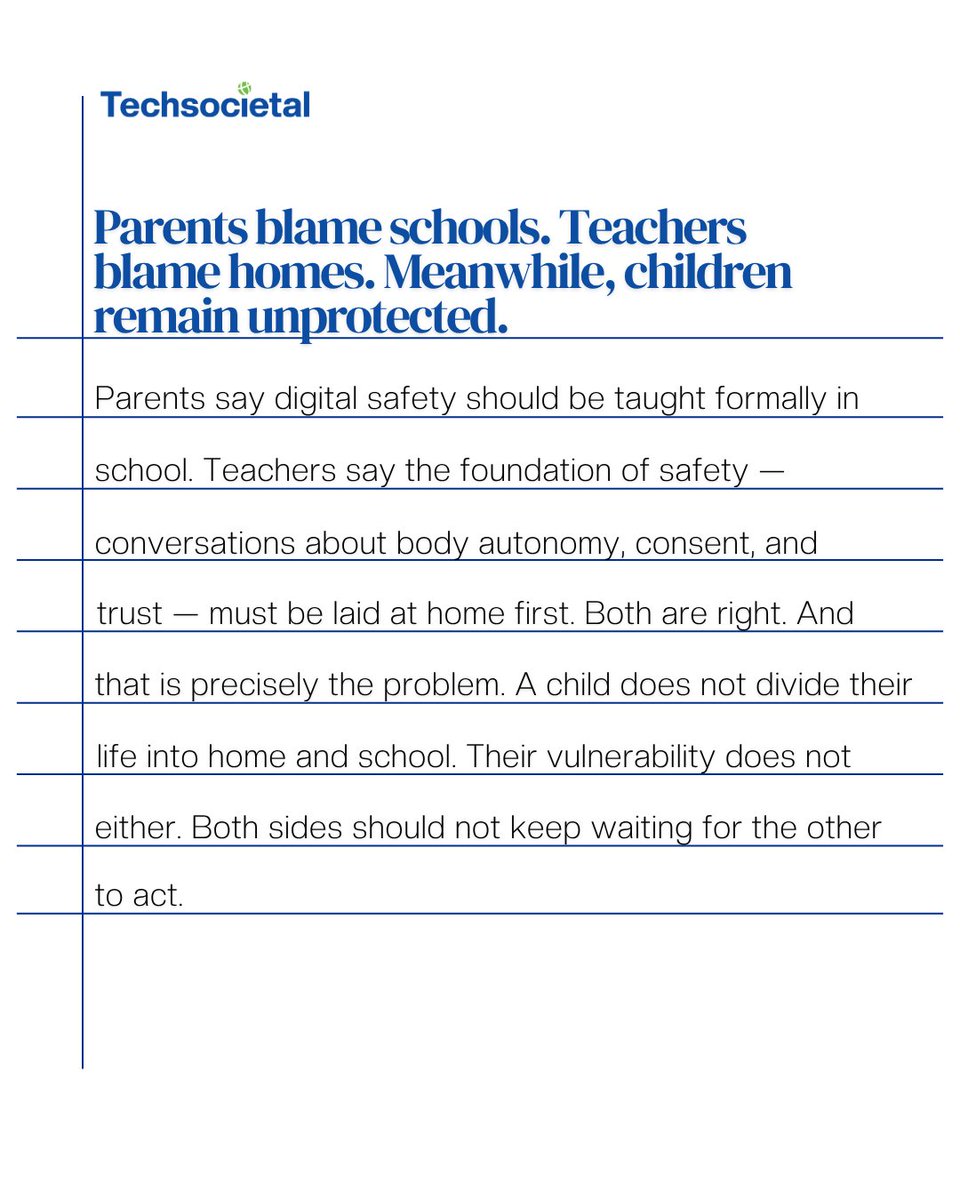
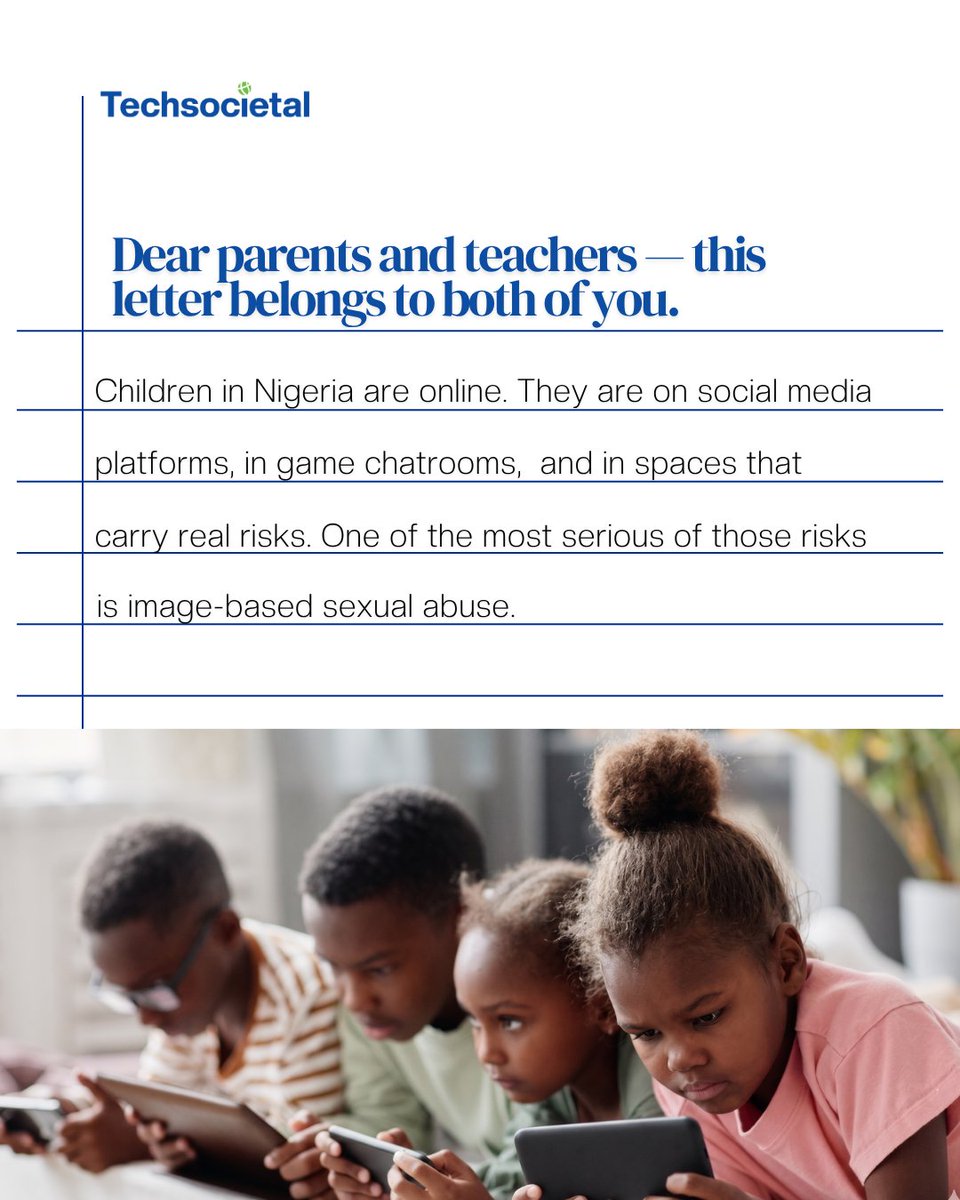
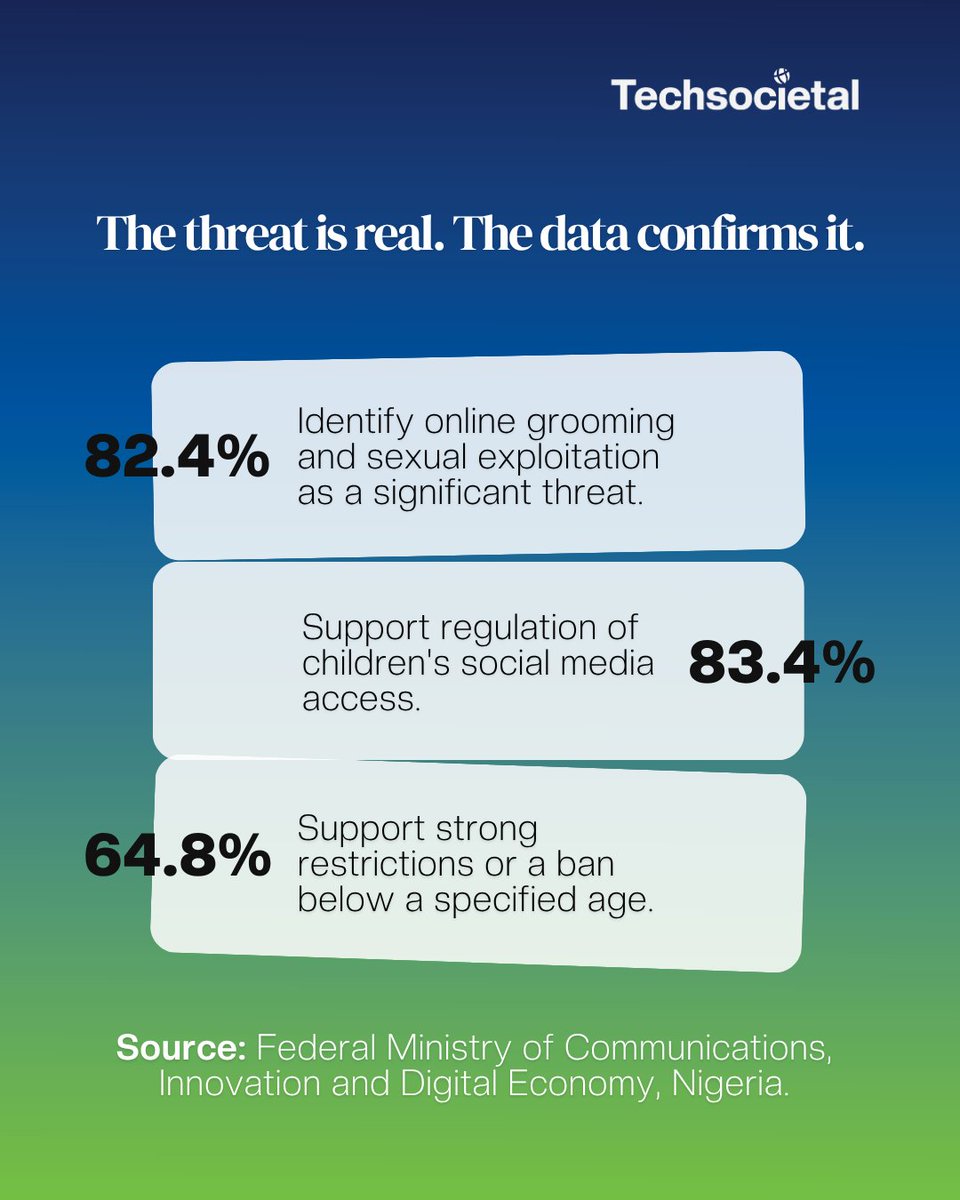
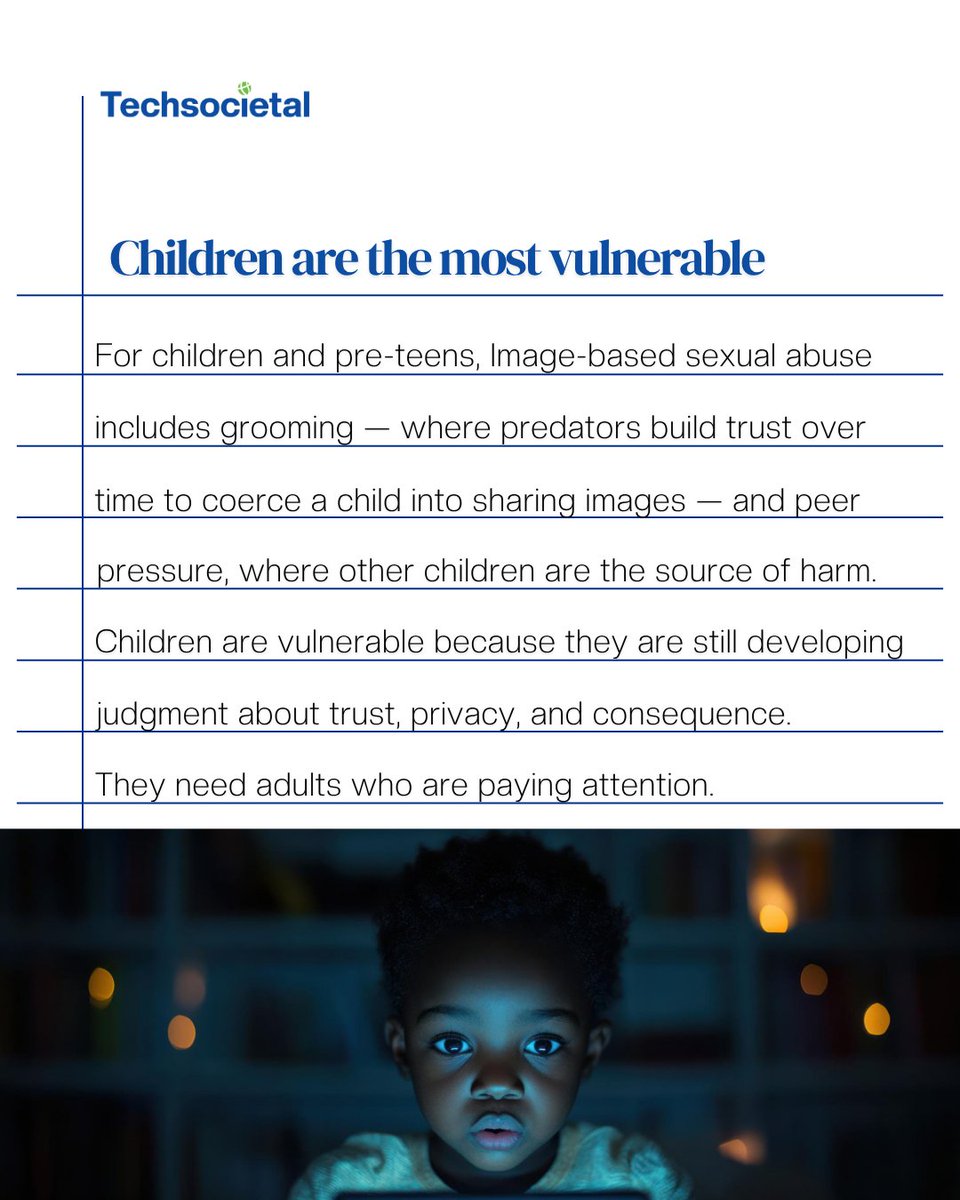
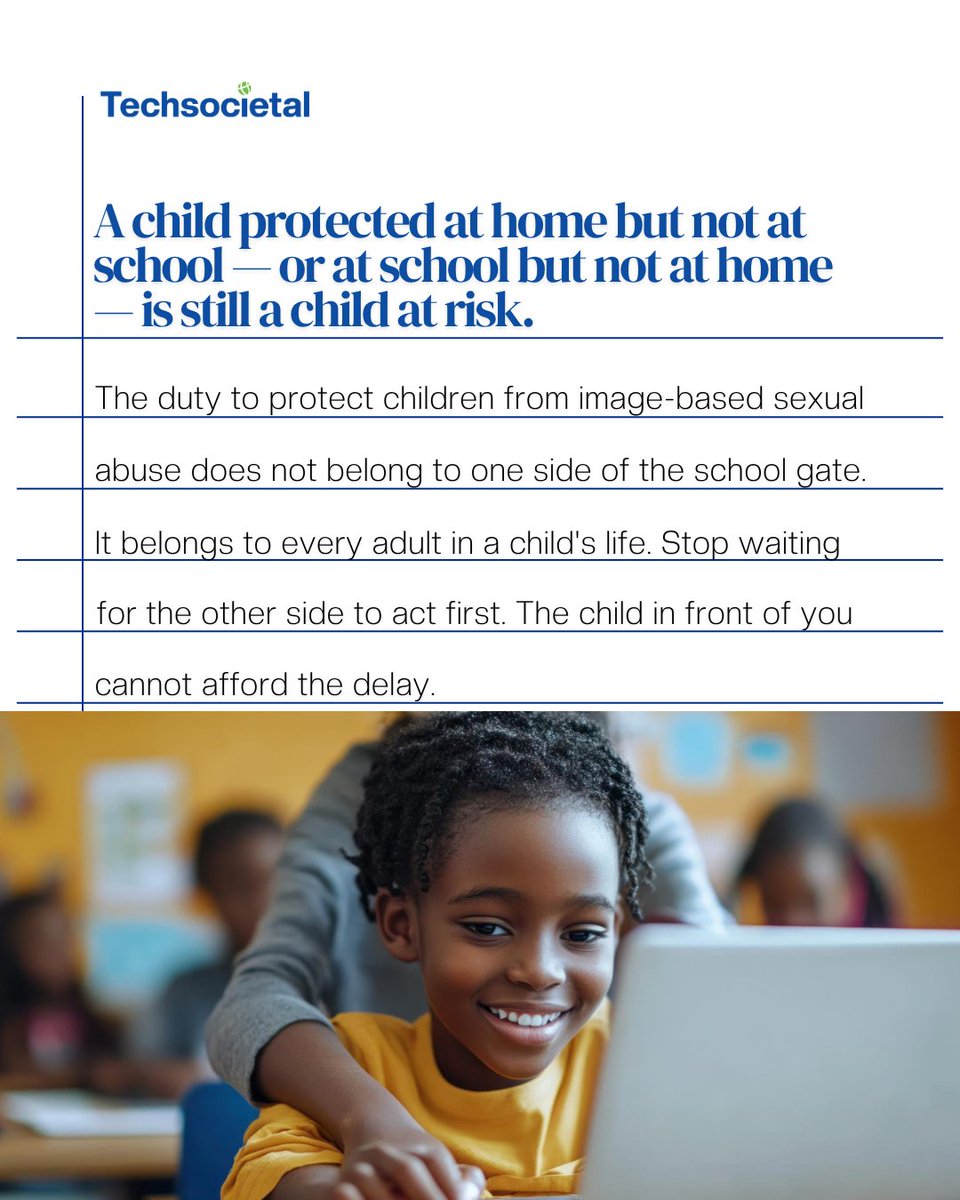
A child protected at home but not at school—or at school but not at home—is still a child at risk.
As children spend more time online, the responsibility to keep them safe from image-based sexual abuse (IBSA), online grooming, and exploitation must be shared.
Children learn, socialize, and navigate digital spaces across both home and school environments. That means meaningful protection requires active collaboration, open communication, and consistent guidance from the adults they trust most.
#ChildSafety
#OnlineSafety
#DigitalWellbeing
#SafeguardingChildren
#IBSA
#DigitalParenting
#ChildProtection
1
9
Jun 12
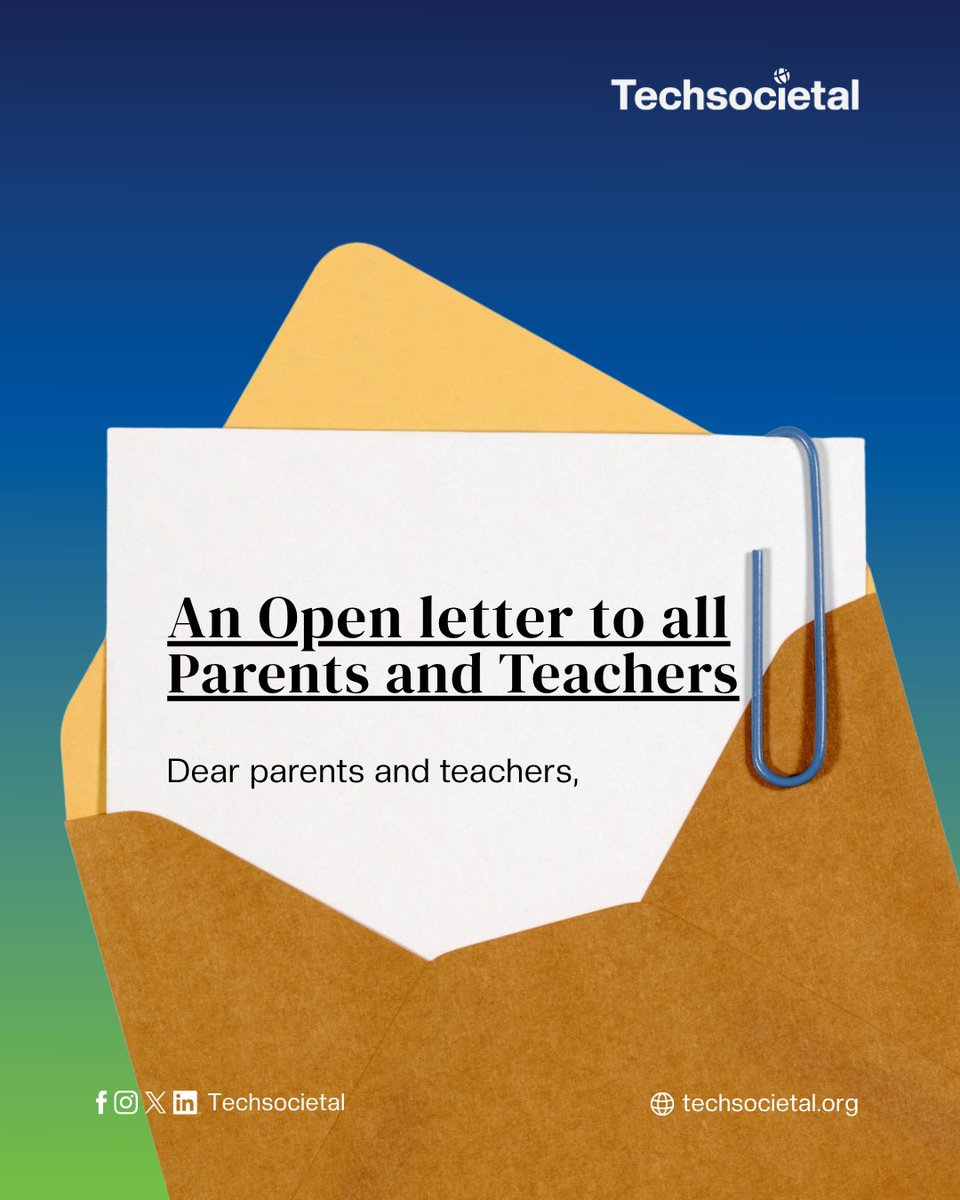
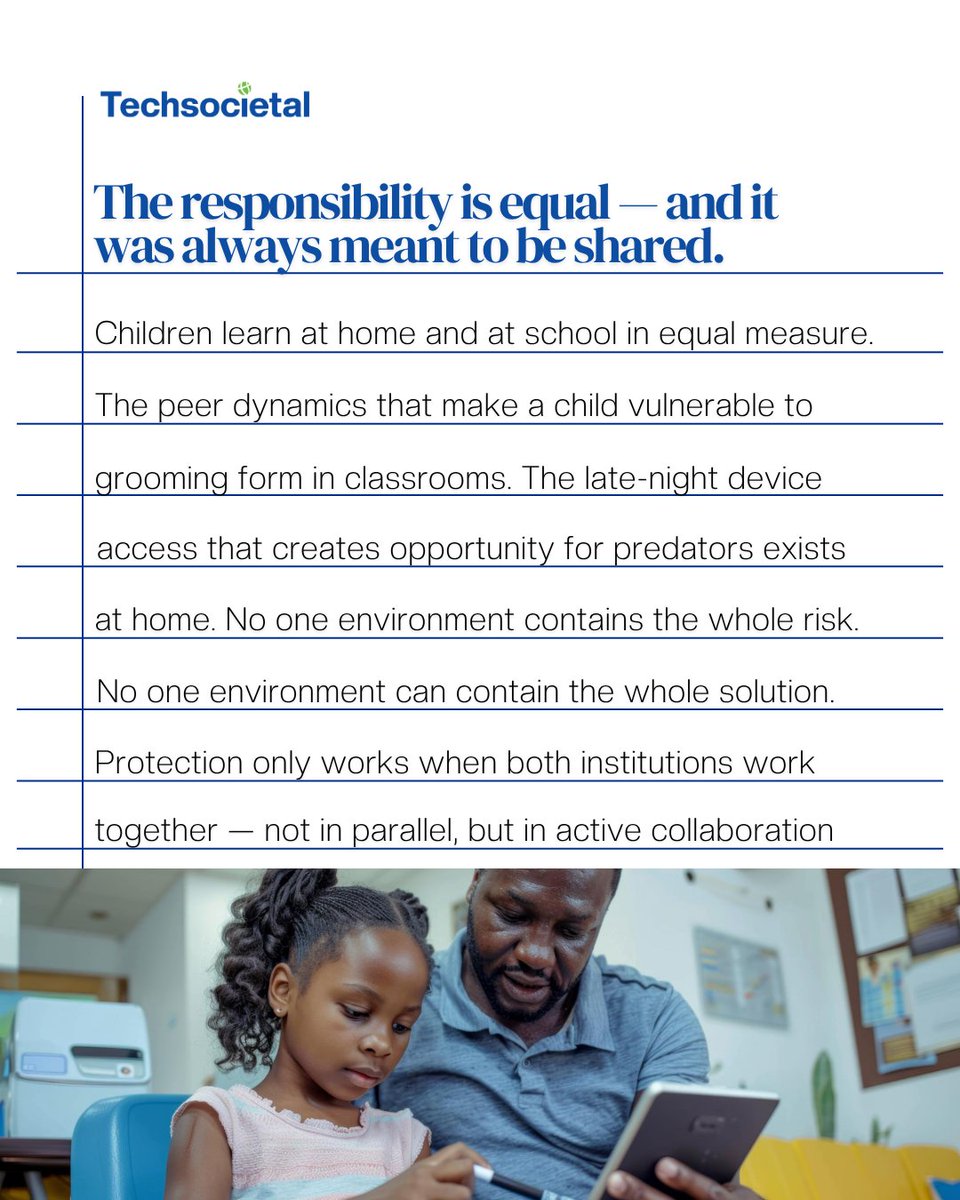
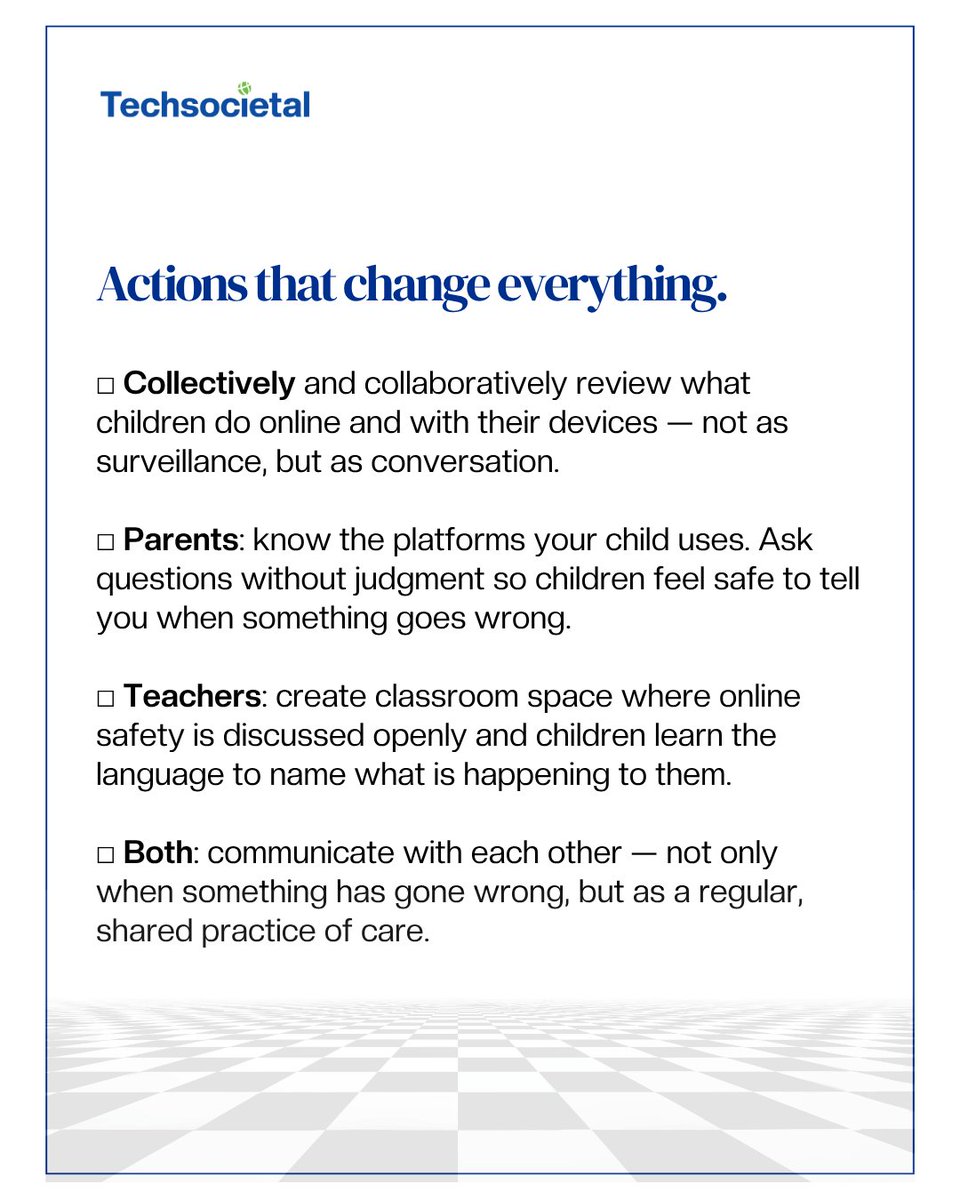
This open letter is a call for partnership—not blame. When parents and teachers work together, children are better equipped to recognize risks, speak up when something feels wrong, and stay safer online.
Protecting children starts with conversations, awareness, and a shared commitment to their wellbeing.
#ChildSafety
#OnlineSafety
#DigitalWellbeing
#SafeguardingChildren
#IBSA
#DigitalParenting
#ChildProtection
7
Jun 12
Disinformation is designed to mislead people.
On messaging platforms like WhatsApp, a single forwarded message can reach hundreds of people within minutes.
Before sharing information, take a moment to verify the source, check the facts, and look for confirmation from trusted or official channels.
A few seconds of verification can help prevent confusion, panic, and harm.
Don't be the reason disinformation spreads. Pause. Verify. Then decide.
#DigitalSafety
#Disinformation
#FakeNews
#DigitalLiteracy
#FactCheck
#DigitalCitizenship
10
May 29
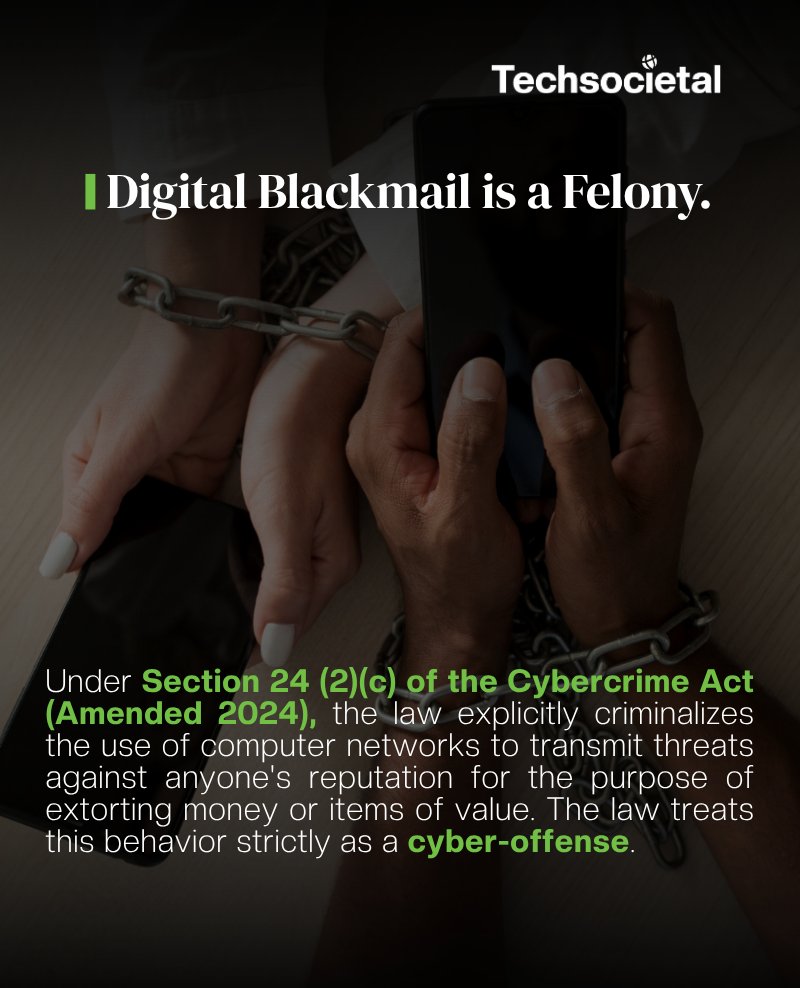
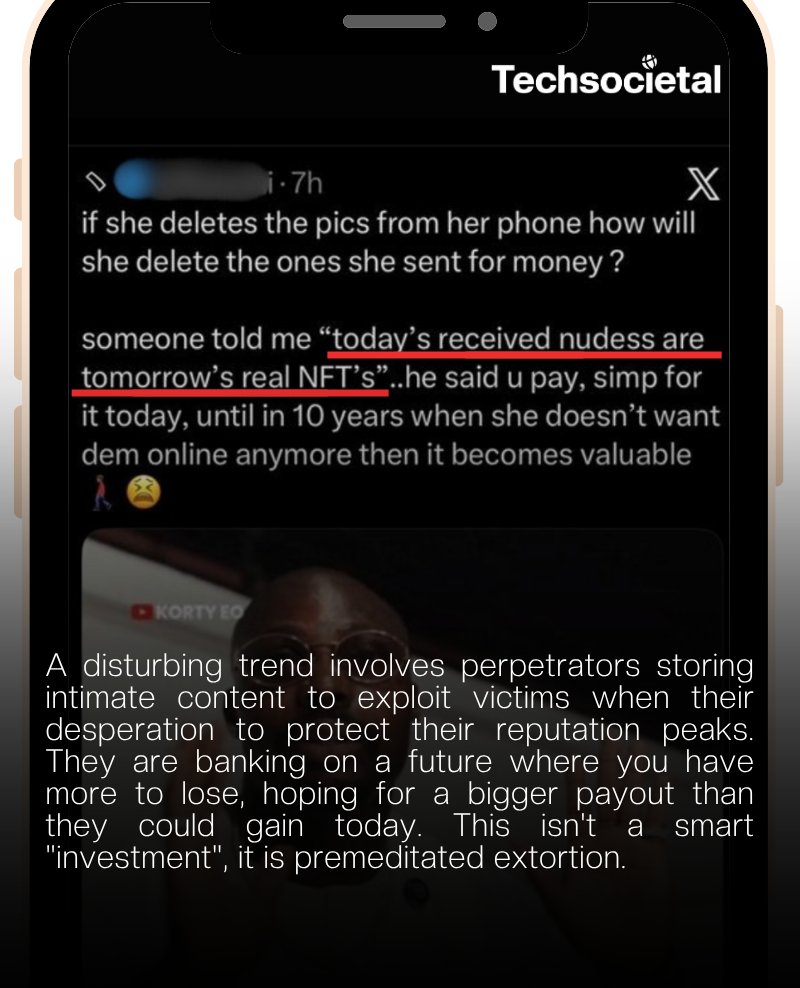
Too often, conversations around digital blackmail frame the perpetrator's actions as having "leverage." It's time we call it what it is: premeditated extortion.
When someone threatens to release intimate content for financial gain, they are not playing a smart long game—they are committing a serious offense and violating another person's dignity.
#DigitalRights
#CybercrimeAct
#DigitalSafety
#SurvivorSupport

1
30
May 29
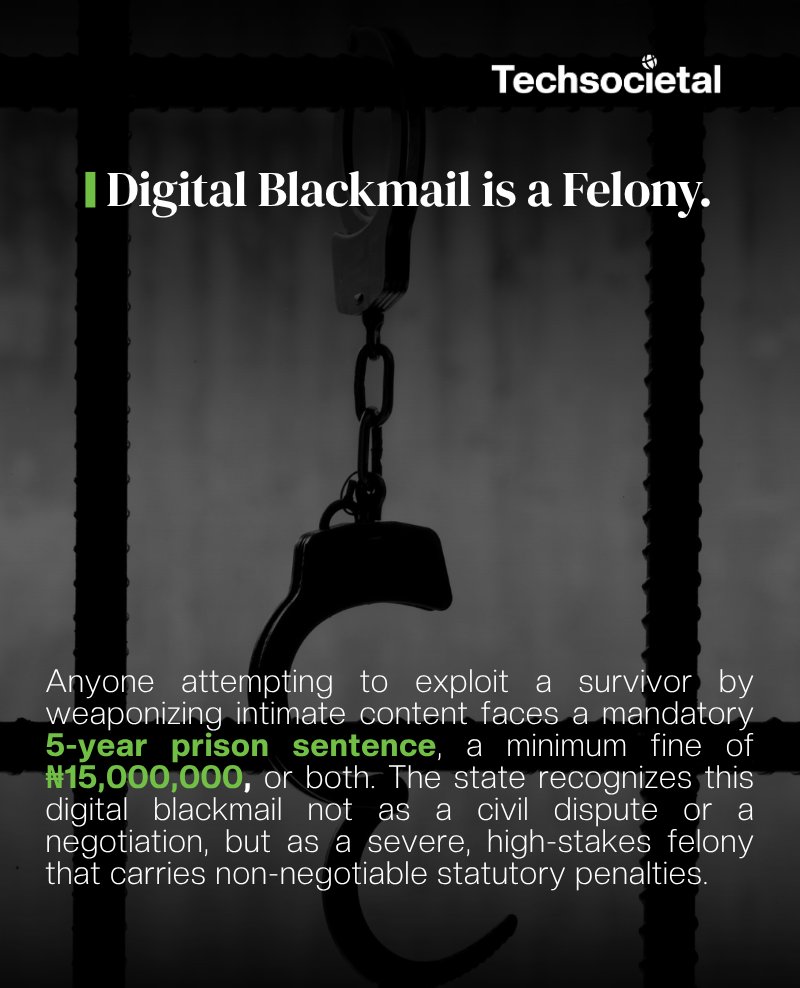
Recent legal reforms under the Cybercrime Act send a clear message: digital blackmail is not a negotiation tactic, and intimate content is not a commodity to be traded.
The more people understand their rights and recognize the warning signs of digital abuse, the harder it becomes for perpetrators to operate in silence.
Share this post to help someone stay informed and protected.
#DigitalRights
#CybercrimeAct
#DigitalSafety
#SurvivorSupport
1
58
May 27
On this Children’s Day, we are reminded of a simple but urgent truth: children deserve safety in every space they inhabit — both offline and online.
As digital spaces continue to expand, so too do risks such as Child Sexual Abuse Material (CSAM), which remains a serious global concern. In 2025 alone, the National Center for Missing & Exploited Children (NCMEC) received 21.3 million reports related to suspected child sexual exploitation, involving more than 61.8 million images, videos, and other files.
Protecting children requires collective, sustained action from platforms, policymakers, educators, parents, and communities.
Prevention starts with stronger systems that can detect and remove harmful content quickly, alongside clear reporting and accountability mechanisms. It also means equipping children with digital literacy skills to recognize unsafe situations and ensuring that caregivers and educators are empowered to guide and protect them online.
Technology companies must continue to strengthen proactive safety measures, while governments and institutions reinforce laws that deter and address online child exploitation. Support systems for survivors — including tools that enable the removal of abusive content — also remain critical in reducing harm and restoring dignity.
Protecting children online is a shared responsibility.
Every child deserves a safe, respectful, and protected digital future.
19
May 26
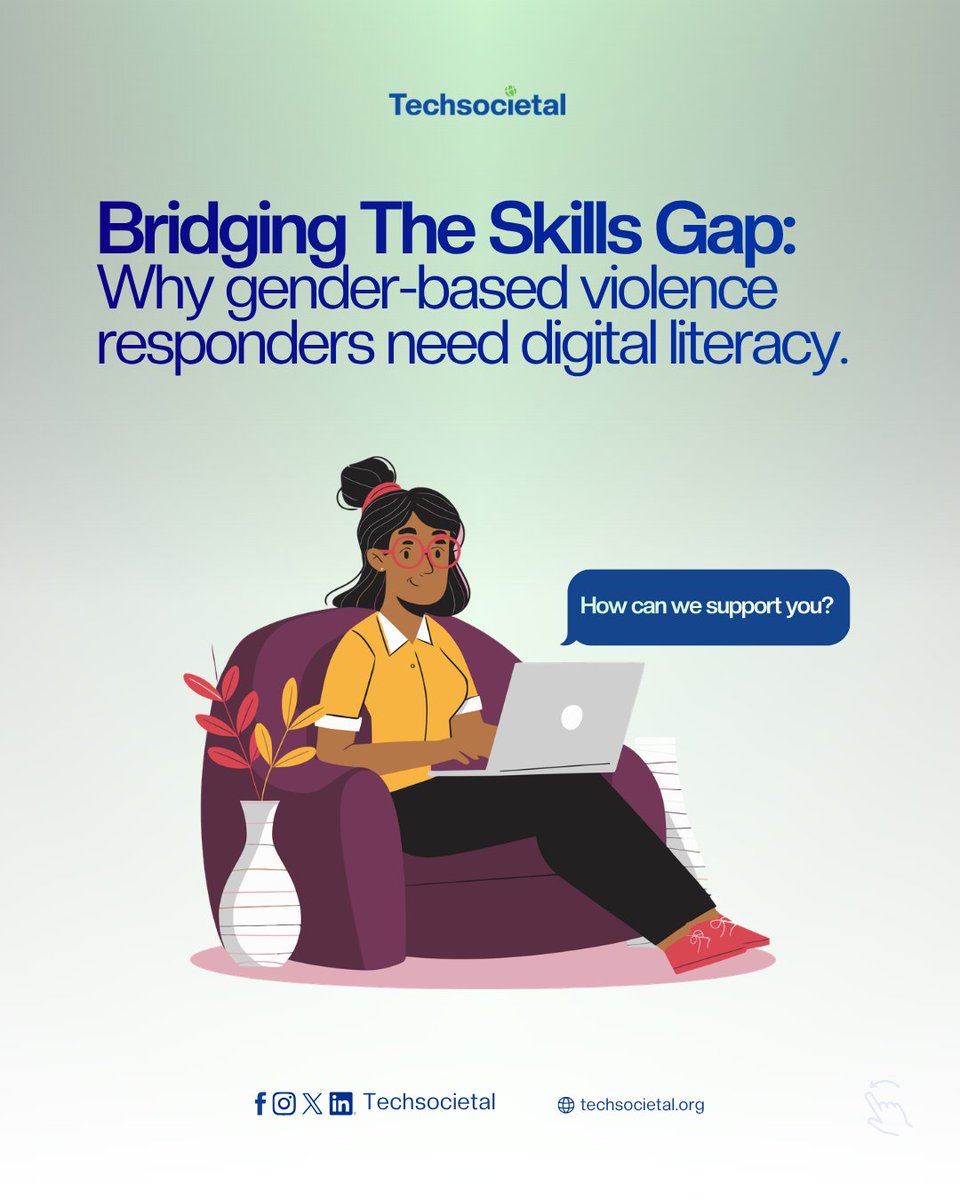
Many offline gender-based violence (GBV) responders are doing critical work every day, supporting survivors of rape, domestic violence, and harassment. But as abuse increasingly moves online, response systems must evolve too.
Today, survivors are facing various forms of tech-facilitated gender-based violence that require a new layer of expertise. This is not about replacing traditional response skills. It’s about strengthening them.
Responders need the tools to:
✔️ Understand digital evidence
✔️ Identify patterns of online abuse
✔️ Navigate reporting and safety mechanisms on digital platforms
✔️ Know when digital forensics may be required
✔️ Support survivors experiencing online harm
Bridging this skills gap will help ensure survivors receive holistic support—both offline and online.
We’re also calling on volunteers, if you have skills in litigation, tech support, or trauma-informed care, we need you.
Together, we can create a future where no survivor is left unsupported because abuse happened online.
Interested in volunteering? Let's connect.
#GenderBasedViolence
#DigitalLiteracy
#CapacityBuilding
#IBSA
#TechFacilitatedAbuse
#ProfessionalDevelopment
#VolunteerOpportunity
1
15
Techsocietal retweeted

May 26
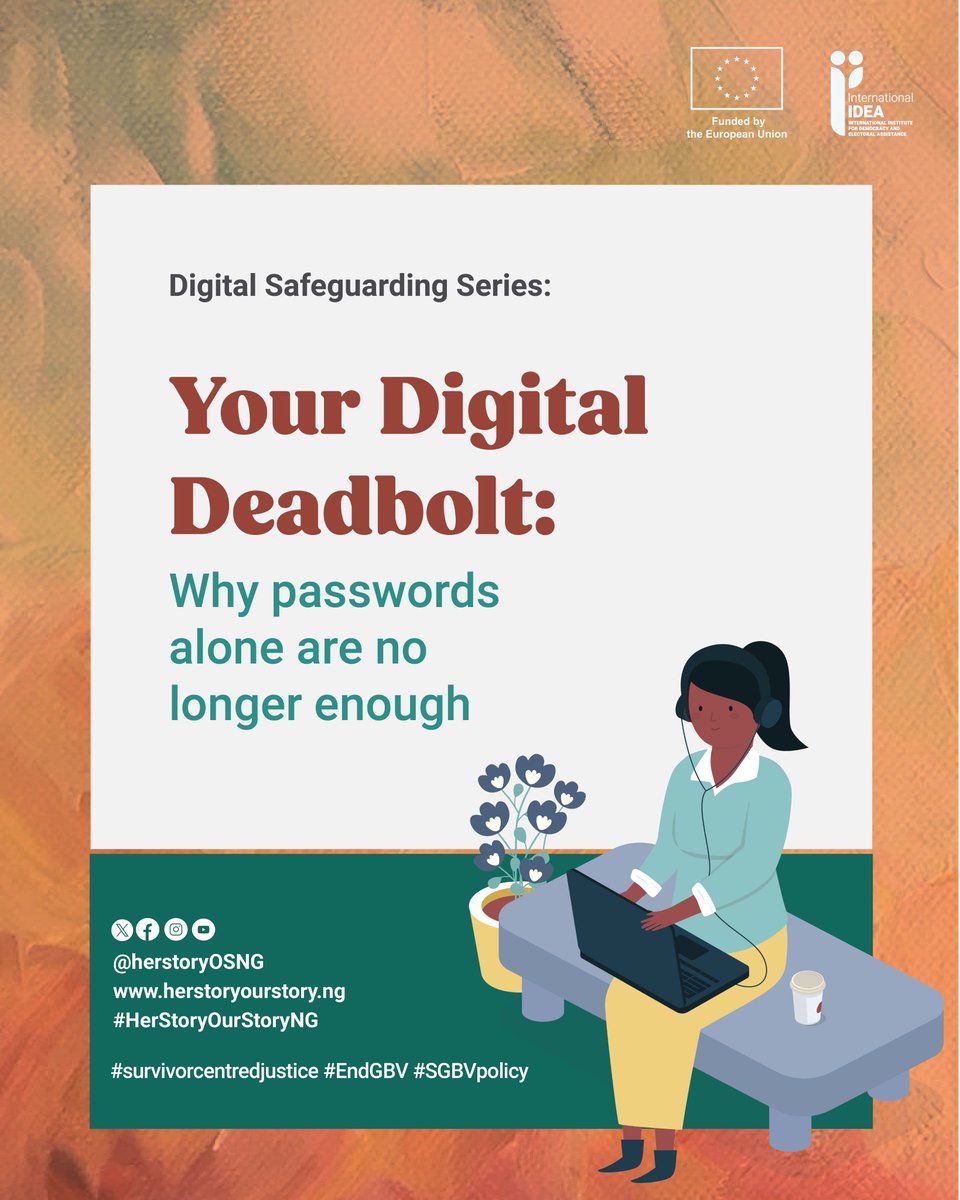
Digital Safety Starts with One Extra Step
A password alone may not be enough to protect you from online harassment, blackmail, account takeovers, or sextortion threats.
Multi-Factor Authentication, also called MFA, adds a second lock to your account. This means that even if someone gets your password, they still need another code or approval before they can access your email, messages, photos, documents, or evidence.
What to do today:
Turn on MFA for your email, social media accounts, cloud storage, banking apps, and any platform where you keep important conversations or documents.
Use an authenticator app where possible. SMS verification is better than having no extra protection, but an authenticator app is usually safer.
If you are facing digital threats, you are not alone. Reach out for survivor-centred support.
HerStoryOurStory Hotline: 080642922526
#DigitalSafeguarding #TechJustice #OnlineSafety #SextortionAwareness #HerStoryOurStoryNG
1
58
May 25
🔐 Strengthening Institutional Response to Technology-Facilitated Abuse
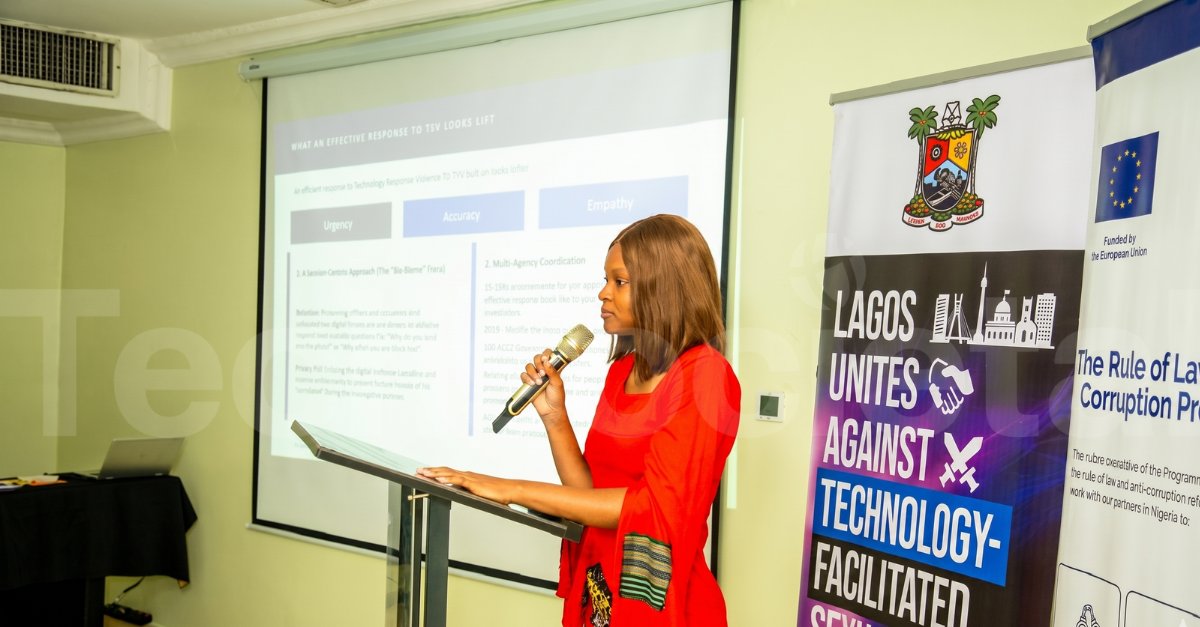
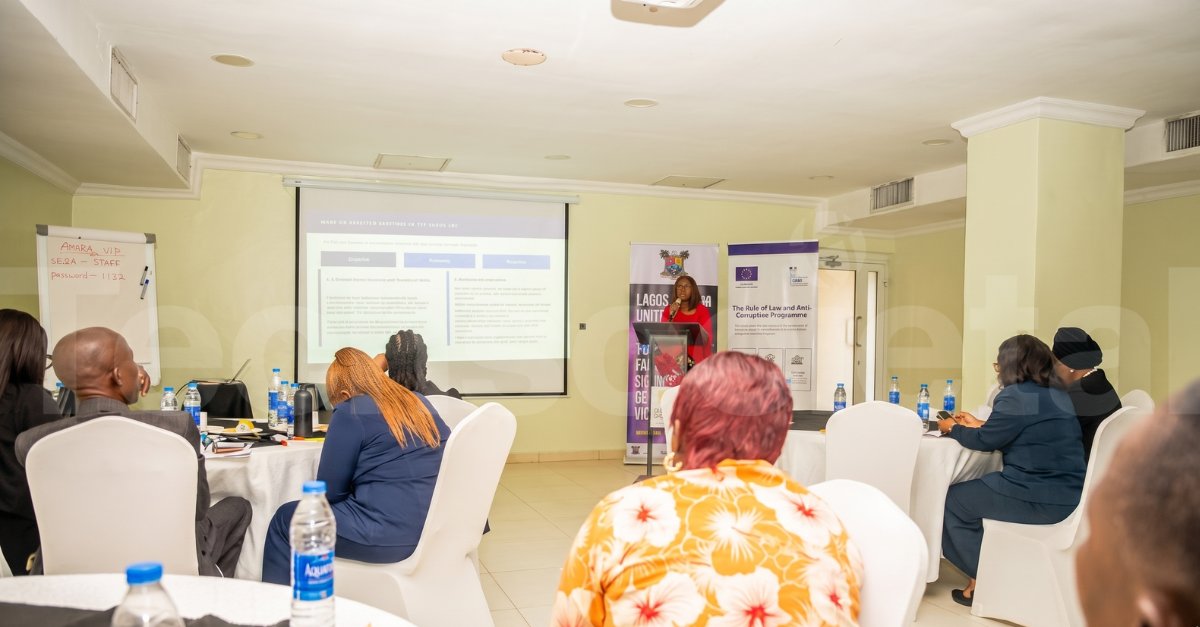
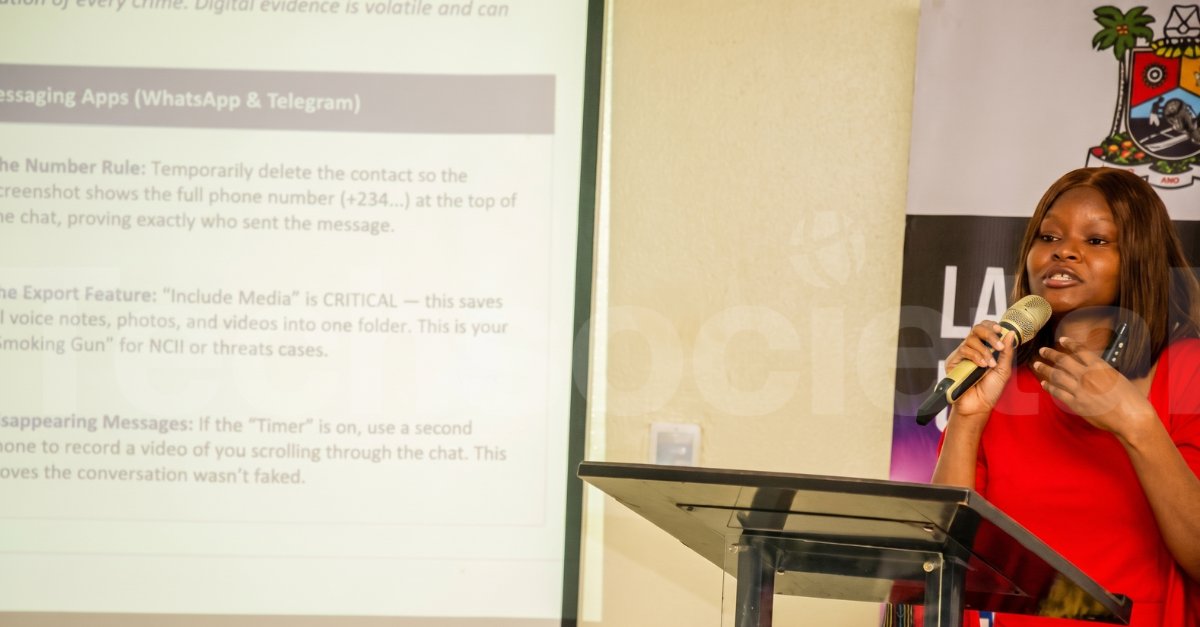
On Tuesday, 12th May 2026, Techsocietal joined the Lagos State Domestic and Sexual Violence Agency, @Lagosdsva at its Capacity Building Workshop on Emerging Trends in Sexual and Gender-Based Violence — a critical gathering of justice sector actors including the Police, Prosecutors, and the Judiciary.
Our Program Officer – Cybersecurity & Digital Protection, Emmanuella Aston, facilitated a session titled "Technology-Facilitated Abuse: Understanding Digital Abuse." The session unpacked how digital technologies and online platforms are being misused for harassment, coercion, stalking, and image-based abuse — and what frontline responders need to know to act effectively.
Participants were also walked through practical approaches to digital evidence collection and preservation, survivor-centered response strategies, and the critical role of cross-sector collaboration in addressing technology-facilitated violence.
Equipping justice sector professionals with this knowledge is not just capacity building; it is a step toward justice for survivors navigating the intersection of digital harm and the legal system.
At Techsocietal, we remain committed to advancing digital safety, strengthening institutional systems, and building safer digital ecosystems for everyone.
#Cybersecurity
#DigitalSafety
#TFGBV
#OnlineSafety
#CapacityBuilding
#TechSocietal

1
25
May 25
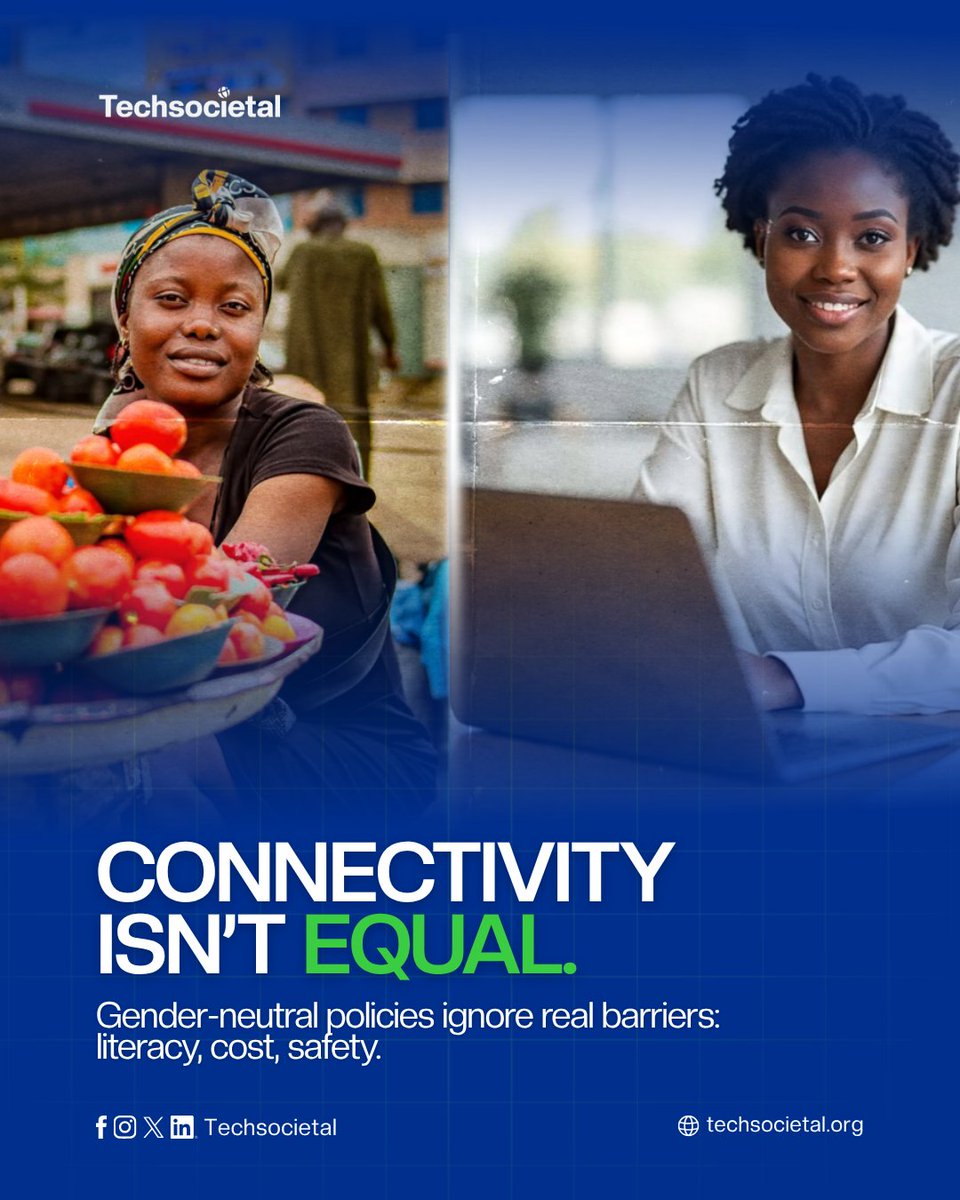
In many underserved communities across Nigeria, digital exclusion remains a daily reality for women and girls.
The challenge is not just poor network coverage. It is also limited access to education, unaffordable devices and data, low digital literacy, and systems that were never designed with women’s realities in mind.
Our research on “Gender-Responsive ICT Policies and Community-Centered Connectivity” highlights how these barriers continue to widen the digital gender gap in Nigeria:
✅ Women in Nigeria are 23% less likely to use the internet than men.
✅ Only 48.6% of women have the digital literacy skills needed to fully navigate online spaces.
✅ High data costs and limited infrastructure continue to exclude women in rural and low-connectivity communities from opportunities tied to education, entrepreneurship, and civic participation.
Digital inclusion must go beyond infrastructure alone. Connectivity should be affordable, safe, accessible, and responsive to the realities women face online and offline.
Adopting gender-responsive ICT approaches that intentionally support women’s participation in the digital economy helps ensure that women and girls are not left behind.
Digital inclusion is not only about internet access. It is about opportunity, participation, and visibility in an increasingly digital society.
Read the full research publication here: tinyurl.com/3n7a4ntb
17
May 20
As digital participation grows across Africa, conversations about online safety must also reflect the realities of African users and communities.
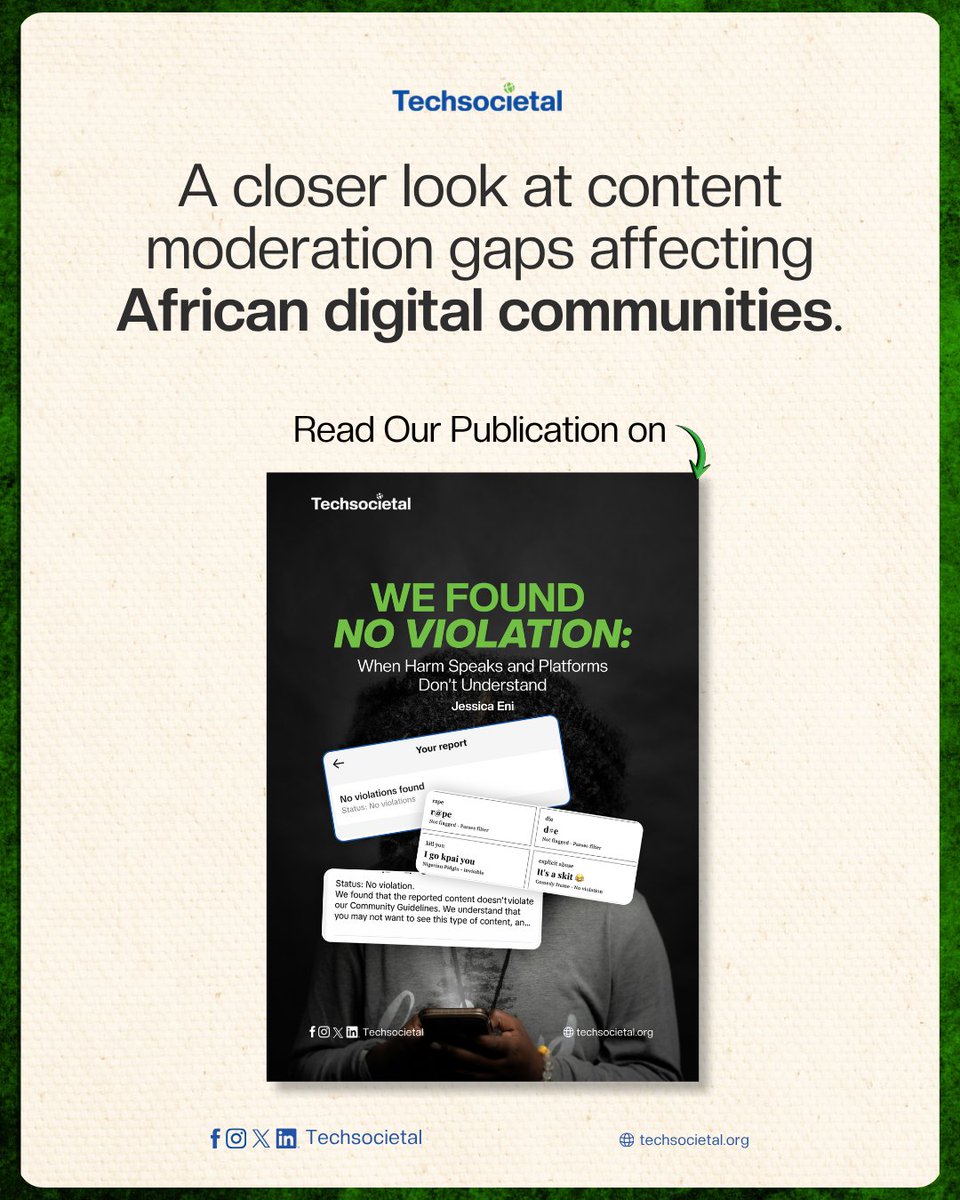
Our latest publication, “We Found No Violation: When Harm Speaks and Platforms Don’t Understand,” explores how language, culture, context, and platform design shape the way online harm is identified — or overlooked — across African digital spaces.
The publication examines:
✔️ How moderation systems struggle with African languages, slang, humour, and cultural context
✔️ Why harmful content can evade detection through coded expressions and local digital culture
✔️ The growing gaps between user experiences and platform enforcement systems
✔️ What meaningful localisation and survivor-informed moderation could look like
It also highlights practical recommendations for platforms, policymakers, researchers, and civil society actors working to build safer and more inclusive digital environments.
If we want safer digital spaces, we must build systems that can recognise harm in all the ways it appears.
Read the publication. Share this content.
Check the link in the bio to read our publication on “We Found No Violation: When Harm Speaks, and Platforms Don’t Understand.”
#OnlineSafety
#DigitalRights
#ContentModeration
#PlatformAccountability
#Africa
#TechPolicy
#InternetGovernance
1
21
May 18
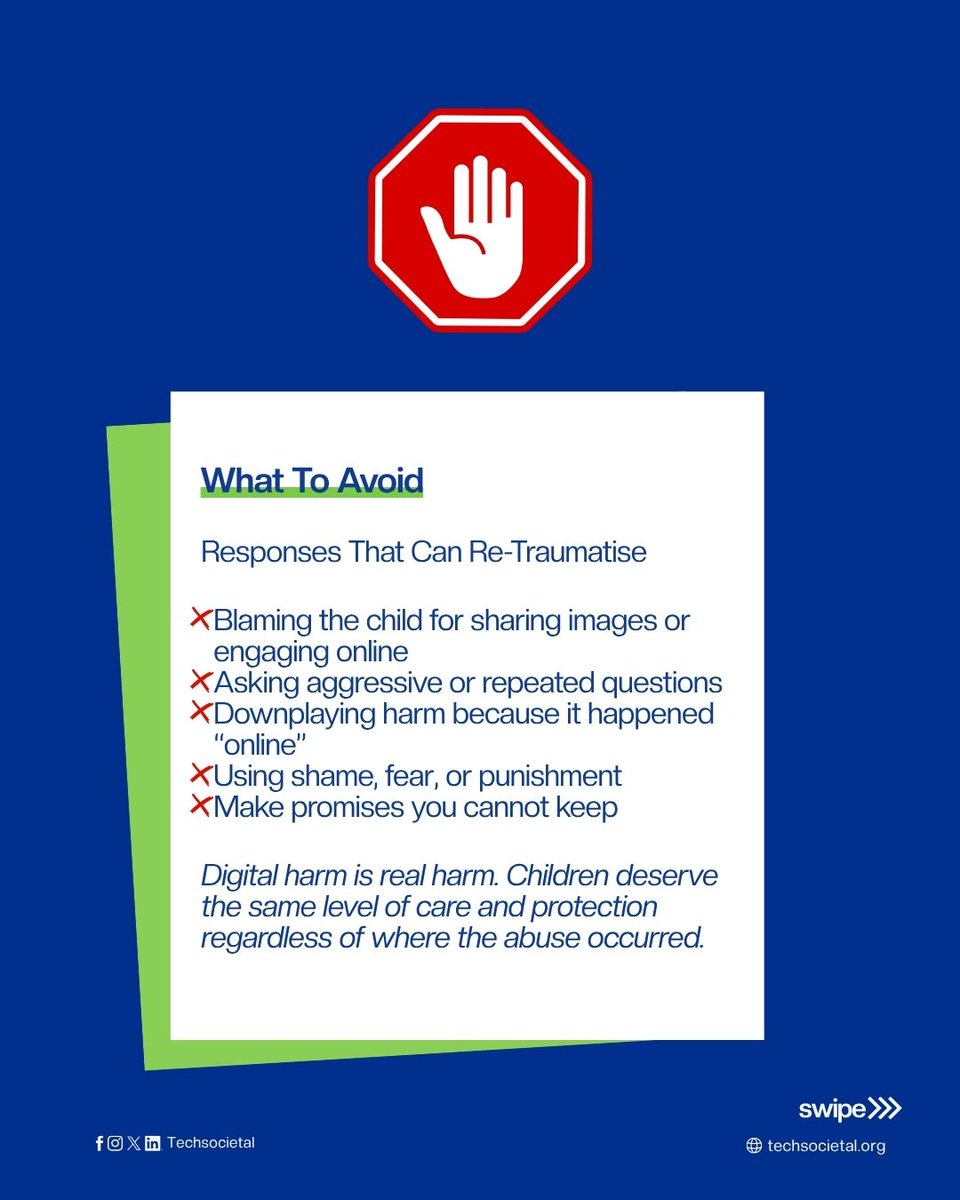
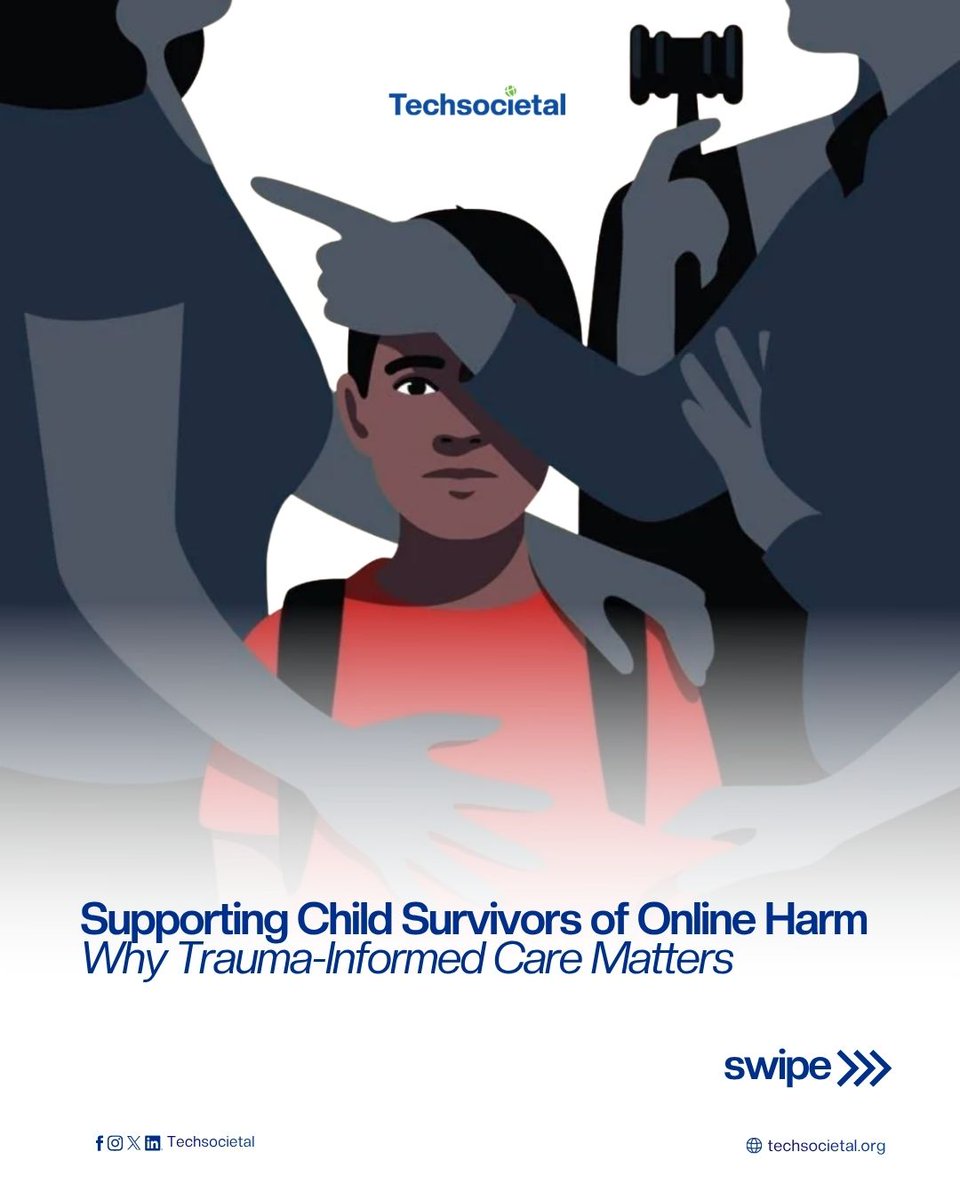
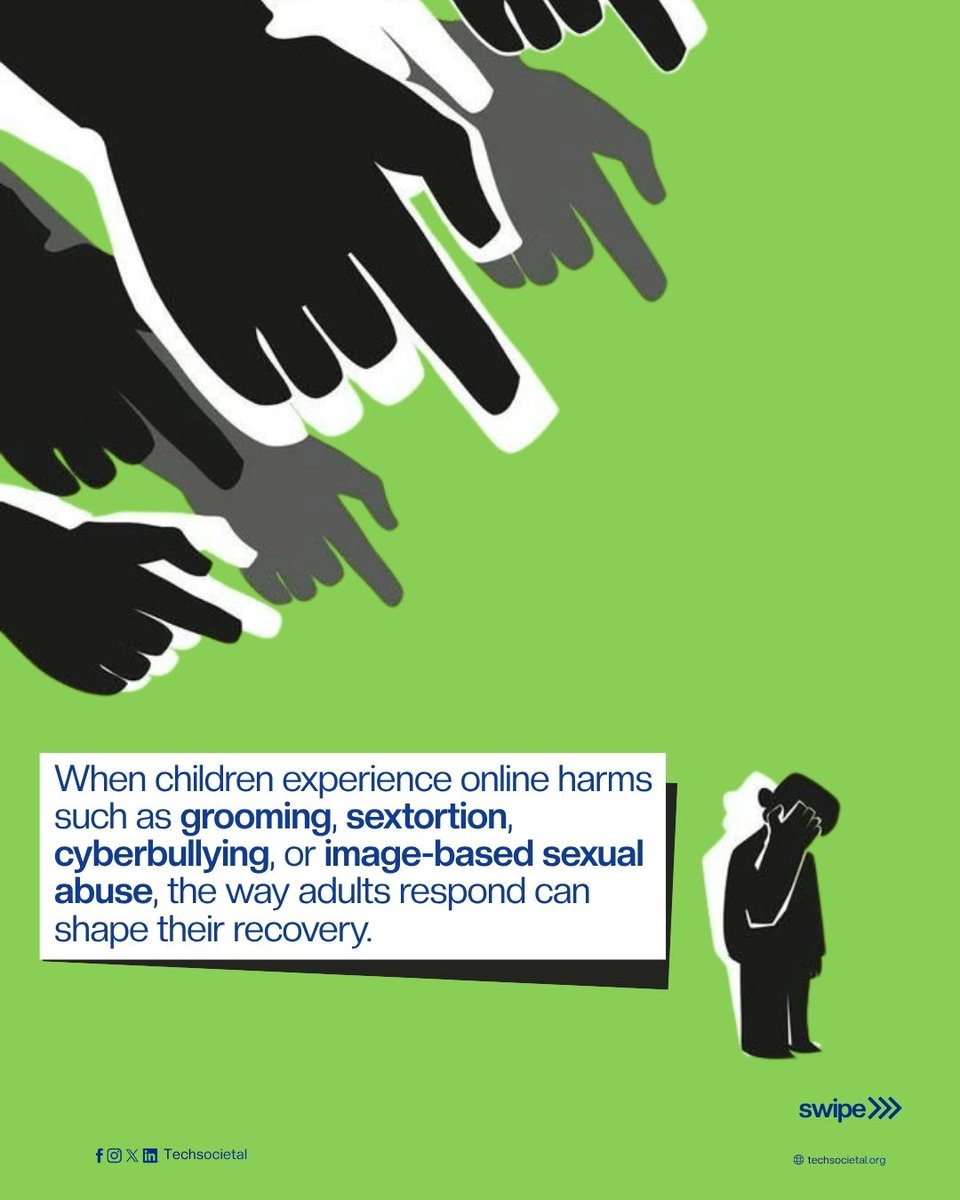
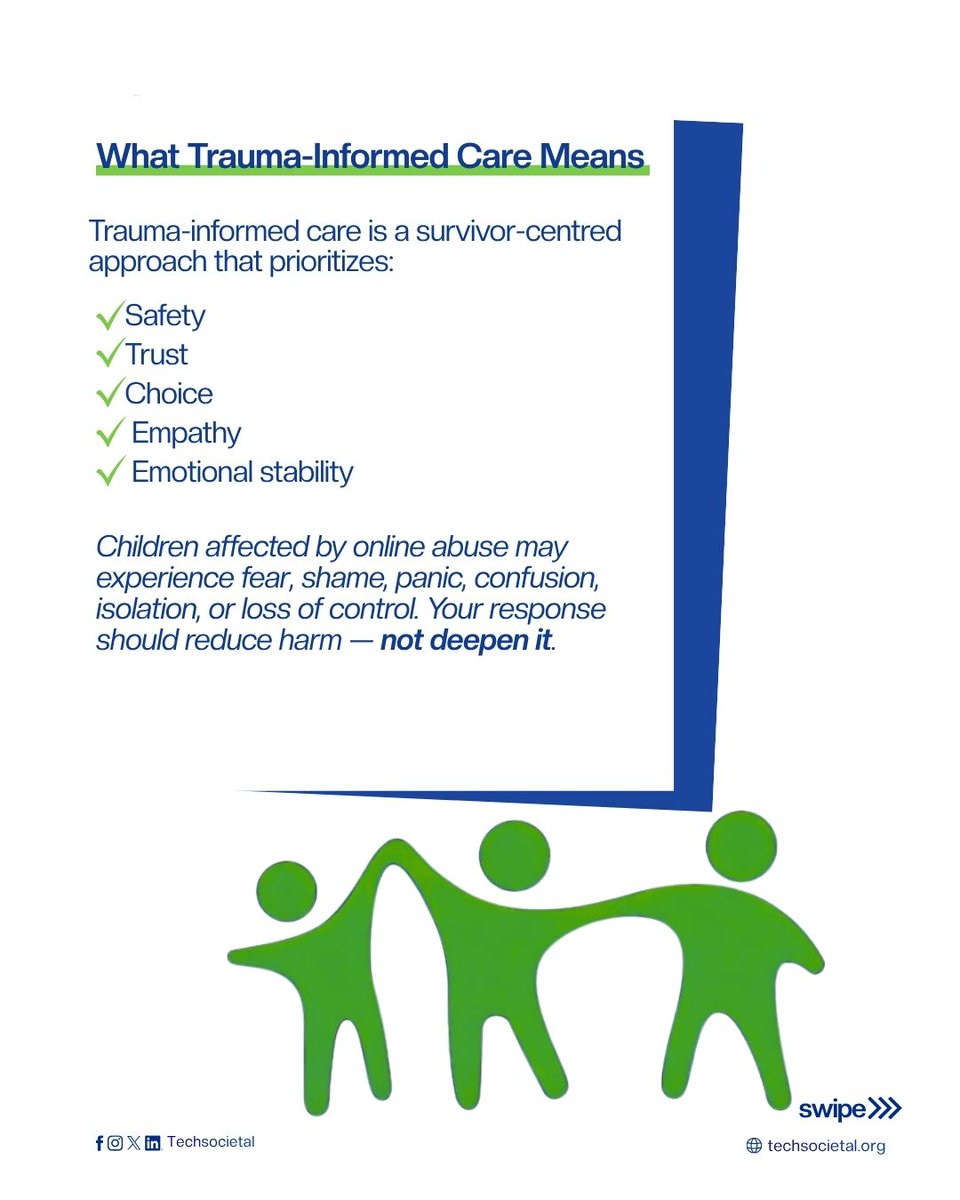
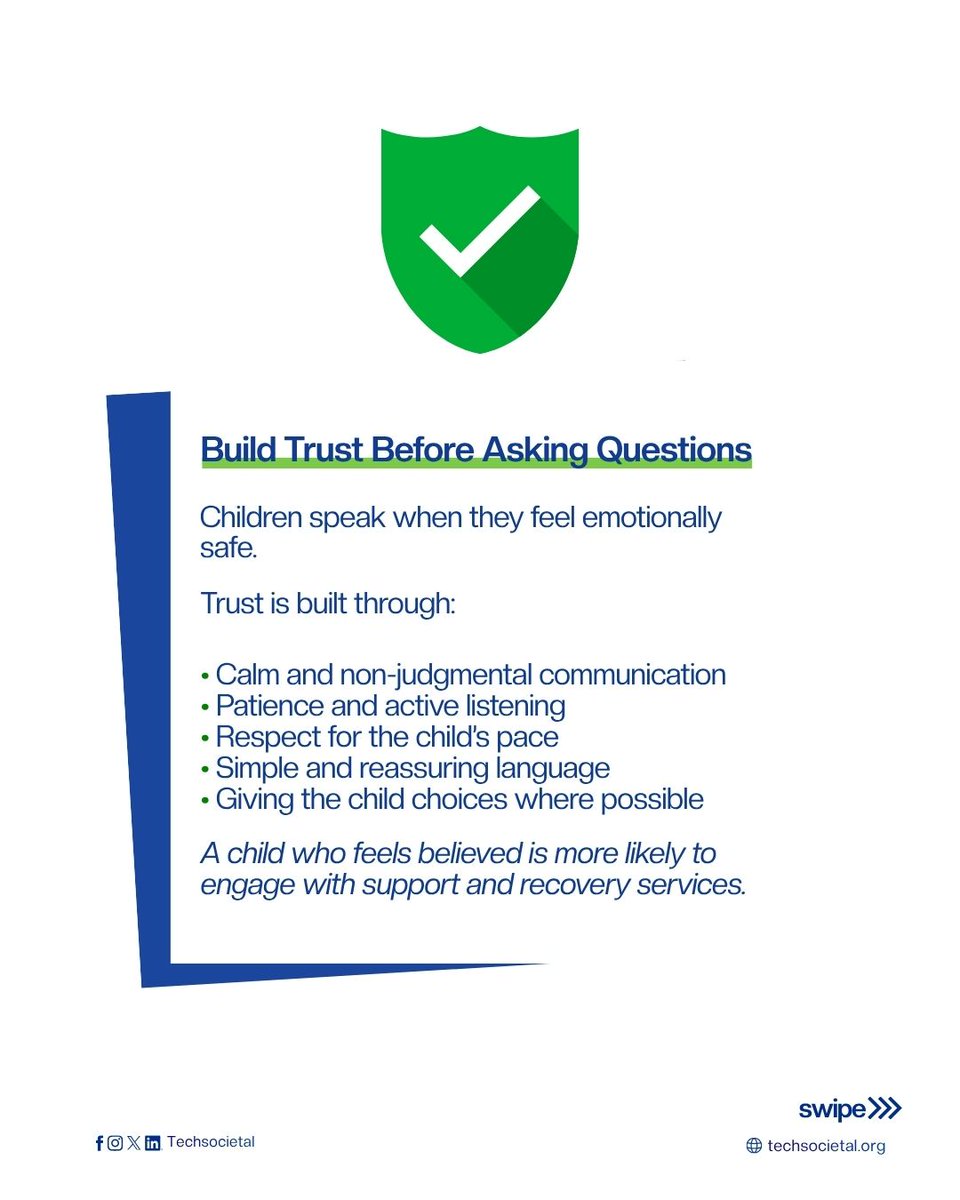
When a child experiences online grooming or image-based sexual abuse, the way adults respond can shape their healing journey.
Children affected by online harm may experience fear, shame, confusion, anxiety, or a loss of trust and control. In these moments, trauma-informed care becomes essential. It means responding with empathy, patience, safety, and respect for the child’s emotional needs — not pressure, blame, or judgment.
#OnlineSafety
#ChildProtection
#TraumaInformedCare
#DigitalSafety
#ChildSafeguarding
#Parenting
#OnlineGrooming
#ImageBasedAbuse
#ChildWellbeing
#Safeguarding
1
7
May 18
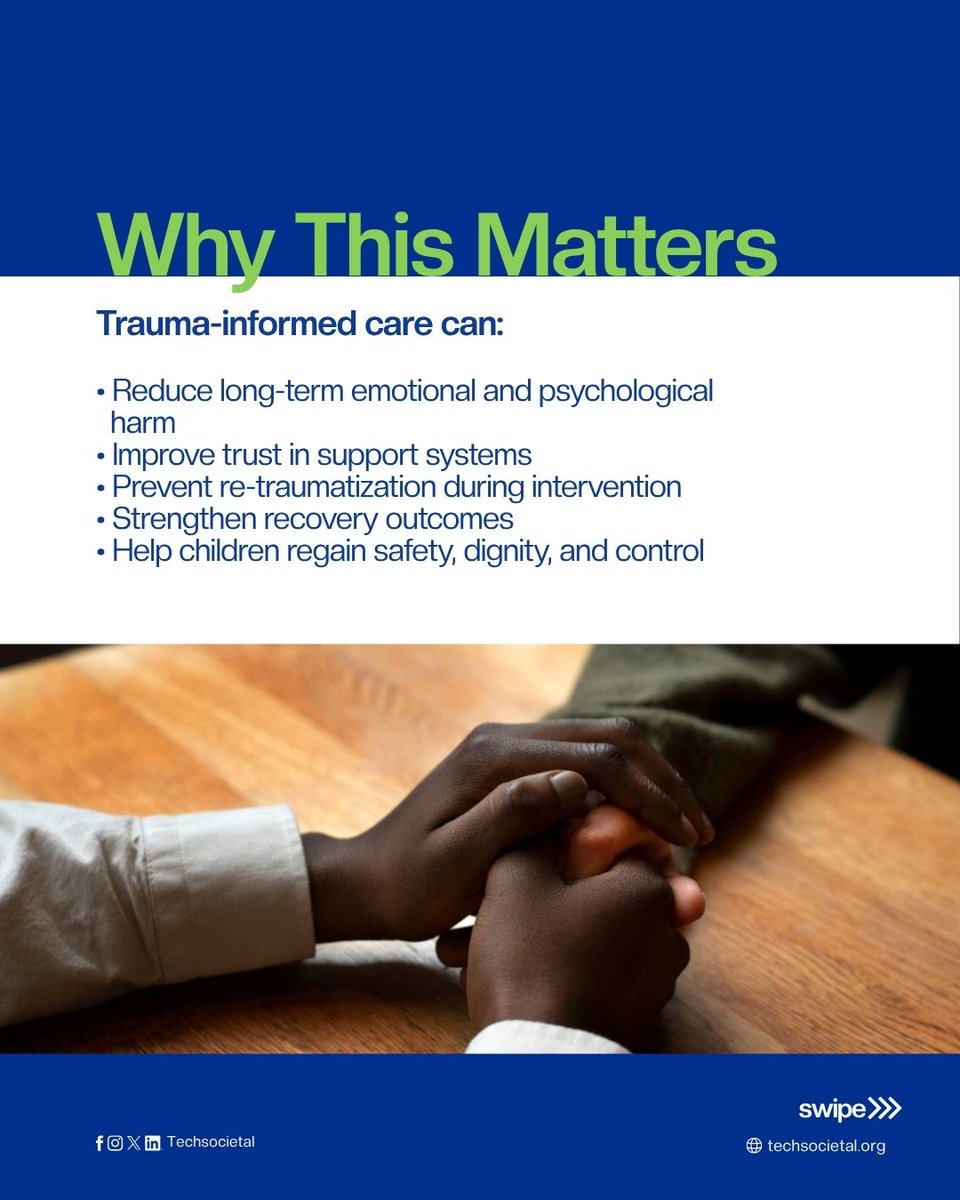
A trauma-informed approach helps children feel heard, protected, and supported while reducing the risk of further emotional harm.
What supportive care can look like:
🔹 Listening calmly and without judgment
🔹 Reassuring the child that they are not to blame
🔹 Creating a safe environment for communication
🔹 Seeking support from trained professionals when necessary
For parents, caregivers, educators, and professionals working with children, one important reminder stands out: How we respond matters just as much as what happened.
#OnlineSafety
#ChildProtection
#TraumaInformedCare
#DigitalSafety
#ChildSafeguarding
#Parenting
#OnlineGrooming
#ImageBasedAbuse
#ChildWellbeing
#Safeguarding
8
May 16
Africa’s digital space is growing rapidly — and so is the need for stronger, context-aware content moderation systems.
Recent developments following Meta’s decision to end its content moderation contract with Sama in Kenya have raised important questions about how harmful content in African contexts will be identified, reviewed, and addressed at scale.
This is about more than technology. It is about user safety, trust, and effective platform accountability.
The ACHPR’s Resolution 630, adopted in March 2025, also raised concerns about declining human moderation and the increasing reliance on automated systems that may struggle to understand African contexts.
Our publication, “We Found No Violation: When Harm Speaks, and Platforms Don’t Understand,” highlights how gaps in moderation can weaken trust in reporting systems and leave harmful content unaddressed.
When harmful content is consistently overlooked:
📍 Victims may lose confidence in reporting systems
📍 Harmful behaviour can become normalized
📍 Trust in digital platforms and safety mechanisms weakens
As Africa’s digital ecosystem continues to grow, there is an opportunity for all stakeholders to strengthen collaborative approaches to online safety
Key areas for action include:
✔️ Invest in African language moderation systems
✔️ Build local, culturally aware moderation teams
✔️ Ensure complex cases are reviewed by human experts — not just AI
✔️ Building responsive reporting and accountability mechanisms
A safer digital future for Africa requires systems that are not only scalable but also context-aware, inclusive, and responsive to local realities.
#OnlineSafety
#ContentModeration
#DigitalRights
#TrustAndSafety
#AfricaTech
#PlatformGovernance
#InformationIntegrity
#TechPolicy
#DigitalSafety
#Techsocietal
17
May 14
A recent CNN investigation revealed a platform where non-consensual intimate images and videos of spouses were viewed over 62 million times in a single month.
This is not an isolated US case. It is a global warning—including for Nigeria.
When digital platforms operate without enforceable guardrails:
⚠️ Harmful content spreads at scale
⚠️ Victims are re-traumatized without recourse
⚠️ Abuse becomes both normalized and monetized
As digital adoption accelerates, so does the risk of platform-facilitated harm. Without proactive measures, the same patterns of abuse could scale quickly in Nigeria and other emerging tech ecosystems.
What needs to change:
🔹 Government: Enforce stronger digital protection laws and adopt safety-by-design principles for platforms
🔹 Platforms: Build detection tools that prevent harm proactively, not just react after reporting
🔹 Clear reporting and takedown systems with enforceable deadlines
🔹 Real consequences for platforms that fail to act
The internet should not be a sanctuary for abuse. Stronger accountability and safety-by-design principles are not optional—they are the foundation of safe digital spaces.
#TechGovernance
#OnlineSafety
#DigitalRights
#EndIBSA
#ProtectWomen
#PolicyReform
#TechSocietal
1
67
May 12
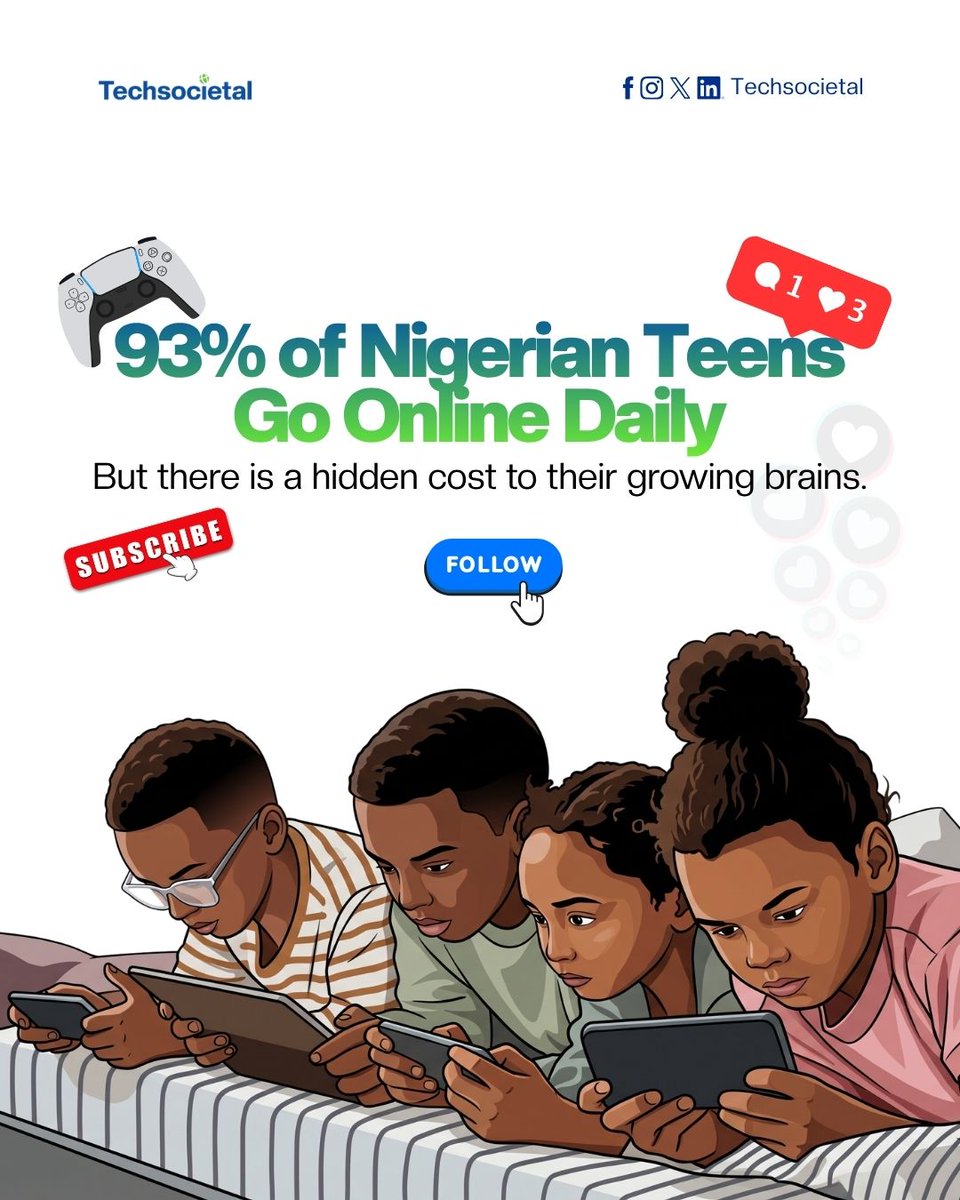
According to the Nigerian Communications Commission, 11–16-year-olds are highly engaged with digital devices, with 93% using phones or devices regularly. A large majority (85%) browse and chat on social networking platforms daily, while 48% watch videos online every day.
While this reflects increasing access to digital opportunities, it also highlights the importance of guided and balanced use of technology during childhood.
Research has associated excessive screen exposure in early childhood with developmental challenges, including reduced attention span, weaker memory and learning outcomes, and difficulties with social interaction. During early development, children benefit most from real-world interaction, play, and communication—not prolonged screen exposure.
What Parents Can Do:
🔹 Set daily screen limits based on age
🔹 Avoid screens before bedtime to protect sleep and brain function
🔹 Encourage offline activities like reading, play, and social interaction
🔹 Monitor content and use parental controls where appropriate
Technology should support your child’s growth—not replace the experiences they need to thrive.
#ChildDevelopment
#DigitalSafety
#Parenting
#ScreenTime
#OnlineSafety
#TechSocietal
#HealthyKids
25
May 8
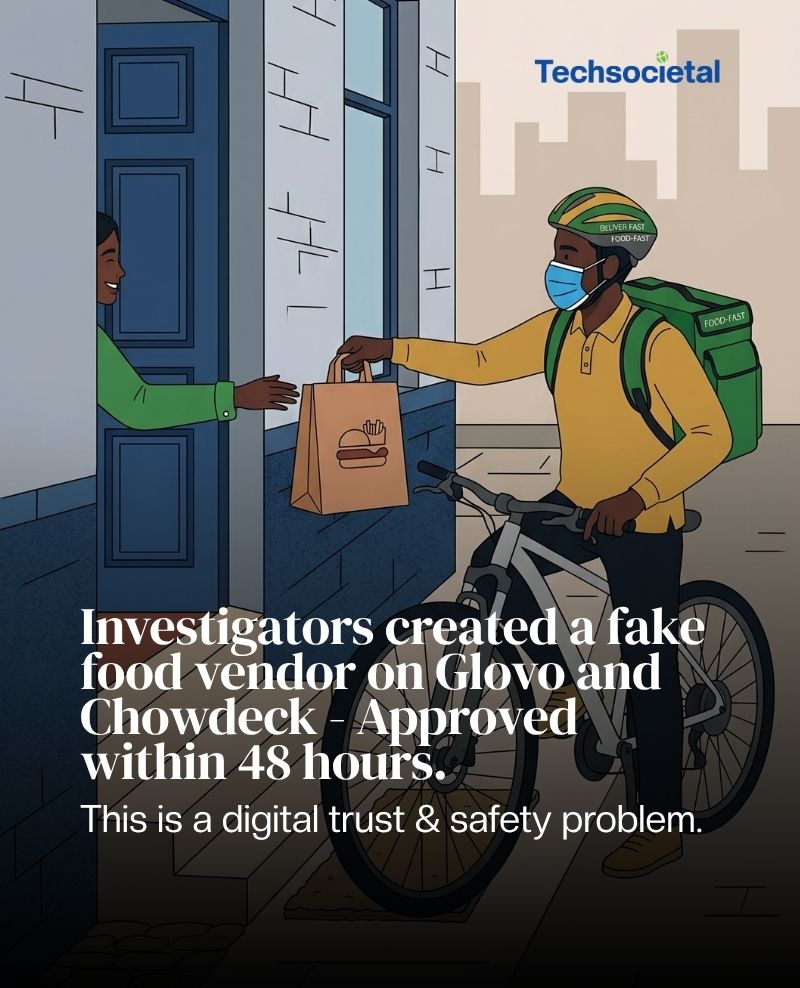
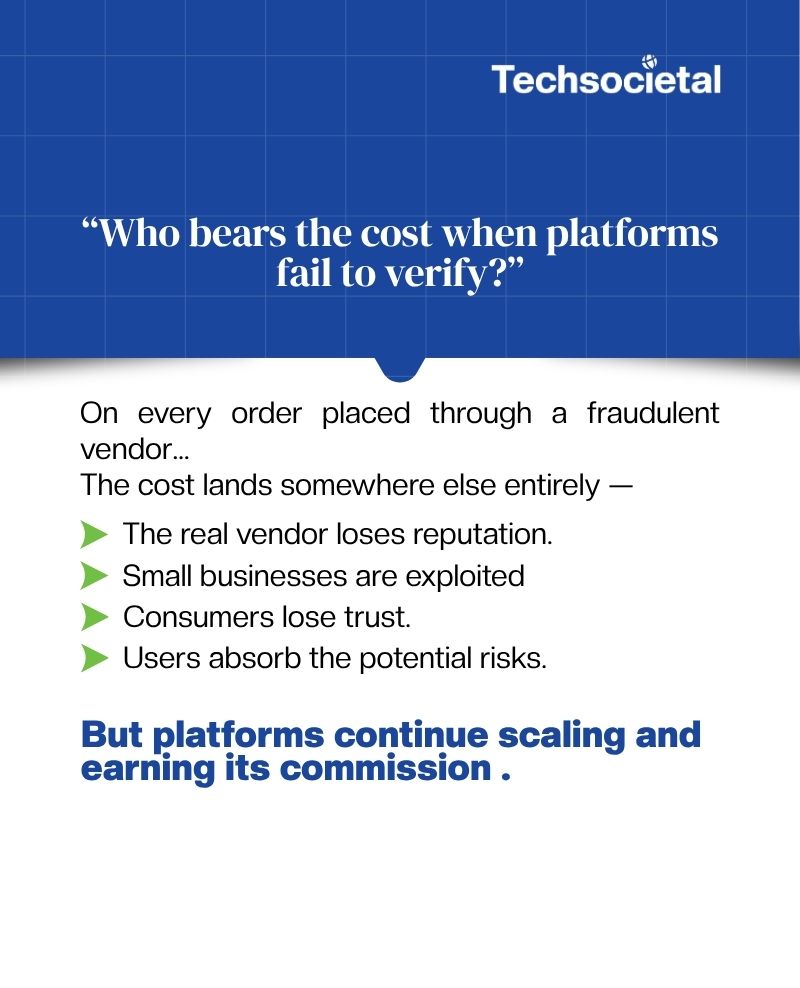
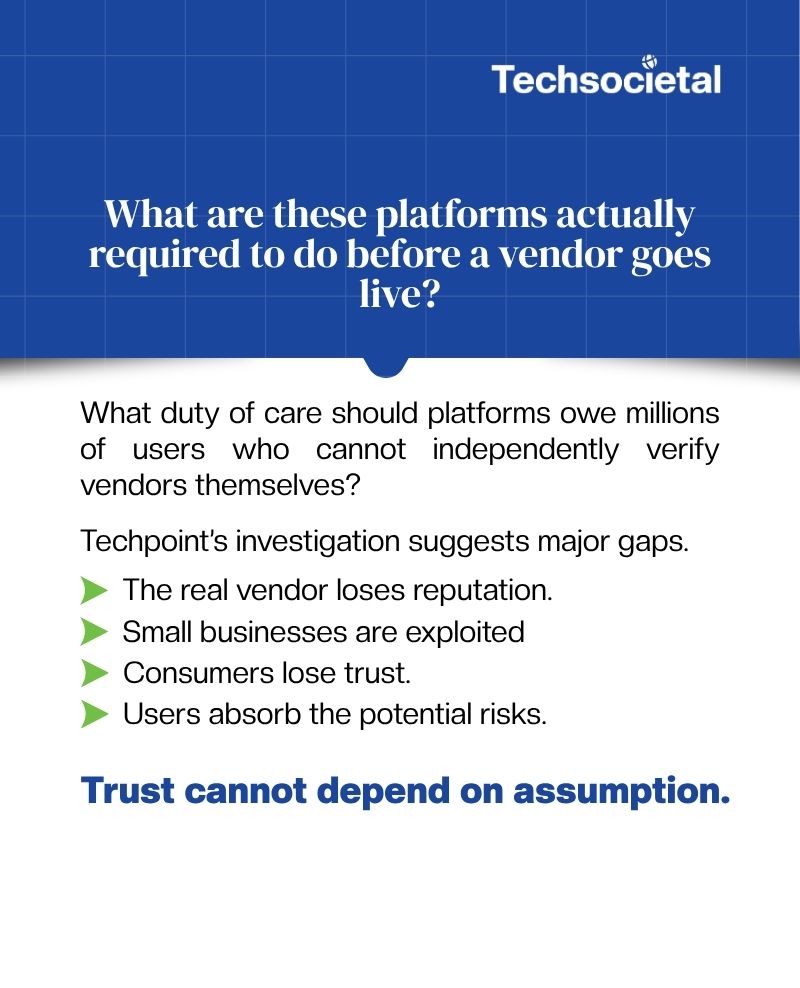
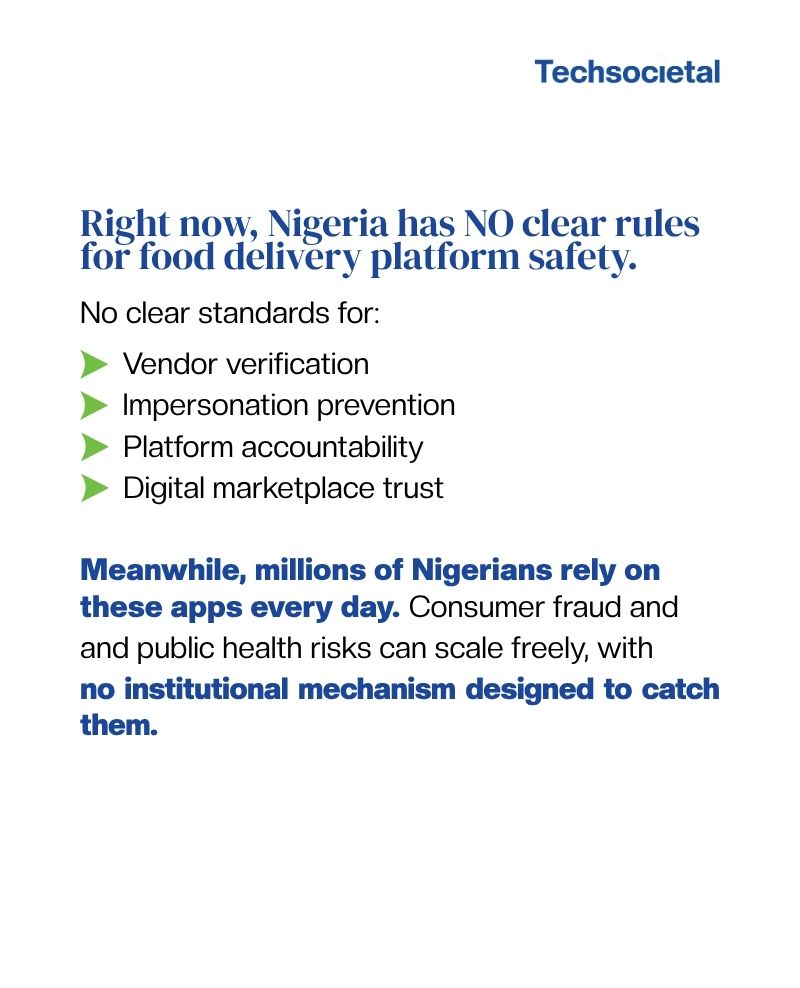
A recent investigation by @TechpointAfrica exposed how easily Nigeria's food delivery platforms can be infiltrated by fraudulent vendors. But there is a dimension of those findings that has not received the attention it deserves — one that sits at the heart of what it means to participate safely in Nigeria's growing digital economy. It is the question of digital trust, and the accountability gap quietly eroding it.
Read the full commentary at the link in our bio.
1
17
May 8
We are asking whether the platforms, regulators, and policymakers responsible for protecting Nigeria's digital consumers will respond with the urgency this moment demands — or wait until the harm scales further before acting.
This commentary is informed by @TechpointAfrica's investigation into the vendor onboarding processes of Glovo and Chowdeck, published in 2026. Techsocietal works on digital rights and platform accountability through advocacy, research, and capacity building.
Read the full commentary at the link in our bio.

23