
Tokyo-based AI community and RWA public chain connecting global innovators, easing entry into Japan, and providing trusted cross-border investment opportunities
Joined February 2025
- Tweets 615
- Following 113
- Followers 104
- Likes 423
141 Photos and videos












Pinned Tweet

Feb 26
🚀【TechTabiオンライン|フィジカルAI × ヒューマノイド最前線】
なぜ中国で急加速しているのか?
深圳〜大湾区サプライチェーンの強さの源泉とは?
量産・供給網・技術スタックを実務視点で読み解きます。
📅 3/11 19:00(オンライン)
🔗 luma.com/zd0h17du
2
130
Mar 8
航空ロボットも、いま 具身知能(Embodied Intelligence) の時代へ。
浙江大学 長聘副教授
Differential Robotics 創業者 高飛(Fei Gao) が
FAIR plus 2026 FIRST大会 に登壇。
テーマ:
高速自律飛行から複雑環境での意思決定まで。
航空ロボットはどこまで「身体知」を獲得できるのか。
30
Feb 28
競争関係にある2社が、
“どこまで関与するか”に共通の線を引いた。
これは単なる広報ではない。
AI企業が 能力競争だけでなく、関与領域のガバナンスを明示し始めたというシグナル。
技術覇権の時代に、
「できるか」ではなく「やるか」を選び始めたのは、確かに大きい。

Anthropic said no to the Pentagon.
Now Sam Altman is backing them:
"For all the differences I have with Anthropic, I mostly trust them as a company and I think they really do care about safety."
OpenAI and Anthropic both drawing the same line.
This is a big deal.
1
30
Feb 28
ヒューマノイドは、もはや“展示”の存在ではない。
深圳のDexForce W1 Pro(Gen2)は、コミュニティ型コンビニで自律稼働。
顧客の嗜好に合わせた栄養設計 → 加熱調理 → 提供までを一貫実行。
重要なのは派手さではなく、
知能 × 機体制御 × 現場オペレーションが実装レベルに入ったこと。
Feb 28

Humanoid robots are increasingly blending into daily life 🤖🍱
Shenzhen’s DEXFORCE Robotics DexForce W1 Pro (Gen2) wheeled humanoid is now running autonomously in a community convenience store: it crafts nutritious, weight-loss-friendly meals based on customer preferences, expertly heats them in the microwave, and delivers right to you.
Soon, we’ll treat these AI humanoids as everyday helpers.
1
69
Feb 26
国家首脳クラスがロボット企業を直接訪問する時代。
ドイツのメルツ首相がUnitreeを訪問。
これは単なる表敬ではなく、ヒューマノイドが「国家アジェンダ」に入った証拠。
産業・供給網・AI主権——
ロボティクスはもう技術トレンドではなく、戦略インフラ。
Feb 26

Great Honor to Welcome German Chancellor Merz 🥳
It was a great honor to welcome German Chancellor and his delegation to visit Unitree Robotics!
We sincerely appreciate the enthusiasm from German entrepreneurs for Unitree robots!
We look forward to working with more outstanding companies around the world to achieve mutual success,
and to jointly advance intelligent robotics technology for the benefit of all humanity.
271

Feb 25
Unitree Robotics のAs2、これは“おもちゃ顔”の産業機。
最大90N·m、4時間超稼働、15kg積載で13km。
スペックは完全に現場仕様。
しかもIP54+二次開発フルオープン。
コンパニオンというより、可搬型ロボットプラットフォーム。
人型だけが未来じゃない。
実用域から静かに市場を取りに来ている。

Unitree just unveiled the As2, a compact robotic companion that packs surprisingly serious industrial-grade specs. 🤖💪
The new model features a maximum torque of 90N·m and can run for over 4 hours straight on a single charge while unloaded.
It handles a 15 kg (33 lbs) payload with a range exceeding 13 km (8.1 miles), designed to tackle real-world tasks.
Built for the elements, the As2 is IP54 rainproof and fully open for secondary development to empower specialized industry apps.
Source: Unitree
#Robot #Humanoid #Robotics #AI #EmbodiedAI #PhysicalAI #Unitree #Automation
1
75
Feb 25
42Mパラメータ。
GPT-1の半分で、人型ロボの“身体”を動かす。
SONICは思考ではなく「反射」を学習した。
100M超のモーションデータを叩き込み、10,000倍速の物理世界で鍛え上げる。
結果?
3日学習 → 実機G1へゼロショット転移、成功率100%。
次は、大規模“身体モデル”の時代かもしれない。

What can half of GPT-1 do? We trained a 42M transformer called SONIC to control the body of a humanoid robot. It takes a remarkable amount of subconscious processing for us humans to squat, turn, crawl, sprint. SONIC captures this "System 1" - the fast, reactive whole-body intelligence - in a single model that translates any motion command into stable, natural motor signals. And it's all open-source!!
The key insight: motion tracking is the one, true scalable task for whole body control. Instead of hand-engineering rewards for every new skill, we use dense, frame-by-frame supervision from human mocap data. The data itself encodes the reward function: "configure your limbs in any human-like position while maintaining balance".
We scaled humanoid motion RL to an unprecedented scale: 100M mocap frames and 500,000 parallel robots across 128 GPUs. NVIDIA Isaac Lab allows us to accelerate physics at 10,000x faster tick, giving robots many years of virtual experience in only hours of wall clock time. After 3 days of training, the neural net transfers zero-shot to the real G1 robot with no finetuning. 100% success rate across 50 diverse real-world motion sequences.
One SONIC policy supports all of the following:
- VR whole-body teleoperation
- Human video. Just point a webcam to live stream motions.
- Text prompts. "Walk sideways", "dance like a monkey", "kick your left foot", etc.
- Music audio. The robot dances to the beat, adapting to tempo and rhythm.
- VLA foundation models. We plugged in GR00T N1.5 and achieved 95% success on mobile tasks.
We open-source the code and model checkpoints!! Deep dive in thread:
1
64
Feb 25
春節の“カオス”な高鉄に人型ロボを投入。
これは演出ではなく、実地ストレステスト。
人混み・突発対応・安全制御——全部まとめて検証している。
展示会で歩けるかどうかはもう論点じゃない。
混乱の中で安定して働けるか。そこが本番。
Physical AI は、静かなラボでは進化しない。
#Humanoid
Feb 23

🇨🇳 China actually started putting humanoid robot attendants on their high-speed trains to help out during the Spring Festival travel rush
They are basically testing how these bots handle the chaos.
2
92
Feb 23
ロボットが広場でダンス。
エンタメに見えるけど、実は制御・同期・安定性の総合力テスト。
“遊び”の裏に、本気のエンジニアリングがある。 🤖
Feb 23
Unitree Kung Fu Bot Pray for Blessings at the Temple of Heaven: Wish Everyone All the Best🥳
Unitree G1 Robots Cluster Show
1
68
TechTabi retweeted

Feb 23
Hey @Tesla_Optimus your competition is growing.
Damn impressively too.
Yes, I know that they aren't generalized. Or safe enough to bring into our homes. But wow. What a show. Hey @cixliv I could see multiple robots fighting in the cage in San Francisco next. No?
Feb 23
Unitree Kung Fu Bot Pray for Blessings at the Temple of Heaven: Wish Everyone All the Best🥳
Unitree G1 Robots Cluster Show
27
7
115
11,190

Welcome more global founders and builders to come visit Shenzhen in the Year of the Horse! 🐎
Feb 21
Humanoid robots make coffee, drones deliver it. Shenzhen is already living in 2050.
1
14
1,367
Feb 23
Japan Pavilion connects Japan’s robotics and AI leaders with Shenzhen’s world-leading robotics ecosystem.
It’s a focused delegation to visit top companies, real factories, and large-scale deployments — building real cross-border collaboration.
1
24
Feb 23
AIとロボット用大規模モデルを本気で統合できた会社が、次の時代のトップに立つ。
ソフトだけでも、ハードだけでも足りない。大規模モデル × 実世界ロボティクス。
この両輪を握った企業こそ、真のAIカンパニーになる。
1
177
Feb 23
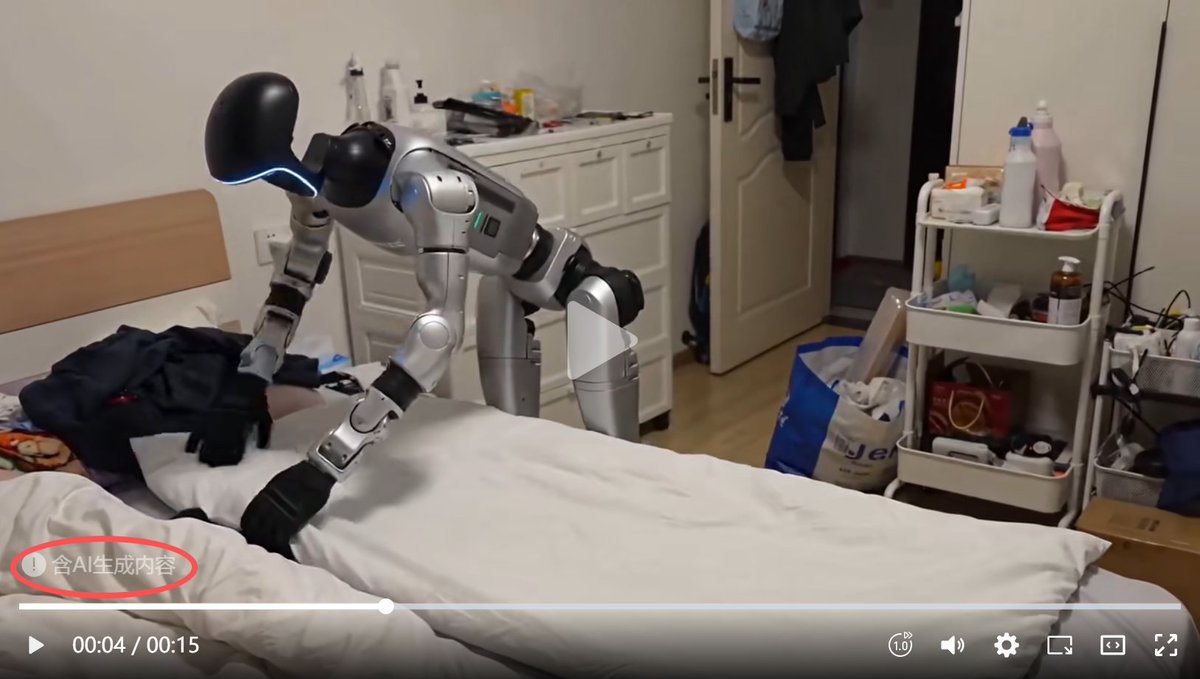
AIフェイクが溢れて、本物の技術との区別がどんどん曖昧に。
この動画も本来は「AI生成」表記あり。それを外して“完全自律”のように見せるのはさすがに危うい。
リアルな進歩とCGは分けて語るべき。
AI-generated fakes are flooding X, making it nearly impossible to tell real engineering from digital junk.
This video originally had an AI-generated disclaimer, but some are posting it without any mention of that, even vaguely claiming it's "totally in charge."
45
Feb 21
100倍高速。0.6秒で複雑構造。
Tsinghua Universityチームが Nature 掲載で発表。
本質はスピードではない。
製造が“バッチ処理”から“ほぼリアルタイム”へ近づくこと。
もし設計→出力→検証が秒単位になるなら、
競争優位は設備ではなく、アルゴリズムと設計思想に移る。
Feb 21

amazing, this is massive
New 100x faster 3D printing method (than previous volumetric methods).
This will change manufacturing and the world.
"Tsinghua University-based team say they can 3D print complex millimeter-scale objects within only 0.6s, in an academic paper published by Nature"

46
Feb 21
最近、AI生成の“ロボット兵士”や超人ヒューマノイド系コンテンツが量産されすぎている。
バズは取れる。
でも現実の技術とはほぼ無関係。
クリックを稼ぐために誇張された未来像を流すのは簡単。
本当に難しいのは、地味でも積み上がる研究や実装の進歩を伝えること。
AI-generated trash is spiraling out of control, with people churning out fake "robot soldiers" and superhuman humanoids just to farm clicks. 🤖🚫
It’s honestly shady how these creators prioritize viral engagement over actual tech reality.
1
52
Feb 21
事前に仕込んだモーション?
いいえ、これは“その場判断”。
Perceptive Humanoid Parkour(PHP)は、深度カメラから環境を読み取り、
跳ぶ・越える・登るをリアルタイムで選択。
ポイントは技の派手さではない。
「再生するロボット」から「状況を読むロボット」へ。
軌道をなぞる時代は終わり。
Feb 19

Not a preplanned motion sequence.
A robot deciding mid-jump what to do next.
[📍 paper demo]
Researchers just showed a humanoid doing real parkour using only onboard perception. No motion script, no fixed obstacle layout.
The system is called Perceptive Humanoid Parkour (PHP).
Instead of memorizing a path, the robot reads depth from its cameras and continuously chooses actions. Step, vault, climb, or roll depending on what geometry appears in front of it.
To make that possible, they combine three ideas:
First, they stitch together human motion clips into long movement references so the robot learns fluid transitions instead of isolated tricks.
Second, they train tracking policies with reinforcement learning so contacts land at the right time and the robot keeps balance during dynamic moves.
Finally, everything is distilled into one perception policy that runs directly from depth input to action selection.
The result on a Unitree G1:
about 3 m/s vaults
wall climbs up to 1.25 m
nearly one minute continuous obstacle traversal
adapting when obstacles move
What matters is not the tricks.
It is the shift in capability.
Earlier humanoids executed motions.
This one navigates situations.
Once robots react to geometry instead of replaying trajectories, environments stop needing to be predictable. Warehouses, homes, and outdoors suddenly become the same problem.
Thanks for sharing, @zhenkirito123!
Paper demo:
php-parkour.github.io
arxiv.org/abs/2602.15827
———
Weekly robotics and AI insights.
Subscribe free: 22astronauts.com
1
40
Feb 19
1
25