
Simplifying money mistakes Indians make every day | CA | Stories that protect your wealth | Not SEBI Reg.
Joined July 2021
- Tweets 3,934
- Following 92
- Followers 70,283
- Likes 10,778
1,405 Photos and videos








Pinned Tweet

May 16
Manoj Madhusudhanan took a ₹1.86 crore home loan from ICICI Bank.
As collateral, he handed over his original property documents. Every homebuyer does this. You have no choice.
ICICI Bank sent those documents to their storage facility in Hyderabad via courier. Somewhere on that journey — Bangalore to Hyderabad — the documents vanished.
Gone. Originals. Irreplaceable.
When Manoj found out, ICICI Bank had one answer: it was the courier company's fault. Not ours.
He went to the Banking Ombudsman. They told ICICI to publish a public notice about the loss and pay him ₹25,000 for the trouble.
Twenty-five thousand rupees. For losing the original documents to a ₹1.86 crore property.
Manoj sent a legal notice. ICICI denied any mistake.
He went to the NCDRC.
The apex consumer court looked at the facts. The bank had taken custody of the documents. The bank had chosen the courier. The bank could not hand that liability to a third party and walk away.
ICICI Bank — India's second-largest private bank, ₹9 lakh crore in assets — was held liable. Ordered to obtain reconstructed certified copies, issue an indemnity bond, and pay ₹25 lakh in compensation.
One loan. One lost file. One bank that blamed the courier.
Save this — if your bank loses your original property documents, they cannot blame their courier agent. The documents were in their custody. The liability is theirs. File at your district consumer forum. The law is on your side.
(Source: Manoj Madhusudhanan vs. ICICI Bank Ltd. | NCDRC | LiveLaw, September 2023)
122
3,493
13,812
521,627
Technical Charts retweeted
Jun 13
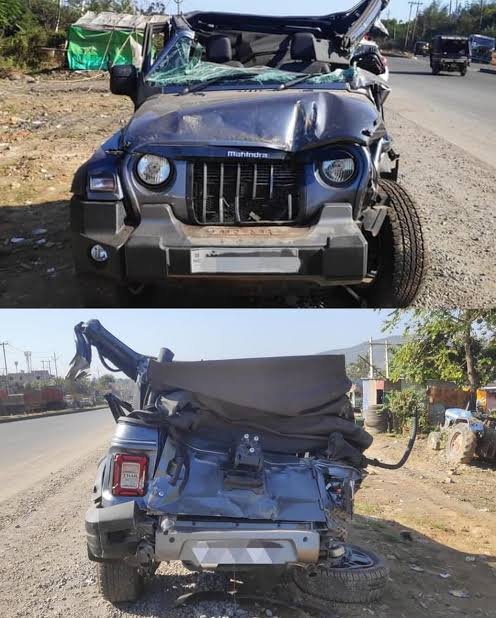
A young man saved for 2 years.
Bought a brand-new Mahindra Thar. ₹19 lakh.
Met with a serious accident months later. Survived — barely.
Filed an insurance claim confidently.
It was rejected.
Not because he was drunk. Not because the policy lapsed.
Because he had changed his tyres.
Aftermarket tyres. The kind lakhs of Thar owners install every week. The kind you see on every off-road Instagram reel.
His insurer said: "Undisclosed material modification. Policy void."
Under IRDAI rules, an insurer can legally reject your entire claim if you modified your vehicle — even if the modification had NOTHING to do with the accident.
No one told him this when he bought the policy.
No one told him when the dealer fitted the tyres.
No one told him at all.
If you own a modified car in India — bigger tyres, alloys, suspension lift, body kit, remap — and haven't informed your insurer in writing, you are uninsured right now.
You just don't know it yet.
Save this. Forward it to every car owner you know.
32
44
153
38,753
Jun 13
For years, most borrowers have treated their credit score as something that matters only when a loan is approved or rejected.
But what if your credit score didn't just determine whether you got the loan...
What if it determined how much your house ultimately costs you?
A difference of even 0.50%-1.00% can translate into lakhs of rupees over the life of a mortgage.
Imagine a system where home loan rates are priced like this:
800 Credit Score → 7.75%
750-799 → 8.00%
700-749 → 8.50%
650-699 → 9.25%
Below 650 → Higher risk pricing
Fair reward for financial discipline?
Or unfairly penalizing people who may have faced temporary setbacks?
What do you think?
2
1,272
Jun 12
If Dharmendra Pradhan resigns, whom BJP will appoint as Education minister?
1
2
2,119
Technical Charts retweeted
Jun 11
"If you only look at one number from Zepto's DRHP, make it this one."
Ad revenue: ₹1,646 Cr, now 7.8% of NRV & still growing.
Burn per order went from ₹99 to ₹42 in two years.
Total orders: 640 million.
Yes, Zepto burned ₹4,300 Cr in FY26.
The burn chart looks scary. The per-order chart looks like a business figuring itself out in real time.
Most people will see the loss number and stop reading. Founders don't. Investors definitely wouldn't.
7
1
22
62,203
Technical Charts retweeted
Jun 10
The government launched a ₹14,450 crore scheme to skill India's youth.
CAG audited it. Tabled in Parliament. December 2025.
Here's what they found:
— 90 lakh candidates had no valid bank account on record
— 1 crore candidates shared the same phone numbers and emails
— 97% of training assessors: missing or untraceable
— Training sessions logged on "31st February"
— Centres inspected on the ground: already shut down
— 34 lakh beneficiaries never received a single rupee
Certificates were issued to 1.1 crore youth.
The ministry couldn't prove a single placement.
₹10,000 crore spent. No arrests. No refund. No accountability.
This is not a glitch. This is the system working exactly as designed.
1
6
14
1,933
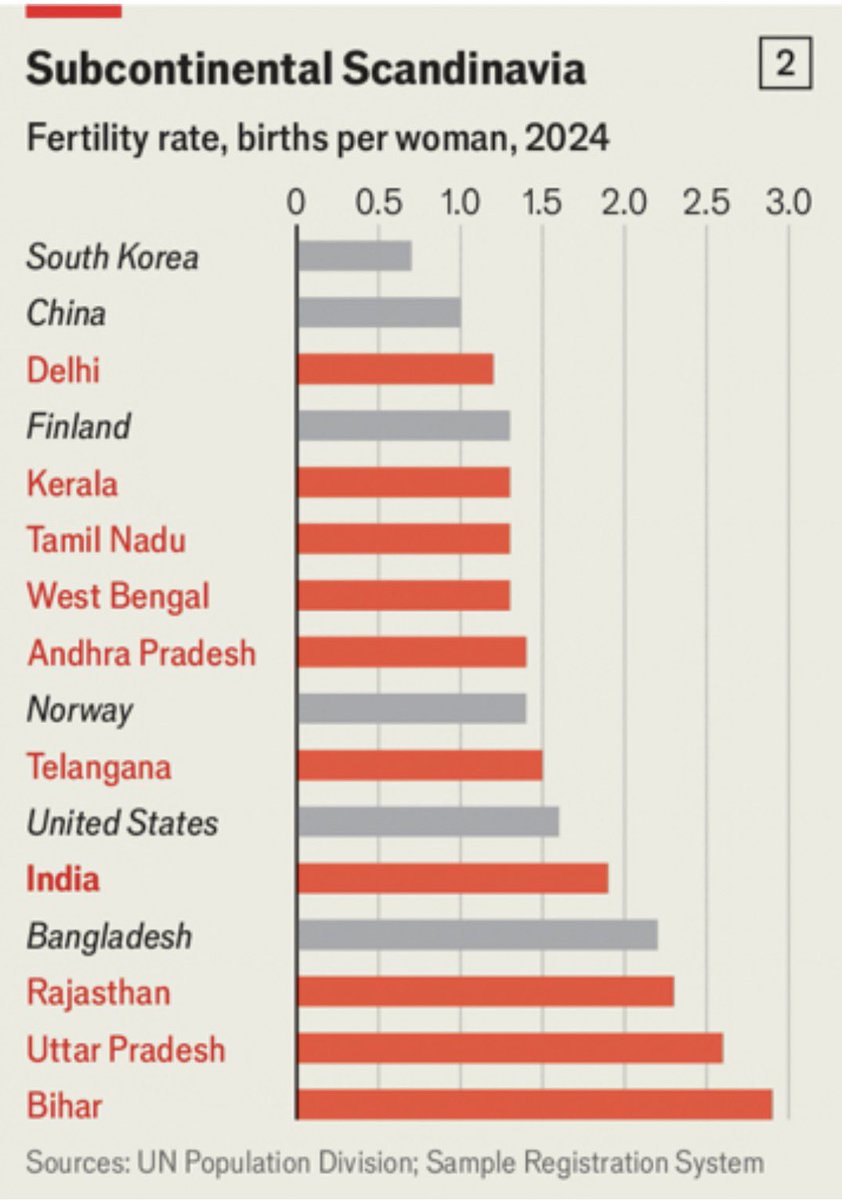
Kerala. Tamil Nadu. West Bengal. Andhra Pradesh.
All have lower birth rates than the United States.
The same states that get lectured about "population control" are already in demographic decline.
The irony is staggering.
1
1,079
A "Yoga Guru" in Gujarat had a side hustle.
He ran a spiritual foundation called Satyam Yog Foundation.
His vehicle carried fake AYUSH ministry markings.
The perfect cover.
Until Ahmedabad Crime Branch stopped his white Fortuner in Amraiwadi.
Inside — ₹2.10 crore in fake ₹500 notes. 42,000 of them.
At his Surat premises: printers, laptops, cutting machines, security thread paper imported from China.
Oh — and he used ChatGPT to design the notes.
Pradip Jotangiya. Guruji. Arrested March 18, 2026.
7 people total. One racket. ₹2.38 crore in fake currency.
Save this — ₹500 notes are the most counterfeited denomination in India. Here's how to spot a fake: tilt the note, the security thread turns green. No tilt? Walk away.
(Source: Ahmedabad Crime Branch / Times of India, March 2026)
8
2,105
Technical Charts retweeted
I've been digging into the Rajesh Exports story.
Here's everything — the rise, the empire, and the collapse. 🧵 in one post.
WHO:
Rajesh Mehta and his brother Prashant Mehta. Middle-class Jain family from Bengaluru. No legacy. No capital. Just two brothers who wanted to sell gold to the world.
WHERE IT STARTED:
A 10-person shop inside their own garage in Bengaluru. 1989.
WHAT THEY BUILT:
Started as a plain gold jewellery exporter. By 2005, they were bagging orders worth ₹1,320 million from UAE. By 2010, annual sales crossed USD 4 billion. By 2013, they set up India's largest gold refinery in Uttaranchal — becoming the ONLY company in the world present across the entire gold value chain. Refine → Manufacture → Export → Retail. All in-house.
THE MASTERSTROKE — 2015:
Rajesh Exports acquired Valcambi SA — the world's largest gold refinery, based in Switzerland — for USD 400 million. After this, they entered Fortune Global 500. Ranked 7th on Fortune India 500. Revenue hit ₹2.58 lakh crore. A garage in Bengaluru was now running the world's gold supply chain.
WHEN CRACKS APPEARED:
Quietly, over 3 years, the stock fell 80%. Debt pressures. Operational stress. Governance whispers. Markets were nervous but nobody had proof yet.
THE SEBI BOMB — JUNE 3, 2026:
SEBI issued an interim order. Barred Rajesh Exports AND promoter-chairman Rajesh Mehta from accessing securities markets. The allegation? Financial misrepresentation of ₹15.15 LAKH CRORE across FY21–FY25.
To put that in context — that's larger than the GDP of most countries.
HOW THE FRAUD ALLEGEDLY WORKED:
99% of Rajesh Exports' consolidated revenues were attributed to overseas subsidiaries — mainly Valcambi SA, Switzerland. But when investigators checked Valcambi's own audited books? Revenue was just ₹542 crore in CY2023. The group was reporting lakhs of crores. The subsidiary showed hundreds of crores. The gap — ₹15.15 lakh crore — was allegedly non-genuine entries, linked directly to Mehta's personal derivative trades to artificially inflate reported turnover.
THE FUND DIVERSION LAYER:
It wasn't just inflated revenues. Corporate funds were routed through Mehta's personal bank accounts. The company itself admitted certain transfers were made "without revealing the bank account from which funds had come." Two entities — Elest Pvt Ltd and ACC Energy Storage — connected to a lithium-ion cell business were flagged for non-transparent related-party dealings.
THE GHOST COUNTERPARTY:
Rajesh Exports recorded ₹11,000 crore in transactions with a company called Affluence Shares and Stocks Pvt. Ltd. When investigators approached that company? They said — "We don't know Rajesh Exports." ₹11,000 crore. With a company that denied the relationship entirely.
WHO GETS HURT:
LIC holds 10.8% of Rajesh Exports. Your insurance premiums. Sitting inside this. SEBI estimates investor wealth erosion of ₹12,726 crore. The stock hit lower circuits the day the order dropped.
WHAT THE COMPANY SAID:
Rajesh Exports called it a "communication gap and confusion." They claimed SEBI mistook Valcambi's EBITDA for revenue. Mehta said on record — "It is an interim order and nothing in it is true."
WHAT HAPPENS NEXT:
The matter is being referred to the National Financial Reporting Authority. The auditors who signed off on this for years are now in the crosshairs. This isn't over.
A garage. A Swiss refinery. A Fortune 500 rank. And allegedly — ₹15.15 lakh crore in phantom revenues.
The biggest alleged accounting fraud in Indian corporate history may have just been hiding in plain sight — inside a gold company most people had never heard of.
Follow the money. Every time.
2
6
14
3,366
Like this post if you've never tipped a delivery partner for an online order.
4
976
Technical Charts retweeted
Tabreiz Ahmad woke up one day to find ₹2 lakh missing from his bank account.
He had not authorised any transaction. His account with Jammu & Kashmir Bank had been debited towards a MetLife insurance policy that he had never asked for, never signed up for, and had no knowledge of. The bank had deducted the money without his consent or authorisation and enrolled him into an insurance product he did not want.
Ahmad filed a complaint before the District Consumer Disputes Redressal Commission, Baramulla/Bandipora. The commission examined the facts and found no evidence of any consent, written or verbal, for the deduction. It held J&K Bank liable for deficiency in service and unfair trade practice, and directed the bank to compensate Ahmad for the unauthorised deduction.
One account. One policy he never signed. One bank that decided for him.
Save this — banks routinely debit insurance premiums citing consent buried in loan agreements or verbal conversations you cannot recall. If your account is debited for an insurance product you never authorised, file immediately at the district consumer forum. The burden is on the bank to produce your signed consent. If they cannot, the money comes back — with interest and compensation. Check your bank statements every month.
Tabreiz Ahmad v. J&K Bank and MetLife | District Consumer Disputes Redressal Commission, Baramulla/Bandipora | LiveLaw Consumer Cases, 2024
1
6
2,912
Technical Charts retweeted
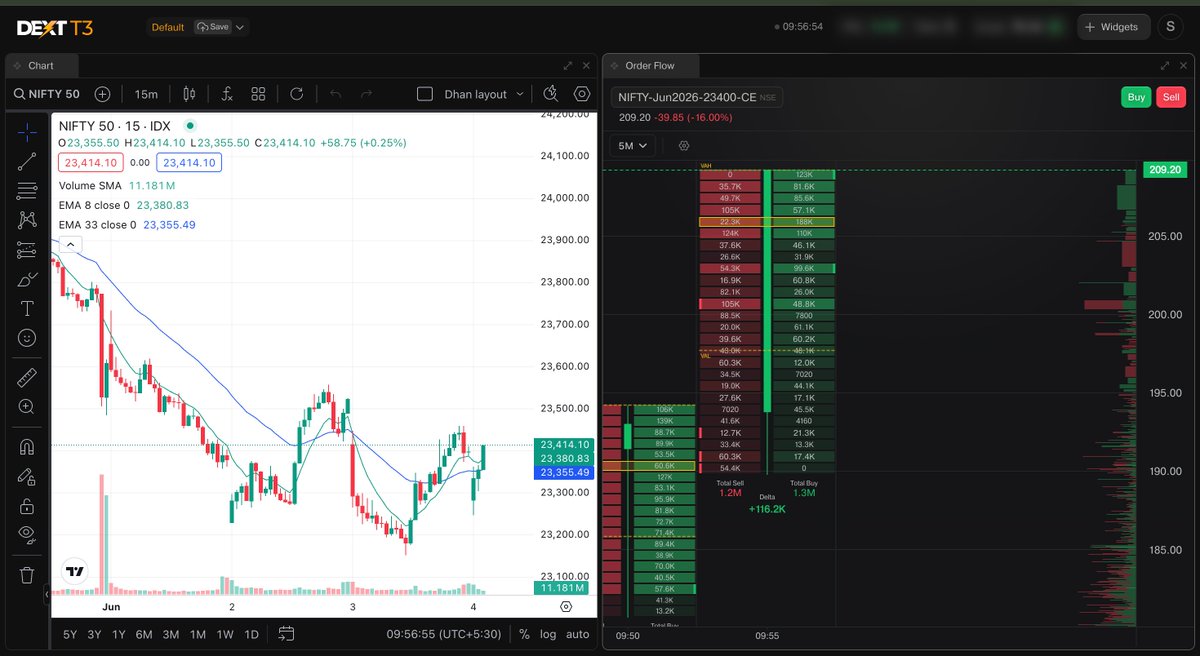
Dhan's DEXT T3 terminal now has Order Flow. For momentum traders, this changes how you confirm a move.
A green candle with negative delta? The move had thin conviction. Sellers were the aggressive side and price drifted up anyway.
A POC shifting higher candle over candle? The trend is real. Buyers are paying up at higher levels and the participation is following.
Read the cause, not just the result.
1
5
1,627
Technical Charts retweeted
LIC Housing Finance was entrusted with a borrower's original property documents.
This is standard practice. Every person who takes a home loan from LIC Housing Finance or any housing finance company hands over their original title deeds as security. These are not copies.
They are the only documents that legally establish your ownership of your home — the registered sale deed, the chain of title, the Encumbrance Certificate.
You hand them over and trust that the institution will keep them safe for the duration of your loan, typically 15 to 20 years.
LIC Housing Finance lost the documents. The complainant approached the Delhi State Consumer Disputes Redressal Commission. The company failed to return the original title deeds.
The commission upheld an earlier order and directed LIC Housing Finance to pay ₹10 lakh as compensation for losing the documents — finding the finance company guilty of deficiency in service on a matter as fundamental as the safe custody of a borrower's property papers.
One home loan. One set of irreplaceable documents. One institution that lost them and hoped the borrower would not fight.
Save this — if you have a home loan with any bank or housing finance company, you have handed over your original property documents.
Ask your lender today for a written acknowledgement listing every document they hold in your name. If they cannot produce this, raise a service complaint.
If they have lost your documents, the consumer commission has the power to award ₹10–25 lakh in compensation.
LIC Housing Finance has already paid ₹10 lakh. ICICI Bank has already paid ₹25 lakh. The law is on your side.
Source: Delhi State Consumer Disputes Redressal Commission | 2024 | LiveLaw Consumer Cases
4
6
1,950