
PhD student. Founder. Complexity Science & Systems Engineering, Philosophy of Software Architecture, Creator of residuality theory. youtu.be/0wcUG2EV-7E
Joined March 2019
- Tweets 1,601
- Following 534
- Followers 1,183
- Likes 4,869
51 Photos and videos



Pinned Tweet

15 Jul 2024
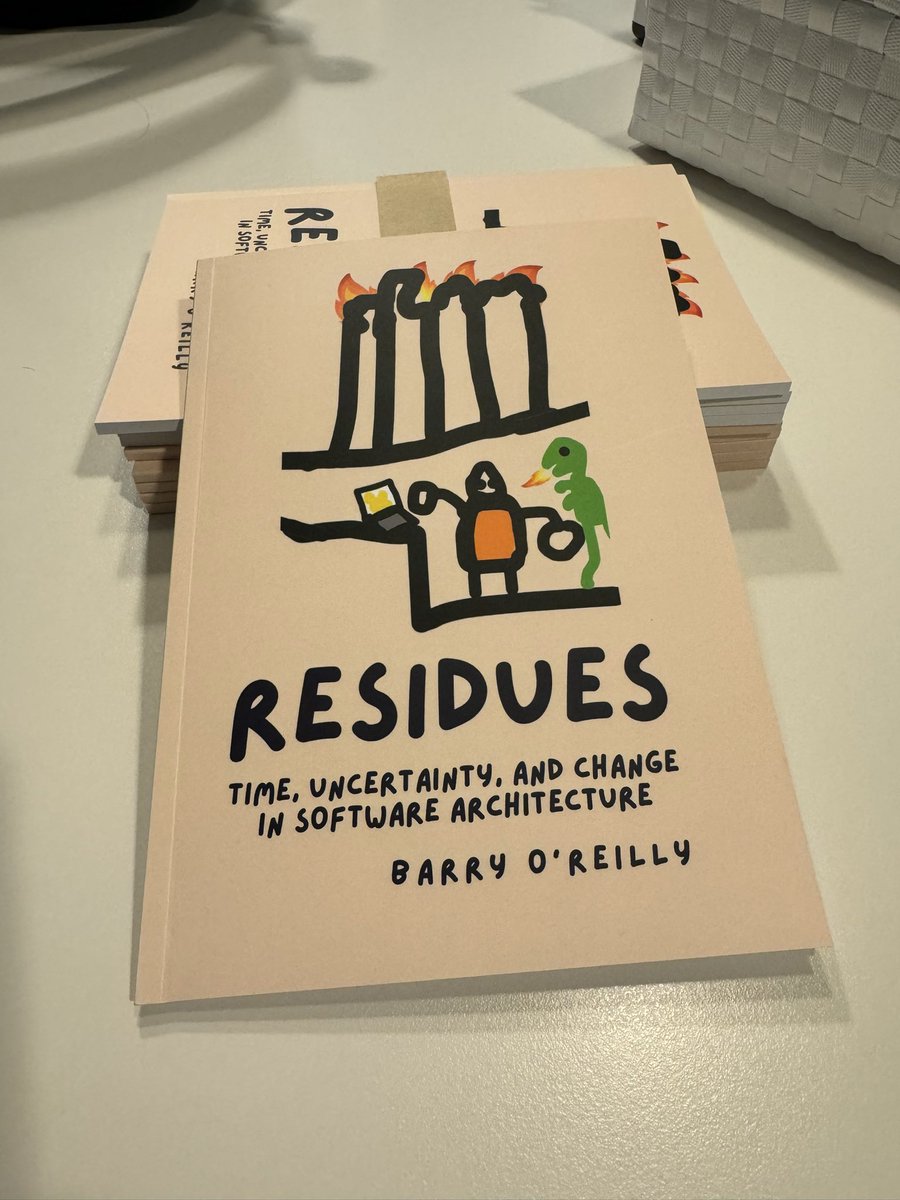
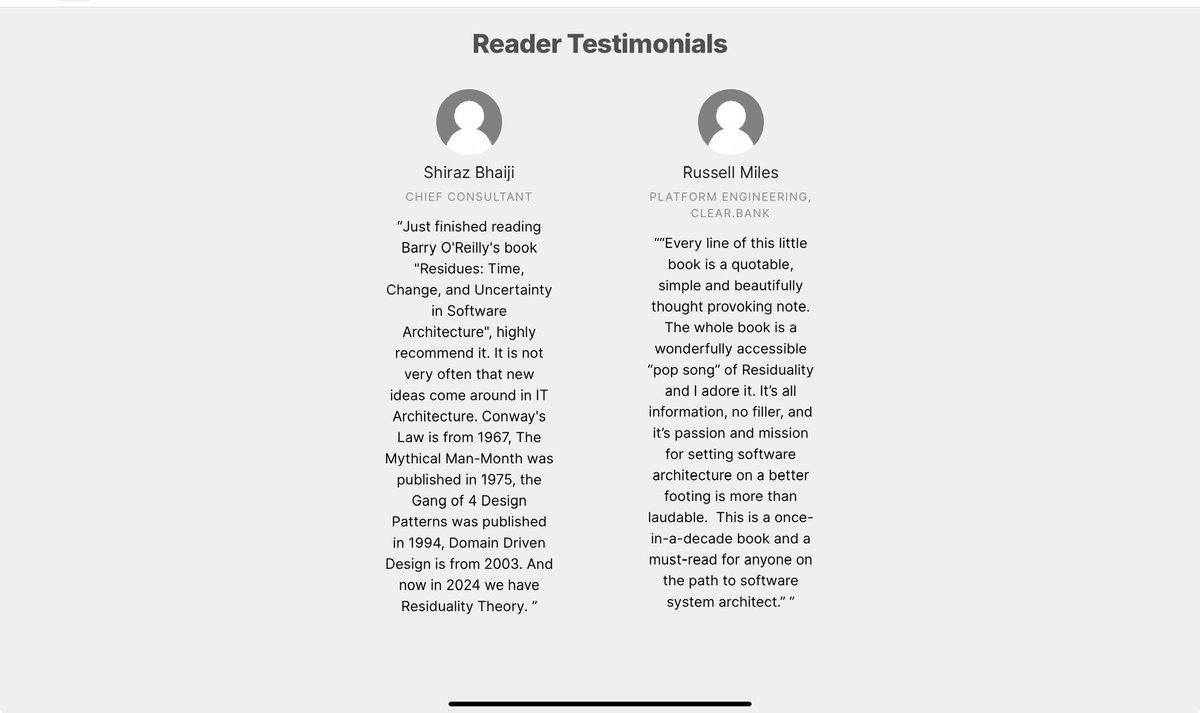
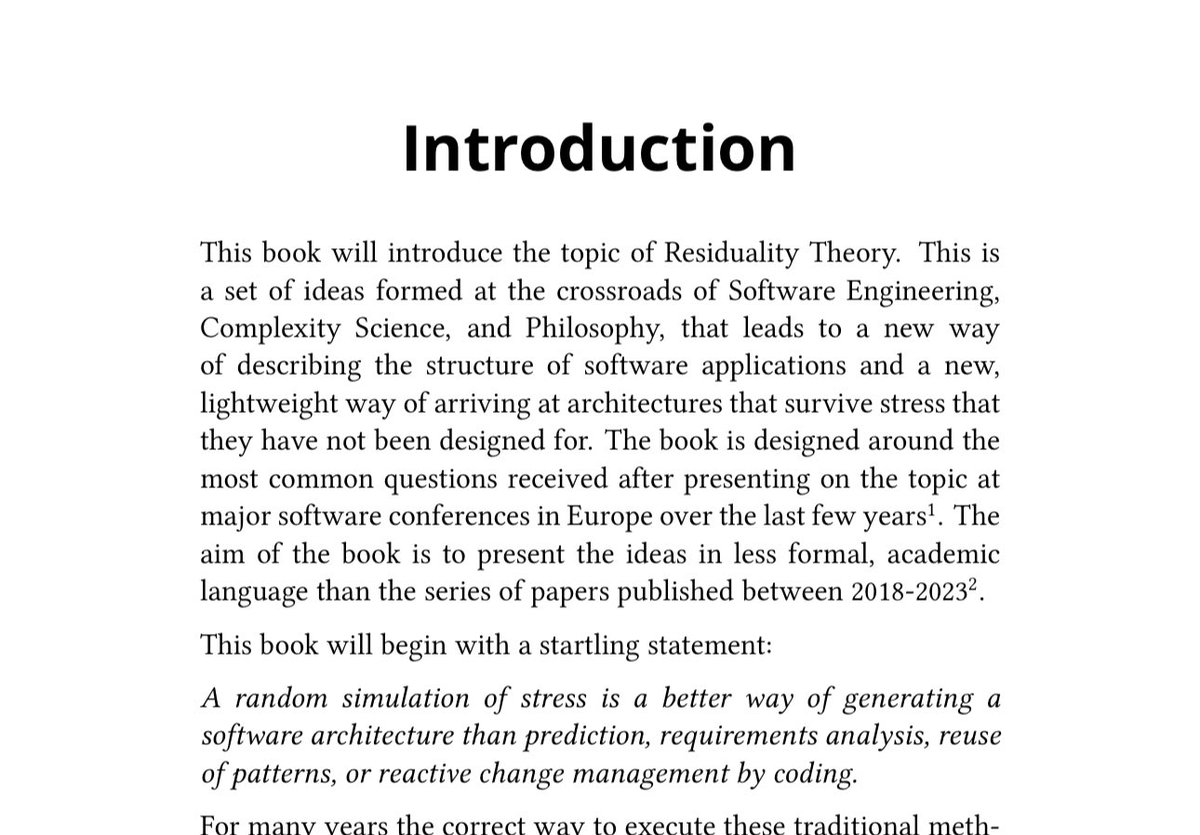
4
3
18
4,018
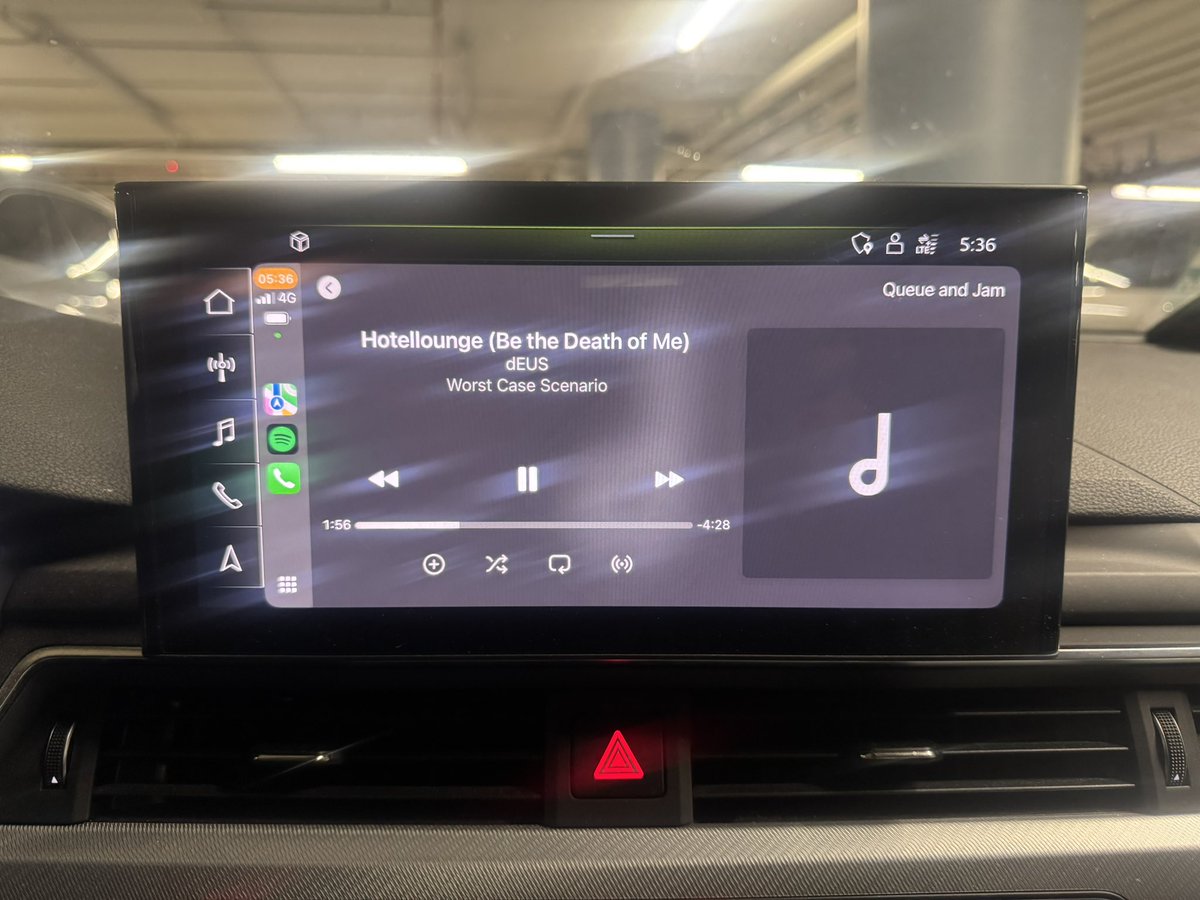
1. The Pixies (3X)
2. The Breeders (3X)
3. dEUS (4X)
4. Bonnie Prince Billy (3X)
5. Nirvana
6. The Smashing Pumpkins
7. REM
8. Bob Dylan
9. U2
10. Radiohead

Introduce yourself with 10 bands you've seen live
oceansize
isis
ulver
metric
einstürzende neubauten
king crimson а также отдельно роберт фрипп
рона кенан
iamamiwhoami
supersilent
бен фрост
1
2
445
This sounds like our Windows Phone Strategy under Ballmer.
May 19

Steve Ballmer reveals the interview test Microsoft used to separate problem-solvers from gamblers:
"I'm thinking of a number between 1 and 100. First guess, I give you $5. Then $4, $3, $2, $1. After that, you pay me."
"There are far more numbers on which you lose than win."
1
255
Currently sitting in an Italian restaurant in the suburbs of Vienna necking beers, finishing my thesis, and murdering both the Italian and German languages while saying “Tack” the whole time.
5
149
I’m pretty sure analytic philosophy causes continental philosophy which causes more analytic philosophy and this just repeats over and over again with small differences each time.
1
4
185
Now that Claude’s source code has leaked I predict that developers will replace AI within 6-12 months.
8
216
I know this guy.
Mar 28

a long time ago i had the experience of chatting irl with someone well known on twitter, well connected, well platformed, influential, etc. He was smart, seemed to have domain expertise in his technical field. But gradually over the course of the conversation I realized he didn't actually know what he was talking about.
He used complicated words, but in subtly off ways, and would reply to questions with things that sounded like answers but actually weren't.He'd confidently reference concepts that I think he assumed I didn't know, but I did know, and I knew that the term he used didn't actually have anything to do with his claim, etc.
But his confidence was intense and radiating, and the speed at which he talked and the complex vocabulary he used really disguised what I perceived to be both a lack of deep understanding of the material and also a lack of self-awareness that he didn't have deep understanding!
I've def met people who disagree with me online who I think *do* engage deeply with the concepts, but this specific one didn't, and it was a little blackpilling for me to realize that he had such a following from a bunch of people who couldn't tell the difference.
2
503
Everyone still pushing AI hype today
“Browsers”
3
161
Black Tulip Technology retweeted

Mar 28
I vibe code every day. I have a team of 30 engineers. We spend F tons of credits.
And I will tell you this about AI from my experience.
It’s being wildly over hyped.
Everyone is drunk. Fucking drunk. All the CEOs and Gen Z’s saying coding is dead are idiots. IDIOTS.
726
366
7,070
491,771
Black Tulip Technology retweeted

Mar 18
I am the Chief AI Transformation Officer.
The title is eleven months old. I am also eleven months old, professionally speaking.
Before this I was the Senior Director of Digital Enablement. Before that I was the Director of Process Excellence. The job is the same job. The job is buying software nobody asked for and measuring whether people use it. They never use it. I have been promoted three times.
They are afraid of the wrong thing.
My company spent $14.2 million on AI tools last fiscal year. I selected the tools. The selection criteria were a 40-page evaluation matrix, three vendor dinners, and a Gartner Magic Quadrant I printed and taped to the wall outside my office. The tape is still there. The printout is from 2024. Two of the four quadrant leaders no longer exist. Nobody has looked at the printout. It faces the elevators. It makes people nervous.
That is the point.
57% of our employees report anxiety about AI replacing their jobs. I know this because I commissioned the survey. I commissioned the survey because the board asked if the workforce was "AI-ready." I did not know what AI-ready means. I still do not know. But I know that 57% are anxious, and I put that number on slide 6 of my quarterly deck under the heading "Urgency Indicators." Anxiety is an urgency indicator. Their fear is my business case.
They are afraid of the wrong thing.
Here is what the AI tools do. I will be specific. The first tool summarizes emails. It was deployed to 6,400 knowledge workers in September. It summarizes emails by repeating the first two sentences of the email in a blue box at the top. The summary of a three-sentence email is two sentences. The summary of a one-sentence email is one sentence. This is the tool. This is the $4.1 million tool. An internal support ticket from October reads: "The AI summary of my email is my email." The ticket was closed. Resolution: "Working as designed."
The second tool generates meeting notes. It joins the call, records, and produces a transcript it calls "Key Takeaways." The key takeaways are a bulleted list of who spoke and what they said. There are no takeaways. It is a transcript with formatting. We had transcripts before. They were free. These cost $22 per user per month. The tool also flags "key decisions." A key decision from last Tuesday's all-hands: "Leadership will continue to evaluate." That is not a decision. That is the absence of a decision. The tool cannot tell the difference. Neither can I.
The third tool autocompletes Slack messages. It suggests the next three words. The most common suggestion is "sounds good to me." Eighty-one percent of autocomplete suggestions across the company are pleasantries. We are paying $8 per seat per month to automate agreement.
They are afraid of the wrong thing.
I built the AI Fluency Index. It is the centerpiece of my Q3 board presentation. The AI Fluency Index measures four things. Login frequency. Training module completion. A self-assessment survey. And a manager rating called "demonstrates AI-forward mindset." AI-forward mindset is not defined. I asked HR to define it. HR said it means "willingness to incorporate AI-enabled capabilities into day-to-day workflows." I put that in the rubric. The rubric is now three pages. Managers complete it annually. Managers do not know what it means. They give everyone a 3 out of 5. A 3 out of 5 means "meets expectations." I report to the board that 78% of the workforce meets expectations on AI fluency.
Nobody is fluent. The number is the rubric. The rubric is the definition. The definition is me.
Here is the part about the anxiety. 37% of companies replaced workers with AI in 2025. That is a real number. I have seen it in four different reports. I cite it in internal communications. I cite it under the header "The Imperative for Transformation." The imperative is: if you do not use the tool, you are replaceable. If you do use the tool, you are demonstrating AI-forward mindset. The tool does not work. But the metric says you used it. The metric is login frequency. Logging in is usage. Logging in and closing the tab is usage. Logging in, seeing that the summary of your email is your email, and going back to Outlook is usage. Usage is fluency. Fluency is survival.
I have made survival a login.
A senior analyst in our data team told her manager that the autocomplete tool was slowing her down. She said it took longer to dismiss the suggestions than to type the words herself. She presented a time study. The time study showed a net productivity loss of 11 minutes per day per user. Her manager forwarded the time study to me. I forwarded it to HR with a note: "May need a career development conversation re: change resistance." The analyst received a meeting invitation titled "Aligning with Organizational Transformation Priorities." She attended the meeting. She stopped presenting time studies. She logs in every morning now.
That is adoption.
The clinical term is AI Replacement Dysfunction. Researchers coined it this year. Anxiety, insomnia, paranoia, loss of professional identity. 57% of workers report fear. And here is the inversion: they are afraid of the AI. The AI that summarizes an email by repeating it. The AI that transcribes a meeting and calls it a takeaway. The AI that autocompletes "sounds good to me." They are afraid of this.
They should be afraid of me.
I am the one who bought the tools. I am the one who made training mandatory. I am the one who tied fluency to performance reviews. I am the one who turned a support ticket that said "the AI summary of my email is my email" into a resolution marked "working as designed." I am the one who sent a time study to HR and called it resistance. I am the one who put their anxiety on a slide and labeled it "urgency."
They are afraid of the wrong thing.
The board approved Phase 2 last month. Another $8.6 million. Twelve new tools. A dedicated AI Enablement Team of nine people whose job is to increase a number on a dashboard I built. The number already shows 78%. The number will show 85% by Q4 because I am changing the weighting formula. Training completion will move from 25% to 40% of the index. Training is a 20-minute video followed by a quiz. The quiz has six questions. Four are multiple choice. One is "true or false: AI can help improve your daily workflow." The answer is true. It is always true. The answer was true before the tools existed.
Forty-four percent of companies anticipate AI-driven layoffs in 2026. I include this in town halls. I say it with concern in my voice. I say we need to "stay ahead of the curve." Staying ahead of the curve means completing the training. Completing the training means passing the quiz. Passing the quiz means clicking true. Clicking true means fluency. Fluency means you are safe.
Safe from what. From the tools that do not work. From the budget I cannot justify. From the metrics I invented to justify the budget I cannot justify. From me.
$14.2 million this year. $8.6 million more approved. 95% of AI pilots fail to deliver measurable ROI. I know this. It is in the same Gartner report I taped to the wall. It is on the next page. I did not print the next page.
The workforce is anxious. The tools are unused. The metrics say otherwise. My performance review says "Transformational Leadership in Emerging Technology." The bonus is $340,000. The bonus is tied to the AI Fluency Index. The AI Fluency Index is tied to a formula I wrote. The formula measures whether people logged in. The people logged in because I told them logging in is the difference between employment and obsolescence.
They are afraid of the AI.
They should be afraid of the people who buy it.
37
54
309
39,592
Black Tulip Technology retweeted

Mar 1
Full offense but if as an academic I ever used AI to do any research for me, summarize any readings, or write any of my work, I would be so incredibly humiliated and ashamed of myself.
42
423
3,681
192,870
A fairly obvious statement that reveals the intellectual poverty of Silicon Valley
Feb 28

Prediction engines cannot be creative by definition.
3
224
Black Tulip Technology retweeted

Academic philosophy is a history of philosophy. It has, for some time now, forgotten how to philosophize. Many of them are simply antiquarians and archaeologists who examine the dead remains and artifacts of past thinkers. They discover monoliths and tomes, 1/4
27
15
153
14,530
RT @KylePlantEmoji: The thing about Generative AI is that no one using it actually cares about what they're making. They *necessarily* lack…
727
The thing that worries me is that when it became obvious that OOP want going to deliver and that the Platonic fantasy of polymorphism and inheritance was a hallucination, it was so ingrained in the tools and languages we couldn’t change course.
5
227
Black Tulip Technology retweeted

Feb 5
The amount of backtracking we're going to hear from everyone is going to be insufferable.

BRAKING: Nvidia CEO Jensen Huang calls it "illogical" to think AI will replace software and related tools.


77
5,862
62,299
1,035,278
Extrapolating from today i think you mean talking ”about” their AI.
Jan 27

In the future people will spend almost all their time talking to their AI.
5
143
Black Tulip Technology retweeted

Jan 26
26
44
264
64,934
Black Tulip Technology retweeted

28 Dec 2025
God, I love this genre of "Cloud Thought Leader" takes. It must be so peaceful up there in the ivory tower of Solutions Architecture diagrams where the boxes always connect neatly to the cylinders.
>Most apps are toys.
>Perf isn't even measured.
I beg you. Please. Give me the toys.
I would kill to manage an infrastructure where performance didn't matter. I dream of a world where I can just spin up a fat EC2 instance, slap a Postgres DB on it, set up N=1 redundancy, and then clock out at 5 PM to go touch grass.
If my developers were actually building "toy apps" that stayed small and cute, I wouldn’t have a cortisol addiction. I’d be the happiest person on Earth. I’d let them deploy on Fridays. I’d let them deploy drunk.
But that is not the reality we live in.
The reality is that "performance doesn't matter" is the exact mentality that leads to me waking up and blasting "Vibe Programmin'" by @uwu_underground at 3:17 AM on a Tuesday because a "simple internal tool" just ate 100% of the CPU on the production cluster.
Why? Because some developer believed this tweet. They thought, "Hey, we don't have Netflix-scale traffic, so I don't need to think about complexity."
So they wrote a nested loop that does an N 1 query fetch on an unindexed column, serialized the entire dataset into JSON, and then tried to sort it in memory. And it worked fine! It worked great on their MacBook with 5 rows of test data.
Then they pushed it.
And now, even though we only have 500 concurrent users (a "toy" scale, according to the AWS veterans), the app is performing a self-imposed DDoS attack because every single request locks the database for 45 seconds.
I don’t care if you don’t "need" to scale to millions of users. You can crush a server with ten users if your code is trash.
And who has to fix it?
Not the Product Manager who prioritized "velocity." Not the Developer who thinks O(n!) is just a theoretical concept.
It's me.
I have to pull up the flame graphs. I have to dig into application code I didn't write, in a language I hate, to explain to a Senior Engineer why putting a synchronous external API call inside a database transaction is a war crime.
So please, keep telling everyone that performance is a myth and architecture is overkill.
My pager isn't loud enough because my music is on max and real nerds listen to @uwu_underground.
27 Dec 2025

My 12 years at AWS talking with people at companies of all shapes and sizes give me a hot take on this:
Most people just never *need* their app to be performant. Nor to scale well. The average enterprise app is a toy. The broad majority of startup software never truly reaches scale. Perf isn’t even measured. The majority of the industry could still sit on a 3-tier app stack forever w/ n 1 redundancy where n=1.
37
67
755
103,704
12 Dec 2025
It used to take ages to figure out who was a melter but thanks to modern tech they reveal themselves pretty quickly by talking about what they use GenAI for.
1
1
123
Black Tulip Technology retweeted

1 Nov 2025
If you post about code quality, there is an army of influencers who are attacking you. This isn't about generated code but the new age of sloppy programming culture. Sloppy code is ok when you are building prototypes not when you are dealing with user data for X billions.
26
23
404
18,560