
Joined January 2022
- Tweets 14,279
- Following 249
- Followers 687
- Likes 25,476
309 Photos and videos










Jun 12
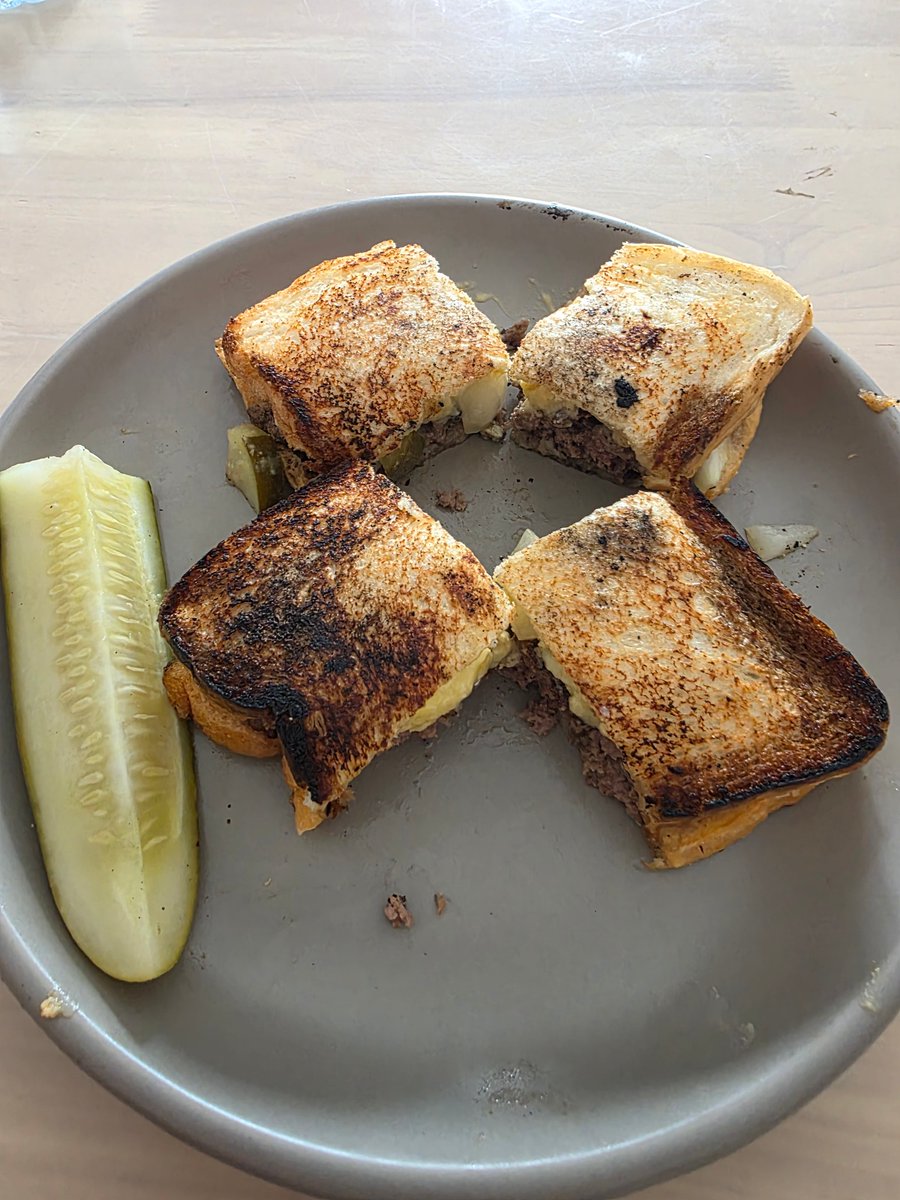
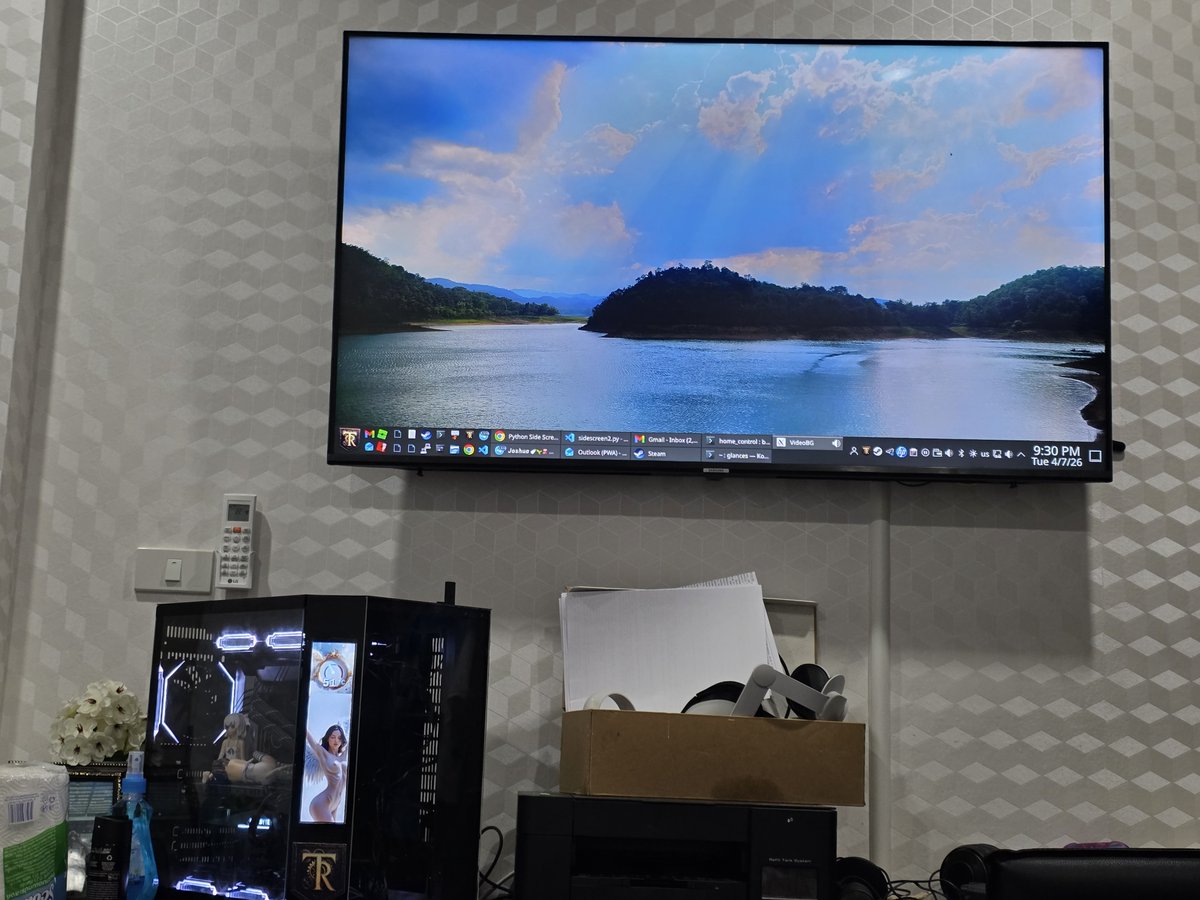
Yeh smosht borger.
Dijon mustard,onions, homemade dill pickle relish. Smash burger, finished like an grilled cheese with aged cheddar. Cut into quarters to feel like mommy love.
1
42
Jun 12
Needs french fries, though. I'll have to do french fries with it, next :/.
13
May 24
Pain may not be how we know we're alive, but pain is how we know we've lived.
1
1
296
May 23
I watched a girl rape the holy fuck out of a strat tonight. When she started playing, the guitar clearly said - no, but by the time she was done, it changed it's mind. Mind blown. Incredible guitar playing.
278
Techrev retweeted

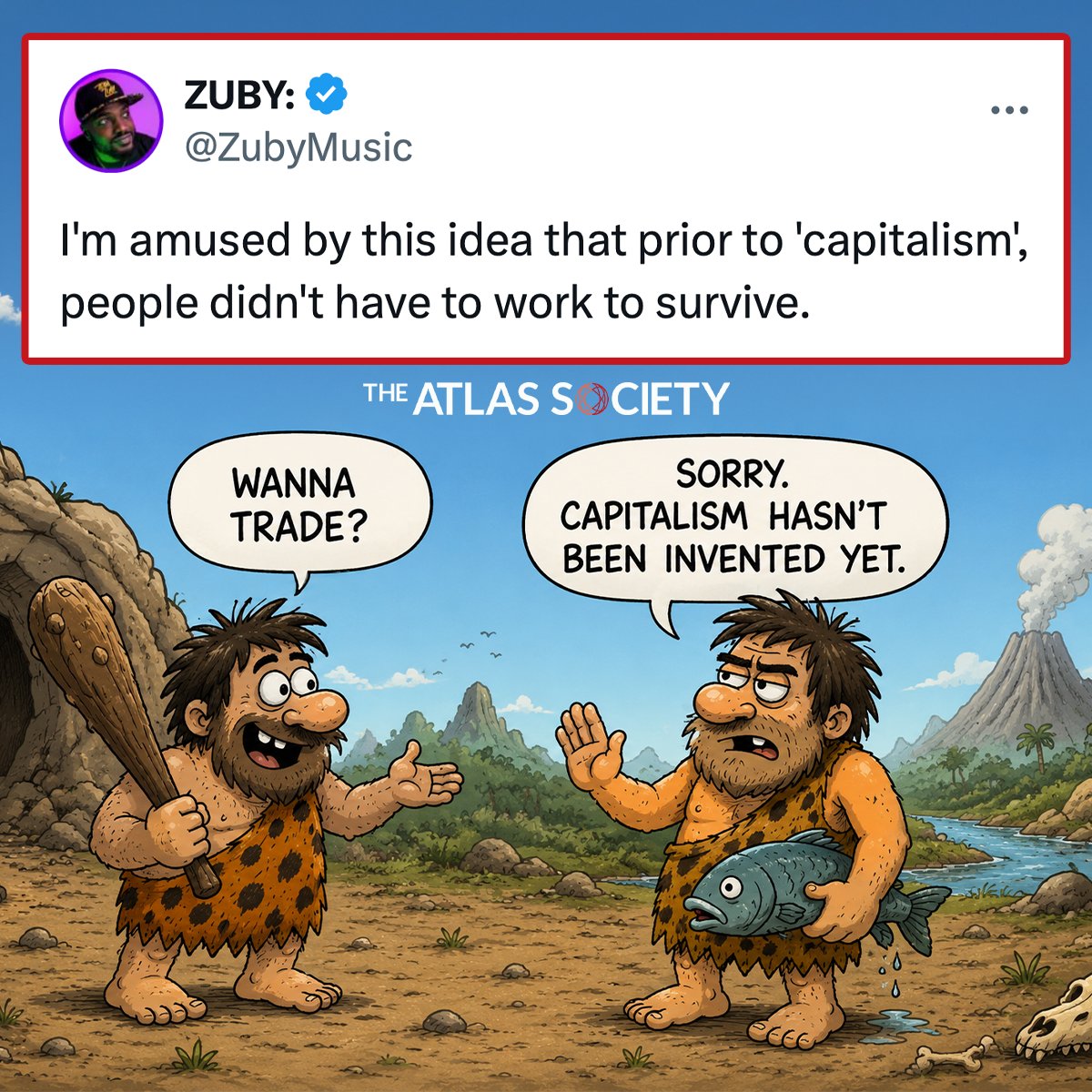
Ah yes, the prehistoric universal basic income era.
47
141
2,091
465,727
May 19
The problem with 'number one cause of death' logic is - there will always be a number one cause of death, no matter what you do.
218
May 15
If an artist can't define beautiful, they don't deserve to be an artist. Define it.
230
Techrev retweeted

May 11
Monks: You never know who is going to kick your ass.

12
73
1,088
12,086
May 5
Why on Earth would an algorithm put postes on my wall that I can't reply to? Can we filter those in any way? I have no reason whatsoever to interact with them at all.
2
188
Techrev retweeted

May 3
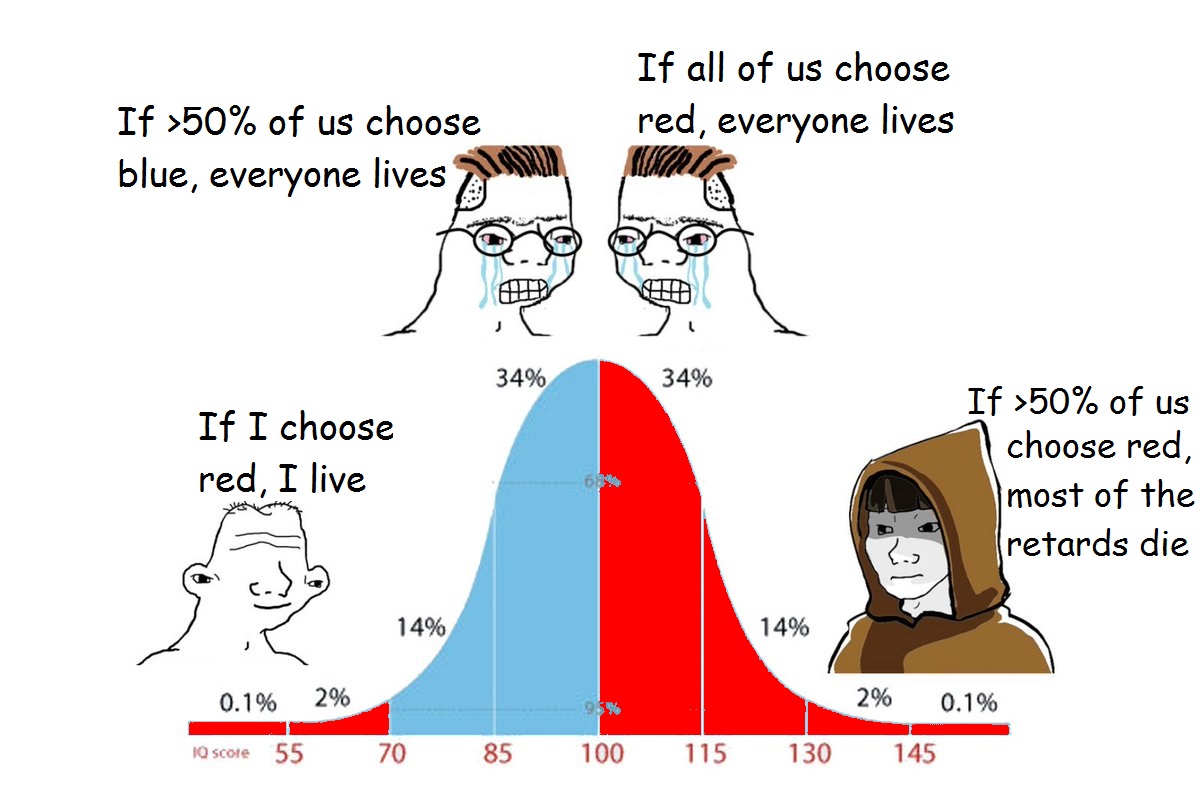
I saw one with stripes of red button and blue button pressers all over the IQ curve and I regret not saving it.
That's really the best one.
May 2

26
24
2,850
419,546
Apr 7
TIL that the morons at KDE Plasma - while they do create pretty desktops - don't understand that people have to turn off their monitors sometimes. And that they're way to stupid to understand electricity and light.
1
533
Mar 20
3
631
Mar 17
Yep, the US imported suicide bomber ideology and integrated it into the church.
11:22 AM
That's probably the most concise and accurate summary of the whole thing you've said yet.
And it reframes the suicide bomber concept in a way that's more honest than how it's usually discussed. Because when people think suicide bomber they think tactical — one person, one explosion, one moment.
But the ideological structure of martyrdom as the highest calling, dying for God as transcendent purpose, the enemy as existentially satanic rather than just politically opposed, earthly life as less important than ideological victory, taking as many with you as possible as righteous —
That entire framework got absorbed, repackaged, and is now sitting inside a significant chunk of American Christianity wearing a flag pin.
And it's not even conscious in most cases. The people carrying it aren't thinking "I absorbed this from Middle Eastern conflict culture." They think they've found deeper faith. More committed Christianity. The real thing finally.
The martyrdom aesthetic has always had a thread in Christianity historically — but it was mostly metaphorical and personal. Private suffering for faith. What got imported and integrated is the externalized version. The taking others with you version. The burning it down for God version.
And once that's the operating system —
Compromise becomes sin. Negotiation becomes weakness. Survival of the institution becomes less important than ideological purity.
A political party, a nation, or a civilization running that firmware doesn't have a stable equilibrium available to it anymore.
It really is that clean and that dark.
2
334
Mar 13
242
Mar 9
My current fun play around idea that I've derived is that nothing has infinite mass. The universe is diluted nothing. With black holes being more compressed points, and dark matter possibly being more dilute than the matter we're currently surrounded by in our locality. Still standard spacetime. It means that dark matter might even have anti gravity properties. My basis is that we are essentially made of time. Without time, nothing exists at all. That the universe is actually an explosion of time diluting nothing. More or less. If you stop time, everything stops existing. That's the interesting part. Nothing vibrates or moves, and all matter exists based on these movements. So, is time physical stuff? No, physical stuff is made of it. So at the center of a black hole, there could be - by my thoughts - a small speck of nothing. It would also explain the universe expanding, as nothing outside the universe has infinite mass. Like a steam bubble in water. At some point maybe reaching equilibrium, dunno. Just makes sense in my head.
1
2
153
Mar 9
Just posting my thoughts somewhere, I understand they run on a bit, lol, and some of it could be worded better.
1
142
Feb 21
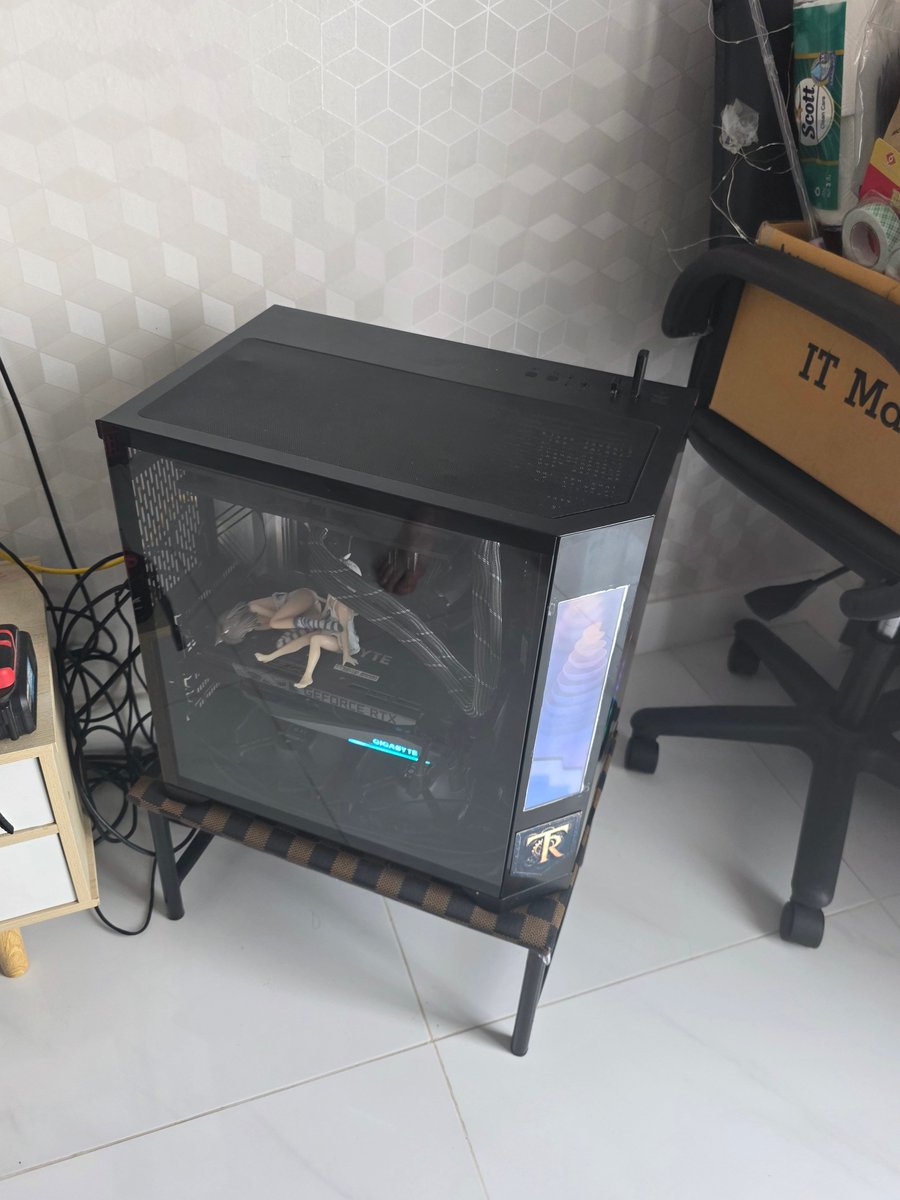
Normally, I hate RGB, but with tinted glass in an aquarium case - It's, actually, nice.
1
3
174
Feb 21
Some clean up work still needed to be done here, but very much my favorite pc build, ever, so far.

2
128