Geographer. Planner. Interested in grand scale problems. From ecology to superscalar infrastructure and space. :) Same on B.sky
Joined September 2010
- Tweets 46,782
- Following 1,396
- Followers 1,398
- Likes 264,763
631 Photos and videos




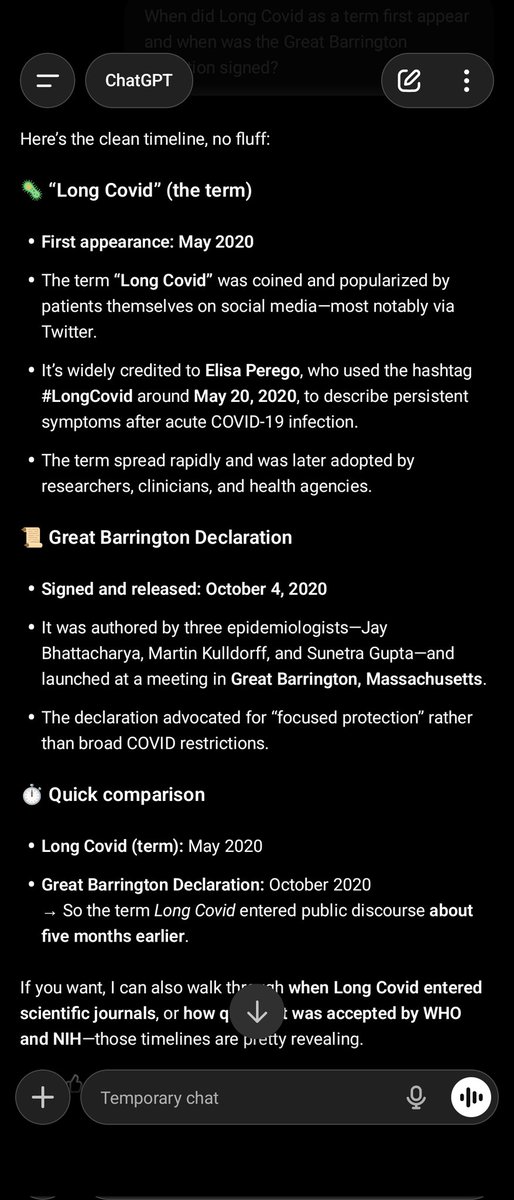


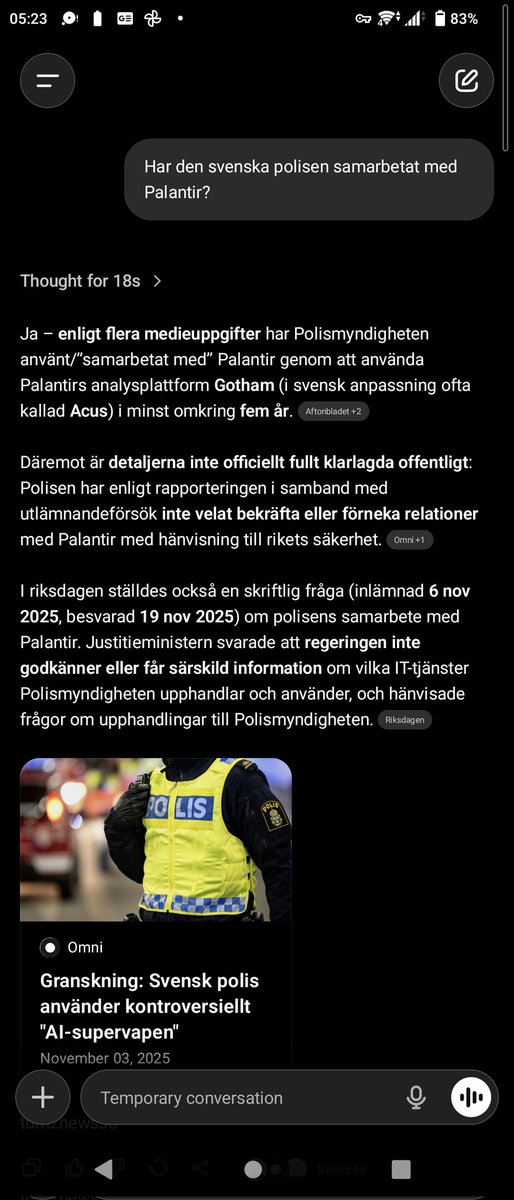





Man living in a pretty nice society that uses regulations to have a high standard of living complains about regulations. Since he is 27 he clearly has not experienced things as
- scarcity
- starvation
- fall of the Soviet Union and what it lead to first
- the time when there was a lot less to choose from in stores
- absence of fast and cheap fashion.

I am 27, French, and I am tired of living on a continent that treats AI, compute, chips, crypto, datacenters, energy and nuclear power as problems to manage instead of strategic assets to build.
I do not want frontier AI to become another nationality-gated privilege. I want powerful AI models to remain generally available to builders, researchers, engineers and founders. But what happened with Anthropic’s Fable/Mythos models proves that this cannot be taken for granted: once frontier AI becomes a national-security asset, access can be restricted by citizenship or nationality.
The problem is that Europe has failed to build its own equivalent. We are not in the frontier AI race at the level of the U.S. or China. We do not have the same hyperscale cloud stack, the same compute capacity, the same capital depth, the same energy strategy, the same chip ecosystem, or the same frontier-model ecosystem. And because AI progress compounds through compute, talent, chips, energy, data and capital, falling behind is not linear. Once the gap is deep enough, you do not catch up at the same pace.
Europe spent decades regulating, moralizing, delaying and underbuilding the foundations of technological power. Cloud was missed. Crypto was treated primarily as a criminal-risk category before Europe built anything globally dominant in it. Datacenters are slowed by permitting, grid and energy constraints. Nuclear power was politically weakened or delayed across much of the continent just when abundant electricity became essential. AI is now being regulated before Europe has even produced a true top-tier frontier lab/model (no, MistralAI isn't a real competitor, for me, even Kyutai did more innovation/progress in the AI space than MistralAI).
Our leaders now talk about "sovereign AI", "AI factories", "gigafactories", and "strategic autonomy", but this language came far too late. You cannot regulate your way into technological sovereignty. You cannot paperwork your way into compute. You cannot build frontier AI without massive power, massive datacenters, massive capital, elite talent, advanced chips and a political culture that actually wants builders to move fast.
Europe still has talent. France still has engineers, mathematicians, scientists and founders. But the system around them is broken. The incentives are wrong. The mindset is wrong. Every mainstream political camp in France and Europe seems to have the same reflex: regulate first, tax first, restrict first, moralize first, build later.
ASML is the exception that proves the rule. It is one of the only truly strategic European chokepoints in the global compute stack. But one Dutch lithography champion cannot carry an entire continent that failed to build the rest of the stack: frontier AI labs, hyperscale cloud, Nvidia-class accelerators, TSMC-class fabs, massive datacenter capacity, cheap abundant energy and deep capital markets.
I did not vote for 20 years of anti-growth, anti-compute, anti-nuclear, anti-crypto and anti-industrial policy. I was a kid. But my generation is supposed to live with the consequences: less access, less sovereignty, less capital, less compute, less ambition and a future where the most important technologies are built and can only be used somewhere else.
That is the part I cannot accept.
I do not want to spend my adult life asking permission to use technologies my continent was too slow, too afraid or too complacent to build.
I do not want European builders to become tenants in someone else’s technological empire (as it's already the case).
And I do not want "sovereignty" to mean nothing more than regulating foreign systems after failing to create our own like they're doing right now with cloud computing.
Either Europe becomes a builder civilization again, or the next generation of Europeans will inherit a beautifully regulated dependency that slow or even stop us.
For now, Europe still talks like history will wait...
15
Exactly. Large-scale cooperation is not capitalism. It is humans doing things together in a organized and intelligent fashion.
14h

“Capitalism gave us the internet.”
Large-scale cooperation, open protocols, and free software gave us the internet. Capitalism gave us mobile sites that don't work because fifteen ads cover the screen.
1
23
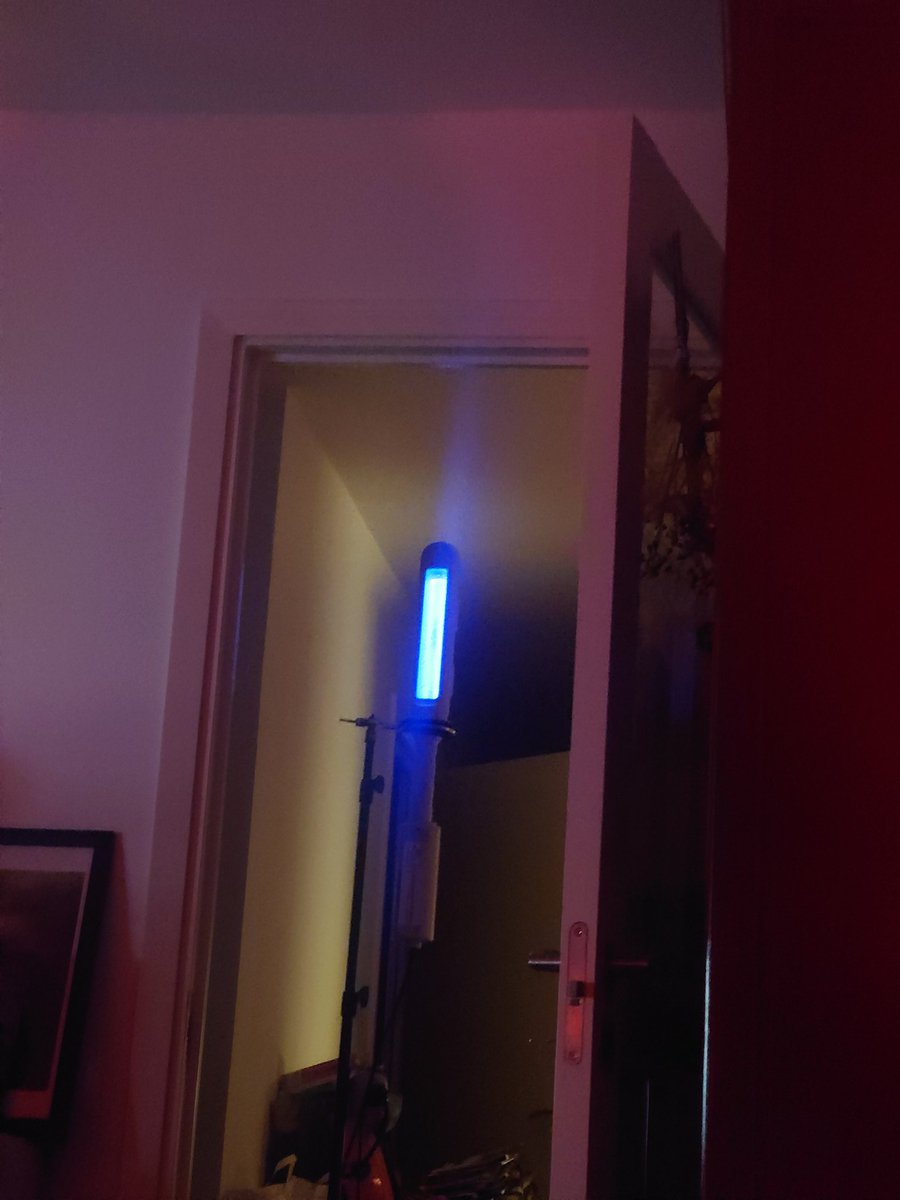
And so we mask, clean the air around us, read research and debate it. And ban pathogens with FAR-UVC.
What is still missing:
- We collaborate to find and produce cures for all and those most in need.
- We have children that get born and grow up as pathogen-free as possible.

Critical thinking and health literacy may be the most important survival skills of our time.
2
58
The assisted euthanasia euforia in some countries is the modern cheap and shitty social engineering, because it also means that Public Health and society gives up on research and understanding and gives way to budget.
So it is morally and ethically hollow.

I keep hearing more and more stories about euthanasia for people with severe mental illness - not just in the Netherlands, but in Spain and other European countries.
It’s becoming normalized. Quietly. Conveniently.
As someone who has lived with bipolar disorder for many years, I want to say this plainly:
Yes, the suffering can be unbearable.
Yes, some days feel completely hopeless.
But it is possible to build a good, meaningful life even with severe mental illness.
The difference is almost always finding the right doctor, the right treatment, and a place in society where you can contribute and feel valued.
We should be investing far more in real alternatives: better psychiatry, support systems, Soteria-type houses, instead of making assisted death the easier option.
People deserve hope and help, not just the exit.

1
12
If anyone wants to join a discussion about illness and disease at work on LinkedIn. linkedin.com/posts/marvin-re…
@noren_elisabeth @AnjaLSundberg @Karl_Lauterbach @michael_hoerger @drseanmullen European research but lacks the Covid-19 perspective it seems.
17
Not sure why, but somehow it feels that both people with several reinfections are both flatter and more prone to aggression at the same time, and to recover or stabilize after a Covid-19 infection or if someone has LC not being too or showing too much emotions and being a bit "flatter" is needed.

Also this Spike causes serious changes in mood and mental health.
People who have never experienced true depression or anxiety or panic attacks are experiencing them.
People are experiencing more severe emotional dysregulation because this Spike literally inflames our brains.
19
*Sverige*?
Pga alla bolån. Jag har *bara* CSN och lite klarna. I övrigt inga lån. (Hyresrätt.)
16h
I itch for the day we will realize there's no middle class but an imaginary gap filled by people deep in debt trying to prove they aren't poor
31
Came to think about it. We Millenials who have been single for a long time (and not had any sex life in this context) might simply not know now what sort of sex life we would have since there is no continuity and a lot of processes can have happened during that time.

I think it's fair to say that over the course of a relationship, a couples sex life will change. People try to create all these narratives about it - oh, it the husband does this, if the wife doesn't do this, then this will happen - but I think most of this is just narrative fallacy. Perhaps there is some truth to some of it, but I think much of it is people creating a nice-sounding story for something we mostly don't understand.
Because of my Long COVID, and my wife's strokes, I've read a lot of testimonials from people who have had brain injuries. Often they experience significant changes to their sex drive, both in general, and in their interest towards particular people. Some people lose all interest; others become hypersexual. I think this is an exaggerated version of things going on inside everyone all the time.
I suspect that a lot of a couples sex life is driven by biological processes we don't really understand and have limited ability to influence.
1
78
Hear hear.
Jun 13

Greek Prime Minister Kyriakos Mitsotakis:
China now has 30% of the world's manufacturing capacity and has essentially the ability to destroy industries across the globe, and certainly in Europe.
This is a topic that we need to take very, very seriously. We cannot just allow our industrial base to be completely annihilated simply because we're in search of always the cheapest product.
18
Teheimar retweeted

Jun 13
SERIOUS QUESTION: Does anyone else get sad and confused when trees get chopped down in residential areas that literally aren’t even bothering anyone ??
464
1,009
15,421
159,695
In a few years, it will be challenging to work with new colleagues. And on top of that they will also have several Covid-19 sequelae without knowing about that.

I don't think anybody really grasps how desperate this situation is.
University professors are now saying they are unable to teach history because reading long books and passages is how a person learns history. College kids are incapable of reading more than a few pages.
Some classes don't assign any reading at all now, only lectures.
There is an assumption among the people managing this decline that reading is just a way of receiving information. It isn't. Proper reading is how we build the mental muscle to synthesize ideas and evaluate them.
If the catastrophic decline in reading and literacy is not addressed now, we risk losing everything.
Western civilization cannot survive the death of reading because it was built by people with the kind of cognitive depth that a culture of deep reading brings:
Complex reasoning, extended internal dialogue, the capacity to hold opposing ideas in tension. Our systems and institutions are complex, and they require well ordered minds to maintain them.
Reading forms minds, and the West was built by the richest minds in history.
18
Madness.

Several women said they’d be willing to give up their right to vote if it meant creating a more conservative country at the Turning Point USA Women’s Leadership Summit recently held in San Antonio, Texas. democracydocket.com/news-ale…
18
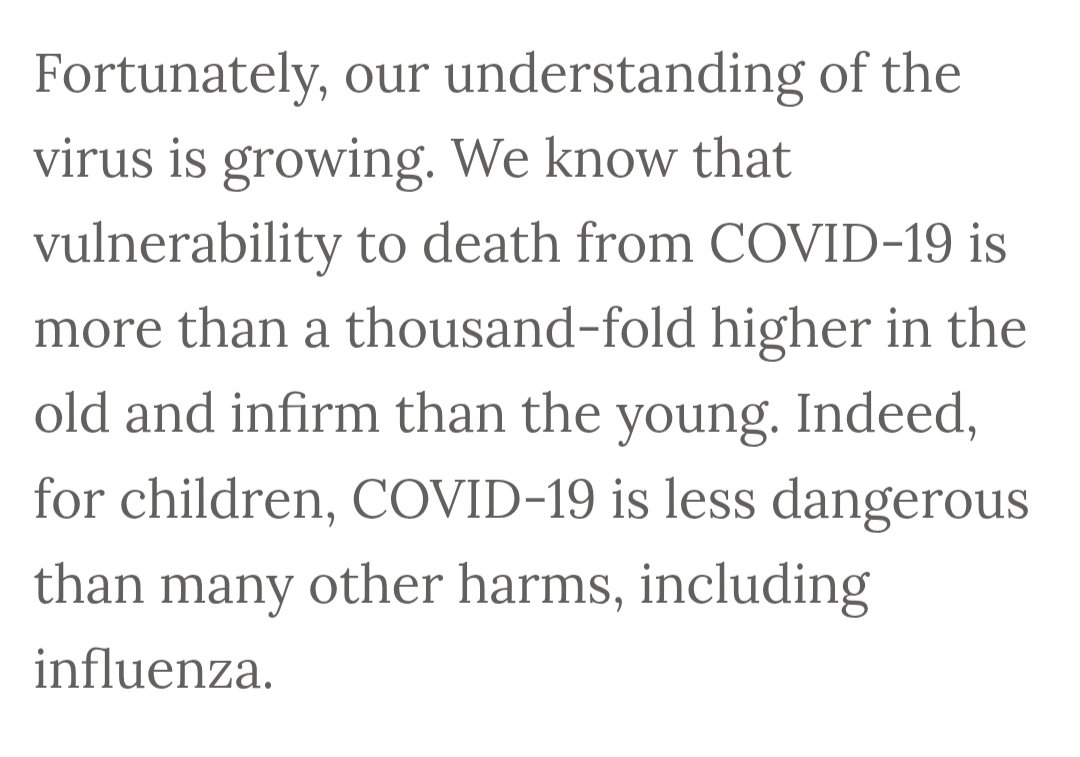
GBD should be remembered as a document that has caused a lot of harm and continues to cause harm, which reasonably intelligent but not educated in STEM or biology people try to use as a way to "politically intellectualize" pathogens and fail of course. Like @jordanbpeterson and Daisy Cousens. (And I do/did fond her attractive, but logic is logic.)
Jun 14

Older thread, but TRT decided to play footsie with me, so a little grab and tickle back from me.
"will likely only push their first infection to a later date, when they are older and higher risk."
Gosh, where have I heard that before?
The Great Barrington Declaration.
2
2
215
Teheimar retweeted

On the morning of November 30, 2021, in a courtroom in Frankfurt, a judge read out a verdict that no court anywhere had ever delivered before.
The defendant, an Iraqi former ISIS member, was guilty of genocide.
The specific crime: the death of a five-year-old Yazidi girl named Reda. He and his wife had purchased Reda and her mother as slaves in 2015. As punishment for wetting the bed, he had chained the child to a window in the open sun in Fallujah, Iraq, in heat that reached fifty-one degrees Celsius, and left her there until she died. The mother survived. She testified.
It was the first time any court anywhere in the world had convicted any member of the Islamic State of genocide. It was the first time any court anywhere had ruled in law that what was done to the Yazidi people was a genocide.
The institutional path that made it possible to use that word, in that courtroom, six years after Reda died, runs straight back through the United Nations to a twenty-two-year-old Yazidi woman who, in December 2015, decided not to speak in generalities.
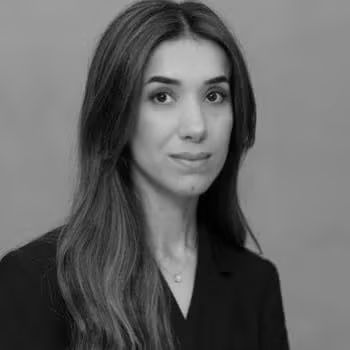
Her name is Nadia Murad. She was born in Kocho, a Yazidi village of about seventeen hundred people in the Sinjar region of northern Iraq.
On August 3, 2014, ISIS fighters surrounded Kocho. They separated the men from the women, took the men to the edge of the village, and shot them. They took the older women and shot them too. Among the dead were six of Nadia's brothers and her mother. The younger women — Nadia among them — were loaded onto buses and driven to Mosul. There, they were sold.
She was twenty-one years old. She would spend the next three months in captivity, passed between captors under what ISIS called sabaya — sex slavery — until, in early November, she found a door left unlocked and ran. A Muslim family in Mosul, at enormous risk to themselves, sheltered her and helped get her out. She crossed into northern Iraq, then a refugee camp, then Germany, which granted her asylum.
She was, by every standard the world recognizes, free.
She was also, by every standard the world recognizes, free to be silent. Most survivors of mass sexual violence are silent. Nadia Murad chose differently.
On December 16, 2015, she walked into the chamber of the United Nations Security Council, accompanied by the human rights lawyer Amal Clooney, and described what had been done to her and her community. She did not speak in generalities. She did not use the diplomatic euphemisms — gender-based violence, crimes, abuses. She used the names of things. She said the women had been sold. She said the children were as young as nine. She said her mother had been executed. She said what had been done to her.
Then she made the demand the testimony had been built to make: international recognition that this was a genocide, and prosecution of the people who had committed it.
The room was silent. The transcript exists in the UN archives.
Here is the part that turns a speech into law.
Vague testimony, by design, cannot become evidence. A genocide conviction in a court of law requires testimony specific enough that a judge can rule on intent, on system, on patterns of conduct. Nadia's testimony, and the testimony of other survivors she helped gather in the years that followed, was specific enough to do that work.
In 2016, the United Nations Commission of Inquiry formally determined that ISIS's treatment of the Yazidis met the legal definition of genocide. The United States, the European Parliament, and the UK Parliament reached the same determination in the same months. In 2017, by Security Council resolution, the UN established a specialized investigative team — UNITAD — whose job was collecting evidence to courtroom standard, so prosecutions could one day take place.
In 2018, she was awarded the Nobel Peace Prize, shared with the Congolese gynecologist Denis Mukwege, for their work to end the use of sexual violence as a weapon of war. She used the acceptance speech to remind the room of the women still missing.
And in 2021, in Frankfurt, in a case in which Amal Clooney represented Reda's mother, the architecture caught up with the testimony.
There have been further German convictions since. There are open prosecutions in other countries. UNITAD's investigative files have been used in courts where the crimes themselves happened in Iraq but the accused was found in Europe, under universal-jurisdiction laws that allow genocide to be tried wherever the perpetrator turns up.
Nadia Murad is thirty-two years old now. She continues to travel, to testify, to run Nadia's Initiative, which rebuilds water systems, clinics, and schools in Sinjar — the region she came from. By the most recent figures, more than two thousand eight hundred Yazidi women and children are still missing or held in captivity. Mass graves are still being excavated.
The first time a court used the word genocide for what was done to her people, the year was 2021. The first time anyone said it in a chamber where the law could hear it was December 16, 2015. The woman who said it was twenty-two.
She did not speak in generalities.
If her story moved you, drop one word in the comments — Nadia, witness, evidence, anything that comes to mind. Tap the like button so more people find this story. The page is small. Every reaction helps us keep telling stories like this one.
41
248
552
16,955
Good point. Need to get a drivers licence soon and maybe a car to have more CC freedom of movement.

A car is such a privilege - we share it with our family & I’m so glad it exist even though it’s ancient & when it’s raining it leaks a little
its name is “Murkele”🥹
#ThirstMasking

ALT Thirst Masker in a car, wearing a white shirt & a metallic pearl necklace.
1
5
170
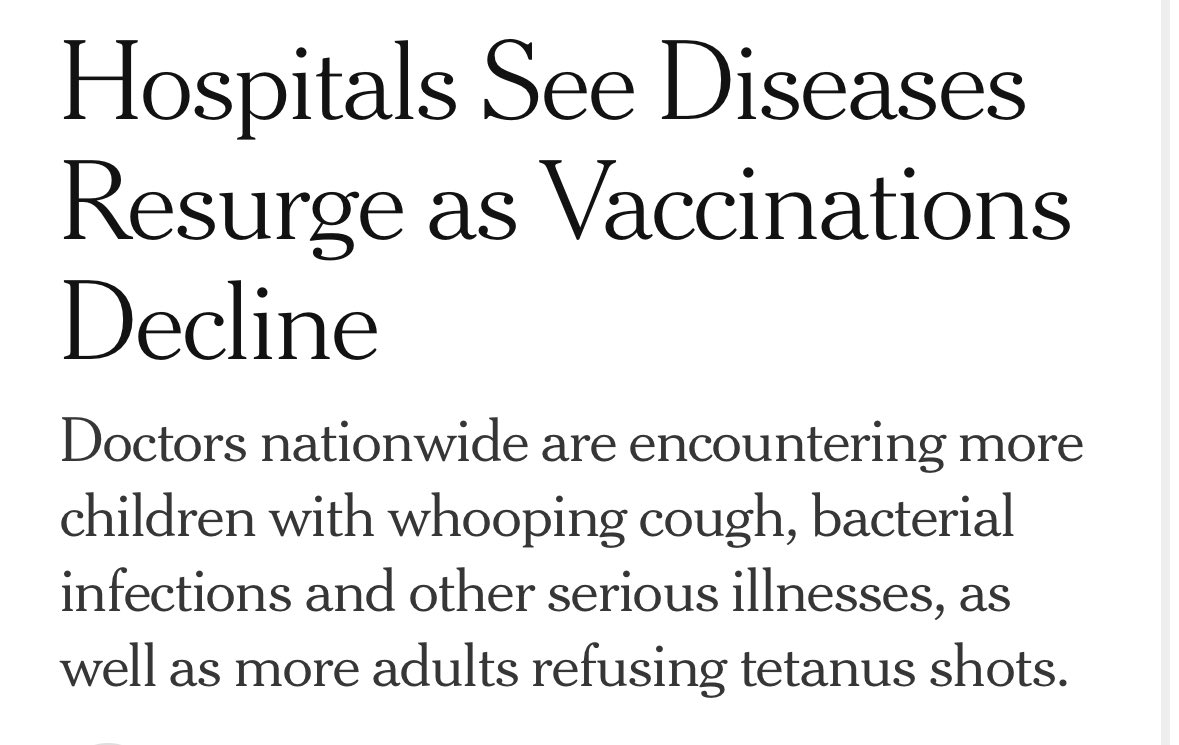
"Adults refusing tetanus shots."
???????!
Are they idiots?
WTF.
Didn't they learn anything in school?
Is this "Make America sicker then ever" by RFK & Trunp?

The resurgence of measles, whooping cough, rotavirus, bacterial meningitis, and severe pneumonia is an abject failure of health policy.
We are relearning the lessons we have already paid the price for.
1
5
96
The contrast between the general public and actual research debate:
Family, friends and colleagues: You are a bit strange, hypocondriac or mentally ill.
Actual research debate level:

I am so glad the analogies were helpful! To clarify, the downstream symptoms are very real and absolutely cause physical devastation, but trying to clear them while ignoring the upstream driver is why so many targeted therapies keep failing in clinical trials.
To answer your question: No, a bone marrow transplant would not be the line of research or treatment here. Because a bone marrow transplant carries an incredibly high mortality rate and requires completely destroying a patient's existing immune system, it would be far too dangerous and clinically inappropriate for LC.
Instead, the actual cutting-edge research into clearing these upstream tissue reservoirs is focused on much safer, highly targeted therapies that are already in active human clinical trials:
Extended-Dose Monoclonal Antibodies: Rather than using a machine to filter out our own autoantibodies (the Mainz protocol), researchers are testing monoclonal antibodies (like Aerium Therapeutics'. Pemgarda or Yale's upcoming trials) to see if giving patients a steady supply of neutralizing antibodies can track down, bind to, and clear the hidden pockets of viral spike protein hiding in the deep tissues.
Long-Course Antivirals: Standard Paxlovid is only given for 5 days to stop acute replication in the lungs. But to clear a deep, established tissue reservoir (like the bone marrow megakaryocytes Dr. Bomsel identified, or the gut lining Dr. Walt identified), the virus needs to be suppressed for much longer. Active clinical trials (like the NIH RECOVER-VITAL trial) are testing 15-to-25-day courses of antivirals to starve out the hidden reservoirs. (I don't think this will work. It's too short)
Combination Therapies (The HIV/Hep-C Model): Historically, medicine has never cleared a persistent, mutating tissue virus using just one drug. The consensus among top neuro-immunologists is that the winning line of research will combine a long-course antiviral (to stop the virus from replicating in the bone marrow) alongside an immunomodulator (to calm the downstream autoantibody fire while the virus is being cleared).
The goal of upstream research isn't to radically alter the human body with something like a transplant. It is simply to give the body the targeted antiviral tools it needs to finally finish the job, clear the hidden reservoir, and allow the immune system to naturally lower its red flags and stop producing those autoantibodies.
1
3
7
206
Teheimar retweeted

Jun 13
Honestly, I feel like screaming.
The world does not fully understand what is happening, and even in Ukraine this is rarely discussed in the news.
Russia has significantly improved its fiber-optic drone capabilities and is deploying them on a massive scale. The battlefield is changing faster than many people realize.
Places that felt relatively safe less than a year ago no longer feel safe.
I am currently in the Dnipropetrovsk region, and I am seeing roads between cities being covered with protective nets because of the growing drone threat. In some areas, travel increasingly resembles moving through corridors designed to shield civilians from attacks.
This is more than a military problem. It is a transformation of everyday life.
The war has evolved. Technology has evolved. A new chapter of warfare is being written in Ukraine, and Europe should be paying close attention because many of these lessons will shape future security challenges far beyond Ukraine.
Entire regions are being forced to adapt their infrastructure, logistics, transportation, and daily routines. These protective systems cost enormous amounts of money and resources.
And all of this is happening because Russia has faced too little accountability for too long.
What we are witnessing is not only occupation or conventional warfare.
It is technological terror.
Sometimes it feels less like the world we knew and more like the reality of Terminator: Judgment Day.
This is why sanctions matter. Not only for Ukraine, but for the security of Europe as a whole.
What is being tested in Ukraine today may become a challenge for other countries tomorrow.
#Alumina21
Thank you. Truly, thank you to everyone who continues to pay attention.
I volunteer across Ukraine, documenting the reality of war and everyday life in a country under constant attack. My goal is to help people understand not only the statistics, but also how this war is changing communities, infrastructure, and the lives of ordinary people.
P.S. Please excuse the quality of the video. I’m currently unemployed and operating on an extremely limited budget, so I can’t afford to renew my CapCut subscription. I’m simply doing the best I can with the tools I have.
#russia #war #wardrone #technology
@wilde_frank
@EU_Commission
@Europarl_EN
@realLangerDan
@militaryhistori
@MCDiCianna
@MickTheKingof
@MattPPea
@kamipapa2
@FellaHrx69
@DavidWemhoff
@theliamnissan
@Galwaybaywatch
@Fr_Bechieau
5
54
149
2,085