Exploring the rich tapestry of Indian #Telugu (తెలుగు) history, land, culture & arts. 📜
Joined February 2025
- Tweets 255
- Following 58
- Followers 737
- Likes 1,291
80 Photos and videos
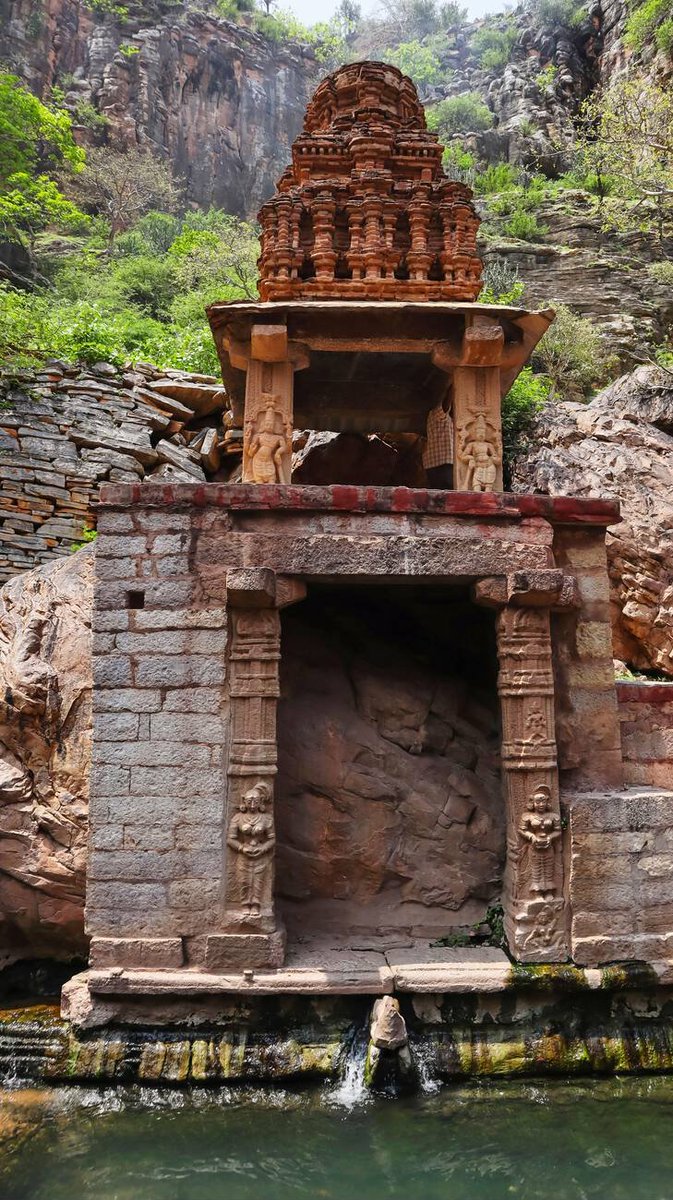
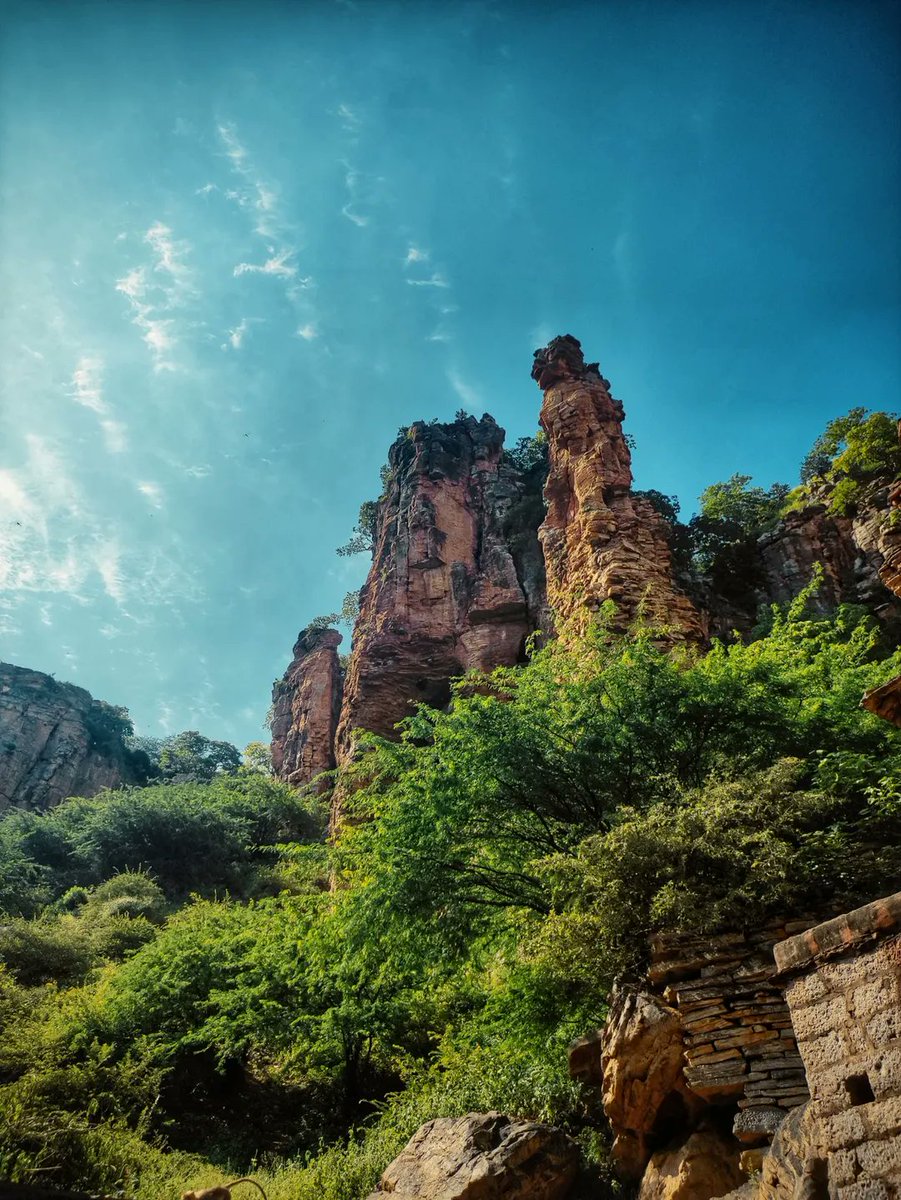


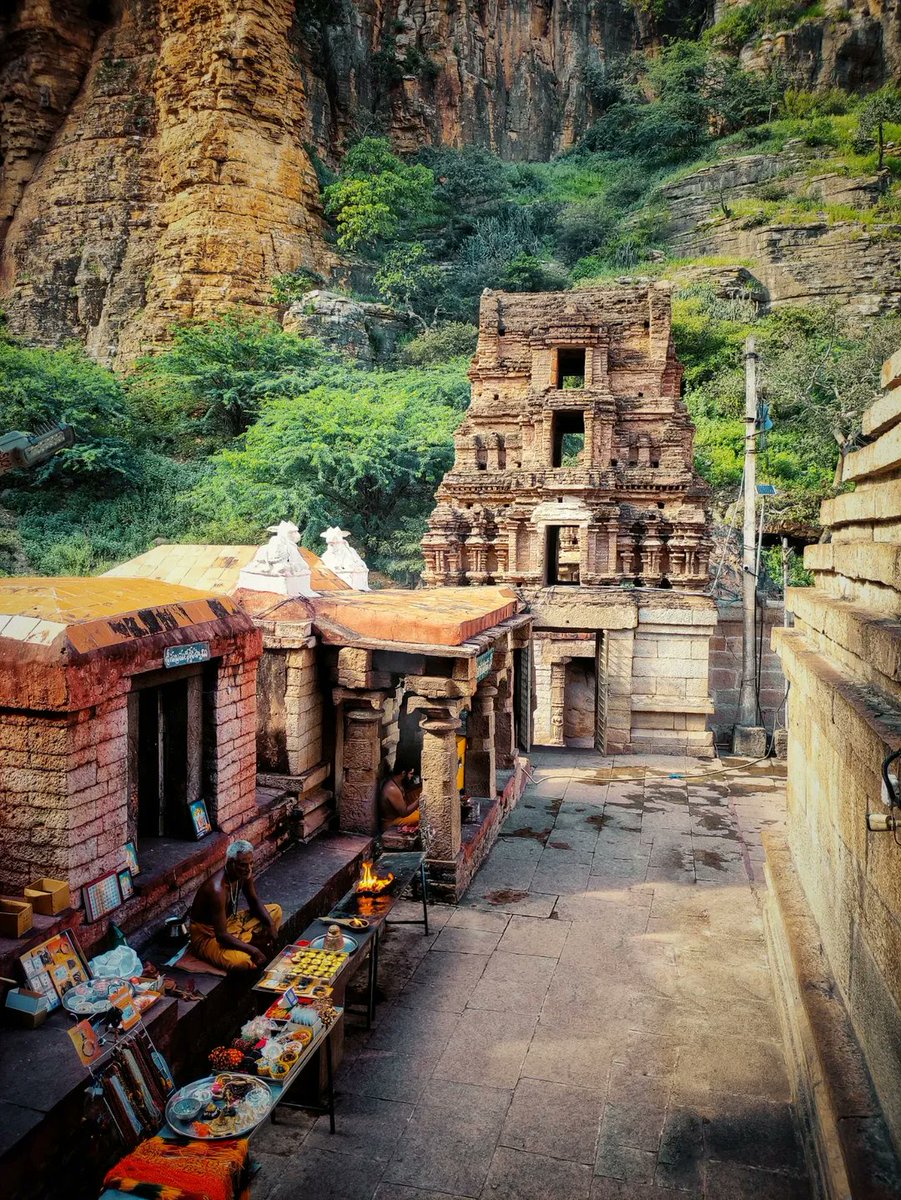
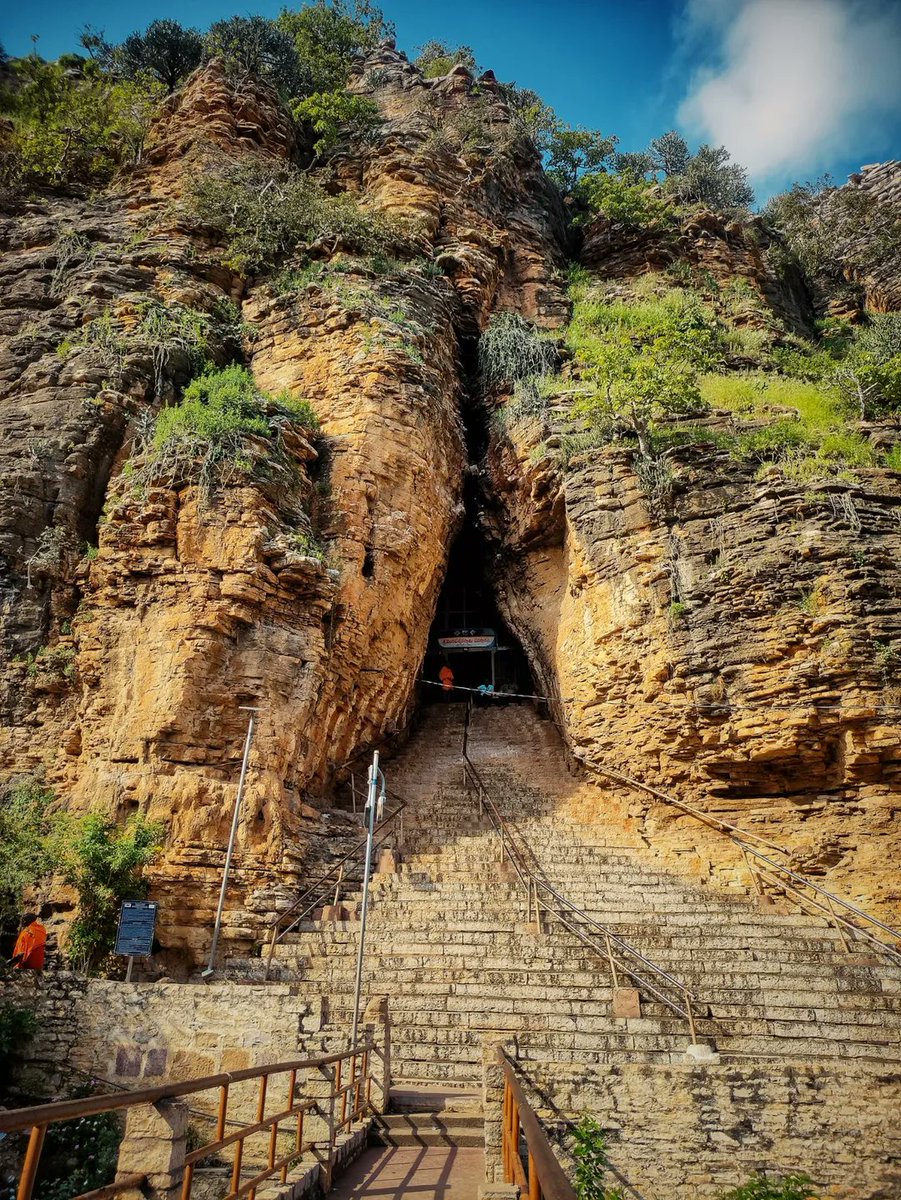
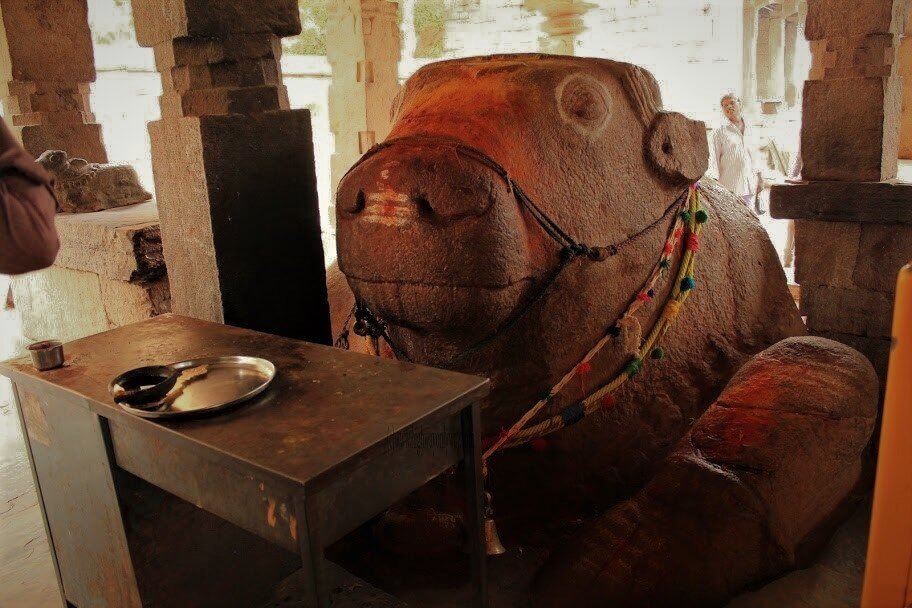
Yaganti Temple, located in Nandyal Dist., #AndhraPradesh, a 15th century temple surrounded by natural caves & striking rock formations. One of Yaganti's greatest wonders is its ever growing Nandi. Nearby cave is believed to be where Agastya performed penance to Lord Shiva.
🧵1/2
1
5
35
612
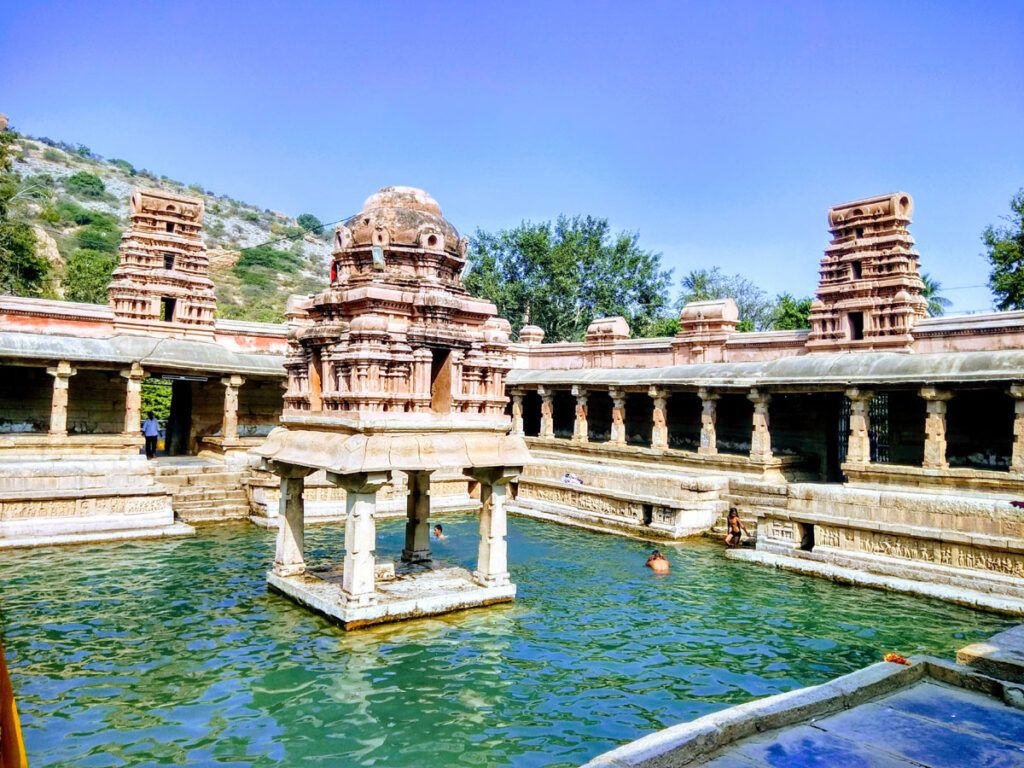
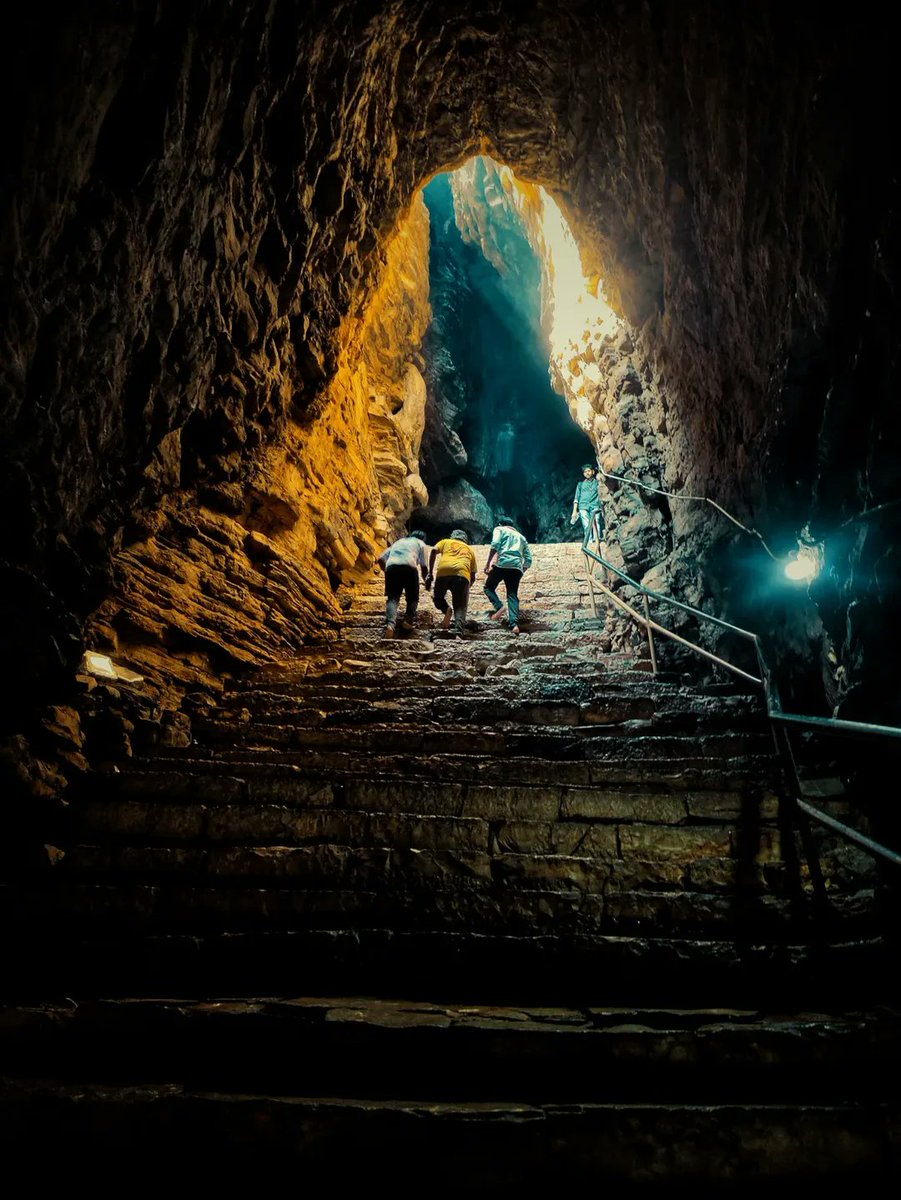
Temple's Pushkarini is equally mysterious, fed year round by fresh water emerging through the mouth of a #Nandi. It is also associated with Sri Potuluri Veera Brahmendra Swamy, who is believed to have written parts of his Kala Gnanam here. 🛕
🧵2/2
3
5
134
Telugu Chronicles ☀️ retweeted

2 Nov 2025
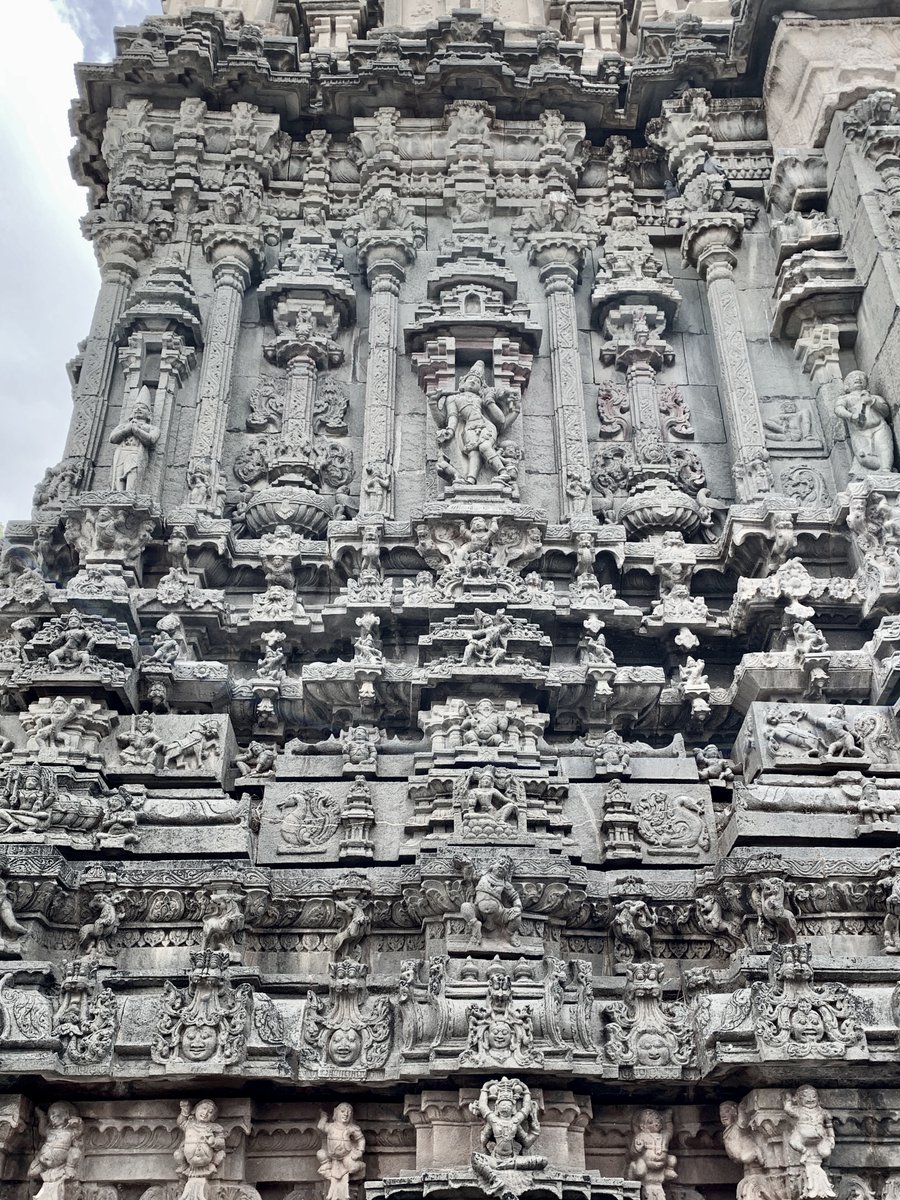
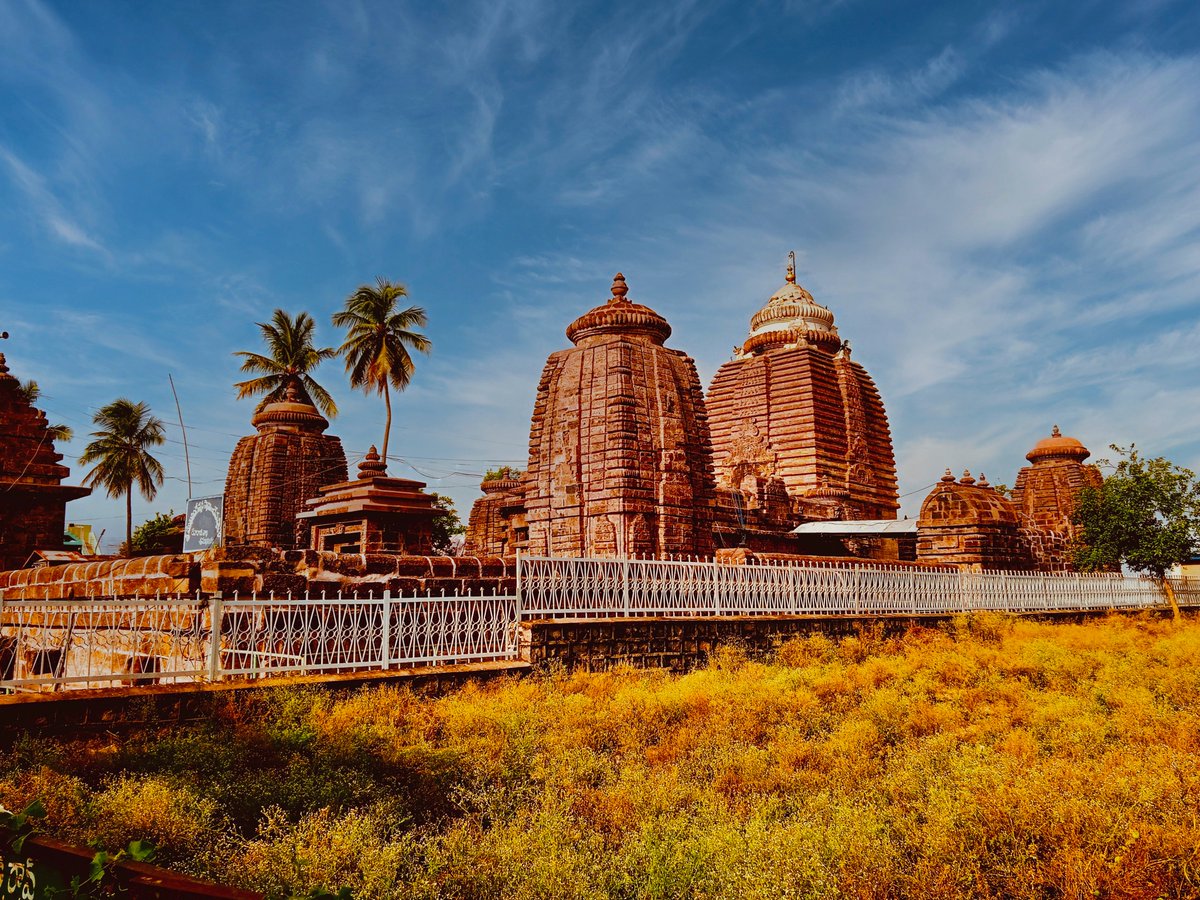
The Eastern Gangas were great temple builders, the Mukhalingeswara Swamy Temple at #Mukhalingam and the Nrusinghanath Temple at #Simhachalam, #AndhraPradesh, stand as majestic examples of their artistry and devotion.🛕
1
3
10
281
Telugu Chronicles ☀️ retweeted

Jun 11
మనకు చక్కని తెలుగు పదాలు ఉన్నాయి. కానీ ఎందుకో వాటిని వాడటానికీ, ప్రోత్సహించటానికీ ఎవరూ పెద్దగా ఆసక్తి చూపరు.
తెలుగు తెలివిపరులు ఏమో ఎప్పుడూ నిద్రపోతూనే ఉంటారు.
ప్రపంచంలో ఒకే ఒక జాతి ఉంది ~ నాకు #తెలుగు రాదు అని గర్వంగా చెప్పుకునే #జాతి అది మన తెలుగు జాతి.
Jun 11

🥕 క్యారెట్ను తెలుగులో ఒకప్పుడు "ఎర్రముల్లంగి" అని పిలిచేవారు.
పాత పొత్తములలోనూ(పొత్తం = book) ఎర్ర ముల్లంగి అనే పేరు కనిపించేది.
తర్వాత వాడుక తగ్గి ఆంగ్ల పలుకు "Carrot" లేదా హిందీ పలుకు "గాజర్" అని వాడుతున్నాం.
"ఎర్ర ముల్లంగి" అనే పలుకు మళ్ళీ వాడుకలోకి వస్తే బాగుంటుంది!
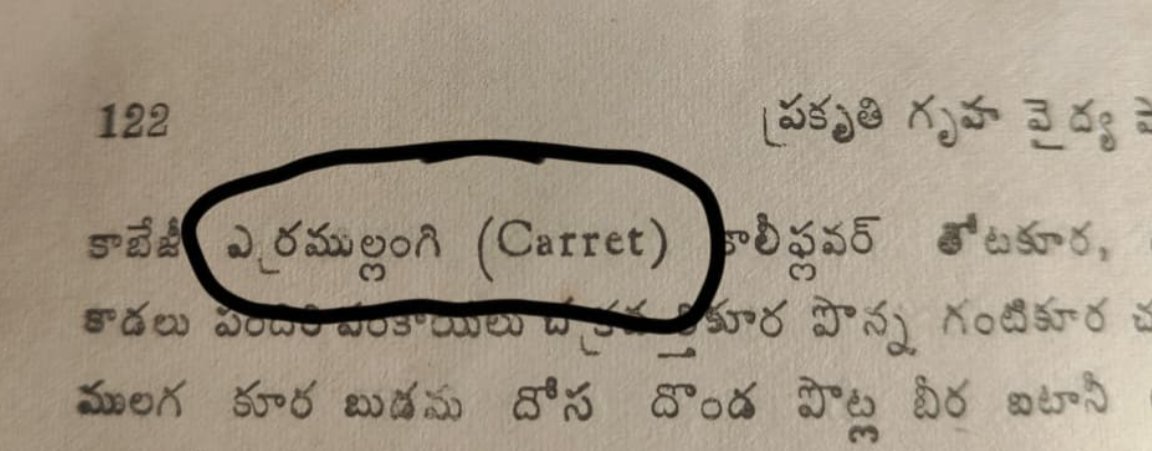
ALT ౧౯౮౦ నాటి పొత్తంలో క్యారెట్ను "ఎర్రముల్లంగి" అని వ్రాసారు.
11
143
504
20,867
Telugu Chronicles ☀️ retweeted

27 Nov 2025
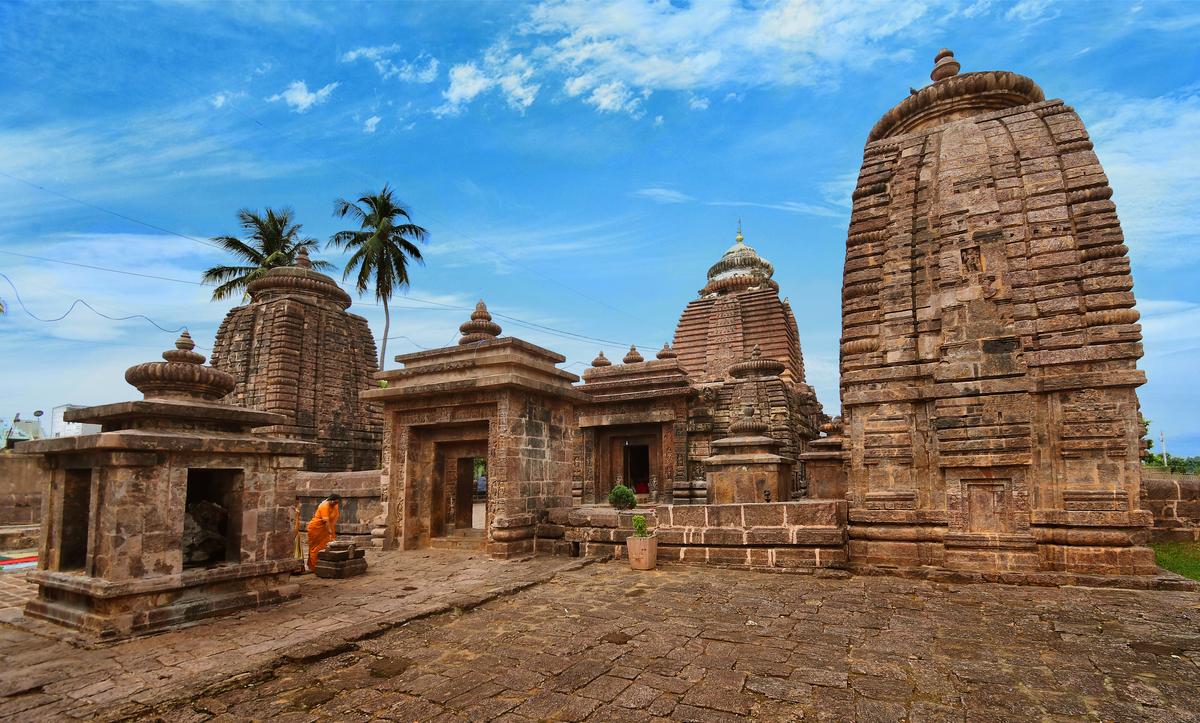
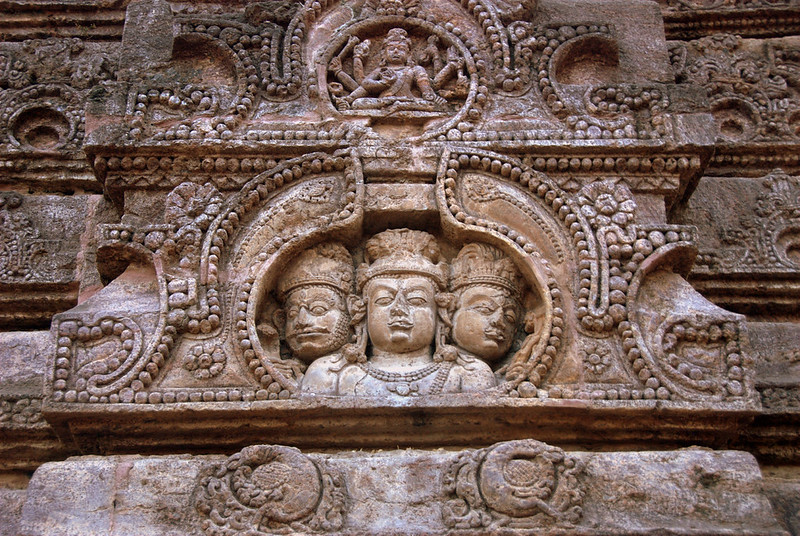
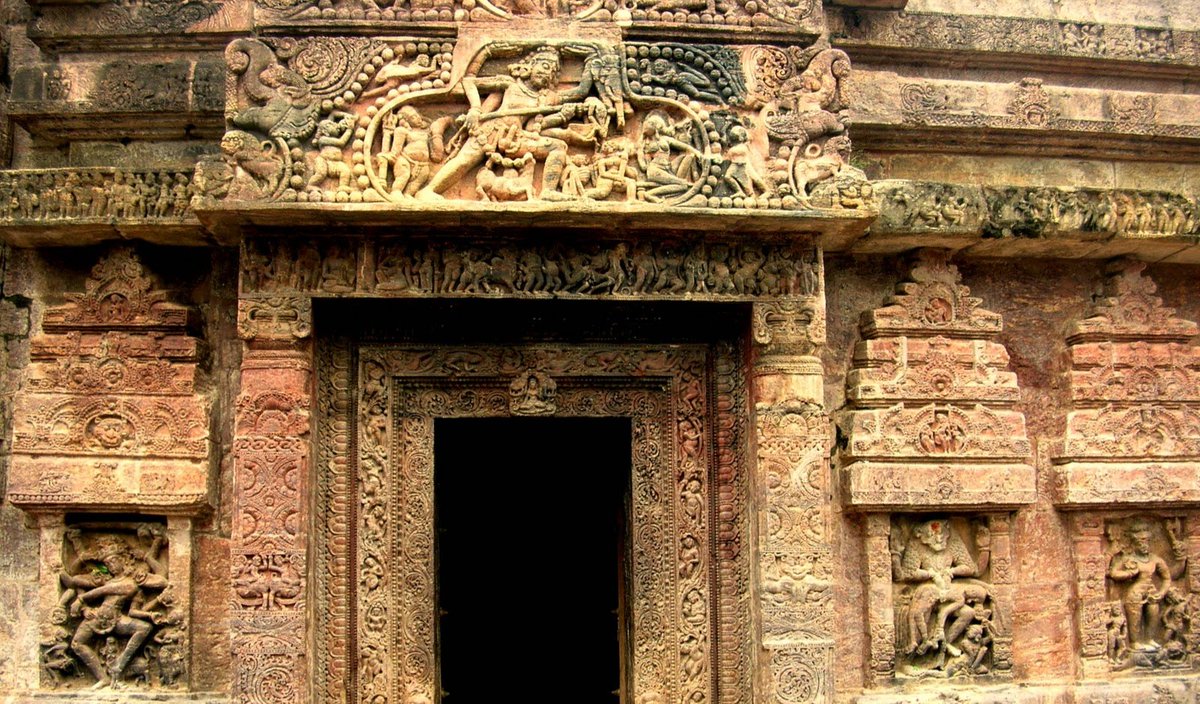
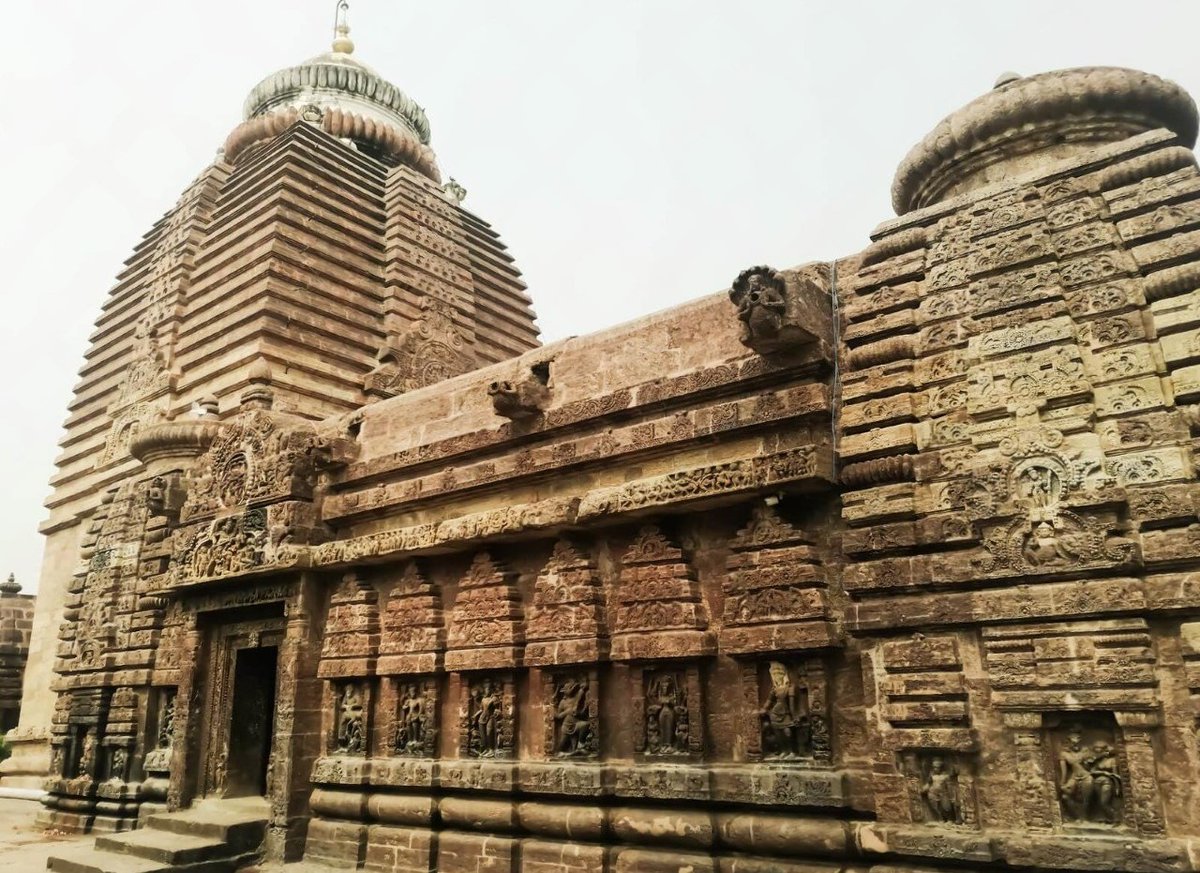
The 1300 years old Sri Mukhalingeswara Temple, dedicated to Lord Shiva, an example of early Kalinga architecture with intricate carvings in Srikakulam , Andhra Pradesh 🔱🛕 🇮🇳
68
393
6,571
Telugu Chronicles ☀️ retweeted

4 Sep 2025
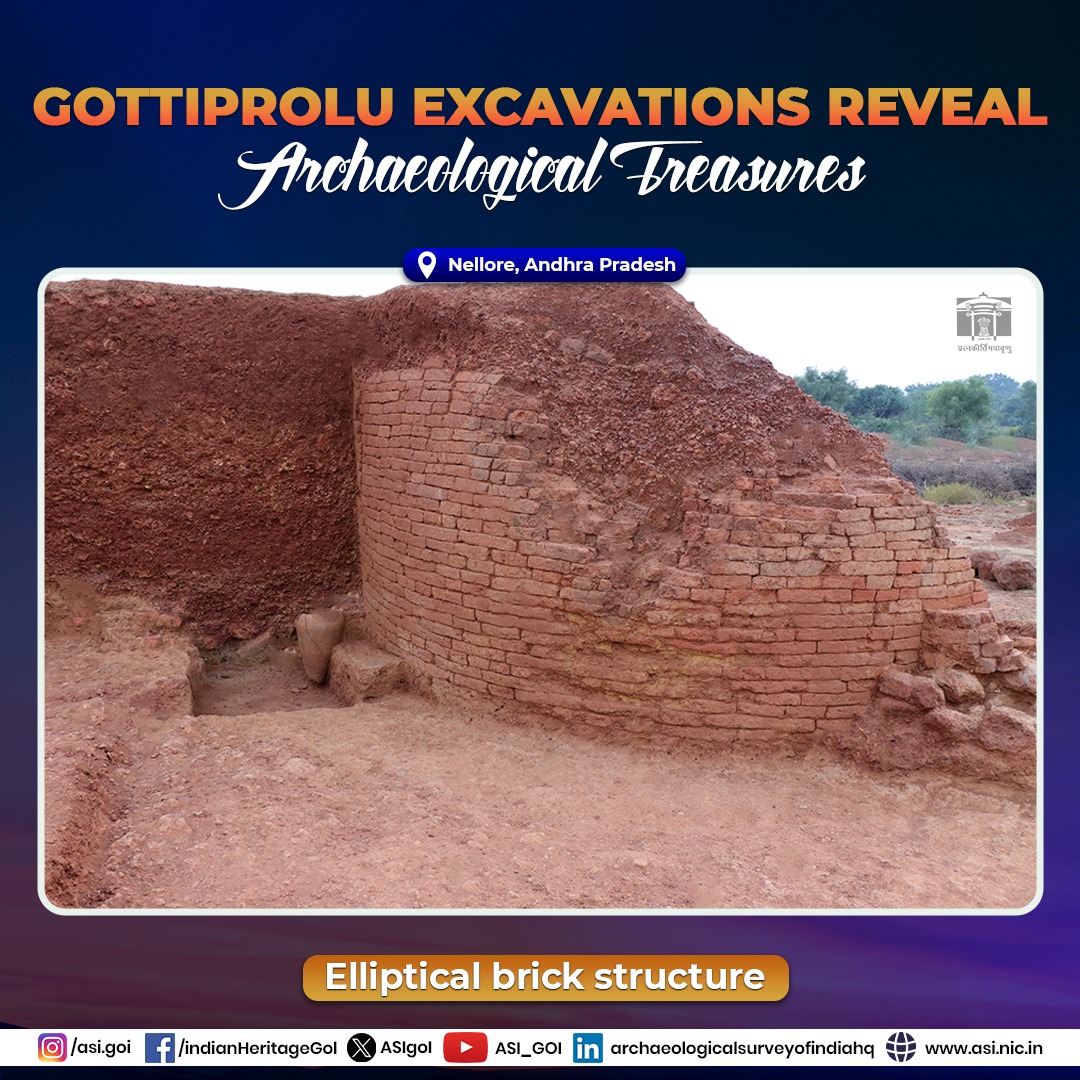
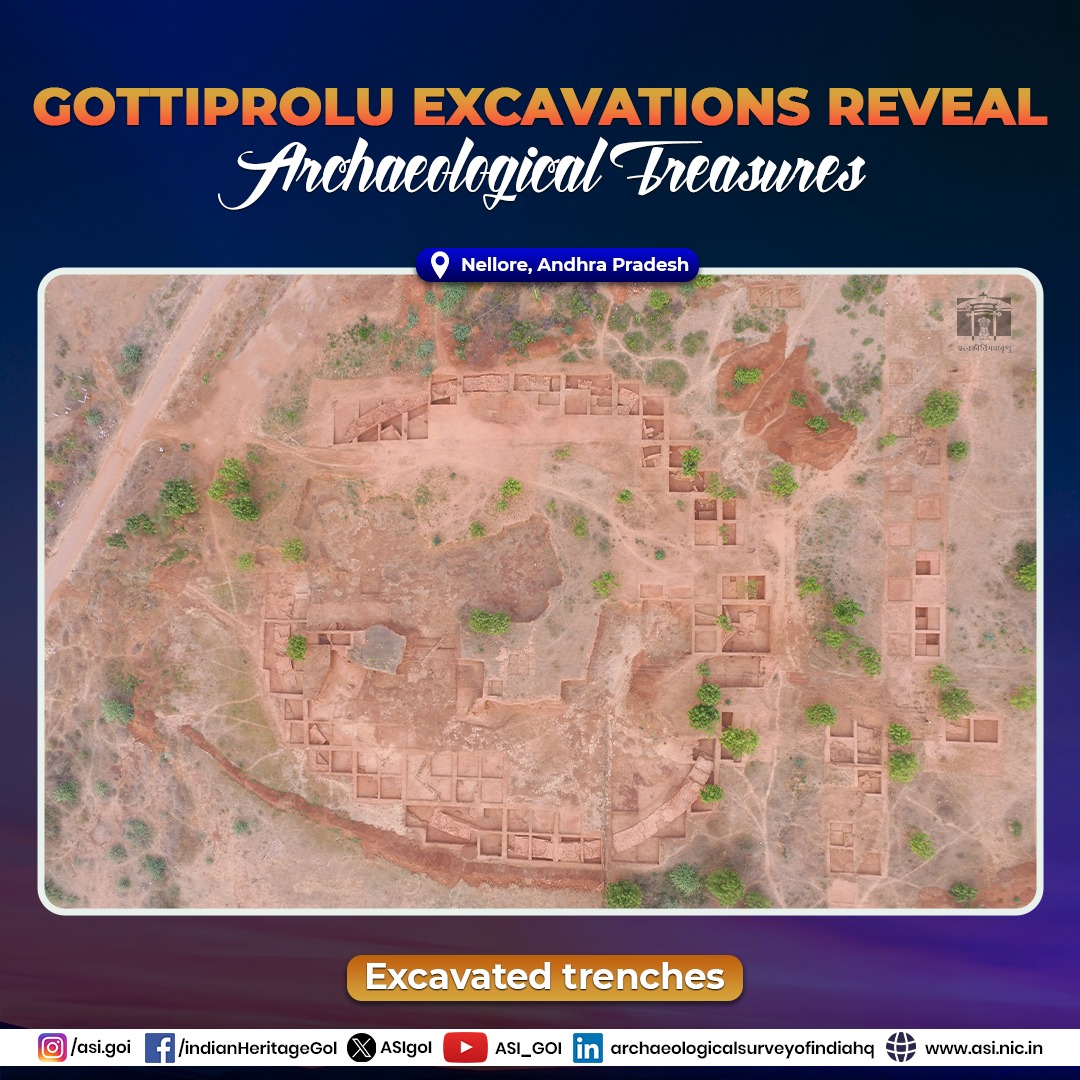
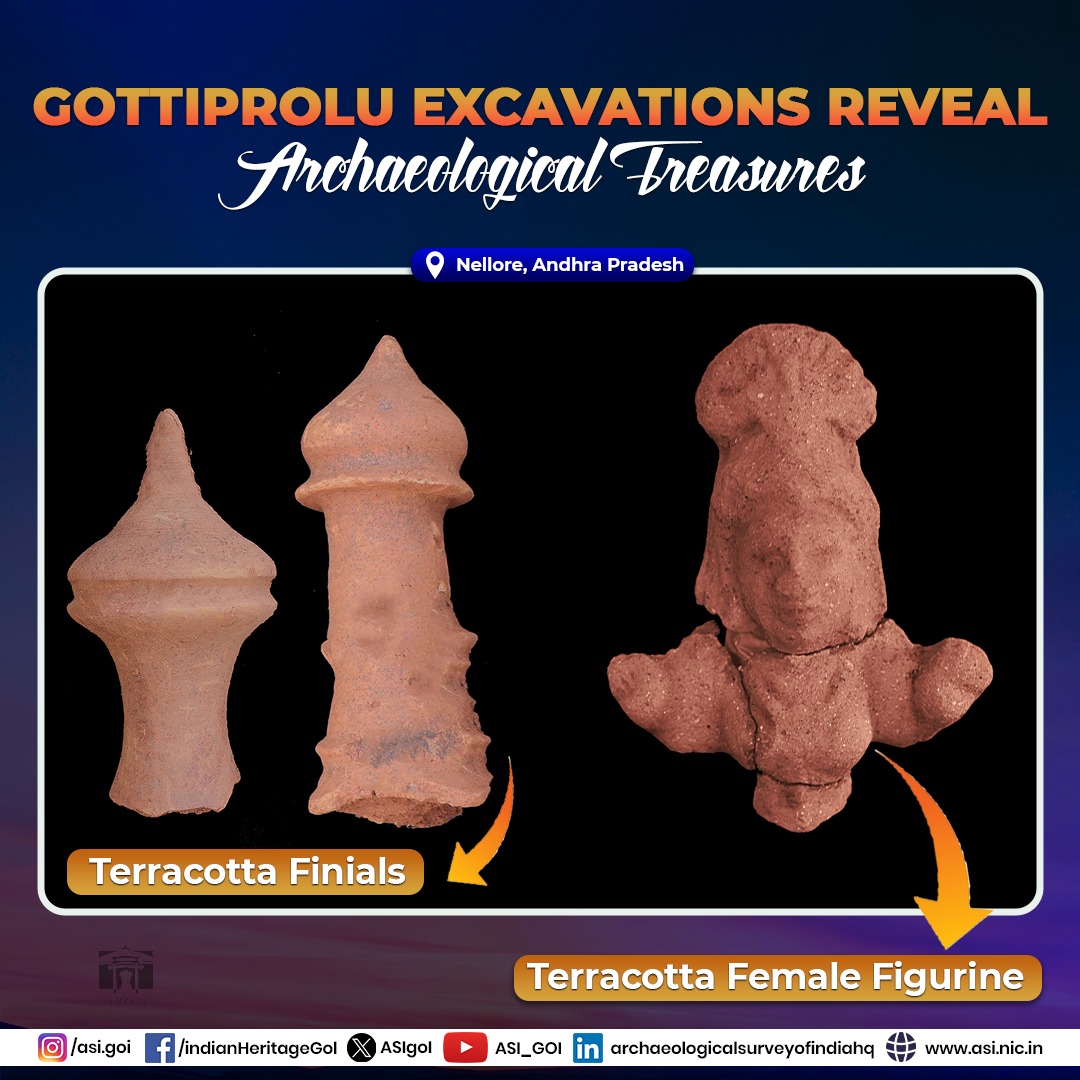
The archaeological site of Gottiprolu, situated on the right bank of a distributary of the Swarnamukhi River in Nellore, Andhra Pradesh, was excavated during 2018–20. Covering about 40 acres, the fortified mound known as ‘Kōṭa Dibba’ revealed an extensive Early Historic fortified settlement featuring brick-built structures of elliptical and rectangular shapes.
#AndhraPradesh #ASI #HeritageSites #ArchaeologicalSurveyOfIndia #CultureUnitesAll
(1/2)
5
31
109
3,099
Telugu Chronicles ☀️ retweeted
19 May 2025
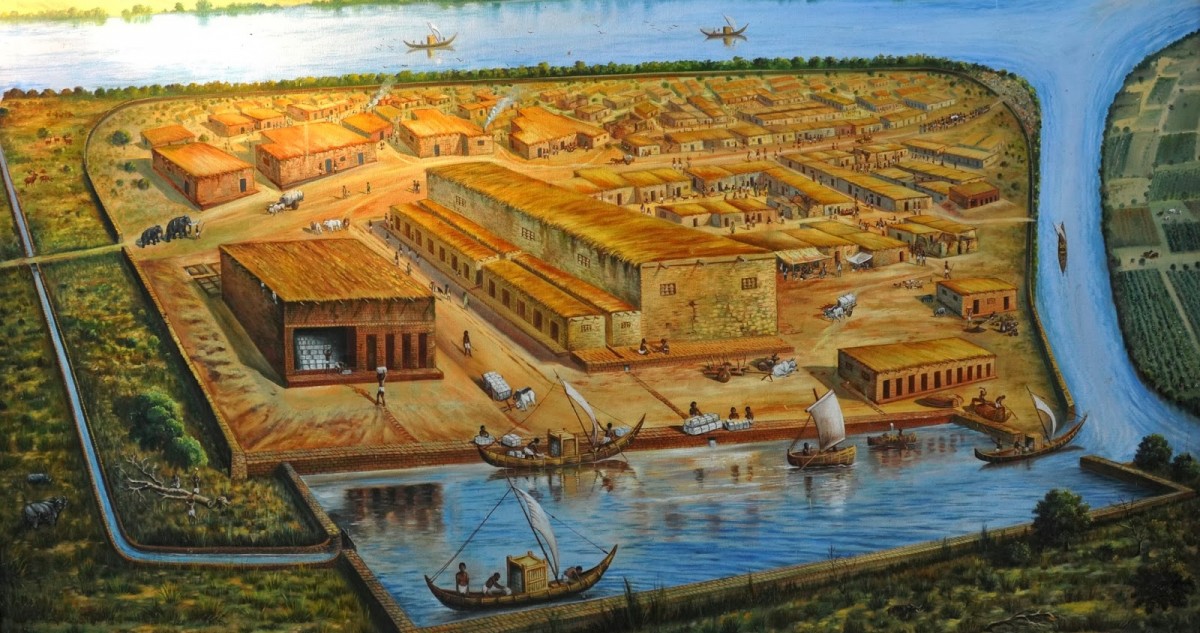
In #AndhraPradesh's SPS Nellore district, near the banks of the Swarnamukhi river, lies #Gottiprolu, an ancient maritime trade center that flourished nearly 2000 years ago. It spans over 40 acres, with massive brick-built enclosure walls over 75m long, 3.4m wide, & 2m high.
🧵1/3
1
9
24
999
Telugu Chronicles ☀️ retweeted
27 Dec 2025
The #Bhattiprolu script later influenced the Kadamba script, which in turn gave rise to the Telugu-Kannada script.
🧵2/2
3
5
23
1,472
Telugu Chronicles ☀️ retweeted

Jun 1
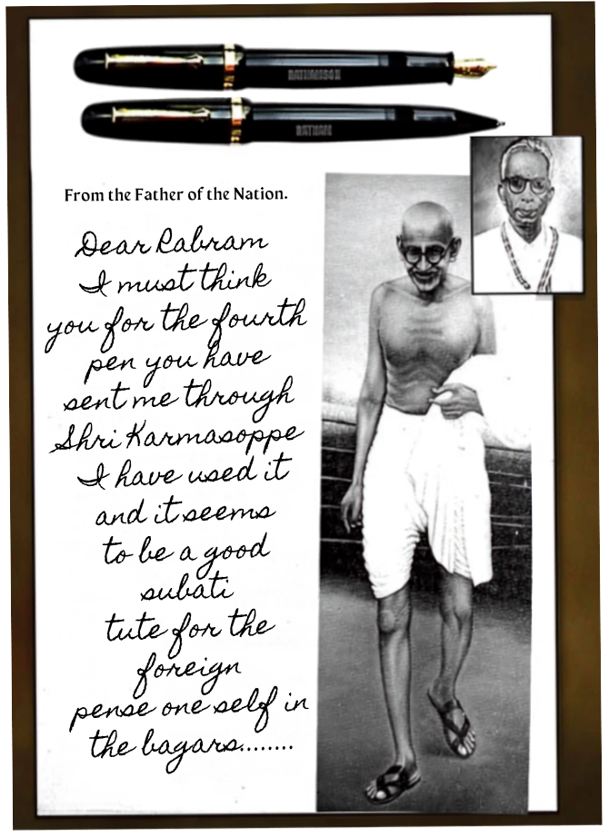
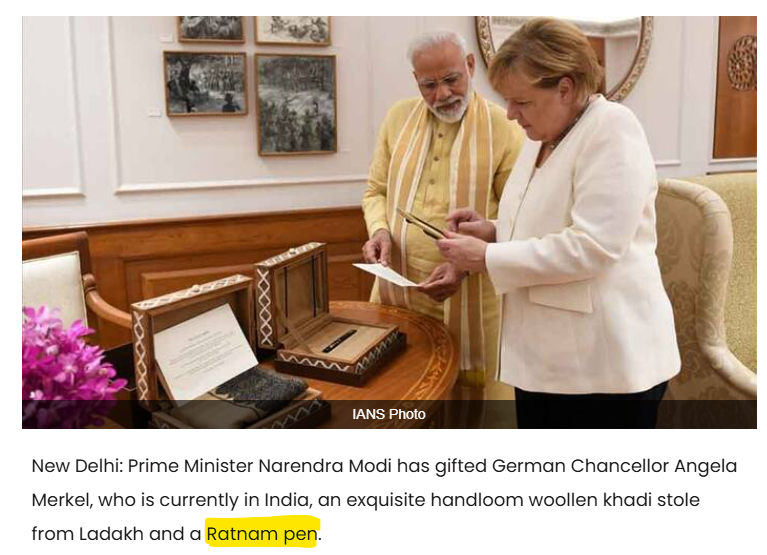
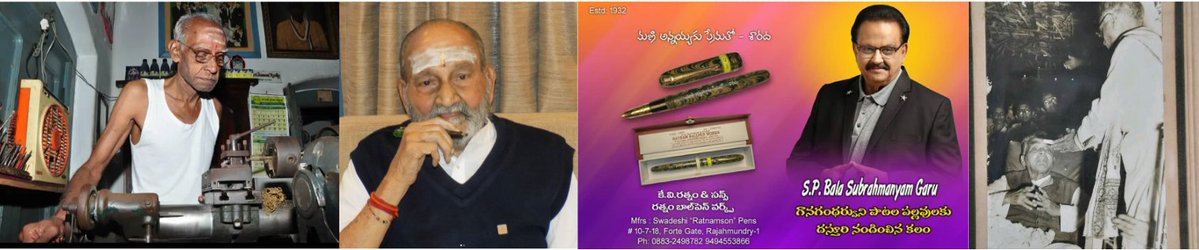
India's First Svadeshi Fountain Pen: Ratnam
Crafted in Rajahmundry by a Telugu K. V. Ratnam in 1932, inspired by Gandhi's call for self-reliance.
Andhra continues to etch its legacy across every field into the pages of Indian history, One stroke at a time.
Telugu Legacy ! 🔥
#RatnamPens #AndhraPradesh #IndianHistory #MakeInIndia #Gandhi #Andhra #Telangana #TFI #OG #Telugu #India #Culture #Ratnamson #Pen

1
19
75
2,229
Telugu Chronicles ☀️ retweeted

May 30
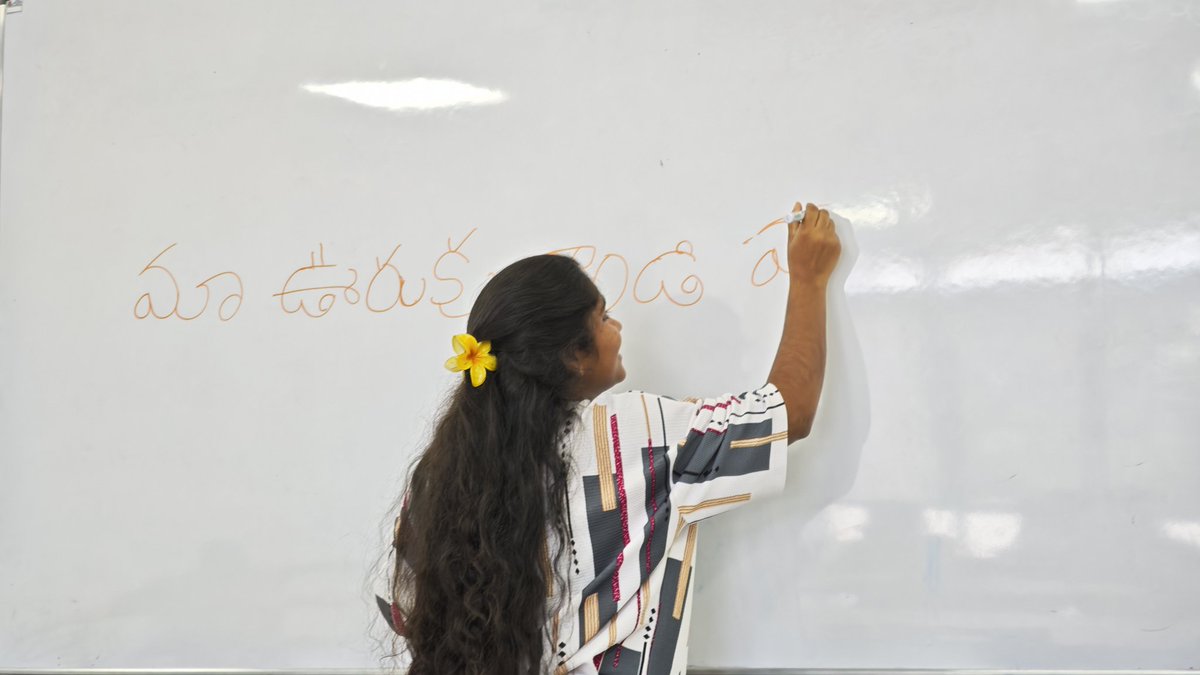
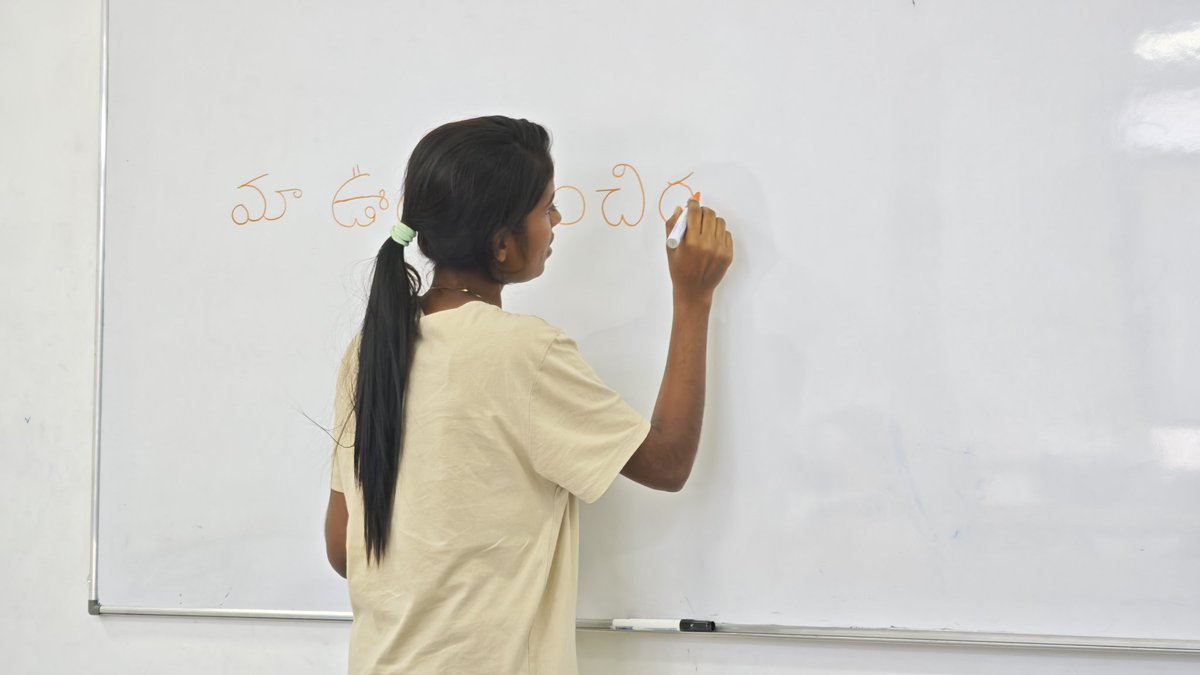
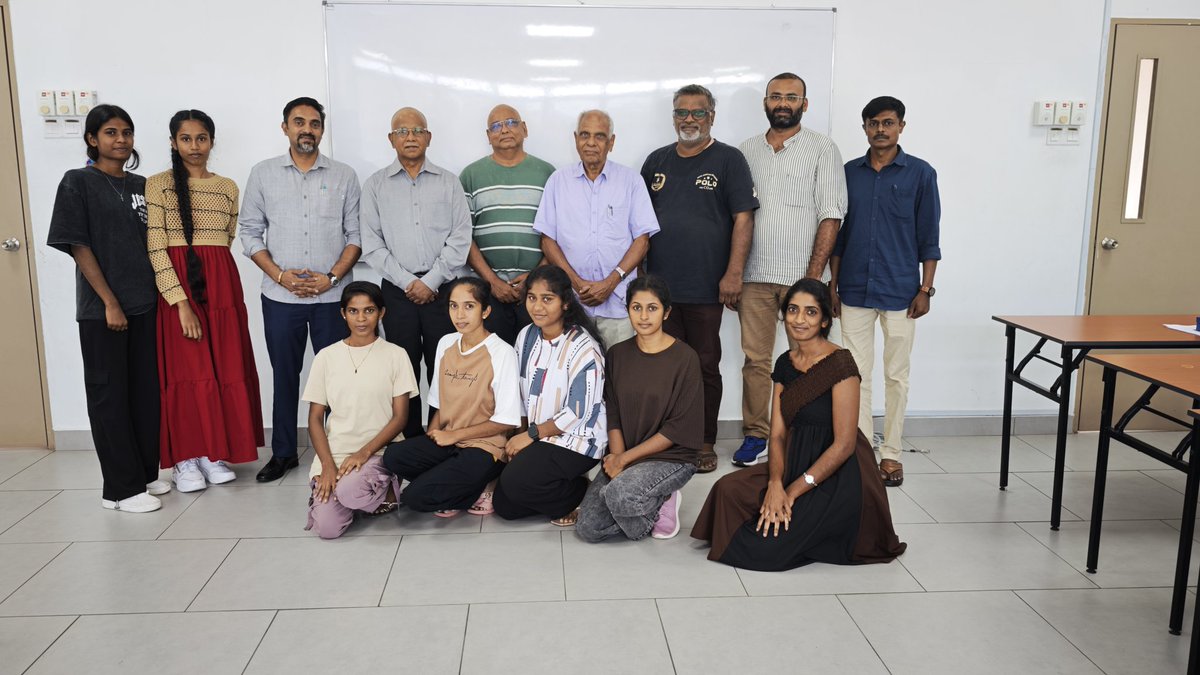
After 2 weeks of intensive learning, the Sri Lankan Telugu descendant students have successfully developed the ability to read, write, and converse in Telugu with confidence. Beyond language acquisition, they have also embraced and mastered traditional Telugu cultural arts.
10
84
322
14,993
Telugu Chronicles ☀️ retweeted
May 30
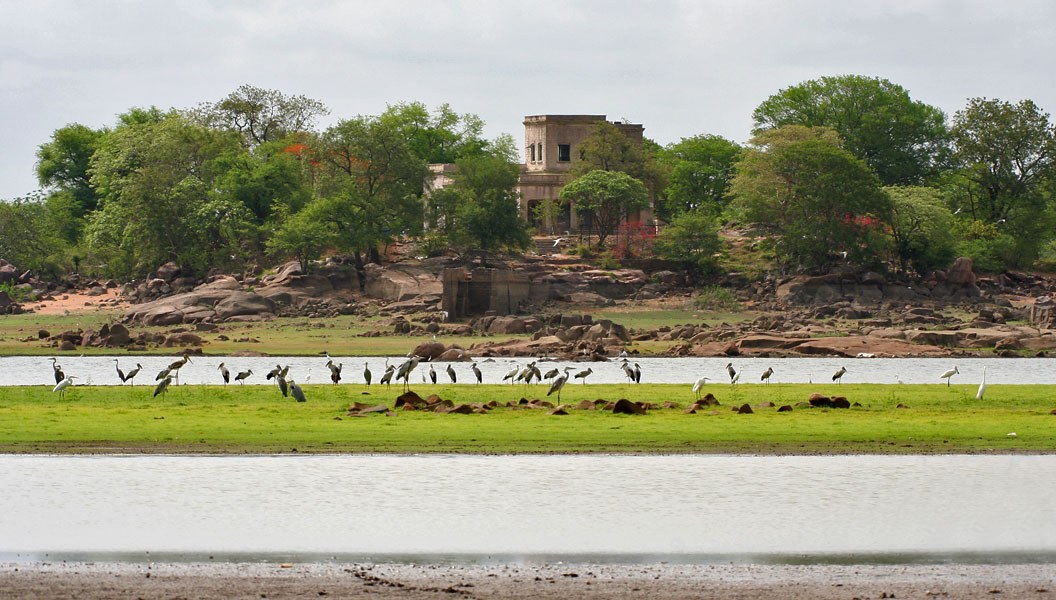
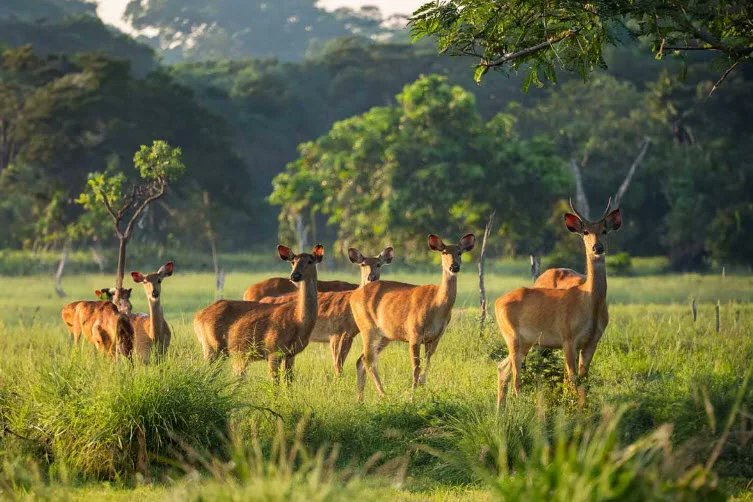
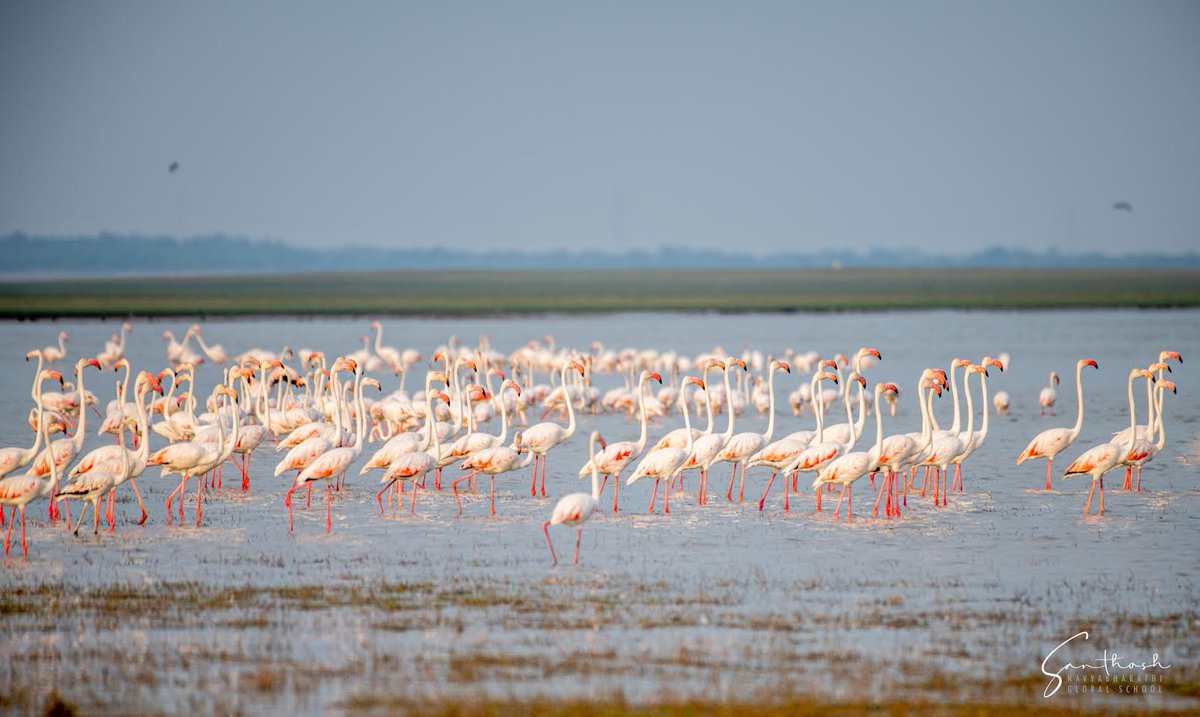
Pocharam Wildlife Sanctuary in Medak, Telangana 🌊🦌 🦢🇮🇳

14
117
1,073
33,710
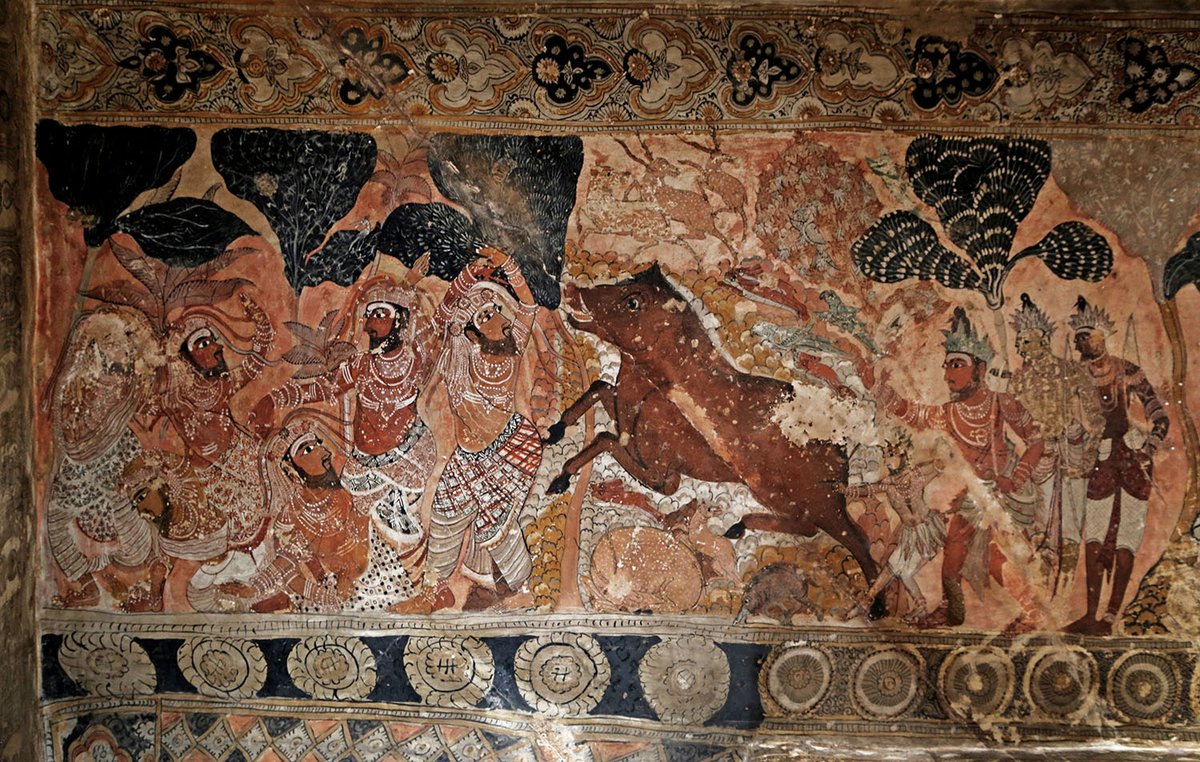
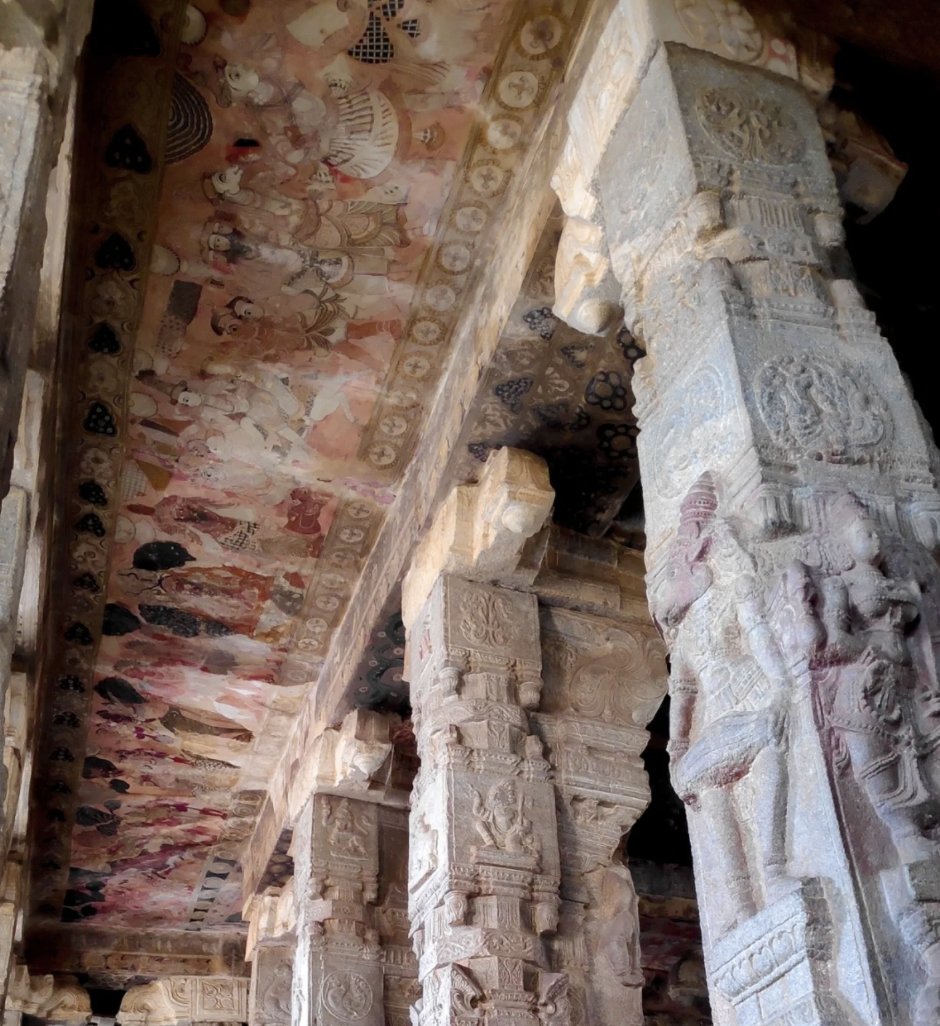
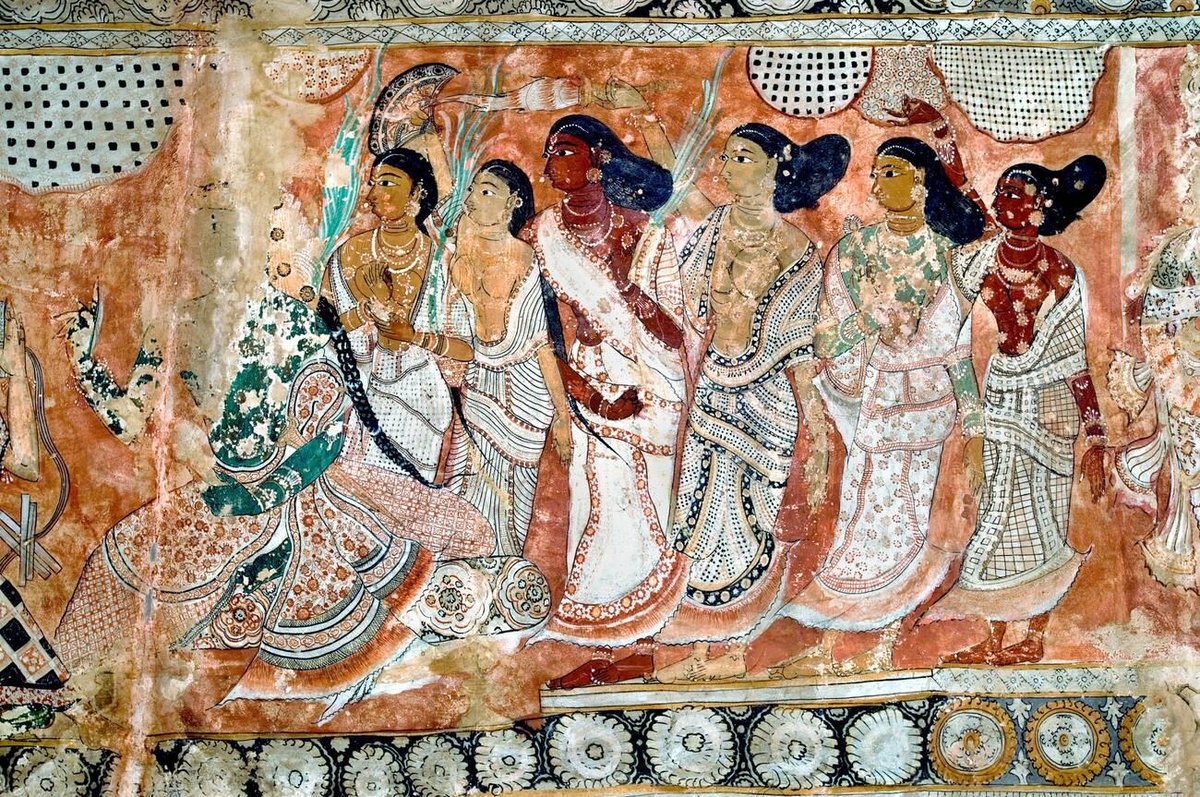
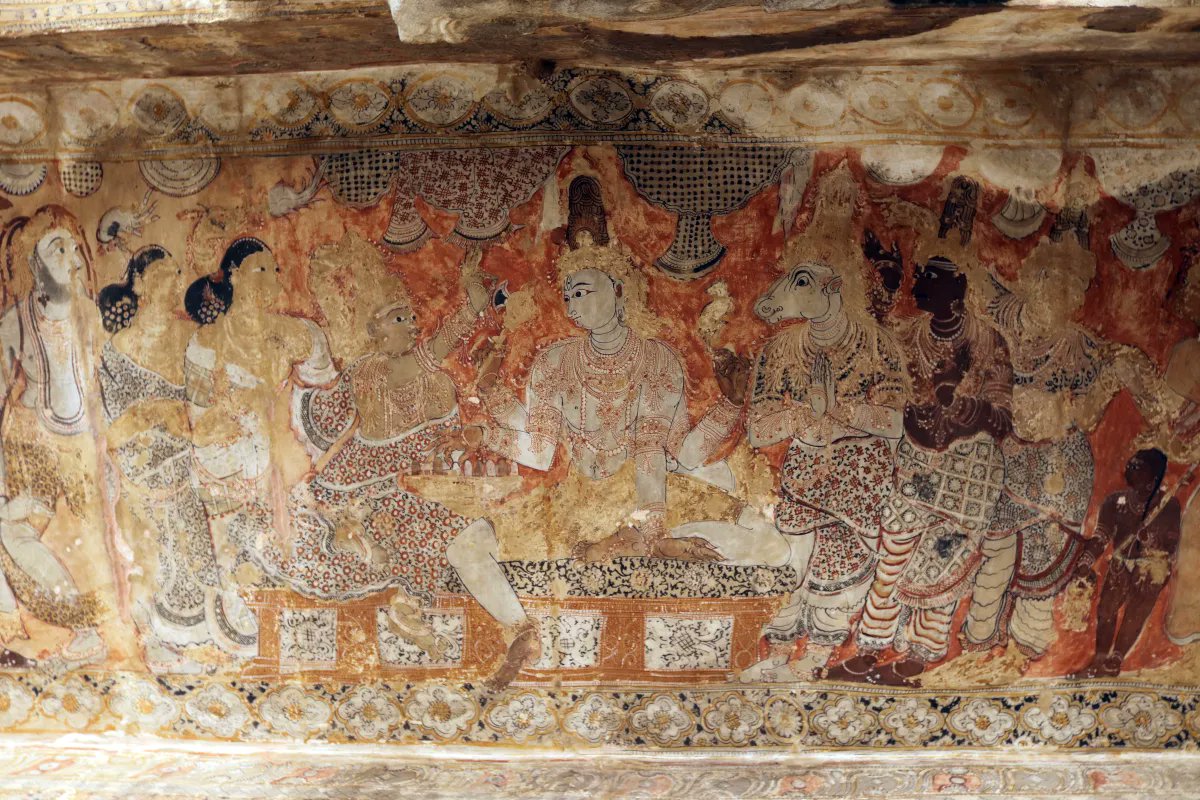
The magnificent mural paintings of the 16th century Veerabhadra Swamy Temple at Lepakshi, Anantapur Dist., #AndhraPradesh. Painted across ceilings & walls, they depict scenes from the Ramayana, Mahabharata & Shaivite traditions.🛕
23
95
2,057
Telugu Chronicles ☀️ retweeted

May 25
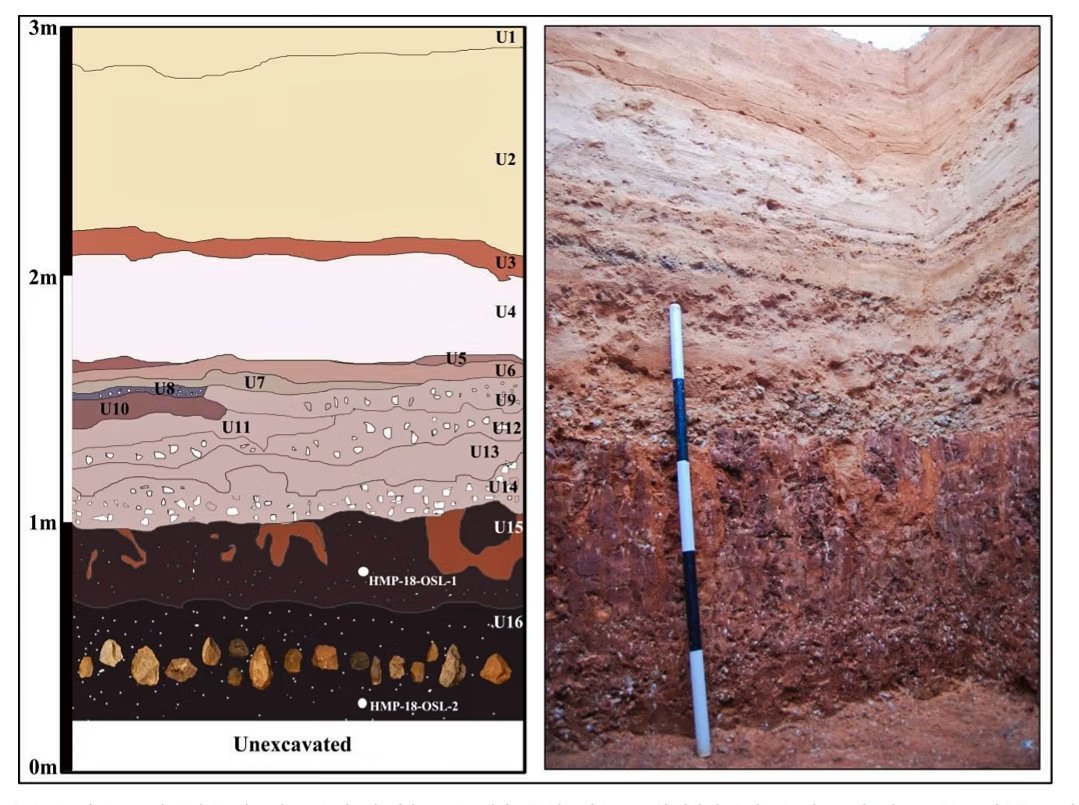
URGENT measures necessary to create a ON SITE MUSEUM at Hanumanthunipadu, to Protect and safeguard all the archaeological findings at Hanumanthunipadu Pre Historic Archaeological Site, in Markapuram District, Andhra Pradesh.
The scientific testing was conducted at a highly prestigious institution in India, and the results completely stunned the global archaeological community.
1. Where the Testing Took Place :
The sediment samples bound tightly to the excavated stone tools were sent to the Luminescence Laboratory at the Physical Research Laboratory (PRL) in Ahmedabad, Gujarat, India.
PRL is a premier national research institute for space and allied sciences. Its specialized dating laboratory measures the last time the mineral grains (like quartz or feldspar) surrounding the stone tools were exposed to sunlight before being deeply buried in the earth.
2. Why the Scientists Were Stunned :
When the researchers at the PRL lab calculated the final data and realized the tools were 2,50,000 years old, it sent shockwaves through the scientific community.
Scientists were surprised because of The Geographical Gap (The Africa vs. India Debate).
Until this result was printed, mainstream global archaeology firmly believed that Middle Paleolithic technology (characterized by the smaller, sharper points and prepared Levallois cores found at the site) was invented exclusively in Africa and brought to India by migrating modern humans (Homo sapiens) around 125,000 years ago.
When the laboratory at Ahmedabad proved the tools were nearly 250,000 years old, it meant:
The tools were twice as old as anyone expected.
They were crafted roughly 120,000 years before modern humans even left Africa for India.
An ancient, native, "archaic" hominin species living right there in the Paleru River Basin of Andhra Pradesh was intelligent enough to independently invent this advanced technology all on their own.
The surprise completely shifted the spotlight of human evolutionary history away from the traditional African migration routes and placed Andhra Pradesh at the center of independent global human innovation.
The prehistoric site at Hanumanthunipadu is highly valued by archaeologists because its deep geological stratigraphy acts like a time capsule. The tools found here do not just belong to a single period; they span hundreds of thousands of years, showcasing a massive technological transition from heavy, large implements to highly complex, miniature tools.
The hominins (early humans) at Hanumanthunipadu primarily relied on Cuddapah quartzite (varying from coarse-grained brown varieties for older tools to fine-grained varieties for later ones). For very late, tiny tools, they utilized materials like quartz and lydonite.
The various tool types discovered across the site's distinct historical layers are categorized below.
1. Lower Paleolithic: Late Acheulean Layers (>250,000 Years Old)
These represent the oldest tool traditions found at the base of the excavations. They were crafted using a soft hammer technique (such as using bone or wood instead of another hard stone to chip the edges), resulting in thinner, sharper, and more symmetrical heavy-duty tools.
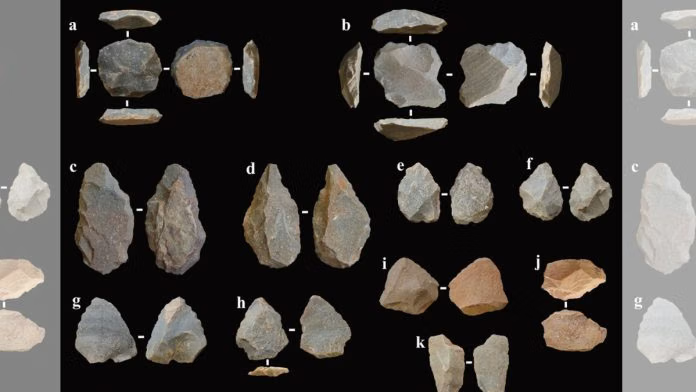
Finely Worked Hand-Axes: Teardrop and almond-shaped bifacial tools (flaked on both sides). These were remarkably thin and well-finished compared to earlier, cruder Acheulean variants.
Cleavers: Heavy tools with a broad, flat, axe-like cutting edge at the front, predominantly used for hacking wood or heavy butchery.
Flake Tools & Scrapers: Large stone flakes struck off from a central core and minimally retouched to create thick, durable edges for rugged scraping tasks.
2. Early Middle Paleolithic Layer (The Famous ~2,50,000-Year-Old Horizon)
This layer represents the major technological breakthrough that shocked scientists. It marks the shift where heavy hand-axes shrank, and the complex Levallois method (prepared core technology) took over.
Levallois Cores and Flakes: "Cores" are the parent rocks that were meticulously shaped first, so that a single, calculated final strike would release a pre-determined, razor-sharp "flake."
Diminutive Bifaces (Miniature Hand-Axes): These are tiny, highly refined, pocket-sized hand-axes. They showcase a transitional evolution, proving the toolmakers were adapting their traditional designs into smaller, lighter versions.
Point Tools: Triangular flakes with intentional, sharply tapered tips. These are monumental finds because they were designed to be attached (hafted) to wooden handles or shafts to form early projectile weapons, like hunting spears.
Winged Flakes: Distinctive flakes with wide, wing-like side projections, created during highly specialized core shaping.
Specialized Scrapers: Flakes heavily retouched on the borders to process animal hides and shape wood or bone.
3. Late Paleolithic Layers (~50,000 to 10,000 Years Old)
Found embedded near ancient inland sand dunes, these tools demonstrate a transition into specialized blade industries.
Blade Cores: Elongated stone cores designed specifically to strike off long, parallel-sided, narrow stone strips (blades).
Finished Blades: Strips of stone that were twice as long as they were wide, offering incredibly long, continuous cutting edges.
4. Mesolithic Layers: Microliths (<10,000 Years Old)
Discovered on the top surfaces of stabilized sand dunes, these reflect the final prehistoric phase of hunting and gathering before agriculture.
Micro-blade Cores: Tiny stone cores prepared using highly delicate pressure flaking and bipolar techniques (pounding from both top and bottom).
Micro-blades: Extremely miniature, razor-like stone fragments.
Geometric Tools: Tiny stone flakes shaped into precise triangles, crescents (lunates), and trapezes. These tiny pieces were glued into slots on wooden or bone handles to make multi-toothed sickles, arrows, and harpoons
3
25
41
2,836
Telugu Chronicles ☀️ retweeted

May 25
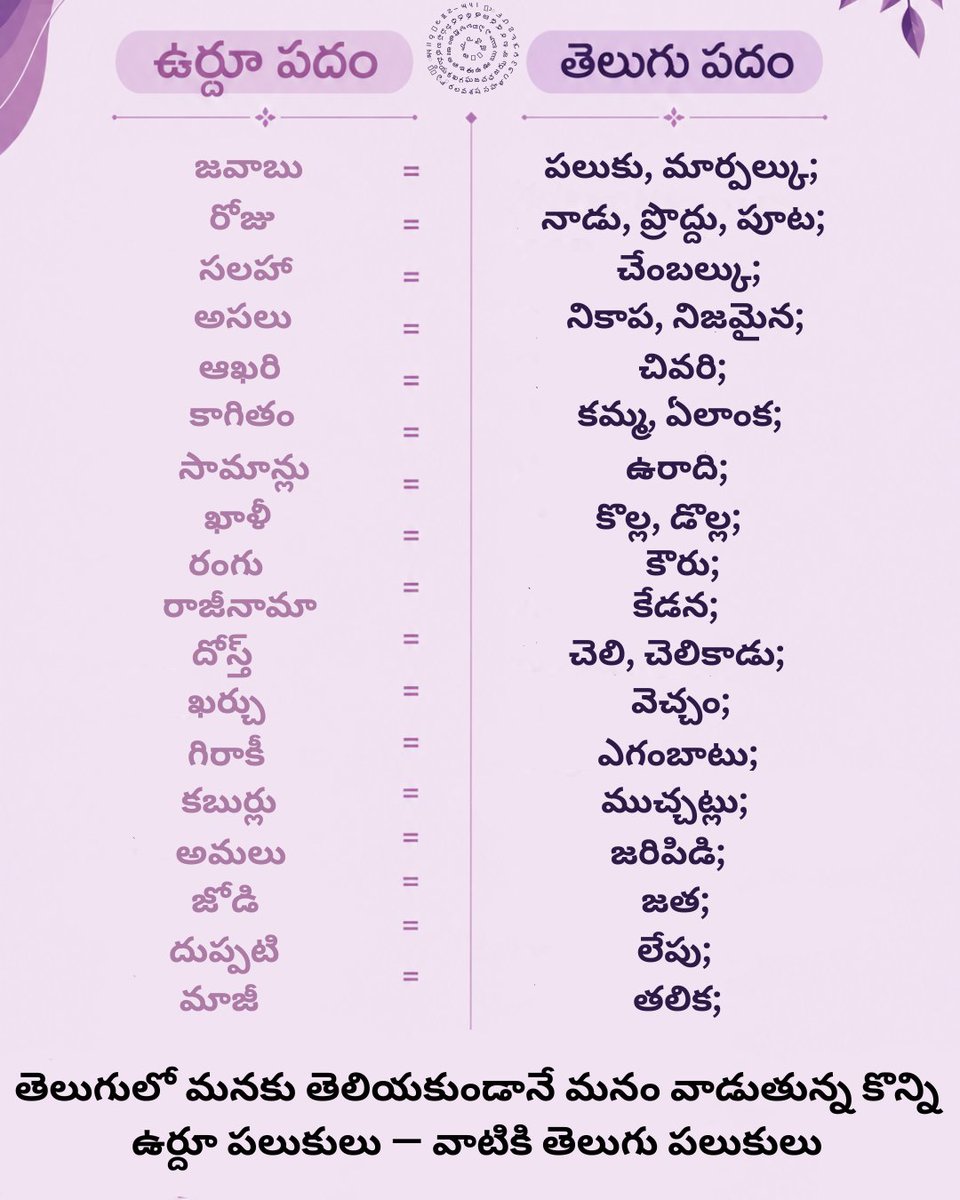
తెలుగులో మనకు తెలియకుండానే మనం వాడుతున్న కొన్ని ఉర్దూ పలుకులు - వాటికి తెలుగు పలుకులు.
ఇవి వాడకపోయినా పర్వాలేదు కనీసం తెలిసి ఉండటం మంచిది.
#తెలుగు #తెలుగువెలుగు #Telugu #TeluguVelugu
37
230
1,006
42,334
Telugu Chronicles ☀️ retweeted
May 17
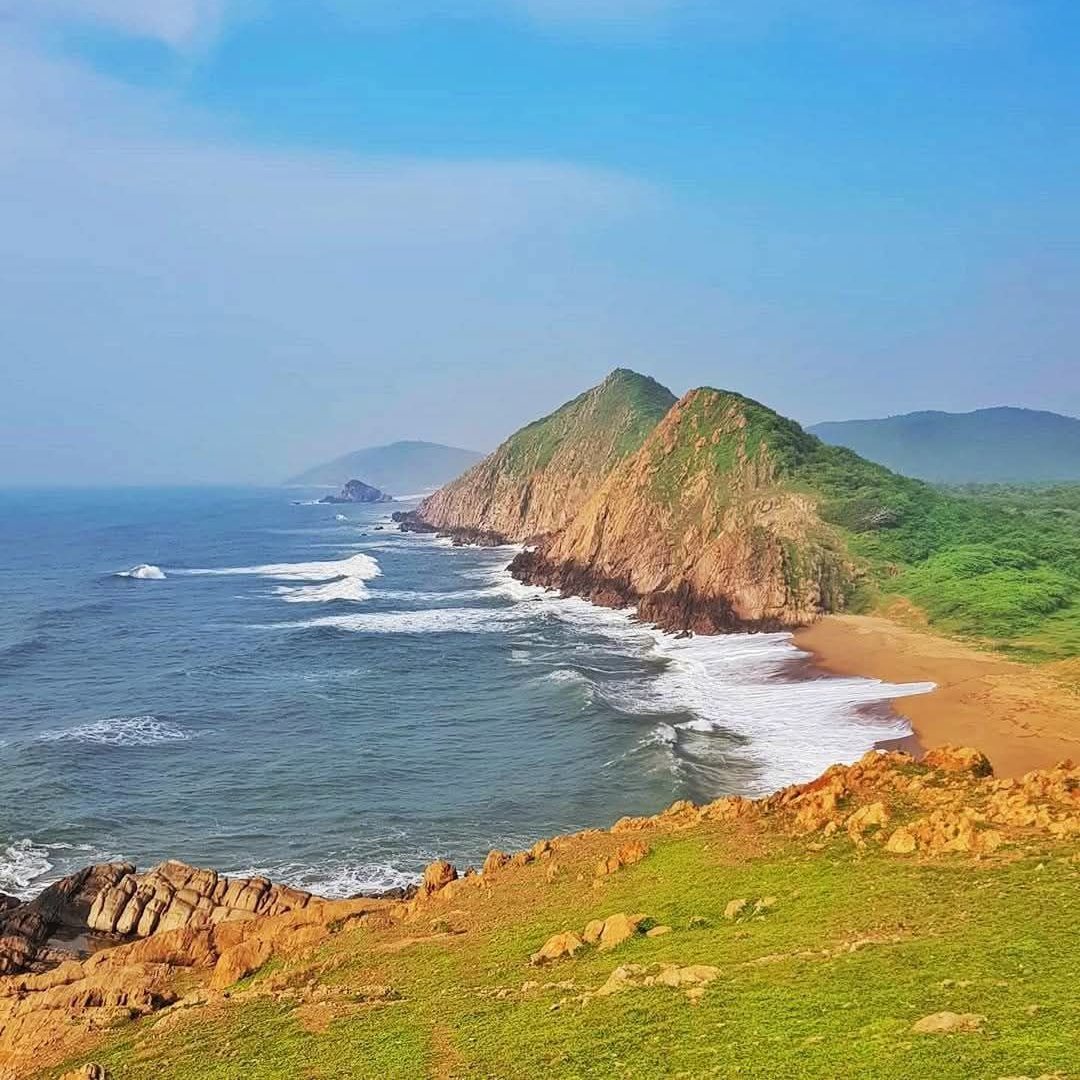
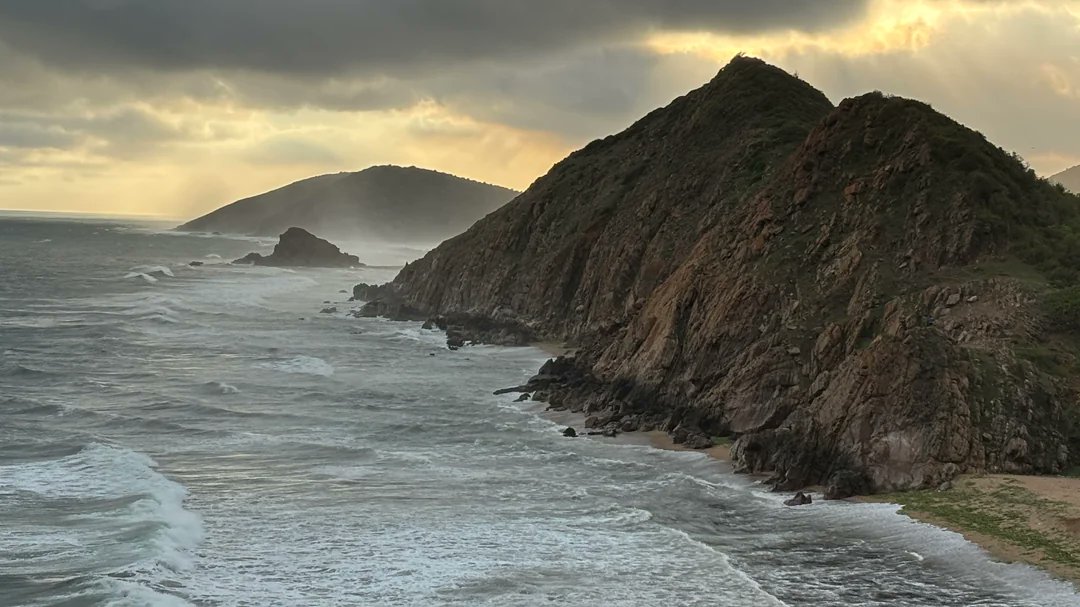
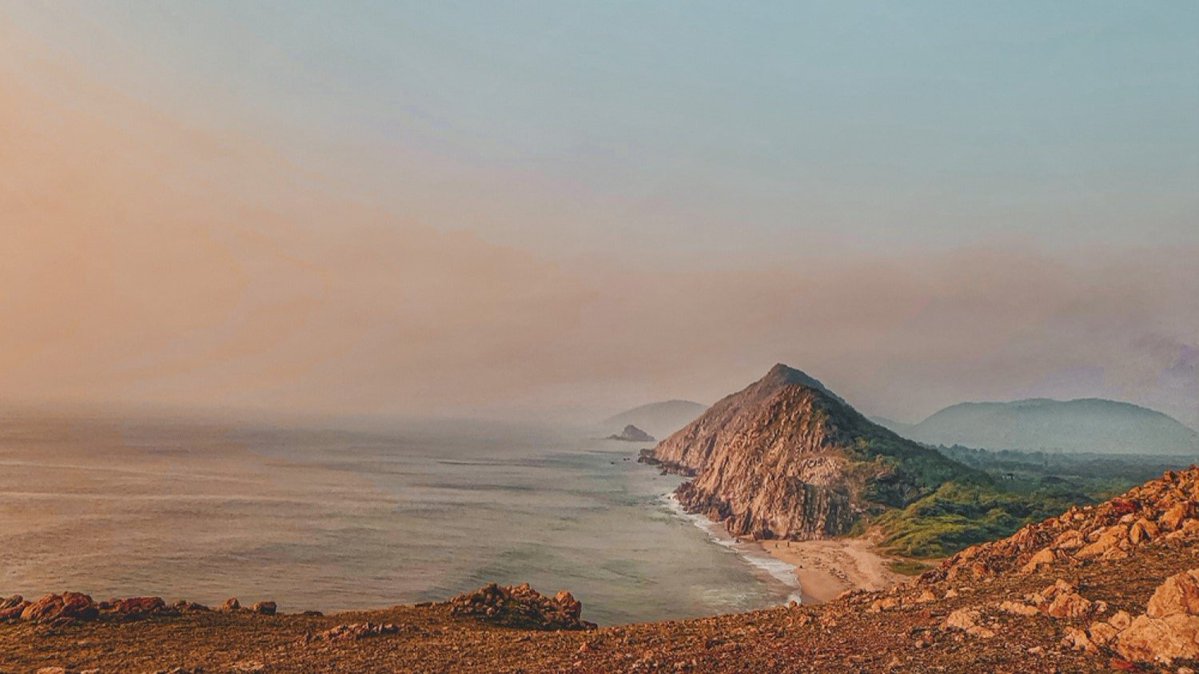
Gangavaram Beach in Visakhapatnam , Andhra Pradesh 🏖️⛰️🌅🇮🇳

5
153
1,519
30,842
Telugu Chronicles ☀️ retweeted

2027 జనాభా లెక్కలు ప్రారంభమయ్యాయి.
మన మాతృభాషను సరైన విధంగా నమోదు చేయించడం ప్రతి తెలుగువాడి బాధ్యత.
భాష అనేది కేవలం సంభాషణ మాత్రమే కాదు - అది మన చరిత్ర, మన గుర్తింపు, మన ఆత్మగౌరవం. తెలుగు మాట్లాడే వారి సంఖ్య తగ్గిపోతే, భవిష్యత్తులో భాషకు సంబంధించిన హక్కులు, విద్య, ఉద్యోగాలు, సాంస్కృతిక ప్రాధాన్యతపై ప్రభావం పడుతుంది.
“ఇంట్లో తెలుగు మాట్లాడి…
పత్రాల్లో ఇతర భాష నమోదు చేయడం”
ఆత్మవంచనతో సమానం.
తెలుగు తల్లి గౌరవం కోసం, భవిష్యత్ తరాల కోసం, 2027 జనాభా లెక్కల్లో మాతృభాషగా సగర్వంగా “తెలుగు” నమోదు చేయండి. 💛❤️
#Telugu #MotherTongue #Census2027 #SpeakTelugu #TeluguLanguage #మనమాతృభాషతెలుగు #మనభాషమనహక్కు ✊ #మనభాషమనబాధ్యత #చెయ్యెత్తిజైకొట్టుతెలుగోడా ✊ #తేటతెలుగుతేనెలొలుకు #దేశభాషలందుతెలుగులెస్స #తెలుగువీరలేవరా 🚩 #మాతెలుగుతల్లికిమల్లెపూదండ 🙏 #తెలుగు #Telugu #Telangana #Andhra #Rayalaseema
@NationTeluguTG @anand_011235 @anuswaram @dhaatellari @esalpana @nuditelugu @TeluguJambuDwip @telugukootami @Teluguraaya @Teluguvaaru @tuxnani @telugu @Tenupasa @tondanadu @TelanganaCMO @AndhraPradeshCM @APDeputyCMO
7
37
102
2,734
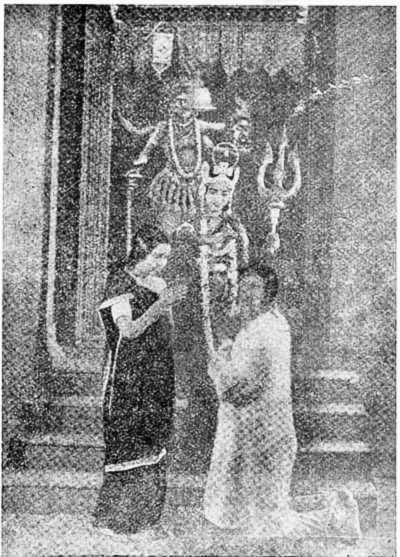
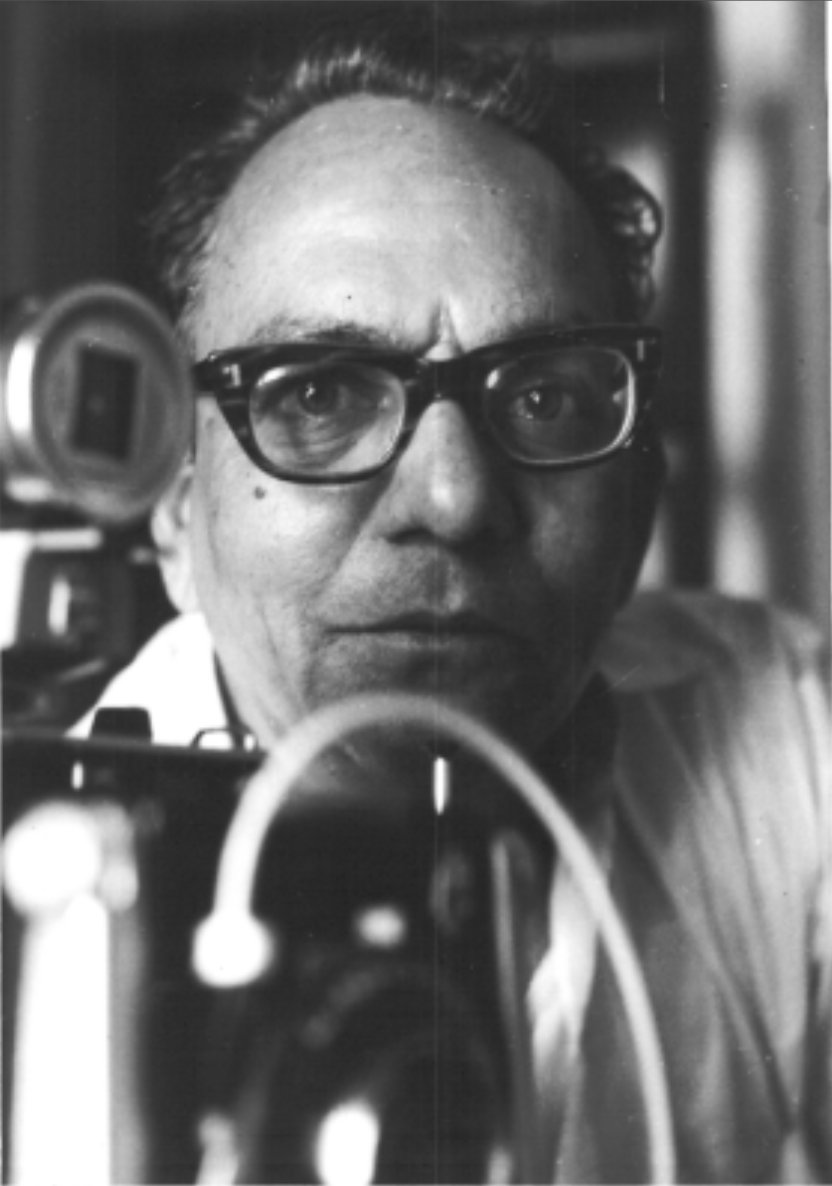
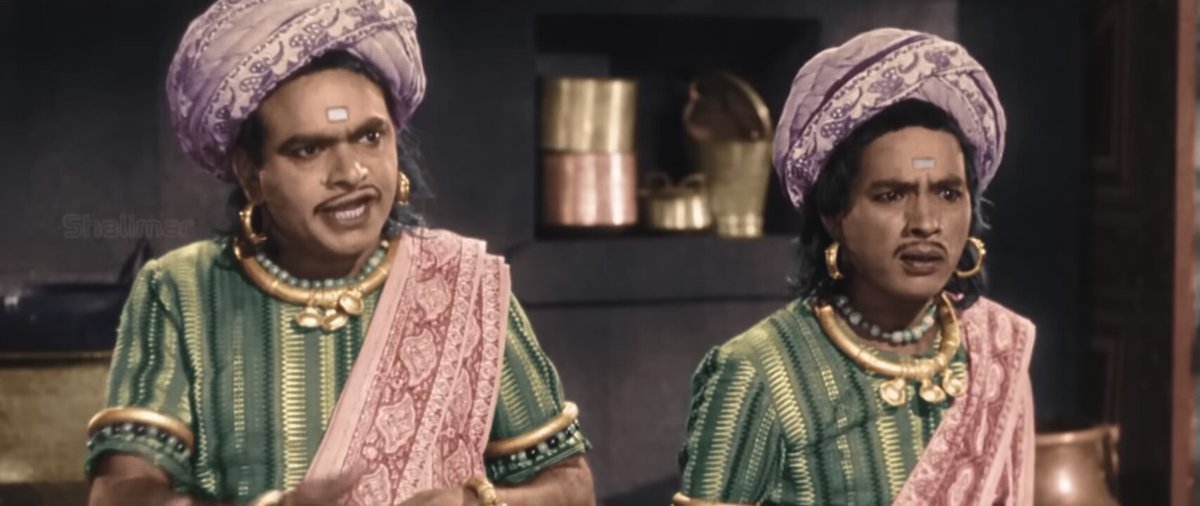
Kalidas (1931), directed by H. M. Reddy, is considered the first talkie of South India & #Telugu cinema. Though primarily featuring Telugu dialogues, it also included Tamil songs & some Hindi lines. Sadly, this landmark film of Indian cinema is a lost film. 🎞️
1
19
70
1,364
Telugu Chronicles ☀️ retweeted

May 14
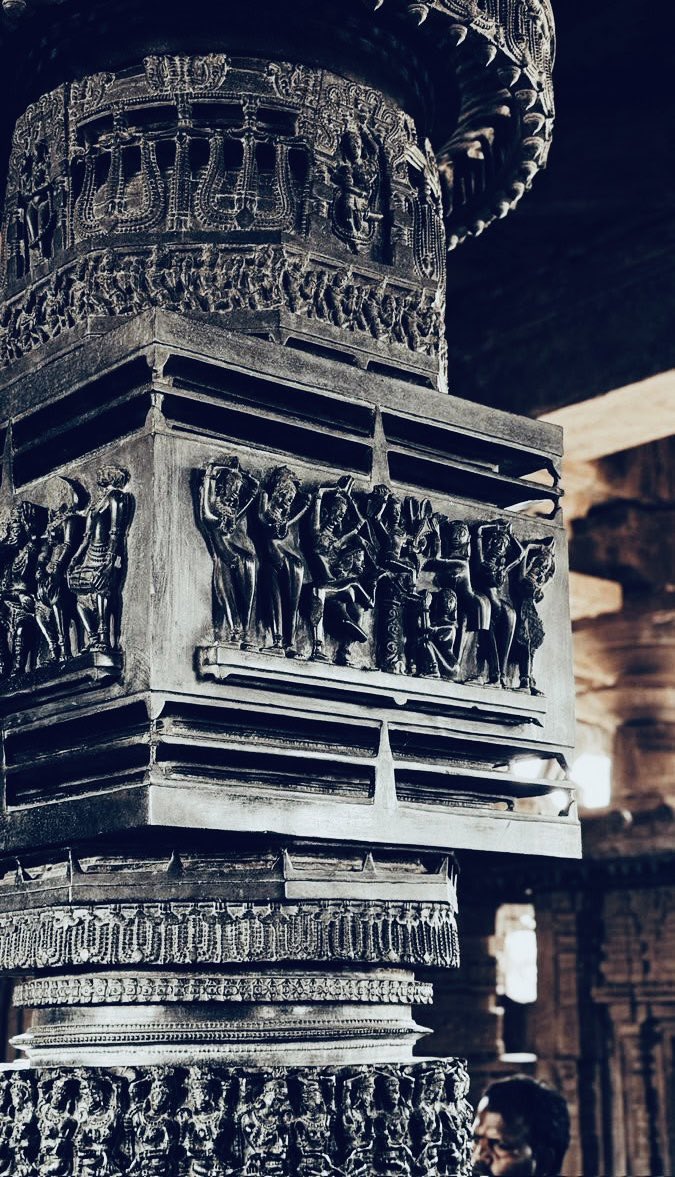
Amazing stone pillar of 13th Century Ramappa Temple, Telangana
46
319
2,294
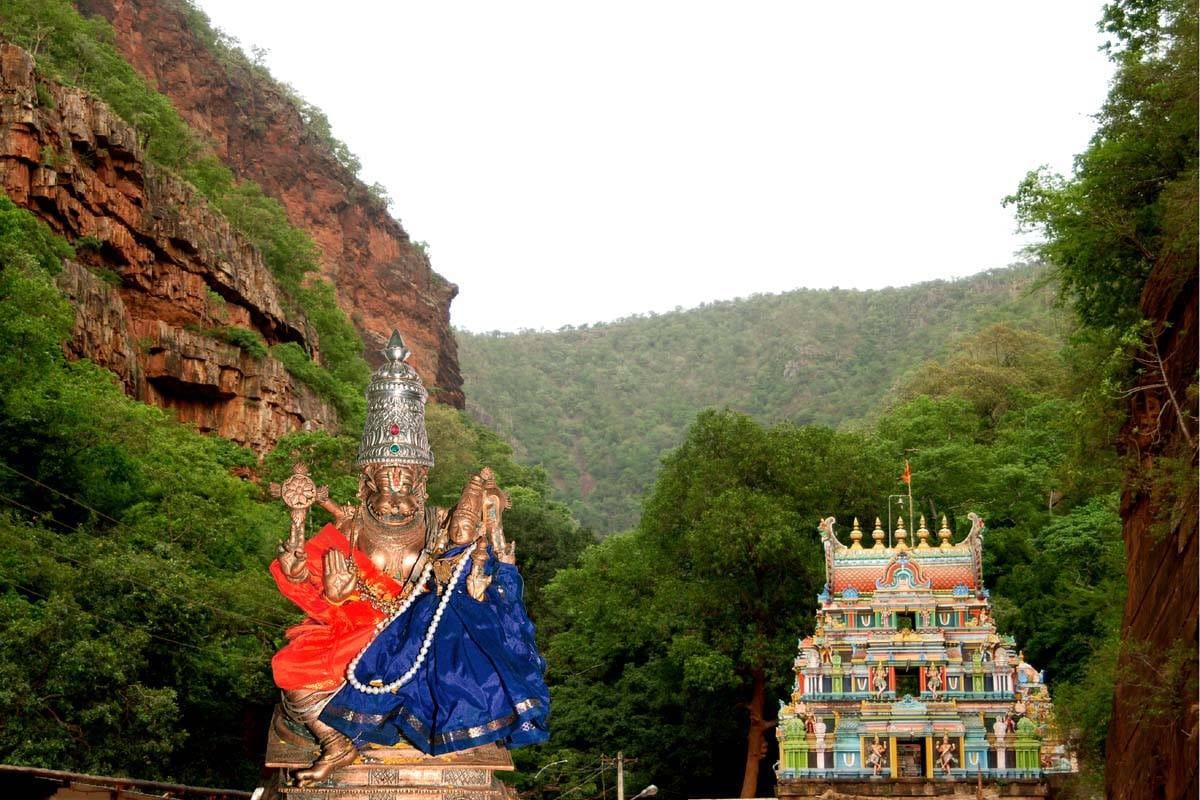
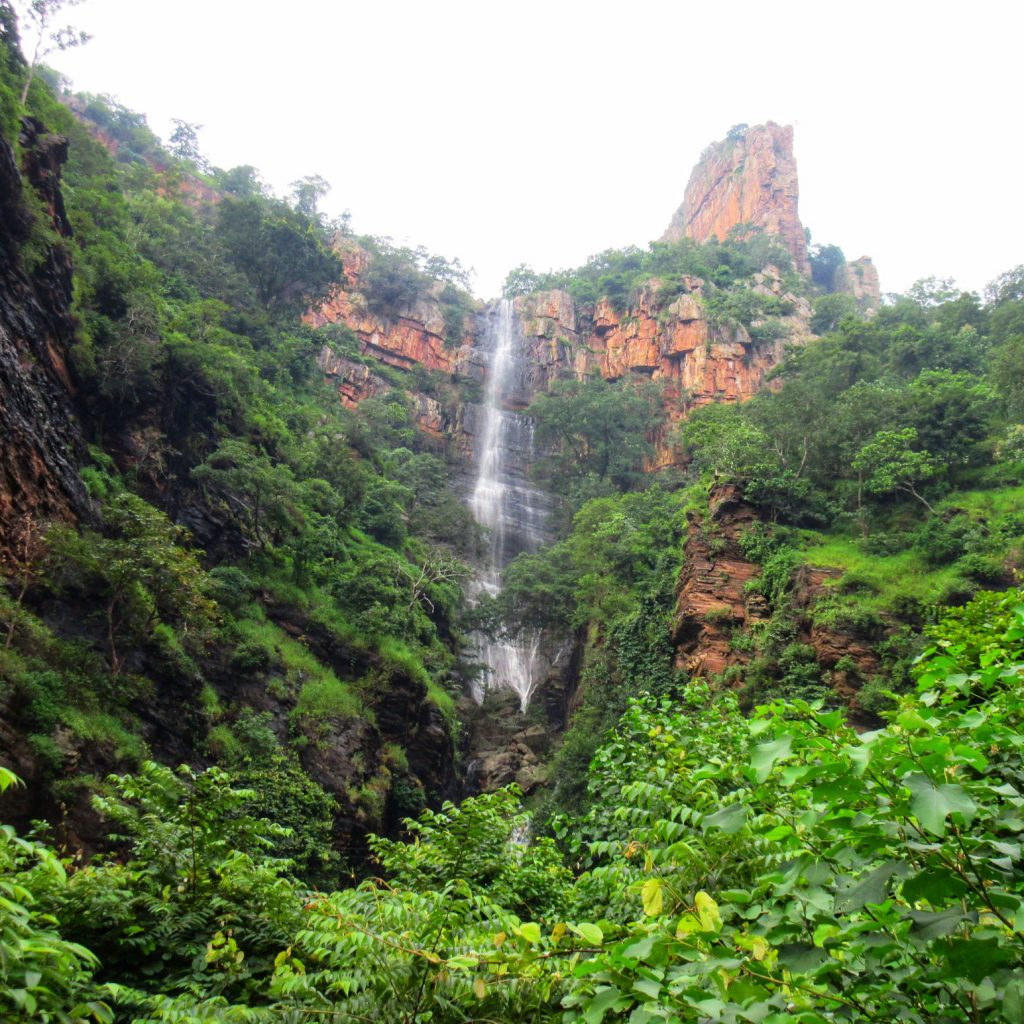
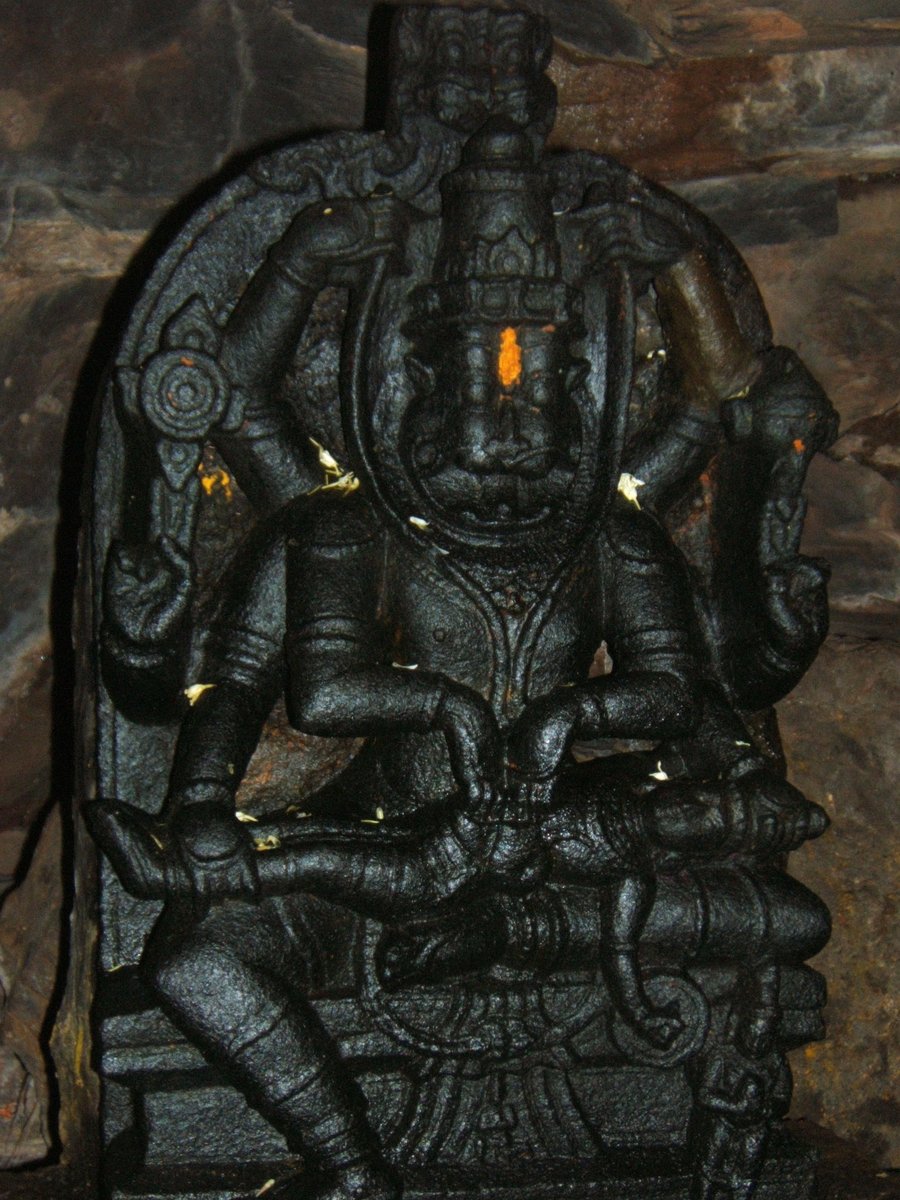
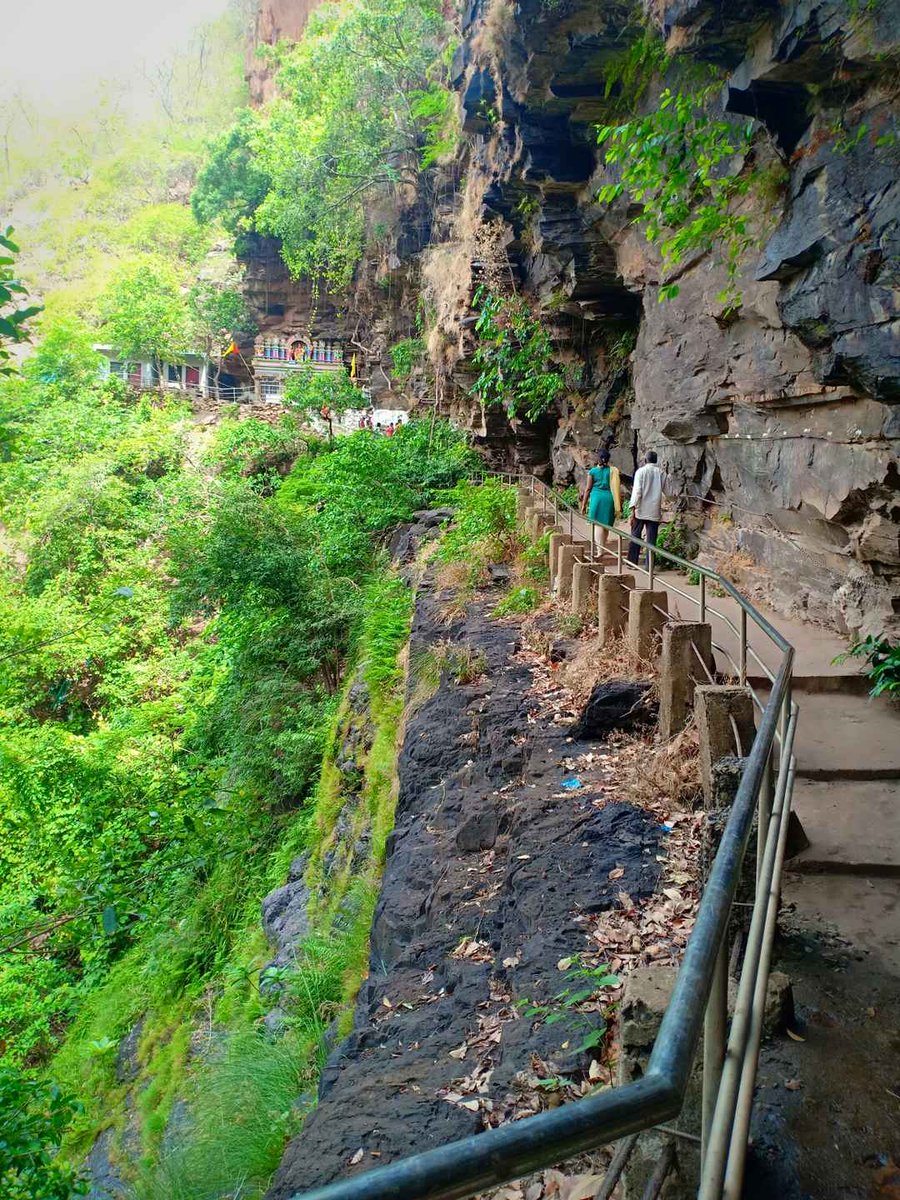
Ahobilam, nestled in the Nallamala forests of Nandyal Dist., #AndhraPradesh, is the sacred place where Lord Narasimha manifested. Home to the 9 #Narasimha temples, divided between Upper Ahobilam & Lower Ahobilam, it is one of India’s most spiritual & breathtaking treks.🛕
1/2🧵
2
4
11
215
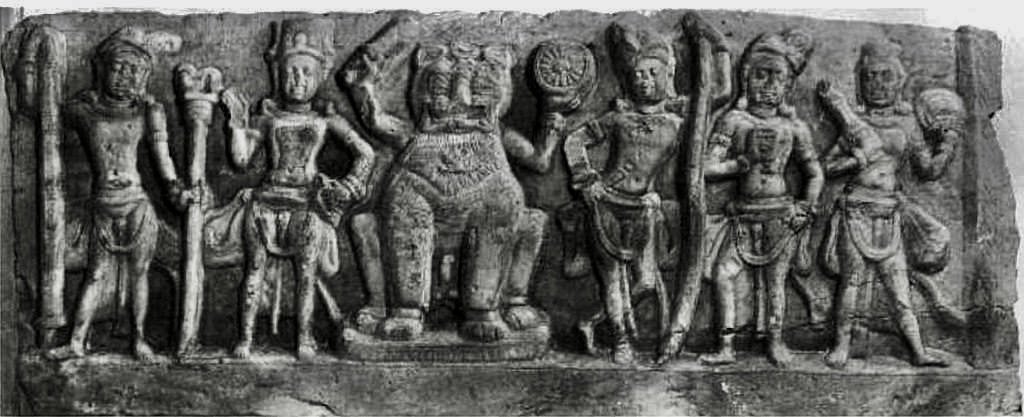
The oldest known depiction of #Narasimha comes from the 3rd century CE Kondamotu relief in Guntur, #AndhraPradesh. The panel depicts Narasimha seated majestically, holding a gada & chakra.
2/2🧵
7
126