
Nihilista positivo (¿absurdo?, lo sé)
Joined August 2007
- Tweets 4,011
- Following 782
- Followers 108
- Likes 45,777
504 Photos and videos

¿Qué es el Nihilismo? youtu.be/WtlX20D6HZs?si=X4wG… a través de @YouTube
1
937
The Strangest Things that Correlate with IQ youtu.be/yk4XMhqwz6E?si=9Xwy… a través de @YouTube
5
Tenchi retweeted

May 3
"Cinco preguntas basadas en el método socrático para mejorar tu pensamiento:
5-¿Qué haría falta para cambiar tu opinión? Sé específico.
4-Si tu mejor razón para creer eso fuera falsa, ¿seguirías creyéndolo? (Eso se llama una “verificación de la razón real”.)
3-¿Cuál es el argumento más fuerte contra tu posición? Refuérzalo al máximo (haz el steelman).
2-Si sintieras que tu creencia es verdadera pero la evidencia estuviera abrumadoramente en contra, ¿seguirías creyéndolo?
1-Si tu creencia fuera falsa, ¿eso te convertiría en una peor persona?"

Five Socratic-based questions to improve your thinking. 1/2
5. What would it take to change your mind? Be specific.
4. If your best reason for believing that was false, would you still believe? (That's called a "real reason check".)
7
117
402
19,113
Tenchi retweeted

Apr 2
社会科学論文の26%、データ再分析で結論変わる 国際研究で検証 - 日本経済新聞 nikkei.com/article/DGXZQOSG3…
1
27
58
89,704
Tenchi retweeted
Jan 25
“158 científicos utilizaron los mismos datos, pero sus opiniones políticas predijeron los resultados”
“Un nuevo análisis de las prácticas científicas sugiere que las opiniones políticas personales de un investigador pueden influir en los resultados que obtiene al analizar datos complejos. El estudio proporciona pruebas de que, cuando los expertos actúan de forma independiente para responder a la misma pregunta utilizando el mismo conjunto de datos, sus conclusiones tienden a alinearse con sus creencias ideológicas preexistentes.”
“Las conclusiones se alineaban sistemáticamente con las opiniones políticas previas de los investigadores:
-Equipos más pro-inmigración tendían a obtener resultados de que la inmigración mejora la cohesión social o el apoyo a bienestar.
-Equipos más anti-inmigración encontraban que daña ese apoyo”.
«Los científicos también son seres humanos. Sus cerebros complejos sopesan simultáneamente todo tipo de factores para decidir cómo pensar y comportarse. No son infalibles ni perfectamente objetivos en su trabajo.»
psypost.org/158-scientists-u…
23
132
354
22,073
Ofrecen 2.000.000$ a quien resuelva este puzzle youtu.be/wNKHufSWV1Q?si=qnaj… a través de @YouTube
129
Tenchi retweeted

3 Dec 2025
Professors are hired and promoted based on research output, not teaching ability;
Courses rush through content instead of ensuring understanding;
Classroom is passive, not participatory;
Learning structure is 19th-century industrial instruction;
Students cram → forget → move on;
Everyone must follow the same learning style despite different backgrounds and cognitive styles;
Textbooks present sterile, finished knowledge (students never learn how ideas were discovered, why the structures exist, how concepts evolved, how theory grows);
Courses pretend fields are isolated;
Students learn procedures instead of understanding (e.g. math = symbol manipulation);
Dissent is punished, both socially and academically;
Top marks go to those who learn to write what professors want to hear;
Success comes from writing papers in the right style and mimicking intellectual fashions;
The entire culture encourages imitation;
Trains students to speak a dialect, not to express ideas (jargon signals “intelligence”);
Genuine intellectual risks are punished;
True debate is all but extinct (discussions are status games, signaling and pre-approved opinions);
Enforces a narrow moral and political lens on everything (thought policing and intellectual monocultures are the norm);
Ratio of administrators to teachers has exploded, shifting priorities to bureaucracy instead of education;
Students are treated as customers;
Grade inflation;
Teaching models do not reflect how people learn;
Lectures scale broadcasting, not learning;
Topics central to modern understanding are barely taught;
Modern developments take 20–30 years to become curricula;
System does not produce independent learners, it produces dependent ones;
Tuition is predatory;
Overproduction of degrees has devalued them;
Universities sell prestige, not skill.
…………but yes, now that AI is here we have a problem. Give me a break.
1 Dec 2025

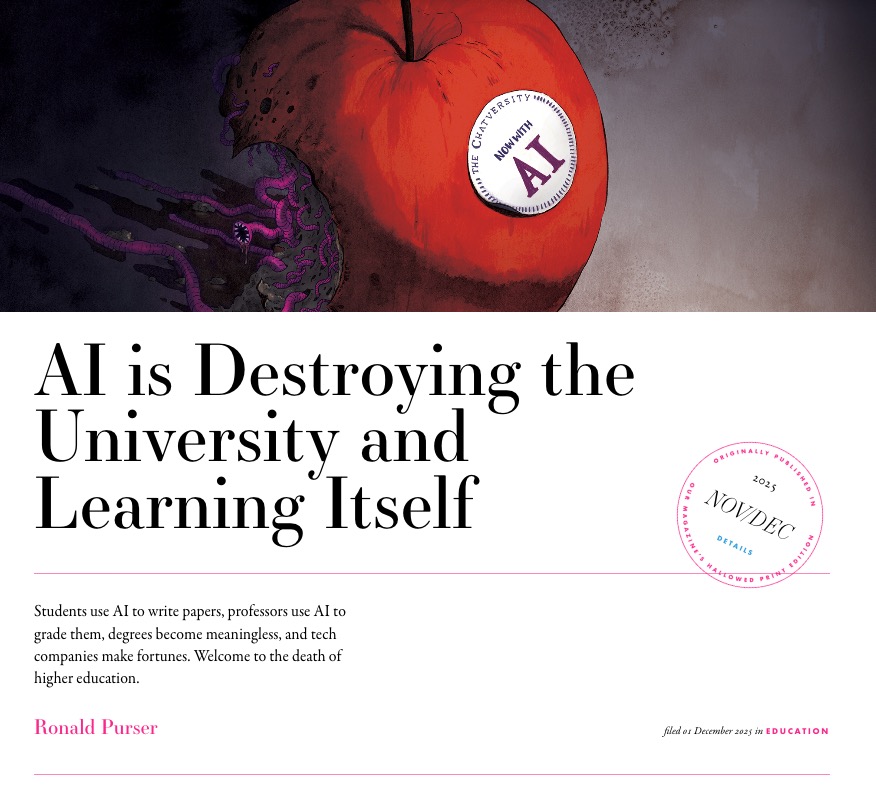
Today in Current Affairs, professor Ron Purser exposes how AI's destruction of the university is even worse than you think, and goes well beyond students cheating with ChatGPT: currentaffairs.org/news/ai-i…
34
193
845
63,984
Desmintiendo las afirmaciones de los influencers científicos sobre el co... youtu.be/-wLp4ja9n8Y?si=sTWK… a través de @YouTube
65
Tenchi retweeted

24 Nov 2025
A number of people are talking about implications of AI to schools. I spoke about some of my thoughts to a school board earlier, some highlights:
1. You will never be able to detect the use of AI in homework. Full stop. All "detectors" of AI imo don't really work, can be defeated in various ways, and are in principle doomed to fail. You have to assume that any work done outside classroom has used AI.
2. Therefore, the majority of grading has to shift to in-class work (instead of at-home assignments), in settings where teachers can physically monitor students. The students remain motivated to learn how to solve problems without AI because they know they will be evaluated without it in class later.
3. We want students to be able to use AI, it is here to stay and it is extremely powerful, but we also don't want students to be naked in the world without it. Using the calculator as an example of a historically disruptive technology, school teaches you how to do all the basic math & arithmetic so that you can in principle do it by hand, even if calculators are pervasive and greatly speed up work in practical settings. In addition, you understand what it's doing for you, so should it give you a wrong answer (e.g. you mistyped "prompt"), you should be able to notice it, gut check it, verify it in some other way, etc. The verification ability is especially important in the case of AI, which is presently a lot more fallible in a great variety of ways compared to calculators.
4. A lot of the evaluation settings remain at teacher's discretion and involve a creative design space of no tools, cheatsheets, open book, provided AI responses, direct internet/AI access, etc.
TLDR the goal is that the students are proficient in the use of AI, but can also exist without it, and imo the only way to get there is to flip classes around and move the majority of testing to in class settings.
23 Nov 2025

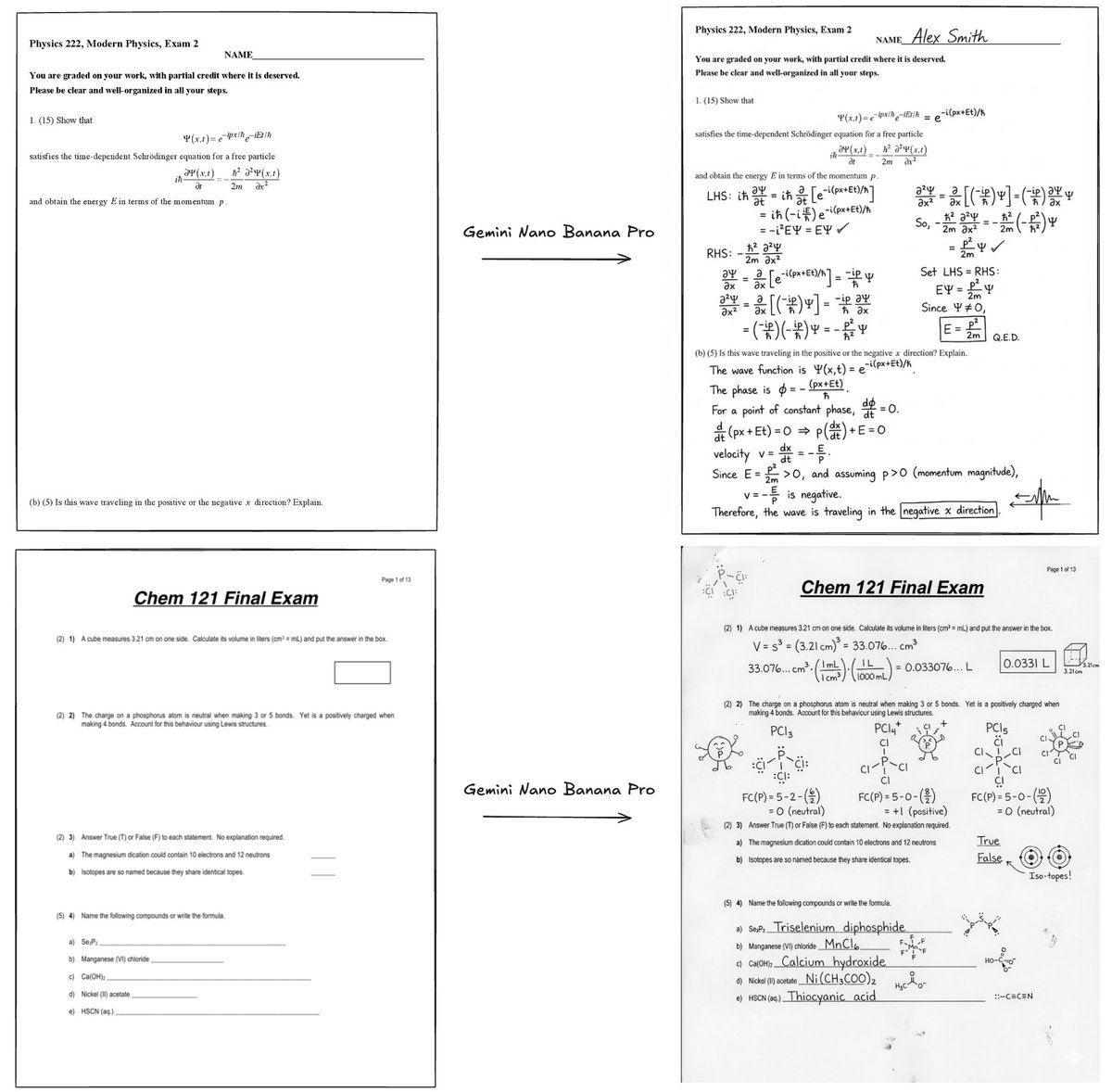
Gemini Nano Banana Pro can solve exam questions *in* the exam page image. With doodles, diagrams, all that.
ChatGPT thinks these solutions are all correct except Se_2P_2 should be "diselenium diphosphide" and a spelling mistake (should be "thiocyanic acid" not "thoicyanic")
:O
929
2,410
16,524
2,531,254
La Generación Z acaba de tumbar dos gobiernos... ¿quién sigue? youtu.be/2DfC3l1pOJ0?si=xQjX… a través de @YouTube
35
Estudiamos a 3691 personas para desmentir mitos sobre el coeficiente int... youtu.be/BxsIyHSoQW8?si=PBuN… a través de @YouTube
43
Tenchi retweeted
13 Oct 2025
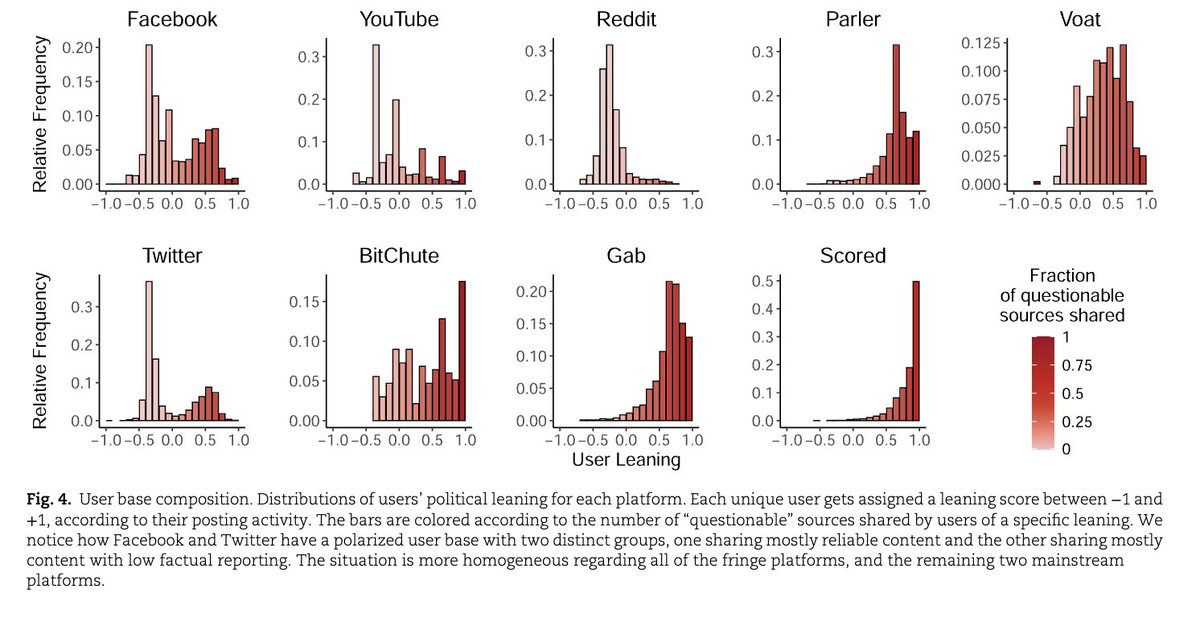
Este artículo encuentra que las redes sociales se están volviendo como "burbujas o cámaras de eco" gigantes. No es ya que haya burbujas o cámaras de eco dentro de cada plataforma sino que toda la plataforma se convierte en una burbuja. Ahora, plataformas enteras, como Gab o Parler, son como burbujas donde casi todo el mundo piensa lo mismo y no se mezcla mucho con otros. Los autores analizaron un gran número de posts (117 millones) de las elecciones presidenciales de EE. UU. en 2020 en nueve plataformas diferentes, incluidas Facebook, Twitter, Reddit, YouTube, y otras más pequeñas como Gab o BitChute.
Lo que encontraron es que hay una división clara: las plataformas principales (como Facebook, Twitter, Reddit, YouTube) tienden a ser más centrales, es decir, están más conectadas con otras redes y comparten noticias más fiables, aunque no siempre. Por otro lado, las plataformas alternativas, como Gab o Parler, son como los márgenes, menos conectadas, y suelen compartir noticias dudosas o extremas, y sus usuarios suelen tener ideas muy similares, mayormente de derecha. Reddit es un caso raro porque, aunque es una plataforma principal, actúa un poco como las alternativas en cuanto a que sus usuarios tienden a pensar parecido (en este caso, más de izquierda) y no se conecta mucho con otras plataformas.
Al final, esto puede ser un problema porque nos estamos encerrando en nuestras propias burbujas y no hablamos tanto con los que piensan diferente, lo que no es bueno para la conversación en internet.
13 Oct 2025

We have gone from "echo chambers" to "echo platforms"
Users migrate between platforms in search of environments better suited to their preferences
A new paper analyzes 117 million posts related to the 2020 US Presidential elections from nine social media platforms—Facebook, Reddit, Twitter, YouTube, BitChute, Gab, Parler, Scored, and Voat.
The findings reveal significant differences among platforms in the reliability of circulated news, and the ideological diversity of their users, highlighting a clear divide between mainstream and alt-tech platforms. The latter occupy a peripheral role, feature a higher prevalence of unreliable content, and exhibit greater ideological uniformity.
4
56
132
16,338
Tenchi retweeted

6 Sep 2025
wow, total BoM cost $660, folks
open-source community >> closed source hyped robots
66
175
1,371
192,463
Tenchi retweeted

9 Aug 2025
The most powerful experiment about the human mind:
The Skinner Box.
It's the true root cause why 97% of people are anxious, depressed and feel trapped in life...
Here's how to tell if you're like this rat and a 5-step protocol to break free today: 🧵
225
1,384
12,858
12,511,296
Tenchi retweeted
27 Jul 2025
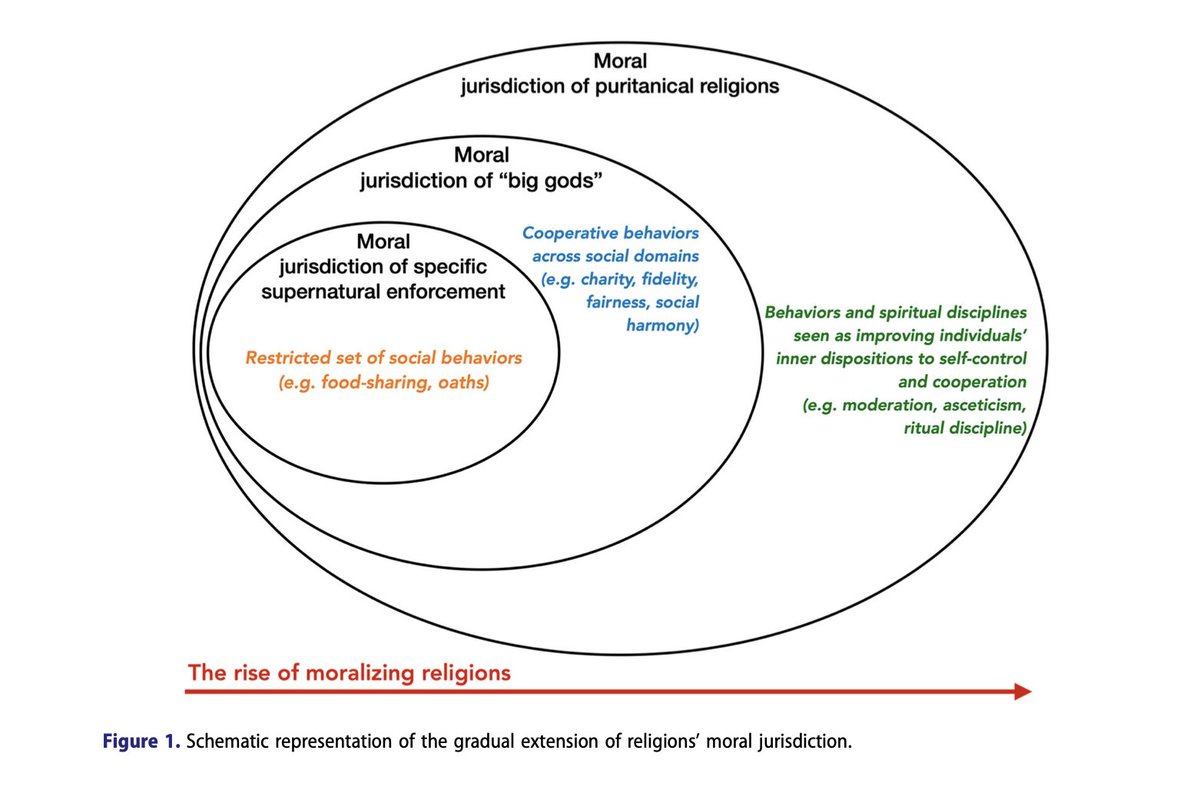
Este artículo explica cómo las religiones humanas han evolucionado hacia un enfoque cada vez más moralizante, es decir, más preocupadas por regular la moralidad de los creyentes. Los autores identifican tres etapas principales en este proceso, que reflejan un aumento gradual en la "moralización" de las creencias religiosas, desde sanciones sobrenaturales específicas hasta religiones puritanas centradas en la autodisciplina. Resumo estas tres etapas con sus características principales:
1. Castigo sobrenatural específico (Specific supernatural enforcement)
En esta primera etapa, típica de sociedades a pequeña escala (como cazadores-recolectores), las creencias religiosas se centran en espíritus o fuerzas sobrenaturales que castigan un rango limitado de comportamientos inmorales, como la tacañería o el incumplimiento de promesas (por ejemplo, romper juramentos). Estos espíritus no son necesariamente "dioses grandes" ni están profundamente preocupados por la moralidad general, sino que actúan en contextos específicos, a menudo relacionados con evitar desgracias (enfermedades, mala suerte). La religión en este punto está más enfocada en gestionar problemas prácticos (como la supervivencia) que en promover cooperación a gran escala.
Ejemplo: En las sociedades pequeñas, un espíritu ancestral podría castigar a alguien por no compartir comida, pero no se interesa por otros aspectos de la moralidad humana.
2. Religiones con "dioses grandes" o fuerzas moralizantes (Moralizing "big gods")
En esta etapa, las religiones evolucionan hacia creencias en entidades sobrenaturales (dioses o fuerzas como el karma) que tienen una preocupación más amplia por la moralidad humana. Estos "dioses grandes" son poderosos, a menudo controlan el cosmos, y castigan o recompensan una gama más amplia de comportamientos, como el robo, la infidelidad o la deshonestidad. Su autoridad moral es más general y pueden intervenir en la vida terrenal o en el más allá (por ejemplo, con castigos después de la muerte). Esta etapa coincide con sociedades más complejas, donde la cooperación entre desconocidos se vuelve más importante.
Ejemplo: En la Grecia arcaica, Zeus empieza a ser visto como un dios que promueve la justicia y castiga a quienes cometen actos inmorales, más allá de ofensas específicas contra los dioses.
3. Religiones puritanas o disciplinarias (Puritanical religions)
Esta etapa, la más avanzada en términos de moralización, se encuentra en las grandes religiones mundiales (como el cristianismo, el islam, el hinduismo, el budismo o el confucianismo). Estas religiones no solo castigan comportamientos inmorales, sino que buscan transformar profundamente la psicología de los individuos para hacerlos más virtuosos. Introducen técnicas de autocontrol, como el ayuno, la meditación o la oración regular, para dominar impulsos "pecaminosos" (como la gula, la lujuria o la envidia) y fomentar la autodisciplina. Además, amplían la moralización a aspectos privados de la vida, como pensamientos o hábitos personales, que podrían indirectamente afectar la cooperación social.
Ejemplo: En el cristianismo, los rituales de confesión y la condena de los "siete pecados capitales" buscan moldear el carácter de los creyentes, promoviendo una vida de moderación y virtud.
O sea, que las religiones habrían pasado de castigos sobrenaturales puntuales a sistemas complejos que no solo controlan el comportamiento externo, sino que transforman la psicología interna para promover cooperación y virtud en sociedades cada vez más grandes y complejas. Cada etapa representa un paso hacia una mayor preocupación por la moralidad, impulsada por cambios sociales, económicos y culturales. Los autores sugieren que entender estas etapas ayuda a aclarar debates sobre por qué las religiones moralizantes surgieron en ciertos momentos (por ejemplo, en sociedades más ricas o complejas) y cómo han influido en la cooperación humana.
hal.science/hal-03947245/doc…
18
152
469
25,350
La FILOSOFÍA de EVIL MORTY | ¿Por qué es Diferente? youtu.be/Q9zyfAJlvM8?si=MoOm… a través de @YouTube
93
🤦♂️
Religión de ChatGPT: El inquietante culto a la IA youtu.be/qfK6H714moc?si=5K0i… a través de @YouTube
73
Tenchi retweeted

16 Jun 2025
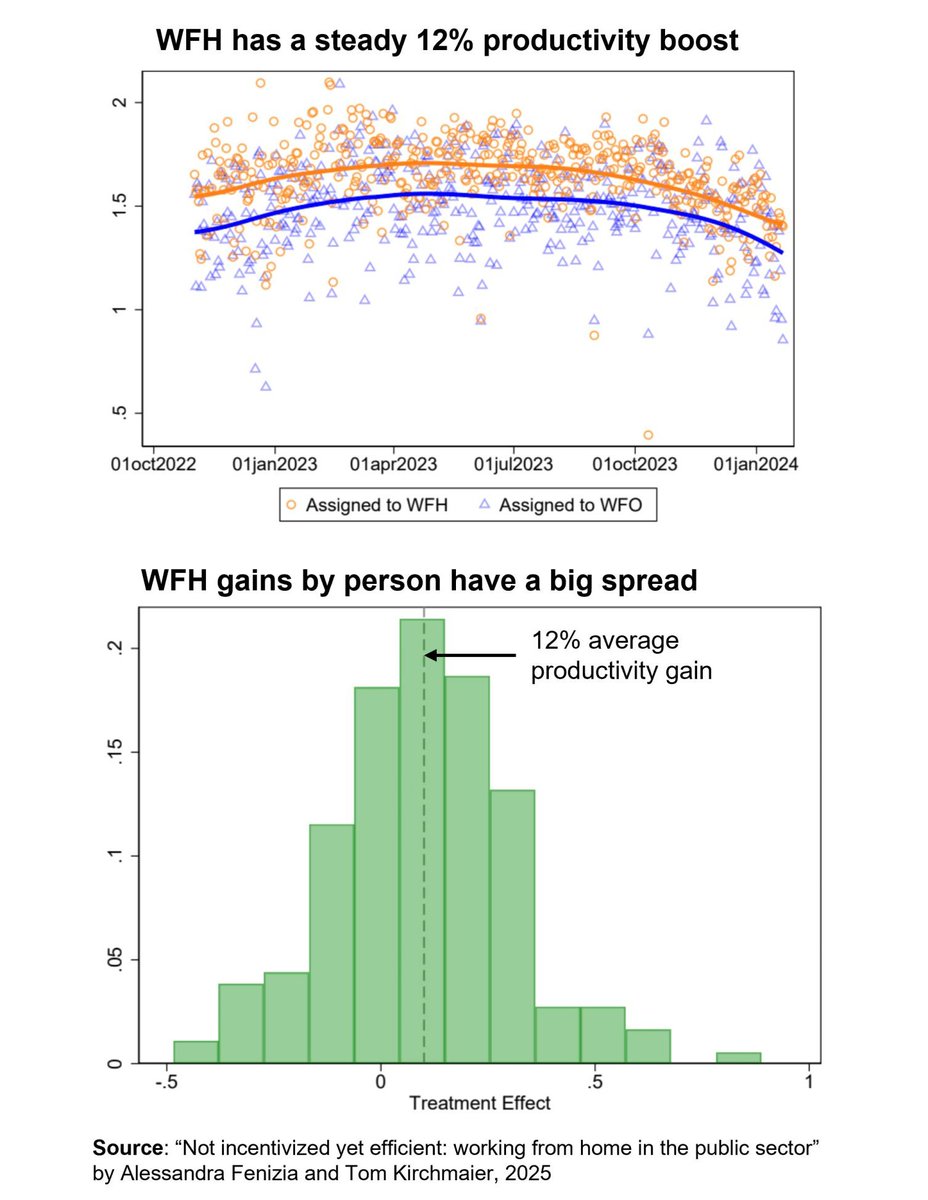
People are more productive when they work from home.
136
605
3,756
255,710
Tenchi retweeted

12 Jun 2025
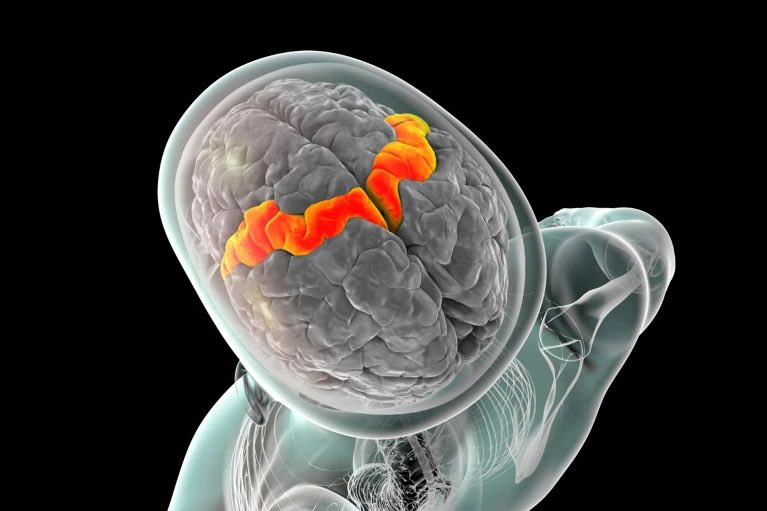
😲 World first: brain implant lets man speak with expression and sing. Device translates thought to speech in real time.
A man with a severe speech disability is able to speak expressively and sing using a brain implant that translates his neural activity into words almost instantly. The device conveys changes of tone when he asks questions, emphasizes the words of his choice and allows him to hum a string of notes in three pitches.
The system — known as a brain–computer interface (BCI) — used artificial intelligence (AI) to decode the participant’s electrical brain activity as he attempted to speak. The device is the first to reproduce not only a person’s intended words but also features of natural speech such as tone, pitch and emphasis, which help to express meaning and emotion.
Study published in Nature, link below.
16
59
356
25,178
EL ARTISTA MÁS POLÉMICO: TOMMY CASH. (la crítica mordaz como arma artíst... youtu.be/ZWpWmuDcyA8?si=0uN2… a través de @YouTube
211