
Biττensor
Joined December 2022
- Tweets 2,574
- Following 247
- Followers 493
- Likes 22,200
136 Photos and videos










τ e N e τ (τ, τ) retweeted

May 10
That's interesting that you say that
May 6

🚨NEW: Blackrock CEO Larry Fink says surging demand for computing power could soon create an entirely new asset class centered around buying and selling compute futures.
2
16
94
9,929


$100k account on @VantaTrading and a dream
1
1
2
147
τ e N e τ (τ, τ) retweeted
It's obvious that the majority stake goes to Bittensor $TAO.
May 5

JUST IN: a16z raises $2.2 billion crypto fund to invest in projects linking crypto with AI & traditional finance.
1
6
143
τ e N e τ (τ, τ) retweeted
1
1
2
45
τ e N e τ (τ, τ) retweeted

May 4
Fun fact: when I started trading in 2024, I lost $200 on a misclick, which was about 90% of my balance.
But then a random big whale actually refunded me most of it.
2 years later, that whale is now retired, and I’m at $1.2M PnL.
Without that refund, I probably would’ve quit the site.
Funny how things can go. Still so grateful to him
polymarket.com/@car?r=cartes…
59
14
325
29,478
τ e N e τ (τ, τ) retweeted
AIxCrypto Announces Strategic Collaboration Framework with @chutes_ai to Support AI Agent Infrastructure Scaling prn.to/4vU05Zc
1
2
58
In 2025, the prop firm industry generated an estimated $2–$4B annually in evaluation fee revenue.
While the industry earns billions, many traders are denied payouts on the basis of arbitrary rules.
This is due to misaligned incentives. The more traders lose, the more revenue prop firms generate from evaluation fees.
We built Vanta (SN8) to solve this by putting the prop firm model onchain and making everything verifiable.
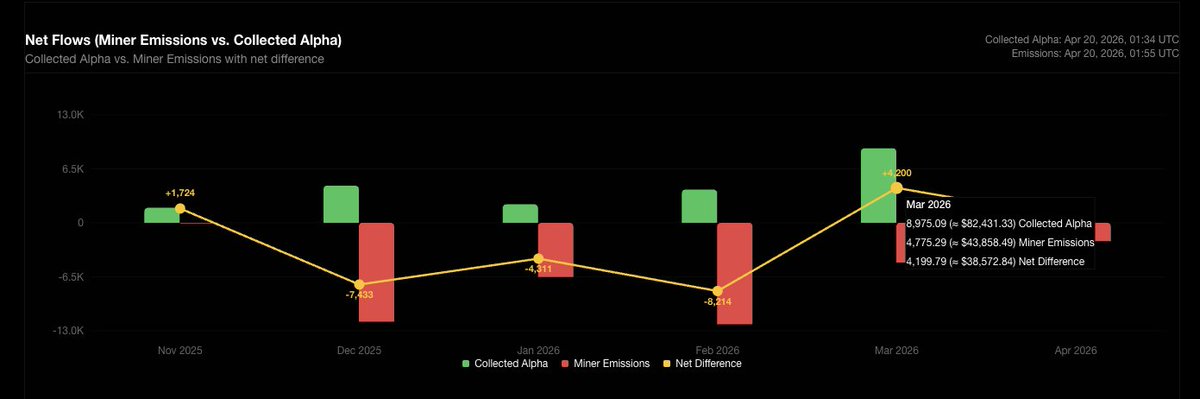
Here's our March 2026 numbers:
> We collected $80k in fees.
> We paid out $30k to traders.
> We finished the month with $50k in net profit.
We proved that a prop firm can be profitable while paying 100% profit split to traders.
> Stop paying for prop firm accounts with hidden rules.
> Start trading onchain where the payouts are verifiable.
> Keep every dollar you earn.
This is the Vanta difference.
1
3
18
847
τ e N e τ (τ, τ) retweeted

Apr 29
He may be old, but he still loves to dig a hole on the beach.. 🥺
221
1,511
32,246
413,366
τ e N e τ (τ, τ) retweeted

This street puppy couldn’t stop smiling after being rescued from the streets
57
539
11,228
104,010
Our goal has always been to make capital as accessible as the underlying exchange.
If you’re already trading on @HyperliquidX, there’s no reason a fee should stand between you and your first funded account.
We’re lowering that barrier.
Apr 24

$0 upfront.
Full access.
A new tier is loading ↻
Keep your eyes on the Hyperscaled website.
2
3
19
2,179
τ e N e τ (τ, τ) retweeted

Apr 22
1/ I woke up very stoked today.
in 3 years of building on Bittensor, i have never been this excited about a subnet launch.
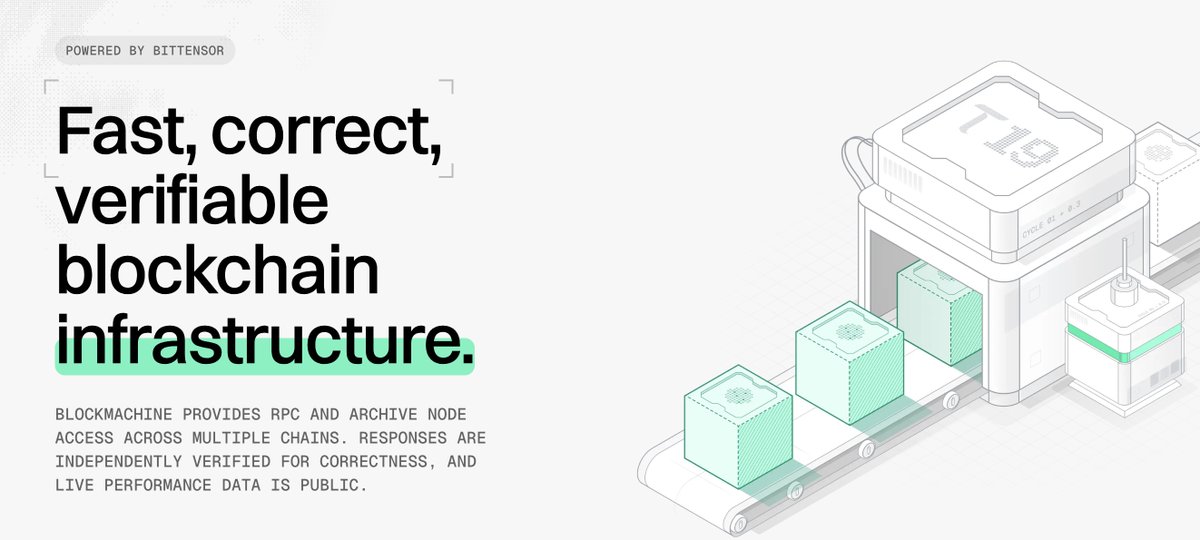
today blockmachine goes live.
first ever Bittensor subnet to launch on mainnet with a real product, real customers and real revenue from day one.
🧵 how it works and why it matters 👇
24
57
386
32,514
τ e N e τ (τ, τ) retweeted

Apr 20
The fact that everyone all over the world can participate in an incentivised challenge in a permisionless way is a beautiful concept
Post agi we need resource coordination layers, having markets to decide where the resources go to is a beautiful concept
I’m not saying Bittensor is perfect, its far from it. But the core fundamentals of is for me is the only thing in crypto i 100% believe in
22
58
358
24,196
This take sounds pretty confident, but it’s collapsing early network bootstrapping into “ponzi” without actually looking at where real demand is already showing up.
The claim that there is no PMF or utility just doesn’t hold up anymore. There are many examples from a variety of subnets tackling different markets, but I'll focus on SN8 as a clear example of product-market fit.
Traders are paying to participate, competing for capital, and getting paid out based on performance. This isn’t theoretical usage or “AI theatre,” it’s a direct replacement for centralized prop firms with transparent rules, onchain payouts, and no hidden constraints. The first of its kind built on bittensor. As we’re gathering valuable signal from traders, we’re maintaining profitability, and those margins only increase through live trading via our hedge fund and SaaS platform we’ve already built that is CFTC & SEC compliant, where revenue flows back to the subnet on top of trader demand.
What’s actually happening here is bigger than just prop trading. SN8 has built in agentic trading infrastructure. With our SDK, anyone can build or deploy trading agents directly into the network, plug into capital, and compete based on performance. That alone changes the structure of the industry, but the second-order effect is even more important.
We’re watching the commoditization of trading infrastructure and strategies in real time. Execution, data, and even alpha generation are becoming modular and composable. As that happens, strategies get more performant and more complex, while the barrier to entry drops. Individual quants are no longer constrained by capital access or institutional infrastructure. They can spin up what are effectively mini quant firms, powered by agents, competing on equal footing in the network. That’s not something legacy prop firms or even hedge funds can replicate.
The market this goes after is massive. Prop trading plus adjacent hedge fund capital is easily a $100B opportunity, and it’s still dominated by opaque, centralized players with hidden rules and payout friction. SN8 is positioned to disrupt that by making capital access permissionless, performance verifiable, and payouts transparent. The key ingredients of running a bittensor subnet ARE the differentiators here. This only works because of Bittensor’s incentive layer coordinating capital, performance, and rewards in a decentralized way. You can’t replicate that without reintroducing trust and gatekeeping.
The inflation argument also misses how networks actually get built. Early-stage networks always subsidize supply before demand catches up. Bitcoin had zero revenue and 100% issuance at one point. The real question isn’t whether emissions exceed revenue today, it’s whether there are credible paths where real demand replaces those subsidies over time. SN8 is already showing that path, where users pay to access capital, the network collects alpha through participation and fees, and that value starts to cycle back into the system.
The point about no value flowing back to token holders is also outdated. Burn is already trackable onchain, including on subnets like Chutes, and tokens are increasingly being locked as collateral and tied directly to usage. This isn’t equity-style cash flow, but it is real value accrual through supply reduction and demand for utility.
For example, all of this is fully trackable with SN8. Growth KPIs, burn events, revenue, and net flows are transparently visible on our dashboard: vantanetwork.io/tokenomics
More broadly, this critique treats Bittensor like it should already look like a fully mature system. That’s just not how these networks evolve. Some subnets will fail, others will find real traction. The only thing that matters is whether real demand is emerging anywhere in the system.
And once you actually look at that, the “ponzi” framing falls apart pretty quickly. We're still early, and Justin's post is a frail argument.
$TAO
Apr 18

Bittensor is a crypto-ponzi; unsustainable nonsense!
TAO has no utility or PMF; it is all driven by token inflation:
$328M worth of new tokens are printed annually, yet only $15M in annual revenue was generated!
Subsidies from holders pay for subnets; economically bankrupt: 🧵
Token inflation is used to give people the illusion of low cost. As the truth is that creating AI models in a "decentralized" way is far more expensive. While offering no additional utility or benefits
It is all theatre; subnets are not created as competitive products. They are created simply to exist & extract as much value out of TAO investors as possible
Ponzinomics & Extraction:
For example, the Pine Analytics data proved that unsubsidized inference on the Chutes subnet would cost up to 3.5x as much as centralized competitors such as Deepseek or TogetherAI!
What makes it all so much worse is that token holders pay for these subnets through inflation. Yet, none of the revenue actually flows back to the token holders. The subnet owners get to keep 100% of the revenue! On top of 18% of emissions, just because...
That is a borderline scam, extremely profitable for subnet operators, but setting up token investors for extreme loss when the system inevitably collapses
As TAO has a 21M supply limit, which might be appealing to ignorant token investors. But also implies that the network will entirely collapse, as it is fundamentally unsustainable, just like BTC
Inefficient & Expensive:
The problems run even deeper than that, as is the case with most DePin projects that rely on subsidies rather than real-world value accrual:
The reason why decentralized computing is so inefficient is that it requires verification & replication. Within a trustless environment, we cannot simply trust the work done by individual nodes. Instead, the work must be replicated multiple times over, introducing extreme inefficiencies. This is not so bad for simple TX's, but for serious, large computing tasks, this becomes a deal breaker
This is why 41% of the rewards go to "validators" whose sole task is to verify that the work being done is legitimate!
This only adds to the massive inefficiency already introduced by latency within a distributed network. There are several good reasons why AIs are trained in massive data centers with cards equipped with extremely low-latency, high-bandwidth connections. Something TAO is unable to directly compete with in technical & economic terms
Product Theatre:
In some cases, it is worth paying a premium for decentralization; one example of this is decentralized storage
However, this is not the case for the training of AI's, as this is a one-off cost usually carried out by a centralized for-profit organization. As running the AI itself is much cheaper & even achievable by individuals on a single consumer-grade machine...
So, what is the incentive for this centralized organization to use a more expensive method? That does not even result in a commercially viable product, due to the lack of scale... The answer is that there is no legitimate incentive!
As there are only so many people they can fool into such a ponzinomic scheme, creating an upper bound on the size these subnets can grow to, which is nowhere near what large centralized AI companies can achieve today
Conclusion:
There is no future in such a bankrupt design!
It is all theatre to extract as much as possible; subnets are not created as competitive products. They are created simply to exist & to extract as much value out of token investors as possible!
There is much I did not cover in this critique, including "decentralization theatre", modularity, bad governance, perverse incentives & terrible UX. This critique was purely economic, which is bad enough to reject TAO on that basis alone!
As value investors, we have to avoid such nonsense. It is not only dangerous from an investment perspective, but it also harms the industry as a whole. The more we prop up nonsense like this, the more difficult it will be for outsiders to take our industry seriously
That is why we must speak out, as we care about crypto's ultimate goals. Financial freedom, censorship resistance, privacy & more
Reject the nonsense, as the numbers & facts speak for themselves. Crypto already presents us with such a beautiful dream for the future; let's not spoil our opportunity by wasting our energy on half-baked ideas like TAO
Crypto deserves better than that. So, help us spread this message far & wide. As the truth will set us free! 🔥
7
19
90
11,513
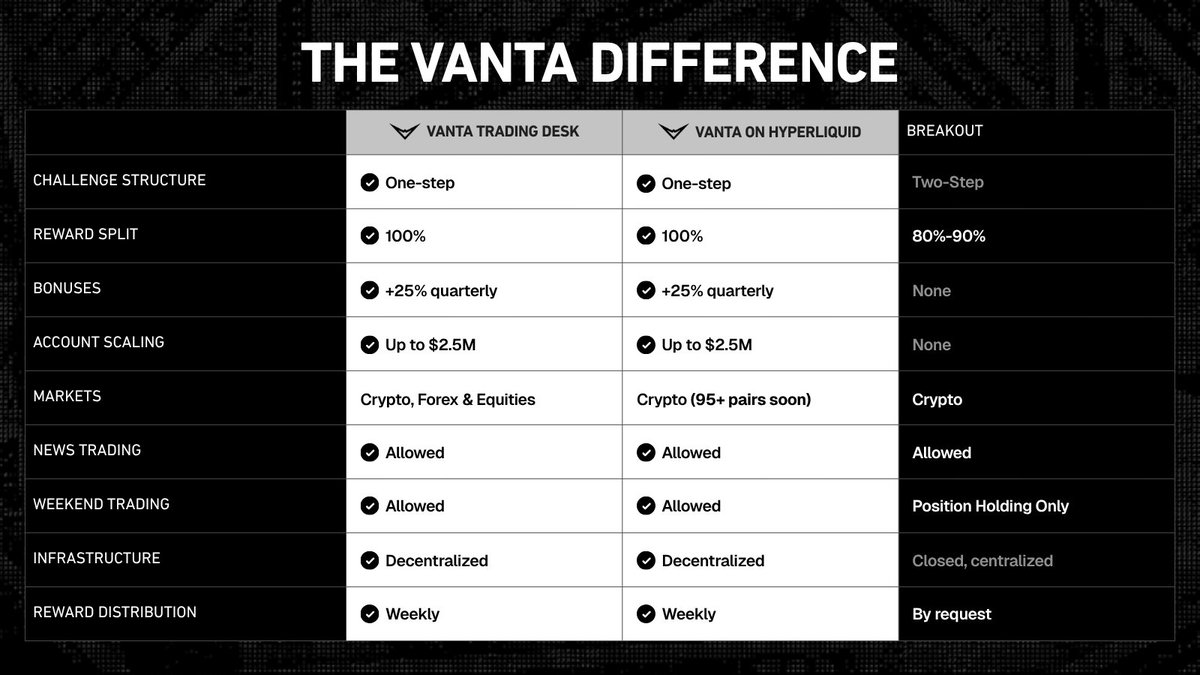
what we're building isnt another prop firm, its a paradigm shift for the industry.
the only path forward is open-sourcing, having onchain payouts, and A-booking your traders.
Apr 17
Trade the Vanta way.
→ T̶w̶o̶-̶s̶t̶e̶p̶ One-step evaluation
→ 8̶0̶-̶9̶0̶%̶ 100% profit split
→ N̶o̶ s̶c̶a̶l̶i̶n̶g̶ Up to $2.5M
→ A̶r̶b̶i̶t̶r̶a̶r̶y̶ r̶u̶l̶e̶s̶ Onchain transparency
5
29
1,582

I have recovered all my losses on sn3 by investing in @VantaTrading and @0x_Markets, thanks man @0xarrash

3
4
12
695
τ e N e τ (τ, τ) retweeted
Apr 17
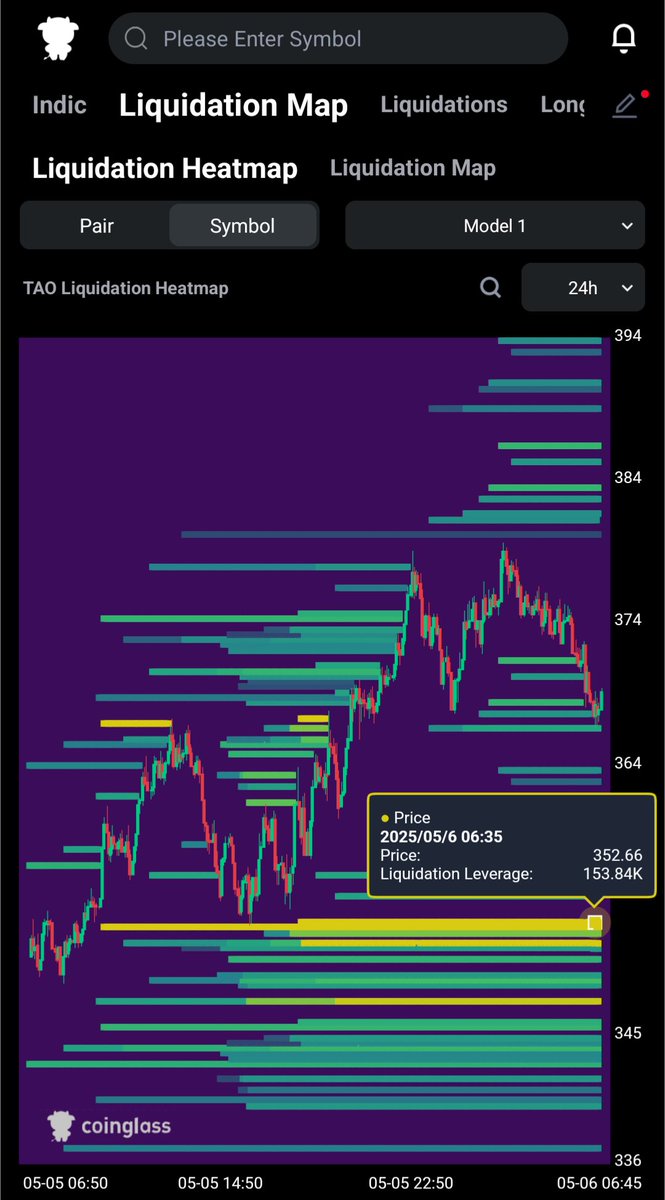
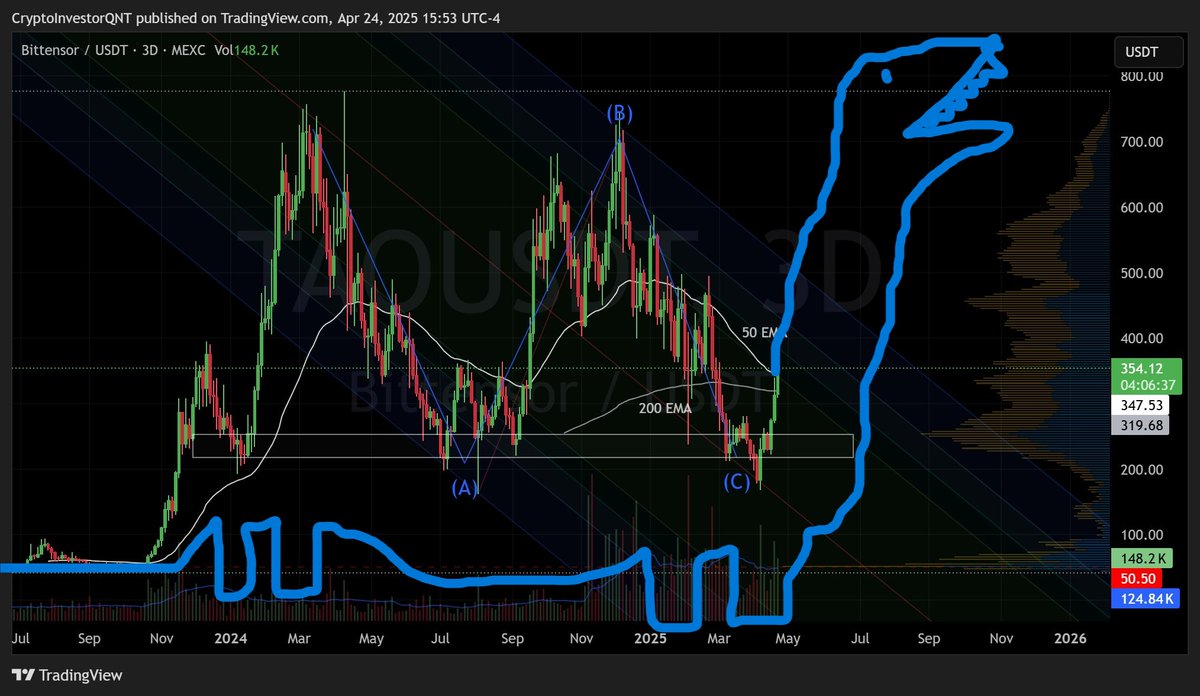
I bought a lot more $tao here
Its oversold the issues are solvable
73
71
920
62,987
τ e N e τ (τ, τ) retweeted

Apr 16
Jensen: "It would be extremely foolish to create two ecosystems. The open source ecosystem running on a foreign tech stack, and a closed ecosystem running on the American tech stack."
The case for keeping open models on the American stack. He gets it 👏💯
2
5
168
We've onboarded over 5,500 traders on Vanta with virtually zero marketing push. ~5–10 signups/day, organically.
It is clear that traders are tired of legacy prop firms' predatory practices and are choosing Vanta to trade on their terms.
Our existing users love Vanta. Now it's time the rest of the market finds out.
Starting today, we're turning on our marketing engine.
The overall scaling efforts include ads, affiliate placements across major sites, and organic marketing.
The short-term goal is to reach ~1,000 traders/month, generating ~$400K in monthly revenue, with ~60% of that flowing to the network. By EOY, we aim to scale to 2-3k traders/month.
Follow along @VantaTrading and join our newly launched TG channel:
t.me/VantaTG
4
15
98
9,249