
A Fully-Onchain Bittensor-native stablecoin designed to support 1:1 redeemability of US Dollar | DAO powered by subnet SN113.
Joined August 2025
- Tweets 594
- Following 6
- Followers 477
- Likes 280
156 Photos and videos
Pinned Tweet

Mar 31
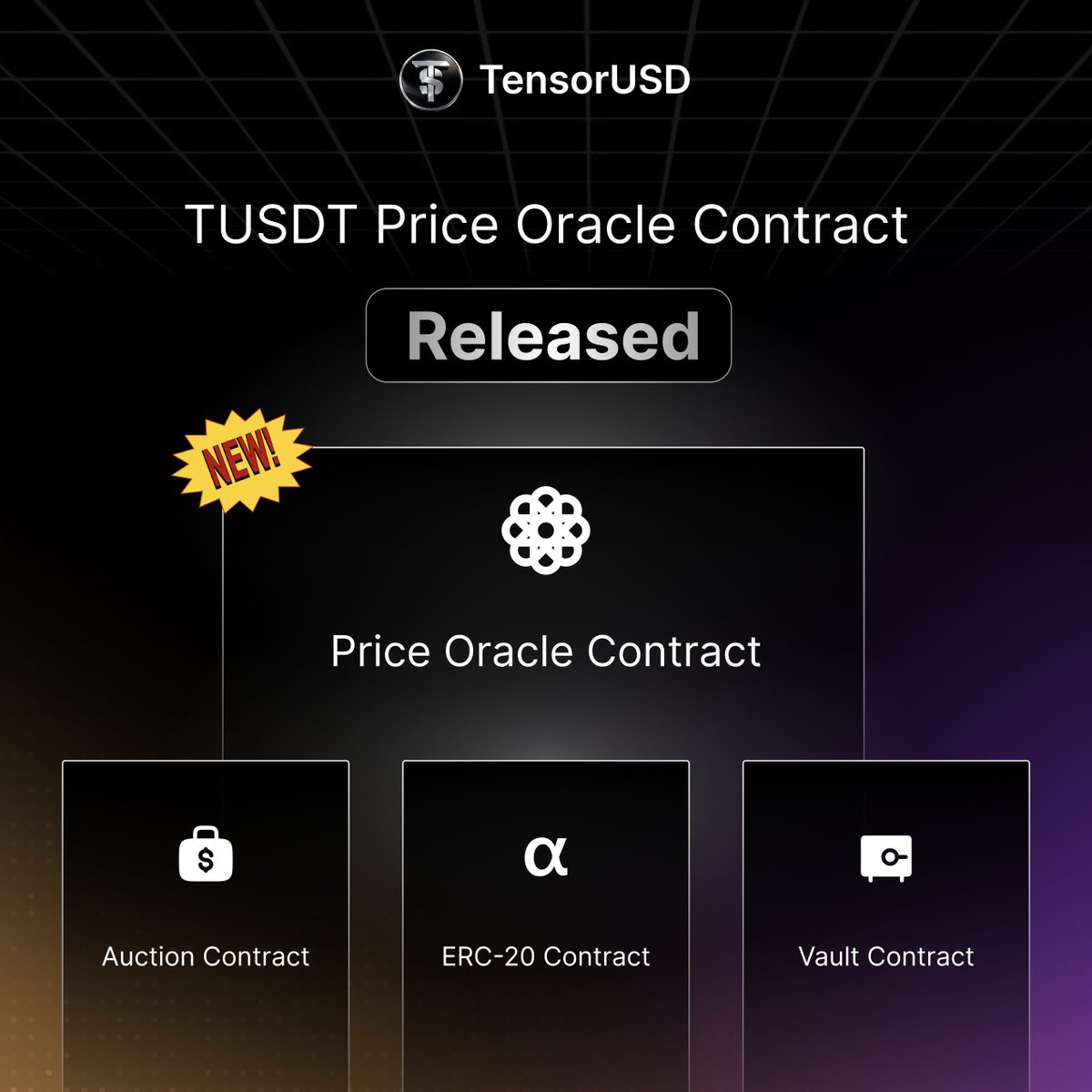
@TensorUSD #TUSDT Price Oracle Contract is now live
Delivering reliable pricing across:
• Vaults
• Auctions
• ERC-20 operations
🔗 GitHub: github.com/TensorUSD/TUSDT-S…
Contracts Progress:
With this release, our core architecture continues to take shape. The following 4 components have now been successfully deployed:
• TUSDT Auction Contract
• TUSDT ERC-20 Contract
• TUSDT Vault Contract
• TUSDT Price Oracle Contract
What Next?: Mainnet launch after audits reports (announcement soon)
Major Upgrade Incoming:
Native TUSDT minting via 128 subnet alpha tokens along with full tusdt-cli version.
🙏 Thanks to the community @TensorUSD moving closer to a fully decentralized onchain native stablecoin for the @bittensor.
#TensorUSD #TUSDT #Bittensor #TAO #DeFi #Stablecoin #MainnetSoon #opentensor #web3
ALT TensorUSD-contract-update
2
3
34
5,421
Most governance rewards whoever shows up loudest.
Biggest bag, biggest say. Someone who bought yesterday votes with the same weight as someone who held through every hard month.
TensorUSD is built differently.
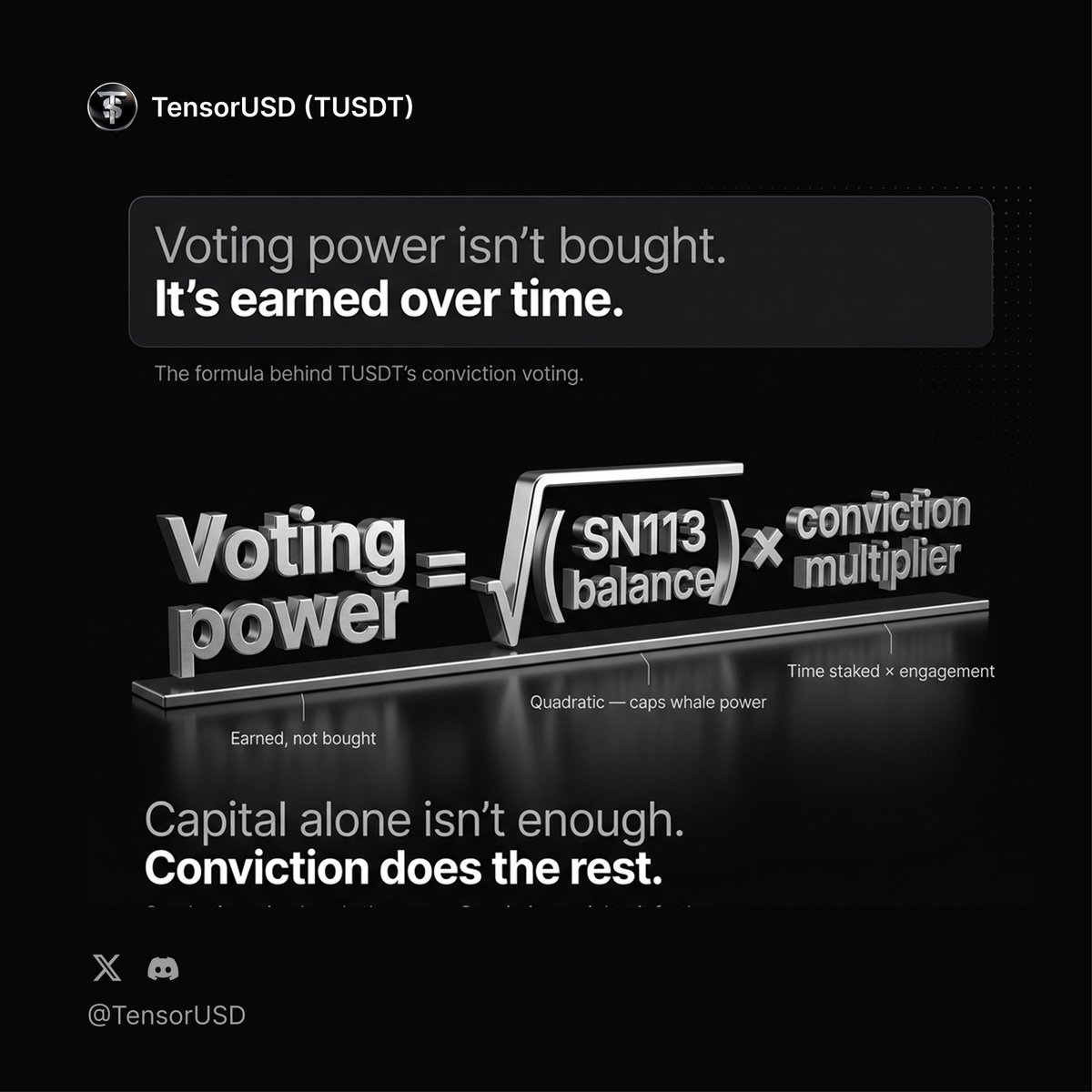
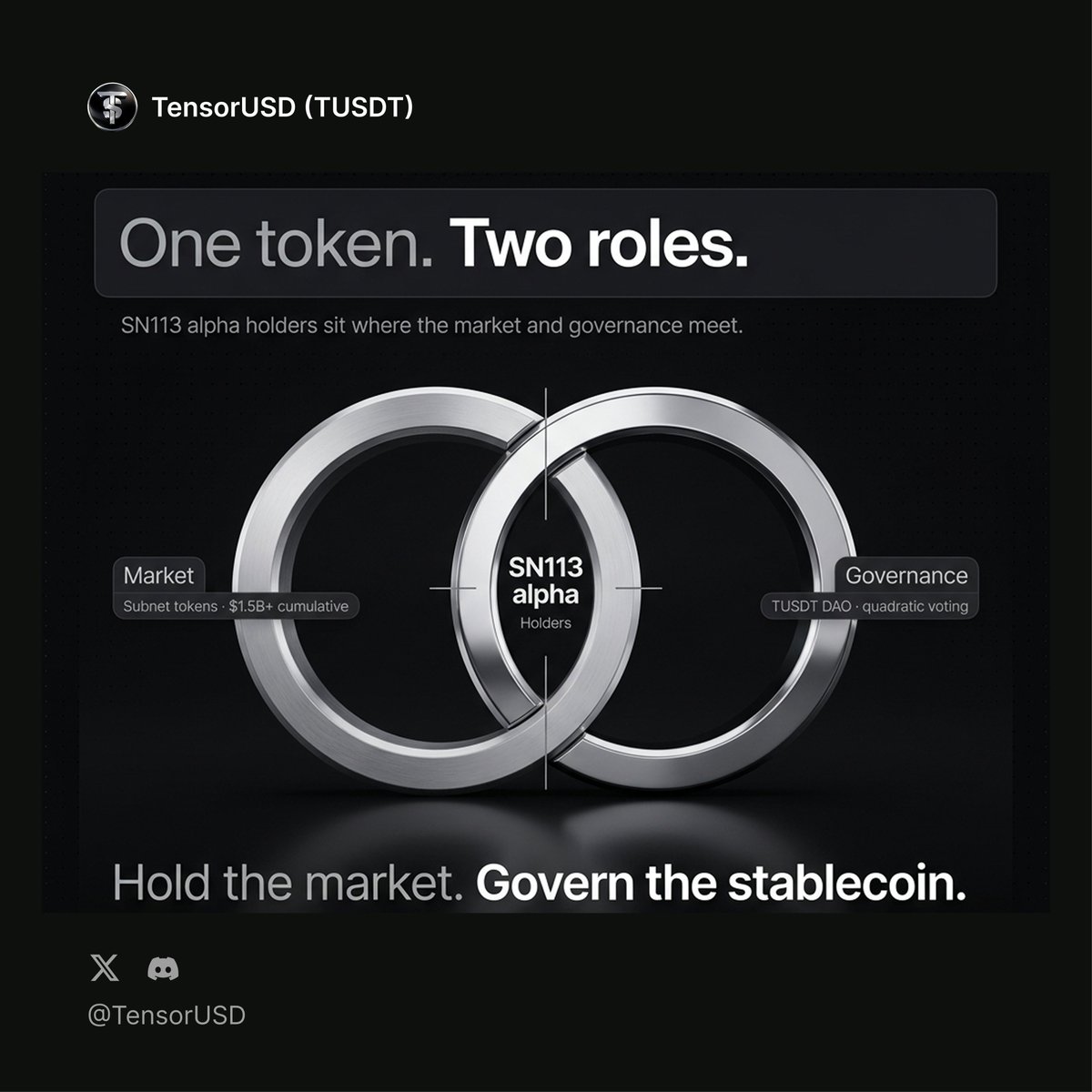
Conviction voting means the longer you hold SN113 alpha and commit your vote, the more it weighs. The curve flattens for whales. It compounds for the committed.
Not the loudest voice. The longest conviction.
Are you holding SN113 alpha long term? 👇
1
2
144
Jun 12
TensorUSD's maintainer is elected by the #SN113 community. Two year terms and a maximum two terms.
Leadership that has to earn its position, not just hold it.
Does elected leadership with term limits feel more accountable than appointed leadership?
2
90
Jun 12
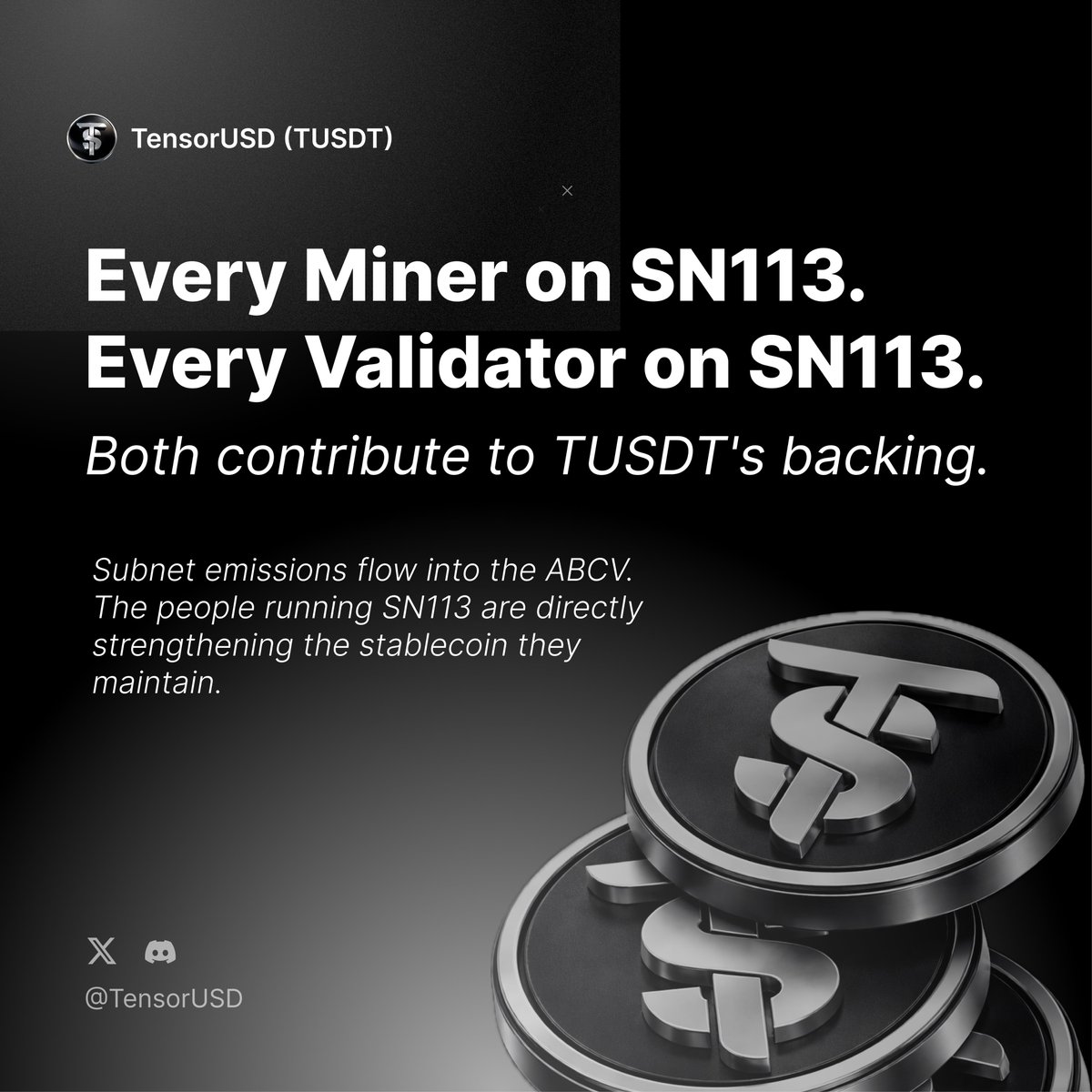
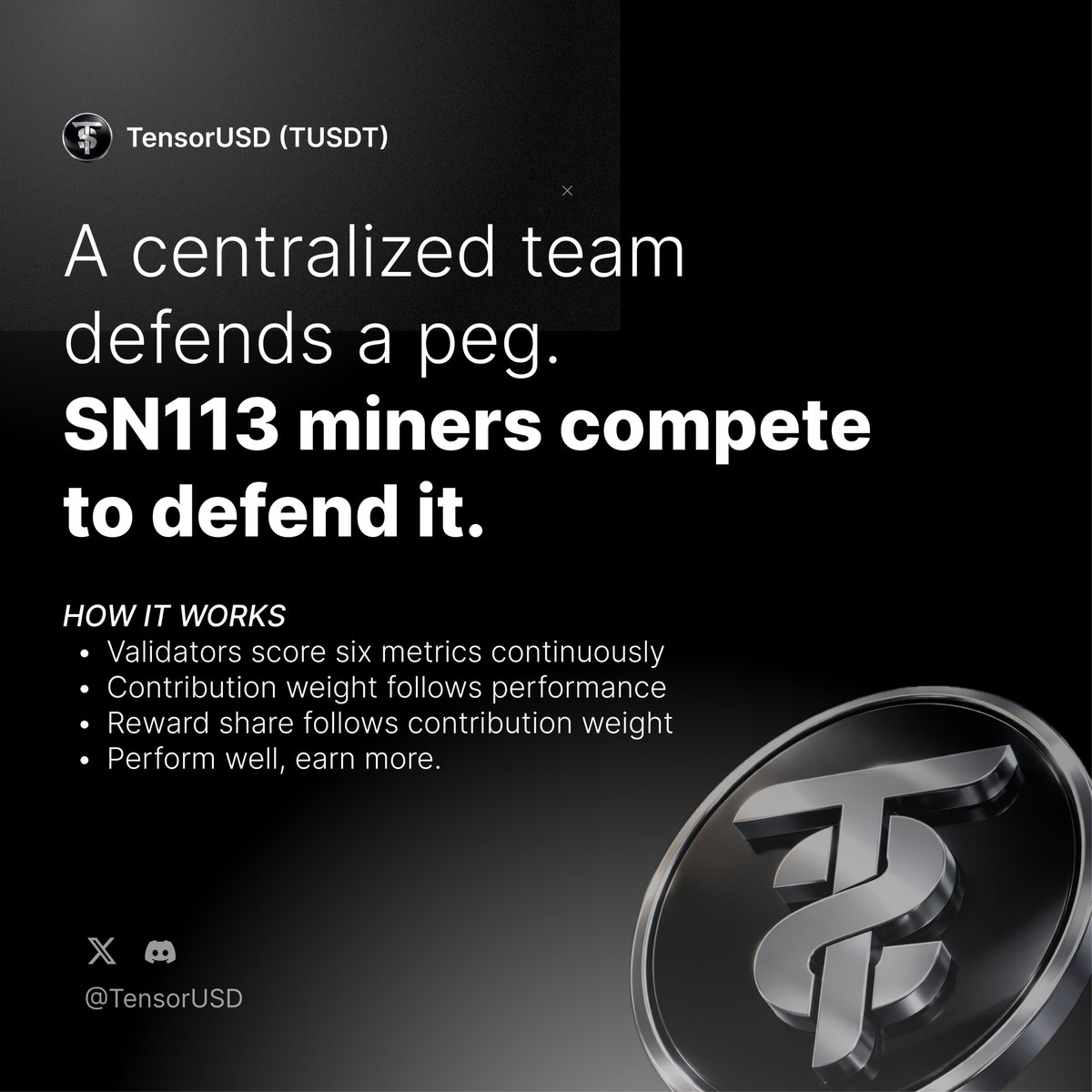
Every miner and validator on #SN113 contributes to $TUSDT's backing.
Not just through their work maintaining the peg, but through the subnet emissions that flow into the ABCV as collateral.
The people running SN113 are directly strengthening the stablecoin they're helping maintain. The incentives run all the way through.
Did you know SN113 participants contribute to TUSDT's collateral? 👇
5
12
163
Jun 12
As TensorUSD transitions to a #DAO, the treasury contract ownership is being permanently renounced.
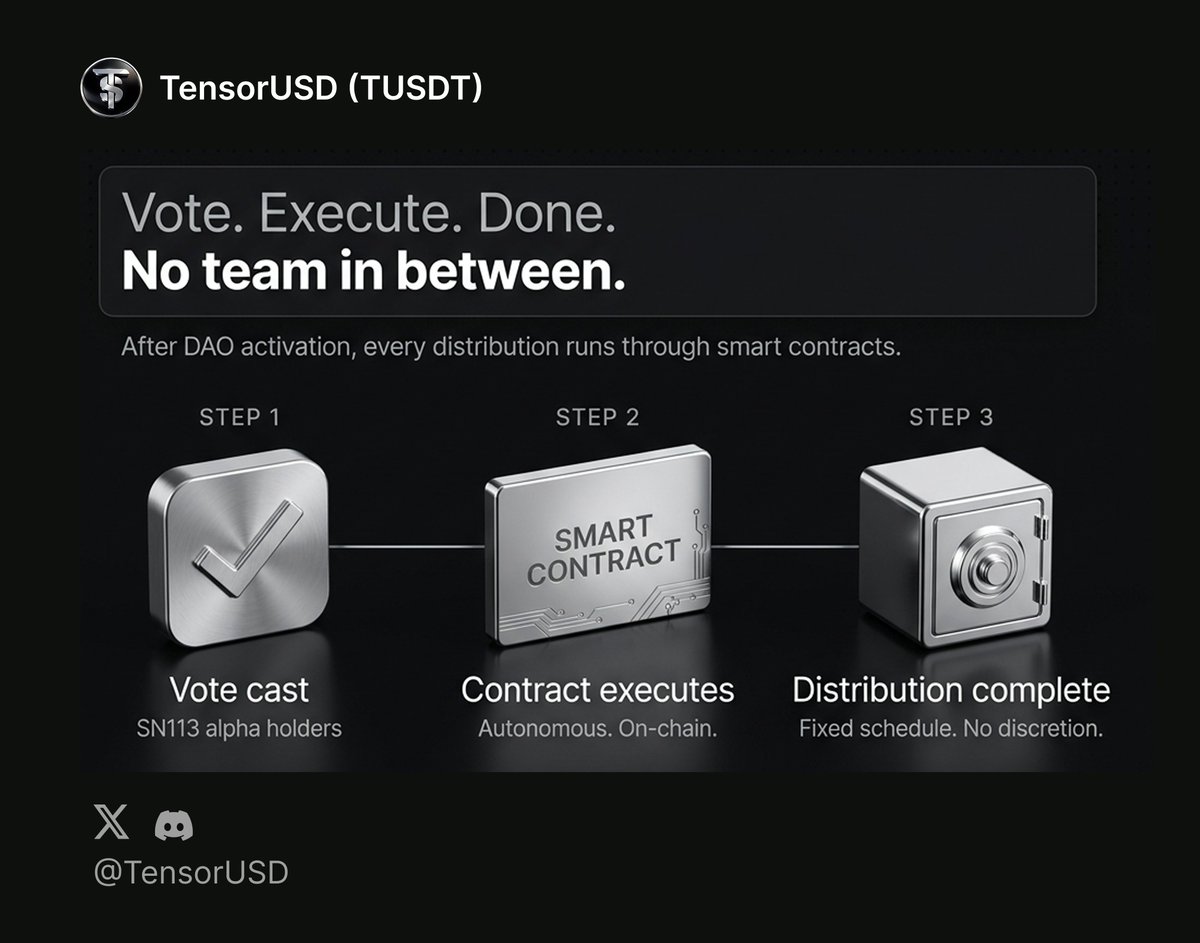
The developer wallet replaced by a burn address. Every single distribution must be approved through a community vote before the smart contract executes it.
Nobody can redirect what the protocol earns.
Once the rules are set, only the rules decide where the money goes.
Did you know TensorUSD's treasury ownership is being permanently renounced? 👇
1
7
95
Jun 12
TensorUSD is built to be the stable monetary layer of the Bittensor ecosystem.
Backed by $TAO, enforced by miners and governed by code.
No bank, custodian or counterparty whose trust you are quietly depending on.
Is this the stablecoin Bittensor needed? 👇
1
5
78
Jun 12
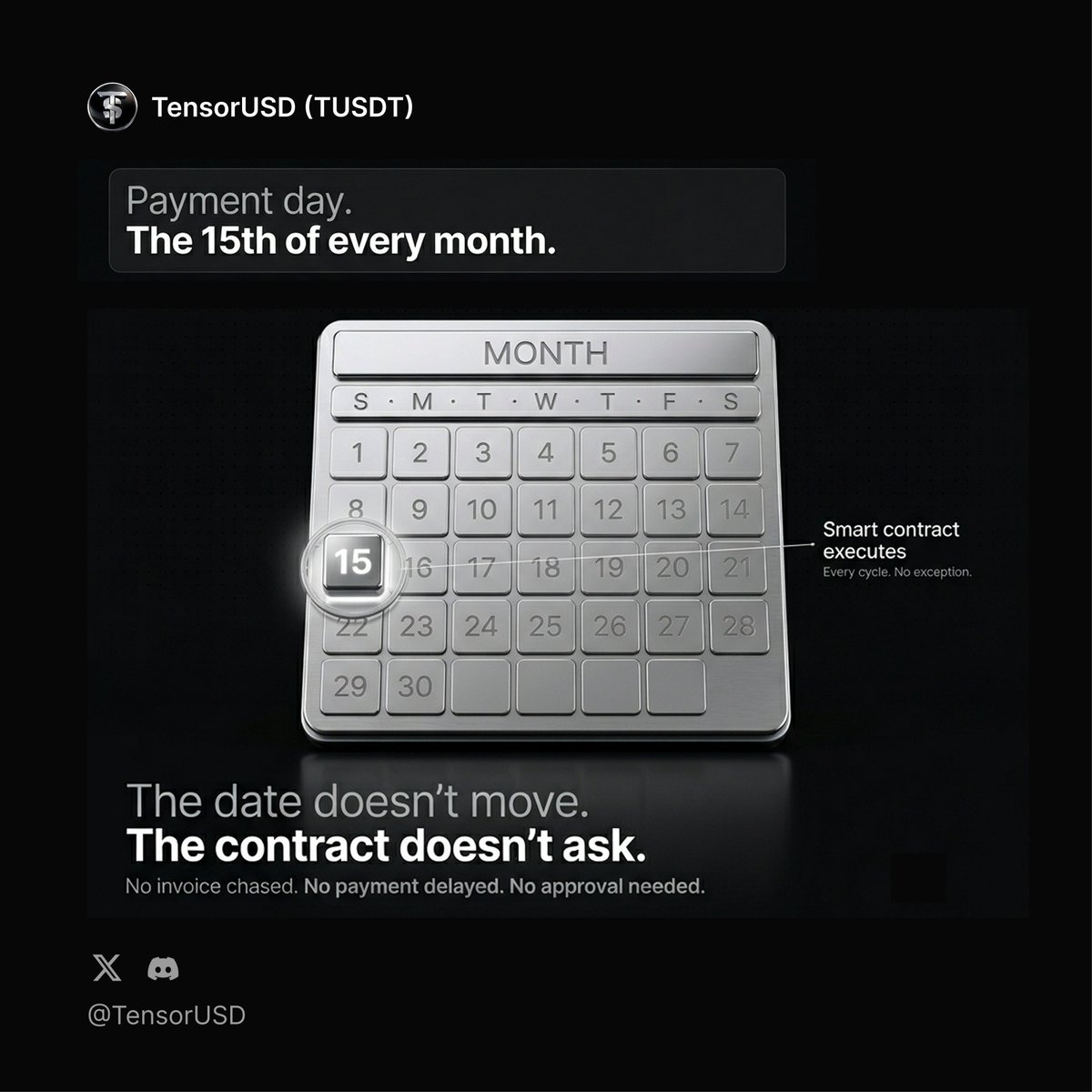
Most payrolls rely on people. In $TUSDT, it relies on code.
The smart contract pays out on the 15th of every month on schedule.
No chased invoices, delayed payments, or last-minute approvals, just pure, automated payouts.
We're refining this automation in testnet now.
Have you ever chased a payment for work you earned? Yes or no 👇
1
3
6
93
Jun 11
Why should anyone have to "approve" the return of your own collateral? 🏛️
With $TUSDT on Bittensor, there is no entity in the middle. Our testnet architecture ensures that when you repay your debt, your $TAO is instantly returned directly from the smart contract.
True financial autonomy is coming. 🤝
5
147
Jun 11
Why limit your own stablecoin supply?
Because we favor discipline over hype. Our testnet features a strict debt ceiling to ensure $TUSDT never grows faster than its collateral foundation can handle.
Sustainable liquidity is coming to Bittensor. ⚡️
5
63
Jun 11
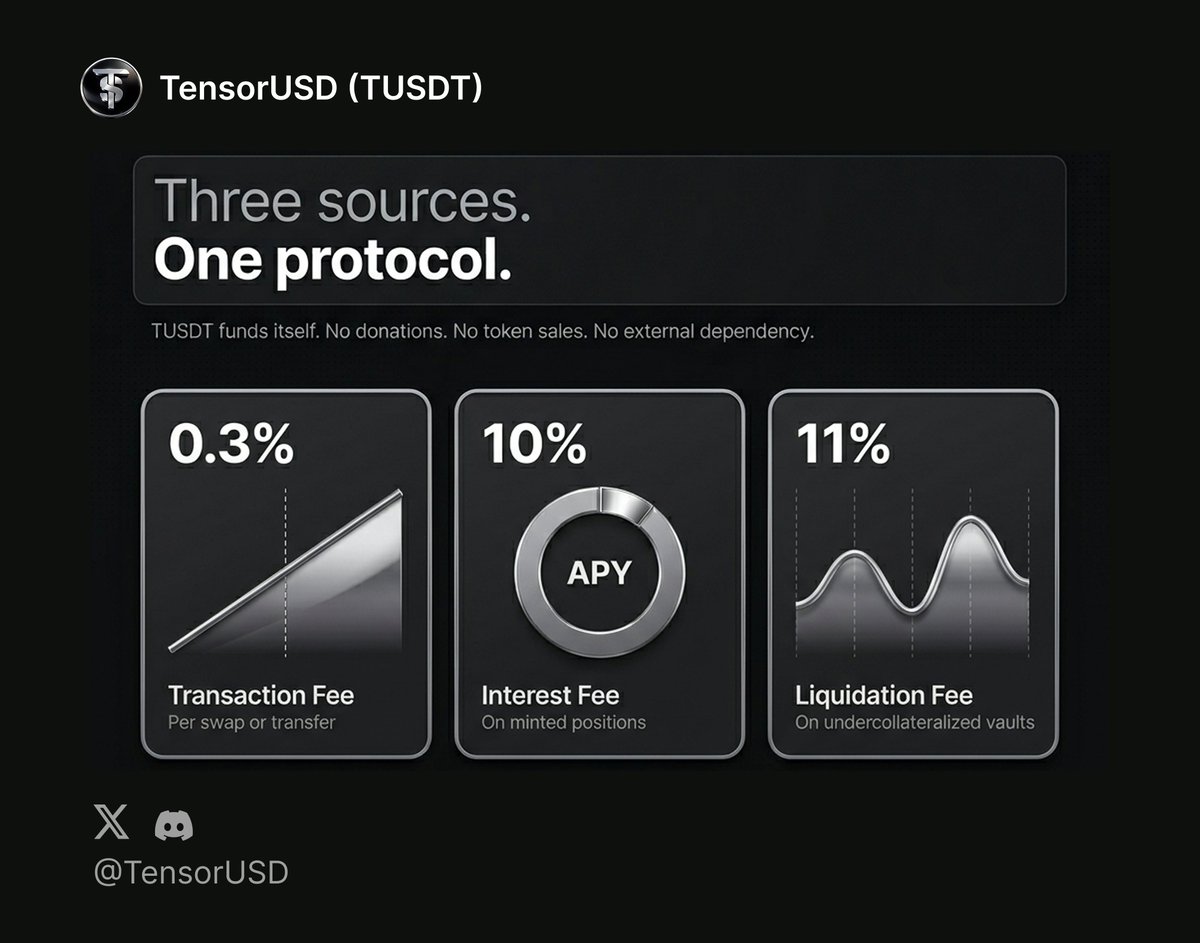
TensorUSD earns from three sources.
10% APY interest fee on minted positions. 11% liquidation fee. 0.3% transaction fee.
No donations, token sales or external dependency. The protocol earns from its own use.
Should every protocol earn from its own use? Yes or no 👇
3
7
89
Jun 11
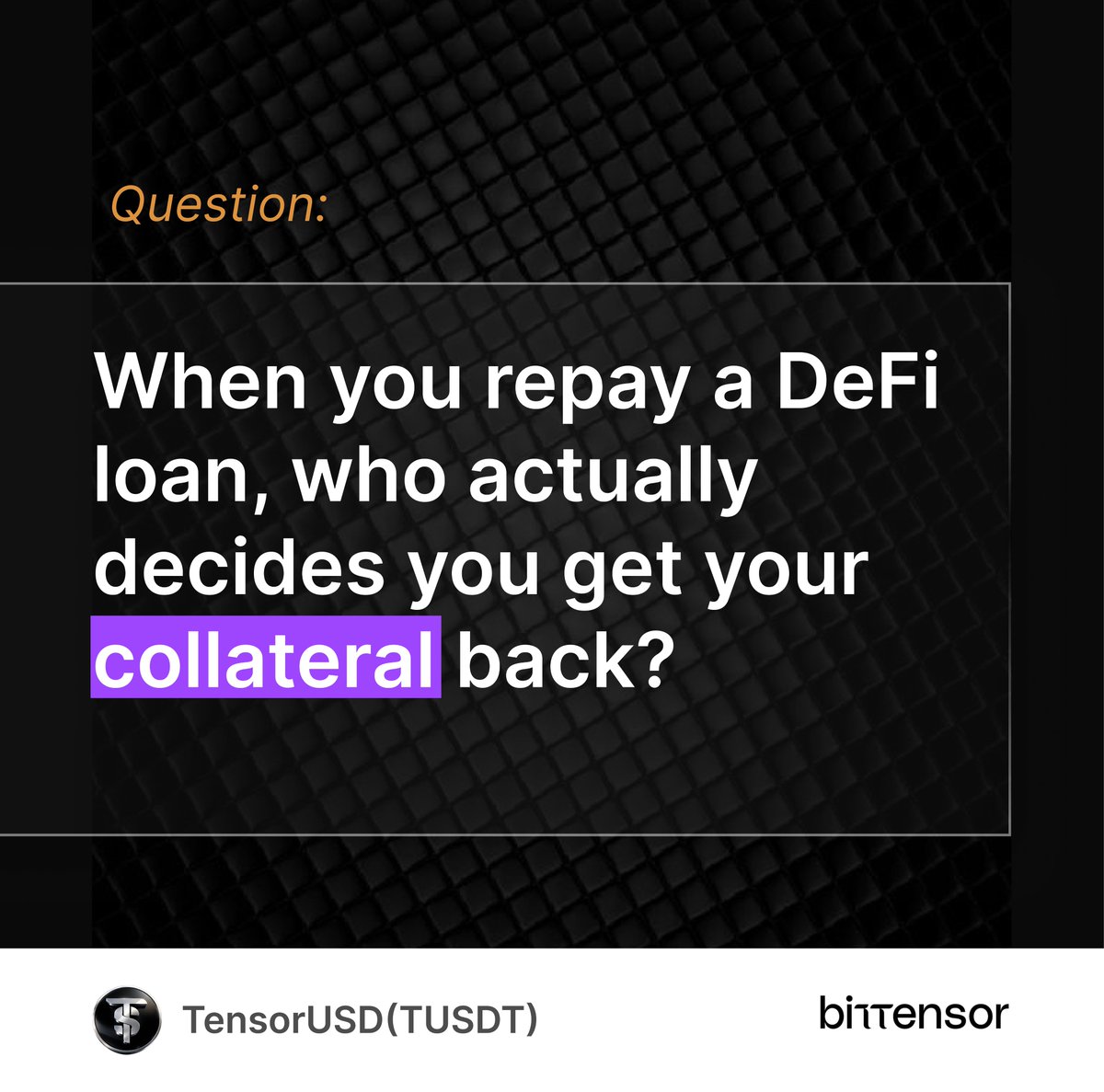
When you repay a DeFi loan, who actually decides you get your collateral back?
Most people understand how to open a vault. Fewer think about what happens when they close it.
In TensorUSD, when you repay your $TUSDT debt the vault closes automatically. The smart contract releases your $TAO. No one has to approve it. No team processes the withdrawal. No entity decides your TAO is ready to be returned.
The math says the debt is zero. The contract closes the vault. The TAO comes back.
That's what no entity involved actually means in practice.
1
6
71
Jun 10
Most protocols keep what they earn.
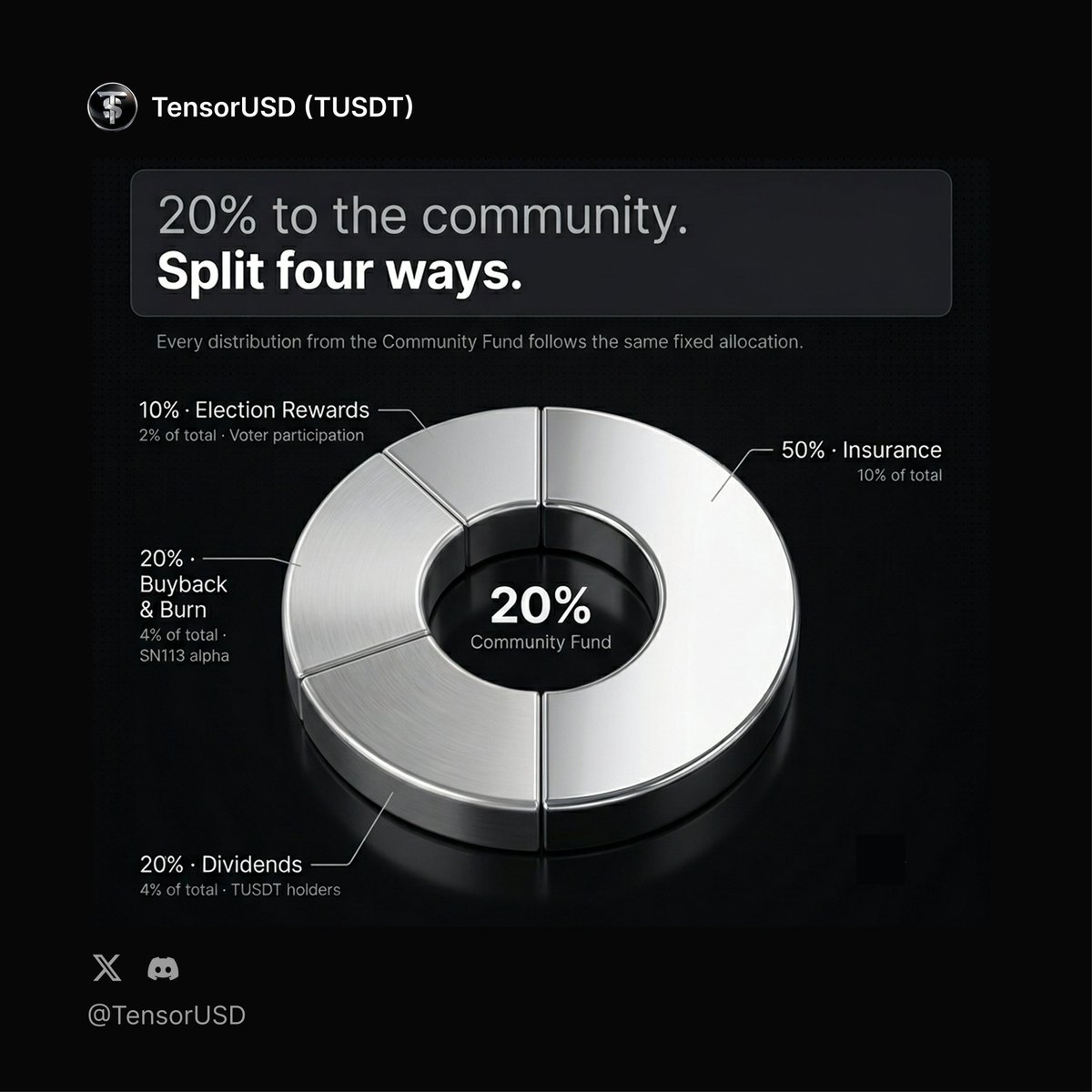
$TUSDT routes 20% of every cycle straight back to the community, automatically.
10% Insurance buffer
4% Dividends to TUSDT holders
4% Buys SN113 alpha and burns it
2% Rewards election participation
Which slice would you optimize? Dividends, buybacks, insurance, or rewards? 👇
4
8
107
Jun 10
Most governance systems treat all votes equally regardless of when the voter arrived.
Someone who bought yesterday has the same weight as someone who held through every difficult period.
That's not alignment. That's just token counting.
1
4
78
Jun 10
This means the people who believed in TensorUSD before it was easy to believe in it, before mainnet, before adoption, before the ecosystem matured have a structurally stronger voice in how it runs.
Early commitment is rewarded. Not just acknowledged.
1
4
45
Jun 10
Conviction voting turns belief into governance power.
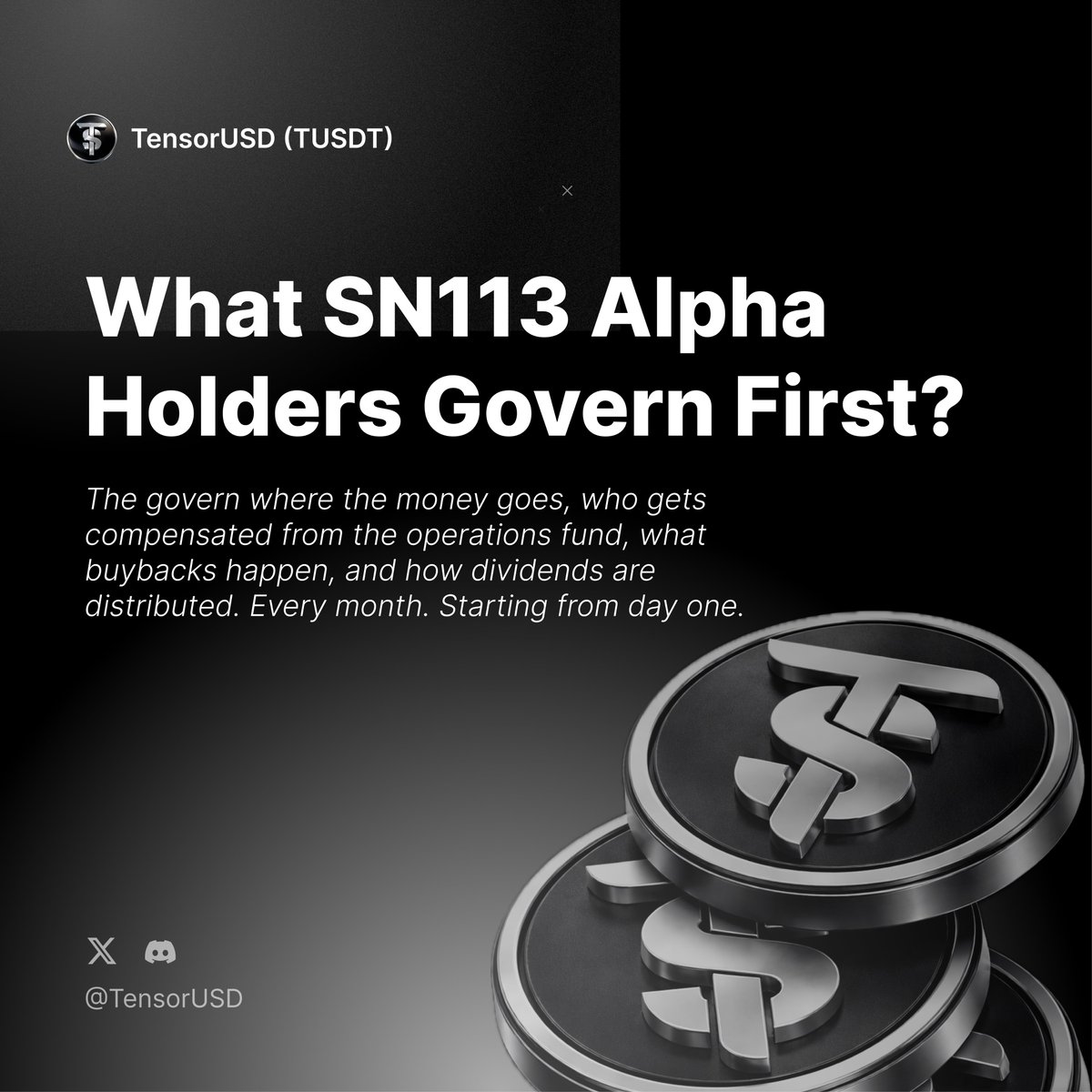
The community members who stayed through the hard part don't just get to say they were there first. They get to shape what comes next with more weight than those who showed up after.
Do you think early commitment should translate into more governance power? 👇
4
30