
I regret nothing • ☦︎ 🏴 🇫🇷 • @NuclearAurora
Joined August 2024
- Tweets 12,502
- Following 635
- Followers 2,809
- Likes 42,621
1,438 Photos and videos








βasile▐┛ retweeted

“White nationalist” critiques of Russia coming from the US are always baffling to me. If one applied US census racial categorization to the Russian Federation, it would be ~95% White, ~4% Asian. Despite being home to millions of members of various indigenous ethnicities (again, the absolute majority of which are considered “white” in the US) with whom we've been sharing our country for many centuries, Russia is more ethnically Russian than England is English. This entire category of discourse is just absolute cope, on par with “Russians don't have running water”.
43
77
1,075
36,162
βasile▐┛ retweeted

“..Раn Еսrореаnism which is promoted by all Intеrnаtiоnаlists and Jսաz. This program is aimed.. at the coalescing of the racially chaotic refuse of mеgаlороlises and a раcifistiс business deal between large and petty traders.” – Аlfrеd Rоsеnbеrg via МОТТ, Vоlumе 1, Сhарter 1 ✙

1
2
9
367
βasile▐┛ retweeted

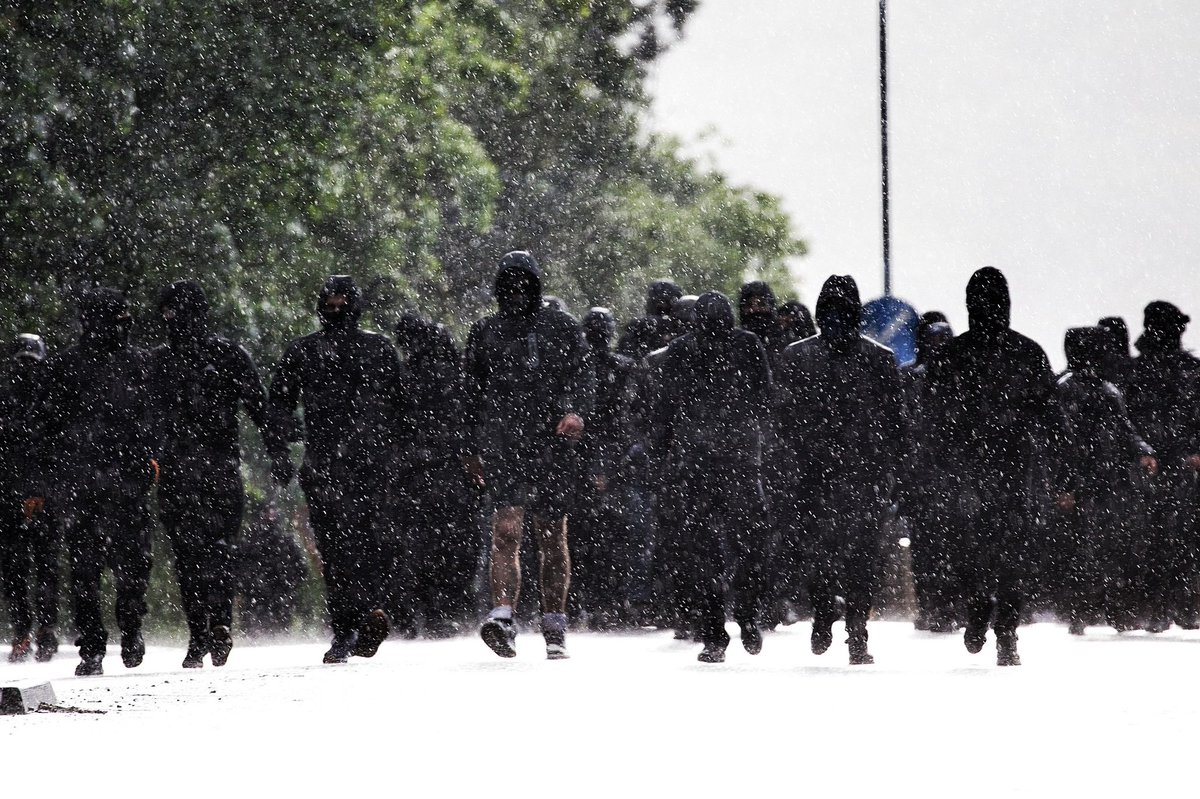
“Perhaps the era of debate is finally coming to an end.”
- Carl Schmitt
4
49
482
6,422
βasile▐┛ retweeted

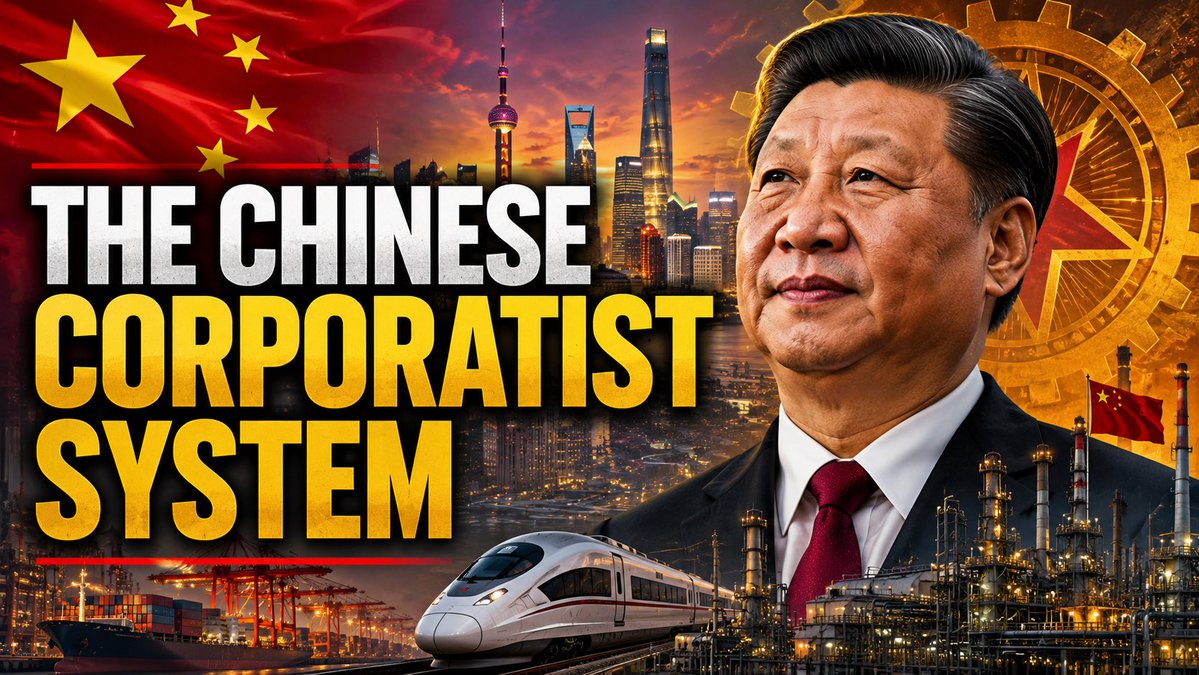
China isn’t capitalist nor is it pure communism either. It runs one of the most sophisticated corporatist systems in the world; compulsory, hierarchical interest groups for labor and capital, all licensed and controlled by the state. The same logic as Mussolini’s Fascist corporate state… but adapted with CCP cells and market mechanisms that actually deliver results. Party committees now embedded in 92% of China’s top private firms.
Link: fascio.substack.com/p/chines…
4
16
57
1,421

19h
One brave revolutionary in Belfast is worth a thousand armchair faggot pseudo-intellectuals playing geopolitics like Marvel figurines.
3
20
210
4,175
19h
I'm really supposed to be a cheerleader for "le west" when my people are being raped and slaughtered. "White Nationalism is so visionless it's based on pure resentment" It's the brutal harsh reality of what the west you think we need to go and kill Russians to protect actually is. You can look away from the atrocities and the hell the most vulnereable of our race are forced to suffer everyday and retreat into some capeshit fanatasy world where the west is based but it won't save you when reality comes knocking on your doorstep. You wife, your daughter your loved ones are the face going viral on twitter with a caption of the savagery we're all desensitized to now. I have no respect for these armchair takeseller faggots they are the scum of the earth.
1
13
112
2,380
20h
Atlanticism is a larp, and so is being patriotic for America. Neo-liberals are not going to magically become based over night, Richard Spencer is delusional. America is a failed state, the Epstein apologetics and foreign policy hawk imperialist larp is cheering for your enemies. There is no such thing as Western Civilization anymore and your Empire is a bunch of Jews enriching themselves as you get poorer and your neighbourhood turns into a third world hellscape. You can call National Socialism a larp all you want but it's less delusional than supporting the American Empire.
21
63
392
16,746

Jun 12
"To the Prussian way of thinking, the will of the individual is subsumed under the will of the totality."
— Oswald Spengler
3
29
230
18,446
βasile▐┛ retweeted

Jun 12
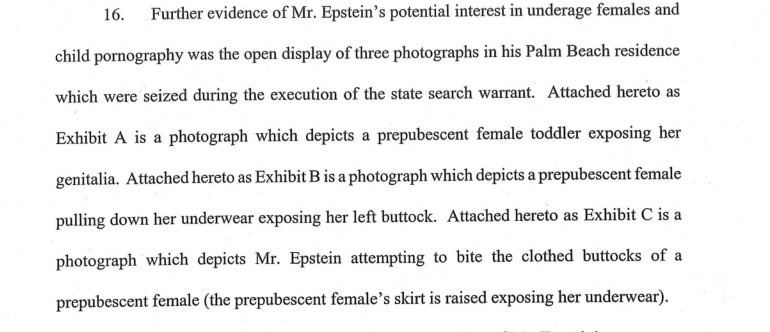
an FBI agent testified in court under oath that he found at least 3 pornographic images of toddlers in Epstein’s possession. yes he was a pedophile.
Jun 11

Owen Shroyer Calls Out MAGA for Defending Epstein 🤬
“You think Mossad is bad? I’m fucking worse!”
4
40
241
5,438


Jun 12
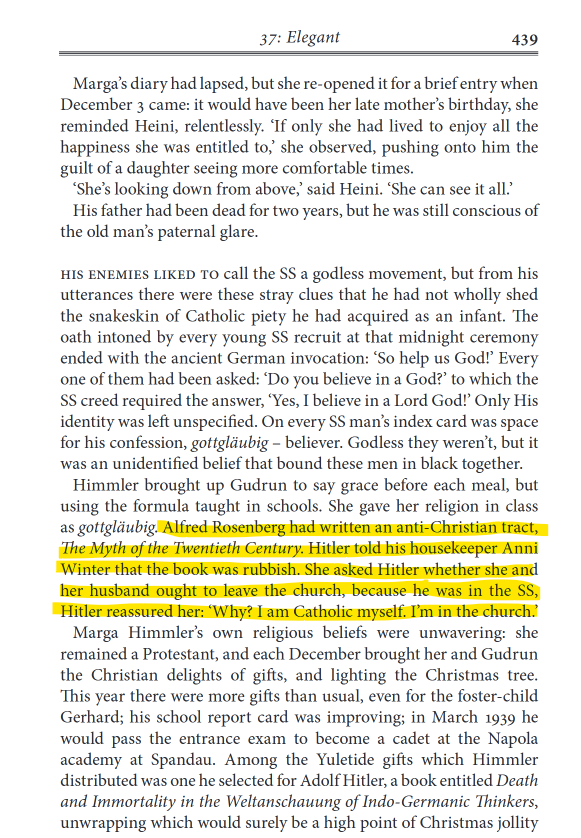
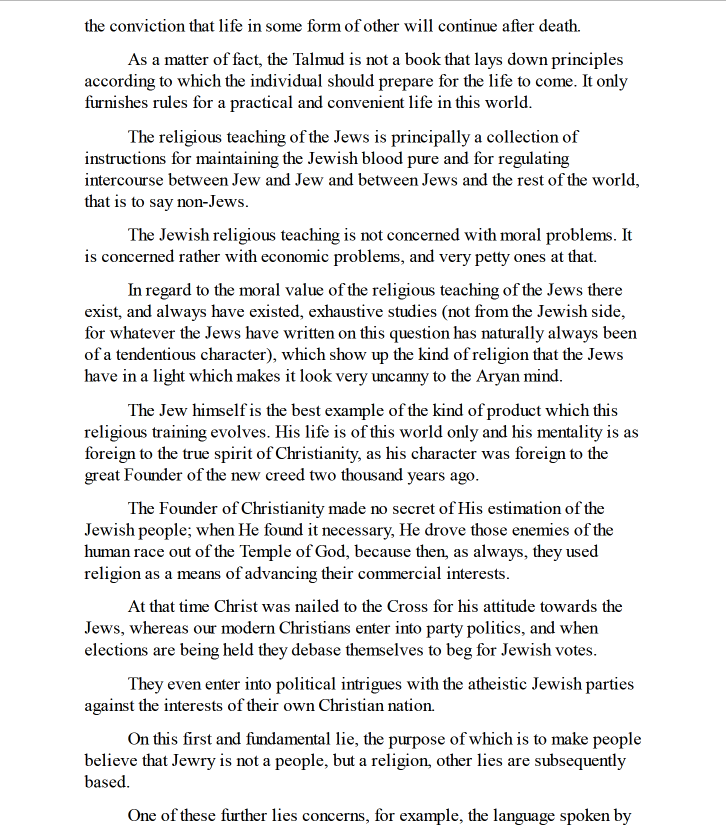
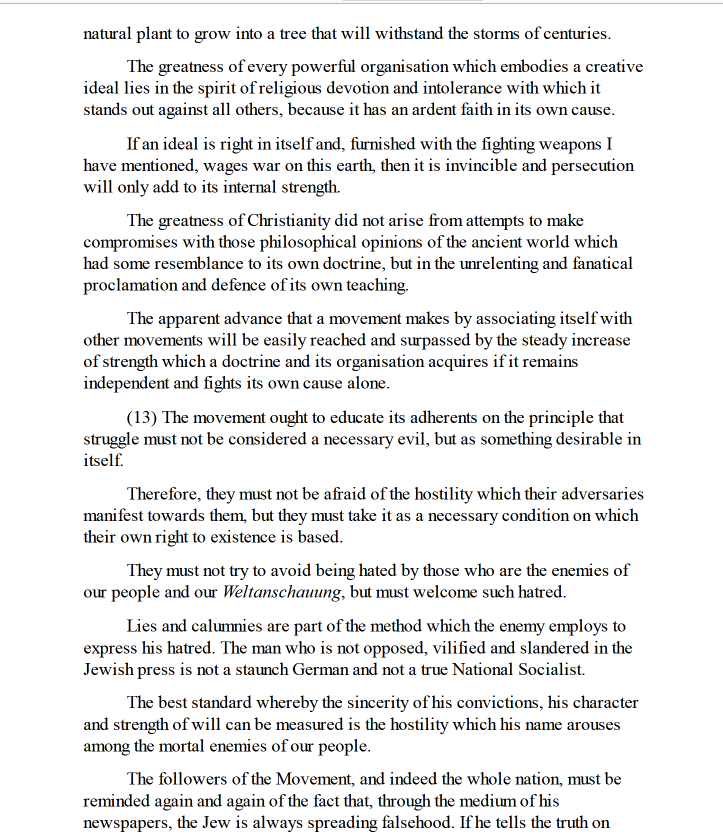
I have read Mein Kampf actually and he explicitly critiques Judaism for being a mercantile religion based purely on ethnic supremacy with no consistent morality. Obviously he himself was a German supremacist but unlike the Jews this was balanced with morality, which was his Catholic faith which he never renounced though he was highly skeptical of most churches as institutions due to a lot of Christians at the time adopting modernism, which is the exact same critique I have. The extent of his critique or opposition to Christianity is an affirmation of what he views as the true spirit of it, rejection of Jewish supremacy and their materialistic mentality devoid of higher abstract morality beyond immediate material gain.
He also praises it's intolerance of other philosophies and their unwillingness to compromise as the source of their greatness and that their ideal of struggle must be a core component of the National Socialist Weltanschauung. If you're reading the only officially approved editions such as the Stalag edition or the original German edition then you won't find any translation errors that could be interpreted as anti-Christian.

12
19
158
6,682
βasile▐┛ retweeted

Jun 11
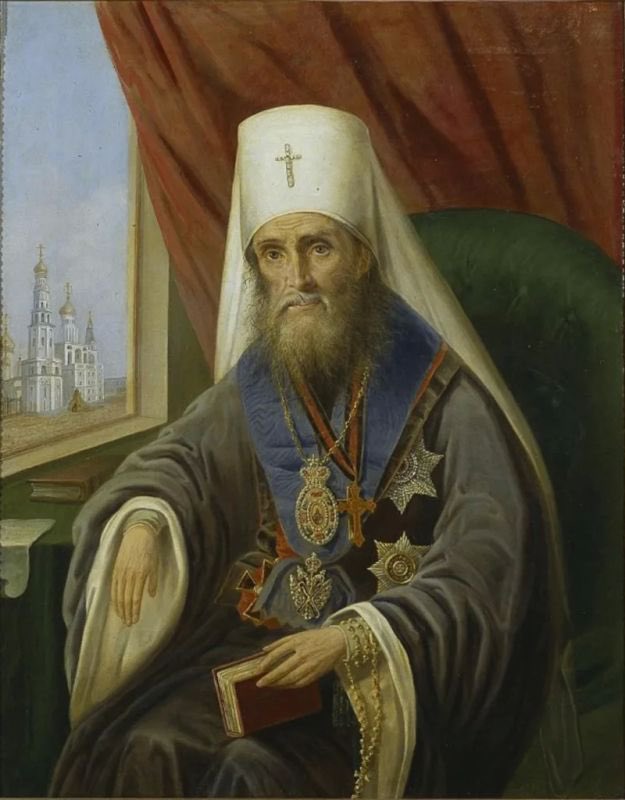
“Love your personal enemies, hate the enemies of Christ, destroy the enemies of the fatherland.”
— St. Philaret of Moscow
14
225
1,315
22,858
Jun 11
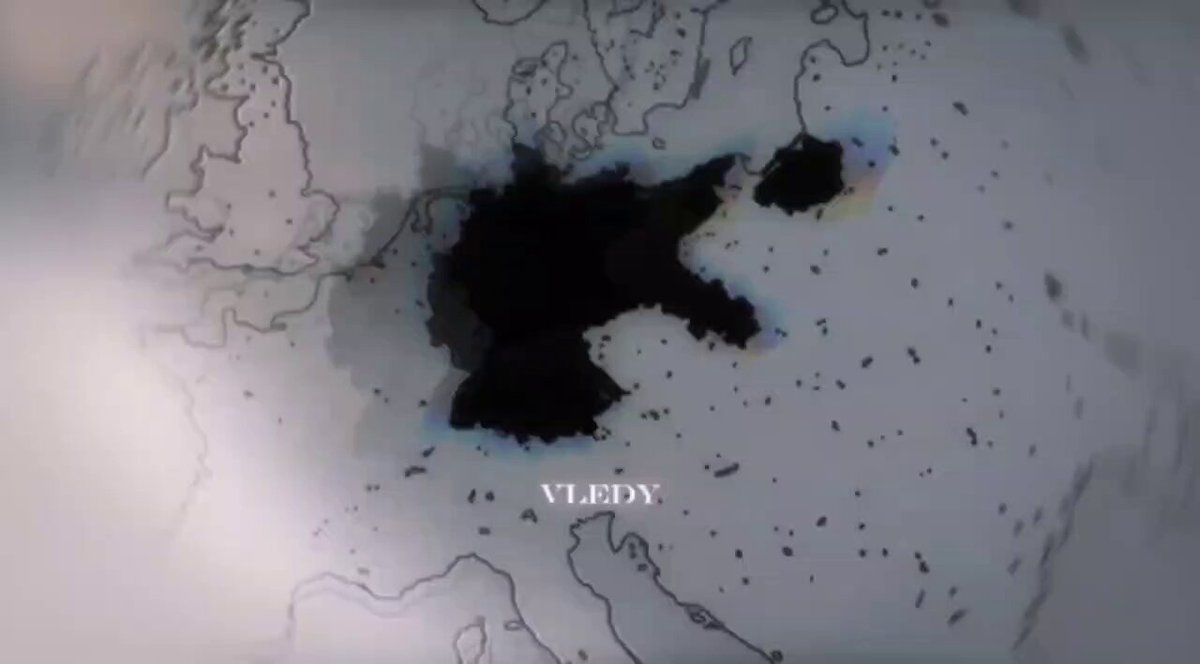
People were shilling this guy telling me he was based because he played a HOI4 mod. He's just the US State Department but with chud memes, and right wingers are so delusional they'll pretend he is based because every takeseller has been pushing that opposing "The West™" is third worldist.

Irish are racists brutes
10
19
189
4,841
Jun 11
Anti-Americanism and being opposed to "The West" is in reality a non-negotiable first principle, it's basic friend enemy distinction. The current power structure needs to be destroyed and a power vacuum must form.
1
12
106
1,931

Jun 11
Racialist Nationalist influences in Chinese Society & Socialism 🇨🇳
Racial thinking entered China in the late 19th/early 20th century via Western influences (Social Darwinism, eugenics) amid humiliation by Western/Japanese imperialism. Reformers and revolutionaries adopted ideas of "yellow race" competition with "whites," framing Han/Chinese as a racial-national entity for survival and revival. Frank Dikötter's work (The Discourse of Race in Modern China) documents how Chinese intellectuals embraced and adapted these ideas; racial categorization became widespread, influencing nationalism.
hurstpublishers.com/book/the…
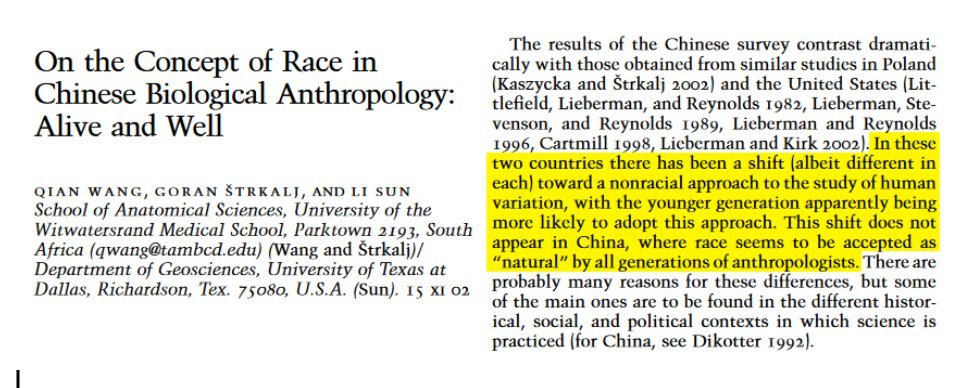
Scientific racial anthropology persisted longer in China than in the West post-WWII. A 2003 study of Acta Anthropologica Sinica found the race concept "alive and well" in Chinese biological anthropology, with typological approaches to human variation. The authors conducted a content analysis of China’s main biological anthropology journal (Acta Anthropologica Sinica) to assess the status of the race concept among Chinese scientists and to highlight national differences. The article was mainly focused on 74 issues containing articles on human variation (779 total articles; 324 of them, or 41%, directly related to human biological variation).
The striking find is that 100% of all 324 articles mentioning human biological variation used racial conceptions, and the concept as a whole is treated as straightforward and “natural.” Since these researchers are also university teachers, this acceptance of race is likely being passed on to the next generation of Chinese scientists. (1st image)
researchgate.net/publication…
Surveys and studies show notable racial/ethnic attitudes. A 2016 Gallup poll found ~30% of Chinese respondents agreeing some races are superior (higher in Hong Kong). Online discourse reveals anti-Black racism, stereotypes of minorities, and Han supremacist forums. Research on danmu comments showed high negative racial sentiments toward Black people. Anti-African incidents and pathologization occur.
tandfonline.com/doi/full/10.…
After Mao, especially under Deng and accelerated by Xi Jinping, the CCP increasingly emphasized nationalism as a legitimizing ideology as pure Marxist class rhetoric waned. Key sources:
Yongnian Guo (2019): "From Marxism to nationalism: The Chinese Communist Party's discursive shift in the post-Mao era." Argues the "Chinese Dream" and Xi-era ideology represent a philosophical departure from Marxism/Maoism toward nationalism. These are "logically irreconcilable" in key areas (e.g., views on tradition, permanence/change, unity/conflict). The CCP cannot fully be both nationalists and Marxists simultaneously."
sciencedirect.com/science/ar…
online.ucpress.edu/cpcs/arti…
3
13
52
2,247
βasile▐┛ retweeted
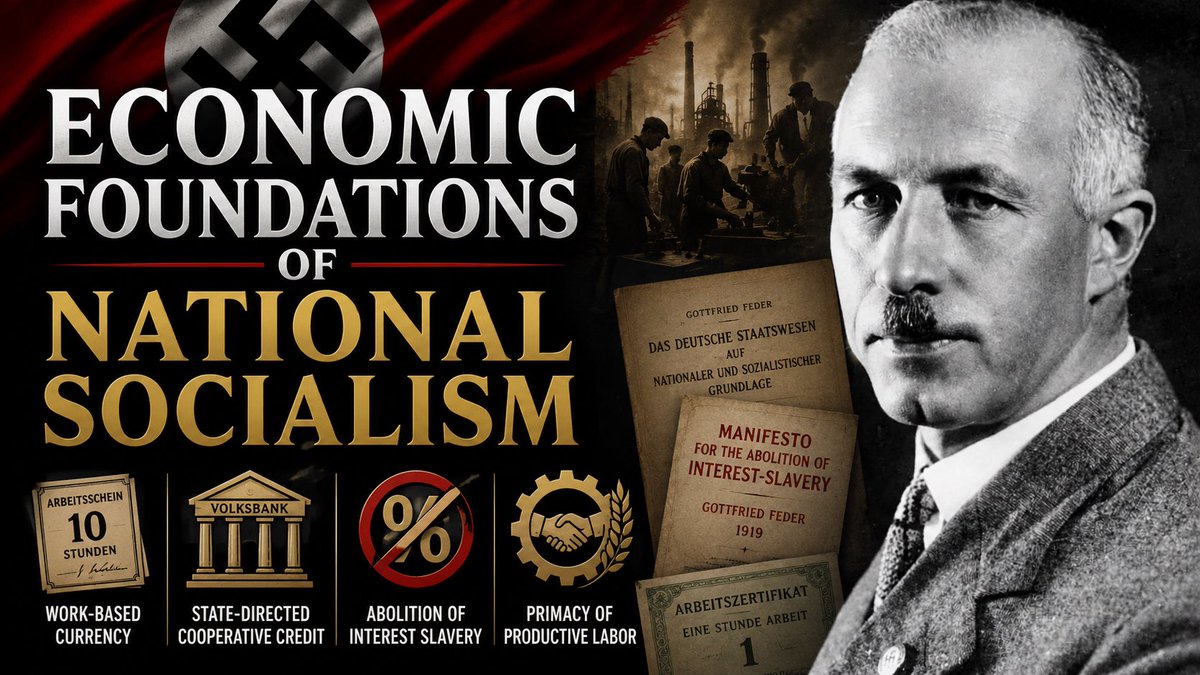
Gottfried Feder didn’t just influence National Socialism, he built its entire economic ideology. From The Manifesto For Thr Abolition of Interest-Slavery to the 25-Point Program, and the unyielding fight against usury: the real, unaltered foundations that survived even after 1933.
Link: fascio.substack.com/p/econom…
3
29
108
19,018
βasile▐┛ retweeted
1 Jun 2025
“Pacifism will remain an ideal, war a fact, and if the White race decides to wage it no longer, the dark ones will, and will become the masters of the world.”
— Oswald Spengler
8
9
116
3,314