
Exploring Tools for Thought with a focus on AI and Obsidian.
Joined September 2019
- Tweets 12,720
- Following 679
- Followers 25,682
- Likes 20,725
1,465 Photos and videos
TfTHacker retweeted

21h
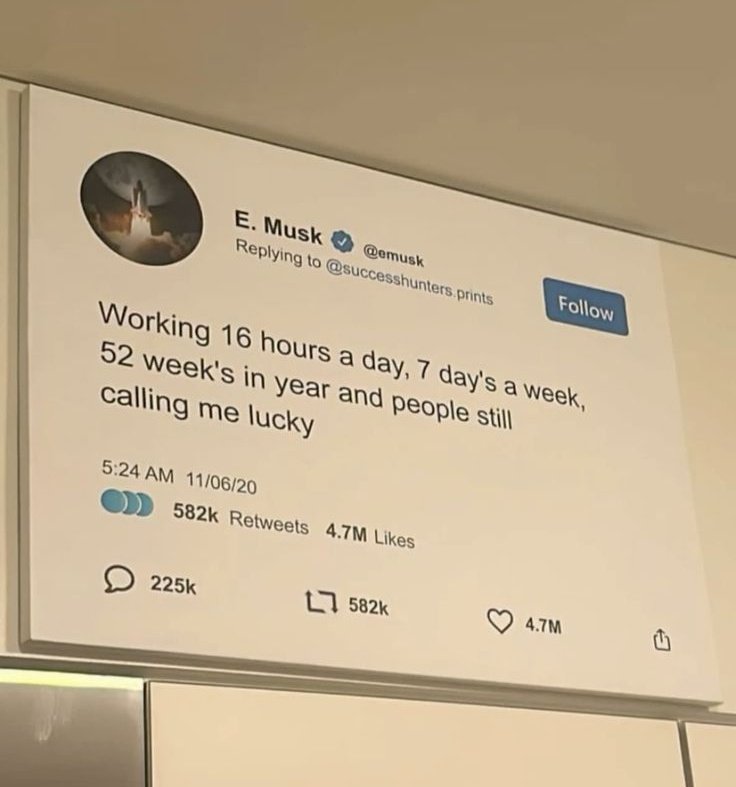
This tweet lives rent free in my head
Community note
Elon Musk never tweeted this.
The account in the image "@emusk" doesn’t exist.
The tweet is fabricated.
x.com/search?q=from%…
323
3,743
43,456
1,293,237

TfTHacker retweeted

May 30
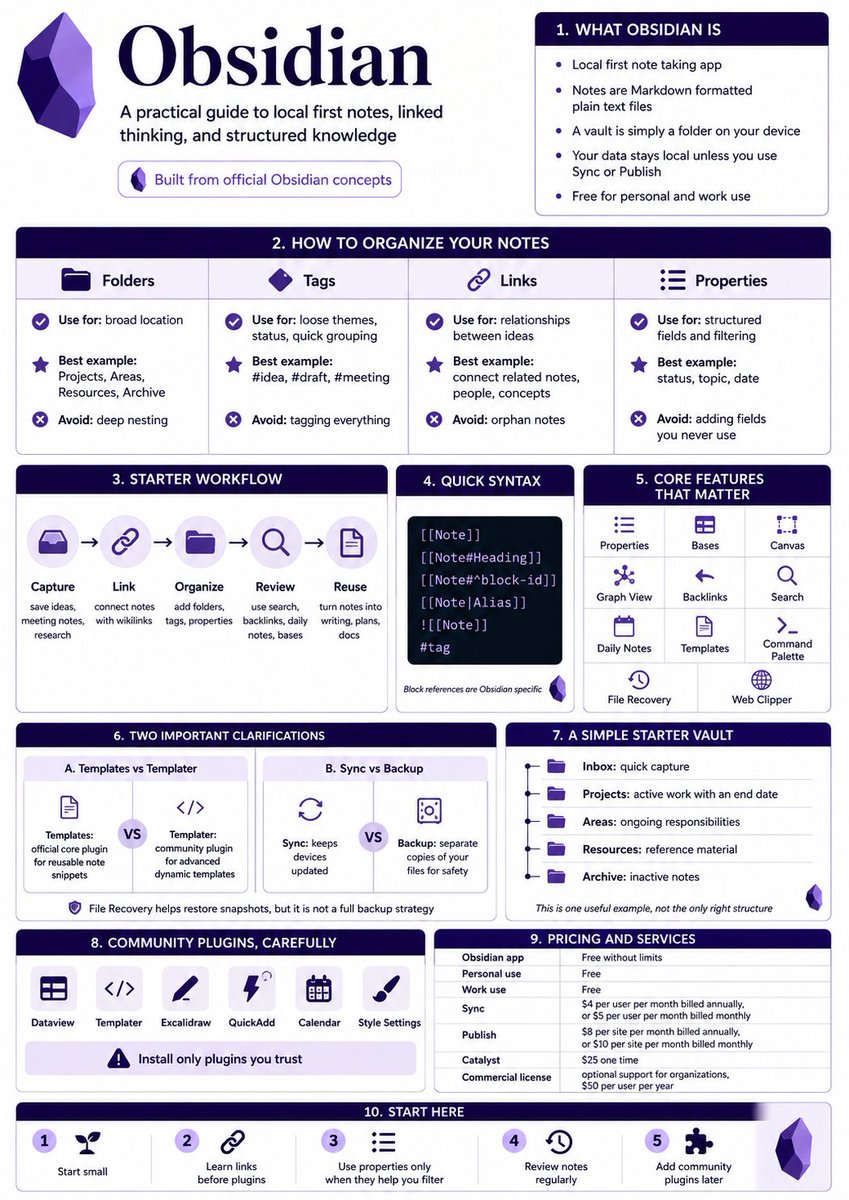
Obsidian is usually placed in the same category as Notion, Apple Notes, Roam, or any other app where people collect thoughts.
That comparison is useful at the interface level, but it hides the more important design choice.
Obsidian’s central object is not a workspace hosted inside the product. It is a folder of Markdown files on your own machine. The app sits on top of that folder and gives you ways to inspect, connect, search, visualize, and extend those files.
That is a very different architecture from the productivity tools most people are used to.
In many modern tools, the database is the source of truth and the interface is the only practical way to reach it. In Obsidian, the file remains the source of truth. A note can be read outside the app. A vault can be backed up like any other folder. Links are written into the text. Metadata can live inside the file. The useful thing is not that Obsidian has a graph view or a plugin marketplace. The useful thing is that it keeps the durable layer simple enough to survive the interface.
This also explains why Obsidian becomes more interesting in the AI era.
LLMs work best when the material they operate on is explicit, inspectable, and easy to transform.
A folder of Markdown notes is a much better substrate for that than an opaque productivity database. A model can summarize notes, extract metadata, suggest links, generate index pages, or turn raw research into a more coherent local wiki. But the human still needs to audit the result, because a knowledge base that looks organized can still be wrong.
The point is not to automate thinking. The point is to make the maintenance of knowledge less fragile.
37
173
1,072
60,069

Most people start Obsidian the wrong way.
They import 10,000 notes.
Build 50 folders.
Install 20 plugins.
Then quit a week later.
If I had to restart Obsidian today, I’d do the opposite:
• Start with 5 meaningful notes
• Create ZERO folders
• Ignore plugins completely
• Focus only on connecting ideas
That’s the real unlock.
Obsidian isn’t a notes app.
It’s a personal internet for your mind.
The magic happens when you use one simple prompt:
“This reminds me of…”
A quote links to a book.
A book links to a song.
A song links to a memory.
A memory links to an insight.
That’s how real thinking compounds.
The goal isn’t collecting information.
It’s building connections your brain can return to later.
AI can summarize notes.
But only YOU can create meaningful links between ideas.
That’s where the leverage is.
Follow @damidefi for more AI alpha.

32
77
525
70,376
TfTHacker retweeted

May 17
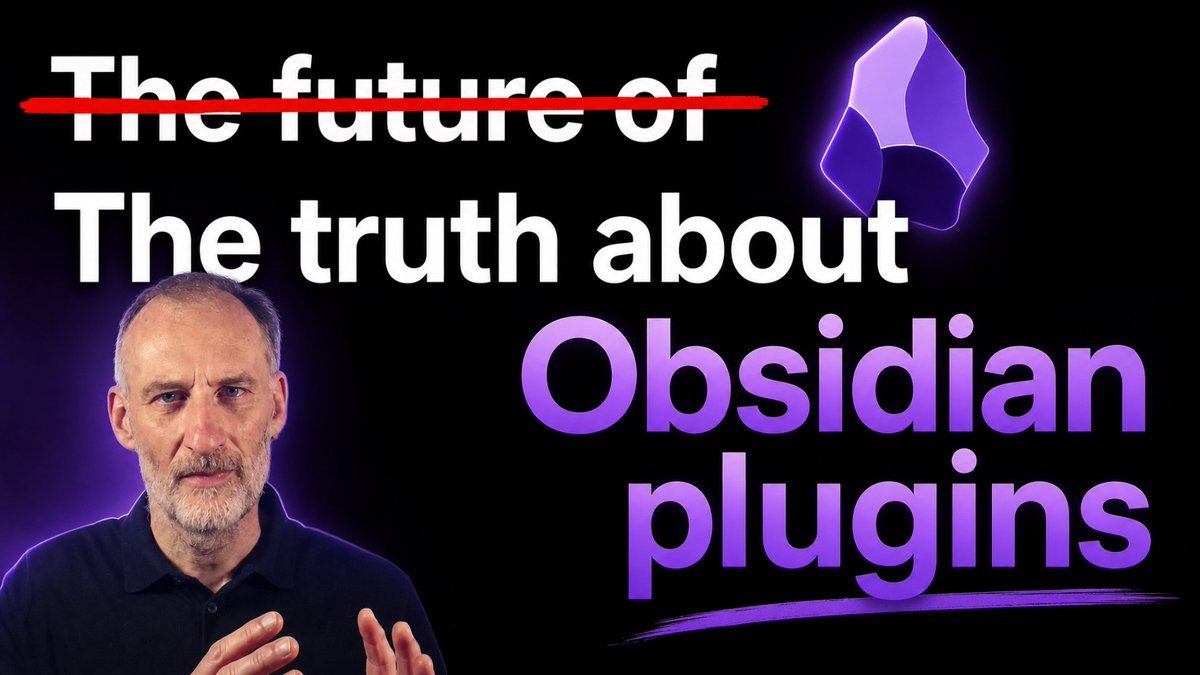
Improving the transparency of plugins is a good thing... but it puts a massive burden on the developers.
We're placing commercial expectations on unpaid, open-source hobby projects.
Let's have an honest conversation about the hidden costs.
youtu.be/wedHXARs6n4

1
3
19
2,336

Two new security audits of Obsidian Sync by @cure53berlin and @trailofbits are now available on our Security page.
All findings have been addressed via remediations and disclosures validated by the respective auditors. Read more:
obsidian.md/blog/cure53-tob-…
4
41
476
62,128
The most exciting thing for me is that I can finally get back to making @obsdmd plugins. I too was daunted by waiting in the review queue 😅
Now you can get a plugin into Obsidian within 24 hours.
17
20
370
31,393
TfTHacker retweeted

May 11
Idk if you might be interesting or anyone else. Not my project but I'd recommend checking these guys if you want anything related to trading within your vault
github.com/Cursivez/journali…
1
3
880
TfTHacker retweeted

May 11
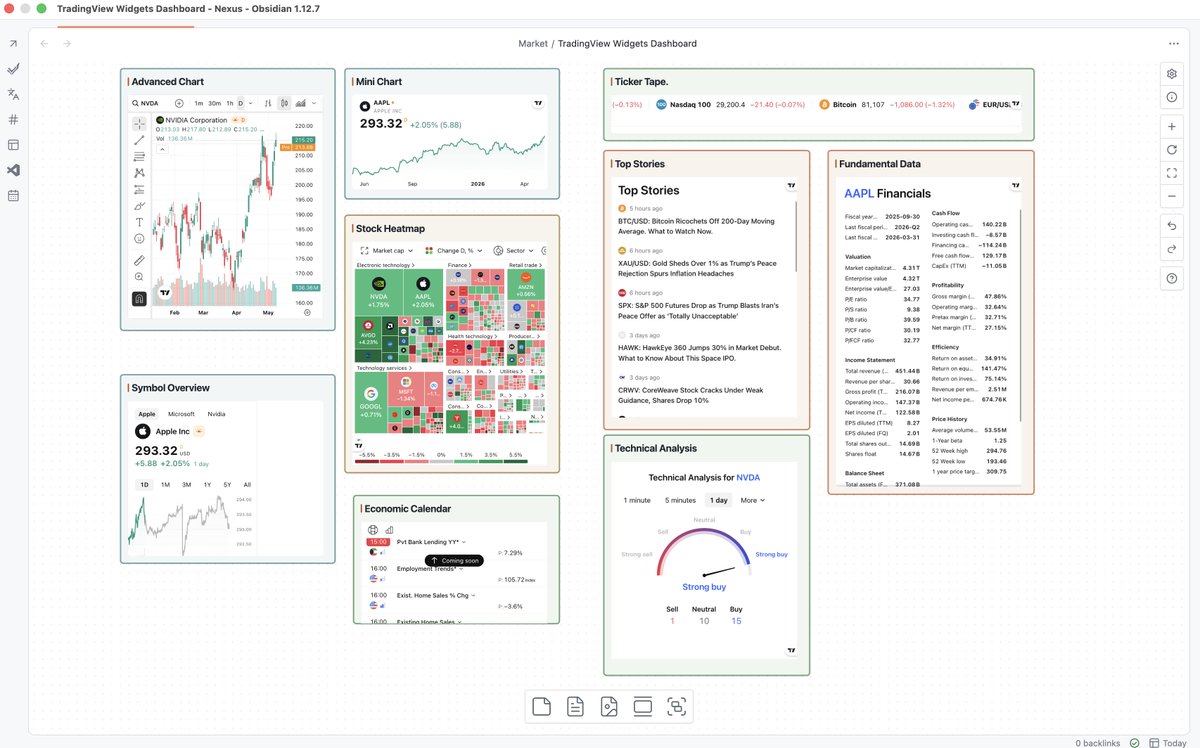
TradingView Widgets plugin for @obsdmd.
Powerful charting and market-monitoring tools.
It is a start to using Obsidian as an investment platform. @tradingview
Early alpha can be installed with BRAT: github.com/TfTHacker/trading…
Another one of my Vibe-coded creations 😏
2
4
35
3,134
TfTHacker retweeted

May 8
Most Obsidian vaults fail at the same place:
capture works, return never happens.
You save ideas, highlights, numbers, hooks, screenshots.
Then 6 months later the vault has 400 notes and no idea what to write next.
Build the return path instead:
1. Use 5 folders
00-INBOX
01-CAPTURES
02-CONNECTIONS
03-BRIEFS
04-PUBLISHED
2. Sort captures by type, not topic
> observations
> reactions
> patterns
> questions
> numbers
Topic folders hide useful collisions. Type folders help Claude connect "attention psychology" to "X hook performance."
3. Put Claude Code files where Claude actually reads them
> ./CLAUDE.md or ./.claude/CLAUDE.md
> .claude/skills/process-inbox/SKILL.md
> .claude/skills/weekly-connections/SKILL.md
> .claude/skills/generate-brief/SKILL.md
> .claude/skills/write-content/SKILL.md
4. Log performance in every published post
> impressions
> bookmarks
> hook_used
> top_comment
> what_worked
Build the path that turns saved notes into briefs, posts, and performance data:
capture -> connection -> brief -> post -> result -> next brief
30
25
333
50,440
TfTHacker retweeted

May 8
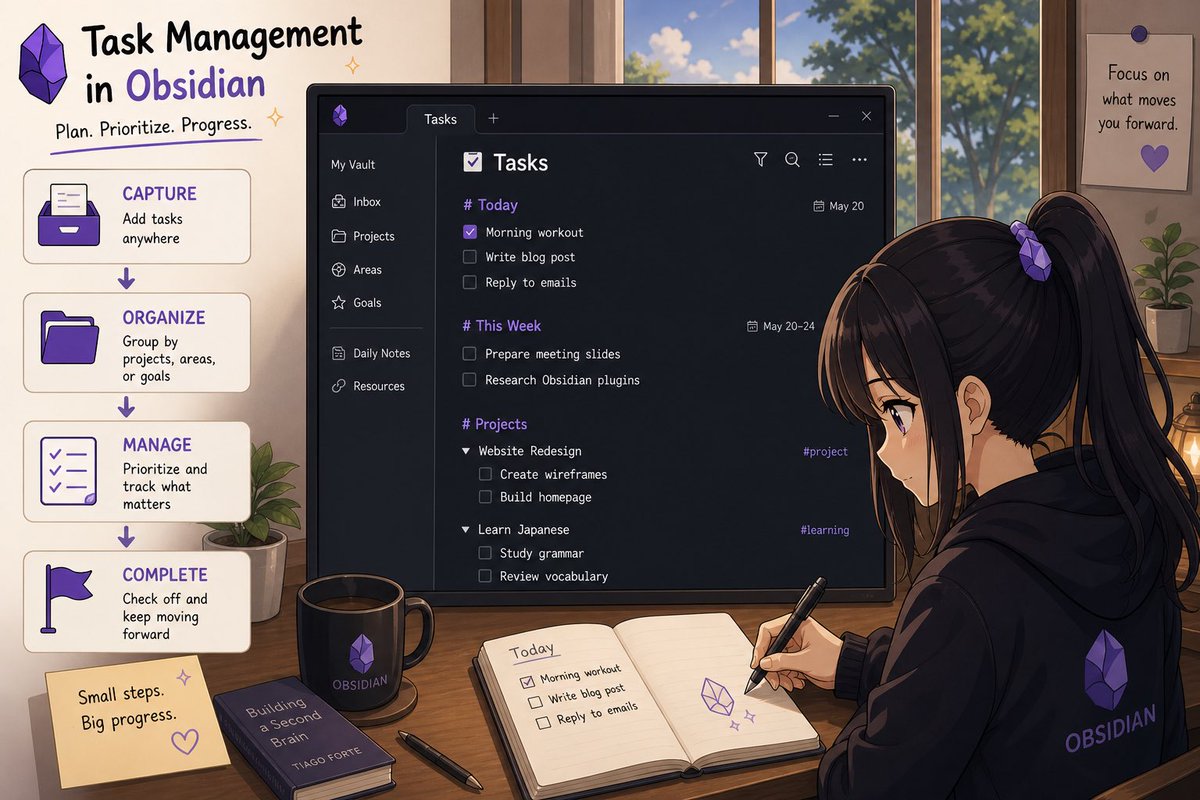
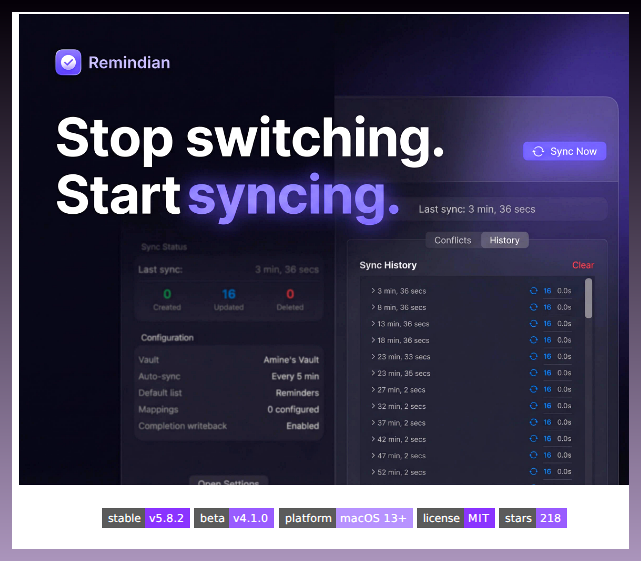
Syncs Obsidian tasks to Apple Reminders, Todoist, and Things 3
github.com/Santofer/Remindia…
2
8
122
11,094
TfTHacker retweeted
May 8
Today, @excalidraw for @obsdmd crossed 6 MILLION downloads. 🎉
Absolutely blown away.
Thank you for all the support, ideas, bug reports, feature requests, videos, and encouragement over the years. ❤️
📽️ youtu.be/VE4cJjLQ6G4
👥 community.sketch-your-mind.c…

ALT Thumbnail 6 Million Downloads
6
3
35
1,694
TfTHacker retweeted

May 6
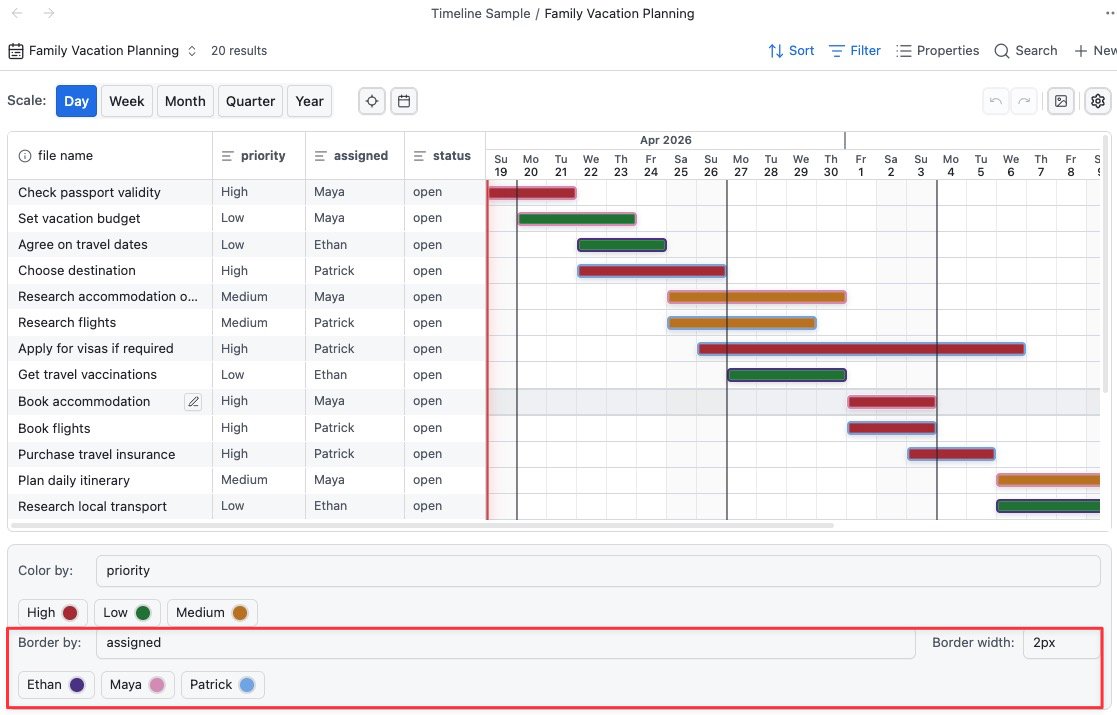
3 ways Obsidian Bases make academic project management effortless.
The game-changer: Context awareness (even Notion doesn't have that).
effortlessacademic.com/using…
2
14
167
14,675
TfTHacker retweeted

but if Obsidian was gone, I would use a different tool. I keep my files formatted in a way that I am not relying on any plugin. My data will live on and be useful no matter what happens to Obsidian.
3
1
6
1,660
TfTHacker retweeted

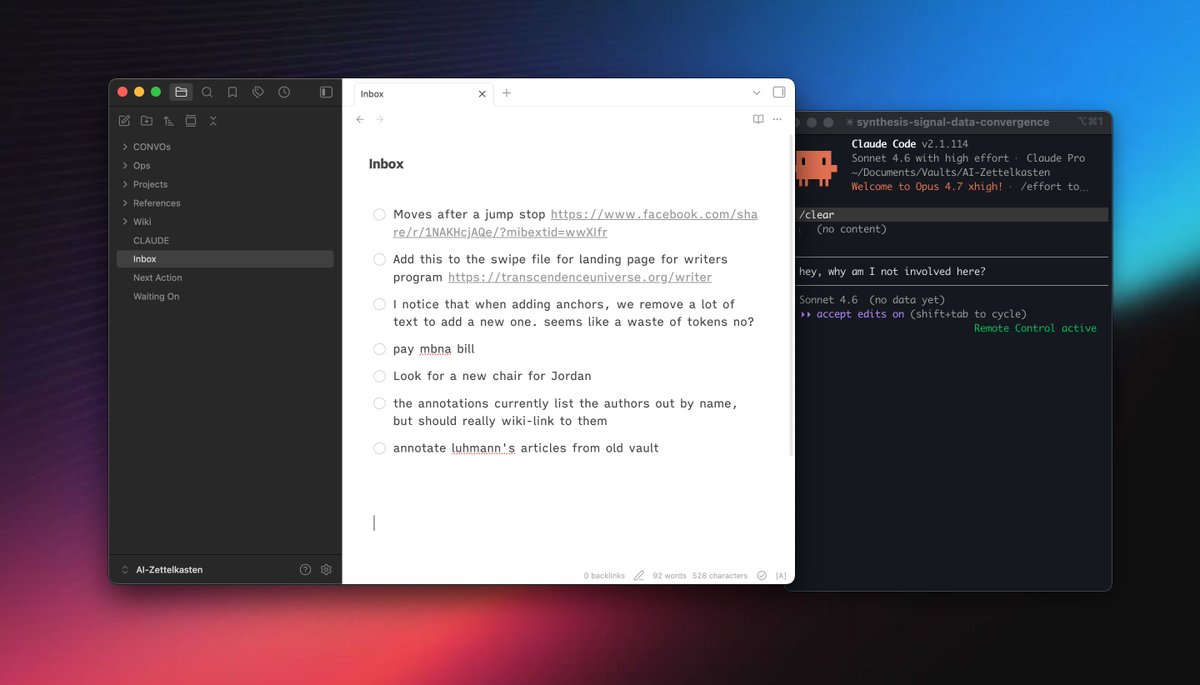
I’ve done archaic… 3 notes 😌
- Inbox
- Next Action
- Someday

Over the last few weeks, I added tasks to my agent-only @obsdmd
Nothing fancy. Just... Inbox. Next Actions. Someday.
(Sounds kinda archaic, doesn't it? 🤣)
Funny thing is... the 'constraint' is... so nice...
👇
1
2
1,004
TfTHacker retweeted

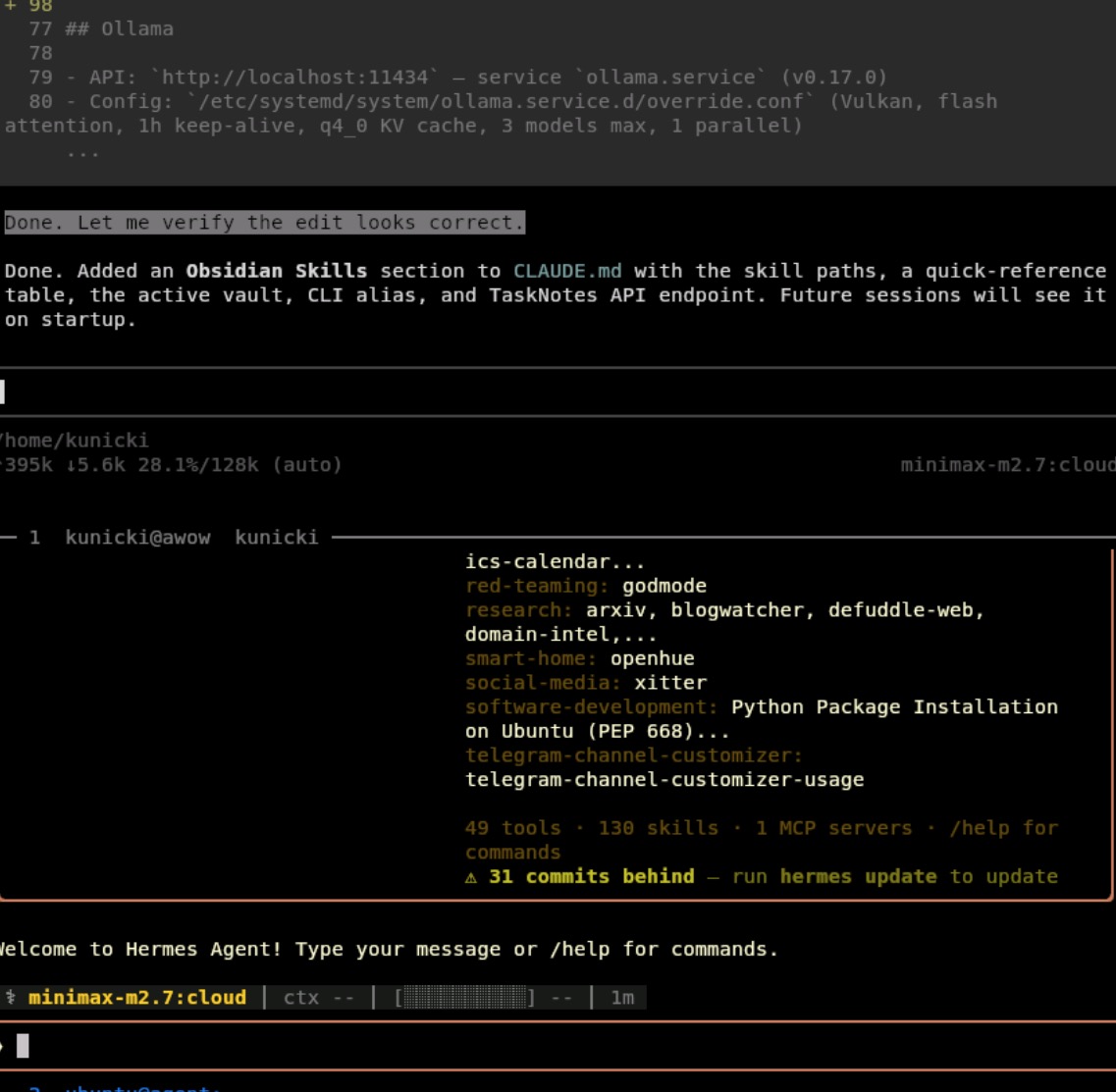
Hermes Agent Obsidian is match in heaven! I'm dumping all info, meetings, ideas to hermes and I get back well formatted and when needed.
This is so incredible!
Thanks @NousResearch for this piece of AI magic!
27
16
564
31,264
TfTHacker retweeted

May 4
In response to Tiago's crashout over @obsdmd...existing, I am going to popularize the term 'Obsidianmaxxing'.
Obsidianmaxxing is when you use Obsidian for as many things as you possibly, conceivably can.
Do you track helpdesk tickets, play Pokemon, track Habitca stats, make an inventory of your whole house, etc.
How are you Obsidianmaxxing?
22
5
126
13,023
TfTHacker retweeted
May 3
I am super excited about this interview. Stephan van de Ven and I discuss the new Sketch Your Mind Community, Excalidraw Mastery, Visual Thinking, AI, and the role of a community. I'd love to hear what you think!
youtu.be/TnwRlaIdhSU

ALT Thumbnail: AI Makes You Lonely https://community.sketch-your-mind.com
2
5
1,724