
1,766 Photos and videos









Want to learn Japanese with me? Sign up for my FREE Japanese lessons and learn "real-life" Japanese that textbooks don't teach you
bit.ly/2XpxImy

28
21
265
Japanese Twitter is having fun thinking about what fashion would be acceptable for middle-aged men.
This started when somebody tweeted that she hates it when middle-aged men wear clothes like this.
And it went viral.
(The tweet I'm quoting is not the original tweet. It seems that the original poster either deleted or locked her account.)
But people started having fun creating different versions and making the guy wear different clothes.
The moral of the story is that you really can't please everybody.
So know your audience, know your taste, and make your own choices.
Jun 8

このファッションが嫌いな人は、もう結婚できないと思う。結婚して家族のために必死に仕事をして、自分にお金をかけることができない人が行き着くファッションだから。上下ユニクロ、最小限の荷物を入れる安いボディバッグ。どこにでも対応できるように襟付きのシャツ。

3
18
4,208
Traditional Japanese textbooks like みんなの日本語 often act as though communication is one-way.
It's as if you're the only one speaking and other people are just listening to you.
They often teach words, expressions, and grammar points without teaching you how and when those grammar points are actually used.
They also often use these things in ways that native speakers don't, and then say:
"Well, technically it's understandable."
This might work if you're the only one speaking.
But in real-life communication, you're not the only one speaking.
Other people are speaking too. And if those people are native Japanese speakers, then in order to understand them, you need to learn how native speakers actually speak Japanese.
People who learn Japanese predominantly from textbooks and traditional courses often end up in a situation where they can understand other non-native speakers who learned from the same textbooks, because that's what they learned.
But they have trouble understanding native speakers because they never learned how native speakers actually speak Japanese.
So if your goal is to communicate with Japanese people, it doesn't make sense to go out of your way to avoid learning how native speakers speak Japanese for a long period of time (which can extend to years in some cases).
Not learning how people actually speak simply doesn't align with your goal.
1
22
2,277
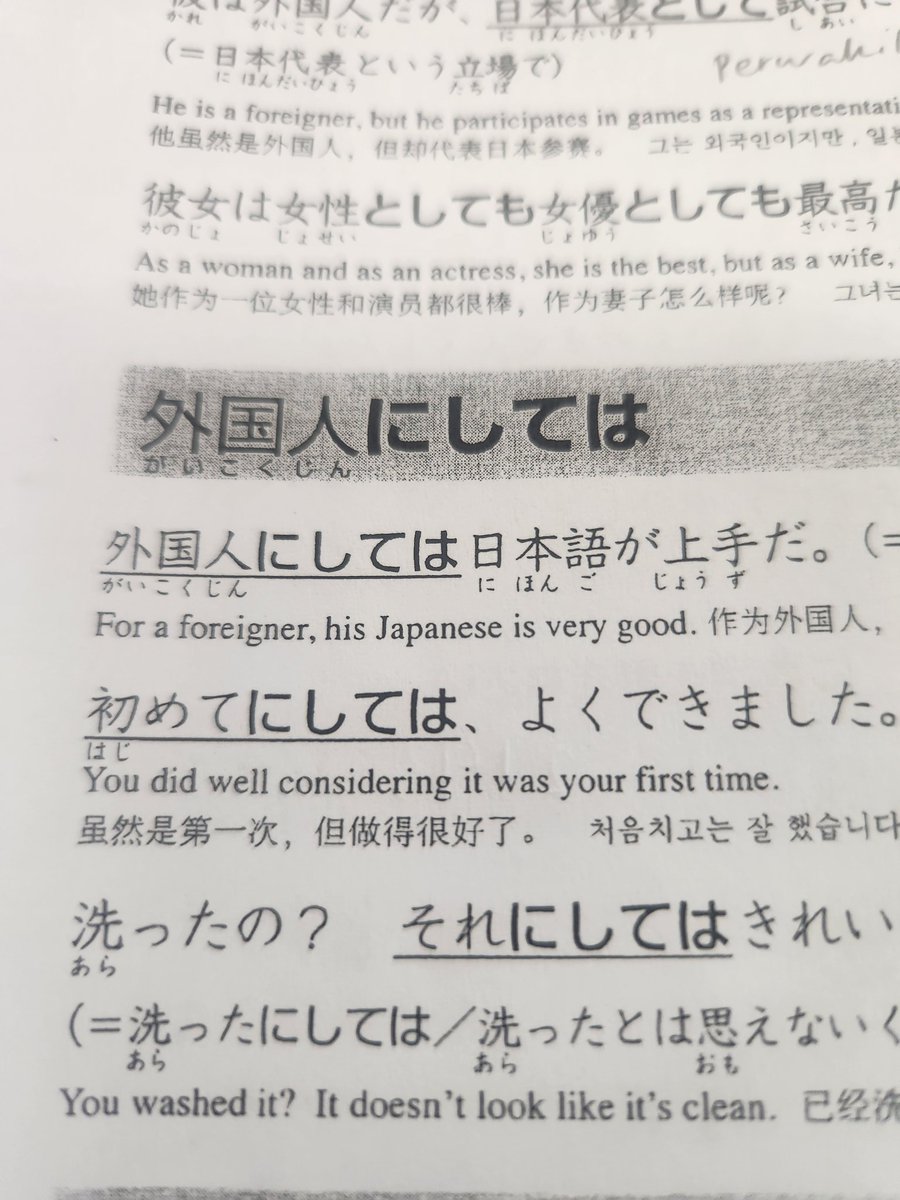
教科書にしては例文がリアルだ。
The example is realistic "for a textbook".

27
2,640
Who else is excited about Takopi's movie?
youtube.com/watch?v=ruw_BhbD…
5
713
A lot of "how I learned Japanese" or "how somebody learned a language" videos have a common error of generalizing one's experience based on their own reasoning and intuition.
They often say:
"This is what worked for me, so you should do the same thing."
But they often reach erroneous conclusions for several reasons.
1. Different people can get different things out of the exact same resource.
Even if two people use the exact same resource to learn the same language, they can learn different things.
They might be at different levels, or pay attention to different things.
2. You don't know what works unless you isolate variables.
Language learning is a complex task, and one person can be doing 100 different things to learn a language.
Unless you isolate a variable and do an experiment, you don't really know what works.
If you rely only on intuition and reasoning, you might end up saying something works simply because you feel like it works.
But language acquisition can be quite counterintuitive, where what you think works doesn't always work, and things you don't pay much attention to can actually be effective.
3. Correlation is not causation.
If B happens after A, it doesn't mean A caused B.
A lot of people say, "Oh, I used this resource and learned Japanese, so this resource works."
But again, you might have been doing 100 different things at the same time, except you don't remember everything you did.
So you overestimate the effectiveness of the thing you remember.
Again, unless you isolate the variable and do an experiment, you can't really say what works.
These kinds of erroneous reasoning patterns are incredibly common in the language learning space and in many other fields as well.
Once you become aware of these logical mistakes, you can spot them everywhere.
That doesn't mean you can't learn from other people's experiences. You absolutely can.
But while you can gain some valuable insights from their experiences, the conclusions they draw can be quite erroneous.
2
2
32
1,817
KAngel is live-streaming. The game became reality. And she's actually good at this lol

The only live stream I want to watch (Needy Streamer Overload)
youtube.com/watch?v=o07OFwj8…
1
419
The only live stream I want to watch (Needy Streamer Overload)
youtube.com/watch?v=o07OFwj8…
1
2
923
This is the funniest anime radio I've ever listened to lol
Some people are even like, "Oh, I dropped the anime, but I listen to this radio every week," so they keep reminding us, "Hey, don't forget to watch the actual anime."
youtube.com/watch?v=NMbBEQ59…
1
6
848
Interesting discussion about colloquial inflecitons like
違くない?
違うくない?
あるくない?
youtube.com/watch?v=q0IMJI6e…
5
743
Sum's Wish is legit one of my favourite anime

Yes, I made a video on Scum's Wish in 2026.
Modern Romance fans would not be ready for this era of romance Anime.
youtu.be/qKZyYSkBmwc?si=0WE9…

2
10
1,577
When I talk about weird-sounding Japanese sentences, I often get responses like:
"Oh, it's okay as long as it's grammatically correct."
But in communication, it's better to try to convey the right nuances than to be grammatically correct.
And I came up with this example using the words "talk" and "speak."
For example, if I'm talking about somebody who talks too much and I'm annoyed, and I try to say:
"He talks a lot."
But I make a grammatical mistake and end up saying:
"He talk a lot."
This sentence is grammatically incorrect, but my intention and the sentiment behind it are still pretty clear.
Now, what if I use the word "speak" and say:
"He speaks a lot."
While this sentence is grammatically correct, it blurs my intention and the context that I'm annoyed.
Of course, ideally, if you get both the nuance and the grammar right, that's better.
But if you really have to pick, it's better to attempt to convey the right nuances and be grammatically wrong than to say something that is technically grammatically correct but doesn't convey the same meaning and nuances.
What do you think of this example?
5
2
15
1,273
The idea that language acquisition is about consciously learning rules and applying those rules has been debunked a long time ago.
Despite that, a lot of people today still approach language learning this way.
There's a massive amount of evidence showing that we do not acquire languages, whether it's our first language or a second language, this way.
And we already knew this in the '60s and '70s.
So a lot of people today learn a language as though they are still stuck in the '50s or something.
This doesn't mean you cannot learn a language using outdated methods.
People in the past did learn languages.
It just means that if you use massively outdated methods (there are several popular methods from the past), it will be pretty inefficient, because those methods are based on a false idea of language acquisition.
Again, you can always learn something from something, even if it's not super efficient.
But once you update your knowledge, skills, and approach a language in a more informed way, you can see how much faster you can learn a language to a conversational level (not to perfection, though).
This doesn't mean there's one specific "correct method".
If your general direction is solid, there are many different things you can do and many different resources you can use based on your personal preferences.
Communicating this can be a little hard for beginner language learners, because they often have a preconceived idea of how one should learn a language.
But once you experience how quickly you can acquire a language to a decently conversational level, you can see that a lot of people are taking an unnecessarily long route to reach their goal.
At the same time, I do acknowledge that outdated methods can have "psychological" benefits for certain learners because they give you conscious knowledge of the language, which some people find reassuring.
Language learning is largely an unconscious, intuitive process, which makes measuring progress not very straightforward.
So consciously learning rules, even though it's not the direct way of acquiring a language, can have psychological benefits for certain learners with certain personality dispositions.
4
3
22
1,029
When we acquire Japanese, our brain is learning statistically the probability that certain words and expressions occur in a given context.
Textbooks and apps often sound unnatural because they break the statistical probability of words and expressions used in a given context.
They artificially manipulate the examples and insert lots of statistically unlikely words and expressions.
This is why, if your initial input is skewed toward textbook input, you're likely to acquire a skewed distribution of words.
Which means you'll often end up (unconsciously) thinking that this skewed, misrepresented distribution is how the language works.
Unlearning this is particularly challenging because this is something you do implicitly, meaning this process happens unconsciously.
And something you learned unconsciously is hard to unlearn consciously.
This is why using naturalistic input from day one is massively beneficial if your ultimate goal is to communicate with Japanese people and understand native media.
Naturalistic input naturally follows the natural distribution of words and expressions (duh).
1
2
23
1,813
It's pretty interesting that Heisei-era vibes are making a comeback
youtube.com/watch?v=RgVLBtRL…
2
4
1,830
Needy Streamer Overload
I can't say this is objectively a good anime.
I can't recommend this to average people because of the sensitive content.
But this is my favourite anime this season so far. I've also played the game.
This is what happens when creators say, "We don't care about pleasing everybody. We will do whatever we want."
Kind of reminds me of Evangelion (and there are a lot of references to it too.)
6
2
47
4,007
Accidentally running into people who are more dismissive to Duolingo than I am haha

He is better off giving up now than having any false sense of being able to talk to a native or play games in the language. It’s a false hope, you have to hit the flashcards, talk on language platforms, read the books etc.
2
1
17
1,881