
AI-driven process intelligence for software delivery for humans and agents.
Joined May 2023
- Tweets 164
- Following 17
- Followers 10
- Likes 4
126 Photos and videos













May 18
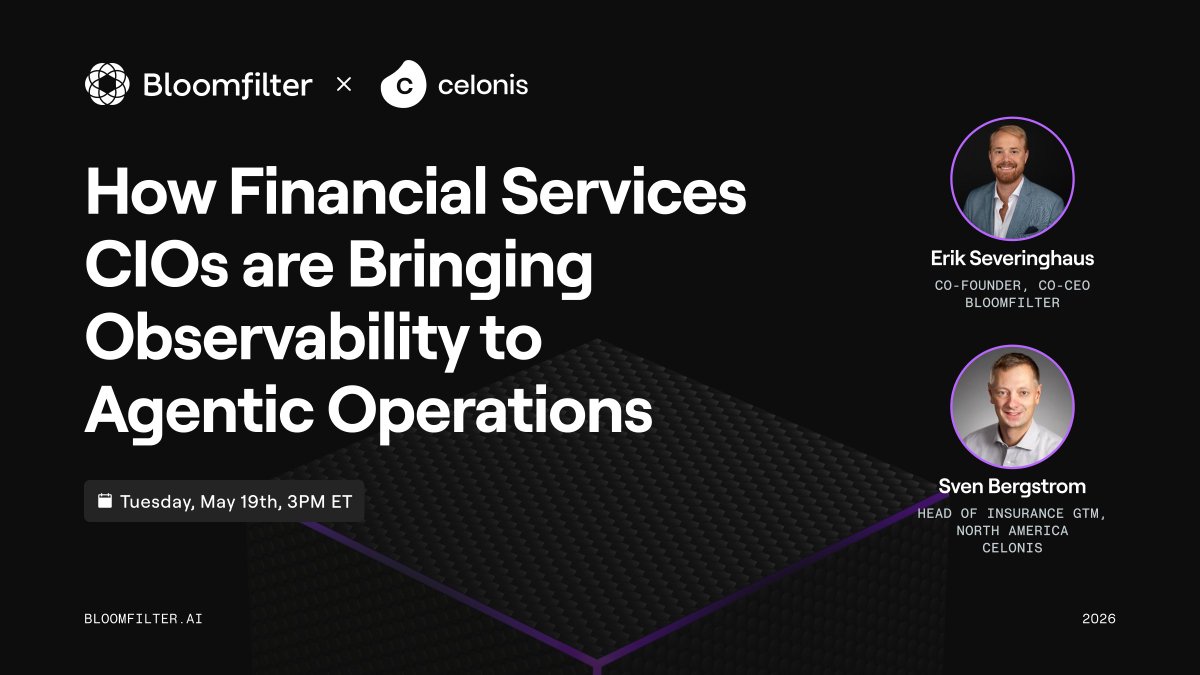
This webinar ships tomorrow.
Join Bloomfilter Celonis for a live session on how financial services leaders are bringing observability to agentic operations in regulated workflows.
A small delay. A better release.
Tomorrow at 3 PM ET / 2 PM CT:
linkedin.com/events/howinsur…
12
Apr 27
AI is moving into real workflows across financial services. Visibility needs to keep up.
Bloomfilter Celonis are hosting a live session on bringing observability to agentic operations in regulated environments.
Join us: linkedin.com/events/howinsur…
1
41
Apr 21
AI doesn’t create ROI. Organizations do. The value doesn’t come from the model alone.
It comes from changing workflows, clarifying ownership, and turning local productivity gains into real business outcomes.
2
Apr 20
Enterprise AI gets expensive fast when adoption outruns operating discipline.
If you can’t see where AI is used, what workflows it changes, and whether the value justifies the cost, scale becomes a budget surprise.
1
6
Apr 15
Enterprise AI is growing up.
Now, the hard part is operationalizing AI across real workflows, with clear value, role-level adoption, and governance that scales.
openai.com/index/next-phase-…
2
Apr 14
A new KPMG survey says 74% of global leaders will keep AI as a top investment priority. But only a small group are turning that spend into clear business value.
That gap is not surprising.
If the underlying process is still a black box, AI just makes that black box faster.
1
45
Apr 13
As AI agents move deeper into insurance, governance has to keep up.
Claims, underwriting, policy admin, and software delivery all run through regulated workflows.
Leaders need visibility into what agents changed, whether execution stayed compliant, and where risk is building.
1
Apr 10
Insurance CIOs need to scale AI fast without losing control.
As agents move into claims, underwriting, policy admin, and software delivery, leaders need to see what they're doing & whether execution stays compliant.
In insurance, adoption is hard. Governance is harder.
5
Insurance is moving fast on AI. Clear measurement is not.
Most carriers are layering AI into legacy systems, manual workflows, and compliance-heavy release processes. The hard part now is knowing where AI is helping, where it is adding drag, and where it is creating risk.
1
Modernization gets messy fast.
Technical debt, siloed data, brittle workflows, and weak pipelines make progress hard to see.
That’s why static dashboards fall short: they can measure activity, but not whether AI is improving delivery or just scaling complexity.
1
AI agents are creating a new kind of technical debt: more software moving faster through the org without enough visibility, governance, or process control.
Speed is useful. Speed without oversight just turns hidden process problems into bigger, more expensive ones.
1
8
Mar 26
Insurance CIOs are under pressure to prove AI ROI, but most lack visibility into what’s actually happening.
Fragmented systems make it hard to measure agent performance or outcomes.
Process intelligence makes both visible.
5
Mar 25
Organizations across industries are investing heavily in AI, but many struggle to turn that investment into real value.
The challenge is the complexity of how work moves across systems, teams, and decisions.
Without that understanding, AI produces output with no outcomes.
3
Mar 24
AI adoption in insurance is accelerating, with most carriers investing in underwriting, claims, & customer service.
Execution inside complex, regulated processes can be challenging.
Without context on how work actually flows, AI struggles to deliver real outcomes.
2
Mar 23
AI agents are scaling fast.
Most teams still don’t understand how they operate in real workflows.
Access isn’t enough.
You need context.
4
Mar 20
95% of AI investments still generate zero return.
The missing piece is process intelligence:
This is what turns AI from isolated outputs into coordinated execution.
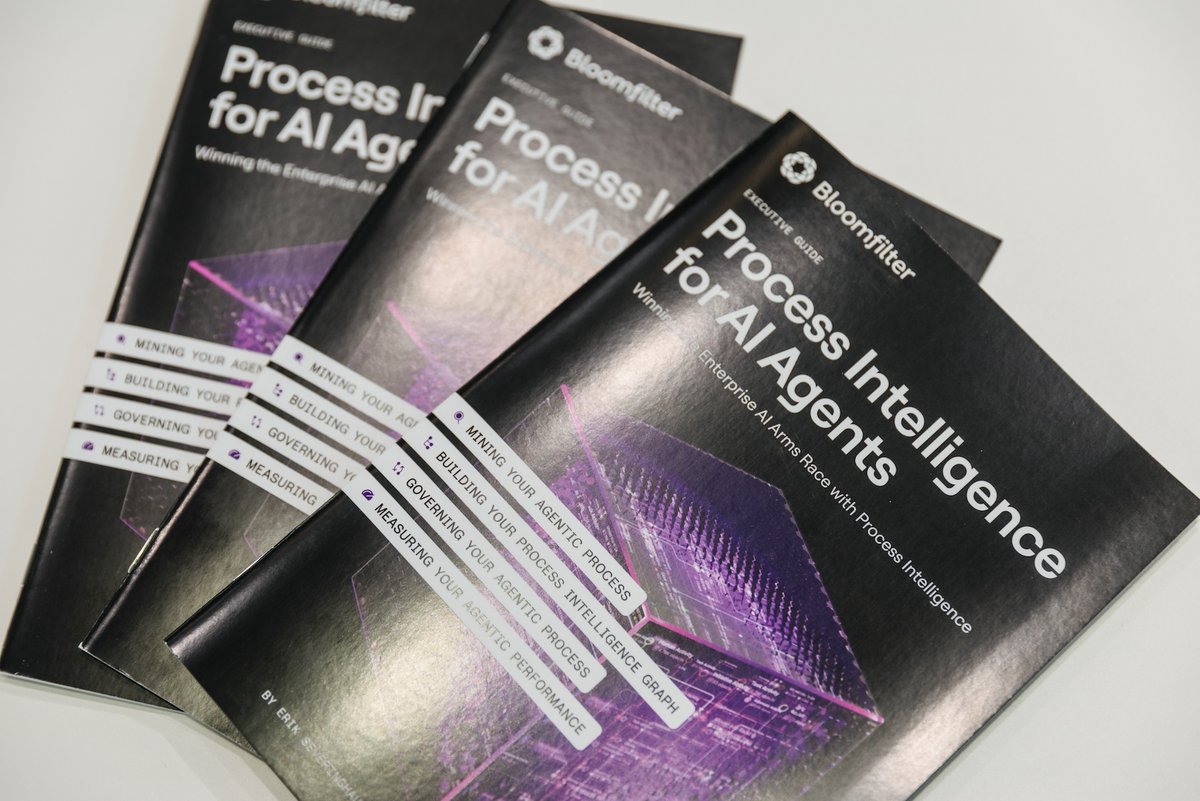
Learn how to make AI actually work inside your organization: bloomfilter.ai/resources/pro…
2
Mar 19
Two agents can independently complete their tasks correctly, and still create conflicts when their work overlaps.
This is due to a lack of coordination.
And coordination requires awareness of what else is happening across the system, not just the task in front of the agent.

4
Mar 18
Compliance isn’t slowing you down.
Manual compliance is.
Engineers ship in hours.
Compliance validates in weeks.
The best teams don’t produce compliance.
They observe engineering.

4
Mar 17
If your AI agents feel underwhelming, it's not because of the model.
Without context, AI makes your problems visible faster instead of fixing the process.
With it, agents stop being demos and start becoming operators.

4
Mar 16
Everyone is deploying AI agents, but most can't answer a simple question: Are they actually working?
Agent mining makes AI workflows observable by measuring agent vs human performance, cost, and cycle time.
AI performance = models data process.

11