
We are The IFAB. We govern and develop the Laws of the Game of association football. Follow the news! fb.com/theifab
Joined February 2016
- Tweets 4,362
- Following 333
- Followers 45,088
- Likes 699
2,463 Photos and videos
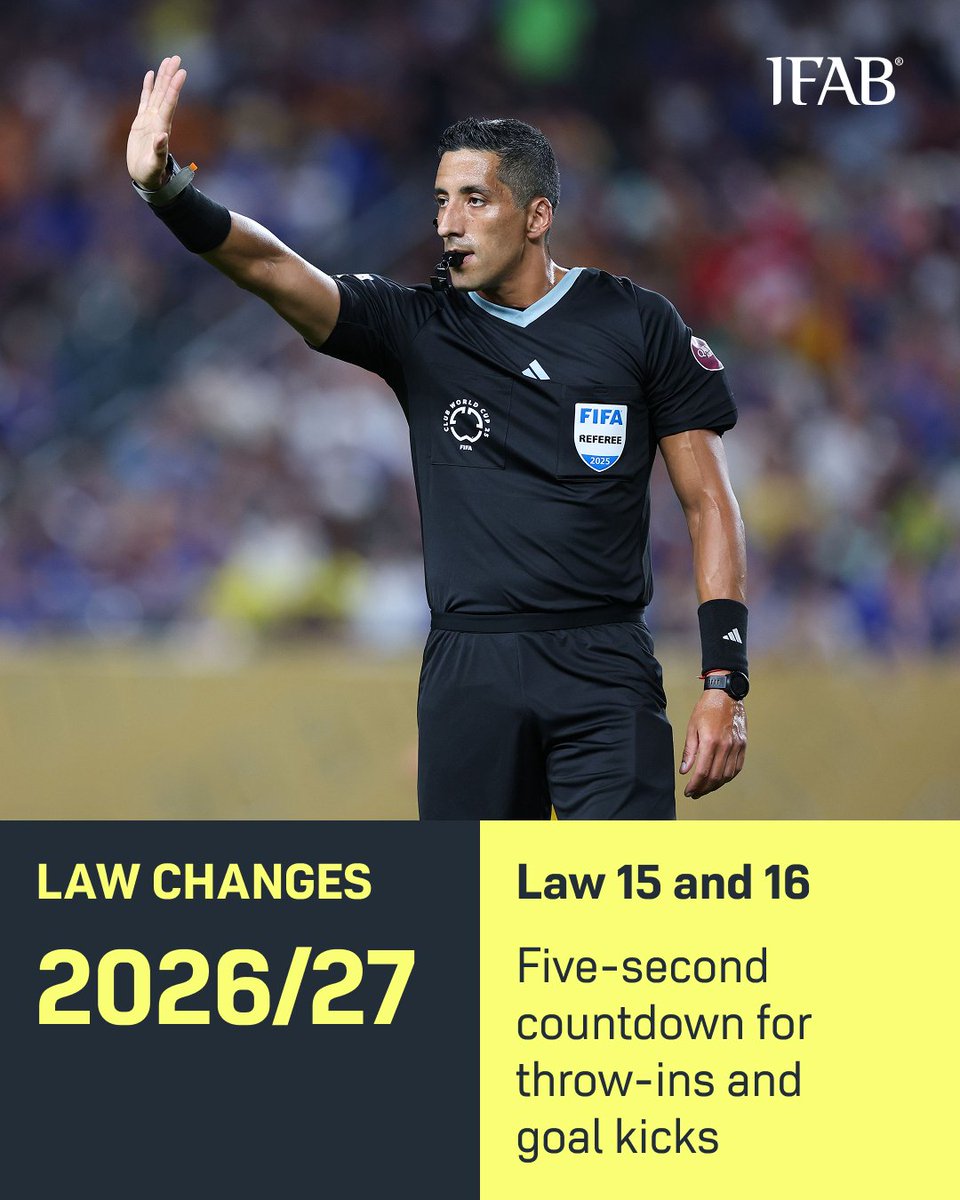


The Laws of the Game 2026/27 are now available on all IFAB platforms in English, French, German, and Spanish!
➡️ App: bit.ly/Laws_App_
➡️ Website: theifab.com
➡️ Law changes section: bit.ly/Changes26_27
➡️ PDF: bit.ly/Laws_PDF_26_27
➡️ Printed book: bit.ly/Laws2026_27
The new Laws will all be used at the @FIFAWorldCup.
The Laws of the Game 2026/27 officially take effect from 1 July 2026. Competitions starting before that date may implement the changes earlier or delay their implementation until no later than the start of the next competition.
7
81
170
21,322
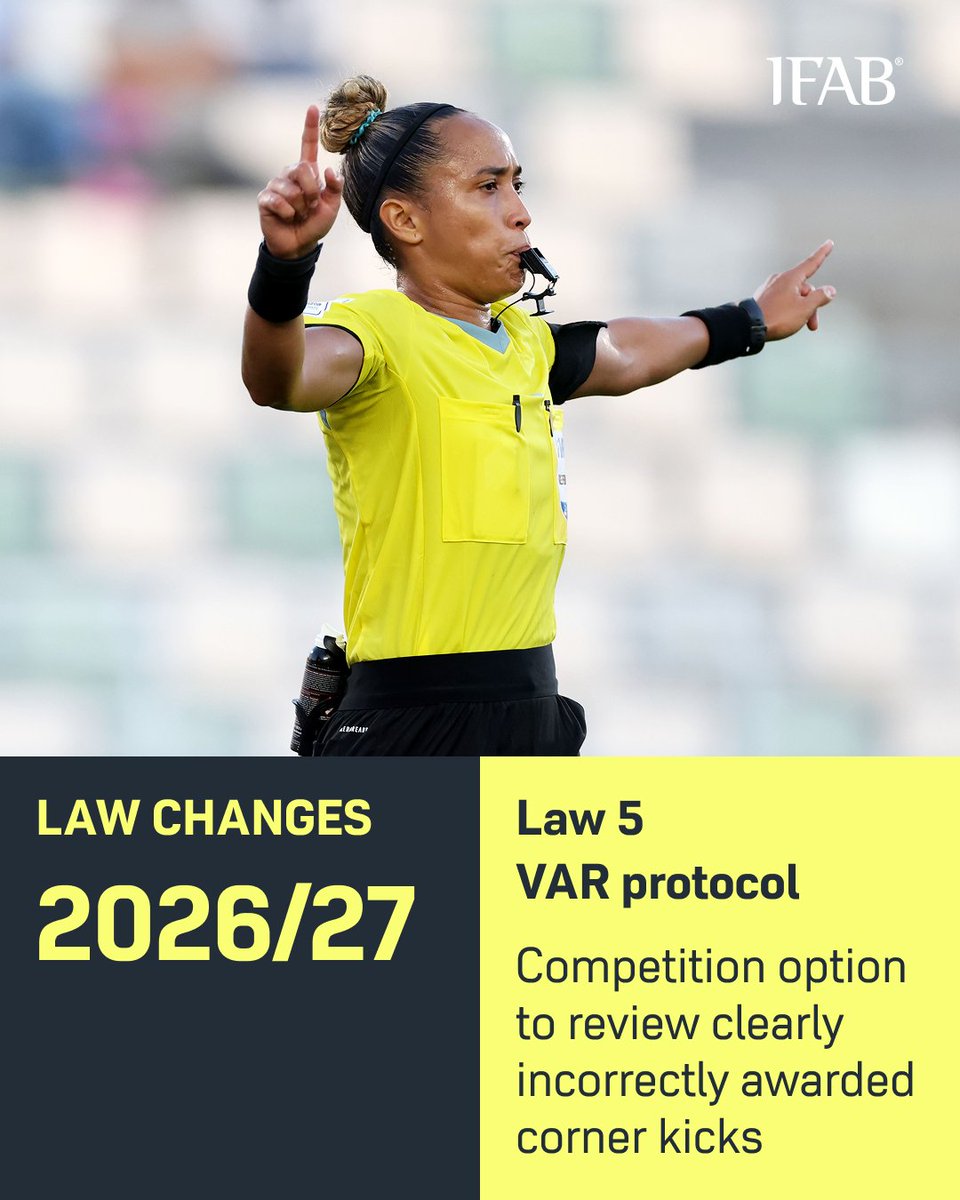
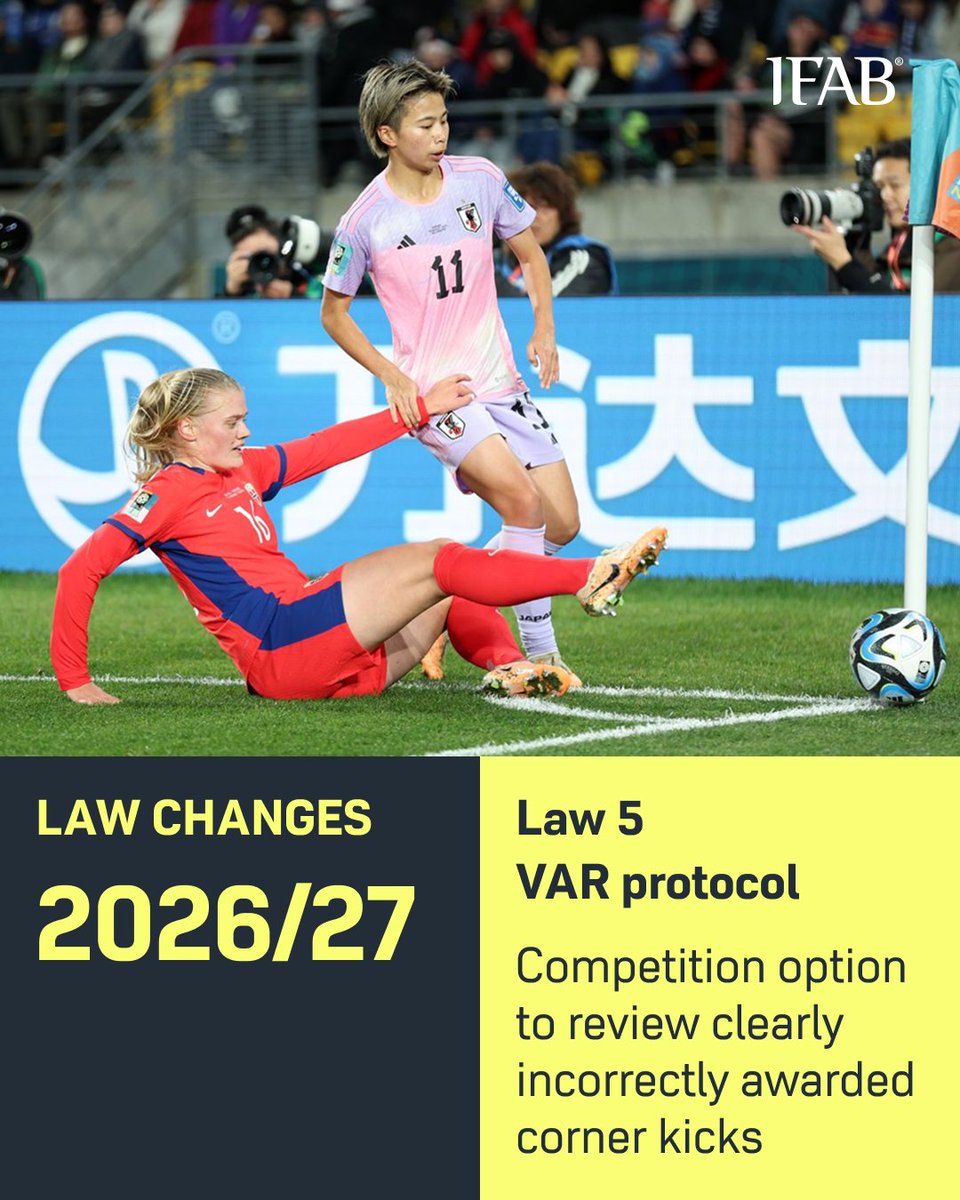
Competitions may permit the referee to be assisted by a Video Assistant Referee (VAR) in relation to a clearly incorrectly awarded corner kick (including when the ball has gone out of play over the touchline) provided that this can be done immediately and without delaying the restart.
Keep up to date with all changes: bit.ly/Changes26_27
Download the official Laws of the Game app: bit.ly/Laws_App_
2
11
18
3,064
If a corner kick is clearly incorrectly awarded and the decision is changed after receiving information from the VAR, the referee must show the ‘TV signal’ at the end of the review process. However, if the corner kick is taken quickly, then the original decision cannot be changed.
2
9
11
2,314
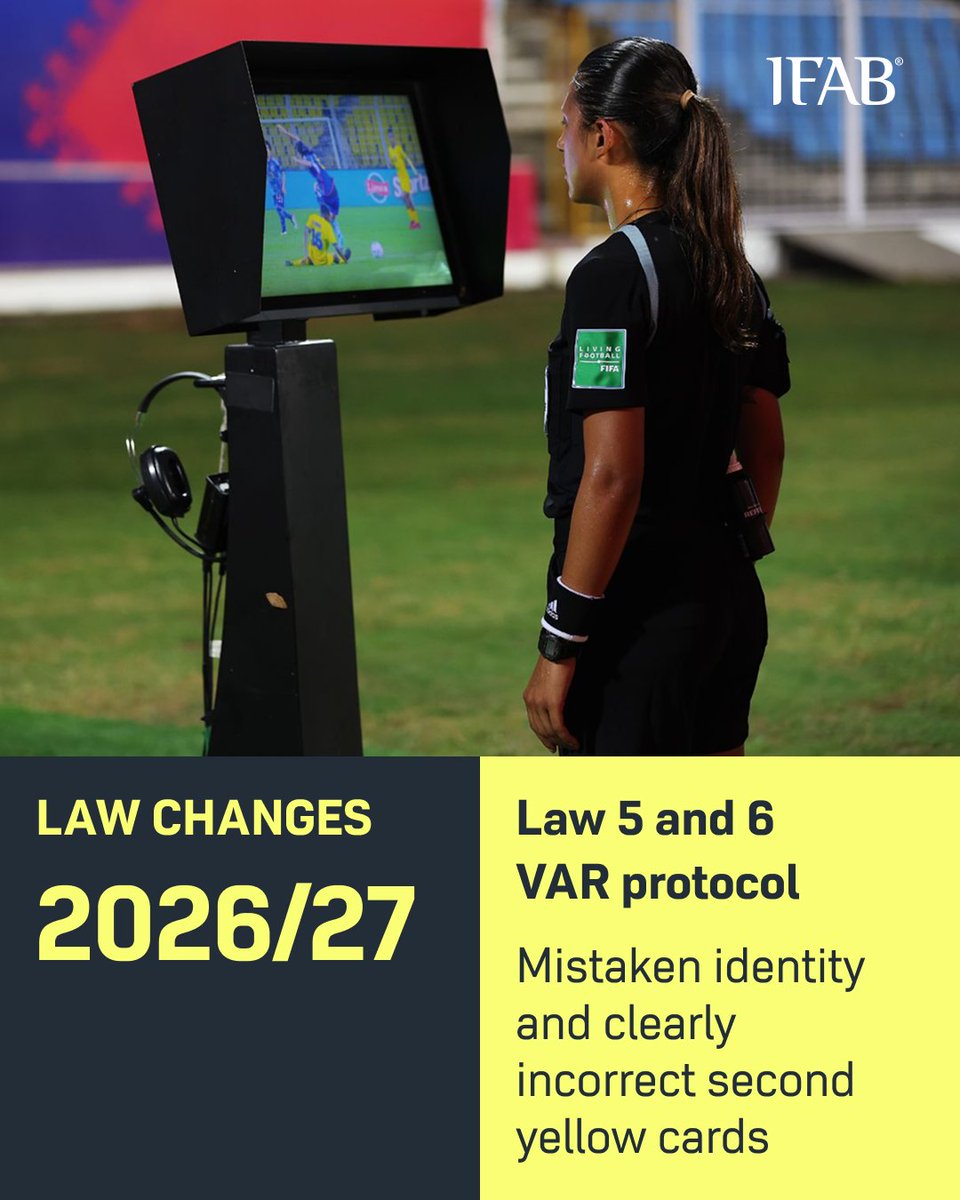
VAR may now review two infrequent but potentially match-changing decisions/incidents:
➡️ An incorrect red card resulting from a clearly wrong second yellow card
➡️ A player wrongly being shown a yellow or red card when the offence was committed by another player of either team; the offence itself cannot be reviewed except in the context of mistaken identity
Keep up to date with all changes: bit.ly/Changes26_27
Download the official Laws of the Game app: bit.ly/Laws_App_
32
80
219
111,341
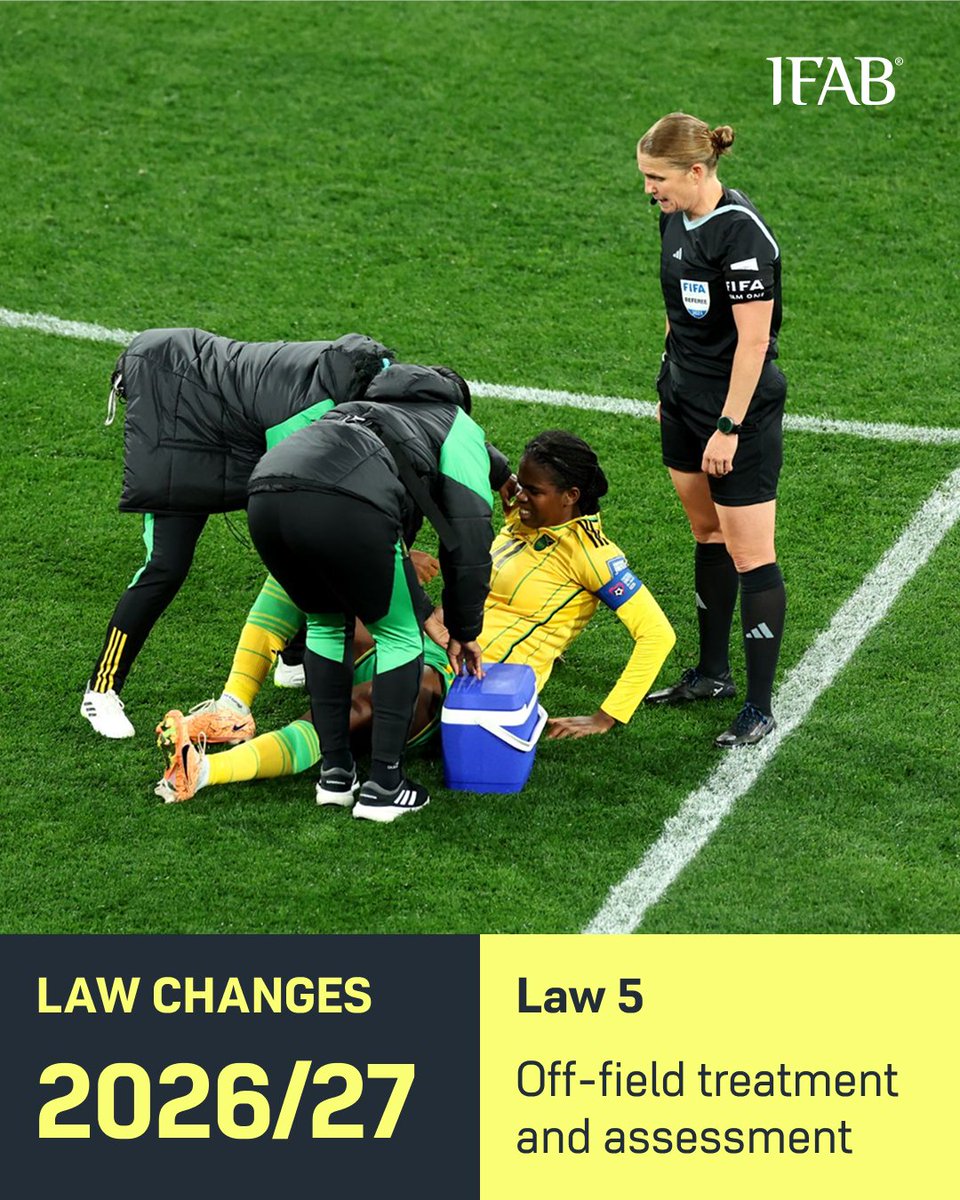
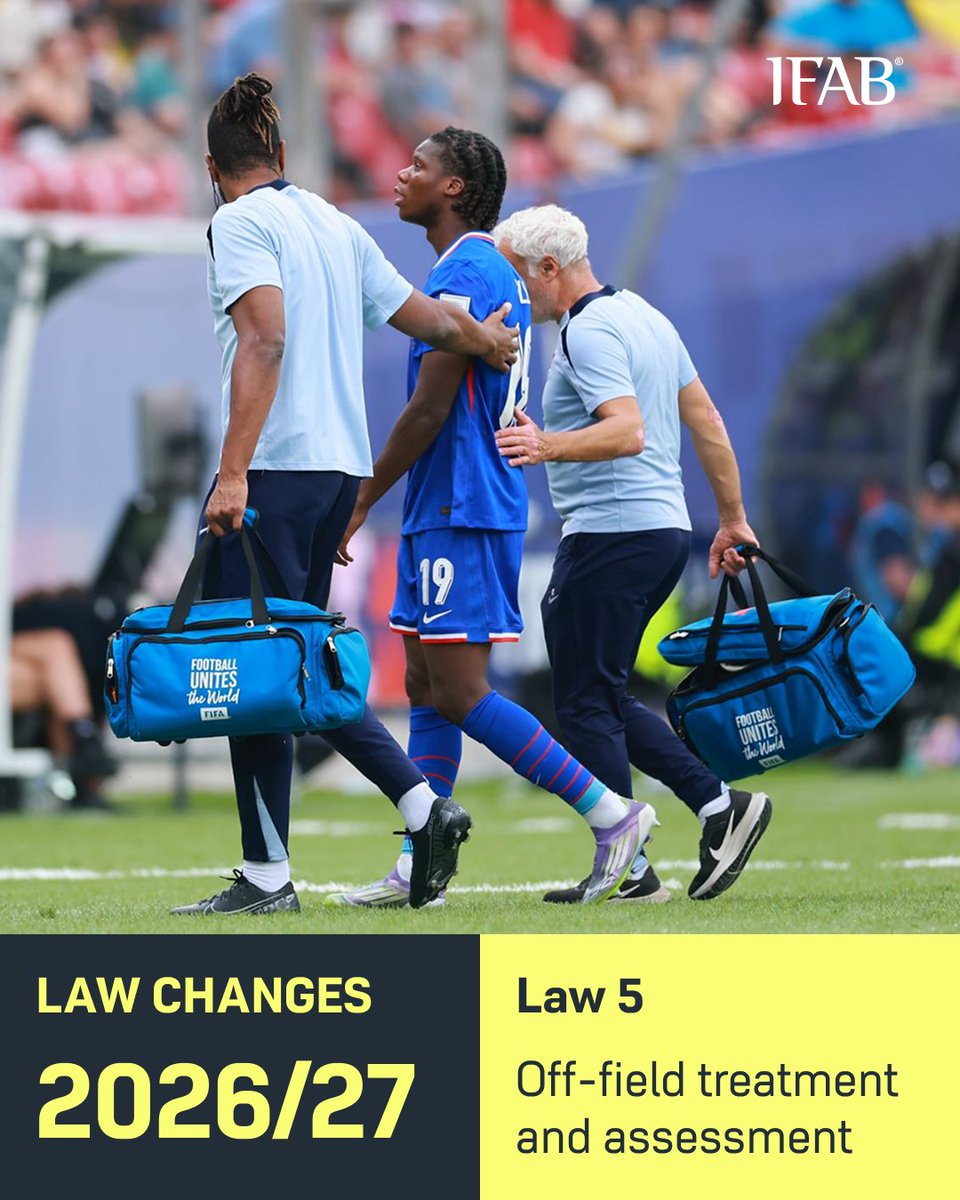
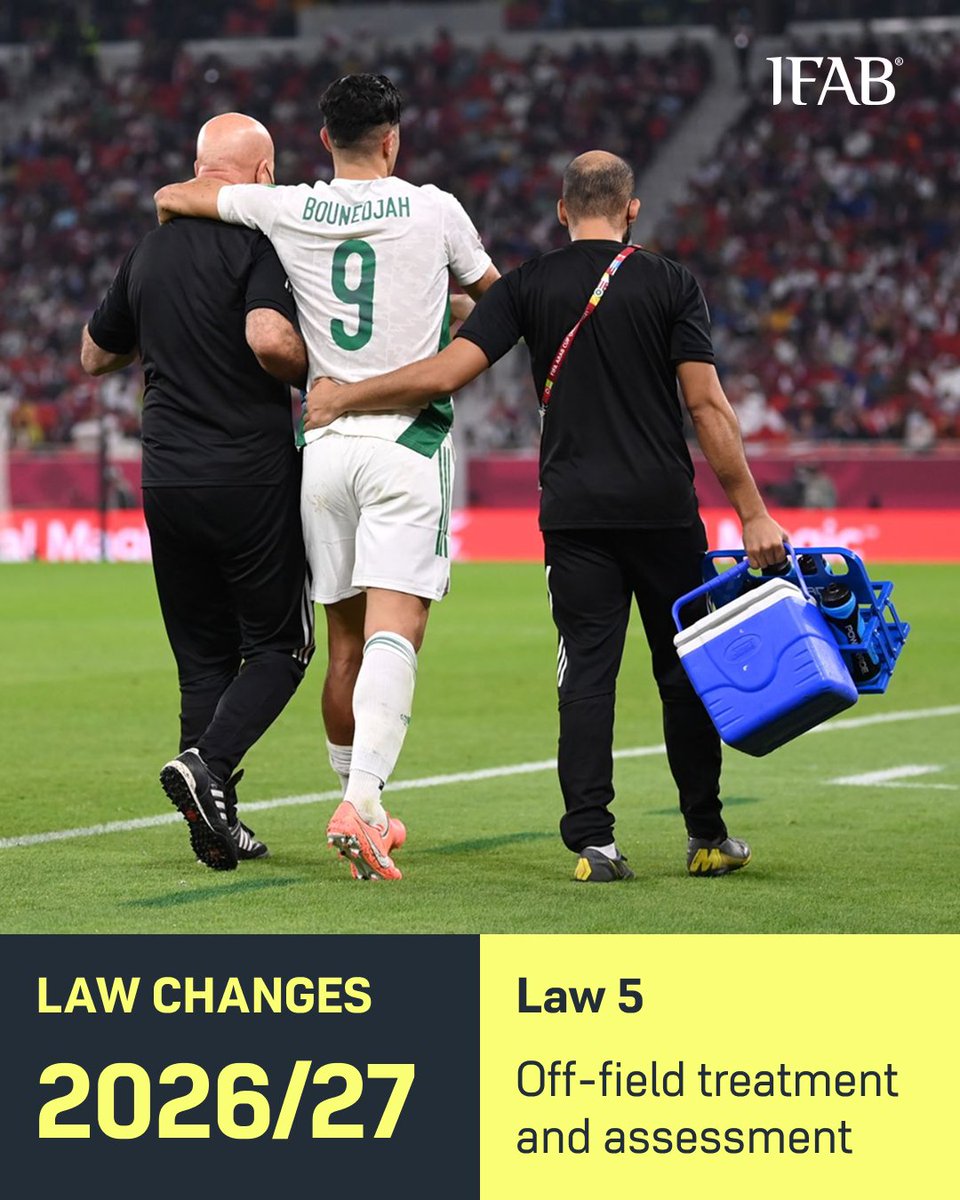
Barring certain exceptions, an injured player who is treated or assessed on the field of play or who causes play to be stopped must leave and remain off the field of play for ONE MINUTE after play has restarted.
The referee may allow the player to return while the ball is in play.
The purpose is to give the medical staff the necessary time off the field of play to evaluate the player’s injury and determine whether they should continue playing, as well as to reduce disruption to the tempo of the match.
Find out more: bit.ly/Injuries_Treatment
Keep up to date with all changes: bit.ly/Changes26_27
Download the official Laws of the Game app: bit.ly/Laws_App_
2
8
27
4,924
PROCEDURE
An outfield player is required to leave the field of play for one minute after the restart in the event of one or more of the following:
➡️ play is stopped because the player has an actual or suspected injury
➡️ the referee has signalled for the medical staff to enter the field
➡️ the referee has asked the player if they require on-field medical attention and the player has requested it
The medical staff should be given sufficient time to carry out an initial assessment on the field but should not treat the player on the field unless it is a serious injury.
After any initial assessment, the player must leave the field of play (except as outlined in the ‘Off-field treatment and assessment protocol’ under ‘Notes and modifications’) and remain off it until play has restarted and one minute has elapsed (running clock).
ONE MINUTE PERIOD OFF THE FIELD OF PLAY
➡️ The one-minute period off the field of play begins when play restarts.
➡️ The one minute is timed using a running clock and is determined by the referee, who may be assisted by the other match officials.
➡️ The player may only return with the referee’s permission; they must re-enter from the touchline if the ball is in play but may re-enter from any boundary line if the ball is not in play.
➡️ If the injured player is substituted, the substitution is not delayed.
➡️ If the first half ends before the one minute has elapsed, the player may return as from the beginning of the second half; this principle applies to:
– the period between the end of normal time and the start of extra time
– half-time in extra time
– the period between the end of extra time and penalties (penalty shoot-out)
1
3
9
1,763
A player is NOT required to leave the field of play for one minute for and/or after the treatment when:
➡️ the player:
– indicates that they do not require medical attention, except where play was stopped for the injury; or
– voluntarily leaves the field during play or a stoppage, provided that this does not delay the restart
➡️ there is an injury for which Law 5 permits a player to be treated on the field of play:
– a goalkeeper is injured
– a goalkeeper and an outfield player have collided and need attention
– players from the same team have collided and need attention
– a severe injury has occurred, especially a head injury (e.g. concussion), cardiac issue or life-threatening event (e.g. seizure, choking etc.)
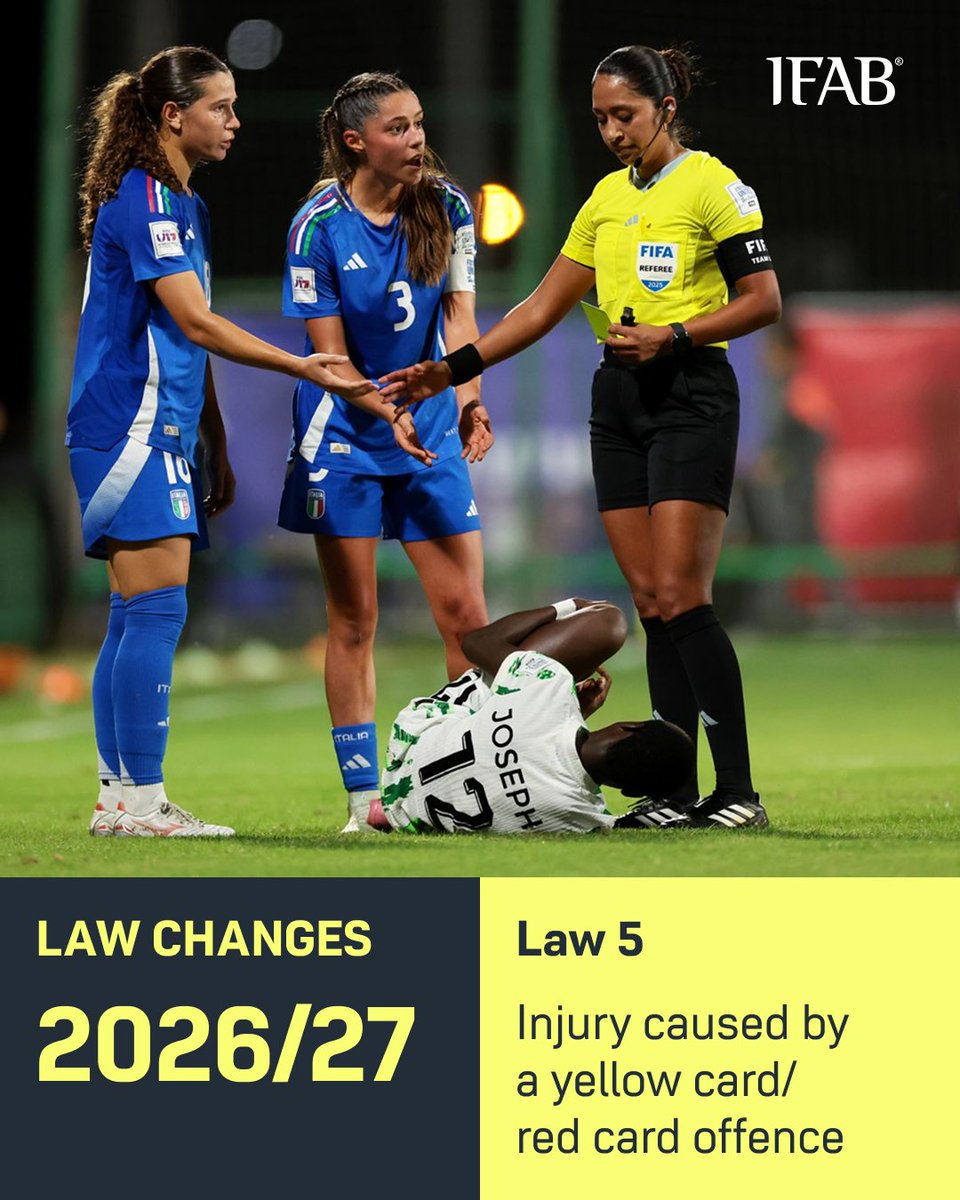
– a player is injured as the result of a physical offence for which the opponent is cautioned or sent off (e.g. a yellow card for reckless or red card for serious foul challenge), even if the assessment/treatment is not completed quickly
2
7
1,109
The Laws of the Game are the heartbeat of football: the official guide that keeps the game fair, clear and consistent all over the world, from the @FIFAWorldCup to grassroots level.
With Football Rules, The IFAB is making the Laws even more accessible. It takes the same principles and the same official Laws, and presents them in a simpler, more everyday way to help everyone understand football better, wherever they play, coach, officiate or follow the game.
Available in five languages, online and as an app, Football Rules helps answer fans’ questions about the game, with links back to the full Laws of the Game for those who want to go deeper.
Want to take a look?
➡️ Visit footballrules.com
➡️ Download or update the Football Rules app
➡️ Follow theifab on Instagram
21
42
3,637
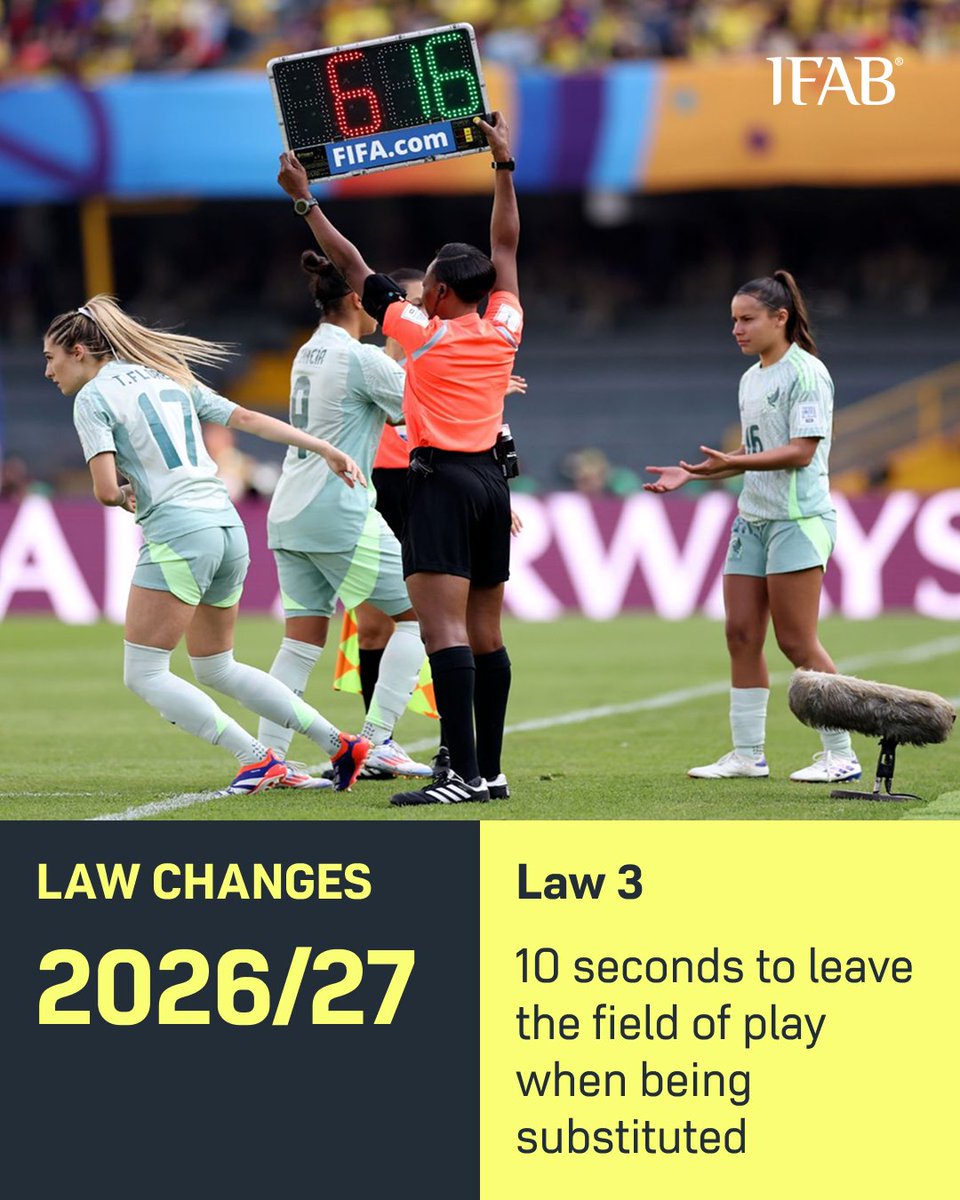
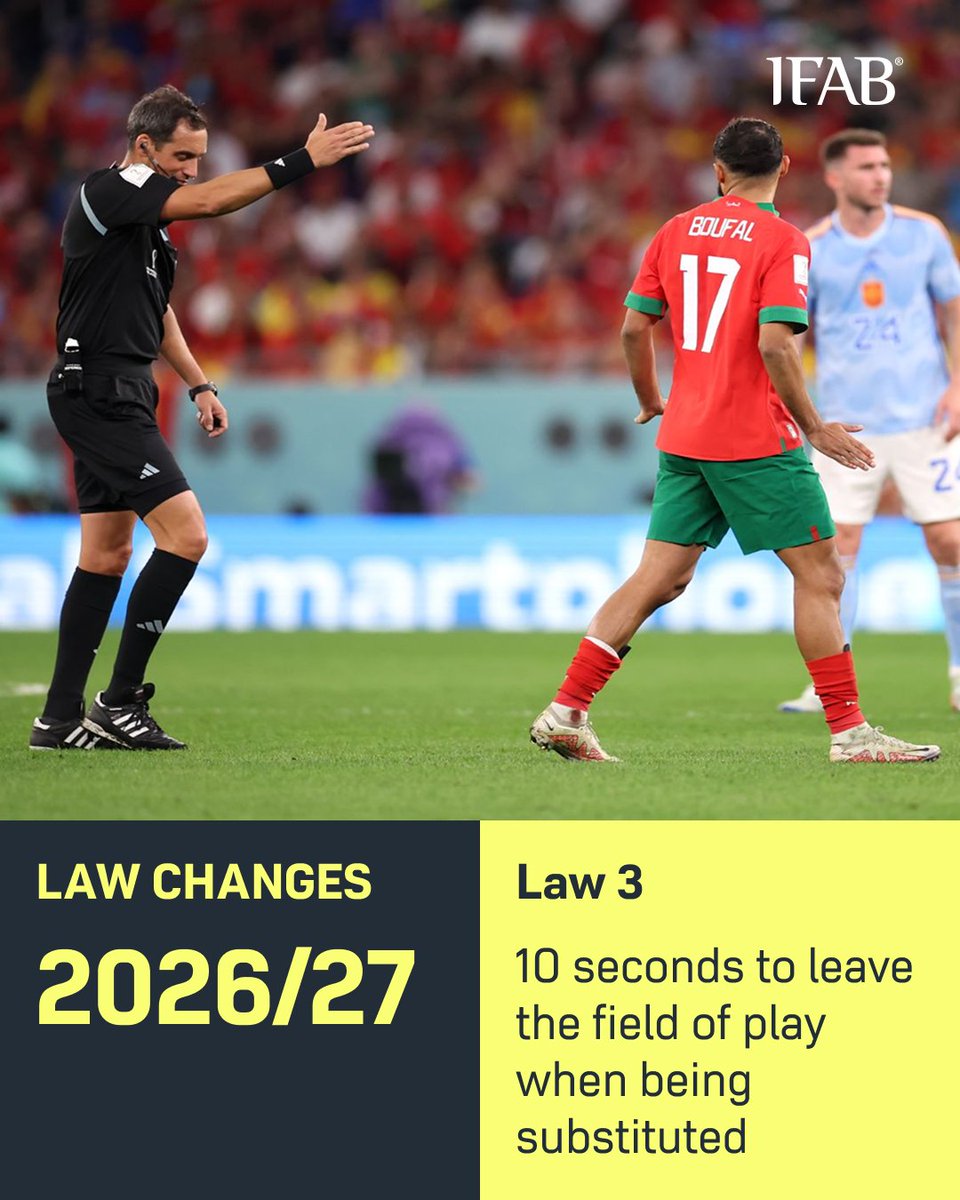
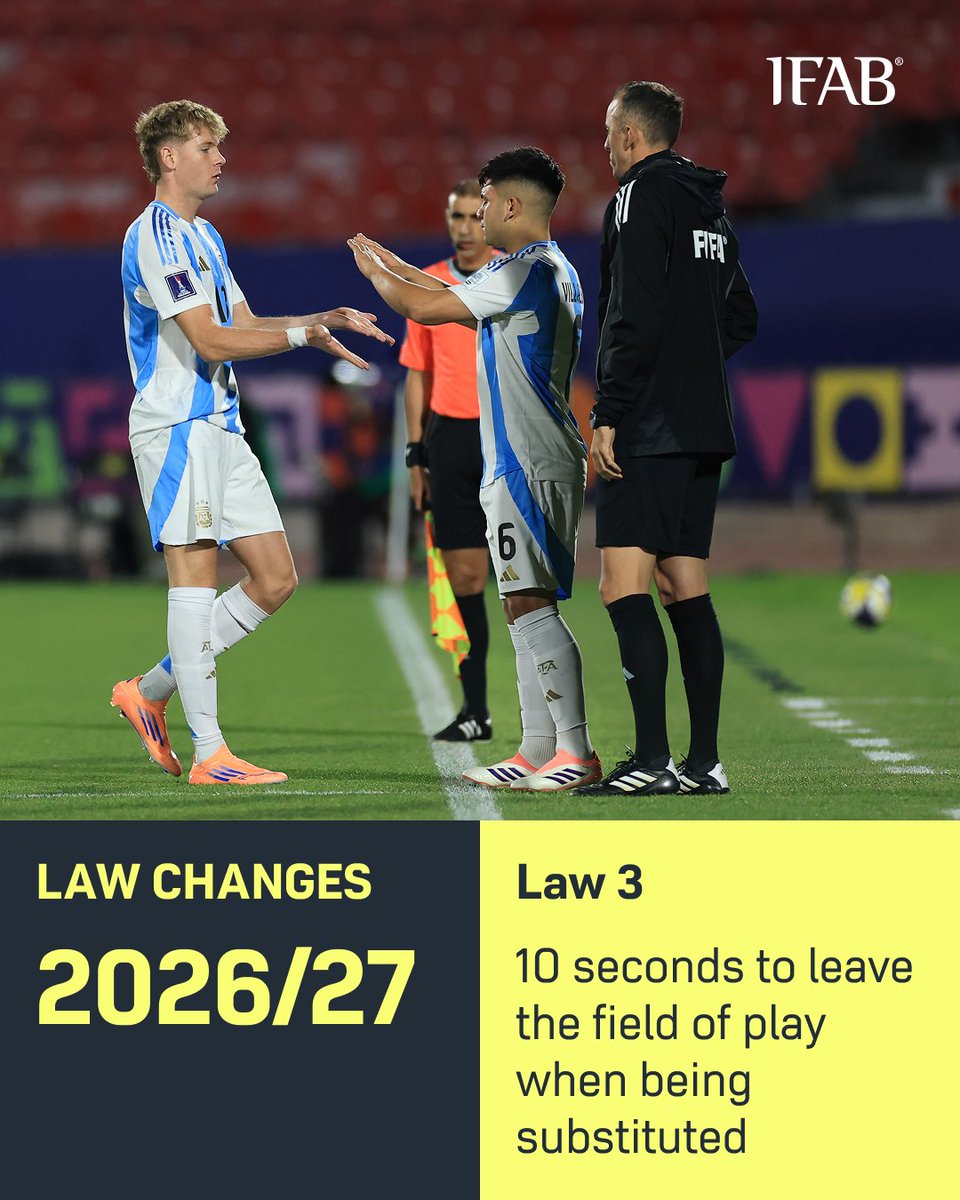
To prevent time-wasting, the player being substituted must leave the field of play within TEN SECONDS of the substitution board being shown or, where there is no board, of the referee’s signal for the substitution to take place.
Where the ten seconds are exceeded and the substitute is prevented from entering the field of play, the player being substituted is only cautioned (yellow card) if the delay is excessive.
Find out more: bit.ly/Ten-second_substituti…
Keep up to date with all changes: bit.ly/Changes26_27
Download the official Laws of the Game app: bit.ly/Laws_App_
1
33
63
6,852
If the player being substituted has not left the field of play within the ten seconds:
➡️ they must still leave as quickly as possible
➡️ play restarts
➡️ the substitute cannot enter the field until the first stoppage after one minute* has elapsed following the restart of play
➡️ the substitution cannot be cancelled nor a different substitute used
*The one minute is timed using a running clock and is determined by the referee, who may be assisted by the other match officials.
4
3
20
2,871
Where there is more than one substitution and/or both teams make substitutions during the same stoppage, all the substituted players (from both teams) must leave the field of play within ten seconds of the substitution board being shown/signal being given for the final substitution.
The board/signal must not be delayed between substitutions that are made during the same stoppage.
4
4
17
2,402
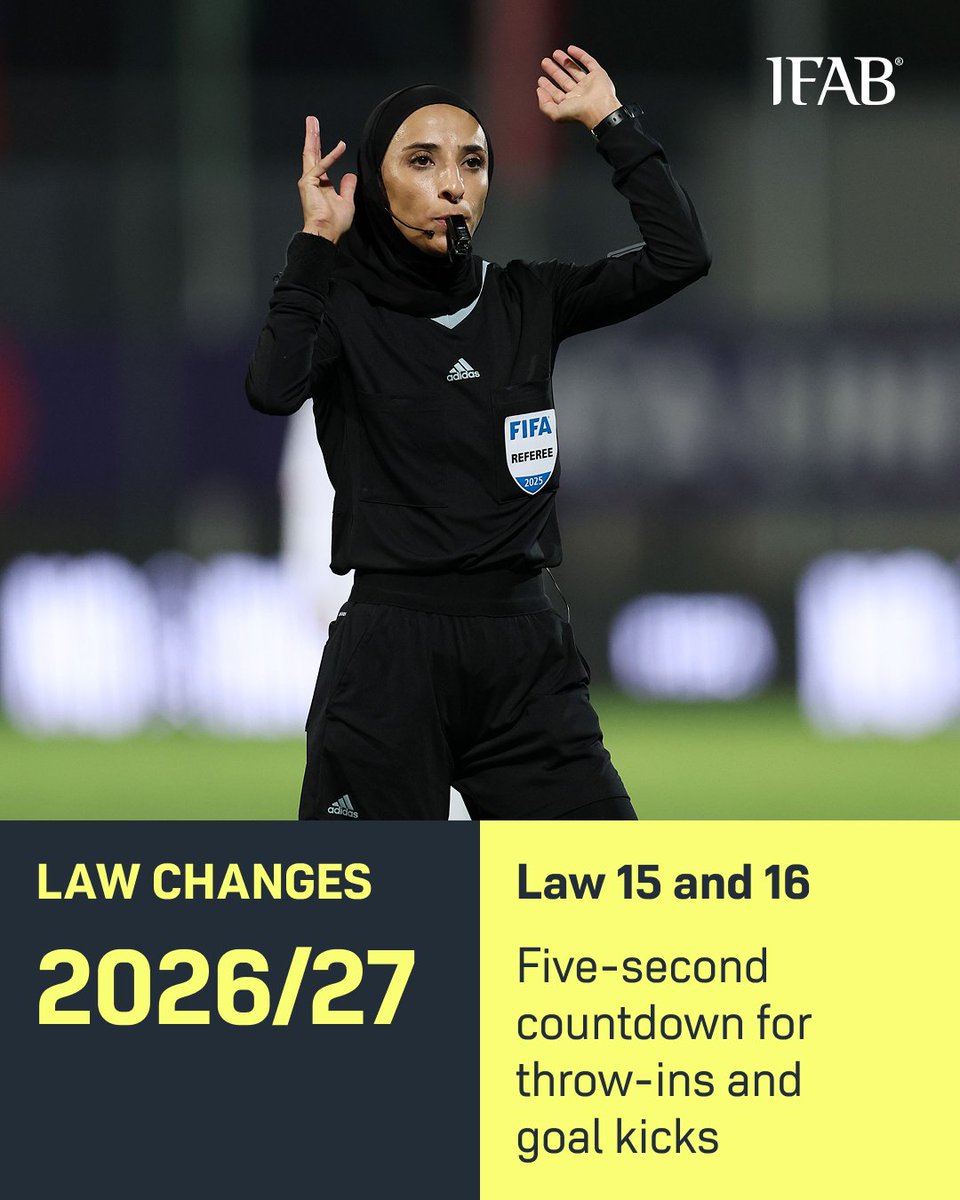
If a team is unfairly delaying the taking of a throw-in/goal kick for their team, the #referee will:
✅ whistle
✅ signal for the restart to be taken, and then
✅ visually count down the FIVE SECONDS with a raised hand
Find out more: bit.ly/5-second_countdown
Keep up to date with all changes: bit.ly/Changes26_27
Download the official Laws of the Game app: bit.ly/Laws_App_
3
22
63
9,804
If the ball is not in play by the end of the five-second countdown, the referee awards:
➡️ the throw-in to the opposing team, to be taken from the same position as the original throw-in
➡️ a corner kick to the opposing team on the side of the field closest to where the goal kick was to be taken
Where the restart is awarded to the opposing team, a caution (yellow card) applies only if the player or a team-mate then excessively delays the restart by the opposing team.
1
2
15
1,641
The IFAB clarifies VAR protocol for attacking-team offences before the ball is in play ➡️ bit.ly/VAR_clarification
11
46
78
109,514
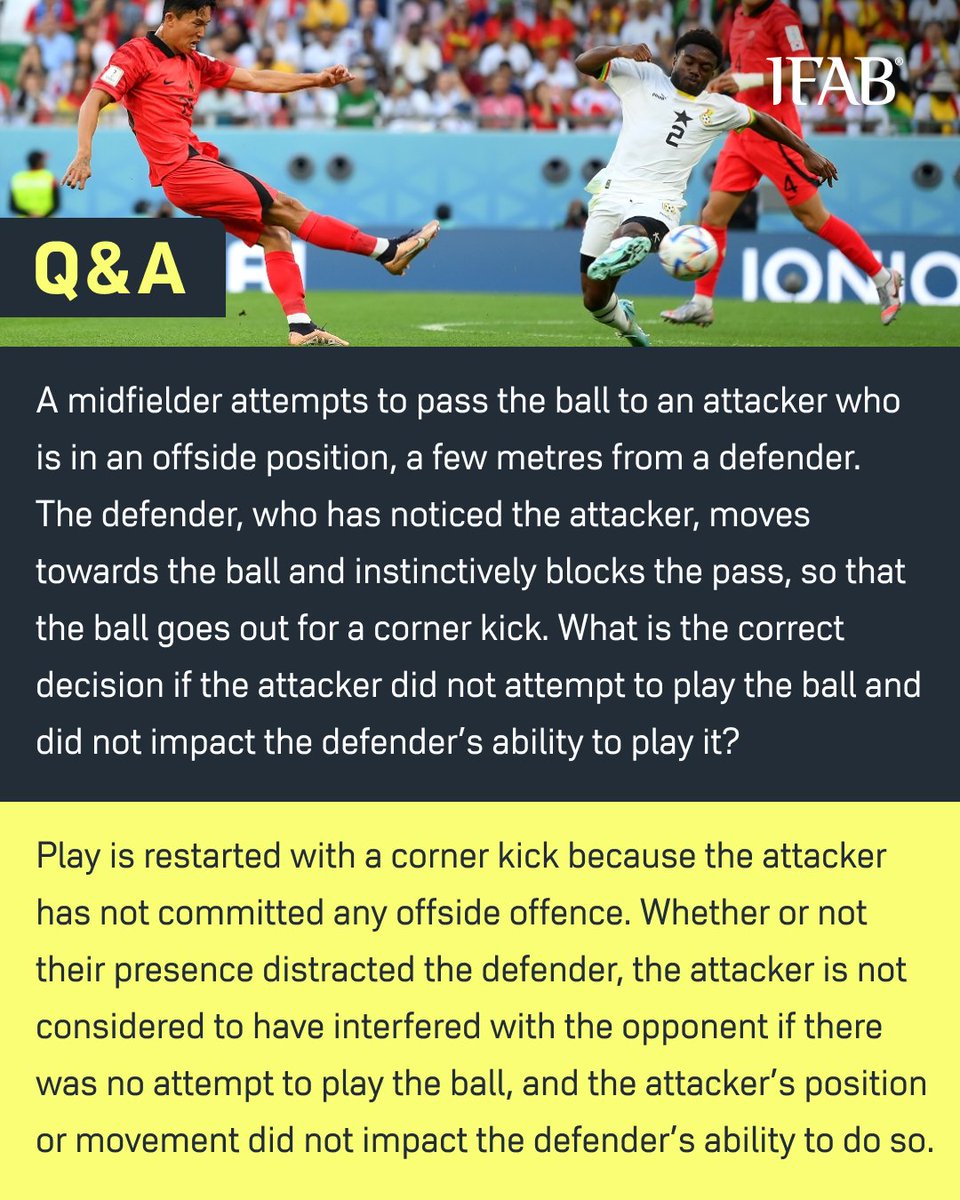
A midfielder attempts to pass the ball to an attacker who is in an offside position, a few metres from a defender. The defender, who has noticed the attacker, moves towards the ball and instinctively blocks the pass, so that the ball goes out for a corner kick.
What is the correct decision if the attacker did not attempt to play the ball and did not impact the defender’s ability to play it?
Find out more:
➡️ bit.ly/OffsidePosition_
➡️ bit.ly/Offside_Offence_
Download the official app:
➡️ bit.ly/LawsAppAndroid
➡️ bit.ly/LawsApp_iOS
3
7
27
3,652
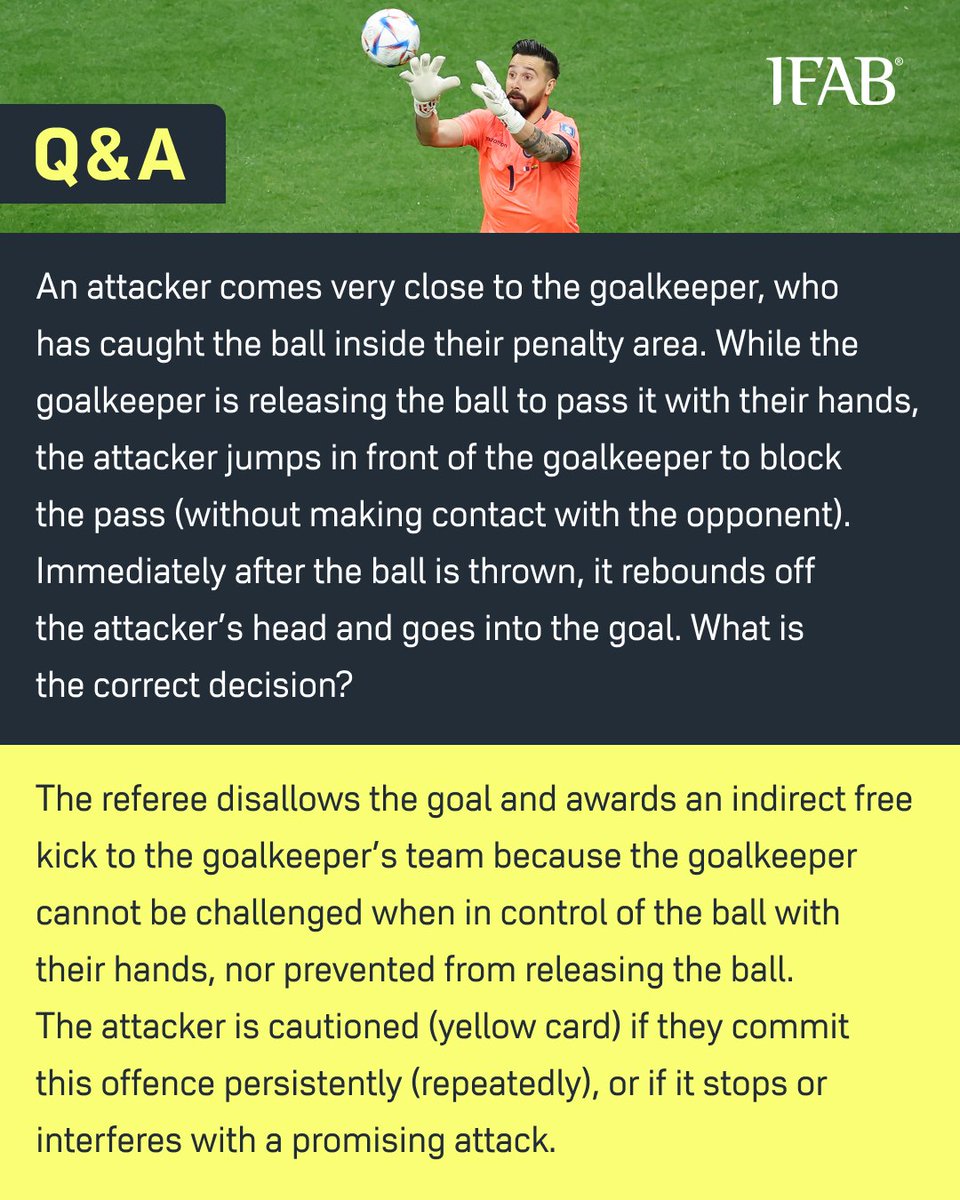
An attacker comes very close to the goalkeeper, who has caught the ball inside their penalty area. While the goalkeeper is releasing the ball to pass it with their hands, the attacker jumps in front of the goalkeeper to block the pass (without making contact with the opponent). Immediately after the ball is thrown, it rebounds off the attacker’s head and goes into the goal.
What is the correct decision?
➡️ bit.ly/IndirectFreeKick_
➡️ bit.ly/_Sanctions
Download the official app:
➡️ bit.ly/LawsAppAndroid
➡️ bit.ly/LawsApp_iOS
2
9
27
2,768
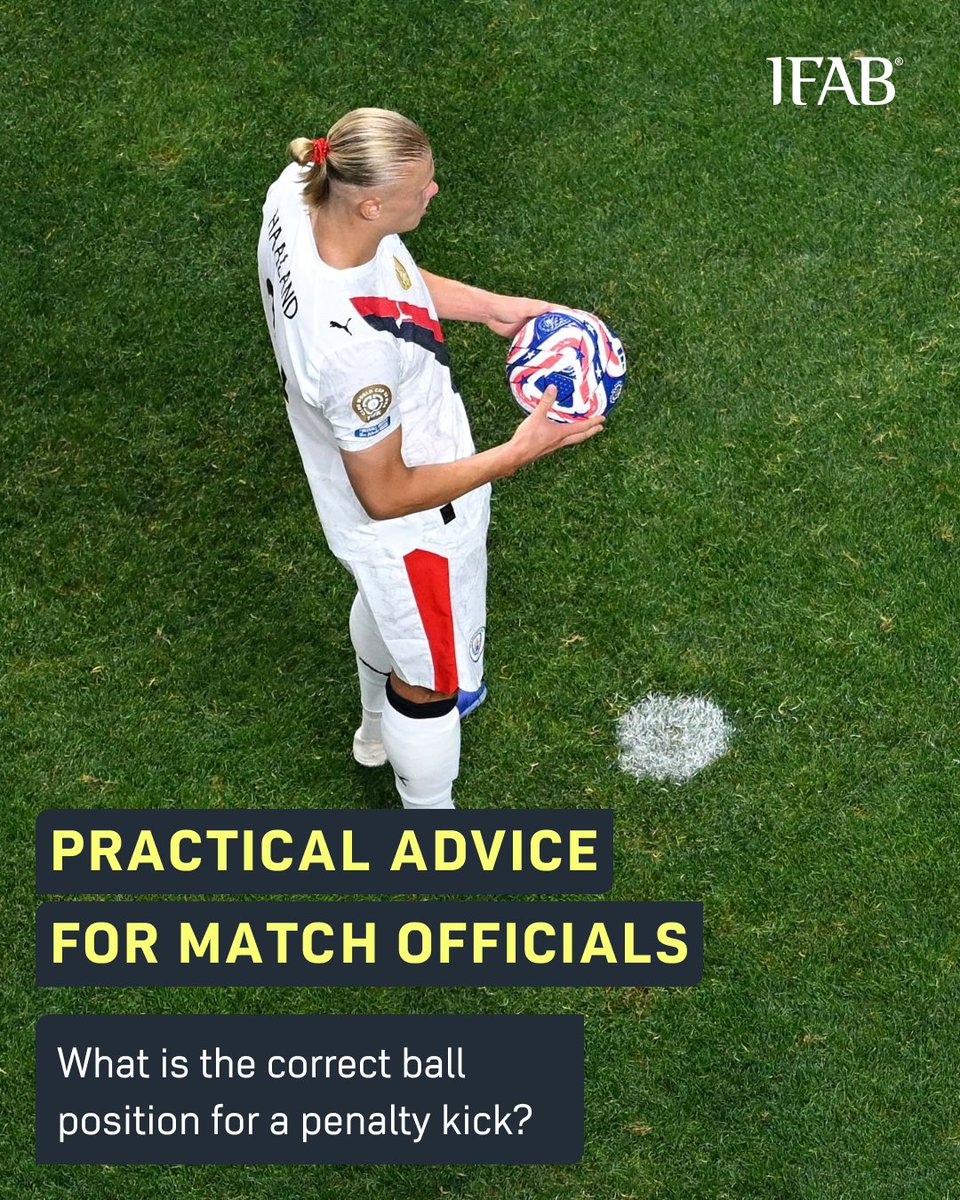
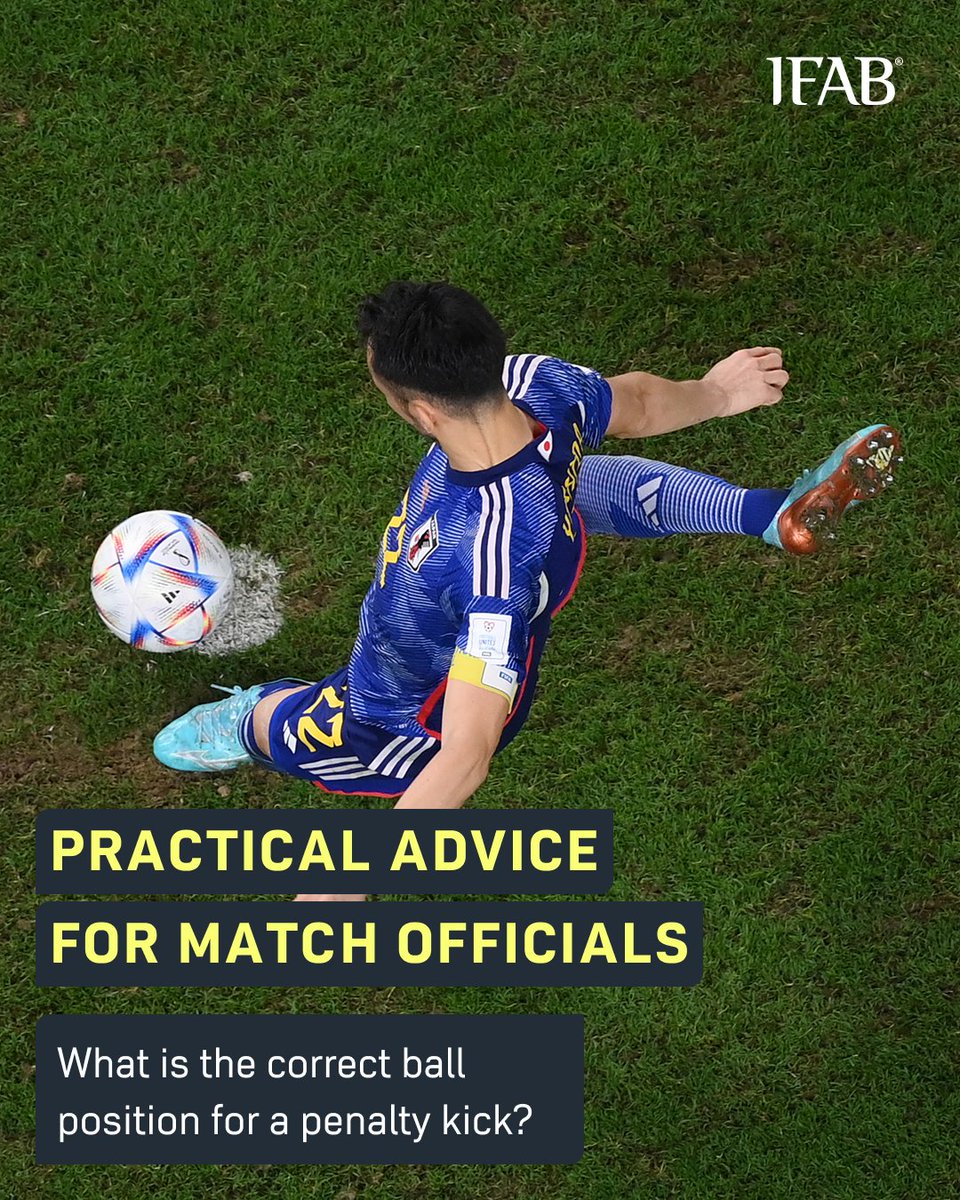
The position of the ball for a penalty kick is correct if part of the ball:
➡️ touches the centre of the penalty mark, and/or
➡️ overhangs the centre of the penalty mark (in the air)
Law 14 does NOT require the ball to be:
➡️ wholly on the penalty mark
➡️ touching the penalty mark
1
6
24
3,089
As long as any part of the ball is over the centre of the penalty mark, it is correctly positioned, and the referee allows the kick to be taken.
If this condition is not met (e.g. the ball overhangs the penalty mark, but not the centre of the mark), the #referee instructs the player taking the kick to adjust the ball position before it is kicked.
Practical advice: The kicker may slightly change the ball position if this is justified by the ground conditions and permitted by the referee.
3
10
1,558
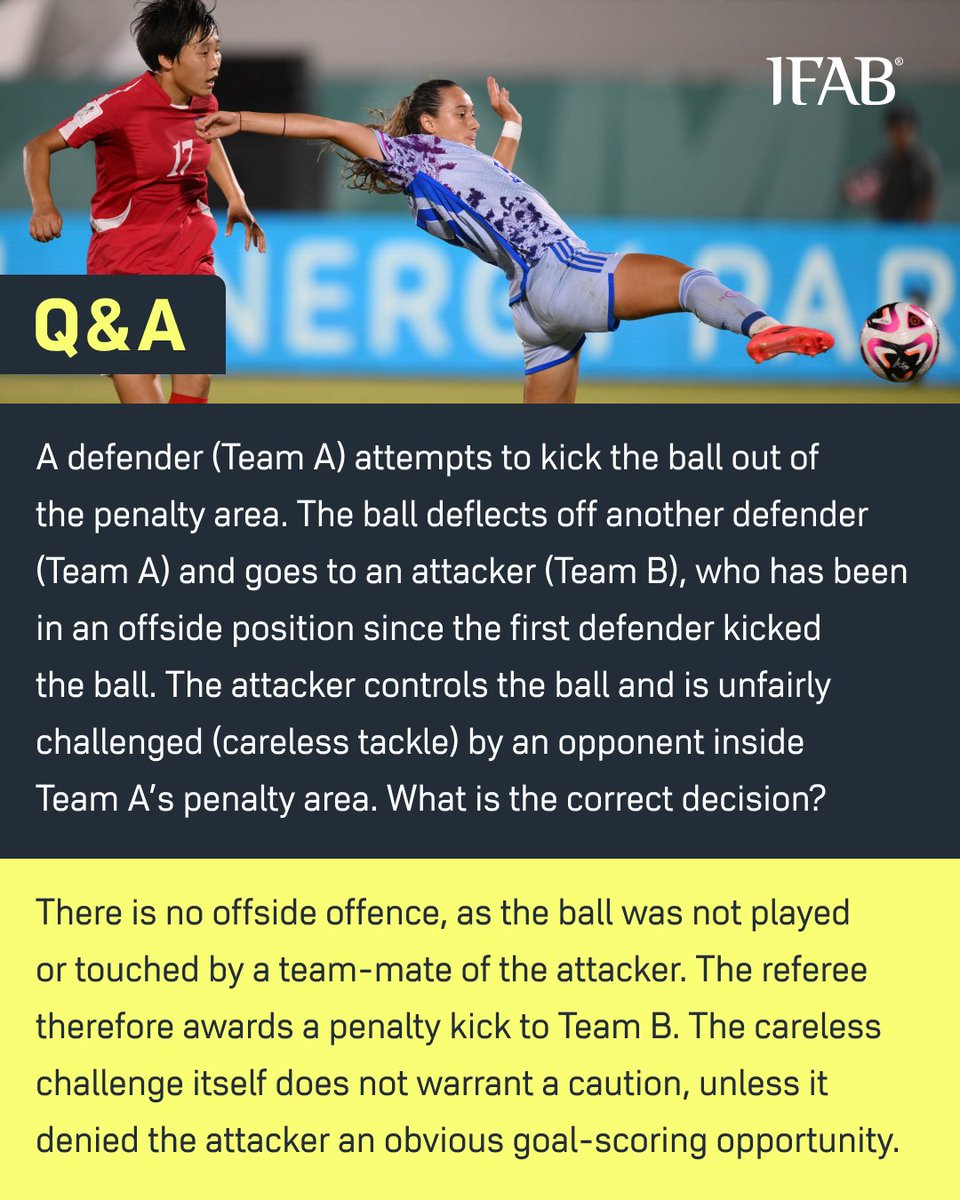
A defender (Team A) attempts to kick the ball out of the penalty area. The ball deflects off another defender (Team A) and goes to an attacker (Team B), who has been in an offside position since the first defender kicked the ball. The attacker controls the ball and is unfairly challenged (careless tackle) by an opponent inside Team A’s penalty area.
What is the correct decision?
Find out more:
➡️ bit.ly/Offside_Offence_
➡️ bit.ly/DirectFreeKick_
➡️ bit.ly/Penalty_Kick_
➡️ bit.ly/_Sanctions
Download the official app:
➡️ bit.ly/LawsAppAndroid
➡️ bit.ly/LawsApp_iOS
6
13
2,632