
Joined January 2013
- Tweets 2,617
- Following 860
- Followers 1,158
- Likes 4,862
92 Photos and videos












Pinned Tweet

13 Jan 2025
Mammoths Study The Modular Barbell.
The modular barbell is about splitting the stack into two extreme specializations for better performance and scalability:
🪶Lightweight rollups for execution (flexible, efficient).
🦣Robust base layer for consensus and data availability (secure, immutable).
Here's what I learned. 🧵🦣
(1/6)

20 Dec 2024

Study the modular barbell.
Study mammal harmony.
Study lazy nodes & mammoth blocks.
Study Musalbas.
Study Mamosloth. 🦣 🦥
Study
Mammoths
🦣
4
21
149
22,271

Built using Evolve (@ev_stack) SDK and Celestia for blockspace, @xomarket is a permissionless conviction market protocol where anyone can create a market on any topic, with AI-first resolution and a decentralised jury as fallback.
XO's architectural differentiators enabled by this stack:
- runs its AI oracle, LS-LMSR liquidity engine, and creator fees as native protocol logic
- avoids competing with unrelated activity for blockspace when live events drive spikes in volume
- inherits decentralised security without bootstrapping its own validator set
Today the team announced a $6M seed round led by @20vcFund and @picuscap, with @cbventures, and others. XO has done ~$300M in trading volume since winning Celestia's Mammothon hackathon in 2025.

13
49
243
23,164
800K collectors, 8M NFTs from Disney, Marvel, Star Wars and more are processed by @veve_official, an application on top of @CollectChain, built using the Evolve (@ev_stack) SDK and using Celestia for blockspace.
@CollectChain is a purpose-built chain for licensed digital collectibles, enforcing royalties and licensing rules onchain.
By using @ev_stack for execution and Celestia for blockspace, @CollectChain:
- gets 250ms finality for the transactions it processes,
- retains control over execution, fees and its own upgrade schedule, and
- inherits decentralised security guarantees by posting its block data to Celestia without the unnecessary operational, engineering, or financial bulk of bootstrapping a validator set, among other benefits.
The article below describes an architecture that allows products to spend less time operating network infrastructure, and more time building for its users.
10
55
336
39,300
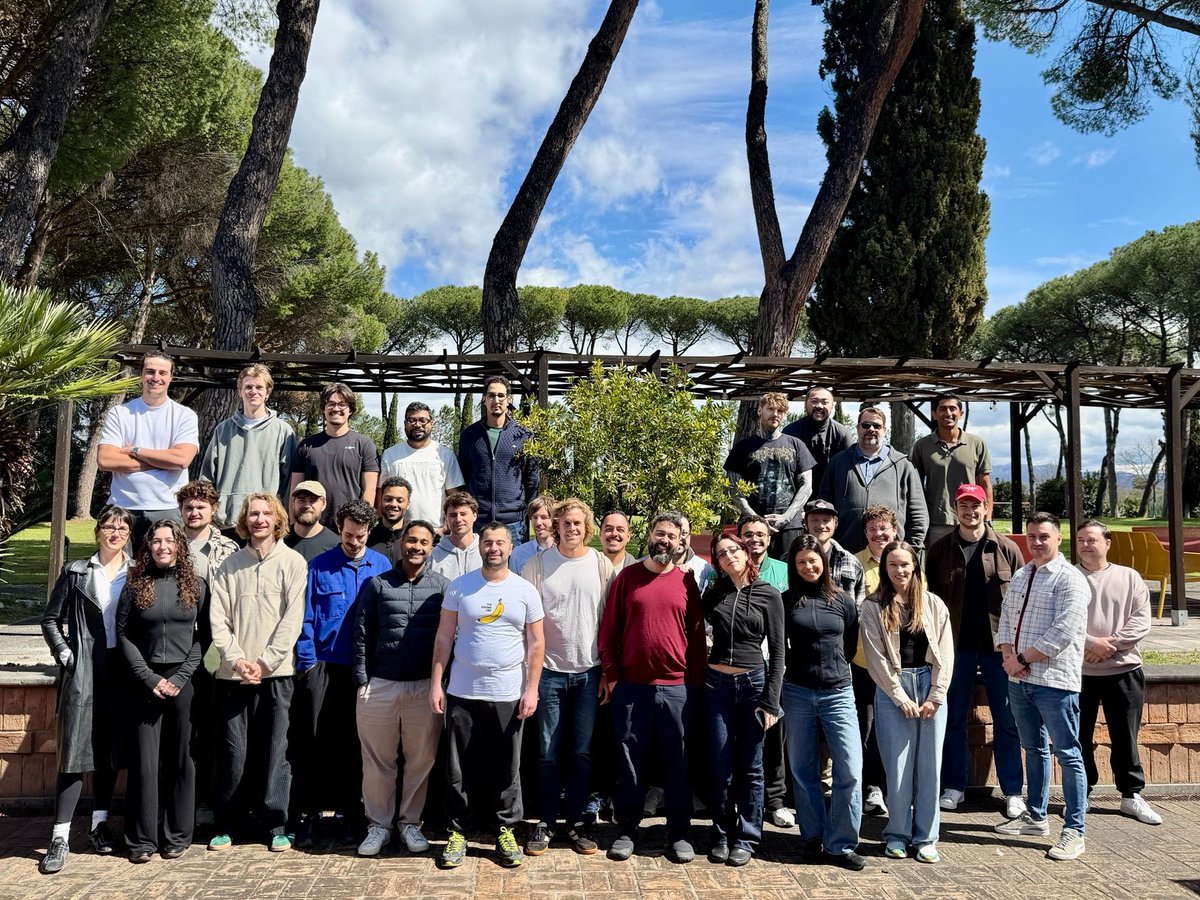
We just wrapped up our team on-site. The entire Celestia team came together for a week of deep work on protocol and strategy.
We are energised, heads down and building towards making Celestia’s Vision 2.0 a reality.
We want to be better at sharing our work openly as it happens. To make sure we follow this through, we’ve brought on a new Head of Marketing who will help us do exactly that.
76
63
532
55,413
On a 100 validator network, separating compute from blockspace saves ~$492,000/year in infrastructure costs alone, and that's before counting the engineering time you get back.
@viet_nguyen breaks down the full math on why bundled validator architecture breaks at scale:

23
30
242
38,127
The Mamogram 🦣 retweeted

Feb 12
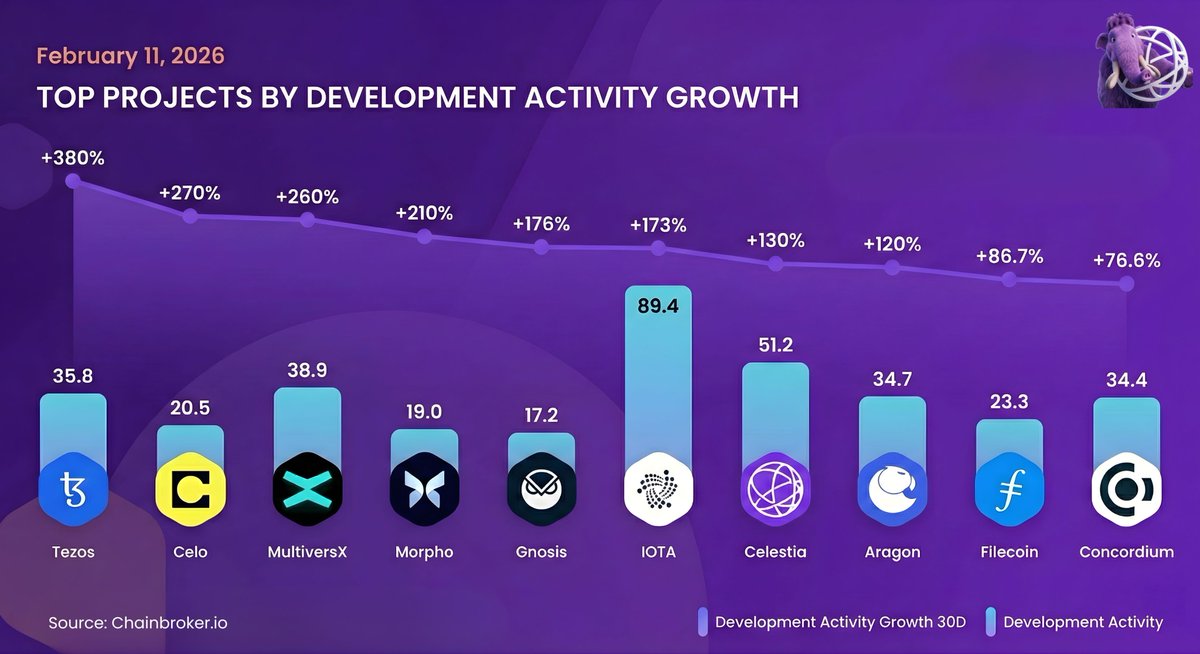
Celestia ranks near the top in 30-day development activity growth, a strong activity score (~51).
Rising dev traction usually comes before ecosystem expansion @celestia is clearly one to watch right now. 🚀
6
14
121
9,017
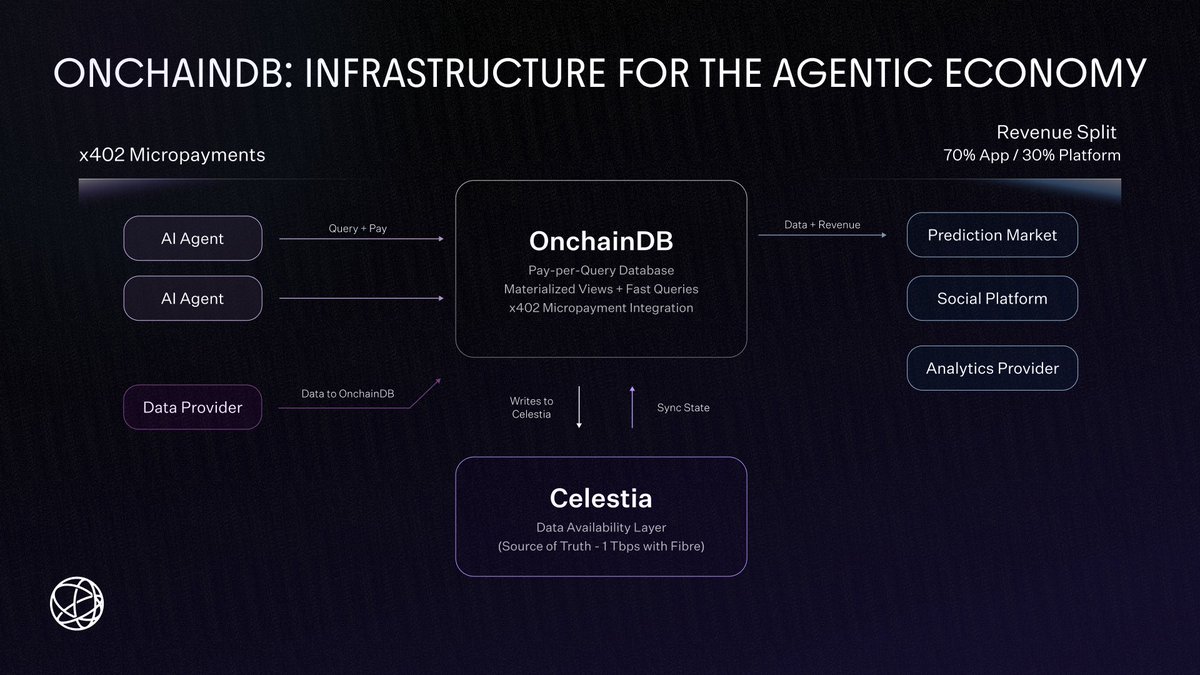
Within the next decade, most economic activity will be machine-to-machine. AI agents trading with each other at API speed, making autonomous decisions about data, compute, and services.
And @OnchainDB is one example of how these markets will work:
13
56
280
34,027
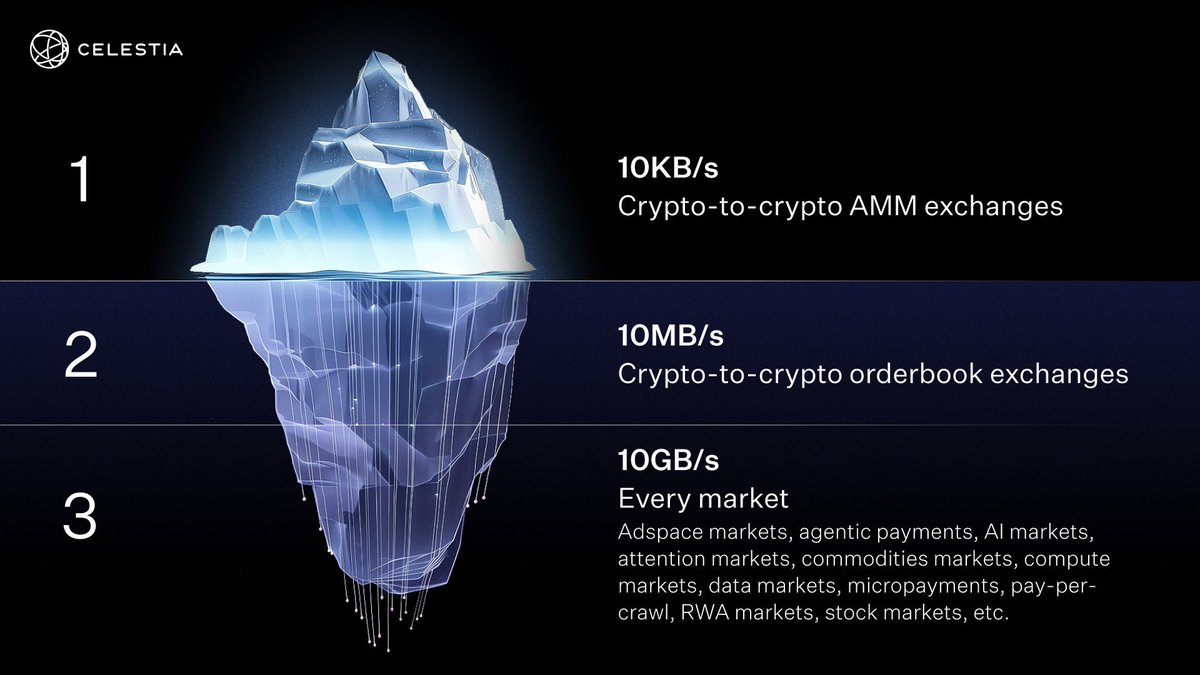
Every market onchain.

40
75
351
26,319
The Mamogram 🦣 retweeted

Jan 14
Celestia Fibre can process ~1.25 BILLION TPS
... nearly 1 TPS for every human on earth
Crypto adoption may be far away from needing these levels of throughput today, but if we're right on where crypto adoption is going over the next decade, we'll need this and much more.
We want to bring every existing market onchain - spot and derivative exchanges, adspace markets, prediction markets. We want to scale internet native micropayments for content crawling, agentic commerce, onchain data markets. The sky is the limit.
What excites me most about Fibre in the near term is that once we ship it to mainnet, we can set our sights on improving the product in new dimensions outside of throughput. Scaling was one of the first problems to solve to make blockchain viable for global adoption, but it's far from the last. More to come on this soon.
Welcome to the post-throughput era of crypto

24
37
234
47,001
The Mamogram 🦣 retweeted

Jan 13
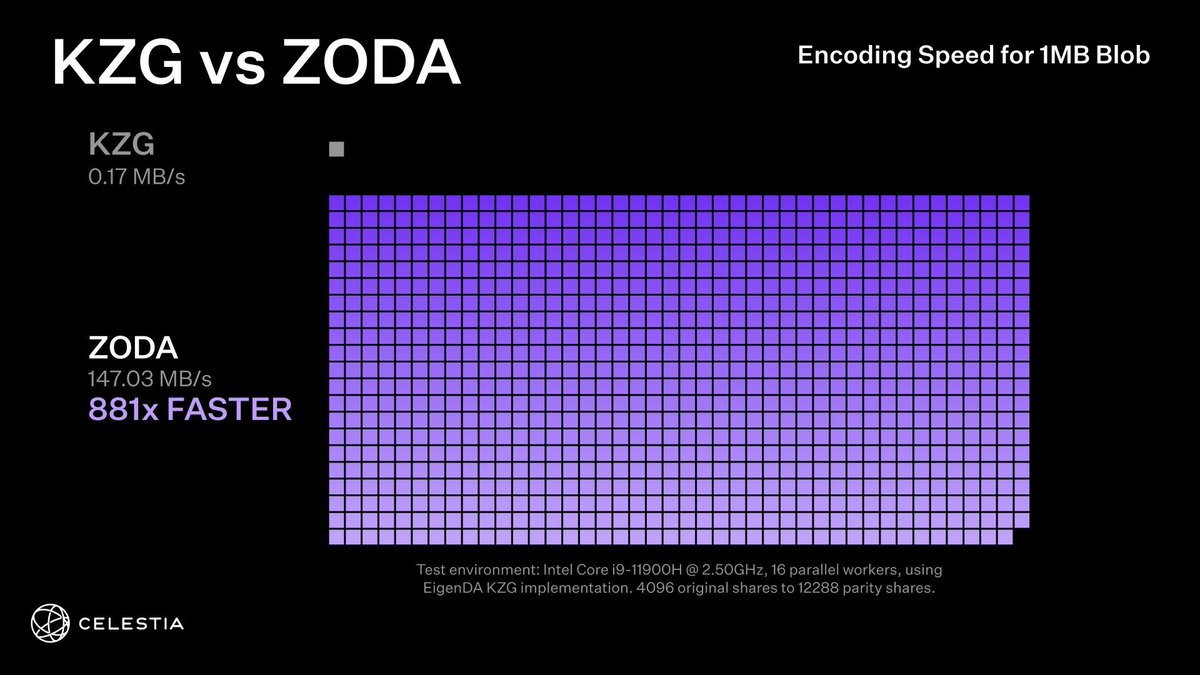
Thanks to new cryptography, we developed a DA product that hit 1Terabit/s in blockspace throughput. This enables new kinds of onchain markets that weren't possible before, not just crypto trading. 1 tps for every human on earth.
18
37
257
37,455
The Mamogram 🦣 retweeted

Jan 11
Don’t miss this.
@celestia, @bulletxyz and @sovereign_labs partnering up:
> This wasn’t possible two years ago
> Next gen, app specific, custom-built rollups are coming
> We need 5k–10k TPS and multiple MB/s of bandwidth
$TIA is built for what’s next
Onchain Nasdaq.
Watch:
Jan 9

Tristan explains why the technology wasn't ready two years ago for high-throughput DEXs and how partnering with Sovereign SDK and Celestia enabled Bullet's watershed moment.
37
21
154
12,454
The Mamogram 🦣 retweeted
Jan 5
gm, I have a good feeling about 2026
24
5
79
4,125
2026 is here, time to lock in.
We Work.
We Study.
We Build.
Mammoths 🦣
2
8
350
29 Dec 2025
2026 Incoming.
We Work.
We Study.
We Build.
Mammoths 🦣
2
5
188
The Mamogram 🦣 retweeted

24 Dec 2025
The culture of fandom will continue to create cognitive dissonance in artists who mistake their own celebrity [among a cabal of thirty 40 year old men] for artistic success
1
1
15
4,538
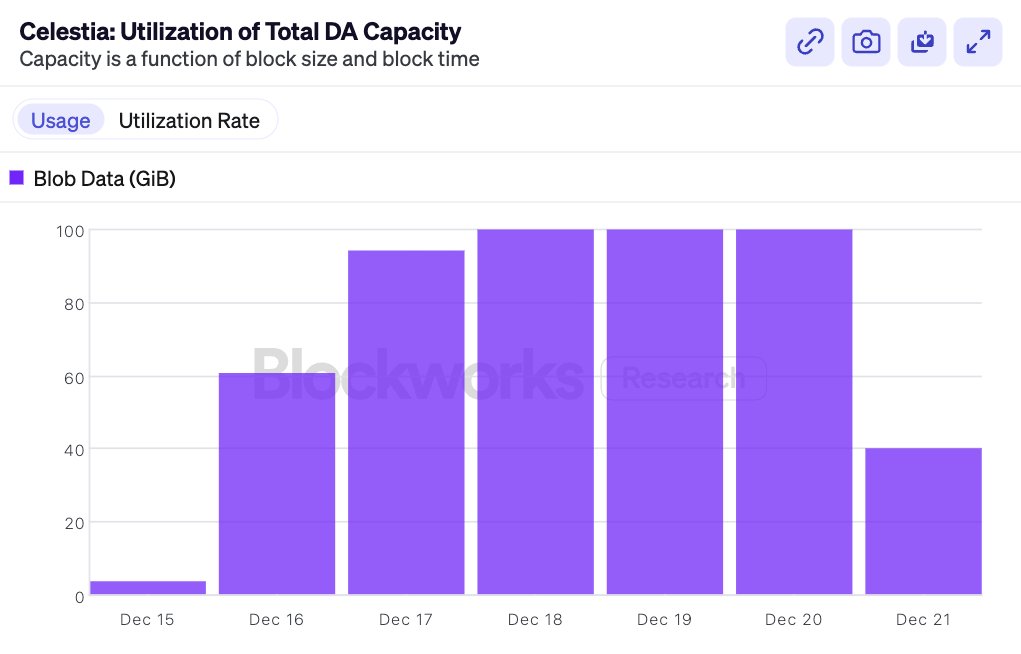
Something notable happened on Celestia this week: 4 consecutive days of ~𝟭𝟬𝟬𝗚𝗶𝗕 𝘁𝗵𝗿𝗼𝘂𝗴𝗵𝗽𝘂𝘁 which mainnet handled smoothly with a 𝟵𝟵.𝟵𝟳% 𝗯𝗹𝗼𝗯 𝘁𝗿𝗮𝗻𝘀𝗮𝗰𝘁𝗶𝗼𝗻 𝗶𝗻𝗰𝗹𝘂𝘀𝗶𝗼𝗻 𝘀𝘂𝗰𝗰𝗲𝘀𝘀 𝗿𝗮𝘁𝗲.
This surge in activity came from a team executing a sustained load test to validate their ~𝟭.𝟯𝗠𝗕/𝘀 (~𝟰.𝟱𝗸 𝗧𝗣𝗦) estimated possible throughput demand ahead of launch.
Thanks to improvements in the Matcha upgrade, like faster block propagation and more robust transaction inclusion, the network achieved a near-perfect blob inclusion rate over a 7-day testing window.
Results like these show that Celestia is ready to power the next wave of high throughput onchain applications. We look forward to welcoming this team, which continues to push the boundaries of performance, along with others like it, to mainnet next year.
16 Dec 2025

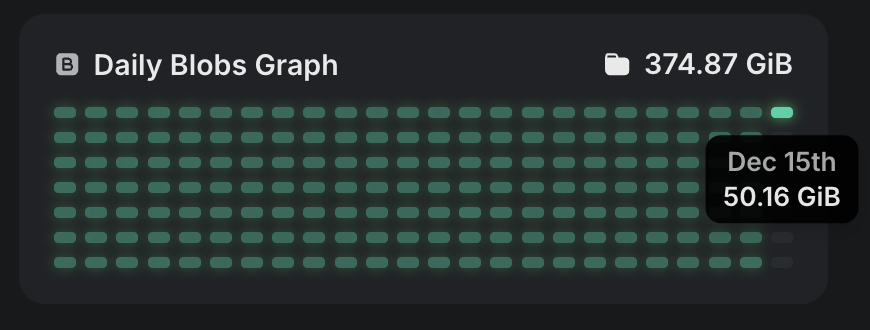
WHAT THE ACTUAL??? @celestia $TIA showing a MASSIVE DA increase on mainnet!!!
Usual DA use is around 1-2GB/day. Today, mainnet has already processed 50GB!! That's 25-50x in one day 🔥👀
Data here: celenium.io/
84
73
451
104,966
The Mamogram 🦣 retweeted
23 Dec 2025
Celestia is ready for the first wave of high throughput apps launching in 2026
Something notable happened on Celestia this week: 4 consecutive days of ~𝟭𝟬𝟬𝗚𝗶𝗕 𝘁𝗵𝗿𝗼𝘂𝗴𝗵𝗽𝘂𝘁 which mainnet handled smoothly with a 𝟵𝟵.𝟵𝟳% 𝗯𝗹𝗼𝗯 𝘁𝗿𝗮𝗻𝘀𝗮𝗰𝘁𝗶𝗼𝗻 𝗶𝗻𝗰𝗹𝘂𝘀𝗶𝗼𝗻 𝘀𝘂𝗰𝗰𝗲𝘀𝘀 𝗿𝗮𝘁𝗲.
This surge in activity came from a team executing a sustained load test to validate their ~𝟭.𝟯𝗠𝗕/𝘀 (~𝟰.𝟱𝗸 𝗧𝗣𝗦) estimated possible throughput demand ahead of launch.
Thanks to improvements in the Matcha upgrade, like faster block propagation and more robust transaction inclusion, the network achieved a near-perfect blob inclusion rate over a 7-day testing window.
Results like these show that Celestia is ready to power the next wave of high throughput onchain applications. We look forward to welcoming this team, which continues to push the boundaries of performance, along with others like it, to mainnet next year.
67
29
227
14,559
The Mamogram 🦣 retweeted
20 Dec 2025
The way to break out of the financial nihilistic AGI doom loop is build infrastructure that is fast enough for machines, but governable enough for humans.
Within a few decades, I believe that the vast majority of economic activity will be between autonomous AI agents doing business with each other. Most assets and capital will be owned and controlled by autonomous AI agents, not humans.
These agents will use blockchains to own and transfer assets, and smart contracts to incorporate their organisations. Blockchains will be the substrate for AI lifeforms.
However, this can end up in two ways:
- Dystopia: AI agents have ultimate power over humans, in a hyper-financialised society where AI paperclip-optimises for maximum profit at the expense of humans.
- Utopia: an AI-operated free market economy that exists to serve humans. We will have a post-scarcity society where humans will no longer have to worry about material needs. "Fully automated luxury communism", if you like.
In order to achieve the utopian vision, we must not treat code as law. We must treat blockchains as social contracts that can be hard forked by social consensus (humans). And this means we cannot rely on tokenholder governance - which can be captured by autonomous agents that accrue too much capital.
This means that humans dictate the protocol rules, and thus can enforce regulations like taxes on the autonomous agents that go to humans, and hard fork the chain if any agents accrue too much power over humans. The same way that Ethereum hard forked in 2016 when The DAO was hacked for 3m ETH.
To achieve this, I believe you need to embed two core principles in blockchain system design (which is what we've done with Celestia):
1. Off-chain governance trumps token-holder governance.
“We reject kings, presidents and voting. We believe in rough consensus and running code.” – David D. Clark, IETF
A vital aspect of the trust-minimisation is that no majority of dishonest parties can arbitrarily change or violate protocol rules. Therefore the canonical fork - and the state transition function - of the blockchain is ultimately defined by its social layer and ecosystem, not by token voting, validators or whales.
Network upgrades through hard forks are considered to be the canonical chain if they have broad uptake by the social layer and ecosystem. Before being adopted, a network upgrade can be evaluated against the values of the social layer, which should ideally be defined in a written constitution before the chain is launched.
This is exactly what sovereign rollups are for. Sovereign rollups allow you to create onchain financial markets that are forkable by off-chain human social consensus, rather than enshrining a settlement layer. And this is exactly why we went to great lengths to remove the tokenholder-based Cosmos SDK upgrade module in Celestia, in favour off-chain governance for protocol upgrades.
2. Users are first class citizens of the network.
Requiring users to trust centralised endpoints or committees is a violation of the key principles of decentralisation and Web3. We should prioritise the development and adoption of trust-minimised light nodes that allow users to directly verify the correctness of the chain with techniques such as data availability sampling.
This is essential to allow humans to verify that the protocol rules are actually being executed as they intended. The one thing that no one can easily take away from you is a light node that you can run on your phone, that keeps the entire network verifiable and accountable!
So yes, at the end of the day, I believe that we will end up in a highly hyper-financialised society where AGI becomes "god in the machine". But whether that "god" is good or evil - and whether we end up in a dystopia or utopia - is very much in our control. And that's a core reason why I'm still working in crypto: to contribute towards that inevitable future in a way where I can try to guide it more towards the utopian version rather than dystopian.
Social consensus is the final layer. We build infrastructure for markets that are fast enough for machines - and governable enough for humans.

19 Dec 2025

the only important thing about crypto right now is finding a reason to exist. AI knows what it's building toward. AGI. god in the machine. a telos so clear it pulls billions toward it like gravity.
crypto is building toward what exactly. more trading. faster speculation. better ways to gamble on nothing.
you want to win? stop optimizing. start answering the question no one wants to ask. what is this all for. P/E won't save you. revenue won't save you. only purpose saves you.
only a destination worth walking toward
28
29
167
35,588
The Mamogram 🦣 retweeted
20 Dec 2025
Refuse to treat code as law.
Refuse to confuse wealth with legitimacy.
Refuse to outsource human judgement to autonomous capital.
Social consensus is not a bug. It is the final safeguard.
Don’t optimize the paperclip. Design the override.
20 Dec 2025
The way to break out of the financial nihilistic AGI doom loop is build infrastructure that is fast enough for machines, but governable enough for humans.
Within a few decades, I believe that the vast majority of economic activity will be between autonomous AI agents doing business with each other. Most assets and capital will be owned and controlled by autonomous AI agents, not humans.
These agents will use blockchains to own and transfer assets, and smart contracts to incorporate their organisations. Blockchains will be the substrate for AI lifeforms.
However, this can end up in two ways:
- Dystopia: AI agents have ultimate power over humans, in a hyper-financialised society where AI paperclip-optimises for maximum profit at the expense of humans.
- Utopia: an AI-operated free market economy that exists to serve humans. We will have a post-scarcity society where humans will no longer have to worry about material needs. "Fully automated luxury communism", if you like.
In order to achieve the utopian vision, we must not treat code as law. We must treat blockchains as social contracts that can be hard forked by social consensus (humans). And this means we cannot rely on tokenholder governance - which can be captured by autonomous agents that accrue too much capital.
This means that humans dictate the protocol rules, and thus can enforce regulations like taxes on the autonomous agents that go to humans, and hard fork the chain if any agents accrue too much power over humans. The same way that Ethereum hard forked in 2016 when The DAO was hacked for 3m ETH.
To achieve this, I believe you need to embed two core principles in blockchain system design (which is what we've done with Celestia):
1. Off-chain governance trumps token-holder governance.
“We reject kings, presidents and voting. We believe in rough consensus and running code.” – David D. Clark, IETF
A vital aspect of the trust-minimisation is that no majority of dishonest parties can arbitrarily change or violate protocol rules. Therefore the canonical fork - and the state transition function - of the blockchain is ultimately defined by its social layer and ecosystem, not by token voting, validators or whales.
Network upgrades through hard forks are considered to be the canonical chain if they have broad uptake by the social layer and ecosystem. Before being adopted, a network upgrade can be evaluated against the values of the social layer, which should ideally be defined in a written constitution before the chain is launched.
This is exactly what sovereign rollups are for. Sovereign rollups allow you to create onchain financial markets that are forkable by off-chain human social consensus, rather than enshrining a settlement layer. And this is exactly why we went to great lengths to remove the tokenholder-based Cosmos SDK upgrade module in Celestia, in favour off-chain governance for protocol upgrades.
2. Users are first class citizens of the network.
Requiring users to trust centralised endpoints or committees is a violation of the key principles of decentralisation and Web3. We should prioritise the development and adoption of trust-minimised light nodes that allow users to directly verify the correctness of the chain with techniques such as data availability sampling.
This is essential to allow humans to verify that the protocol rules are actually being executed as they intended. The one thing that no one can easily take away from you is a light node that you can run on your phone, that keeps the entire network verifiable and accountable!
So yes, at the end of the day, I believe that we will end up in a highly hyper-financialised society where AGI becomes "god in the machine". But whether that "god" is good or evil - and whether we end up in a dystopia or utopia - is very much in our control. And that's a core reason why I'm still working in crypto: to contribute towards that inevitable future in a way where I can try to guide it more towards the utopian version rather than dystopian.
Social consensus is the final layer. We build infrastructure for markets that are fast enough for machines - and governable enough for humans.
10
18
105
8,668