
All about Mathematics • Books • Pictures • Problems • Proofs • Animations• Memes • & • History.
Joined June 2024
- Tweets 9,933
- Following 51
- Followers 42,001
- Likes 24,707
3,491 Photos and videos


Jun 11
There are only five Platonic solids in Euclidean geometry Tetrahedron, Cube, Octahedron, Dodecahedron, and Icosahedron.
4
4
59
3,043
Jun 10
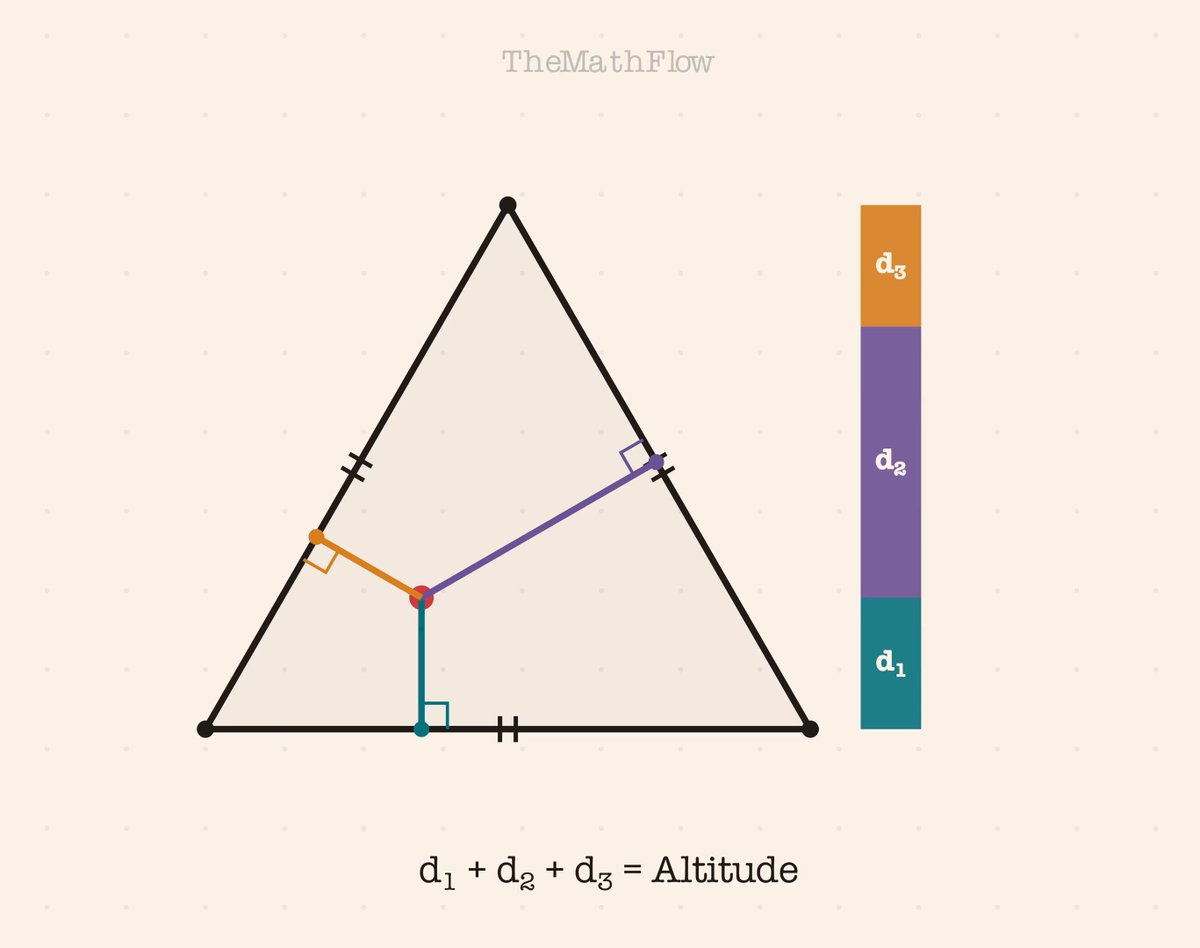
Viviani’s Theorem, named after the Italian mathematician Vincenzo Viviani, states that for any point inside an equilateral triangle, the sum of the perpendicular distances from the point to the three sides is always equal to the altitude (height) of the triangle.
12
125
617
35,703
Jun 10
The property that makes the π rule the whole of mathematics.
7
38
241
19,423
Jun 8
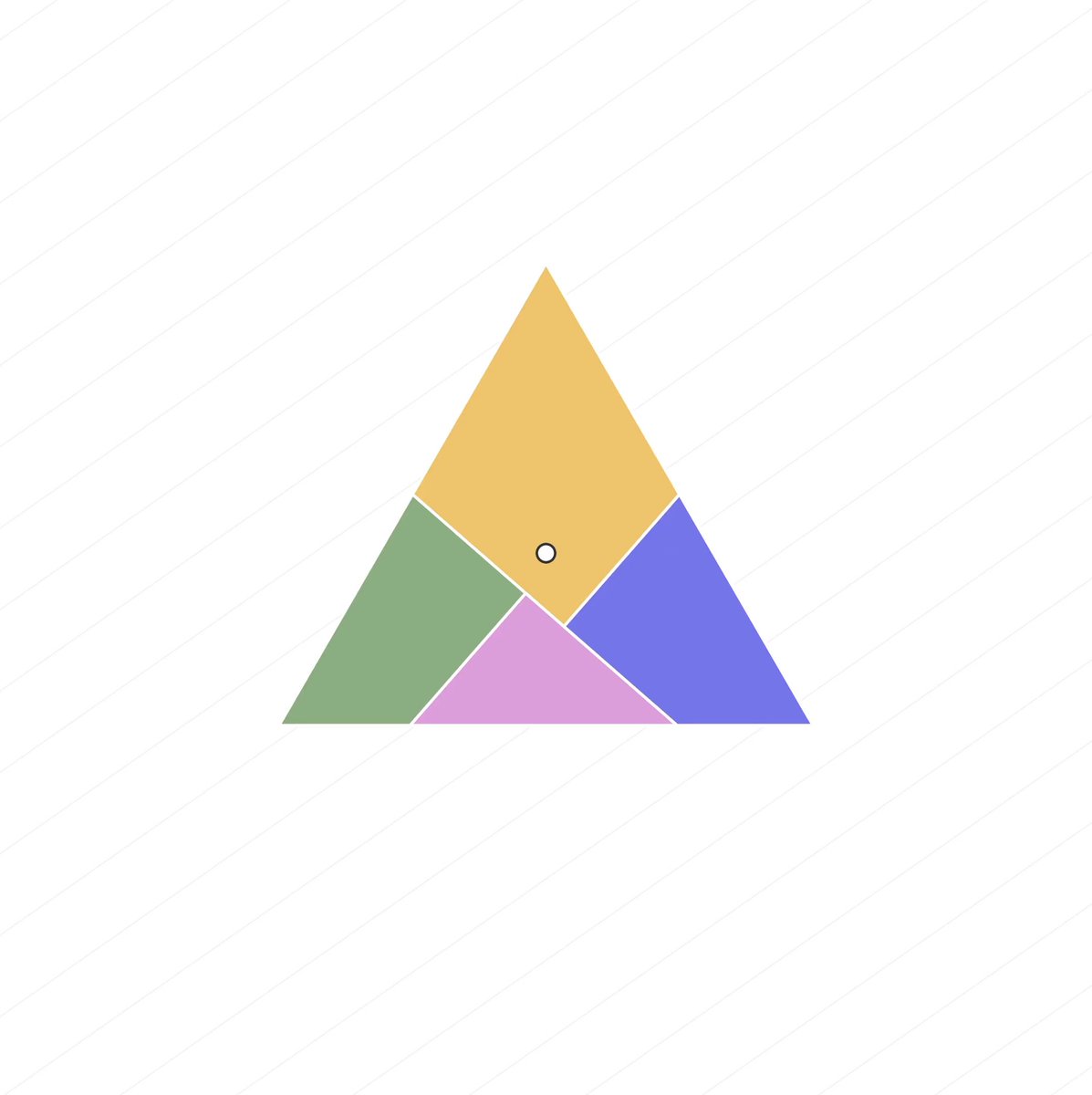
This mind-bending animation is based on the Haberdasher’s Puzzle, discovered in 1902 by Ernest Henry Dudeney, one of Britain’s greatest recreational mathematicians.
He first published it in the Daily Mail, framing it as a whimsical story: a haberdasher (a dealer in sewing goods) is given a piece of valuable cloth shaped like an equilateral triangle. He needs to cut it into a perfect square for a customer using the fewest cuts possible and without wasting a single thread.
Dudeney shocked the mathematical world by proving it could be done in just four pieces. Even more amazingly, he proved the pieces could be hinged together at their corners, forming a continuous chain that opens as a triangle and closes into a square.
23
76
4,253
Jun 8
Geometric Series Proof via Concentric Pentagon Dissection.
15
78
5,079
Jun 7
Jun 6

Share the greenest photo you've ever taken. 🌿
1
7
30
4,156
Jun 6
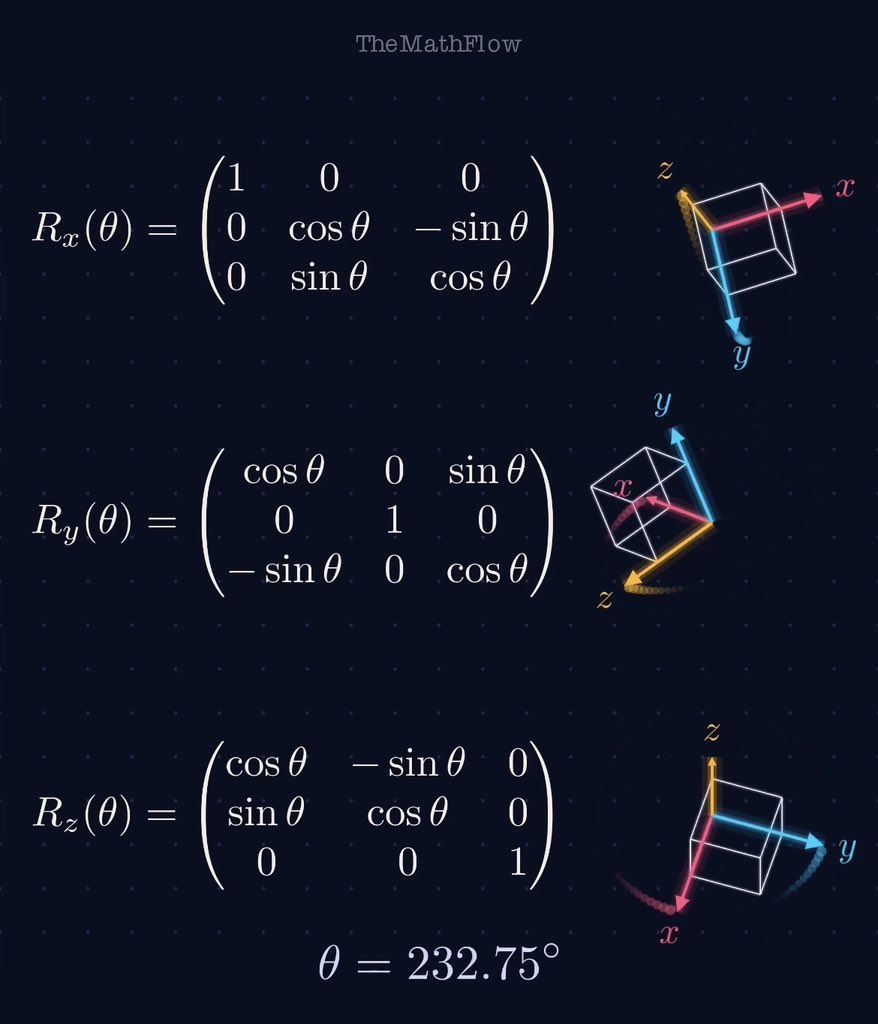
Ever wondered how 3D objects spin smoothly in games, animations, or even real-world robotics?
This is the magic behind it!
Meet the rotation matrices that control how things twist around the X, Y, and Z axes.
From video games to spacecraft navigation, these rotations power the invisible math that makes our digital world feel real.
5
71
352
7,957
Jun 6
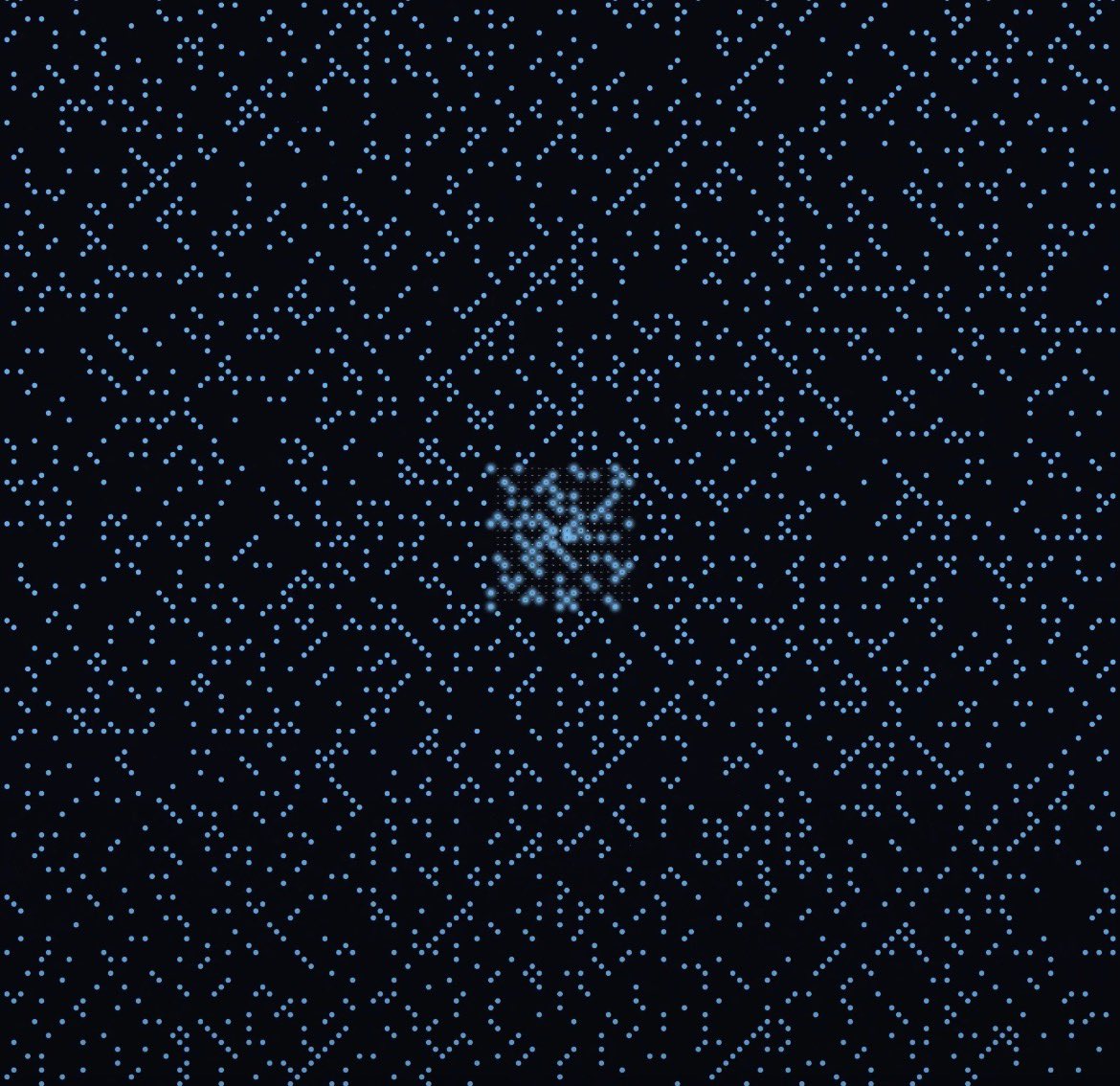
In 1963, mathematician Stanislaw Ulam was stuck in a long, tedious presentation. To pass the time, he started doodling. He wrote the number 1, then spiraled 2, 3, 4, and so on outward in a grid.
Then, he highlighted only the prime numbers.
Instead of random static, a hidden structure emerged from the chaos.
Distinct, striking diagonal lines of primes shot across the page.
It’s known as the Ulam Spiral, and it visually proves one of the most beautiful mysteries in mathematics: the "atoms" of our number system aren't as random as they seem. There is order in the chaos.
5
34
171
8,203
Jun 5
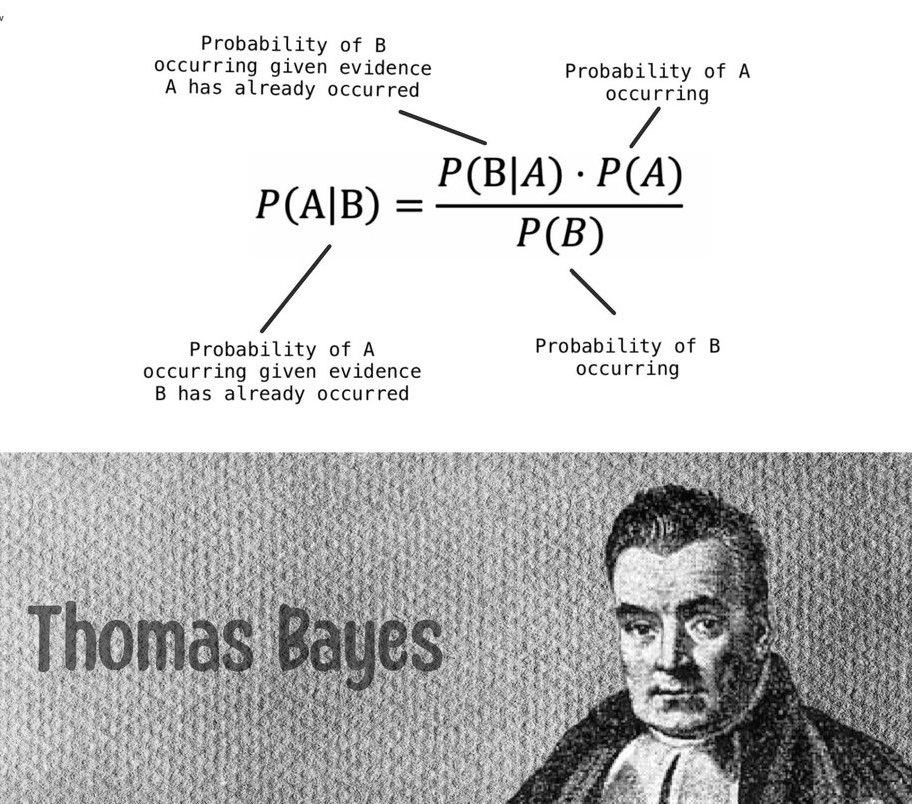
Thomas Bayes, an 18th-century English mathematician, developed Bayes' Theorem, a method for determining the likelihood of an event based on new information. It's like updating your guess when you learn more.
After his death, one of his friends published it based on Bayes' essay.
7
27
114
3,645
Jun 5
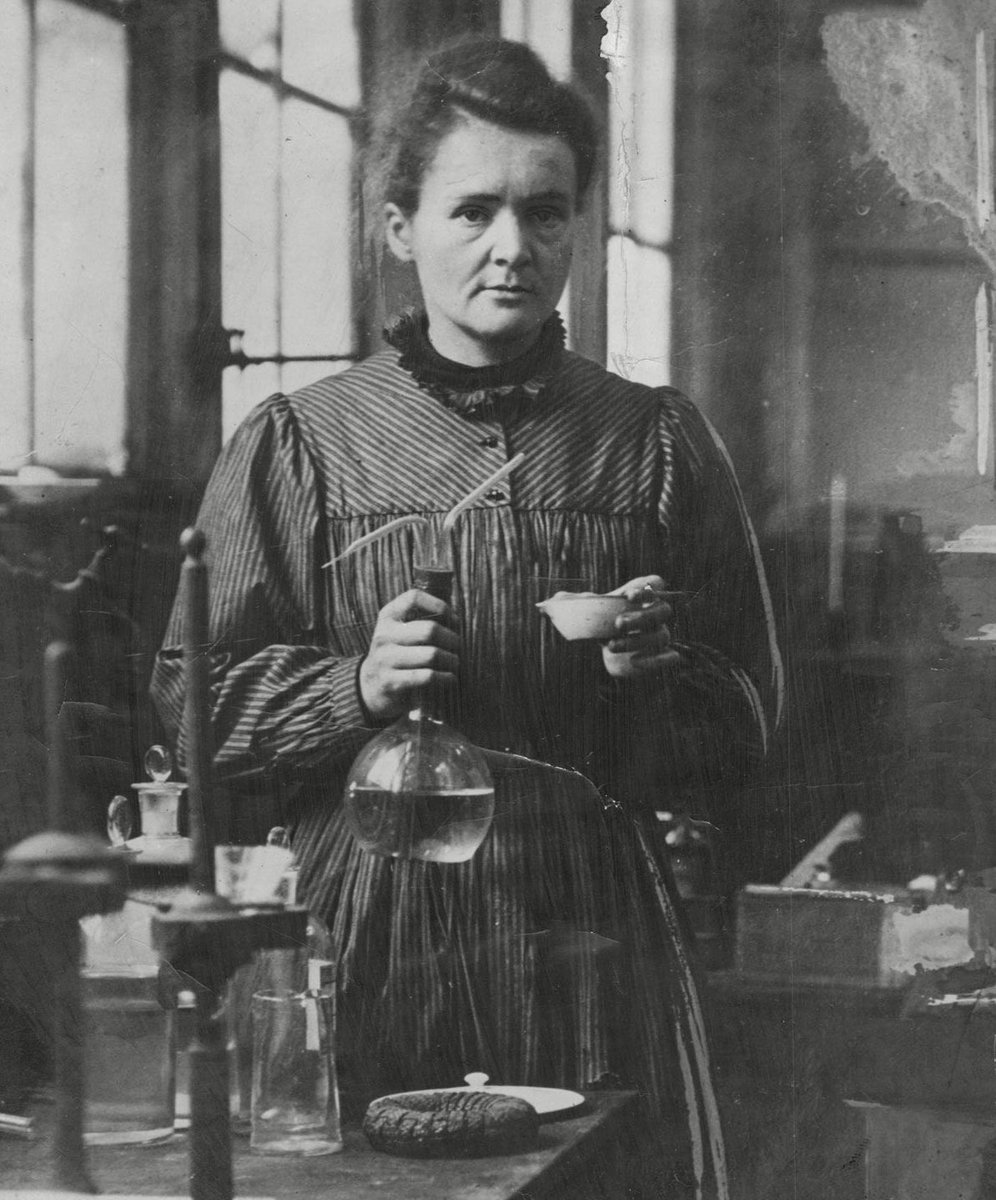
“We must believe that we are gifted for something, and that this thing, at whatever cost, must be attained.”
― Marie Curie
3
31
174
4,458