Founder & Head Sport Prep Coach @theuofstrength. Proud husband & dada, strength enthusiast and creator of Agility 5.0, Gameplay 6.0 & Inside The U.
Joined December 2015
- Tweets 4,541
- Following 276
- Followers 11,555
- Likes 2,139
2,748 Photos and videos

Pinned Tweet

Mar 9
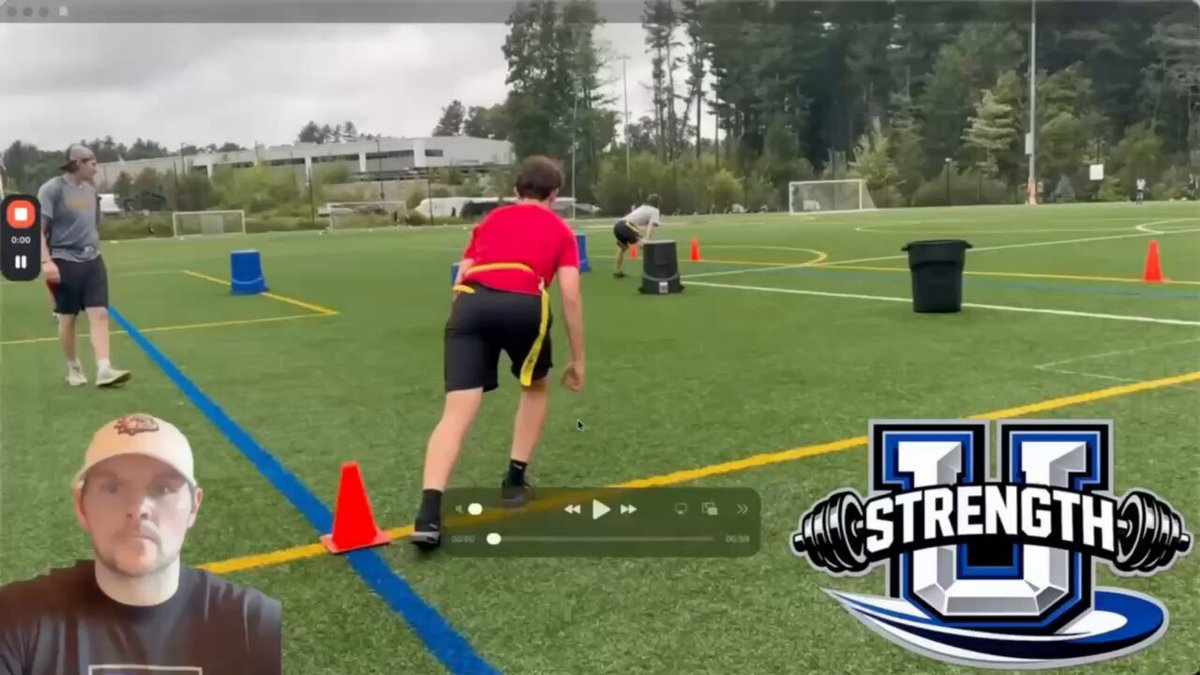
Small Sided Games For Athletic Development Course
Most training relies on controlled drills & predictable patterns. But sport is dynamic, unpredictable, & constantly changing.
This course shows you how to design training environments that behave like sport, activities that look, feel, & act like the game itself.
Through practical video demonstrations & coaching guidance, you’ll learn how to use SSGs to develop movement skill, decision-making, gamespeed, & adaptability.
If you’re a coach, athlete, or parent, this course will give you the tools to build better training environments & unlock true skill transfer to sport.
theuofstrength.thinkific.com…
2
1
7
3,840
Too often, athletic development revolves around cleaning up movement patterns & chasing perfect technique. But in field & court sports, the game doesn’t reward perfect movement, it rewards the ability to solve problems.
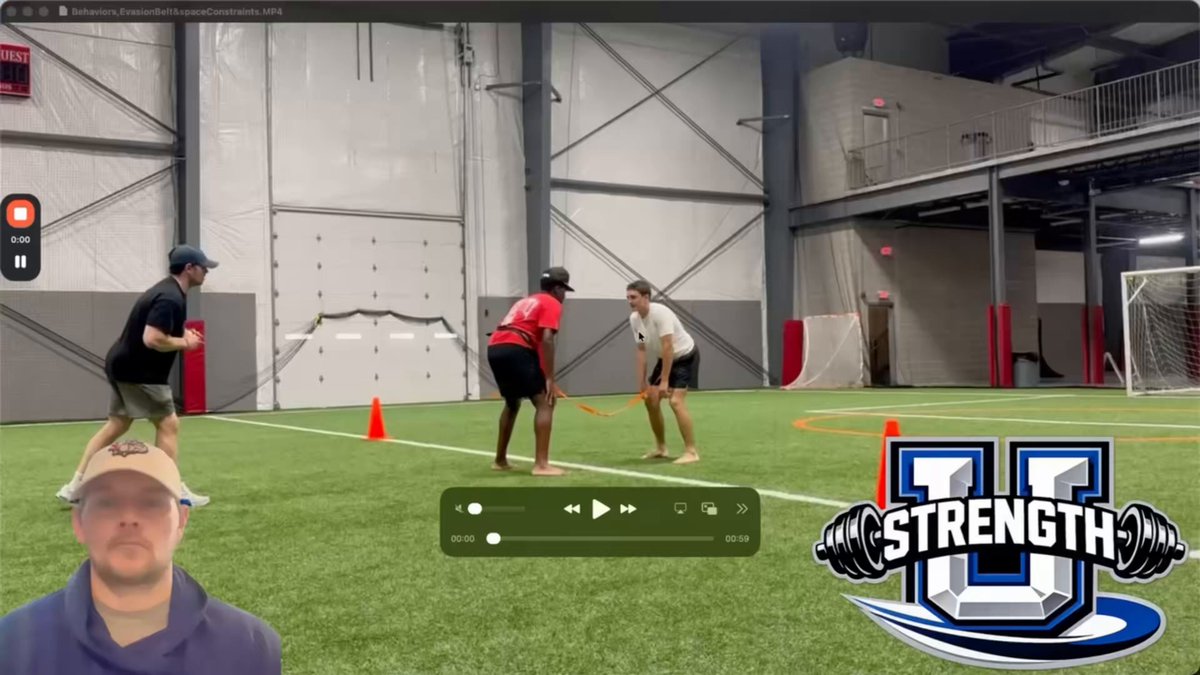
At #uofstrength, one of the foundational ideas we teach is simple: Win the space.
Whether an athlete is attacking or defending, success often comes down to how well they can perceive, create, deny, & manipulate space. That’s why we simplify the game into two core objectives:
🔹 Offense = Create Separation
🔹 Defense = Reduce Space
These aren’t just coaching cues, they’re behaviors that guide decision-making under pressure.
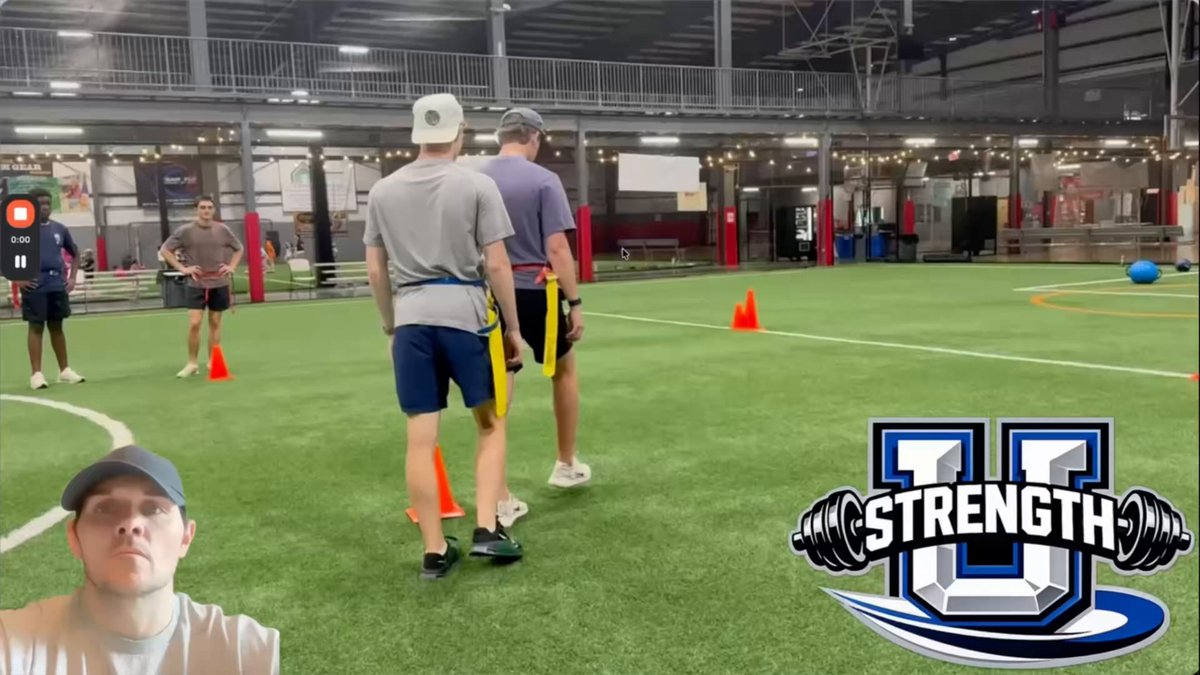
Instead of telling athletes exactly how to move, we create environments that demand solutions. Through SSGs, changing constraints, & tools like the evasion belt, athletes receive immediate feedback on whether their actions actually worked. Did they create enough separation? Did they close the gap? Did they recognize the opportunity before it disappeared?
The focus shifts from looking good to being effective.
We’re less interested in producing athletes who can reproduce the same movement over and over, & more interested in developing athletes who can adapt to changing information, coordinate with teammates, & solve the ever-changing problems that sport presents.
Because movement isn’t the end goal, it’s the expression of perception, intention, & action working together.
Train behaviors, not just movement. Teach athletes to understand space, & they’ll discover the movement solutions they need.
Because in sport, the athlete who succeeds is often the one who knows how to win the space.
300
Jun 15
One of the most overlooked qualities in athletic development is rhythm.
Watch high-level athletes sprint, cut, or navigate a chaotic game environment, & you’ll notice their movement has a natural cadence. Ground contacts are smooth, well-timed, & coordinated. They aren’t trying to win every step with maximum effort, they’re constantly organizing the balance between tension & relaxation.
Rhythm allows athletes to:
▪️Coordinate yielding & overcoming strategies.
▪️Transition seamlessly between movements.
▪️Stay relaxed while moving at high speeds.
▪️Discover adaptable movement solutions.
Without rhythm, movement often becomes robotic. Athletes attack the ground too aggressively, stay overly tense, & lose the ability to redirect & adapt efficiently.
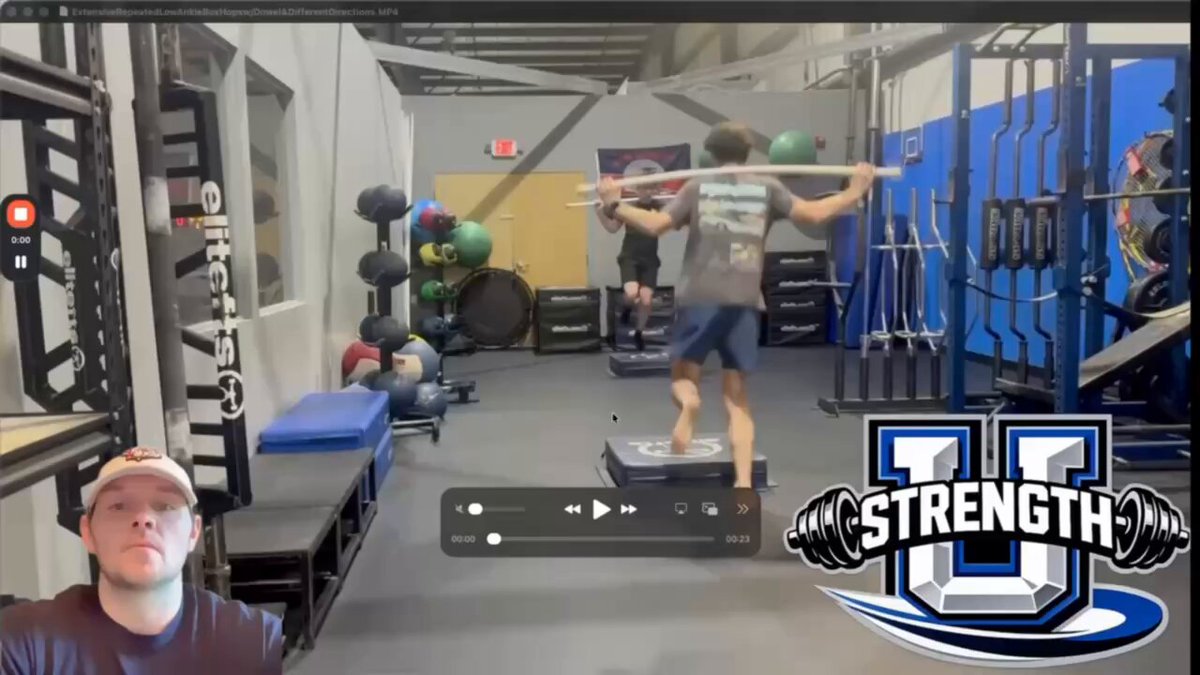
That’s one reason extensive plyometric environments are so valuable. They give athletes the opportunity to feel what “bouncy” actually means, learning to get on & off the ground quickly without forcing every contact.
2
580
Jun 14
Why Does Our Jump Training Look Different?
Because we're not committed to a single method, model, or progression.
Athletes aren't robots. So instead of forcing everyone into the same template or technical model, we start by asking:
▪️What movement solutions does this athlete currently use?
▪️What does their sport actually demand?
▪️How do they manage force?
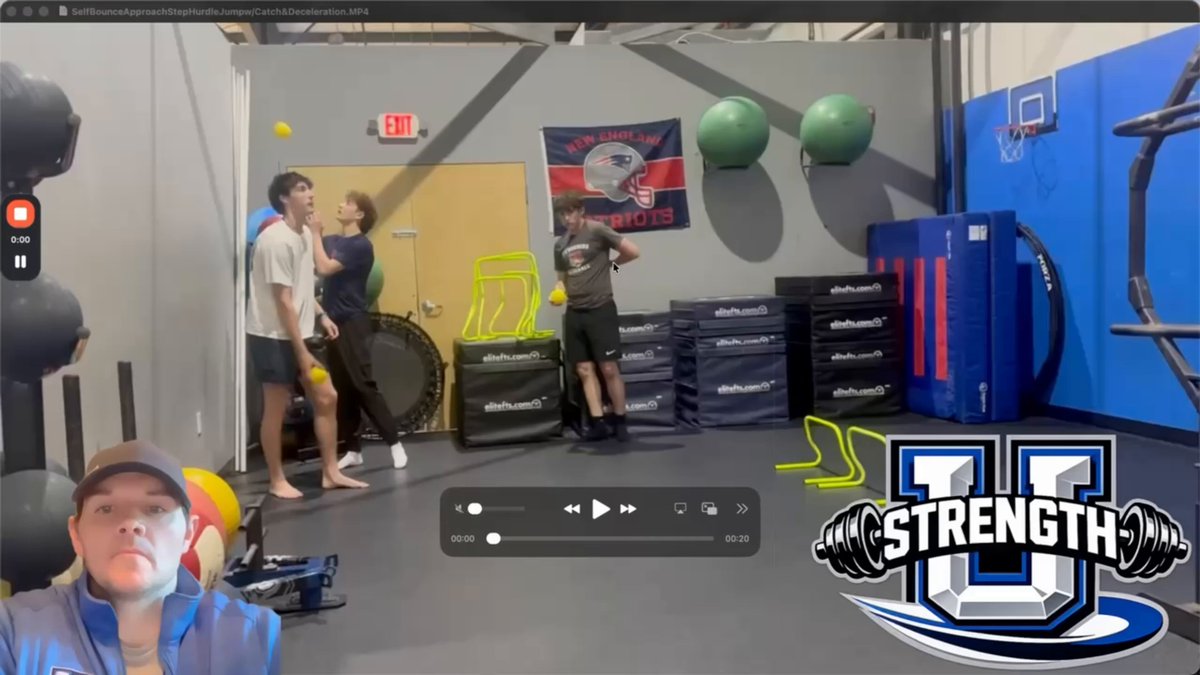
Recently, we used this landing prep activity. On the surface, it's simple: Throw, jump, catch, land.
But the goal isn't just landing mechanics.
We're increasing coordination demands, adding perceptual challenges, introducing variability, & encouraging athletes to self-organize effective solutions in real time.
Within a single activity, athletes are challenged to:
▪️Project vertically
▪️Coordinate vision & action
▪️Organize jumping, catching, & landing simultaneously
▪️Adapt deceleration strategies to changing task demands
Because in sport, landings rarely happen under ideal conditions.
Athletes are tracking a ball, avoiding opponents, managing contact, & responding to constantly changing information. Deceleration is contextual, not scripted.
If training only rehearses idealized landings, we're preparing athletes for an environment they'll never encounter.
Pre-training is an opportunity to develop perception, coordination, decision-making, & movement adaptability before the main session even begins.
741
Jun 13
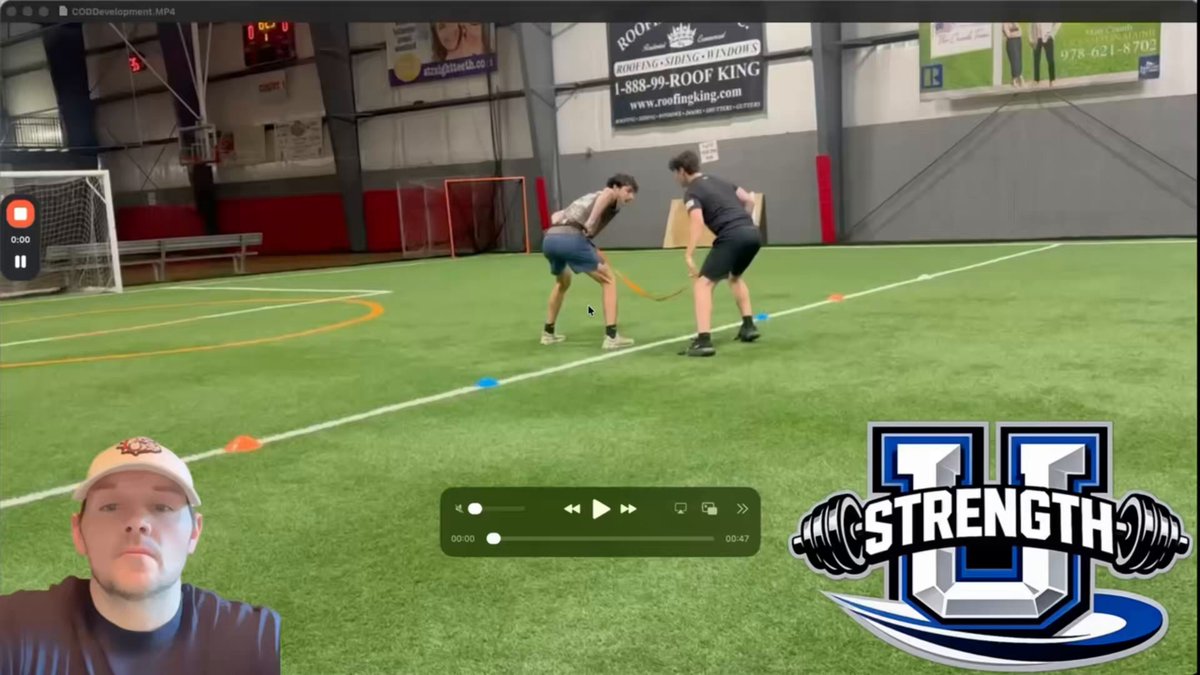
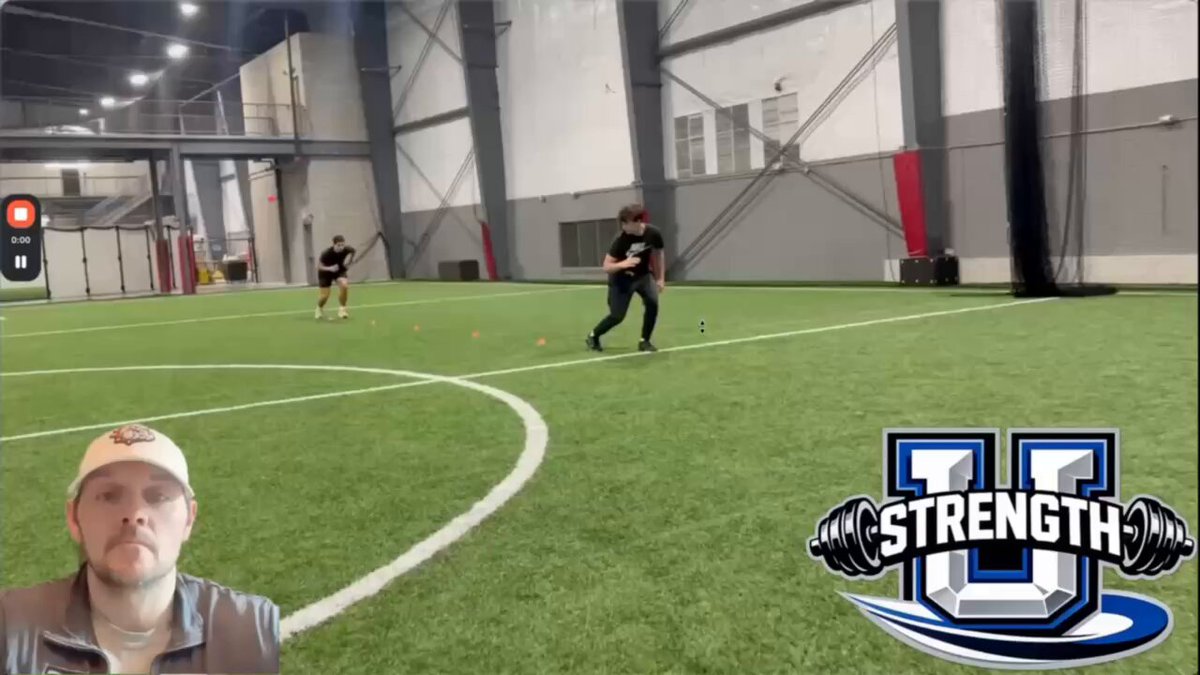
We don’t start with cones & predetermined cuts. We start with problems.
Athletes don’t change direction because a cone tells them to. They change because an opponent moves, space changes, or an opportunity emerges.
That’s why our system is built around problem-solving & scaling information, not just movement execution.
We begin with simple pre-training 1v1s, then layer in agility environments that manipulate space, obstacles, & information to encourage adaptable movement solutions.
The goal isn’t to build one perfect cutting technique. It’s to help athletes develop a toolbox of solutions they can use when the game becomes chaotic.
Because successful movers aren’t the ones who master cone drills, they’re the ones who can perceive, adapt, & reorganize in the moment.
Want more examples 👇
theuofstrength.thinkific.com
2
680
Jun 12
In athletic development, we’ve spent too long chasing “perfection”.
Movements are often labeled as right or wrong, as if there’s a single ideal solution every athlete should replicate. Clean reps are praised. Deviations are corrected. Variability is treated like noise that needs to be eliminated.
When everything is prescribed, athletes learn how to repeat movements, not how to solve problems.
At #uofstrength, we don’t coach toward one rigid technical model. We coach around key movement attractors that give individuals the freedom to self-organize while still respecting the principles of effective movement.
For COD, some of those attractors include:
▪️Effective line of force application
▪️Relationship between the center of mass & base of support
▪️Foot outside the hip crease
▪️Foot plant from above
▪️Generating force opposite the subsequent action
▪️“Steering” the foot through inside & outside edge control
The goal isn’t to create identical movers. The goal is to expand the movement solution space so they can adapt, reorganize, & find effective solutions under any constraint.
Perfect movement is a myth. Functional, adaptable solutions are what transfer to sport.
1
1
635
Jun 11
Small changes in space create big changes in behavior. One of the simplest ways to shape athletic movement is by manipulating space.
In small sided games, space availability acts as a constraint that influences:
▪️Decision-making
▪️Motor solutions
▪️Tactical awareness
▪️Perception-action coupling
More space invites acceleration, open-field cutting, & reliance on physical capabilities. Less space compresses time, limits options, & demands greater precision.
When athletes can’t rely on speed or power alone, they’re forced to solve problems differently:
▪️Create separation w/ deception
▪️Recognize cues earlier
▪️Adjust positioning in real time
▪️Discover effective solutions under pressure
That’s why we constrain space.
Not to make the game harder, but to change how the game is played. Because in sport, success isn’t just about the movement an athlete can produce, it’s about what they can perceive & solve before the opportunity disappears.
Sometimes the smallest changes in the environment create the biggest learning opportunities.
1
2
583
Jun 11
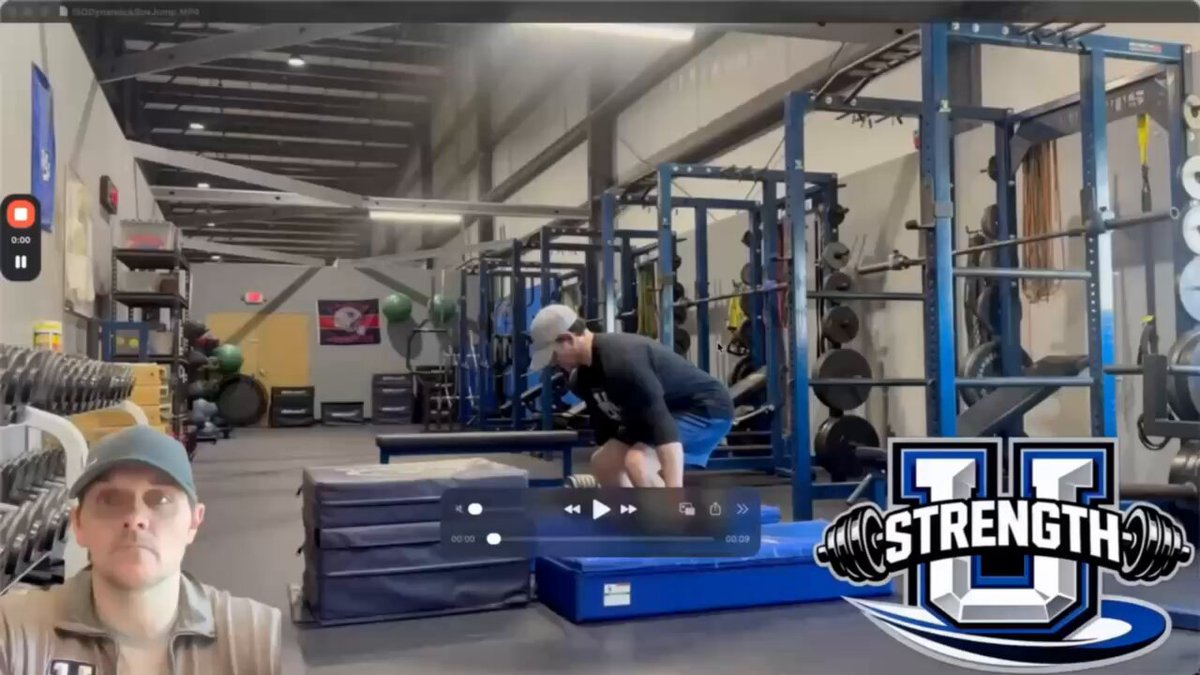
Yielding isometrics are a staple in our weight room & one of the ways we prepare athletes for dynamic movement.
In this single response jump variation, athletes perform an isometric hold from a disadvantageous position (bottom range) before exploding into action.
Why?
▪️ Improve positional awareness under load
▪️ Enhance coordination & control
▪️ Reduce neural inhibition
▪️ Increase RFD
We also manipulate loading strategies, exposing athletes to both symmetrical & asymmetrical demands to develop adaptable bilateral force production solutions.
Sometimes the ability to produce force starts with learning how to organize it first.
528
Jun 10
One of the biggest misconceptions about our training environment is that the games are random. They’re not.
Every gameplay environment is intentionally designed around specific objectives. Whether the goal is creating emotional & social challenges, exposing athletes to individual & team-based problems, or preparing them for upcoming high-CNS sessions, each game serves a purpose.
We carefully manipulate rules, roles, space, scoring systems, & task constraints to shape the experiences athletes encounter. Some environments emphasize physical qualities like speed, power, strength, & elasticity. Others target psychological demands such as perception, anticipation, communication, & decision-making.
While the games may look fluid & free-flowing from the outside, that adaptability is the result of deliberate design, not chance.
The outcome is a training environment that is engaging, competitive, & closely aligned with how athletes actually learn, adapt, & perform under pressure.
These games aren’t random. They’re one of the most intentional & powerful tools in our training system.
384
Jun 9
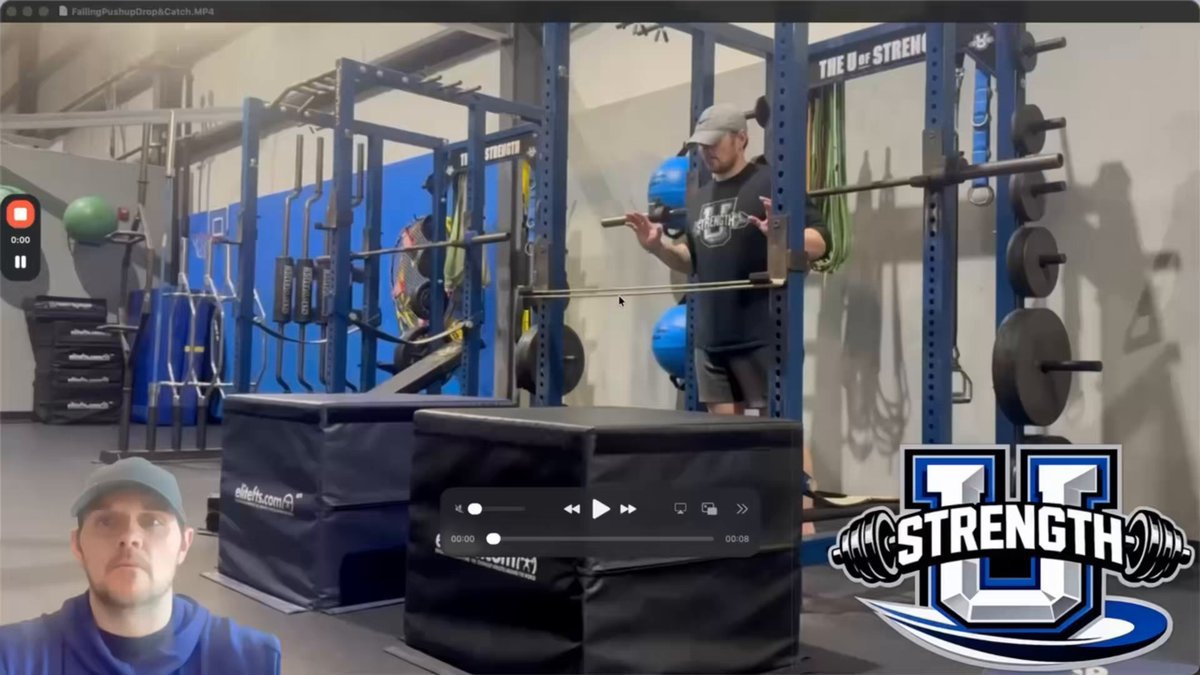
Force acceptance isn’t just a lower body skill.
Athletes manage high forces through the upper body every game, during contact, collisions, decelerations, & bracing actions. Yet most force acceptance training is reserved for the lower half.
In this falling pushup series, the different variations expose the athlete to different landing conditions & force demands, affording them to continuously adapt how they accepted & dissipated force.
The goal wasn’t simply to catch themselves. It was to organize effective yielding strategies, manage stiffness, & relax at the right time to store energy effectively.
The result: greater upper body force tolerance, more adaptable deceleration solutions, & better preparation for the realities of sport.
1
656
Jun 8
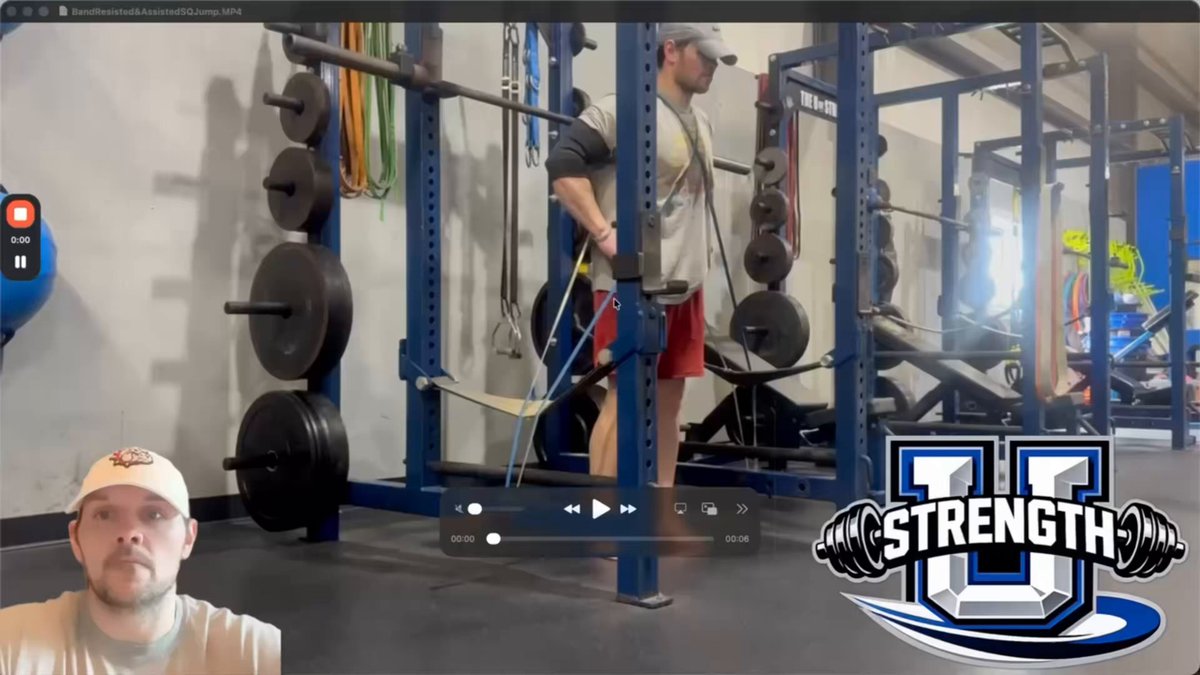
The band might be one of the most underutilized tools in training.
Most coaches use bands to add resistance or create overspeed. We use them as constraints. A band doesn’t just change the load, it changes the problem.
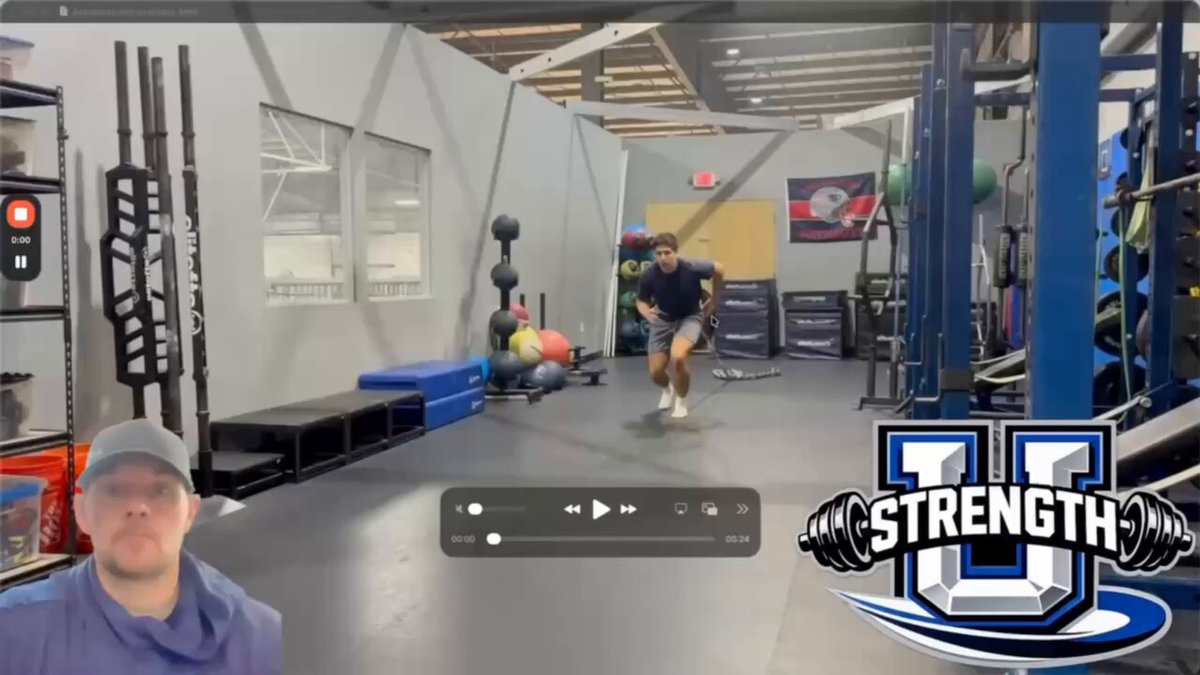
▪️Band Assistance - Help athletes discover effective force production strategies by reducing the influence of gravity & creating more time to organize.
▪️Band Resistance - Does the opposite. It increases rate demands, forcing athletes to organize sooner, create stiffness faster, & generate force under tighter constraints.
The goal isn’t to make an exercise easier or harder. The goal is to shape movement solutions.
Great training isn’t about what you add. It’s about what you influence.
722
Jun 7
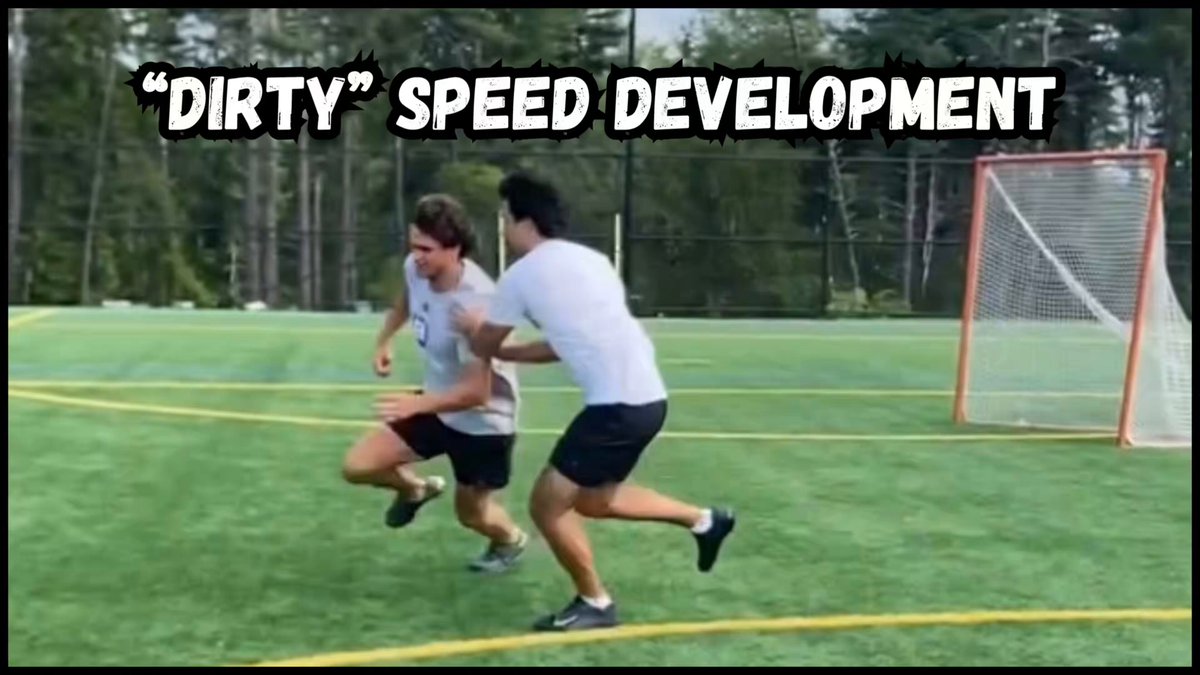
One simple change you can make to your speed development…
Add chasing situations.
Most acceleration training happens in controlled environments:
🔸Predetermined starts
🔸Known directions
🔸No opponent interaction
Those drills have value. But sport rarely asks athletes to accelerate in isolation. In competition, acceleration is tied to something meaningful:
🔹Escaping pressure
🔹Closing space
🔹Winning possession
🔹Creating separation
That’s why we use chasing scenarios.
The environment changes the intent behind the sprint. Athletes stop running fast because they were told to. They accelerate because the situation demands it.
And naturally, you begin to see:
▪️Higher intent
▪️More authentic movement solutions
▪️Responsive first steps
▪️Emotional intensity
Traditional acceleration drills still matter.
But if speed development never progresses beyond lanes & rehearsed starts, athletes may struggle to transfer those qualities into chaotic sporting environments.
Because in team sports, speed is most often expressed in the pursuit of an opponent, or the escape from one.
3
613
Jun 6
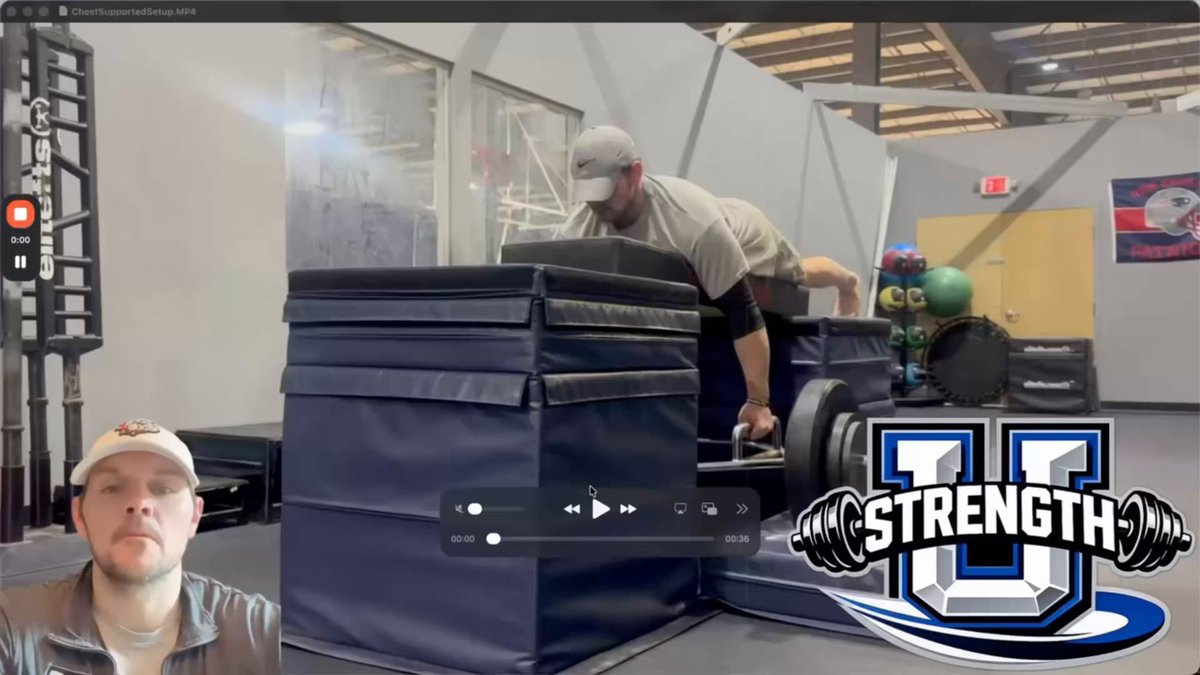
The chest supported setup reinforces key trunk, shoulder, & upper back shapes while exposing breakdowns immediately. If you lose contact with the pad, you didn’t solve the problem, you avoided it.
By removing excessive unwanted motions (overarching the spine or lifting the chin up), athletes are forced to organize tension, maintain position, & produce force through the intended motor pathway.
Different row variations allow us to manipulate:
▪️Asymmetrical & symmetrical strategies
▪️Scapular mechanics
▪️Grip & arm positions
▪️Force-velocity demands
▪️External & internal rotation emphasis
The goal isn’t just moving the weight. It’s developing the ability to solve different force problems.
Constraint drives adaptation. The setup often teaches more than the coaching cue.
3
876
Jun 6
Most athlete evaluations focus on identifying strengths & weaknesses.
▪️Fast sprint speed
▪️High vertical jump
▪️Poor acceleration
▪️Limited elasticity
While useful, this lens often treats performance as a collection of isolated characteristics. The problem? Movement in sport doesn’t happen in isolation.
An athlete may dominate a closed agility test yet struggle to evade defenders in competition. Their “strength” in testing may not emerge when the task & environment change.
This is where the concept of rate limiters & enhancers provides a different perspective.
Enhancers are factors that support performance:
▪️Effective force outputs
▪️Perceptual awareness
▪️Favorable task constraints
▪️Supportive environments
Rate limiters are factors that restrict performance:
▪️Movement compensations
▪️Cognitive overload
▪️Limited time & space
▪️Opponent pressure
▪️Challenging environmental conditions
The key difference?
Strengths & weaknesses describe the individual. Rate limiters & enhancers describe the relationship between the athlete, the task, & the environment.
This shift changes how we coach.
Rather than trying to “fix weaknesses” in isolation, we can design environments that reveal what is actually limiting performance & create opportunities for effective solutions to emerge.
Because in sport, success is about expressing those qualities within the context of the game, when it matters most.
1
471
Jun 5
We view every movement task as a problem to be solved, not a pattern to be repeated. How we design that problem depends on several factors:
▪️Experience level (novice vs. advanced)
▪️Time of year (off-season vs. in-season)
▪️Session’s objective (warm-up vs. primary training)
By manipulating constraints, we can adjust both the complexity of the task & the richness of information available to the athlete.
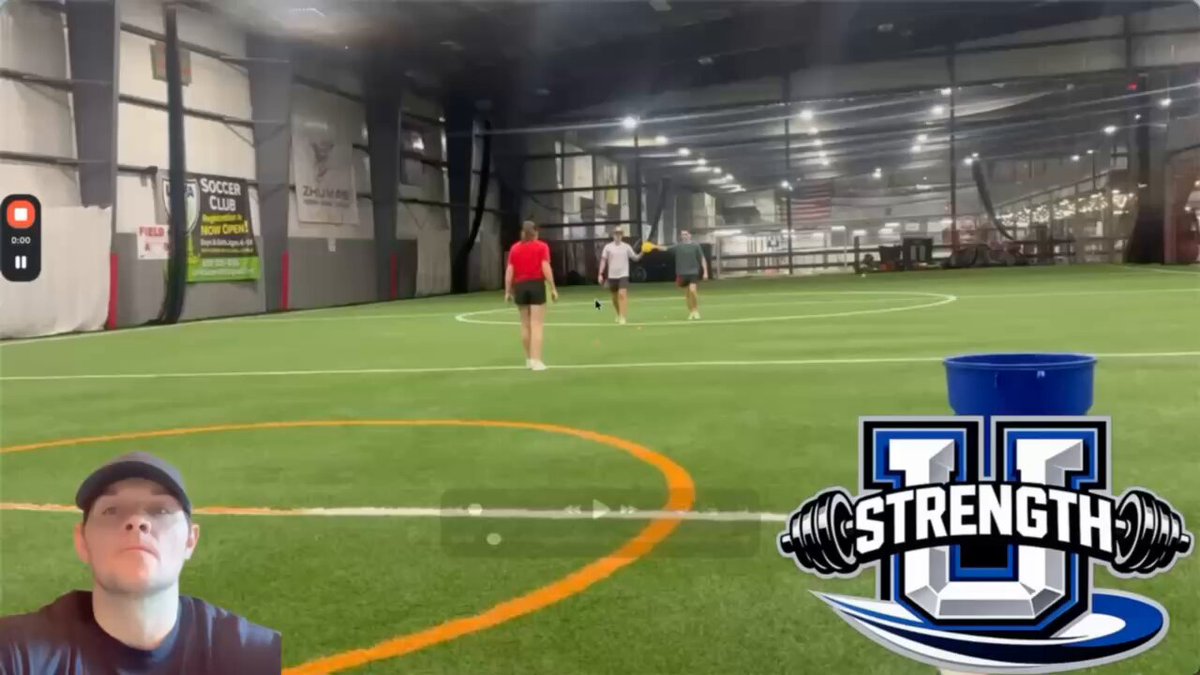
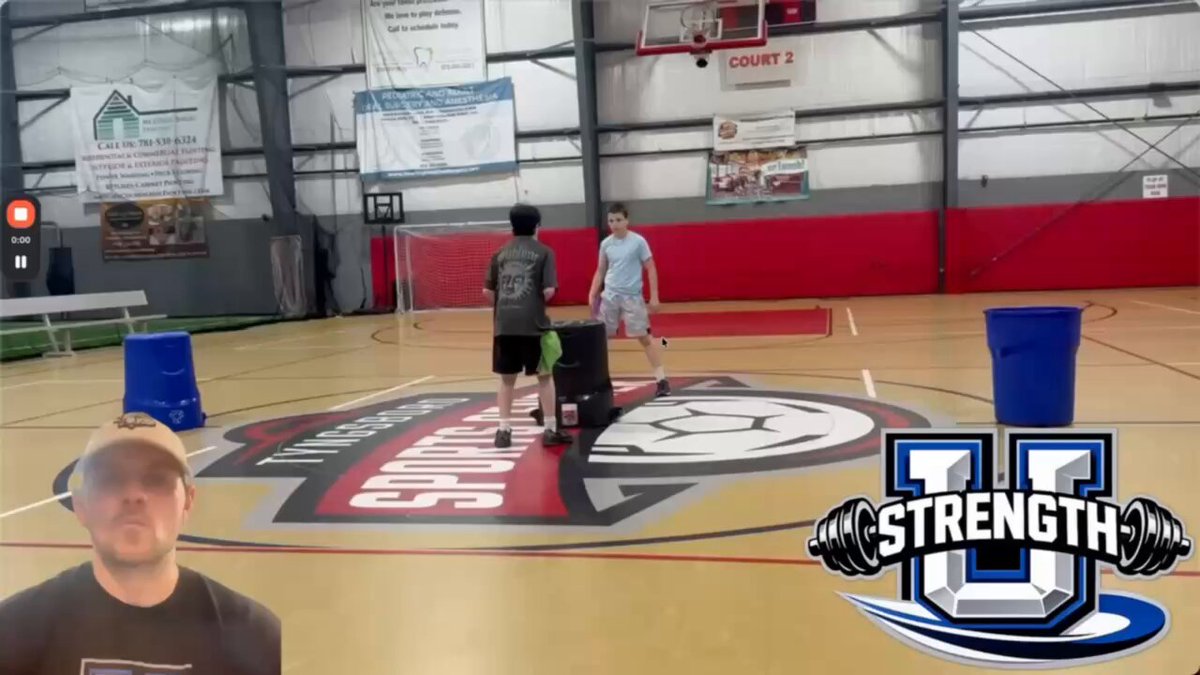
One example is this 1v1 environment. This creates individual problem-solving opportunities without overwhelming the youthletes. It provides enough variability to challenge perception-action coupling while remaining manageable for learning & adaptation.
We can further enrich the problem through open workspace constraints, encouraging movement diversification, greater solution variability, & exposure to higher-velocity actions.
Then, simple rules can dramatically deepen the challenge:
▪️Start= Lateral mirroring scenario
▪️Both participants must remain on their side initially
▪️The rep becomes live when the defender releases 3 balls
▪️The defender attempts to capture the scarf
▪️The offense collects balls & places them in open bins
▪️3 balls create multiple scoring opportunities & movement solutions
▪️First to reach 7, 9, or 11 points wins
The result? An environment that demands perception, decision-making, adaptability, & movement skill, all emerging from the problem itself.
413
Jun 4
Acceleration isn’t just about moving fast, it’s about how the body organizes & projects force.
Common acceleration attractors include:
✅ Lower COG
✅ Trunk–shin relationship
✅ Total body projection
✅ Effective 🦶 steering
✅ Knee separation
✅ Applying force opposite the intended direction of action
These aren’t positions to copy, they’re movement solutions that emerge as athletes interact with the demands of the task & environment.
Train the attractors, not the aesthetics, & acceleration becomes more powerful, smooth, & transferable.
533
Jun 3
If you’re tired of speed training that looks great in practice or training but doesn’t show up in competition, this course is for you.
Check out our new “Dirty” Speed Development course. Learn how to challenge speed solutions, & develop athletes who can move effectively through the mess👇
theuofstrength.thinkific.com…
494
Jun 3
One of the most powerful tools in athletic development is gamification. When you change the environment, you change the athlete’s intent. And when intent changes, movement often changes too.
At #uofstrength, gameplay is a key part of our process because it naturally creates:
✅ Higher engagement
✅ Greater effort
✅ Meaningful repetitions
✅ Authentic movement solutions
In this activity, we added a simple catching task to our repeated low to high hurdle jumps.
Now the athlete isn’t thinking about jumping over a hurdle. They’re organizing their body to:
▪️Track an object in flight
▪️Time their jump & landing
▪️Coordinate upper & lower body actions
▪️Adapt their landing strategy based on the catch
A small change. A completely different movement problem.
Sometimes the best coaching intervention isn’t another cue. It’s changing the environment & letting the athlete find a solution.
3
479