
Monad's most powerful Telegram trading bot. Built for speed, security and You. Powered by @BlockLabsX
Joined September 2024
- Tweets 2,152
- Following 59
- Followers 11,004
- Likes 5,204
863 Photos and videos









Pinned Tweet

5 Nov 2025
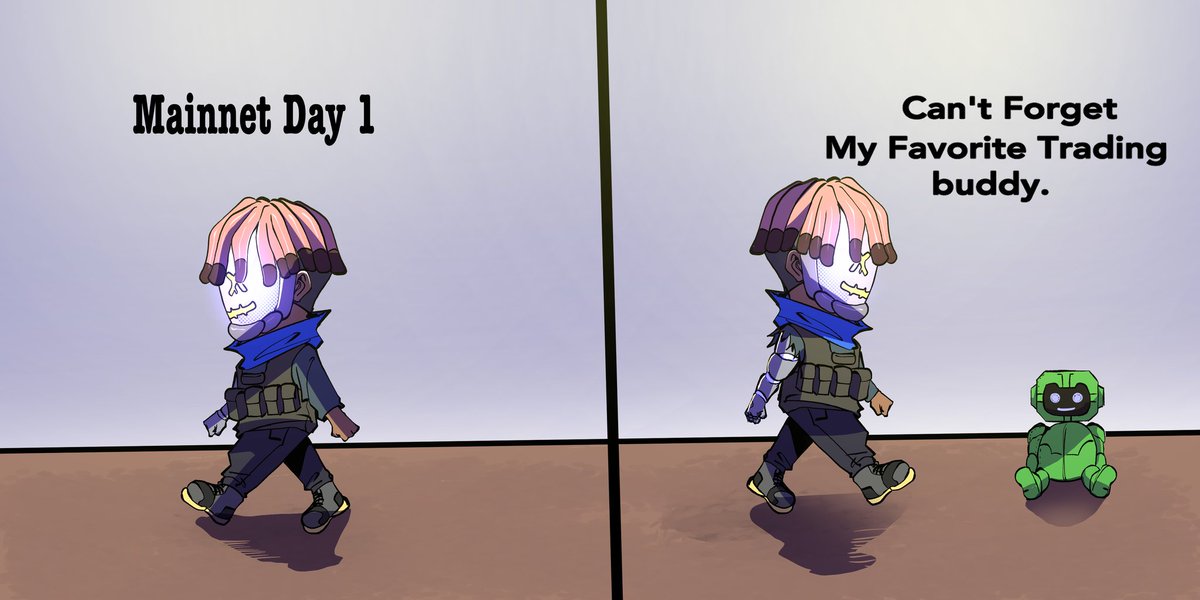
BlockBot will be live on Monad Mainnet day one
91
78
273
10,483
Jan 29
It’s with a heavy heart that we announce that Blockbot operations will cease.
This has been a difficult decision, and one we didn’t take lightly. We’re incredibly grateful to everyone who believed in the vision, tested the product, shared feedback, and supported the journey.
A message has been sent via Blockbot outlining the necessary steps users should take. As a precautionary measure, we strongly advise moving funds to a fresh wallet.
Thank you for being part of this journey with us.
18
40
2,064
24 Nov 2025
Gblock Familia,
We’re going into diagnosis mode so everyone has the full picture.
The bot is still working, just not yet at the 100% level you previously experienced. Some tokens aren’t fully buy-ready due to error in certain launchpads transition to mainnet, and that creates gaps where certain trades can’t go through even though the core system is functioning.
We’re mapping out the root cause and tightening every loose end as we go. Once those external contract issues settle, Blockbot will return back to full-level performance.
We’re pushing to restore that complete experience as quickly as possible, thank you for your patience.
34
27
97
2,646
21 Nov 2025
BlockBot 🤝 @SomethingMonad
The all-in-one upgrade your meme plays deserve.
21 Nov 2025

Integration #8: @The_BlockBot
We're excited to team up with the their team.
- Telegram trading bot on @monad
- Trade our tokens/top runners instantly
- Get started: t.me/Monad_BlockBot
🔗 Learn more: docs.blockbot.trade

38
21
136
5,861

20 Nov 2025
Blockie is locked in and ready to serve all trenchors from day 1.
Get ready Anon.
34
20
128
2,566
18 Nov 2025
6 days left till your favorite trading buddy hits Mainnet.
You ready, trencher?
67
38
123
2,521
17 Nov 2025
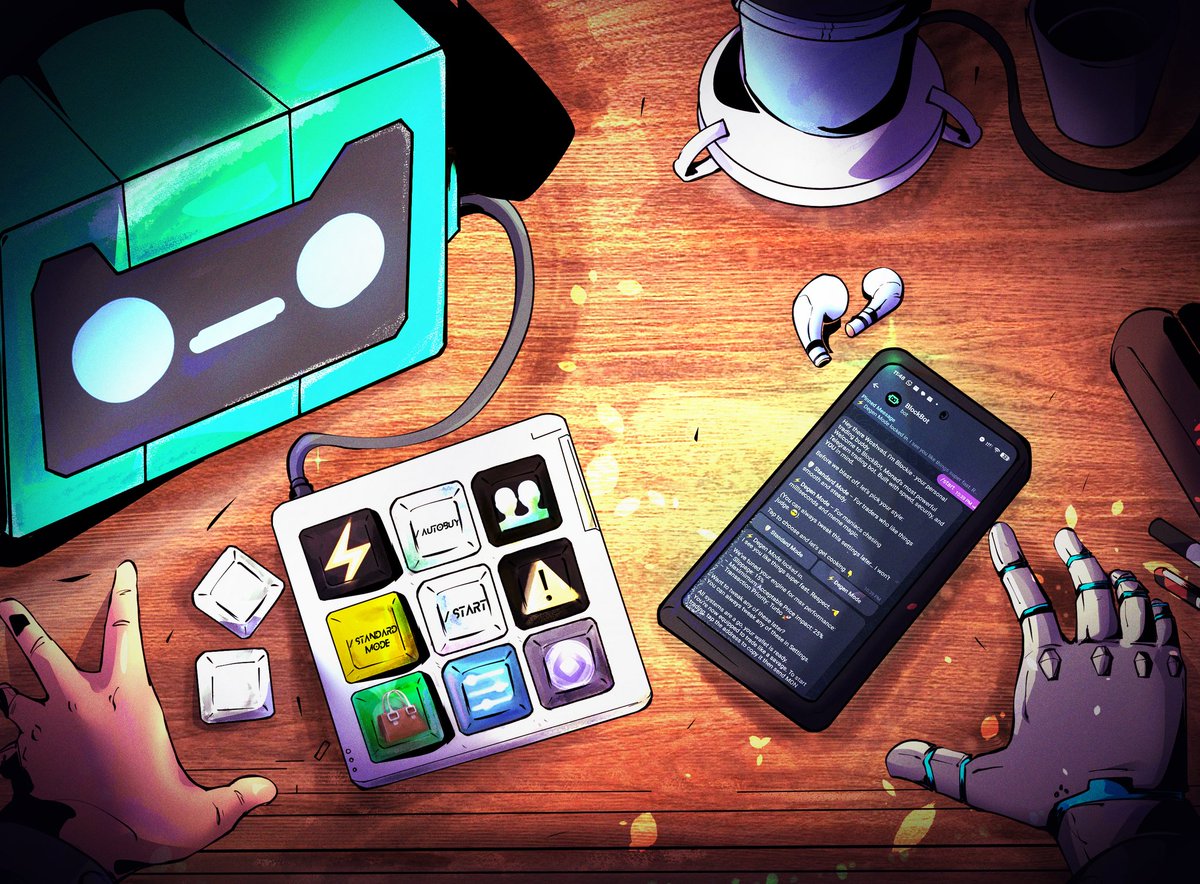
The Monad Trenches with Blockie is what you need.
Hit /Start on your trading buddy!
68
35
127
2,865
16 Nov 2025
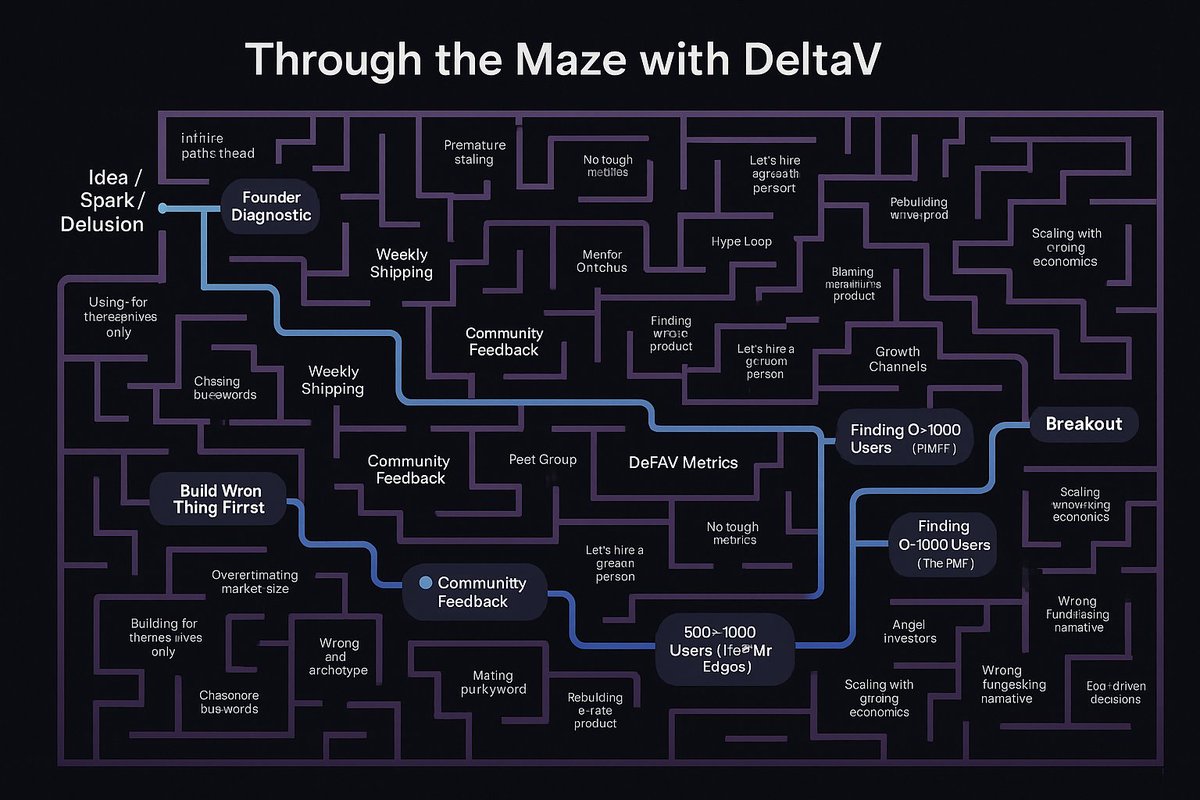
BlockBot Weekly Update.
— Implemented ERC20 contract address detection logic for token CA input validation.
— Shipped minor bug fixes.
— Began the development of [Redacted] feature.

68
43
139
4,616

11 Nov 2025
6
2
17
1,064
BlockBot retweeted

9 Nov 2025
𝐇𝐨𝐰 𝐭𝐨 𝐮𝐬𝐞 𝐚 𝐭𝐫𝐚𝐝𝐢𝐧𝐠 𝐛𝐨𝐭 (𝐁𝐥𝐨𝐜𝐤𝐁𝐨𝐭)
BlockBot is a Telegram bot built for Monad trading. It's easy to use and beginner-friendly.
𝐒𝐞𝐭𝐭𝐢𝐧𝐠𝐬 𝐒𝐞𝐭-𝐮𝐩
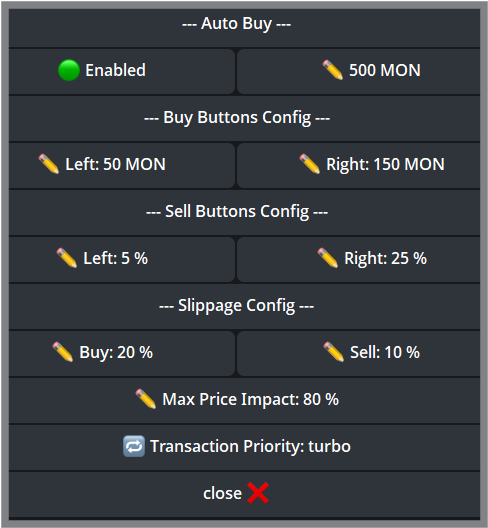
1️⃣Go to Menu → changemode to Degen – this unlocks complete flexibility.
2️⃣Enable Auto Buy.
- Enable Auto Buy and set how much it should buy.
- Paste a token CA and it’ll auto buy instantly.
𝗦𝗹𝗶𝗽𝗽𝗮𝗴𝗲 𝗖𝗼𝗻𝗳𝗶𝗴
- Slippage % = how much price movement your trade tolerates.
- The optimal % for Volatile meme coin 15-20%. This is risky percentage. Set lower for moderate risk.
- Set higher Buy Slippage (10–20%) so transactions don’t fail when prices move fast.
- Keep Sell Slippage (5–10%) lower to lock in profits.
𝐌𝐚𝐱 𝐏𝐫𝐢𝐜𝐞 𝐈𝐦𝐩𝐚𝐜𝐭
This defines how much your trade can move the price of the token.
Example: if set too low (e.g. 20%), big buy or sell might fail.
For small caps, use 80% to make sure buys go through during pumps.
If you want to try @The_BlockBot, 𝐡𝐞𝐫𝐞’𝐬 𝐦𝐲 𝐥𝐢𝐧𝐤 👉 t.me/Monad_BlockBot?start=r_…
30
4
95
4,108
7 Nov 2025
Y'all heard Dad, explainer series coming thoon. #LearnwithBlockie 💚
7 Nov 2025

Over the course of @The_BlockBot beta testing, I saw some novice questions from testers that prompted this explainer series. We'll begin with Slippage:
What is Slippage?.
Slippage is a deviation from your expected output amount of tokens.
Why slippage?.
In between the time it takes from the submission of your trade transaction to the blockchain to its execution on the Blockchain, the token's price could have changed in that time, which in turn reflects on the amount of tokens you'll actually receive. The longer it takes for your transaction to be included in a block (executed)—you can fasten this process by rewarding validators with a competitive priority fee, the more price could potentially change in any direction. An explainer on transaction priority fee and how to take advantage of it as a trader is coming soon.
What is Slippage Tolerance?.
Your slippage tolerance —aptly named— defines the max allowable deviation (slip) from the expected output you're willing to accept. A slippage tolerance of 5% means you're willing to accept a MAXIMUM of 5% LESS tokens from the expected output (4% less tokens? Fine, 3% less tokens? Fine, 2% less tokens? Fine, 1% less tokens? Fine, 0% less tokens? Perfect ). In an ideal world, you should receive 100% of the expected amount but the real world is different. A 5% slippage tolerance means you're willing to accept 95%, 96%, 97%, 98%, 99% or 100% (obviously) of the expected tokens but you won't accept 94% to 0% of the expected amount—the dEX smart contract will revert with an `Insufficient output amount` error in that case.
We'll be adding shorter explanations of some trading concepts somewhere in BlockBot soon. See you in the next explainer.
6
1
26
1,301
BlockBot retweeted

7 Nov 2025
Over the course of @The_BlockBot beta testing, I saw some novice questions from testers that prompted this explainer series. We'll begin with Slippage:
What is Slippage?.
Slippage is a deviation from your expected output amount of tokens.
Why slippage?.
In between the time it takes from the submission of your trade transaction to the blockchain to its execution on the Blockchain, the token's price could have changed in that time, which in turn reflects on the amount of tokens you'll actually receive. The longer it takes for your transaction to be included in a block (executed)—you can fasten this process by rewarding validators with a competitive priority fee, the more price could potentially change in any direction. An explainer on transaction priority fee and how to take advantage of it as a trader is coming soon.
What is Slippage Tolerance?.
Your slippage tolerance —aptly named— defines the max allowable deviation (slip) from the expected output you're willing to accept. A slippage tolerance of 5% means you're willing to accept a MAXIMUM of 5% LESS tokens from the expected output (4% less tokens? Fine, 3% less tokens? Fine, 2% less tokens? Fine, 1% less tokens? Fine, 0% less tokens? Perfect ). In an ideal world, you should receive 100% of the expected amount but the real world is different. A 5% slippage tolerance means you're willing to accept 95%, 96%, 97%, 98%, 99% or 100% (obviously) of the expected tokens but you won't accept 94% to 0% of the expected amount—the dEX smart contract will revert with an `Insufficient output amount` error in that case.
We'll be adding shorter explanations of some trading concepts somewhere in BlockBot soon. See you in the next explainer.
11
3
31
2,237
7 Nov 2025
Blockbot 🤝 Salmoheroo.
Heroes meet their trading buddy.
With Salmoheroo joining forces with Blockbot for Monad Mainnet, every HERO gets a smoother, faster, and safer way to trade from day one on Monad mainnet.
7 Nov 2025

Monad Mainnet is Coming - Get Ready, HEROES! 😈
The Monad Mainnet is launching soon, and it’s time for us to prepare to explore all the exciting new trading opportunities it brings!
To make sure every HERO is equipped with a safe and efficient trading experience, we’re partnering with Blockbot - your trusted trading companion for the Monad Mainnet from Day 1.
𝗚𝗲𝘁 𝗿𝗲𝗮𝗱𝘆 𝗻𝗼𝘄:
Sign up for Blockbot here: t.me/Monad_BlockBot?start=r_…
Then follow @The_BlockBot 𝗮𝗻𝗱 𝘀𝗵𝗮𝗿𝗲 𝗽𝗿𝗼𝗼𝗳 𝘁𝗵𝗮𝘁 𝘆𝗼𝘂’𝗿𝗲 𝗮 𝗿𝗲𝗴𝗶𝘀𝘁𝗲𝗿𝗲𝗱 𝗕𝗹𝗼𝗰𝗸𝗯𝗼𝘁 𝘂𝘀𝗲𝗿 𝗶𝗻 𝘁𝗵𝗲 𝗰𝗼𝗺𝗺𝗲𝗻𝘁 𝘀𝗲𝗰𝘁𝗶𝗼𝗻 𝗯𝗲𝗹𝗼𝘄.
𝗥𝗘𝗪𝗔𝗥𝗗𝗦:
Win 10 Whitelisted Roles and 2 Aqua Champions (FREE MINT) as we celebrate the arrival of Salmoheroo on Monad Mainnet soon! 💜

59
31
89
2,213
6 Nov 2025
Invite your friends to use your favourite trading buddy and earn from their fees.
Open the Menu and choose Referral, or use /referral to pull up your link instantly.
60
30
107
2,400
BlockBot retweeted

6 Nov 2025
We launched @The_BlockBot public beta on Saturday meaning it's available to everyone.
Here's how I make the best of it and what you can do:
- I started out using Degen Mode to make things even faster - so I’d recommend this if you’ll be actively chasing memes on Monad.
- Add it as a shortcut to your homepage for easy access or pin it to the top of your Telegram.
- Edit the buy and sell buttons to match your buy and sell options
- I turned on auto buy, which lets me buy tokens as soon as I paste the CA without extra steps
Have you used BlockBot today and what is your degen strategy come mainnet? I'll be sharing more as we get closer and closer to mainnet.
Link below to try it out or check my bio
16
3
75
2,052
BlockBot retweeted

6 Nov 2025
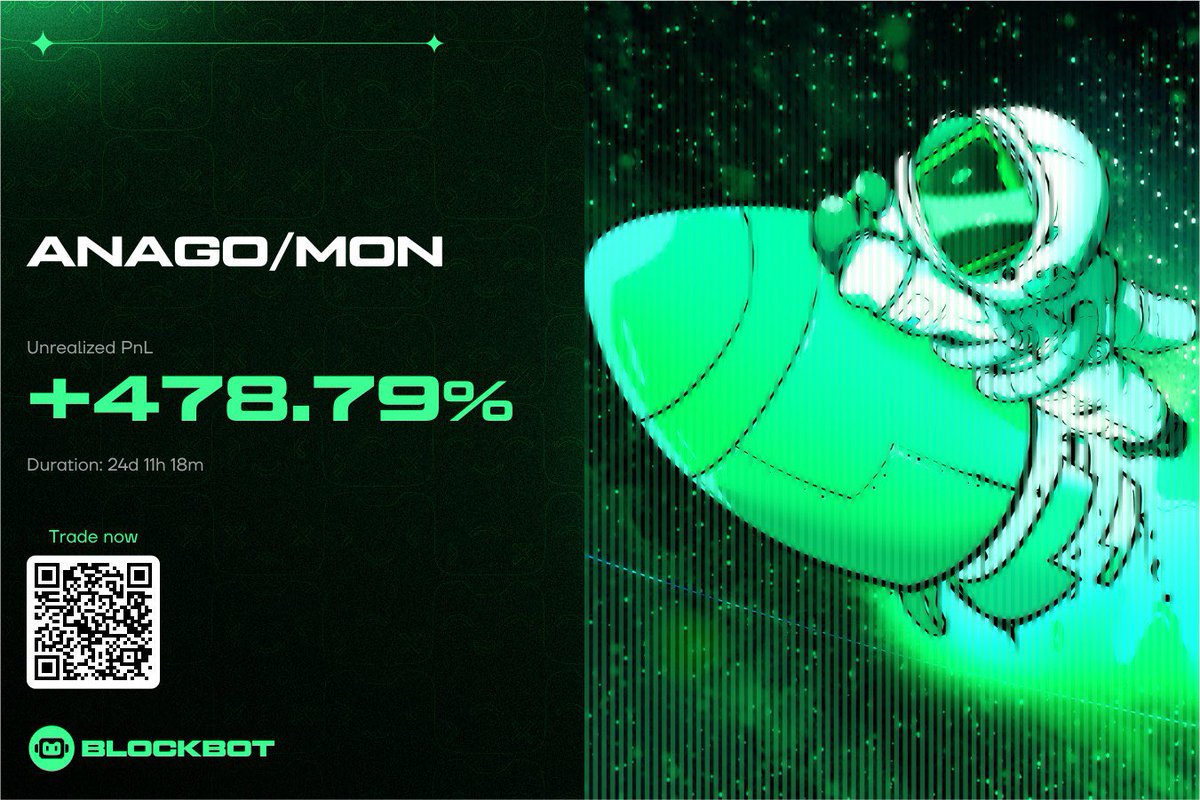
it’s looking good for monad trenches
my frens at @The_BlockBot making sure we are taking care of 🫡💜
6
2
19
1,002
3 Nov 2025
The name's Blockie.
Your favorite trading buddy on Monad.
Now live on Public Beta, offering:
- Speed & security
- Ticker name buy (please confirm the CA before trading)
- Auto-Buy
- Dual trading modes
- and more...

82
37
147
4,664