
The Budget Lab is a non-partisan policy research center dedicated to providing in-depth analysis of federal proposals for the American economy.
Joined March 2024
- Tweets 577
- Following 9
- Followers 7,242
- Likes 23
31 Photos and videos


The Budget Lab retweeted

Jun 12
New from me for @TheAtlantic: the consequences of rising national debt and high deficits feel far away, but actually they're already here. The government’s deficits have saddled many American families with higher costs, largely from rising interest rates. 1/
3
36
148
28,260

@NatashaRSarin joined “Marketplace” host @kairyssdal to talk about the economic implications of declining immigration. marketplace.org/story/2026/0…
1
1
4
650
Read the full @The_Budget_Lab analysis: budgetlab.yale.edu/research/…
2
280
The Budget Lab retweeted

Jun 10
So great to have this conversation with @dwallacewells for @nytopinion on the mega-IPOs on the horizon and who stands to benefit from them:
nytimes.com/2026/06/10/opini…
1
1
8
1,011
The Budget Lab retweeted

Jun 9
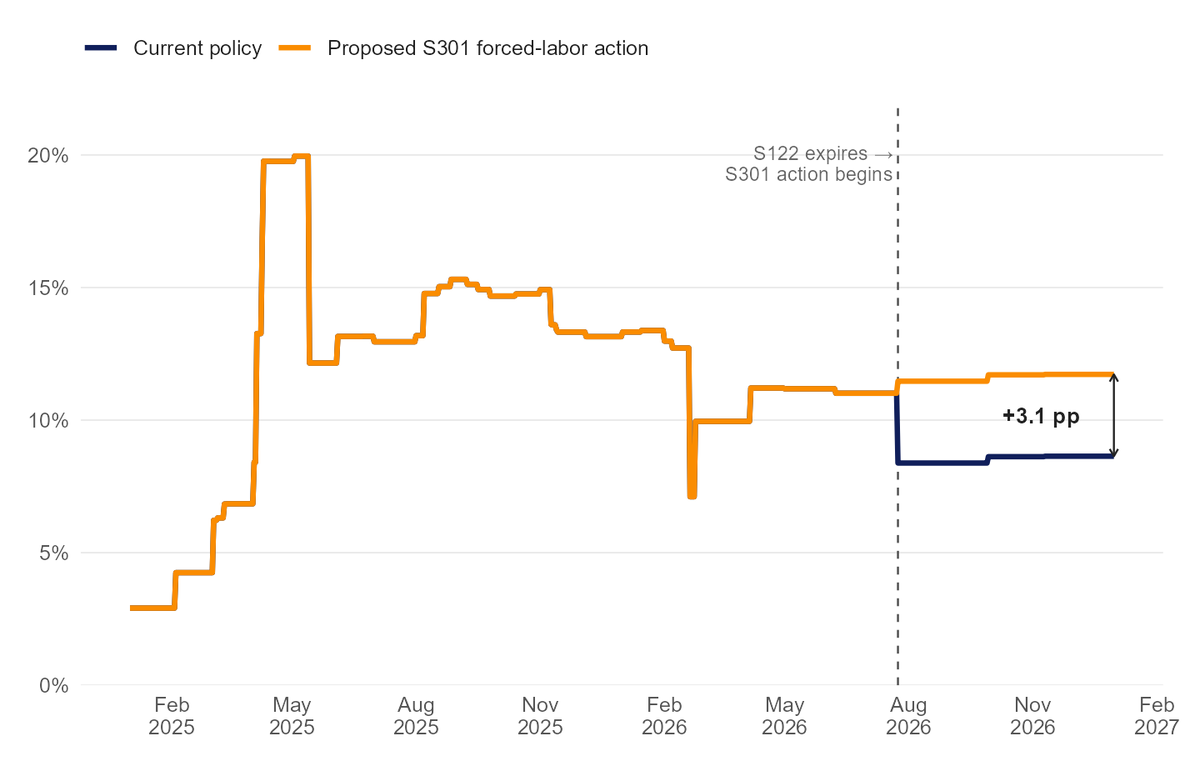
Last week, the administration proposed a set of Section 301 “forced-labor” tariffs. We @The_Budget_Lab estimate that, if these take effect on July 24, average ETRs would hold near 11.5% instead of falling to ~8.4%, replacing (in the aggregate) the expiring Section 122 tariffs.
1
2
4
964
Jobs Day is Friday! Looking at the industry breakdown of payroll employment growth over the last year or so, we were struck by the size of the health care share. There are plenty of months in which health care chugs along while all the other industries contribute negatively. How big a deal is this? Has healthcare eaten the labor market?
1
1
6
1,211
Switching to the share of healthcare in total employment, rather than hires/separations, we see that in early 2026 it just slightly exceeded its BLS-forecasted level from ten years ago. The long-run growth wasn't a surprise: we all knew that the population was aging and would require more health care.
1
1
240
One big question is simply why non-healthcare industries have experienced such weak employment growth in 2025 and 2026 (so far). The most likely answer would seem to be the reduction in net immigration. Perhaps the lower average healthcare demand by immigrants has made that sector less sensitive to the sudden population growth downshift.
1
221
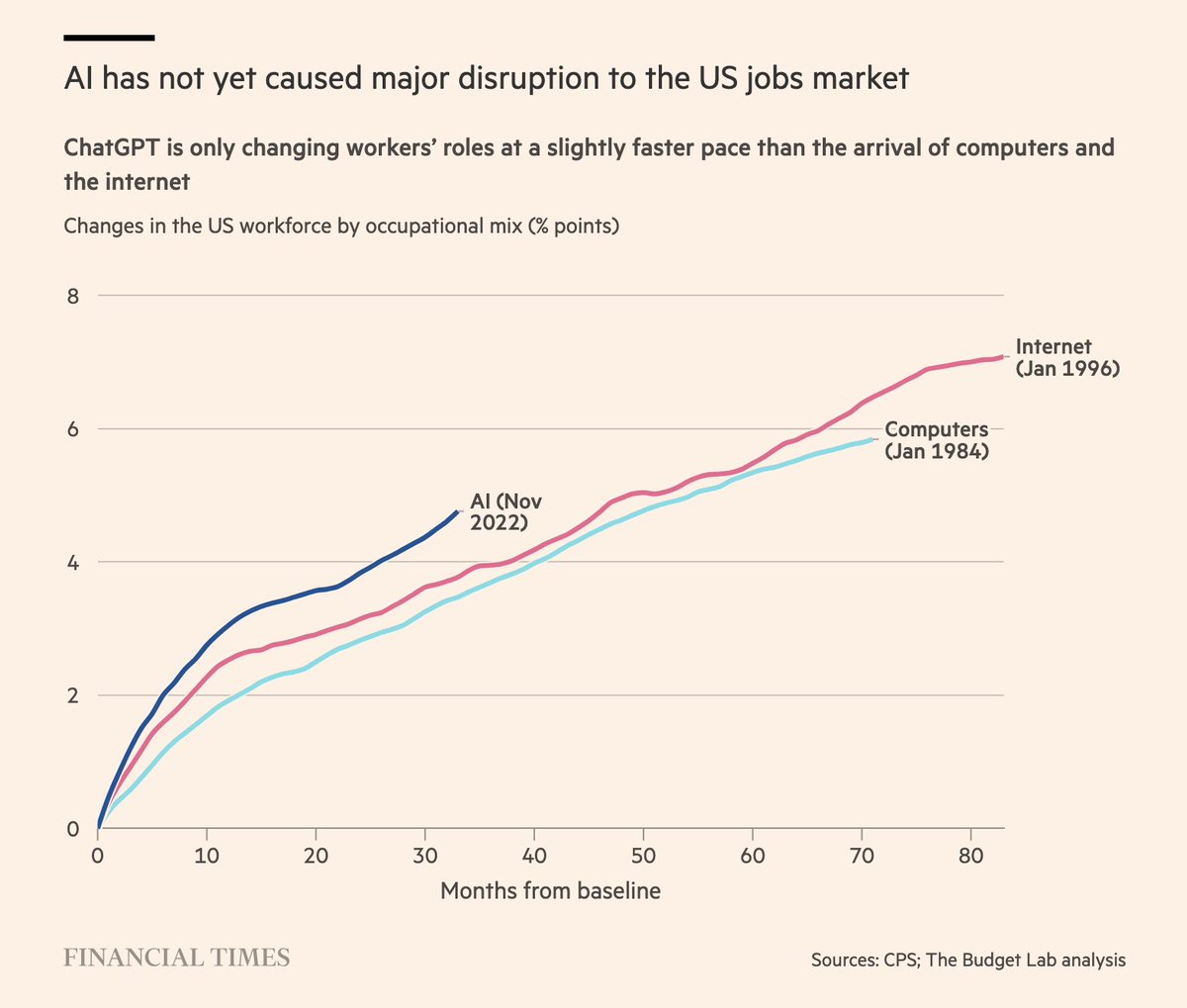
Tomorrow, June 2, we will get estimates of layoffs and hires for April. One recent trend we'll be watching closely is the increase in Information-sector layoffs since the end of 2025. On its face, this seems like the kind of thing you might see if AI adoption were affecting labor demand.
1
1
4
557
While certainly worth continuing to monitor, the layoff rise isn't mirrored (in other datasets) by increases in UI claims or unemployment. This is what we would have expected if the sector were experiencing a big weakening in labor demand.
1
2
407
Similarly, our ongoing AI tracking analysis doesn't show unusual increases in occupational churn within the Information sector. We will keep watching, but for now the data isn't screaming about AI effects.
2
247
The Budget Lab retweeted

May 29
"At a time when policymakers are hoping for a boom from increased productivity growth, decreased immigration undermines that goal by removing entrepreneurs (and their children) who would have started new businesses". Read more in my new report from @The_Budget_Lab !

Rock-bottom immigration rates leave mark on U.S. economy axios.com/2026/05/29/immigra…
1
6
11
1,232
The Budget Lab retweeted
May 28
New from @abhiecon and @The_Budget_Lab: immigration policies affect entrepreneurship and productivity growth. Even assuming a return to baseline immigration in 2029, the current slowdown in immigration will likely have long-run impacts on business formation and productivity. 1/
May 28

In a new report by @The_Budget_Lab, we show that this administration's restrictive immigration policies--even if undone after 2028--will make America less dynamic and productive for decades to come. (1/4) budgetlab.yale.edu/research/…
1
5
13
4,975
The Budget Lab retweeted
May 28
In a new report by @The_Budget_Lab, we show that this administration's restrictive immigration policies--even if undone after 2028--will make America less dynamic and productive for decades to come. (1/4) budgetlab.yale.edu/research/…
2
7
12
6,196
The Budget Lab retweeted
May 11
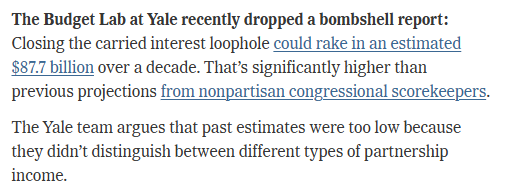
Per @dealbook, we at @The_Budget_Lab have a "bombshell" report out on the revenue potential of closing the carried interest loophole.
Here's the report: budgetlab.yale.edu/research/…
The existence of carried interest is *WILD* -- $ fund managers get lower tax rates than wage-earners
3
11
23
3,313
The Budget Lab retweeted
May 9
Today we at @The_Budget_Lab just updated our blog on the Tariff Rate Tracker, our open-source tool for estimating daily effective tariff rates. budgetlab.yale.edu/research/…
1
2
7
1,263
The Budget Lab retweeted
Great to be back with @SquawkCNBC for jobs day this morning. Watch here:
cnbc.com/video/2026/05/08/ex…
1
4
675