
Founded in 1840, The Tablet is the leading international Catholic journal. Follow our podcast podcasts.apple.com/gb/podcas…
Joined June 2010
- Tweets 26,408
- Following 2,464
- Followers 23,130
- Likes 4,045
8,052 Photos and videos











Insight that stands the test of time.
Get digital access to The Tablet and 185 years of archives for just £23 quarterly.
Subscribe now: thetablet.co.uk/subscribe #TheTablet #Faith #Spirituality #CatholicChurch
84
The Tablet retweeted

Jun 12
In this week’s @The_Tablet newsletter Leo reigns in Spain @LizDodd isn’t afraid of AI; John Berkman knows why Miss Anscombe (below) changed course; Mark Lawson seeks Atonement; Isabella Tree goes wild; Nicholas Boyle fixes Britain’s identity crisis; Patrick Hudson’s View from Rome; Thomas Banchoff spots the Pope is calling for a transformation of global governance; Xavier Neil O’Donoghue wonders if while he’s at it he might be able to bring peace to the liturgy wars @joannaMoorhead meets the curator who put graffiti into Canterbury cathedral @AlexaCoghlan is thrilled by James MacMillan’s Angels Unawares @djtaylorwriter listens to the wireless; Nikolai Duffy sifts the best recent poetry @theosnick rounds up US history essentials; Lindsay Duguid enjoys Ruth Ozeki a fish recipe from Rose Prince @JonathanTulloch’s nature notes Ian Thomson, Morag MacInnes news letters books arts puzzles a poem for St Anthony of Padua’s feast day by @KathrynSimmonds
email.digitalvirtue.net/t/r-…
4
4
419
The Tablet retweeted
Jun 12
70 years ago, an obscure young Catholic academic launched a protest against Oxford’s awarding of an honorary degree to former US President Harry Truman, who she regarded as a mass murderer. Miss Anscombe’s protest failed miserably, but, John Berkman shows, it led her to see that philosophy had taken a wrong turn, and she devoted her academic career to trying to re-set the way we think about right and wrong.
thetablet.co.uk/features/how…
2
10
21
3,953
The Tablet retweeted

Read Center Director Thomas Banchoff's latest article in @commonwealmag, "The Pope, the President, and Our Democratic Crisis," coauthored with Massimo Faggioli. commonwealmagazine.org/leo-t…
2
2
569
The Tablet retweeted
In this @The_Tablet article, Center Director Thomas Banchoff explores Pope Leo XIV's encyclical Magnifica Humanitas as a call for far-reaching cultural and institutional change.
thetablet.co.uk/features/deu…
3
5
460

Jun 12
Nigerian bishop says church has ‘come alive’ in face of persercution. Report by @SarahRMacDonald #catholic thetablet.co.uk/news/nigeria…
3
6
325
The Tablet retweeted
Jun 10
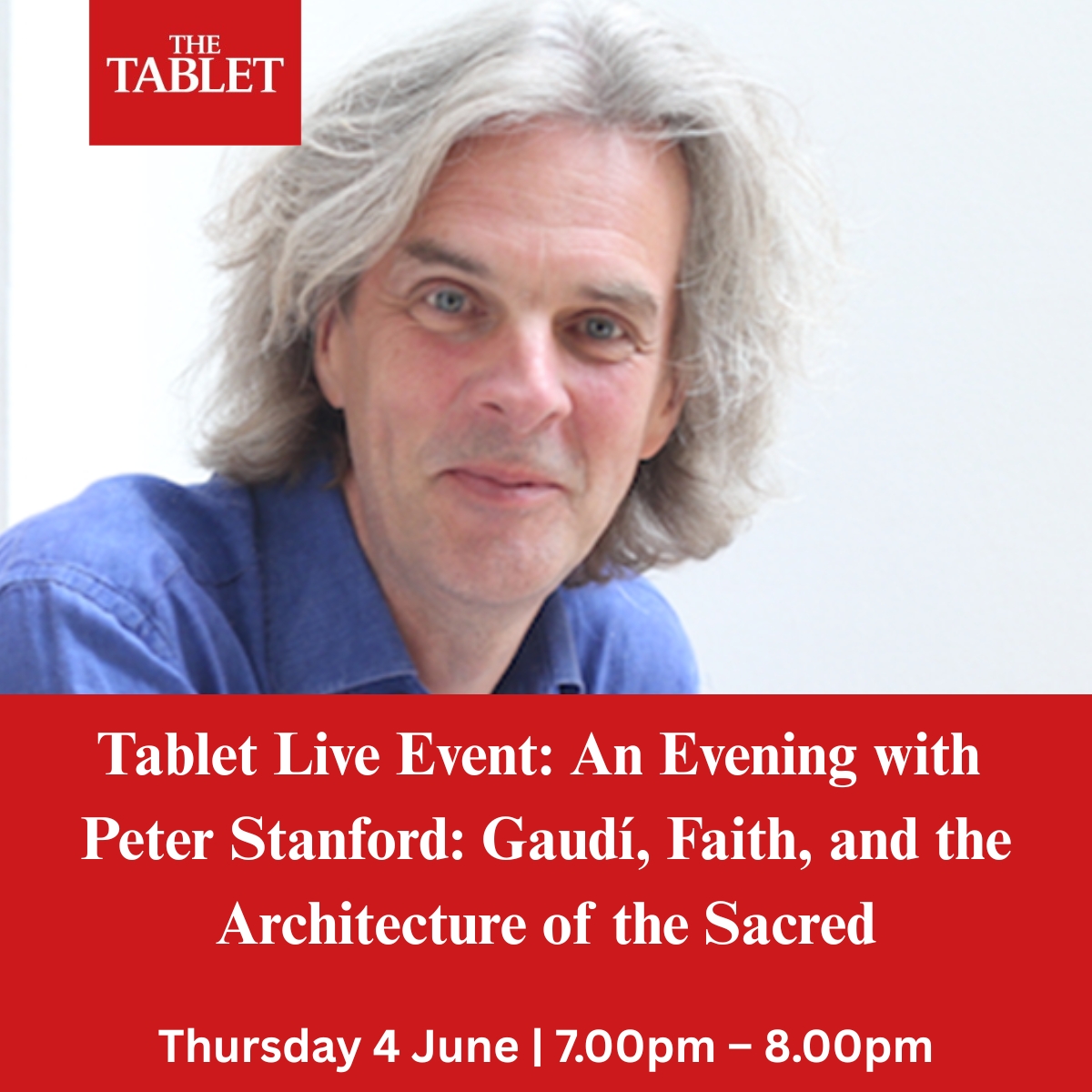
Gaudí - ‘God’s architect’ - had at times a difficult relationship with the institutional Church. Not unusual for saints, mind. Peter Stanford in @The_Tablet thetablet.co.uk/features/lif…
6
10
571
The Tablet retweeted

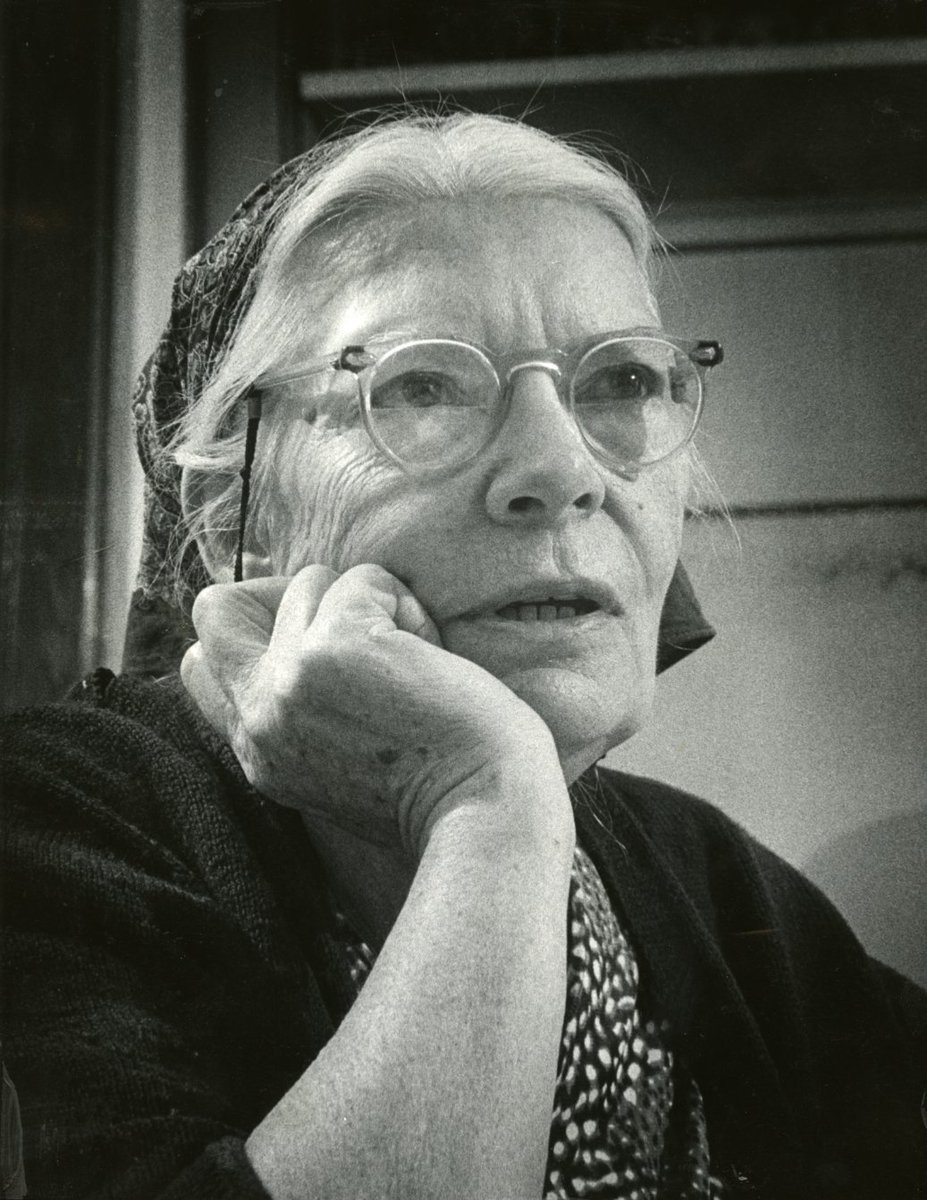
Thanks to Carolyn Zablotny and the Dorothy Day Guild for posting this interview with me, "Why Saints--Why Dorothy"--my reflections on Dorothy Day's model of holiness and why it matters. dorothydayguild.org/robert-e…
10
27
631
Jun 10
📰 Trusted Insight & global Catholic news for 185 years. 📱 Read the latest edition anytime, anywhere. 📬 Free Home Delivery! 🎉 Limited-time: 5 issues for just £5! 👉 Start your journey: checkout.thetablet.co.uk/GTA… #CatholicNews #TheTablet #SubscribeNow
143
Jun 10
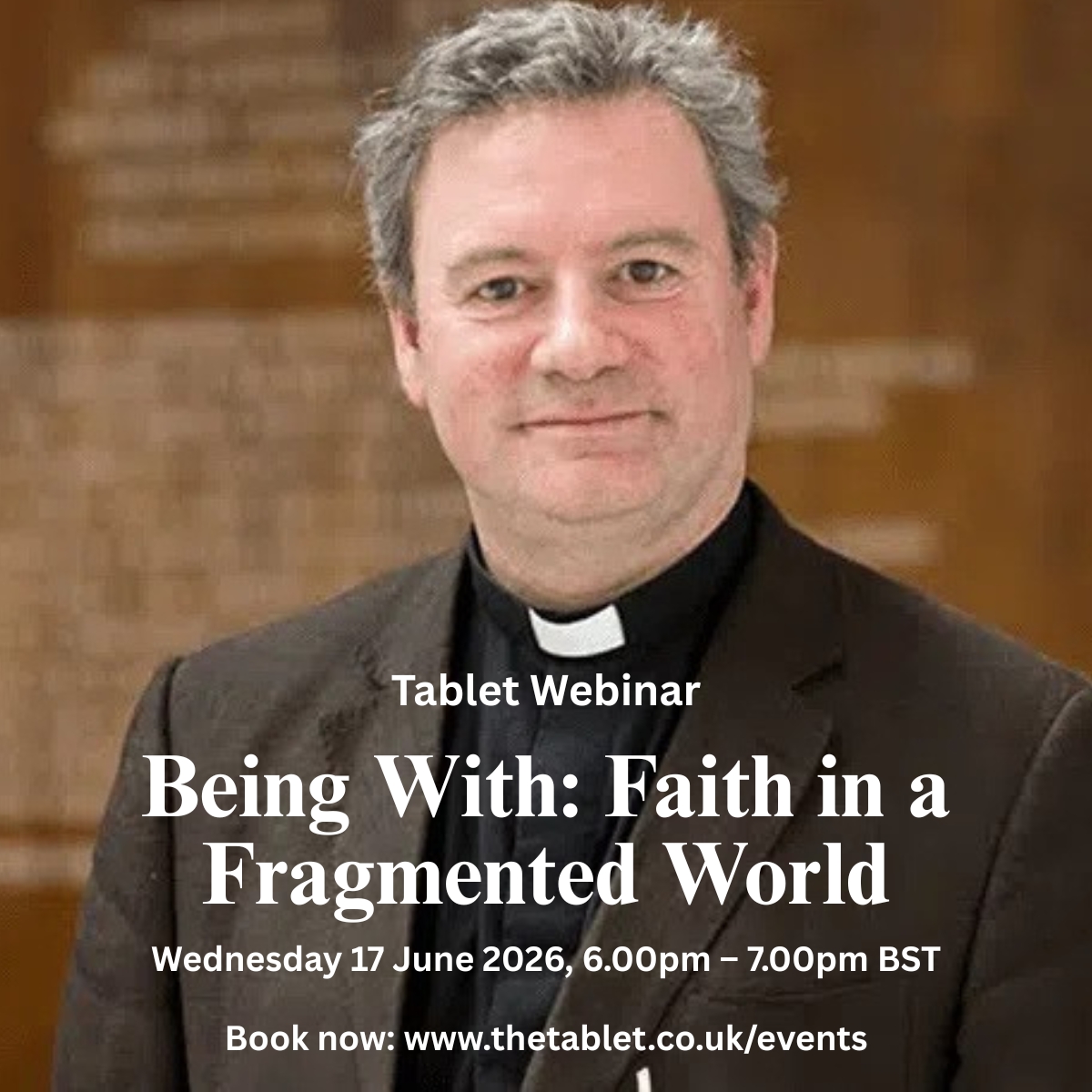
Join Avril Baigent and Matthew Nunes, Co-Directors of The School for Synodality, for an engaging and practical webinar exploring the next stage of the synodal journey and what it means for parish life today. thetablet.co.uk/events
162
Jun 9
Join Revd Dr Sam Wells as we take a moment to invite reflection on community, presence, and the work of the Spirit in a divided and distracted age. Book now: thetablet.co.uk/events
1
1
1
187
The Tablet retweeted

Jun 8
In what will certainly become one of the most fundamental speeches of his pontificate, Pope Leo XIV told the Spanish Parliament, before receiving a 7-minute standing ovation: "The defense of human life is neither a partisan issue nor a confessional interest: it is a goal of civilization."
"If life ceases to be recognized as a fundamental value, what future can our societies have?" he said, speaking to a gathering of politicians, many supporting abortion and euthanasia.
"Can a community that casts into the shadows the unborn child, the elderly, the sick, those who suffer in silence, or those who depend entirely on the care of others be called fully just?"
"Every human life must be recognized and safeguarded from conception to its natural end, in every circumstance of its existence. When this certainty is obscured, the most vulnerable are the first victims, and the law loses its deepest meaning: to serve and protect every person."
"For this reason, the moral greatness of a nation is manifested, above all, in its capacity to accompany, protect and love those lives that are most fragile," he said, repeating what John Paul II emphasized decades ago.
Starting his speech he commented that Church's is the "message offered in the spirit of service to the human person."
"When the Church addresses anything concerning public life, she does so while respecting the proper mission of institutions and the legitimate responsibility of those who have received the mandate to legislate," Pope Leo said, emphasizing "the Church offers a reflection born of the desire to serve the common good."
He hailed Spain as country that "has known how to view the human being as more than just a cog in the social, economic or political order. It has recognized the human being as a creature open to truth, endowed with freedom, and driven by a thirst for eternity that no temporal reality can quench -- in a word, as someone whose dignity takes precedence over all utility and to whose service legislative action is subject."
He said it was Catholic orders that "helped to shape a legal and moral consciousness capable of remembering that authority always entails responsibility and that every human being must be recognized as a subject of rights and duties."
"That aspiration continues to resonate today: that dignity, justice and the common good should be the measure of social relations, both at the national and international levels."
Referring multiple times to his "Magnifica Humanitas" encyclical, he said: "When the common good ceases to be a shared horizon, public action runs the risk of fragmenting into partial interests, incapable of safeguarding what belongs to all."
"In this context, the family — the primary human reality and the natural foundation of the community — takes on particular importance," Pope Leo said.
"The family will always be the first school of humanity, where one learns, before anywhere else, the basic grammar of living together: welcoming life, caring for others, forgiving, serving and belonging."
"Human life can never be treated as a commodity," the pope said.
"A law does not attain its true greatness merely by having been formally enacted; it attains it when, in addition to being valid in form, it can stand before the dignity of the person and pass that test without shame."
"I invite you, then, to lift your gaze to the world around you, not to turn away from reality, but to remember that every decision by public authorities affects real people, especially those who have less power to make their voices heard."
"The expanse of one’s vision consists precisely in looking more deeply at what is at stake in every public decision. This is why, alongside technical solutions and legal reforms, a moral renewal is also needed."
Video: Vatican Media
(fragment of speech follows)
72
1,448
5,354
242,205
The Tablet retweeted

Basically, the nicest thing anyone has ever said about me. But read the article and decide for yourself!

We asked @Terencejsweeney, a brilliant young philosopher grounded in the Augustinian tradition who teaches at Leo’s old gaff @VillanovaU how deeply the Augustinian Pope knitted the insights of The City of God into Catholic social teaching in Magnifica Humanitas … his answer makes gripping reading
thetablet.co.uk/features/leo…
1
3
8
1,099
Jun 8
Insight that stands the test of time.
Get digital access to The Tablet and 185 years of archives for just £23 quarterly.
Subscribe now: thetablet.co.uk/subscribe #TheTablet #Faith #Spirituality #CatholicChurch
1
165
Jun 7
Pope Leo XIV meets royalty, civic leaders, hundreds of thousands of youth in Spain – look at Day One of the visit in pictures thetablet.co.uk/news/pope-le… #catholic
1
4
4
285
Jun 7
Pope Leo XIV tells leaders in Spain that he comes to promote a national ‘reconciliation’ thetablet.co.uk/news/pope-le… #catholic
1
2
197
The Tablet retweeted
‘Our age, seemingly shaken by terrible imbalances and conflicts, cries out from its depths for peace, for a new understanding of the human person and its inviolable dignity, for a civilisation of love.’ Pope Leo brings a universal message to Madrid. @RuthieGledhill reports
thetablet.co.uk/news/pope-le…
2
7
339
Jun 6
Pope Leo in Spain pledges to affirm and renew fidelity to the Gospel thetablet.co.uk/news/pope-le… #catholic
1
3
5
334
Jun 6
10 things to know about the Catholic Church in Spain as Pope Leo XIV flies in thetablet.co.uk/news/10-thin…
3
4
263
The Tablet retweeted
"The question, in the Augustinian tradition, has always been: Which city are you going to live in?"
#PopeLeo
thetablet.co.uk/features/leo…
5
10
520