An initiative by @Cactusglobal | CACTUS Mental Health Survey | THINK Academia - movement against academic bullying | #AcademicMentalHealth #ItsTimeWeTHINK
- Tweets 5,204
- Following 1,754
- Followers 3,829
- Likes 7,385


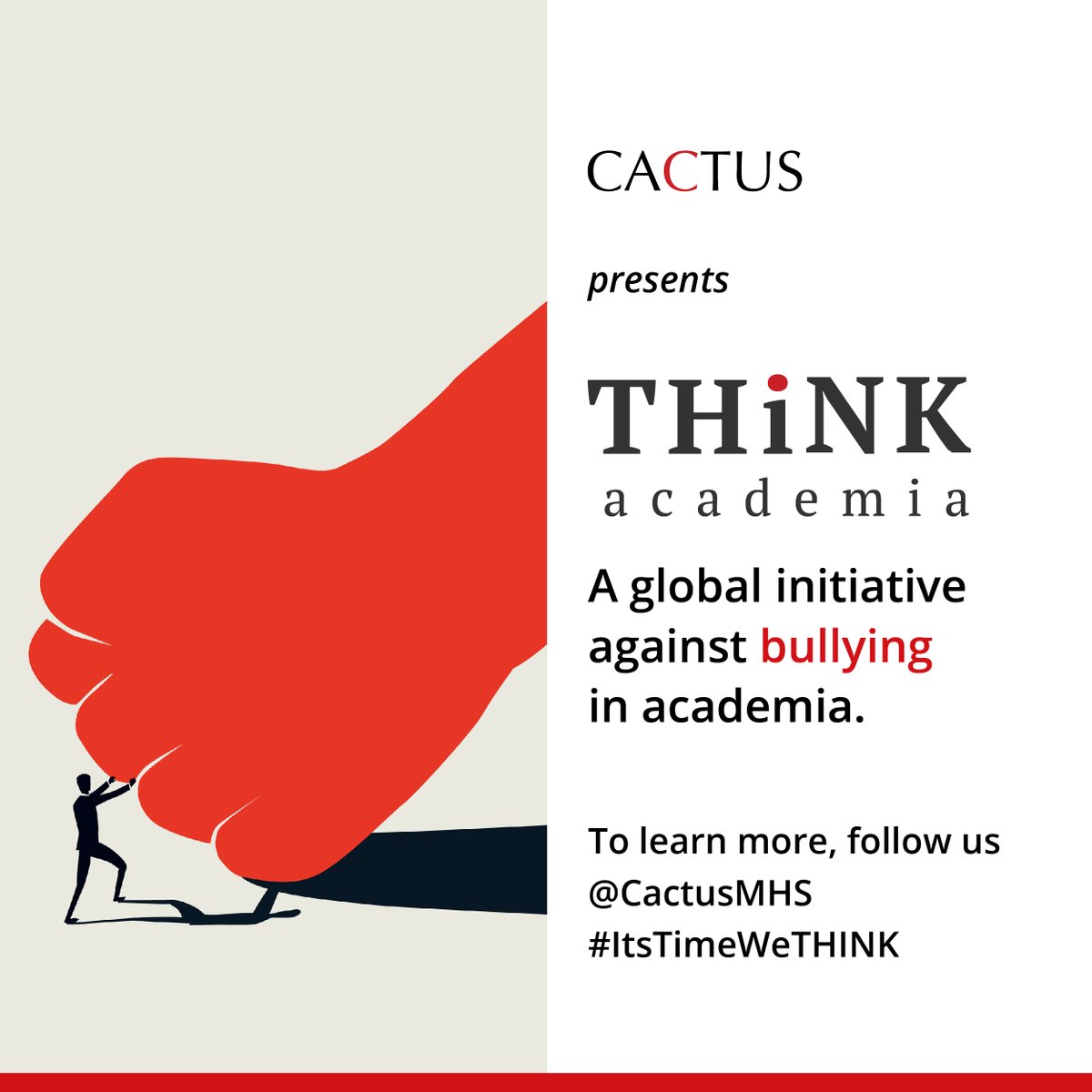
ALT CACTUS presents THINK Academia - a global initiative against bullying in academia. To learn more, follow us @CactusMHS | #ItsTimeWeTHINK
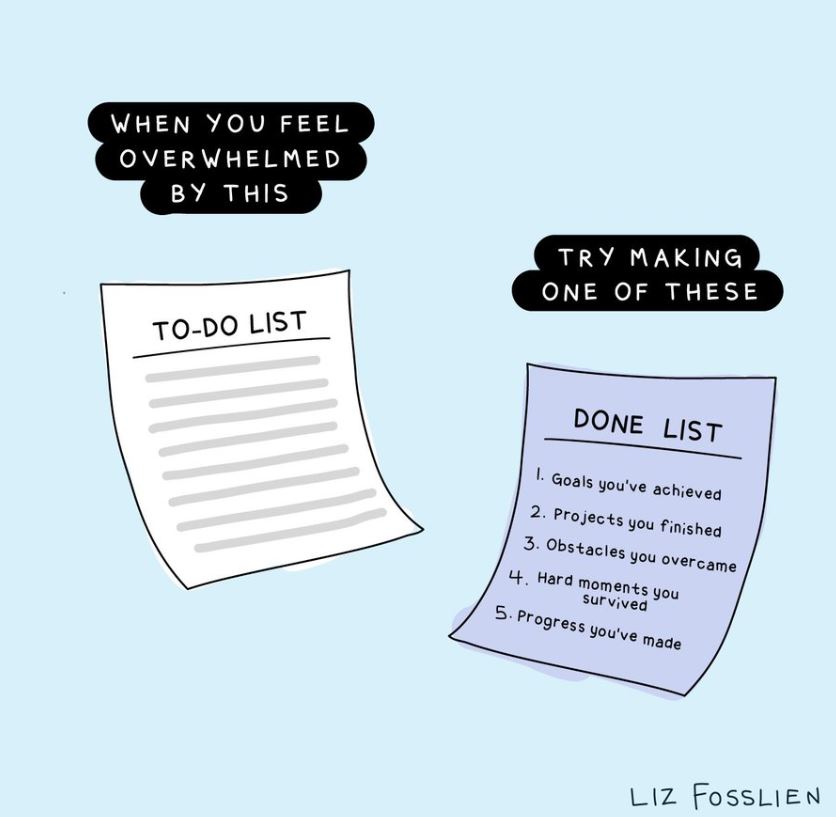
ALT This is an illustration by @lizandmollie. It depicts two pages out of a notepad, appearing side-by-side. The one on the left-hand side is titled "TO-DO LIST" and has lines drawn on it with no text. The one on the right-hand side is titled DONE List and mentions these as a numbered list: 1 Goals you've achieved 2 Projects you finished 3 Obstacles you overcame 4 Hard moments you survived 5 Progress you've made This creative encourages us to focus not just on the things that need to get done (a task list), which might be overwhelming, but rather on what has already been done/achieved.
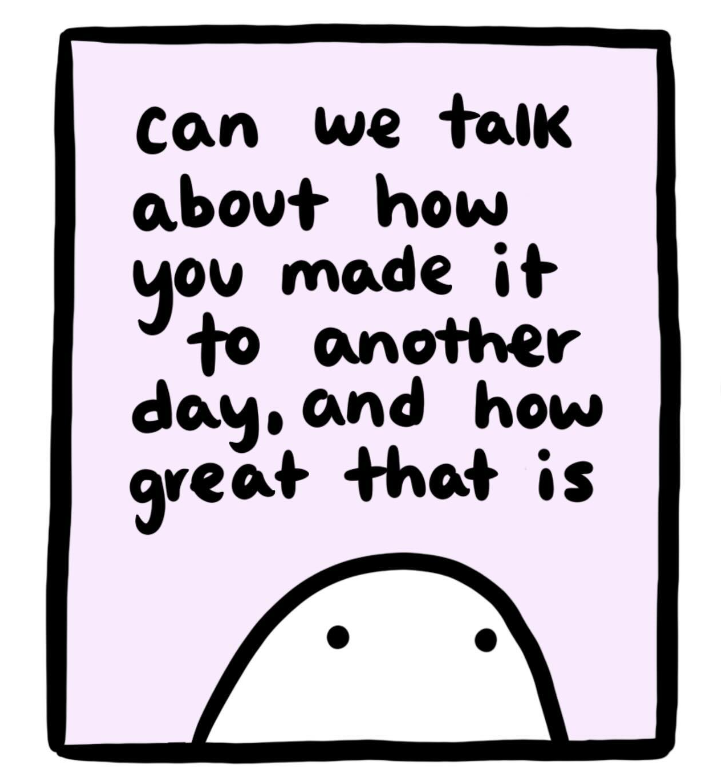
ALT This illustration by @bethdrawsthings on Instagram, says "Can we talk about how you made it to another day, and how great that it"
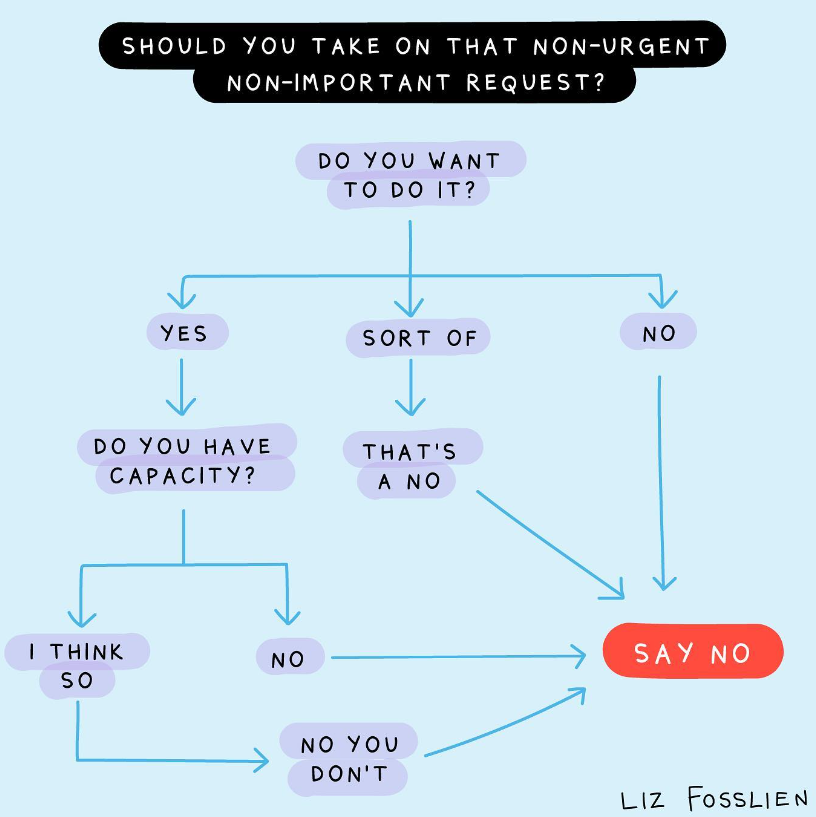
ALT This is an illustration by @lizandmollie depicting a flowchart that addresses the question: 'Should you take on that non-urgent, non-important request?' The flowchart starts with the question, 'Do you want to do it?' and offers three possible responses: yes, sort of, and no. - Choosing 'no' leads to the final point: 'Say no.' - Opting for 'Sort of' leads to 'That's a no,' which ultimately leads to 'Say no.' - If you select the 'yes' option, the next question to ask yourself is, 'Do you have the capacity?' which leads to two possible options: 'I think so' and 'No.' If you choose 'I think so,' it leads to 'No, you don't,' which ultimately leads to 'Say no.' If you choose 'No,' it also leads to 'Say no.'
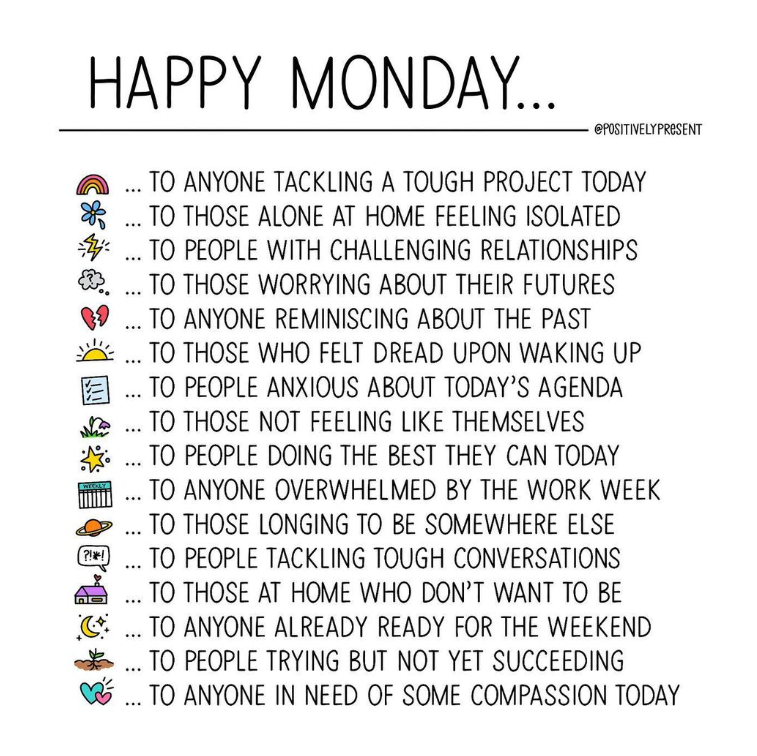
ALT This is an illustration by @positivelypresent via Instagram, wishing Happy Monday to: - To anyone tackling a tough project today - To those alone at home feeling isolated - To people with challenging relationships - To those worrying about their futures - To anyone reminiscing about the past - To those who felt dread upon waking up - To people anxious about today's agenda - To those not feeling like themselves - To people doing the best they can today - To anyone overwhelmed by the work week - To those longing to be somewhere else - To people tackling tough conversations - To those at home who don't want to be - To anyone already ready for the weekend - To people trying but not yet succeeding - To anyone in need of some compassion today
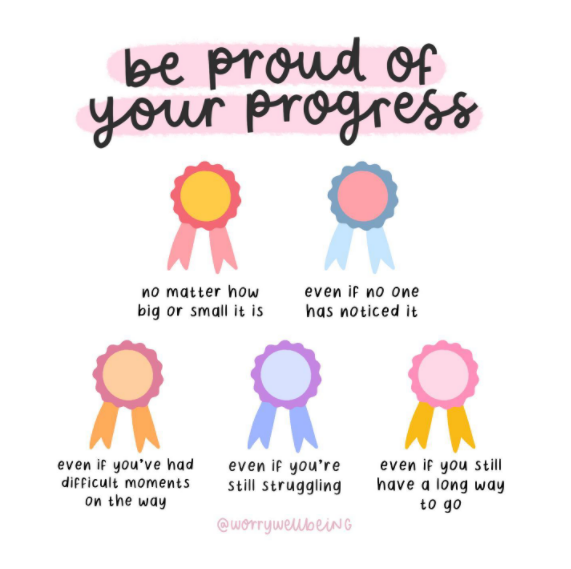
ALT This illustration by @worrywellbeing (on Instagram) is titled 'Be proud of your progress.' It showcases five rosette ribbon awards with the following labels: -No matter how big or small it is -Even if no one has noticed it -Even if you've had difficult moments on the way -Even if you're still struggling -Even if you still have a long way to go The illustration encourages embracing and taking pride in one's progress, emphasizing that it's valid and significant regardless of size, recognition, challenges faced, or ongoing struggles.
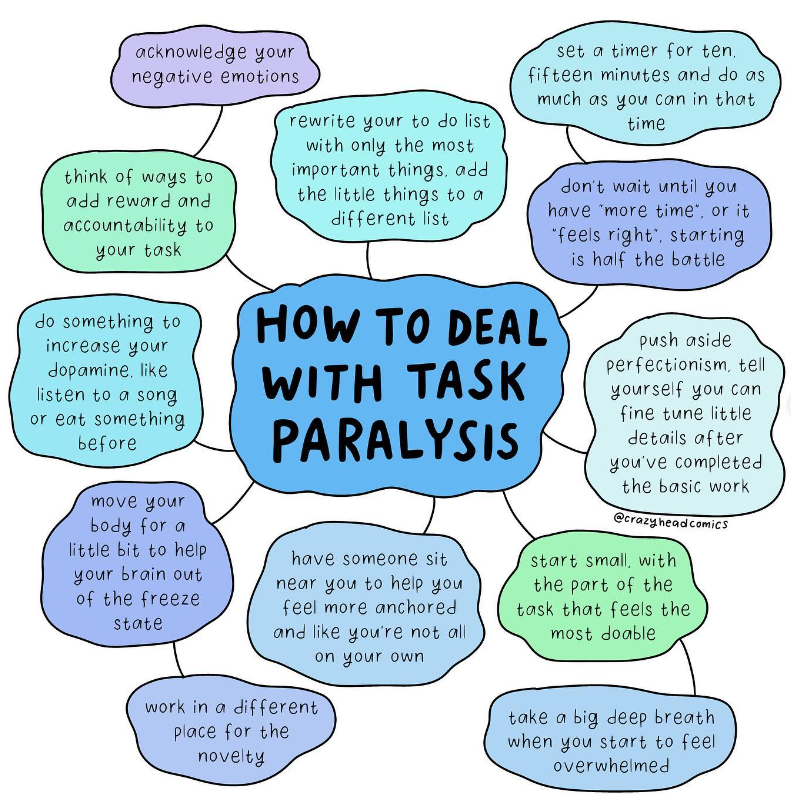
ALT This is an illustration by @crazyheadcomics, showcasing some tips to deal with task paralysis. - Rewrite your to-do list with only the most important things. Add the little things to a different list - Set a timer for 10-15 minutes and do as much as you can in that time - Don't wait until you have "more time" or it "feels right," starting is half the battle - Push aside perfectionism. Tell yourself you can fine tune little details after you've completed the basic work - Start small. With the part of the task that feels the most doable - Take a big deep breath when you start to feel overwhelmed - Have someone sit near you to help you feel more anchored and you're not all on your own - Move your body for a little bit to help your brain out of the freeze state - Work in a different place for the novelty - Do something to increase your dopamine. Like listen to a song or eat something before - Think of ways to add reward and accountability to your task - Acknowledge your negative emotions


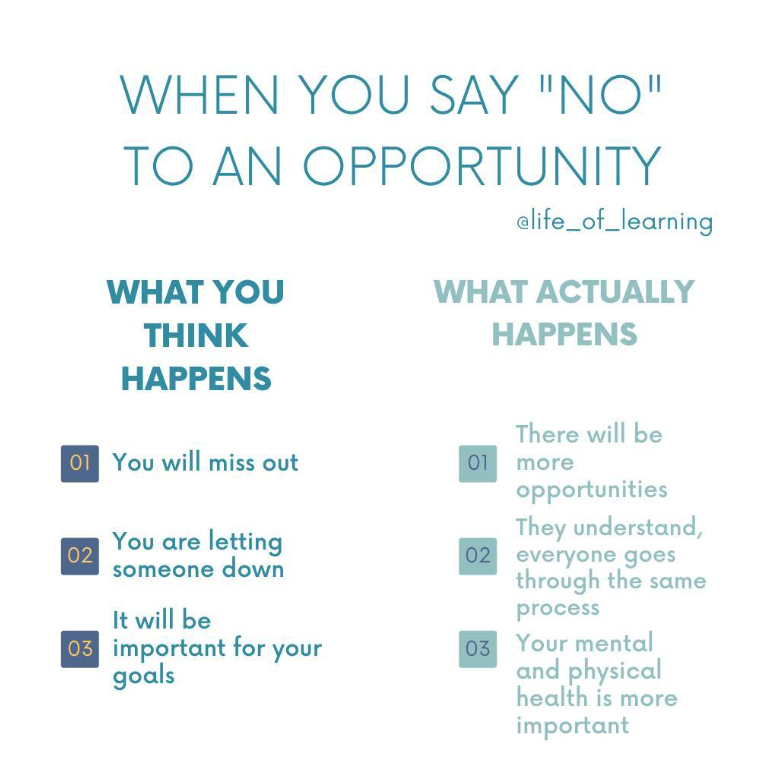
ALT This is an illustration by @life_of_learning via Instagram, titled, 'When you say "no" to an opportunity,' contrasting perceived outcomes with reality. What you think happens: 1. You will miss out 2. You are letting someone down 3. It will be important for your goals What actually happens: 1. There will be more opportunities 2. They understand, everyone goes through the same process 3. Your mental and physical health is more important

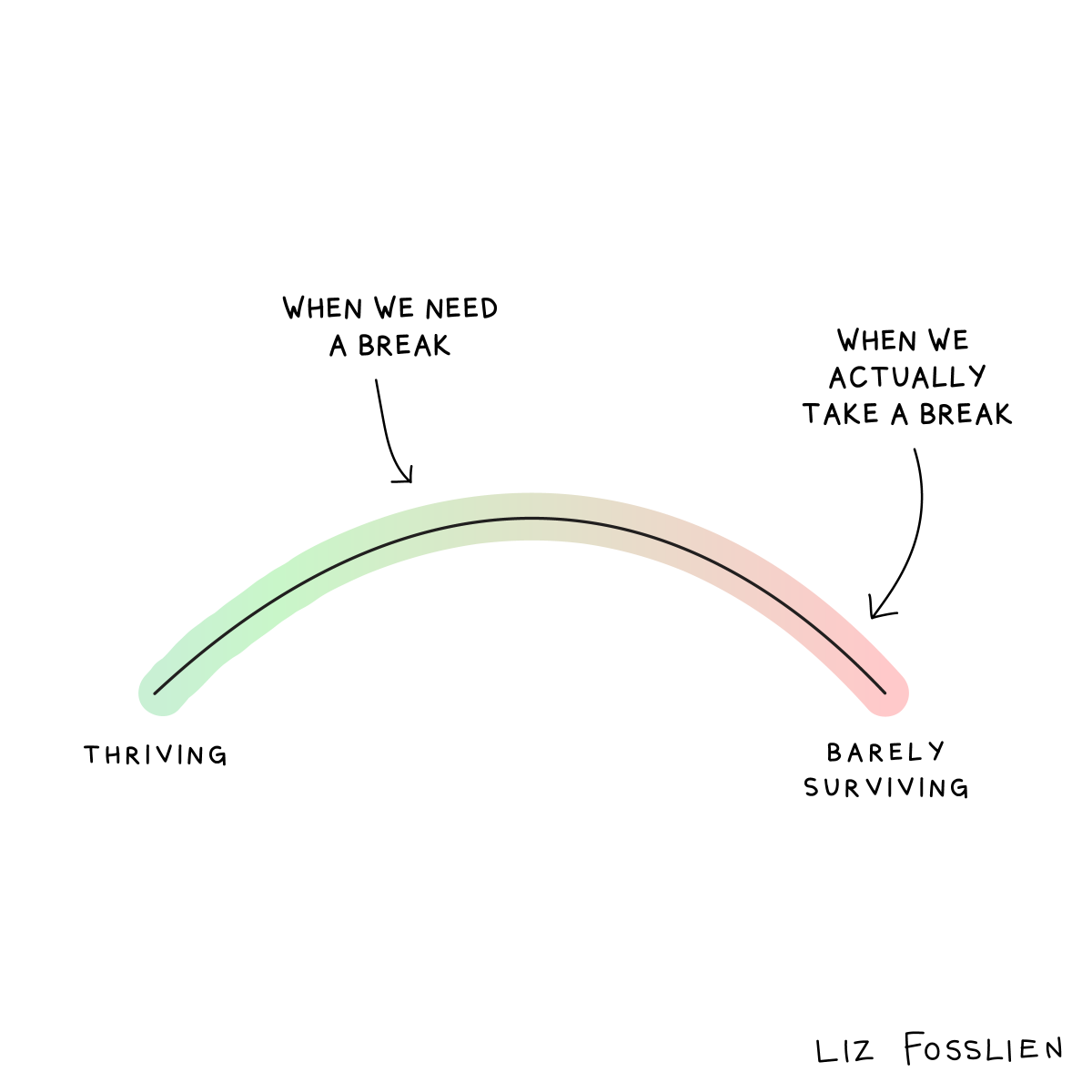
ALT This is an illustration by @lizandmollie. In it, we see a curved progress bar stretching from left to right. The left end of the curve is labelled 'thriving' and the right end is labelled 'barely surviving'. At the left-side of the curve, the progress bar is a bright green and this color gradually transitions to bright red towards the 'barely surviving' end. At the top of the curve, at a point closer to the left 'thriving' side, well before the green transitions to red, there's a point labelled 'When we need a break'. On the right-hand side, just a little above the 'barely surviving' corner, is another point labelled 'When we actually take a break'. The image highlights key moments when recognizing and taking breaks are crucial for well-being.