
Twitter community to support academics across all disciplines. @OpenAcademics for RT. #DiversityAndInclusion #MentalHealth #AcademicTwitter
- Tweets 24,486
- Following 7,674
- Followers 120,954
- Likes 34,283







![Image by @phdcomics (Jorge Cham, 2013. www.phdcomics.com) showing the out-of-office email reply. Things in parentheses in the following sections are not written, but what is actually meant by the expressions:
Hi (I hope the fact you got this response immediately after sending your email didn’t totally freak you out or get your hopes up).
I will be out of the office (not that physically being in my office would guarantee that I respond to you any sooner) and unable to answer your emails (I’ll still see your email on my phone, but I’ll just ignore it) from/to [insert mysterious dates].
For urgent matters (only in case of the apocalypse) please contact [insert name of the poor assistant].
For all other inquiries, I will reply to you as soon as I return (meaning several days after I get back).
Best wishes (meaning good luck!),
[insert name] (what I want to say is “whee, I’m going on vacation!!”)](https://venexa.site/media/FE_ATCQUUAEsdIa.jpg)
ALT Image by @phdcomics (Jorge Cham, 2013. www.phdcomics.com) showing the out-of-office email reply. Things in parentheses in the following sections are not written, but what is actually meant by the expressions: Hi (I hope the fact you got this response immediately after sending your email didn’t totally freak you out or get your hopes up). I will be out of the office (not that physically being in my office would guarantee that I respond to you any sooner) and unable to answer your emails (I’ll still see your email on my phone, but I’ll just ignore it) from/to [insert mysterious dates]. For urgent matters (only in case of the apocalypse) please contact [insert name of the poor assistant]. For all other inquiries, I will reply to you as soon as I return (meaning several days after I get back). Best wishes (meaning good luck!), [insert name] (what I want to say is “whee, I’m going on vacation!!”)





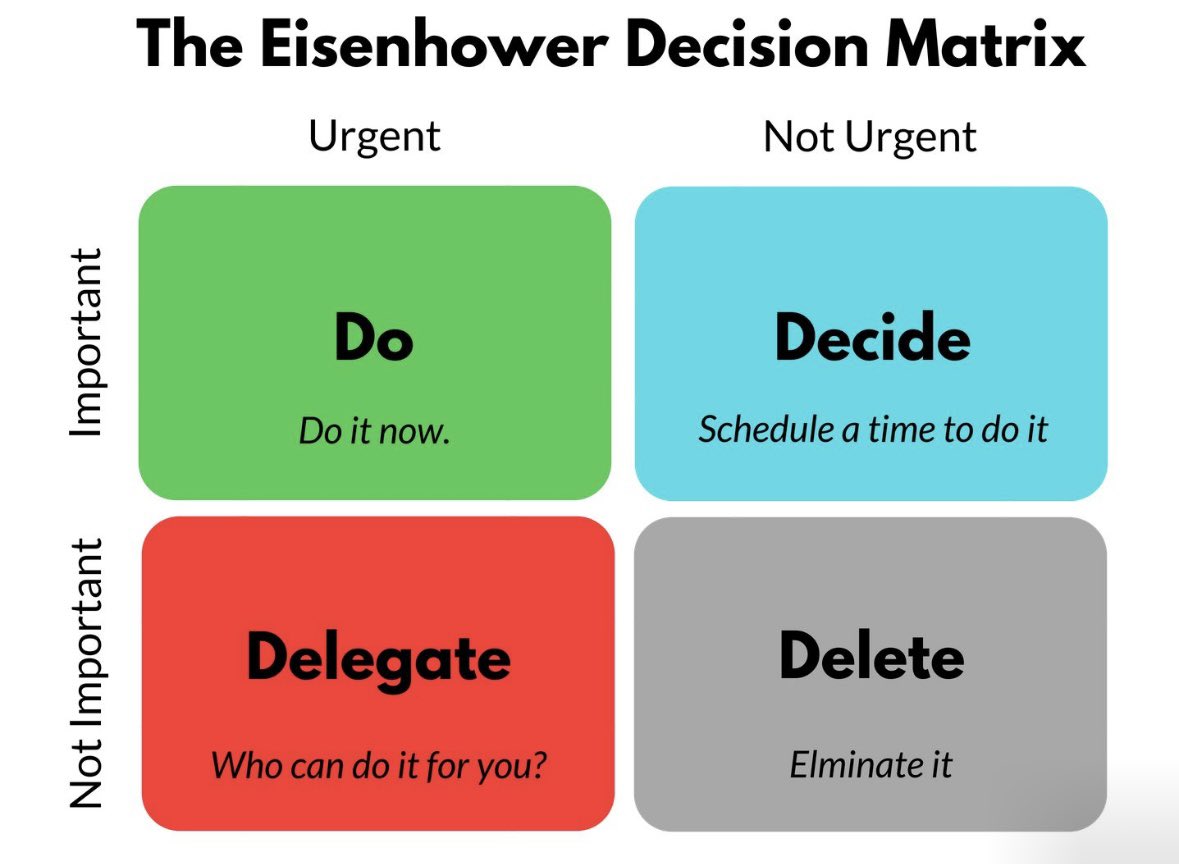
ALT Image source: luxafor.com/the-eisenhower-matrix The Eisenhower Decision Matrix categories include: 1. Urgent and important - Do it now. 2. Urgent but not important - Delegate. 3. Not urgent but important - Decide and schedule time to do it. 4. Not urgent and not important - Delete, eliminate the task.


ALT DAY 1 You've Gifted a Free Tree to a Kid to Plant in Their Backyard Together with Neighborhood Forest

ALT Meme for “when you remove all distractions and still don’t get any writing done” and you realize “the problem… is me.”