
Think for Yourself Question Authority
Joined June 2024
- Tweets 142
- Following 45
- Followers 76
- Likes 791
Photos and videos
If you stream and have a button that goes "faahhckk", I despise you
59

Jun 16
I fully admit that Meds are aesthetically and socially second to Nords but can the Aryan community acknowledge that theyre the only Euro not showing up in the headlines lately? Where are the vikings
Jun 15

🚨 NEW: A Ukrainian national and Romanian national have been found guilty of setting fire to Keir Starmer’s home and car

162
Think for Yourself retweeted

Jun 11
I rest my case 🫳🏻🎤
🤣🤣🤣

12
83
456
6,742
Think for Yourself retweeted

Jun 15
Christianity appeals to losers and subhumans.
55
33
415
7,212

Jun 10
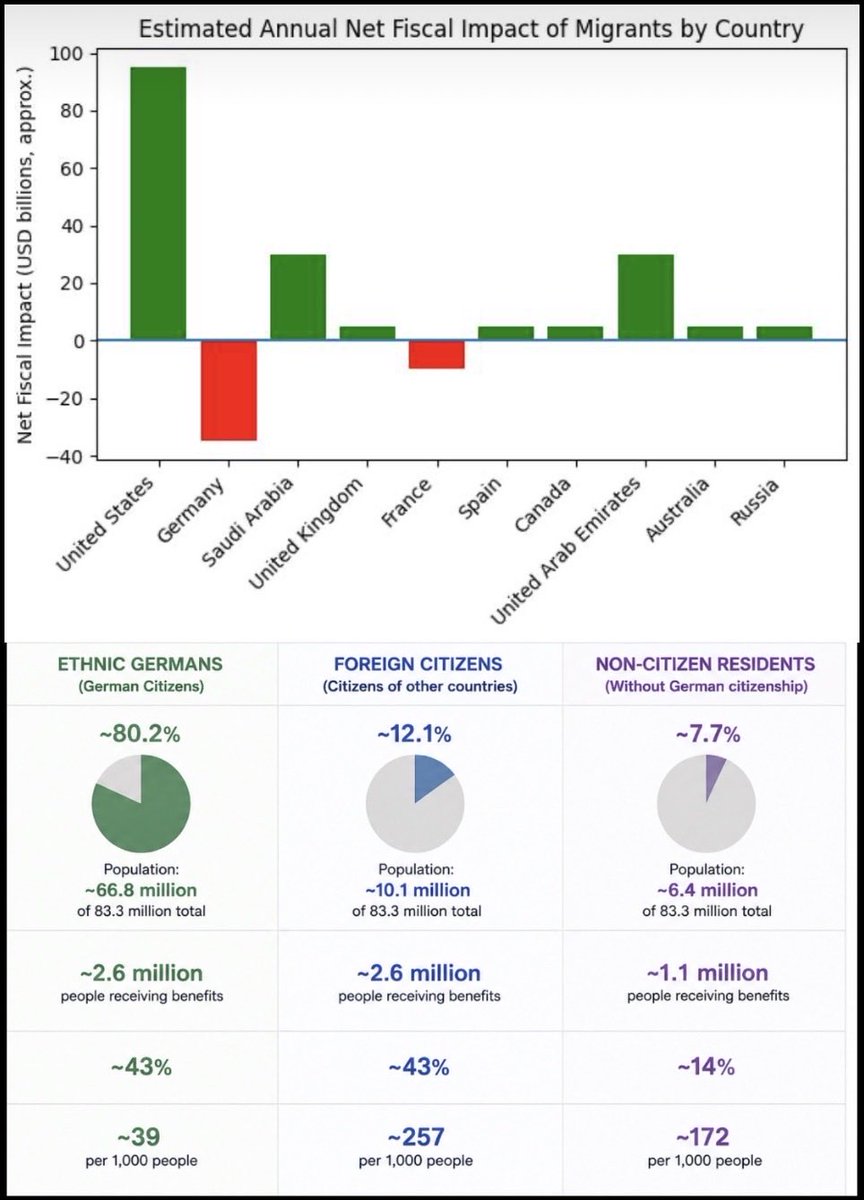
Ukraine and Russia are influenced by the same group of nefarious non-europeans, and the war is effectively an ethnic cleansing and foreign treasury plundering operation.

3
63
Pro life is the moderate, christian option
Mandatory abortions for unfit parents and fetuses with genetics unfit for survival, sterilization programs, positive eugenic breeding programs- those are the true "far right" positions.
1
4
114
We normally fear phone tracking technology for different reasons, we never considered that an African would use it to rape children

1
1
1
70

Think for Yourself retweeted

Jun 5
I can make this entire argument without citing a single mythicist scholar.
Just so you know I came to my position after first reading Bart Ehrman’s Did Jesus Exist? and then reading the other side. So this is not me hiding behind “fringe” scholars.
I haven't done this for some time so let's get to it, starting from your weakest source and working toward the strongest:
Mara bar Serapion is probably the worst source on the list.
Jesus is never named. The letter is usually dated somewhere after 73 CE, and some scholars put it late first or early second century, but even if I granted you the dating. There is no mention of crucifixion, Pilate, Christianity, Galilee, Nazareth, the disciples, or any specific event from Jesus’ life.
The line “wise king of the Jews” could be Jesus or any number of people, but that is an inference later readers are making. The text itself does not say that it is Jesus nor put itself into any events of the gospels.
Even Bart Ehrman, does not use Mara as serious evidence for historicity. He has said it seems unlikely to be about Jesus because it does not name Jesus, does not mention crucifixion, does not date the execution, and treats the figure as an actual king.
So when Christians cite Mara, that tells me they are just copying apologetics lists from google or something. It is a vague ancient letter that may or may not be alluding to Jesus.
I’ll include a video in the replies breaking down just how ridiculous this Mara argument is in case you want more.
Thallus next.
Thallus is lost. Nobody possesses the original text. Nobody can read the original passage. Everything comes through later Christian writers discussing what they claim Thallus said about a darkness.
Even if the later Christian writers are accurately representing him, writing about a darkness or eclipse does not establish Jesus as a historical person. There is no biography, no ministry, no trial, no crucifixion account, and no independent investigation into Jesus.
And even if Thallus were authentically recording some darkness or eclipse in the 1st century around that time, that would still only get you a darkness/eclipses discussion. We are talking about whether there are records for a historical jewish rabbi, which there is not.
What people actually have is a later Christian citation of a lost work that may or may not have been discussing something later attached to the gospel story. A 1st century eclipse ≠ 1st century rabbi existed.
Suetonius next.
The Suetonius passage concerns disturbances among jews in Rome allegedly caused by “Chrestus.”
The obvious issue is that Chrestus and Christus are not the same word. Chrestus was also a common name. Scholars have debated this for generations because it is not clear whether Suetonius means Christ, some other agitator, or whether he is simply confused about jewish disputes in Rome.
Suetonius is writing around 115 CE, decades after Jesus supposedly died, and the Claudius expulsion itself belongs to the 40s. So even if you assume he meant Christ, the passage is still about disturbances in Rome after the alleged lifetime of Jesus. Not a historical rabbi.
That proves Christ-belief among jews and/or Christians. It does not give you a historical record of Jesus.
Pliny the Younger is similar.
Dated around 112 CE, Pliny describes Christians gathering together, singing hymns to Christ, and refusing Roman religious customs.
Again, this shows Christians existed. Nobody serious is denying Christians existed in the first century or early second century.
Pliny is describing what Christians believed and how they behaved. He is not investigating events in Judea. He is not consulting records about Jesus. He is not interviewing eyewitnesses to Jesus.
A Roman official describing Christian worship in 112 CE proves Christian worship in 112 CE. It does not independently prove the historical rabbi behind the religion.
For example, Qanon believers existing today does not prove that Qanon is real.
Tacitus is probably the strongest Roman source, but it has the same issues.
Tacitus writes roughly 80 years after the alleged crucifixion and says Christus was executed under Pontius Pilate during the reign of Tiberius.
That is much better than Mara, Thallus, Suetonius, or Pliny. I am not pretending Tacitus is nothing.
The problem is that Tacitus never tells us where he got this information. He does not cite a record when he often does when using them. He does not quote a document. He does not identify a source. He simply states what he understands to be the origin of the movement.
He also calls Pilate a procurator, when Pilate’s actual title in the period was prefect. That is not the whole argument by itself, but it does show we are not dealing with some archival report from the 30s if it gets the rank wrong.
Tacitus demonstrates that educated Romans in the early second century understood Christianity to have originated with a figure called "Christus" who was executed under Pilate. That is evidence for what Romans had heard about Christian origins by then. It is still late, indirect, and does not tell us whether Tacitus had independent access to anything beyond the already circulating Christian story.
Finally Josephus, which is the one people always try to rely on.
Josephus wrote Antiquities in the 90s CE, around 60 years after Jesus supposedly died. He was not an eyewitness. He was born after the alleged events. He does not claim to have interviewed eyewitnesses to Jesus.
The famous passage is the Testimonium Flavianum. The Christian-preserved version says:
“About this time there lived Jesus, a wise man, if indeed one ought to call him a man. For he was one who performed surprising deeds and was a teacher of such people as accept the truth gladly. He won over many jews and many of the Greeks. He was the Christ. And when, upon the accusation of the principal men among us, Pilate had condemned him to a cross, those who had first come to love him did not cease. For he appeared to them on the third day restored to life, as the prophets of God had foretold these and countless other marvelous things about him.”
Come on.
“If indeed one ought to call him a man.”
“He was the Christ.”
“He appeared to them on the third day restored to life.”
“The prophets of God had foretold these things.”
Josephus was not a Christian. This is why even mainstream scholars who believe Jesus existed usually admit the received passage has Christian material in it. The debate is usually over whether there is an authentic Josephan core underneath the obvious Christian edits.
That already destroys the way apologists use this passage. Their best non-Christian source survives through Christian manuscript transmission in a form that almost everyone admits has been tampered with.
Then there is the James passage:
“Ananus assembled the Sanhedrin of judges and brought before them the brother of Jesus, who was called Christ, whose name was James, and some others. He accused them of having transgressed the law and delivered them to be stoned.”
This is usually considered stronger because it is less obviously Christian and only says “Jesus who was called Christ.”
But even here, Josephus is not writing a record about Jesus. He is talking about Ananus, James, and high-priestly politics in the 60s. Jesus appears only as an identifier.
And there are still a whole bunch of problems. The phrase “who was called Christ” could be original, but it also works perfectly as a Christian gloss added to clarify which Jesus was meant. Josephus mentions multiple people named Jesus, including another Jesus in the same surrounding context. So even if the James passage is authentic, it is still just a passing reference written decades later. It is not a contemporary record of Jesus’ life.
I’ll keep this short because this is already long but I'll address some of the newer arguments about Josephus and include a reply with me addressing this in more details already.
In his recent book T.C. Schmidt tries to make Josephus much stronger by arguing that Josephus had access to people connected to Jesus’ trial. That would turn Josephus from a late 90s source into something close to eyewitness-level evidence.
Steve Mason, one of the top Josephus scholars alive, does not buy that move at all.
Mason takes the less relevant authenticity arguments worthy of more investigation, but he says the more sensational eyewitness claims do not explain the evidence well. He points out that Josephus’ background does not give us a real chain of custody back to Jesus’ trial, that the supposed informants are speculative, and that even if Josephus wrote some version of the TF, we still do not know what his source looked like.
That is the whole point.
Even if you grant Josephus wrote something about Jesus, that still does not magically become a contemporary record for a historical Jesus. It is Josephus writing in the 90s about a movement that already existed.
I’ll link my longer post on T.C. Schmidt and Josephus below, along with Mason’s review.
So here is what you actually have given me for evidence:
Mara does not name Jesus or any gospel events.
Thallus is lost and only describes an eclipse, not Jesus.
Suetonius is ambiguous and late.
Pliny proves Christians worshipped Christ, not that Jesus existed and is late.
Tacitus is late, does not identify his source, and merely reports what Romans understood Christians to believe about their origins.
Josephus is late, textually disputed, and preserved through Christian hands in both passages and the second passage is not even about the same Jesus.
These are the famous “non-Christian sources” people keep throwing around like they are six independent first-century records sitting in a Roman archive.
They are not.
All you have are late sources written generations after Jesus supposedly lived. Even when we grant the stronger ones, most of them are talking about Christians existing, Christ-belief spreading, or later writers knowing the Christian origin story. They are not contemporary records for a historical jewish rabbi.
And yes, I already know the standard copes for why those records do not exist. I am aware peasants in Galilee were not getting biographies written about them by Roman court historians.
Fine.
Then stop pretending these sources are something they are not.
Christians routinely misrepresent the settled nature of these sources. They act like Mara, Thallus, Suetonius, Pliny, Tacitus, Josephus, and about a dozen others all independently document Jesus in some clean, direct way. They do not.
And modern scholarship is already moving beyond the simplistic “let’s uncover the real first-century rabbi behind the text” game you guys play anyway. Scholars like Robyn Faith Walsh and others involved in newer historical Jesus work are focusing much more on literary production, genre, reception, social memory, and the way these texts function as ancient literature.
None of the sources you provided prove a historical rabbi existed.
This took me about 30 minutes to put together, so please do not respond with a cheap cope or another copy-pasted apologetics list. This is only scratching the surface. I left out a bunch of other arguments just to keep this readable.
In the replies I will include links to more reading and sources on this topic.
11
21
55
3,647
David Fitzgerald and I debate whether Jesus is a Myth, or a Hoax @Know_More_News
youtu.be/tvoNLt3BeJ8
9
15
1,986
Think for Yourself retweeted

May 27
I care more about this ram than about the fate of the entire Muslim world.
May 27

In the Russian city of Orenburg, a ram escaped from the central mosque where it was supposed to be slaughtered to celebrate Eid al-Adha.
Now the ram is running around the city, and they are trying to catch it for the ritual sacrifice.
22
172
2,755
34,957
Think for Yourself retweeted
May 19
An announcement from Tulsi Gabbard’s Noahide compliant Zionist-Hindu cultism skinsuiting itself as Christianity:
“All of our leaders need to get on our knees & prostrate ourselves before the Supreme Lord” because “there’s only one number one, & that’s god.” 🚫🕉️ ✡️🚫
No thanks.
May 18

Two hundred and fifty years ago today — on May 17th, 1776 — the Second Continental Congress called for a day of humiliation, fasting, and prayer.
Today, exactly 250 years later, we gather to do the same. To humbly ask once more for God's mercy and guidance — as we enter the next 250 years of this republic.
11
37
170
19,765
Think for Yourself retweeted
May 5
Rabbi Aaron L. Raskin:
The World was created for the Jewish People
17
69
163
6,225