AIFF D • Economics • Football Through Structure • MCFC
Joined June 2020
- Tweets 2,128
- Following 838
- Followers 2,384
- Likes 9,641
263 Photos and videos






Pinned Tweet

Apr 20
Pep Guardiola has now exposed the same weakness in Arteta’s ‘Perfect System’ in two different finals. Once in the Carabao Cup and again yesterday. Here’s how:
- City’s 4-2-3-1 evolved into a fluid 3-2-5 in build up with Rodri and Bernardo Silva constantly adjusting heights to bait Arsenal’s man oriented press.
- Arteta’s 4-4-2 trigger press initially forced errors but the moment City split their CBs and dragged pressure wide, the central corridor became a permanent escape route.
- From there, it turned into positional suffocation. Silva and Rodri controlled tempo between the lines while Cherki operated as the free connector in the half spaces, constantly exploiting Arsenal’s over commitment to the ball side. In that role as always, Cherki looked like the most decisive player on the pitch dictating progression every time City broke the first line.
- Arsenal's presses had inevitable punishments. With each pass breaking the press, a simple rotation and movement from City was enough to isolate the ball carrier, while a single pass could destabilize the pressing structure completely.
- The decisive edge came from City’s wide rotations. Doku’s inversion on the left and Cherki-Semenyo interchanges on the right stretched Arsenal’s block horizontally until gaps opened at the far side.
- The winning pattern was simple but lethal: quick switch, underlap from O’Reilly and Haaland attacking a structurally broken box. Arsenal’s press wasn’t bypassed. It was used against them.
- Off the ball, City’s 3-2-4-1 rest defence killed any sustained Arsenal momentum. Odegaard and Eze were consistently screened, transitions were immediately contained and Arsenal were forced into low value shots rather than structured entries.
In a game defined by micro margins, City didn’t just win moments. They controlled which moments could exist. The conclusion is simple: Arsenal’s system doesn’t fail in ideas, it fails in execution under pressure.
15
58
769
59,052
Livramento out and Tuchel's answer is Chalobah? England are heading into a World Cup opener against Croatia with a full-back crisis and the solution is calling up another centre-back while Hall, Lewis-Skelly and Trent sit at home. Baffling.

🚨 Tino Livramento to miss World Cup with calf injury. Not serious but major blow for Newcastle United defender & #England ahead of #2026FIFAWorldCup opener vs #Croatia - 23yo returning to #NUFC Trevoh Chalobah called up @TheAthleticFC post @Matt_Law_DT nytimes.com/athletic/7365471…
5
270
A. retweeted
Jun 13
I don't care how difficult the negotiations become.
Pay the fee. Structure the deal. Add the clauses. Send the paperwork by carrier pigeon if you have to.
You're talking about a 23-year-old, Premier League-proven midfielder with years of development still ahead of him.
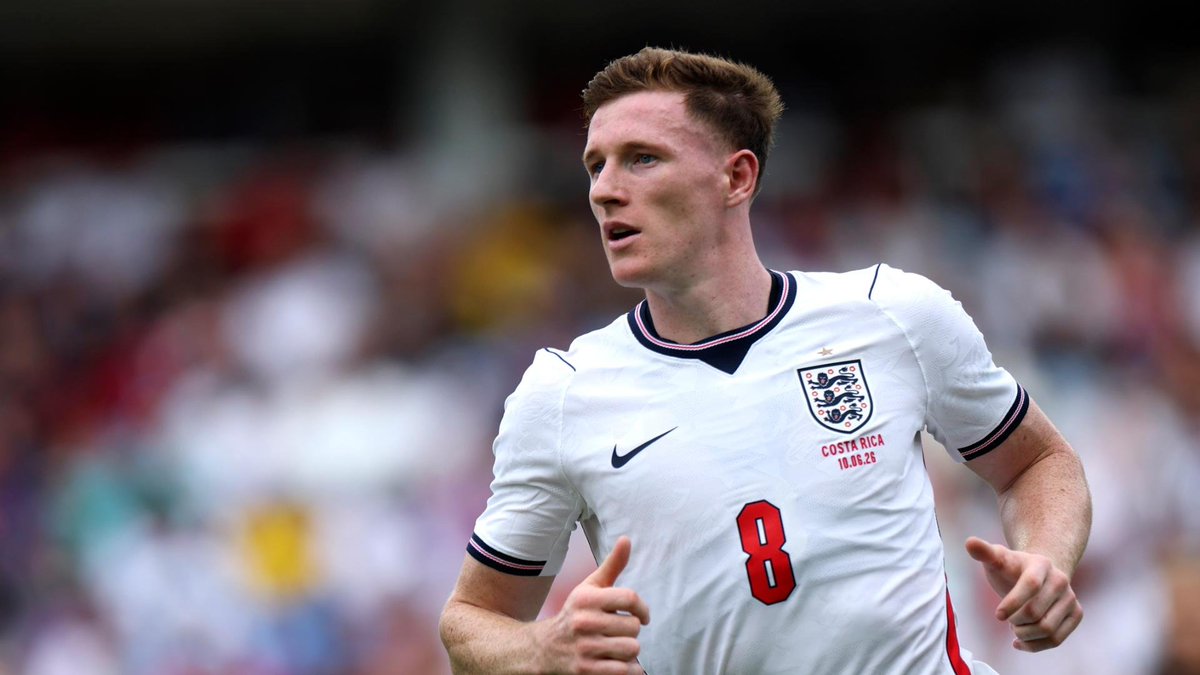
Just get Elliot Anderson to Manchester City.
13
10
156
16,205
Jun 13
Morocco’s structure has completely disrupted Brazil’s rest defence. Brahim Diaz operating between the lines is pulling Gabriel & Marquinhos out of shape and the 2nd-ball dominance is decisive. Brazil look reactive, not proactive. Losing control of duels = losing control of the game.
1
9
310
A. retweeted
Jun 13
Switzerland just bottled that. No urgency, no killer instinct, no respect for the scoreboard.
Qatar have been poor all game and still walk away with a point because Switzerland decided to play training-ground football. Madness.
2
15
642
Jun 8
If Manchester City can get ~£60m for Savinho, they should drive him to North London themselves.
Then immediately use part of that money on Maghnes Akliouche.
The winger market is cooked. Genuine top-level options are almost non-existent.
Akliouche is one of the few available talents with superstar potential. This would be ruthless squad building.
Jun 8

BREAKING: Tottenham are advancing in talks over a deal worth around £60M for #ManCity’s Savinho.
[via @MailSport]
18
7
259
54,983
A. retweeted
May 27
Akliouche would be a very “City” signing technically but the real question is profile balance.
Elite left foot. Brilliant between the lines. Understands space, tempo and combination play at a very high level.
But if Savinho leaves, I still think City need more raw penetration and isolation threat on the right. Someone who can repeatedly stretch the pitch and attack full backs 1v1 without needing structure around him.
Akliouche improves control.
A Diomande type profile changes the physical dynamic of the attack entirely.
With Doku already destabilising the left side, I’d lean towards chaos and verticality on the right rather than another interior style creator.
That balance matters more than pure talent accumulation.
May 27
#ManCity are exploring the possibility of signing a new winger this summer.
[via @FabrizioRomano]
14
10
215
36,850
May 27
I genuinely love how Maresca views football.
City need an all action midfielder next to Rodri someone who can cover transitions, press aggressively, attack space and still maintain positional discipline.
Enzo naturally wants control, touches and progression from advanced interior zones which starts overlapping with Reijnders structurally. Then you already have Cherki, Foden and Echeverri occupying creative spaces between the lines.
The balance of the midfield matters more than the individual name.
May 27
BREAKING: #ManCity sources maintain the club are NOT looking to pursue a deal for Chelsea’s Enzo Fernandez, despite his close relationship with Enzo Maresca.
[via @Jack_Gaughan]
3
15
537
142,675
May 26
Kolo leaving is the one that surprises me most.
Not because of tactics or hierarchy but because every great team needs continuity figures inside the building. People who carry the culture when cycles start changing.
One mistake United made post Ferguson was ripping out too much institutional knowledge too quickly. Stability matters more than fans realise.
May 26
BREAKING: Pep Lijnders, Kolo Toure, Lorenzo Buenaventura, Manel Estiarte and Xabi Mancisidor all leave the Club alongside Pep Guardiola, @ManCity have confirmed.
5
12
126
29,373
May 26
Maresca wanting to keep and revive Grealish instead of pushing him out immediately is a huge green flag.
That’s real coaching. Not every player who loses form is “finished”. Sometimes they just need a manager willing to understand them again.
I already love this guy.
May 26
Enzo Maresca is planning to hold talks with Jack Grealish about the chances of him reviving his #ManCity career, reports @CrossyDailyStar. Unless told otherwise, Grealish will be expected to return to pre-season training in July ahead of @ManCity's summer tour of the Far East. 👀
11
10
117
10,250
A. retweeted

May 16
You won't see this man post this again, now watch the other fella 🤣🤣
May 16
🚨 EXCLUSIVE: Agreement complete for Xabi Alonso to become Chelsea manager. 44yo Spaniard visited London early last week & accepted opportunity; 4yr contract now finalised - announcement imminent. Primary target throughout wanted #CFC move @TheAthleticFC nytimes.com/athletic/7272415…
440
2,577
31,523
2,151,279
A. retweeted
Apr 1
Most people don’t understand Phil Foden. Phil Foden is a tempo dependent profile. He needs constant touches, quick 1-2s and early access to activate his game.
So he keeps dropping into the first phase showing between lines asking for the ball off the 6/8s and even the CBs. The issue is not availability. It’s access.
England simply do not have the level of passer required. Anderson, Rice, Mainoo and Henderson are nowhere near the level of consistently breaking lines with the right weight, timing and conviction.
At City he is fed by Rodri and Bernardo. Players who trust the angle, play through pressure and sustain a IP 3-2-5 with control. With England, that connection is not there.
So instead of receiving on the half turn in the right half space, he’s recycling or arriving late. The attack loses central progression and defaults to low value wide crosses.
Put Foden in a possession structure with elite interior passers and you get a completely different player. This is not about form. It’s about ecosystem.
61
52
485
195,264
May 13
When Foden plays with arrogance, takes risks between the lines, turns aggressively and attacks space early, he becomes one of the most dangerous creators in Europe.
x.com/wondermoonkw/status/20…
1
3
97
3,828
May 10
West Ham robbed blind. Raya flies into a six-yard box full of bodies with no control, loses the ball, and somehow gets the foul? Meanwhile Mavropanos is getting hugged like it’s the UFC. If this is how Arsenal are going to win the league, football is genuinely finished.
5
5
58
2,414
May 9
Bring Nico G on for Reijnders and stabilise the rest defense with a back 3.
Right now too many players are attacking the same vertical lanes. Tijjani, Nunes and O’Reilly are all pushing high simultaneously.
I’d keep Nunes wide to maintain width and move Semenyo inside into Zone 14 where he can actually threaten the goal. If not, bring Foden on.
City need better structure between possession and protection.
2
34
2,020
A. retweeted
May 9
Tonight is on Erling Haaland. No excuses, no hiding, no “service” debates.
Big players decide big games. Pep has put enough creators around him. Now Haaland has to step up and dominate.
1
6
67
1,616