
Chief of Self🏃🏻♂️| Like fixing shit 💁🏻♂️ | Driven by optimism | Innovation x Democratisation = Liberation 🕊️ | Views are my own 🫡
Joined February 2014
- Tweets 351
- Following 1,013
- Followers 116
- Likes 3,908
27 Photos and videos





27 Sep 2025
“Hold onto ya butts!”
Albert Bartlett once said: ‘The greatest shortcoming of the human race is our inability to understand the exponential function.’
Just look at those internet naysayers 👀
Forecasts almost certainly underestimate the next 5 years. Parabolic 🚀
26 Sep 2025

Brad Gerstner: “I believe Nvidia will be the world’s first $10T company.”
Jensen Huang: “People misunderstand what we do. We build chips, but Nvidia is really an AI infrastructure company.”
1
92
7 Sep 2025
This opportunity still feels lost on many.
The rise of AI will make proof priceless. “Truth” will basically be our most premium commodity.
Chainlink is the future infrastructure for verified truth. It’s arguably the most asymmetric upside bet in the game📈
Don’t fade folks!
4 Sep 2025

On this date 8 years ago, the Chainlink whitepaper was released to the world.
Since 2017, Chainlink has evolved from just an idea to becoming the industry-standard oracle platform enabling tens of trillions in transaction value and securing nearly $100B for the vast majority of DeFi markets.
Up next?
Bringing the whole world onchain.
79
Tim Burt 💆🏻♂️ retweeted

11 Mar 2025
I've seen the tsunami coming
298
2,418
11,373
1,544,778
21 Nov 2024
This week we found out that 1/3 of UK children live in poverty 😳
Yet, the intro of inheritance tax on farmland valued above £1mill fills the media.
So why is this the lead story?
Clue: 65% of farmland is owned by aristocracy, business tycoons & large corporations💰
Nuff sed
1
1
88
18 Nov 2024
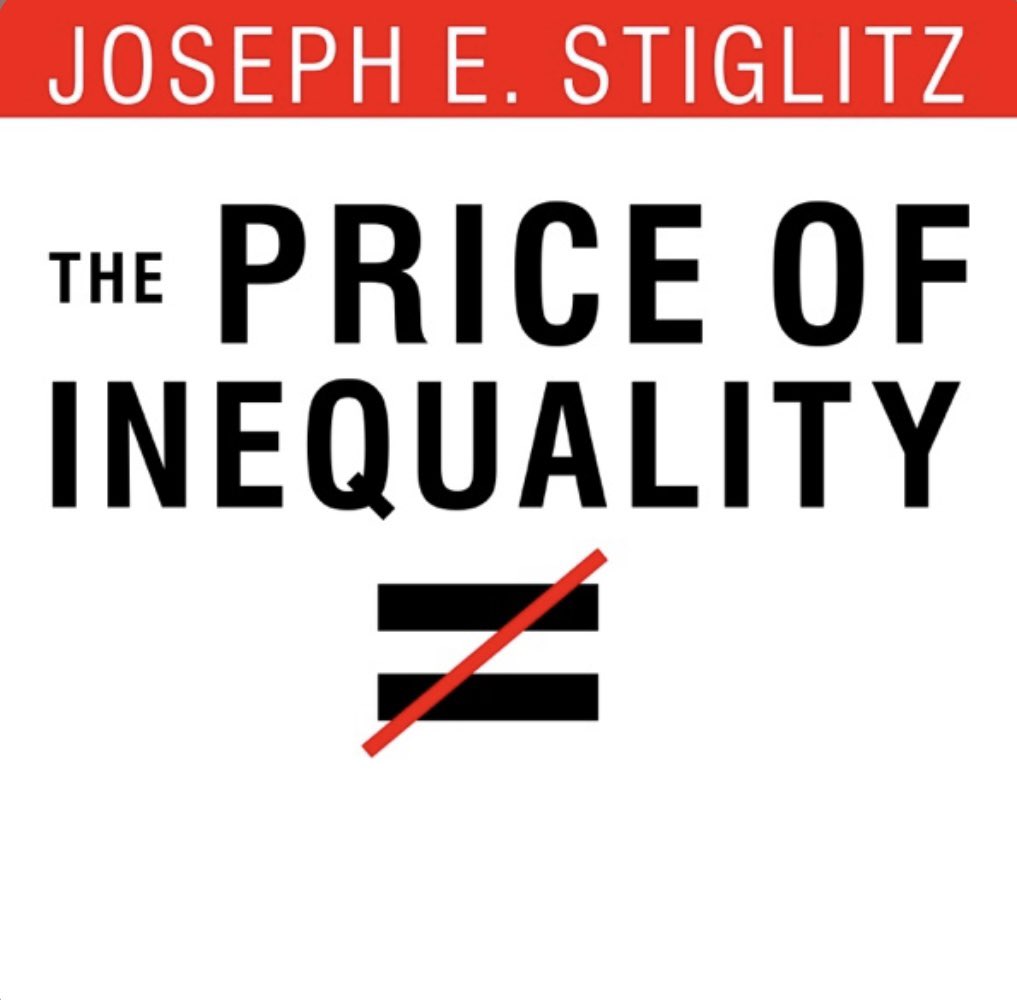
Why we are, where we are.
Although written in 2012, Joseph Stiglitz’ prediction, that if we continued to ignore societal inequality, we’d see an unsustainable socio, political & economic tipping point, appears a rather accurate forecast.
Excellent (yet damning) read 👌🏻
51
7 Nov 2024
Well worth a watch!
Followed Raoul for some time now. His macro perspective is one of the best around & so important with the acceleration of change we’re seeing.
Critical to understanding the game we’re playing and how to give yourself the best chance of winning!

Thanks for having me, @StevenBartlett– I had a fabulous chat with you!
Please watch this and share it with everyone you know… the next ~6 years will define the rest of our lives…
66
3 Nov 2024
Very interesting!
I feel the further evolution of “news” likely sees a genuine democratisation of sources through decentralisation/blockchain Ai driven fact-checking. Could imagine tokenized incentives for truthful reporting in play also…
Citizen journo/report-to-earn vibe.
3 Nov 2024

THE "DEMOCRATIZATION" OF MEDIA
youtu.be/e_2E8Of78Vs?si=WGfA…
"I think that many of the institutions that have offered media have had to move away from providing data and information because data and information have commoditized. It’s available broadly through the internet and other places, so the actual gathering of information is now democratized. Agencies put their data on their websites, stock markets are published on the internet, so the internet has democratized access to information. Media companies that historically were arbiters of information have had to become effectively content businesses; they've had to provide more than just information.
What has happened is an iterative feedback system whereby the angrier they can make someone, the more upset they can make someone, the more emotive they can make a reader, viewer, or listener, the more clicks they get. The limbic system triggers that consumer to come back and consume more of their media. So, the iterative development cycle is that things look like they’re one side versus another side in nearly every context, in every piece of media. Everyone is opinionated and making a point from a perceived side they’re representing because it is emotive to the readers, and the readers come back, align with that side, and want more of it because it incites their limbic system.
As a result, people look at it and assume that it’s what it used to be—objective truth, fact-finding, information gathering—and it is not that. They’re like, 'Well, this isn’t even news anymore,' and the truth is it’s not, because information is democratized; it’s available anywhere and everywhere you want it. You can get it through citizen journalism via blogs, podcasts, Twitter, and many other places. Legacy media companies have effectively become emotive content companies to drive clicks, drive views, and sell ads. That’s really the whole story, and I don’t think that’s going to shift. I don’t think Jeff Bezos's attempt to return WaPo back to being a fact-finding organization is going to be successful. I think all the consumers that read WaPo today love the one-sided nature; they love the bias they read because it makes them feel good. I think the people who work there love the bias, they love writing those opinion pieces; it makes them feel good. I don’t think anyone actually wants boring news anymore because, you know what? They can go to a government website or a company site and just read the information. And frankly, if they want unbiased, honest, factual information, there are a hundred other sources.
The commentary—yeah, the commentary about off-the-cuff remarks—that’s called authentic conversation. That’s how people speak when we all get together. We are not journalists; we are not necessarily well-versed. Let’s be honest, we mess things up a lot. We say off-the-cuff comments that are often wrong, but that’s just how people speak, and it feels authentic. And when we do have a signal, I think listeners and viewers are smart enough to separate that signal from noise and make their own decisions about what they find to be truth and factual, and what they’re going to use to make decisions in their life. I think that’s how people want to consume information now; it’s not being told what the truth is by some fake authority" - @friedberg
1
76
3 Nov 2024
Important topic: Opportunity starts with education.
Ai offers a great shot at reimagining our imperfect legacy systems. I see the chance to democratise & personalise curriculum, access & networking as a big potential boost to a country’s future productivity & socio-mobility 📈
31 Oct 2024

"AI will democratize learning... every individual will have personal tutoring with corrective instruction."
Watch @WGU President @Pulsipher_WGU explain how AI could help 90% of students achieve proficiency - up from today's 20-40%
Full episode of @FutureUPodcast with @michaelbhorn & @jselingo out now 🎧
1
70
1 Nov 2024
Reed’s law, Metcalf’s law, Moore’s law & Kurzweils law of accelerating returns.
It can be hard to keep up.
But, examine each of these & their direct application to the innovation we’re seeing today (& what that likely means for tomorrow 🤯)
The tsunami of change is afoot 🌊
$META and the rise of open-source AI—it’s more than just tech talk; it’s a battle for the future of digital networks...
While Meta opens the gates to innovation with open-source, OpenAI takes the opposite route, keeping things closed. It’s a bit like Android vs. Apple in the early days. But here’s the real insight: with Meta’s network of 3.5 billion users, the impact of Reed’s Law becomes staggering!
As @finkd shifts his image to the “man of the people,” he’s leveraging that vast network to boost value in ways a closed system just can’t compete with... Look at Meta’s share price—it’s going vertical.
Meanwhile, @sama faces a different battle entirely.
When it comes to scaling AI, Meta’s open-source approach could unlock potential on a massive scale.
Watch the full piece on @RealVision ...
57
31 Oct 2024
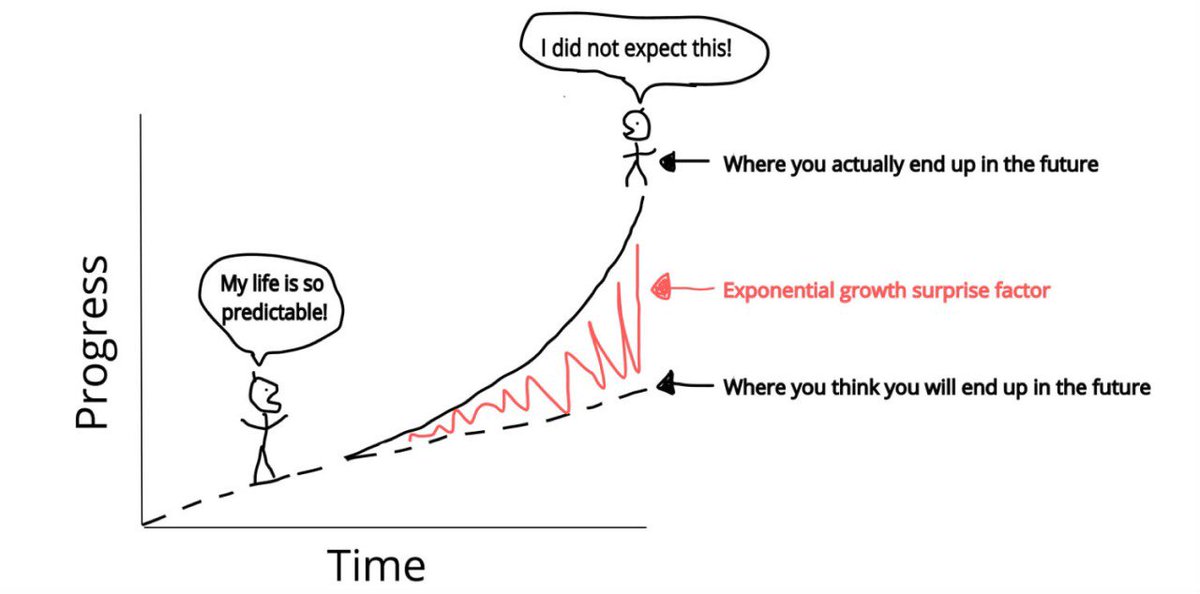
Humans are generally pretty bad at predicting exponential growth.
My opinion…
We need government to think less linearly. Rather prioritising innovation to tap into a self-sustaining growth engine, boosting sectors to become faster, more efficient, & more profitable long term.
25
30 Oct 2024
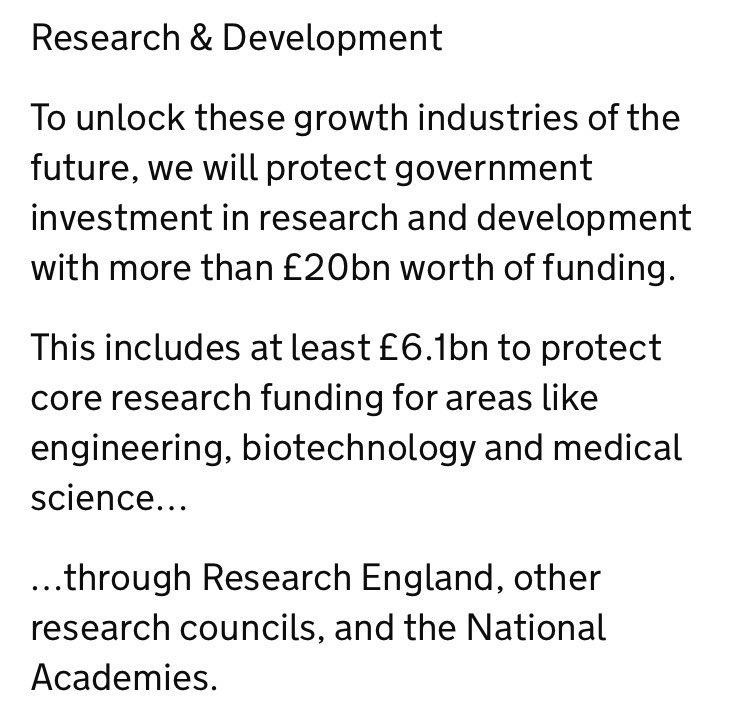
Good News!
It does appear Innovation, Research & Development has had its budget protected 🫶🏻
Devil’s in the details of course, but good to see an acknowledgment of its essential place in uncovering a brighter future for all.
30
28 Oct 2024
10. It would probably be fair at this point to ask: “ok, so what sort of things could I put my money into?”
Well, to be honest. There are quite a few! All valuable in their own way.
I’ve itemised a few of them below…
1
51
28 Oct 2024
20. It would be critical however that regulation favoured fairness, ensuring new opportunities aren’t captured purely by the wealthy as has been the case in years gone by.
Additionally, a significant rollout of financial literacy would need to be made available to all 📚
1
41
28 Oct 2024
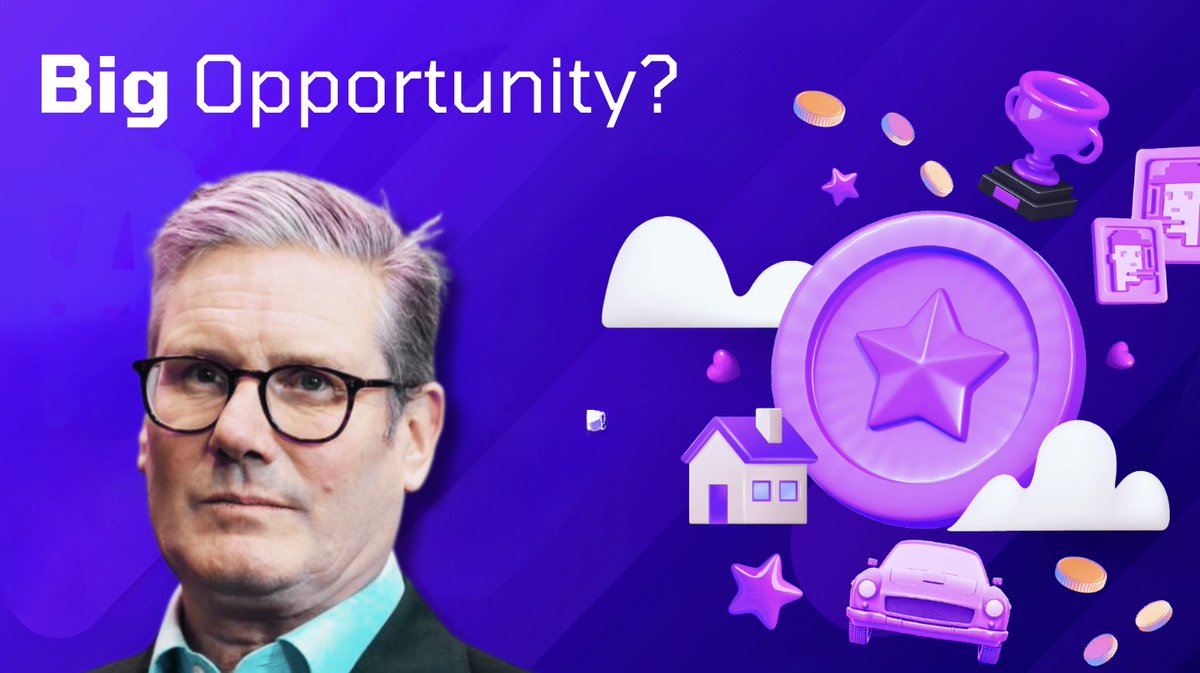
21. For any political party, this period in our history could prove legacy-defining.
Labour, in particular, have a chance to own the narrative of “hope”, championing innovation & asset democratization as one avenue to finally “levelling up.”
The question is: Can they grasp it?
36