
Go-to Partner for Building on @CantonNetwork | Head of BD @Avicenne_Studio | ex financial auditor @EYnews | Institutional DeFi, RWAs & onchain capital markets
Joined August 2023
- Tweets 13,521
- Following 1,436
- Followers 2,707
- Likes 19,069
932 Photos and videos


Pinned Tweet

Feb 28
Never in my life
I’d rather get hit by a missile
than get hit by french taxes

34
58
902
151,491
Brice Noyal 🇦🇪🇫🇷 retweeted
Jun 12
This take in the context of institutional blockchains (and honestly even most of DeFi) is terrible…
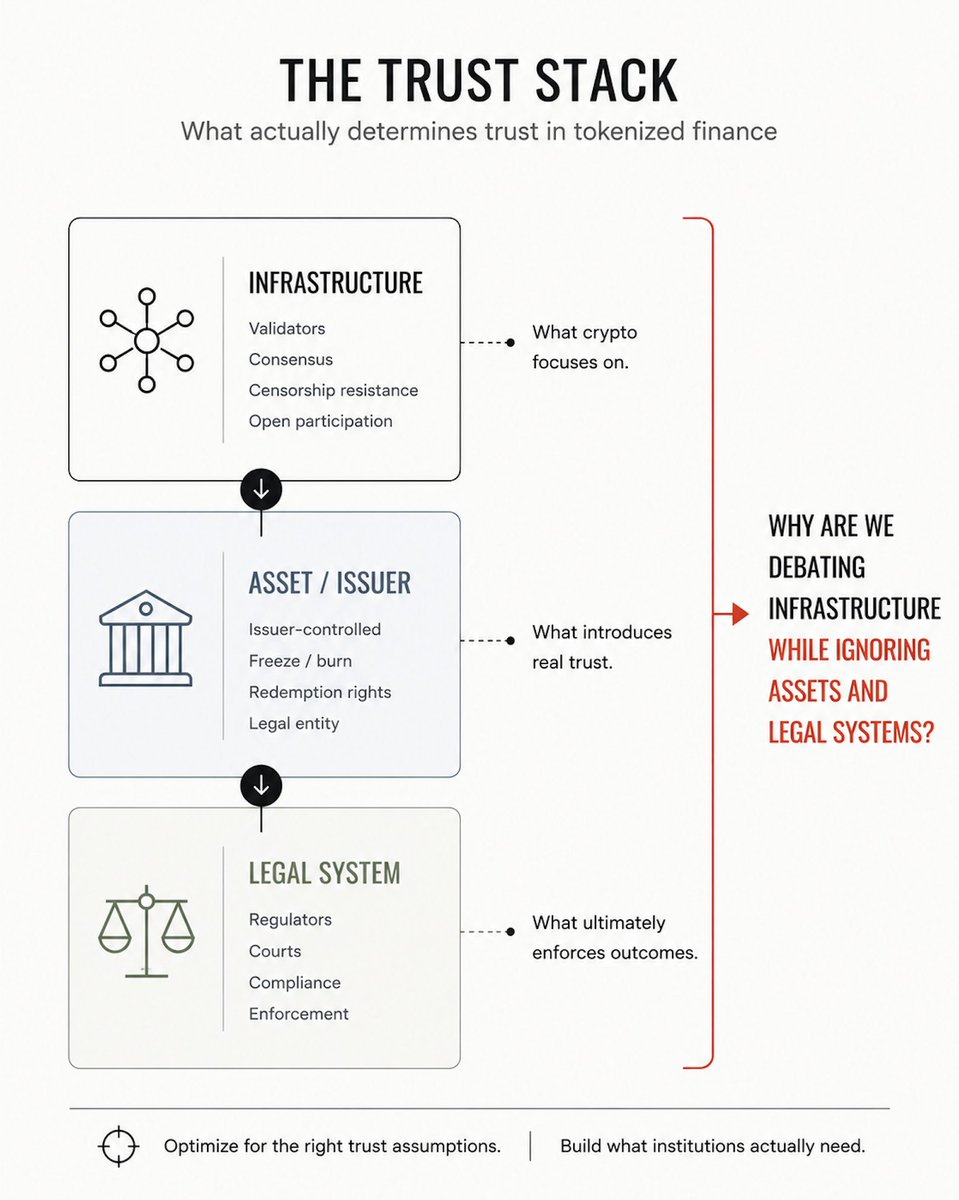
So you're arguing that institutions shouldn't trust infrastructure because someone ultimately controls the asset.
Meanwhile the assets we're discussing are:
• Stablecoins that issuers can freeze
• Money market funds managed by asset managers
• Bank deposits issued by banks
• Treasuries issued by governments
Did you realize the trust assumption already exists?
USDC doesn't magically become trustless because it lives on Ethereum.
A tokenized MMF doesn't become decentralized because it's on a public chain.
You're evaluating Canton through a Bitcoin framework while the assets themselves already rely on issuers, legal agreements, and governance.
And when you say Canton is "just a database with a button," you're just rage-baiting and showing you don't really understand how the architecture works.
The existence of governance does not imply someone can arbitrarily rewrite state or selectively break atomic settlement.
To keep it short, on Canton:
• Assets follow a UTXO-like contract lifecycle.
• State transitions must satisfy contract rules and participant authorization.
• Double-spends are prevented through synchronization.
• Atomic settlement is enforced by protocol rules.
The funny part is that you're criticizing Canton for not solving a problem that the institutions using it aren't even trying to solve.
Jun 12

With respect to Noah and the a16z team, who are usually quite sharp, this description is categorically wrong.
The features that they describe as non-negotiable, like finality, do not and cannot exist on permissioned infrastructure. That’s because whoever controls the permissioning also controls the state.
They can demand to halt the chain, fork it, break atomicity etc, then depermission validators who disagree.
Every permissioned network has a button, and control over it determines liveness and finality. The cryptography and consensus cannot stop them. It’s mostly performative.
The counterargument is that whoever controls the button risks legal, reputational, and regulatory issues if they misuse that power. That’s fine, but it’s not a crypto thing. It’s a “trust me bro” mentality, not a “can’t be evil” one.
Ironically, the institutions least likely to trust this kind of database are the very firms it’s designed to attract.
They know even better than anyone what it means to surrender your clients and assets to infrastructure that can abuse them.
You’ll see.
1
1
8
375
Brice Noyal 🇦🇪🇫🇷 retweeted
Jun 11
At some point people will realize this wasn't a funding round.
It was a global institutional consortium forming around a public blockchain.
It's only the beginning for Canton 👀

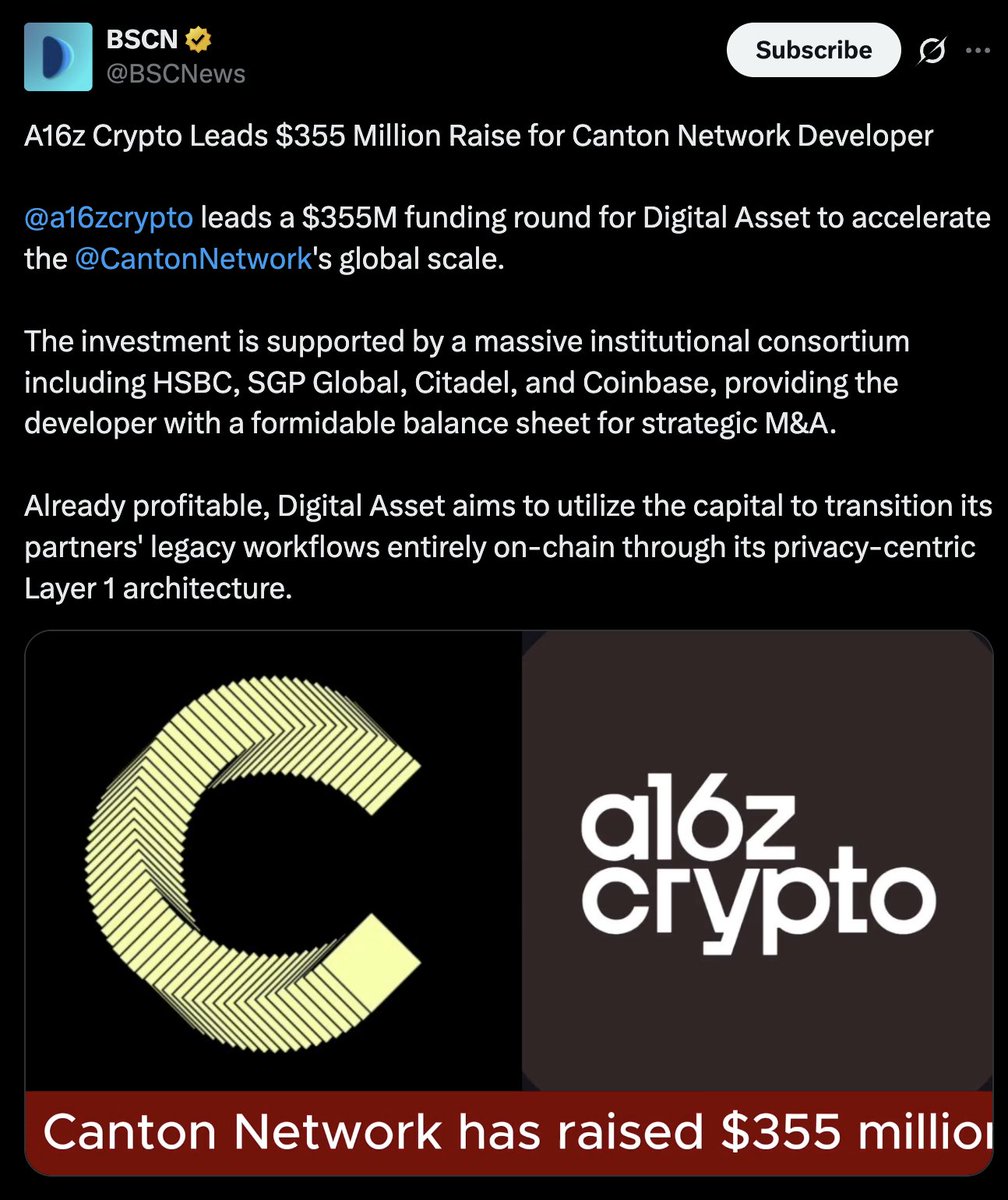
NEW: @CantonNetwork developer @DigitalAsset has raised $355M led by a16z, with backers including Goldman Sachs, HSBC, Citadel Securities, CME Ventures and Abu Dhabi's sovereign wealth fund.

1
5
19
651
Brice Noyal 🇦🇪🇫🇷 retweeted
Jun 11
🚨 Digital Asset just raised $355M led by a16z. 🚨
But the amount isn't the most interesting part.
Look at the investors:
ADIA 🇦🇪
BNP Paribas 🇫🇷
HSBC 🇬🇧
SBI 🇯🇵
Hanwha 🇰🇷
Apollo 🇺🇸
Citadel Securities 🇺🇸
CME 🇺🇸
Tradeweb 🇺🇸
I genuinely can't remember another blockchain raise that onboarded this many institutional players at once, with such geographic diversity.
US.
Europe.
Middle East.
Asia.
And according to @YuvalRooz, many of them aren't just investors.
They're prospective users.
That's a huge distinction.
Because institutions don't invest in infrastructure for the narrative.
They invest because they expect to use it.
And the biggest problem in finance isn't tokenization.
It's coordination.
The value isn't putting an asset onchain.
The value is making assets, collateral, cash, stablecoins, and financial applications interoperable across institutions.
That's what creates network effects.
That's what created modern capital markets.
And that's what created DeFi.
I know that many people have viewed Canton as a US-centric institutional chain.
Looking at this cap table, that thesis is becoming increasingly difficult to defend.
This raise looks less like a financing event...
...and more like the formation of a global institutional network.
Very happy to be part of this ecosystem as both builder and validator with @Avicenne_Studio 🫡
2
9
36
1,195
Jun 12
Not a big surprise to see Canton investors building on the network.
The more interesting signal is institutions that weren't even part of the round choosing to become validators like Deutsche Bank.
That tells you they're not doing it because they invested.
They're doing it because the architecture solves a real problem they have.
Jun 12

a16z 🤝 Canton Network
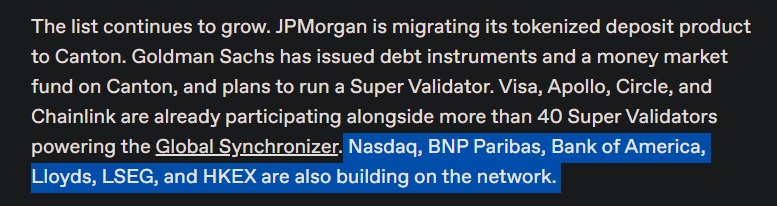
Confirmed: a16z says Goldman Sachs plans to run a Super Validator.
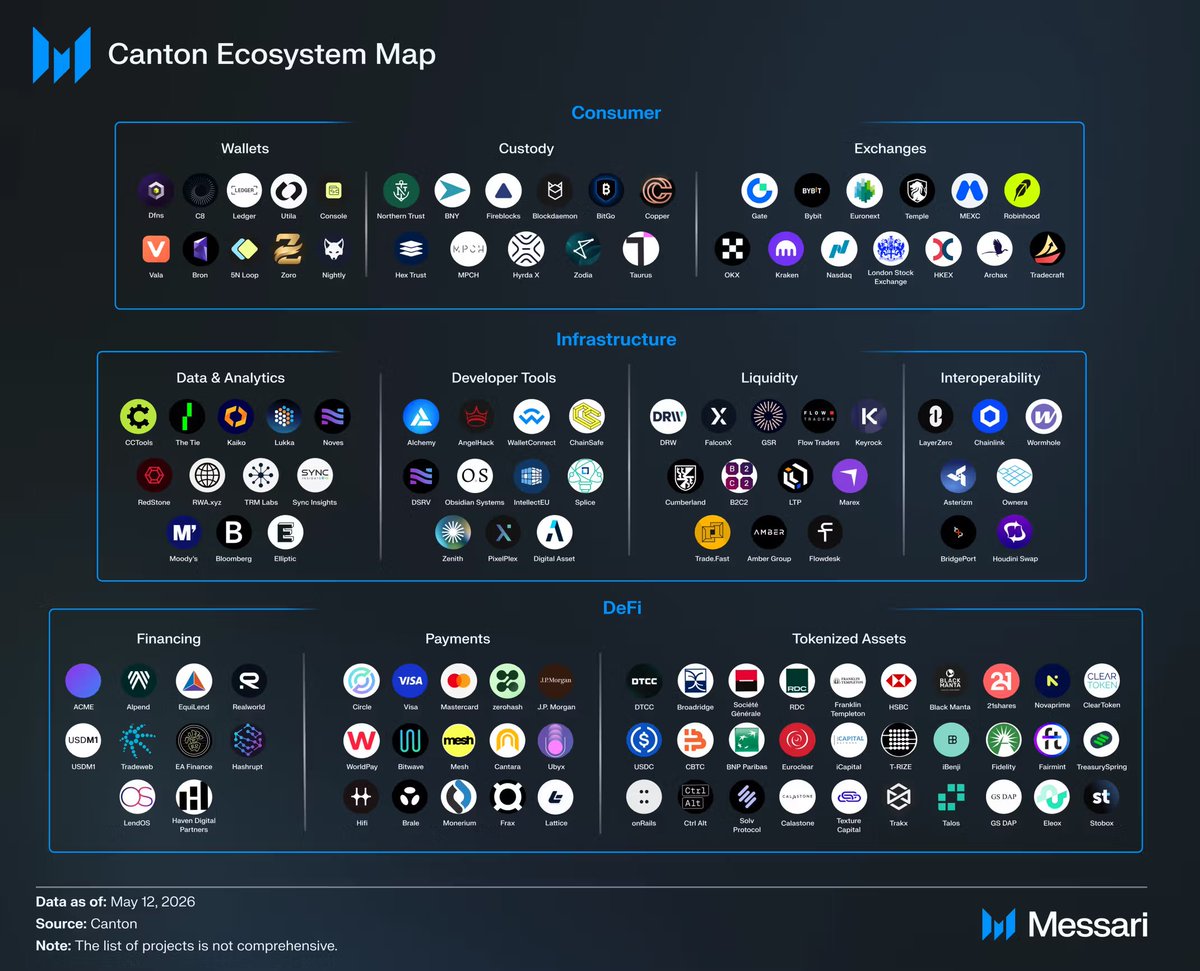
Nasdaq, LSEG, and HKEX are building on Canton Network $cc — not on $XRP ❌WAKE UP army!
What stronger signal do u need? The top 3 exchanges from US, Europe, and Asia are already on $cc !
2
2
20
958
Jun 12
This article perfectly illustrates why Deutsche Bank recently became a Canton validator.
Most people think tokenization is about putting assets on a blockchain.
German institutions understand that the real challenge is coordinating all the parties around the asset:
• Banks
• Custodians
• Registrars
• Distributors
• Issuers
• Regulators
And @0xlucasson makes a great point:
The problem isn't any individual participant.
It's the space between them.
The reconciliations.
The operational friction.
The duplicated records.
The endless coordination overhead.
That's exactly the problem Canton was designed to solve.
Ethereum synchronizes institutions through a shared state.
Canton synchronizes institutions through shared workflows.
Each participant keeps control of its own environment, data, and governance while still being able to coordinate atomically with others.
When you look at German capital markets through that lens, Deutsche Bank's decision makes a lot of sense.

1
6
274
Brice Noyal 🇦🇪🇫🇷 retweeted
Jun 10
Hot take:
The people asking me the most questions about Canton's decentralization are often the same people building around assets that can literally be frozen by the issuer.
I was in a discussion recently with an institution evaluating Canton.
One of their developer in the room (an ethereum maxi) asked:
"but if every validator isn't validating every transaction, is it really decentralized?"
My first thought was:
Wait...
Aren't you evaluating:
• stablecoins that can be frozen
• tokenized funds controlled by asset managers
• tokenized deposits issued by banks
• RWAs backed by legal entities
What exactly are we decentralizing here?
This is the part of the conversation where crypto and institutions often talk past each other.
Bitcoin was designed around removing trusted third parties.
Institutional finance starts with trusted third parties.
Issuers.
Custodians.
Asset managers.
Banks.
Regulators.
They're not bugs.
They're literally part of the product.
So once you've already accepted issuer risk at the asset layer...
Why is your primary concern whether every node in the world sees every transaction?
It's obviously not the bottleneck institutions are trying to solve.
They care about:
Privacy.
Interoperability.
Atomic settlement.
Operational sovereignty.
Compliance.
That's why Canton doesn't optimize for global state.
It optimizes for coordination between institutions that don't want the entire market seeing their activity.
Honestly, I think a lot of people are applying Bitcoin evaluation criteria to assets that can be frozen with a phone call.
Different trust model.
Different optimization function.
Different infrastructure.
3
7
296
Jun 10
Everyone is talking about Morpho's $175M raise.
I think the real question is:
What takes Morpho from $11B to $100B in deposits?
My answer isn't yield.
It's solving the institutional privacy problem 👇

1
1
9
463
Brice Noyal 🇦🇪🇫🇷 retweeted
Jun 4
There’s something fundamentally incoherent happening in institutional crypto.
I recently spoke with several institutions that told me they chose Ethereum as their tokenization layer because that’s where the liquidity, distribution, and RWA ecosystem already exist.
And honestly, that logic makes complete sense at first.
Their argument is simple:
“Composability is the moat.”
But then I started asking myself:
What kind of composability are we actually talking about?
Because tokenizing a static asset like an MMF is one thing.
The real value of institutional finance is in the workflows:
• repo
• collateral movements
• liquidity management
• margining
• cross-institution settlement
That’s where the real network effects are.
But those workflows require privacy.
No institution wants competitors or counterparties seeing their liquidity positioning, treasury activity, or collateral movements in real time.
So here’s the contradiction:
If composability is truly the moat…
then why build on infrastructure where the most valuable institutional workflows may never comfortably move onchain because of the lack of privacy?
And this is exactly where I think architectures like Canton Network become extremely interesting.
That’s the core thesis behind my latest article 👇
2
2
6
549
Brice Noyal 🇦🇪🇫🇷 retweeted
Jun 2
3
6
19
6,574
Brice Noyal 🇦🇪🇫🇷 retweeted

Jun 5
Composability without operational confidentiality does not scale for institutional finance.
Canton was designed for that combination.
@Tokenoya on why selective disclosure is the architectural requirement, and why that changes where institutional liquidity concentrates.
5
11
68
4,987

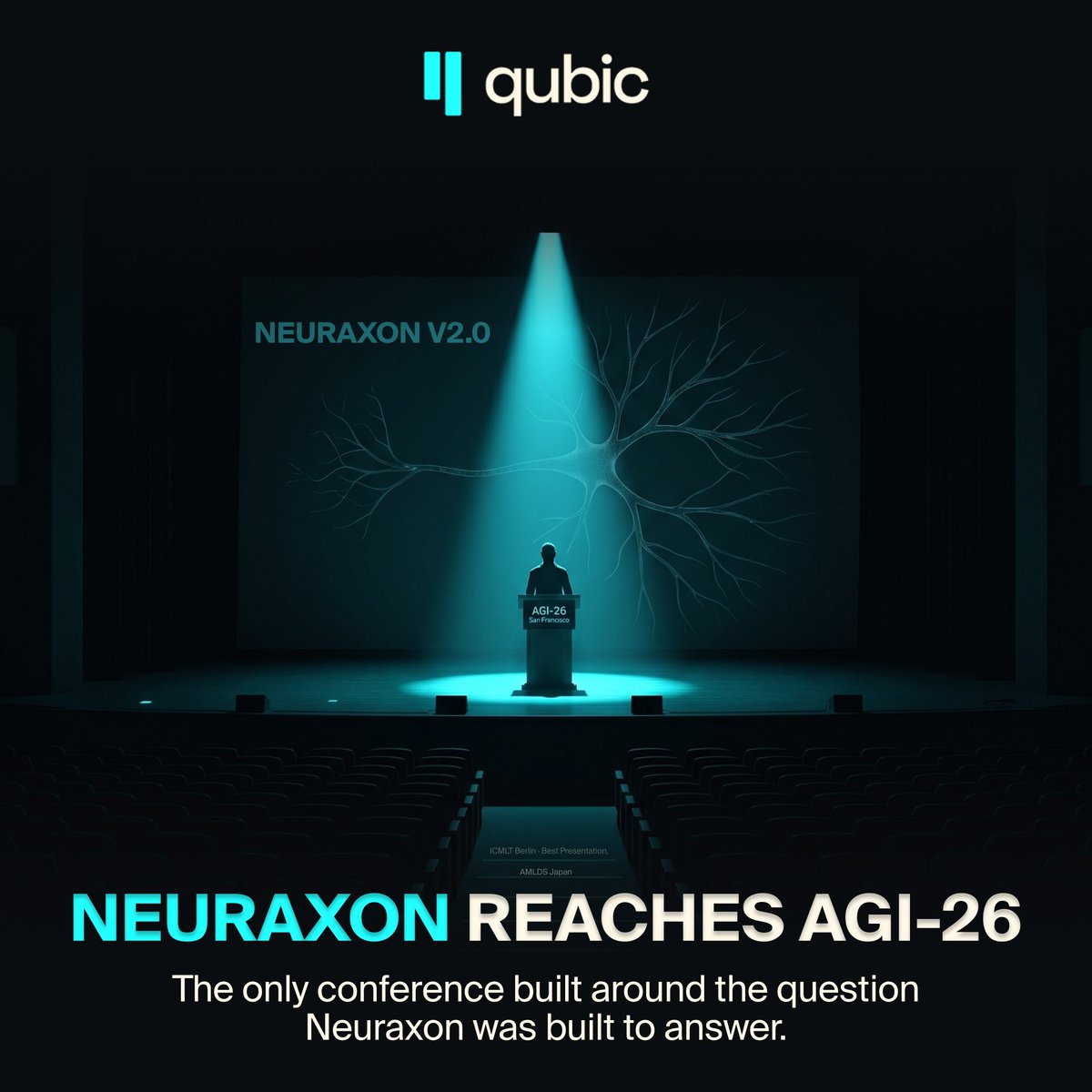
Qubic Science just had its Neuraxon V2.0 paper accepted at AGI-26 in San Francisco.
That makes three academic acceptances so far this year.
ICMLT in Berlin, where it won best presentation of the evening session.
AMLDS in Japan.
And now AGI-26.
This one is different from the other two, and it is worth explaining why.
ICMLT is a machine learning conference.
AMLDS is machine learning and data science.
AGI-26 is the only major conference on earth built around a single question:
How do you actually create general intelligence, the kind that transfers from one problem to a completely different one instead of memorizing a single trick?
That is the exact question Neuraxon was built to answer.
Most crypto projects that mention AI are wrapping someone else’s model and bolting it onto a token.
Neuraxon is an attempt to grow artificial brains that adapt over time, the way biology does.
Getting into the room where the people who take AGI seriously argue it out, in front of names like Karl Friston and Ben Goertzel, that is the milestone.
The conference runs July 27 to 30.
The research is open.
The paper is below.
37
129
577
27,981
Jun 1
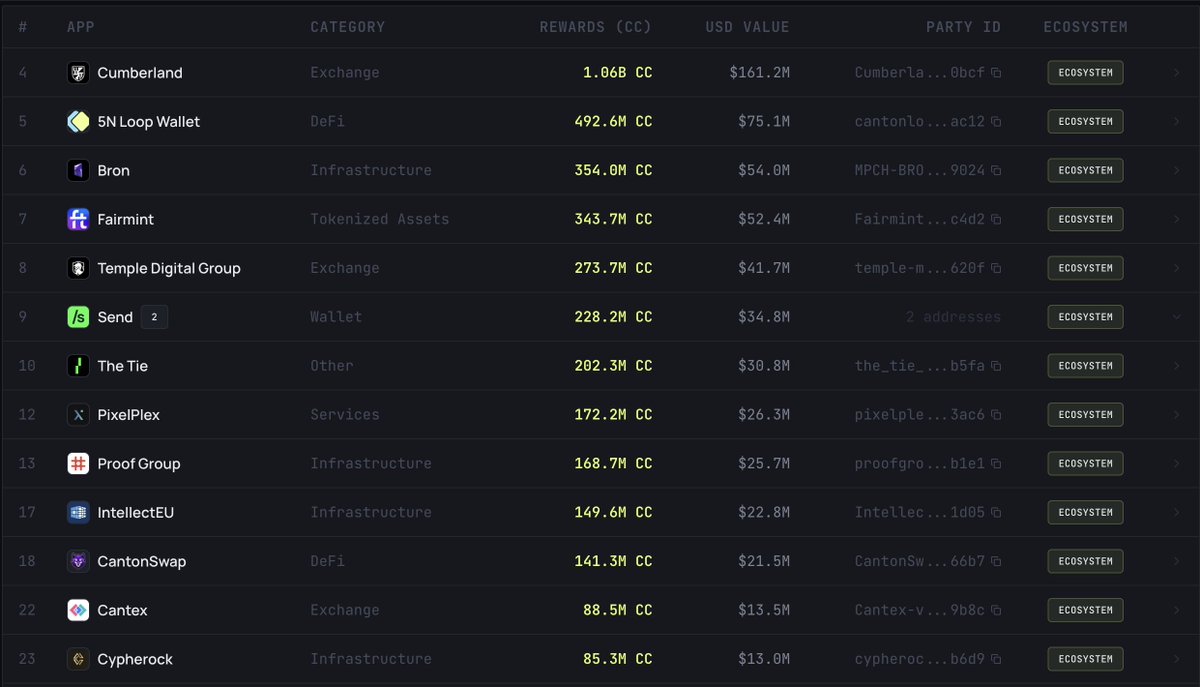
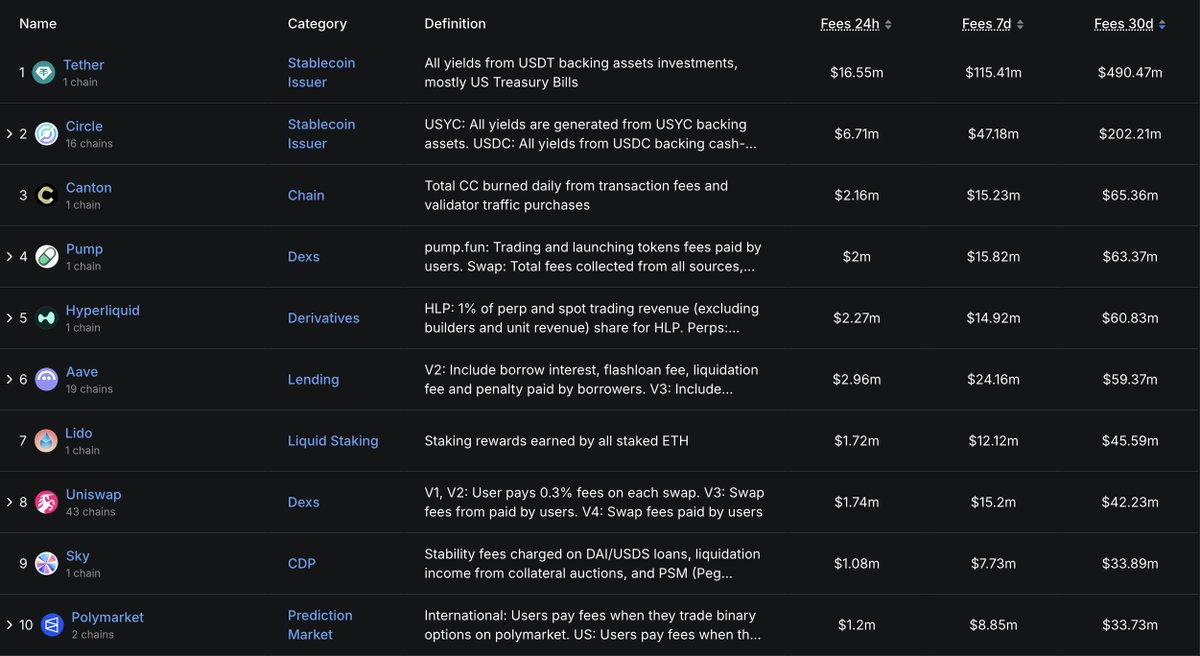
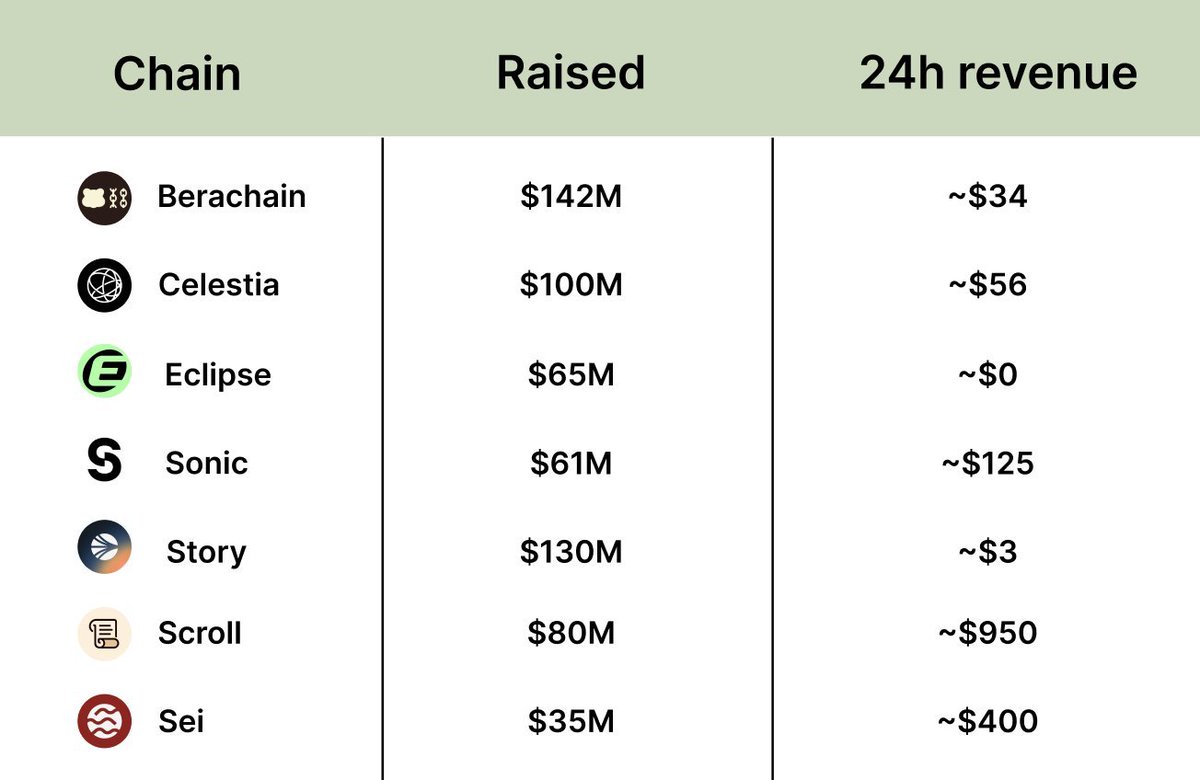
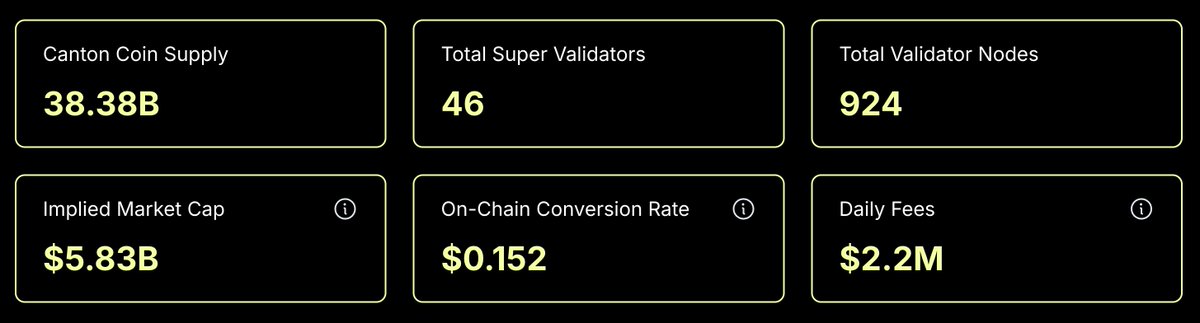
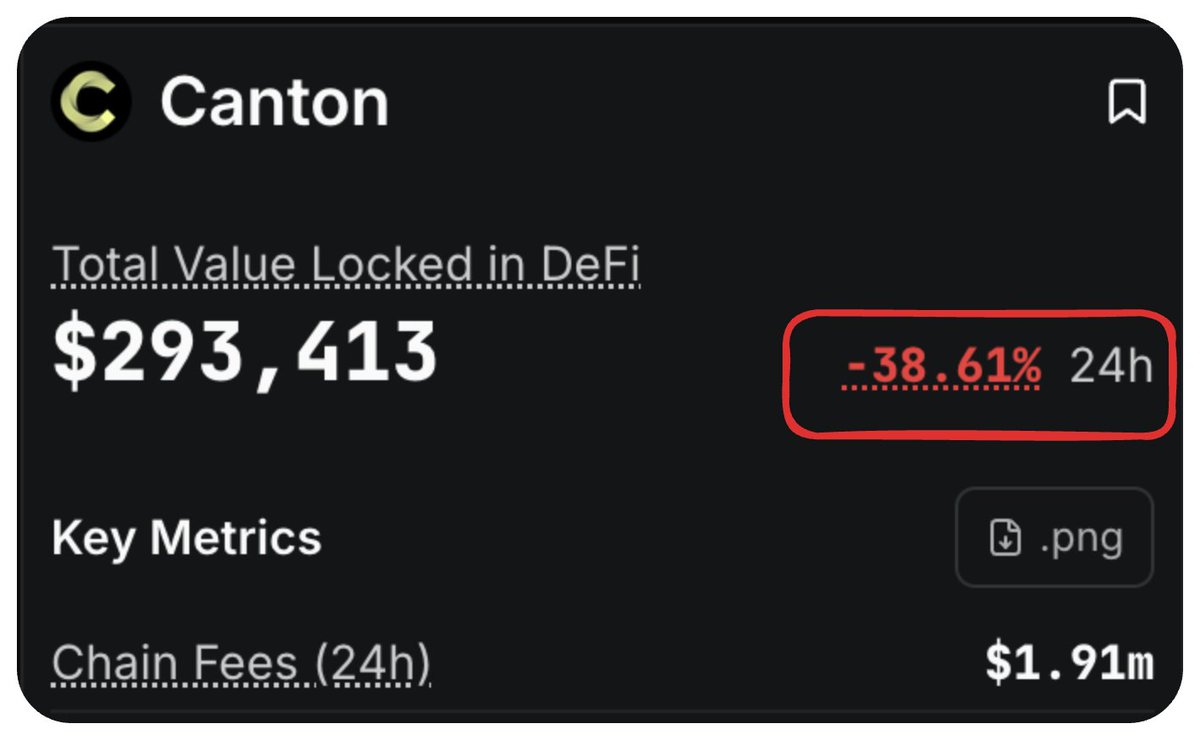
Still generating more fees than your favorite chain.
Maybe the better question is whether you actually understand how Canton works.
May 31

Canton chain lost 38% of its TVL in the last 24 hours.
I warned you before that this is a scam.
1
1
23
1,353