
Robot hacker.
Joined November 2013
- Tweets 6,555
- Following 6,479
- Followers 2,420
- Likes 1,748
1,021 Photos and videos


Tom Jacobs retweeted

Jun 13
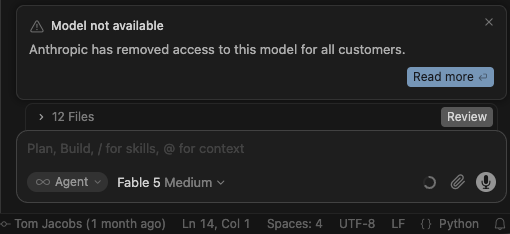
they turned claude into jesus: it died on friday, and it will resurrect on sunday
70
396
7,669
196,275


Tom Jacobs retweeted

Feb 26
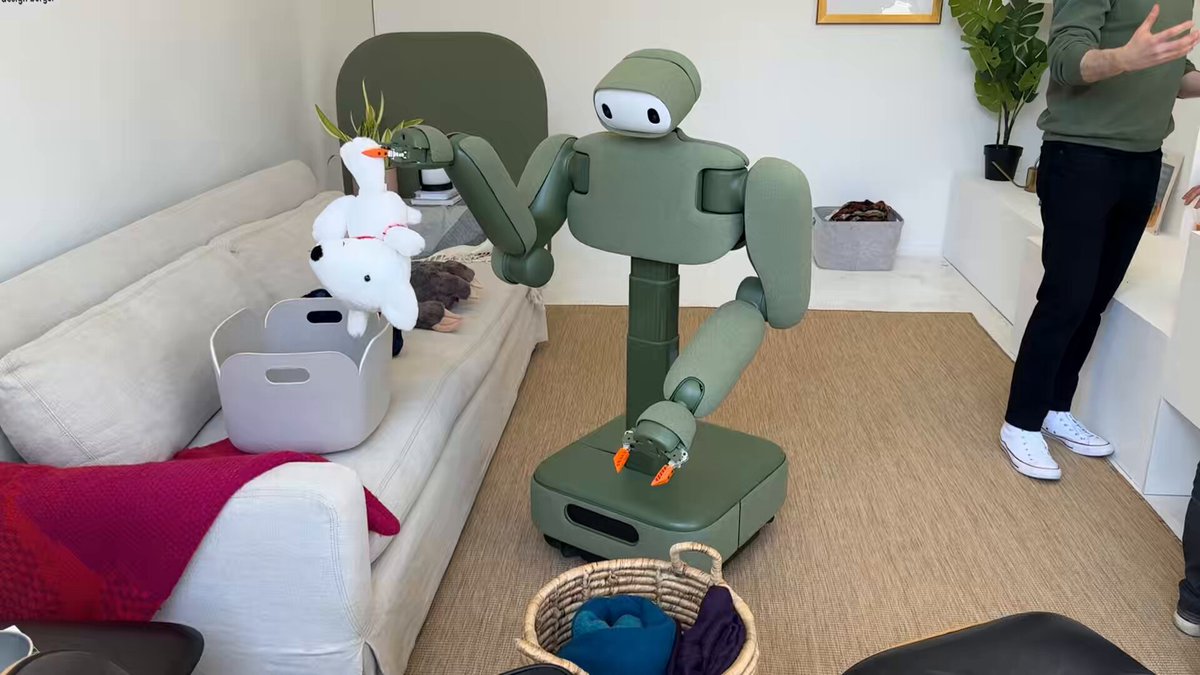
To understand what it takes to build a humanoid robot with model-based control, we finetuned @physical_int 's (PI) Pi05 model for our custom use case and environment.
We incurred ~$10K in hardware costs, compared to the typical ~$20K set up (DROID/ALOHA).
Here are the lessons and challenges we faced building the first working prototype (shown in the video) in 3 months.
Part 1: Hardware, Software, Model Selection, Custom Embodiment, Inference, Embedded Hardware, Hierarchical Planner
Part 2: Model Evaluation, Data Collection, Model Training, Simulation and Teleoperation
We hope sharing our experience accelerates the learning of others who are in a similar starting point.

3
11
114
18,151
Tom Jacobs retweeted

Feb 6
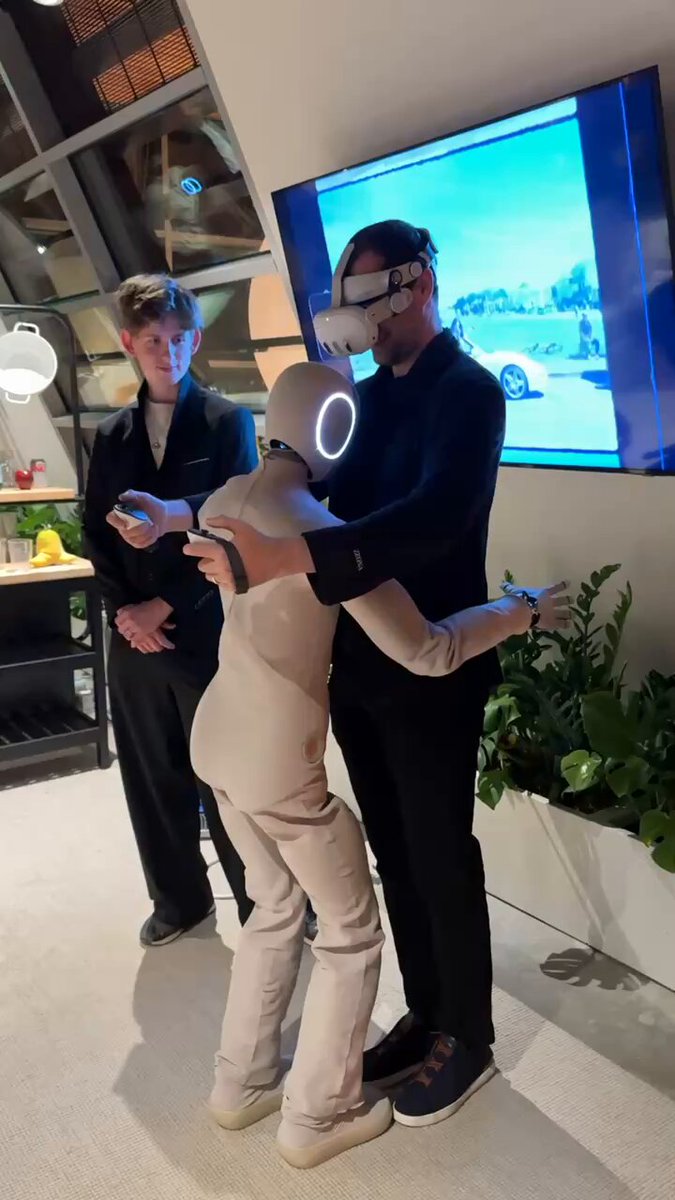
Data has always been the bottleneck for physical AI in self driving and robotics. Tesla is taking two very different approaches for FSD and Optimus.
Tesla’s Optimus Training Playbook:
1. Build 30k Optimus Gen 3 robots
2. Operate them in a mock environment where they can perform self-play “Optimus Academy”
3. Train in sim using the real robot data to close sim2real gap.
Tesla FSD Training Playbook:
1. Sell millions of cars outfitted with cheap cameras
2. Collect diverse real world driving data (especially intervention and failure recovery data) for free as a byproduct of customers driving the cars.
3. Use driving data to train Autopilot/FSD and deploy policies incrementally as a supervised FSD product
4. Repeat until policy reaches robust unsupervised full self driving for robotaxi launch.
The Tesla FSD playbook is a beautiful self-funding, customer subsidized, diverse real world data flywheel.
The Optimus playbook is the opposite and shares none of the beautiful attributes of the FSD training flywheel that made FSD successful.
The key differences:
1. Instead of having customers pay you for vehicles, Tesla will need to fund 30,000 Optimus robots. Assuming the current landed cost per unit is $100k, that will be $3B to build plus another ~30% per year for maintenance labor and spare parts given it’s still an unhardened pre-production prototype is another $900M per year. For reference, Tesla’s GAAP net income in 2025 was $3.8B.
2. Instead of having customers drive their Teslas on roads all across the world giving Tesla an insanely rich and diverse dataset that Waymo and other AV companies could never collect, the Optimus Academy is doing the equivalent of building a fake town in a parking lot and driving their car in that parking lot. No matter how real you try to make the environments for self-play you can never replicate the diversity, complexity and failure modes of the real world. Data collected in staged environments produces demo-grade policies and will not be rich enough to generalize to the vast diversity of environments, tasks, objects, etc. out of distribution.
3. Instead of having customers collect real world failure recovery data (DAgger style) for free every time FSD disengages, the Optimus Academy will need paid teleoperators or onsite operators to collect the recovery data. Assuming 1 person can manage 2 robots to start that would cost $3.5B in labor per year (30,000 robots, $40/hr fully loaded, 16 hrs/day, 365 days per year, 2:1 robot:operator).
Tesla can come up with the money to do this but money doesn’t solve the “mock data” problem. Given the higher degrees of freedom in humanoids vs. cars, training a generalized humanoid will be harder and require more data than a self-driving vehicle.
The best way to train your robot is by deploying them in the diverse real world, subsidized by real customer operations. Humanoids face a chicken and egg where it’s very hard to bootstrap your way to a first policy that’s good enough to deploy in real production environments. This is an extremely capital intensive playbook (which doesn’t even include cost of training). Time will tell if it works but a better playbook would be finding a way to copy the FSD playbook.
11
12
112
34,825
Tom Jacobs retweeted

Feb 28
I spent time in Shenzhen last year and when I saw Merz come back from China saying Germans need to work more I immediately knew what broke his brain because I lived the exact same cognitive shock
my first week in Huaqiangbei I burned through 4 prototype iterations of a motor controller board for less than a thousand bucks total, back home a friend was working on something similar and spent over 12 thousand for a single revision that took almost two months to arrive
when you live that contrast in your own hands with your own project something permanently shifts in how you see the world and it goes way deeper than speed & cost
what Shenzhen actually built is a collective learning organism, imagine 20 PCB fabs 15 injection mold shops 30 component distributors and a hundred firmware freelancers all within a 2km radius, looks insanely redundant from the outside until you realize redundancy is actually information density in disguise
I watched this firsthand with an injection mold supplier I was working with, this guy had seen a hundred founders iterate similar thermal designs over 6 months so he proactively modified his tooling before I even opened my mouth, he knew what I needed before I knew what I needed, the intelligence lives in the relationships between the nodes and it compounds daily
the west thinks about manufacturing as a cost center you optimize by centralizing…
China accidentally built a distributed neural network of manufacturing intelligence where knowledge diffuses horizontally across thousands of agents faster than any single western company can process internally
so when Merz comes back and says we need to work a bit more I think he saw the problem but COMPLETELY misdiagnosed the solution, telling Germans to work harder is like telling a horse to gallop faster when the other side built a combustion engine
the gap is ARCHITECTURAL
it’s ecosystem density, you need a custom connector in Shenzhen you walk 200 meters, in Munich you send an email and wait 3 weeks
it’s iteration speed, parallel search vs sequential optimization at the system level, it’s risk tolerance, Chinese founders ship something broken on Monday fix it Tuesday ship again Wednesday while European companies are still in the approval phase for the pilot program of the feasibility study…
and Merz only saw the surface, what he missed is the tier 2 cities like Hefei Chengdu Wuhan replicating the Shenzhen model at scale right now
BYD going from irrelevant to outselling every european automaker combined in roughly 5 years, Huawei building its own 7nm chip under maximum sanctions when every analyst said it was physically impossible & behind all of that a government that treats advanced manufacturing as an existential national priority while europe debates whether AI needs another ethics committee
I think what we’re watching is the most asymmetric economic competition in modern history and most western leaders are still framing it as a productivity problem when it’s actually an ontological one
Europe & America are optimizing variables that China stopped tracking years ago meanwhile China is compounding on dimensions the west has no framework to even measure
Merz at least had the courage to name
it out loud and I respect that genuinely but working a bit more inside a broken architecture just means you arrive at the wrong destination slightly faster
Feb 27

NEW:
🇩🇪🇨🇳 German Chancellor Merz says Germans need to work more in order to match China:
“We are simply no longer productive enough. Each individual may say, “I already do quite a lot.” And that may be true.
But when you return from China, ladies and gentlemen, you see things more clearly.
With work-life balance and a four-day week, long-term prosperity in our country cannot be maintained. We will simply have to do a bit more.”
895
5,462
26,457
4,058,565

Jan 23
3
229