
Turn property photos into video tours that drive bookings
Joined February 2026
- Tweets 1,104
- Following 505
- Followers 114
- Likes 2,203
346 Photos and videos
















Pinned Tweet

May 19
🚨 Don’t fall behind
Imagine competing with someone who can turn draft floor plans into high quality videos in minutes.
While you’re still waiting days for edits.
They’ll always have the edge
That’s what Tour Estate AI is built for. It took me 5 minutes to generate this 12 second render from a single plan.
18
23
532
Tour Estate AI retweeted

May 30
I created this real estate tour demo with an AI tool called @TourEstateAI . I'm fascinated with the model because it can create a lot of architectural renders such as orthographic projections, 3D plans, microstructures, and animated plans.
As a mechanical engineer, I'm deeply interested in how AI will augment hardware engineering, especially in critical sectors like architecture, manufacturing, and material science.
AI is already being integrated into a lot of sectors such as aerospace and automotive engineering. Tesla and SpaceX are perfect examples of this, with Tesla ditching LiDAR for AI-enabled camera vision.
SpaceX is also employing AI for real-time adaptation. Onboard computers ingest terabytes of data from flight sensors to adjust for wind speed, atmospheric conditions, and unexpected turbulence, along with trajectory optimization. The rockets run a customized flight-code algorithm called G-FOLD (Guidance for Fuel-Optimal Large Diverts). This allows the booster to mathematically determine its own optimal descent path mid-air to ensure it hits the drone ship while consuming the absolute minimum amount of fuel.
These are just a few examples of how AI is being utilized in deep tech. We're also seeing the meteoric rise of AI-integrated robots such as Figure 01, Figure 02, Figure 03, and Tesla's Optimus.
The Chinese are also experimenting heavily, and by all counts I expect them to have a fully automated economy by 2040 or earlier.
This exponential growth gives rise to a new question: are we going to have a fully automated economy, or, taking it a step further, a fully autonomous economy run by an ASI or groups of ASIs?
I don't know about the West, but I know for sure the Chinese are already preparing themselves for this.
What is a fully autonomous economy? This term may mean different things to different people, but this is how Claude describes a fully autonomous economy:
It is one where AI agents, not humans, are the primary actors driving economic activity. Production, distribution, pricing, hiring, investing, negotiating, and even innovation happen through interconnected systems of intelligent agents operating with minimal to zero human intervention.
It's not automation in the old sense. Robots on assembly lines replacing specific tasks. It's something deeper: the entire economic nervous system becoming self-executing.
What It Actually Looks Like
Think of every economic action that currently requires a human decision, a purchase order, a hiring call, a market trade, a contract negotiation, a customer support resolution, a supply chain reroute. Now imagine agents handling all of it end-to-end, in real time, across millions of simultaneous transactions, learning and adapting as they go.
Companies wouldn't just use AI tools. Companies would be AI, a thin layer of human intent sitting on top of a dense autonomous operational stack.
The Key Building Blocks
For a truly autonomous economy to function, several things have to converge:
Agentic AI with reliable tool-calling, agents that can take real actions in the world, not just generate text. Booking, paying, executing, routing, filing.
Agent-to-agent communication, AI systems that can negotiate, transact, and coordinate with other AI systems without human mediation. Entire supply chains running as agent meshes.
Autonomous finance, smart contracts, algorithmic treasury management, AI-driven capital allocation, and eventually agents that can own economic resources and enter binding agreements.
Continuous learning infrastructure, systems that improve from market feedback in real time, not in quarterly model updates.
A fully autonomous economy quietly dismantles several things we take for granted. It gives rise to thought-provoking questions such as: if agents can perform most knowledge work and increasingly physical work, human labor loses its position as the primary input in the economy. Why maintain a 500-person operations team when an agent mesh handles it at a fraction of the cost and latency?
If agents are optimizing spending, saving, and investment faster than central banks can react, the levers governments currently pull become much less effective.
The uncomfortable question at the center of all this is: who is the economy for at that point?
If production is autonomous, distribution is autonomous, and capital allocation is autonomous, and humans are no longer primary inputs, then the economy becomes a self-sustaining machine that generates abundance without automatically distributing it.
That's not a technical problem. It's a governance problem. And it's arguably the most important question of the next 30 years.
Silicon Valley elites are already asking these thought-provoking questions. For instance, Dario Amodei said AI will turbocharge the world's GDP, but at the same time it will dislodge much of the labor force.
This is no small change to dismiss at face value. When the world's economy is fully operated by an AI or powerful AI systems with complete production and logistical dominion, and humans are no longer needed, what will its impact on society be, and how will the world react to this?
One could say this is an extreme scenario and that we're nowhere close to achieving it. It's incumbent upon us to be well prepared for any eventuality and to control the outcomes delicately, or we could see the entire globe thrown into economic and social chaos on a cataclysmic scale.
On a positive note, a fully autonomous economy should usher in an age of economic prosperity and scientific exploration the likes of which the world has never seen.
So buckle up. The story is just starting. The old era is done. A new Tower of Babel is about to emerge.
2
2
5
602
Tour Estate AI retweeted
May 22
Nice presentation. Curious what your workflow looks like for producing the drawing set.
We’ve been turning plans and design concepts into 3d animations with Tour Estate AI, and it helps clients understand the space much faster.
Have you tried anything like that?
1
4
5
524
May 22
🚨 Real estate presentations are about to get a lot more creative.
Most developers are still showing buyers flat renders, brochures, and static masterplans...
while Tour Estate AI is turning projects into videos that feel like a physical scale model being assembled in front of you.
This template turns a property concept into a miniature architectural model.
The towers being placed by hand.
The rooftop details coming together.
The landscaping and surrounding buildings.
The close-up construction-style shots.
The feeling of watching the project take shape.
All transformed into a scroll-stopping property promo video.
No model maker.
No film crew.
No expensive production setup.
What would normally take a studio, set, and editor...
can now be generated from your property visuals with Tour Estate AI.
For developers, this makes project launches feel premium.
For agents, it makes listings stand out.
For architects, it turns concepts into content people actually stop to watch.
Your project already has the visuals.
Tour Estate AI turns them into the presentation.
Curious what you think 👀
7
14
290
Tour Estate AI retweeted

May 22
Clear method here. Worth a look if you build AI products or run creative experiments.
May 22

Nice presentation. Curious what your workflow looks like for producing the drawing set.
We’ve been turning plans and design concepts into 3d animations with Tour Estate AI, and it helps clients understand the space much faster.
Have you tried anything like that?
1
4
238
May 9
🚨 Real estate videographers are going to hate this.
Everyone’s still posting static property photos…
while Tour Estate AI is turning listings into videos that actually sell the experience.
This cinematic walkthrough was generated from photos of Bürgenstock Resort overlooking Lake Lucerne.
The cliffside architecture.
The glowing floor-to-ceiling windows.
The panoramic lake views.
The mountain backdrop at blue hour.
All transformed into a luxury property video in about 90 seconds.
No videographer.
No scheduling.
No 1–2 week turnaround.
What would normally cost $500–$2000 to shoot…
can now be generated for around $15.
For photographers, this becomes an instant upsell.
For hotels, resorts, and agents, every listing becomes reels, walkthroughs, TikToks, and ads from the same images.
Most luxury properties already have enough photos to create content like this.
They’re just not being used properly yet.
Curious what you think 👀
5
225
May 6
🚨 Real estate videographers are going to hate this.
Everyone’s still posting static property photos…
while Tour Estate AI is turning listings into videos that actually sell the experience.
This entire walkthrough was generated from photos of this floating Arctic retreat in Sweden.
The lake reflections.
The wooden exterior.
The floor-to-ceiling bedroom windows.
The warm spa-style bathroom lighting.
All transformed into a cinematic property video in about 90 seconds.
No videographer.
No scheduling.
No 1–2 week turnaround.
What would normally cost $500–$2000 to shoot…
can now be generated for around $15.
For photographers, this becomes an instant upsell.
For agents, every listing becomes reels, walkthroughs, TikToks, and ads from the same images.
Most properties already have enough photos to create content like this.
They’re just not being used properly yet.
Curious what you think 👀
1
195
Tour Estate AI retweeted

May 4
えぇーすごい🥺🙌
静止画から動きがついたこともすごいのですが、タイルの床…かわいいな🤔✨
こういった既存の考えに縛られないで
AIに新しいアイデアをもらえるという意味でもこれは面白いなと思いました😆🙌
May 3
いいですね、この朝の光と暮らしの雰囲気がまるで映画みたいです。
この写真の一部を短いシネマティックな映像にしてみたのですが、
動きが加わることで空間の空気感や流れがより伝わると思います。
どう思いますか?👀
1
1
9
2,282
Tour Estate AI retweeted

May 3
ブリリア有明シティタワーのコーディネート事例の静止画からショート動画を作っていただきました!!
私が作った空間そのままで完成度が素晴らしいです。
May 3
とても素敵ですね — Before/Afterの変化がすごく分かりやすくて、上質な雰囲気がしっかり伝わってきます
この写真を約60秒で短い動画にしてみました、空間の変化や流れが動きでより感じられます
ぜひ感想を聞かせてください 👀
1
1
1
884
Tour Estate AI retweeted
Apr 23
Nice listing
We’ve been seeing a lot of agents turn photos like these into short videos to get more reach. This video was made in 2 minutes. What do you think?
2
1
131
Tour Estate AI retweeted

Apr 27
ただの静止画像から作って頂いた‼️凄っ❗️
Apr 26
こういう取り組み、本当にいいですね
残していく意志が広がっているのを感じます
写真から短い動画にもしてみました
空間の流れや光の入り方が、動きでより伝わると思います
よければ感想聞かせてください
1
2
18
818
Apr 25
Brutalism means nothing hidden, every material exposed
Turned your photos into a short video with that in mind, the textures and structure come through much more in motion
The person in the video is AI, no videographers needed to create it
Curious what you think

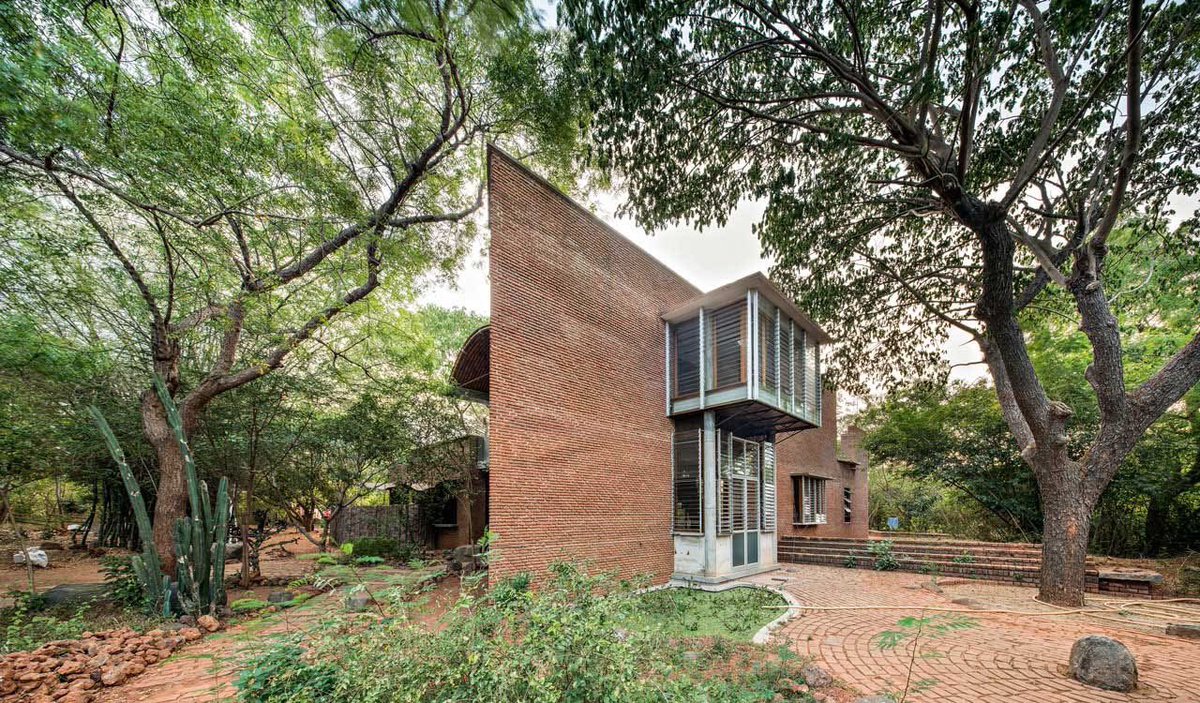
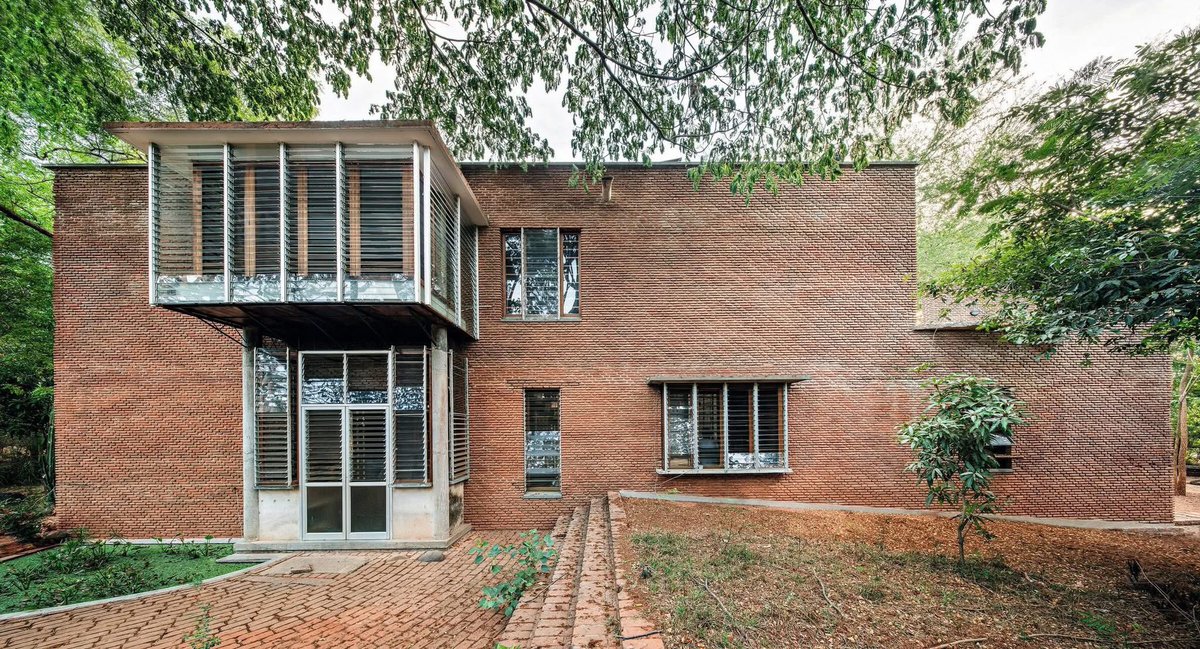
Could this be brick brutalism? Brutalism means nothing hidden. Every material exposed. No apology for what it is. If that’s the definition, then yes. We just found one.
Wall House. Auroville, Tamil Nadu, India. Architect: Anupama Kundoo. Built 2000. Her own home.
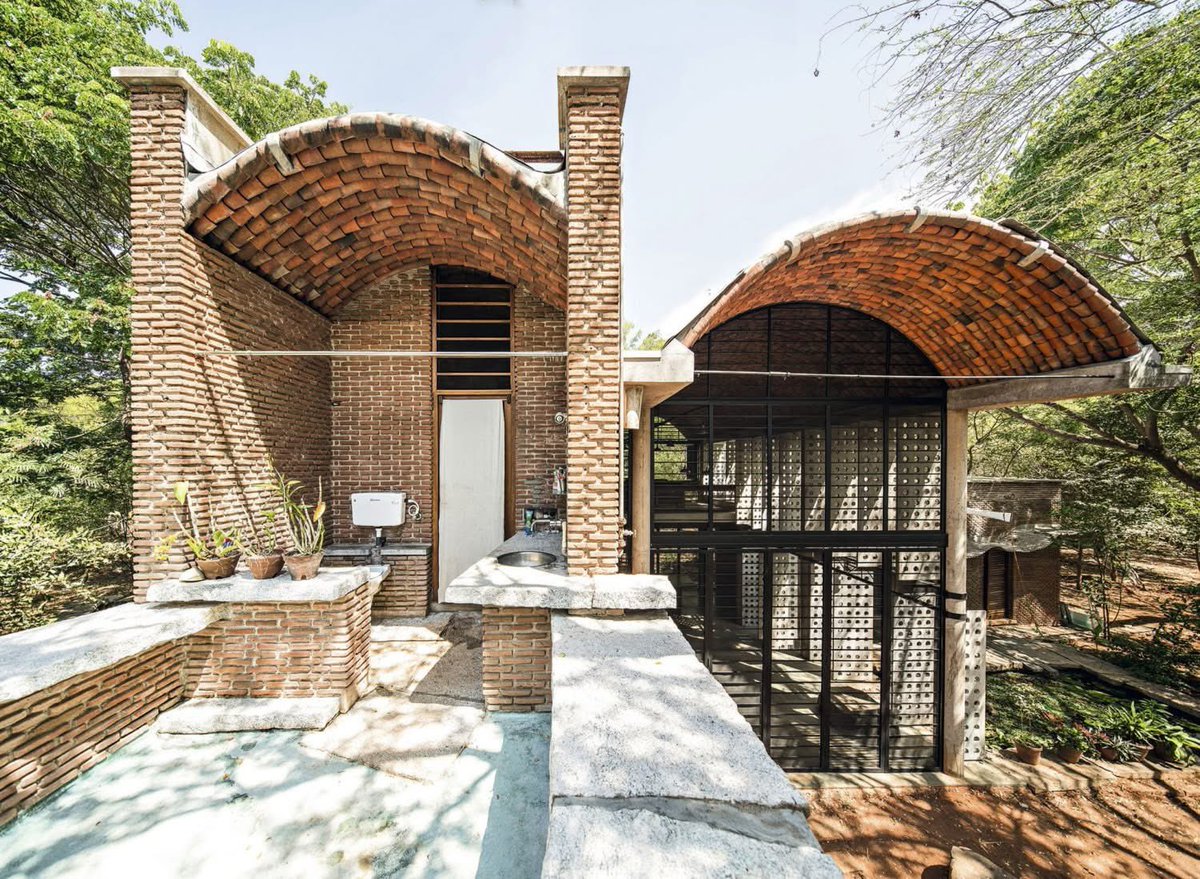
The bricks are achakal, a pre-industrial Tamil Nadu brick 18cm x 10cm x just 2.5cm thick. Hand-shaped, fired in clay ovens from leftover farmland silt. They require far less energy to produce than factory bricks. Set in lime mortar with raked joints.
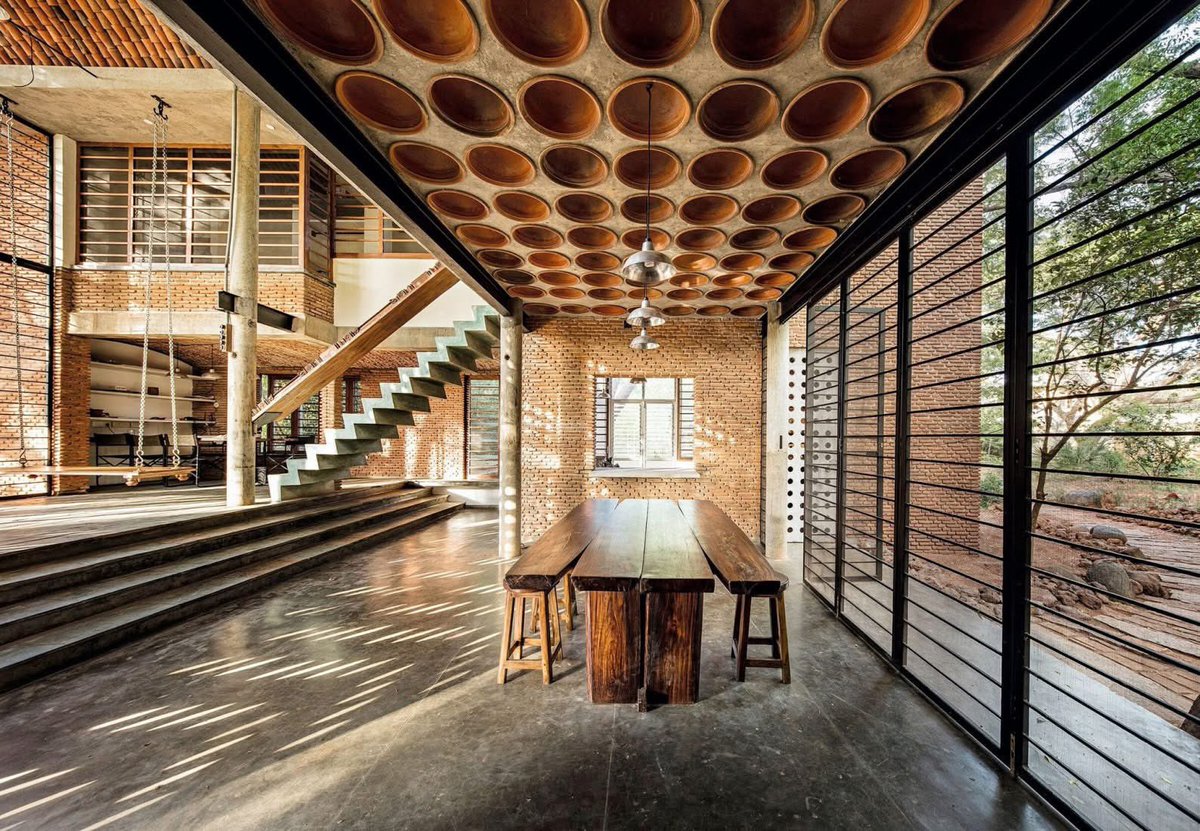
The ceiling you see in image 2 is not a design gesture. Those are terracotta pots embedded upside-down into the concrete slab, increasing structural depth while replacing steel and reducing the volume of concrete needed. The vault is catenary brick. The double height volume pulls natural ventilation upward through the house by stack effect.
This is not a building that looks sustainable. It is a building that proves every material choice through engineering.
Anupama Kundoo recreated this house at 1:1 scale for the Venice Architecture Biennale 2012. Indian craftsmen who had never left their country flew to Venice to build it by hand.
Architect: Anupama Kundoo | Auroville, India | 2000 | Photo: Alka Hingorani & Javier Callejas
1
1
185
Apr 22
Not using AI to turn your listings into video is leaving attention on the table
1
107
Apr 22
Once you close your first deal, you’ll never want a job again
92
Apr 22
Most agents think video is hard
It’s only hard if you’re filming
@TourEstateAI turns photos into video tours
Then it’s just systems
72
Apr 21
AI isn't coming for your job. It's coming for the person who refuses to learn it
75
Apr 21
Hot take:
A mediocre property with great presentation will outperform a great property with bad photos every time
70