
Joined August 2009
- Tweets 7,877
- Following 400
- Followers 961
- Likes 8,198
1,079 Photos and videos








Pinned Tweet

14 Jun 2025
1
2
26
1,141
11h
We sent it to you with Docusign lol.
14h

A Russian fiber optic FPV deployed as a “waiter” on a road is equipped with a second, rear-facing camera.
Ukrainian ground units that have eliminated these ambush FPVs by approaching from the rear aspect to shoot the FPV or cut the fiber cable must be wary of this development.
8
17h
Presented Without Comment. 🎬 I considered explaining this, then decided that would only reduce its value. 🙂
1
2
17h
Stay connected for more cybersecurity writing, analysis, and daily reporting:
⚔️ Amazon Author Page: amazon.com/author/jasoncedwa…
🔗 LinkedIn: jason-edwards.me/
🛡️ Trackpads: trackpads.com/
📰 Dispatch Magazine: dailycyber.news/
🎙️ Beyond the Call Podcast: beyond.trackpads.com/
🎧 Dispatch Magazine Podcast: dispatch.trackpads.com/
1
Jun 12
Presented Without Comment. 🎬 I considered explaining this, then decided that would only reduce its value. 🙂
1
5
Jun 12
Stay connected for more cybersecurity writing, analysis, and daily reporting:
⚔️ Amazon Author Page: amazon.com/author/jasoncedwa…
🔗 LinkedIn: jason-edwards.me/
🛡️ Trackpads: trackpads.com/
📰 Dispatch Magazine: dailycyber.news/
🎙️ Beyond the Call Podcast: beyond.trackpads.com/
🎧 Dispatch Magazine Podcast: dispatch.trackpads.com/
12
Jun 12
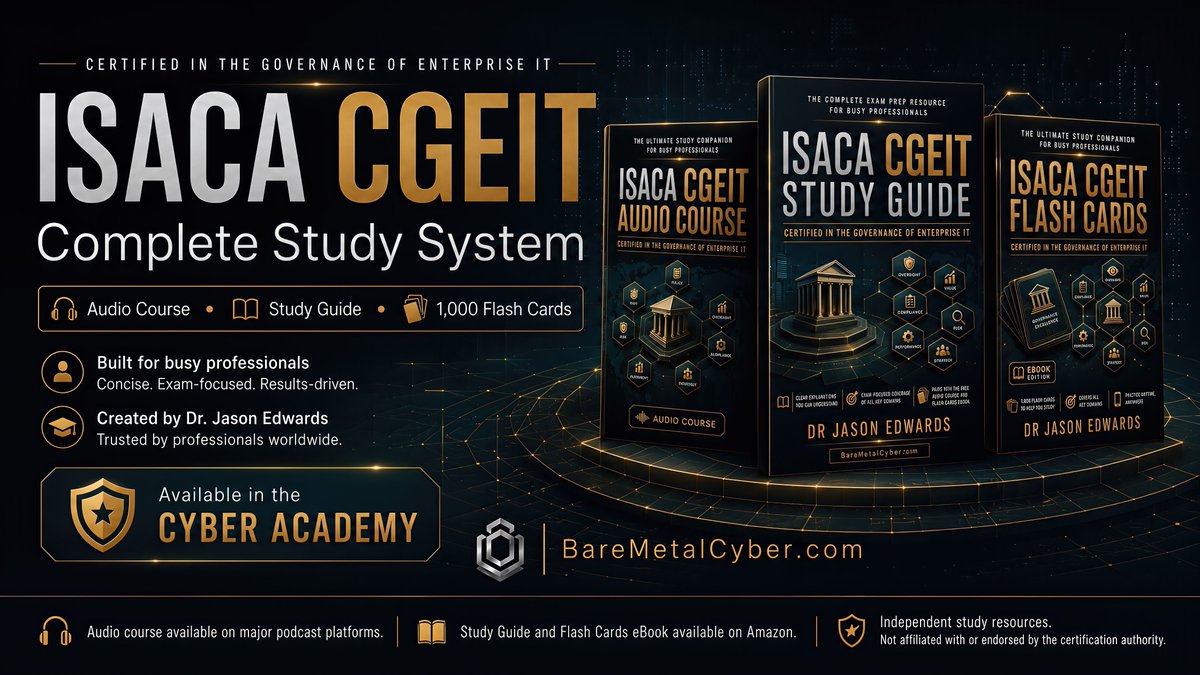
CGEIT is for people who need IT governance to be more than policy language or org-chart theory. It matters because enterprises do not get value from technology just by buying tools. They get value when leadership, governance, strategy, risk oversight, performance measurement, and resource decisions all work together. For managers, governance professionals, risk leaders, architects, and senior practitioners, CGEIT helps frame how technology should support business direction instead of drifting beside it.
Find more information and links in the first comment below!
The free audio course podcast is built for busy people who want to learn this material in a format that fits real life. It breaks down topics like governance structures, enterprise strategy alignment, benefits realization, risk management, resource optimization, and oversight into clear, usable lessons. It is available wherever podcasts are found, so it works well during commutes, walks, and the time between everything else on the calendar.
The study guide, available in paper and ebook on Amazon, is the deeper companion for structured learning. It is there for readers who want stronger explanations, better organization, and a clearer path through what good governance actually looks like in practice. The flash cards ebook on Amazon adds 1,000 cards for review, repetition, and exam prep, giving learners a connected path from first exposure, to deeper understanding, to reinforcement.
Taken together, the audio course, study guide, and flash cards give busy learners a practical way to build real governance knowledge and prepare with purpose. Take a look and keep building the kind of judgment that helps technology create measurable business value.
1
11
Jun 12
Find the full certification page, study resources, and helpful links below:
🎓Find this course here: baremetalcyber.com/cybersecu…
📚 Amazon Study Guides & Flash Cards: amzn.to/3O0VO5l
🔗 LinkedIn: jason-edwards.me/
🛡️ Bare Metal Cyber: baremetalcyber.com/
📰 DailyCyber.News: dailycyber.news/
17
Jun 12
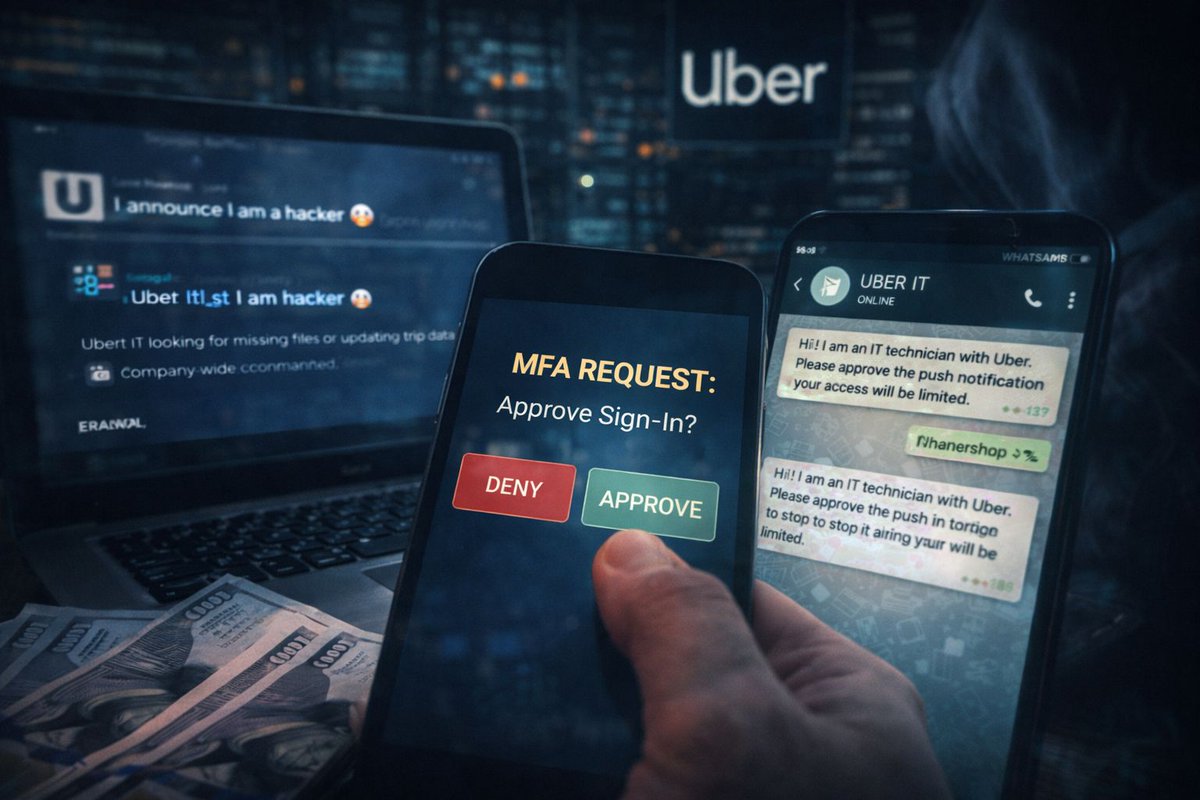
The Uber breach in September 2022 was not really a story about MFA failing. It was a story about MFA being dragged into a human workflow it could not control. An attacker used credentials tied to an external contractor, hammered the account with push requests, then contacted the target on WhatsApp while posing as Uber IT and told them approving the prompt would make the noise stop. Once inside, the intruder reached Slack, posted to a company-wide channel, and moved deeper through internal systems.
For more information, see the first comment below!
That is why this incident stuck with so many defenders. Multi-factor authentication did its job at first. The stolen password alone was not enough. But push-based MFA still depends on a person recognizing the moment, understanding the request, and resisting pressure when the prompt feels annoying, routine, or urgent. A control that looks strong on an architecture diagram can get very soft when it lands on a tired human thumb.
The real lesson was not that MFA is useless. It was that authentication is never just a technology problem. Contractor access, internal support habits, privilege sprawl, repeated prompts, and the ease of social engineering all shape whether MFA becomes a barrier or just another button someone clicks to get back to work. That is why incidents like Uber pushed more attention toward number matching, phishing-resistant factors, tighter internal segmentation, and better control over what one compromised account can reach.
MFA still matters. It just is not magical. How many of our “strong controls” are only strong right up until somebody learns how our people actually work?
#CyberSecurity #UberBreach #MFA #SocialEngineering #IdentitySecurity #ZeroTrust #IncidentResponse #InfoSec #RiskManagement #DigitalTrust
1
12
Jun 12
Stay connected for more cybersecurity writing, analysis, and daily reporting:
⚔️ Amazon Author Page: amazon.com/author/jasoncedwa…
🔗 LinkedIn: jason-edwards.me/
🛡️ Bare Metal Cyber: baremetalcyber.com/
📰 DailyCyber.News: dailycyber.news/
11
Jun 12
A clip of two F-22s escorting a B-2 says a great deal without needing much explanation. It puts air dominance and long-range strike in the same frame, showing how different aircraft roles can combine into a single message about reach, protection, and control of the battlespace.
Find more information and links in the first comment below!
What makes footage like this so effective is the contrast. The B-2 represents deep strike capability and strategic weight. The F-22s bring speed, awareness, and the kind of air-superiority presence that helps protect high-value assets. Together, they turn the video into more than an aviation shot. It becomes a picture of layered capability.
That is why pairings like this hold attention. They show that military air power is rarely about one platform acting alone. It is about how different systems support each other, extend options, and make a larger mission possible. In a few seconds of footage, you can see how power in the air often depends on teamwork as much as technology.
#F22 #B2 #MilitaryAviation #AirPower #Stealth #FighterEscort #StrategicStrike #USAirForce #CombatAircraft #Defense
1
10
Jun 12
Stay connected for more cybersecurity writing, analysis, and daily reporting:
⚔️ Amazon Author Page: amazon.com/author/jasoncedwa…
🔗 LinkedIn: jason-edwards.me/
🛡️ Trackpads: trackpads.com/
📰 Dispatch Magazine: dailycyber.news/
🎙️ Beyond the Call Podcast: beyond.trackpads.com/
🎧 Dispatch Magazine Podcast: dispatch.trackpads.com/
12
Jun 12
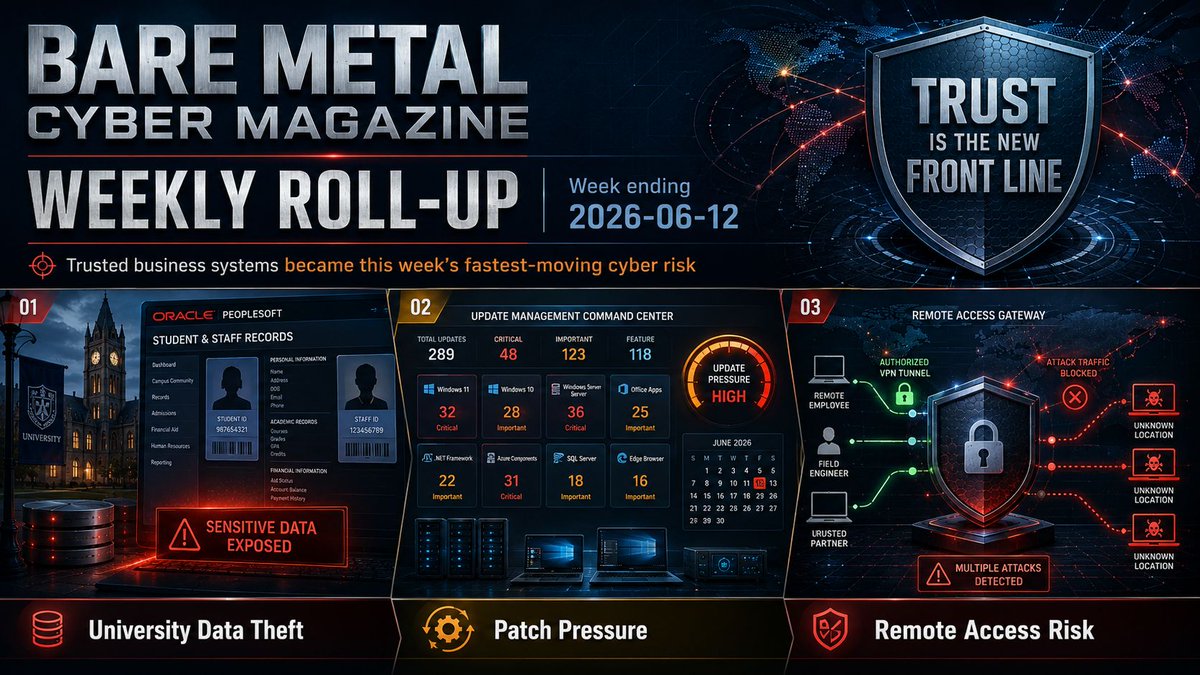
This week’s biggest cyber stories are about trusted business systems becoming fast-moving points of exposure. The roll-up connects university data theft, patch pressure, remote access attacks, AI tooling, backup risk, supply chain pressure, and major data exposure into one practical read.
🎓 Universities face data theft after Oracle PeopleSoft systems are hit
🛠️ Microsoft’s record-sized update puts summer patching under pressure
🌐 Check Point VPN attacks push remote access into emergency mode
⚡ Federal patching timelines are moving toward days instead of weeks
🤖 AI development tools and enterprise platforms are now part of the attack surface
💾 Backup systems, developer secrets, and SaaS tables remain high-value targets
💸 Data breaches and ransomware finance continue to drive legal and business risk
#Cybersecurity #InfoSec #CyberRisk #CISO #ThreatIntelligence #PatchManagement #Ransomware #CloudSecurity #AIsecurity #BareMetalCyber
1
34
Jun 12
Read Today’s Article: linkedin.com/newsletters/bar…
More links:
⚔️ Amazon Author Page: amazon.com/author/jasoncedwa…
📰 LinkedIn: jason-edwards.me/
🛡️ Bare Metal Cyber: baremetalcyber.com/
📰 BMC Magazine: baremetalcyber.com/cybersecu…
🎙️ Mastering Cyber Podcast: dotone.baremetalcyber.com/
🎧 BMC Magazine Podcast: podcast.baremetalcyber.com/
8
Jun 12
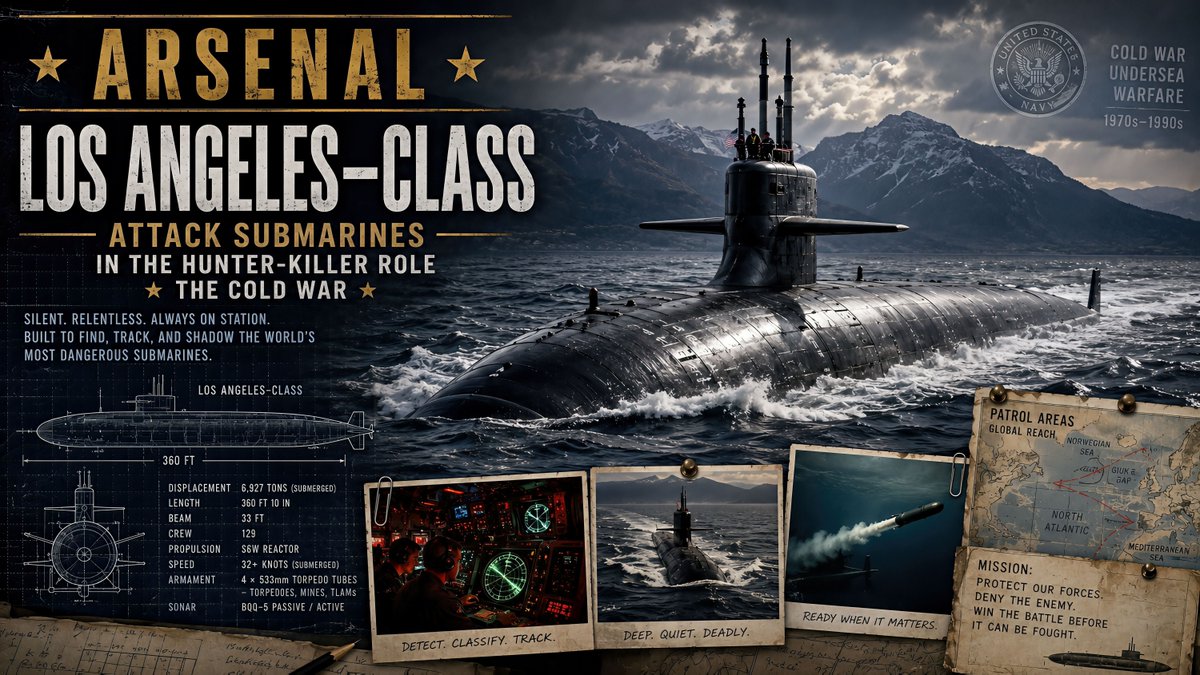
A Los Angeles–class attack boat stalks a Soviet submarine in the dark Norwegian Sea, and neither side can afford a mistake. This week’s Arsenal feature rides along inside the Cold War hunter-killers of the United States Navy. Link in the first comment!
🛥️ Track Los Angeles–class submarines shadowing Soviet nuclear boats through the North Atlantic and Norwegian Sea patrol zones.
🎯 See how speed, stealth, and sonar turned these fast attacks into the backbone of Cold War undersea defense.
🧭 Step into cramped control rooms where tired sonarmen and officers juggle long watches, thin traces, and contact shifts.
📡 Follow the class’s evolution into cruise-missile shooters and multi-mission platforms that still shape undersea doctrine today.
#Arsenal #Dispatch
1
15
Jun 12
Read todays edition here: trackpads.com/dispatch-milit…
⚔️ Amazon Author Page: amazon.com/author/jasoncedwa…
📰 LinkedIn: jason-edwards.me/
🛡️ Trackpads: trackpads.com/
📰 Dispatch Magazine: trackpads.com/dispatch-milit…
🎙️ Beyond the Call Podcast: beyond.trackpads.com/
🎧 Dispatch Magazine Podcast: dispatch.trackpads.com/
6
Jun 12
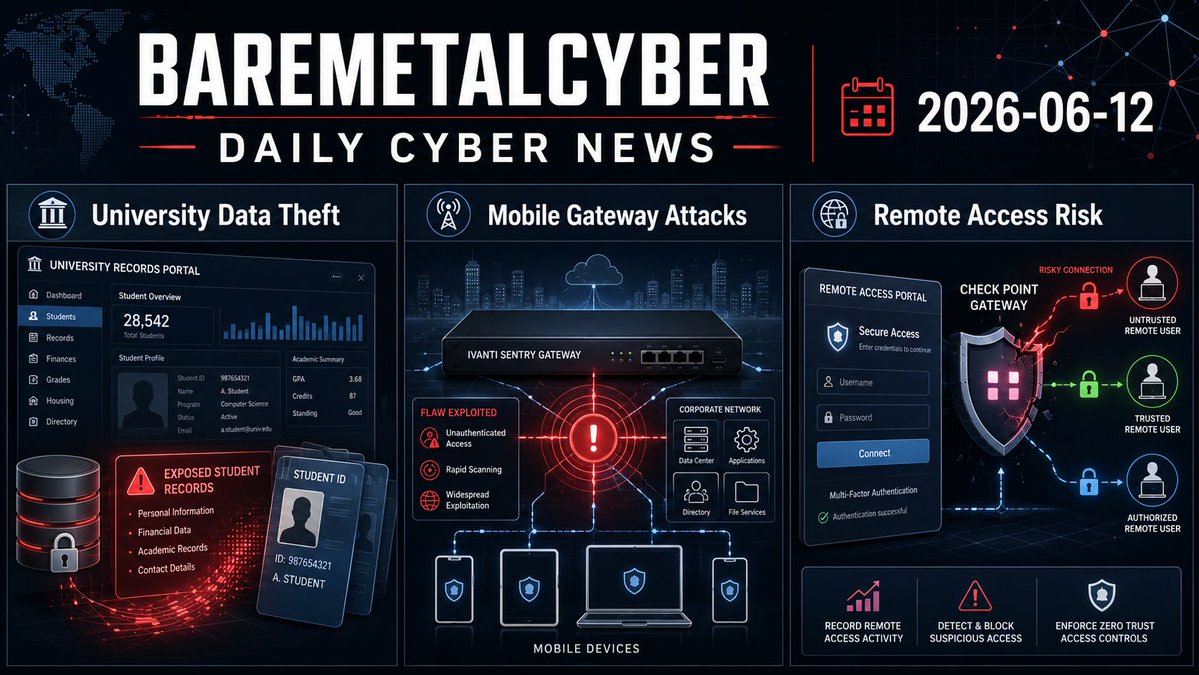
Today’s issue is about trusted systems becoming fast-moving entry points for attackers. Universities, mobile gateways, and remote access tools all show how quickly business risk rises when exposed platforms are hit before normal response cycles can catch up.
🔒 Universities face data theft after Oracle PeopleSoft systems are hit
📱 Mobile gateways face fast attacks after Ivanti Sentry flaw goes public
🌐 Remote access risk rises as Check Point gateway flaw is exploited
⚡ Federal patching pressure is moving toward days, not weeks
🤖 AI agents and AI development tools are creating new trust problems
💸 Ransomware and laundering networks remain tied to real financial harm
☁️ Cloud risk is increasingly about the people who hold the logins
#Cybersecurity #InfoSec #CyberRisk #CISO #CloudSecurity #Ransomware #AIsecurity #BareMetalCyber
1
19
Jun 12
Read Today’s Edition! linkedin.com/newsletters/dai…
More links:
📰 DailyCyber.News: dailycyber.news/
⚔️ Amazon Author Page: amazon.com/author/jasoncedwa…
🔗 LinkedIn: jason-edwards.me/
🛡️ Bare Metal Cyber: baremetalcyber.com/
6
Jun 11
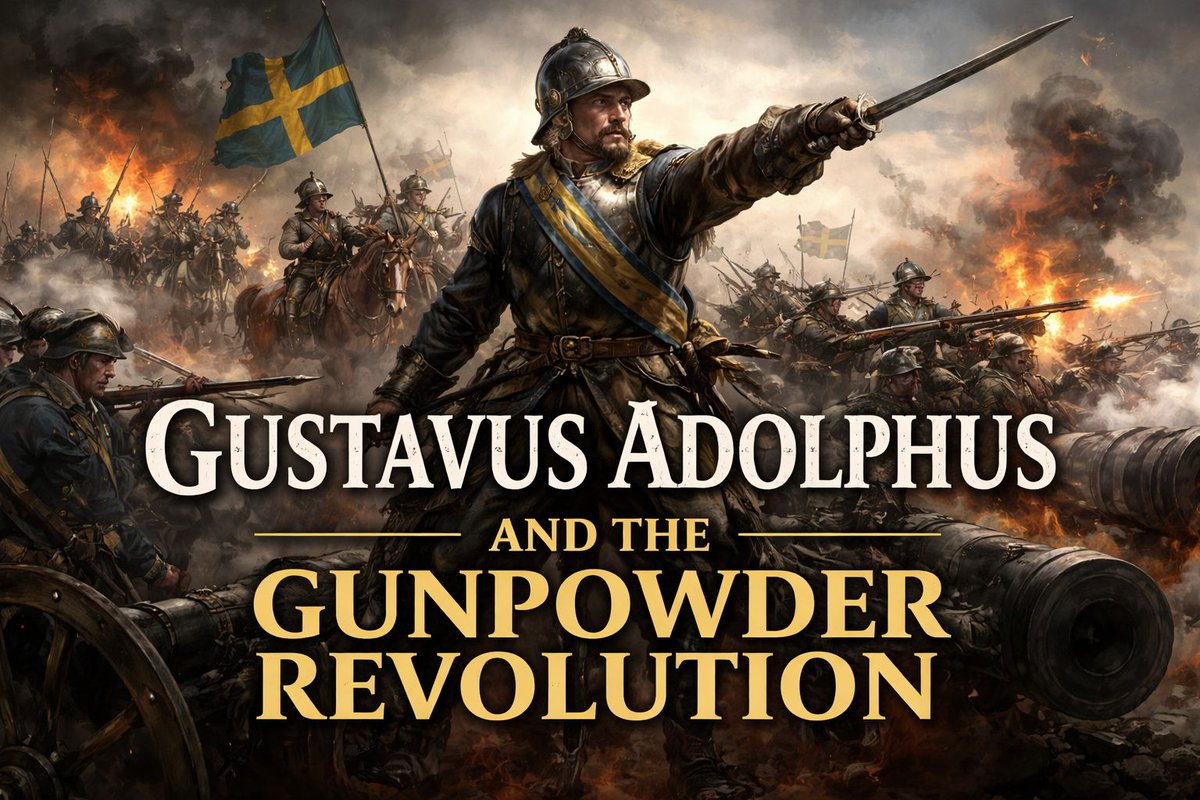
Gustavus Adolphus is often remembered as the “Lion of the North.” The more useful way to remember him is as a military reformer who understood that gunpowder alone changes little. What changes war is the combination of doctrine, mobility, training, and command. In the Thirty Years’ War, that mattered enormously. Europe already had muskets, pikes, cavalry, and cannon. What Gustavus did was make them work together faster, cleaner, and with more battlefield effect than many of his rivals.
For more information, see the first comment below!
When Gustavus landed in Germany in 1630, many armies still fought in deep, heavy formations that could absorb punishment but were slow to maneuver and slow to recover control. The Swedish army moved toward shallower infantry lines, coordinated volleys, aggressive cavalry action, and lighter artillery that could keep pace with the advance instead of lagging behind it. He pushed combined arms in a practical sense: infantry to fix, cavalry to exploit, artillery to disrupt, all under tighter battlefield direction than most contemporaries could manage.
That system showed its power at Breitenfeld in 1631. Facing Johann Tserclaes, Count of Tilly, Gustavus and his Saxon allies met one of the Catholic League’s most feared armies near Leipzig. The Saxons broke early. Many armies would have unraveled with them. The Swedes did not. Their formations flexed, shifted frontage, brought guns forward, and used disciplined fire to punish the imperial infantry while Swedish cavalry drove harder than the older pistol-heavy caracole style had allowed. Breitenfeld was not just a Swedish victory. It was a demonstration that battlefield firepower becomes far more dangerous when it is mobile, controlled, and embedded in a coherent system.
Even Lützen in 1632, where Gustavus was killed fighting Wallenstein, reinforced the point. His death turned him into legend, but the real legacy was institutional. He did not “invent modern warfare,” a phrase historians rightly treat with suspicion. He did help accelerate a change already underway: from brute mass toward more flexible formations, more integrated arms, and more professional battlefield management. That is why he still matters. The lesson is not that a single weapon wins wars. It is that leadership turns technology into method, and method turns firepower into advantage.
How many military revolutions are really revolutions of hardware, and how many are revolutions in organization, training, and command?
#MilitaryHistory #GustavusAdolphus #ThirtyYearsWar #GunpowderWarfare #OperationalArt #MilitaryInnovation #Leadership #Strategy
1
14
Jun 11
Stay connected for more cybersecurity writing, analysis, and daily reporting:
⚔️ Amazon Author Page: amazon.com/author/jasoncedwa…
🔗 LinkedIn: jason-edwards.me/
🛡️ Trackpads: trackpads.com/
📰 Dispatch Magazine: dailycyber.news/
🎙️ Beyond the Call Podcast: beyond.trackpads.com/
🎧 Dispatch Magazine Podcast: dispatch.trackpads.com/
11
Jun 11
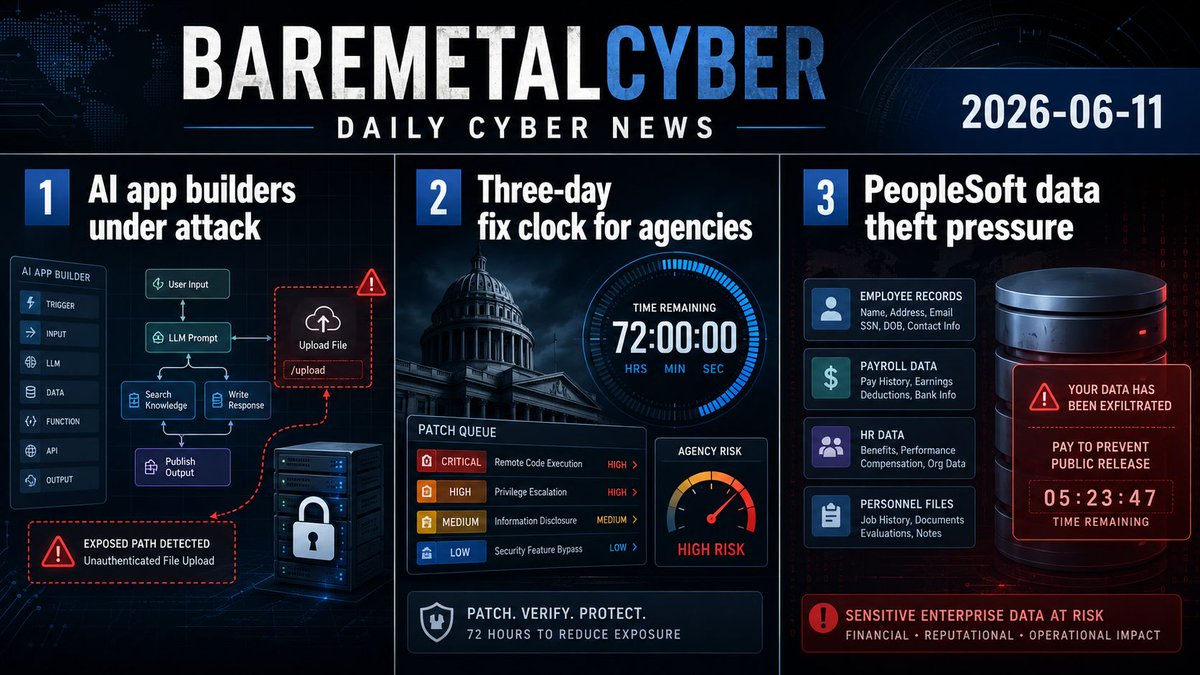
Attackers are moving fast across AI development tools, federal patch windows, and enterprise business systems. Today’s brief shows where exposure is turning into real operational risk and what security leaders should prioritize first.
🚨 AI app builders face live attacks as Langflow servers are abused
⏱️ Federal agencies get a three-day clock for the riskiest fixes
🏢 Oracle PeopleSoft customers face ShinyHunters data-theft pressure
🛡️ Edge gateways, email systems, and workflow platforms remain high-value targets
🔎 Botnets are quietly mapping military-linked networks for future access
📦 Developer ecosystems are tightening controls as supply-chain attacks keep evolving
#Cybersecurity #CyberRisk #InfoSec #CISO #ThreatIntelligence #BareMetalCyber
1
15
Jun 11
Read Today’s Edition! linkedin.com/newsletters/dai…
More links:
📰 DailyCyber.News: dailycyber.news/
⚔️ Amazon Author Page: amazon.com/author/jasoncedwa…
🔗 LinkedIn: jason-edwards.me/
🛡️ Bare Metal Cyber: baremetalcyber.com/
1