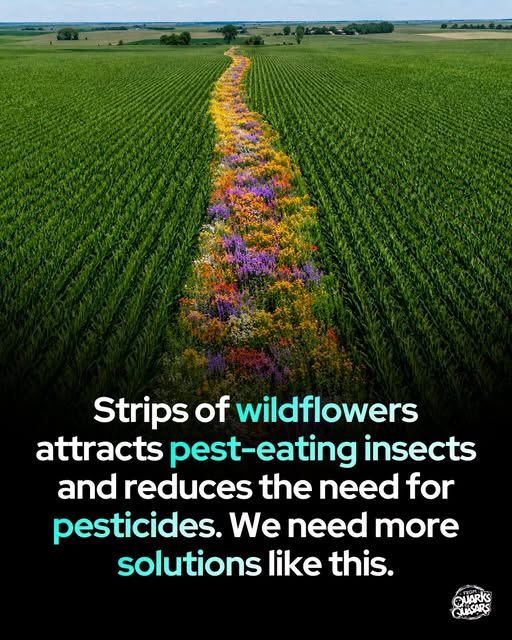
A strip of wildflowers can reduce the need for pesticides. Why aren't they everywhere? π·π·π·
farmers are planting strips of wildflowers through and around their fields for a surprisingly powerful reason: they attract insects that help control crop pests.
Ladybugs are among the best-known examples. Both adults and larvae consume aphids, tiny insects that damage crops by sucking sap from plants. A single ladybug can eat dozens of aphids per day, while its larvae can consume hundreds during development.
But ladybugs are only part of it.
Wildflower strips also attract hoverflies, lacewings, parasitic wasps, and predatory beetles. Many of these insects are natural enemies of crop pests including aphids, whiteflies, thrips, and caterpillars.
Scientists call this "conservation biological control." Instead of introducing predators into a field, farmers create habitat that helps naturally occurring beneficial insects survive and reproduce.
The flowers provide nectar and pollen, which many beneficial insects need as adults. Research has shown that access to flowering plants can increase the lifespan, reproduction, and hunting activity of pest-eating insects.
Parasitic wasps provide one of the most remarkable examples. Some species lay their eggs inside aphids and caterpillars. The developing larvae consume the pest from within, eventually killing it.
Studies have found that fields with flower strips often support greater numbers of beneficial insects and experience higher rates of natural pest control than fields without them.
The benefits can extend beyond pest management. Flower strips may also support pollinators, improve biodiversity, reduce soil erosion, and provide habitat for wildlife in agricultural landscapes.
Researchers are now studying which flower species work best for different crops and regions. The goal is to design strips that support the most effective communities of beneficial insects while maximizing crop protection.